Home Blog Page 61

Captivated by Mantas!

0

Text Guy Stevens, Photos Carlos Villoch

When diving amongst a mass feeding aggregation of about 100 manta rays, I noticed an individual trailing a mass of fishing line. My mind immediately began to race. Before I could react, the manta peeled away from the other feeding mantas in the water column and swam over to me, circling within inches of my head. The manta was a three-metre female and as she moved closer, I could see her injuries were severe. The line was completely wrapped around her body several times, slicing a wound about 30 centimetres directly through her upper and lower jaw backwards into her head. The more she tried to open her mouth to breathe and feed, the greater the line dug into her flesh.

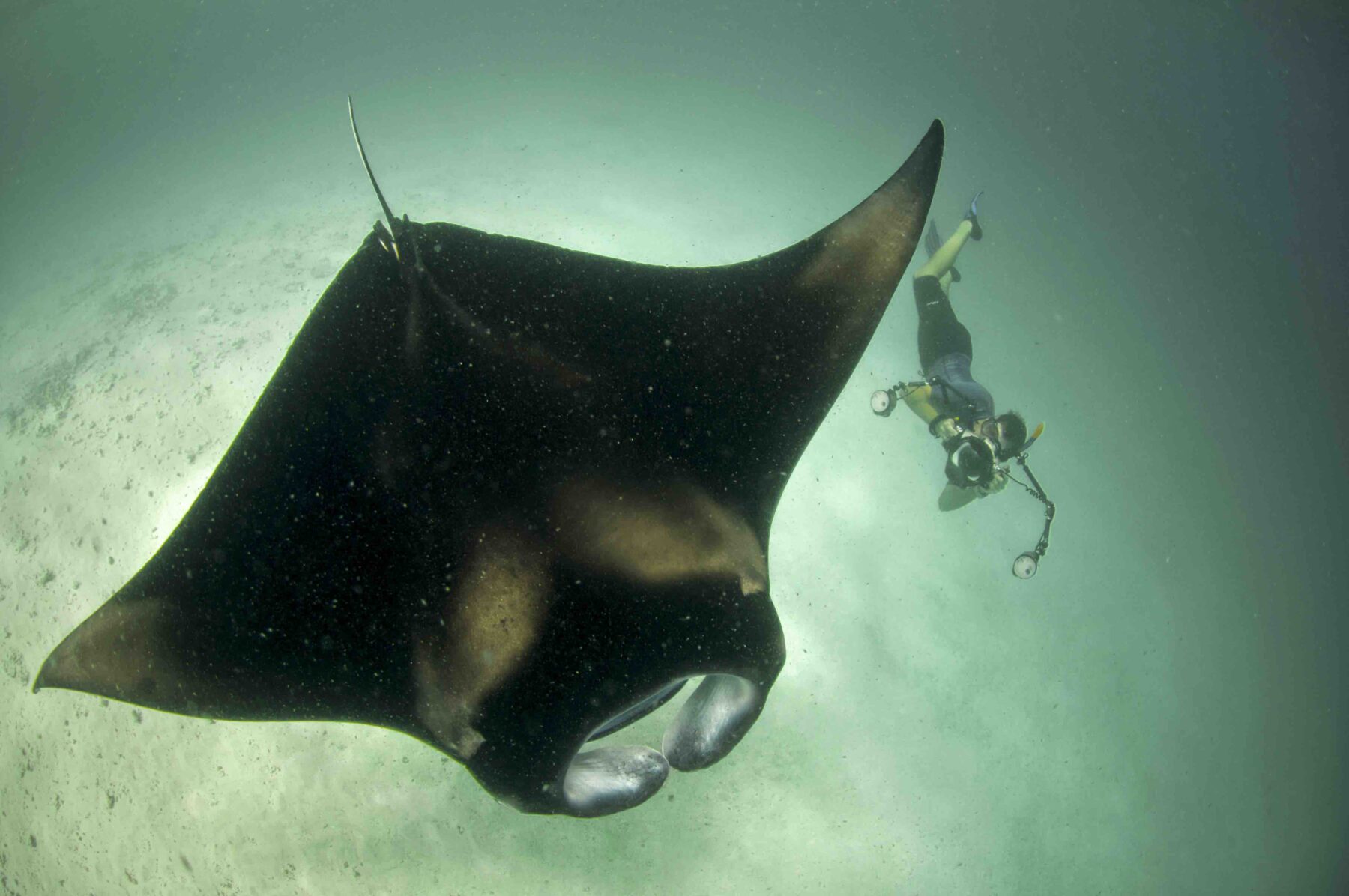
A manta’s best friend? Guy here in a somewhat regular position: underwater with a camera, chasing mantas

My dive buddy had already surfaced; I was at 15 metres and almost out of air. My dive knife was on the research boat anchored 100 metres away. What should I do? I decided to get my knife! I exchanged my empty tank for the only tank left with any air, which was only a quarter full. To make matters worse, it was beginning to get dark. It took me 15 minutes to get back down to the feeding mantas and I was worried that I had missed my chance to help.

But as soon as I descended, the injured manta again approached and began to circle me. I swam closer and began to cut at the line wrapped around her body; it did not take much to remove it all, especially as she remained calm throughout. With all the line removed, the manta continued to circle, but I had to leave. I was almost out of air and it was nearly dark. I quickly took some photos of her injuries and an ID shot so I could recognise her again if she survived, before heading back to the boat.

In the midst of a passion undying: Guy takes photo IDs

On several occasions throughout the following months, I was able to again dive with her and see her injuries start to heal. These encounters were even more intriguing for me because she again left the feeding group and came to circle above and around me. She did this for several minutes before returning to feed and I was the only diver she approached despite the presence of several other people.

For the rest of this article (Asian Diver 2013 Issue 1 No 124) and other stories, check out our past issues here or download a digital copy here.

The 25th anniversary of the largest and longest running dive show, Asia Dive Expo (ADEX) is set to occur on the 11-14th April 2019 in Singapore. Centred on the theme – Plastic free Future, ADEX is more than just a dive show with its commitment to the environment. Among an exciting lineup of programs, attendees can look forward to a Future Forward Series of Panel Discussion on the Single-Use Plastic Conundrum in Asia, on 13th April.

So join us at the event, get inspired and for all you know, you might just liberate the inner diver in you! More details of the event here

Born this Way

0
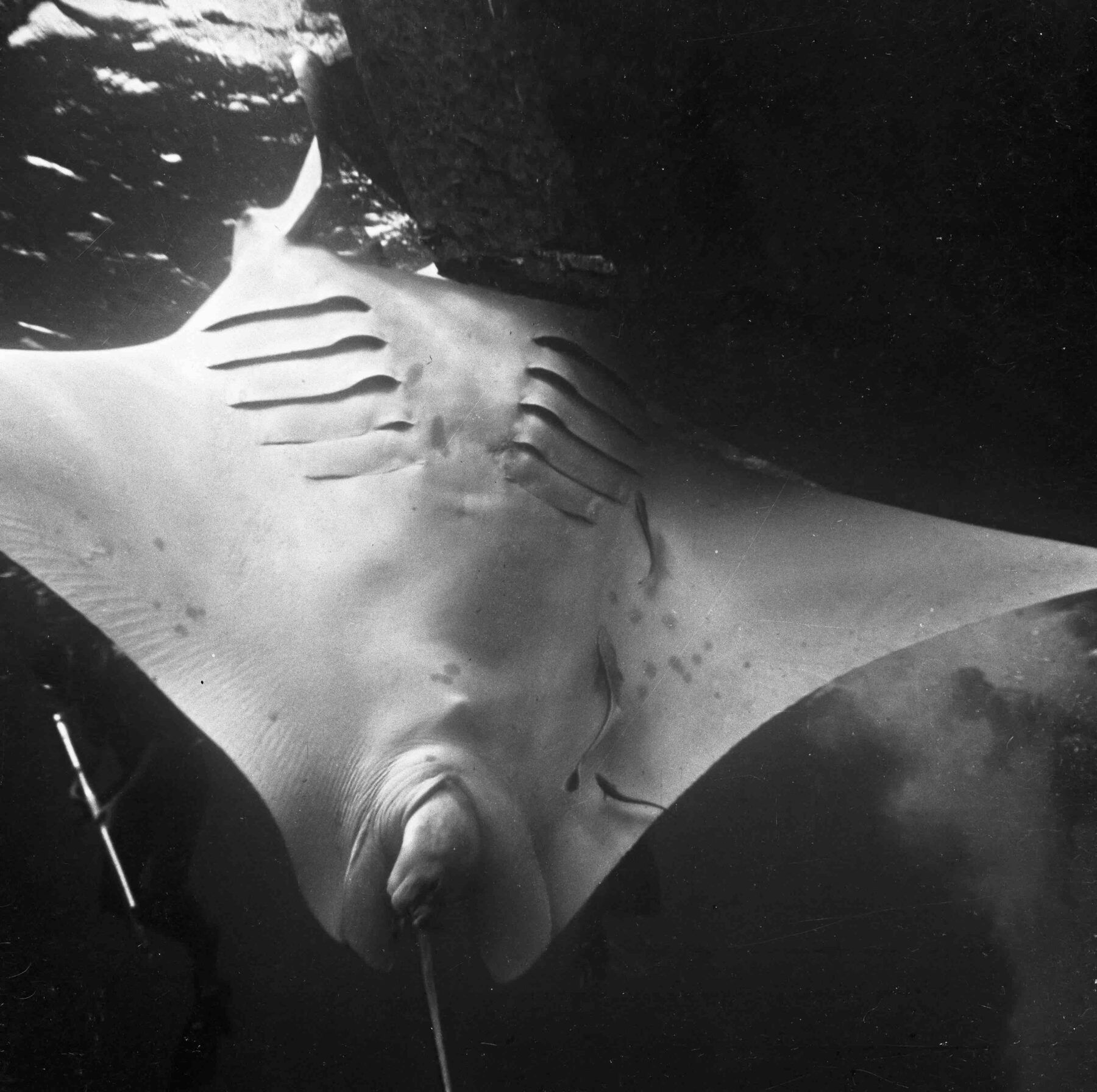
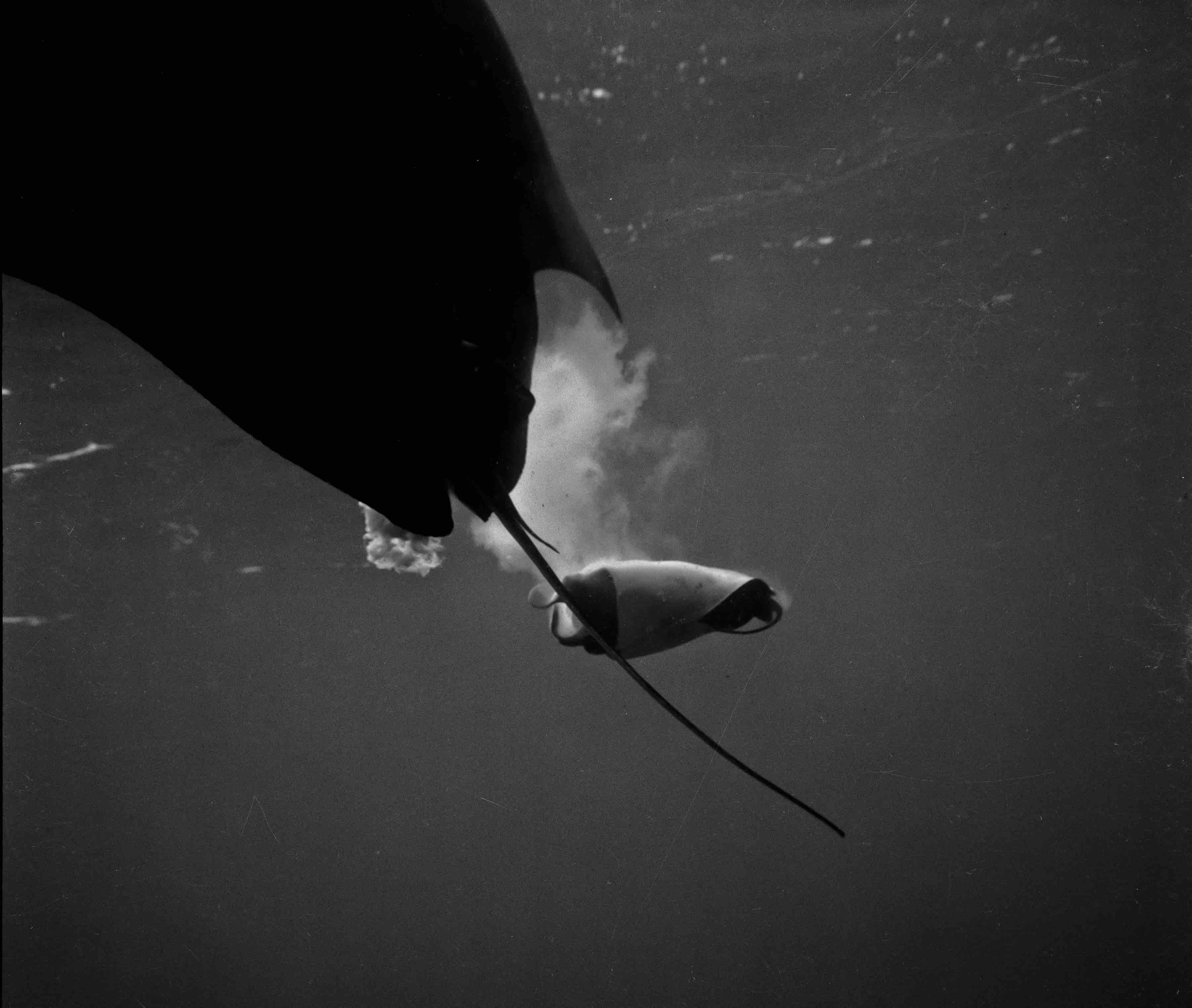
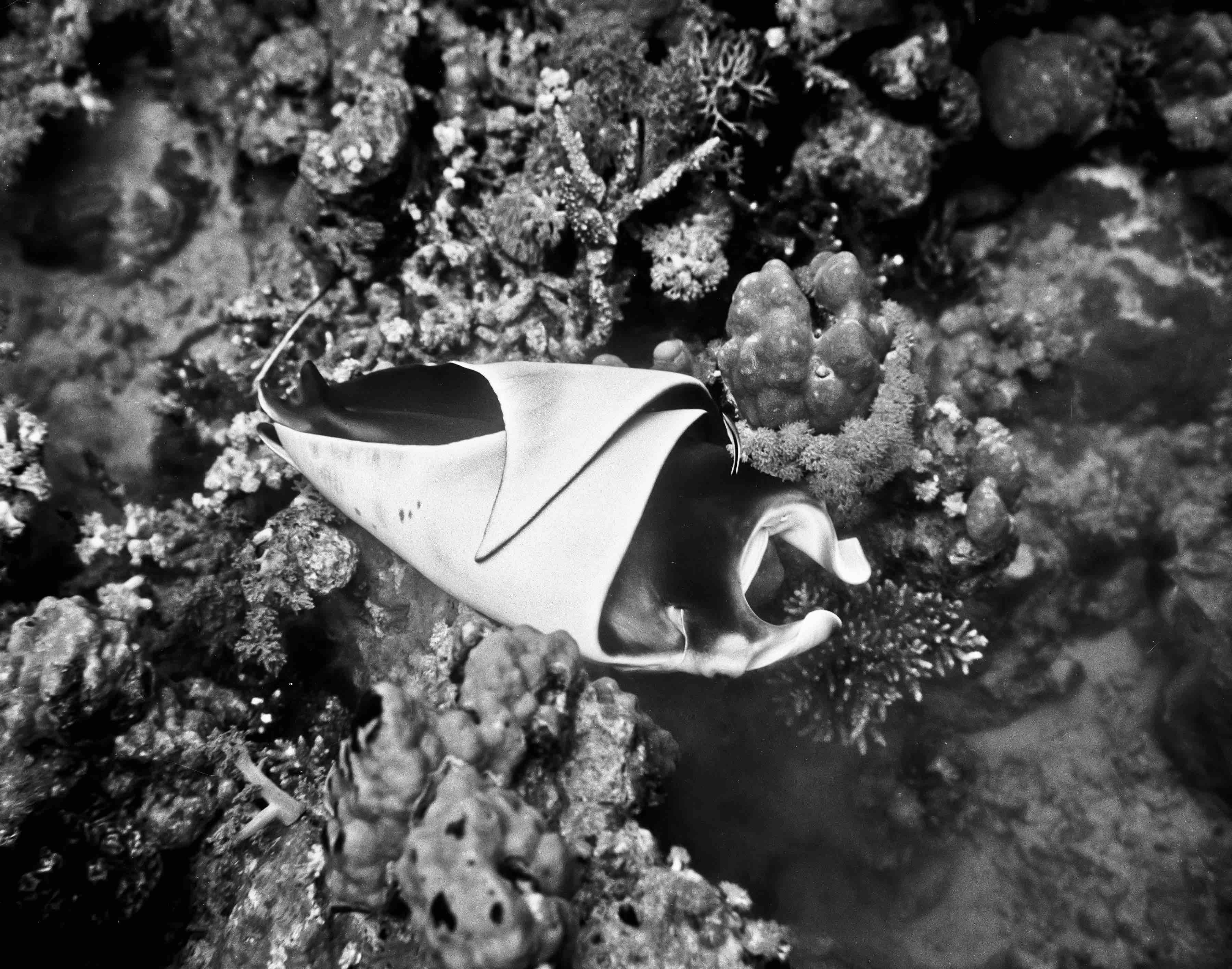
Birth of a manta ray, these rare images taken in 1968 are the only existing testimony of this event, there are not other evidences in the world of a manta ray giving birth in its natural habitat, the ocean; Red Sea, Port Sudan, Sudan, Africa, year 1968

Text & Photos Roberto Fabbri

This story of the birth of the manta ray goes back to 1967. I was 26, young, strong and experienced as a scuba diver, looking for an adventure.

I discovered scuba in 1959. It happened on the small island of Panarea, in the Aeolian archipelago, just north of Sicily. Each summer, I used to spend a couple of months spearfishing and free diving. My partner had just purchased a single air tank – there was no compressor on the island then – just to use it time to time to recover large groupers we could not get out from the den. One day, I used it and I got immediately addicted.

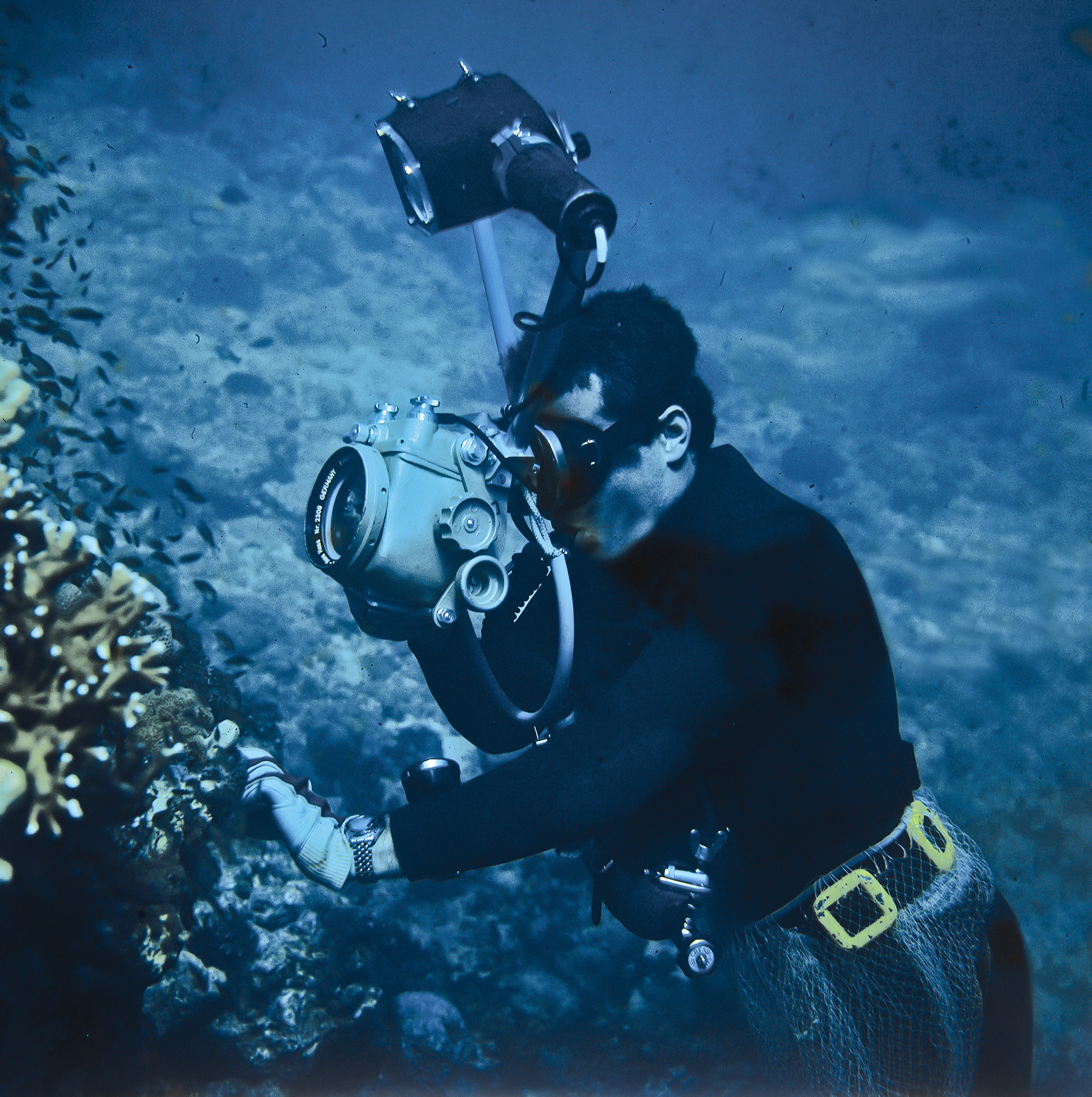
After a couple of years of scuba spear fishing, a legal and common practice during those times, I got tired of doing the same thing over and over again. So I purchased a Rolleimarin, the underwater housing for the then popular Rolleiflex, a 6×6 medium format camera. A new underwater experience began!

Underwater images Port Sudan-Red Sea, 1968

In 1967, a close friend was organising an ambitious expedition to the Red Sea, just off the coast of Port Sudan. I joined this small group of Roman divers, excited for a new adventure.

It was only free diving – yes, there were no air compressors in Sudan during those days as well – but instead, there were a lot of “Migs”, aircraft fighters from the friendly USSR. You see, we were in the middle of the Cold War.

Birth of a manta ray, these rare images taken in 1968 are the only existing testimony of this event, there are not other evidences in the world of a manta ray giving birth in its natural habitat, the ocean; Red Sea, Port Sudan, Sudan, Africa, year 1968

I knew it would be impossible to take underwater images free diving, so I carried with me my Cressi oxygen rebreather. I was able to get my tank refilled at the hospital in Port Sudan; oxygen rebreathers allow you a maximum depth of 16 metres (53 feet). Below this, you can easily experience hyperoxia, also known as oxygen toxicity syndrome, a medical condition resulting from the harmful effects of breathing molecular oxygen (O2) at elevated partial pressures.

We knew manta rays were common encounters in the Red Sea. We also knew they could weigh in excess of 1,200 kilograms with six metres of wingspan; we never saw one before, expectations were high, mixed in with a bit of fear.

Birth of a manta ray, these rare images taken in 1968 are the only existing testimony of this event, there are not other evidences in the world of a manta ray giving birth in its natural habitat, the ocean; Red Sea, Port Sudan, Sudan, Africa, year 1968

One day, while taking macro on the reef, the light above was suddenly clouded by an enormous shadow drifting overhead. I looked up, expecting to see the underside of our fishing boat. Instead, a gigantic pair of undulating wings sent a downward current that rolled and rotated me in my tracks.  The underbelly gleamed white a couple of metres above me.

Moments later, it passed over me and I swam after the gigantic bat wing creature, which was disappearing fast.  Suddenly, it started toward the surface and with several movements of its enormously powerful wings; it disappeared in a welter of bubbles and foam above the surface.  This was my first encounter with a manta ray.

For the rest of this article (Asian Diver 2012 Issue 2 No 119) and other stories, check out our past issues here or download a digital copy here.

The 25th anniversary of the largest and longest running dive show, Asia Dive Expo (ADEX) is set to occur on the 11-14th April 2019 in Singapore. Centred on the theme – Plastic free Future, ADEX is more than just a dive show with its commitment to the environment. Among an exciting lineup of programs, attendees can look forward to a Future Forward Series of Panel Discussion on the Single-Use Plastic Conundrum in Asia, on 13th April.

So join us at the event, get inspired and for all you know, you might just liberate the inner diver in you! More details of the event here

The Avenger

0

Text Scott Cassell | Photos Kerry Franciscovich

Sharks are the basis for many fears in Man, including myself. My fear, however, is not of being attacked or eaten by a giant shark, rather, of a sea without them. Over the past 40 years, I have come to love sharks the way most people love beautiful dogs.

My love affair with sharks has led me to hand feed grey reef sharks, rolling them over and even petting them, riding Great Whites and playing “fetch” for nearly an hour with a 900-pound Tiger shark off the Bahamas using a car license plate with a 6-foot line attached. She would swim off to pick up the license plate and swim near me again so I could grab the line and yank it out of her mouth, which she reacted to with apparent enjoyment, then I would toss it away like a Frisbee only to have the process repeated again and again.

Scott’s commitment to saving the ocean and all innocent lives is only matched by his combat skills

Not so long ago, off SoCal, I would dive with dozens of blue sharks for hours on each kelp patty without chumming. Over the years, it became harder to find blue sharks until almost overnight, they all went away.

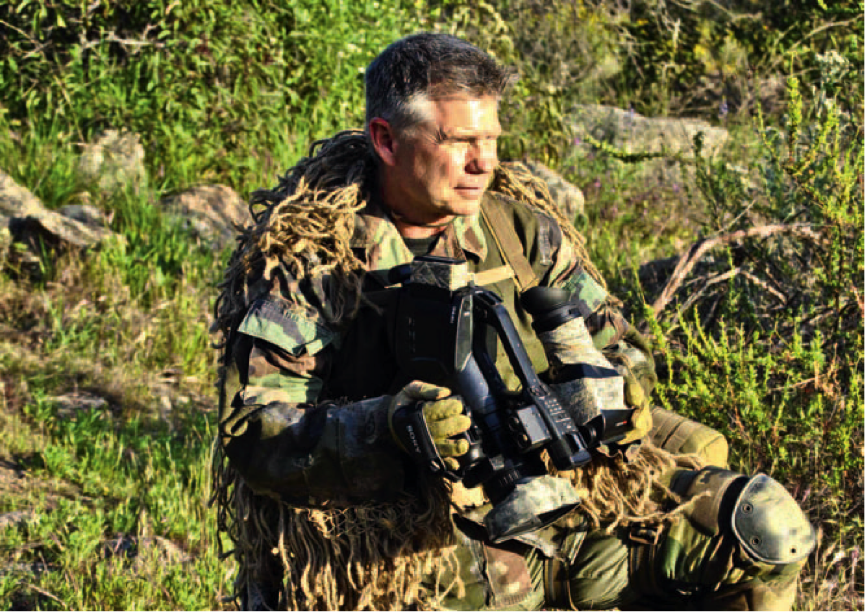
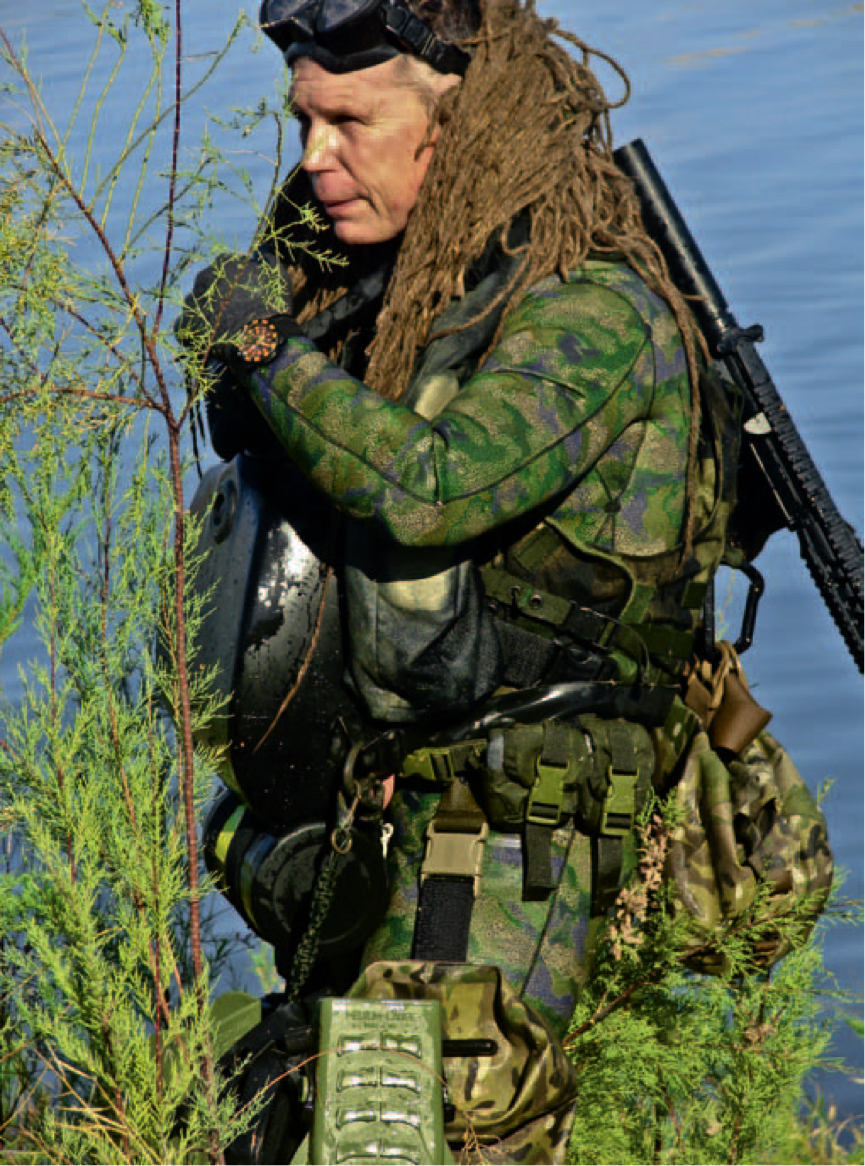
During my career, I spent years as a combat diver, sniper and counterterrorism operative, which I don’t discuss. I’m still hired as an independent contractor and my work involves sneaking into hostile bodies of water and using reconnaissance techniques; we go in and look for bad guys in teams of two. Simple is better. These techniques work well for protecting sea life!

Scott topside, on yet another mission to save the ocean

On one dive, I filmed the illegal catch of shark being pulled up to its death by a coward. I felt a sharp scratch on my chest… as I moved my camera away from my face I saw a broom handle next to my cheek… then felt the boat hook puncture my wetsuit, then the skin on my lower chest, and wedge into my xiphoid process and muscle. The panga fishermen had hooked me and tried to pull me up… but my head was wedged against the hull.

The O2 cylinder on my LAR V (closed-circuit O2 rebreather) stopped the hook from entering further, so I drew my fighting knife and slid the blade up the broom handle until I felt his hand, then I shoved my knife into his hand hard and cranked it over breaking the bones. He dropped the broom handle and yanked away so fast I lost my knife.

Final score? I got the shots of his lawless act and his $10 boat hook (plus a few scars). He got my $200 fighting knife (and reduced dexterity).

Scott in the midst of hunting poachers: You may want to quit poaching with Scott on the lose looking for people like you

Like night diving? I often use a LAR V to stealthily swim dive about half a mile (with no lights), sneaking into marine preserve harbours in the middle of the night, swimming underneath poacher boats and crawling onto land. I then disguise myself as a bush and spend two unmoving days capturing the poachers’ faces and boat numbers with night vision and a thermal camera. I have filmed them killing sea turtles, dolphin and sharks inside reserves. Often, our evidence mysteriously ends up on a district attorney’s desk. Poachers and shark fishermen are cowards. I’ve put over 10 poachers in prison.

Besides strong currents, cold water and risking boat strikes, I have also had to “tangle” with man-sized aggressive Humboldt squid. Over the years, these squids have broken my wrist several times (as I guard my face and life support gear), pulled my right shoulder out of its socket, ripped my face and neck open with their sucker disk ring teeth (they have about 30–50,000 of them) and ruptured my eardrum.

I’m impassioned about the declining shark population. Due to the popularity of shark fin soup and a bustling Chinese and Japanese economy, there have been more sharks and tuna killed in the last 20 years than all of history. The shrinking numbers have given rise to Humboldt squid, what I call the locust of the ocean. Sharks give birth to 10 to 20 pups in a lifetime. A single female Humboldt squid may have 20 million eggs! Without predators to keep them in check, the squid are wreaking havoc on the ocean’s ecosystem. It’s one indicator of many that oceans are failing.

For the rest of this article (Asian Diver 2012 Issue 1 No 118) and other stories, check out our past issues here or download a digital copy here.

The 25th anniversary of the largest and longest running dive show, Asia Dive Expo (ADEX) is set to occur on the 11-14th April 2019 in Singapore. Centred on the theme – Plastic free Future, ADEX is more than just a dive show with its commitment to the environment. Among an exciting lineup of programs, attendees can look forward to a Future Forward Series of Panel Discussion on the Single-Use Plastic Conundrum in Asia, on 13th April.

So join us at the event, get inspired and for all you know, you might just liberate the inner diver in you! More details of the event here

The Secret of the Blue Lake

0
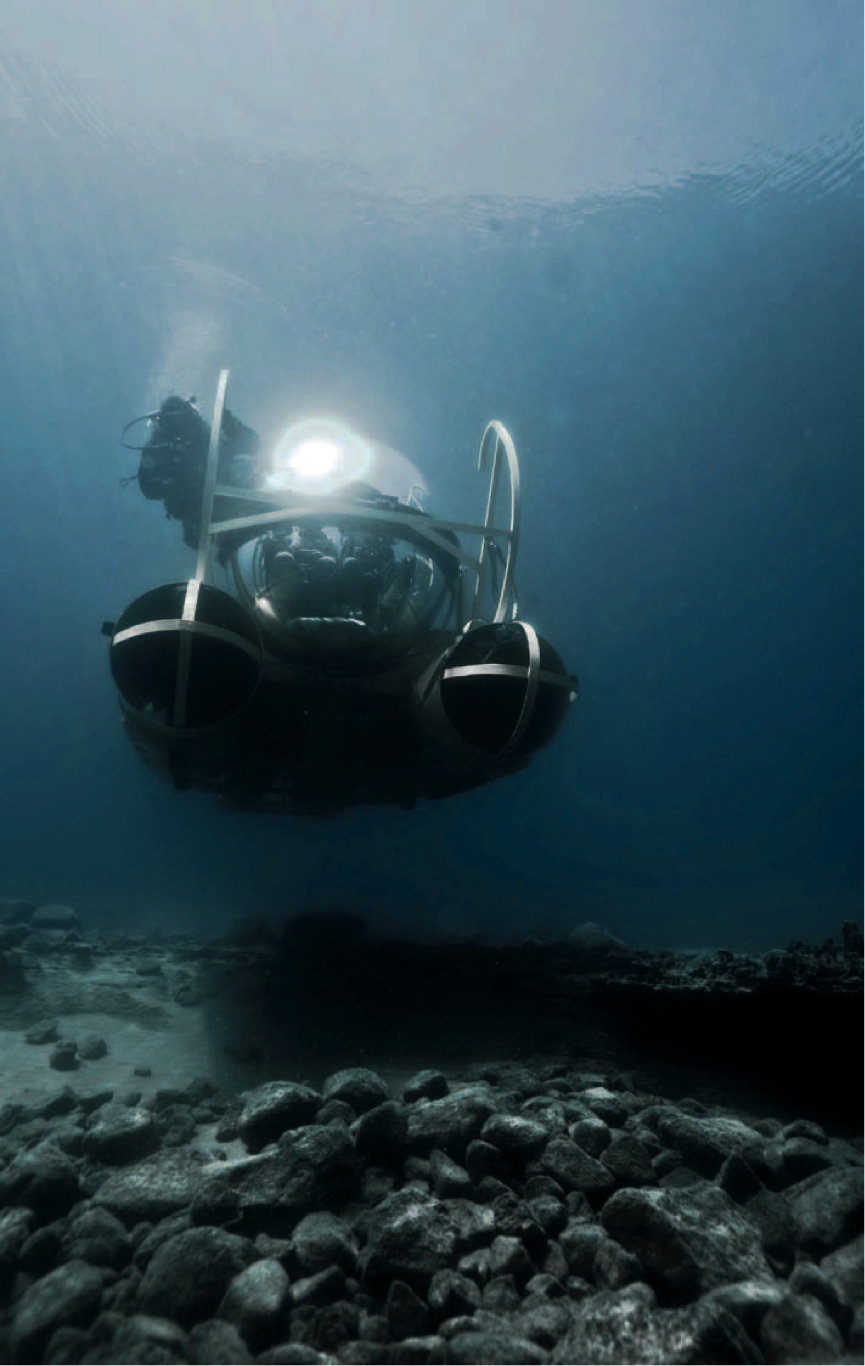
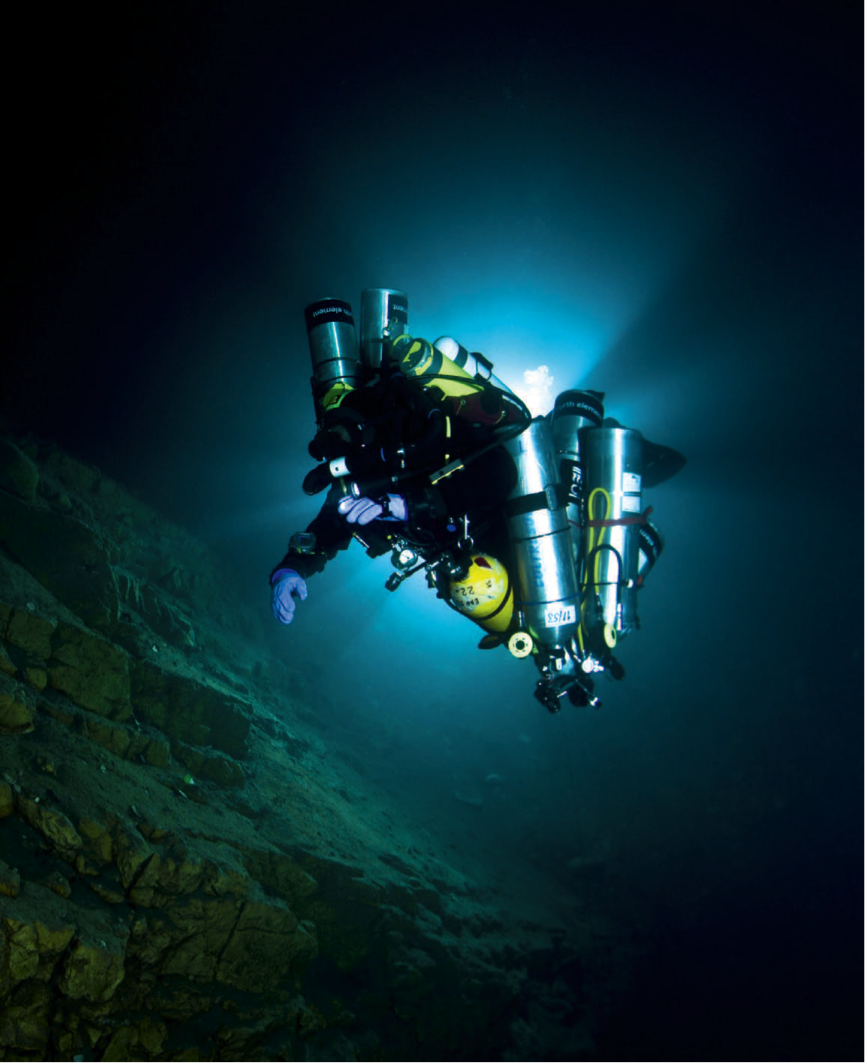
Support diver with all his equipment on his way down to meet Martin

Text Bogdana Vashchenko | Photo Viktor Lyagushkin

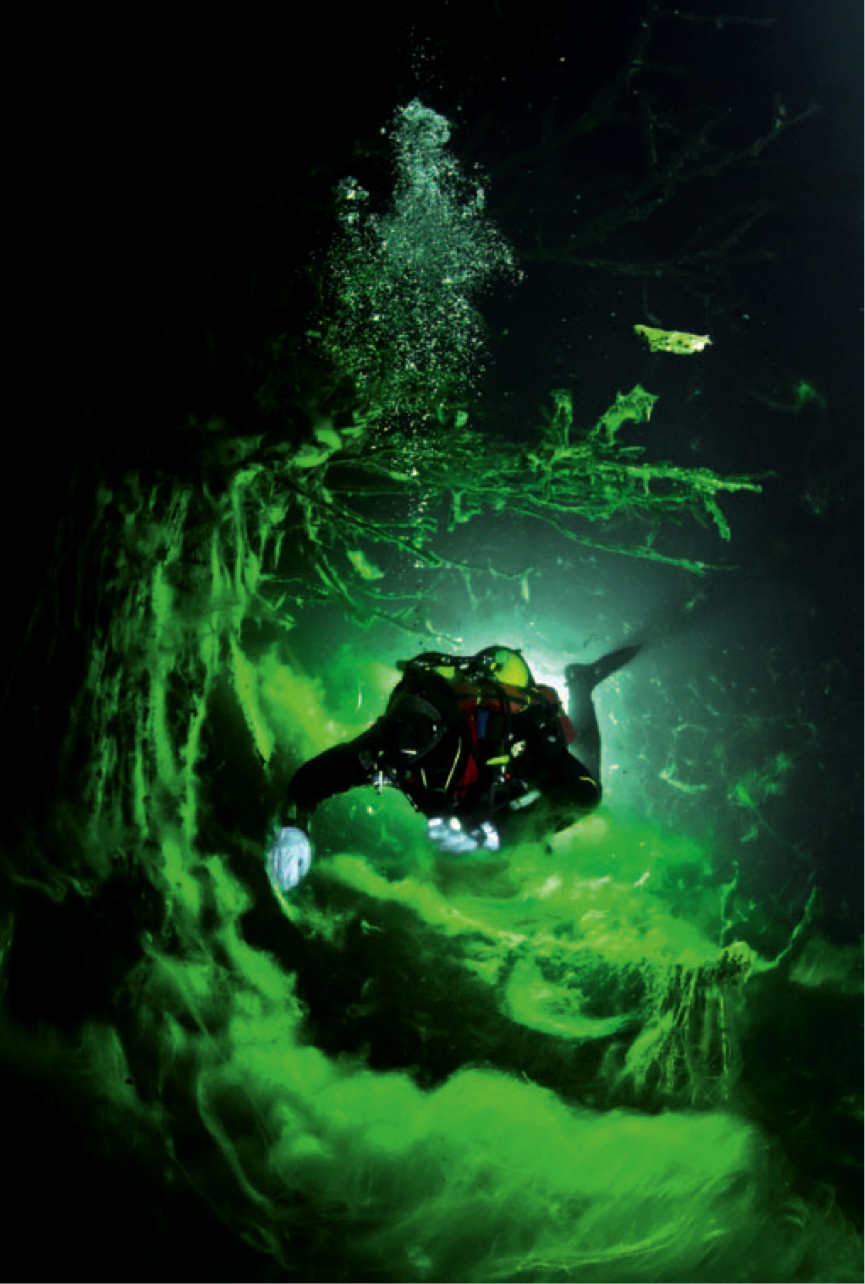
The Blue Lake is a beautiful karst spring, which is located in Kabardino-Balkaria in the Caucasus mountains in the South of Russia. At 235 metres in length, 130 metres wide and 258 metres deep, the Blue Lake is currently considered to be the second largest karst source in the world.

Its sheer size is not the only reason to consider this lake a unique natural object. With the water temperature of approximately 9°C from the bottom to the surface, it offers excellent conditions for the preservation of artefacts. The lake offers enormous potential for discovering a host of historically significant objects on the bottom.

Martin Robson, deep diver, cave explorer and recordbreaker, joined the expedition to this lake to do a series of deep dives and with equipment like a 3D scanner, robots and a special detachment from the Russian Ministry of Emergency Situations, attempted a dive to the bottom at 258 metres with the aim of photographing and recovering historically significant artefacts.

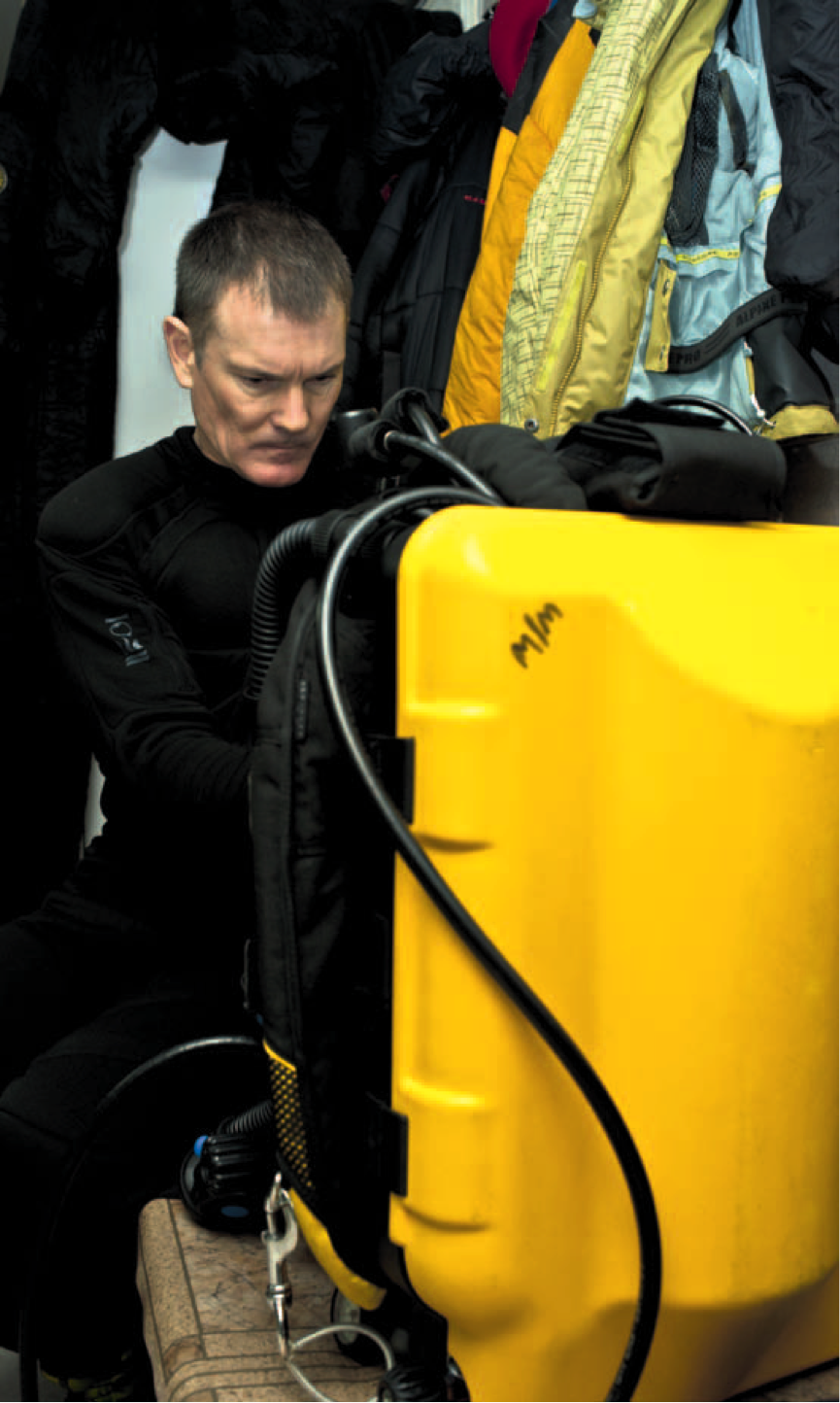
Martin prepares his rebreather for the dive

This was set to be the deepest photographic shoot in the world – at at least 200 metres – made with a camera in an exclusive housing provided by the Subal company.

Martin also attempted a series of deep dives to locate the cave system and source of the spring leading to the exploration of the deepest underwater cave system in the world.

This is the story of this expedition, straight out of the Kabardino-Balkaria region and a two-hour drive to find a connection. Asian Diver is the first to publish a snapshot of this journey…

Igor’s mission to hammer in an anchor for technical and safety aspects

To the South of Russia, there are Caucasian peaks shining white. Squinting, you will recognise sheer rocks and White Mountains. People who live here did not see the horizon for several thousands of years. For them, the distance does not matter. The only important thing is the concept of the vertical.

In their fairytales, a hero shoots an arrow to the sun, the first people come from the sky and the way to get beyond the grave is through the well on the edge of the village. Their heroes never go to unknown lands; their every waking moment filled with conquering mountains or descending hills.

Here, according to the beliefs of these people, there is unreachable sky over their heads and a bottomless lake beneath their feet – the Blue Lake.

An Expedition to the Blue Lake, January 2012

The newest of technologies gave us an opportunity to measure the depth and define the origins of the lake. What we can say in the most simple of terms is that it is really very deep. Its depth is about 260 metres, making it the second deepest karst lake in the world. Its waters are crystal clear and constantly cold. The temperature of the water in the lake is a steady 9°C. What was also discovered is that there is a river coming out of the lake and no spring coming in.

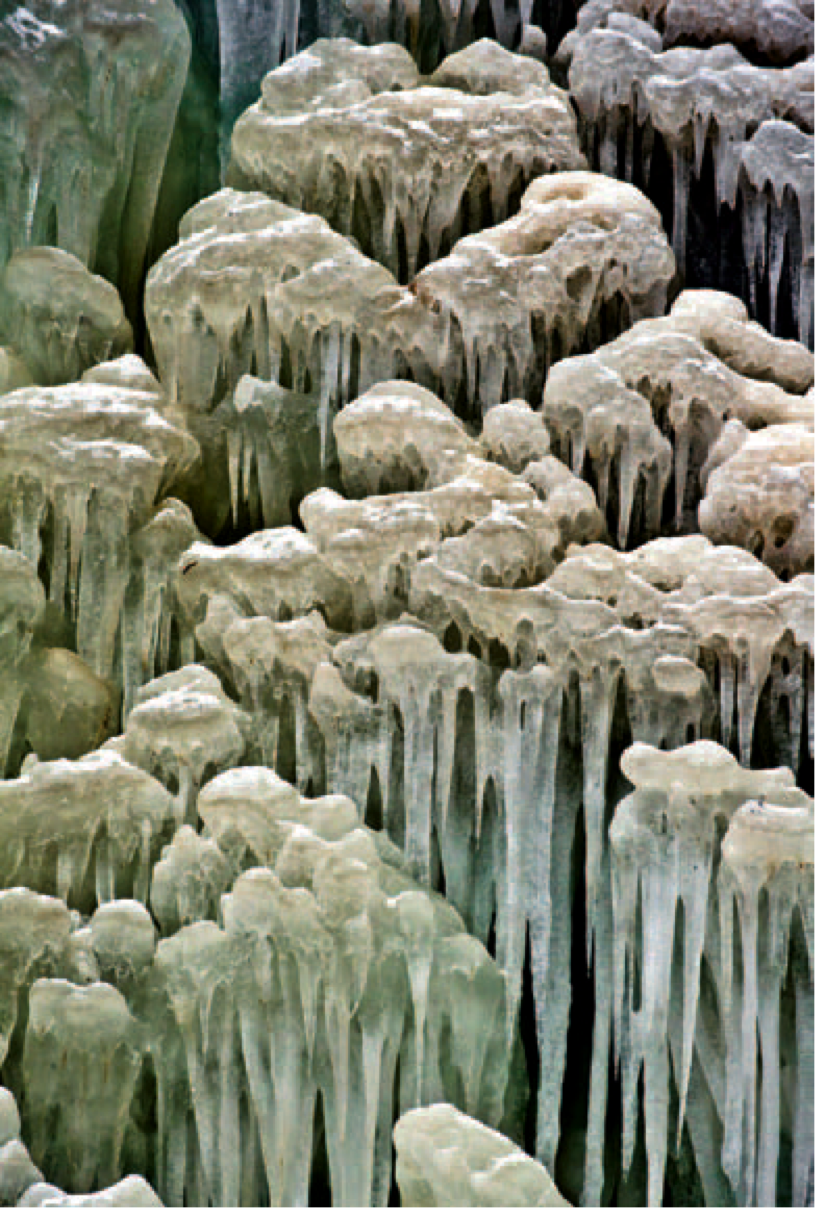
Strange formations inside and outside the lake; here, ice at a nearby waterfall

According to scientists, there is an underwater cave or caves in the lake where the water comes in from. But where the caves are located at exactly can only be imagined. The exploration of the lake by echo locators and robots was not successful – the information gathered was not good enough and data condition for the task assigned to these technologies was grossly insufficient.

For the rest of this article (Asian Diver 2012 Issue 1 No 118) and other stories, check out our past issues here or download a digital copy here.

The 25th anniversary of the largest and longest running dive show, Asia Dive Expo (ADEX) is set to occur on the 11-14th April 2019 in Singapore. Centred on the theme – Plastic free Future, ADEX is more than just a dive show with its commitment to the environment. Among an exciting lineup of programs, attendees can look forward to a Future Forward Series of Panel Discussion on the Single-Use Plastic Conundrum in Asia, on 13th April.

So join us at the event, get inspired and for all you know, you might just liberate the inner diver in you! More details of the event here

Home Wrecker – Wreck Habits for Wreck Habitats

0
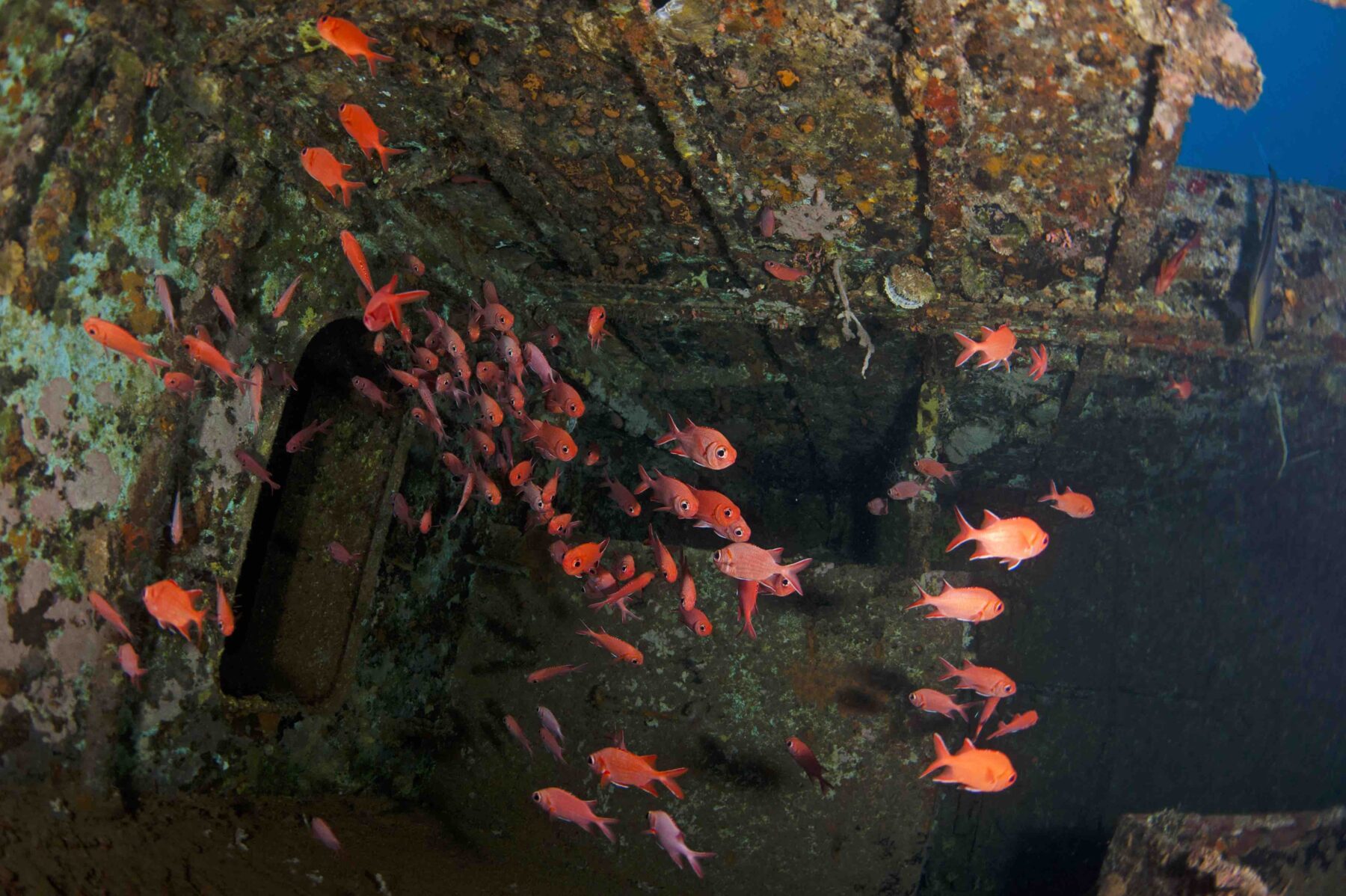
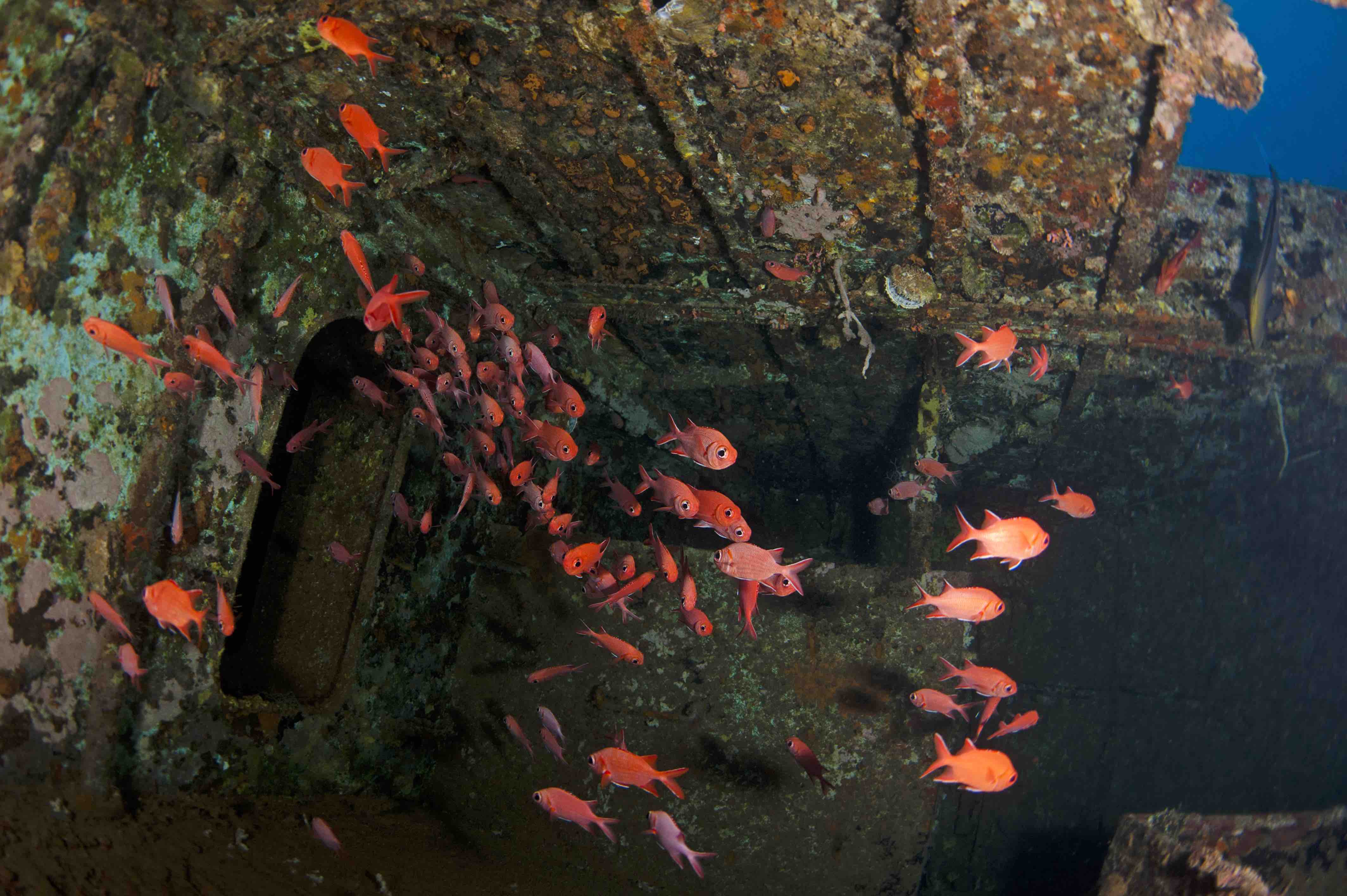
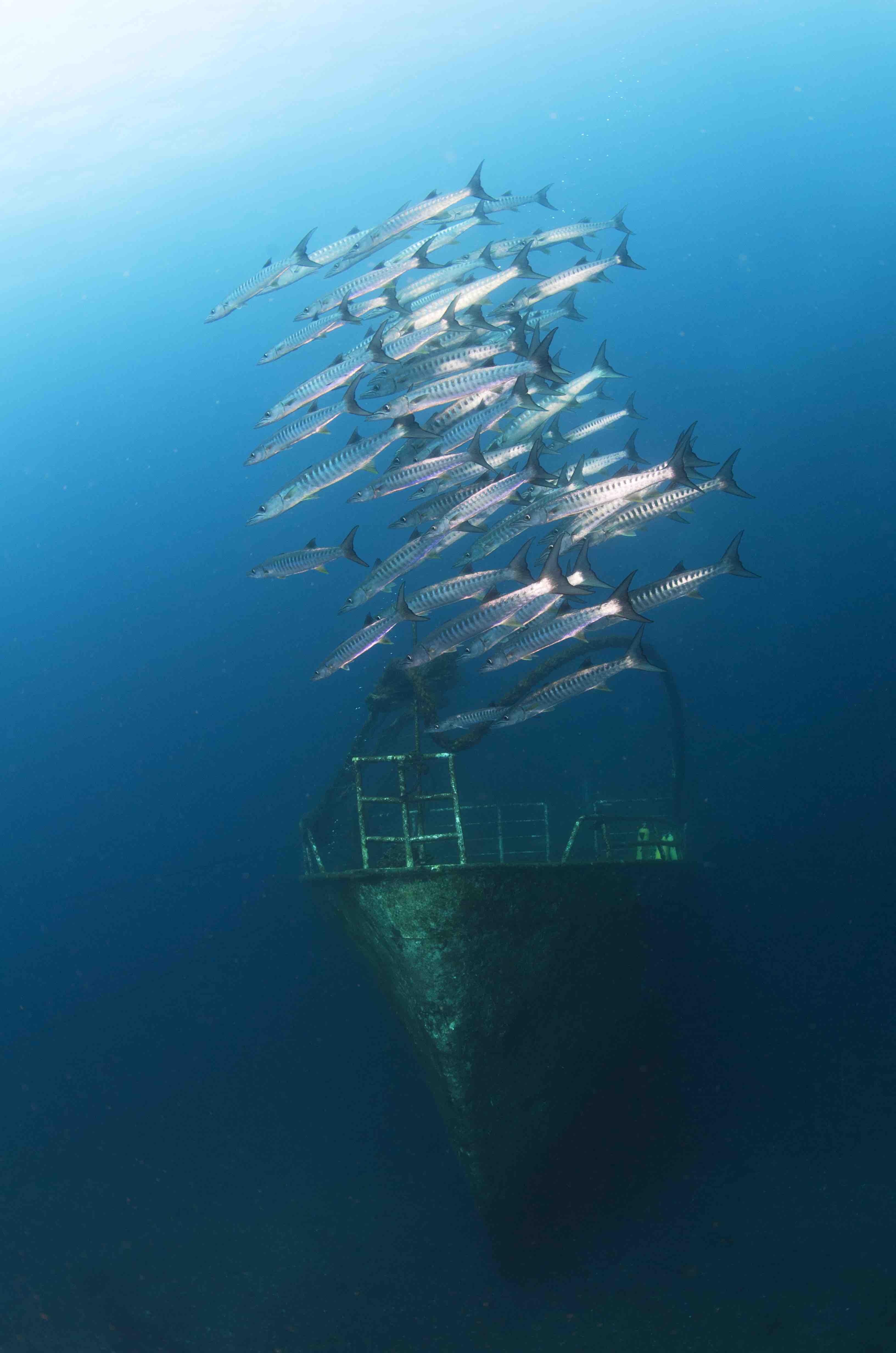
Life abundant: The Kuda Giri wreck at 31 metres in the waters of the Maldives

Text Nick Coburn Phillips, Photos Imran Ahmad

Wrecks have a profound effect upon marine wildlife. Built in all shapes and sizes and different materials, their contours and often-varied superstructure give rise to a myriad of “micro-habitats” upon which life can thrive!

Besides the substrate, which many of these “historic wonders” of man-made architecture sit upon, the setting of another dimension, that of height, adds another aspect for marine life to proliferate, adding a 3D structure, one where flow may occur through x, y or z orientation, thus creating a more varied habitat.

Life abundant: The Kuda Giri wreck at 31 metres in the waters of the Maldives

Surface roughness, primary algal bio-adhesion and the deteriorating process of rusting add to the complexity of a metal superstructure by creating additional contours and texture to the already existing wreck. Varied colonisation occurs, building up a biological matrix (biotic factors) of both flora and fauna, complete with interstices for flow to occur. Growth is fuelled by nutrients, which bathe the wreck and currents, often whizzing through portholes and engine rooms, adding to larval recruitment!

Many creatures extract particulate organic matter by active filtration, such as mussels, and whilst some pumping occurs, sponges are mostly passive filterers. These organisms lay down mats and “byssal” threads, which further increase the micro-matrix and surface area upon which other marine animals such as encrusting corals can thrive.

A sealife haven: The Kubu wreck at 11–20 metres in Tulamben, Bali, just down the road from the USAT Liberty wreck

The wreck height and size also affect currents generated by the wreck and in turn affect the natural currents surrounding the wreck, often creating eddies, which alter the dynamic flow of the water. Sometimes scouring and maelstrom storm effects (an abiotic factor) are evident around the hull, which many divers tend to avoid by not delving deeper into the murk!

For the rest of this article (Asian Diver 2013 Issue 1 No 124) and other stories, check out our past issues here or download a digital copy here.

The 25th anniversary of the largest and longest running dive show, Asia Dive Expo (ADEX) is set to occur on the 11-14th April 2019 in Singapore. Centred on the theme – Plastic free Future, ADEX is more than just a dive show with its commitment to the environment. Among an exciting lineup of programs, attendees can look forward to a Future Forward Series of Panel Discussion on the Single-Use Plastic Conundrum in Asia, on 13th April.

So join us at the event, get inspired and for all you know, you might just liberate the inner diver in you! More details of the event here

Club 25 Profile – Lenhardt & Wagner (L&W)

0

Founded by Wolfgang Lenhardt and Bernd Wagner, Lenhardt & Wagner was established in 1975 as a developer and manufacturer of exhaust systems and optimiser of motorcycle engines. Currently one of the world’s leading manufacturers of breathing air compressors, pressurised air cylinders for diving and other high-pressure applications, L&W started to supply high pressure compressors in 1980. Over the last thirty years, L&W has established a worldwide network of L&W agencies and service centres to ensure the steady growth of the company.

L&W Compressors Logo

Solid Growth

During the last three decades, L&W’s investment in research and development has consistently widened the range of L&W products and created new markets for the company. This investment in R&D and optimisation of its product range, coupled with strong partnerships with their importer partners has led to L&W’s strong continued growth. After ending its production of exhaust systems in 1997, L&W switched its focus entirely to high-pressure applications. In 2014, L&W introduces the next generation of silenced compressors – the LW 450 ES II – which is armed with a newly developed condensate system that significantly improves the life of the filter. The new ES Series II is included as the standard condensate collection tank. In 2015, the new and ultralight MC Series, one of the world’s most powerful mobile breathing air compressor, is presented at BOOT 2015 with a capacity of 400 litre per minute. The newly developed compressor block is a culmination of L&W’s 30 years of experience and has been built to be almost antimagnetic. In 2016, the advanced compressor series LW 450 III and LW 570 II are released. The roll out of a new industry-proven lubrication system and reinforced components form the core of the new compressor blocks, improving the life of the compressors even under the most difficult conditions. In 2017, the new mobile and stationary PURACON systems for breathing air monitoring are brought to market. In addition to being able to check for water content, the PURACON systems can also check the value of carbon monoxide, carbon dioxide and oxygen levels and oil in the compressed air. This marks the first time that users can monitor all required limits according to the European standard for breathing air (EN 12021:2014).

The L&W advanced compressor series LW 450 III

In addition to Breathing Air Compressors and related peripheral equipment, L&W offers storage and filter for the necessary high-pressure which is required for natural gas filling stations. L&W also specialises in industrial applications for high-pressure inert gases such as argon, helium or nitrogen for use in welding and laser cutting in addition to general laboratory use.

The balanced growth of L&W is based on long-term and strategic planning and the continued expansion of its customer base in the Asian and American market.

Getting the Chills

0
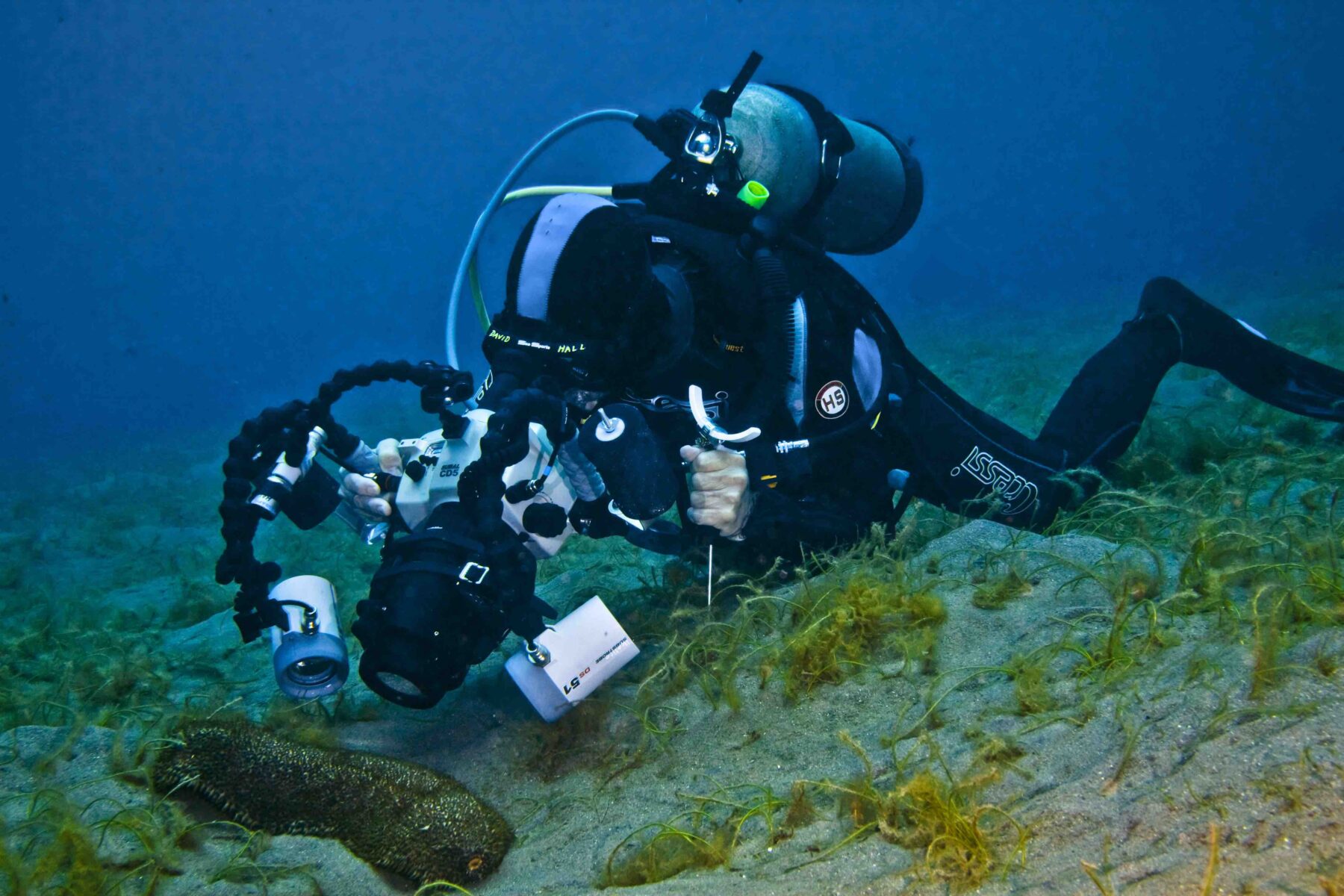
Photographing commensal shrimp on a sea cucumber; Dominica, Caribbean

Text and Photos David Hall

My very first dive was in icy water at an abandoned quarry in New York State in early spring. The underwater visibility was less than a foot and I could barely make out the dive instructor’s hand signals as he watched me demonstrate my skills. I came away with basic scuba certification, but with no desire to dive again in cold water.

Over the next two decades I logged thousands of dives, all of them at tropical Caribbean or Indo-Pacific locations. I dived and photographed in more than 30 different countries, from Egypt to Fiji and from the Bahamas to Bonaire. My photography improved steadily and soon my photographs were being published regularly. Nevertheless, at times, I had the distinct feeling that I was repeating myself, turning out similar images of the same subjects, photographed again and again. My creativity seemed stifled.

From time to time, I had seen published photographs taken in colder waters by David Doubilet and others. These intriguing images provided my first glimpse into a different underwater world, one without reef-building corals, populated by sea dragons, wolf eels, and other seemingly impossible creatures. I eventually decided to experience this world for myself and focused initially on the Pacific Northwest and British Columbia.

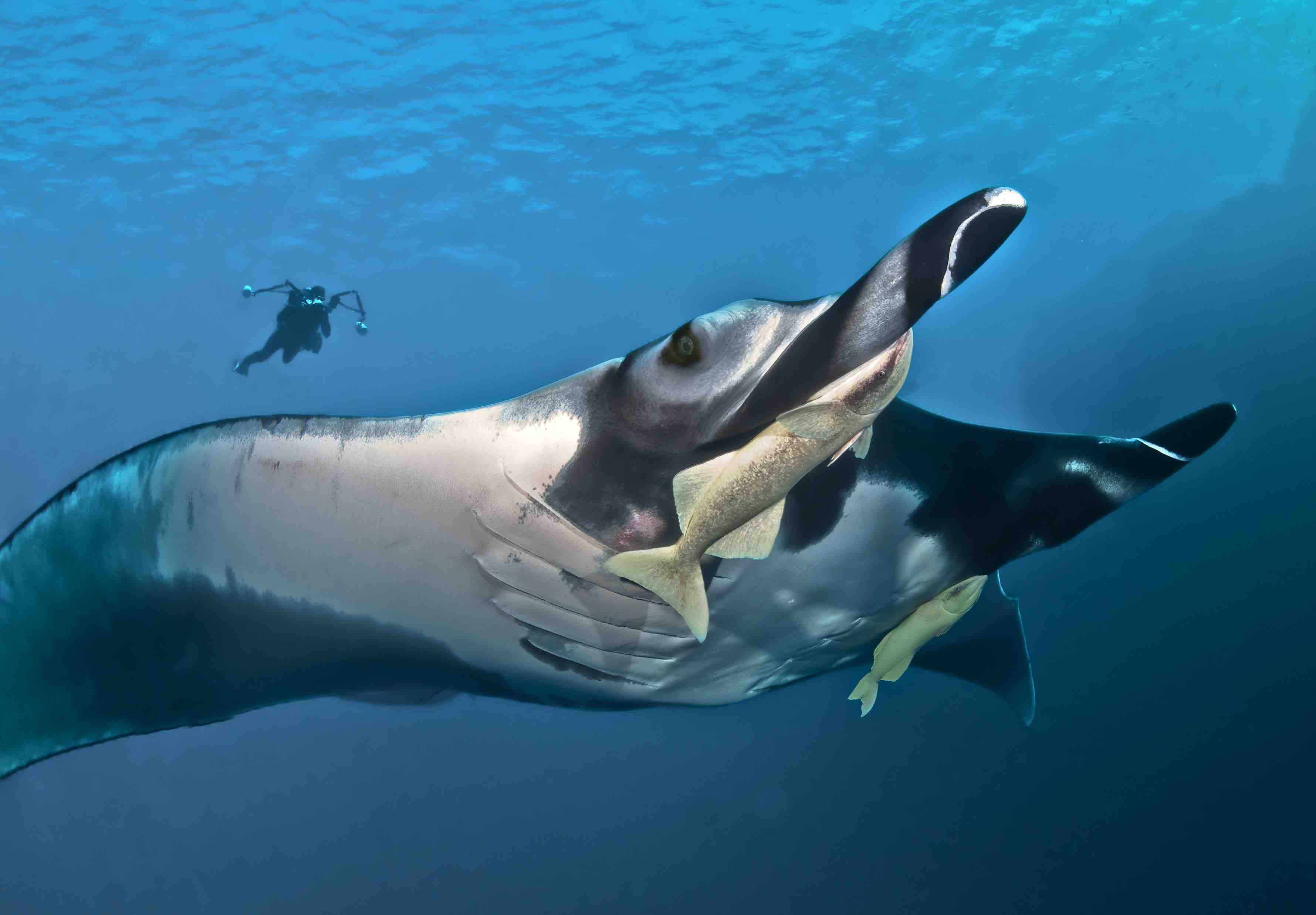
Giant Pacific Manta with photographer (David Hall) Manta birostiris; Socorro Island, Revillagigedo Islands, Mexico

Diving in Cold Water

Water temperature in British Columbia does not vary much with the seasons and is typically 7–10ºC. Photographing underwater is technically challenging and requires good concentration, which in turn requires a reasonable level of comfort. In cold water, this means staying warm. Becoming familiar with a drysuit can therefore be reasonably regarded as a necessary first step toward mastering cold-water photography.

I acquired my first drysuit almost 20 years ago and immediately headed for southern California to try it out in 18ºC clear water. I made the initial mistake of bringing a camera on my very first drysuit dive, and spent a good part of the dive just struggling to keep my feet from floating up over my head. For the second dive, I left my camera behind and focused instead on learning how to control my trim and buoyancy. At first, air within the suit seemed to shift unpredictably, playing havoc with my body position in the water. I soon learned how to anticipate this phenomenon and modulate it.

The largest of the sea lions and the third largest pinniped (after elephant seals and walruses): males may weigh up to 2500 lbs. Hornby Island, British Columbia

By the third dive I was becoming comfortable enough to carry a camera and to capture a few images of the remarkable giant kelp environment. British Columbia, in the heart of the Pacific Northwest, would become my first major cold water destination.

British Columbia: My initial photographic results in British Columbia were so encouraging that I returned many times, photographing in different seasons and at different locations.

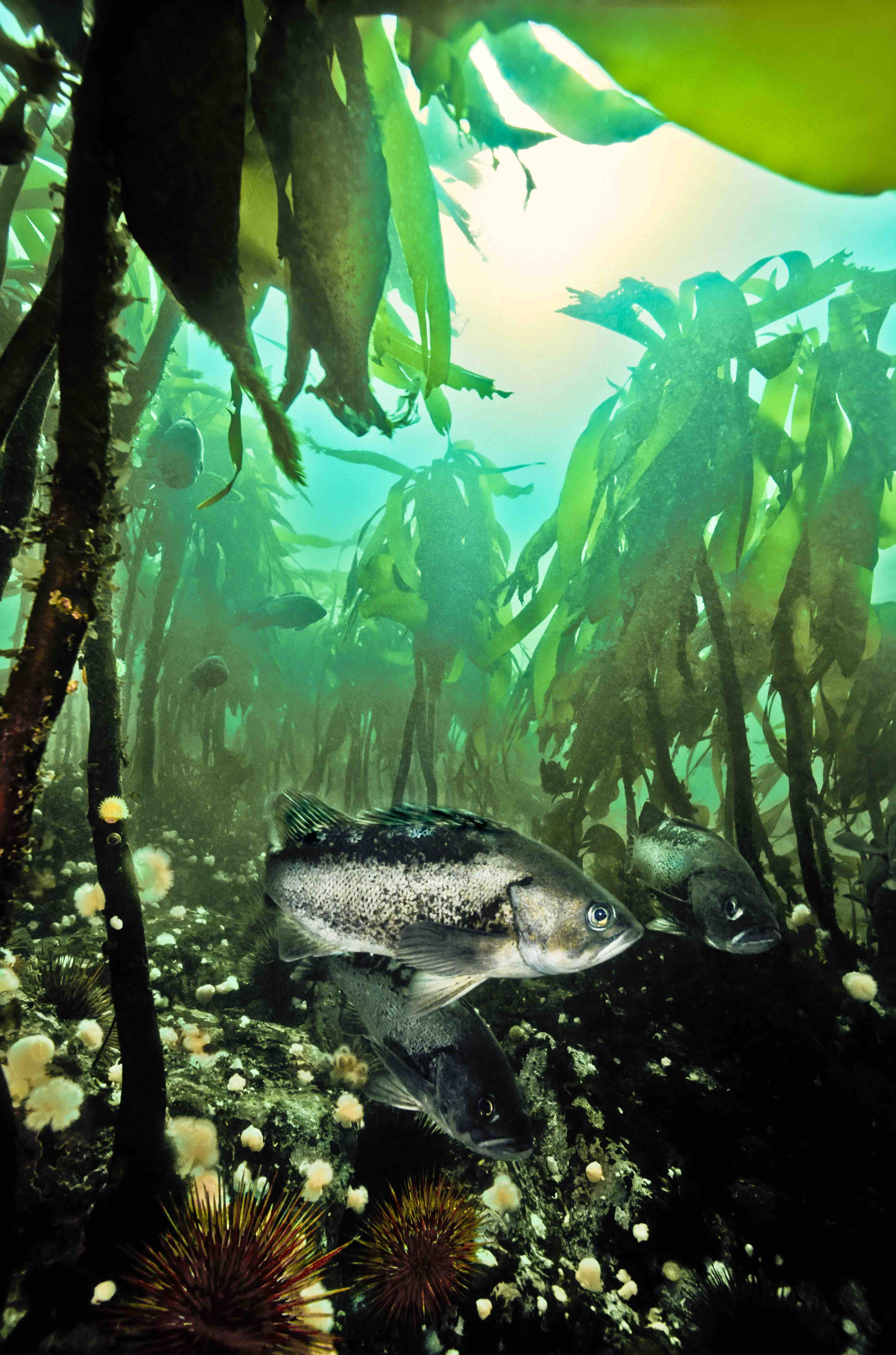
Pterygophora californica & Sebastes melanops Hunt Rock, Queen Charlotte Strait, British Columbia

New Zealand came next, followed by South Australia and Tasmania. Then, Japan, the Izu Peninsula. I had long wanted to photograph in temperate Japanese waters, but dive services and accommodations there are difficult to access by visiting divers who do not speak Japanese. I was fortunate to become acquainted with Chris Bangs, an American dive instructor who was working with one of the dive shops in Tokyo several years ago. The owner of the shop was extremely helpful, and made advance arrangements for Chris and me to dive at several locations in and around Izu, including Jogashima, Yawatano, Futo Point and Osezaki.

For the rest of this article (Asian Diver 2012 Issue 3 No 120) and other stories, check out our past issues here or download a digital copy here.

The 25th anniversary of the largest and longest running dive show, Asia Dive Expo (ADEX) is set to occur on the 11-14th April 2019 in Singapore. Centred on the theme – Plastic free Future, ADEX is more than just a dive show with its commitment to the environment. Among an exciting lineup of programs, attendees can look forward to a Future Forward Series of Panel Discussion on the Single-Use Plastic Conundrum in Asia, on 13th April.

So join us at the event, get inspired and for all you know, you might just liberate the inner diver in you! More details of the event here