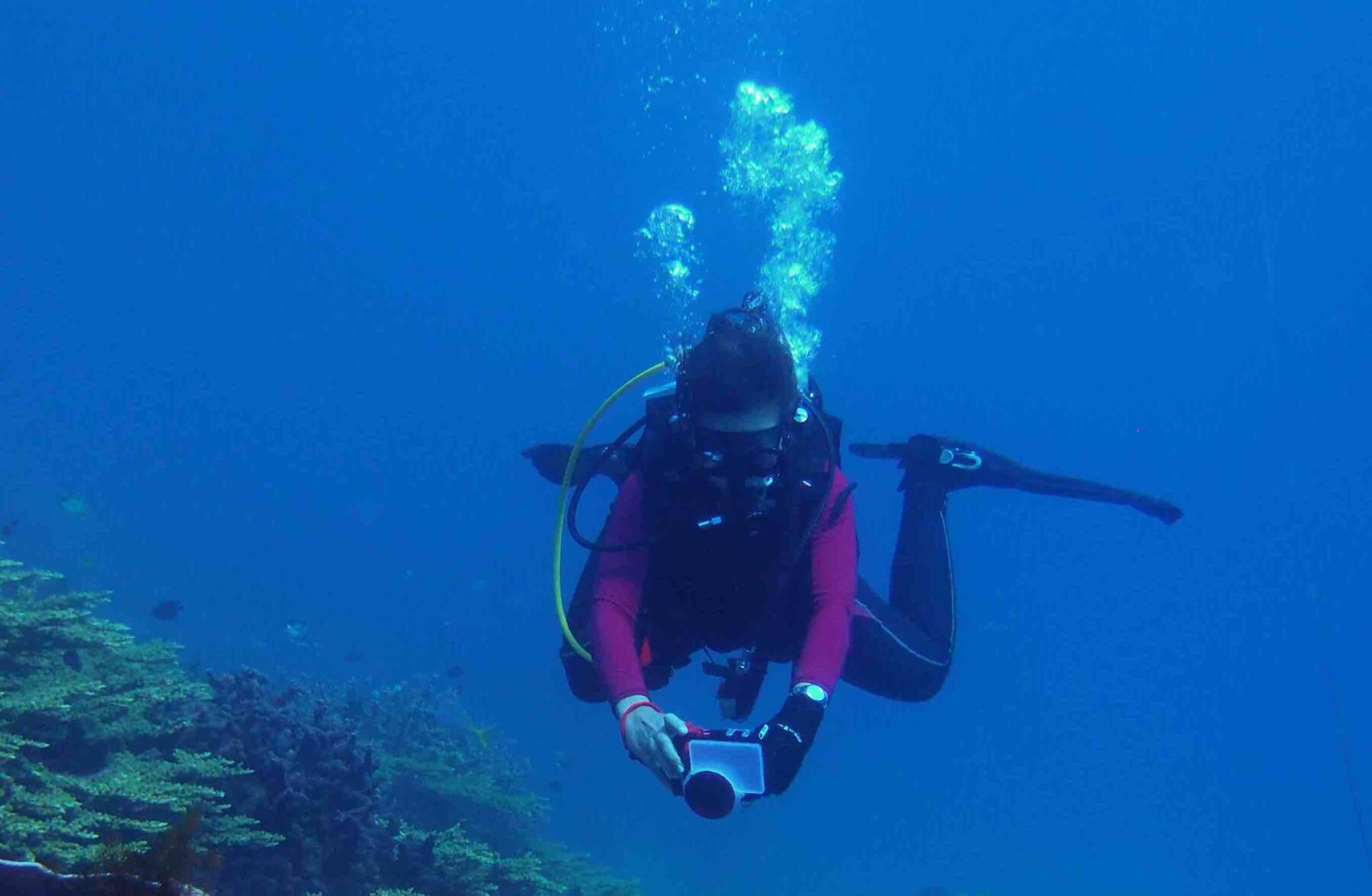
As the oceans warm, some fish species are migrating away from equatorial waters towards cooler areas closer to the poles.
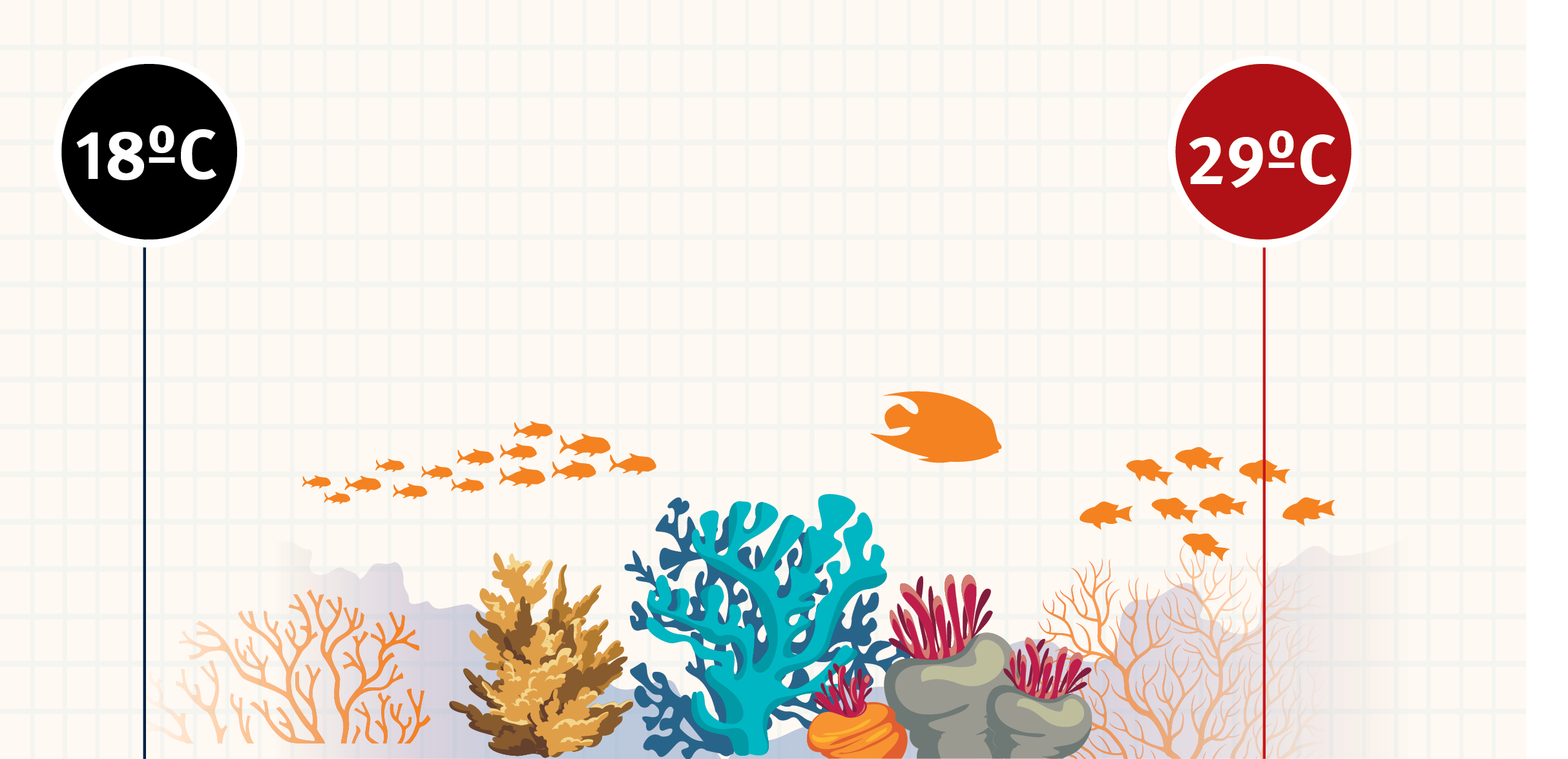
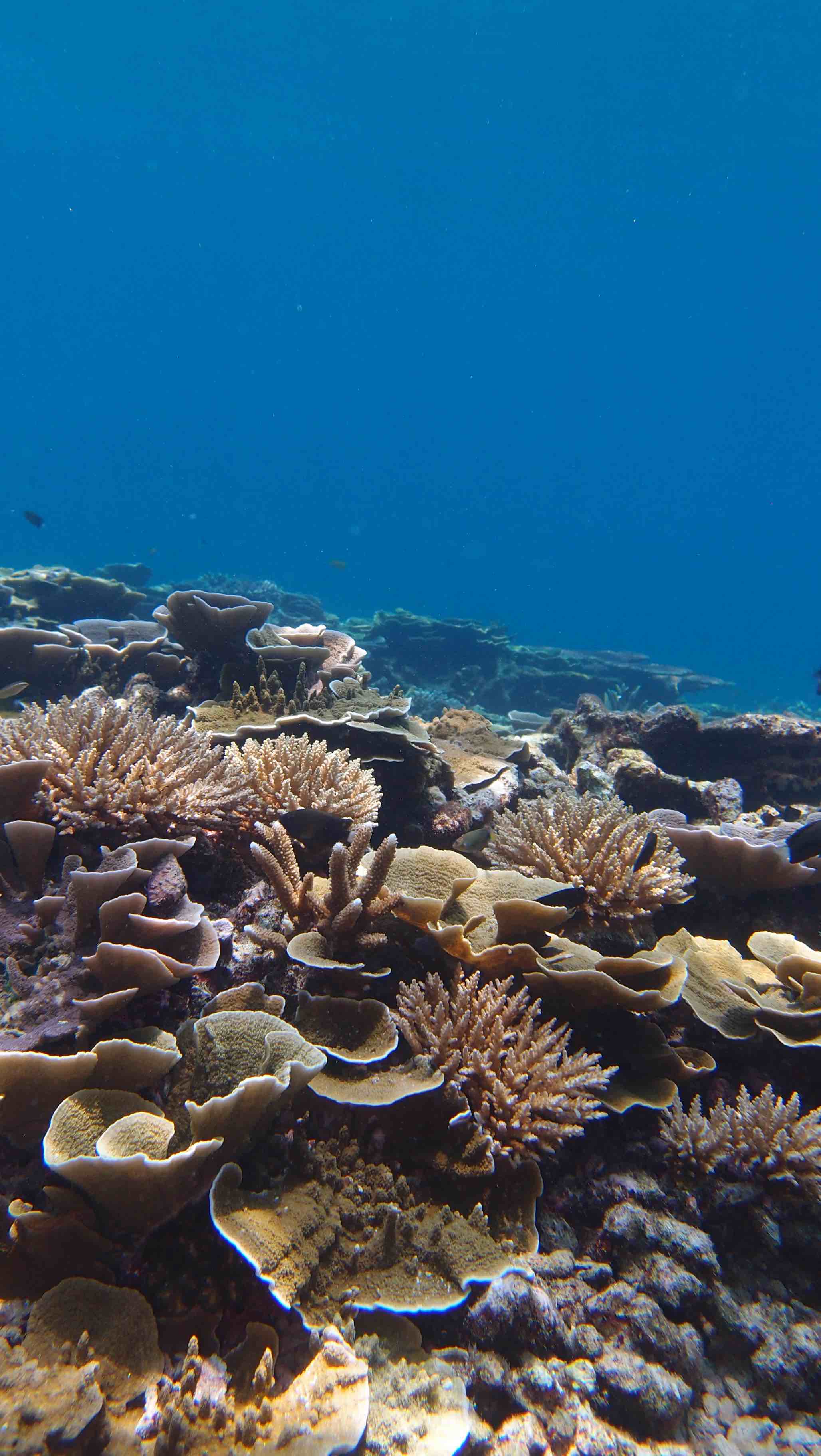
The optimum temperature range for coral is between 18 and 29 degrees Celsius. Corals can withstand short periods of warmer or cooler water. Corals in some areas have been shown to be much more tolerant of fluctuations in temperature and studies suggest this may be a source of hope for the future of coral reefs.
Higher temperatures are also leading to an increase in large-scale, prolonged, coral bleaching events. Coral bleaching is one of the most visual indicators of thermal stress due to climate change.
Corals exist in a symbiotic relationship with microscopic algae called zooxanthellae that live in the corals’ tissues and, through a process of photosynthesis, produce vital food for the coral polyps
When water temperatures are consistently too warm, the corals and zooxanthellae become stressed. The zooxanthellae will leave their coral hosts. The coral loses its colour, turning white. This will normally happen over a period of 4–6 weeks
If water temperatures do not drop, the coral will starve and die. The remaining skeleton will be colonised by algae, making it impossible for the coral to recover
For the rest of this article (Asian Geographic No.134 Issue 1 /2019 ) and other stories, check out our past issues here or download a digital copy here
The 25th anniversary of the largest and longest running dive show, Asia Dive Expo (ADEX) is set to occur on the 11-14th April 2019. Centred on the theme – Plastic free Future, ADEX is more than just a dive show with its commitment to the environment. Among an exciting lineup of programs, attendees can look forward to a Future Forward Series of Panel Discussion on the Single-Use Plastic Conundrum in Asia, on 13th April.
So join us at the event, get inspired and for all you know, you might just liberate the inner diver in you! More details of the event here.
The plastic pollution that spills out from the waters in Asia is rooted in the consumption of plastic from rapidly growing cities that are directlycontributing to the growth of some of the fastest growing economies in the world. The impact of this pollution on biodiversity across land and sea is a far reaching problem that has affected far flung places from Mongolia, Russia and China to India, Vietnam and southeast Asia.
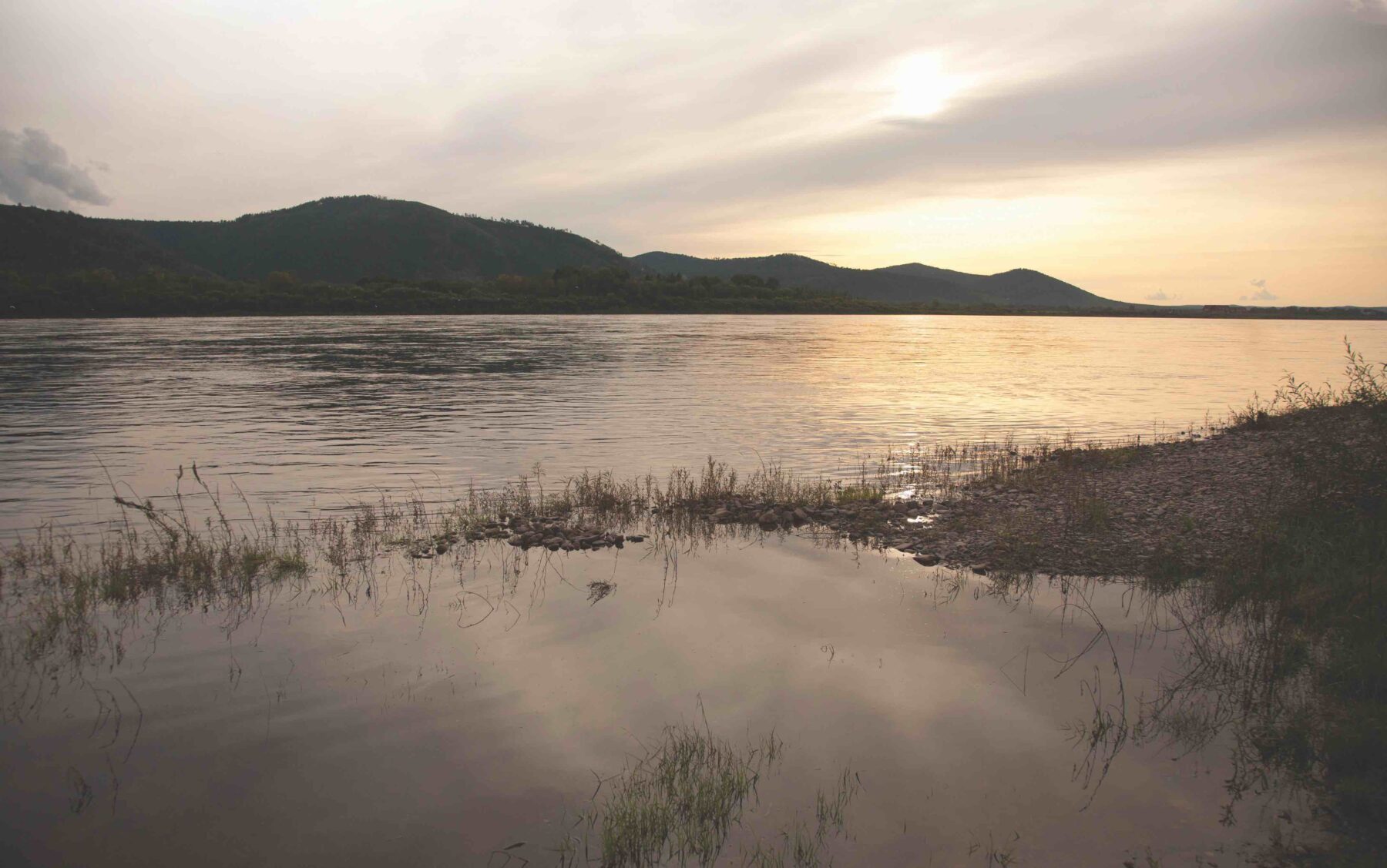
Amur River (Heilongjiang) The Amur River, Heilongjiang (in mandarin) or Kharamuren River (in Mongolian, the name means “black river”) is formed by the junction of the Shilka River, which rises in Russia (more than 500 kilometres inland at Siberia), and the Argun (Ergun) River, which rises in Inner Mongolia (more than 1,600 kilometres). Originating in the western part of Northeastern China, the river flows east, forming a significant part of the border between Heilongjiang province (China) and Siberia (Russia) and discharges eventually into the Sea of Okhotsk. The Amur River supports a population of almost 75 million people.
The Amur (Siberian) tiger is regarded as a symbol of national pride (Photo Credit: Shutterstock)
The largest undammed river in the Eastern Hemisphere, the Amur’s watershed is over 380 million acres and forms part of the Amur-Heilong forest which straddles the border of China and Russia. The Amur flows for over 4,000 kilometres starting in Mongolia and forms the border between northeast China and southeast Russia.
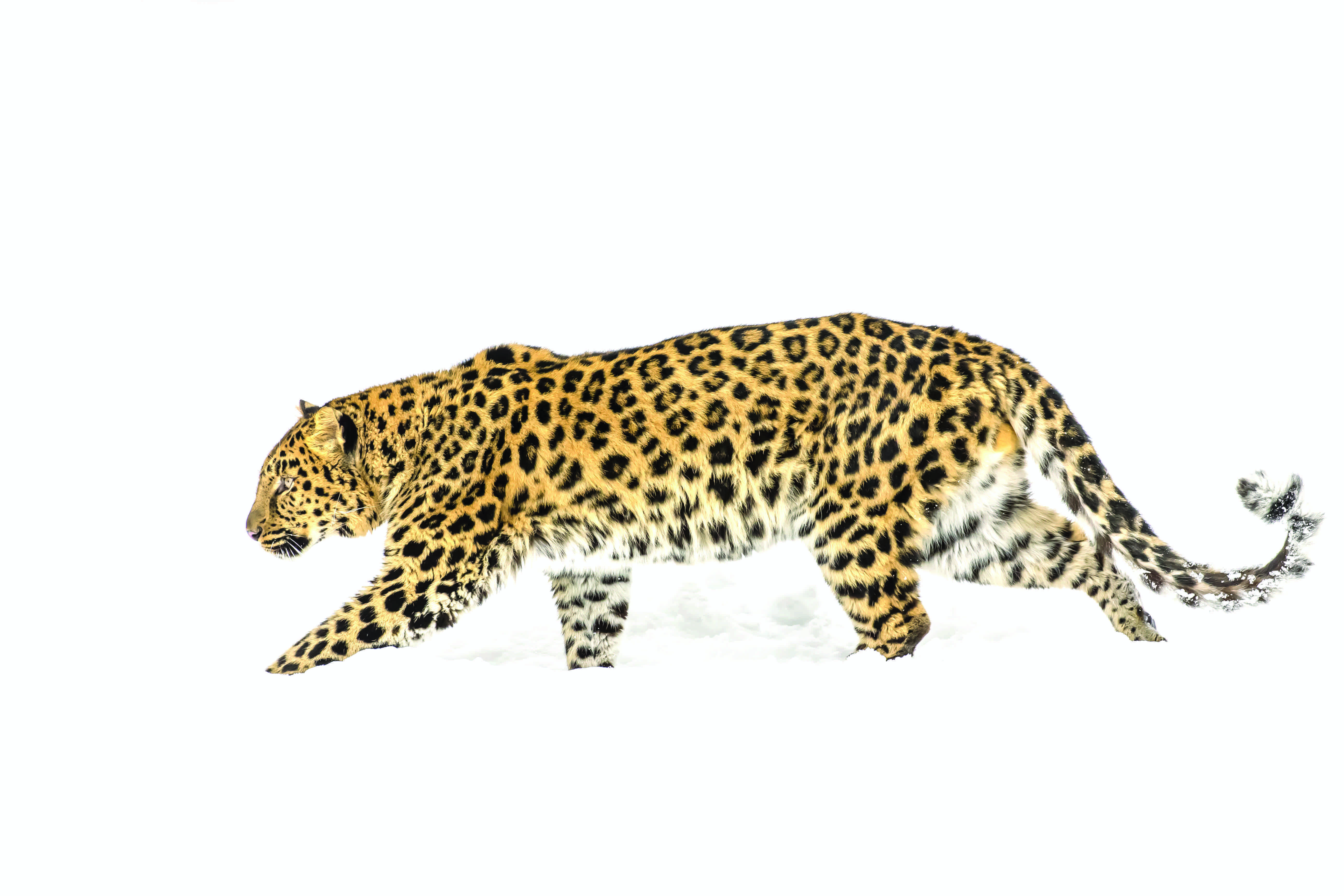
One of the most biologically diverse forests in the world, the Amur-Heilong forest is home to the Amur leopard, one of the world’s most endangered large cats, and the endangered Amur tiger. A mixed woodland-grassland landscape, it houses an amazing array of plant species (like the Korean pine and wild ginseng) and animals that are facing huge threats from deforestation, illegal logging and infrastructure development.
The Amur leopard is one of the most endangered big cats on Earth with only 84 remaining in the wild (Photo Credit: Shutterstock)
Several major tributaries of the Amur are already blocked by hydropower dams. Heavy industries and mines along its lower reaches are discharging waste and heavy metals into it. Sewage discharge from cities around it are a huge source of pollution. In 2005, the Jilin chemical plant exploded and about 100 tonnes of pollutants containing benzene and nitrobenzene were released into the Amur. An 80 kilometre long slick of toxic chemicals passed through the Songhua River into the Amur, passing through Khabarovsk Krai before exiting into the Strait of Tartary. The benzene level, at one point, was recorded to be 108 times above national safety levels. Benzene exposure reduces red blood cell count and is linked to leukaemia.
For the rest of this article (Asian Geographic No.134 Issue 1 /2019 ) and other stories, check out our past issues here or download a digital copy here
The 25th anniversary of the largest and longest running dive show, Asia Dive Expo (ADEX) is set to occur on the 11-14th April 2019. Centred on the theme – Plastic free Future, ADEX is more than just a dive show with its commitment to the environment. Among an exciting lineup of programs, attendees can look forward to a Future Forward Series of Panel Discussion on the Single-Use Plastic Conundrum in Asia, on 13th April.
So join us at the event, get inspired and liberate the diver in you! More details of the event here.
Murky waters, barren reefs and trash-strewn beaches – these are likely the first images that come to mind when one envisions Singapore’s marine environments. Truth is, we also often stop short of exploring for ourselves what truly lies beneath the surface surrounding this tiny, island state – habitats teeming with colourful and diverse marine flora and fauna. And that comes as not much of a surprise.
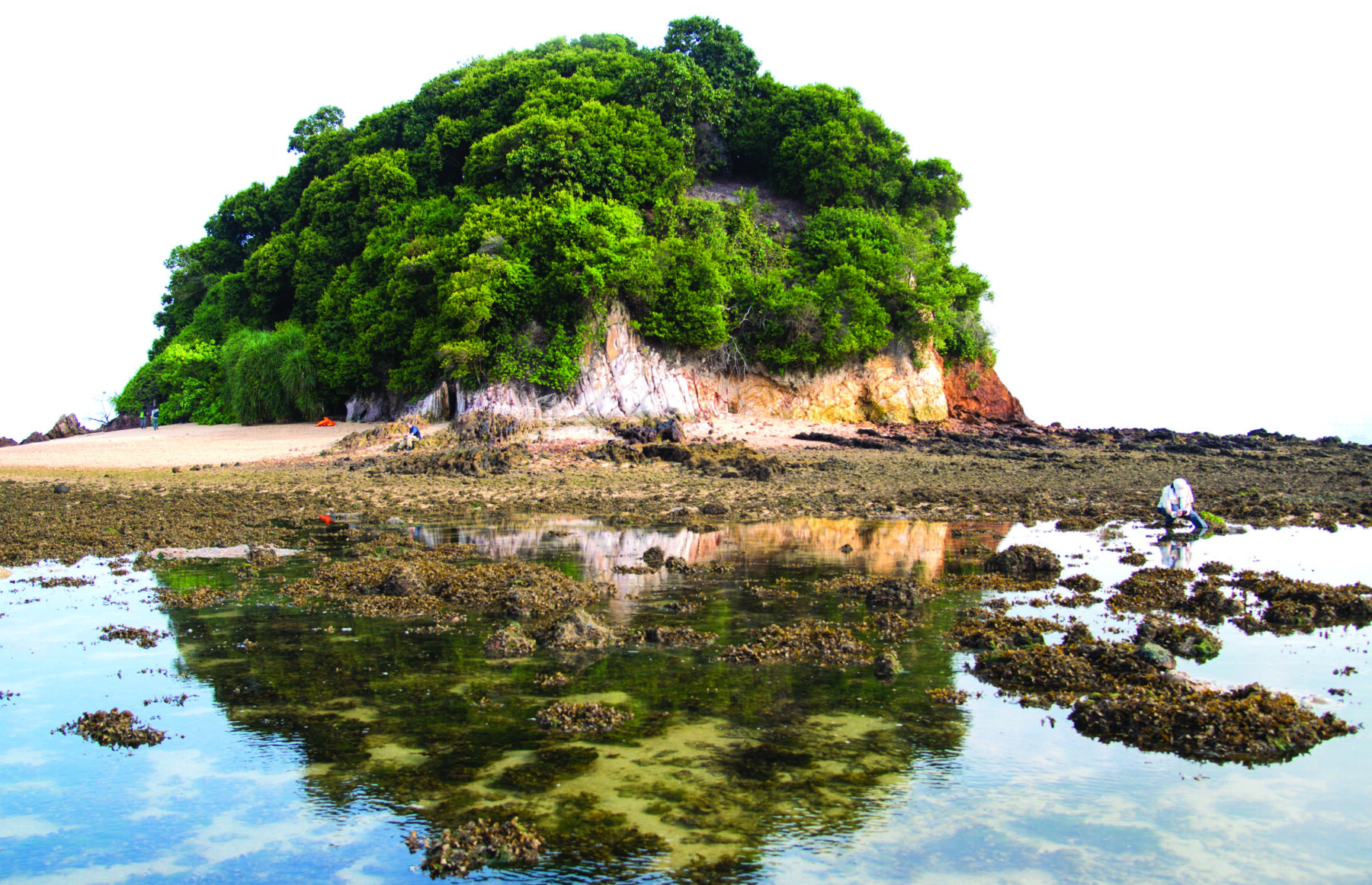
Volunteers survey the exposed coral reefs of Beting Bemban Besar island, which lies off Pulau Semakau. It features sandy areas and seagrass meadows, alongside rubbly coral habitats.
Singapore is geographically situated near the Coral Triangle, a marine area in the western Pacific Ocean that spans the seas of Malaysia, Indonesia, the Philippines, Papua New Guinea, Timor-Leste and the Solomon Islands. According to the World Wildlife Fund (WWF), this area is the planet’s richest in terms of marine life, with nearly 600 species of corals and six out of the world’s seven sea turtle species found here. But misconceptions about Singapore’s marine landscape often arise as a result of anthropogenic impacts, which the world’s second busiest seaport issusceptible to experiencing.
Land reclamation works at the majority of Singapore’s southern and northeastern coasts, along with its southern islands, have accounted for a total increase in the country’s land area by over 20 percent. Coastal defense infrastructure, frequent ship dredging along its channels and other extensive development projects have also led to habitat loss and coral degradation, most evident in the reduction of Singapore’s reef area from around 40km² in 1953 to a little over 13km² today.
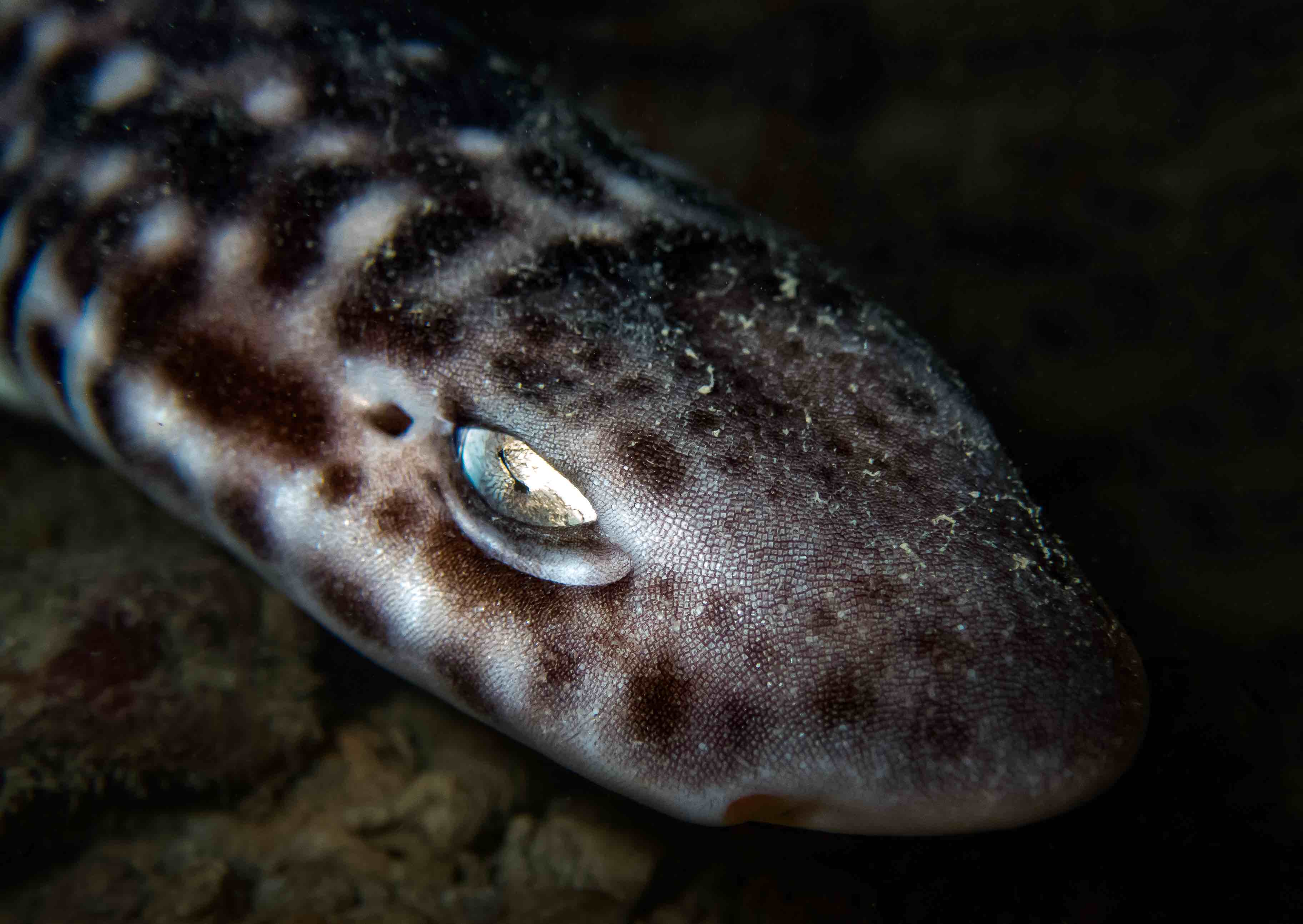
The coral cat shark, Atelomycterus marmoratus, one of several shark species in Singapore’s waters is found at Terumbu Bemban, one of the country’s southern reefs.
As a result, high levels of sedimentation have reduced the visibility in surrounding waters to about 3 to 5 metres at best. Interestingly, this has not diminished the abundance of life around our shores. “Despite the sedimentation, we have actually quite a lot of diversity in our reefs,” reveals Samuel Chan, who currently studies the ecological history of local reefs at the Reef Ecology Lab of the National University of Singapore (NUS). “For example, what we find are more plating corals because those are the forms that have the most resistance against the sedimentation. Ultimately, these human activities have only increased the resilience of our reefs.”
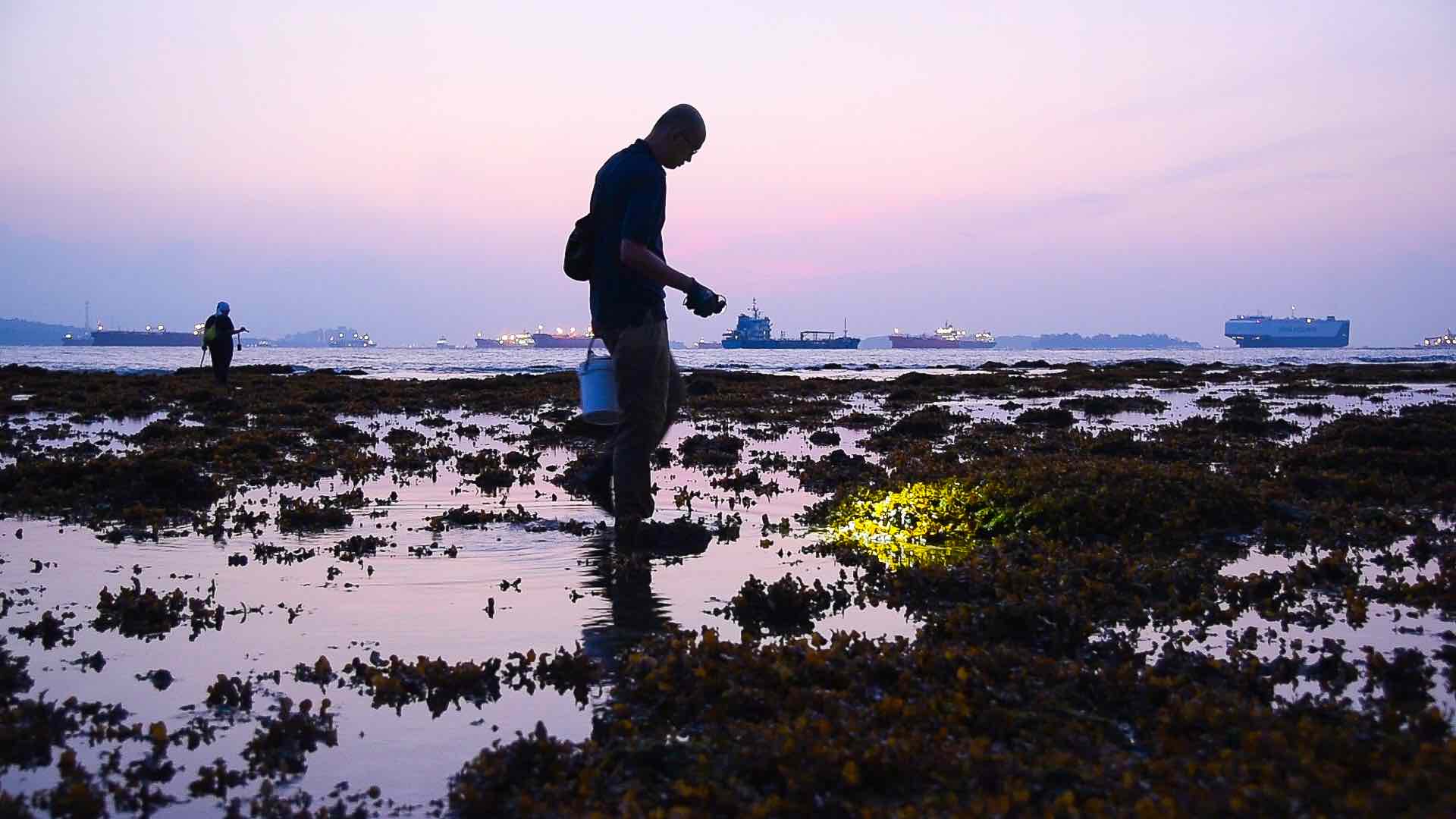
Scientists like Chan have long gotten the support of volunteer-led initiatives like regular intertidal surveys. One example is WILD Singapore, a one-stop online platform founded by Ria Tan that catalogues facts about Singapore’s shores.
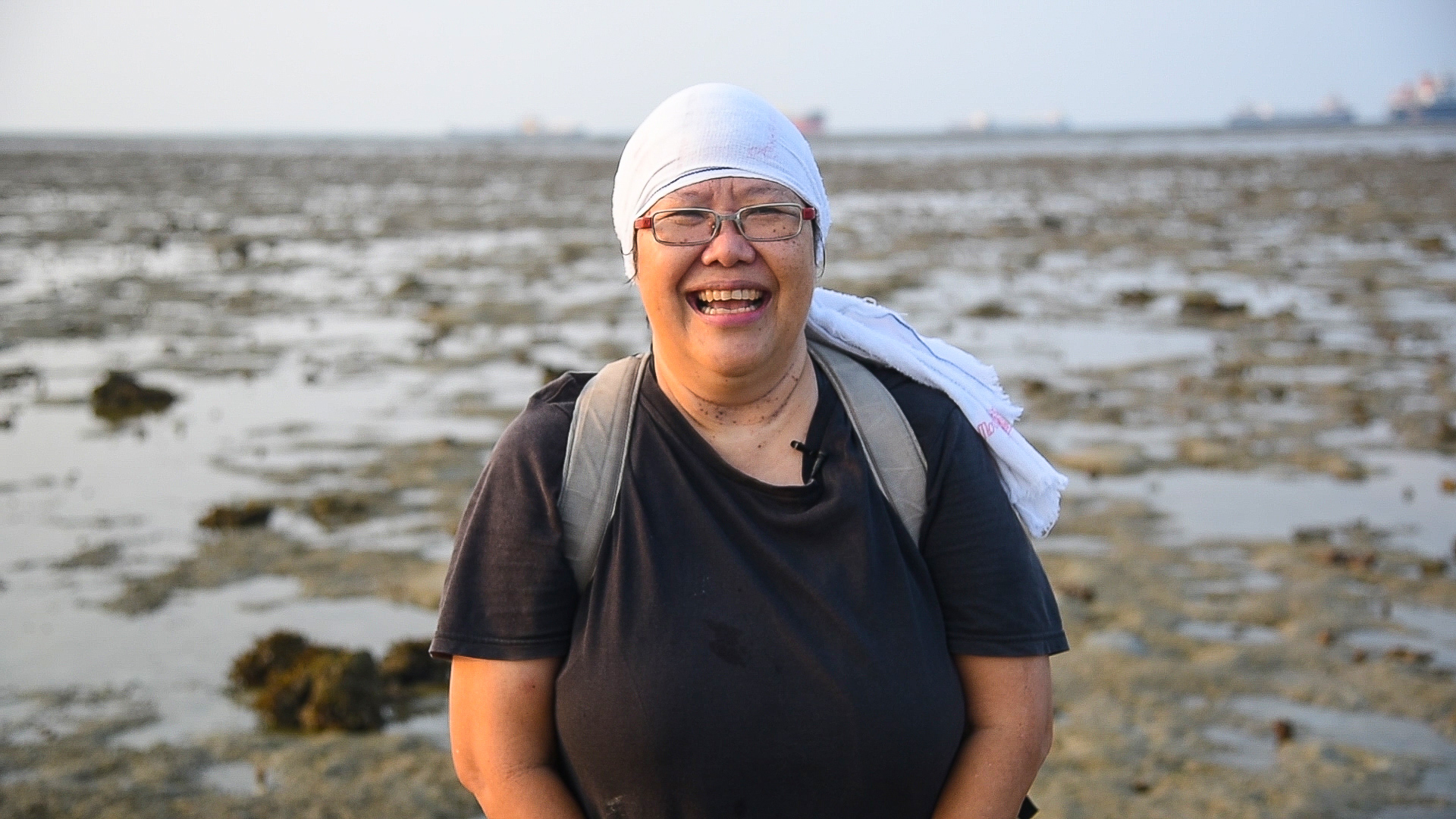
Ria Tan is the founder of WILD Singapore, a one-stop online platform sharing interesting facts and volunteer opportunities about Singapore’s shores
For the rest of this article (Asian Geographic No.134 Issue 1 /2019 ) and other stories, check out our past issues here or download a digital copy here
The 25th anniversary of the largest and longest running dive show, Asia Dive Expo (ADEX) is set to occur on the 11-14th April 2019. Centred on the theme – Plastic free Future, ADEX is more than just a dive show with its commitment to the environment. Among an exciting lineup of programs, attendees can look forward to a Future Forward Series of Panel Discussion on the Single-Use Plastic Conundrum in Asia, on 13th April.
So join us at the event, get inspired and liberate the diver in you! More details of the event here.
It is a well-known fact that microplastics swimming in our oceans are a huge problem but have they already found their way into our stomachs? (Text Rachel Kwek and Terence Koh)
Ocean plastic pollution is a major and growing global problem. Scientists estimate that the Earth’s oceans may already contain more than 150 million metric tonnes of plastic, with eight million metric tonnes more entering the oceans each year. Plastics do not degrade easily. In the marine environment, plastics are usually broken down into smaller pieces by the sun, waves, wind and microbial action. These micro- and nanoplastic particles in the water may be ingested by filter-feeding marine organisms such as barnacles, tube worms and sea squirts.
What happens when plastics end up in the marine environment?
In a study funded under the Marine Science Research and Development Programme of the National Research Foundation Singapore (first published online in the journal ACS Sustainable Chemistry & Engineering in March 2018), a team of scientists from the National University of Singapore (NUS) found that plastic nanoparticles – tiny pieces of plastic less than one micrometre in size–are easily ingested by marine organisms and accumulate in the organs over time, potentially contaminating food chains, threatening food safety and posing
health risks.
The NUS research team, comprising scientists from the Tropical Marine Science Institute (TMSI) and Department of Chemistry, used the acorn barnacle Amphibalanus amphitrite in its tests to demonstrate for the first time that nanoplastics ingested during the larval stage are retained and accumulated inside the bodies of the barnacle larvae until they reached adulthood. “We opted to study acorn barnacles as their short life cycle and transparent bodies made it easy to track and visualise the movement of nanoplastics
in their bodies within a short span of time,” said Mr Samarth Bhargava, a PhD student from the Department of Chemistry in the NUS Faculty of Science.
Barnacle larvae were incubated in two solutions containing their regular feed and different amounts of 200-nanometre-wide plastics marked with green fluorescent tags:
“Acute” treatment: Solution with regular feed and 25 times more nanoplastics than the current estimate of what is present in the oceans on average for three hours
“Chronic” treatment: Solution with regular feed and a low amount of nanoplastics for four days
For the rest of this article (Asian Geographic No.134 Issue 1 /2019 ) and other stories, check out our past issues here or download a digital copy here
The 25th anniversary of the largest and longest running dive show, Asia Dive Expo (ADEX) is set to occur on the 11-14th April 2019. Centred on the theme – Plastic free Future, ADEX is more than just a dive show with its commitment to the environment. Among an exciting lineup of programs, attendees can look forward to a Future Forward Series of Panel Discussion on the Single-Use Plastic Conundrum in Asia, on 13th April.
So join us at the event, get inspired and liberate the diver in you! More details of the event here.
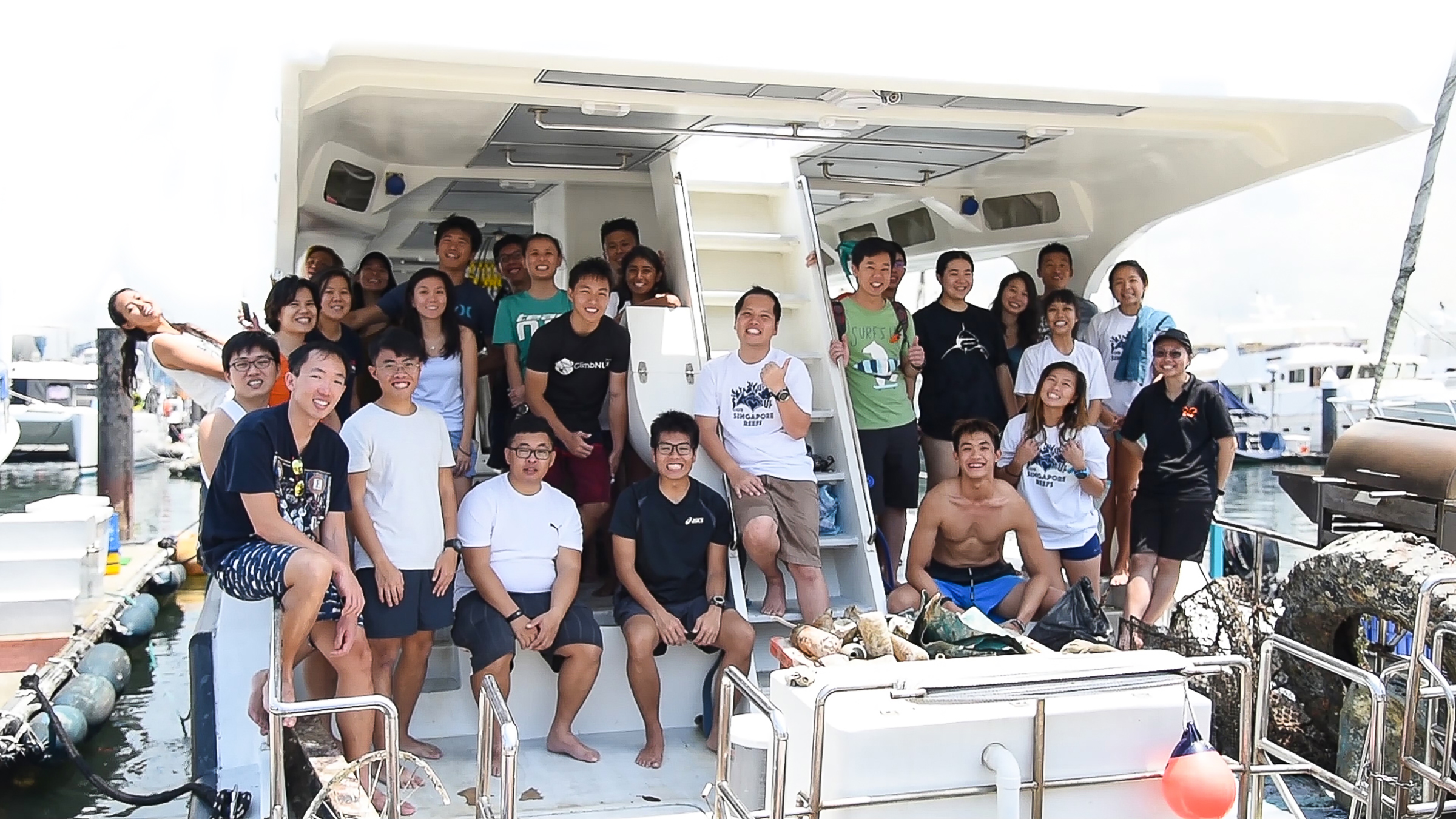
Volunteers get hands-on guidance and practice in weighing, sorting and cataloguing the various types of marine debris collected from the reefs
Text and Photos Nathaniel Soon
Volunteer groups in Singapore are cleaning up the island nation’s beaches and waterways and helping scientists assess the scale of local marine plastic pollution.
We have all likely come across the common narrative of the boy who aspired to rid his beach of sea stars washed up and stranded at low tide. In the story, a sceptical passer-by expressed doubt about his gesturing at the tens of thousands of sea stars stretching tothe horizon. The boy proverbially responded that he may not be capable of making a difference for every sea star, but at least he did for the ones that he was able to move. Parallels can be drawn to the challenges presented by the burgeoning marine debris in our oceans today: The scale of the problem often appears too overwhelming to invoke any action that one would recognise as significant, yet the widespread adoption of such a mentality only risks exacerbating the issue. “I’m not causing much harm, and I can’t do anything to help” has become the dominant rhetoric.
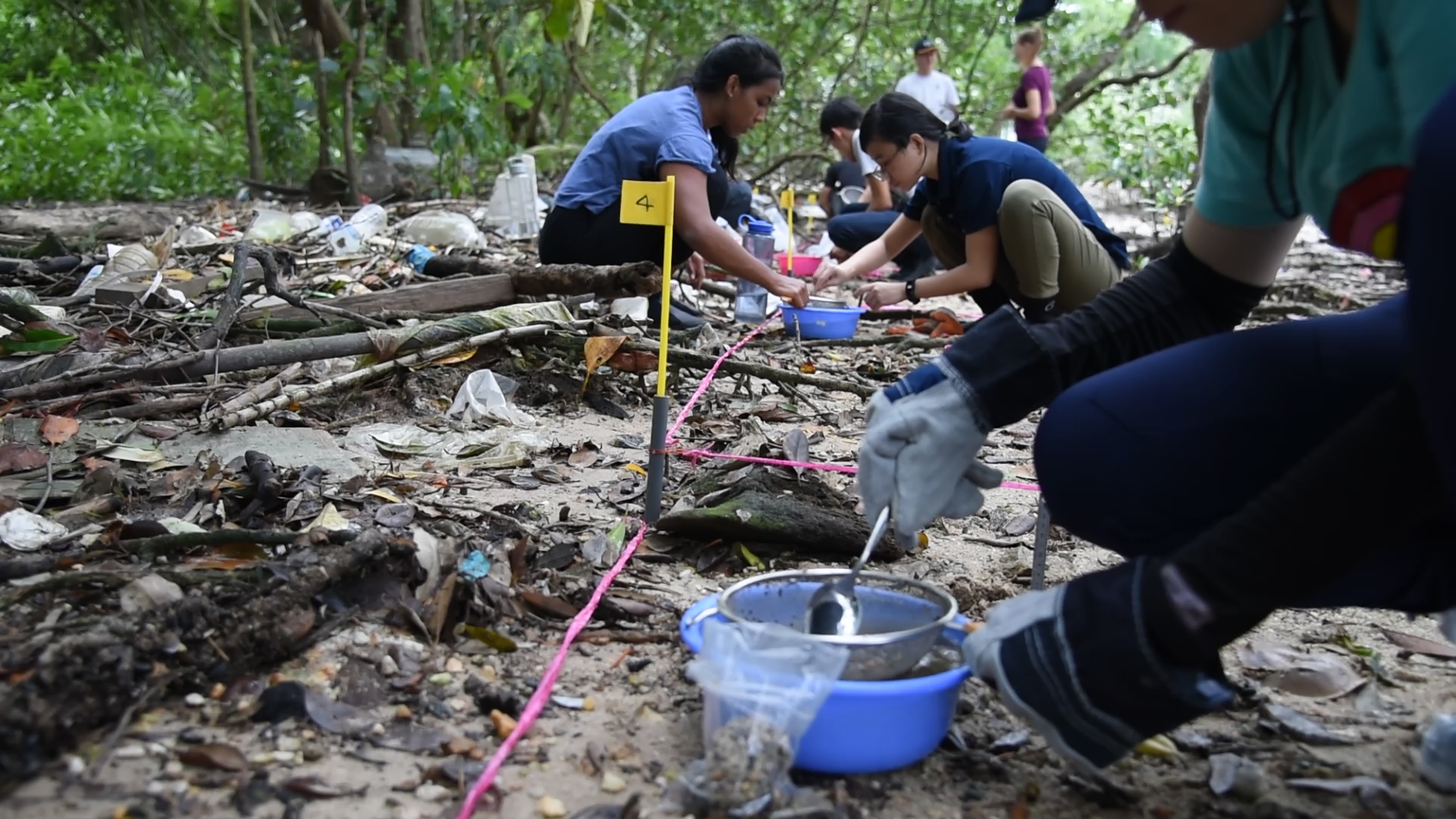
Volunteers sieve through sand samples along Lim Chu Kang beach for microplastics
Yet, the numbers speak for themselves. A 2013 study by the Singapore Environmental Council, a non-governmental organisation, revealed that Singaporeans used nearly three billion plastic bags a year. The National Environmental Agency then followed up in 2017, reporting that 763,400 tonnes of plastic waste were disposed of that year but only six percent was recycled, earning Singapore the new name “throw-away nation”. Much of this plastic waste ends up in the oceans as a result of improper disposal and waste management practices. Litter that floats is then washed ashore by the tides and deposited along the high-water mark up shore while that which sinks often gets trapped among the rocky or silty substrate surrounding Singapore.
More attention has been given to ocean plastics particularly because unlike other forms of debris, they do not biodegrade but instead disintegrate into indistinguishable microplastic fragments – which when ingested by marine organisms, inevitably enters the food chain and into our bodies. Given that Singapore’s waters are a diversity hotspot with over 17,000 species of marine biota, it remains vital that these organisms are protected against plastic pollution.
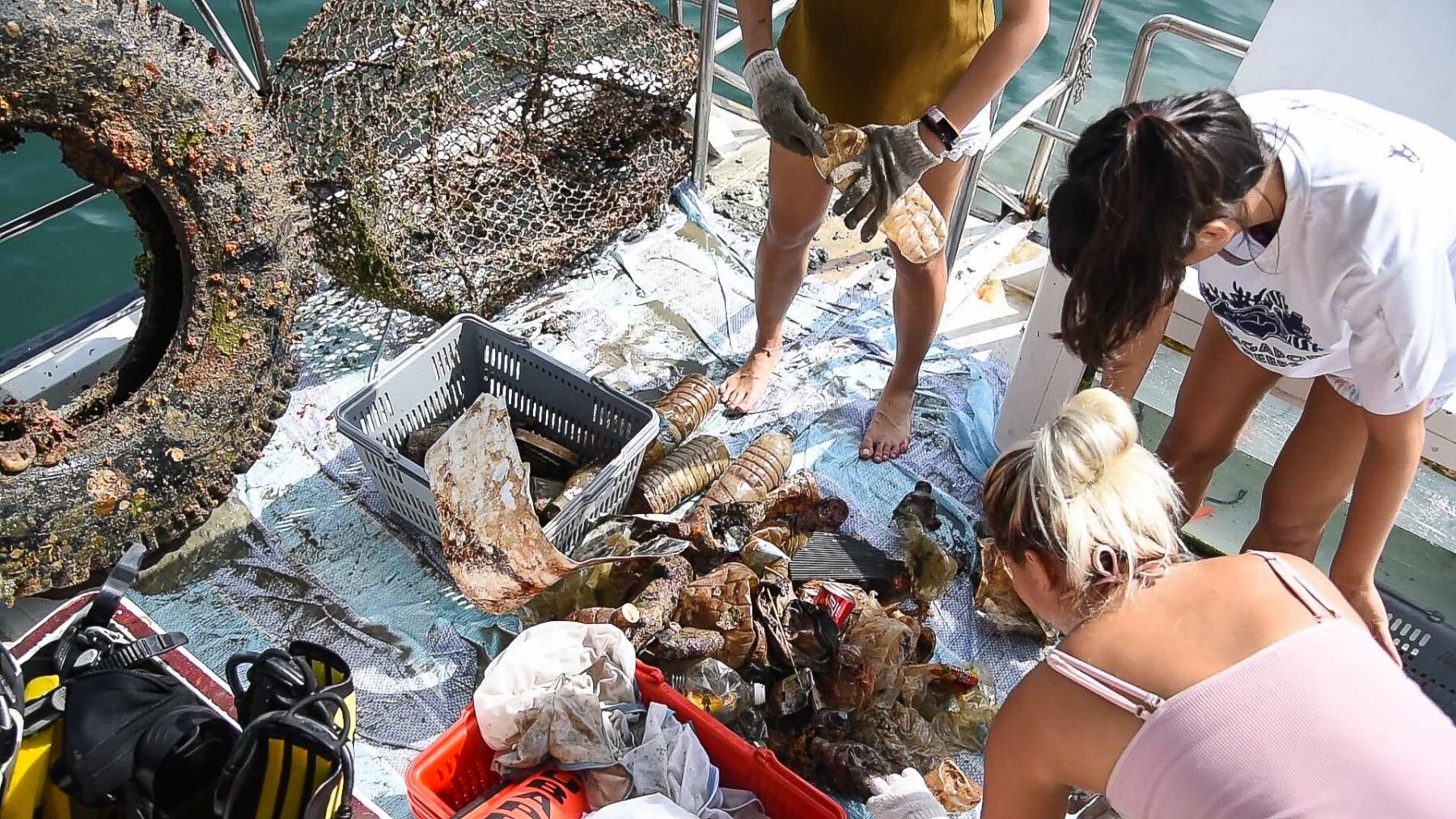
Dive volunteers returning to the boat with baskets of marine debris collected from the reefs at Lazarus Island
How big of a problem are ocean plastics in Singapore? According to the Singapore Blue Plan 2018, research among the scientific community and awareness among people remain in their infancy – up till 2017, no fundamental protocol for microplastic monitoring in Singapore existed and many individuals still remain ignorant about its presence in products they consume. This knowledge gap spurred a collaboration between the National University of Singapore (NUS) and the National Parks Board (NParks).
Now in its third year, the marine debris monitoring programme frequently recruits volunteers to assist in monthly microplastic sampling sessions across six field sites, such as Sisters’ Island Marine Park and the mangroves of Lim Chu Kang, in hopes of uncovering marine pollution trends that can be used to establish baseline data for Singapore.
Joleen Chan, a research assistant at the Department of Biological Sciences in NUS, spearheads this citizen science project. “By engaging volunteers, it is a win-win situation as researchers get scientific data to answer important questions and participants benefit as they get to experience pressing environmental issues first-hand and learn more through interactions with scientists,” she says.
For the rest of this article (Asian Geographic No.134 Issue 1 /2019 ) and other stories, check out our past issues here or download a digital copy here
The 25th anniversary of the largest and longest running dive show, Asia Dive Expo (ADEX) is set to occur on the 11-14th April 2019. Centred on the theme – Plastic free Future, ADEX is more than just a dive show with its commitment to the environment. Among an exciting lineup of programs, attendees can look forward to a Future Forward Series of Panel Discussion on the Single-Use Plastic Conundrum in Asia, on 13th April.
So join us at the event, get inspired and liberate the diver in you! More details of the event here.
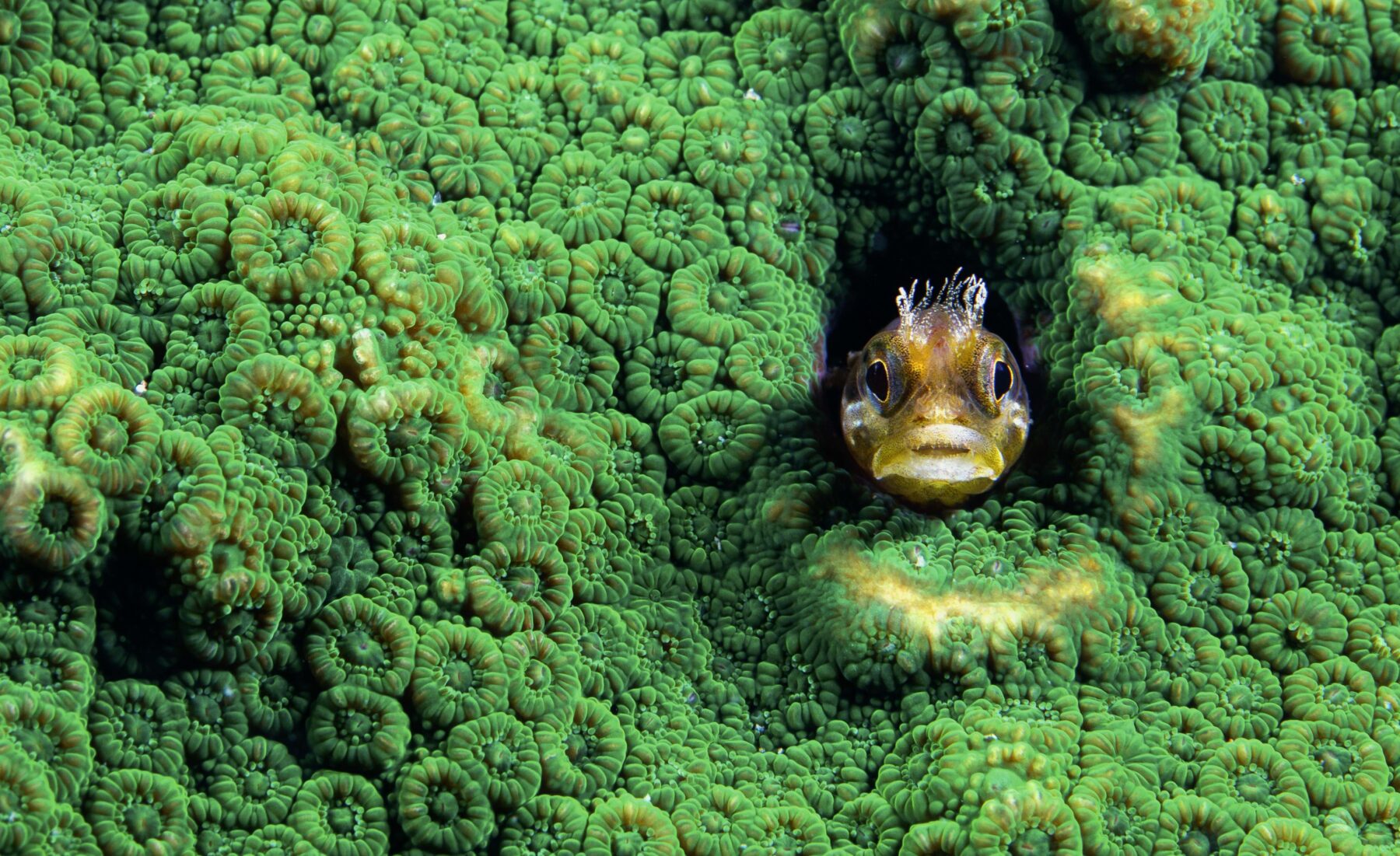
Blenny belvedere: Peekaboo at 82.5K in one of Taiwan’s best kept secrets, Long Dong
Green Islandis located southeast of Taiwan, a small primitive island 33 kilometres from Taitung City. The climate here is sub-tropical – warm, humid and windy conditions throughout the year. The average temperature is about 27°C during summer (July and August) and around 20°C during winter (January and February). Nonetheless, dive season lasts for a whopping 12 months with water temperatures hovering from 26–29°C (summer) and 22–25°C (winter). It should be noted though, there are typhoon risks from July through to September, when the strong southwest monsoon brings big waves.
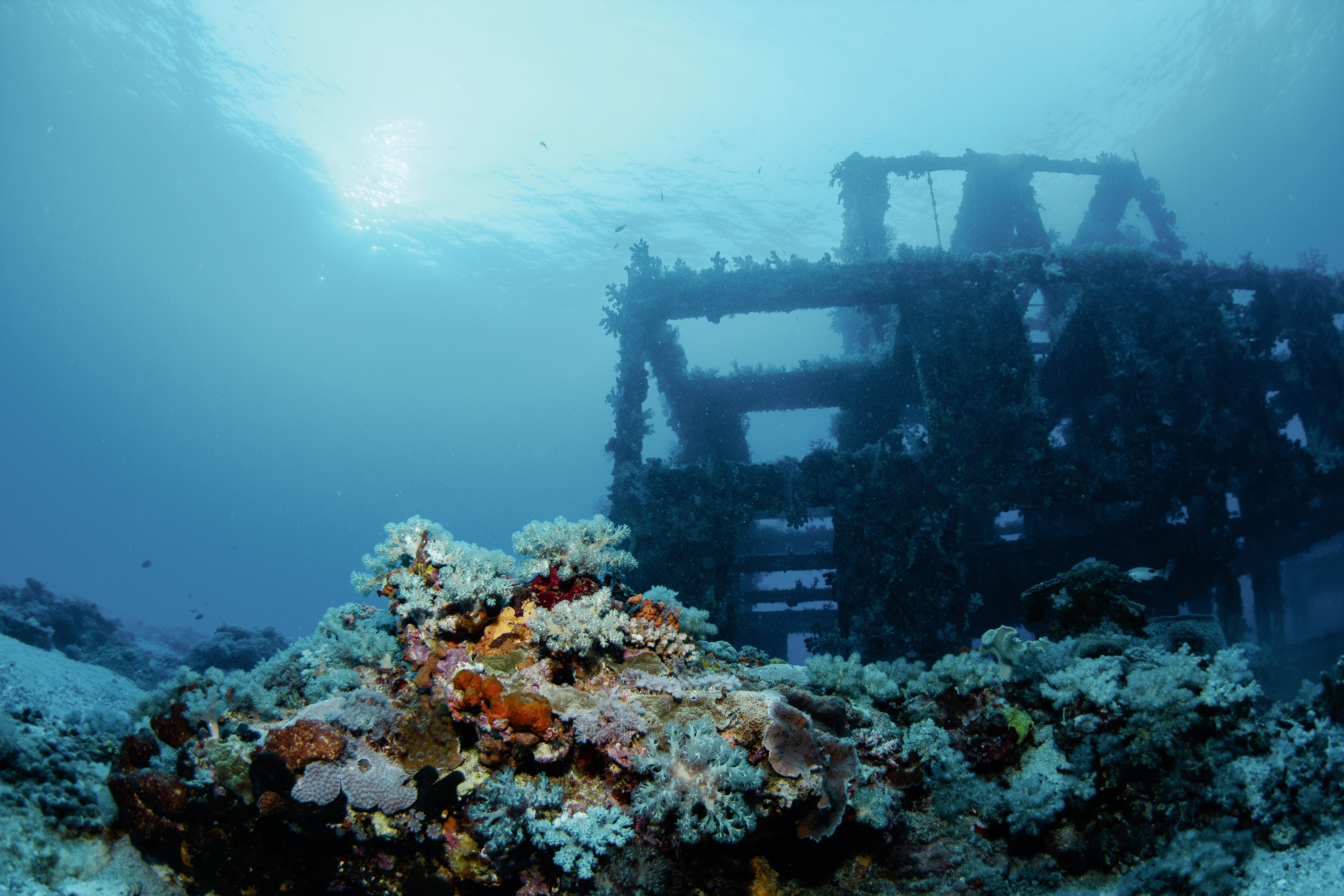
A famous site at Green Island, known as Iron Reef, gaudy with marine life
Visibility is usually on the good side, exceeding 30 metres. There are more than 20 boat-diving sites and more than 10 shore-diving sites on the island, providing both fantastic wide-angle and macro dives.
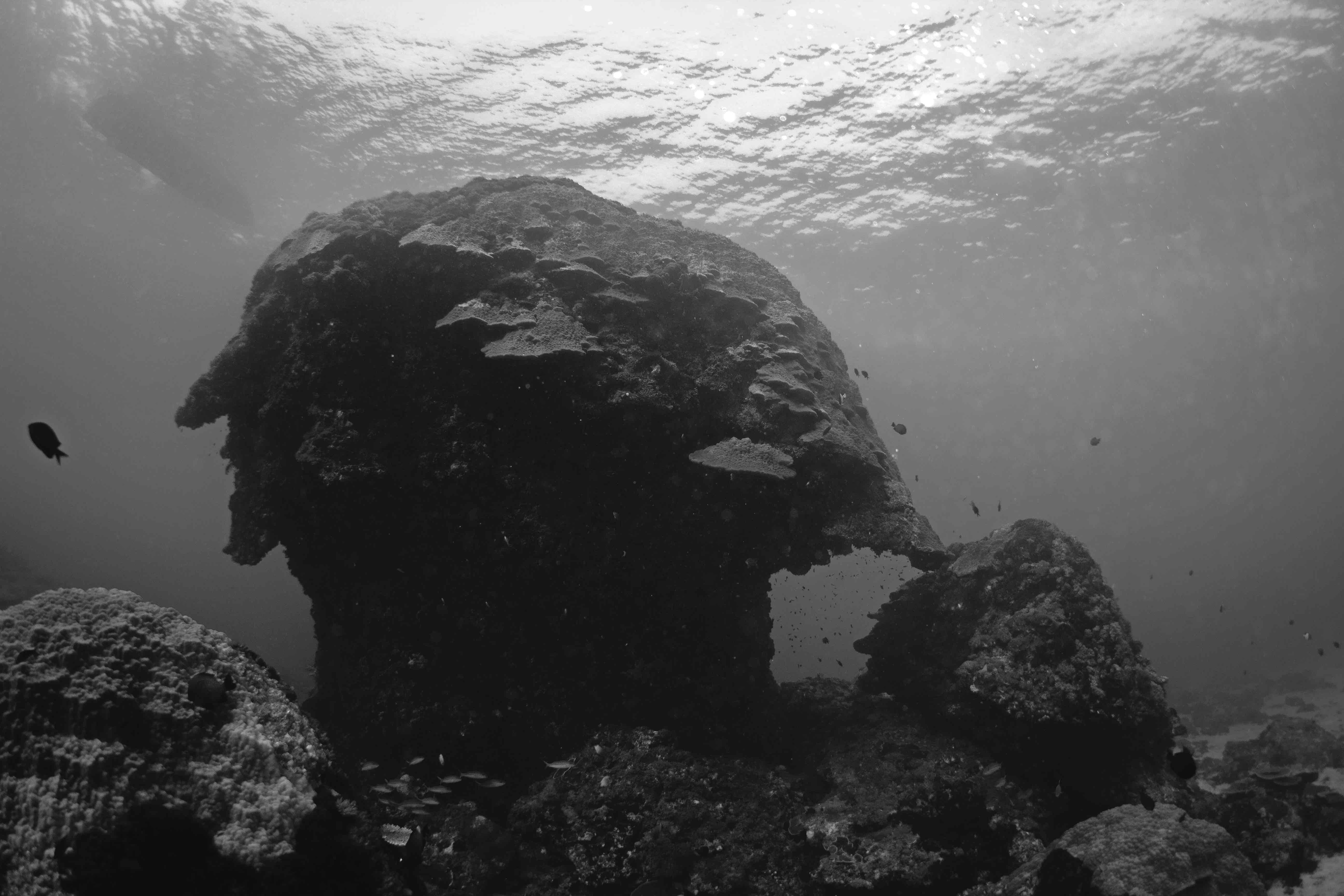
One of the most famous dive sites around Green Island is known as Big Mushroom. Located west of the island, Big Mushroom is known for a specific multi-coloured stone coral (Porites lobata) that sits on the sandy bottom at 18 metres. Around 10 metres in height with a circumference of around 31 metres, Big Mushroom is said to be the oldest and largest living coral in the world today. It has been chillin’ here at Green Island for more than 1,000 years and is still growing towards the surface at a speed of a centimetre a year.
Big mama: Big Mushroom has been struck twice by submarines and thus has two indented holes, which are now covered by many soft corals
The reef at Big Mushroom is covered with beautiful carnation tree and tube corals and there are usually many red coral perches with damsel fish gathering at the top. The species to look out for around Big Mushroom are anemone fish, jade filefish, porcupine fish, cardinal fish, lionfish, goatfish and butterfly fish, painting a colourful world.
Another famous dive site at Green Island is Iron Reef, located southwest of the island. It is an artificial reef composed of four cubic iron structures 10 metres long on each side. Iron Reef is on the main path of the Kuroshio Current (Black Stream), which brings warm, tropical-like waters full of nutrients. Many marine creatures are attracted to feed, breed and linger in the area, forming a rich ecosystem. The creature coverage on the reef reaches over 80 percent.
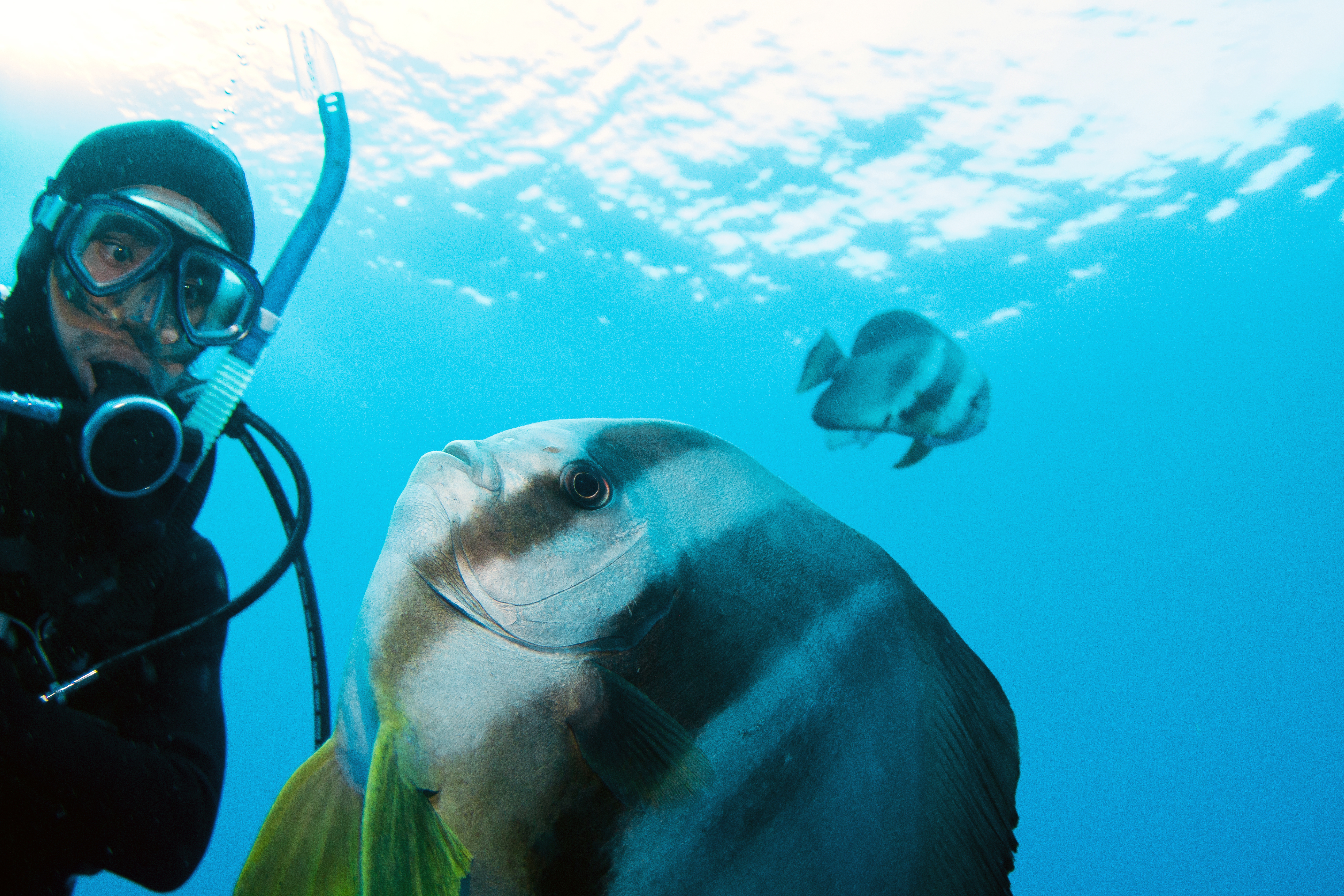
Iron Reef: A diver enjoys the play with a longfin batfish (Platax teira)
One of the highlights diving Iron Reef is the encounter with a school of beautiful long-fin batfish. They are attracted by the sound of the boat engine and usually swim gloriously close to divers. With the company of batfishes, divers descend along a mooring line to the iron structures. The top of the reef is around 21 metres and hits bottom at 31 metres. It is covered with beautiful soft corals, sponges and barnacles. There are usually groups of goatfish, angelfish, parrotfish and wrasse gathering around the reef. Dive season follows that of Big Mushroom.
For divers big on macro, Gongguanbi is the site to get all excited about the little things. Located north of Green Island, the diversity of creatures in Gongguanbi is amazing. There, divers have a chance to see many species of rare nudibranchs, frogfish, ghost pipefish, boxer crab, Paguritta hermit crabs, candy crab, Harlequin shrimp, imperial shrimp, saron shrimp and tonnes more.
Long Dong’s 82.7K is home to this imperial shrimp (Periclimenes imperator)
On a trip out to Gongguanbi in June 2012, I was extremely lucky to see and photograph a very special nudibranch, a golden one with green tentacles and beautiful blue spots. It was later identified by Dr Richard C Willan from Australia to be a new species of Tritonia sp. It is also worth mentioning, for pygmy seahorse lovers, there are good chances of finding Coleman’s (Hippocampus colemani), Pontoh’s (Hippocampus pontohi) and Bargibanti’s (Hippocampus bargibanti) pygmy seahorses here. The best time to dive at Gongguanbi is from March to September.
Heading north, Long Dong is also a very popular site for divers in Taiwan, especially those who love macro. Long Dong is located northeast of Taiwan and getting there takes around an hour by car from Taipei City. In winter, the strong northeast monsoon brings big waves and the water temperature drops below 20°C, making the sea rough and almost impossible to dive. However, when spring comes, the sea is calm again, with beautiful temperatures.
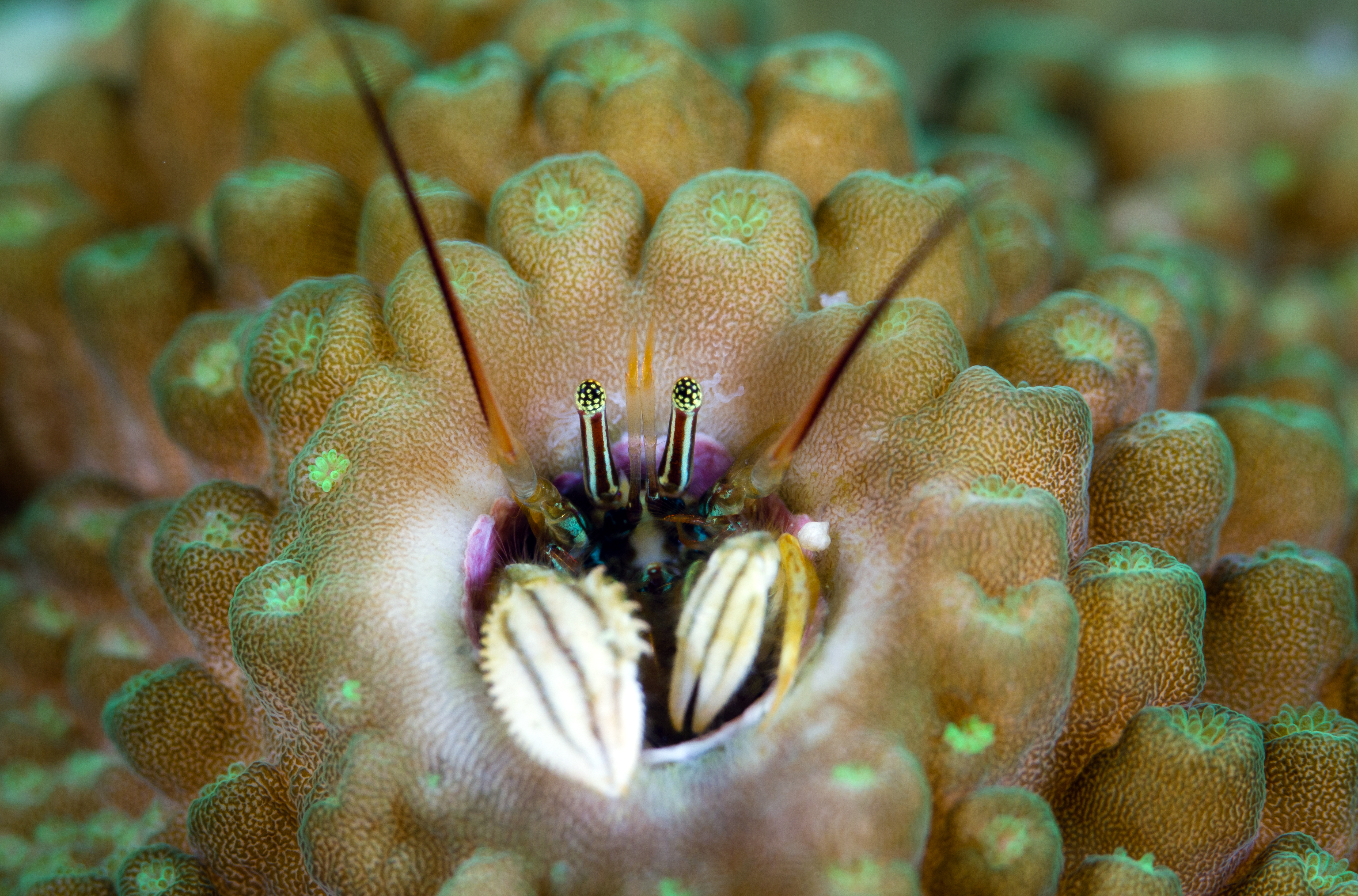
A Paguritta hermit crab (Paguritta kroppi) at Gongguanbi
Diving season here starts in May and ends in September. Though there are typhoon risks during July, August and September, diving in summer is amazing if the weather holds up. There is an abundance of popular macro creatures, including rare nudibranchs, frogfish, ghost pipefish, imperial shrimp, sea horses, boxer crabs, scorpionfish, blennies, basket star shrimp, Harlequin shrimp, tiger shrimp and more.
For the rest of this article (Asian Diver 2014 Issue 1 No 130) and other stories, check out our past issues here or download a digital copy here.
Conservation begins with the individual: An avid diver records his encounters with marine animals at potential new dive sites
The word “exploration” often sounds like too much work for the average recreational diver. However, there are strong links that explorers and exploration have with everyday diving and conservation.
If we look at the world’s marine parks and sanctuaries, we might wonder how they all started. The fact is, all parks, sanctuaries and destination resorts owe their creation to the exploratory efforts of one or more, often unsung, explorers. Indeed, the entire scuba industry was also born of exploration made popular by explorers like Jacques-Yves Cousteau. With their discoveries, many explorers have made the world aware that the riches of the ocean environment are not without limit, emphasising the need to conserve these resources so that humans and animals can coexist sustainably.
The dive sites in Bidong consist of fringing reefs and a few submerged reefs, a stunning sight to behold against deep clear waters
Our own exploration has been an ongoing activity since 1998. Foreseeing the impact of over-diving at popular reefs in our area, we decided that we should explore more sites. Such initiatives would decrease the impact of over-diving on popular reefs through the diversion of divers to newly established sites.
Case Study 1: Pulau Redang – How the discovery of Stinger Reef helped reduce the impact at Mini Mount
It was in 2002 when diving in Pulau Redang started dropping in quality. Popular sites like Mini Mount were being damaged to the point where marine life was beginning to disappear. After four years of rapid development from 1998 to 2001, the impact of over-diving was being felt at most of the reefs there, with corals dying off and other signs of reef damage. By 2002, one of the better-known reefs, Black Coral Garden, had been totally abandoned.
We knew that the popular sites needed time to recover, and we realised it was necessary to seek out new sites. Taking the initiative, we explored a few possible sites with the guidance of local artisanal fishermen. One of the areas we explored was a small bank reef located off the southeast shores of Pulau Redang. It is now a dive site known as Stinger Reef.
On our first dive at Stinger Reef, we recorded encounters with scorpionfish, stonefish, zebra lionfish, common lionfish, plain tailed lionfish, and demon stingers – this last creature lending its name to the site. Between 2002 and 2006, the reef became the most-visited reef in Pulau Redang, and fewer divers visited Mini Mount. The result was less stress on the impacted reef and a reversal of the damage. The blacktip reef sharks and whiptail rays returned, and the corals on the slopes of the pinnacle also recovered.
A beautiful midway illustration of Stinger Reef by Anuar
This is an example of how simple exploration can help reduce over-diving stresses on nearby reefs. By 2007, the number of visitors to Stinger Reef had also reached a plateau. Local divers continued to explore and establish even more new sites. As a result, Pulau Redang’s reefs, as we observed on a recent visit, are well on the way to recovery.
Case Study 2: The Midway Reef comparative modelling
This reef was discovered on our exploratory trips at the beginning of the monsoon in 1998. A bank reef that defines the concept of pristine, the site is located in the middle of a channel between Pulau Bidong and Pulau Karah. Neither islands have any tourism development nor is the number of visiting divers to this reef as regular as at the sites in other locations. Over the years of observation and comparing data, we have established a number of variables for our research. Among those variables is a comparison between reefs under people’s care and the undisturbed coral pinnacle at Midway Reef.
Exploration such as this, as well as the sheer length of time spent on location, has allowed us to gain valuable knowledge that has guided us toward a better understanding of the coral reef environment. The Midway Reef site is now open to recreational divers who are willing to go the extra mile to find it. Those lucky enough to dive it are sure to tell their friends about the pristine corals found there. Thus, continuing exploration has multiple benefits affecting travel, education, science and conservation.
Anuar Abdullah: “In the ocean is where life begins.”
Recognising this potential, our explorations have now been taken a step further. We have taken our exploration efforts to new heights through the use of advanced instruments and collaboration with other experts. We also recognise the need for more field researchers with the zeal to enhance knowledge further and develop innovative and more-effective conservation strategies.
For the rest of this article (Asian Diver 2014 Issue 6 No 135) and other stories, check out our past issues here or download a digital copy here.