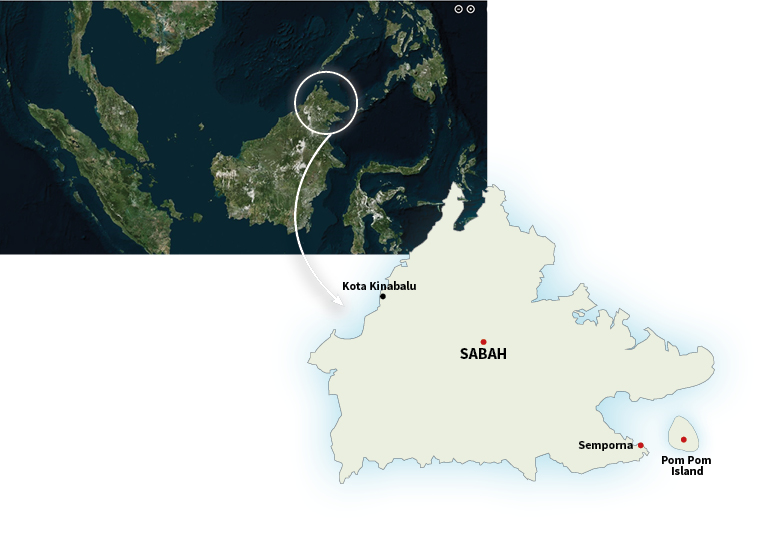
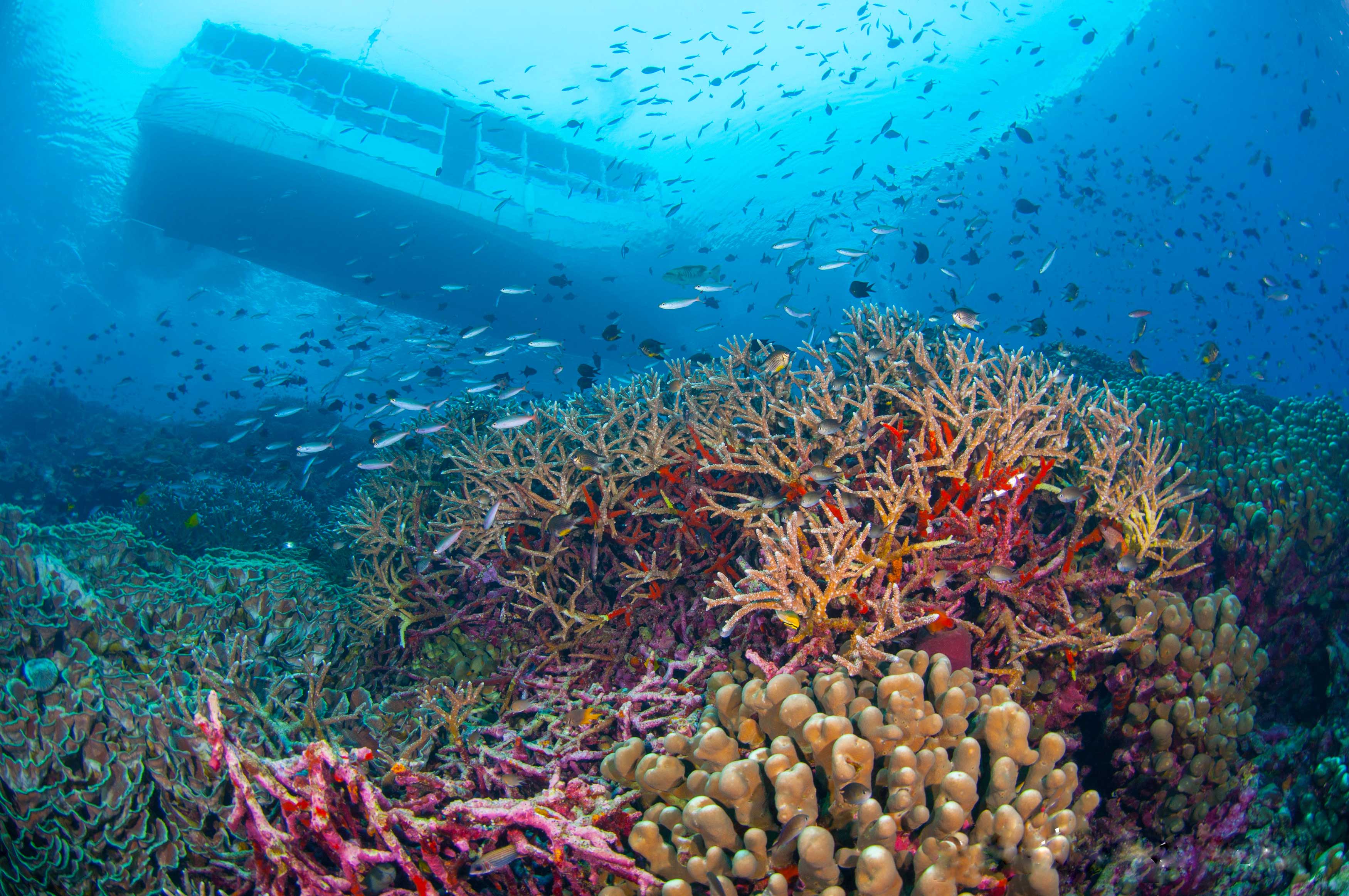
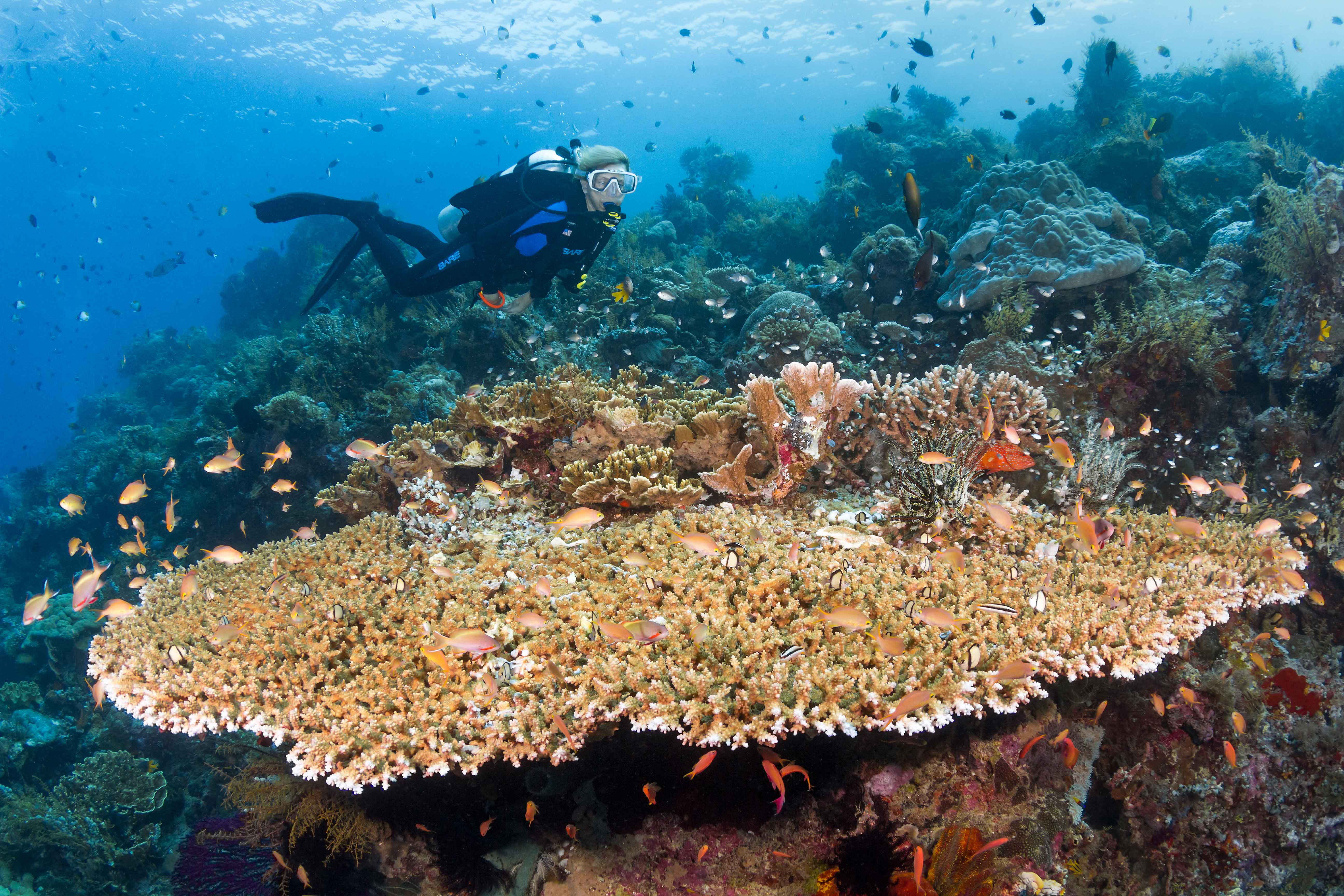
Mention Sabah,and Sipadan Island comes to mind. What many don’t know is that Sabah has a secret. One hour north of Semporna lies a cluster of relatively undiscovered islands that are Sabah’s hidden diving gems. These islands boast healthy reefs with impressive biodiversity and interesting macro life.
One particular island that stands out from the others is Pom Pom Island. While the island may be small, it is arguably the best macro dive destination in Malaysia and a firm favourite among underwater photographers. There are countless fabulous critters you can photograph in and around the island, but if you really want to shoot rare critters, Pom Pom can guarantee you just that.
Night diving is a must for every underwater enthusiast because when nightfall arrives, the reef becomes a hub for critter activity. This is when they all come out to play. Divers who love macro life are sure to find this an island that they will keep coming back to because they’ll find something different on every single dive.
Paradise found, Pom Pom Island is situated in the heart of the Coral Triangle
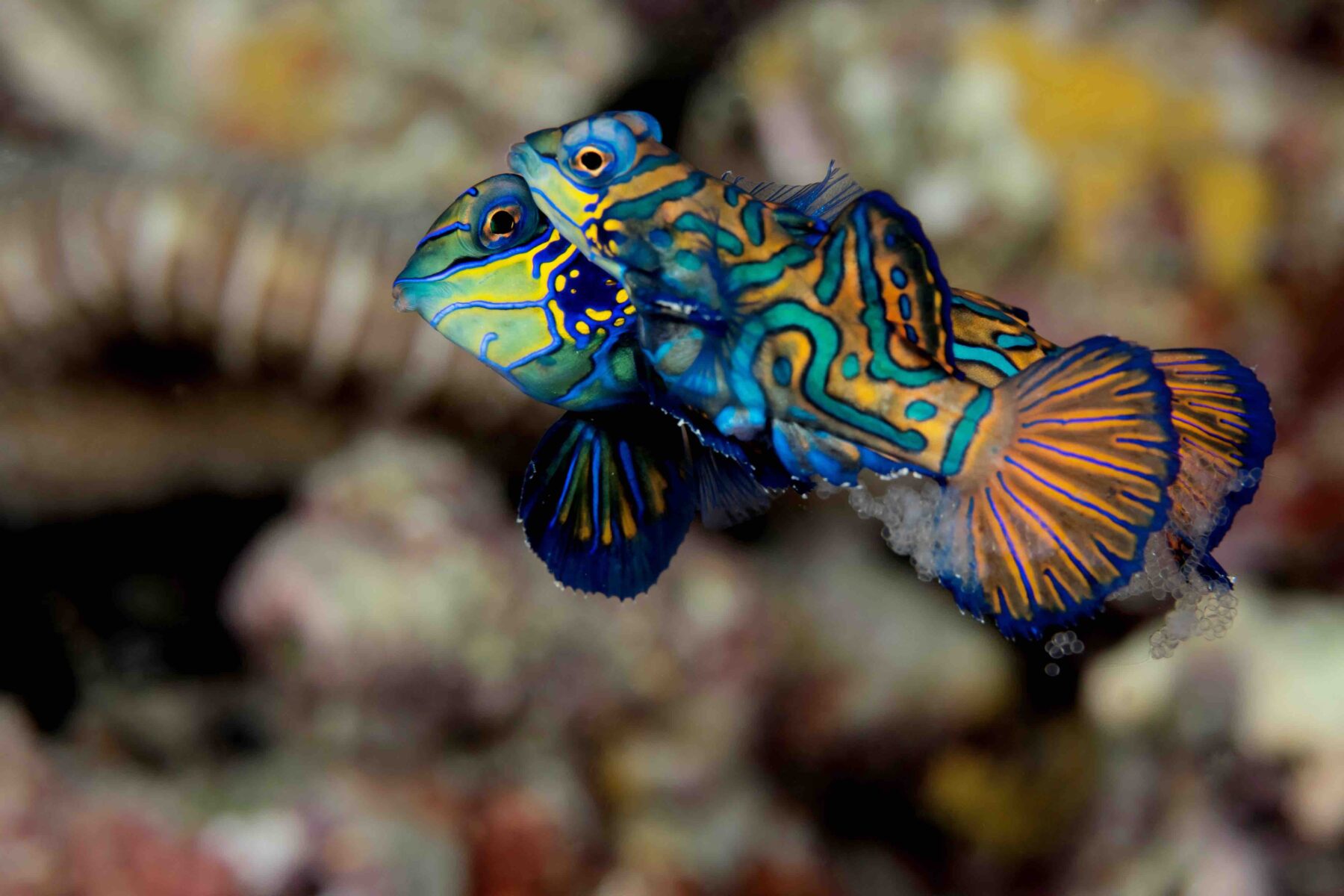
A popular site for night diving is the Mandarin Playground, an aptly named hangout situated right underneath Pom Pom Island Resort’s jetty. Swimming anywhere along the reef, from a depth of six metres all the way down to 20 metres, one can find mandarinfish displaying their mating dance. Divers don’t need to worry about hogging this stunning species, as there are plenty
for everyone.
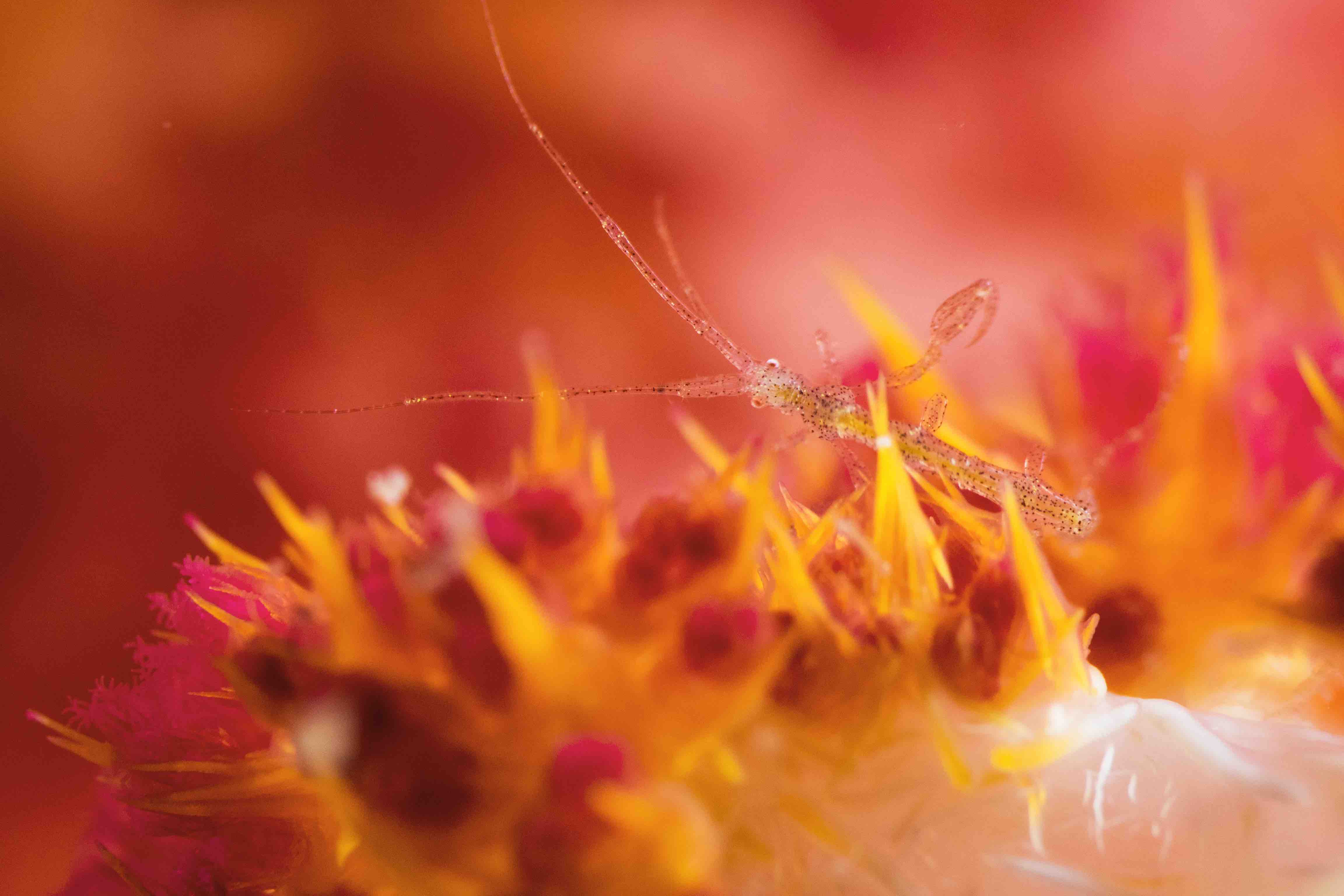
Another very popular dive site is the house reef at Celebes Beach Resort, which is known for its super macro critters. Shine your torch anywhere and you’re bound to see several pairs of eyes reflecting light back at you. At a depth of 10 metres, you’ll find a variety of hairy shrimps ranging from white to green, yellow to purple, especially at night when they come out to feed. Other small critters include humpback shrimp and pygmy seahorses. If you’re interested in critters of a more super-macro variety, look closer for the tiny Idiomysis crustaceans and isopods, amongst other things.
For the rest of this article (Asian Diver 2015 Issue 4 No 139) and other stories, check out our past issues here or download a digital copy here.
The lure of Lembeh is both bizarre and exhilarating
The light of my torch’s beam illuminated a small circle of fine black silt, outside of which the darkness was absolute. My buddy and I had wandered deeper than planned, but one amazing critter after another had drawn us onwards until we found ourselves exploring a barren expanse at 25 metres.
A puff of black silt caught my attention as a seemingly unremarkable fish emerged. I was just remembering how nothing in Lembeh is unremarkable, as the unassuming beige fish suddenly spread wide an enormous pair of bright yellow pectoral fins that almost equalled its length. This was my first ever sighting of a longfin waspfish, and one I still haven’t repeated outside of Lembeh Strait.
Night diving isn’t for everyone, but I’m always dismayed when I see divers pass up a nocturnal foray in favour of an all too tempting gin and tonic. By night an entirely different cast of animals is introduced, and Lembeh offers some of the best conditions to witness a night dive in all its glory. There is a clear transition from colourful daytime animals, for which light plays a vital part in their biology and behaviour, to the nocturnal ones where light is less of a consideration.
At night, you’ll definitely start seeing red. Soldierfish, starry night octopuses and reptilian snake eels are just a few of the crimson residents that emerge after the sun sets. You’ll probably remember from your Open Water course that red is the first colour in the spectrum to be attenuated by the water column. This combination of reduced ambient light and the absorption of red light makes red the best colour for camouflage at night. There are many aspects of night diving that get me excited, but Lembeh particularly excels in a couple of these.
Behaviour
I am a fan of starting night dives slightly before the sun fully sets to enjoy the transition between diurnal (active during the day) and nocturnal creatures. This is also a period when many creatures are reproductively active.
It’s easy to understand why scuba diving in the Lembeh Strait has a reputation that’s hard to beat among discerning divers
Probably the most famous example is the mandarinfish, which shows off its saucy displays in the waning light. However, R-rated shenanigans continue for other species well into the night. I once spent a whole hour watching by torchlight the amorous foreplay between a trio of hairy frogfishes, although sadly an errant moray eel spooked the female just before they spawned and the group scattered.
Lembeh is fantastic as a location to watch other behaviours too. Voracious hunters, such as cuttlefish, prowl the sand for prey, while others simply wait for their food to come to them. The stargazer is a classic ambush predator, but if prey items are thin on the ground, it has another trick up its sleeve. The stargazer uses the tip of its tongue as a lure, which it wiggles to resemble a worm, to attract hapless fish. When they inquisitively approach, the stargazer opens its vacuous mouth and sucks them in.
Juvenile Creatures
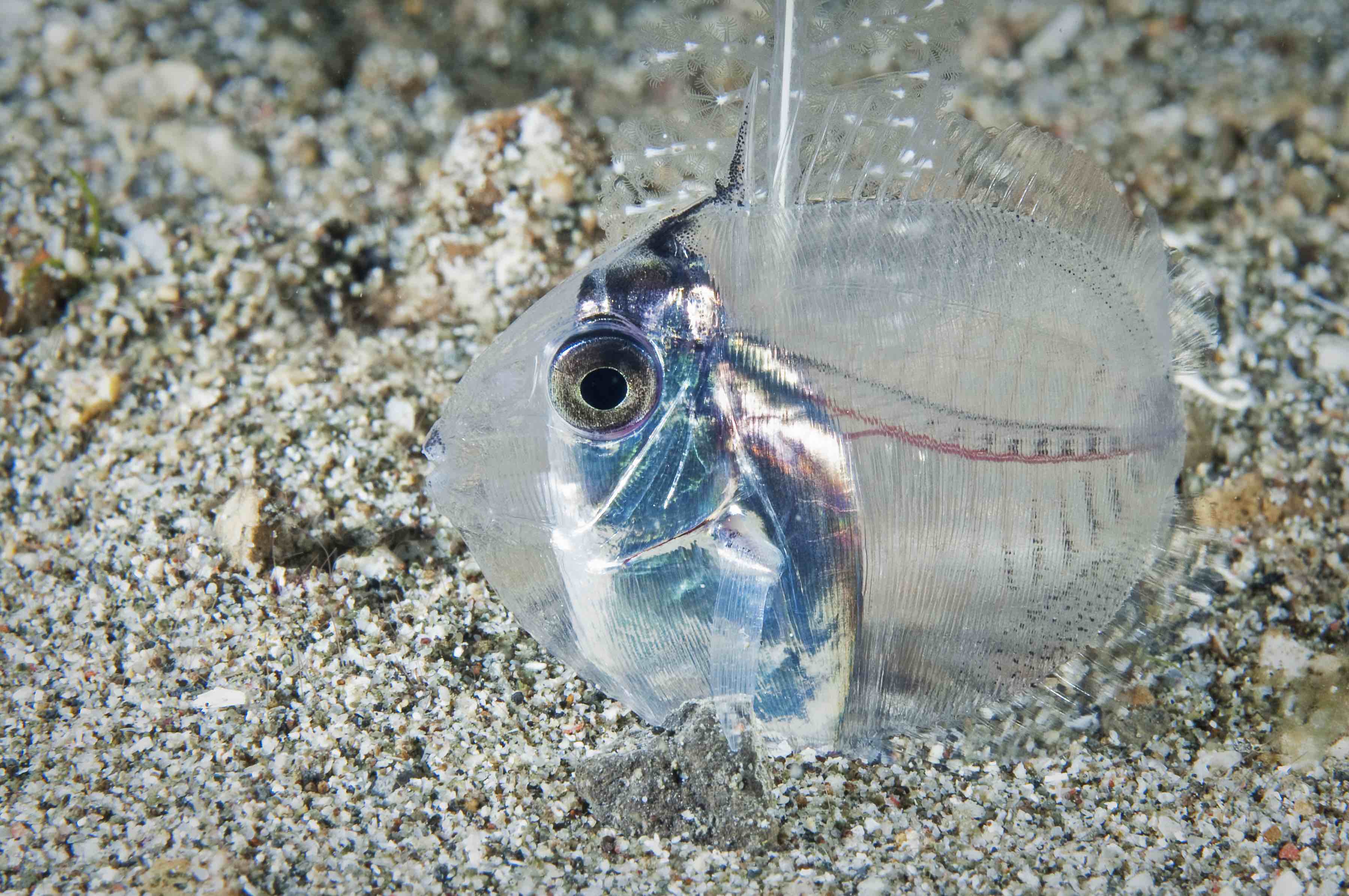
With strong currents that flow through the middle of Lembeh Strait, numerous larval creatures are deposited on its sites. Many of these settle under cover of darkness. Larval fishes are quite distinctive, as they don’t yet have the pigmentation of their older kin; rather their bodies are transparent.
It is often still possible to see their internal organs, skeleton and swim bladder, as a lack of colouration would have conferred them some camouflage in the open sea. Although relatively large, I have seen larval octopuses, which also have limited pigmentation when they first settle on the reef. All of this quickly changes as they adapt to their new surroundings.
For the rest of this article (Scuba Diver 2015 Issue 4 No 139) and other stories, check out our past issues here or download a digital copy here.
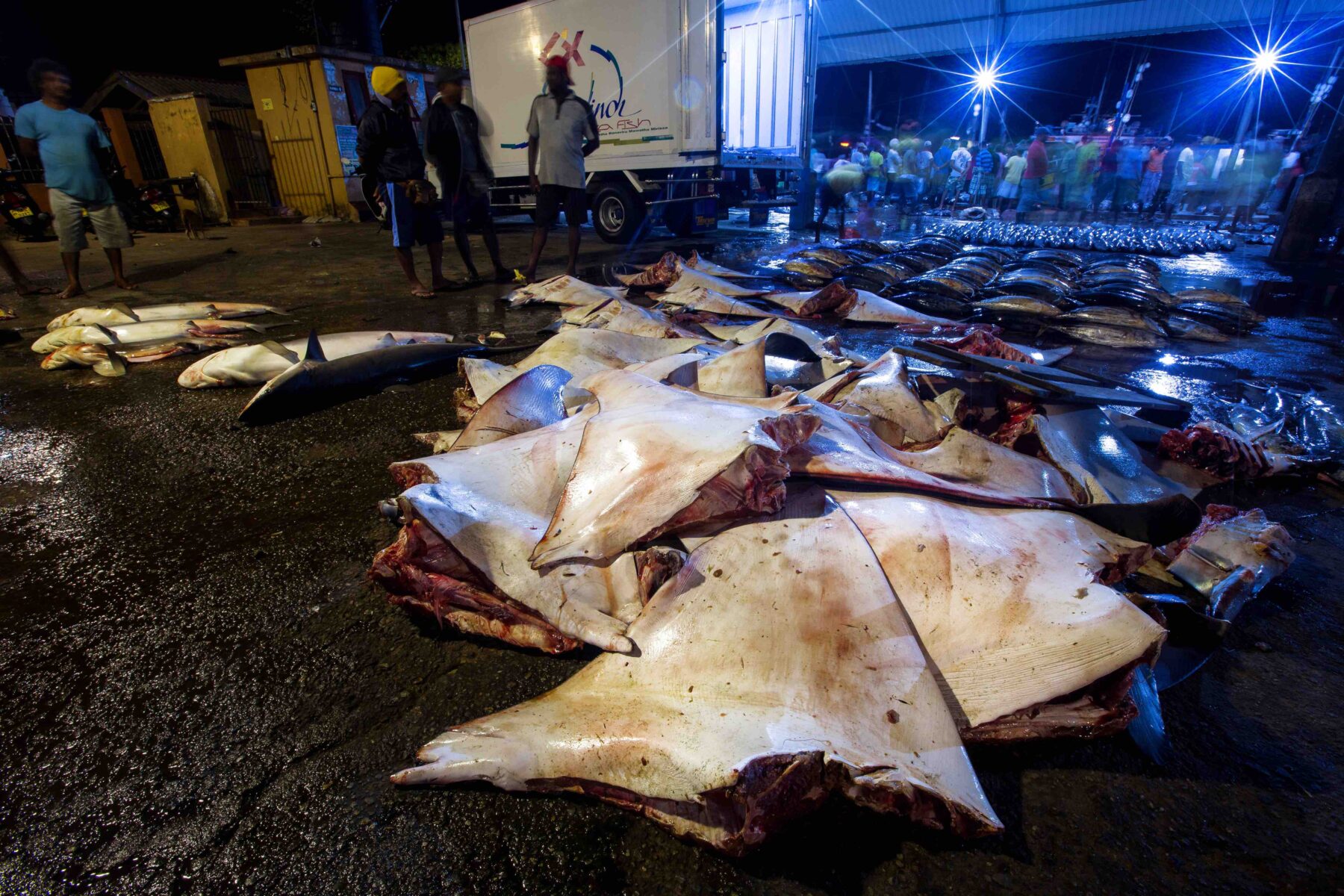
The sheer numbers of mobulids being removed form the oceans are staggering. Especially considering that most of these individuals may still be too young to reproduce
When one thinks of manta and mobula ray research and conservation you might picture diving in crystal clear tropical waters while counting elegant rays flying overhead. In reality though it’s often much less of a dream job than one would think.
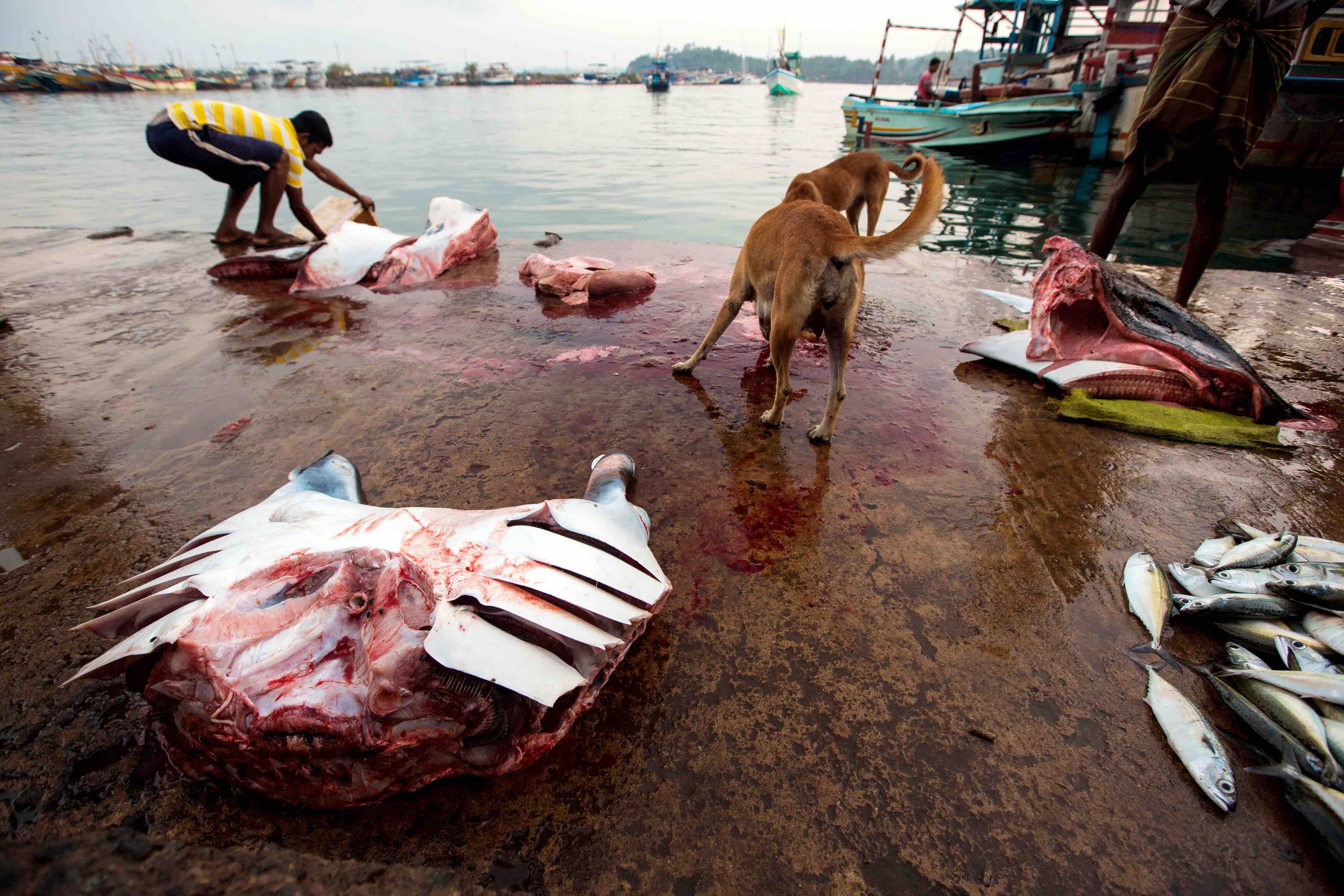
On a typical morning in the life of Daniel Fernando from the Manta Trust, the alarm rings at 4am, which means it’s time to visit the local fish markets. Daniel has mainly worked on the mobulid fishery trade in his native Sri Lanka, roaming the markets to collect data and better understand what drives these kinds of fisheries.
This data will hopefully lead to better conservation measures of these majestic animals and give us more insight into the lives of one of the most charismatic and captivating marine species.
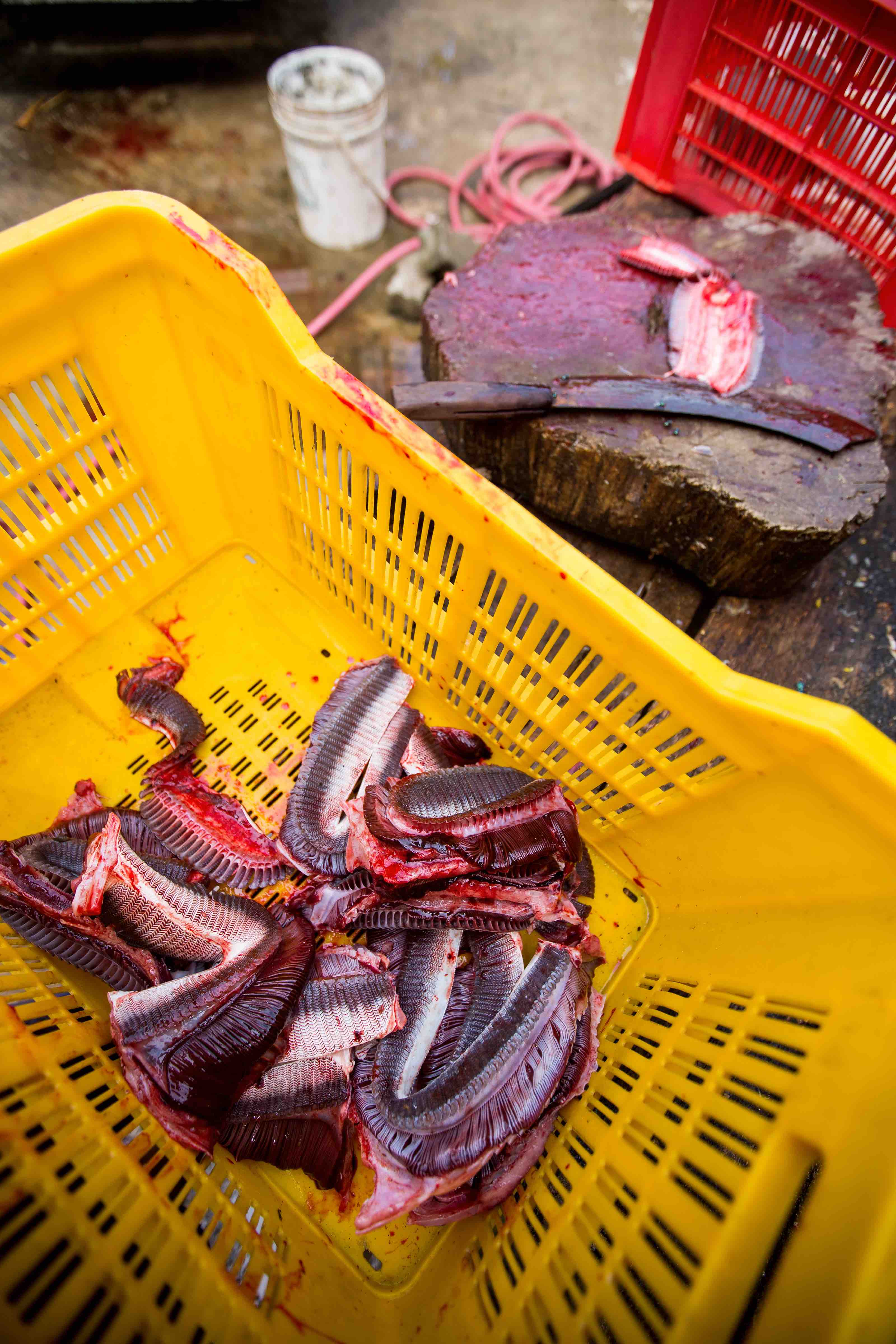
A gory prize – the freshly butchered gill rakers
REMARKABLE RAYS
Mantas and devil rays (Mobula) belong to the Mobulidae family, which contains nine species of Mobula rays and two species of manta rays. Mobulids can be found in tropical water around the world.
As divers we all dream of encounters with these beautiful animals and if we do have the privilege of diving with them they will often be amongst the most memorable dives we’ll ever do. Their charisma and beauty also make them a flagship species for wildlife conservation. Who doesn’t love a giant fish that appears like it can fly underwater and occasionally leaps out of the water as well?
They’re also known to have the largest brain-to-body mass of any fish and some scientists even believe they can recognise themselves in a mirror. On top of all this they are an ecosystem indicator, and studies also suggest they play an important role in the food chain, decomposing on the bottom just like whales and whale sharks do. This phenomenon is called food fall and provides food for bottom dwelling species. Some studies suggest they can bring nutrients up from the bottom and transfer carbon from the surface to the deep sea. Unfortunately for these intelligent elasmobranchs they are overfished in many parts of the world, which is causing great stress on the health of their population.
THREATS, “MEDICINE”, AND THE TUNA INDUSTRY
According to the IUCN Redlist, out of all mobulids, four species are near threatened, three are vulnerable, one is endangered and three are data deficient (meaning we don’t know enough about them to determine how the population is doing). Mobulas and mantas are extremely vulnerable to overfishing as they mature late and have a low reproduction rate. Mantas might only have one pup every three to six years and only start reproducing when they are eight to 10 years old. While they are long-lived at 40 years, they still can’t handle much fishing pressure at all and it’s hard to believe any kind of fishery targeting these species can be sustainable.
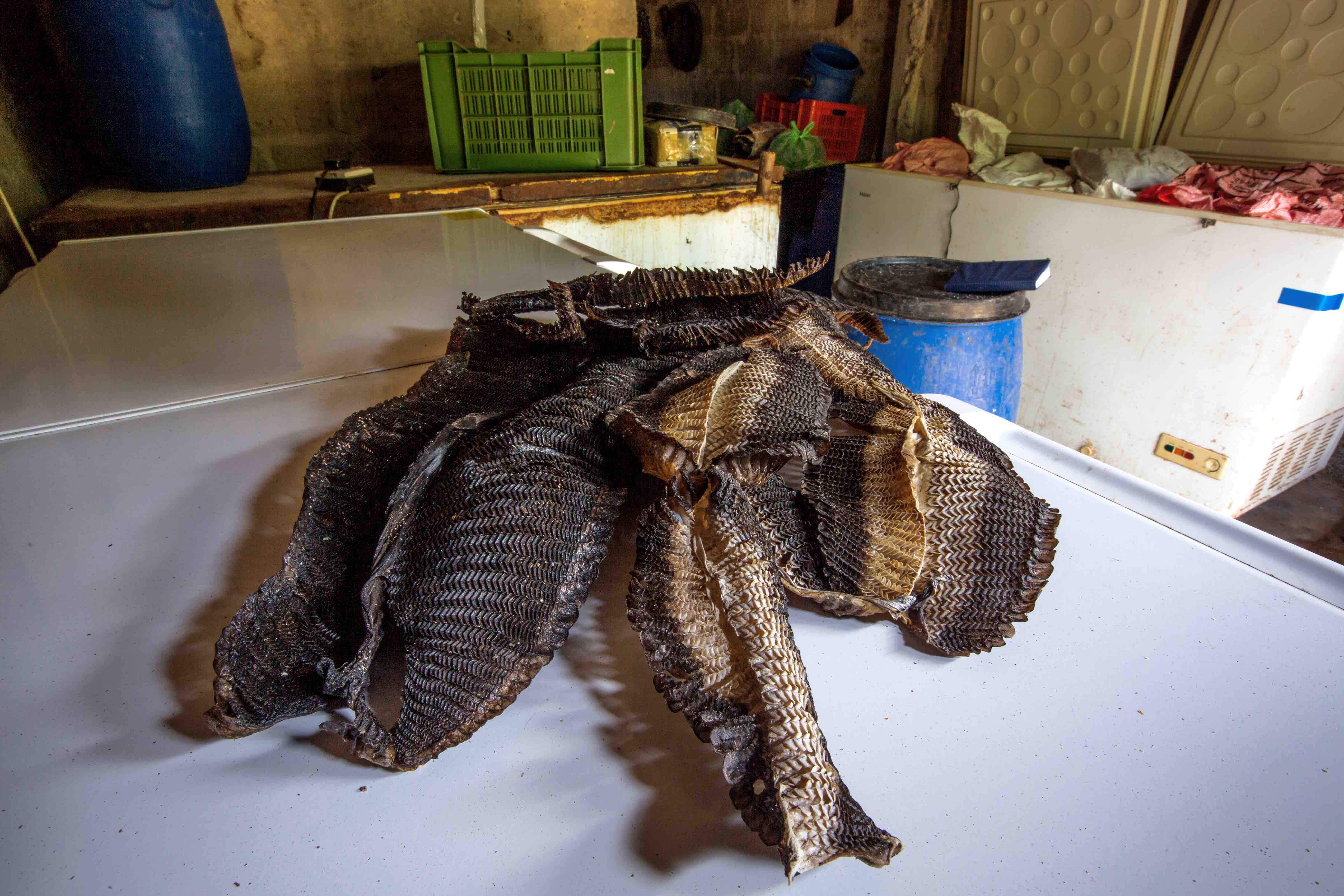
A gory prize – the dried gill rakers
The main threat they face nowadays is caused by the demand for their gill plates, which are dried and then used as a pseudo-medicinal health tonic in China called ‘Peng Yu Sai’. Some believe it can cure many ailments, ranging from bad skin to respiratory problems, but none of this is based on scientific research; in fact it is proven that these gill plates contain toxins like arsenic, cadmium, mercury and lead. This hasn’t stopped the gill plate trade from severely threatening mobulid survival. Another interesting fact is that mobulid gill plates are not officially recognised as Traditional Chinese Medicine (TCM) by most TCM practitioners nor are they listed in any standard TCM medical guides.
In Sri Lanka, where Daniel Fernando focuses his research it’s no different, the gill plates are the most valuable part of any dead mobulid and are dried and sold for “medicine”. The meat is often sold at a cheap price and consumed locally. In Sri Lanka manta and mobulas are not targeted but rather kept by fishermen as “non-discarded” or “targeted by-catch” since they can make a lot of money out of the gill plates. The fishermen who often catch and sell mobulid rays mainly go out for tuna; it’s the fishing method they use, such as purse seine nets, that catches a lot of mobulids. The worldwide demand for tuna definitely has an impact on these charismatic animals.
RAYS OF HOPE?
Sri Lanka has no tourism directly associated with mantas and mobulas at the moment. The tuna fishermen go out for days, and even weeks, on end and mostly catch these rays far offshore, making manta and mobula tourism not a very likely alternative to fishing.
Creating alternative livelihoods for fishers is the only way to curtail this destructive fishery, something Daniel hopes his work will achieve
Tourism related to wildlife encounters is on the rise in Sri Lanka and hopefully this will trickle down to more protection of species like mantas and mobulas. The data Daniel Fernando collects at the markets is essential in proving this is not a sustainable fishery and won’t last long. Currently Daniel’s research estimates that there are between 600-1,000 mantas and 20,000 to 50,000 mobulas landed every year in Sri Lanka alone, which can never be sustainable.
Globally there have been some success stories. In 2013 at the CITES (Convention on International Trade of Endangered Species), mantas were listed in Appendix II, meaning the export or re-export can’t be carried out without a permit within countries participating in CITES. In the Philippines, mantas have been protected since 1998 and Indonesia recently declared the world’s largest manta sanctuary by banning fishing for them within the country’s exclusive economic zone.
It’s easy to see why countries that benefit from manta ray tourism would protect the species. According to a 2014 report by Wildaid the estimated annual global tourism value of manta and mobula rays is US$140 million while the dried gill plate trade would be less then 25 percent of that. The tourism value of a single manta during its lifetime can be US$1 million while at a market they are sold for US$40 to 500.
For the rest of this article (Scuba Diver 2015 Issue 5 No 83) and other stories, check out our past issues here or download a digital copy here.
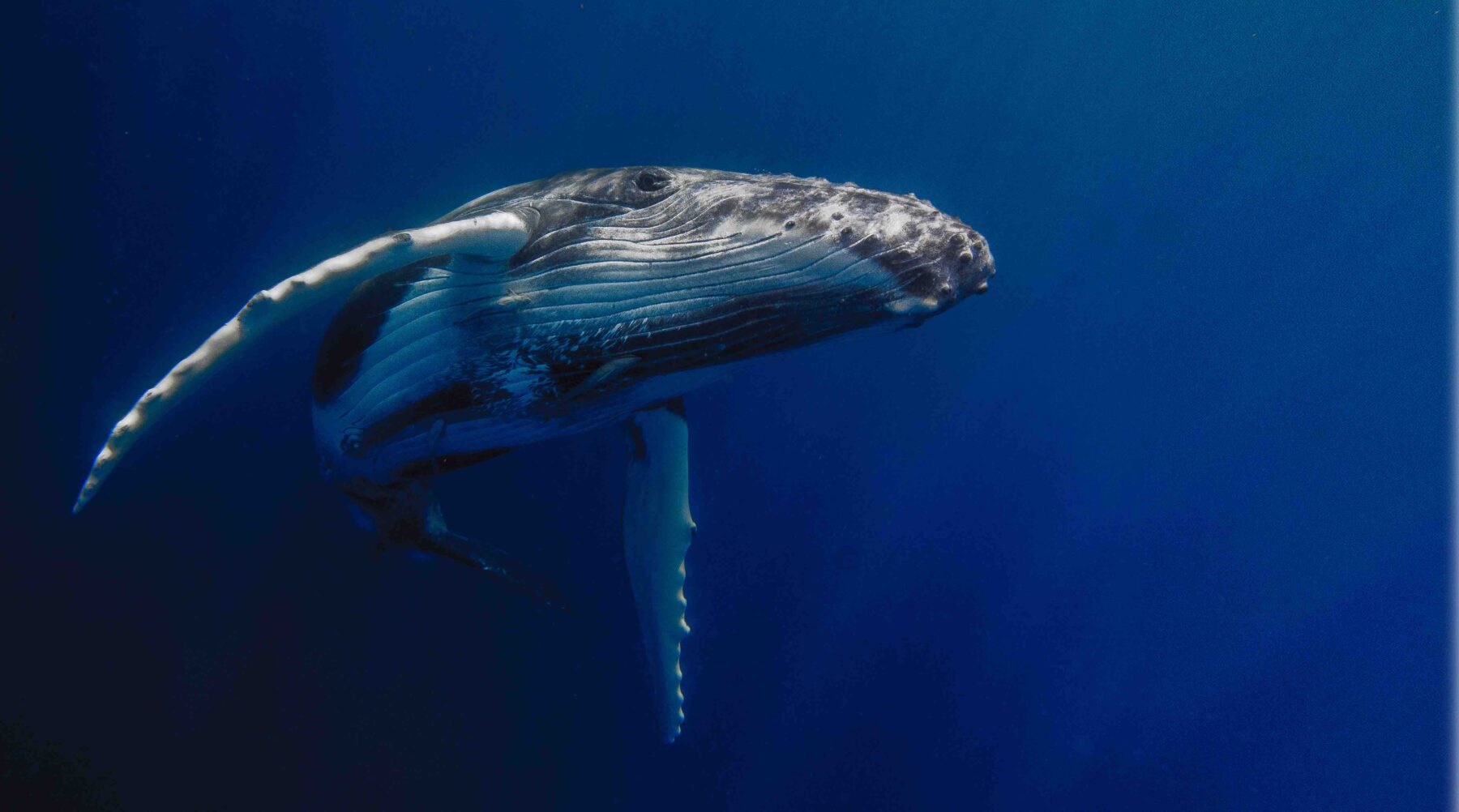
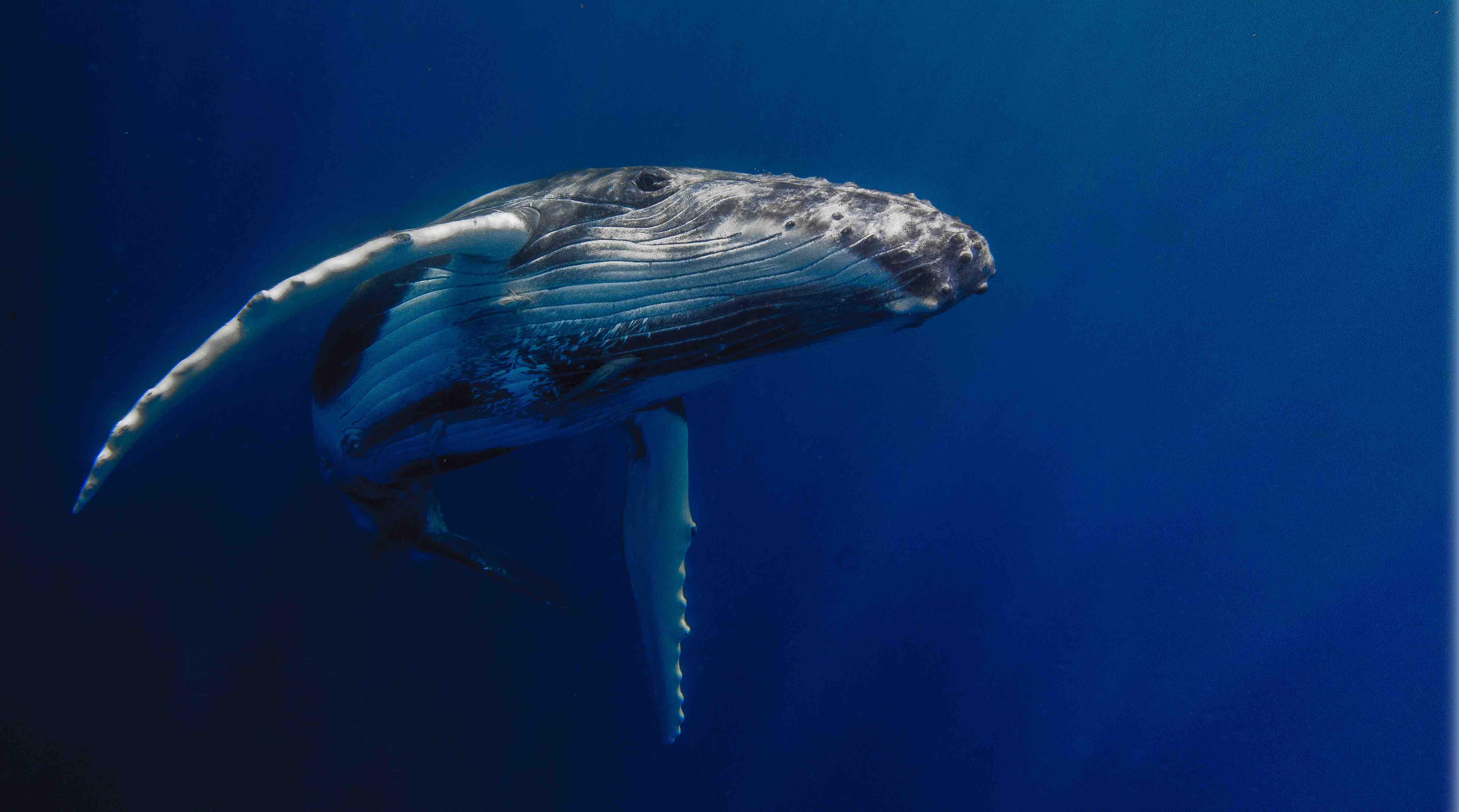
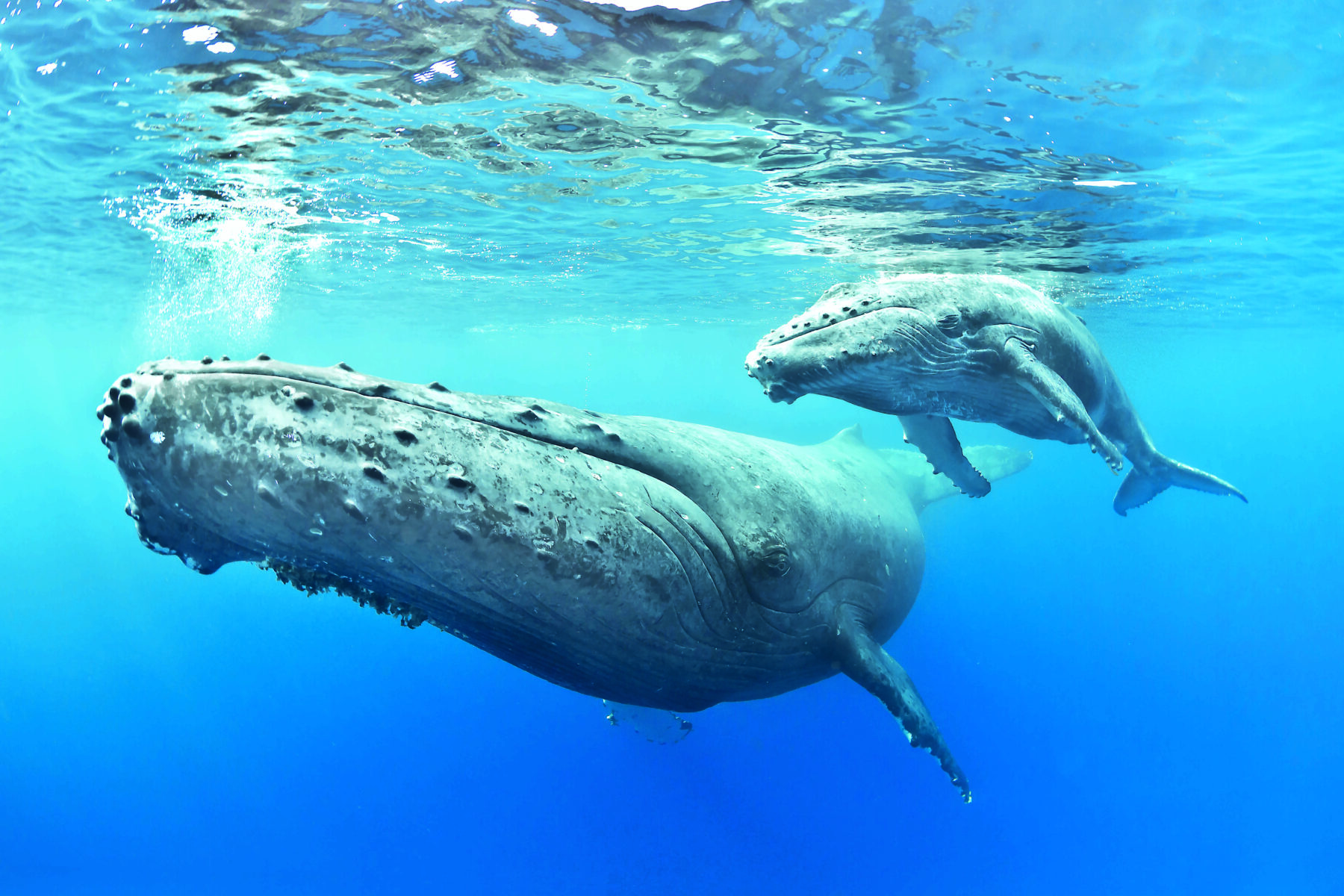
A playful humpback whale calf in Tonga. Image taken with the Canon EOS 5D Mark IV, f/11, 1/250s, ISO 640
As a professional photographer travelling extensively throughout the year, I have to rely heavily on the gear I am taking. I depend on my camera to realise what’s in my mind’s eye – no matter how tough the going gets.
Ever since the arrival of the Canon EOS 5D Mark II, I have been an avid user of the 5D series. The latest addition to the series, the Canon EOS 5D Mark IV, paired with my underwater housing, has been my trusty workhorse for all of my recent underwater photography projects and expeditions.
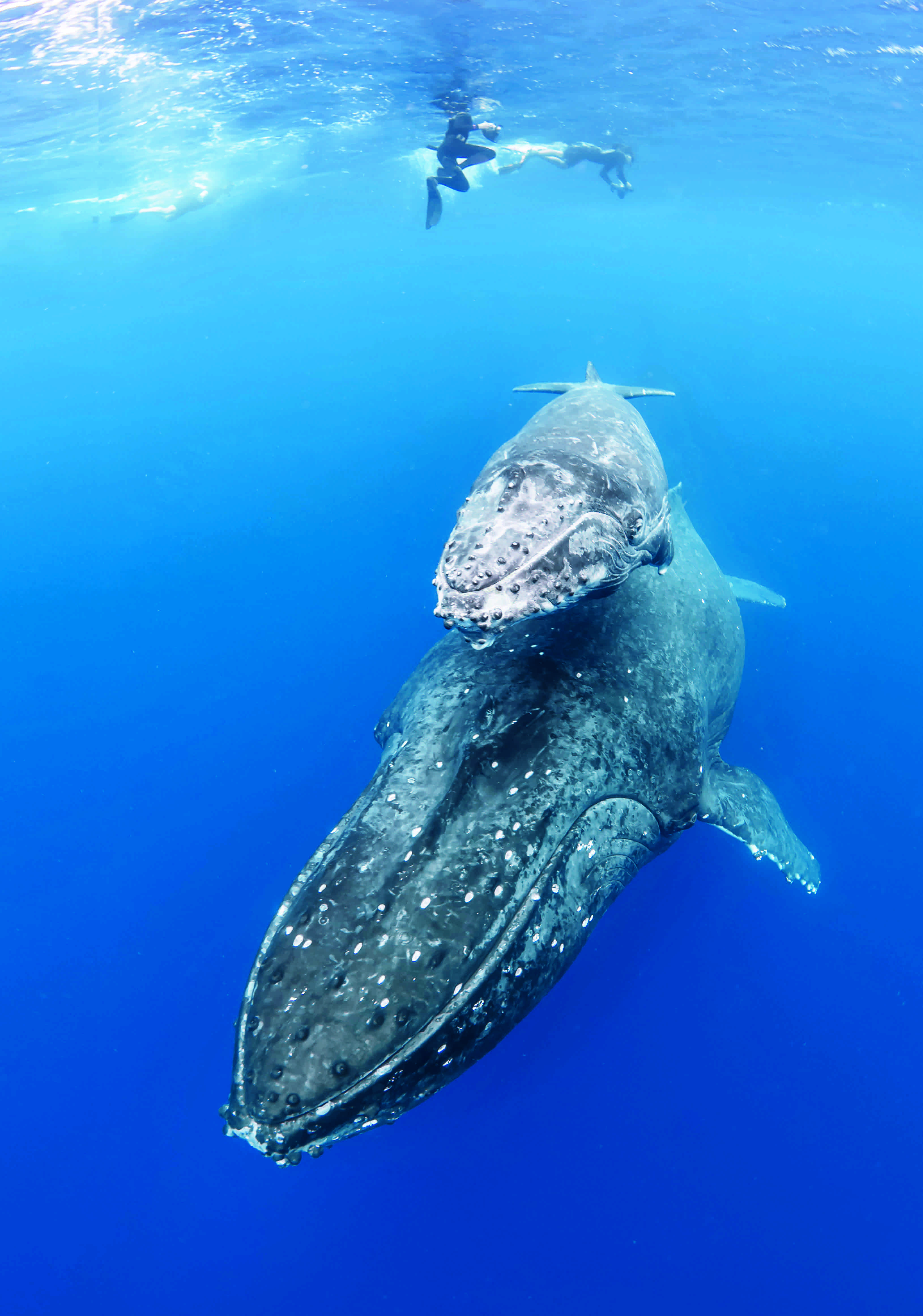
Some of the most exciting open-ocean subjects to photograph are the humpback whales that migrate to Tonga’s waters from Antarctica every winter. Shooting in only ambient light, it’s imperative to have a top-of-the-line sensor like that found in the Canon EOS 5D Mark IV. Its 30.4-megapixel full-frame CMOS sensor performs flawlessly in these lower-light situations, allowing me to dial in higher ISO settings without introducing any perceptible noise.
A playful humpback whale calf in Tonga. Image taken with the Canon EOS 5D Mark IV, f/11, 1/250s, ISO 640
While the humpbacks aren’t moving particularly quickly, interactions between individuals involve plenty of action. The Canon EOS 5D Mark IV’s even faster 7fps burst rate, combined with an improved buffer performance, makes it possible to shoot continuously almost nonstop, giving me the luxury of selecting the perfect composition from my image sequences.
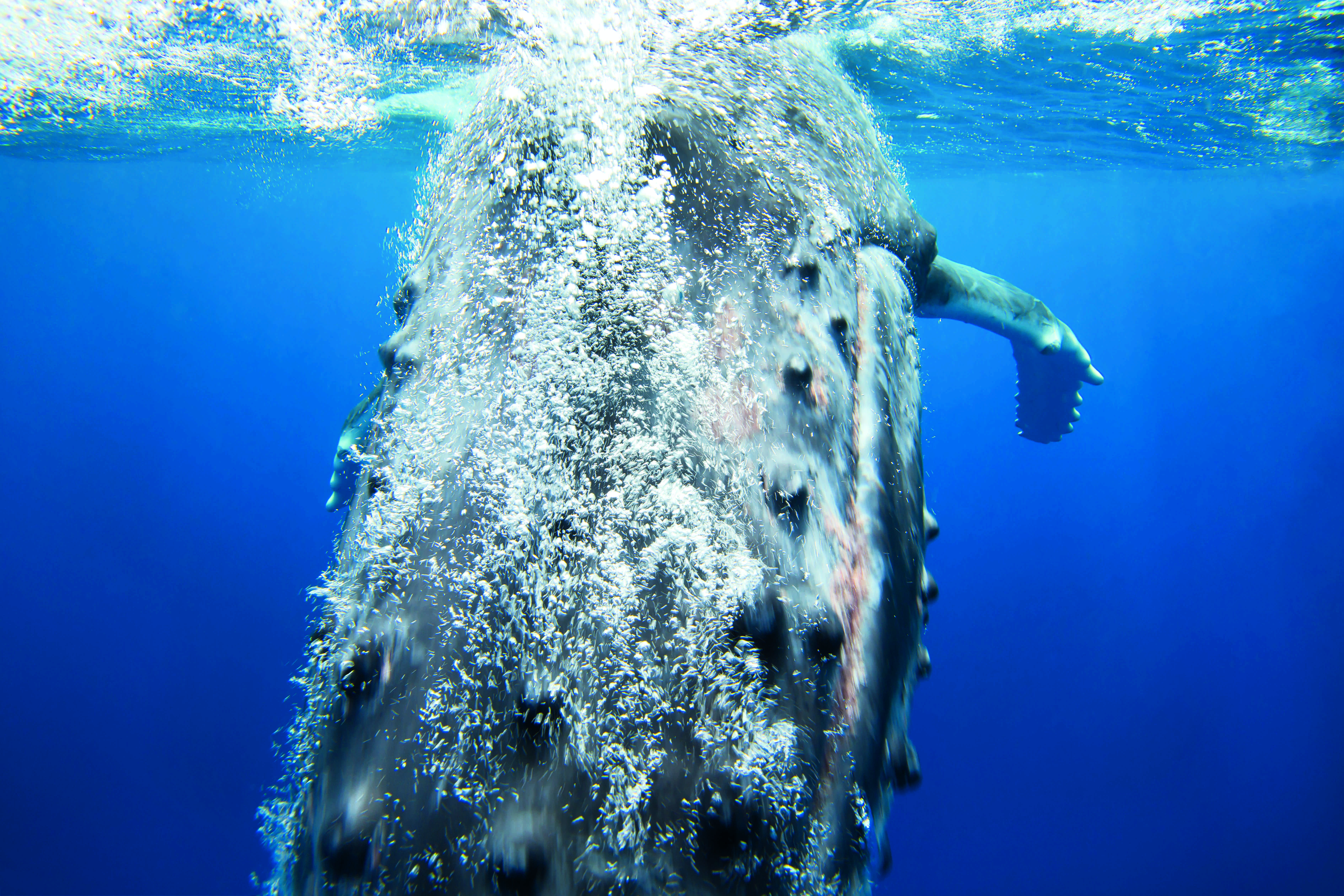
Another challenge with photographing Tonga’s whales is the extreme exposure difference between the animal’s white underbelly and the dark, charcoal coloured upper body. But the incredible dynamic range captured in the Canon EOS 5D Mark IV’s RAW images means that there’s even more latitude than before to bring out all of the fine detail in the final image.
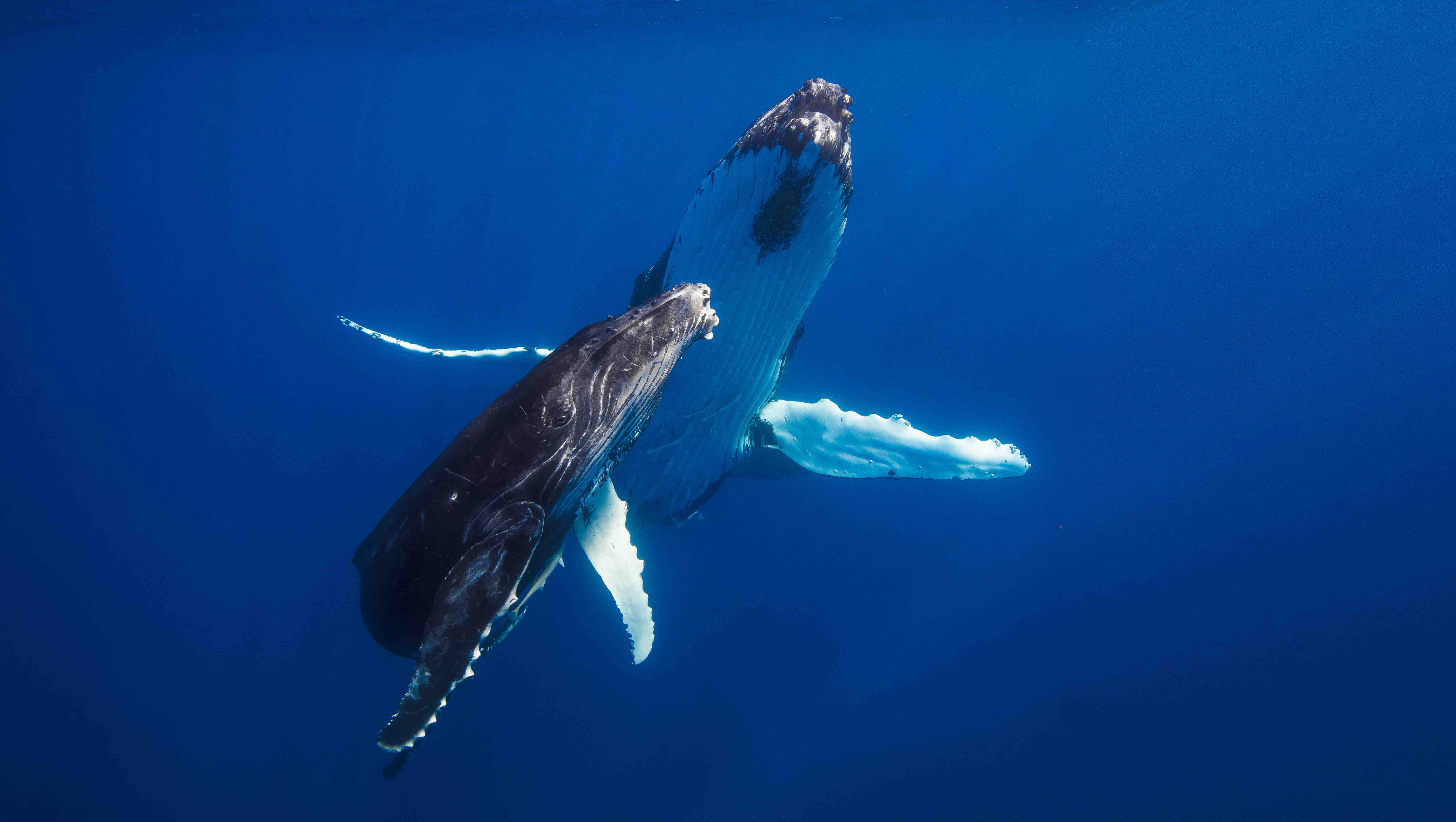
The dance of a humpback whale mother and calf. Image taken with the Canon EOS 5D Mark IV, f/11, 1/250s, ISO 500
Of course, the image can only ever be as good as the optics allows, and Canon’s lenses are second to none. On previous Tonga trips, I have been using the excellent EF 15mm f/2.8 Fisheye and EF 16–35mm f/2.8L II USM, but this year I was excited to try the EF 11–24mm f/4L USM. With a zoom range in the sweet spot for capturing extreme wide-angle shots, the lens proved to be an amazing tool for shooting big animals like humpbacks up close.
With its robust build, high-resolution full-frame sensor, fast continuous shooting ability, and impressive low-light performance, the Canon EOS 5D Mark IV is the ideal camera for the working pro and advanced enthusiast. No matter how challenging the subject, the Canon EOS 5D Mark IV always allows me to get the shot.
A calm mirror-like surface, crystal-clear waters, and hot sunny days; that was what I assumed my virgin trip to Tonga would be like.
On the contrary, we saw nothing but gloomy skies, rainy days, choppy waters, and plankton-rich waters – not the best conditions for us underwater photographers. Yet, it proved to be one of the most rewarding experiences I’ve had to date. The word to describe what it felt like would have to be “awe”.
Moments before our first entry into the water, my heart was thumping furiously, full of adrenaline; I was trying to visualise shots despite not knowing what to expect – staying calm was the last thing on my mind. We had our eyes on our guide, who was already in the water confirming the location of our resting mother and calf. As he slowly raised his hand, we slipped quietly into the water, eagerly snorkelling towards the whales.
The mother and calf swimming in synchronity
The 50-metre swim felt like forever, as we could see nothing in the deep blue waters. But as we approached, a vague silhouette below our guide gradually took form. The silhouette split into two, the smaller blob was swimming upwards, towards us. As we neared, we could see it was the calf; and the bigger blob was the mother whale. As the calf slowly rose up, seeing us for the first time, it felt like time stood still. Rolling around, it playfully made some tail slaps, circling around us as it observed these strange beings.
We could see its white belly rippling with the water as it breathed. At this point, all the cameras were snapping away furiously; we didn’t want to miss a single moment of this first encounter. It was the mother’s turn to breathe. As she rose, her massive size, possibly the length of a bus, was revealed to us mere human beings who were gawking helplessly in amazement.
The calf breaking the surface for a breath of air
With the mother and calf now in full view, the mother seemed to have accepted our presence as she stayed with us at the surface, eyes closed all the while. She came so close that we could see the bumps on her face, the barnacles, the scars, everything. It was simply amazing.
As the calf swam around the mother, swimming below her and between her fins, the natural bond between the mother and calf was apparent – her gentleness as she used her fins to guide the calf’s breathing created a touching scene that magnified the inexplicable beauty of the humpback whale.
For the rest of this article (Scuba Diver 2017 Issue 4 No 110) and other stories, check out our past issues here or download a digital copy here.
For a resort to be in the middle of paradise without causing harm to it is no easy task. To do so successfully is to constantly look into ways of reducing resort’s carbon footprint. One such venture was to convinced the Indonesian government to establish the region’s first solar power plant on the adjacent island of Tomia.
(Photo courtesy of Wakatobi Diver Resort)
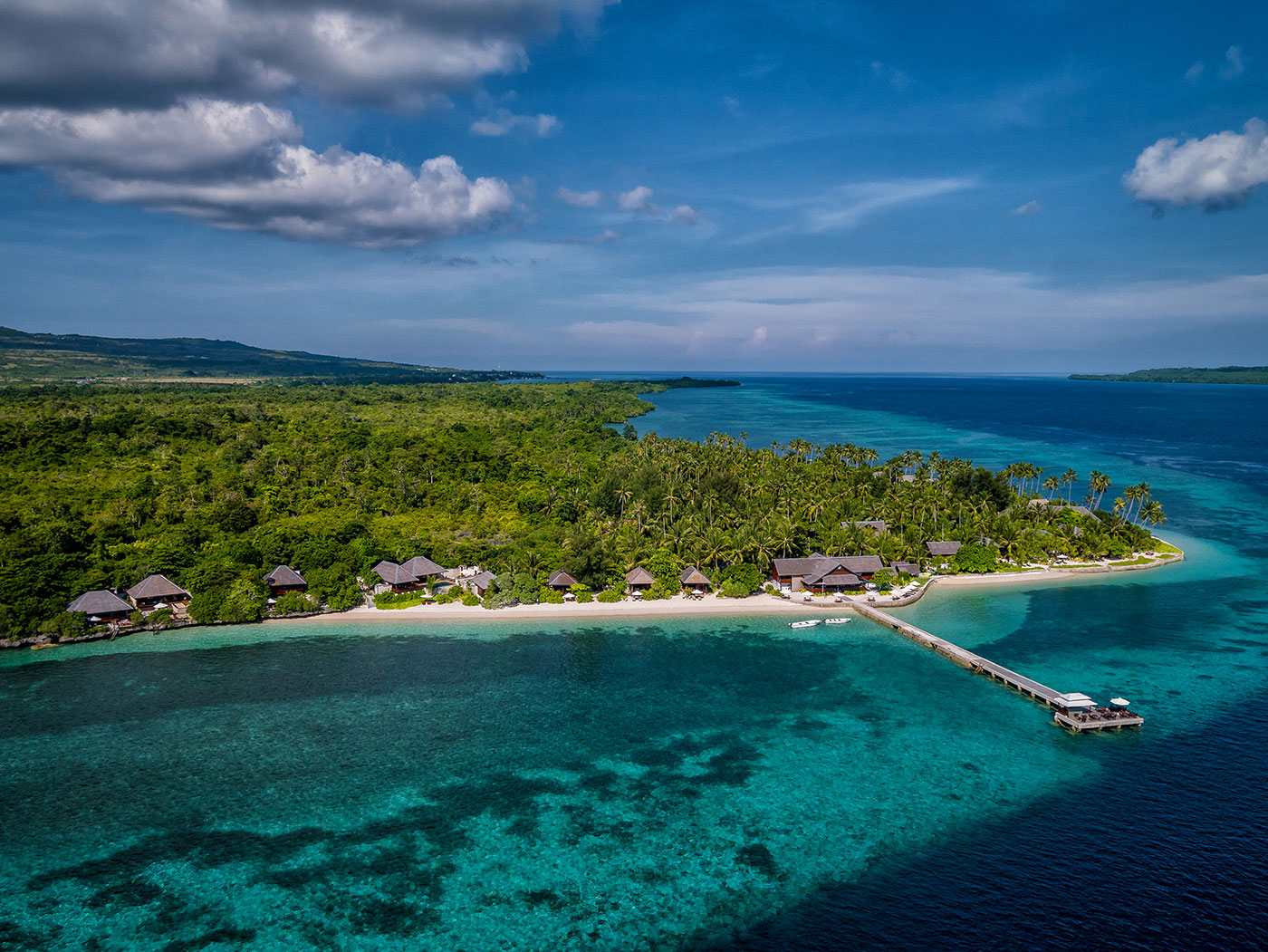
Wangi-wangi, Kaledupa, Tomia and Binongko are the four largest islands of what used to be known as the Tukangbesi Archipelago in Southeast Sulawesi, Indonesia. Today, the first two letters of the names of each of these islands form the official new name of this district (since 2003) and the name of the luxury diving resort that is responsible for the preservation of the marine life in this area.
Although luxury island resorts tend to bring to mind images of exploitative foreign owners living off the ecological riches of a faraway tropical aisle, the Wakatobi Dive Resort is the exact opposite. Founded by Swiss ecologist Lorenz Mäder in 1995, Wakatobi Dive Resort is a world-renowned example of sustainable eco-tourism that has invested millions of dollars over the past few decades to restore coral reefs and marine life in the area and ensuring the area around its resort remains healthy and unspoilt.
Building a Sustainable Enterprise: Changing Mindsets Through Cooperation
Built on Onemobaa, a small island off the western coast of Tomia island, Mäder first arrived on the island in 1994 on a quest to build a sustainable resort after reading about the inaccessibility of the island in a travel guide.
“There were numerous challenges in creating what would become a world-class resort in an area so remote,” shared Mäder. “The local people had not seen Europeans since the Dutch left the country, and electricity and running water were still unavailable. But equally important to me was establishing a business model that would provide protection for one of the world’s most pristine and beautiful ecosystems, while at the same time developing benefits for local economic welfare and social responsibility.
“Arriving on a bare island without electricity, Mäder was practical in how he went about fulfilling his vision of sustainability – by working inclusively with the local villagers.
Wakatobi Resort’s years of investment to restore as well as maintain the coral reefs and marine life in the area reflects good economic sense, if you want to see sustainable eco-tourism work. A world-renowned destination is not a “world-renowned destination” if it is without the treasures underwater enthusiasts want to see, experience and enjoy. (Photo courtesy of Wakatobi Dive Resort)
“One of our earliest efforts was to encourage area fishermen and villagers to cease destructive fishing methods,” Mäder revealed. “Rather than attempt to change behaviors through autocratic regulation, we worked with these groups to create an understanding of the benefits of conservation not only to the resort, but to themselves. During the construction of the resort, we relied on local materials and labour to create structures that were in harmony with the surroundings and local traditions, while at the same time providing the levels of comfort and luxury guests expected.”
Mäder’s passion for the preservation of marine life extended far beyond the island to the entire group of islands in Southeast Sulawesi.
Creating the Collaborative Reef Conservation Programme
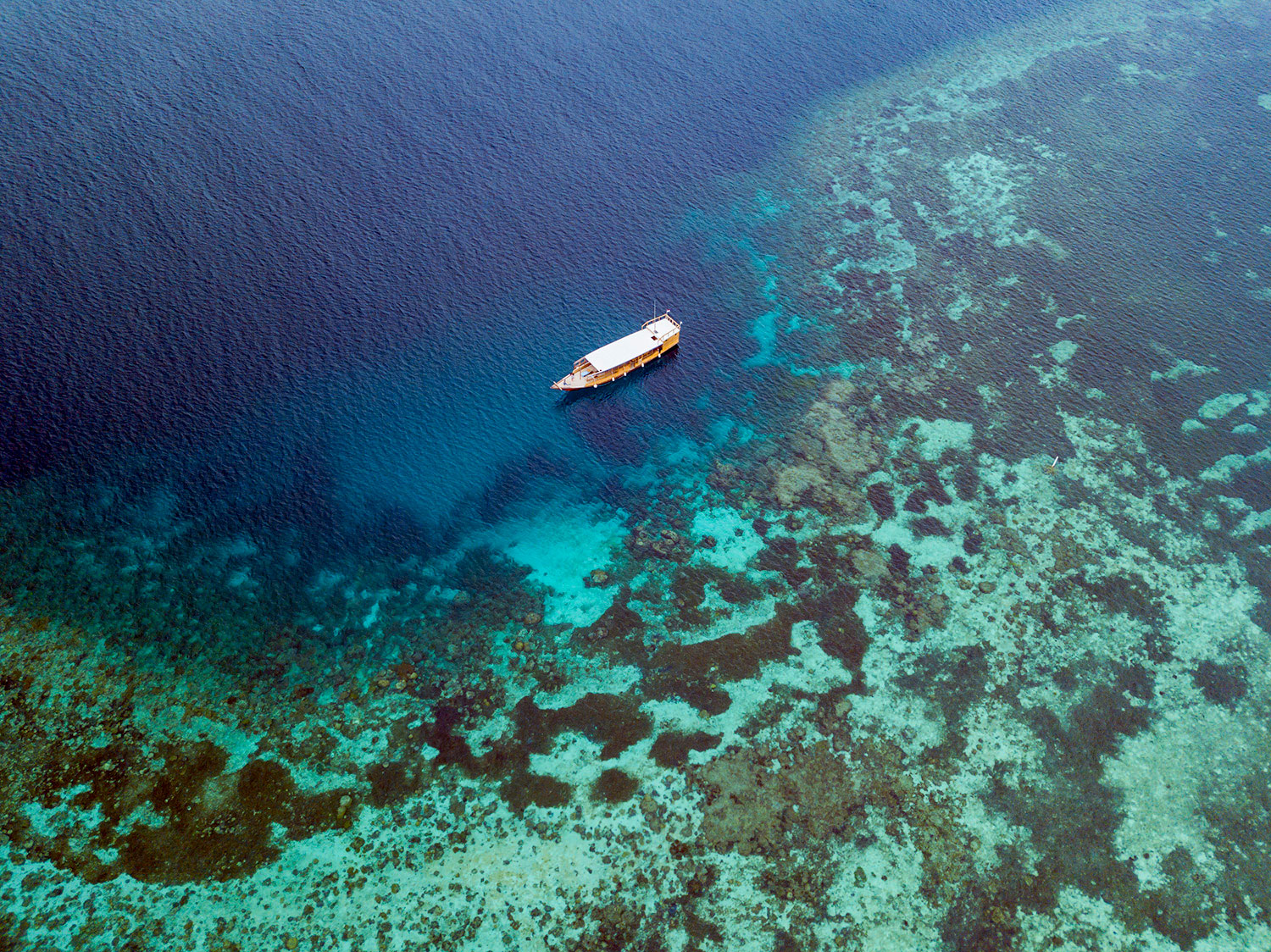
“In 1997, we created the Collaborative Reef Conservation Programme. This was the first such programme of its kind. It provided lease payments made directly to local fishermen and villagers to halt destructive fishing practices and encourage local participation in creating a marine reserve. This reserve now stretches across 20 kilometres of prime coral reef habitat.
An aerial view of the pristine corals around the Wakatobi Dive Resort (Photo courtesy of Wakatobi Dive Resort)
“We believe that conservation and protection efforts are most effective when they originate at the local level and can be shown to provide tangible benefits for all, not just those who come to visit. This is why we have always and will continue to work within the community to create such programmes.”
To ensure that its marine conservation efforts are not undone by tourist visitors to its resort, Wakatobi has enacted strict regulations – enforced and educated through its dive guides and staff – to protect the Wakatobi Marine Reserve.
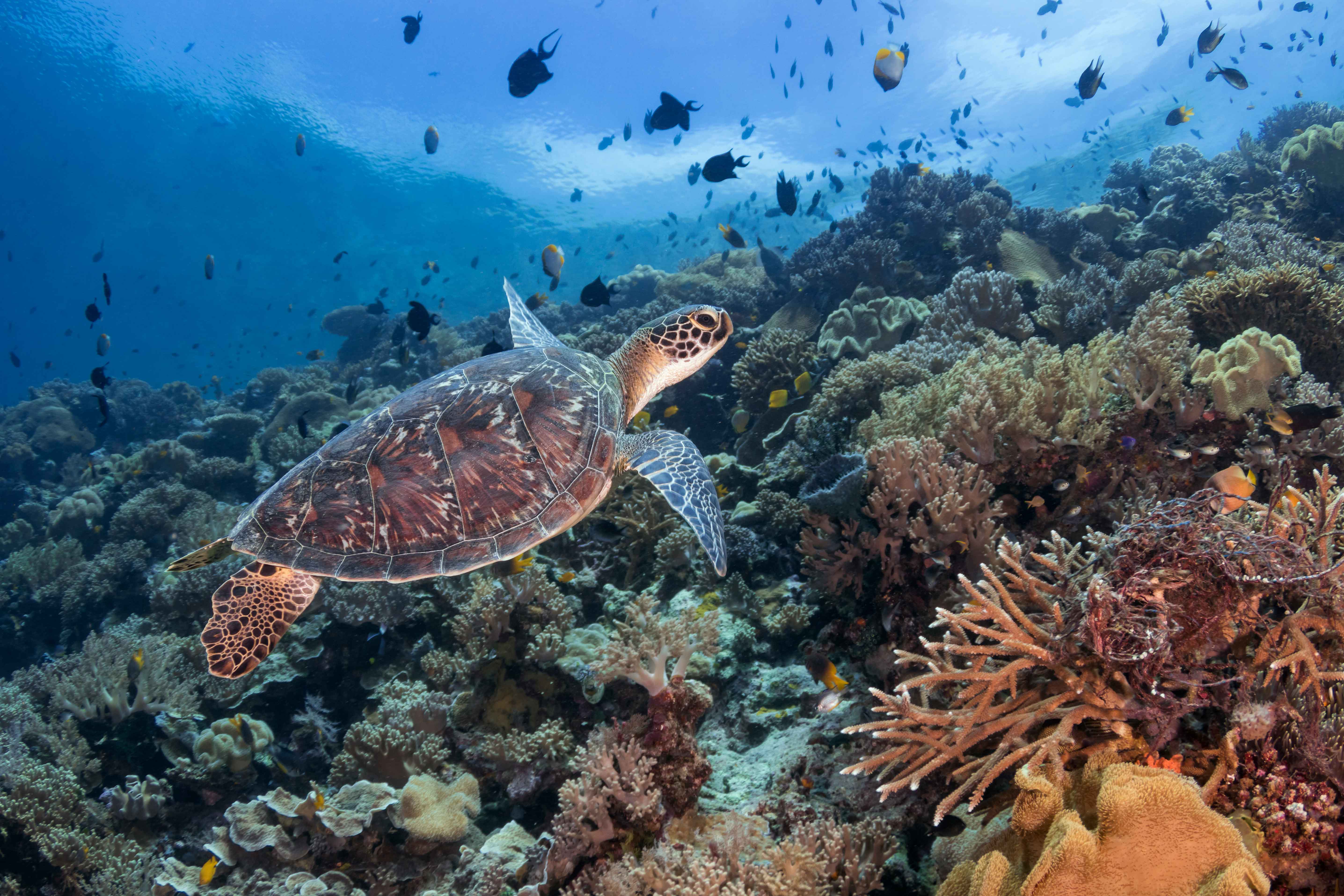
On coral reefs free of harmful fishing activities you will likely see large green sea turtles gliding majestically before your eyes. (Photo courtesy of Wakatobi Dive Resort)
“We have created, defined and enforced standards of behavior for all visitors to the Wakatobi Marine Reserve. This includes a no-touch policy to the reefs and a no-harass policy to marine life. When such standards are in place, human impact is mitigated, even as more visitors are able to enjoy the reefs.” Over the last 24 years, Wakatobi has significantly improved the ecological balance of the Wakatobi Marine Reserve even as its popularity among tourists has increased – a fact that Mäder is very proud of. “Sharing the beauty of coral reefs through dive tourism provided a means to share my love of the ocean, while also creating methods for protecting the ecosystem.
Establishing what would grow to become a world-class resort property was actually just a means to this end. I’m proud we’ve come so far while at the same time maintaining the protection of our ecosystem.” Looking ahead to the next 10 years, Mäder has even more impressive sustainability goals in mind for Wakatobi Dive Resort.
Outlining his vision for Wakatobi for the next decade, Mäder hopes “to continue operating in an ecologically sound and socially responsible manner that provides proactive protection for the marine ecosystem, while at the same time upgrade our amenities and provide guests with the highest levels of service, and to reduce our carbon footprint through initiates such as the integration of solar power.”
Reducing Carbon Footprint Through Solar Power
Like the well thought out plans that has brought about the sustainable success of the Wakatobi Dive Resort, Wakatobi’s venture into solar power has been years in the making.
“Wakatobi’s efforts to bring solar power to the region date back more than a dozen years when we convinced the Indonesian government to establish the region’s first solar power plant on the adjacent island of Tomia.”
Wakatobi’s decades of work is evident through the abundance of unspoiled, healthy state of the coral reefs found just about everywhere. (Photo courtesy of Wakatobi Dive Resort)
Built on Tomia island, where the resort’s private airstrip is located, this 75-kilowatt photovoltaic installation was followed several years later by a second solar installation at the village of Lamanggau on Onemobaa, the island which the Wakatobi Resort resides. Flying in from America on flights sponsored by Mäder, engineers from an American foundation evaluated, financed and installed the second photovoltaic facility. The same contractor later installed two additional photovoltaic plants on Tomia, paid for by private Indonesian investors.
The village of Lamanggau recently established an additional kilowatt photovoltaic plant. Wakatobi and Mäder were able to encourage the village and PLN (Indonesia’s national utility company) to cooperate by connecting the solar installation to the island’s power grid. This enabled the village to sell any excess solar-generated power during the day, and in return, receive generator-produced power during the night. This arrangement is considered more cost-effective and efficient than adding the complexity and expense associated with the use of large battery banks to store excess energy.
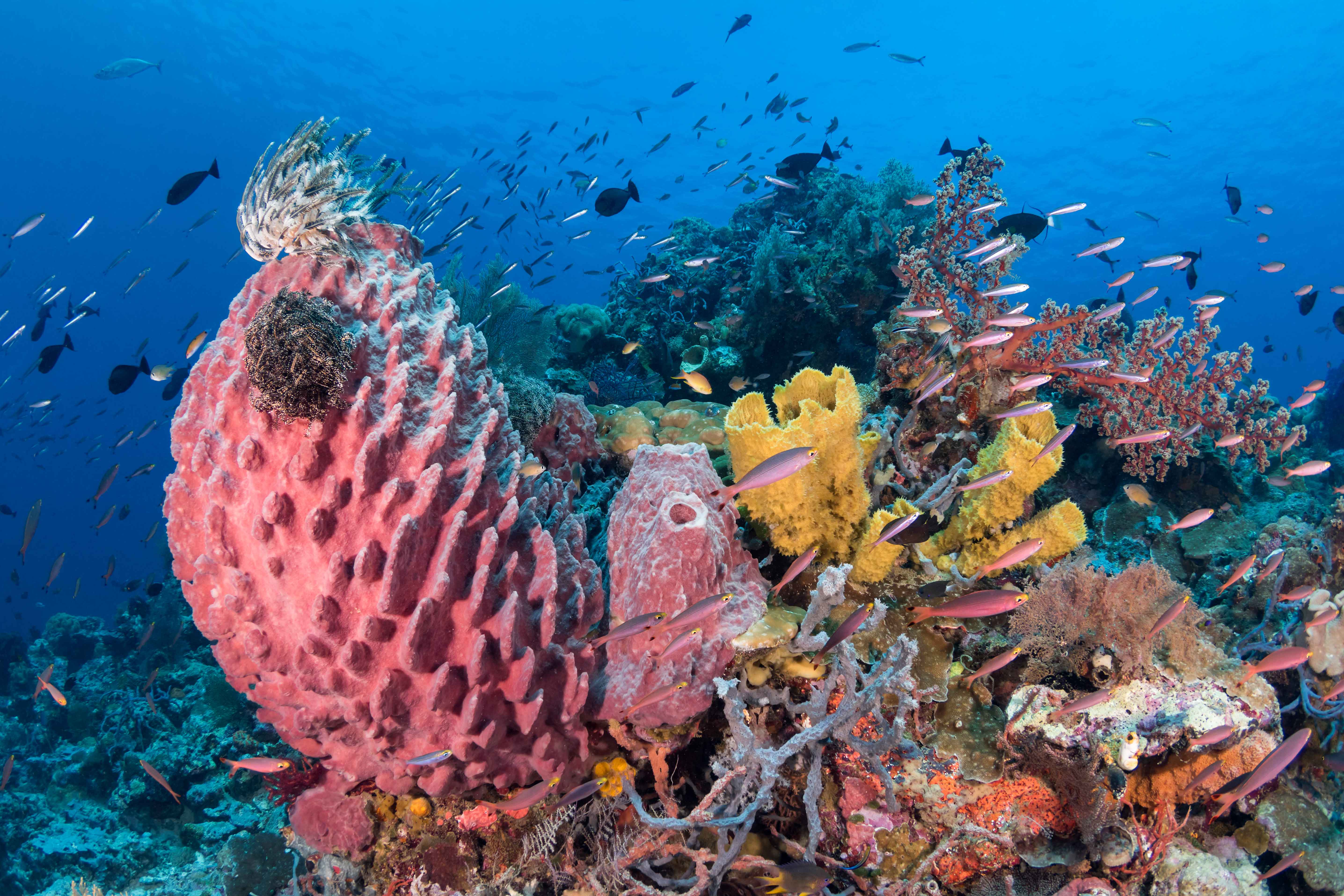
Drop beneath the waves upon a healthy vibrant reef encompassing thousands of species of coral, sponges, fish and invertebrates are you’re left feeling encouraged that good reef management is possible. (Photo courtesy of Wakatobi Dive Resort)
Thanks in part to Mäder’s ongoing work in bringing solar power to the Wakatobi region, Tomia is currently the only island in Eastern Indonesia entirely powered by solar power during a sunny day, with photovoltaic plants that collectively produce a megawatt of electricity. This capacity represents a third of the island’s total 24-hour power requirements.
By April of 2019, Wakatobi Resort expects to be connected to Tomia’s solar power stations. The staff is working with PLN, to bring grid power to the resort grounds, where it will be tied into the existing power generation system. This solution will allow Wakatobi to take advantage of clean solar energy during the day, draw power from a central generation facility during the night, and still maintain the ability to operate autonomously at full power should the grid experience a temporary blackout. Work on this connection is currently underway. For more visit www.wakatobi.com or Wakatobi Flow
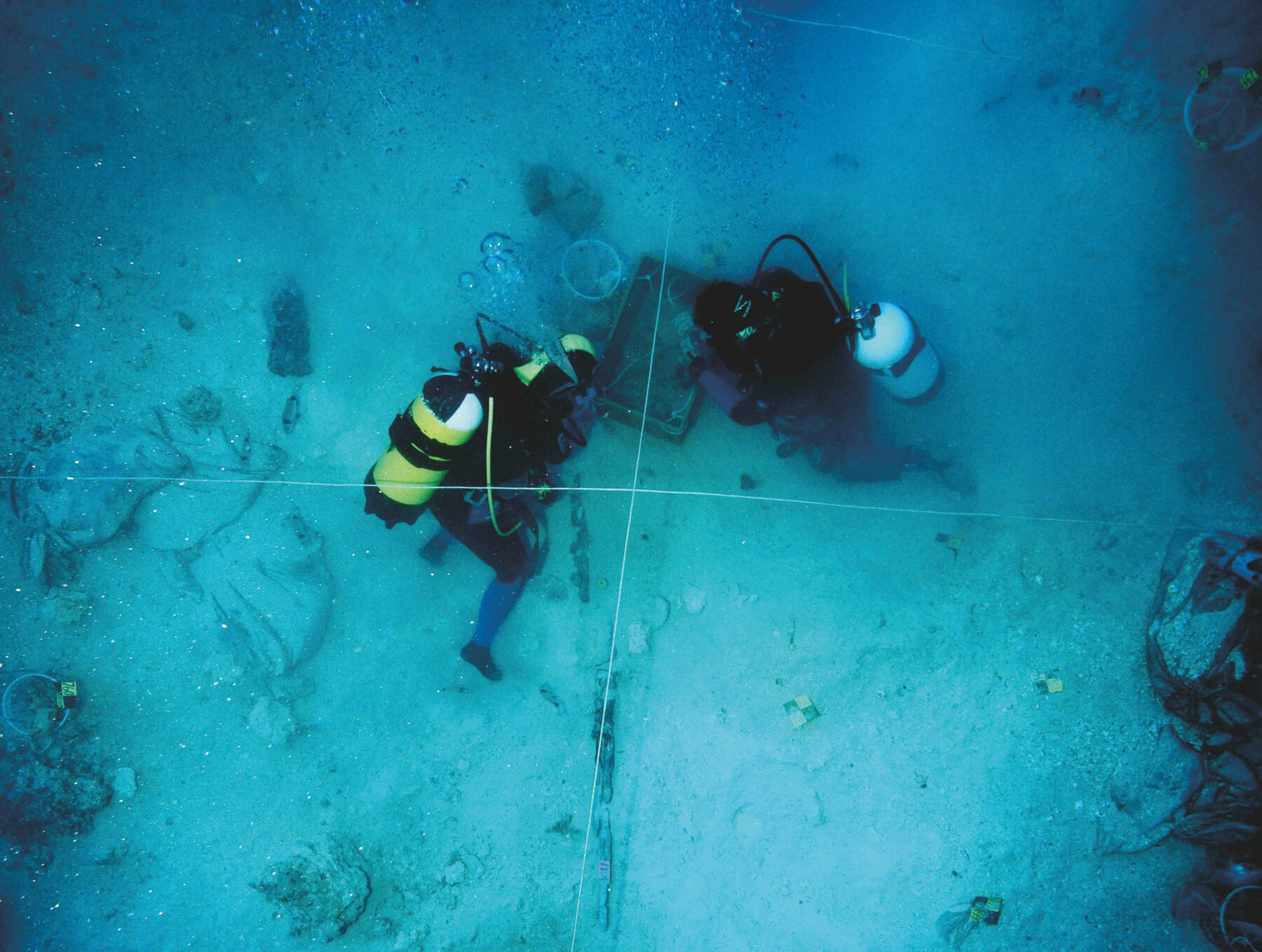
Kizilburun, Turkey--Sheila "Xila" Matthews (bottom) and Kim Gash (top) work on removing wood piece # 5012 from U3/U4.
I hover above the ancient marble column about 45 metres below the surface of the Mediterranean Sea. Holding my underwater camera housing in one hand, I use the other to direct my dive model through the azure water. The photograph I have visualised in my mind’s eye, and meticulously planned, comes together. I lift the camera and click the shutter. Two thousand years ago a Roman ship sank, lost and forgotten off the coast of Turkey. Today, I am here to photograph its excavation.
My journey began when I was 11 years old, studying a segment on oceanography in my sixth grade science class. Buried within the book were two short pages on underwater archaeology. Upon reading them, I decided then and there that that was “what I was going to be when I grow up!”
On the Bajo de la Campana Excavation in La Manga, Spain, Arianna Villani artefact a tripod bowl to the surface
I began gathering the pieces I would need. I earned my Open Water certification during high school in 10-centimetre visibility off New York City. To practise underwater photography, I burned through rolls of film shooting fluorescent orange golf balls in the local pool using my first “real” camera, a Sea&Sea Motormarine 35mm. In college, I majored in anthropology with a focus on archaeology and a minor in art history. My goal was to work with the Institute of Nautical Archaeology (INA).
I solicited advice, wrote emails, made inquiries… The persistence paid off. One evening I got the call: “Would you like to come to Egypt to excavate and photograph a shipwreck?“ My life’s dream was coming true!
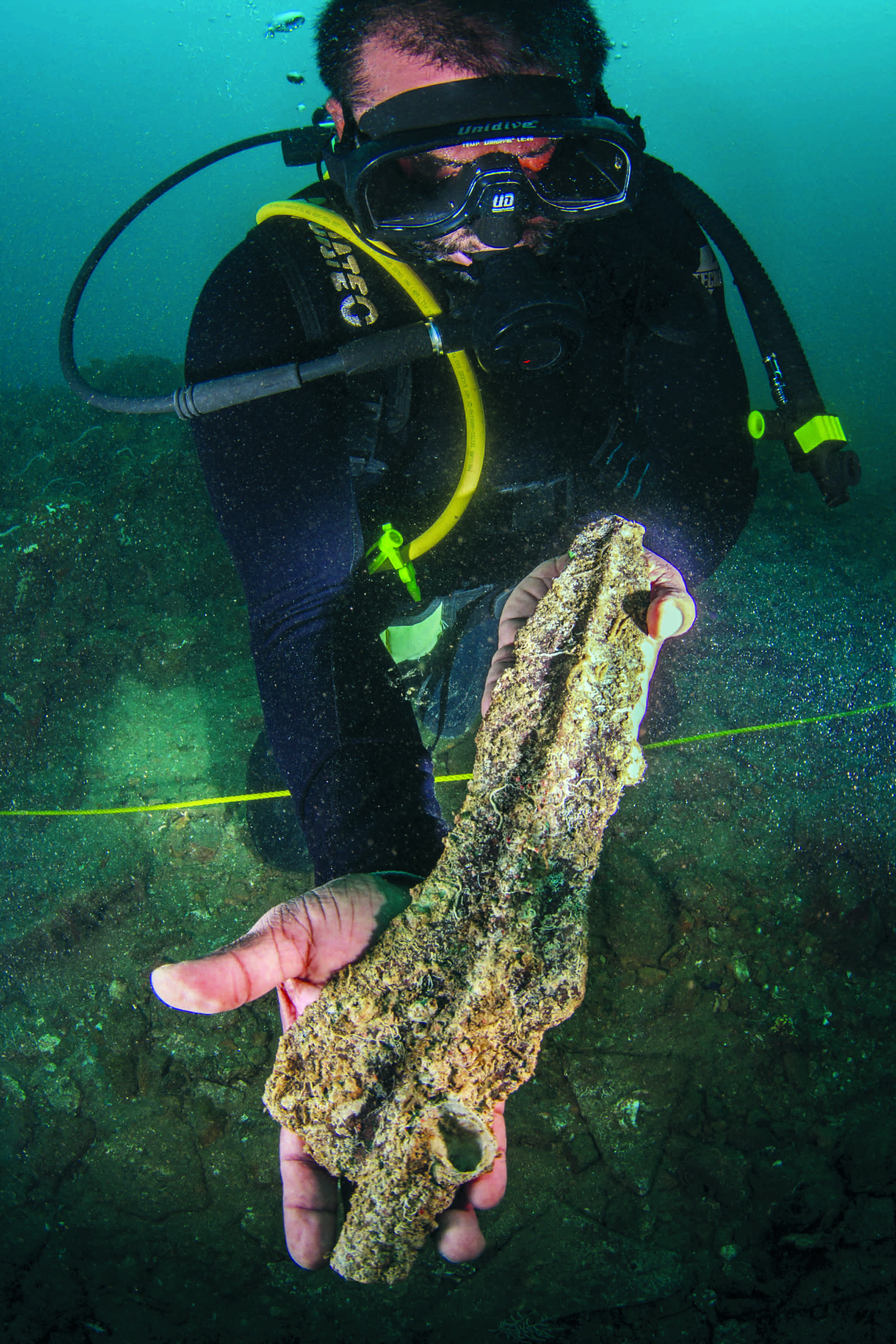
Assistant Field Director Staci Willis holds up an artefact that she has successfully mapped in, and is now preparing to raise, on the Godavaya Shipwreck Excavation, Sri Lanka
My role on the excavation is to create “sexy” underwater images both for publication and to help raise funds for the excavation. Once a significant artefact is found, I work out a plan to shoot it. I’ll conceive an image, then choose from the photographic tools in my arsenal to capture it. (Sometimes I make what I need on the fly, such as the snoot I crafted in Sri Lanka from a soda bottle, duct tape and black marker.)
If models are involved, I’ll sketch the shot and we’ll thoroughly discuss the photograph on the surface. Time and communication underwater are limited; the more that is hashed out ahead of time, the smoother the shoot will go. We dive in shifts, so to reduce the likelihood of backscatter, I usually go first. Descending onto an ancient artefact, knowing that the last person who touched it lived thousands of years ago, sends a chill down my spine!
To date, I’ve worked as the photographer on five underwater excavations around the world: Sri Lanka for the ship from the 2nd century BC carrying a load of heavy iron that likely caused its demise; Egypt for the 18th-century Ottoman wreck, its impressive wooden hull not yet devoured by shipworms; Spain for the 7th-century BC Phoenician shipwreck, its trade goods spilled along a gentle underwater slope; Turkey for both a Roman wreck carrying an entire column in sections, and a Bronze Age wreck.
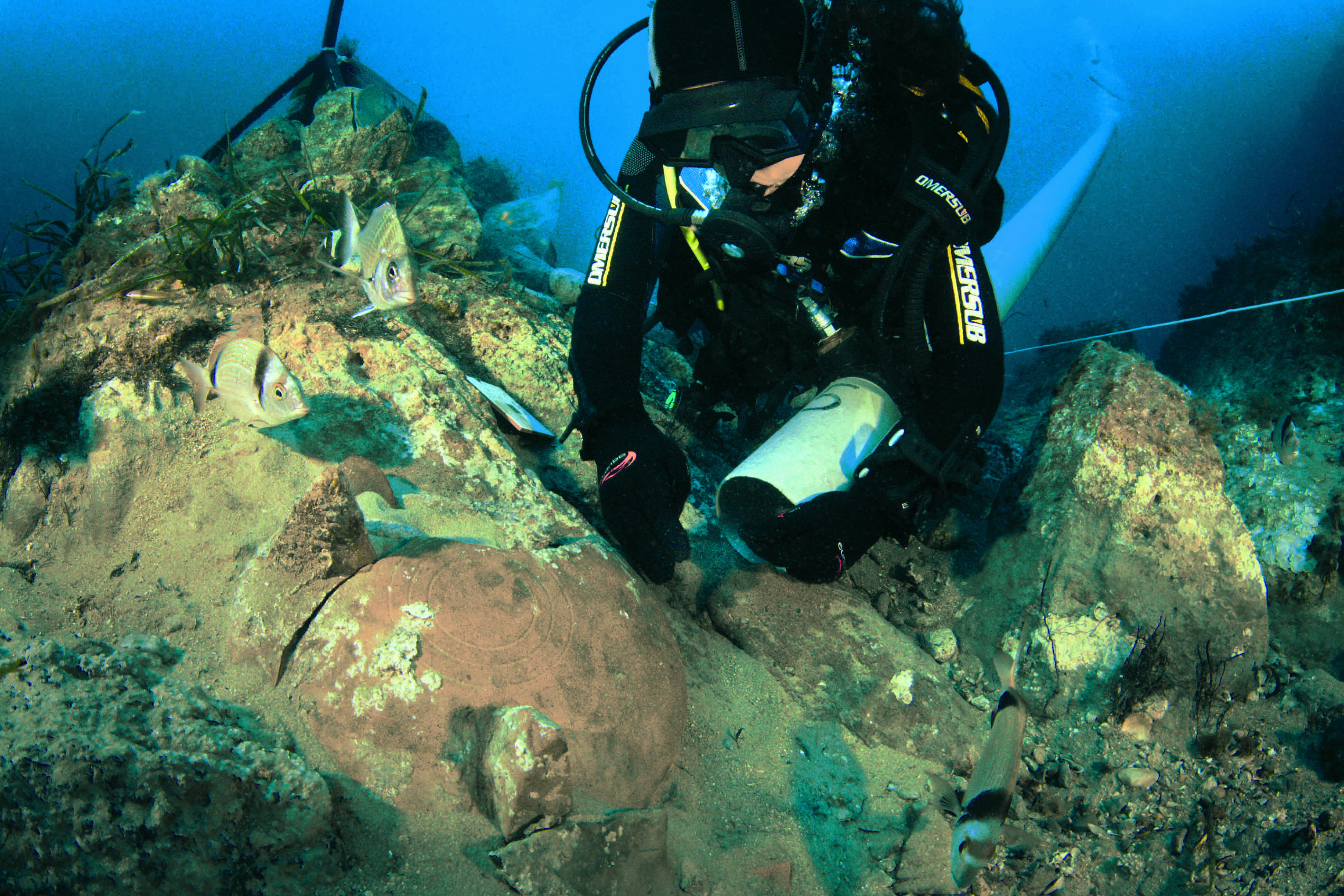
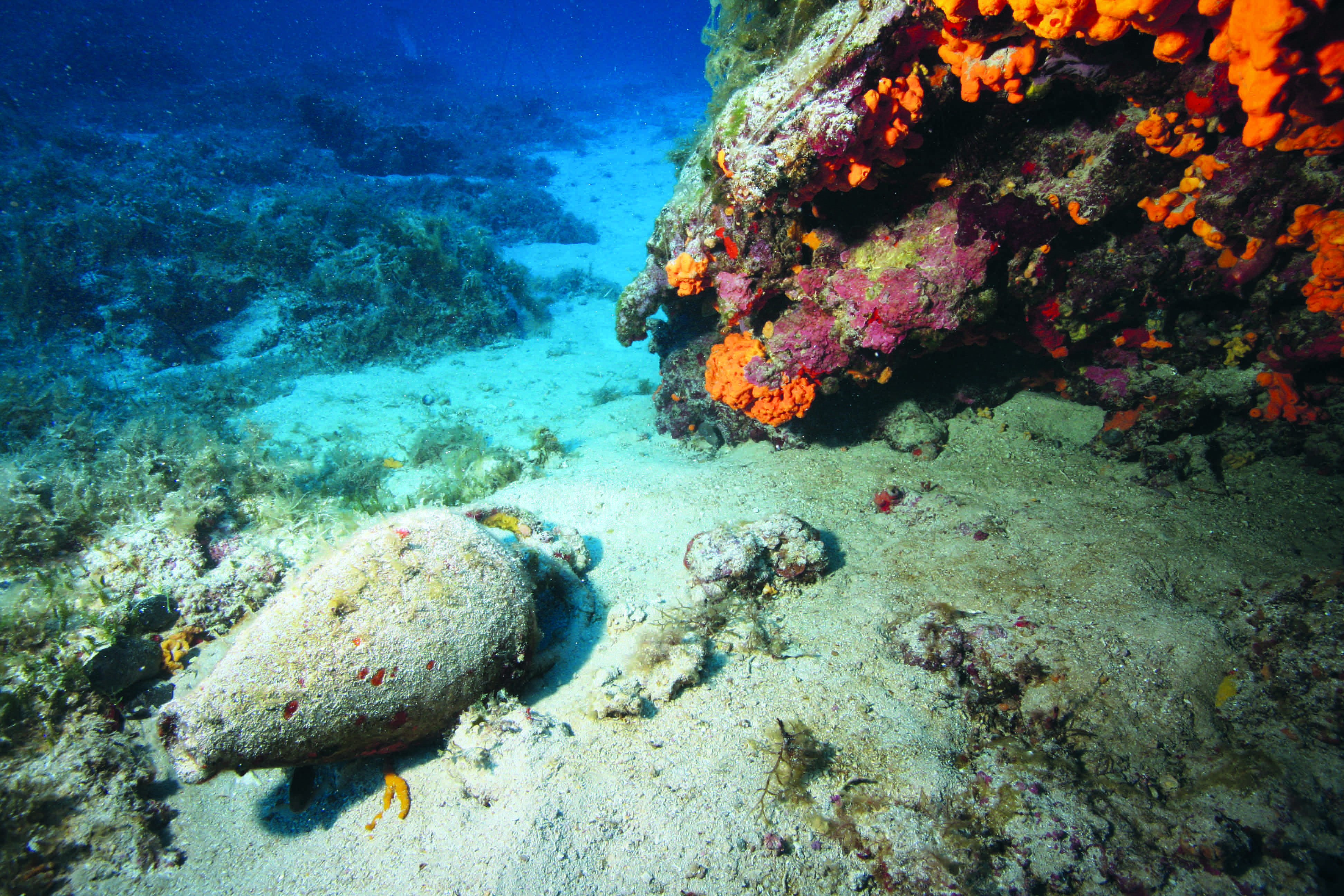
Anancient amphora in Kizilburun, Turkey
For the rest of this article and other stories, download a digital copy here of Scuba Diver No. 109 Issue 3/2017 here!