A Dive with Mount Fuji
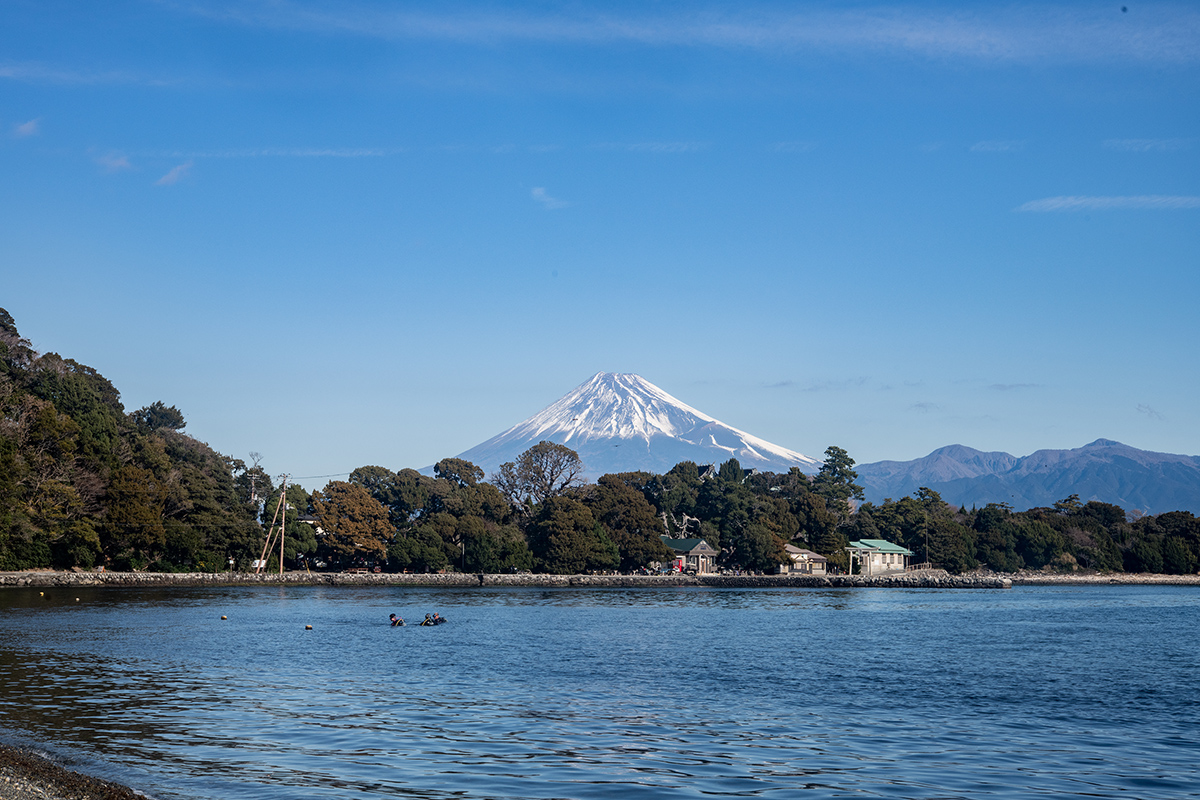
On a clear morning at Osezaki, Mount Fuji rises across Suruga Bay as I prepare my camera for another dive. The mountain is on the opposite shore, and the water in front of me looks almost too peaceful to hold surprises. I know better.
I have come here hoping to photograph a particular fish, only to return with pictures of something I never expected to find. That is one of Osezaki’s pleasures: Even after all these years, I cannot predict what the next dive will give me.
After more than 33 years of diving and over 2,000 dives in Japan and overseas, I still find myself surprised by this little stretch of coast. A fish that attracted every photographer last weekend may have vanished. A nudibranch may appear on sand I have crossed a hundred times. And a fish I normally associate with deep water may turn up at a depth that makes me wonder why I carried so much equipment on the last trip.
Osezaki deserves far more attention from international underwater photographers. It is only a few hours from Tokyo, yet it offers the kind of discoveries that keep me returning year after year.
The Deep Sea Next Door
Famous for its views of Mount Fuji, Osezaki lies on the northwestern coast of the Izu Peninsula, extending into Suruga Bay. At around 2,500 metres deep, the bay is Japan’s deepest, and the steep underwater terrain and the bay’s connection to the Pacific help explain the diversity found along its shores. The warm Kuroshio Current influences the region, while colder and deeper waters support a different variety of marine life.
For a photographer, that means temperate residents, colourful warm-water visitors and occasional surprises from deeper habitats. The deep sea is not somewhere we go on a recreational dive, but its presence is part of what makes the life close to shore so interesting. Few places make that contrast so accessible from shore.
Thirty Shades of Anthias
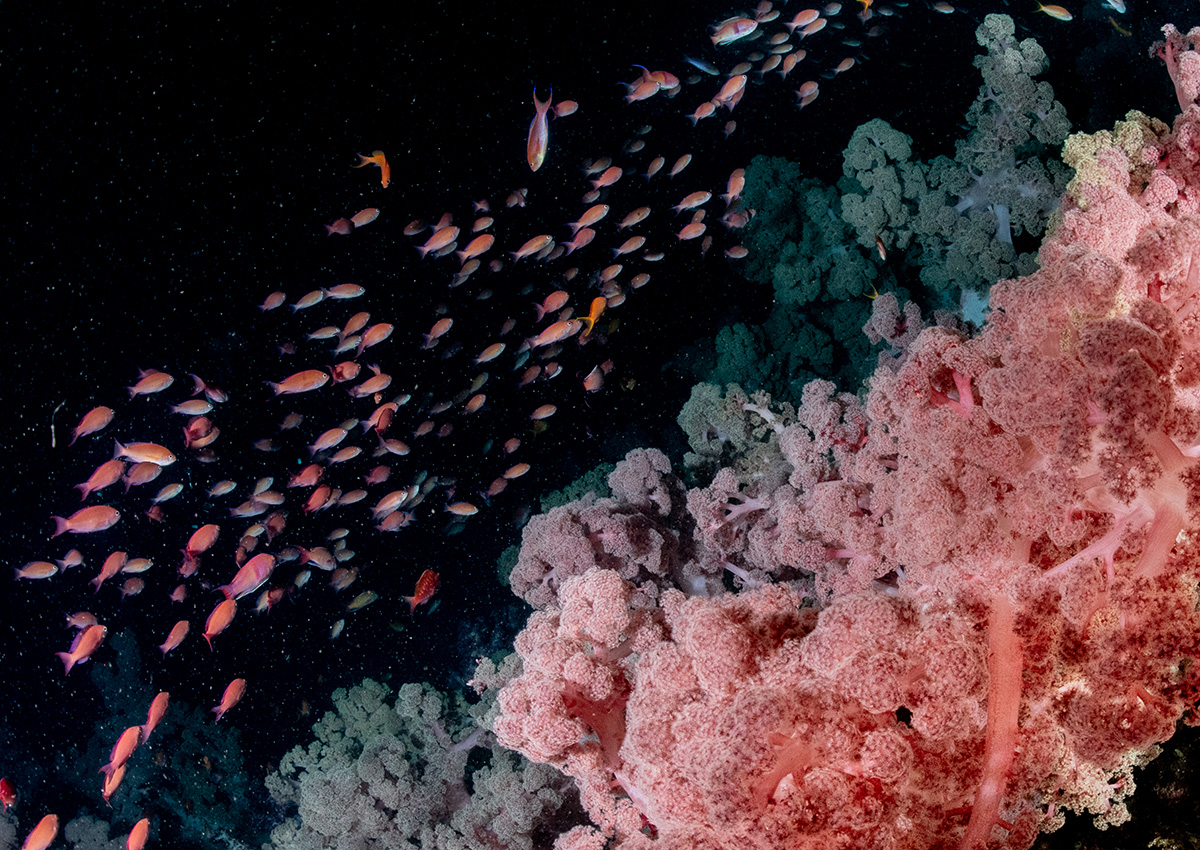
If there is one group of fish that keeps drawing me back to Osezaki’s Point, it is the anthias. Known locally as Sentan, this is a colourful underwater landscape where soft corals cover sections of the reef and anthias gather in spectacular numbers. When the current is right, the soft corals extend their polyps and the reef seems to bloom, with anthias moving through the colour in astonishing numbers. On another visit, the same reef can look almost asleep. I never know which version I will find when I descend.
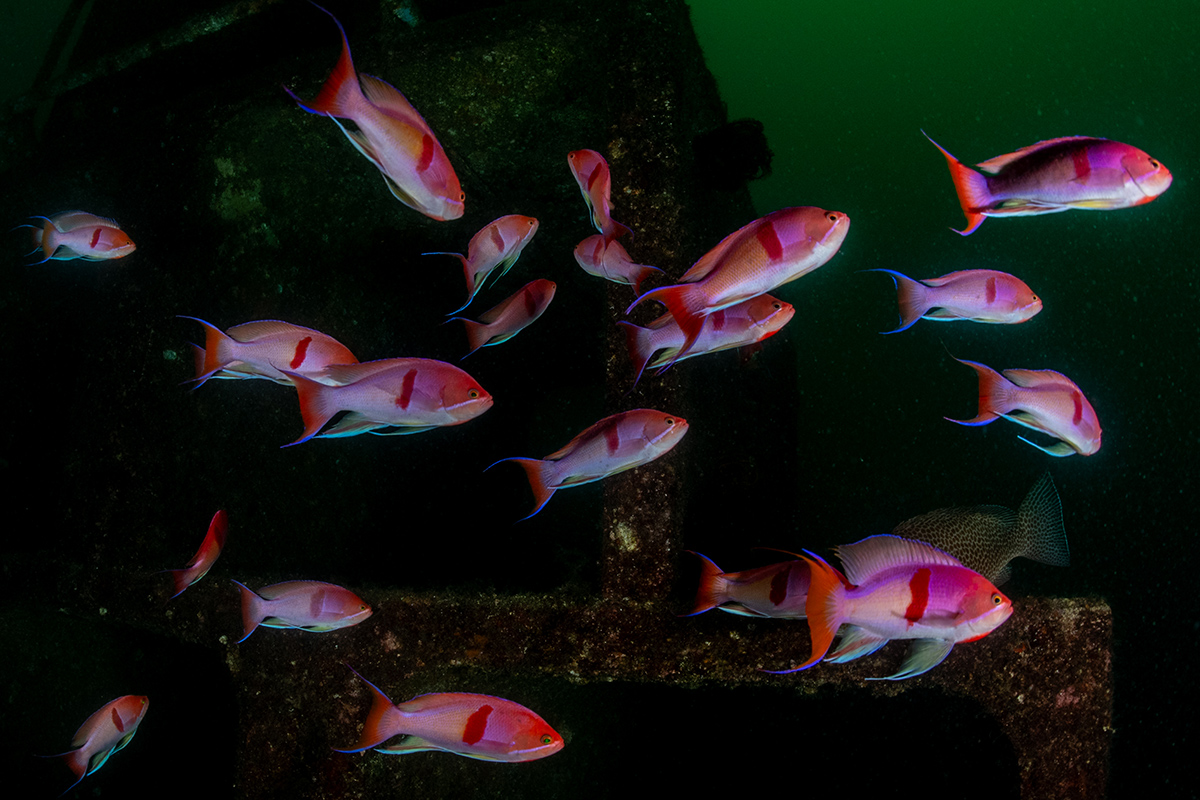
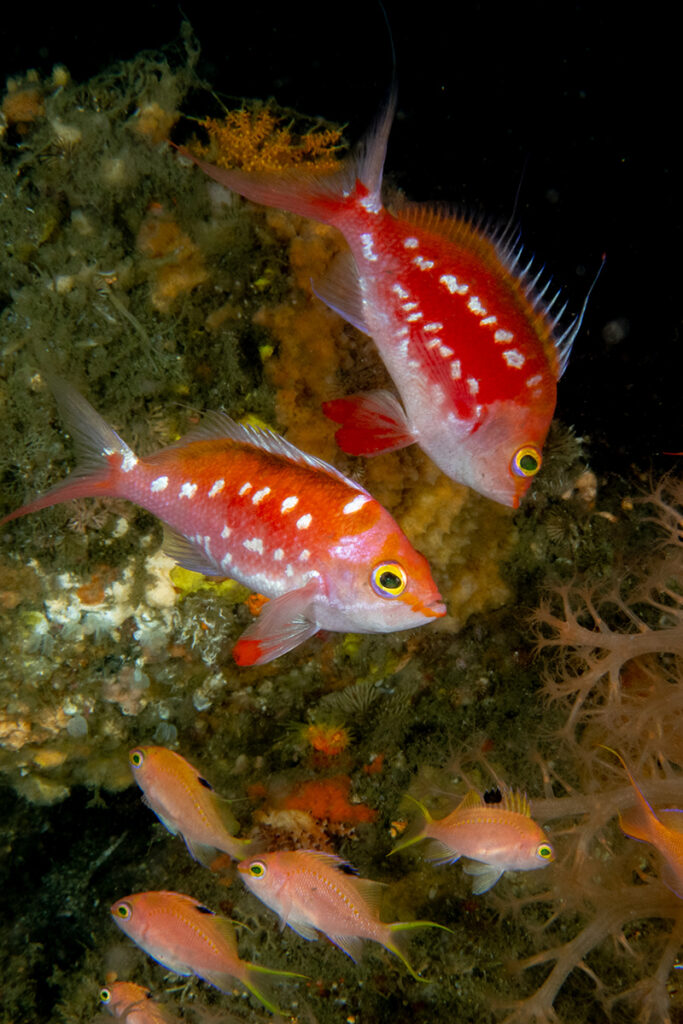
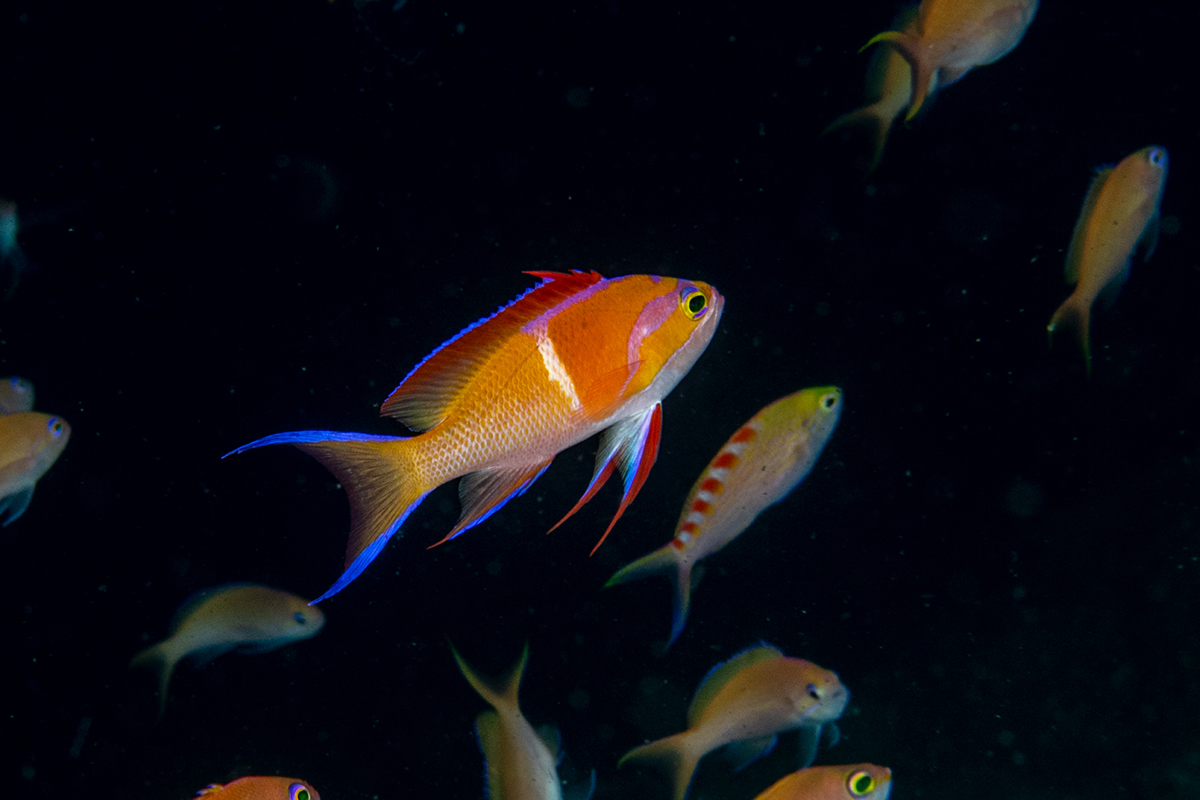
Akaobi-hanadai (red-belted anthias, Pseudanthias rubrizonatus), Naga-hanadai (Pseudanthias elongatus) and Sakuradai (cherry anthias, Sacura margaritacea) are rewarding subjects. Sakuradai is one of Japan’s signature anthias, and its Japanese name evokes cherry blossoms. For anyone who loves anthias, I would say: Do not leave Osezaki without taking time to look for them.
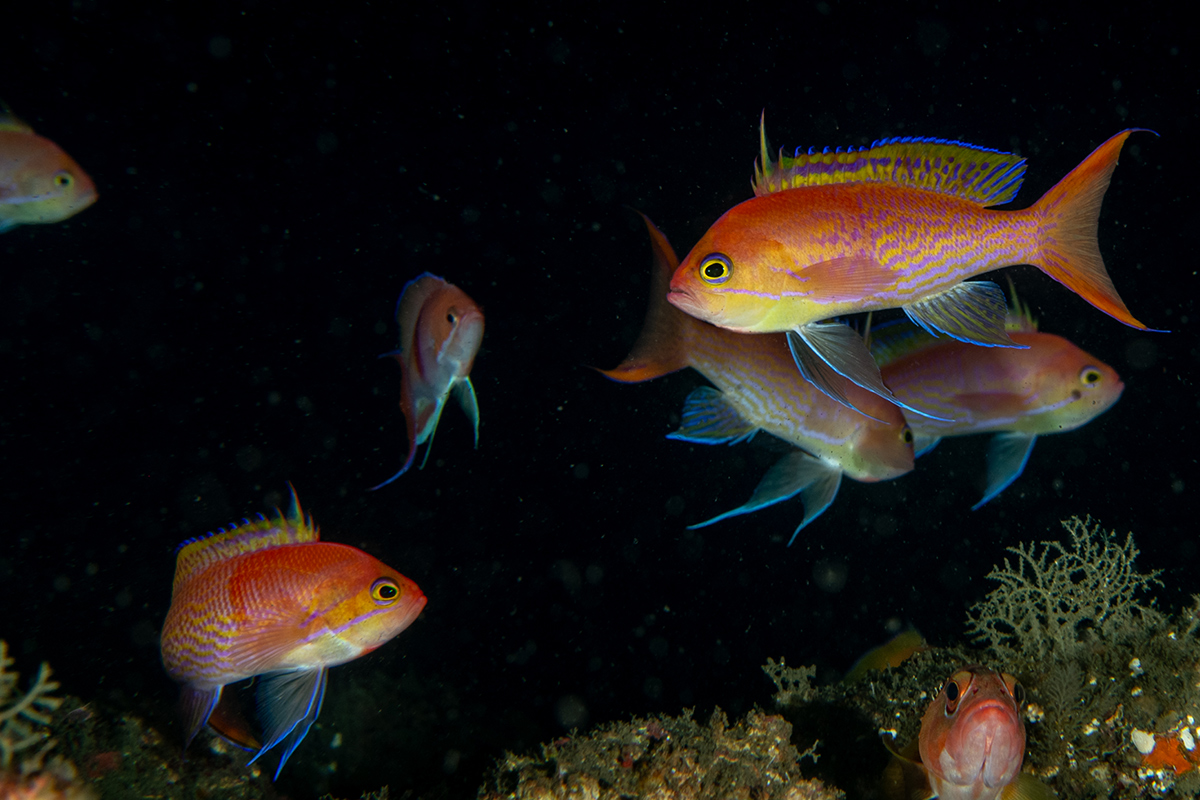
Two others are especially memorable to me. My first encounter with Shiroobi-hanadai (white-bar anthias, Pseudanthias leucozonus) was at just 23 metres. A brilliant white band cuts across its yellow-to-orange body, purple edges trace its fins, and the male’s tail trails elegant filaments. In breeding colours, the rear half can turn deep crimson.
For a fish normally associated with much deeper reefs, finding one at 23 metres was an unexpected gift. But one encounter was not enough. I wanted to see it again, to spend more time watching it and, of course, to photograph it properly. That desire eventually led me into technical diving and rebreather diving, opening the door to depths I had once only imagined exploring. One small fish changed the way I dive.
Oshare-hanadai (Pelicier’s perchlet, Poroanthias pelicieri) is another favourite, which I’ve generally encountered beyond 45 metres. I know where to look, but at those depths there is little time to wait around. If it is out when I arrive, I am lucky. If it is hiding, I cannot stay until it changes its mind. Even when I find one, a larger fish passing nearby can send it straight back into its shelter. After all that preparation, I sometimes return without a photograph. The fish, apparently, has other plans. A trusted local dive operator even reported one at 14 metres in Wannai. I did not see that fish myself, but it was delightful to hear – a welcome reminder that fish do not read our dive plans.
The Underwater Panda
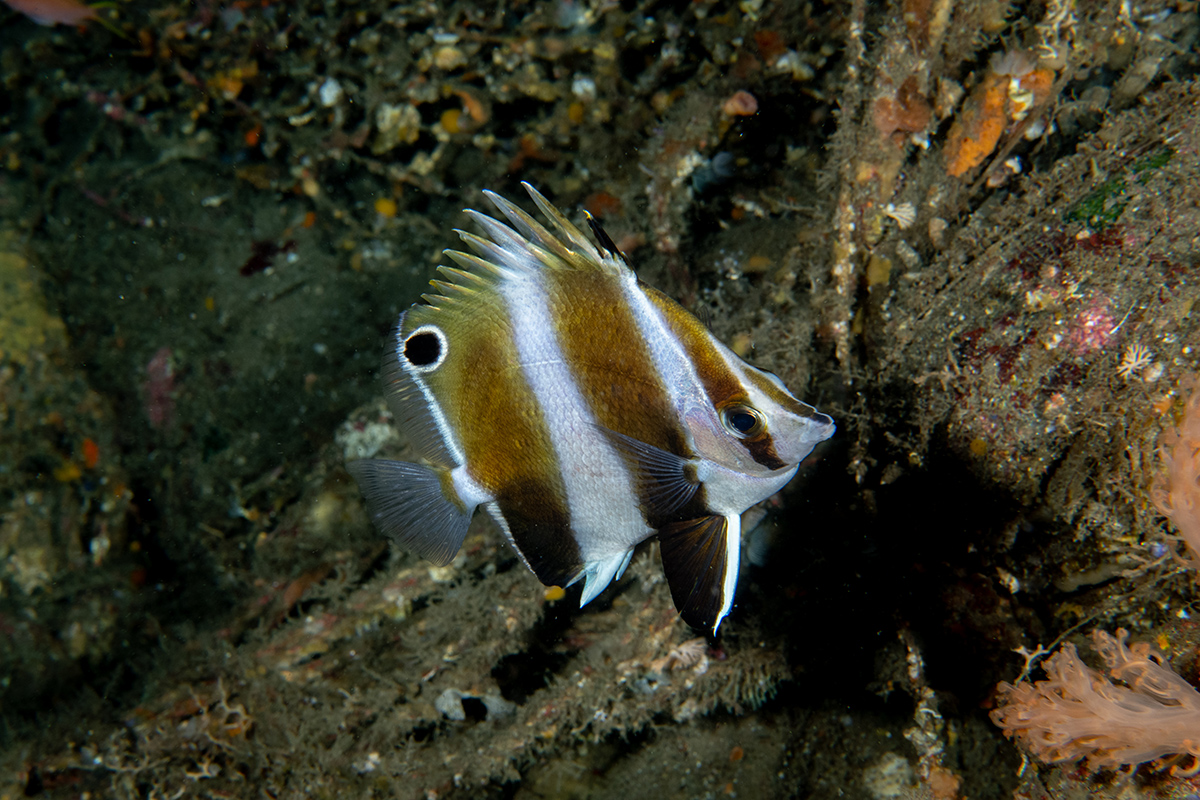
Sentan has more to offer than anthias. Among my most memorable encounters is Panda-genrokudai (white-spine butterflyfish, Roa haraguchiae), with black-and-white markings so bold that it looks almost illustrated. Remarkably, this fish was only formally described as a new species in 2020. The original scientific description was based on just eight specimens from Japan and the Philippines. It is generally found in deep water, often between 40 and 160 metres, which makes seeing one alive on a dive a very special encounter.
I have come across Panda-genrokudai more than five times at Osezaki. The reason is simple: I dive here almost every week. I never count on seeing one, and every encounter inspires me to try for a better portrait. As usual, the fish has no interest in helping with my composition.
The Bay’s Extraordinary Little Creatures
The sheltered bay of Wannai offers a very different experience from Sentan. Sand, scattered rocks and modest patches of marine growth may seem unremarkable to a passing diver. For a macro photographer, they invite a closer look.
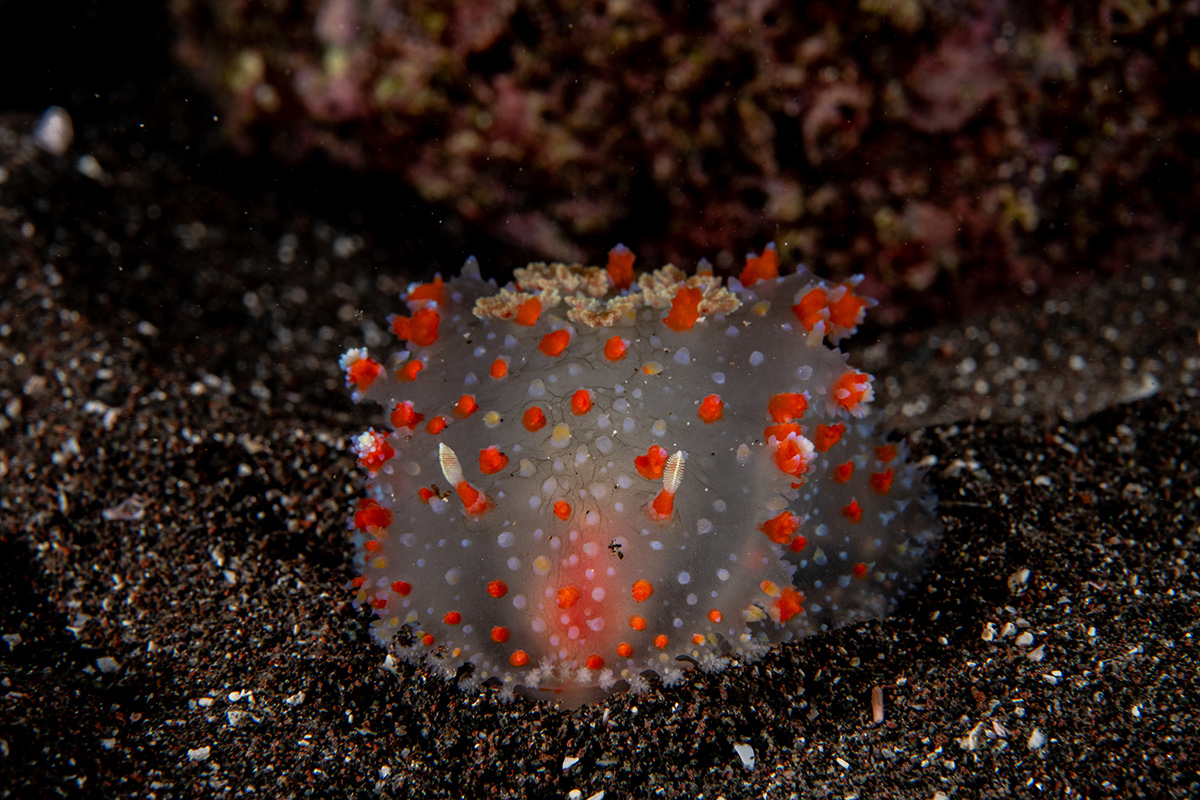
At Osezaki, finding an unusual creature often begins with news from other divers. When word spread during the week that Hanadensha (Kalinga ornata), an extraordinary nudibranch, had been spotted, I spent the next few days looking forward to the weekend. I headed for the reported location and found other photographers already there. I waited my turn and finally photographed it. Hanadensha can bury itself almost completely in sand; even knowing where to look does not guarantee you will see one.
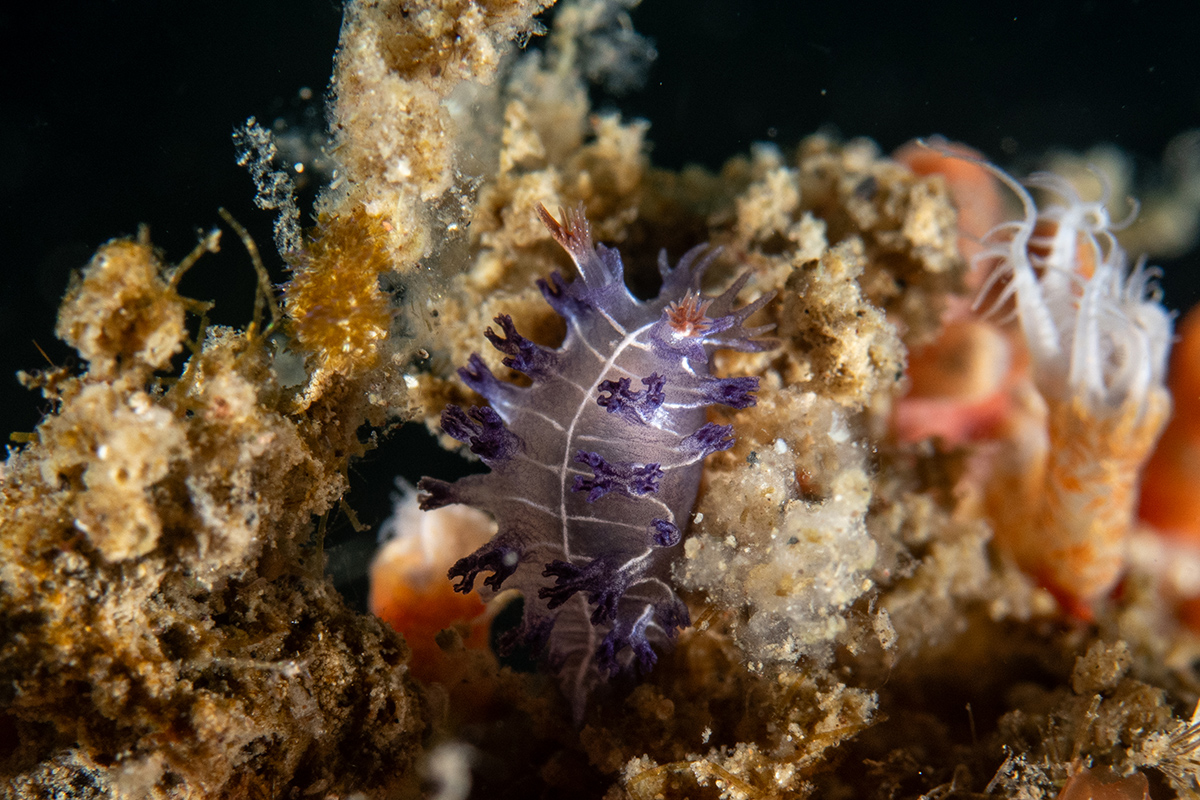
I search for Osezaki-hokuyo-umiushi (Tritonia sp. 2), known to local photographers as Ose-hoku, in much the same way: through reports shared by people who dive these waters regularly. A good dive centre is more than a place to fill a tank. Its guides share sightings, know the sites and can turn a rumour into a possible encounter – though the animal may be gone when I arrive.
Dragonets and a Paintpot
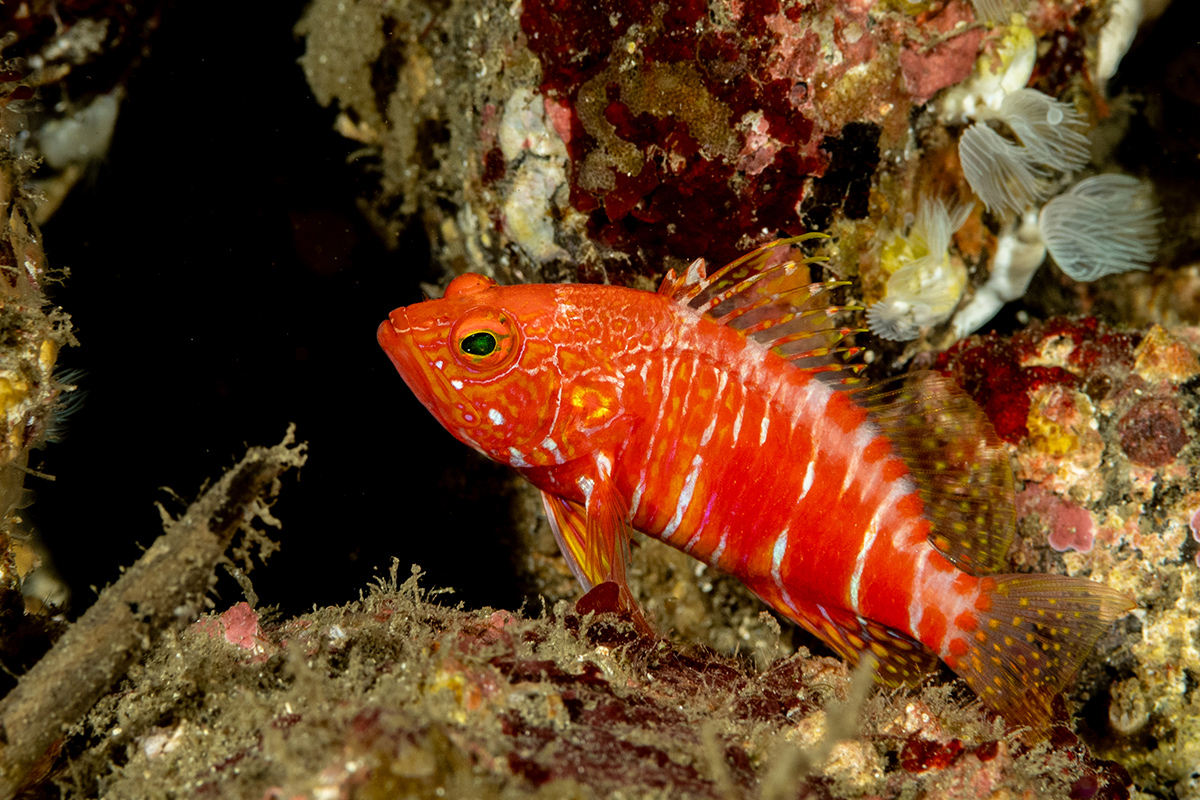
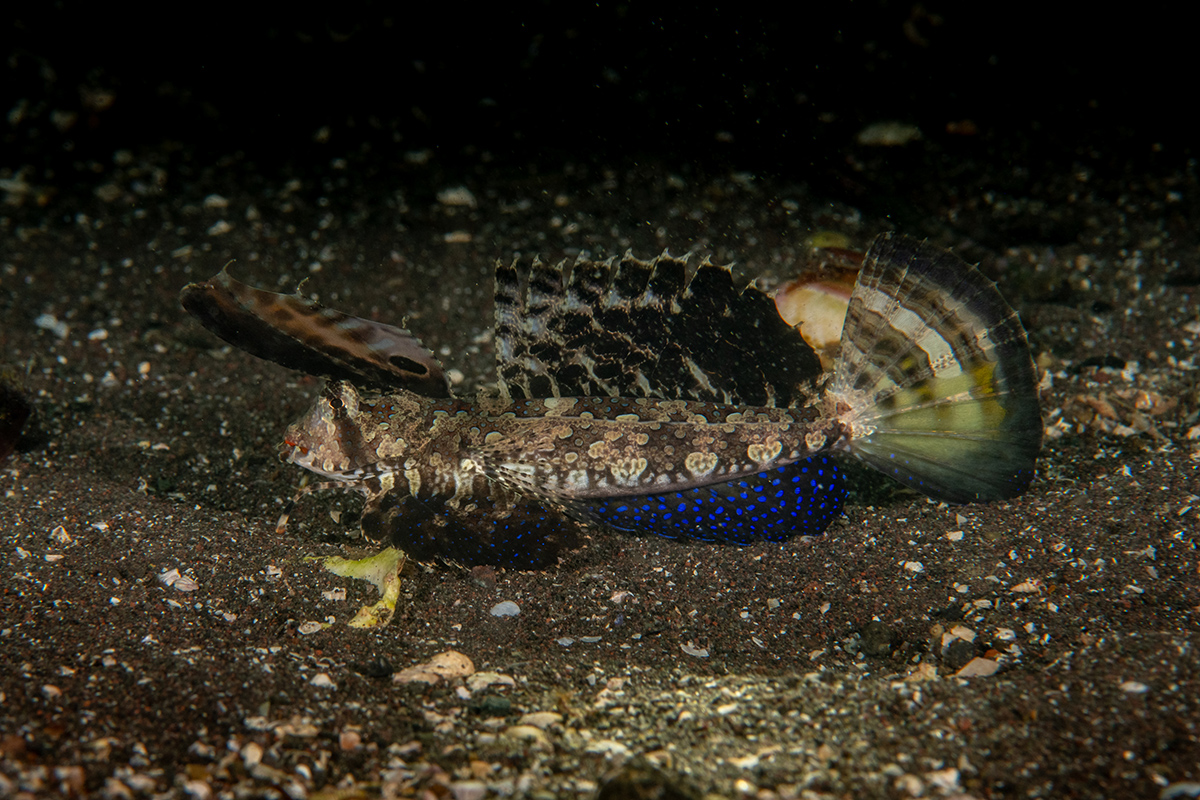
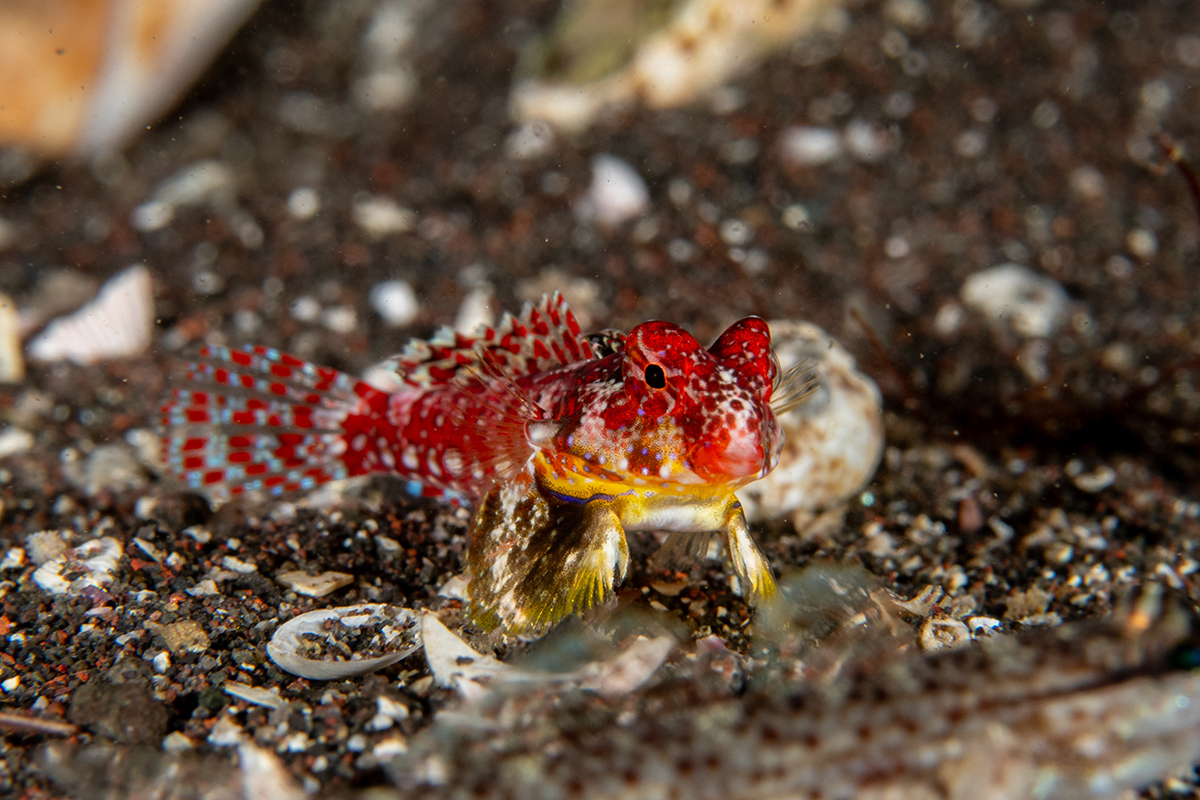
Ippon-teguri (fingered dragonet, Dactylopus dactylopus) is one of my favourite photographic challenges in Wannai. Finding one is only the beginning. What I’m after is that fleeting moment when it spreads all its fins at once. I watch for the movement, ready to press the shutter. A fraction too early and the fins are folded; a fraction too late and the display is over. The display lasts an instant; the wait can take much of the dive. Miyake-teguri (Neosynchiropus moyeri) is another favourite, especially as a tiny juvenile.
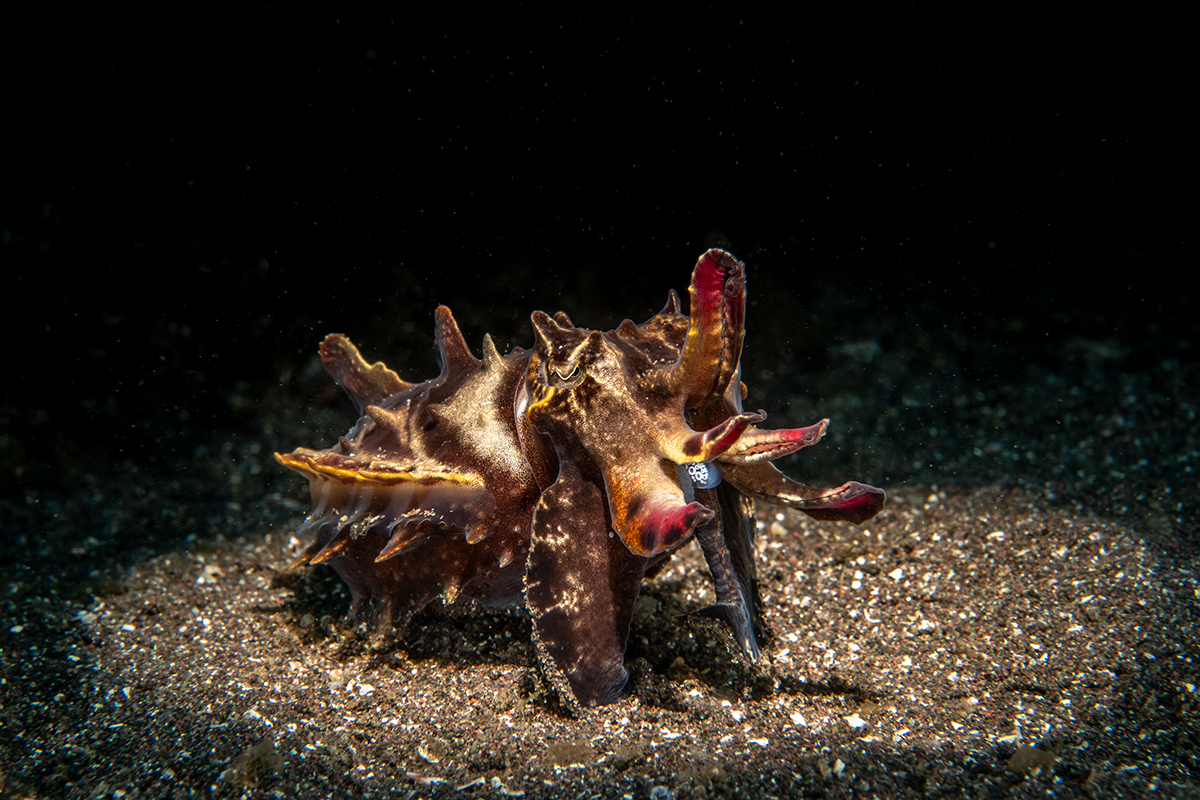
Then there is Hanaika (paintpot cuttlefish, Ascarosepion tullbergi), a different species from the flamboyant cuttlefish familiar to divers in Southeast Asia. At rest, Hanaika can blend so closely with the sand that I might look straight at one without recognising it. But I have also photographed pairs displaying rich patterns and brilliant colour. The contrast is astonishing: An animal that seemed to be part of the seabed suddenly becomes one of the most beautiful subjects in front of my lens. I could happily spend a dive watching them.
A World Measured in Millimetres
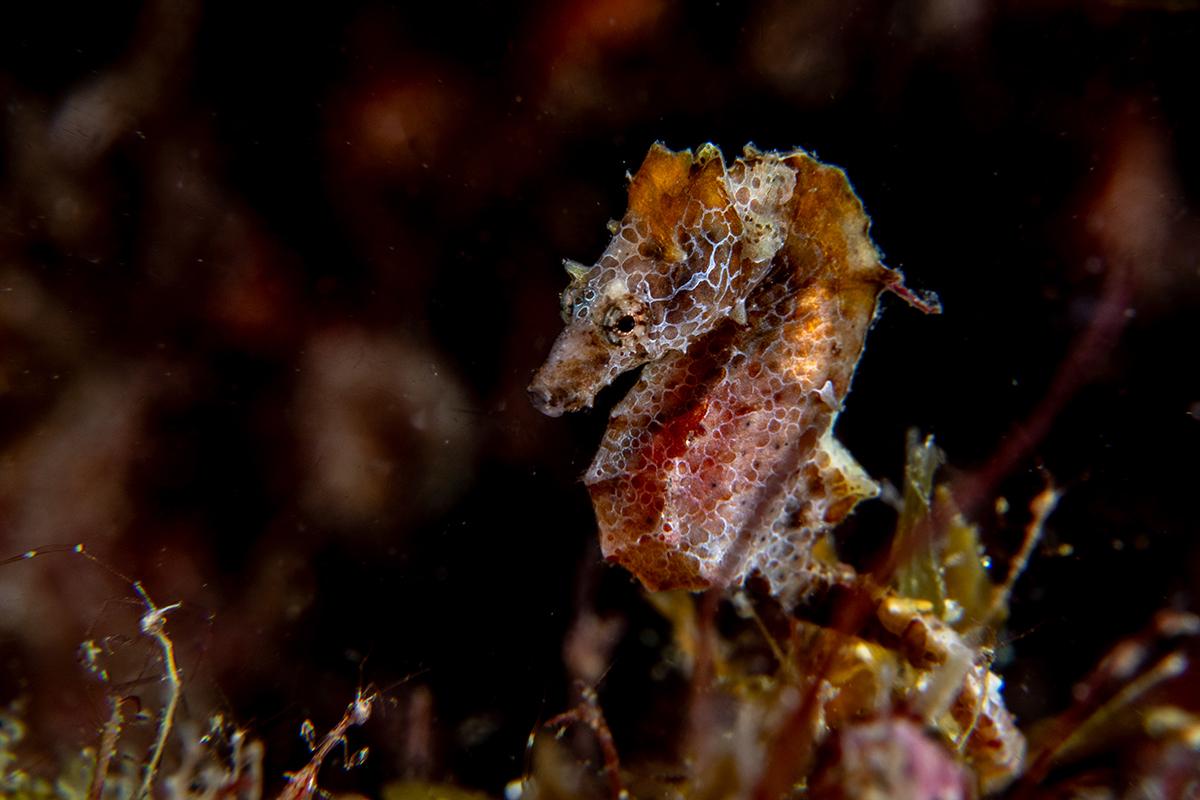
Some of Osezaki’s best subjects are barely visible. Hachijo-tatsu, affectionately known as Japapigu (Japanese pygmy seahorse, Hippocampus japapigu), is only about 1.5 centimetres long and remarkably difficult to spot. A good local guide is invaluable, but even when an experienced guide points directly at it, I sometimes find myself staring at the spot, wondering what exactly I am supposed to be looking at. It is right there, practically in front of my eyes – and I still cannot see it.
Finding it is one thing; getting a portrait is another. Japapigu often turns away from direct light. I adjust my position carefully, rather than forcing the animal to face the camera. Known to divers from places such as Hachijo-jima, far south of Tokyo, it was formally described as a distinct species only in 2018. I can also search for it here, much closer to Tokyo. It had been recorded at Osezaki even before its formal description.
Are we getting better at finding these tiny animals, or are their local populations changing? We do not yet know. Currents, temperatures and the creatures we encounter are all changing. Familiar species become harder to find; others appear unexpectedly.
I hope Japapigu will continue to make its home in these waters. I would love to keep meeting it on my dives, even if I still need a guide to show me exactly where to look. If that changes, I hope we pay attention.
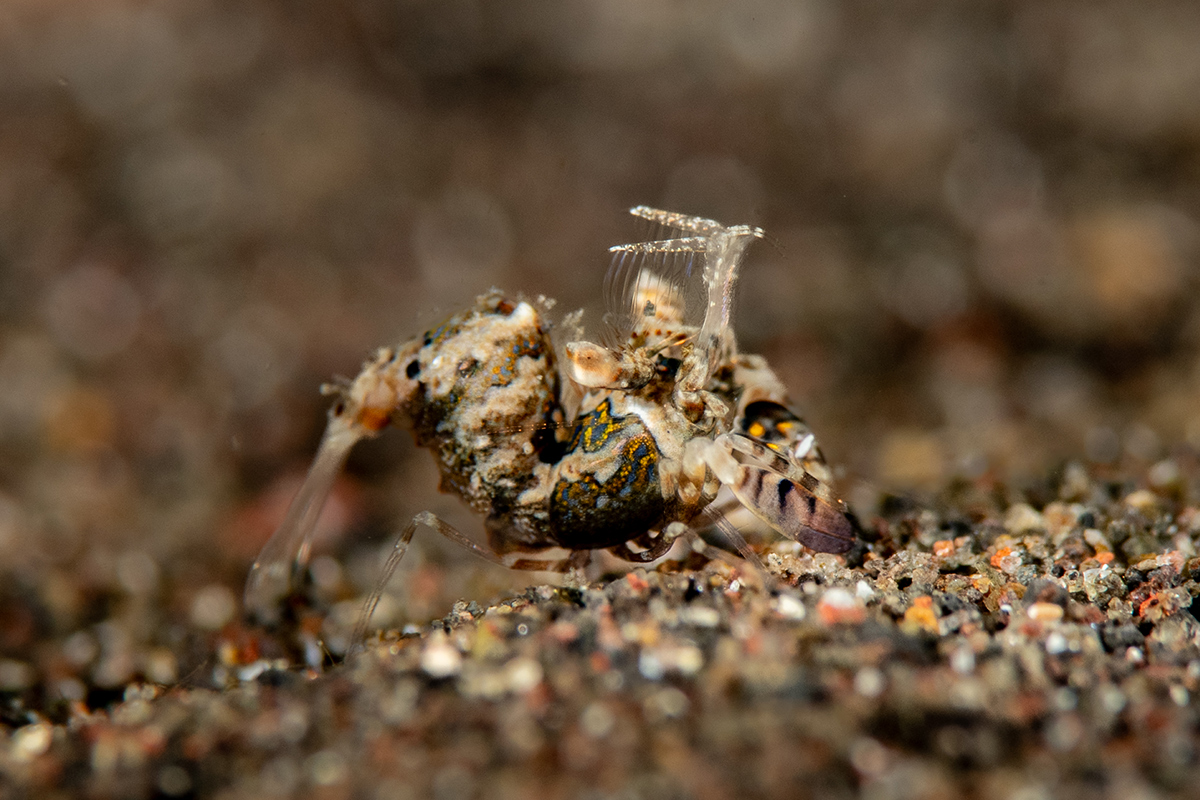
Sagami-tsunome-ebi (Phyllognathia simplex) is another tiny subject whose details emerge through high magnification. There is something wonderfully absurd about carrying a huge camera system underwater for a shrimp barely visible to the naked eye. A little current spoils the focus; just as I get it right, the shrimp moves. The final photograph can reveal details I never saw during the dive.
Four Seasons Underwater
One reason I never tire of Osezaki is that the cast of characters changes with the seasons. Winter, in particular, brings visitors associated with deeper water into the sheltered shallows of Wannai. Instead of following them into the depths, I sometimes have the chance to meet them on a recreational dive.
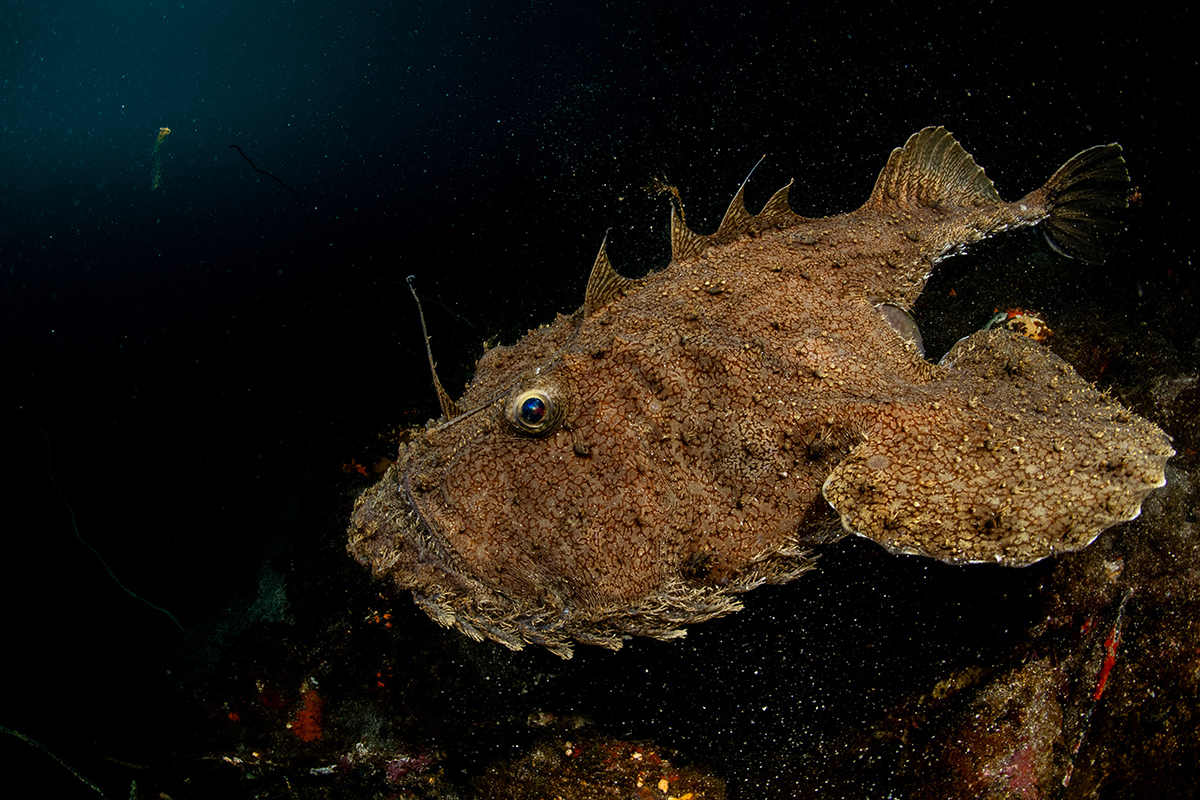
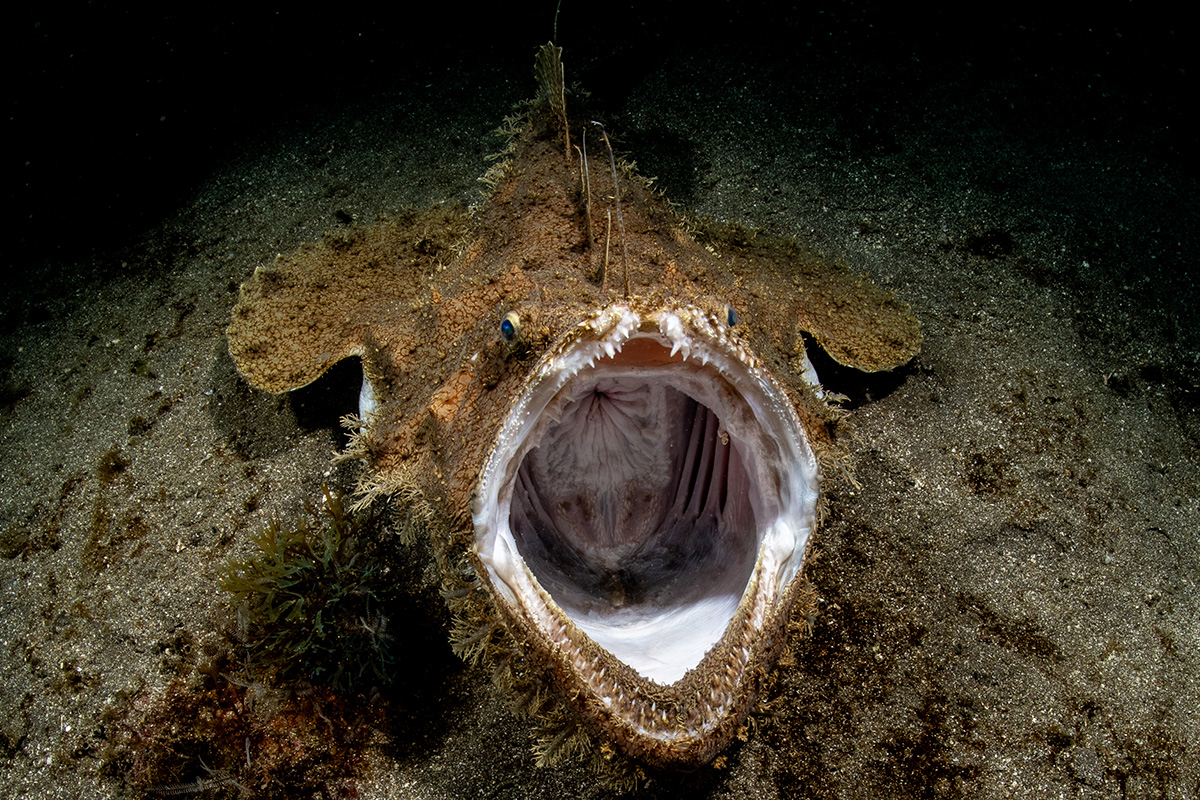
Kiankou (yellow goosefish, Lophius litulon) is one of the great prizes. This anglerfish inhabits a broad range of depths, often on the continental shelf, yet at Osezaki, it has been reported in just 15 to 20 metres of water. There may be only five or six reported sightings in Wannai in a season. I dive here almost every week, increasing my chances of being around when one appears.
Finding a Kiankou is exciting; photographing its enormous mouth opening naturally takes patience. I have watched fish fold down their dorsal fins when a bright light is aimed at them or a camera moves too close; to me, that is a warning to back off. On the dive when I captured my photograph, I was observing from a distance when the fish slowly opened its mouth, almost like a yawn. I approached quietly and took the picture. From the way it behaved, I believe I witnessed a relaxed moment rather than a defensive display. I would rather miss the photograph than provoke a reaction.
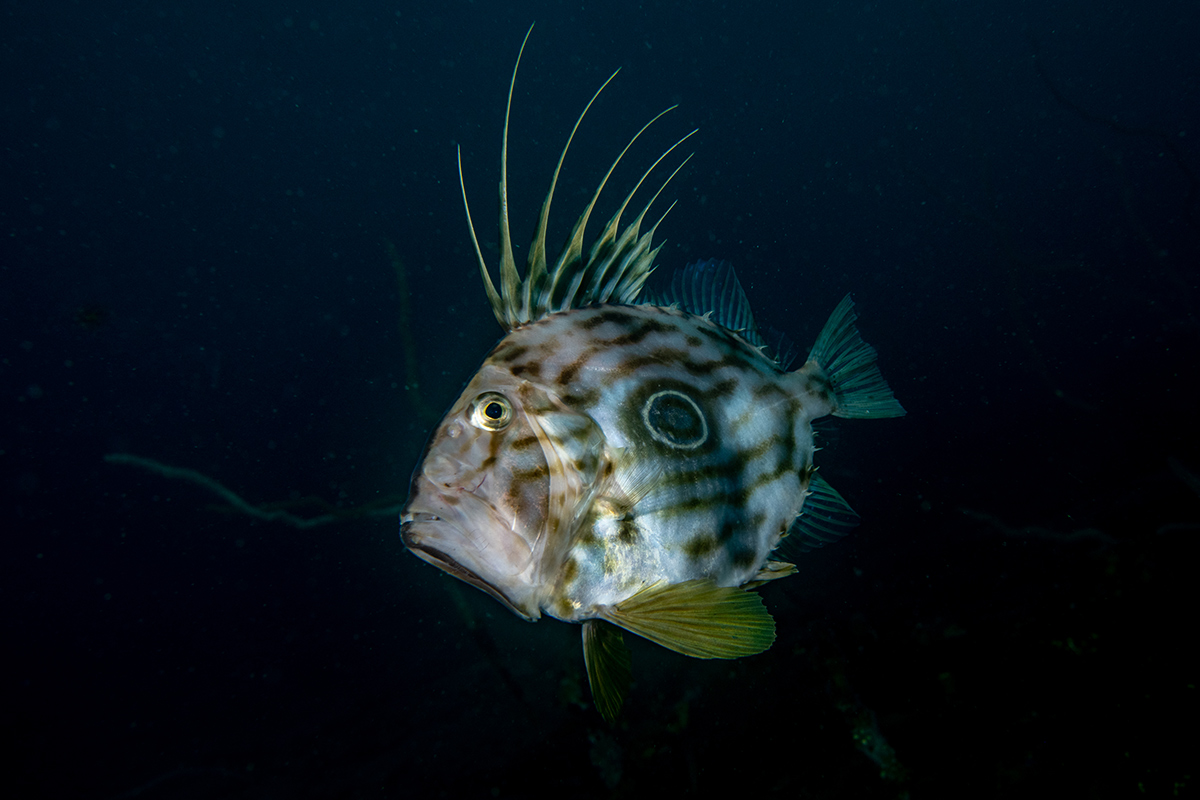
Matoudai (John Dory, Zeus faber) is another winter visitor from deeper waters. I have watched large individuals patrol Wannai and hunt many times. First, the fish turns its extraordinarily flat body parallel to the seabed and glides towards its prey. Then, the target-like dark marking on its side disappears; I have seen that happen repeatedly. When the John Dory is directly above its prey, it turns vertically towards the target, shoots out its long, extendable jaws and swallows the animal in an instant. Even knowing what comes next, I struggle to capture the moment. But I never tire of watching it.
As the water warms, different nudibranchs, frogfish, seahorses and warm-water visitors come into the picture. Autumn can bring an especially intriguing mix of residents and seasonal arrivals.
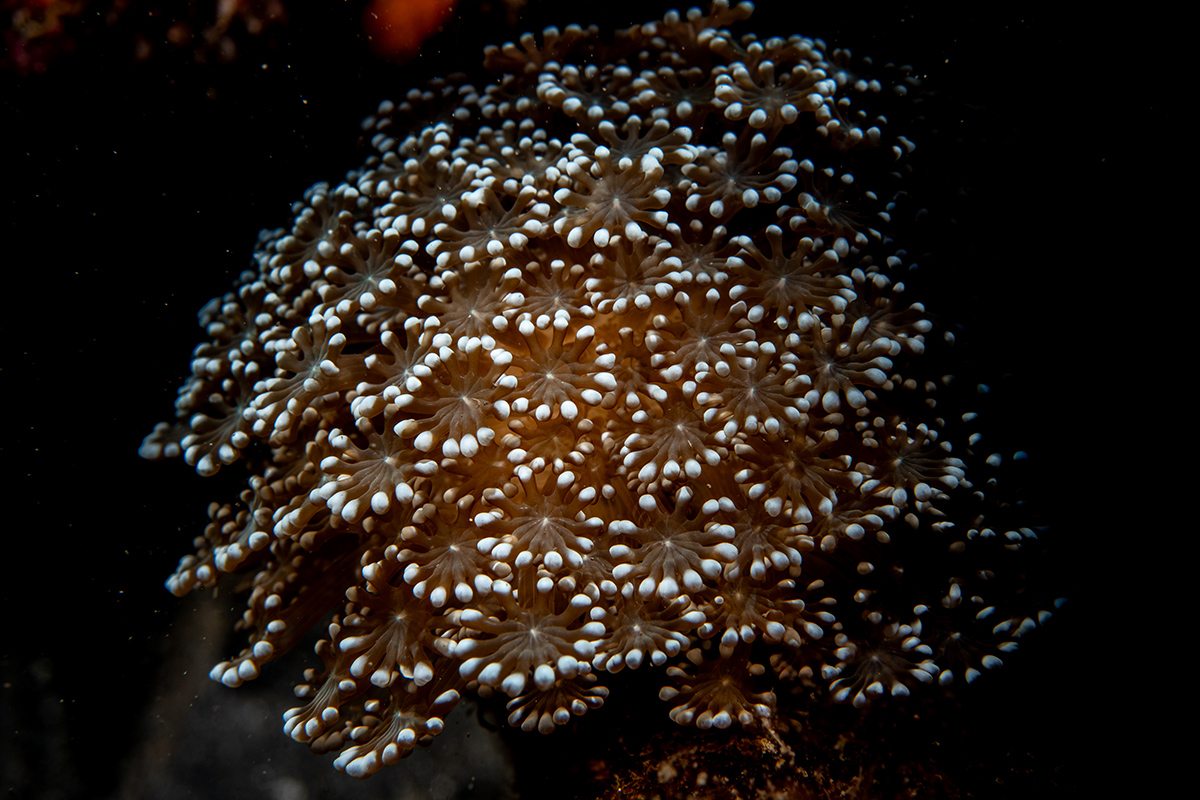
Not everything needs to be rare or difficult to find. Nihon-awasango (net coral, Alveopora japonica) is simply beautiful. I have photographed fist-sized colonies in delicate shades of white, pale green and soft pink. No rare encounter, no dramatic behaviour; just a beautiful subject worth stopping for.
Which season is best? It depends on what you hope to photograph, and what the sea decides to show you.
A Sacred Place by the Sea
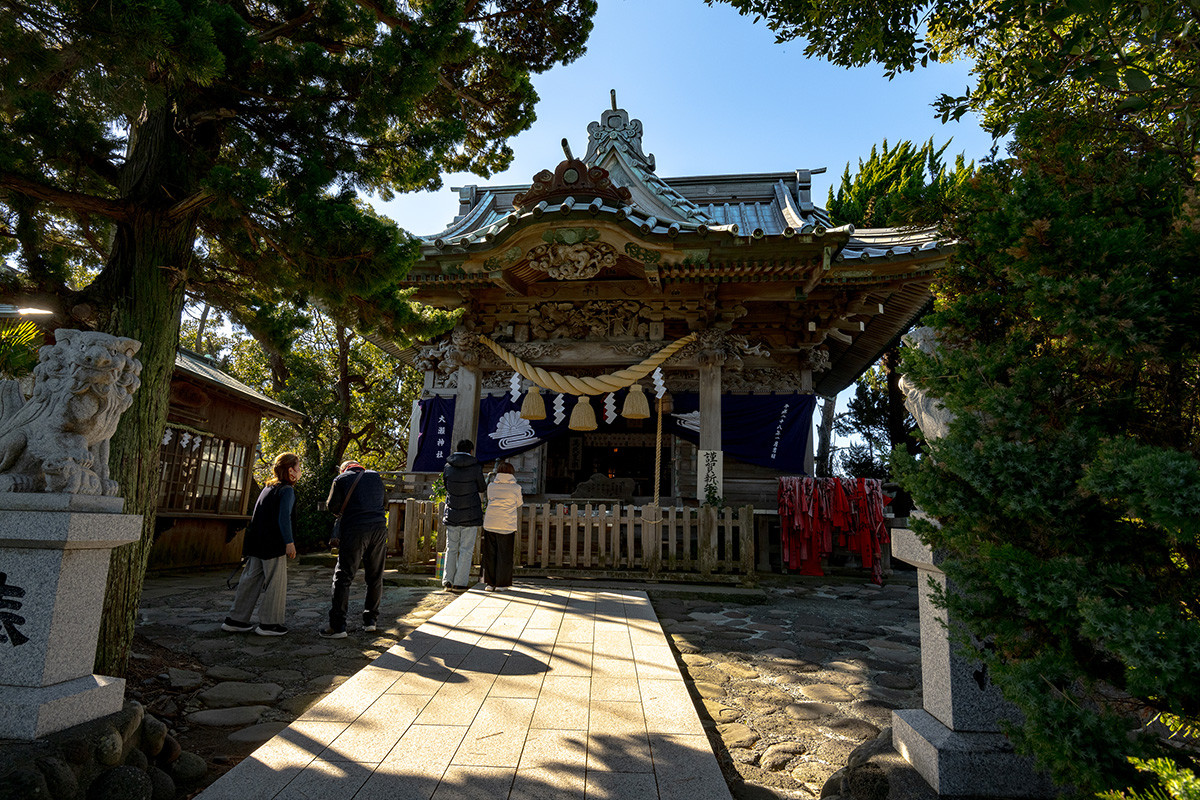
The shoreline holds another reason to linger. A short walk from the diving beach is Ose Shrine, dedicated to Hikite-chikara-no-Mikoto, a Shinto deity revered as a guardian of the sea. Fishermen have long prayed here for safe voyages and good catches; divers now come to pray for a safe return from the water.
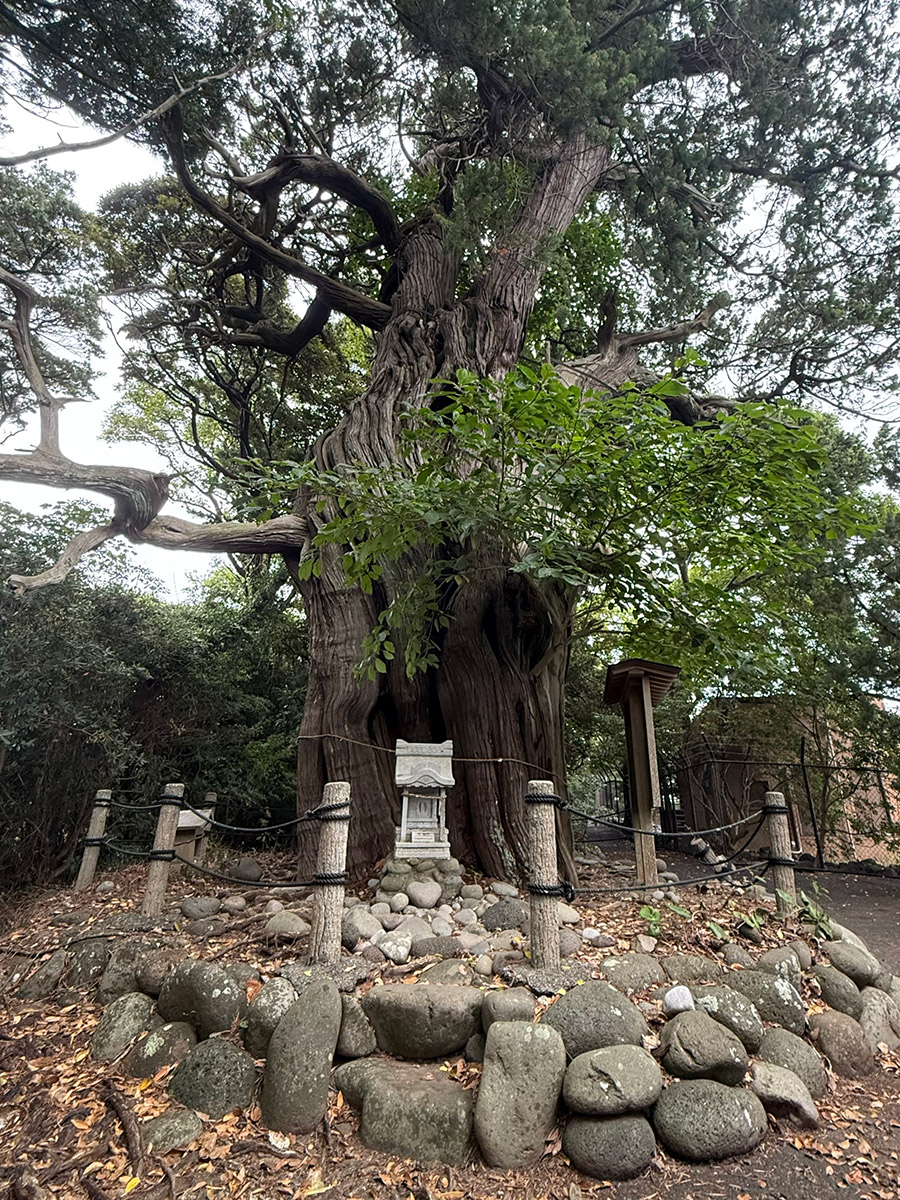
The Osezaki juniper grove was designated a National Natural Monument in 1932. Among its trees stands Meoto Byakushin, a sacred juniper estimated to be around 1,500 years old. Nearby, Kamiike is a freshwater pond astonishingly close to the sea.
Local tradition connects the shrine’s origins to an earthquake in AD 684, though this is not a documented founding date.
Easy to Reach; Hard to Leave
From Tokyo, hop on the Tokaido Shinkansen to Mishima Station. Nature Inn Osekan, beside the diving beach, can arrange a transfer for guests who book ahead. Some rooms look across Suruga Bay towards Mount Fuji. My routine is simple: check conditions, prepare the camera, dive, review the pictures over lunch, then head back into the water.
Afterwards, there is good food to look forward to. The resort’s chef, who once had the honour of preparing a meal for the Emperor of Japan, combines French techniques with Japanese ingredients and local produce. After a day underwater, a good meal and conversation about what we saw are part of the pleasure.
Stay for several days, preferably over a weekend. Spend one dive with the anthias, another following the latest nudibranch report, and leave room for surprises. After more than three decades underwater, I still surface at Osezaki wondering what I missed, what might be there tomorrow, and which lens I should take on the next dive. That is why I keep coming back.
Practicalities
Travel Logistics
Fly into Narita International Airport and transfer by train to Tokyo Station or Shinagawa Station. From there, take the Tokaido Shinkansen to Mishima Station (approximately 45–60 minutes). Sentan is generally accessible only on weekends and Japanese national holidays, subject to local diving regulations and sea conditions. Night diving in Wannai is normally permitted on Wednesdays, Saturdays and Sundays, again subject to local schedules and conditions.
Best Time to Dive
Diving is possible year-round, with changing marine life encounters throughout the seasons.
Dive Experience Level
The inner bay is calm, sheltered, and suitable for beginners. The tip of the cape and outer-sea zones are exposed to tidal currents and are only appropriate for intermediate and advanced divers.
Visibility
Approximately 5–25 metres. Visibility is generally at its best during the autumn and winter months (September to March).
Depth
Typical recreational diving depths range from 3 to 40 metres, although the underwater terrain extends considerably deeper. Deeper dives require appropriate technical training and planning.
Water Temperature
Temperatures range from 13°C to 27°C, depending on the season, with a drysuit commonly used in winter and early spring.
IMPORTANT: Diving conditions, site access, night-diving arrangements and depth restrictions should always be confirmed with a local dive operator. Deep dives require appropriate training, equipment and planning.