 Liveaboard Secrets
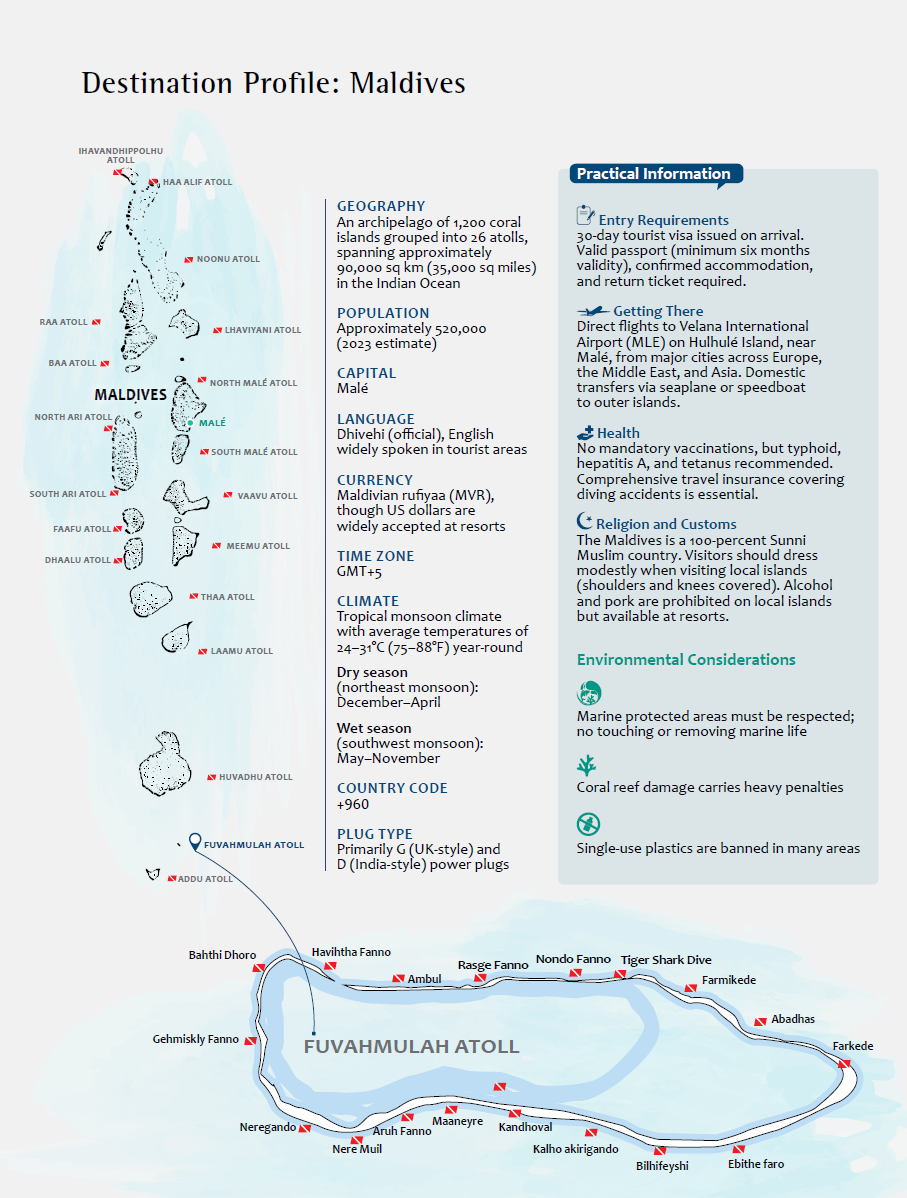
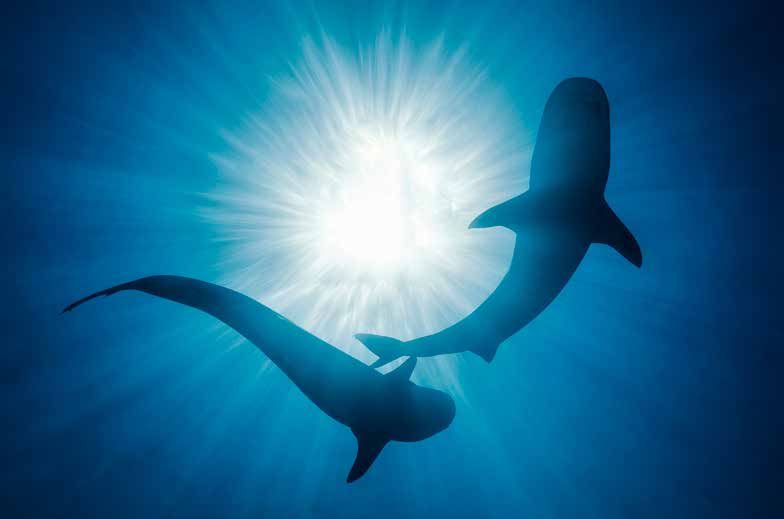
Among all the atolls of the Maldives, Fuvahmulah stands apart – a unique, isolated one-island atoll in the southern hemisphere, just north of the equator. Although a domestic airport was built in 2011, the island was previously visited mainly by liveaboards during the dry season (February to April), with divers hoping to encounter large sharks. As there is no protective bay for overnight mooring around Fuvahmulah, these liveaboards typically stayed for just one day, offering three dives before departing.
In 2016, Tatiana Ivanova and Ibrahim Siyan visited the island on a liveaboard. While
having lunch near the southern tip, they observed local tuna fishermen discarding unwanted fish parts into the sea before returning to harbour. Curious about what these offcuts might attract, they dived the area and were overjoyed to discover a gathering of tiger sharks. Thus, the island’s first dive operation, Fuvahmulah Dive School, was established. They created a dive site outside the harbour called Tiger Zoo and began purchasing unwanted fish parts
from fishermen to facilitate controlled dive experiences.
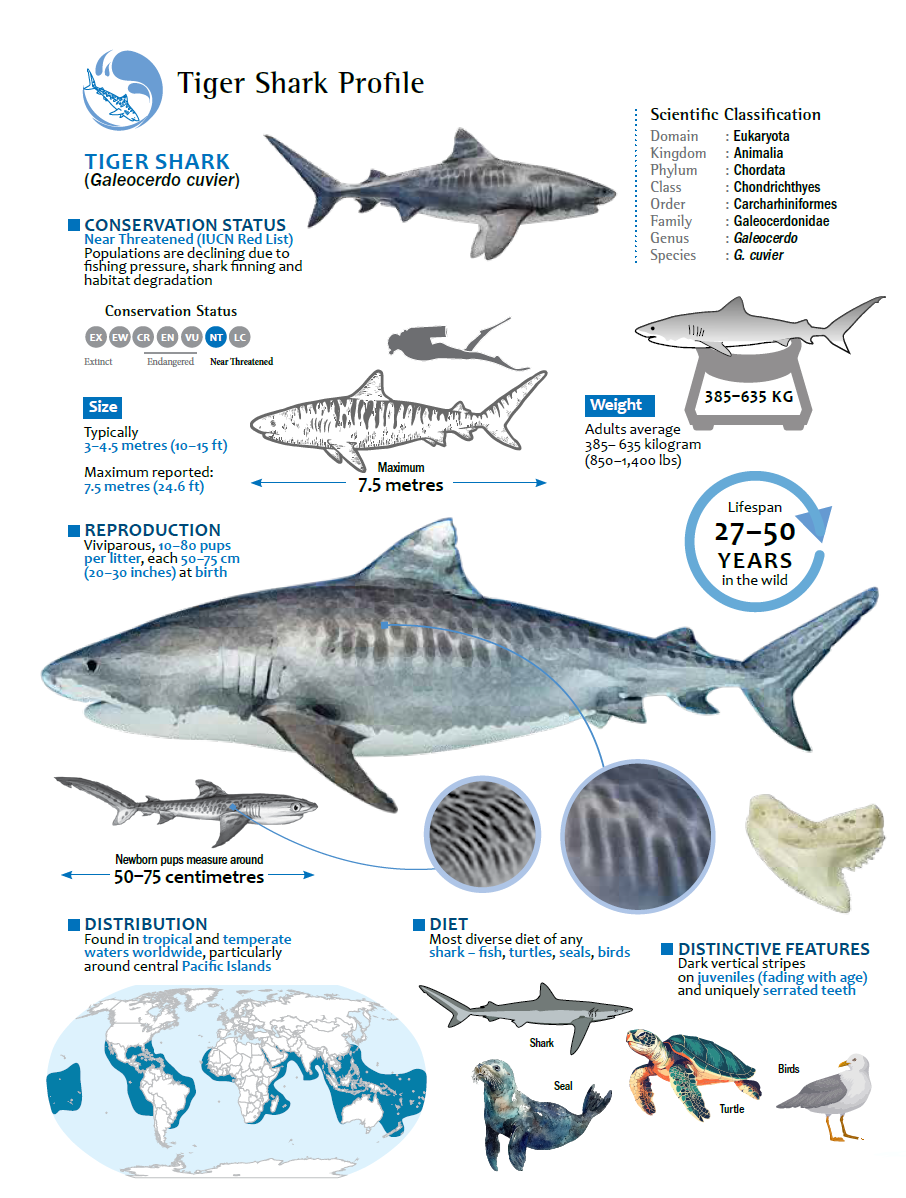
Today, more than ten dive operators on the island share Tiger Zoo by coordinating 30-minute slots per dive per operator.
 The Tiger Zoo Experience
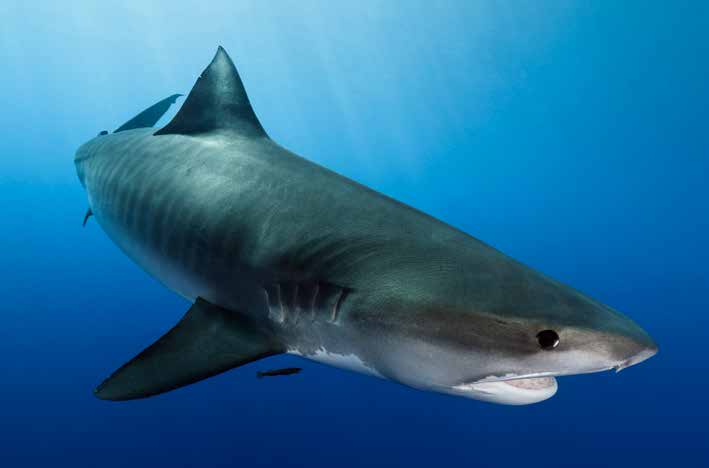
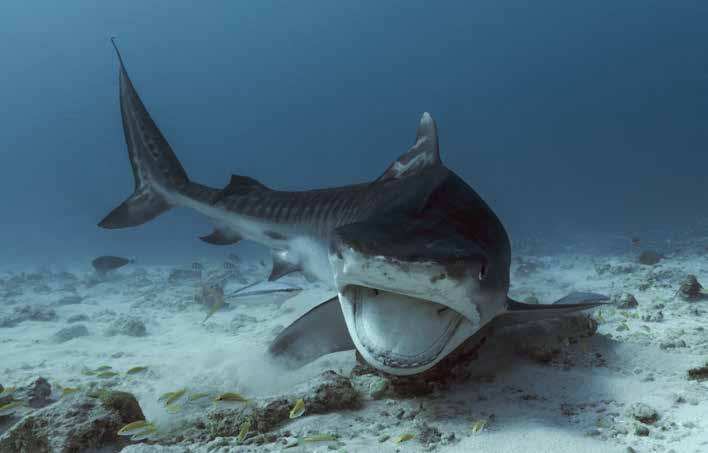
A typical dive at Tiger Zoo begins with entry slightly off-site near a reef wall. Once in the water, it’s worth scanning the blue, as solitary tiger sharks might cruise by to investigate. Upon reaching the harbour entrance at about 10 metres deep, divers form a line at the edge of the wall. Unwanted fish parts – predominantly tuna heads and skeletal frames purchased from fishermen that morning – are then dropped from the boat. Guides quickly retrieve them and conceal them under rocks to extend the sharks’ foraging duration. If tigers become
too rowdy or even harass the guides, these fish parts are allowed to scatter across the sandy area without intervention.
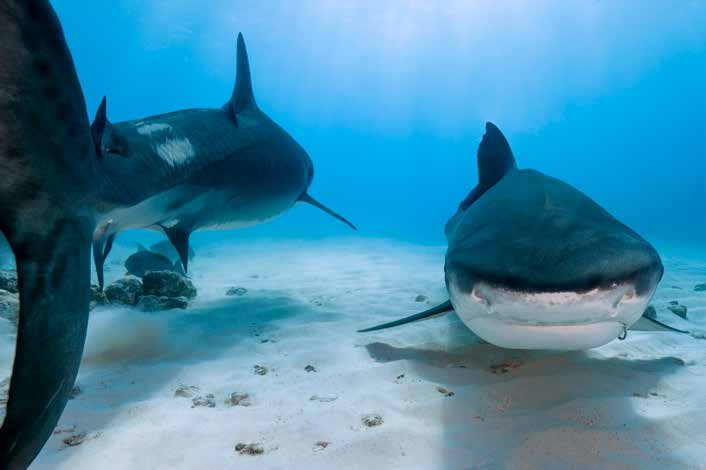
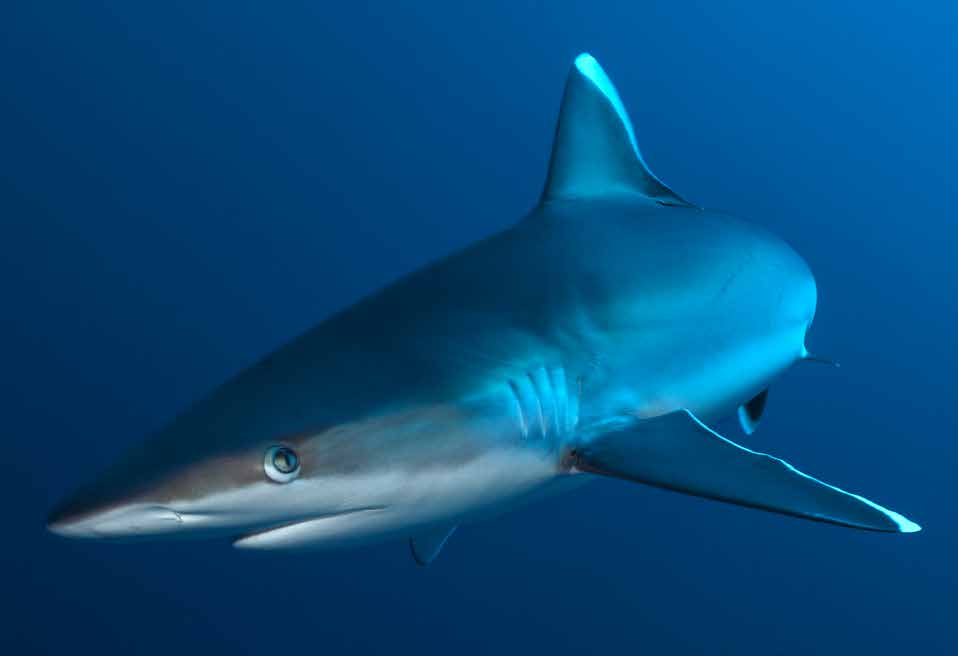
Tigers follow a loose social hierarchy where larger sharks feed first whilst smaller sharks wait patiently for their turn. Although you might initially see only a few large sharks foraging on the sandy bottom at one time, there could be perhaps 20 sharks in total taking turns entering and exiting the area. The record count was approximately 40 different individuals identified during a single dive.
When sharks forage on the sandy bottom, they pass quite close in front of you or directly overhead as they return to open water. Reputable operators ensure guides watch divers’ backs, positioning themselves to encourage sharks to turn away before they approach too closely. For experienced divers comfortable with sharks, guides may allow closer encounters. Redirecting sharks with hands is discouraged; guides will only push sharks away as a last resort. The sharks typically follow divers leaving the site, approaching from the side or from below. It’s important to board the boat quickly, with at least one guide remaining in the water until all guests are safely aboard.
Wild Encounters
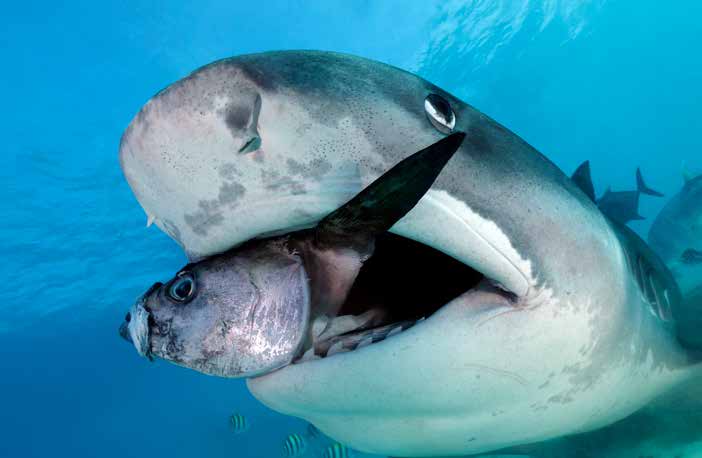
During one of my dives at Tiger Zoo, whilst by
lucky diverstraining my camera on the large
tiger sharks, I glimpsed afish I had never seen
before. It had a silvery pointed head and a
predominantly brown body. It took me several
secondsto realise this was actually a large titan
triggerfish with its head accidentally wedged into
a similar-sized tuna head. Blinded by this additional “mask”, it was swimming in a peculiar manner!
Were it not for the large sharks surrounding
me, I would have pursued it for a comical image.
When currents are strong, you might encounter
magnificent pelagics including schooling
scalloped hammerheads, oceanic mantas,
whale sharks, and pelagic thresher sharks.
Humpback whales, oceanic whitetip sharks,
makos, small-toothed sand tiger sharks and
even molas have been spotted around the island.
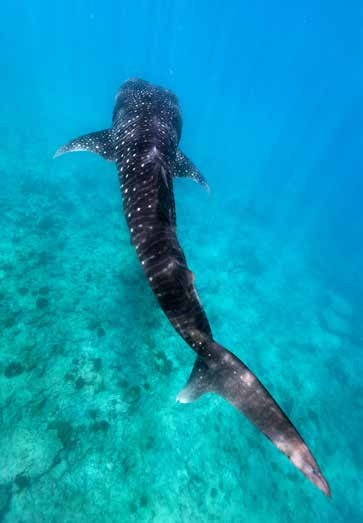
When currents are strong, you might encounter magnificent pelagics, including schooling scalloped hammerheads, oceanic mantas, whale sharks, and pelagic thresher sharks.
Beyond Tiger Zoo
One of the prime locations for encountering pelagic sharks is the dive site Plateau. After
several days of diving with hammerheads here, we heard from other operators that they had seen a whale shark in the area. We returned immediately. Minutes into the dive, I saw guides pointing at a large shadow and signalling “shark”. I pursued the silhouette and could make out a very broad, squarish head in the distance. Whale shark? As I approached, it turned. From the reflection of light on its body, instead of the expected spots, I saw stripes. It was
an enormous tiger shark!
Along the east stretch of the island lie numerous thresher shark cleaning stations. With controlled movements, it’s possible to approach these shy animals surprisingly closely, sometimes within touching distance. I recall encountering a large thresher at depth during a dive. It turned away before I could descend towards it. To conserve bottom time, I followed above, waiting for
it to turn my way again. I became increasingly irritated by various tank bangers
and shakers sounding behind me, knowing threshers will depart when disturbed
by noise. Just as I prepared to turn and admonish those behind me, I looked up to
find a whale shark directly in my path. There was no time to raise my camera as it
turned to avoid collision, delighting everyone behind me as it passed their way.
Western Reefs And Rare Sightings
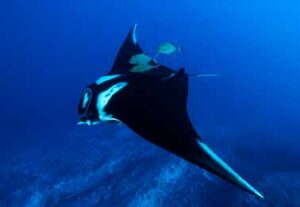
The west side of the island boasts the most spectacular reefs but experiences the strongest currents at certain times of year. During the low season, Ibrahim, owner of Fuvahmulah Dive School, and Niyaz, an instructor, took me to a site here. After rounding a corner, we encountered ripping current. Ibrahim pointed out an oceanic manta, but I couldn’t cross the current quickly enough to reach it. Unwilling to damage the pristine living corals, I found a small, bare rock to hold onto, by which time I had drifted well behind the manta. Unable to progress against the current, I burst into laughter watching the manta also
being pushed hopelessly backwards despite its efforts to swim forward.
I patiently waited until the current pushed the manta behind me, then
released my grip, allowing the current to effortlessly carry me to the
manta for a few photographs.
On days when Niyaz and I mounted macro lenses for “hunting” rare fish species, Murphy’s Law inevitably prevailed. We encountered the friendliest oceanic mantas and pelagic threshers repeatedly approaching us,
each pass closer than the previous one,
as if taunting us for lacking
the appropriate lens.
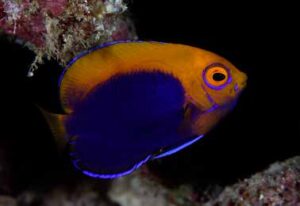
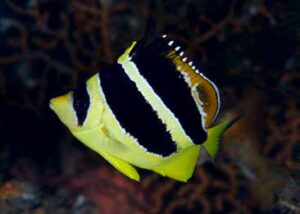
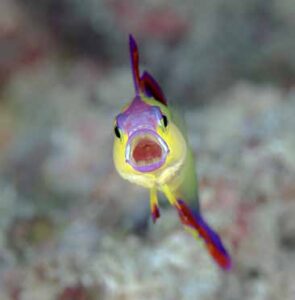
Nevertheless, we were delighted to discover a pair of Indian butterflyfish (Chaetodon mitratus), four pairs of exquisite firefish (Nemateleotris exquisita), countless African pygmyangelfish (Centropyge acanthops), and juveniles of the recently discovered red velvet fairy wrasse (Cirrhilabrus rubrisquamis). These juveniles exhibited paler colouration, but we certainly weren’t prepared to dive deeper to observe the stunningly beautiful adults.
Scientific Research
If you find yourself diving in Fuvahmulah, don’t miss the weekly talks given by the two shark scientists stationed at Fuvahmulah Dive School and Pelagic Divers Fuvahmulah. These researchers not only collect data on tigers and threshers for scientific purposes but are also
eager to share their observations and stories of these magnificent animals with visitors to
the island.