Home Blog Page 26

The social distance between you and your clothes

0

Every day, we find ourselves at the mercy of our own purchases, fuelled by fast fashion. It’s a dreadful mess.


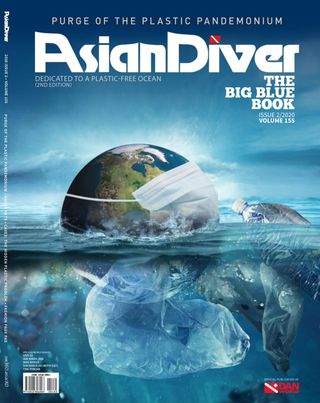
Original interview with Laura Francois by Asian Diver (AsianDiver Issue 2/2020 Volume 155)

Adapted for online publication by Goh Pearl Lyn


We buy things on impulse when we see they are 50% off before we realize that we don’t actually need them. The clothes we order online will likely fall apart when we wear them. We are in a constant loop of buying from fast fashion companies without knowing who made our clothes or how it impacts the environment.

We can only hope they were ethically made, based on the companies’ vague sustainability promises, and that we aren’t buying something that will bite us in the end. 

The latest IPCC report has been causing a lot of stir, not only because it is 4,000-pages long, but because it highlights a code red for humanity. The urgency is in the air. In the very public conversation about climate change, fast fashion companies and their greenwashing practices have become too prominent.

We’ve seen an explosion of magical keywords appearing on our labels — renew, eco-conscious, sustainable. But how do fashion shoppers discern genuine sustainable efforts from the vague greenwashing tactics of fast fashion?

Microplastics from fibers

Many people may be unaware that the laundering of clothes alone from the next fashion collection has been spewing microplastics at a much, much, much greater scale than plastic bottles into the ocean. Synthetic plastic fibers — such as nylon, polyester, and acrylic are now about 60 percent of what makes up our clothes worldwide. These synthetic fibers are so cheap and popular, we forget they pollute our oceans in the most pervasive way. 

The ocean plastic pollution by microplastics is sneaky. Every time you wash your synthetic and semi-synthetic clothes, tiny plastic fibers shed off and leach into the environment. It is estimated that half a million tonnes of non-biodegradable fibers are released into the water supply each year. That’s about 50 million tonnes of plastic bottles.
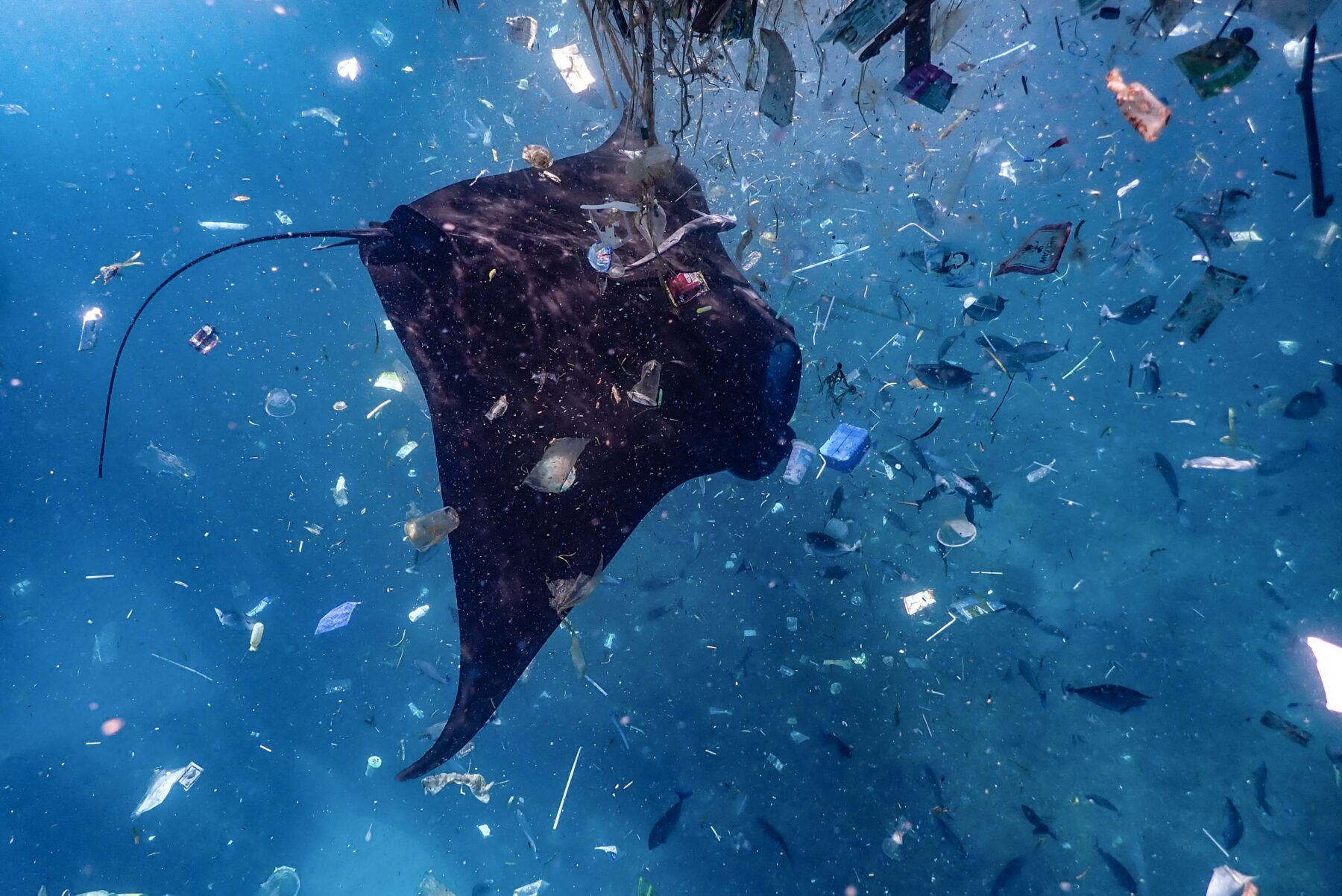
Image by Brooke Lori Pyke 

And these tiny, invisible fibers — less than 5 millimeters in length — can eventually reach the ocean. There, they are expanding the microplastic pollution that’s accumulating in the food chain and being ingested by every sort of marine wildlife, including us. 

Sweatshop workers during COVID-19

Additionally, these speedy fast fashion supply chains rely on outsourced and often underpaid labor from factory workers overseas. The process is not only environmentally damaging and resource-intensive, but it is also hard to definitively regulate the industry’s impact.

While many know that fast fashion means that companies frequently export their production overseas, what most people don’t know is the distanced connection between production overseas and inadequate protection of workers. The widening disparity between workers and consumers bears a gloomy outlook of the complex world we live in. 

Sweatshop workers face additional challenges in the face of the pandemic. With the lockdowns and cancellation of orders by international retailers, factory staff were laid off or paid only a small percentage of their normal wages. This creates huge issues for workers where their already low pay makes saving extra difficult and the livelihood of their families is threatened. Bangladeshi garment manufacturer Mostafiz Uddin reminds us, “Poverty is a killer too, and many more people die from poverty than from COVID-19”.

Whilst there is an incredible movement and progress for change especially on the Internet, there are those out there who are jumping on the bandwagon to shift the customer’s focus from a company’s appalling behaviors behind the curtains to something that’s peripheral. It’s the disappointing side to a positive development. 

Sustainability and human rights intertwined

Don’t worry, it’s not all doom and gloom. In “Fashion Faux Paus”, Laura Francois, the country coordinator of global non-profit Fashion Revolution in Singapore and the co-founder of Clothing the Loop and ANEWKIND, compellingly connects our fast-fashion wardrobes to sustainability and human rights, rooting the current state of the fashion biosphere as a whole — and creating projects that leverage on diversity in co-creating solutions towards fast fashion. 
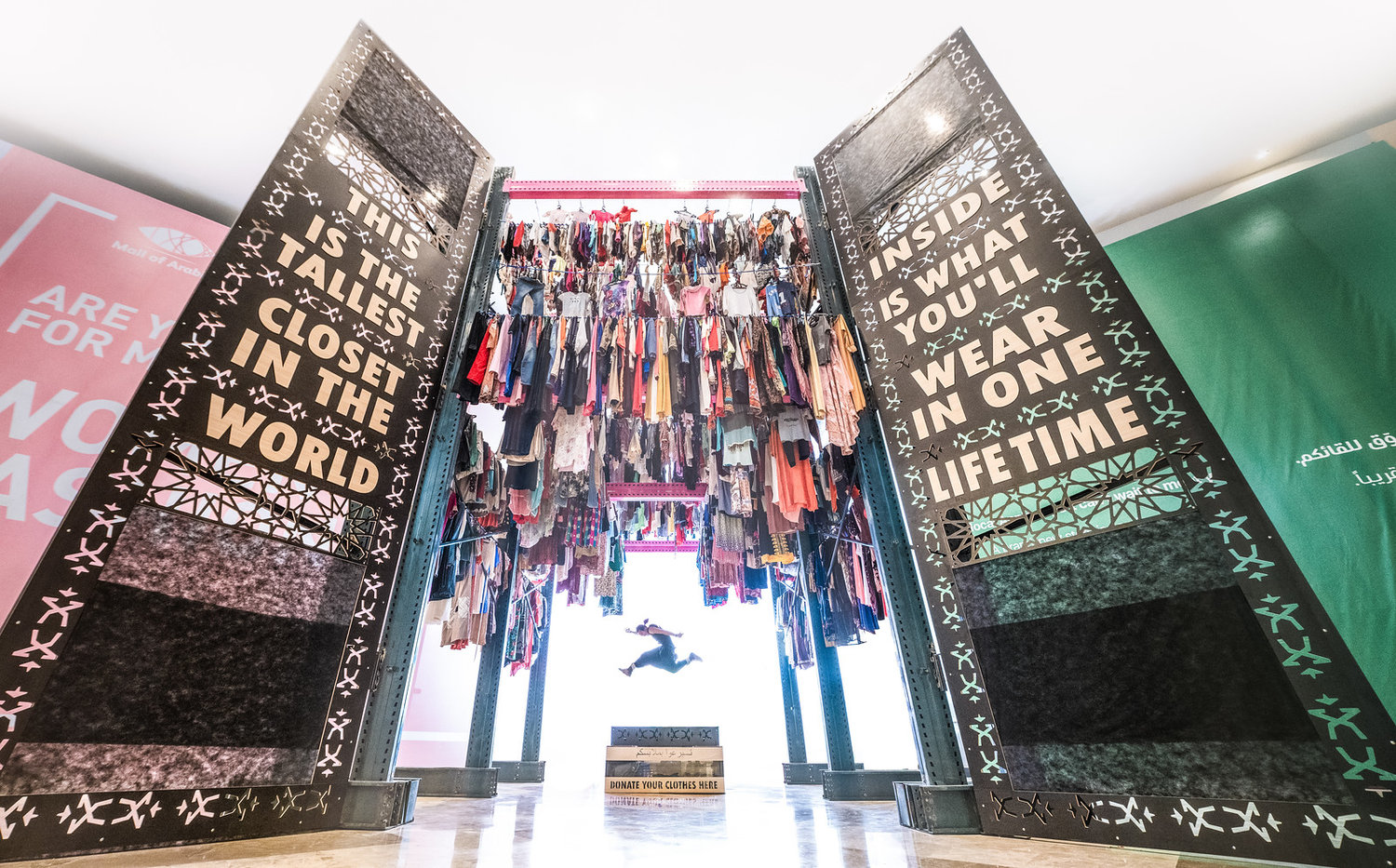
Benjamin and Laura created the tallest closet in the world – a space for people to witness what one lifetime’s worth of clothing looks like. Image from www.laurafrancois.com

Benjamin and Laura created the tallest closet in the world – a space for people to witness what one lifetime’s worth of clothing looks like. Image from www.laurafrancois.com

The insightful interview with Laura revealed details in three sections. The first focuses on her interest and efforts in human relations, creative arts, and sustainable design. Laura mentioned,

I think fashion is an industry that allows everybody to relate to the topic of sustainability, of circular economy, and of ethics in the supply chain, as clothing is relatable.

The second presents today’s global fast-fashion and regular fashion industries and how they are under the spotlight now due to increased media coverage and the Internet, and how the voracious amount of clothes impact the environment and various communities. 

Lastly, the third approaches our shopping habits, and how she approaches fashion with solutions that are as human-centric as possible, aimed at reaching the Sustainable Development Goals. It includes her amazing projects, alongside Benjamin Von Wong, to empower startups, nonprofits, and governments to maximize sustainability. She meets people who are trying to reform the system entirely, from the materials we use to how clothes are produced and the ways we shop.
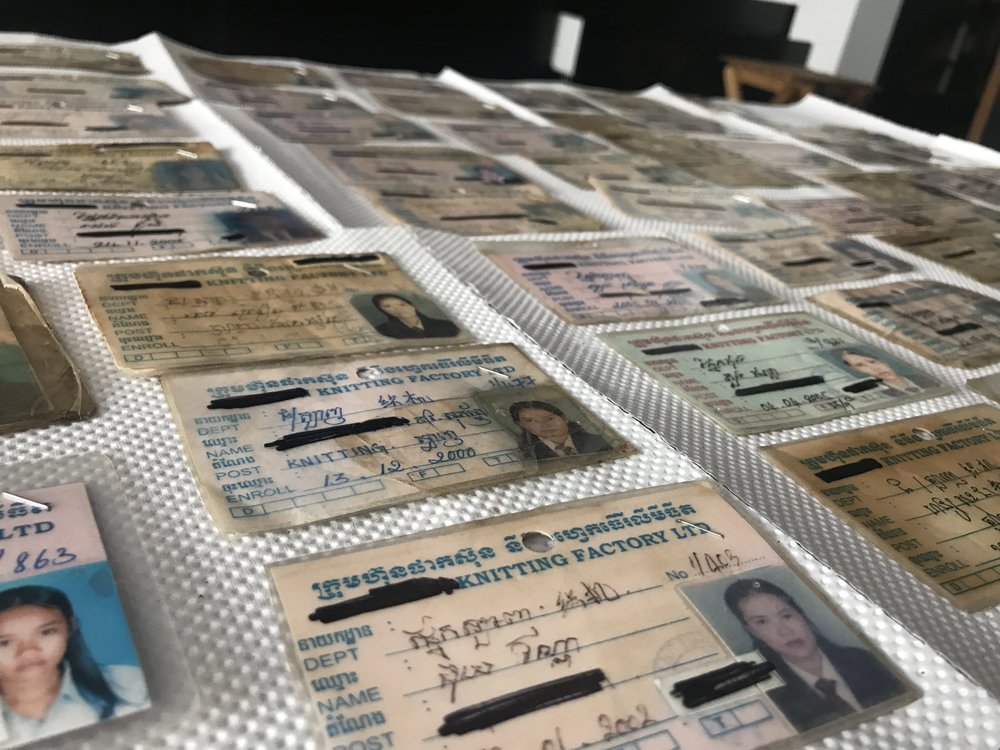
Hundreds of Cambodian factory worker identification cards on the factory floor discovered during the project Clothing the Loop. Image from www.laurafrancois.com

There is plenty of positivity and experimenting to get excited about. Laura displays her skills in human-centric design and sustainable development as she visits diverse industries that are the least bit connected, and creates an amazing cross-sector collaboration between them. Clothing the Loop, for instance, is a project that leverages art in the discussion of the circular economy.

Laura has succeeded in bringing together diverse ideas to pitch sustainable solutions to the major problems in the $2.4-trillion-a-year industry. However, it is up to us to change our shopping habits and our consumption patterns to truly make a difference. Laura quotes,

The next time you go diving and notice a difference in the landscape or an ecosystem, ask the tough questions. Be curious, find out, do something!”

Asian Diver


To read more about Laura Francois featured in the article Fashion Faux Pas, see AsianDiver Issue 2/2020 Volume 155 here or download a digital copy here! Check out the latest issue of the AsianDiver Magazine coming to shelves soon, or reserve your copy by emailing marketing@asiangeo.com.
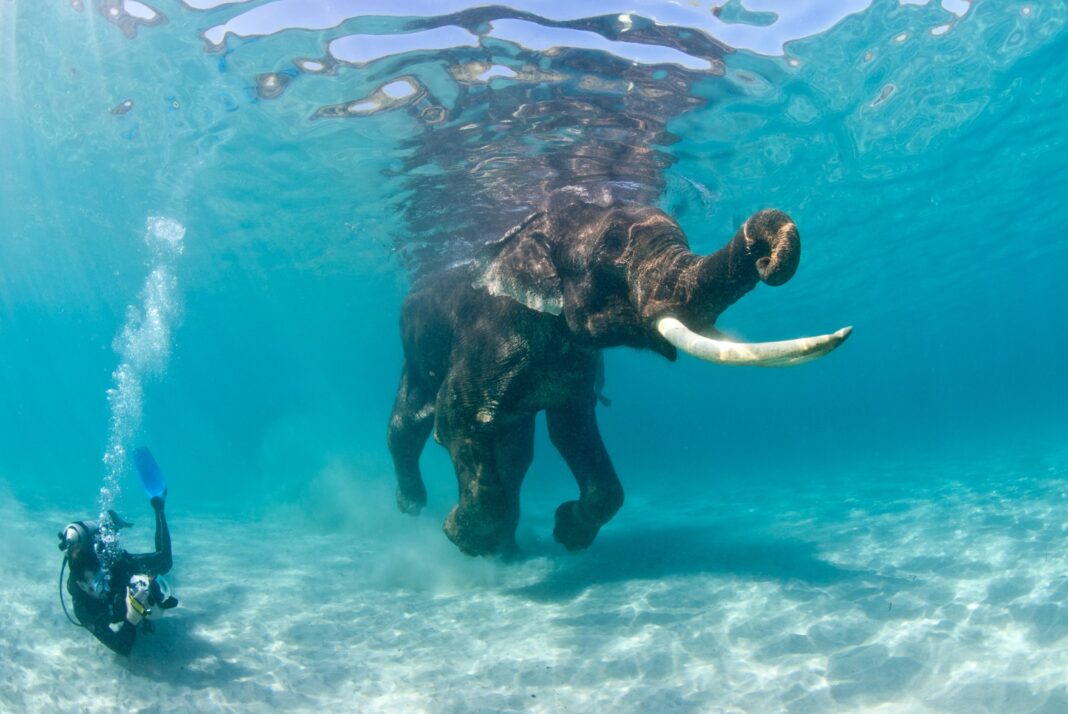


Take a dip into World Elephant Day with Rajan!

0
On August 12, 2012, filmmaker Patricia Sims and the Elephant Reintroduction Foundation launched the World Elephant Day to bring attention to the urgent plight of the dwindling global elephant population.


Original text by Mark Strickland

Adapted for online publication by Goh Pearl Lyn


Ten years later, #WorldElephantDay remains as a hashtag that annually exceeds billions of social media impressions and has become a gold standard for international social-awareness days.

World Elephant Day also serves as an important reminder that Mother Earth is home to so much diversity of life. Over a century ago, the African elephant population saw numbers as high as 5 million and the Asian elephants were 200,000 strong. Now, the populations have declined drastically by more than 62%. The increased predations, ivory trade and loss of vital habitats in recent years have driven elephants to the brink of extinction. 

The magnificent creatures, sometimes known as “ecosystem engineers”, have an incredibly profound impact on the local ecosystem. The dynamics and the movements of the elephants create pathways in densely forested habitats that allow passage for other animals. 

While many would associate the big elephants with savannah plains and thick jungles, did you know that elephants are excellent swimmers?

Rajan the swimming elephant

Born in southern India around 1950, Rajan the swimming elephant became internationally acclaimed for his willingness to pose for underwater photographers, as he propelled through the ocean with surprisingly graceful gliding strokes. 

Long before he made his name, the gentle giant began his journey as a young adult to perform hard labour in the logging industry in the remote Andaman Islands. At that time, with the limited infrastructure on the islands, the most efficient and cost-effective way to transport elephants was making them swim. Therefore, swimming elephants like Rajan were born.

Somewhere between dutifully hauling logs and swimming from island to island, Rajan found the love of his life. While elephants are known to have fleeting affairs, this was not the case for Rajan and his female partner. They were seen together frequently over the years. Sharing their love of swimming, the two lovebirds can often be seen enjoying taking a dip in the ocean together after work.

The pair lived happily together for several decades, until a few years ago the female was bitten by a cobra and succumbed to complications. Her death proved too much for Rajan to bear. Rajan spiralled into a deep depression for more than a year, and his grief slowly made him less and less engaged in his duties. In that state, combined with the logging ban by the Indian Government, Rajan, along with many other elephants, was deemed useless to his employers and their future became bleak.

Luckily, Tarsem Singh, a movie director, took notice of Rajan the swimming elephant and cast him in the 2006 Hollywood film The Fall. It was this film that brought him to the idyllic island of Havelock, where the job scope and environment change reinvigorated him and brought his former self back. 

After filming, his owners intended to ship him back to the mainland, which would likely put him through a treacherous journey of drudgery and captivity. This was, unfortunately, the fate of many jobless elephants, who were shipped to the mainland temples and often died in a year or two.

Fortunately, the owners of Barefoot Resort, who had been looking after Rajan on Havelock, intervened to keep the beloved jumbo. As Rajan’s previous owners demanded a huge sum in exchange, Rajan raised funds by swimming with divers, photographers and filmmakers.

With a few sessions each month, he finally raised enough money to earn his freedom and retired from underwater modelling in 2014. Since then, he is often seen wandering in the forests near the resort, enjoying his well-deserved retirement while entertaining islanders and visitors.

Rajan the swimming elephant lived a full life, passing on at a ripe old age of 66 in 2016.


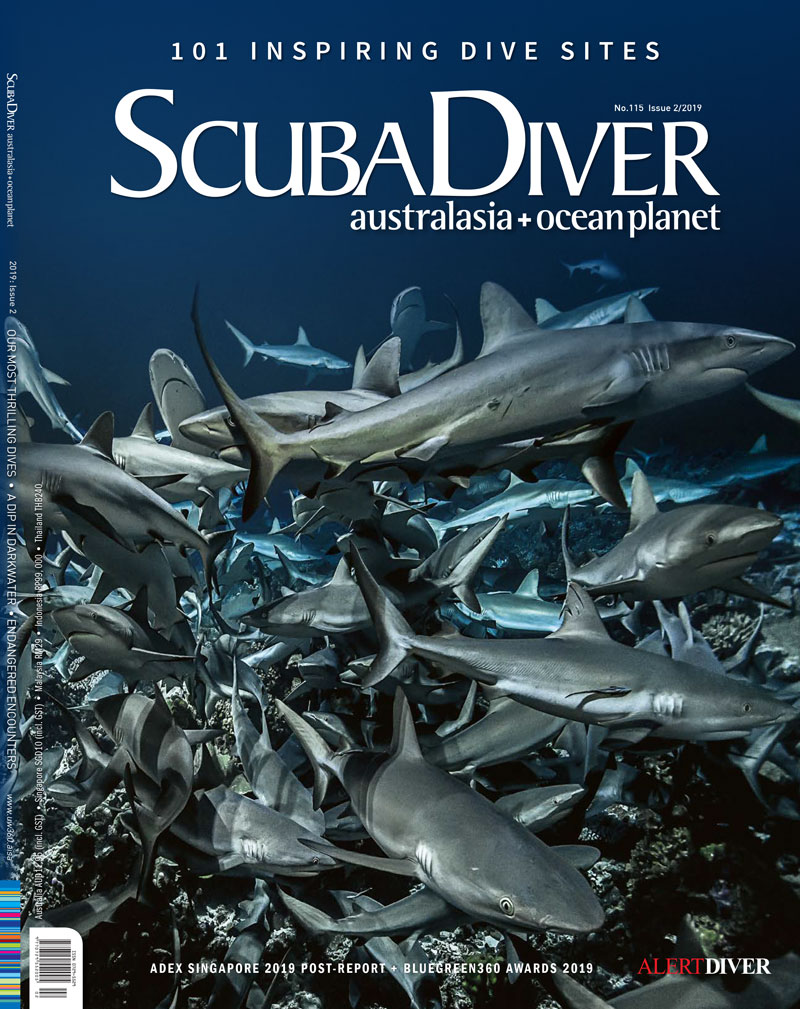
For more stories and photographs from the issue, see ScubaDiver Issue 2/2019 No. 115. Check out the latest issue of the ScubaDiver Magazine coming to shelves soon, or reserve your copy by emailing marketing@asiangeo.com.
 

Mucking Around 

0
Brook Peterson discovered that diving isn’t always a rainbow of reefs and unicorn fish. There is also muck diving and just what it sounds like: scuba diving over a barren seafloor covered in rubble, dead coral, and even man-made trash. Read on as Brook chronicles her first encounter with muck diving and how she learned to appreciate its intrinsic beauty.

Text by: Brook Peterson
Image credit: Shutterstock


As I back rolled off the banca* into the comfortable waters of Anilao, my mind conjured up images of beautiful coral gardens, colourful fish, and turtles lazily basking in the sun-drenched sea. This was my first experience in the Philippines and my expectations were high. I wanted a once-in-a-lifetime experience. Little did I know, I was about to have a life-changing one.

Anilao is arguably one of the best destinations in the world to experience a diverse variety of small critters. It occupies a portion of the Calumpan Peninsula, about a two-and-a-half-hour drive from Manila. The Verde Island Passage is near Balayan Bay on the north of the Peninsula with Batangas Bay on the south. Because of this, tidal forces supply huge quantities of nutrient-rich water to the area, along with plankton and larval animals from as far away as Papua New Guinea. It seemed like the perfect choice for a dive vacation.

Before I entered the water, the guide explained our dive plan. We would descend into about 20 metres of water, then follow a zig-zag pattern uphill until we reach our time limit. Donning my mask, I looked down from the surface and found that I could see nothing. No bottom, no beautiful coral, just hazy blue-grey water. I continued to sink into the sea and soon found a shadowy grey bottom coming up to greet me. To my great disappointment, there was nothing but a few scattered coral bommies amidst the vast muck-grey bottom. I had heard of muck diving and had done enough research to know that the animals in this area would be small. But I was not really prepared for what I would see. Vast expanses of sand and silt and dead-looking rubble seemed devoid of life to my eyes and I began to feel that I had made a serious error in judgement by choosing this destination.


Clown Frogfish (Antennarius maculatus)

Clown Frogfish (Antennarius maculatus)


Nevertheless, I dutifully followed the guide to one of the bommies, where he began to pick through some debris that had accumulated around it. Within minutes he was motioning for me to come and look. He pointed to a rock. I looked at the rock, then at him, thinking maybe I was missing something. Again, he pointed to the rock, then held the back of his hand to his forehead with his index finger crooked. I shrugged and started to turn away. The guide signalled to me again to look, so I decided to humour him, even though I had no interest in the rock. But then the rock moved. Ever so slowly I began to understand that I was not looking at a rock, I was looking at a frogfish. Suddenly, the “rock” became very interesting, and I watched as it used its lure to attract a small fish.

I would soon learn how dependent I was upon the dive guide’s expertise. The guides in Anilao are not just divemasters who lead a group along a predetermined path. They are highly trained individuals who have experience locating interesting subjects for their clients. They know where to look for certain types of animals and will notice things that the average diver cannot even fathom. They have standard hand signals for common animals, and it is valuable to become familiar with them.


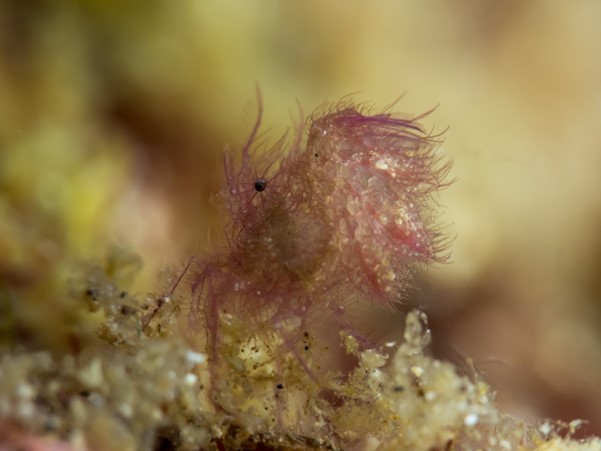
Red Hairy Shrimp (Phycocaris simulans)

Red Hairy Shrimp (Phycocaris simulans)


My guide showed me a tiny speck of algae in the water, and I thought he was crazy before I took a few shots with my camera and later discovered he was showing me a hairy shrimp. I had assumed that it was nothing but sea dust until I spotted its tiny legs and eye through my camera’s lens. With new eyes, I began looking closer at the small clumps of coral and debris scattered in the fine sand. There were large flat anemones full of porcelain crabs and clownfish. Nudibranchs and shrimps were living among the debris, and a small eel watched me from his den. Within an hour, I had seen more living critters in one dive than I had ever seen before, all of the new and interesting to me. What had started as a disappointing dive turned out to be one of the most exciting, I have experienced to date.


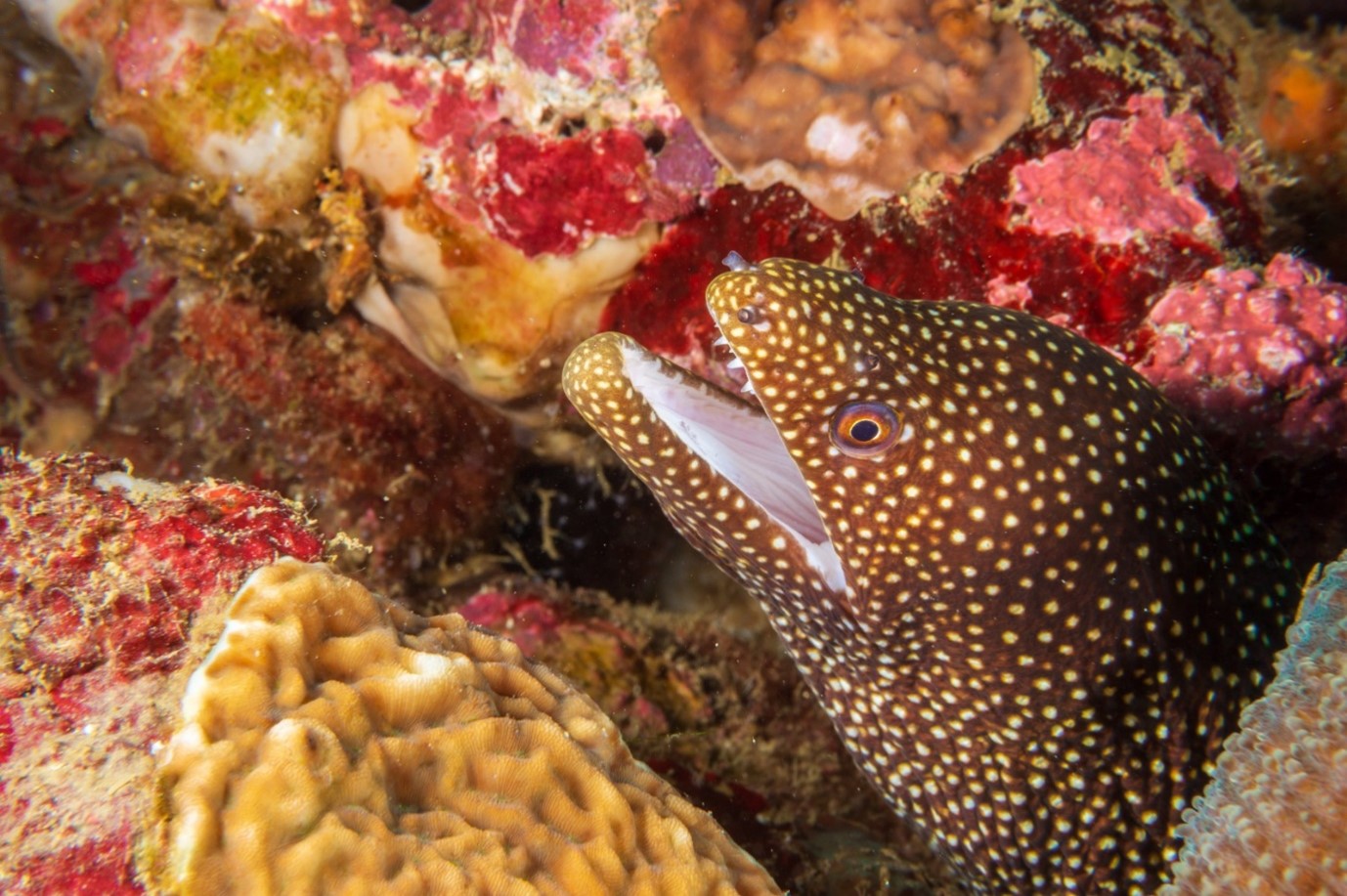
Yellow Spotted Moray Eel

Yellow Spotted Moray Eel


The next dive started out similarly, only this time I was prepared for a featureless seafloor. I was not disappointed. The seafloor was covered with broken dead coral and other rubble. At first, it was all I could see, but then my eyes began to adjust to the small animals living amongst the debris. There were nudibranchs of all sizes and colours. Seahorses and tiny pipefish clung to twigs and even the animals had animals on them. Bubble coral heads were host to all kinds of delicate shrimp, mushroom coral heads had mushroom coral pipefish darting around the tentacles, and fire urchins had coleman shrimps and tiger crabs riding on their back. I have since learnt how important it is to become acquainted with the symbiotic relationships that many small sea critters have with one another. Knowing that whip corals are home to whip coral shrimp and gobies has helped me spot these animals on my own. Likewise, learning that sea cucumbers are host to a variety of shrimp and crabs has led me to discover these critters.


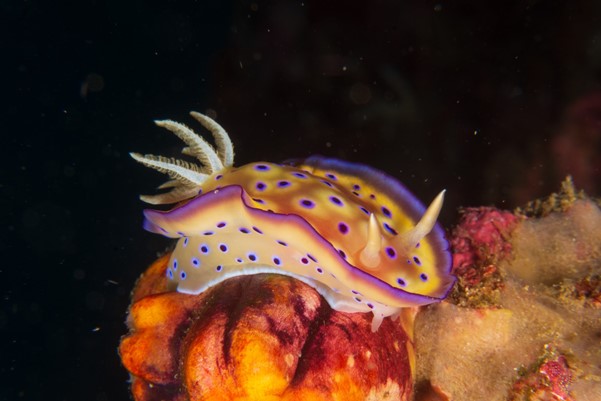
Kuni's Nudibranch (Goniobranchus Kuniei)

Kuni’s Nudibranch (Goniobranchus Kuniei)


A brilliant sunset marked the end of an exciting day, but little did I know that the best was yet to come. As this was one of my first dive trips, I had very limited experience diving at night. Anilao is well known for its dive site at Anilao Pier. Here, the water is only five or six metres deep. The bottom is sandy and during the day, a diver might only see a few small fish. But once night falls, the sand transforms into a living and breathing entity. Octopuses begin to emerge from hidden dens. They are on the hunt but appear playful and will entertain divers for hours if given a shell or a discarded jar.

The sand yields other interesting treasures as well. The bobbit worm, a strange and creepy looking worm with powerful jaws that bobs up out of the sand to catch fish. Crabs, snails, shrimps and sand-dwelling flatworms creep out of their hiding places to feed. Frogfish and reef squids occupy the space just above the sand, while the stargazers bury themselves just under the sand. The shallow depth makes it such that a diver can easily spend two hours there and still not see everything the site has to offer.


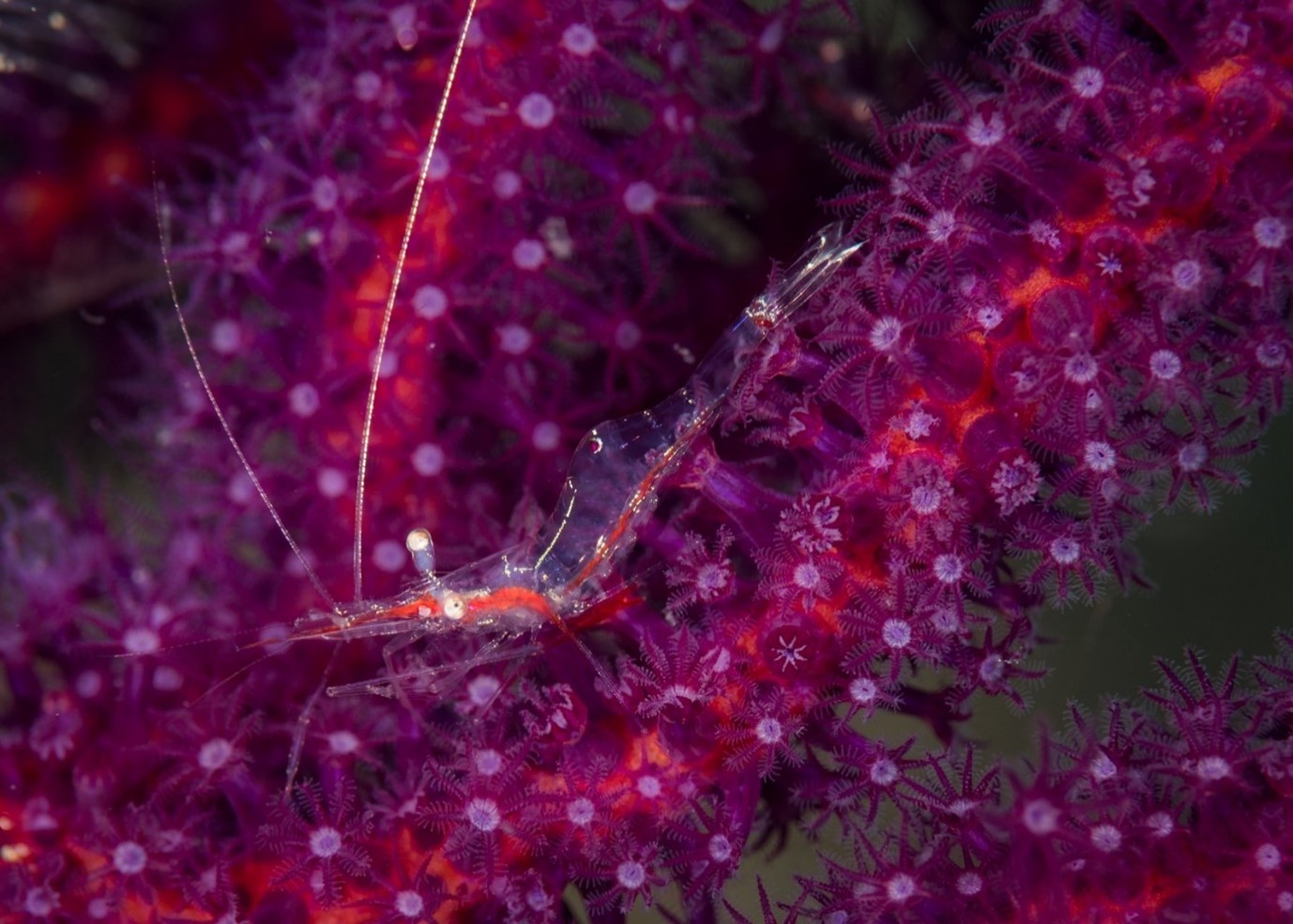
Commensal shrimp (Periclemenes psamathe), Secret Bay dive site, Anilao, Philippines

Commensal shrimp (Periclemenes psamathe), Secret Bay dive site, Anilao, Philippines


After a day filled with so many new finds, I discovered I was hooked on muck diving. I have explored the many sites around Anilao hundreds of times, visited Lembeh and Bali, Indonesia; Romblon, Philippines; and many other muck sites around the world. Each time, I am awed by the animals I see and the behaviour they exhibit. Muck diving has shaped the way I travel and the destinations I choose. It has inspired a love of discovery in me as each site has something new to offer. Indeed, it has fostered a deep appreciation in my heart for the wee beasties that live in the muck.


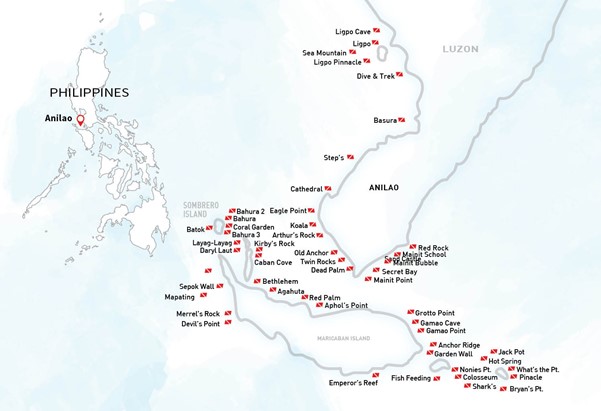
Map of Anilao

Map of Anilao


For more stories and photographs from the issue, see AsianDiver Issue 3/2018 Vol. 151. To read more exclusive content like this, check out the new issue of the ASIAN DIVER Magazine!


Let’s Talk PIXEL21 – Underwater Photography in 21 minutes Chat!

0

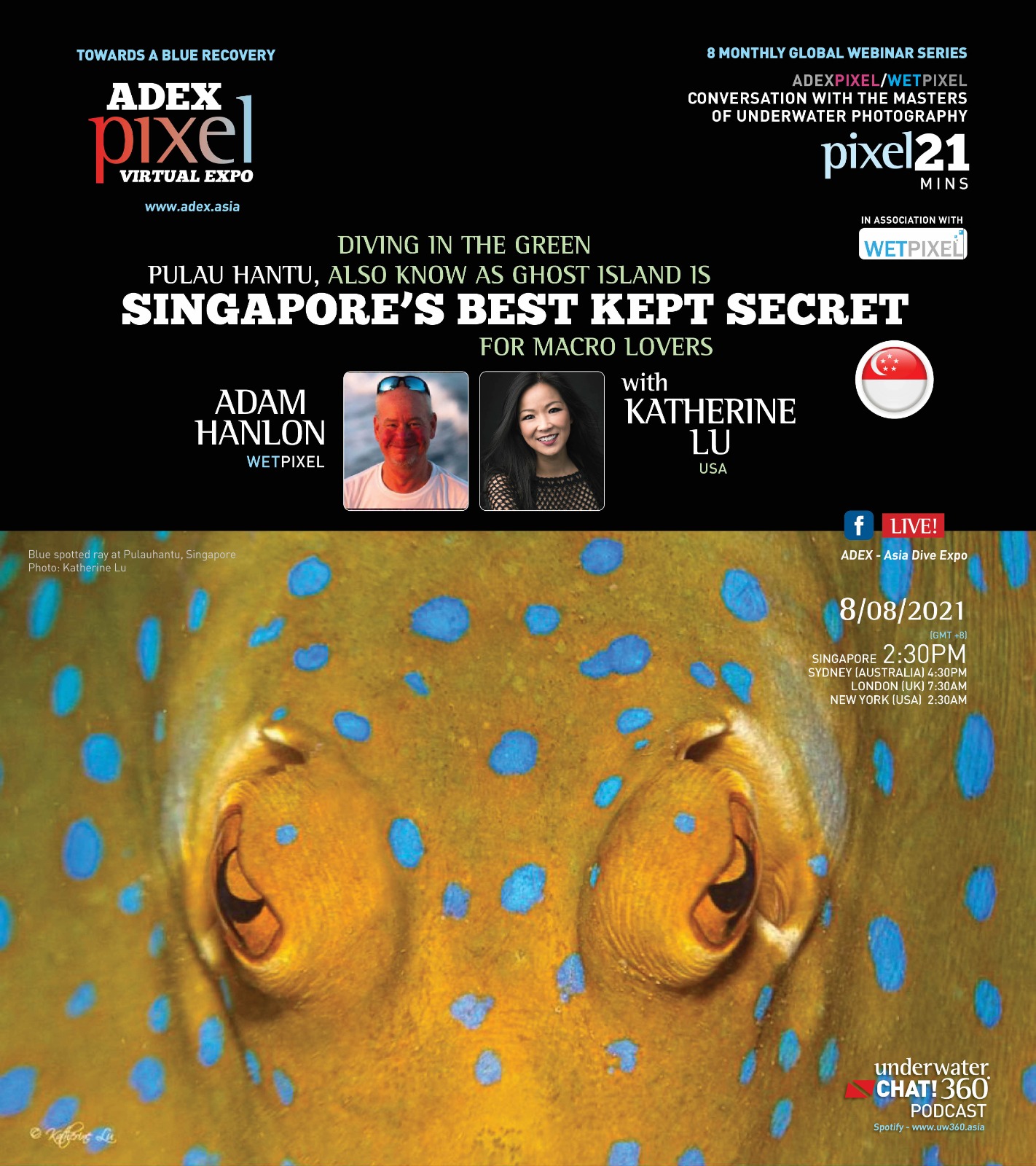
ADEX Pixel unites with Wetpixel to bring trending dialogues and deep-rooted tales on the pulse of Asia and the world’s underwater photography and videography


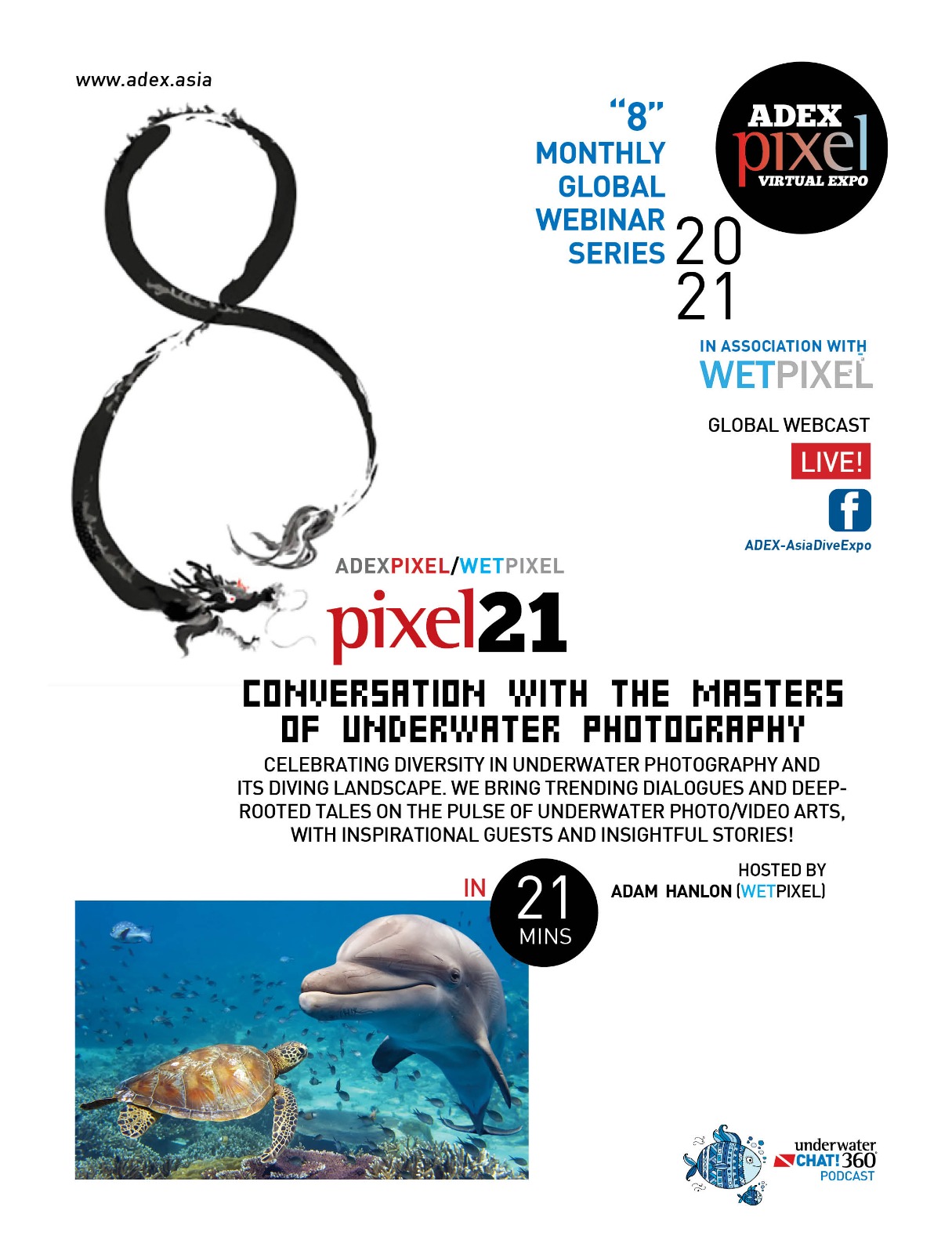
Underwater360° together with Wetpixel is proud to announce its latest collaboration in bringing the latest conversations on the art, trends and latest news on underwater photography and videography named “ADEX Pixel/Wetpixel’s PIXEL21″. Hosted by the publisher and the editor-at-large of the premiere community underwater photography and videography website, Wetpixel, Adam Hanlon convenes the industry’s masterful professionals and practitioners from both Asia and the western regions to deep dive into insightful sharings and experiences on the art.

Programmed monthly on #APE ADEX Pixel Expo 8th Monthly Virtual Event, ADEX Pixel/Wetpixel’s PIXEL21 is curated as a byte-sized infotainment session where Adam chats with invited guests representing Asia and the international region for 21 minutes each. Setting its discourse on each guest’s underwater photography/videography specialities, talks on gears, favourite dive spots, thoughts on the latest trends or competitions, Adam aims to bring an animated, effervescent, but most importantly an inspiring approach to both diving communities that will sit comfortably to both the professionals and aspiring underwater photographers or videographers out there!


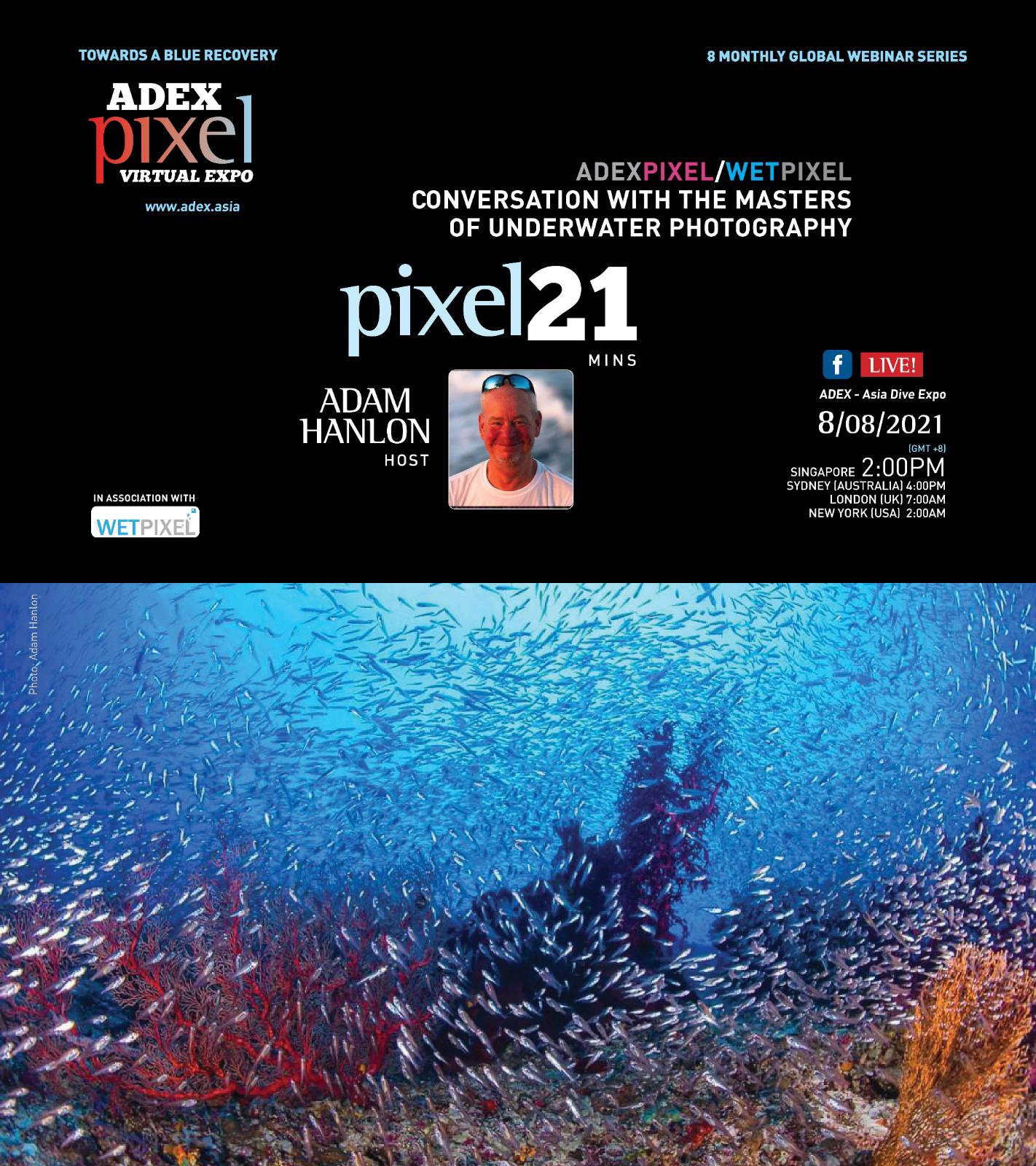
Inaugurating its first session this August 8, 2021 [08.08.2021], in conjunction with #APE 8th Monthly Virtual Event – August Series, ADEX Pixel/Wetpixel’s PIXEL21 will be graced by Asia’s representative, Katherine Lu, an American-Taiwanese underwater photographer who is currently residing in Singapore. Dwelling within close proximity to the coral triangle, Katherine embarked into underwater photography in 2014 and soon developed a speciality for underwater macro photography, but she also loves photographing sharks and large pelagics when travel opportunities arise.


A self-taught, award-winning photographer who has won international awards for her images and has been featured in both print and online magazines, she will be sharing her love for Singapore southern islands’ best-kept secrets – Pulau Hantu – a macro-lovers haven. So do not miss her 21 minutes showcase and discover Singapore’s secret that not many will know! For more of Katherine’s work, do visit her website or her Instagram.

Save the date for #APE 8th Monthly Virtual Event – August Series global webcast on Sunday, August 8, 2021, and join us as we “Majulah Singapura” and celebrate Singapore’s birthday in advance.


Catch up is way overdue. See you online!
1) ADEX Official FB page: https://www.facebook.com/AsiaDiveExpo/
2) APE Homepage: https://www.adex.asia/


ADEX Asia Dive Expo Social Media Channels:
FacebookInstagramTwitterYouTubeAnchor FMSpotifyGoogle Podcasts


About ADEX Pixel Expo

“ADEX Pixel “Virtual” Expo is the product of the COVID-19 pandemic and also the next stage for ADEX after 25 years. This platform will be the virtual/online arm to the existing ADEX series of shows as we hope to unite the industry as ‘One Industry. One Ocean. One Community’ and, also hope to be ‘The World’s First Digital Dive Show’!”

– John Thet, CEO of ADEX series of shows, Project Director of ADEX Pixel “Virtual” Expo, Publisher and Editorial Director of Asian Diver, Scuba Diver Australasia/OceanPlanet, Founder of Historical Diving Society Asia, and President of Magazine Publisher Association of Singapore [MPAS]

Connecting the global dive and marine conservation industry, blue economy sectors, and its community, ADEX PIXEL “Virtual” EXPO (#APE) brings together with the world’s best dive influencers, thought leaders, industry key players – speakers and exhibitors, NGOs/NPOs, social enterprises from the global landscape on ONE platform through new monthly contents that entertain, educate, and engage. #APE delivers informative content, interviews, LIVE! webinars and podcast series, an expansive marketplace, community forum, a stunning image gallery showcasing 2,021 underwater images from all over the world, and more exciting elements – all in the comforts of your own home! For more information, please visit www.adex.asia


About Wetpixel

Wetpixel is the premiere community website dedicated to underwater photography and videography. With up-to-date news, articles, gear reviews, photo contests, and dive expeditions, Wetpixel is a strong, focused community of over 35,000 underwater image-makers.

Wetpixel was established in 2001 by Eric Cheng and is now owned and published by Adam Hanlon. Our volunteer team includes Dr. Alexander Mustard, Cor Bosman, Drew Wong, Abi Smigel Mullens, and many others. In 2003, Eric and Wetpixel were awarded the prestigious Antibes Festival prize for Best Website. For more information, please visit www.wetpixel.com


COVID-19 & Diving

0

JUNE 2021 UPDATE

Join DAN’s doctors as they provide an update on what we’ve learned and what you need to know about diving after COVID-19.


[embedyt] https://www.youtube.com/watch?v=whfpHT7kMro[/embedyt]


This webinar will cover what we know about COVID-19 and diving after a year and a half living with the pandemic. We’ll discuss the global path to immunity, and how different vaccination rates -with different vaccines- may impact affect the epidemiological situation on in several popular dive locations destinations as they reopen. This will be particularly useful as you plan your next for anyone planning international travel. Many other COVID-19 related areas will be discussed and we hope you can join us.

Brought to you especially by DAN World. Watch it here and be sure to follow DAN World Facebook.


How Does Climate Change Affect the Ocean?

0

This year brought some bad news on the climate change front: researchers found that ice is melting faster worldwide, and there’s a greater sea-level rise anticipated. The rate of ice loss each year has increased by 60%. A study of the Greenland ice sheet found that there are at least 74 major glaciers that are being severely undercut and weakened.

These statistics are dire for our oceans and the future of the planet. As glacier ice melts, it changes the chemical makeup of the oceans; and, since the oceans directly regulate the weather, changes to our oceans affect our food supply, air quality, disaster preparedness, and more. How climate change affects the ocean is complicated and touches virtually every aspect of our lives. Here’s a quick overview of the relationship between climate change and oceans, and why it’s imperative that we work to reduce ocean climate change.

Climate change and sea level rise

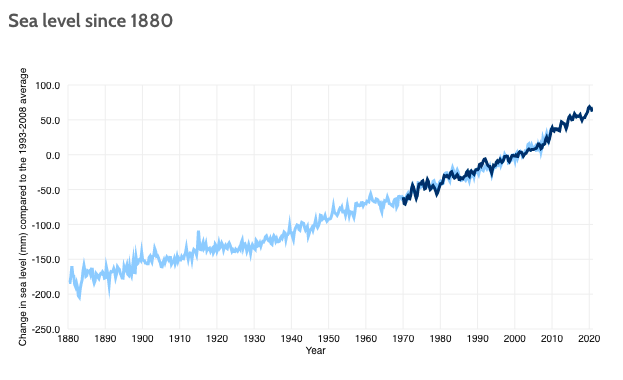
There’s no question that climate change has caused sea levels to rise. But, sea-level change has increased dramatically over the last 20 years. Since 1880, the average sea level has risen eight to nine inches; a third of that gain has come in the last two and a half decades. Rising sea levels can be mostly attributed to meltwater from glaciers and ice sheets, as well as the thermal expansion of seawater as it warms.

(image source)

Climate change and sea-level rise are a big deal for coastal communities — and in the US, nearly 40% of the population lives in high population-density coastal areas. Around the world, eight of the 10 largest cities are near a coast. This puts a huge percentage of our population at risk for flooding, shoreline erosion, and storm hazards. Our infrastructure — roads, bridges, subways, power plants, water supplies, and more — are all at risk from sea-level rise.

[Read more: Flood Maps Are Outdated – Here’s How to Fix Them

Flooding isn’t the only danger of higher sea levels. Rising sea levels will impact our drinking water, food supply, and overall health. “As sea levels rise, saltwater intrusion into freshwater increases the salinity of groundwater basins and well water. This reduces crop yields and the availability of safe drinking water. It also increases the risk of hypertension, as well as vectorborne and diarrheal disease,” said one joint report by the Public Health Institute and the Center for Climate Change and Health.

Finally, climate change and sea-level rise will threaten wildlife populations and coastal ecosystems. Trees growing near the coast will struggle to find enough freshwater to grow; even those further inland won’t be able to survive repeated flooding by salty seawater. Wildlife populations that make their home along the coast will struggle to adapt to erosion, flooding, and changes in plant life. Sea birds and sea turtles that make their nests on the shoreline won’t be able to reproduce and will face extinction.

Ocean acidification and climate change

The on-shore effects of climate change are just one side of the story. The chemical make-up and temperature of the ocean are also changing.

Climate change is causing increased rates of ocean acidification. Ocean acidification is a process by which the pH of the ocean is reduced over an extended period of time, making the ocean more acidic. This is primarily caused by an increase of carbon dioxide in the atmosphere.

“The ocean absorbs about 30 percent of the CO2 that is released in the atmosphere, and as levels of atmospheric CO2 increase, so do the levels in the ocean,” explained NOAA. “When CO2 is absorbed by seawater, a series of chemical reactions occur resulting in the increased concentration of hydrogen ions. This increase causes the seawater to become more acidic and causes carbonate ions to be relatively less abundant.”

As we emit more CO2, the ocean becomes more and more acidic. The pH has dropped by 26% over the last century (to become more acidic). What does this mean for climate change and the planet?

First, marine ecosystems will struggle to survive. Acidification particularly impacts shellfish and coral reefs — organisms that need carbonate ions to make their shells and skeletons. Acidification reduces the availability of carbonate ions, preventing these populations from thriving and disrupting delicate ocean ecosystems.

Through Sofar Ocean’s partnership with Aqualink, research teams are able to take advantage of the world’s largest real-time ocean data platform to visualize temperature and other data from coral reef sites around the world. By aggregating data and providing greater transparency to sensor and model data, researchers are able to pinpoint with greater accuracy where ocean acidification and climate change are taking their toll.

It’s not just marine ecosystems that are struggling due to ocean acidification. Warming ocean temperatures are bad for the fishing industry, too. Warmer oceans lead to toxic algal blooms. “Toxic algae produce domoic acid, a dangerous neurotoxin, that builds up in the bodies of shellfish, posing a risk to human health. As a result, many West Coast fisheries have been forced to shut down,” wrote the Union of Concerned Scientists.

Some scientists have linked ocean acidification to atmospheric warming — bringing us to the third impact of ocean climate change.

Ocean circulation and the climate

Ocean circulation regulates the temperature of our planet. It works like a giant “conveyor belt” to bring heat from the Equator to the higher latitudes. “As warm water from the tropics flows toward the poles in wind-driven currents near the surface, it cools, becoming denser and heavier, and eventually sinks. It then begins flowing back toward the equator in a slow journey deep in the ocean,” explained Inside Climate News.


(image source)

Critically, the Atlantic Ocean’s circulation has slowed by about 15% since the middle of the last century. Weaker currents are at the root of a host of problems: increased rates of ocean acidification, higher sea levels, more extreme temperatures (hotter summers and colder winters), coastal ice jams that impede marine shipping routes, and the collapse of certain aquaculture operations.

[Read more:  Tracking Changes in Surface Currents

The stats on ocean climate change are alarming. We know it’s time to lower our carbon footprint — an effort that starts with better data and more affordable technology to increase the breadth and depth of data collected. As our partnership with Aqualink shows, a unified knowledge base can lead to better strategy and planning to slow down the rate of ocean climate change. It starts with more affordable and more accessible data collection — the driving force behind Sofar Ocean’s Spotter buoys. To learn more, click here.

*

This article originally appeared on sofarocean.com.

On Concerns Around Potential Amendments to the Shark Ban in the Maldives

0

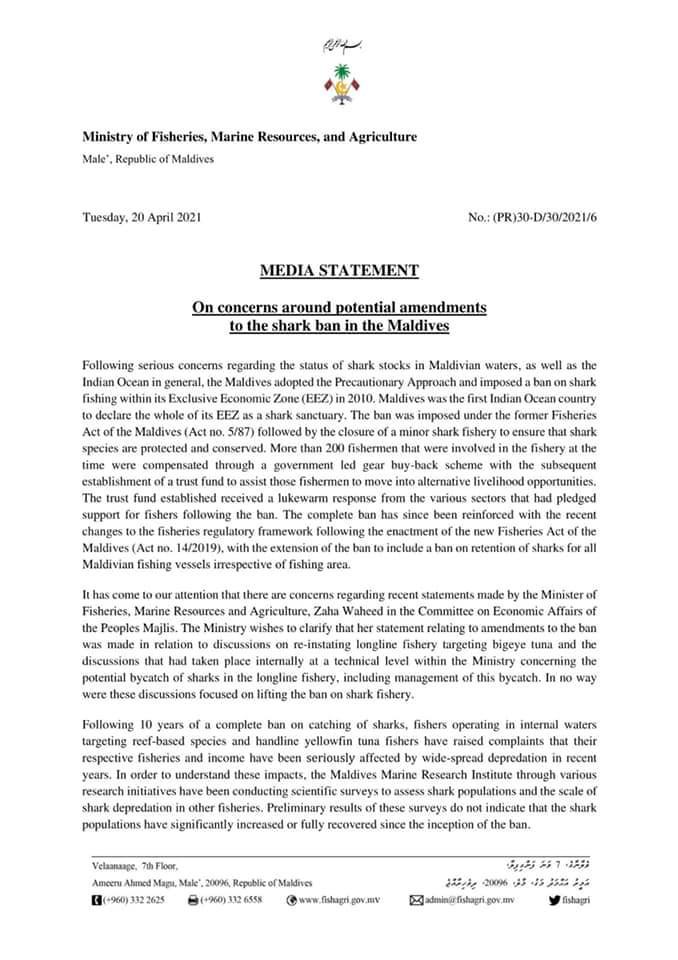
Media statement by The Republic of Maldives’ Ministry of Fisheries, Marine Resources and Agriculture:


Following serious concerns regarding the status of shark stocks in Maldivian waters, as well as the Indian Ocean in general, the Maldives adopted the Precautionary Approach and imposed a ban on shark fishing within its Exclusive Economic Zone (EEZ) in 2010. Maldives was the first Indian Ocean country to declare the whole of its EEZ as a shark sanctuary. The ban was imposed under the former Fisheries Act of the Maldives (Act no. 5/87) followed by the closure of a minor shark fishery to ensure that shark species are protected and conserved. More than 200 fishermen that were involved in the fishery at the time were compensated through a government led gear buy-back scheme with the subsequent establishment of a trust fund to assist those fishermen to move into alternative livelihood opportunities. The trust fund established received a lukewarm response from the various sectors that had pledged support for fishers  following the ban. The complete ban has since been reinforced with the recent changes to the fisheries regulatory framework following the enactment of the new Fisheries Act of the Maldives (Act no. 14/2019), with the extension of the ban to include a ban on retention of sharks for all Maldivian fishing vessels irrespective of fishing area.

It has come to our attention that there are concerns regarding recent statements made by the Minister of Fisheries, Marine Resources and Agriculture, Zaha Waheed in the Committee on Economic Affairs of the Peoples Majlis. The Ministry wishes to clarify that her statement relating to amendments to the ban was made in relation to discussions on re-instating longline fisher targeting bigeye tuna and the discussions that had taken place internally at a technical level within the Ministry concerning the potential bycatch of sharks in the longline fishery, including management of this bycatch. In no way were these discussions focused on lifting the ban on shark fishery.

Following 10 years of a complete ban on catching of sharks, fishers operating in internal waters targeting reef-based species and handline yellowfin tuna fishers have raised complaints that their respective fisheries and income have been seriously affected by wide-spread depredation in recent years. In order to understand these impacts, the Maldives Marine Research Institute through various research initiatives have been conducting scientific surveys to assess shark populations and the scale of shark depredation in other fisheries. Preliminary results of these surveys do not indicate that the shark populations have significantly increased or fully recovered since the inception of the ban.

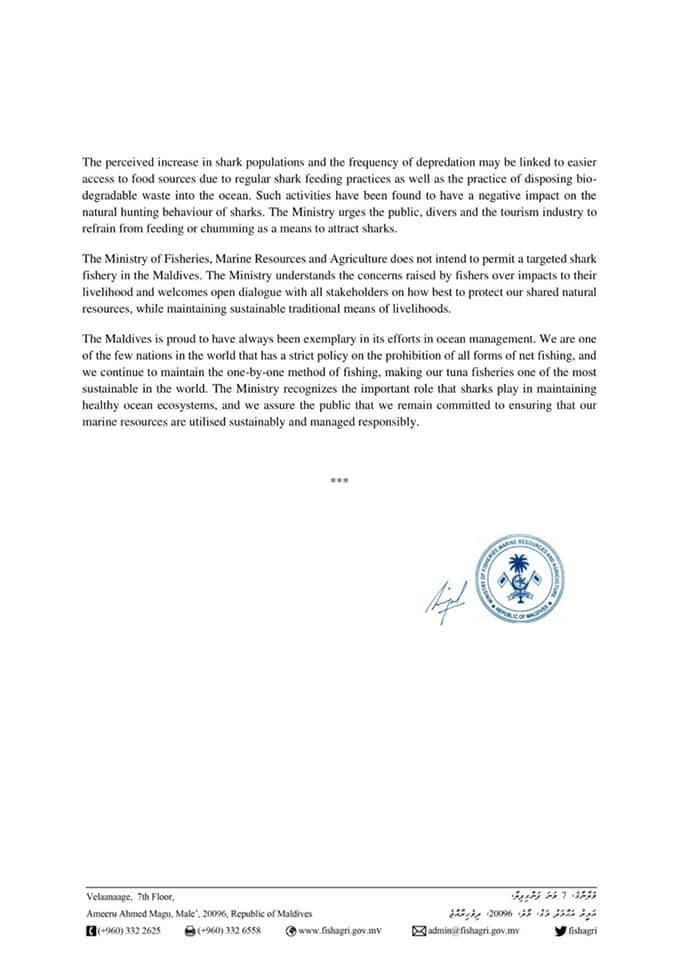
The perceived increase in shark populations and the frequency of depredation may be linked to easier access to food sources due to regular shark feeding practices as well as the practice of disposing biodegradable waste into the ocean. Such activities have been found to have a negative impact on the natural hunting behaviour of sharks. The Ministry urges the public, divers and the tourism industry to refrain from feeding or chumming as a means to attract sharks.

The Ministry of Fisheries, Marine Resources and Agriculture does not intend to permit a targeted shark fishery in the Maldives. The Ministry understands the concerns raised by fishers over impacts to their livelihood and welcomes open dialogue with all stakeholders on how best to protect our shared natural resources, while maintaining sustainable traditional means of livelihoods.

The Maldives is proud to have always been exemplary in its efforts in ocean management. We are one of the few nations in the world that has a strict policy on the prohibition of all forms of net fishing, and we continue to maintain the one-by-one method of fishing, making our tuna fisheries one of the most sustainable in the world. The Ministry recognises the important role that sharks play in maintaining healthy ocean ecosystems, and we assure the public that we remain committed to ensuring that our marine resources are utilised sustainably and managed responsibly.