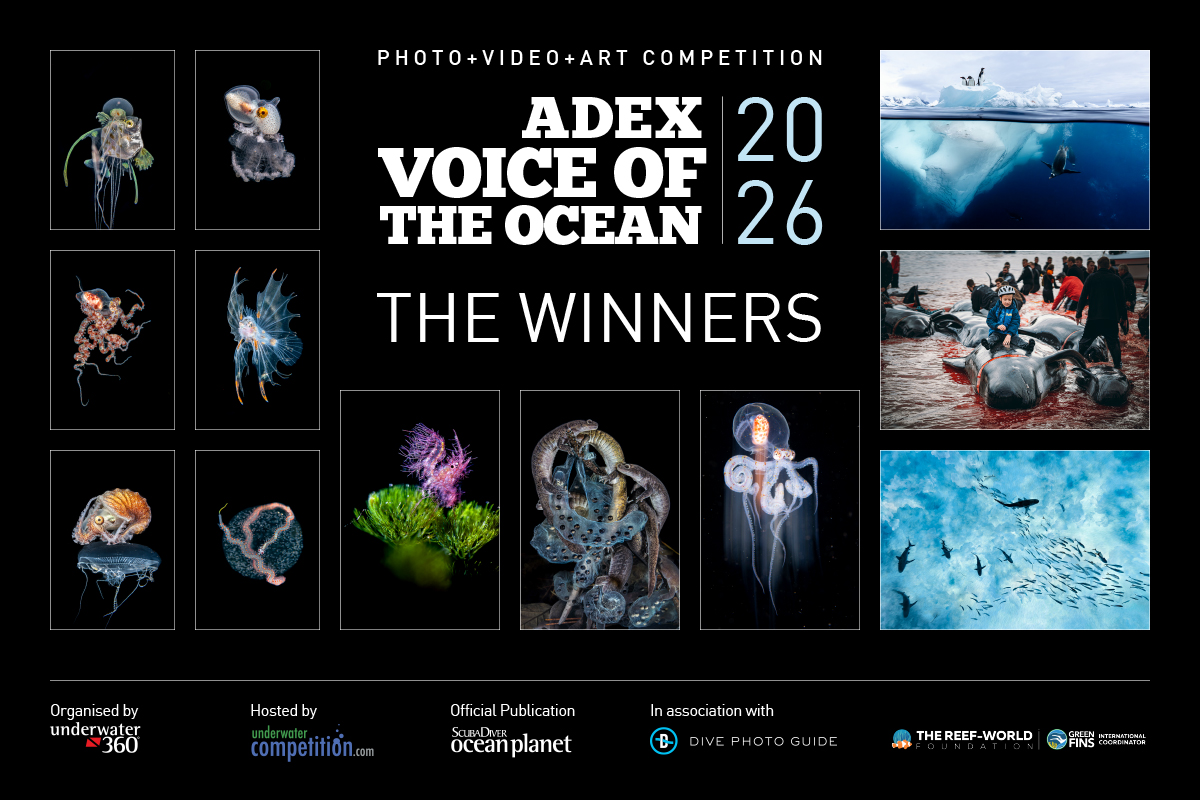
American photographer Boz Johnson’s breathtaking blackwater portfolio was crowned “Best of Show”, earning him the title “ADEX Photographer of the Year 2026”
Underwater360 Group, the organisers of the Asia Dive Expo (ADEX), have announced the winners of ADEX Voice of the Ocean, the show’s signature photo/video/art competition. Held from April 10 to 12, 2026, ADEX Big Blue Legacy, the 32nd edition of Singapore Ocean Week, culminated in an exciting live judging event emceed by Ian Bongso-Seldrup, with a prestigious jury – Jim Decker, Cristian Dimitrius, Tavi Castro, Scott “Gutsy” Tuason, Tobias Friedrich, Ipah Uid Lynn, Doudou, and Renee Capozzola – choosing the winners in the competition categories as well as the overall winner.
Congratulations to Boz Johnson, whose winning entry in the Portfolio category was crowned the “Best of Show” and earned him the title “ADEX Photographer of the Year 2026”. We would also like to congratulate the winners in the other categories: Min-seok Jeon (Animal Behaviour), Chris Gug (Blackwater), Khaichuin Sim (Conservation), PJ Aristorenas (Smartphone), Sam Blount (Ocean Planet), Ysabela Coll (Underwater Arts), and Alfred Schaschl (Short Film).
Here are the winners, runners-up and honourable mentions in this year’s eight categories.
Portfolio
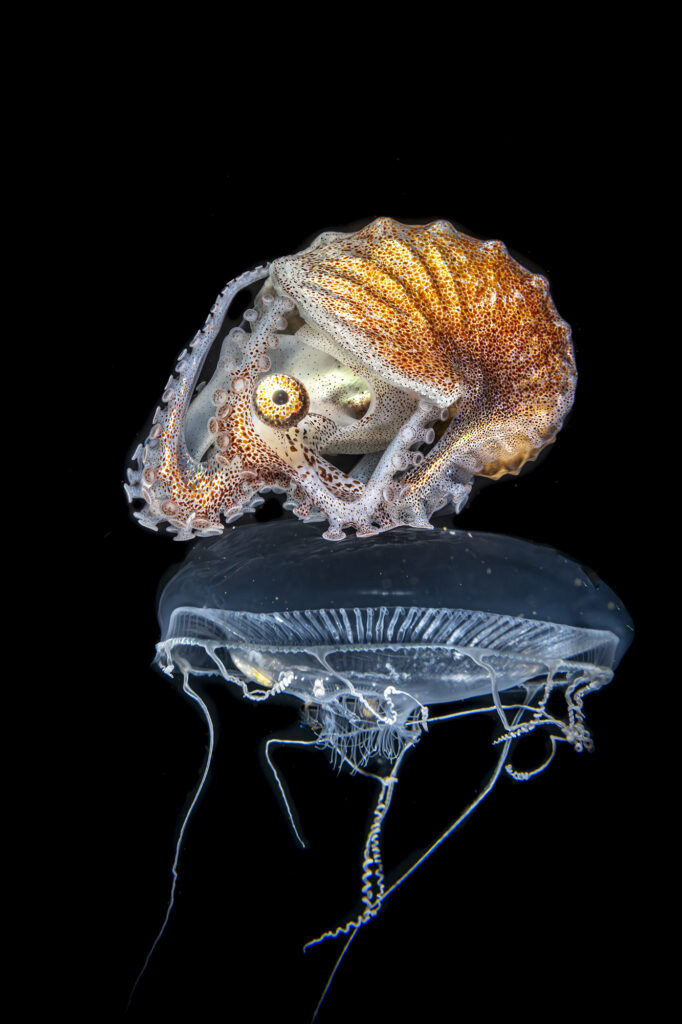
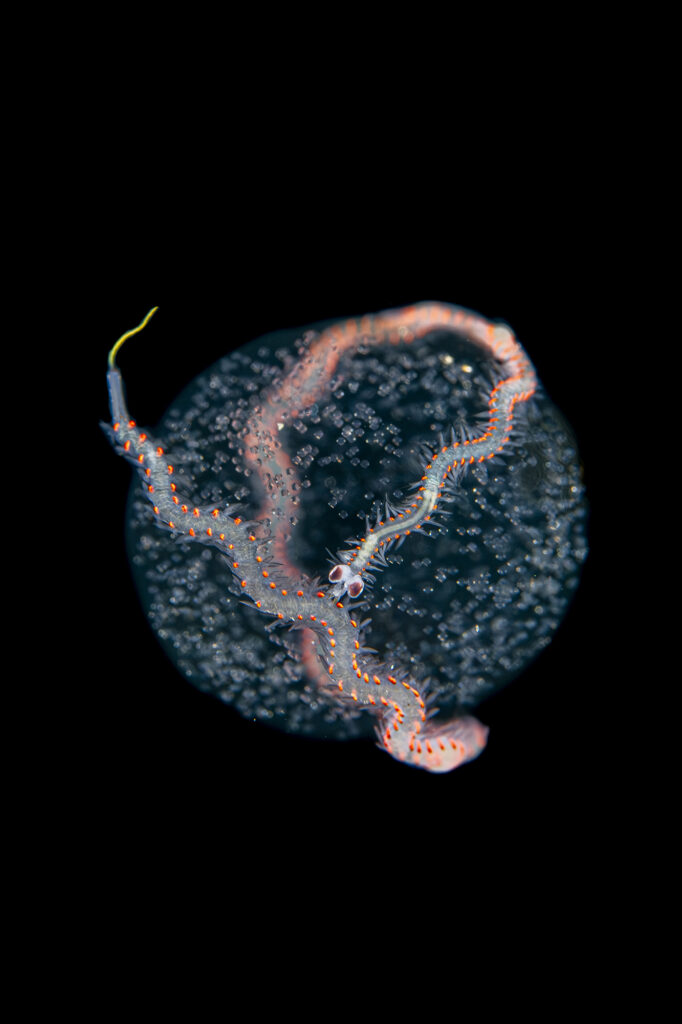
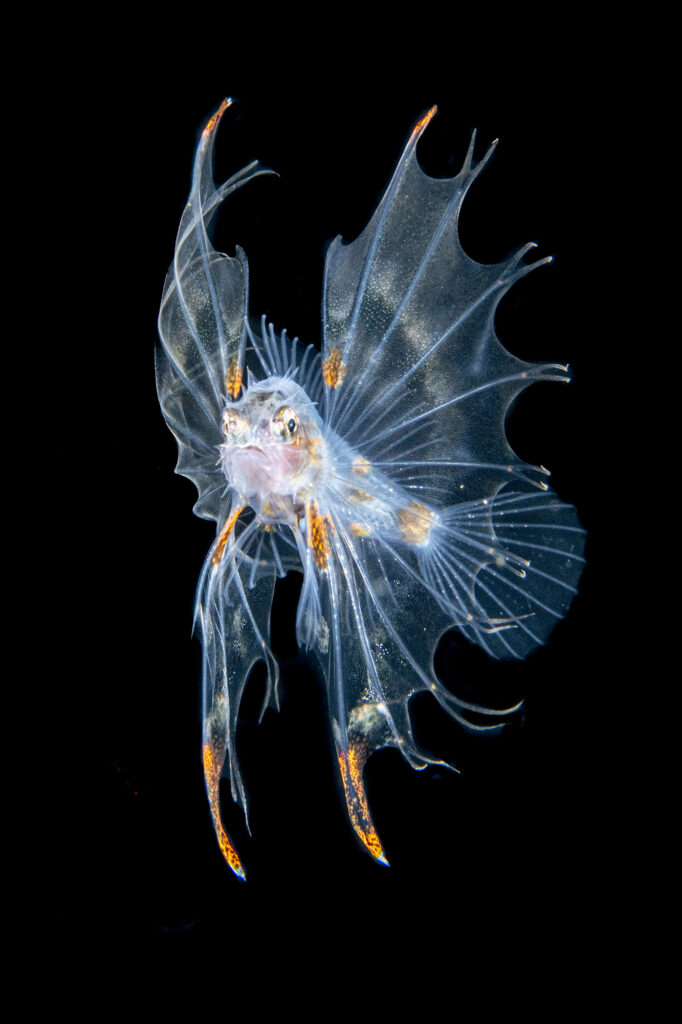
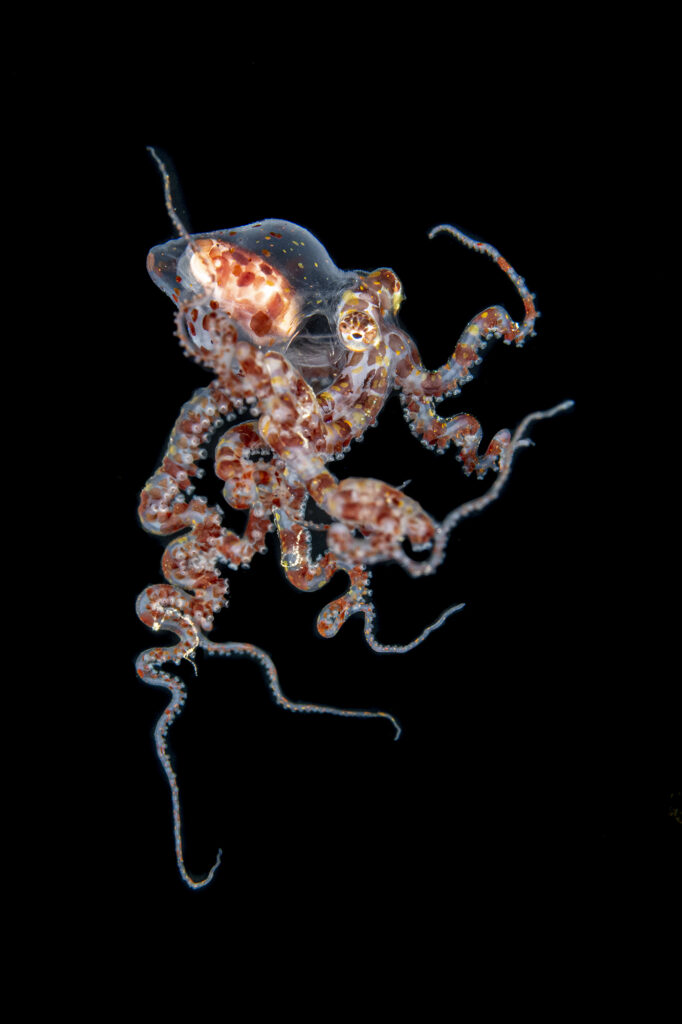
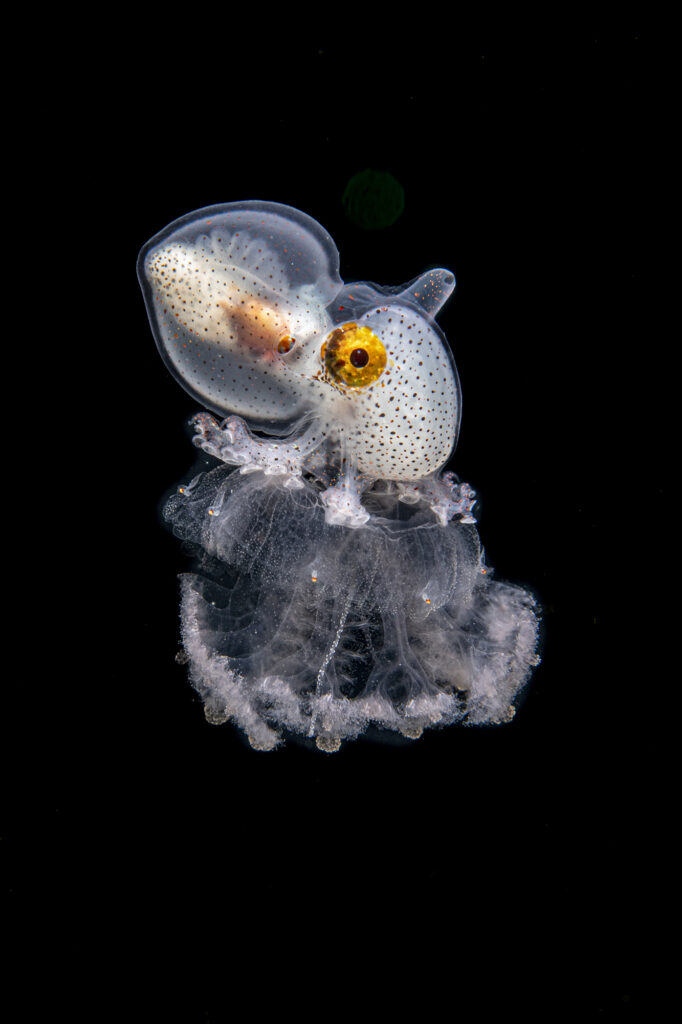
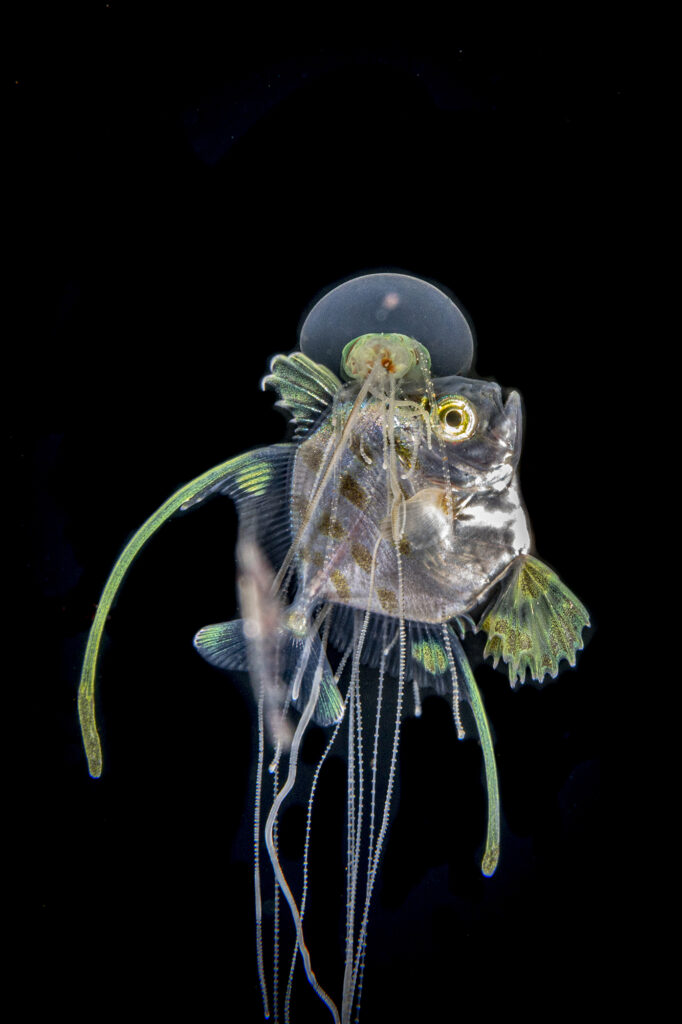
Portfolio – Winner – ADEX Photographer of the Year 2026 – “Blackwater Variety Portfolio” by Boz Johnson (USA)
PRIZE SPONSOR

Shooting Locations (clockwise from top-left): Anilao, Batangas, Philippines; Anilao, Batangas, Philippines; Anilao, Batangas, Philippines; Anilao, Batangas, Philippines; Anilao, Batangas, Philippines; Tulamben, Bali, Indonesia
Equipment and Settings (clockwise from top-left): Nikon D850, Nikon AF-S 60mm f/2.8 Macro, Nauticam housing, dual Scubalamp D-Pro strobes (f/25, 1/200s, ISO 200); Nikon D850, Nikon AF-S 60mm f/2.8 Macro, Nauticam housing, dual Scubalamp D-Pro strobes (f/25, 1/200s, ISO 200); Nikon D850, Nikon AF-S 60mm f/2.8 Macro, Nauticam housing, dual Scubalamp D-Pro strobes (f/22, 1/200s, ISO 200); Nikon D850, Nikon AF-S 60mm f/2.8 Macro, Nauticam housing, dual Marelux Apollo III 2.0 strobes (f/25, 1/200s, ISO 200); Nikon D850, Nikon AF-S 60mm f/2.8 Macro, Nauticam housing, dual Marelux Apollo III 2.0 strobes (f/25, 1/200s, ISO 200); Nikon D850, Nikon AF-S 60mm f/2.8 Macro, Nauticam housing, dual Scubalamp D-Pro strobes (f/25, 1/200s, ISO 200)
Photographer’s Comment: “It was difficult to choose just six images to represent the variety of blackwater creatures I’ve been fortunate to experience. They are so weird and wonderful, and these images represent just a few of the special moments in this crazy treasure hunt when my hands were shaking with excitement!”
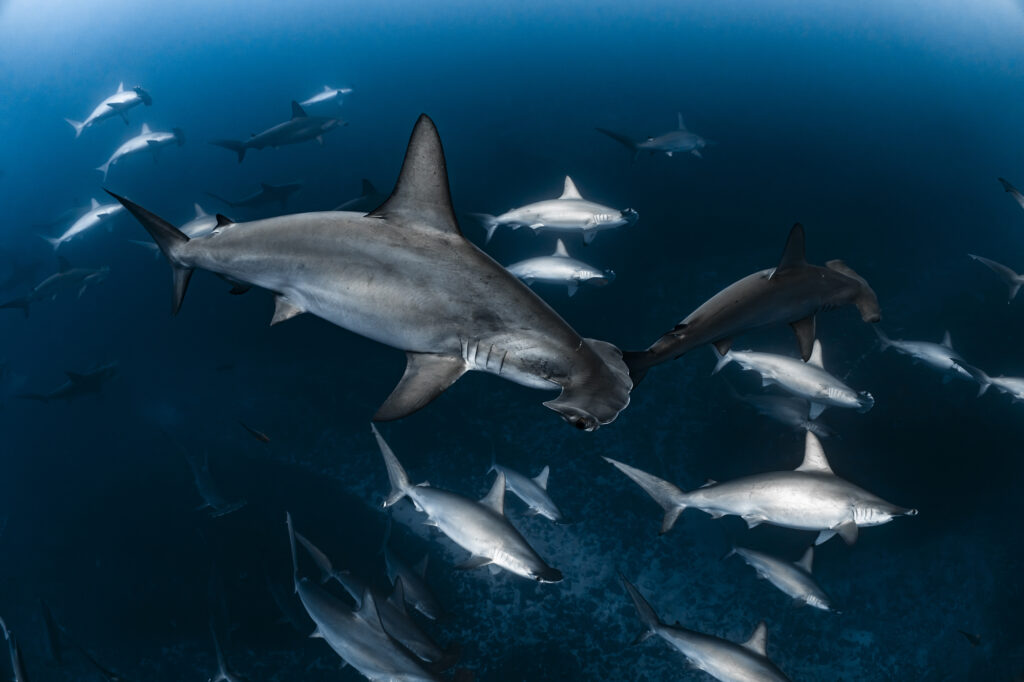
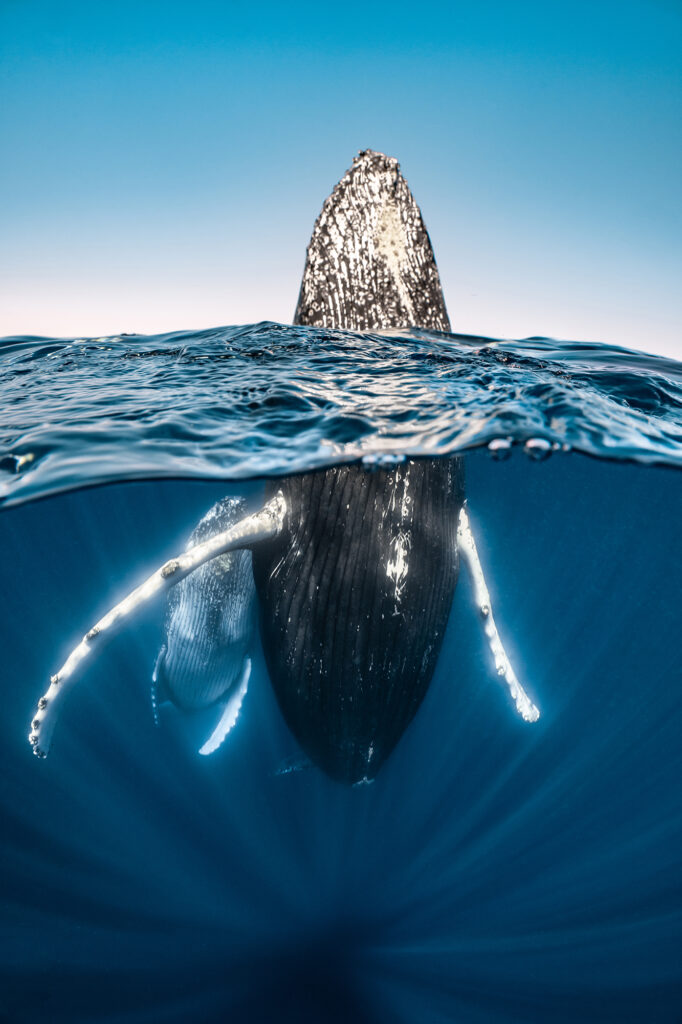
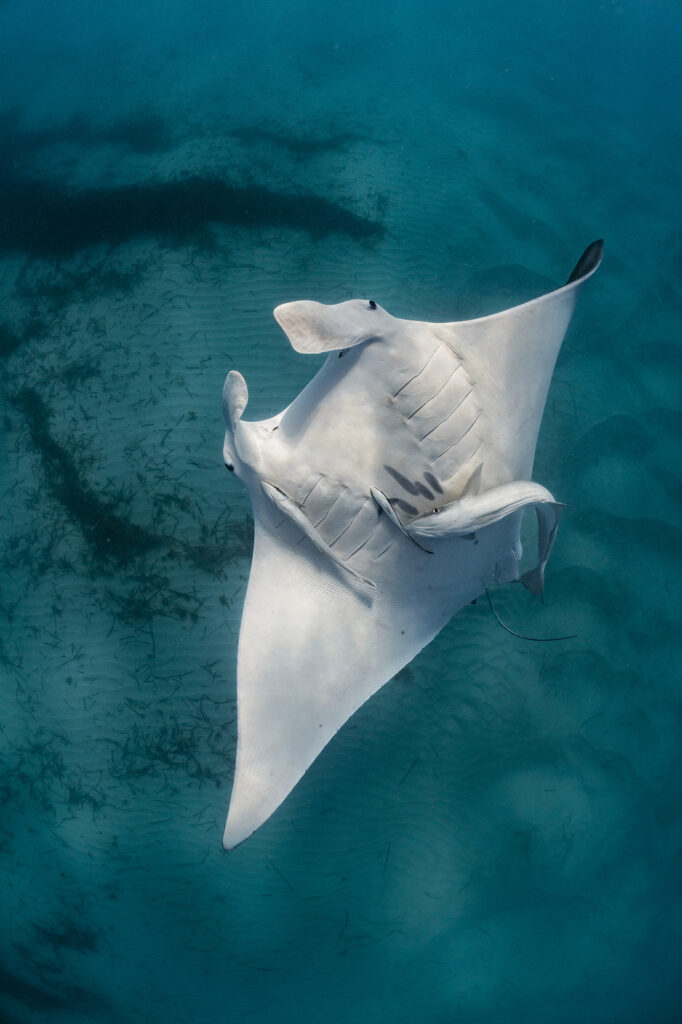
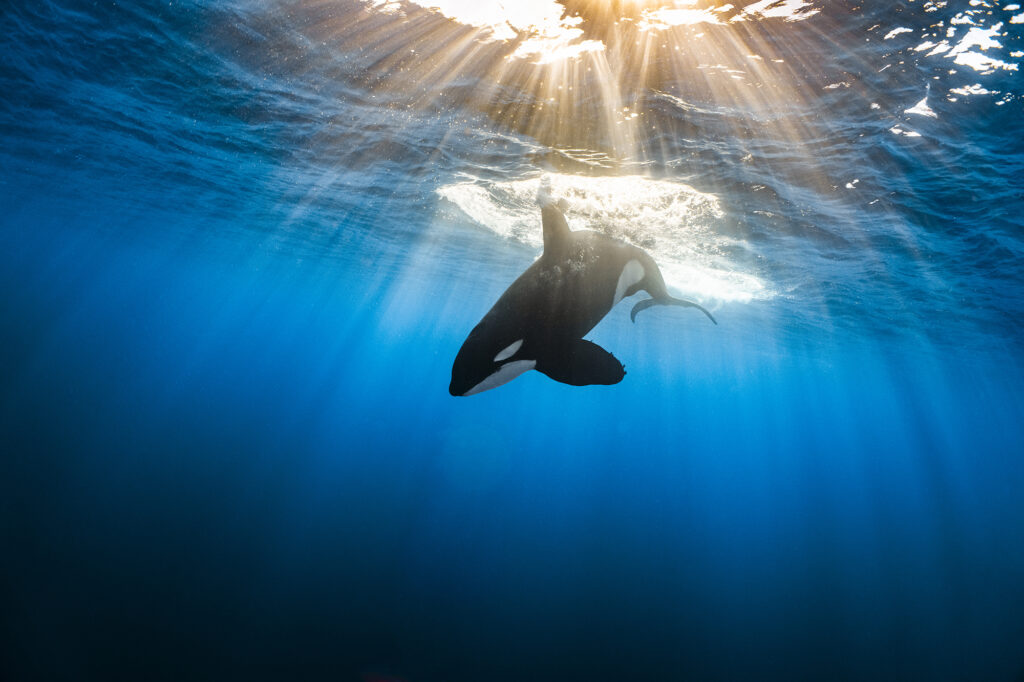
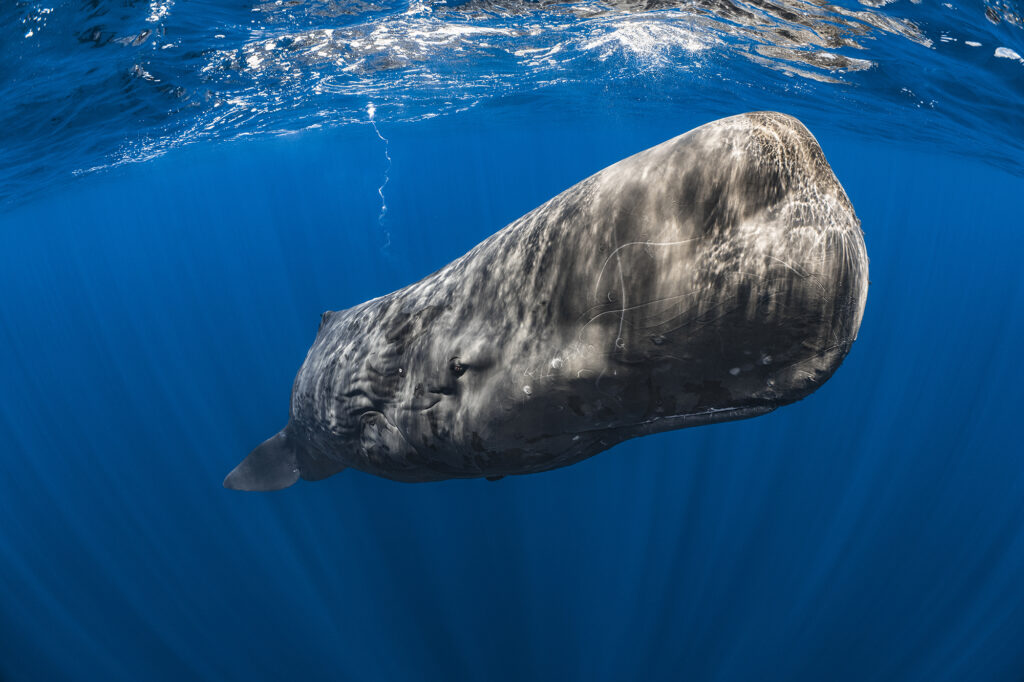
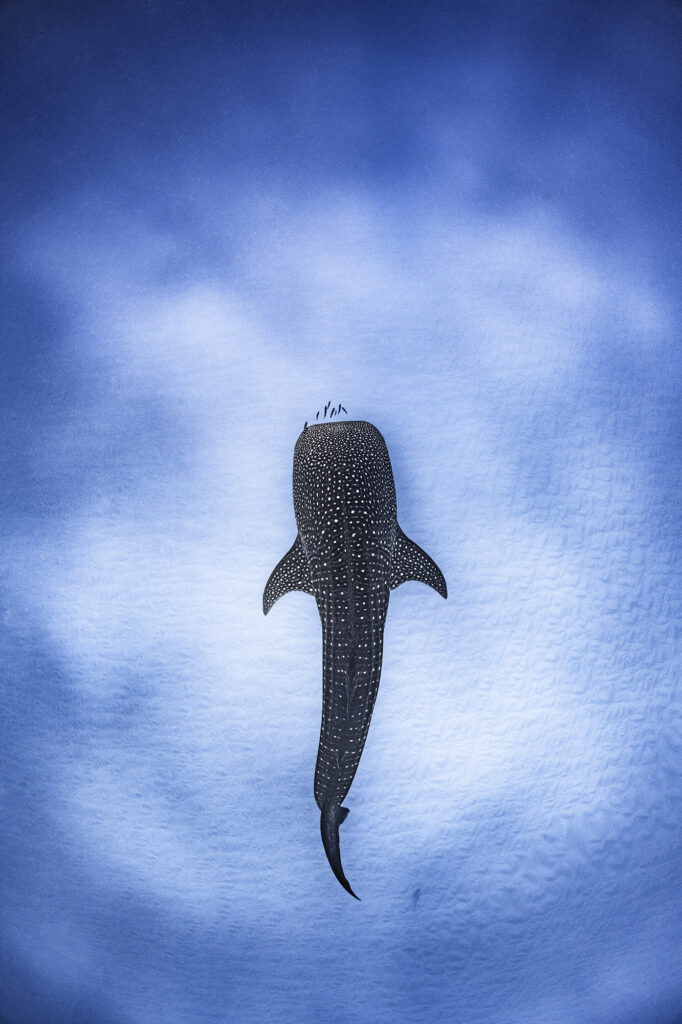
Portfolio – Runner-up – “Portraits of Ocean Giants” by Oliver Clarke (UK)
PRIZE SPONSORS


Shooting Locations (clockwise from top-left): Ningaloo Reef, Western Australia; Manatuto, Timor-Leste; Baja California, Mexico; Yonaguni, Japan; Ningaloo Reef, Western Australia; Ningaloo Reef, Western Australia
Equipment: Sony a1, Sony FE 28–60mm f/4–5.6, Nauticam housing, Nauticam WACP-1, ambient light. Settings (clockwise from top-left): f/8, 1/400s, ISO 320; f/8, 1/250s, ISO 500; f/6.3, 1/1000s, ISO 500; f/5.6, 1/200s, ISO 1000; f/13, 1/200s, ISO 400; f/13, 1/400s, ISO 200
Photographer’s Comment: “For as long as I can remember, I’ve been obsessed with ocean giants, whether it’s the great whales, big sharks or curious manta rays. I have been very fortunate in my career and had many opportunities to photograph these beautiful and endangered animals to share their story. These are some of my best images of my favourite encounters from around the world.”
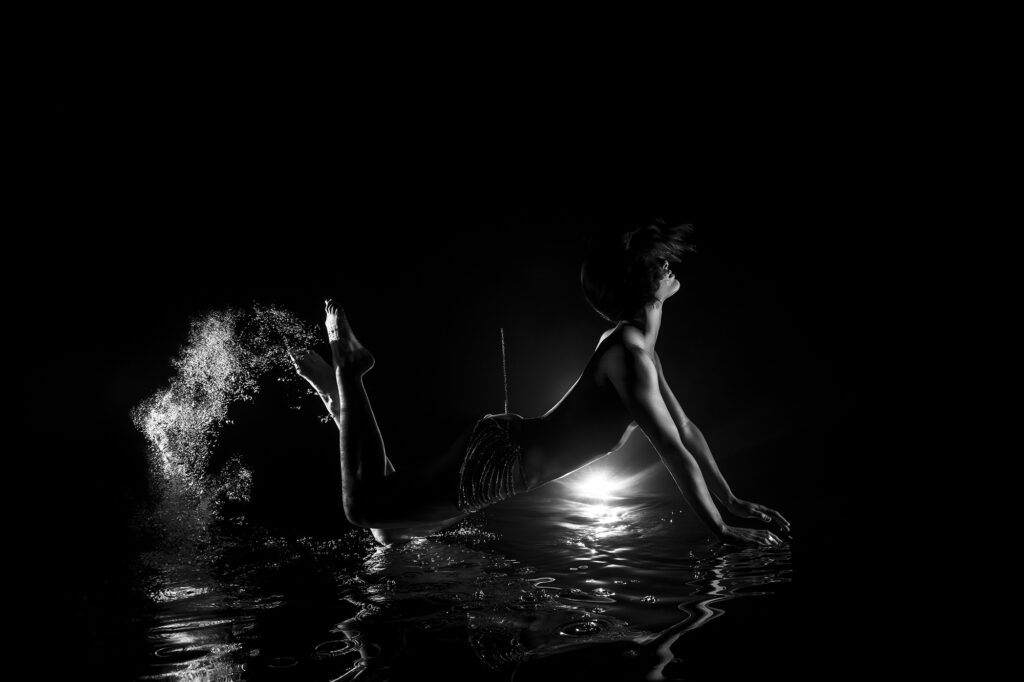
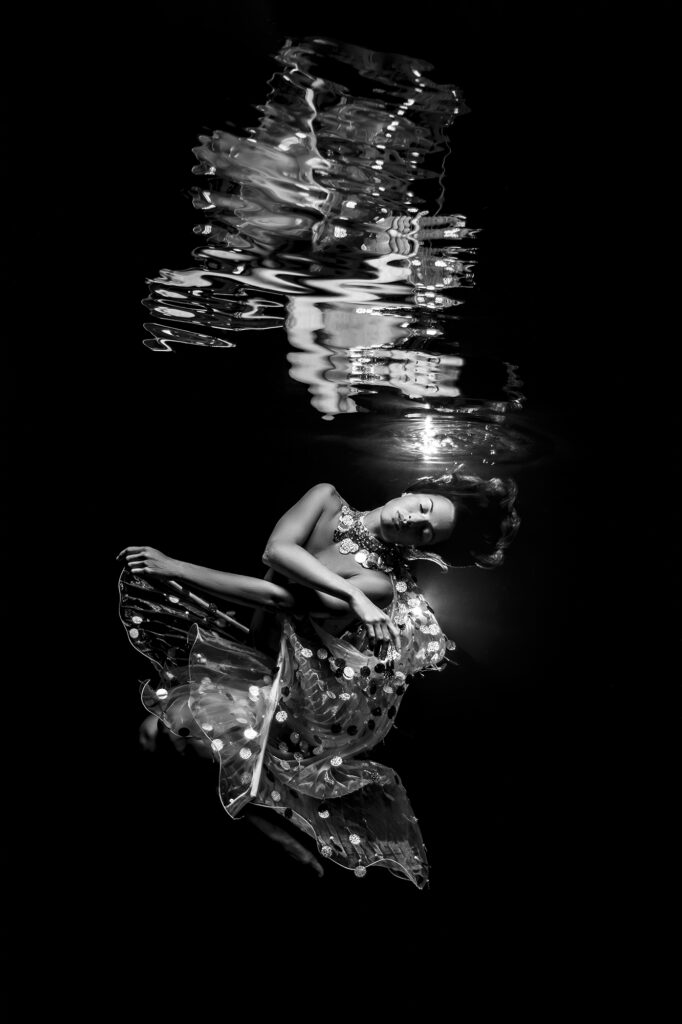
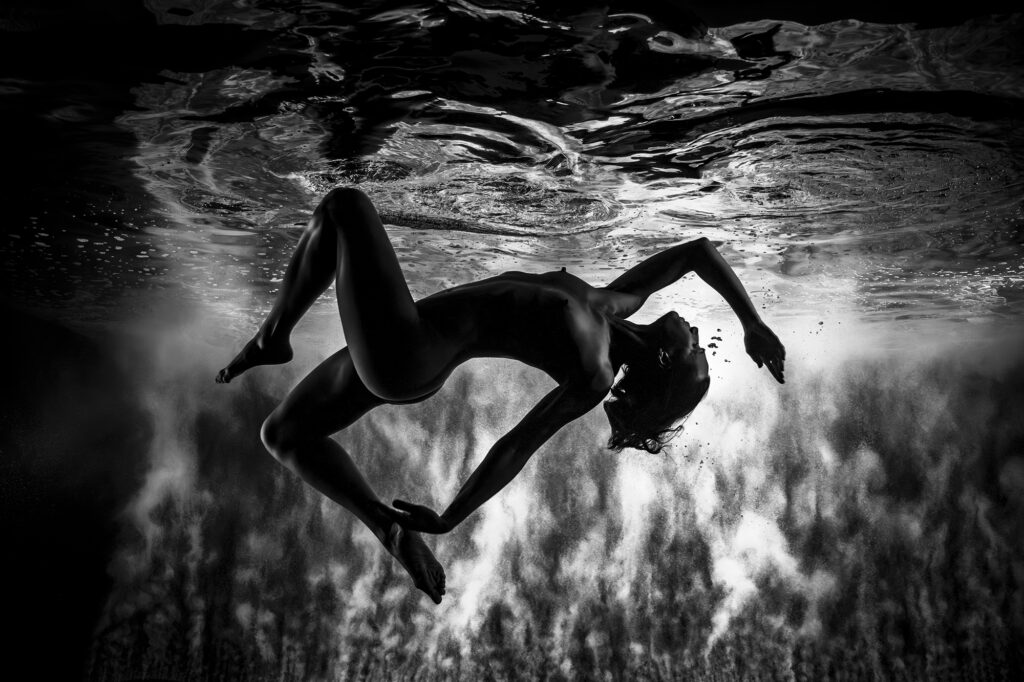
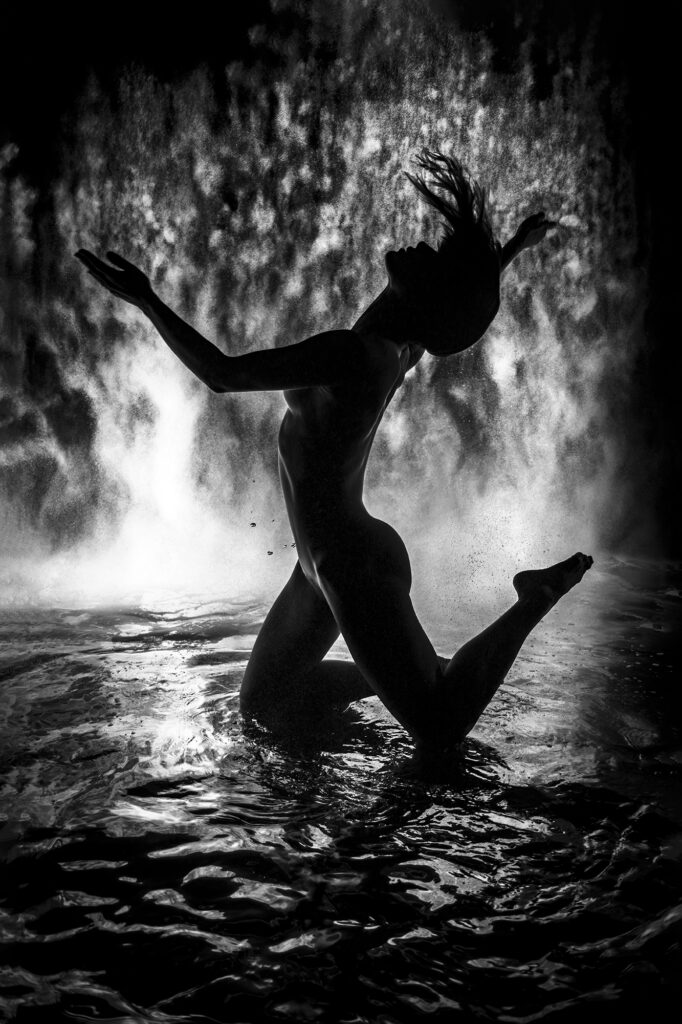
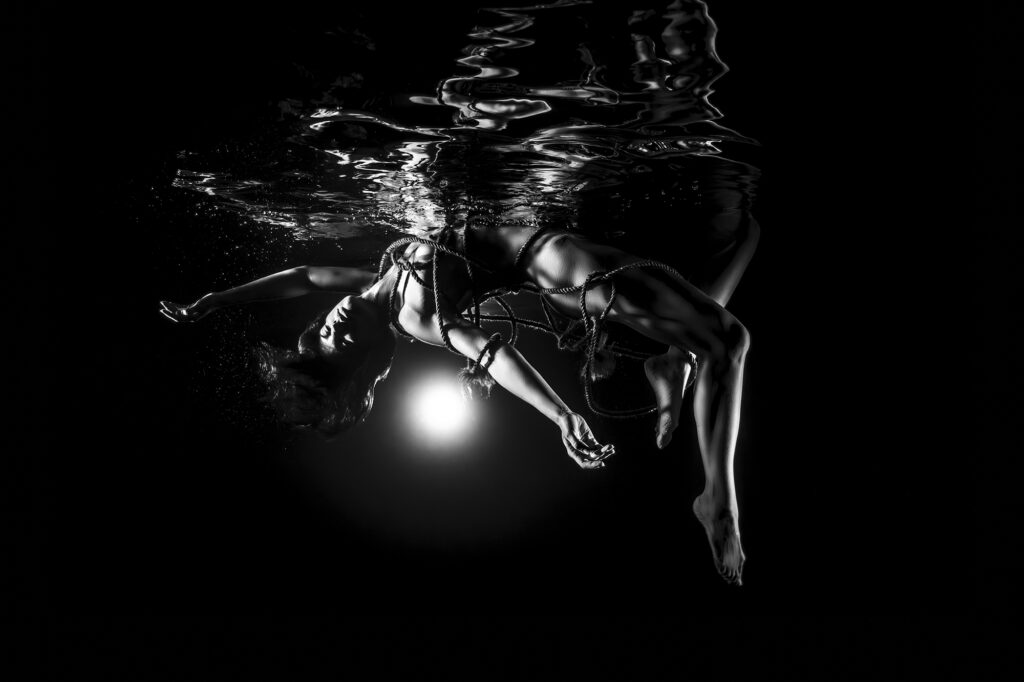
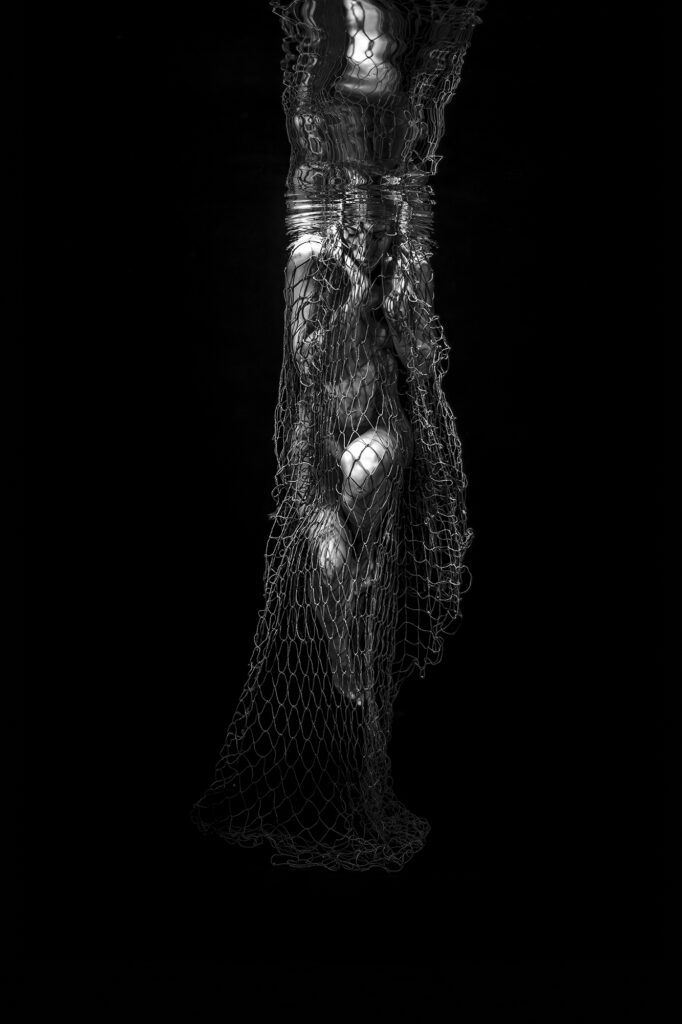
Shooting Location: Pessac, France
Equipment and Settings (clockwise from top-left): Nikon D850, SEACAM Nikonos RS 20–35mm f/2.8, SEACAM housing, dual Bigblue VL18000PBRC for side lighting, small underwater light behind (f/5, 1/250s, ISO 800); Nikon D850, SEACAM Nikonos RS 20–35mm f/2.8, SEACAM housing, Godox M600Bi overwater with a large diffuser, dual Bigblue VL18000PBRC for side lighting, small underwater light behind (f/3.2, 1/250s, ISO 800); Nikon D850, SEACAM Nikonos RS 13mm f/2.8, SEACAM housing, dual Bigblue VL18000PBRC for side lighting (f/4, 1/250s, ISO 800); Nikon D850, SEACAM Nikonos RS 20–35mm f/2.8, SEACAM housing, dual Bigblue VL18000PBRC for side lighting, small underwater light behind (f/2.8, 1/250s, ISO 800); Nikon D850, SEACAM Nikonos RS 20–35mm f/2.8, SEACAM housing, dual Bigblue VL18000PBRC for side lighting, small underwater light behind (f/3.2, 1/250s, ISO 1250); Nikon D850, SEACAM Nikonos RS 20–35mm f/2.8, SEACAM housing, dual Bigblue VL18000PBRC for side lighting (f/4, 1/250s, ISO 800)
Photographer’s Comment: “This series is an artistic exploration created in my home pool during summer at night, using a single model, Jessica. Through trust and experimentation, we explored movement, light, and water to create high-contrast, expressive black-and-white images that transform the human body into abstract, poetic forms beyond traditional underwater photography.”
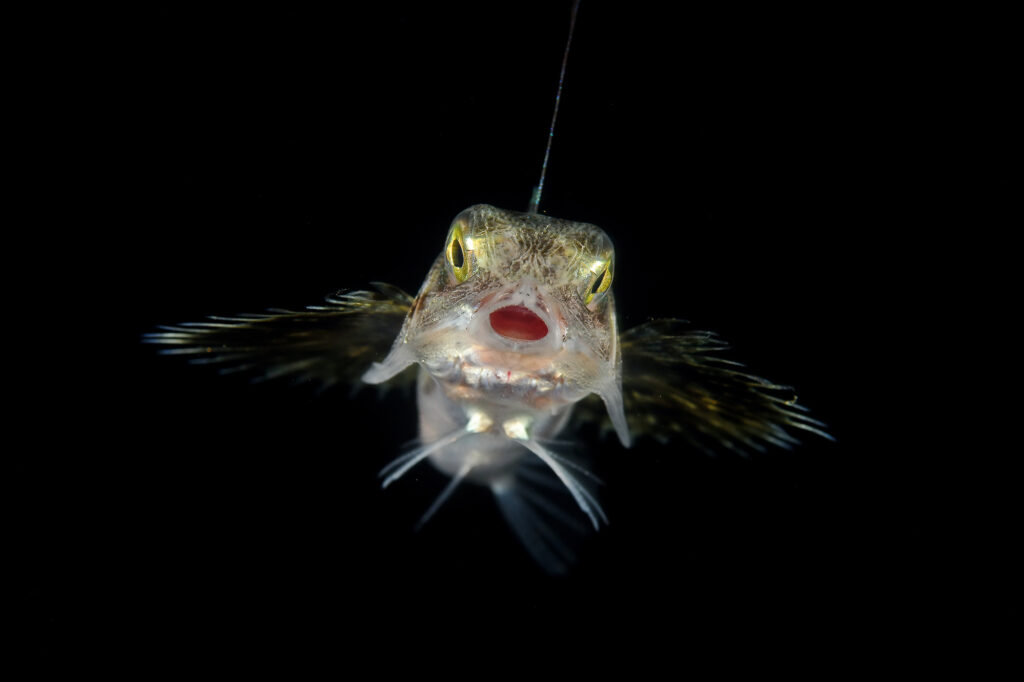
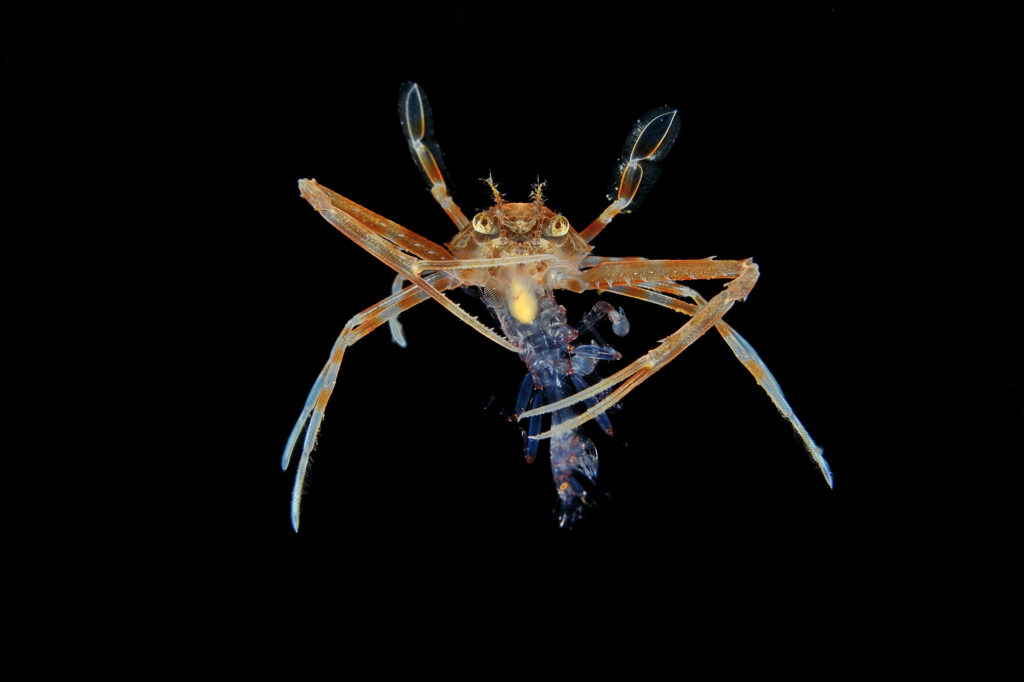
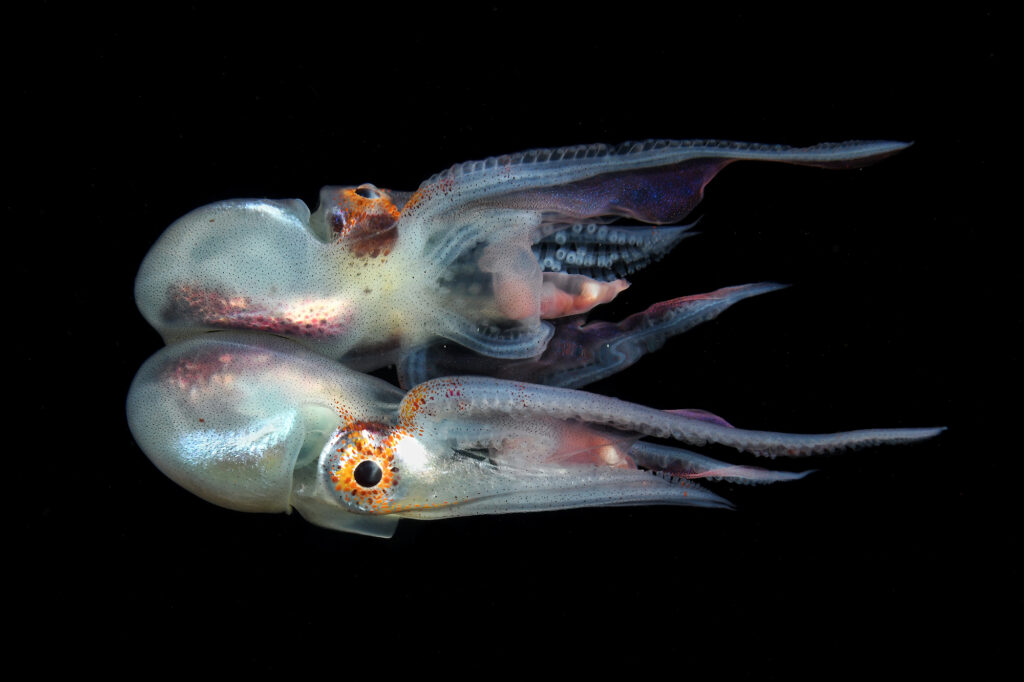
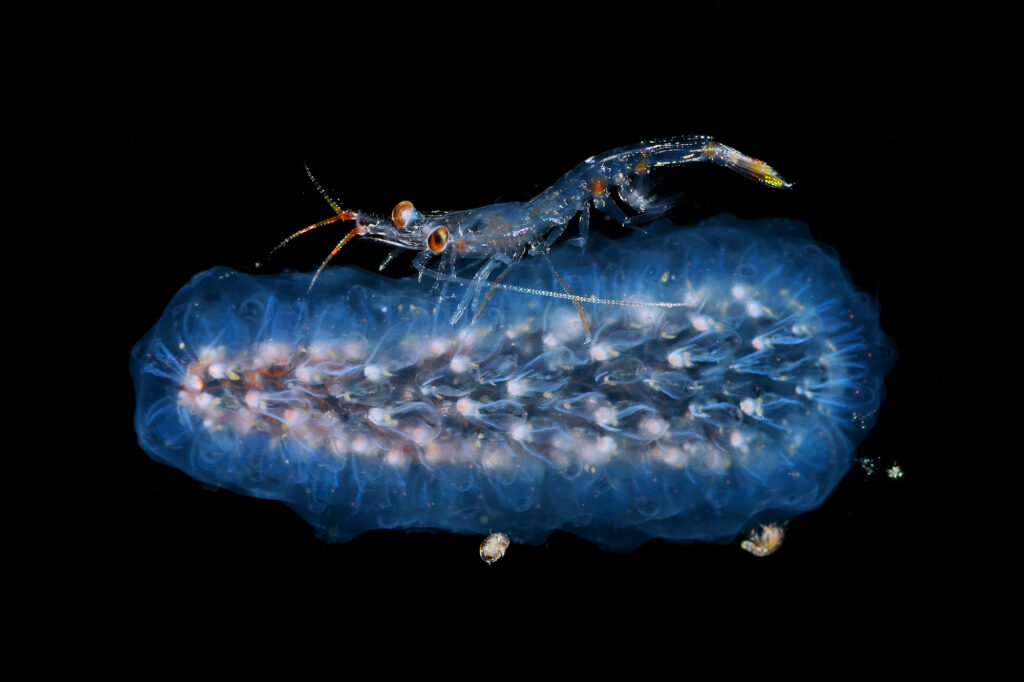
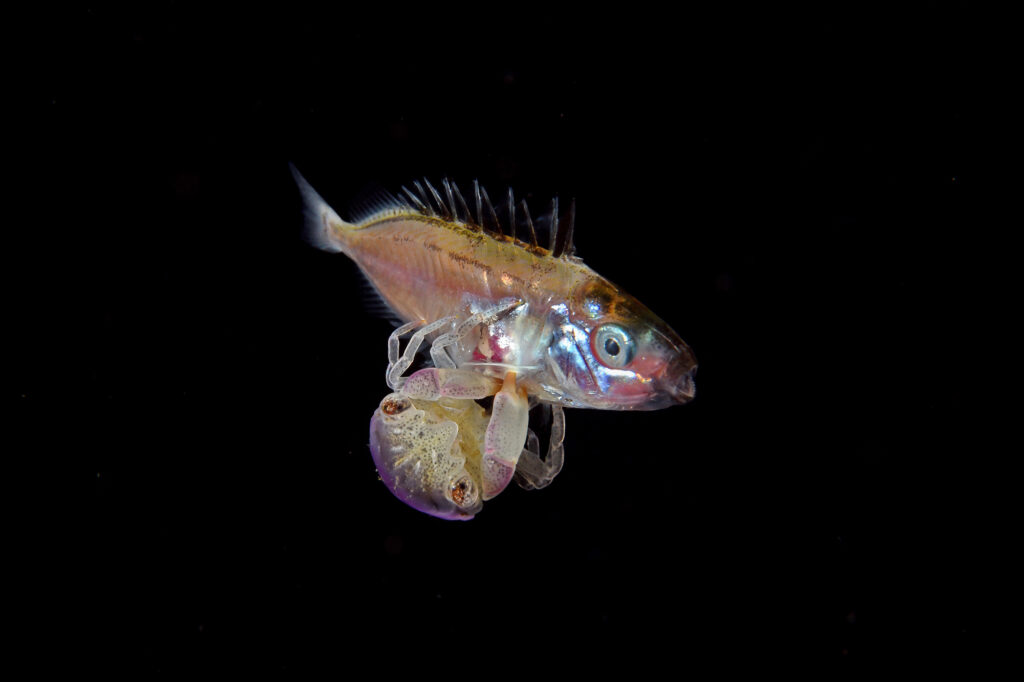
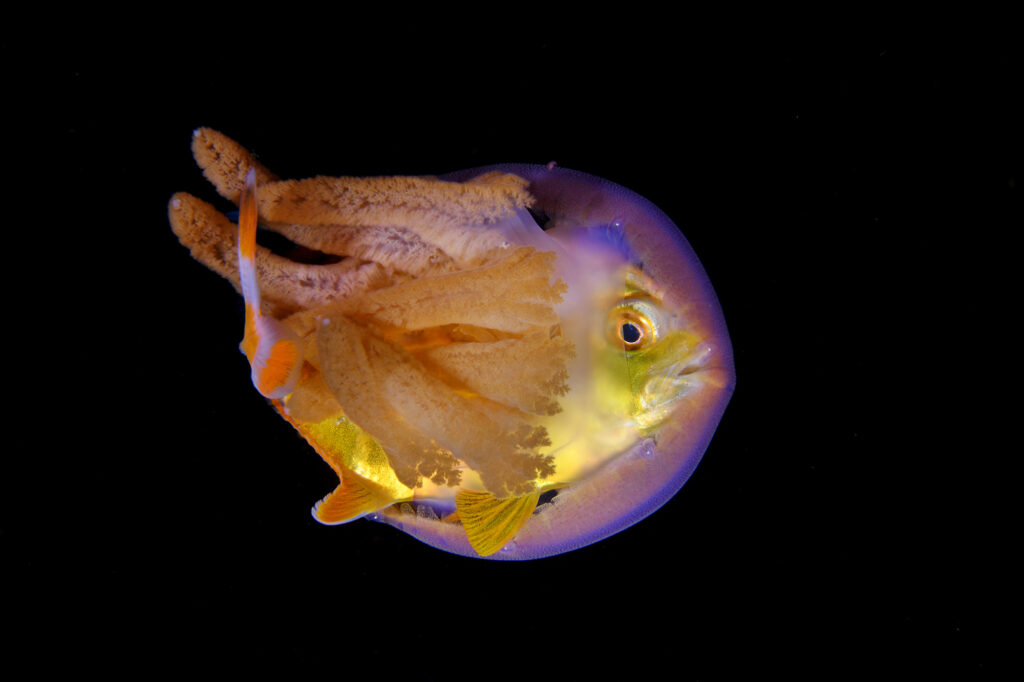
Portfolio – Honourable Mention – “Blackwater Invasion” by Dennis Corpuz (Philippines)
Shooting Location: Anilao, Batangas, Philippines
Equipment and Settings (clockwise from top-left): Nikon D850, Nikon AF-S 60mm f/2.8, Aquatica housing, Dual Fotocore GTX strobes (f/25, 1/250s, ISO 500); Nikon D850, Nikon AF-S 60mm f/2.8, Aquatica housing, Dual Fotocore GTX strobes (f/25, 1/250s, ISO 500); Nikon D7000, Nikon AF-S 60mm f/2.8, SEA&SEA housing, Dual Fotocore GTX strobes (f/25, 1/250s, ISO 500); Nikon D850, Nikon AF-S 60mm f/2.8, Aquatica housing, Dual Fotocore GTX strobes (f/25, 1/250s, ISO 500); Nikon D850, Nikon AF-S 60mm f/2.8, Aquatica housing, Dual Fotocore GTX strobes (f/25, 1/25s, ISO 400); Nikon D7000, Nikon AF-S 60mm f/2.8, SEA&SEA housing, Dual Fotocore GTX strobes (f/28, 1/320s, ISO 250)
Photographer’s Comment: “Anilao offers incredible opportunities for blackwater diving – night dives a few miles offshore in open water where tiny critters rise from the deep during their remarkable daily migration. It is truly awe-inspiring to observe these rare, alien-like creatures that typically inhabit the depths of the ocean. Each encounter is filled with excitement and wonder as we’re constantly surprised by the diversity and beauty of these extraordinary animals. These magical moments are what truly complete the adventure and thrill of Anilao’s blackwater dives – and we never take these moments for granted.”
Animal Behaviour
PRIZE SPONSOR

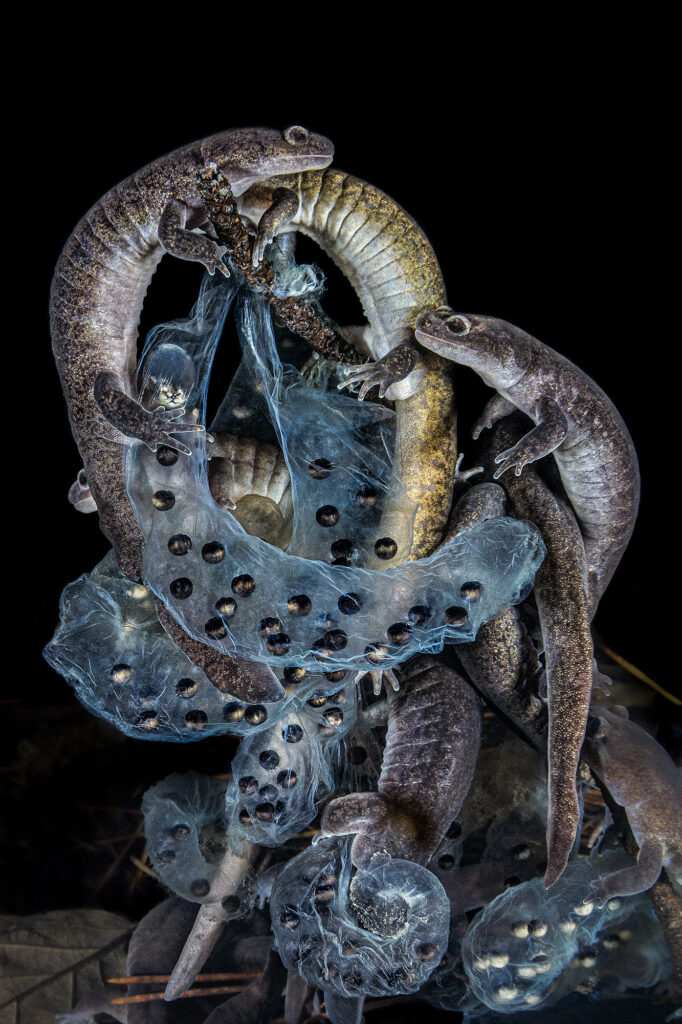
Shooting Location: Busan, South Korea
Equipment and Settings: Canon EOS R7, Tokina 10–17mm f/3.5–4.5 Fisheye, Marelux housing, Weefine WFS07 and SEA&SEA YS-250PRO strobes (f/10, 1/80s, ISO 200)
Photographer’s Comment: “Geumjeongsan Mountain in Busan is home to the Kori salamander, an endangered species that is only found in Korea. When they come out of hibernation around February, they descend from the mountains and spawn in fresh water. Monitoring the breeding activity in mid-February, we observed this nighttime scene – a female, the yellowish individual in the centre, surrounded by competing males. Using their cloacal lips, females pick up males’ sperm packets, and after fertilisation, eggs are deposited in their gelatinous sacs on submerged plants or fallen branches.”
PRIZE SPONSORS


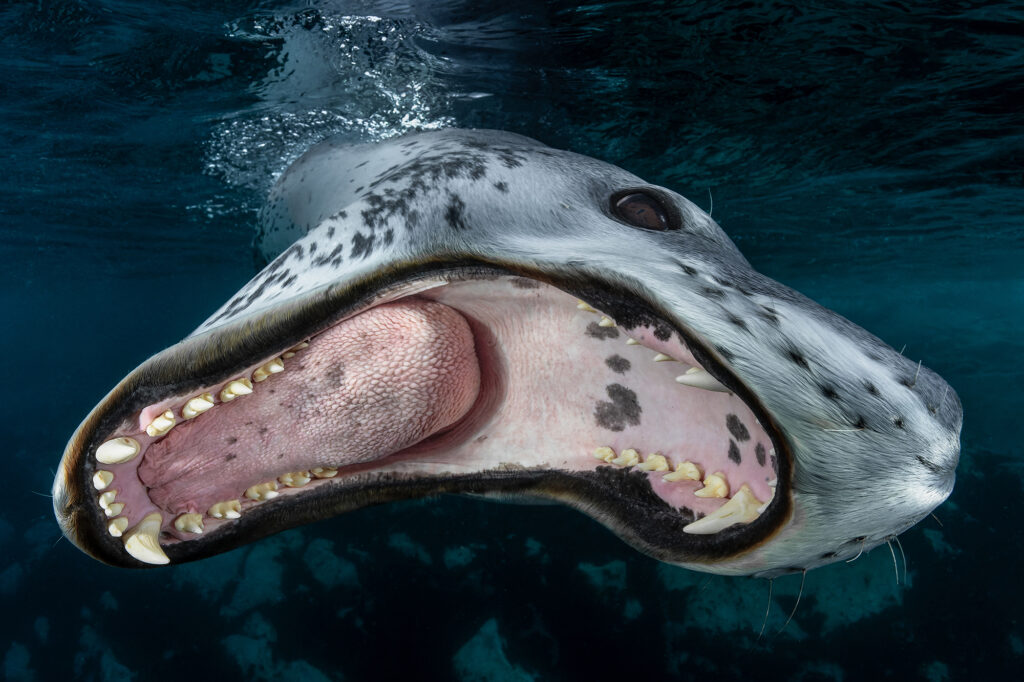
Shooting Location: Antarctic Peninsula, Antarctica
Equipment and Settings: Sony a1, Sony FE 16–35mm f/4, Nauticam housing, dual ONEUW One 160x strobes (f/10, 1/500s, ISO 1000)
Photographer’s Comment: “We were diving near a penguin colony, taking photos of a very nice iceberg, when we received a call that the other boat in our group had found a leopard seal. We loaded up and headed over to the penguin colony where this amazing animal was hunting. As we hopped into the water, the seal swam right up to us – darting back and forth, spinning and flipping through the water. Suddenly, it lunged towards me before stopping short and opening its massive mouth at my camera. That feeling of seeing such a large animal with a massive mouth full of teeth was a rush and something I won’t soon forget.”
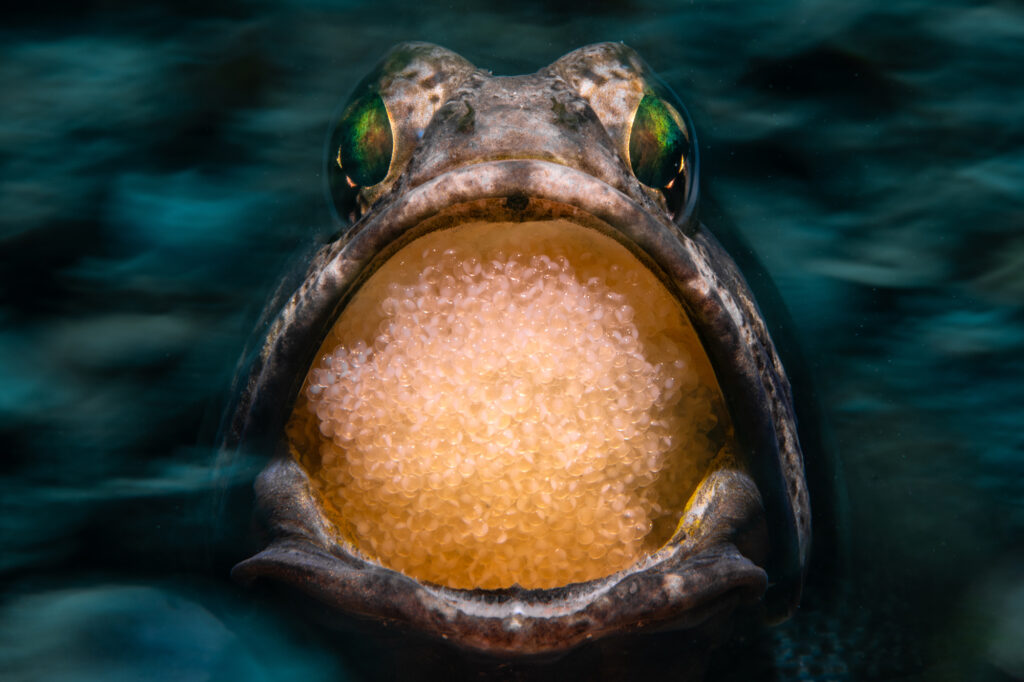
Shooting Location: Palm Beach, Florida, USA
Equipment and Settings: Sony a7R Mark V, Sony FE 90mm f/2.8 Macro, Nauticam housing, Backscatter Hybrid Flash HF-1 with Backscatter Optical Snoot OS-3 (f/22, 0.4s, ISO 50)
Photographer’s Comment: “While diving my local waters in Florida, I noticed a banded jawfish cautiously peeking out from its burrow in the sandy rubble. As I moved closer, I realised the fish was carrying a fresh clutch of eggs in its mouth. Male jawfish are devoted mouthbrooders, carefully protecting and aerating their eggs to keep them healthy and oxygenated. Every few minutes, the fish would gently release and churn the cluster of eggs, before drawing them back into his mouth. I wanted to capture this behaviour head on to highlight the vibrant orange colour of the newly fertilised eggs. By using a slow shutter and snoot lighting, I was able to illuminate the subject while keeping the background softly blurred. The technique helped isolate the moment, revealing the delicate motion and dedication of this tiny guardian tending to its next generation.”
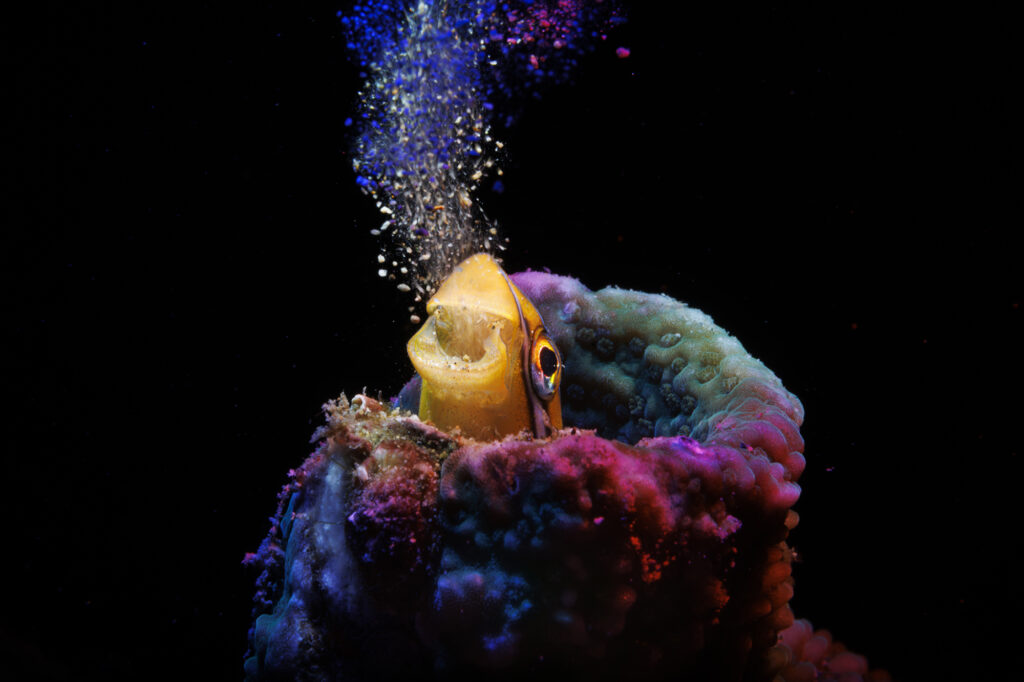
Shooting Location: Anilao, Batangas, Philippines
Equipment and Settings: Canon EOS R5 Mark II, Canon RF 100mm f/2.8 Macro, Nauticam housing, Backscatter Mini Flash 2 and Backscatter Optical Snoot, custom colour filters (f/29, 1/250s, ISO 200)
Photographer’s Comment: “The blenny is a tireless architect. To maintain its vertical burrow, it performs a repetitive ‘housekeeping’ behaviour, gathering intruding sand and stones in its mouth and forcefully ejecting them. This rhythmic labour of survival inspired my vision: using dual-snoot lighting to transform mundane debris into a microscopic rainbow. Captured at a shallow site after hours of patient observation with my guide, Jason, this shot demanded precise optical alignment and technical mastery. Due to the lightning-fast action, I employed a ‘trap focus’ technique to freeze the peak of the behaviour. Seeing the prismatic burst materialise on screen was a moment of pure resonance between biological necessity and creative execution. Presented with minimal post-processing, this image celebrates the hidden artistry found within the diligent routines of the reef’s tiny inhabitants.”
Blackwater
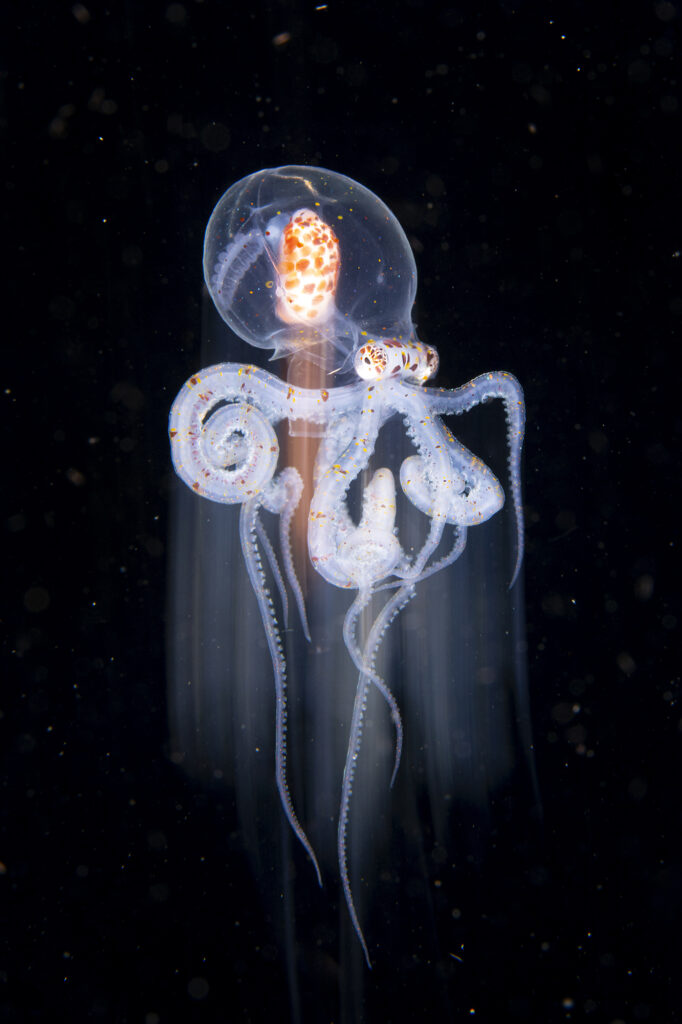
Blackwater – Winner – “Liftoff” by Chris Gug (USA)
PRIZE SPONSOR

Shooting Location: Lembeh Strait, Indonesia
Equipment and Settings: Nikon Z8, Nikon AF-S 60mm f/2.8, Nauticam housing, dual Backscatter HF-1 strobes, Bigblue VTL8000P video light (f/29, 1/8s, ISO 400)
Photographer’s Comment: “After finding quite a few larval wonderpus in the blackwater environment over the years, I felt I had exhausted all of the poses I could get out of ‘regular’ shots. Rather than nervously fleeing from my lights, this larger-than-average individual was very calm, and after the initial meeting, it settled into a slow pattern of motionless, then one vertical pulse, then motionless, then vertical pulse. This repeating, predictable pattern gave me the idea to accentuate that movement with a long exposure combined with a flash, and the result felt like the liftoff of a rocket at a space station. Adding to the ‘space/sci-fi’ motif, the wonderpus itself feels very alien-like, and the inevitable backscatter paints a field of stars further out in the galaxy.”
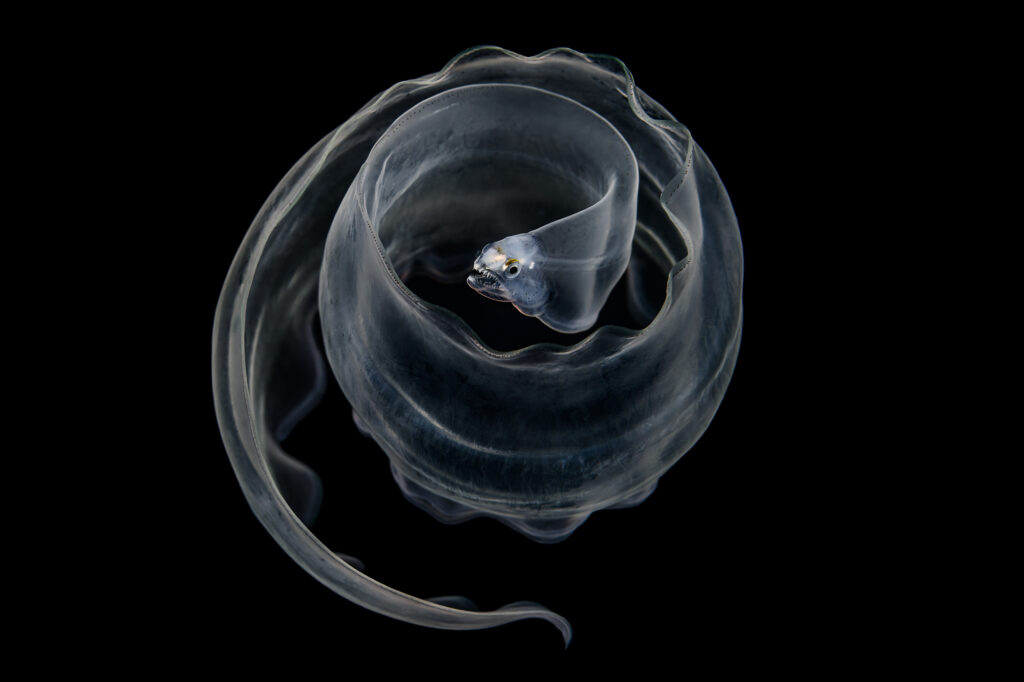
PRIZE SPONSORS
Shooting Location: Anilao, Batangas, Philippines
Equipment and Settings: Nikon D850, Nikon AF-S 60mm f/2.8 Macro, Anthis Nexus housing, dual X-Adventurer DS160 PRO strobes (f/22, 1/250s, ISO 500)
Photographer’s Comment: “During a blackwater dive in the dark waters of Anilao with my dive guide William, a leptocephalus larva was suddenly startled upon noticing us. It tightly coiled its body and hid its head, then slowly began to uncoil – a moment captured in this image. While these subjects are fascinating even when drifting freely, their coiled posture is what makes leptocephali such an iconic subject in blackwater diving. I particularly like this image because the tight coil and the details of the head are clearly visible.”
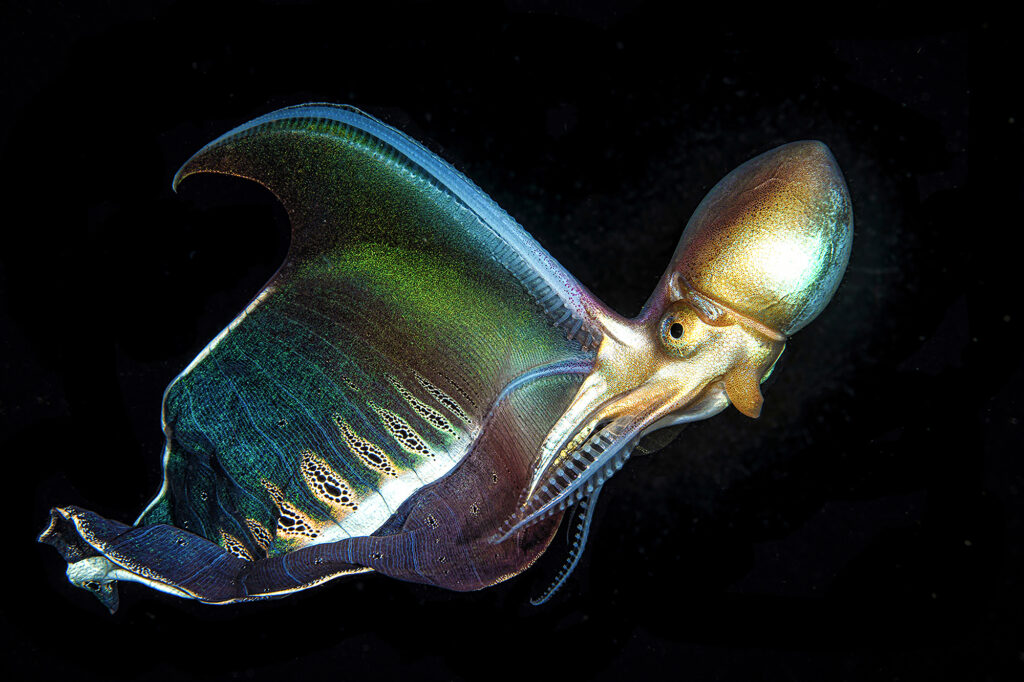
Shooting Location: Anilao, Batangas, Philippines
Equipment and Settings: Nikon D850, Nikon AF-S 60mm f/2.8, SEACAM housing, dual SEACAM 160D strobes (f/32, 1/200s, ISO 320)
Photographer’s Comment: “The blanket octopus is perhaps one of the most mysterious creatures in the ocean. This pelagic octopus spends its entire life cycle in the open ocean, which makes it difficult to find, but even more difficult to study in its natural habitat. Through multiple encounters, I’ve learned that the blanket octopus is a complex animal with intriguing behaviours, from the way it mates and reproduces to its hunting and defence strategies. One thing’s for sure: Nothing can truly prepare you for the moment you encounter one.”
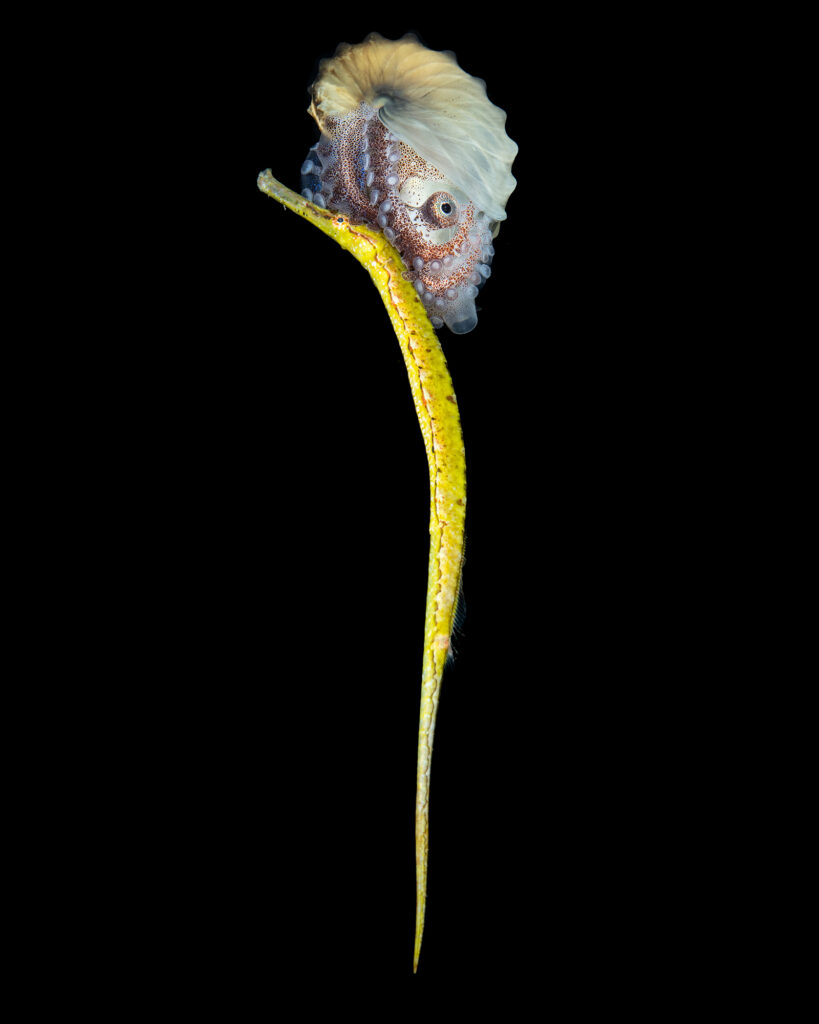
Shooting Location: Anilao, Batangas, Philippines
Equipment and Settings: Sony a1, Sony FE 50mm f/2.8 Macro, Nauticam housing, Nauticam MFO-1, dual Kraken KR-S160 strobes (f/13, 1/200s, ISO 500)
Photographer’s Comment: “On a blackwater dive in Anilao, I was alone on the line near the end of the dive when I saw a female nautilus zooming past me. She seemed to be carrying a leaf, which didn’t surprise me – I had seen female nautiluses on leaves before – so I took the shot assuming that was exactly what I was looking at. It was one of those fleeting moments where there is no time to overthink, only to react and hope you caught it. Back on the boat, the other divers asked if I had seen the pipefish. I was confused at first, and there was a bit of back and forth before they told me to check whether I had captured the eye of the pipefish. When I reviewed my photos, I realised what I had thought was a leaf was actually the pipefish. That discovery made the image even more special to me – not just because of the female nautilus, but because the photograph held a surprise I had completely missed in the moment.”
Conservation
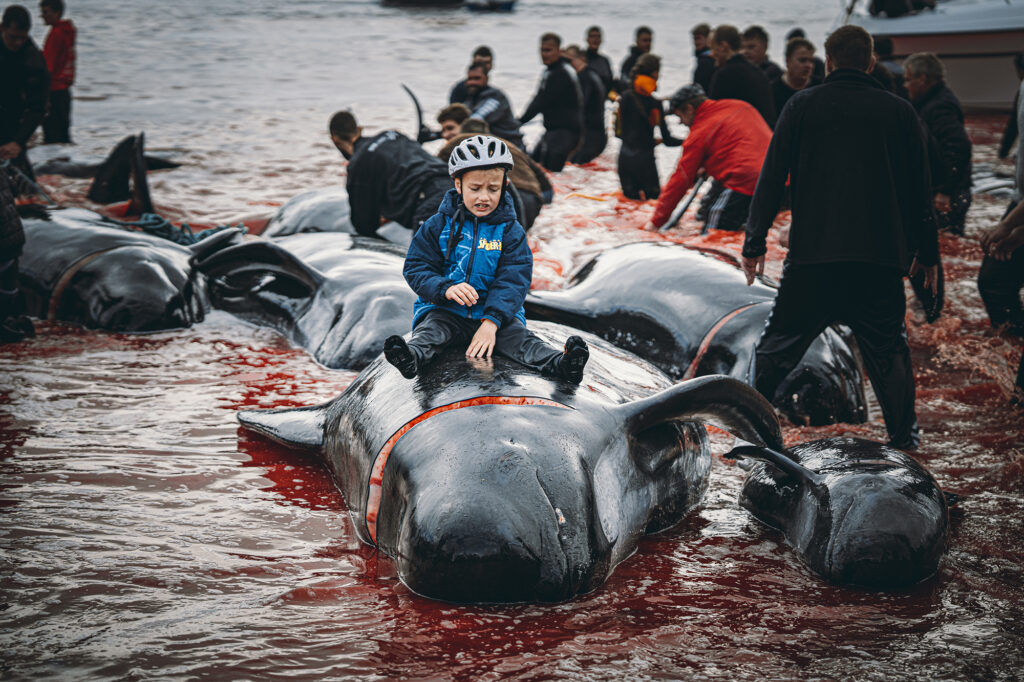
PRIZE SPONSOR
Shooting Location: Faroe Islands, Denmark
Equipment and Settings: Sony a7R Mark II, Sony FE 85mm f/1.4 (f/2.5, 1/8000s, ISO 800)
Photographer’s Comment: “In the Faroe Islands, the annual pilot whale hunt known as Grindadráp remains one of the world’s most controversial traditions. Seen by locals as a cultural heritage and source of food, it is condemned globally for its brutality and impact on marine life. In this poignant scene, a young boy sits atop a slain whale amid blood-red waters, a haunting reflection of how tradition, identity, and ethics collide. It captures not just a moment, but a generational question: What should be preserved, and what should change?”
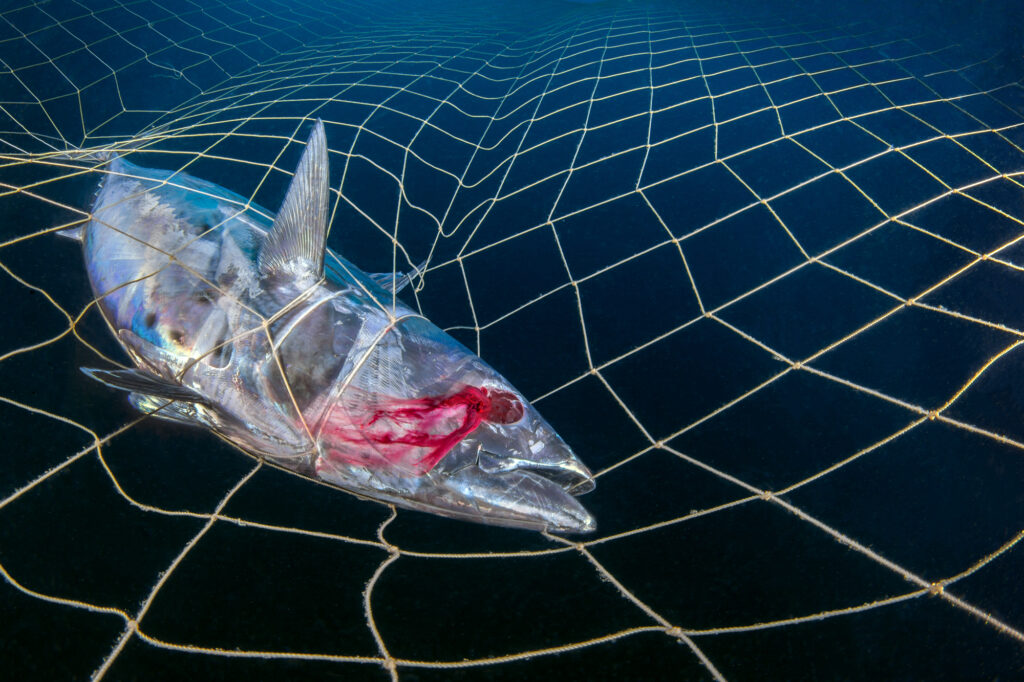
PRIZE SPONSORS

Shooting Location: Procida Island, Gulf of Naples, Italy
Equipment and Settings: Nikon D800E, Nikon 8–15mm f/3.5–4.5 Fisheye, SEACAM housing, Scubalamp strobes (f/29, 1/100s, ISO 200)
Photographer’s Comment: “I took this image in the waters off the island of Procida, inside a marine reserve. Unfortunately, illegal fishing nets are a major problem here. Shortly before this shot was taken, I had freed another small tuna that had been caught in the net, but it was evidently too late for the one in the photo. The scene immediately struck me because it looked like the fish was crying tears of blood. I thought it was a very evocative and symbolic image, a poignant representation of the suffering of our highly anthropised sea and its inhabitants. The cause of this suffering is always humanity – us!”
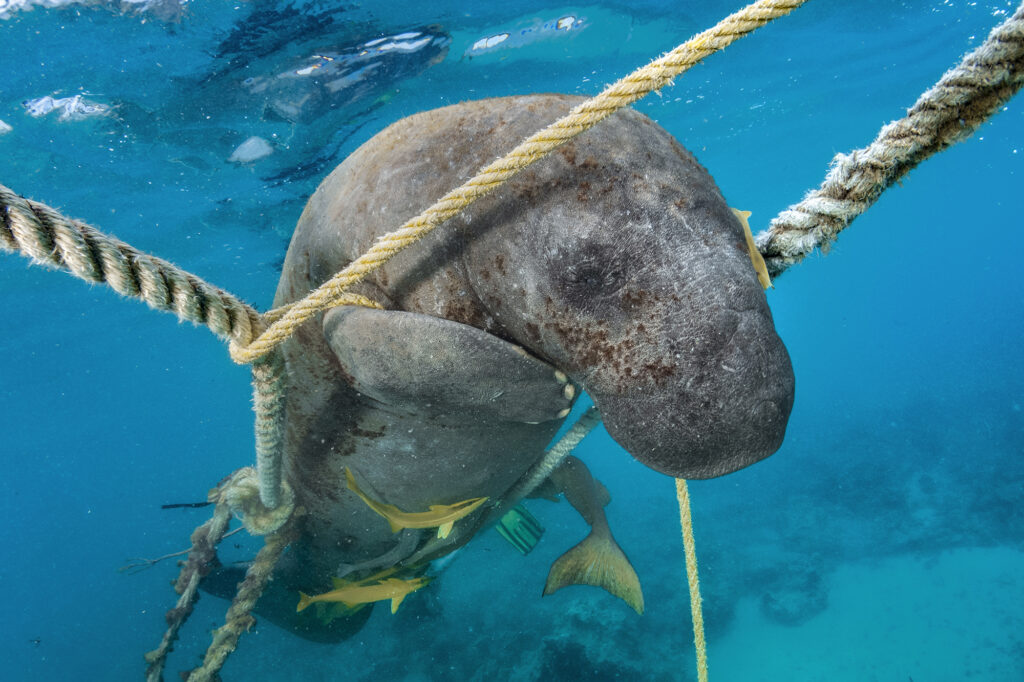
Shooting Location: Bayahibe, Dominican Republic
Equipment and Settings: Nikon D500, Tokina 10–17mm f/3.5–4.5 Fisheye, Aquatica housing, dual INON Z-330 strobes (f/13, 1/200s, ISO 200)
Photographer’s Comment: “This is a photo of one of the Caribbean’s most elusive and endangered marine mammals: the Antillean manatee (Trichechus manatus manatus), listed as ‘Vulnerable’ on the IUCN Red List. While diving in Bayahibe, Dominican Republic, I encountered this manatee locals call ‘Remi’ caught between the beauty of its ocean home and the dangers of human impact. These gentle giants navigate reefs where fishing lines, boat strikes, and habitat loss threaten their survival every day. According to the 2023 census, only 110 individuals remained around the island. Through this image, I hope to give a voice to a species often forgotten yet vital to the balance of the ecosystems it inhabits.”
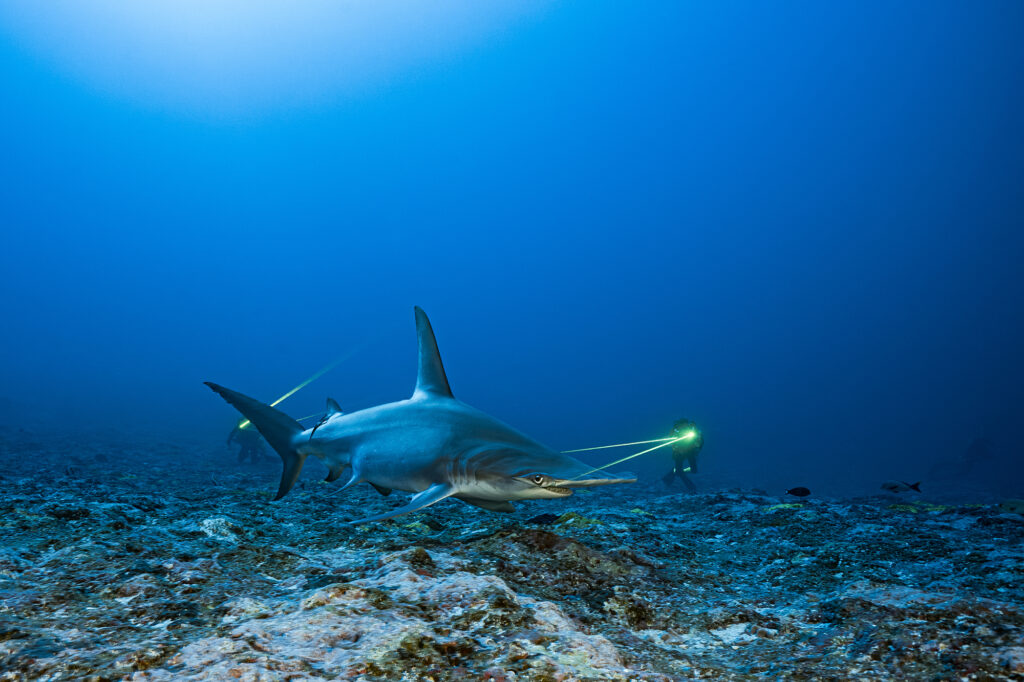
Shooting Location: Rangiroa, French Polynesia
Equipment and Settings: Sony a7 Mark II, Tokina 20mm f/2, SEACAM housing, SEACAM strobes (f/10, 1/100s, ISO 800)
Photographer’s Comment: “This image was taken at a depth of 180 feet (55 metres) at Tiputa Pass during a great hammerhead shark (Sphyrna mokarran) population survey. Antonin Guilbert and Nicolas Mollon, the two scientists in the photo, are using a video photogrammetry system consisting of a plate-mounted video camera that has been laser-calibrated. By photo ID-ing individuals, describing the sex ratio, and quantifying their size via laser calibration, the scientists are able to characterise hammerhead populations. Over the last six years, the methodology has been applied by different teams (Mokarran Protection Society and Andromède Océanologie) and has described more than 180 individuals. The methodology does not use baiting or any type of shark attraction devices. The great hammerhead – locally known as ‘Tamataroa’ – is widely revered in local culture, and sharks have been protected in French Polynesia for over a decade.”
Smartphone
PRIZE SPONSOR

Shooting Location: Anilao, Batangas, Philippines
Equipment and Settings: Samsung S24 Ultra, DIVEVOLK housing, DIVEVOLK +18 diopter, dual MiniGear MS-03 snoot lights (f/3.4, 1/500s, ISO 50)
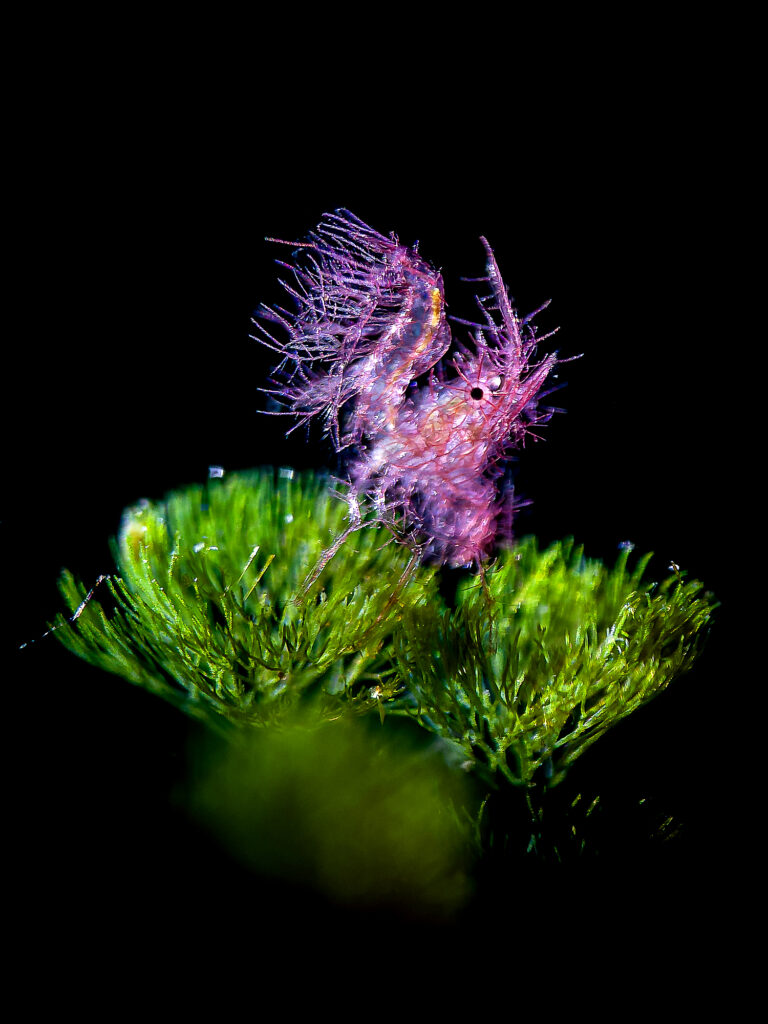
Photographer’s Comment: “My friend and I were fortunate to come across a hairy shrimp while diving in Anilao. On this occasion, I was shooting with my smartphone in a housing with a powerful macro wet lens attached. Photographing a hairy shrimp is difficult even with an advanced camera system, but it’s nothing compared with the challenge of using a smartphone to capture a critter just a few millimetres in length. After spending a very long time with my constantly moving subject, I finally managed to get some satisfying shots.”
PRIZE SPONSOR

Shooting Location: Anilao, Batangas, Philippines
Equipment and Settings: Samsung Galaxy S25 Ultra, DIVEVOLK housing, DIVEVOLK +18 diopter, dual Fotocore ST01 snoot lights (f/3.4, 1/900s, ISO 32)
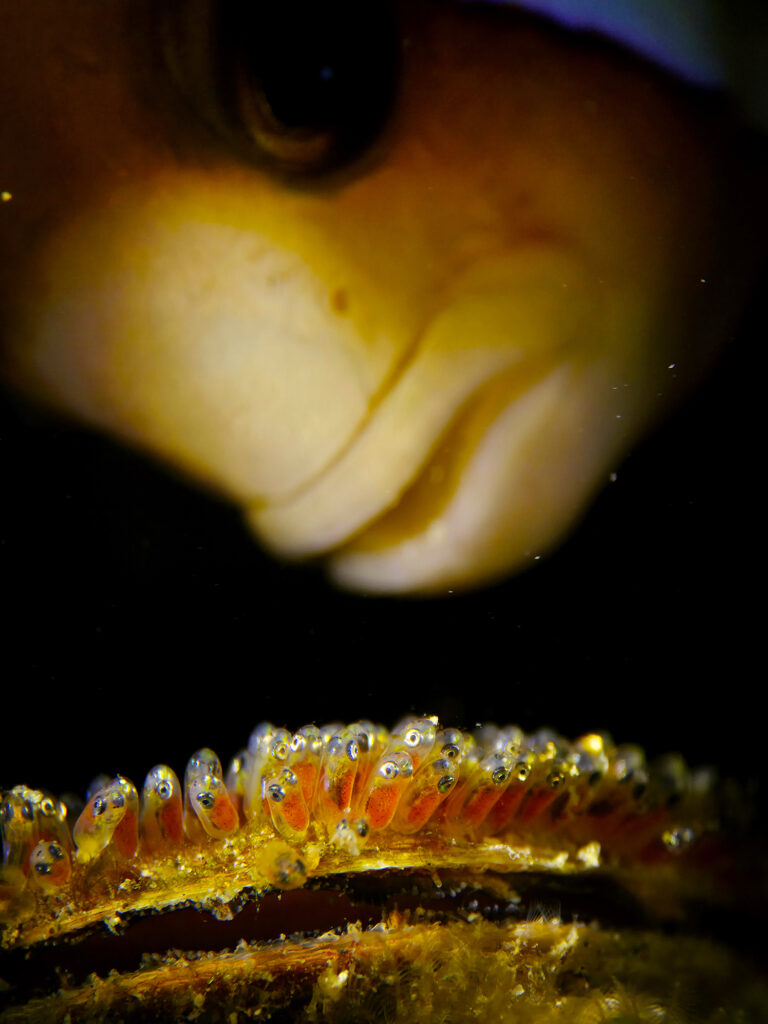
Photographer’s Comment: “Spotting a clownfish swimming back and forth in a particular area, I couldn’t help but notice its unusual behaviour – it seemed to be keeping a constant watchful eye on something. Upon closer inspection, I realised it was guarding a mass of eggs. Using a snooted light to ensure a dark background, I tried to capture the clownfish as it diligently protected its offspring. It was fascinating to witness the dedication of this tiny fish.”
Shooting Location: Lembeh Strait, Indonesia
Equipment and Settings: Vivo X100 Ultra, DIVEVOLK housing with DIVEVOLK macro lens, X-ADVENTURER torches (f/2.7, 1/932s, ISO 200)
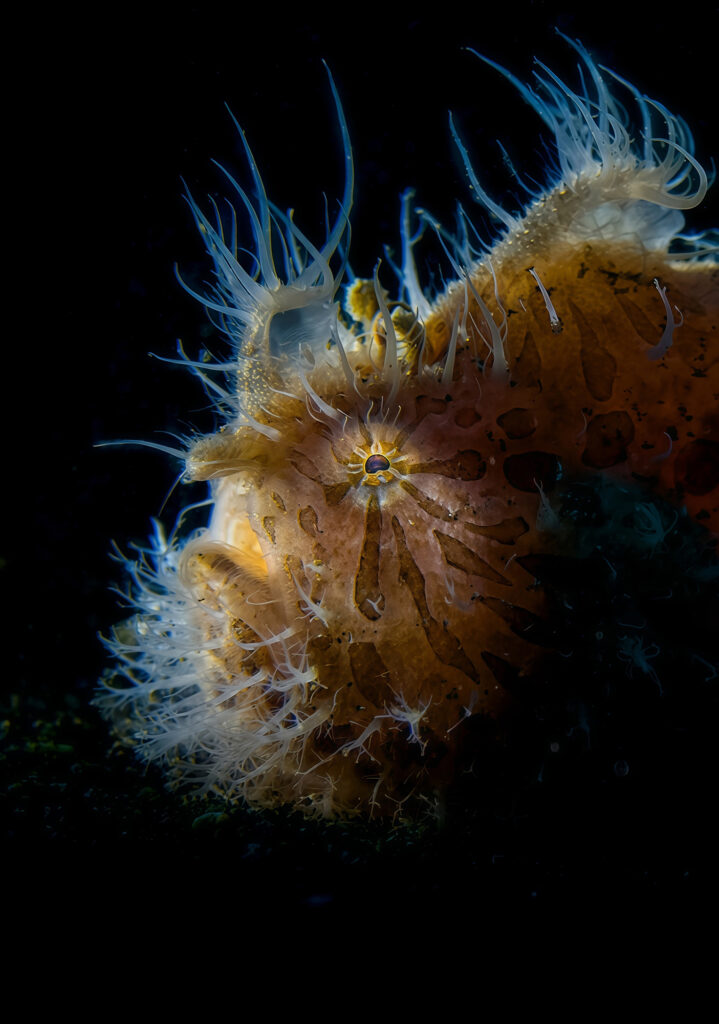
Photographer’s Comment: “In the Lembeh Strait, on the sandy seabed at a depth of 15 metres, this frogfish, an elusive hunter covered in transparent filament-like camouflage, was patiently waiting for its prey. The surrounding sandy environment was cluttered, with a distracting background and planktonic debris in the water. To capture the frogfish amid the chaos, I used a two-light setup: one light to outline its silhouette, and a fill light to create catchlights in its eyes. By carefully adjusting the positions and powers of the lights, the backlight eventually penetrated the transparent ‘hairs’ on its head, carving out this ghostly portrait against a stark black background.”
Shooting Location: Anilao, Batangas, Philippines
Equipment and Settings: Samsung Galaxy S25 Ultra, DIVEVOLK housing, DIVEVOLK +18 diopter, dual Fotocore ST01 snoot lights (f/3.4, 1/900s, ISO 32)
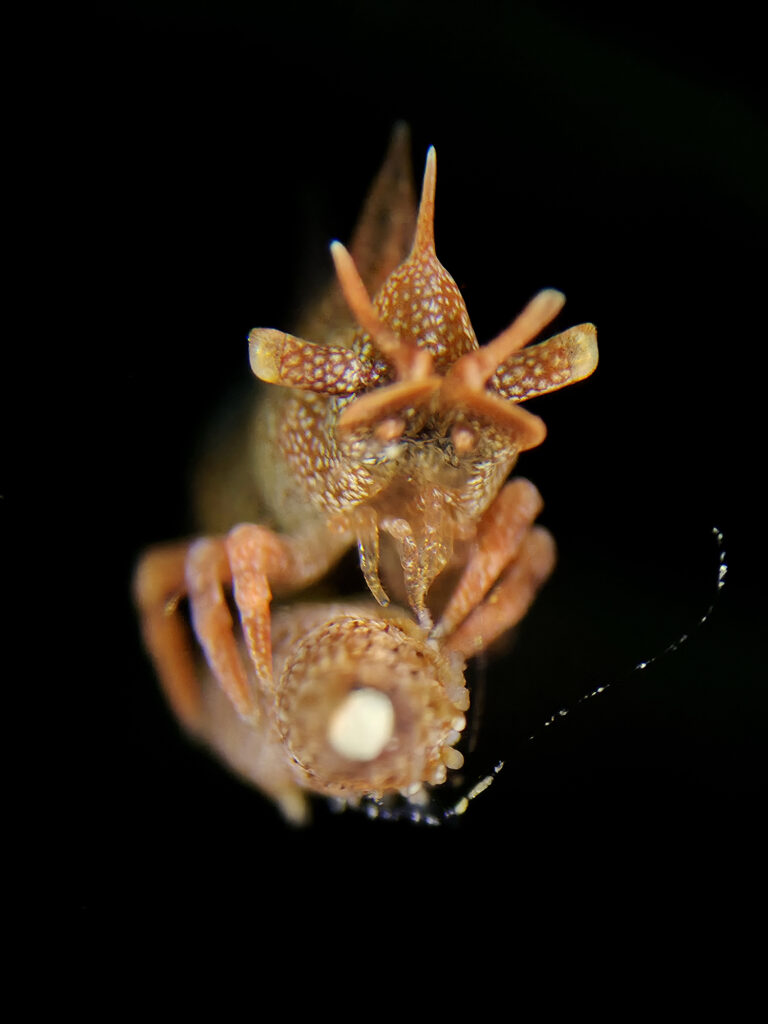
Photographer’s Comment: “I couldn’t believe my luck in finding this small shrimp at a depth of 24 metres. I had been patiently waiting for the perfect opportunity to capture them in their natural habitat. Despite their shyness, I managed to quickly snap a few shots before moving on to shallow waters. Using my trusty snoot, I was able to isolate the dark background and truly showcase the beauty of these creatures. It was a thrilling experience that left me in awe of the underwater world and all its wonders.”
Ocean Planet
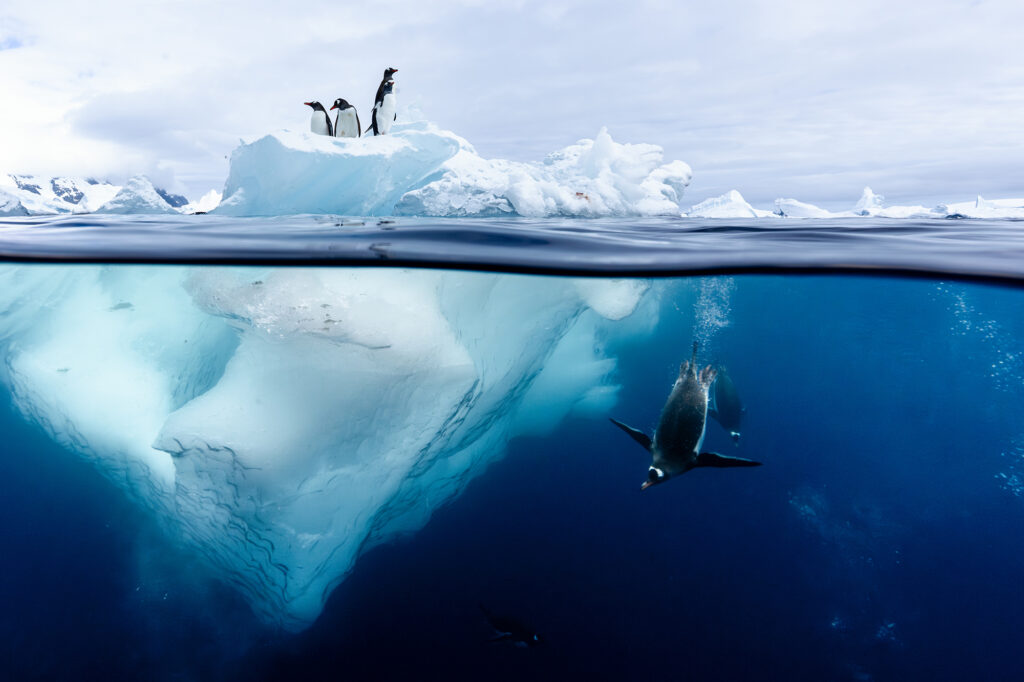
PRIZE SPONSOR

Shooting Location: Antarctic Peninsula, Antarctica
Equipment and Settings: Sony a1, Sony FE 16–35mm f/4, Nauticam housing, ambient light (f/16, 1/800s, ISO 800)
Photographer’s Comment: “We had been drift diving among the icebergs for some time, hoping to spot penguins and whales in this small but deep bay. We noticed that the humpback whales were being followed by a large raft of penguins with a few hundred birds in it. I happened to be at the right place at the right time when a humpback surfaced behind me, closely followed by all the penguins. Once they surfaced, a few of them started to hop on and off this iceberg, creating this incredible moment I was able to capture.”
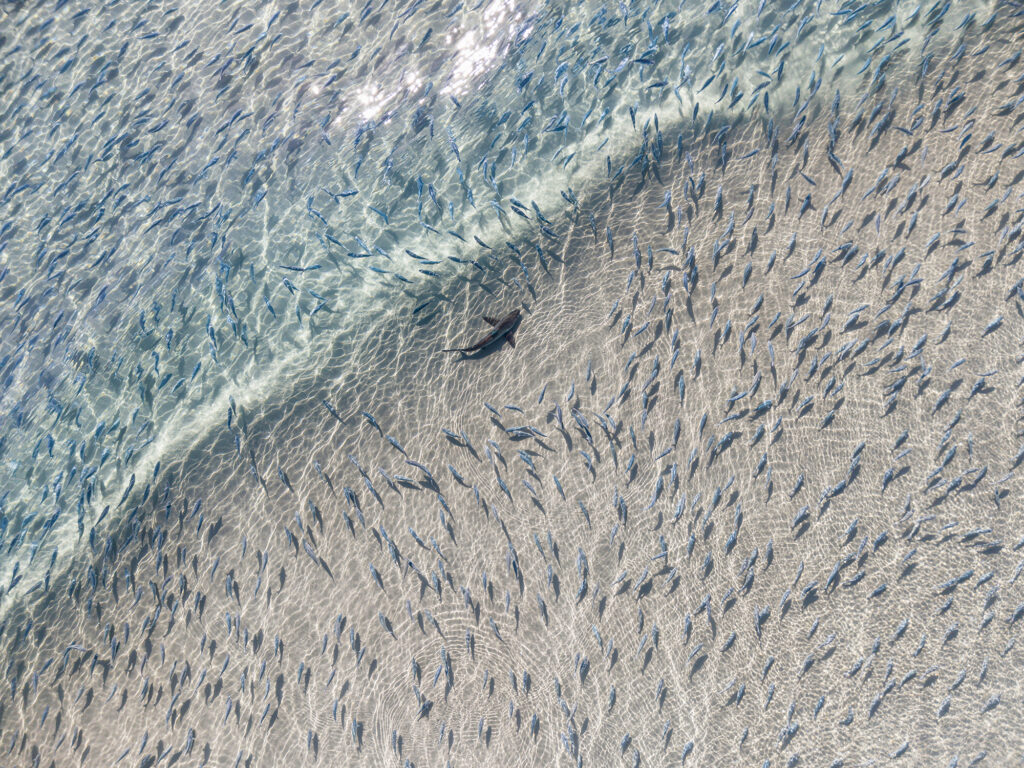
PRIZE SPONSOR
Shooting Location: Mangawhai Beach, New Zealand
Equipment and Settings: DJI Mini Pro 5 (f/1.8, 1/250s, ISO 100)
Photographer’s Comment: “After six years of trying to get a photo of sharks feeding in the shallows with a drone, I heard that bronze whaler sharks where hunting a large school of kahawai (salmon) off a beach north of Auckland. I arrived in the early morning before the wind got up and flew my drone. Locating the school and sharks, I began taking images, shooting down into the water for a bird’s-eye view perspective. I captured this scene just before a small wave passed over the shark as it swam through the school.”
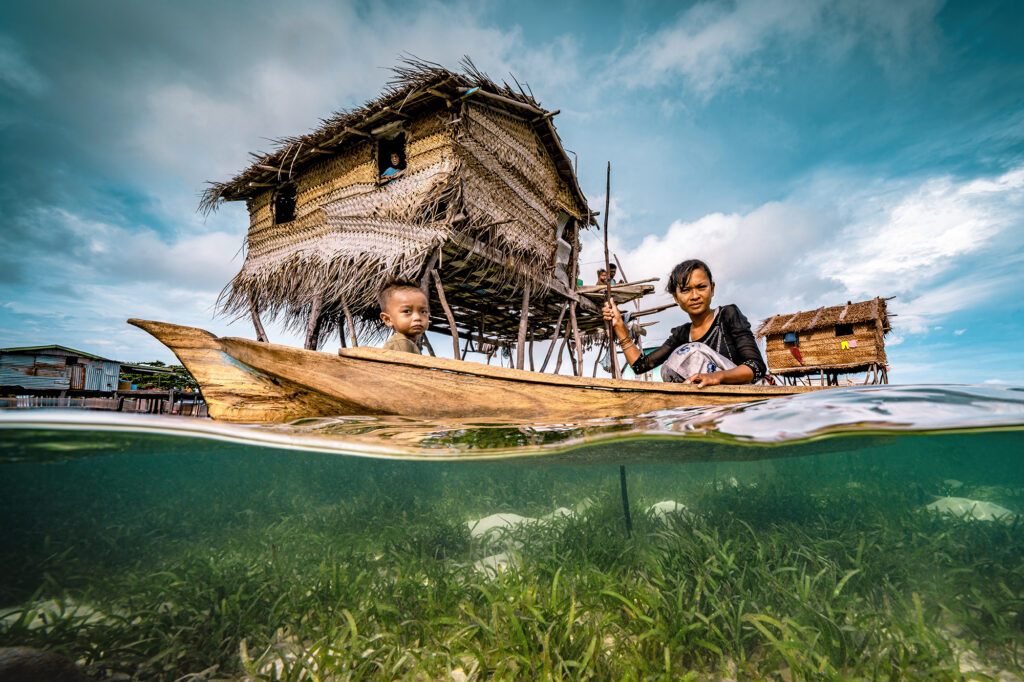
Shooting Location: Mabul Island, Semporna, Sabah, Malaysia
Equipment and Settings: Sony a7R Mark IV, Sony FE 12–24mm f/4, Nauticam housing, ambient light (f/16, 1/200s, ISO 400)
Photographer’s Comment: “A Bajau mother and child drift in their boat through a floating village on Mabul Island. Among the world’s last seafaring communities, the Bajau live in close harmony with the ocean, building homes on stilts and getting around using small wooden boats. Below the surface, seagrass meadows support the marine life that sustains the village. This split-level image reveals the two worlds that define their existence: the human community above and the underwater life that supports it below.”
Underwater Arts
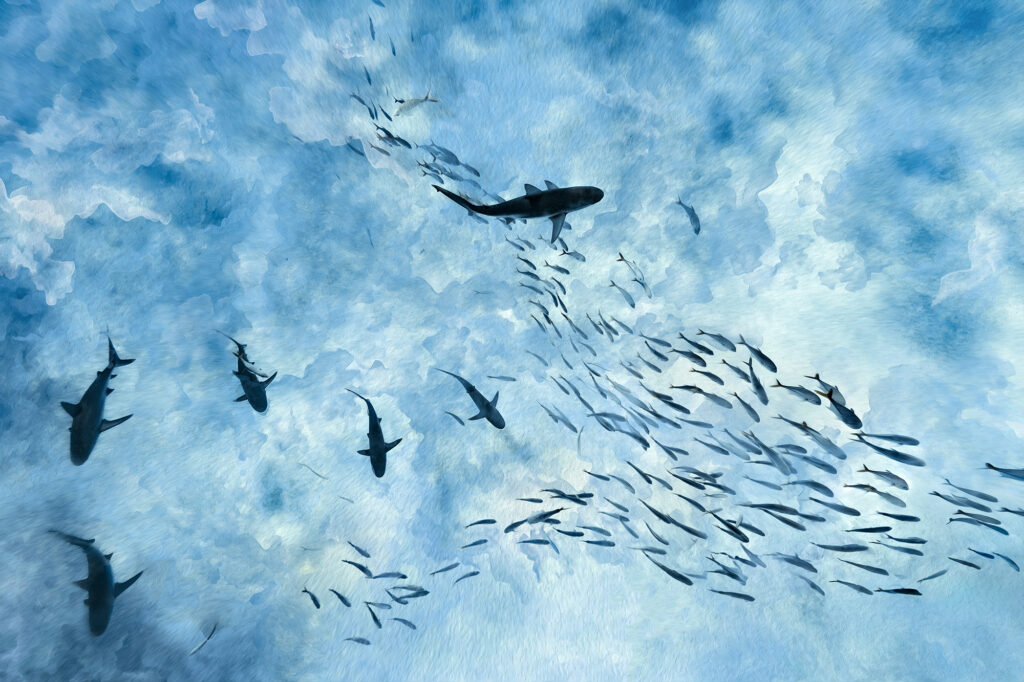
PRIZE SPONSOR

Shooting Location: The Bahamas
Media: Mixed media
Artist’s Comment: “Inspired by a real moment while diving in The Bahamas, this artwork captures a fleeting perspective I witnessed while ascending. Looking down, the scene felt like a painting. Sharks drifted across the bright surface like shadows moving through clouds, while a school of fish twisted and scattered below in a living current. Predator and prey formed a spontaneous choreography shaped by instinct and motion. Light and texture blurred the boundary between sea and sky, transforming the encounter into something almost dreamlike. In that suspended moment, the ocean revealed its quiet poetry – where power and beauty exist in perfect balance.”
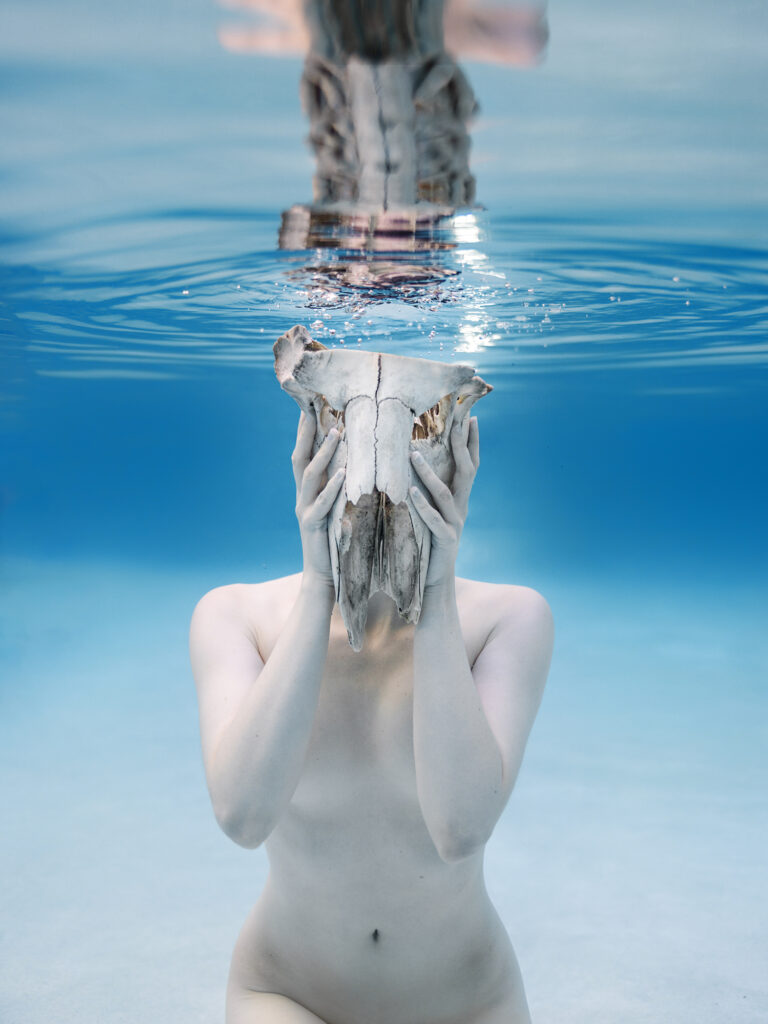
PRIZE SPONSORS

Shooting Location: Denver, Colorado, USA
Equipment and Settings: Canon EOS R5, Canon RF 28–70mm f/2, Marelux housing, ambient light (f/2, 1/500s, ISO 250)
Artist’s Comment: “Shot in my apartment building’s pool during one of the hardest periods of my life, ‘Elegy’ emerged from the wreckage of my divorce. During a time when grief was all consuming and pain had nowhere to go. This image gives new life to the deer skull that model Ahna Green is holding. Against the pale skin and brilliant blue water, it became something I hadn’t planned: a face made of death, held gently, almost tenderly. Beauty through darkness. That’s what this image means to me. Not that darkness wins, but that you can hold it and find something beautiful in its weight. That grief and beauty are not opposites. They can live in the same hands.”
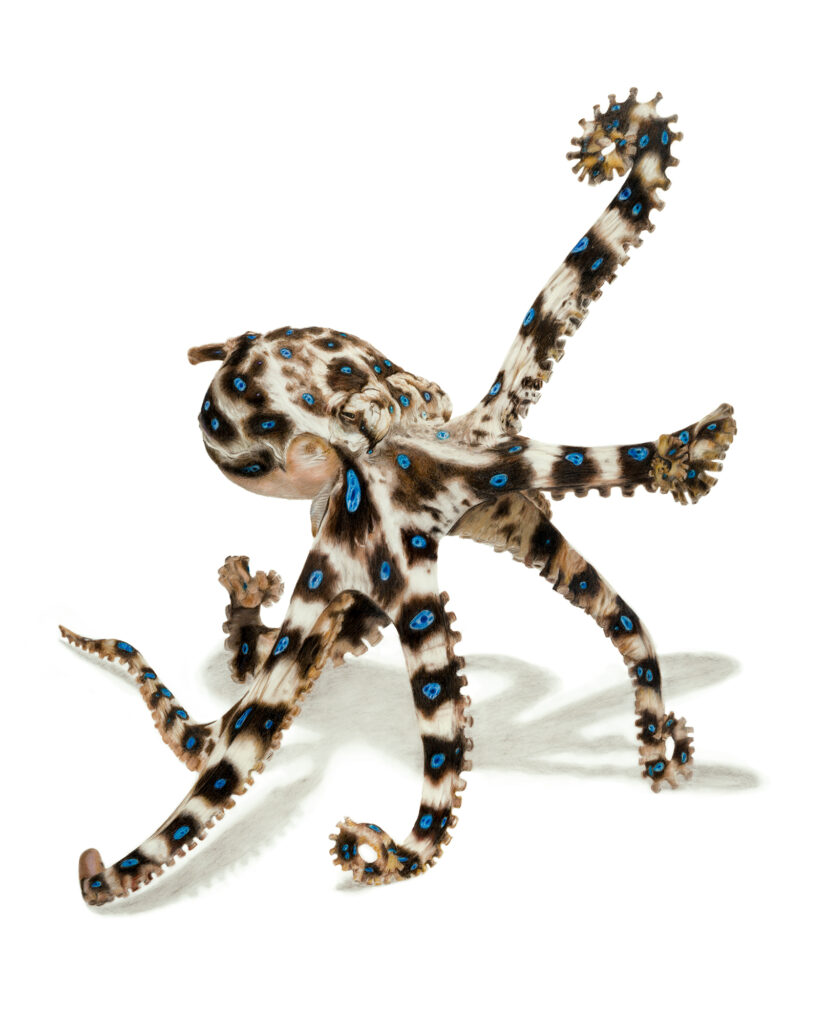
Shooting Location: Victoria, Australia
Media: Colour pencil on drafting film
Artist’s Comment: “This piece captures the striking beauty and potent danger of the blue-ringed octopus, depicted in vibrant colour pencil. This drawing focuses on a moment of heightened defence, with the octopus poised with one arm raised, showcasing its iconic, glowing blue rings – a stark warning to potential threats. The composition emphasises the octopus against a simple background, with only its shadow cast on the seafloor, drawing attention to its vivid colours and distinctive markings. The use of bright, vibrant hues highlights the octopus’s natural warning signals, illustrating the paradox of its delicate, small form and its potentially lethal nature. This piece aims to inspire awe and respect for the complexities of marine life, emphasizing the importance of awareness and conservation of these delicate ecosystems. ‘Small but Deadly’ is a visual reminder of the power and beauty of nature, and the need to protect the diverse species that inhabit our oceans.”
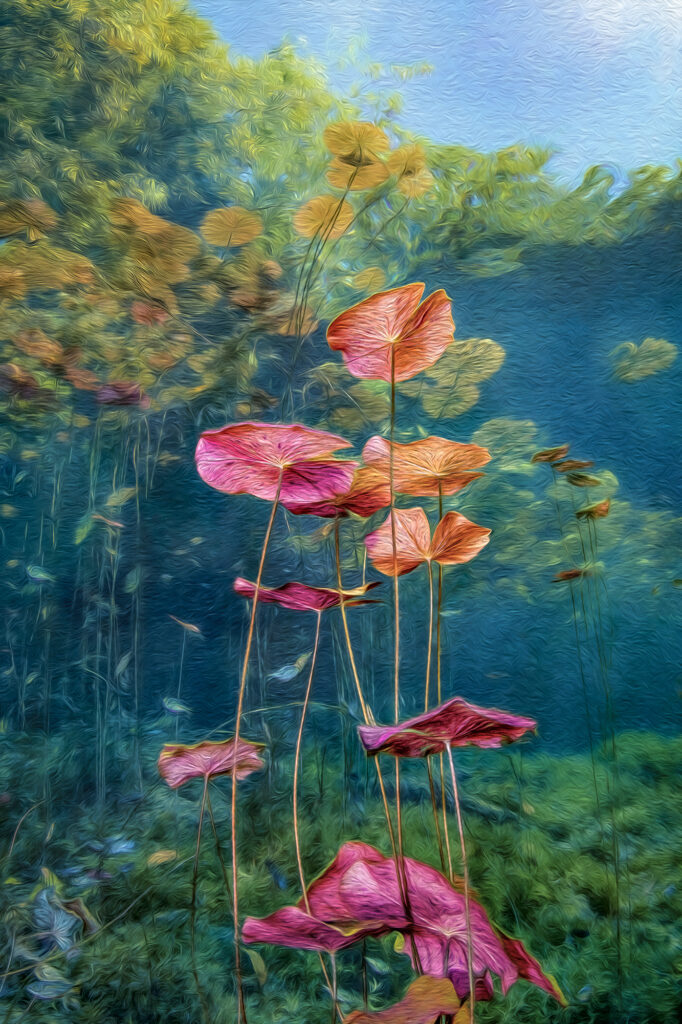
Shooting Location: Tulum, Mexico
Media: Mixed media
Artist’s Comment: “As an underwater photographer, my work begins in reality – but with time I realised the ocean cannot simply be shown; it must be felt. This led me to explore mixed media, seeking to convey not only what I see beneath the surface, but the sensation of being immersed within it. Through this approach, I aim to create an emotional connection between viewer and ocean – one that inspires both wonder and a desire to protect this fragile ecosystem. In this piece, inspired by my photographs of aquatic lilies and the Impressionist vision of Monet, I reinterpret his perspective by revealing what remains unseen in his paintings – the submerged world beneath the waterlilies. Using the natural movement of water as my paintbrush, I allow currents to shape the image itself. This process evokes a sense of serenity, unveiling a silent, dreamlike landscape where aquatic nature becomes a living painting, and water functions as an ever-changing canvas.”
Short Film
Short Film – Winner – “Magic Moments” by Alfred Schaschl (Austria)
PRIZE SPONSOR

Shooting Locations: Lembeh Strait, Indonesia; Dauin, Philippines; and Arnoldstein, Austria
Equipment: Panasonic Lumix GH5S and GH7, Olympus M.Zuiko 60mm f/2.8 Macro, OM System M.Zuiko 90mm f/3.5 Macro PRO, OM System M.Zuiko 12–40mm f/2.8 PRO, Nauticam housing, Nauticam SMC-1/2 and MFO-3, Backscatter MW-4300 and SUBNOX video lights
Videographer’s Comment: “This story is drawn from my own life – a life deeply connected to the ocean since early childhood. It is a journey driven by a true, quiet love for the sea – for its boundless power, its mystique, and the secrets hidden deep beneath its surface. I consider it a gift to be among those few who are allowed to dive into this fairytale world and capture its wonders. Not everyone is granted those rare moments when the veil is lifted – when the unseen becomes visible, when magic becomes tangible. This film is a personal tribute to the beauty and fragility of our oceans, and the transience of all life. It reveals not only the marvels beneath the surface, but also the despair I feel when faced with the realization that greed and the thirst for power are destroying it all.”
Short Film – Runner-up – “Pelagic: Ordinary Moments of Ocean Life” by Fabien Michenet (France)
PRIZE SPONSOR
Shooting Location: Tahiti, French Polynesia
Equipment: Nikon Z8, Nikon AF-S 60mm f/2.8 Macro, Nikon Z 24–70mm f/4, Nikon Z 24–50mm f/4–6.3, Nauticam housing, Nauticam WWL-C, Weefine and Keldan video lights
Videographer’s Comment: “This film was shot off the reefs of Tahiti during blackwater dives in waters over 2,000 metres (6,500 feet) deep. It showcases the diversity of the ephemeral ecosystem that emerges at night when planktonic animals rise to the surface to feed in the phytoplankton-rich waters near the surface in the tropical Pacific Ocean – accompanied by their predators. This silent, daily phenomenon occurs in all the world’s oceans and constitutes the largest global animal migration in terms of biomass.”
Short Film – Honourable Mention – “Voices of the Forest: Beneath Catalina’s Emerald Canopy” by Carmen Obied (Britain/Spain/Egypt)
Shooting Location: Catalina Island, Channel Islands, Laguna Beach, Redondo Beach, Southern California, USA
Equipment: Sony a1, Sony FE 28–60mm f/4–5.6, Nauticam housing, Nauticam WWL-1B, dual Keldan 8XR video lights
Videographer’s Comment: “This film is an intimate look into Catalina Island’s kelp forest, a place shaped by light, movement, and the constant presence of life. Beneath the canopy, familiar rhythms and quiet encounters reveal a world that feels both wild and deeply connected. The film follows the characters and moments that give this forest its spirit, showing kelp not as backdrop, but as the lifeline of one of Southern California’s most dynamic ecosystems. More than a portrait of underwater beauty, it is a reflection on connection, resilience, and what becomes possible when a place is given the chance to thrive.”
Short Film – Honourable Mention – “Circle of Life: Guardians of the Ocean” by Matthias Edling (Sweden)
Shooting Location: Raja Ampat, Indonesia
Equipment: Panasonic Lumix GH5, Sony a7 Mark IV, Nauticam housings, Leica 10–25mm f/1.7, Panasonic 12–60mm f/2.8–4, Sony 70–200mm f/2.8, Sigma 16mm f/1.4, DJI Mavic 2 and 3, DIVEPRO G18Plus video lights, BigBlue VL9000P-TC video lights
Videographer’s Comment: “This film is a gentle reminder of how deeply connected everything beneath the surface truly is. Each creature, from the tiniest critter hiding in the reef to the largest apex predator cruising the blue, plays a vital role in maintaining the ocean’s balance and resilience. For me, this film is about more than just capturing beauty, it’s about sharing a perspective shaped over the past 10 years working across Southeast Asia. Spending so much time in the ocean, I’ve seen firsthand both its incredible richness and its fragility. Places that thrive, and others that have changed too quickly. It makes one thing very clear: what we do matters. When we enter this underwater world, we are visitors, but also caretakers. I hope this film inspires others to care for the environment as much as it has inspired me. Hopefully, it encourages future generations to protect and experience the same wild, beautiful ocean that I’ve been so lucky to witness.”
ADEX Voice of the Ocean is organised by Underwater360 in association with DivePhotoGuide and The Reef-World Foundation, and hosted by UnderwaterCompetition.com. For more information, head over to the Voice of the Ocean page on the ADEX website or check out the contest page on UnderwaterCompetition.com.