Home Blog Page 107

A Brief History of Discovery

0
ocean world history

Humans have been exploring the seas from the earliest days of recorded history. Yet we still famously know more about the surface of the moon than we do about the oceans on this planet. Here are some of the most significant events in the history of our ongoing discovery of our watery world…
diving begins4500 BC

Ocean Diving Begins

Coastal cultures like those in Greece and China begin diving into the sea to gather food and engage in commerce. Diving is possibly even used in warfare.

1000 BC

Deep Diving Begins

The Greek poet Homer mentions sponge fishermen who dive as deep as 30 metres by holding onto a heavy rock. To compensate for the increasing pressure on their ears, they pour oil into their ear canals and take a mouthful of oil before diving. Once on the bottom, they spit out the oil, cut as many sponges free from the bottom as their breath will allow, and are pulled back to the surface by a tether.

500 BC

Treasure Diving Begins

King Xerxes of Persia commissions a diver named Scyllias and his daughter Cyana to dive for treasure during one of the many wars between the Persians and the Greeks.

414 BC

Diving Used in Warfare

The Greek historian Thucydides writes about diving used in warfare in his narration of the siege of Syracuse. His writings tell of Greek divers who submerge to discover and remove underwater obstacles from the harbour in order to ensure the safety of their ships.

360 BC

First Crude Diving Bell Design

The Greek philosopher Aristotle mentions the use of a sort of crude, air-supply diving bell. Aristotle wrote that “one can allow divers to breathe by lowering a bronze tank into the water. Naturally the container is not filled with water but air, which constantly assists the submerged man”.

325 BC

First Use of a Diving Bell

Alexander the Great made use of a crude diving bell to employ combat divers during the siege of Tyre. The diving bell contained coloured glass so that the divers could see through it. Alexander himself made several dives with the device to check on the progress of the work.

325 BC

Voyage of Pytheas

The Greek astronomer and geographer Pytheas sails north from the Mediterranean and reaches the coast of England. He is the first person on record to describe the midnight sun north of the Arctic Circle. He also developed methods for using the sun and the North Star to determine latitude.

200 BC

Circumference of the Earth Discovered

The Greek astronomer Eratosthenes becomes the first person to discover the circumference of the Earth. He uses the angles of shadows and the distance between Alexandria and Syene to arrive at a value of 40,000 km. The actual circumference of the Earth is 40,032 km.

150 BC

Ptolemy’s Map

The Greek astronomer and geographer Ptolemy produces a map of the ancient world that includes the continents of Europe, Asia, and Africa as well as the surrounding oceans. This early map is one of the first known to include lines of latitude and longitude.

200 – 100 BC

Chinese envoys sailed into the Indian Ocean and reportedly reached Kanchipuram, known as Huangzhi, or Ethiopia.

200 AD

First Indicated Use of Goggles

Artwork on Peruvian pottery shows divers wearing goggles and holding fish.

300 AD

Polynesian Exploration and Colonisation begins

The Polynesians begin to explore and populate the great Polynesian triangle, from Easter Island, to Hawaii and New Zealand. They were among the first known people to explore the mysteries of the ocean and marine life. Their expeditions continue until 1275 AD.

900 AD

Viking Expeditions Begin

The Vikings begin to explore and colonise Iceland, Greenland, and Newfoundland. They are among the first to use the North Star to determine their latitude.

1002 AD

Voyage of Leif Erikson

Norse explorer Leif Erikson becomes the first European to land in North America, nearly 500 years before Christopher Columbus. He calls the new land Vinland and establishes a Norse settlement in what is now the northern tip of Newfoundland in Canada.

1031 – 1096 AD

Discovery of True North

Chinese scientist Shen Kuo describes the magnetic needle compass, which uncovers the concept of true north and enables more accurate navigation. The idea of the magnetic compass would not make its way to Europe until 1190 AD, but it would be another three centuries before European navigators would fully understand and use it
for navigation.

1519

First Recorded Circumnavigation of the World

Ferdinand Magellan and his fleet depart Portugal to begin a daring voyage of discovery. The fleet would become the first to sail around the world. Magellan does not live to see their accomplishment. He dies on the Island of Mactan in the Philippines in 1521 from the poison arrows of the local natives.

1421

Chinese Exploration of the World

Under Admiral Zheng He, a Chinese fleet of more than 300 massive ships (the biggest fleet ever launched) rounds the Cape of Good Hope, travels up the coast of Africa, and probably crosses the Atlantic Ocean. Aboriginal legends also make it likely that these Chinese explorers reached Australia. Around the same time, another Chinese explorer, Zhou Man, is also thought to have explored the western coasts of North and South America.

1768

First Voyage of Endeavour

Lieutenant James Cook embarks on a voyage to observe a transit of the planet Venus across the sun. During this and two voyages to follow, Cook would explore and map the Pacific Ocean. He is the first person to use a chronometer to accurately determine longitude at sea.

1785

Franklin’S Sundry Maritime Observations

American inventor Benjamin Franklin writes a lengthy letter to a scientific colleague in France. Known as his Sundry Maritime Observations, the letter announces the discovery of the Gulf Stream and touches on a wide range of maritime subjects such as ship propulsion methods, hull design, and causes of disasters at sea

1731

Voyage of the H.M.S. Beagle

English naturalist Charles Darwin departs England aboard the H.M.S. Beagle. The goal of the expedition is to perform a survey of Patagonia and Tierra del Fuego. Darwin studies the plants and animals at each new stop. He discovers many unique species on the Galápagos Islands off the coast of Peru in South America. These discoveries lead to his groundbreaking theory of evolution. In his book, On the Origin of Species, Darwin suggests that the deep ocean may be a sanctuary for living fossils.

1853

Discovery of Deep Sea Life

Edward Forbes’ theory on deep sea life is called into question when Louis F. de Pourtales of the U.S. Coast Survey examines Coast Survey sounding operations that find indications of life in depths over 1000 fathoms (1,830 metres).

1857

First Deep Sea Canyon Discovered

James Alden, commanding officer of the Coast Survey Steamer Active, discovers the first known deep-sea canyon, now known as Monterey Canyon. This canyon extends 153 metres into the Pacific Ocean and reaches a depth of 3.5 kilometres.

1867

Proof of Deep Sea Life

Naturalist Louis F. de Pourtales conducts dredging operations off the southern coast of Florida. He finds prolific life extending below 300 fathoms (550 metres).

1868

Deep Sea Life in Abundance

Scottish naturalist Charles Wyville Thomson dredges the ocean floor and discovers life as deep as 2,400 fathoms (4,389 metres). This evidence finally disproves Edward Forbes’ theory of a lifeless (azoic) zone below 300 fathoms (550 metres).

1872

Early Marine Survey of the Americas

Swiss naturalist Louis Agassiz takes the steamship Hassler on a biological survey of the Americas, collecting and cataloguing more than
30,000 specimens of marine life.

1872

Voyage of the H.M.S. Challenger

The H.M.S. Challenger sails from Portsmouth, England and begins a four-year journey around the world. During the voyage, scientists test the salinity, temperature and density of the seawater. Information is also collected about ocean currents, sediment, and meteorology. The crew discovers underwater mountain chains and hundreds of species previously unknown. This research is eventually consolidated into a fifty-volume research report known as The Challenger Report. This research forms the basis of modern oceanography.

1899

Marine Survey of the Pacific

Swiss zoologist Alexander Agassiz makes several expeditions on the steamship Albatross to study coral reefs in the Pacific Ocean. The ship’s crew makes soundings and collects specimens from islands and atolls in the South Pacific. Over the next six years, the expeditions discover an abundant range of marine life from previously unexplored remote regions.

1934

First Deep Ocean Dive

William Beebe and Otis Barton embark on a deep sea expedition in a tethered sphere known as a bathysphere. They reach a depth of  914 metres off the coast of Bermuda and discover a previously unseen world of bizarre, luminescent creatures.

1938

Mapping the Ocean Floor

The German vessel Meteor sails around the Atlantic Ocean taking detailed measurements of the ocean floor using echo-sounding equipment. These voyages reveal new information about the shape and structure of the ocean floor.

1951

Deepest Ocean Point Found

The British ship Challenger II bounces sound waves off the ocean bottom and locates what appears to be the sea’s deepest point. It is subsequently named the Challenger Deep. The site is found in the Mariana Trench. If you could put Mount Everest on the ocean floor in the Mariana Trench, its summit would lie about a mile below the ocean surface.

1953

Discovery of Mid-Atlantic Ridge

American geologist Marie Tharp studies sounding profiles from the Atlantic Ocean and discovers a rift valley. Later studies reveal it to be a continuous rift valley extending over 40,000 nautical miles along the ocean floor. This discovery provides evidence for the newly formed theory of continental drift, known today as plate tectonics.

1955

Magnetic Striping Discovered

In a joint project with the U.S. Navy and the Scripps Institution of Oceanography, the Coast and Geodetic Survey Ship Pioneer tows the first marine magnetometer and discovers magnetic striping on the sea floor. This discovery proves that the sea floor is spreading, providing significant credibility to the theory of plate tectonics.

1960

Deepest Ocean Dive

Jacques Piccard and two other men descend into the ocean to a depth of 10.9 kilometres. They make the trip in the Trieste, a sturdy underwater vehicle known as a bathyscaphe. The divers discover amazing deep-sea life at these tremendous depths.

1977

Hydrothermal Vents Discovered

Scientists aboard the submersible, Alvin, discover and document incredible deep sea hydrothermal vents in the eastern Pacific Ocean. Hot water pouring from these vents enriches the water with nutrients and provides food for bacteria and a host of other organisms. This discovery rocks the scientific community because, for the first time, an ecosystem has been found that thrives without the energy of the sun; instead, these ecosystems thrive on chemical energy through a process known as chemosynthesis.

1985

Atocha Found

Famed treasure hunter Mel Fisher finds the wreck of the Atocha which yields the biggest treasure ever recovered from a shipwreck.

Titanic Found

Dr. Robert Ballard, with the help of a tiny robotic submarine named Jason, discovers the wreck of the Titanic.

1995

Seafloor Mapping from Space

Declassification of GEOSAT satellite radar altimetry data leads to worldwide mapping of the sea floor from space.

1995

Disappearance of 90% of Large Fish

Scientific research leads to the discovery that we have lost 90 percent of all the ocean’s predatory fish. Despite this alarming evidence, fisheries continue with “business as usual”

2007

Underground Ocean Discovered

A vast “ocean” of water is found trapped within rocks, 700 to 1,400 kilometres under the surface of the Asian continent. While the water makes up less than 0.1-precent of the rocks’ composition, the reservoir is roughly the size of the Atlantic Ocean.

2010

Census of Marine Life Completed

The first ever global census of marine life is completed. This 10-year project involves 2,700 scientists from 80 nations. The census reveals what, where, and how many lives and hides in global oceans and is made available in an online directory that allows anyone to map global addresses of species.

2011

Mariana Trench Expedition

An expedition crew returns to the Mariana Trench using modern submersibles. Among the new discoveries is a single-celled amoeba that measures an incredible 10 centimetres in diameter. Scientists also learn that trenches play a larger role in regulating the Earth’s chemistry and climate than was previously thought.

2015

Discovery of the True Rate of Ocean Warming

More accurate data gathered by NOAA reveals that we had been underestimating the temperature of our oceans, and Earth’s surface temperature in general. Scientists discover that the actual warming of the previous 15 years was actually twice as much as had been estimated.

2017

Lost Continent Discovered

A huge fragment of the prehistoric “supercontinent” is found off the coast of Mauritius. The discovery has led to speculation that there may be more pieces of this ancient landmass scattered through the Indian Ocean. Scientists are naming the continent “Mauritia”.

With special thanks to www.SeaSky.org for permission to republish much of their comprehensive Ocean Exploration timeline.


The timeline was taken from our magazine – Asian Diver, Issue 2/2017. Click on the image to purchase your copy. 
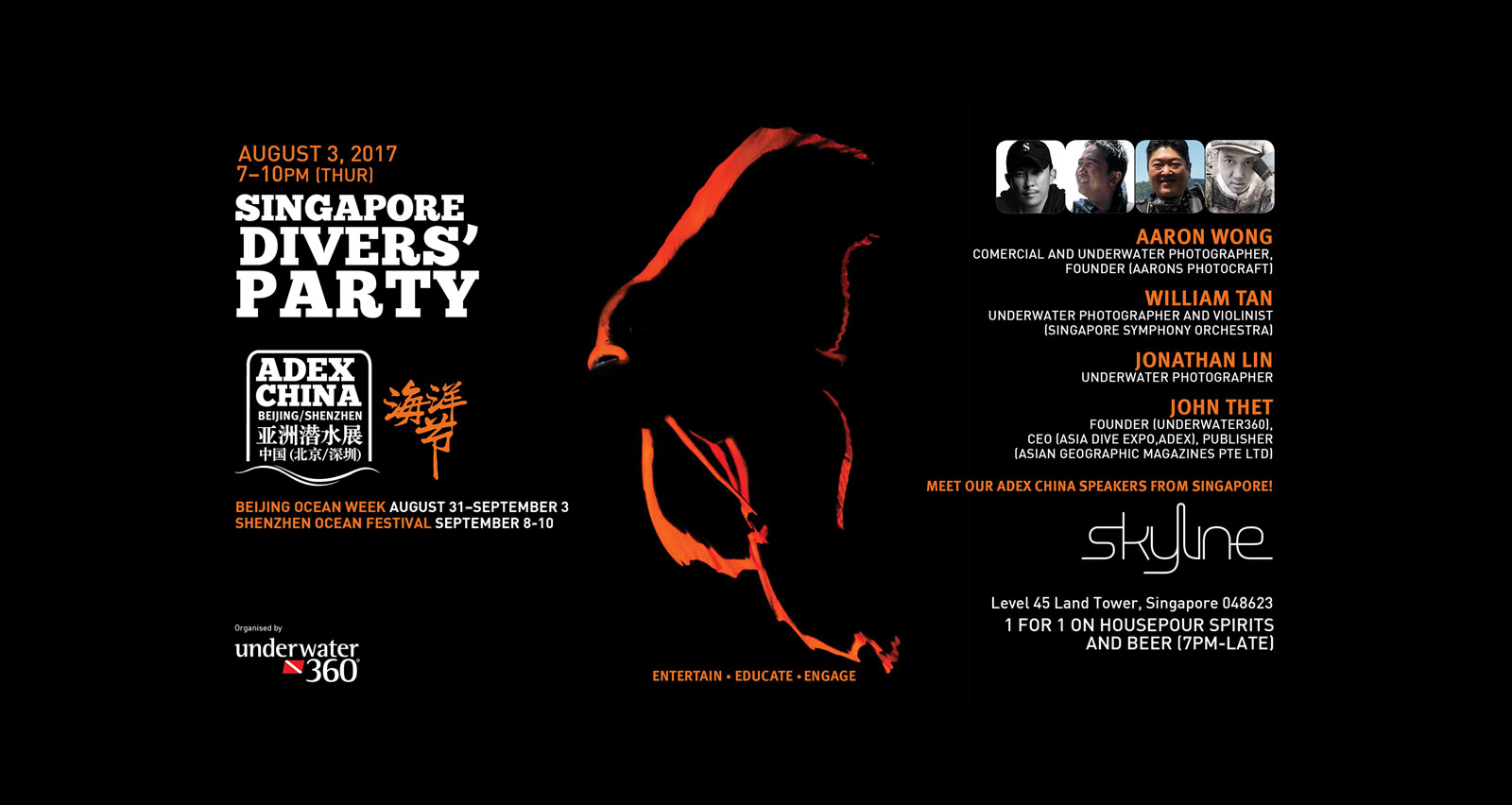
 

Singapore Divers’ Bi-Monthly Party (3 August 2017)

0

The party doesn’t stop – UW360 is back once again with the Singapore Divers’ Party. Taking place at the Skyline Rooftop Bar, 45 Land Tower, Singapore 048623, the party brings together anyone with a passion for the ocean (and partying!), regardless of whether or not they are a diver. With a special line-up of speakers covering various topics related to the ocean, it’s the prelude to Asia’s largest diving event, ADEX China 2017 Beijing (31st Aug – 3rd Sept) and Shenzhen (8th Sept – 10th Sept)!

Speakers include:

Aaron Wong:
Aaron Wong is one of the most published and recognised underwater photographers in Asia. With over a decade of field experience, Aaron’s images and his trademark lighting technique have won him international acclaim. He is also the official ADEX Ambassador of Photography.

Jonathan Lin:

Jonathan Lin took to scuba divng in 1996 and has over 2000 dives under his belt. But before picking up underwater photography in 2011 with his first compact camera and a borrowed housing, topside, Jonathan had always been taking photographs of little insects. This was where his love for macro photography began, and even after many years of diving and many encounters with large, majestic pelagics, he realised that his passion for the art of shooting tiny critters in the deep was an unwavering one. From macro photography to super macro photography, Jonathan wants to show you the wonderful world of nearly-microscopic beauty – fascinating marine creatures which cannot be seen with the naked, untrained eye.
Jonathan has also been commissioned to carry out photo shoots for a number of resorts in well-known scuba diving destinations. Jonathan’s visual works have been published various scuba diving publications, various online publishing website, Airline inflight magazine and website, he also received an honourable mention from an US diving magazine. Thanks to his eye for photography, he’s also graced a handful of underwater photo competitions around the region as a judge.

William Tan:

William Tan has been fascinated with the creatures of the sea since his childhood. While studying at Johns Hopkins University in the USA, much of his spare time was spent gazing at the marine collection of the National Aquarium in Baltimore. William travels extensively throughout the Pacific region judging underwater photo competitions, and photographing marine life for tourism organisations, scientific research groups, dive magazines, camera manufacturers, and resorts.

Along side the talks, there are fabulous lucky draw prizes to be won from dive trips to dive gears – it’s a party you simply cannot afford to miss!

The first 100 visitors will get one-for-one for all house pours spirits and beers from 7pm to 10pm!

Fill up the form below or just turn up at Skyline Rooftop Bar and we will register you on the spot! So make a date with us!
Read about the last (June) Divers’ Party HERE


Exorcising The Mind

0
eerie cave

The tales tell that more than 100 years ago, during the Qing Dynasty, the villagers nearby would drown fornicators here, dropping them to the bottom in a cage 

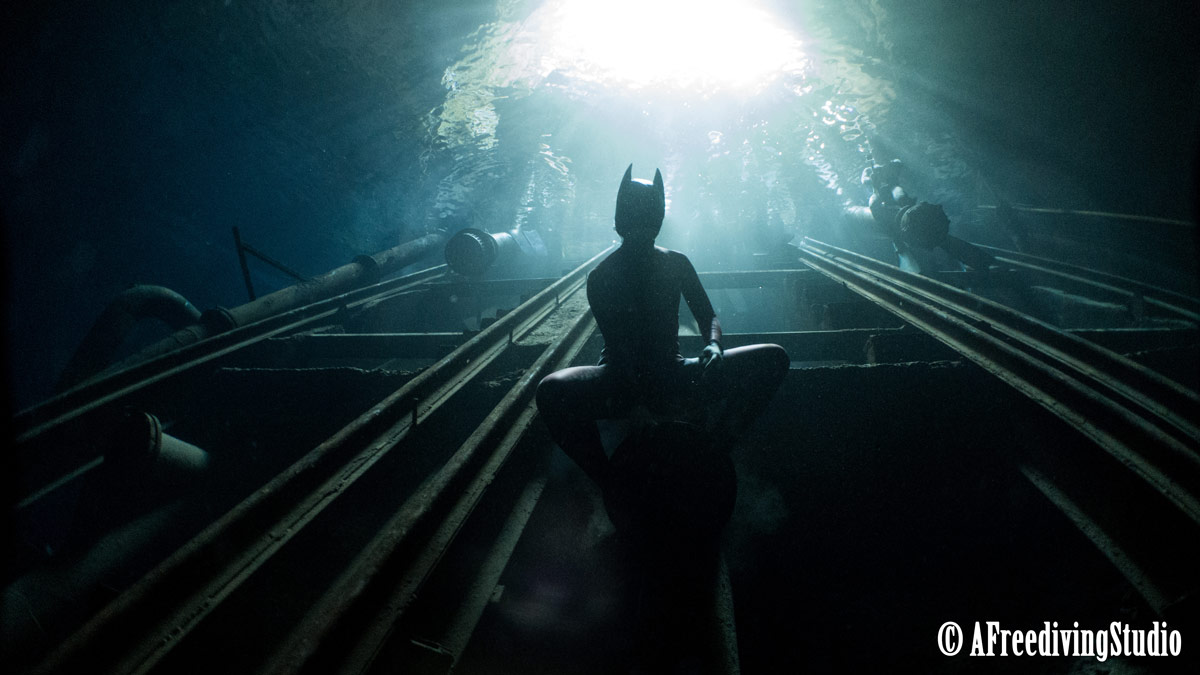
Exorcism Cave is located in Nanning, the capital of China’s Guangxi Province. The landscape of Guangxi is striking, marked by unique karst landforms, creating beautiful scenery that has given it an international reputation. The limestone geology means that the place is dotted with caves, sinkholes, and underground rivers. As diving in China gains popularity, so places like these, unique underwater worlds of rivers and caves scattered among the karst crests, are also being gradually unveiled. Although first “found” by cave divers Liang Hui and his instructor Ms Wei Qinghua in 2011, the place is very much off the beaten track and has, so far, gone undiscovered by the Chinese diving community. I am one of the first and only freedivers to dive here. I was introduced to this hidden spot not long ago, by a friend who began to tell me stories of an underwater river, with a deep cave full of clear water. Apparently, the place was a well-kept secret amongst a few divers, even though it is only 80 km southwest of Nanning. As it turns out, the cave is also very close to my mother’s hometown – a fact which gave me a strong desire to visit it. Getting to the cave feels like an adventure. Pulling off the highway onto small side road, the route becomes increasingly more rugged. After leaving the paved road, and following a muddy track for nearly half an hour, the reservoir appears in front of you. Surrounded by surrounded by mountains covered in vegetation, the scenery is incredibly beautiful. At the foot of the mountain, a short 60-metre climb brings you to the entrance of the cave, where a cool blast of air greets you, carrying with it the promise of fresh, still water. Following a 25-metre stairway, we descended into the darkness. On my first visit, the chilly gloom made me a little nervous, unaware of what would be waiting at the bottom. But my fears could not overwhelm my curiosity, and so didn’t stop my feet. Above the water, the cave is dome-shaped, about 70-metres wide, 50-metres deep, and 15-metres high. There’s a small hole at the back where the sunlight streams in, though it is still too dark to see how deep the water is. Stalactites drip from the ceiling, and our torches illuminate hidden rocky crevices, waking the bats which stream out on droves. It is the perfect setting for a horror movie, and I had to consciously override my more primal desires to leave – I wanted to keep exploring. After a while, our eyes adjusted to the darkness, and soon we were ready to gear up and get into the water. The whole environment is spectacularly quiet and mysterious, accentuated by the legends that surround this place. The tales tell that more than a hundred years ago, during the Qing Dynasty, the villagers nearby would drown fornicators here, dropping them to the bottom in a cage. This is the tale that lends the cave its scary name, “Qu Mo”, or “Exorcism”, Cave. These stories kept people away for many years (no one would dare to swim here for fear of the ghosts of lost lovers), until recently when daring adventurers rediscovered this unique place and began to explore it. Surprisingly, underwater it was brighter and warmer than I had imagined – between 23 and 25 degrees. The visibility meant that I could easily see all the way to the other side of the cave, which I estimated, conservatively, to be about 100 metres away. I could see all the way to the bottom, and took a deep full breath and dove straight down, slowly observing the rocky formations. Of course, the cave’s legend played through my mind as I dove. I had to keep reminding myself not to think about it, and to focus instead on the cave’s surreal beauty. On my assents, I would look up at the surface, and could see the beautiful stalactites through the clear water. The surface is mirror-flat, giving you the illusion that you are not in the water at all, but suspended in the air instead. This is a water world unlike the ocean, unlike any other I have ever seen; the only comparison I can think of would be the Mexican cenotes. The pool is funnel-like, deep in the middle, sloping up towards the rim. The floor is scattered with huge boulders, and cave-diving guide-lines can be seen disappearing into the underwater channels. There is a 70-metre-long tunnel close to the entrance, which connects to the lake outside, a tempting challenge, but one that I didn’t risk; there are no airspaces along the way, and the attempt is incredibly dangerous. Instead, I turned my attention to the little fish swimming around the rocks, all translucent having evolved in an environment almost devoid of sunshine. It didn’t take me too long to dive towards the other side, where, in the darker water there is an abandoned industrial water pump. Huge pipes extend towards the surface, from an enormous metal framework at around 10 metres. In the clear water, it looks like a spaceship in outer space. I kept diving around this bizarre man-made structure, until the power in my torch ran out. By then, incredibly, I had already spent two hours in the cave, and, unfortunately, it was time to leave. I resolved to bring more batteries and extra equipment for the next adventure. Since that first trip, I have started coming here regularly – it is a perfect place for freediving training. And I have made my peace with the cave’s haunting past, bringing new life and energy to this peaceful, hidden pool in the mountains.

This article was originally published in Asian Diver “Discoveries”: Click the image to head on over to the shop

Cover Photo © AFreedivingStudio

Into The Unknown

0
japanese tanks sunk
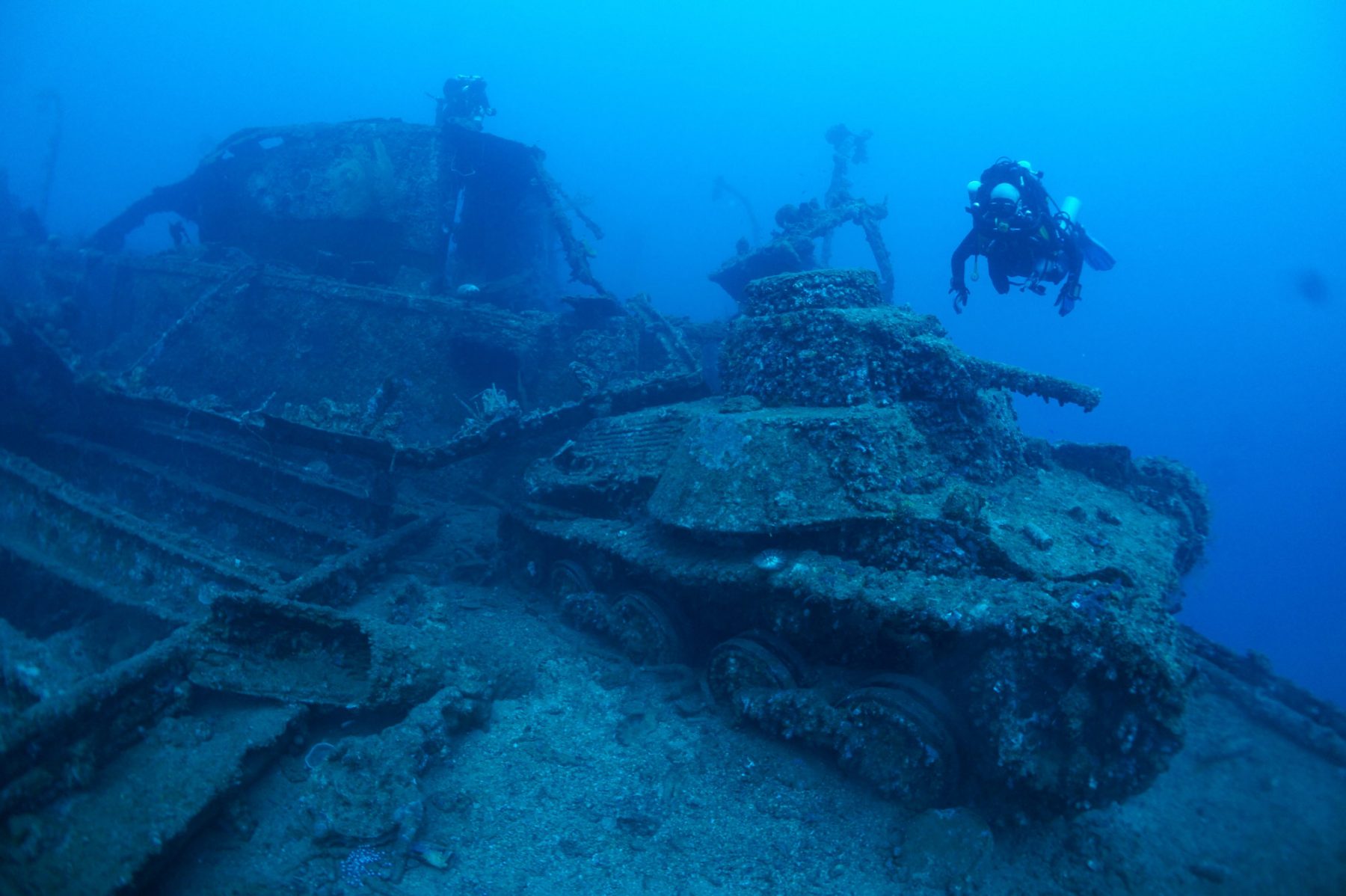
A single Type 95 Ha-Go light tank sits on the port foredeck in front of the bridge superstructure © Ewan Rowell

The seas of the world are littered with the remains of ships from centuries past. Many wrecks have been found, but there is little information about them – what ship was it, who did it belong, when was it sunk? And then there are those whose whereabouts are known, but they have yet to be found. Locating and documenting wrecks is an arduous job, not to mention a potentially hazardous one, requiring attentiveness to disintegrating sections of an old and eroding ship, or even explosive munitions at the wreck of a sunken warship. Such tasks demand a certain breed of person, and there is none that best embodies that character than Rod Macdonald – a veteran shipwreck explorer whose tales will certainly turn some heads. From the coasts of his native Scotland to the seas of Southeast Asia, Rod has travelled the world in search of wrecks. He leads a team of technical divers who seek out lost and undived shipwrecks– some still officially listed as Missing in Action from WWII. The team venture far off shore to find and dive roughly 3-5 virgin shipwrecks a year, and by using specialist deep diving kit, they dive to depths of 100 metres (more than 300 feet) in their quest to unlock the sunken secrets of our maritime history. Now, Rod stands as an internationally renowned shipwreck explorer, undersea adventurer and best selling diving author with 10 books to his name to date. He has also been inducted The Explorer’s Club of New York, which boasts past members as illustrious as Neil Armstrong, Buzz Aldrin, Sir Edmund Hillary, Shackleton, Amundsen amongst many others. Rodd is something of a history buff – which definitely goes with the territory of finding lost wrecks from the past. He uses his intimate knowledge of history and world events to reveal what lies hidden beneath the waves – weaving spell-binding stories of tragic losses and great heroism. In fact, his beautifully illustrated dive guides to world famous dive locations such as the German WWI High Seas Fleet wrecks of Scapa Flow or the Japanese WWII wrecks of Truk Lagoon have become internationally accepted definitive dive guides.

What got you into diving and exploring wrecks?

It was a snorkelling trip when I was working as a student in Florida that got me into diving. I saw sharks, barracuda, coral, and just loved the vast spaces – I became determined to learn to dive and get down and be part of the seascape, instead of just viewing it from above. As for wrecks, I identified a wreck off my own north east coast of Scotland that had been known about for a while, but had never been identified. After a bit of research, I identified it from the 1880’s. Then, I went to Scapa Flow and spent a week exploring the three battleships and four light cruisers of the German WWI High Seas Fleet that were scuttled there on 21 June 1919. Suffice to say, I was hooked.

What is your mission/ purpose in exploring wrecks?

Every dive for me on a shipwreck is a working dive nowadays – and my wreck diving breaks down into types. I look for shipwrecks whose loss in a general area is known about but which hasn’t been found yet – and then go on to survey it as best I can. I also try to document and write about special shipwrecks that are known about but for which there is a lack of good information for divers. I try to recount the story and try to bring the wreck alive and let divers understand what happened – as well as providing essential information for divers to dive it.

What was the first wreck?

The first wreck I dived was the WWII wreck of the mine layer HMS Port Napier that lies off the Isle of Skye on the west coast of Scotland. She is a big 550-foot long vessel that went on fire while she was being loaded with 500 naval mines and ordnances alongside the pier at Kyle of Lochalsh. The fire got out of control and she was towed unmanned away from the pier – if she had blown up she would have destroyed the town. There was an explosion that blew parts of her onto Skye and she rolled over and sank.

The story behind your most memorable exploration/ or find?​

There is a WWII shipwreck 14 miles off north east Scotland called the SS Creemuir. She set off in November 1941 leading the port column of a convoy of 32 ships from the Firth of Forth to Nova Scotia. The convoy was attacked by German torpedo bombers flying from Norway. The Creemuir was hit and went down in three minutes. There were only 12 survivors out of the crew of 42. I posted a few lines in my blog about diving the wreck a few years ago and was staggered to be contacted by the ex-Royal Navy Radio Officer Noel Blacklock, now the only living survivor from the sinking – and then 90 years old. He gave me his whole wartime account. When the ship was hit by an aerial torpedo he rushed on deck just as she was going under, and was hit on the head and knocked out as she went down. Noel recovered consciousness underwater and saw the ship sinking beside him by the stern – he last saw the bow going down. After 45 minutes in the water he was picked up by a raft with three other survivors. Eventually, the raft was spotted by a Dutch freighter that called into Aberdeen and the survivors were put up in the Seaman’s Mission. We located the bell a few years ago and recovered it and presented it to him. For him to see it again after nearly 70 years was very emotional for both Noel and my dive group. Noel sadly passed away last October and the bell was displayed at his funeral. I’ve had relatives of other crew members from the same ship get in touch. One ladies’ father, a Creemuir survivor, died in 1963 when she was 16. He never talked about the war and she was too young to ask. She asked if I could tell her anything about the wreck, so I put her in touch with Noel. It turned out that her father was one of the three crew who hauled him into the raft in 1941. Imagine meeting someone who your father helped rescue after 70 years?

What equipment do you use?

Otter Britannic drysuit, Weazle Extreme undersuit, Inspiration Vision Closed Circuit Rebreather usually with a trimix diluent, 2 bail out 7 or 10L cylinders, one with a deep bailout 17/70 trimix and the other EAN50.

What is the most challenging environment/ wreck you dived in?

The Corryvreckan Whirlpool off the west Scotland in the Gulf of Scarba, between two Scottish islands, Jura and Scarba. The general depth is 200 metres but on one side where the gulf rises there is a granite pinnacle that rises up to about 35 metres beneath the surface. The whole Atlantic tries to force its way through the gulf causing extreme currents and as the onrushing water hits the pinnacle it rises up and over to create a down current and standing waves along with the 3rd largest whirlpool in the world. When we dived it, the current was 2.7 knots, but down on the pinnacle we got 10 minutes of slack water. After that our bubbles started going down over the side and we had to go as the down currents tried to get hold of us. One diver got caught by the down currents once and taken over the side of the pinnacle. He inflated his BCD – but kept going down. He dropped his weights and kept going down until he reached 75 metres on air when the current let him go. Diving the Corryvreckan Whirlpool is the scariest thing I’ve done.

What is your favourite dive destination?

Joint favourites are Truk Lagoon and Palau.

A site you want to dive but never have?

The wreck of RMS Britannic, sister ship to the Titanic, off Greece.

What’s the weirdest thing you’ve seen underwater?

There are many things that I would not want to speak about publicly!

What’s been the highlight of your career?

I think my trips to Truk Lagoon and to Palau to survey the many wrecks there for Dive Truk Lagoon and Dive Palau. These were working dive trips, and for Palau we dived 20 wrecks in ten days and surveyed them all.

And the low point?

Getting badly bent diving the deep technical wrecks of Malin Head off Northern Ireland in 2004. At that time, I thought I was indestructible – we were diving 70-80 metres every day for ten days – with sometimes two 70 metre dives on the same day. I was diving open circuit trimix at that point, which is far less forgiving that CCR trimix diving. Each dive had a flawless profile according to the decompression software of the day – and I even added extra deco on the very last dive of the trip. But one hour after surfacing after the last dive, I got a hit, and within 30 minutes I was in incredible pain and lost the ability to walk. We were on a dive boat far offshore and so we self-treated with oxygen therapy and managed to largely reverse the effects – although I was left with weakness in my legs. When I got back to Aberdeen I was put in a recompression chamber and thankfully that sorted things out.

Do you have any tips for others who want to explore underwater wrecks?

Try to get to know the basics about ships of different types as it will help you understand the wrecks you are diving on. You’ll learn, for example, that tankers and oilers always have their machinery, their engines, boilers and so forth, at the very stern – this is to avoid a prop shaft running from an engine amidships through oil tanks. So if you’re diving a tanker and you arrive down on the wreck, say in poor conditions where visibility is limited, and find you are in the engine area, you know you are at the stern. Boilers are always forward of engines – to avoid the difficulty again of a prop shaft running aft through boiler rooms where the boilers may well take up most of the beam of the ship. So if you are swimming along the middle of a shipwreck and pass first an engine then a boiler, you know you are heading forward. Simple things like these will help you get orientated on a wreck.

Other recent interviews:

An Interview With A Technical Diver: Edd Stockdale


Ocean Defender Of The Week: Alistair Bygrave And Simon Hilbourne


Underwater Photographer Of The Week: Mimmo Roscigno


Underwater Photographer of the Week: Mimmo Roscigno

0
corals and clowns

Mimmo Roscigno is a veteran with a wealth of experience few out there can match. From starting as a self-taught underwater photographer back in the mid-eighties, Mimmo now teaches photography at an Artistic Lyceum in the Italian city of Naples, where he has set up an experimental section for underwater photography and cinematography. His past experiences have given him an unparalleled insight into the art of underwater photography, and he has been sharing the tricks of the trade with students for many years – not just in class, but also through the media. He is the founder and president of the Italian Underwater Photography Society and the director of the association’s journalistic portal. Mimmo has dived into many of the world’s oceans, from the Red Sea and the coasts of Egypt and Sudan, to the Maldives, Indonesia, Malaysia, Papua New Guinea and the Philippines. Yet despite his explorations and adventures around the world, his heart has always remained with his native Mediterranean sea – the place that first opened his eyes to the wonders of the underwater world. Feeling the need to show people that world and to unravel the beauty of the Mediterranean to others, he has released several publications, including the photographic book, Into the Mirror, which is comprised entirely of images from the biologically rich Gulf of Naples. Over the last 25 years, Mimmo has exhibited his photographs in numerous exhibitions in Italy and elsewhere. He has collected numerous placings in more than 70 national and international competitions, winning some very prestigious awards. In recent years, his interest in the macro has grown, and he has taken to photographing the tiny inhabitants of the sea such as zooplankton and phytoplankton. Several of these recent shots have been published by newspapers and specialised portals.

What made you want to become an underwater photographer?

I’ve been into photography – in all its forms – since I was about 13 years old. Yet it just remained an interest and a hobby until I was lucky enough to commit to it as a full-time job. Together with my passion for the oceans, which I’ve also had since a young age, my path towards underwater photography was a natural one. I have never stopped or looked back.

Your first underwater shot?

I started off with a Kodak Instamatic in a plastic Mares housing, along with a flash cube. I started scuba diving while on the lookout for marine life to photograph. Unfortunately, these images no longer exist, and I wish I could remember them!

The story behind your most memorable underwater shot?

I have many images that I am very fond of. For many years, I used only medium-format cameras, such as Hasselblad in Gates and Rolleiflex housings in the original Rolleimarin cases. I am very pleased with one particular photo I took in the Red Sea with the latter setup, back in 1997, during the fifth dive of the day, which shows two octopuses mating.

Where is your favourite dive destination?

I have travelled a lot and I still continue to travel today, but my favourite place without a doubt is the one that I know best – my home, the Mediterranean Sea. It is a challenging place to dive and it is difficult to get good pictures. In my humble opinion, it is important that every underwater photographer, besides photographing the seas of the planet, is committed to documenting the area in which they live. I see photographing my home sea as a mission aimed at better understanding and protecting it.

The site you’d most like to dive, but never have?

The place I’d like to dip my toes in next: the waters of Canada, to the north of Vancouver. I plan to go in October to photograph this underwater world that has always intrigued me – I have read a lot about it in books and publications.

The weirdest thing you’ve seen underwater?

I don’t think of the amazing things I’ve seen underwater as “weird”. For me, it’s second nature to immerse myself in the underwater world and to soak in my surroundings.

What camera equipment are you currently using?

I use different cameras for my dives. I have a Sony Alpha 7R Mark II in a Nauticam housing with lots of accessories, and I have recently found an adapter that allows me to mount my Canon 8–15mm lens. I’ve been a Nikon user since the old days. I have Seacam housings for my Nikon D800E and D3X. For flash, I use Inon Z-240s as well as Sea & Sea strobes.

What is the highlight of your career? … And the low point?

I am not a professional photographer, but I do teach photography at a high school here in Italy. For me, underwater photography has always been about leisure and pure creativity. It is a great privilege to be able to indulge my passion, and I’m very happy to have received various prestigious awards for my work.

Any advice that you’d like to give to aspiring underwater photographers?

Shoot as much as possible. Underwater photography is a specialty that requires a great deal of commitment as well as lots of diving experience. The latter must become a natural activity – without, obviously, neglecting safety!

Is there any particular shot that you still want to get?

I never plan – I have a fatalistic attitude! I just hope to always have an exciting dive and the opportunity for amazing encounters – and to shoot images that express the emotions I had while taking them!

Previous underwater photographers featured: 

Underwater Photographer Of The Month: Raffaele Livornese

Underwater Photographer Of The Week: Wayne Jones

Underwater Photographer Of The Week: Raoul Caprez

Underwater Photographer Of The Week: Becky Kagan Schott


The Americas: Whales and Walls

0
Humpback Whales
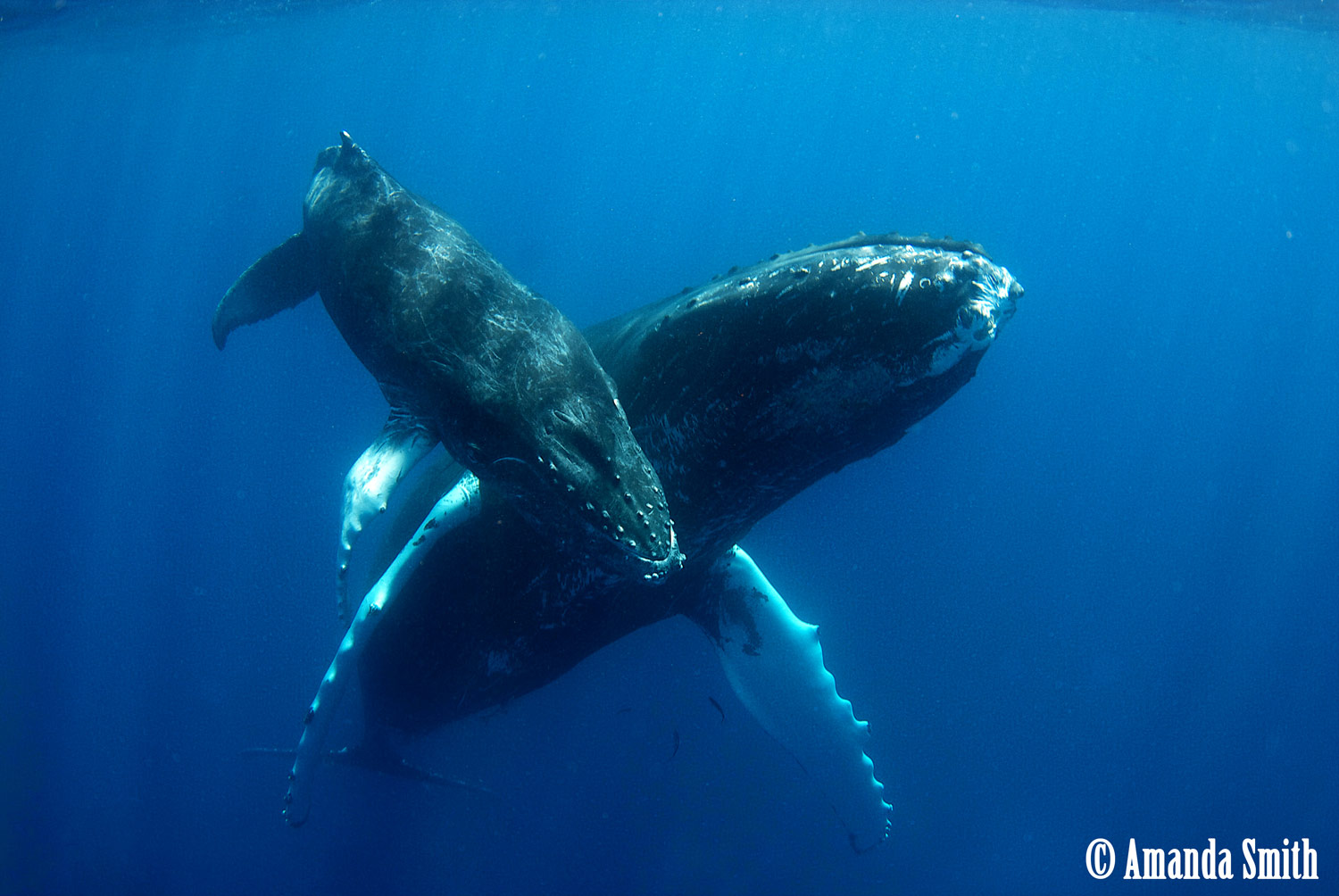
Humpback whales come to the Turks and Caicos from January to April to give birth and mate © Amanda Smith

Every season brings a fresh batch of critters; jawfish with eggs, pipehorses and eagle rays, from the macro to the massive, there is never a dull moment

Scuba diving was a passion I discovered later in my life, and I am envious now when I see the young divers that come aboard my home, the M/V Turks & Caicos Aggressor II, that I was not able to start diving much earlier. At the same time, I am excited for the adventures that await them. The Aggressor in Turks and Caicos has not always been my home. Until 12 years ago insurance claims handling dominated my life until I discovered scuba while on holiday in Turkey. In a very short period of time I had quit my job, downsized my property and was heading out to Turks and Caicos. Almost nobody I knew had heard of the islands and, I confess, neither had I. In reality, most of my friends thought that I had moved to Turkey! ]As a rookie dive instructor, with just 300 dives under my belt, most of which were in England, I was about to take on the world of dive instruction, sharing my newfound passion with anyone who would let me, travelling the length and breadth of the world’s oceans. I made it to Turks and Caicos and stopped! The rest, as they say, is history. I immediately fell in love with the diving around Turks and Caicos and the culture of the islands themselves. That was 12 years ago. At the time, I was the proud owner of a small digital point-and-shoot camera and was delighted to have a housing for it. Not once did I shoot that camera underwater in Turks and Caicos. Instead, a housed Nikon D70 was thrust into my hands right from the outset and I very quickly learnt underwater photography from Captain Piers, who later went on to become my mentor, teaching me everything I needed to know to take on the role of captain. Two years later and a 200-ton Yachtmaster qualification under my belt saw me as second Captain and then Master of the Turks & Caicos Aggressor II. For me the diving around Turks and Caicos offers a great diversity. Beautiful, richly populated walls provide a delightful backdrop for all the flora and fauna that reside there. Turn your back to the wall and all you see is deep blue ocean, turn back and see blue chromis and cascades of creole wrasse. It is not the rare and peculiar that drives my passion for the diving in the Turks and Caicos Islands, it is the behaviour of the prevalent fish as they interact and occupy the reef together that fascinates me – the groupers with the moray eels, the bar jacks with the stingrays or the trumpetfish with whatever feeding partner they can find. It is a treat to learn their characters and enjoy their interactions. Every season brings a fresh batch of critters; jawfish with eggs, pipehorses and eagle rays, from macro to the massive, there is never a dull moment. Then there are the humpback whales that visit the area in the winter months. From January to April, I am privileged to snorkel with these elegant and graceful creatures as they visit the warmer waters of the Atlantic to mate and bring their calves into the world. There may be several guests in the water with a humpback, but if they pass and make eye contact with me, I could swear that this mammal and I are alone in the water. My favourite encounter is to swim with a singing male humpback. The song vibrates through your core as the notes that they hit vary from a deep rumbling timbre to a high-pitched whoop and every chord in between. It is a life-altering experience that keeps me coming back for more. That I get the opportunity to share all this with our guests just adds to the adventure. The Turks & Caicos Aggressor II is a both my home, and the delightful, luxurious platform from which I get to share the underwater world with all our guests. With 19 Aggressor yachts, worldwide, I know I can continue my globetrotting and dive explorations whilst still returning to my liveaboard home. Eat, sleep, dive, repeat; I live it, I love it!

Aggressor Fleet Website 

For more on destinations, be sure to get Asian Diver’s “Discoveries” Issue 2/2017: Click HERE to visit the shop or click HERE to purchase the online magazine.


The New Canon EOS 5D Mark IV

0
underwater sculpture
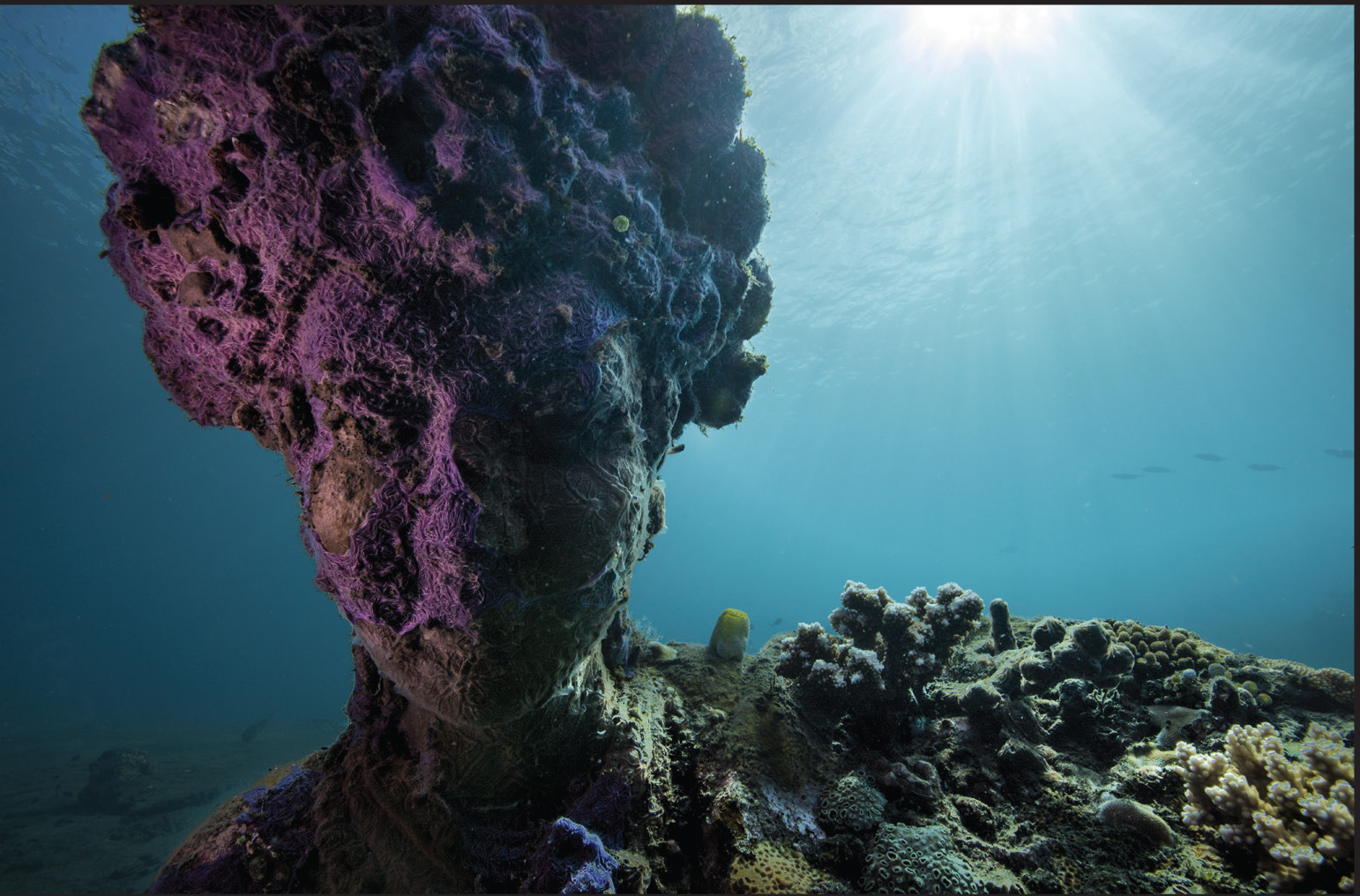
This Canon EOS 5D Mark IV brings the colours and textures of this beautiful underwater sculpture to life

As a professional underwater photographer, I am very familiar with the Canon EOS 5D series – my first camera was a Canon EOS 5D Mark II, from which I transitioned to the Canon EOS 5D Mark III. But recently, I upgraded to the brand-new Canon EOS 5D Mark IV. The beauty of this series is that, through all of its iterations, it has maintained its design integrity, which means that every new model is immediately familiar. Although the Canon EOS 5D Mark IV may look very similar to the Canon EOS 5D Mark III, it is a radically more powerful machine. As a videographer, one of the most exciting developments with the Canon EOS 5D Mark IV is the ability to not only record video in 4k, but also to record in 4k at either 24p or 30p or Full HD at 50p! Shooting while freediving means that I am often recording on fast ascents, going from deeper, dark water up to brighter conditions. This can make it challenging to capture consistent footage, but I was amazed at the dynamic range performance of the Canon EOS 5D Mark IV – I had absolutely no problems with highlights, and my footage was exceptional. This, combined with the stunning AF speed and higher image quality, now gives me far more creative freedom than any other camera in the market. Before I shot this image in Bali, I first went freediving without the camera and I remember thinking it would be almost impossible to capture all the intricate colours and textures of this magnificent underwater sculpture. When I went back underwater with the camera, I came back from the shoot realising that the Canon EOS 5D Mark IV had not delivered my original vision, but had gone even further, and returned noise-free images that revealed a whole new world of details and precise colours that I hadn’t even noticed. The Canon EOS 5D Mark IV has received substantial upgrades, including a higher-resolution 30.4MP CMOS sensor, and this, combined with the DIGIC 6+ processor, results in an outstanding dynamic range and incredible performance in image quality in low light conditions. The autofocus (AF) system is faster than any other camera I have ever used, and uses 61 AF points. Bringing all this power underwater pays off quickly.

  • 30.4-megapixel full-frame CMOS sensor
  • ISO range 100-32,000 expandable up to 50-102,400
  • 4k Motion JPEG video (DCI cinema-type 4096 x 2160) at 30p or 24p
  • Dual Pixel CMOS AF
  • 61 AF points
  • 150,000-pixel RGB+IR metering sensor

Settings: f/16, 1/125s, ISO 125, Focal Length, 16mm, Manual White Balance

Click HERE or click on the image to the right to find out more

Canon Imaging Asia Facebook / Canon Asia Youtube / @canonasia Instagram / Snapshot Canon-Asia 

South and Southeast Asia Regional Headquarters: Canon Singapore Pte Ltd. 1 Fusionopolis Place #15-10 Galaxis Singapore 138522. CANON WEBSITE.  This article originally featured in Asian Diver’s “Discoveries” Issue 2/2017: Click HERE to visit the shop or click HERE to purchase the online magazine.

Alice Grainger (Editor of Asian Diver): It has been famously stated that we know more about the surface of the Moon than our oceans, and yet it is becoming ever more vital that we deepen our understanding of the importance of life in our seas: We are locked in a race against ourselves to learn about the environment that covers 70  percent of the planet, before we destroy it. Thankfully, there are plenty of people out there doing just that.

From adventurous technical dives that uncover vast, unexpected ecosystems, to scientific dives from which divers return with knowledge of new species, to hard-core explorations of freshwater systems, these pages are full of inspiring tales of discovery.

But you don’t need to head to 70 metres, or have a PhD, to discover exciting new elements of the underwater world. One of the most wonderful things about diving is that you can find something that is new to you every time you descend, if you know what you’re looking at.

The oceans are vast, diverse, and fascinating, and a little education can go a long way to enriching the experience. Even a dive site that you think you know well will offer up startling secrets if you look in the right places…