Home Blog Page 106

Fantasea Enhancement Products for Underwater Housings

0
5052Setup

<PRESS RELEASE>
FANTASEA LINE INTRODUCES
ENHANCEMENT PRODUCTS
FOR UNDERWATER HOUSINGS
NEW RELEASES
Now taking orders!
Fantasea introduces a selection of products designed to upgrade underwater housings and enhance the experience of underwater photographers.

All products are now available and accepting orders!

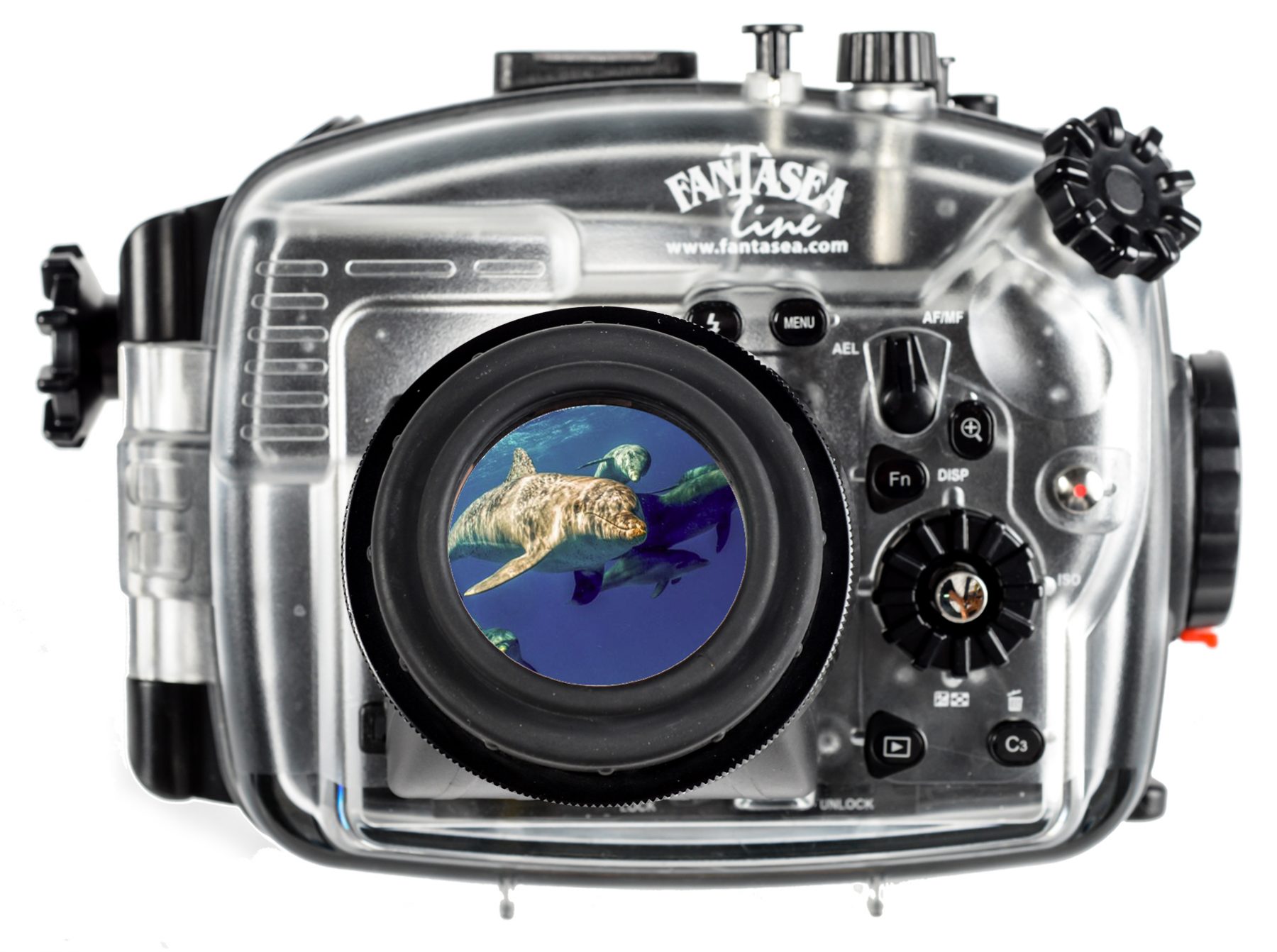
UMG-02 LCD Magnifier

Cat. No. 5052

When installed on the camera housing, the UMG-02 LCD Magnifier provides the underwater photographer with an enlarged, clear, bright and sharp view of the camera LCD screen.

Using the UMG-02 makes it easier to compose and focus with the camera system, resulting with sharper and more impressive underwater images. UMG-02 was optically designed for underwater use. The rubber sleeve serves as a sunshade and ensures a clear view also in the brightest conditions. Installation is quick and simple. An adjustable diopter allows focusing the lens to a finer degree customized to individual eyes.

The UMG-02 LCD Magnifier was designed to be installed on Fantasea housings. It can also be installed on other housings featuring a similar design of anti-glare hood rails.

Specifications

  • Magnification: 2.3X (underwater)
  • Materials: Hard anodized aluminum bezel, rubber LCD hood
  • Lens construction: 2 groups and 3 elements
  • Lens coating: AR multi layer coating
  • Depth rated to 100 meters / 330 feet
  • Dimensions: 79.6 x 76 x 93mm / 3.13 x 3 x 3.66 inch
  • Weight: 192 g / 6.77 oz
  • Included in package: Lens cap, lens cap secure string and rubber hood quick release secure string

Fantasea Moisture Detector

Cat. No. 7501

The Fantasea Moisture Detector can be installed inside any housing featuring sufficient space for the alarm unit.

The Fantasea Moisture Detector is very sensitive, so whenever moisture is detected by the sensor, the moisture detector LED light begins flashing and a warning alarm starts beeping, thereby alerting the user of a possible leak.

The Fantasea Moisture Detector includes an alarm unit and a moisture sensor unit, connected by a thin wire. The alarm unit is installed on any of the housing side panels using a double-sided installation sticker, included in the package. Make sure that your housing offers sufficient space for the alarm unit to be installed (34 x 24 x 7 mm) without interfering with a proper watertight seal. The Moisture Sensor unit is installed just under the camera or camera tray inside the housing.

The Fantasea Moisture Detector is operated by a 3V Lithium #CR1220 battery. A replaceable and non-rechargeable battery is included.

Important Notices

  • All components should be handled carefully during installation.
  • The Fantasea Moisture Detector assists with detecting moisture inside the housing. Installation of the Fantasea Moisture Detector inside the housing does not eliminate the user’s responsibility of validating housing watertight seal prior to and during the dive.

To order, contact a Fantasea authorised dealer in your area – http://www.fantasea.com/s.nl/sc.34/category.1462/.f


For more information, visit the Fantasea website – www.fantasea.com

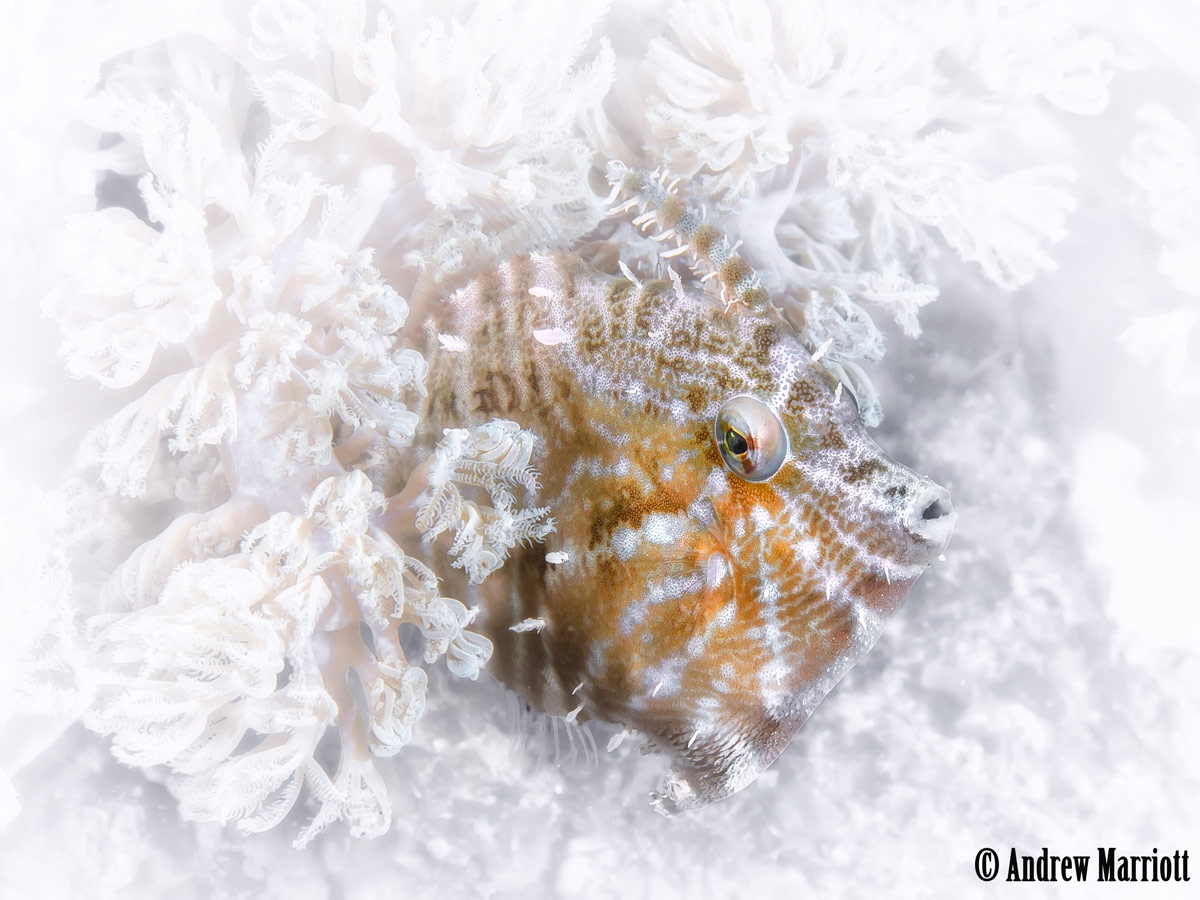
Underwater Photographer of the Week: Andrew Marriott

0

Andrew is a long time diver, photographer and writer. Originally from the USA, he found the ocean and diving almost 20 years ago while working in the world of financial derivatives. His work had comparatively little on the enthusiasm for the underwater that he had discovered. After a move to Guam, he devoted himself full-time to the ocean, helping many new divers fall in love with the water while working as an instructor and underwater photographer. After much encouragement from his friends and students, he took another step. He decided to commit all his energies to taking and sharing his images and writing about diving. Andrew has taken numerous awards and has has finished first place in major competitions for his photography and art – both above and below the waves. His writing and photos have appeared in major magazines across the world, and he will soon be launching a new series of books. He is currently living in Beijing with his awesome wife Dalice and their two daughters Elly and EJ “Doomy”.

What made you want to become an underwater photographer?

I was an amateur photographer when I got certified, so carrying that hobby with me beneath the waves was a natural next step. The decision to do it professionally was driven by the encouragement of my students when I was a dive instructor.  Looks like they were right!

Your first underwater shot?

On my Open Water dive number four, but don’t tell my instructor! I brought a film (!) camera with me on that dive in the kelp forests of Santa Catalina Island in California.

The story behind your most memorable underwater shot?

That shot was in Anilao, Philippines. I was looking for ornate ghost pipefish and found three on the last dive of the day, but when I setup the shot my camera battery died! The next evening after a couple dives I decided to head back to the same spot and just see if they were still there, which they never are. In this case they were, and there were seven of them! I spent an hour shooting them and got very lucky when one grabbed a small goby to eat. Best shot I’ve ever taken!

Where is your favourite dive destination?

Chuuk in the Federated States of Micronesia, hands down. I’m a hard core historian and wreck diver, and Chuuk/Truk is the greatest underwater museum there is.

The site you’d most like to dive, but never have?

Bikini Atoll for the amazing historic ships there. It may not have the number of ships of Chuuk, and nor were they sunk in battle, but the ships that are there are without equal. Diving the USS Saratoga and IJN Nagato are my personal Mount Everest.

The weirdest thing you’ve seen underwater?

Besides my wife? Joking of course. That would have to be the bones of the crewmen who were killed in the holds of the Aikoku Maru in Truk Lagoon. Deep inside that wreck there are still a huge amount of remains, all from men killed doing their duty in combat.

What camera equipment are you currently using?

I shoot an Olympus EM1 with a wide variety of lenses inside a Nauticam Housing. My strobes are Sea & Sea YSD1’s and I also use a large number of independent video lights for some of my setup shots.

What is the highlight of your career?

Teaching my oldest daughter her Open Water certification. It may not be photography, but I am still a teacher at heart. From a professional point of view, I would have to say that having the cover shot on Chinese National Geographic was a nice boost to the old ego.

…And the lowpoint?

When I shoot inside wrecks I am regularly pretty deep and usually solo to minimise silt.  I often leave my second camera and ascent tanks outside where I am shooting as it is just too much gear to bring inside. On one dive I left my gear outside and after I finished shooting I emerged to find my second camera and ascent tank gone! Luckily I had the air to make my decompression stops, but I was still really mad. I had thought I was the only person on the wreck, but it turns out another boat had arrived. They had seen my gear and taken it, thinking I had dropped it. They were very happy to return it to me when I surfaced! Their heart was in the right place, even though it almost sent me to the chamber.

Have you any advice that you’d like to give aspiring underwater photographers?

Get good lights and when you have them then go get more! Light is the ultimate factor in making an underwater shot. My ancient first generation digital camera can still shoot better pictures with good lighting than the most expensive DSLR can with poor lights. Spend your initial money on buying good lights and plenty of them. You can always use your lights on all your future cameras, the reverse does not hold true if your priority is quality pictures.

Is there any particular shot that you still want to get?

A selfie of myself in front of the guns on the IJN Nagato in Bikini Atoll. I hate selfies, but think that would be worth my pride.

International Fun Diving Instructors

0


IFDI offers something totally new – the first real online logbook service for divers, which, with its neutral structure, can be digitally signed by all instructors worldwide, regardless of their organisation. With its system of authentication and recognised authority, IFDI already has members in over 30 countries, despite being relatively new. The instructors are all legitimate – they must submit a copy of their ID and instructor diploma (which IFDI review), before gaining access to the ability to sign the IFDI logbook for each diver. The digital signature of the instructor on the IFDI logbook includes the instructor’s name, the organisation name, and the instructor’s number for references – the same principle as a stamp in your paper log book. IFDI also offers free online learning and low cost certifications. With a host of opportunities, to both meet new divers and enhance your diving experience, this brand new service is aiming to revolutionise the diving industry.

IFDI offers the first three rows for free; this allows the diver to test out the service before fully committing. The divers can get their logbook at: https://www.ifdi.info/Divers.php.You may get more info about IFDI at: www.ifdi.info

Interview with the founder, Olivier Dauxais:

Can you tell me a bit about yourself? 
I was born in France. I am now 47 years old. I have been a diver since I was 13 years old, and a professional diving instructor since I was 20 years old. I became the first instructor to be awarded the diploma of recognition for excellence by PADI. In parallel with IFDI, I’m still a active diving instructor, teaching here and there in the Maldives.
What does this platform offer to dive instructors and divers?
Like any diving organisation, the IFDI platform offers to instructors a pedagogic support and a registration service for the divers’ certifications. The IFDI platform offers to new scuba divers a free of charge online learning for the theoretical part, a quick access to their registered certification, and an online diving logbook. Due to the fact that IFDI regroups all instructors, IFDI became the first organisation that offers a real service of online diving logbooks that can be digitally signed by all the instructors in the world.
Was there anything in particular that made you want to start this?
Well, there are many reasons that have pushed me to create IFDI, but the main reason was my wish for the diving instructors to regain their freedom in order to be able to teach diving outside the brand that has delivered their diploma of instructors. Indeed, the diploma of the diving instructors is only valid within their native organisation, with each organisation rejecting the instructors from another. It’s an obvious commercial strategy… But, is it really fair? For example, do mechanics get their diploma only valid within the brand of a car? Of course not, they can work in any garage regardless of the brand. I guess that IFDI is the fruit of my personality: freedom and fairness are among the values that I stand for.
Have you had to get ‘licensed’ in some way?
I have a diploma of professional diving instructor. I also have the “PADI IDC staff” diploma. I refused to go for the “PADI Course Director” diploma, because I refused to chain myself to them as requested by their procedure. Here again, my love for freedom, fairness and independence was more important.
Does this put you into competition with the big brands like PADI?
Yes. The funny part is that some of my members at IFDI are working at the headquarter of PADI. I guess that it’s a way to “spy” IFDI.
Have you found success so far?
Yes. I am happy (and proud) of only receiving compliments from my users. IFDI simply needs to be more known… Besides, the word of mouth is gradually spreading.
What have the main challenges been?
My main challenge was learning the coding language such as HTML, CSS, PHP and SQL in order to create the IFDI platform. I could have used technicians but I like to be a part of and master all the things that I create.
Where do you see the platform going in the future?
Well… Much further than my own life… And I’ll have to find another “captain” for IFDI, one day… But no rush, I’m not so old yet.


Olivier Dauxais, born in 1970, has been a diver since 1983 and a professional diving instructor since 1990. Just three years after qualifying as a diving instructor, he became the first instructor to be awarded the diploma of recognition for excellence by PADI. He has more than 25 years of experience in instructing divers, and has logged more than 10,000 dives. 

Unfinished Business: How Countries’ Policies Impact the Shark Fin Trade

0
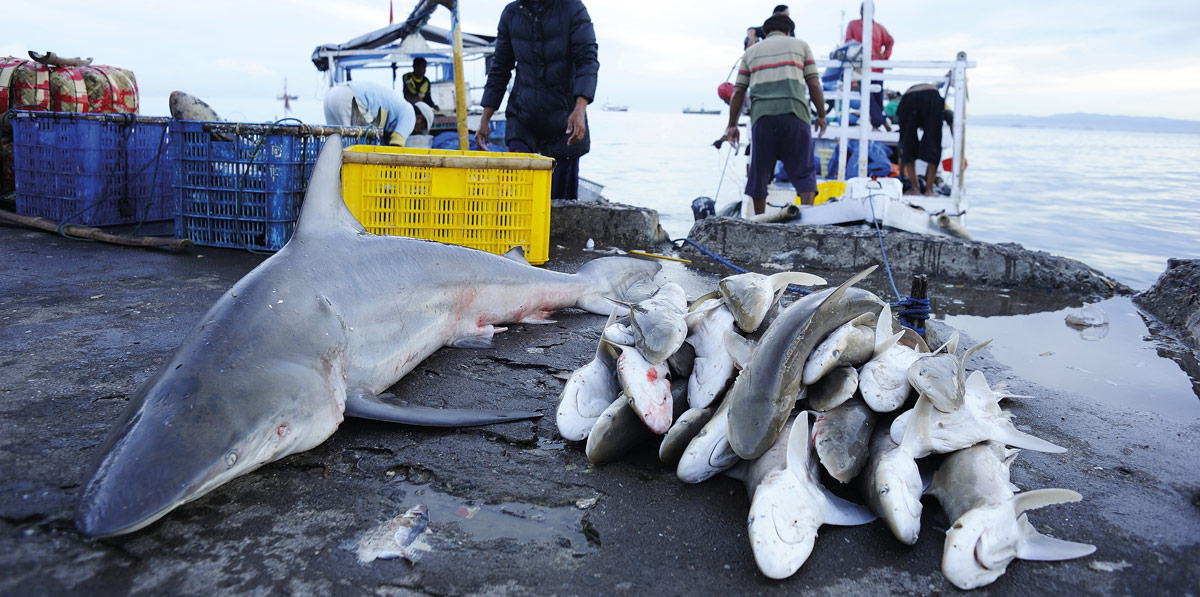
dead sharks
dead sharks

100 MILLION sharks are slaughtered annually. How are countries’ practices and policies impacting the shark fin trade in Asia?

Shark fin – and shark meat – is widely consumed in Asia. Shark fin soup is a notable Chinese and Vietnamese delicacy: Such is the prestige associated with the cuisine that it is traditionally served at wedding banquets. At a restaurant, a single bowl can set you back USD100. But over the course of the last two decades – with the help of big names such as Jackie Chan and Yao Ming, as well as hotel groups, restaurants and airlines – people all over the continent, particularly the youth, are turning their backs on shark fin in the name environmental consciousness. China, a large consumer, has notably banned the dish at state functions.

A 2016 poll by WWF Singapore found that over three-quarters of Singaporeans want government policy to counter the consumption of shark fin. Similarly, a 2014 report by WildAid, an organisation that works to reduce demands for wildlife products, surveyed Chinese consumers online and found that 85 percent of participants had given up shark fin within the previous three years. This signals a gradual cultural shift away from the traditional popularity and acceptability of consuming shark fin soup – and the statistics speak volumes. A 2013 report published in Marine Policy estimated that 100 million sharks are killed every year, although the figure could be anywhere between 63 million and 273 million. The primary cause behind these shocking numbers? Overfishing for fins and meat.

What is Being Done?

“Pretty much every country in the world has banned shark finning, defined as the act of catching the animal, hacking off the fins, and discarding the body (many times while it is still alive) at sea,” says Randall Arauz, policy advisor of the shark conservation group, Fins Attached. Fishermen can only dock with sharks that have their fins attached – to then be processed on land. But, this is little more than a defence against a barbaric practice. Arauz states that “in spite of the good intention, this regulation has done nothing at all to address overfishing… The requirement to simply land all the sharks caught is hardly a management policy, and it has no effect on population rebuilding”. The danger of the shark finning industry is that of unsustainable fishing, threatening the existence of dozens of shark species and drastically reducing the overall population. “Sharks need a drastic reduction of fisheries-induced mortality,” affirms Arauz.

Related articles:

Singapore: World’s No.2 Shark Fin Trader

6 Things Not To Do If You Love Sharks

The World’s Best Places For Shark Diving

But can countries counter the overfishing of sharks? Many nations have implemented restrictions on the trade of certain endangered shark species under the Convention on the International Trade in Endangered Species of Wild Fauna and Flora (CITES) – if only partially. Others have taken further steps, banning shark fishing itself within their territorial waters. Indonesia has done so within Raja Ampat since 2010, and Palau has had a ban since 2009.

However, there can be a disconnect between policies that a nation adopts and their practical implementation. Paul Friese, founder of Bali Sharks Rescue Centre, notes that Indonesia – the top “shark catcher” in the world according to a 2011 analysis by TRAFFIC and the Pew Environment Group (PEG) – have “policies [that] don’t filter down to the fishing villages”. Friese adds: “Fishermen don’t read newspapers, have Facebook or smart phones, for the most part.” The fact that many people are unaware of the rules means that “the disconnect from the policy makers to the fisherman is prevalent”.

Education on policies is an unresolved issue within Southeast Asian fishing communities. Yet Friese says that there are deterrents in place, notably for larger companies who acquire the majority of catches: “If commercial fisheries are caught, they get fines and penalties.”

In addressing these restrictions, Liz Ward-Sing from Shark Guardian, a marine conservation charity that conducts research projects, says: “We do not have data to show how shark populations have been affected by these bans [in relation to Asia and the rest of the world]. But we know that bans have had a positive effect long-term [on shark populations] in places like Palau.” But Palau and Raja Ampat are just notable exceptions. It is very unlikely that more nations will implement full or temporary bans given feasibility issues – and money: There is still a high demand for shark fin, and countless businesses are invested in the industry, which generates significant revenue.

Facing the Reality

In a simple dichotomy, there are nations that source the sharks, and nations that trade them. Regarding the former, national efforts to manage and regulate shark fisheries have really missed the mark – to such an extent, in fact, that they have led to the resounding failure of the plan for shark conservation by the UN Food and Agriculture Organization (FAO), approved in 2001. The TRAFFIC and PEG analysis from 2011 found that out of the top 20 “shark catchers” – who collectively account for 80 percent of the global shark catch – only 13 have implemented national plans of action to protect sharks – the FAO plan’s primary recommendation.

Even then, implementation is not always effective: Six out of the 20 nations have no breakdown of shark species when they are landed: Only eight provide data for a limited number of species, and 13 have no species breakdown. Without proper identification of species (and volumes) that have been caught and traded, we don’t know what and how much has been caught, where it has been caught, and where it will end up. There is a heavy obligation on the shoulders of large trading nations. Despite the changes in attitude, a report by WWF and TRAFFIC this year found that Singapore remains the world’s second-largest shark  fin trader by value, just behind Hong Kong. Singapore is also the world’s second-largest re-exporter of shark fin, accounting for 10 percent of global exports from 2012 to 2013.

In addressing this report, Ward-Sing says: “It’s not really a surprise to us. But it is very disappointing that such a developed, leading Asian country like Singapore is such a huge contributor to the shark fin trade… It shows there is still such a huge demand for shark fin soup in Asia and this is why we must continue our educational programmes worldwide to reduce the demand.”

Singapore would be expected to see large volumes of any product popular in the region come through its huge port. The same applies to Hong Kong, situated on the doorstep of a massive consumer, China.

Yet such major trading hubs can potentially have a positive influence – even more so if the local population is against the consumption of shark fin and wants to see their nation have more of an environmental impact.

“The fact that Singapore is a significant trader means the solution to the global shark crisis lies on our shores,” says WWF Singapore’s chief executive officer, Elaine Tan. As a feasible measure, WWF and TRAFFIC have recommended that Singapore Customs – and other nations – begin recording shark data with Harmonised System (HS) Codes (developed by the World Customs Organization and used to classify goods globally). According to WWF-Singapore’s press release for the 2017 report, this would allow for detailed information about the trade: It would permit “distinction between dried and frozen shark products, which is critical for accurately determining actual trade volume, and [to] provide further insight into the species in trade”.

Transparency allows for nations to get to grips with sustainability – or at least begin to. Were such a system implemented, there would be monitoring of the volumes – and the species of sharks – being traded. This then allows control over the levels of trade to the benefit of sustaining shark populations.

The Way Ahead

Perhaps one of the more obvious approaches to complement national efforts is to require the fisheries that source them to be verified as sustainable by a global organisation. The Marine Stewardship Council (MSC), an international certification body for sustainable fishing, judges sustainable fishing according to measurements of healthy populations of species, as well as management measures that prevent overfishing and harm to the environment.

Elaine Tan from WWF says: “The development of sustainable fisheries for sharks is an important part of the solution to the shark crisis. But so far, only one shark fishery in the world has been certified sustainable by the MSC – for spiny dogfish in the US.”

While this does illustrate certain problems – why would nations, especially developing ones, consent to sustainable standards and hurt their fishing industry? – it would undoubtedly be to the benefit of shark populations. For now, at least, the road ahead for nations with large ports is to implement appropriate coding and to properly enforce their controls.  In this way, unsustainable fisheries that target sharks indiscriminately (or seek to circumvent regulations) are cut off from exploiting the international market. Alongside education – from cities to isolated fishing villages – which will strengthen people’s resolve to get their nations to live up to international obligations, things may just start to change for the better for sharks.

Date published – 17/07/2017

Related articles:

ADEX 2018: Dedicated To Sharks, The Predators Of The Ocean

Shark Guardian: A Year On The Front Line

Shark Diving: 7 Species To Easily Spot

Shark Attack On Porn Star – Accusations It Was Faked

Dive Safety: Experiencing Vertigo

0


Vertigo is the persistent feeling of tilting, swaying, whirling or spinning motion of oneself or of the surrounding world when nothing is moving.

Description

Vertigo during or after diving is a common symptom of middle-ear or inner-ear injury. It is often associated with nausea and in severe cases vomiting. If vertigo happens underwater, the diver may not be able to tell which way is up; panic and vomiting may cause choking and drowning. On land, the patient may not be able to sit or stand. There are various causes of vertigo. In diving, it is most often caused by inner-ear barotrauma. It can also occur from stimulation of one side and not the other, such as when the pressure difference in only one ear equalises (alternobaric vertigo) or when cold water enters one ear but not the other (caloric vertigo). This type of vertigo disappears as the condition equalises and leaves no lasting effects except that the associated disorientation, nausea and vomiting while underwater may contribute to diving accidents. Vertigo is an acute symptom of vestibular injury that may be associated with other symptoms, some of which may become chronic. Symptoms may include imbalance and spatial disorientation, vision disturbance, hearing changes, involuntary eye movement (nystagmus), and cognitive and/or psychological changes, among others.

Differential Diagnosis

Vertigo is not the same as dizziness, light-headedness or unsteadiness. When you’re dizzy, you may feel lightheaded or lose your balance. If you feel that the room is spinning, you have vertigo. For vertigo, differentiate between inner-ear decompression sickness (DCS) and inner-ear barotrauma.

General Guidance

  • Vertigo occurring briefly during or after a dive and resolving spontaneously requires evaluation of Eustachian tubes before resuming diving.
  • Persistent vertigo is a sign of serious conditions and requires urgent evaluation by an ENT specialist. For an ENT referral in your area, email info@danap.org, or call DAN AP on +61-3-9886 9166.
  • Severe persistent post-dive vertigo is an emergency.

Fitness to Dive

Damage to vestibular organs by DCS, barotrauma or acoustic shock may be permanent. In case of single-ear injury, vertigo may go away in two to six weeks, because the brain learns to compensate and ignores the side that is damaged, but the canal will not heal. The diver will have difficulties maintaining balance in the dark when deprived of visual clues. Damage to both vestibular organs is debilitating and may make certain life activities (such as driving a car) challenging or impossible. Persistent or recurrent vertigo, even if controlled by medications, is disqualifying for diving. Return to diving after inner-ear barotrauma or DCS should be evaluated on an individual basis depending on the extent of permanent injury of inner-ear organs. Answer provided by DAN Medical Services Team


DANAP WEBSITE

For as little as S$90 you will receive:

1 YEAR DAN Asia-Pacific Membership +
1 YEAR Subscription to Scuba Diver AUSTRALASIA + OCEAN PLANET

Want to get your hands on this package? CLICK HERE

Relevant:

Flying After Diving

10 Things To Know Before Your First Night Dive

Managing Panic

Tiredness After Diving

Women’s Heart Health

10 Things To Know Before Diving In A Marine Protected Area


Underwater Photographer of the Week: Suzan Meldonian

0
Aequorea forskalia
Aequorea forskalia

Photojournalist Suzan Meldonian is on a mission – to unravel the hidden – and rather unusual – critters of the ocean: to capture them with her lens, and to show her photos to a world that is unfamiliar with these creatures. And the purpose of this mission? To bring about “Evolutionary Education”. In summary, this involves driving home that wow-factor to children and their families by introducing them to visually stunning pictures of new, never-before-seen marine life. In doing so, she hopes to plant the seeds of curiosity and adventure, and ultimately inspire people towards a passion for the oceans. This is made all the more important by the dire threats facing our oceans and the need for more people to actively help to reverse those negative affects wrought by human carelessness. With presentations of her photos and books, she spreads messages about conservation. In 2014, Suzan was proudly admitted into the Ocean Artists Society. Adding to her portfolio, in 2017, she won first place in the coveted Ocean Geographic’s Photojournalist Award,and received an honourable mention in Portraits, and Small Exotics.  She has been a Photo contest judge for Shark Shutter, Neville Coleman Nudibranch Contest, and many others. Finally, she has been invited as a speaker and a photo judge at ADEX Singapore, 2015.

What made you want to become an underwater photographer?

As a child, I was always dumbstruck by the television shows Sea Hunt, which follows the scuba diving adventures of a former US Navy frogman, and Flipper, which follows the cute adorable dolphin that communicated with people and saved divers from marauding sharks – those shows, and anything that Jacques Cousteau filmed! Also, I had a book called The Sea Around Us.  It had sperm whales being attacked by a giant squid. I remember thinking, “I’ve got to see that some day!”  However, the more I have dived, the more I have developed a fascination for the bizarre, weird creatures. But the sperm whales are still on the bucket list!

Your first underwater shot?

My first shot is still hanging on the wall in my house. It is of a Green Moray eel named Baby that was found on a wreck in the Florida Keys. I was shooting film then with a Nikonos V and a 15 mm fisheye view lens. All I saw was the head of the eel, tucked away under a ledge, and I saddled up to it on the white sandy bottom. The eel was massive and started to slither out of the cubby hole like a foreboding Genie released from the bottle. It was perhaps over 2 meters long, very thick, gnashing its jaws and its head was larger than mine. It was looming over me balancing on its tail, staring down at me like… well, needless to say, I was just flabbergasted.  A divemaster was next to me with a new student, who’d just taken off her mask and was de-flooding it, when this giant moray wraps itself around the divemaster’s waist  just about the time the student cleared her mask!  The student screamed underwater, and I laughed so hard I flooded my mask. The moray wanted to be pet by the divemaster. I had never seen a sea creature interact with a human before, like a dog vying for attention. I’ve been hooked ever since then and strive to capture the personalities of every animal I photograph.

The story behind your most memorable underwater shot?

I’ve been documenting the Blue Heron Bridge in south east Florida for many years. It is a fascinating muck dive location, where the dive time is completely governed by the slack tide. We have a one to two hour window to dive at high tide as this is when fresh ocean water comes into the channel bringing with it all sorts of wonderful creatures, second only to Anilao in the Philippines. On one particular day, I arrived a bit late. The skies were grey with a storm posing a threat from the west. Several divers were coming out and said the visibility was like pea soup. Someone said they did see a rare Yellow Headed Jawfish and gave me the general location. I had seen it the week before and was fairly certain I could find it. I literally had to crawl to pull myself through to the area as the current was very strong and I had to use landmarks to figure out where I was in the soup. What a rewarding find. I spent the entire dive with this fish, in the murk. As it turned out, the jawfish had a clutch of eggs in its gullet so big, that it could barely close its mouth. I just laid there in the sand to allow the animal to become comfortable with my presence.  A few barracuda circled, eyeing a possible lunch. This beautiful fish soon began to trust me and my protectant aura. Suddenly much to my surprise it displayed its eggs to me with pride. I received over 1,000 likes on Facebook. That shocked me.

Where is your favourite dive destination?

For years it has been The Blue Heron Bridge, in West Palm Beach, Florida. This is where I have learned so much about the ocean critters and become to inspired to publish two books. Then again, Anilao and Lembeh will always be dear places for me. However, my focus is now Black Water diving and I am totally addicted. Photographing creatures that most people have never seen before is very exciting!

The site you’d most like to dive, but never have?

The Red Sea, Mabul, Japan and Taiwan.

The weirdest thing you’ve seen underwater?

A siphonophore that looked like Darth Vadar. However, all my little “Alien” friends of the Black water realm, too: Plankton, Siphonophores, Pterapods, funky larval fish… the list is endless. The Phronima is the creature that H.R. Geiger used as his inspiration for the movie Alien.  Most especially, I love jellyfish and photographing anything that stings for some crazy reason, and I am in heaven diving locally here in the Gulf Stream Current in the Atlantic Ocean. It’s a plethora of the bizarre. The squid are vicious! They rage colours when excited and on the hunt, and display bizarre behaviour with lightening bolts through their siphons. And tiny tiny pelagics like Pterapods,  no bigger than a small thought spawn. Honestly they don’t look old enough to have kids. It is a whole new layer. I love the bizarre, cannot get enough of it. Every dive presents something new. Graceful, transparent, gelatinous things with a purpose (free swimming tube anemones). The most beautiful black water creature so far has been the larval Tripodfish, Discoverichthys praecox. One of the first ever photographed alive.

What camera equipment are you currently using?

Nikon D7100, dual Inon Z220s, Sola focus lights, Nauticam housing.

What is the highlight of your career?

Being admitted into the Ocean Artists Society, being elected as the President of the South Florida Underwater Photography Society, winning “Underwater Photojournalist of the Year” for Ocean Geographic, and publishing my two books Under the Bridge, and The BHB Companion.

… And the low point?

Nothing of significance. It just keeps getting better all the time.

Any advice that you’d like to give to aspiring underwater photographers?

Learn as much as you can about how your camera works. Study lighting. Think outside the box, and challenge yourself to be different. Photograph normal critters in a different way to highlight some feature they have that is interesting. Learn about balance. Remember, beauty is in the eye of the beholder.

Is there any particular shot that you still want to get?

Yes. I’d like to find another Tripod fish again. I’d also like to find a larval scorpionfish, Sailfish, and I’d like to photograph a Blue Whale. But most of all, I want to see/photograph an Oarfish. That’s my secret fish love.

Relevant:

Underwater Photographer Of The Week: Mimmo Roscigno

Underwater Photographer Of The Month: Raffaele Livornese

Underwater Photographer Of The Week: Wayne Jones

Underwater Photographer Of The Week: Raoul Caprez

Underwater Photographer Of The Week: Becky Kagan Schott


Merge Mania

0
boat siren fleet

Generally speaking, the news of a merge doesn’t get the masses particularly excited, especially when reported in dry, business-like terminology. But on this occasion, when a merge is accompanied by a significant discount on sales – well, sufficed to say, it’s been turning some heads. The news is just in – liveaboard operator Worldwide Dive and Sail and diving holiday provider blue o two have completed their merge. To signal – and to celebrate – that merge, they have launched a three-month long period of discounts. They aren’t measly discounts either, for that matter – you may just find yourself with a discount of 25% off for your next liveaboard adventure.

Don’t hesitate – press releases are usually glossed through – if read at all. But definitely digest the information they’ve got below and don’t miss this opportunity! Note – Siren Fleet and Master Liveaboards are the two main brands under Worldwide Dive and Sail.

Press Release

Merge Mania – Come and join the celebration! Do you have any plans for this summer/ winter? Siren Fleet and Master Liveaboards have some great alternatives for you to enjoy your next liveaboard holidays. Dive in the tropics and bring back some incredible memories.

Komodo – Indonesia

A UNESCO World Heritage site since 1991, Komodo has one of the richest reefs in the world thanks to its privileged position. Located in the heart of the Coral Triangle, 2 major currents converge here. To the North, the warm waters of the Pacific Ocean; and to the South, the cold waters of the Indian Ocean attract a large number of pelagics looking for food: mantas, sharks, turtles, Napoleon wrasses, as well as incredible macro – pygmy seahorses, nudibranchs, frogfish, porcelain crabs, coral shrimps. Its volcanic sands also have great muck diving. Visayas and Malapascua – Philippines

The Visayas, known as the mecca of diving in the Philippines, offer a wide variety of macro life that will keep you so busy looking for the most incredible sea critters that you won’t notice the time pass under the water! You will also have the opportunity to dive with big schools of barracudas, trevallies and sardines! As well as snorkel with the majestic whale shark in Oslob and dive with thresher sharks in Malapascua!

Palau

In Palau, you will experience some of the most incredible close encounters you have ever had! Sharks, mantas, Napoleon wrasses, Bumphead Parrotfish, school of barracudas and jacks! As well as drift dives, cave dives and wreck dives!

Fiji

Known as the Soft Coral Capital of the World, in Fiji you will experience some of the most colorful dives of your life! Red, yellow, orange, blue, green, pink, purple … hiding amazing macro life! Nudibranchs, pigmy sea horses or ghost pipefish! Summer time is known to be the best time to dive Fiji. You will experience cold water which brings a bigger amount of sharks and mantas! One of the most incredible encounters you will experience in Fiji will be the Hammerhead shark!

French Polynesia

French Polynesia, situated in the heart of the Pacific Ocean, hides under its pristine waters and white sandy beaches one of the most amazing diving experiences that will captivate even the most blasé of divers. Sharks everywhere! As well as mantas, dolphins, huge schools of fish and, for the very lucky ones, humpback whales from July to November!

Maldives

The abundance of marine life in the Maldives can be attributed to the ideal growing conditions the waters provide for the coral reef. They constantly receive nutrients from ocean currents that favor the explosion of marine life. These coral reefs are home to more than 700 species of fish, many of which are ocean rarities. In the lagoons you can find whale sharks, turtles, octopus, manta rays and the giant Napoleon wrasse to name just a few!

Red Sea

Considered as one of the most beautiful submarine paradises of the world, the Red Sea is also called an underwater “Garden of Eden”.  With miles of beautiful coral reef, numerous wrecks and a vast array of marine life from brightly coloured nudibranch and tropical fish to large pelagics such as oceanic white tips and hammerheads, there really is something for everyone!

Truk Lagoon

Truk is a wreck lovers’ heaven: around 61 wrecks that can be explored both inside and out. Many historical artefacts such as medicine bottles and newspapers along with articles of war, which include planes, tanks, funs, gas masks and ammunition, can still be found at many of the sites. However, there is so much underwater life that even if you tire of the wrecks you can enjoy the dives. There are many excellent reef dives, with pinnacles and deep channels which attract a range of sharks and schooling pelagic species.

Galapagos

UNESCO World Heritage since 1978, Galapagos Islands have been called a unique “living museum and showcase of evolution”. Experience diving with thousands of hammerheads sharks, whale sharks, manta rays, turtles as well as discovering one of the rarest macro creatures in the world: red lipped batfish. Sights on land are also unique in the Galapagos: watch sea iguanas, penguins and lazy sea lions sunbathing on the beach. Experience these incredible destinations on board the Siren Fleet and Master Liveabaords. Both offer incredible liveaboard holidays on board wooden or steel yacht with a variety of itinerary from 6 – 14 nights. All this surrounded by their professional, experienced and friendly crew. All vessels feature a/c cabins with en-suite facilities and plenty of space for you to relax and enjoy your time onboard.     Each yacht has a dedicated camera set-up and charging station with plenty of additional storage for all your extra lenses, strobes and batteries. It is thoughtful touches such as these that make Siren Fleet and Master Liveaboards the best choice for both professional and amateur photographers.           As Worldwide Dive and Sail and blue o two are celebrating their merge, they have invited you to the party and have put together a 3 month celebration to make sure everyone gets the chance to join in the party! They have some amazing offers on all the above diving destinations all the way to the end of the year! Up to 25% discount on specific dates! Let’s enjoy the party with them and book your next holiday liveaboard trip with Siren Fleet and Master Liveaboard!

Further information on the following links:

www.sirenfleet.com/liveaboard-offers/summer-merge-mania-specials

www.masterliveaboards.com/summer-merge-mania-specials

or directly contact them at bookings@wwdas.com