Home Blog Page 105

SCUBAPRO First to Support Deepblu Connect

0

PRESS RELEASE 

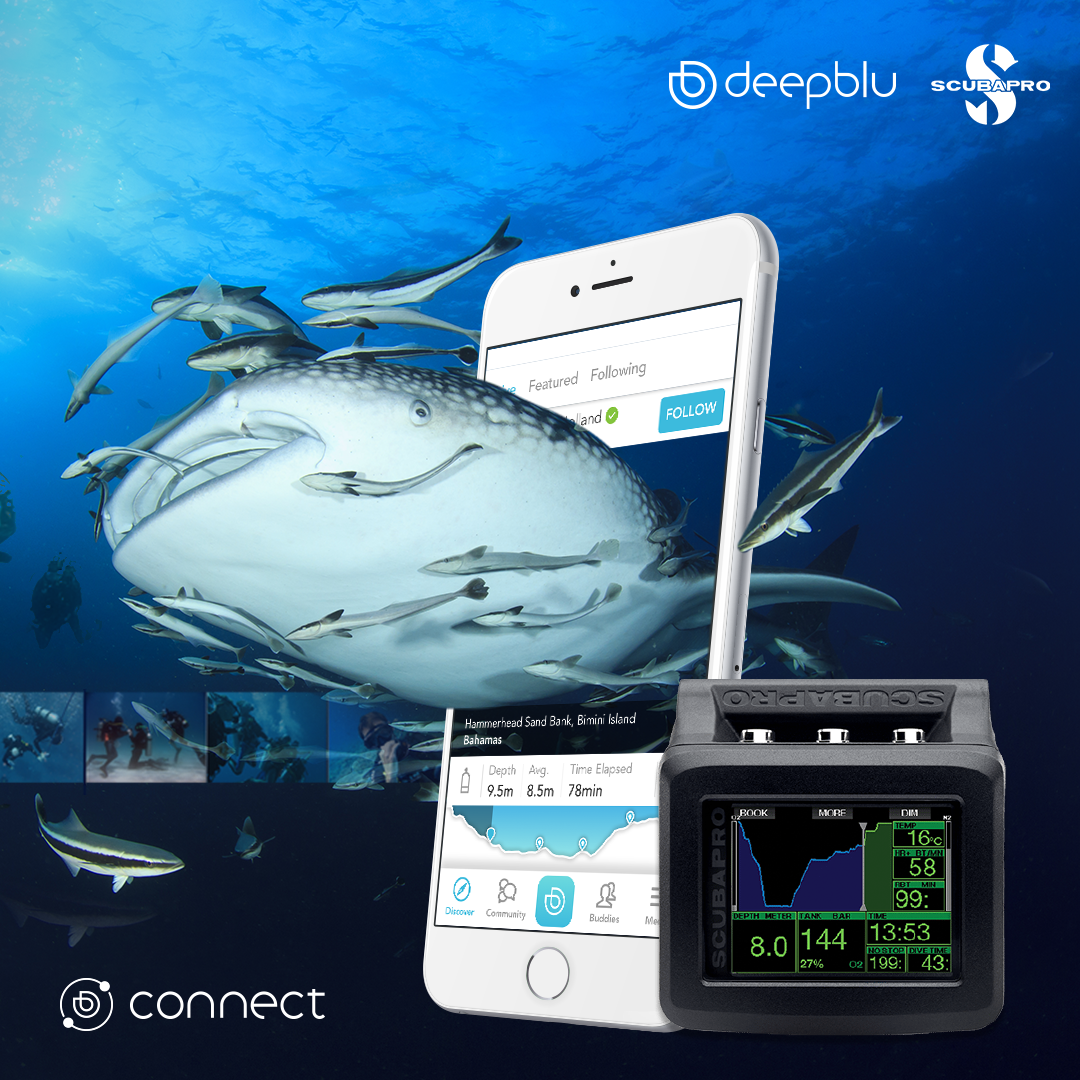
TAIPEI & SAN DIEGO, August 1, 2017 – Since its launch in November 2016, Deepblu’s rapidly expanding online community has grown to include tens of thousands of divers and ocean enthusiasts. Today SCUBAPRO, the most iconic name in dive equipment, became the first to support the newly introduced Deepblu Connect, a feature that enables the Deepblu app to wirelessly interface directly with SCUBAPRO’s line of Bluetooth-enabled dive computers.

With the push of a button, information from the SCUBAPRO Aladin Sport (Matrix), Aladin H (Matrix) or the newly introduced Galileo 2 (G2) is wirelessly synchronised with the Deepblu app and stored in customisable, digital dive logs. This includes dive profiles, tank pressure levels, temperatures, depths and times. Divers then can enrich their logs with underwater photography and videography, store them in the cloud, and share them with their peers in the Deepblu community.

“We wanted to make dive logging on Deepblu accessible and easy for everyone, so we designed Deepblu Connect to be a convenient interface for Bluetooth-enabled dive computers to work with the app,” said Deepblu CEO James Tsuei. “We are excited to pilot the feature with SCUBAPRO, one of the most reputable and forward-looking companies in the dive industry.”

New for 2017, the SCUBAPRO G2 blends beauty and simplicity with technologically advanced computing and navigation. It sports a high-contrast, user-configurable colour display, along with the intuitive menus and 3-button control system perfected in the original, award-winning SCUBAPRO Galileo. Along with Bluetooth and a long list of advanced features, the G2 incorporates SCUBAPRO’s patented Human Factor Diving, which can monitor heart rate, skin temperature, breathing rate and water temperature to generate extremely reliable no-stop and decompression-stop calculations. The G2 stores up to 1,000 hours of dive profiles and its rechargeable battery lasts up to 50 dives.

“For more than 50 years, divers around the world have looked to SCUBAPRO for the most innovative, advanced and intuitive products in the industry,” said Joe Stella, Group Vice President at SCUBAPRO. “Divers are connected by a passion for what lies below the water’s surface and our support of Deepblu Connect will help those who put their trust in SCUBAPRO’s dive computers to capture and share their experiences with the global community.”

Once dive logs are uploaded, recent updates to the Deepblu user interface make finding and tagging dive spots easier than ever. Divers can even leave ratings and reviews to help other divers, while gear enthusiasts can now complete their logs with information about nearly every piece of equipment they own.

Starting in August, Deepblu will hold a monthly dive-logging competition, allowing divers to earn badges they can showcase on their logs. The August winners will receive exciting prizes from SCUBAPRO, including a G2 dive computer and other industry-leading SCUBAPRO dive gear. To win, divers must accumulate praise for their logs from the Deepblu community and climb through the ranks from Dive Log of the Day to Dive Log of the Week and, ultimately, Dive Log of the Month. Details are available at https://events.deepblu.com/2017aug_logofthemonth/.

About SCUBAPRO:

SCUBAPRO is the iconic mark of the world’s most accomplished SCUBA divers, the preferred and recommended choice of elite diving professionals around the globe. Originators and innovators of exceptional dive gear, we build flawless diving equipment for the lifestyle and sport of those whose passion is found below the surface. Created by divers for divers, we’ve built a strong legacy of innovation and intuitive diver-centric design for more than 50 years. We believe that exacting commitment to performance, usability, safety, and design sophistication brings out the best in every underwater adventure.

About the Deepblu Platform:

Deepblu is the fastest-growing online community for divers and ocean enthusiasts. It was released in November 2016 at the DEMA show in Las Vegas and has since brought tens of thousands of divers together at deepblu.com.

About Deepblu, Inc.:

Deepblu, Inc. is the company behind the COSMIQ Dive Computer and the Deepblu community. Deepblu, Inc. is a team of divers and technology enthusiasts whose goal is to use technology and the power of the internet to revolutionize the diving community and lifestyle.

Contact:

Deepblu:

info@deepblu.com

SCUBAPRO:

info@scubapro.com


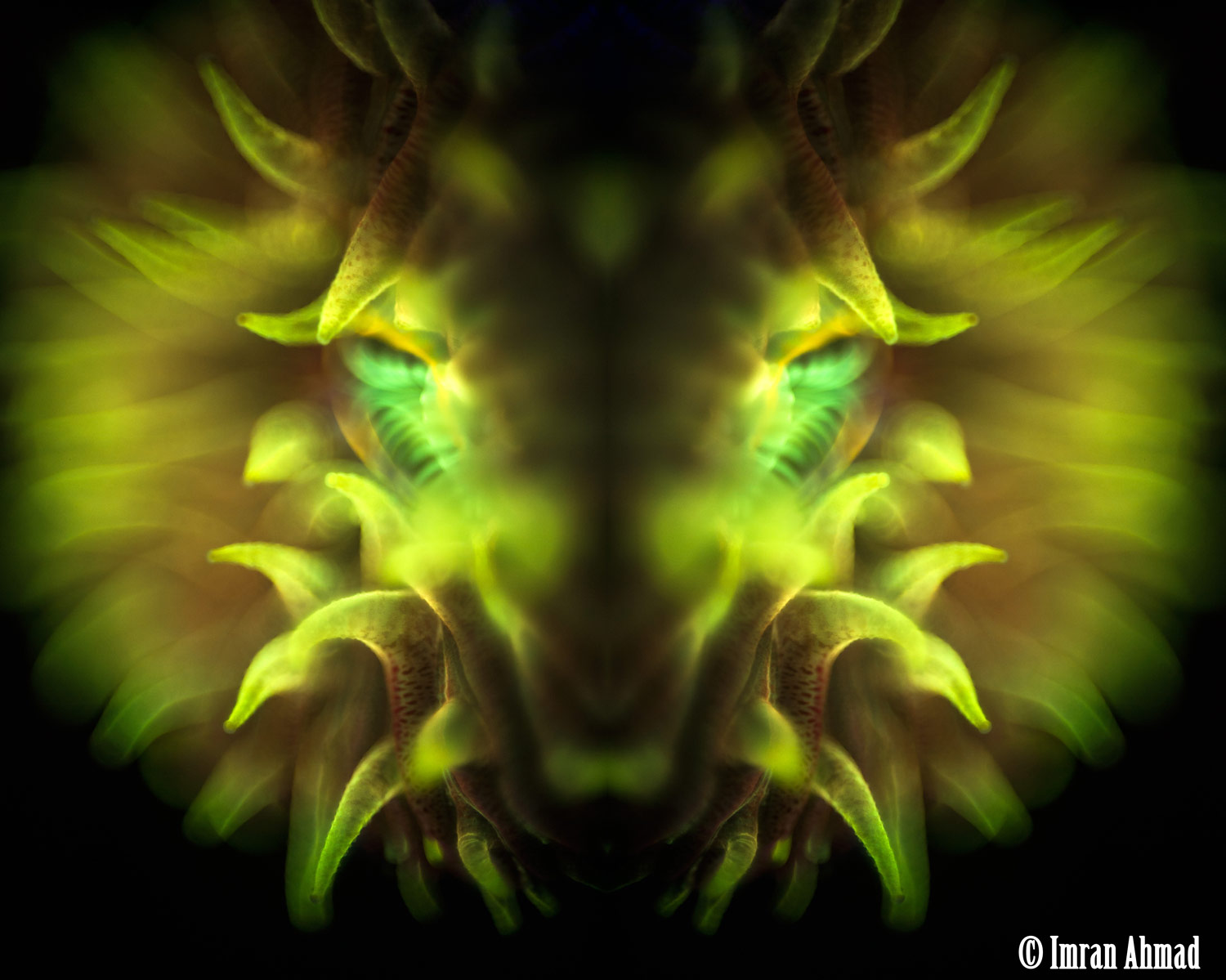
Underwater Photographer of the Week: Imran Ahmad

0

Imran Ahmad is one of Asia’s most celebrated and internationally published underwater photographer. He has been capturing the magnificence of life both below and above the waves for over 20 years. His style is different from anything seen. He is known for his experimental photography with light and motion. Imran graduated from Middlesex University with a Bachelor of Arts in Film Making. He is an ambassador for SEACAM, Blancpain Ocean Commitment, RGB Lights (Japan), Deepblu, and a member of the Ocean Artist Society. He spends much of his time as a professional photographer giving presentations, promoting photography in all its aspect, both as an art and documentation. He lives out of Kuala Lumpur, Malaysia, with wife and daughter, Izabell, all the while running various photography workshops around the world.

What made you want to become an underwater photographer?
A childhood dream and the idea that i could change the way people see and react to OUR ocean. To inspire, to educate and to excite my audience.
Your first underwater shot?
I’m not going to lie to you. It was so horrible and i drowned my Dad’s SLR, but it did not undermine my motivation. I did take a whooping from him but it was a stepping stone for me. I believe, you can learn from anybody and everybody. So I focused on what is important and tried to create my own style of underwater photography.

The story behind your most memorable underwater shot?

I’ve been blessed to photograph so many beautiful places, so much marine life and so many people. However, one of the most memorable moments for me was photographing Aldabra Atoll in the Seychelles. A place where the wildest and most beautiful wildlife come together. And of course, I cannot forget photographing my two months old daughter in the water similar to the “Nirvana” shot.
Where is your favourite dive destination?
It feels so natural when I’m in the ocean. When photographing underwater, Asia is where my heart is. From Indonesia, Philippines, Thailand, Malaysia, to Brunei. We have the best dives filled with reefs on steroids, as well as massive schools of fishes and a rich diversity of marine life. A place I call my home.

The site you’d most like to dive, but never have?

Hmmm… I’ve heard there are some very interesting sites in Russia but I’m still doing my homework. 

The weirdest thing you’ve seen underwater?

Hahahhah… when I see too many human beings in the water with bad buoyancy. 

What camera equipment are you currently using?

I’m blessed with a full SEACAM System, Nikon D5 / D4/ D3 DSLR with RGBlue lights, DeepBlu Cosmiq and SeaGods Wetsuit.

What is the highlight of your career?

Being able to help upcoming/ aspiring photographers, guiding them with new techniques and of course, sharing ideas and concepts with people.

… And the low point?

Pushing so hard to change perspectives and encouraging new ideas. Seeing how so much can change but it will not, or it will take more time as people are not yet ready to embrace change and new techniques.

Any advice that you’d like to give to aspiring underwater photographers?

The best shots are mostly thought through and it’s never just luck. Practice and learning how to anticipate are essential. Never be shy to ask a question, try different techniques and always respect your subject however big or small they are.

Is there any particular shot that you still want to get?

I’m simple, whatever god or whatever my clients throw at me. i photograph it with my heart and bring the best out of it. I believe in making the ordinary, extraordinary


Saving Sharks

0
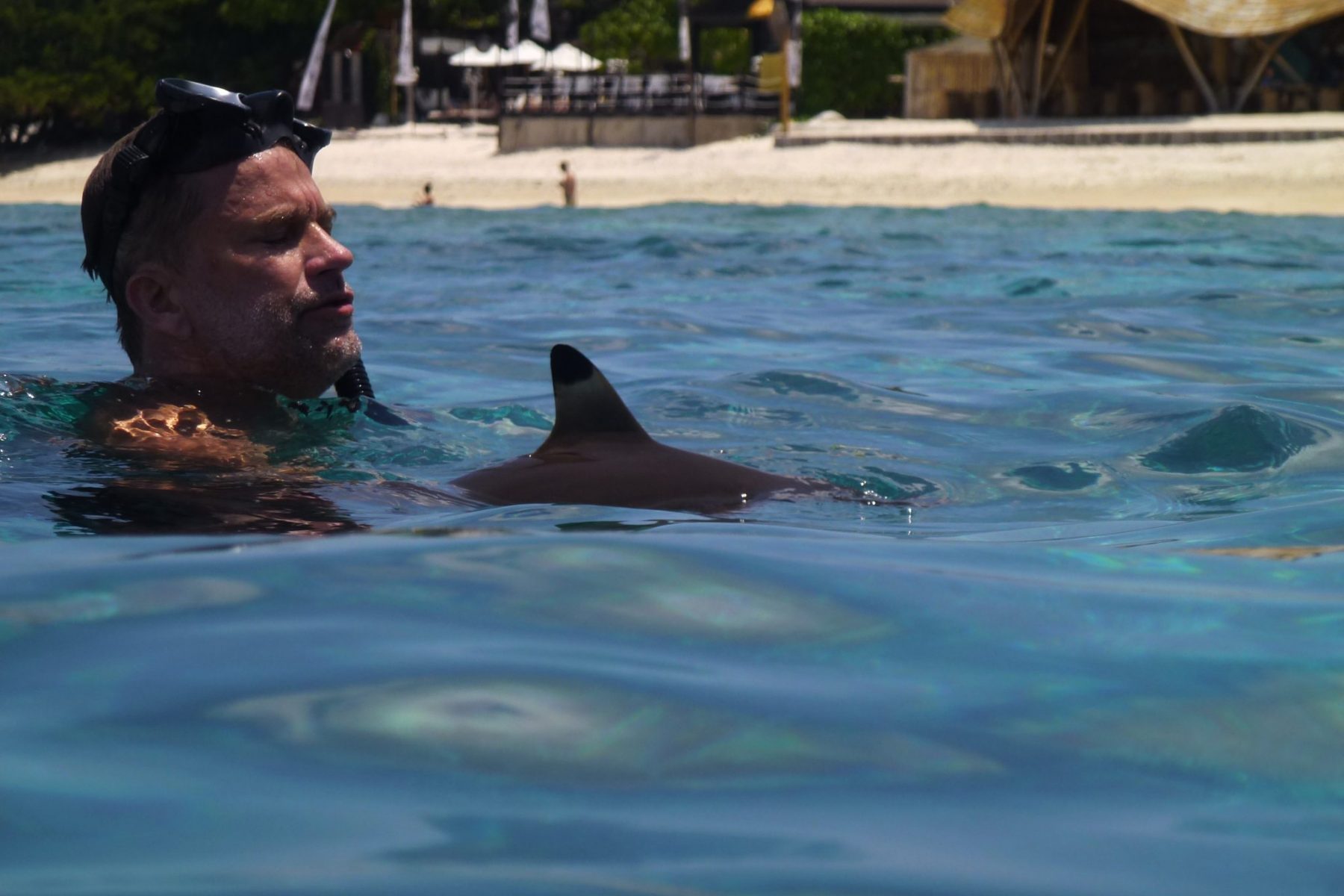
swimming with sharks
"Use our own unique talents to help make the ocean (and the rest of the world) a better place" © Paul Friese

When Paul Friese moved from Hawaii to Bali with the intention of starting a cage diving business, he had some high expectations of large shark populations and pristine, calm waters. Both didn’t turn out quite as expected. The waters off the shelf of Nusa Dua were rough, and the fishermen had caught wind of the high numbers in the area, so there were no longer many sharks… In early 2011, while pondering his next move with a few beers as the sun went down, Paul hit upon the idea of a shark nursery. This was drawn from his experiences of seeing dead baby sharks in the trash at the fish markets, as well as hearing tales that local fishermen would just kill any shark they caught – regardless of whether or not they sold the fins and meat – because they didn’t know what else to do with them. While one could be disillusioned at such experiences, it made Paul all the more determined to help make some sort of change in a country dubbed the top “shark catcher” in the world (labelled such in a 2011 analysis by TRAFFIC and the Pew Environment Group). Paul proceeded to spread the word, and soon he was responding to calls from fishermen who had caught baby sharks in their nets. With a small financial incentive – but certainly not enough to constitute a bounty – and by providing an alternative to killing them, Paul began to take sharks off their hands and place them into his rescue centre. Soon enough, many fishermen were just leaving sharks at his door as gifted by-catch, and many others would receive no compensation because of the logistical cost of taking the sharks over to the centre. He also began contacting restaurants with shark aquariums, encouraging them to give him the confined creatures – which, surprisingly, many of them were keen to do. The sharks could be unruly prisoners, splashing water in their clients’ dishes… At his centre, the sharks are released when they become large enough to fend for themselves (blacktips are released at 0.8m, whitetips at 1m). Today, Bali Sharks has saved 240+ sharks, with 180 of them having been released into the wild so far. To keep afloat, Bali Sharks operates eco-tours as people are allowed to go and familiarise themselves with these creatures, and even swim with them.

What motivated you to start a rescue centre for sharks?

I was under the impression all these NGOs were actually saving sharks: Helping to nurture their populations in a protected environment (e.g., babies saved from fishermen), and then releasing them into the wild again. They do a lot of things but in my mind it made sense that something like that would be one of their many programmes. To my surprise, none actually do. I figured that I’ll just do it and create a viable strategy that makes sense. The centre happened by situational accident as I was originally going to do a shark cage. But once news got out as to its whereabouts, the sharks would get fished out nightly and that’s how the rescue centre came about. A place to keep fishermen out. Sort of took off from there. When the sharks are healthy and large enough – and bear in mind many sustain injuries from when they were caught – they are released into marine protected areas in offshore islands. We’ve now saved 240 sharks.

Tell me about some of the programmes and initiatives by Bali Sharks.

One of the recent things is mercury testing. This really seems to be a viable opportunity in educating government agencies and consumers, and may lead to some favorable decisions in curbing demand. Fortunately for me, the Bali Seafood Lab is nearby. They were startled when I brought in shark fillets, but after the test results they were pretty grossed out. [The results were published in February and reveal mercury levels above regulatory limits of 0.5/1.0 ppm (parts per million); see downloads]. I figure that later in the year I will expose the results with news agencies with the same purpose – to gross out consumers who can then put pressure on the protection agencies to make responsible decisions for people’s health, instead of covering it up… “business as usual”. Worse comes to worse, at least consumers will know what is really in their “fish-n-chips”.

What sort of impact do you think the test results will have, and how useful will they be in influencing the legal and educational sphere?

I have yet to share it here in Indonesia, but I will with the Ministry of Fisheries, a few consumer groups, and possibly celebrities, who can make short clips explaining the results. I’m going to have to sort much of it out myself though. I’ve contacted fairly progressive groups like Conservation International and WildAid, among others, about doing an educational research campaign on the mercury stuff, but they haven’t been too keen so far. As for legal action? Indonesia is too corrupt; they will just accept money from the violators to bury the results. Singapore claims their shark product is from sustainable sources in Europe and the USA. [Singapore’s shark fin traders at the Maritime and Port Authority have made this claim according to WWF Singapore.] I recently went to Jurong and Tekka markets – the sharks that are going into local consumption are obviously coming from fisheries in neighboring countries, so we can only imagine it is tainted with neurotoxins. Once the connection is researched a bit more, it will be time to get answers from the government agencies that seem to be lame ducks giving irresponsible answers to consumers. [WWF Singapore recently debunked the claim about Singapore getting shark product from sustainable sources. According to Singapore’s own trade data, Spain, Namibia, Uruguay, Hong Kong and Indonesia are the top import markets – all of them do not have sustainable shark fisheries.]

What are some initiatives that Bali Sharks have undertaken on the supply side?

We did some airline strategies to get Garuda Indonesia, Philippine Airways, Thai Airways and others to stop shipping fins and manta gills. We also sent a correlation risk report to UPS regarding shareholders and the US Foreign Corruptions Act in which they also banned shipping (airline companies trading on US stock markets might have been in violation of the Corruptions Act since most fisheries are involved in Illegal, Unreported and Unregulated Fishing, IUU). I have a bit of an economics background, so these distribution channels make sense for me to mess with. Ultimately, educating end user suppliers and disrupting distribution channels is all apart of the process that helps curb the demand for shark fin and meat. In 2013, we caught wind of photojournalist Alex Hofford out of Hong Kong, who wrote a blanket letter and got positive results. Since we had Bahasa speaking staff, we consulted with him about letting us go after Garuda Airlines. I didn’t want to encroach on or claim his efforts, but he gave me his blessing to see what might happen. Over a 15 minute Deli Sandwich, I whipped up an online petition (at change.org) asking Garuda Airlines to stop shipping shark fins. In that weekend alone, they received over 2,000 emails asking them to stop. They figured that the only way they could stop the emails was to announce something. Sure enough, in the next week, WWF announced the CEO of Garuda as a newly appointed board member and praised them for stopping the shipping of shark fin. Kind of strange they didn’t announce it themselves, but we pushed them and Garuda made an official announcement a few weeks later.

Have any of your activities led to arrests? 

I sent a lot of evidence to government agencies that led to arrests and tougher regulation. Content is king. There are anonymous ways of getting pictures, videos, and content into the right hands of the news agencies, social media, and correct government officials that can do something. You’re leveraging them by getting the news out to the public, forcing, exposing or even embarrassing them to create the changes. Before 2014, none of this was available in Indonesia, but with Joko Widodo as President and Susi Pudjiastuti as the Minister of Fisheries, they are open to making changes. They don’t like to see videos on YouTube titled “Indonesia kills another endangered species” featuring the killing of a pregnant thresher shark and finning the unborn pups. In 2013, while filming Benoa Harbour’s commercial fishery boats unloading catch, it appeared slaves were being taken onto the boats. We sent the footage to the news agencies who successfully investigated and began reporting it. Later, Ibu Susi sent the Navy, who boarded the first IUU suspected boat. They found the slaves; the captain proudly gave them 30 brand new Indonesian passports for the crew. Problem was that none of the crew could speak Bahasa; they were Malays, Pinoys, Vietnamese, Sri Lankans, Thais, etc. The rest is history. READ MORE.

Let’s look at the bigger picture. What is the state of things now regarding shark trade/fishing in Indonesia?

During the last IUCN Conservation Congress in Honolulu, it was a shocker to find out what CITES [Convention on the International Trade in Endangered Species of Wild Fauna and Flora] determines to be an endangered species has no relevance to actual laws which are up to actual countries to make and enforce. Indonesia abides by CITES rulings on no fishing for endangered sharks, but there is no regulation. There is a black market going on with finning and illegal species due to lack of transparency, which Singapore is guilty of, too. Within the past 12 months, I have personally seen Indonesians kill several whale sharks (two actually during the World Ocean Summit held in Bali), threshers, hammerheads, makos, etc. While CITES determines what is endangered, there is a disconnect and it does not filter down all the way through countries to actual fishing villages. The fisherman “don’t get the memos,” they don’t read newspapers, they don’t have Facebook or smartphones for that matter. They are out there trying to survive, put food on their plates, send the children to school – it’s brutal for them. They will hunt anything they encounter. So there are several legal violations going on due to the transparency voids. IUU fishing methods are prevalent all over the world and I’m still not sure any countries are immune to that. Despite the regulations and bans in place (like in Raja Ampat for some species), there is and there will always be a black market. But an additional reason to ban – and one that would be good on the educational front – would be the high toxicity levels in shark products. There needs to be consumer protection! Maybe this could be an angle to reduce the number of consumers, which would then force a reduction in sourcing/fishing for sharks.

In moving forward to a sustainable future, do you think it is realistic to get fisheries certified as sustainable by a third party. This is something WWF agrees with and they point to the Marine Stewardship Council (MSC) as that certifying body. So far, I only think one has been certified – US fishery for spiny dogfish.

I’m not too familiar with the MSC, but it stands for progression. You’d think there could actually be sustainable shark fishing, but probably not with all the tech-advantaged ways to fish – long-lining, trawlers, purse seines – these decimate the numbers. As far as aqua-farming, it makes no sense because sharks take too long to turn over. I believe the Port Jackson sharks in Australia might be the closest example due to their regulations in place. Not sure if they are farmed. For me, with a background in economics and fisheries as a business, it doesn’t seem viable as reproduction takes too long. If MSC actually certifies a shark fishery, I would love to hear how they reached that. It would have to be pole and hand line caught for starters, which is doubtful…

Is there a final message you would like to impart to our readers?

Well, a great lady of inspiration taught me and others to use our own unique talents to help make the ocean (and the rest of the world) a better place. Hopefully, in some way, I fit under that, but I agree with the message. To add to it, as consumers, we make little decisions that actually have huge impact. Using one bottle, taking your own toothbrush instead of using the ones in hotels, etc. We have to sharpen skills as responsible consumers, that’s our challenge. Be progressive in your thinking and actions. By the way, it was Dr. Sylvia Earle that taught me that. She also told me to “keep fighting for our oceans!”

Underwater Photographer of the Week: Sevil Gürel Peker

0
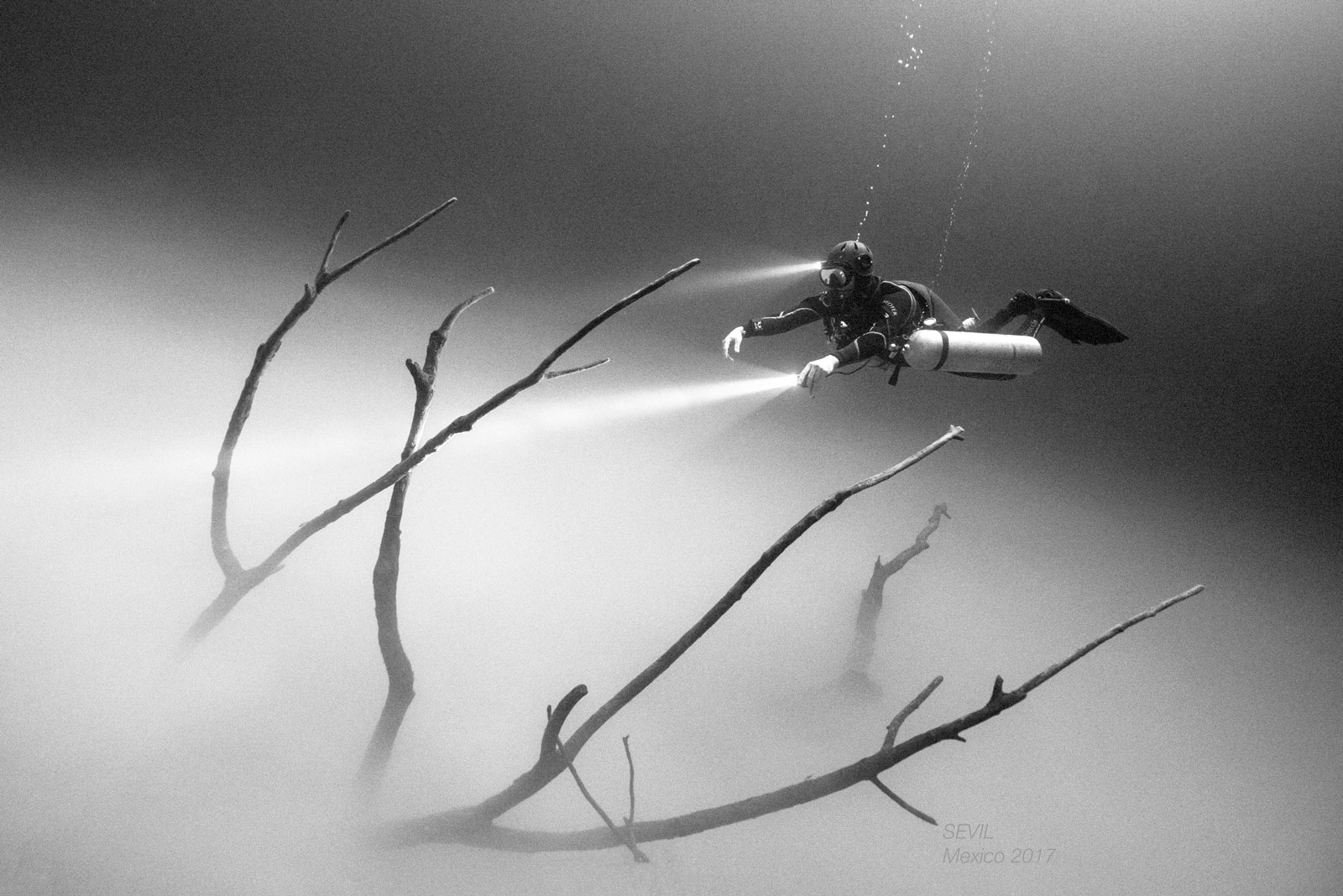
underwater tree
"It was as if a tree was floating in space. Last year, while I was diving in the Cenotes, in Mexico, I saw the same scenery..." © Sevil Gürel Peker

Sevil Gürel Peker is an underwater photographer from Istanbul, Turkey. After studying Archaeology and Art History, she worked on many surveys documenting underwater artefacts, both in the Mediterranean coast off Turkey and Northern Cyprus. During those years, the richness and the intelligence of underwater life, as well as the many alluring wrecks – ancient and recent – grabbed her attention. With a captivation for our blue plant secured, underwater photography was the next logical step. Since starting her underwater photography journey in 2010, she has taken an array of eye-catching photos, and some of them have been ranked in several international photography competitions.

What made you want to become an underwater photographer?

During surveys as an underwater archeologist, we needed to take photographs for collecting data. They were used for categorising and documenting the findings. I did not like the pictures that came out; they did not reflect what I had seen during the dives. I wanted to take better ones, and this is one of the reasons why I wanted to become an underwater photographer. The other reason is that for many years, diving has been the source of joy in my life. And I was deeply in love with the underwater world. I wanted to share this joy with the rest of the world.

Your first underwater shot?

As an underwater archaeologist, my first photos were of Greek, Roman and Byzantine artefacts. However, these first shots lacked clarity and detail which led me to explore macro photography.  With macro, I was happy to get the results that I wanted.

The story behind your most memorable underwater shot?

I had seen a photo which I fell in love with instantly ten years before this shot. I had no idea where it was taken, but it gave me the feeling that it was from another planet. It was as if a tree was floating in space. Last year, while I was diving in the Cenotes, in Mexico, I saw the same scenery that I had seen in that photo. There I was, at the spot where one of my favourite shots was taken. I was filled with awe and gratitude.

Where is your favourite dive destination?

Among the many places I love to dive, Malapascua stands out. A rare species, the thresher sharks, come up to 30 meters before sunrise for a brief time. To be present at those hours and to witness this magical routine of nature is an intense experience.

The site you’d most like to dive, but never have?

I would love to dive in the Bimini Islands, as I love warm waters.

The weirdest thing you’ve seen underwater?

In the Philippines, Anilao, I witnessed three nudis in a bizarre situation. The biggest of them was swallowing the smaller nudi while the third one was holding on to the victim’s body as if it was trying to save it. It was so weird to witness this drama. Although I am aware of nature’s laws, this still touched me and I could not really shoot much because I was so absorbed by this scene.

What camera equipment are you currently using?

My latest equipment is Nauticam housing for Nikon D810, Inon Strobes Z_240, Nikon 60 mm, and 105 mm for macro 16 mm fisheye and 16-35mm for wide angle.

What is the highlight of your career?

I have been lucky to be in the team that set up the first virtual underwater museum in Turkey. This museum will showcase the archeological sites of the Mediterranean coast of Anatolia. My contribution is to photograph the findings such as amphoras, piles of potteries which are turned into 3D. This is an amazing project for it brings the historical and the ecological richness of these waters to all people.  All they need is to go on the Internet and walk into this underwater museum to enjoy the sites.

And the low point?

Interestingly enough, the low point is also related to this virtual museum. It has been seven years since this project started up but we have not been able to complete it yet due to economical and political challenges.

And the low point?

Interestingly enough, the low point is also related to this virtual museum. It has been seven years since this project started up but we have not been able to complete it yet due to economical and political challenges.

Is there any particular shot that you still want to get?

I would love to shoot a Sardine run once again to reflect this incredible phenomenon that takes place underwater. Last time, we were not lucky enough to shoot everything that was going on; garnets, dolphins and sharks, all the predators running for sardines. I would love to try once again and capture the essence of this exceptional play of nature.

Any advice that you’d like to give to aspiring underwater photographers?

I suggest that they form a strong network of underwater photographers and spend time with them. The exchange of ideas and experience is what will help them grow as photographers.

Underwater Photographer of the Week: Pete Mesley

0

Pete Mesley has always loved the thought of diving below the waves. But it wasn’t until he was living in London, England, when a friend was heading out of the door to do a dive course, that the idea materialised. Pete saw the opportunity and asked if he could come along, and it only took the pool dive that evening for Pete to get hooked. This was June 1990, and Pete hasn’t dried out since! He became a dive instructor and soon made it his full-time career within the dive industry.

He moved to New Zealand in 1994 with his Kiwi girlfriend (now his wife) and got work as a training manager of a dive store. Pete was soon to become New Zealand’s first technical dive instructor and rebreather instructor, and later became an instructor-trainer in 2000, helping others become dive professionals. In 2005, he became self-employed and formed the company Lust4Rust Diving Excursions, taking people on wreck diving trips all over the world. To date, he has had the pleasure and privilege of diving some incredible locations in over 25 different countries. Underwater photography has long since been a major part of his business. It is also a passion for which he is constantly trying new ideas and techniques to make unique imagery.

What made you want to become an underwater photographer?

I originally got into underwater photography because I was absolute rubbish at “spidge collecting” [artefact recovery]. I learnt to dive in the UK back in 1990 when spidge collecting was a common pastime for divers. It didn’t take long for me to realise that I was far better suited to taking pictures than recovering pieces of brass from the bottom of the ocean. And besides, I got invited on quite a few trips knowing that I wouldn’t recover anyone’s brass!

Your first underwater shot?

Difficult to say, really. Most of them were rubbish – underexposed, blurry, brown images of the English Channel. I do remember the occasional “dead man’s fingers” [a species of soft coral]. It is quite funny to look back over one’s archived images over the years and to see the progression. I almost cringe when I see earlier images, noting how bad I was, but it’s all through taking pictures, learning and bettering oneself that makes us get to where we are today. But I don’t think we ever stop learning how to better our shots. Besides, we are all our own biggest and harshest critiques. I just love looking at other people’s images and seeing how they have interpreted what they want in the image.

The story behind your most memorable underwater shot?

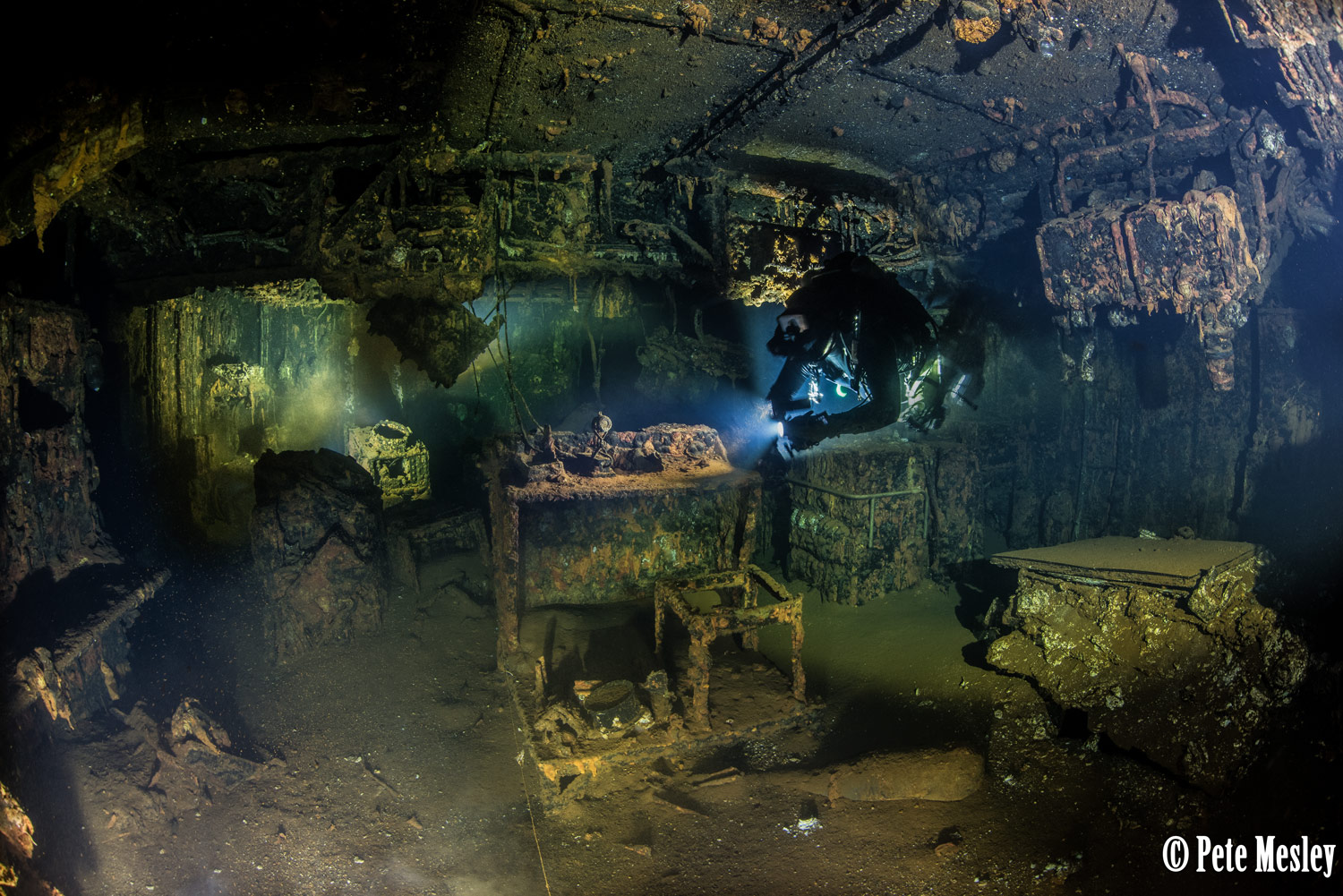
This image took a little over five years to make. I first got the idea in my mind as I entered through the top skylights of a well known wreck in Truk Lagoon called the Nippo Maru. The shot I had in mind was illuminating all the stairwells leading down into the bottom of the engine room. Visibility is normally not too bad in this area, but being a popular wreck everyone would make their way into this fantastic space inside the wreck. With that said, all the debris would be kicked up and the area would be reduced to 1-2m of viz within minutes. So it quite literally took me five years to get everything right. The image took six 15K-lumen lights and my camera secured to the ceiling – long exposure, multiple image stitching and hundreds of attempts to get it right!

Where is your favourite dive destination?

This is impossible for me to answer seeing that each dive destination is totally unique in itself. So allow me to rephrase the question: “What are your most memorable dive destinations? By far, Truk Lagoon has some of the best dollar for dollar value wreck diving on the planet. Having over 1,500 hours diving experience in this area, I still get goose bumps thinking about diving there. The wrecks aren’t that deep so most of the time is spent penetrating the wrecks as opposed to sitting and decompressing on a line. These are true wartime wrecks, but mostly merchant transporters, so not many naval war ships. There’s also nothing quite as exhilarating as diving a fleet of battleships, aircraft carriers, submarines, and destroyers sunk by nuclear bombs. Bikini Atoll is probably one of the highest “bucket list” wreck destinations in the world, and quite rightly so. Known by many, dived by few, this truly is an amazing destination. Come to think about it, something completely different is diving 158-year-old wooden schooners sunk in the Great Lakes in the US and Canada. These wrecks are all sitting completely bolt upright and were sunk by no act of war, just bad weather. And when I say they are in a pristine, immaculate condition, that would be an understatement. You could quite literally float these wooden relics, put a sail on them, and they would sail the waters again! Well, maybe not quite, but you get the picture. Probably one wreck that stands out amongst the crowd is HMHS Britannic. Sister to the Titanic, this elegant lady is certainly not only one of the most historic wrecks in the world, but also the most picturesque. Having completed over seven dives on her over two expeditions, it is this wreck that holds some of my greatest memories.

The site you’d most like to dive, but never have?

There are many wreck destinations that are on my “hit list” – Croatia, the Baltic Sea, Norway, Jutland, and so forth. But I guess one of the highest bucket-list dive destinations has to be Antarctica. It is one of the last wildernesses and to photograph icebergs would be a dream come true.

The weirdest thing you’ve seen underwater?

The weirdest sight I saw while on a dive was while diving the Poor Knights Islands, New Zealand, some years ago. I came across a giant ball of what we later found out to be arrow squid eggs. At first we thought it was giant squid eggs, but tests showed it to be arrow squid. It was a 3-4m diameter ball of jelly with millions of larvae inside the ball. Truly a spectacular sight.

What camera equipment are you currently using?

At the moment I use a Nikon D810 camera with Sigma 15mm lens in an Aquatica housing with 8-inch dome port. When I use strobes, I have Inon Z-240’s, but I don’t use strobes that much these days. I prefer to use off-board lights and currently use 15K-lumen Big Blue lights.

What is the highlight of your career?

The highlight of my career was when I was asked to be a part of a National Geographic Expedition to dive and photograph HMHS Britannic in 2009, which consisted of a team of 10 technical divers from all over the world. This was without a shadow of a doubt the best, most memorable part of my career.

… And the low point?

The lowest point was the exact same trip to Britannic. It was this trip that I lost my good friend, Carl Spencer, who was the expedition leader of the trip. Carl died tragically while conducting a 118m dive on Britannic. His loss still cuts deep within the diving community and to this day all that knew Carl carry fresh emotional scars of his loss.

Any advice that you’d like to give to aspiring underwater photographers?

Once you know the basics of photography, try and find your own style. There are many rules in imagery – rule of thirds, three elements to an image, and so on – but at the end of the day, take something that looks pleasing to your eye. Forget about the rules and just say to yourself, “How do I want to showcase this image?” It is easy to look at other people’s images and copy them and replicate a shot. This is fine, only if that’s all you want to do. But try to see the image through your own eyes and take the shot that pleases you, making it your own. And don’t forget to try new things, experiment with off-board lighting, ambient light, etc. And have fun!

Is there any particular shot that you still want to get?

Absolutely! I have a list of many, many images that I am constantly trying to achieve. It’s what brings me back to dive sites many times. When I am in the water, all I want to do is, in a shot, portray the essence of the scene. To capture an image that best depicts the subject. For example, wreck diving plays a massive role in my interest for diving, so when I take a shot of a wreck, I want to showcase what stands out in that wreck. Is it an amazing engine room? Or a majestic bow, or cargo of 500lb bombs racked up in the holds? I spend countless hours thinking how I will get the shot I want. Then I try, try again, and again, till I get the shot. If I don’t get it on the day, this will keep me wanting to come back. For more information on Pete’s trips and imagery go to www.lust4rust.co and www.petemesleyphotography.com.

Imagining and Living the Possibilities in Life

0

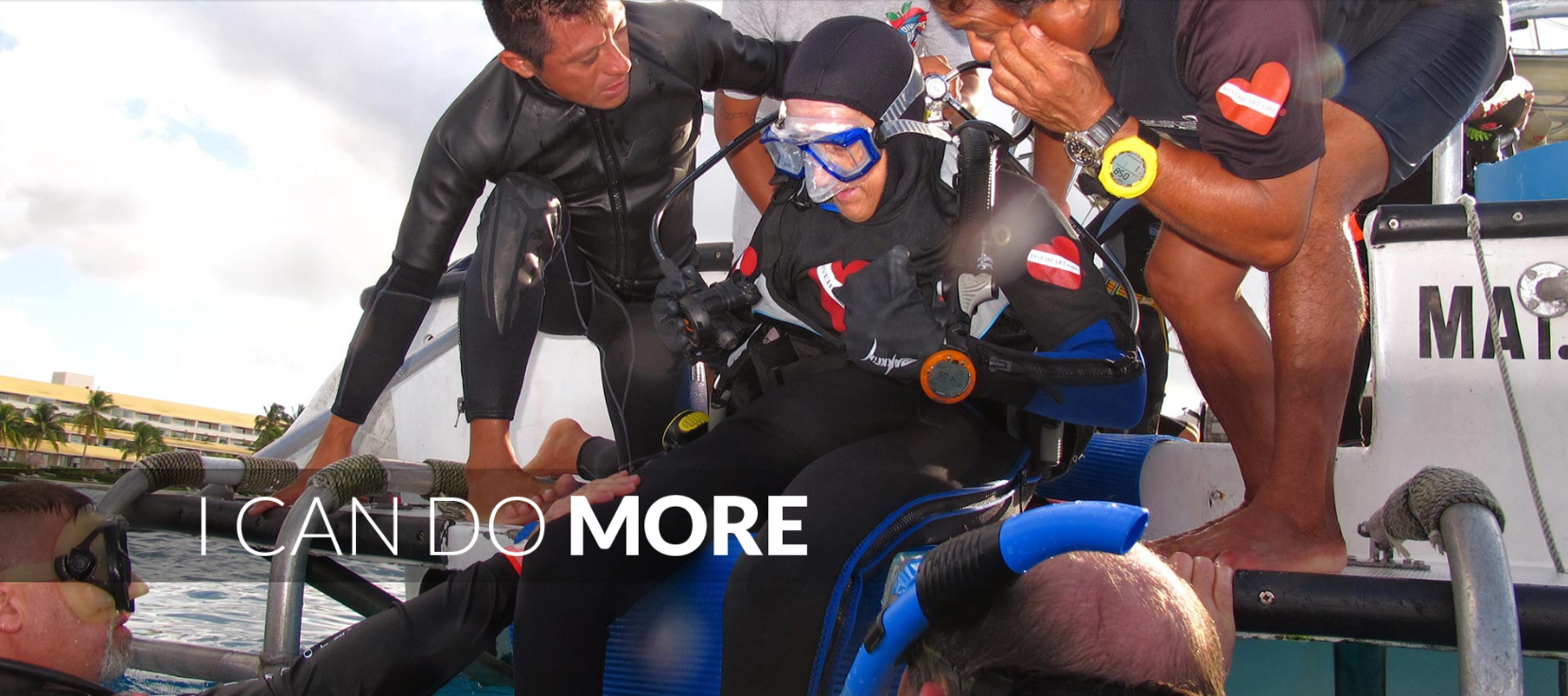
Many of us go through phases of depression or anxiety, and feel constrained and limited in opportunity, sapped of a zeal for life. Then, there are those of us who face physical as well as mental disability. Whatever one’s desire in life, it can be pretty hard to achieve it with impairment such as cerebral palsy or the absence of legs. But that said, you may find that some people with disabilities have a different perspective: While we see a disability, they see ability, opportunity and challenge. That hunger to do more, which humbles us when we see it among people we consider disadvantaged, is an attitude commonly found among the participants at Diveheart. Diveheart is an inspirational organisation that invites children, adults and veterans with disabilities, and takes them scuba diving. With the help of certified adaptive dive buddies, the underwater world, with its absence of gravity, enables people to float and take in the aquatic wonders, or to move their limbs in ways they haven’t done in years, or have never done. It’s called scuba therapy – and the programmes at Diveheart are a testament to its success. In the underwater world, disabilities go out of the window – a person is just a scuba diver, like anyone else. The experience of diving excites and inspires many disabled people. The aim of Diveheart is to open their minds to this new world, and to have that excitement and enthusiasm translate to their wider lives as well. If they can conquer one challenge, then they can conquer another, and another.  Diveheart was founded in the USA by Jim Elliott. When Jim left college, he embarked on a successful media career with the Chicago Tribune, WGN Radio and CLTV News. But in 1997, he packed it in and started teaching people with disabilities. He was inspired a great deal by his own experiences – his daughter was born partially blind. She had a pretty tough time at school with bullies and she grew frustrated at being treated differently. When she was nine, she could just about read letters two inches from her face, and she threw down her cane and declared to her dad that she wasn’t going to learn Braille. Jim had previously found out about a blind skiing group and had been volunteering there for quite a while. Inspired by his daughter’s positive attitude, he signed her up immediately. She got the hang of it pretty quickly, and was soon inspiring her classmates with pictures of her skiing down mountain slopes. With Jim’s desire to help disabled people unlock their potential and confidence, the diving aspect came in a bit later, and in 2001, he officially set up the non-profit charity called Diveheart. Jim had actually started diving in college while doing his journalism major – he thought it prudent to preempt that possible interview with Jacques Cousteau, where he would have to know what he was talking about. While the interview may not have happened, a passion for life certainly emerged. Remembering that compulsion that he felt, and alongside the experiences of teaching blind skiers and the very personal experience of teaching his own daughter and seeing improvements in her, a light went on in Jim’s head – to start up an organisation that invites disabled people to scuba dive. Jim recalls the idea, saying, “All the time I’m thinking, ‘Right, from my experience [learning to dive] in college, what happens if we get them out of their wheelchairs, get them in the water and teach them how to dive?’” With his passion for helping disabled people, a love of the underwater world, and a big leap of faith, Jim decided to leave his career in the media world and devote himself full time to teaching the disabled to scuba dive. Such is his commitment, and his sincere belief in what he is doing, that he doesn’t take a salary. In doing so, he hopes to inspire his team by setting an example for them and other non-profit leaders.

Jim Elliott discusses Diveheart and his story at TEDx What sort of disabilities do you cater to?

Diveheart does not discriminate when it comes to disabilities. We help people with all physical and cognitive disabilities.

How has Diveheart progressed over the years?

Diveheart has grown steadily and responsibly, being good stewards of all donated resources. Hence, Diveheart has been able to inspire and change the dive industry as well as the rehabilitation and medical community.

What are some Diveheart’s activities?

  1. Conducting scuba therapy research with university medical centers
  2. Running Diveheart Scuba Experience programmes for those with disabilities around the world
  3. Planning to build the deepest warm water therapy pool in the world for research, rehabilitation, education training, and to provide vocational opportunities
  4. Promoting and inspiring other Adaptive Scuba Therapy programmes
  5. Using the Diveheart Adaptive Scuba training programme and materials to train and inspire instructors and dive buddies around the world, growing Adaptive Scuba programmes everywhere and serving local communities of people with disabilities
  6. Creating Adaptive Dive trip opportunities to give instructors, buddies and Adaptive divers the experience they need to safely conduct Adaptive Scuba programmes.

Give me some notable examples of individuals you’ve seen improve as a result of Diveheart’s help.

  1. Nick: Scuba Therapy and Autism
  2. Greg: Scuba Therapy and Traumatic Brain Injuries
  3. Ian: Scuba Therapy and pain relief
  4. Robert: Scuba Therapy and spinal cord injures
  5. Gold Star Families

There are many more stories in the Diveheart Media Kit (PDF download) or the Diveheart YouTube channel.

What responses have you received regarding scuba diving as a therapy? 

It’s been amazing. Divers, instructors, therapists, researchers and those in the medical community are blown away by what we’ve done and our vision and mission for Scuba Therapy.

Have you received attention from other institutions (academic, hospitals, etc.) concerning scuba therapy?

Yes, we’ve hosted six Adaptive Scuba Symposiums, which have featured professors, physicians, researchers and others in the scuba therapy world and been part of over a dozen scuba therapy research projects done by university medical centres. Many of the studies are videotaped and available on the Diveheart YouTube channel.

Do you operate outside of the US?

Yes, we are worldwide. Last year alone we launched programmes in Malaysia, Singapore, Philippines and Honduras. Since 2001 we’ve done programmes in China, Australia, Israel, the UK, all over the Caribbean, and in hundreds of cities around the U.S.

What does the future hold for Diveheart?

We hope to revolutionise rehabilitation through zero gravity and Scuba Therapy. We hope to inspire people of all abilities to “Imagine the Possibilities” in their lives, thereby inspiring others in their communities and around the world. The deepest warm water therapy pool in the world will help make that happen.

Cover photo © Diveheart 

The Aquatica AGH5 Housing for the Panasonic Lumix DC-GH5 camera

0

Press Release

DESIGN AND R&D

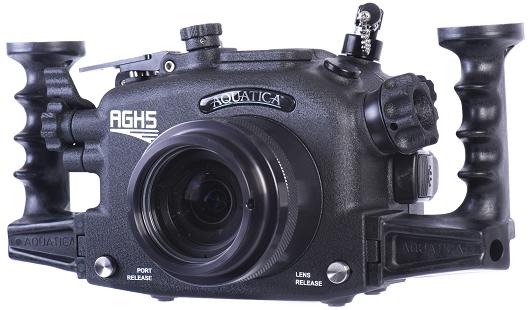
The Aquatica AGH5 housing is built with high quality materials and craftsmanship. Building up on the initial Aquatica GH4, the GH5 version has improved ergonomics, a versatile port system, a rugged yet compact design.

About the Panasonic Lumix DC-GH5

 20.3MP Digital Live MOS sensor

 4K Video Capture

 5-Axis In Body Image Stabilization

 0.76 x 3.68m-Dot OLED Viewfinder

 Durable Magnesium Alloy Body

 12 FPS Continuous shooting

 Built-in Wi-Fi & Bluetooth

 3.2” LCD monitor

Self-aligning controls

Another great improvement over our previous housing is new self-aligning controls. With the AGH5 housing you do not need to align the controls on your camera before closing it. The On-Off and the Focus mode levers are spring loaded and designed to ”find their own way” once the housing is closed.

Ergonomics The Aquatica AGH5 housing has a new Shutter lever design, this gives a much easier access to the front dial control knob. As the ISO and WB on the camera are key controls for video shooting, two levers were positioned right under your thumb for quick access to these important camera functions.

Ergonomics The Aquatica AGH5 housing has a new Shutter lever design, this gives a much easier access to the front dial control knob. As the ISO and WB on the camera are key controls for video shooting, two levers were positioned right under your thumb for quick access to these important camera functions.

Flash triggering options

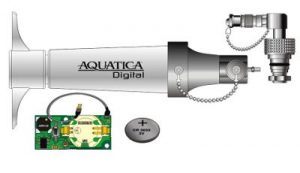
We prioritized a lower profile and more compact housing. The AGH5 housing comes standard with a new improved and self-powered flash trigger when ordered with Optical connectors. This flash trigger is powered by two lithium coin cell batteries that will give you a minimum of 15,000 flashes per set. The OPT version is designed to trigger strobes optically by firing low power consumption LEDs. The AGH5 housing optical bulkhead plate can be swapped to accept a Nikonos or an Ikelite style connector as an option.

#35000-OPT Aquatica housing for Panasonic GH5 with Dual Optical connector

#35000-NK Aquatica housing for Panasonic GH5 with One Nikonos connector

#35000-IKE Aquatica housing for Panasonic GH5 with One Ikelite connector

Surveyor moisture and vacuum sensor

The Aquatica AGH5 housing comes by default with our Surveyor moisture and vacuum monitoring sensor circuit installed at the factory. The housing can also be ordered with the optional pressure extracting valve and pump. A visual and audio signal will alarm you should any of the O-ring become damaged or hindered by sand, hair, or any foreign objects that would compromise the sealing integrity of the housing. All that is required are a few simple steps for your peace of mind and knowledge that your equipment is safely protected from the environment.

Viewfinders

The Aquatica AGH5 is supplied with a compact eyepiece. This high quality and coated optical finder gives a bright and full view of the view finder. For those seeking the ultimate viewing experience, the AGH5 is compatible with the optional Aqua View Finder, available in straight or 45 degrees version. Among the best in the industry, they can easily be installed in a matter of a few minutes by the user. The enlarged and enhanced image provided by the Aqua View Finder is second to none in clarity; it provides the photographer with tack sharp corner to corner viewing of the camera view finder for composing and critical focusing.

Safety Latch

We have incorporated Amphibico’s latching system to the AGH5. This straight forward push, rotate and locking latch has been used on over 10,000 Amphibico and Aquatica housings for decades now. Its rotary cam action, coupled with an additional security mechanism means that logically, any unintentional opening is prevented from happening. This latch system is arguably one of the best closure system ever designed for an underwater housing.

MAIN FEATURES OF THE AQUATICA AGH5 HOUSING

Exceptionally good and ergonomic control placement.

All controls remain accessible in all dive conditions, cold or warm water, with or without gloves.

Low-profile housing that truly takes advantage of the AGH5 Micro 4/3 format.

Innovative self-position finding lever controls.

Optical strobe firing via flash trigger included (OPT version), Nikonos or Ikelite style bulkhead available as standard options.

Well established and proven system of ports, extensions and accessories to meet your personal lens preferences.

The most comfortable and sturdy hand grips in the industry, also extendable for larger or gloved hands using our product #19230 (grip extenders)

Three (3) entry points for accessories such as HDMI monitors, remote control or vacuum monitoring systems.

Eight (8) threaded standard ¼’’-20 holes, one located on top, three on the bottom and four on the grips, to mount strobe arms, brackets, tripods and a wide range of accessories.

Depth rating options of 90 m or 130 m depth at no extra charge (factory installed).

Made with a time proven manufacturing process, using the best material available and state of the art tooling. This offers you many years of dependable and enjoyable service.

Best aluminum housing option at a very competitive price.

Housing with grips only: weight 5.4 lb/ 2.45 kg Housing (only) dimensions: 194mm x 147mm x 114mm/W 7.65” x H 5.78” x D 4.47”

RETAIL PRICE STARTING AT $ 1,799.00 USD FINAL PRODUCT MAY VARY Available Late August 2017

Retail: $1,799.00 USD includes Housing, built in leak sensor, handles, your choice of flash connections, LED trigger (with OPT version), eyepiece and much more!

For more info contact: info@aquatica.ca

Or Call 514-737-9481