Home Blog Page 35

Wakayama: Diving the Land of Water and Fire

0

By Andrew Marriott

There is a place where you can dive amidst gardens of colorful soft corals in the morning, and then hike ancient pilgrimage routes amongst towering millennia-old trees after lunch. After breakfast, you can swim with giant grouper and turtles, and then after lunch, visit towering waterfalls while wrapping it all up with dinner with monks in their monastery high in the mountains.

The only thing as stunning as the geography of the land is the seascape that begins right at the shoreline. This profoundly spiritual place is also far off most international tourists’ radars, so there is a sense of peace and tranquility you don’t experience elsewhere. All this can be found just over an hour’s drive from a major international airport. No, this is not Bali. This is Wakayama; this is Japan.

White Sand, Dive Shops, and not a Foreign Tourist in Sight

Wakayama Prefecture is located just south of Osaka, with the principal city being about 30 minutes from Kansai International Airport. I had the privilege of doing a land shoot in Wakayama for ASIAN Geographic magazine in December 2018, and we focused on the UNESCO World Heritage Sites that are abundant in the area. I was blown away by what I saw and experienced, but there was one thing that left me feeling like I was missing something. As we drove around the coastline, I noticed how clean it was and the clarity of the water, but I saw something else, too—dive shops, a lot of dive shops. I’ve been diving for 20 years and in the dive media business for a pretty good chunk of that, but I had never heard of diving in this part of Japan. Okinawa, sure, but on the main island of Honshu, this far north? Never.

After that trip for ASIAN Geographic, in one of our post-production discussions, I asked about the diving, and the local tourism department thought that was something they might like to promote. I was asked to do a follow-up story, and this time diving was to be a part of it. So, after arriving in Osaka, we headed south to Kushimoto, which is about two hours south of the airport. This is a place of rugged coastlines, interspersed with some stunning beaches. Orange torii gates sit in the water in front of islands, and you get the feeling you are in a storybook version of Japan. But this is an older Japan, more traditional. As we hit the water for our first dive, I also discovered that it was an undiscovered diver’s paradise.
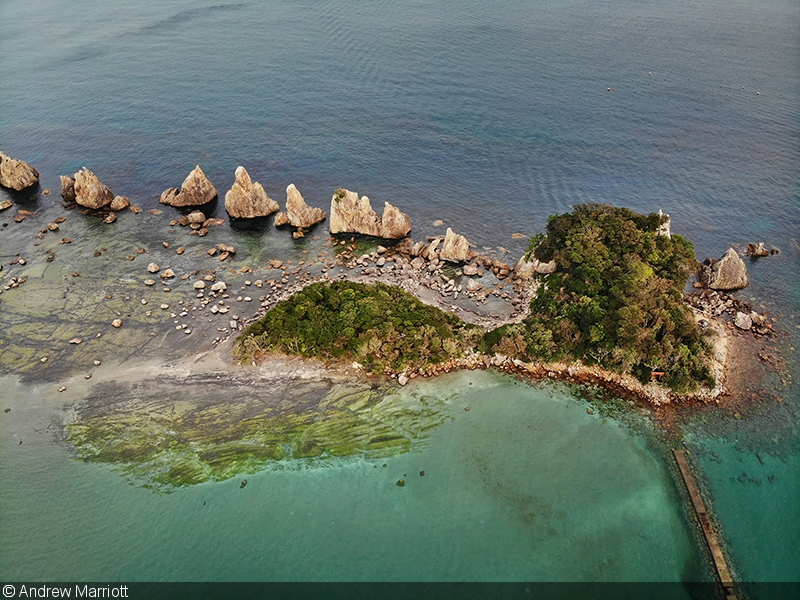
 

The coast of Wakayama is very rugged, and this is true underwater, too
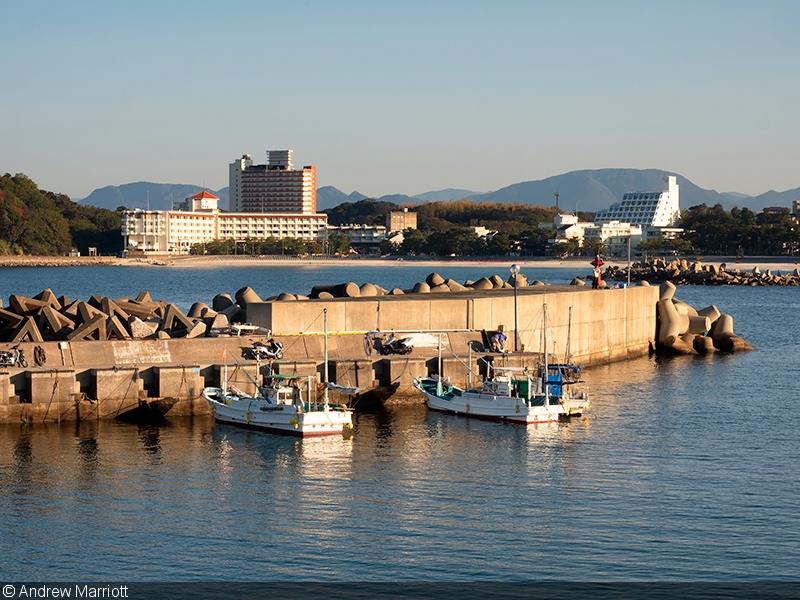
The beaches at Shirahama: This is the most developed area of the entire region


Big Fish and Dramatic Seascapes

The first thing I noticed when I rolled off the boat was that the water was warmer than I expected it to be—though it still is not board shorts temperature by any stretch. The latitude here is very close to San Francisco, but the Kuroshio Current brings warm water up from the equator. In the summer, temperatures hover around 79°F (26°C), and in the winter it drops to 59°F (15°C). If you hop in San Francisco Bay in the summer, 59°F would be the warmest you could hope for!

For our first dives, we went looking for the giant grouper that make their home in this area. In the area we looked, the bottom was covered in big, dramatic rocks; it reminded me a lot of Lake Tahoe in California. Among these rocks were some beautiful patches of vividly colored soft coral. I saw dozens of reasonably large groupers, often in groups. Most of these were in the three-foot-long range. My guide was disappointed we didn’t see any of the big ones, but that was probably my fault, as I kept fixating on cool things with my camera. I think we only did about 20 percent of the planned dive area!
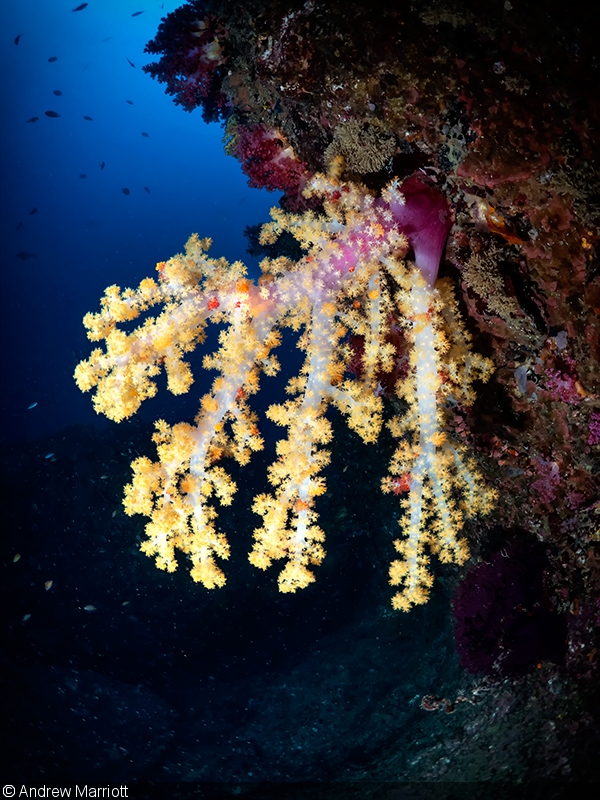
 

I missed the best part of the dive because I got fixated on the soft coral!
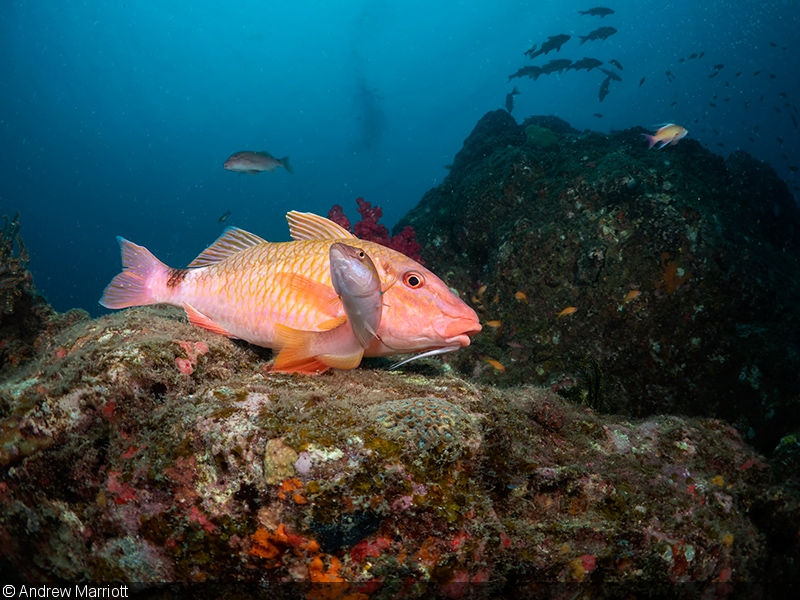
There are a lot of very rugged rocks that are home to colorful marine life


That afternoon, we went back out in a torrential downpour—it was the peak of the rainy season—and went looking for pretty colors. I had mentioned how barren the rocks were in the morning, and I think the guide wanted to balance things out. Wow, did he ever succeed!

The second dive took place around an underwater hill, and we went all the way around. The entire area is full of drop-offs, boulders, swim-throughs, and plenty of marine life. There was one place that captured my attention, and that was an impressive cliff and overhang that stuck out into the current. Turning my lights on, the colors just exploded. Pink, red, orange, and yellow soft corals were abundant, and schools of anthias, fusiliers, damselfish, and even a couple of turtles kept us company. The scene was much more reminiscent of a dive in the Philippines or Micronesia, than that of the rugged west coast of North America—which is what I expected.

The whole place is a fascinating blend of the colorful life from the tropical seas and the bizarre creatures of the cold northern waters. It turns out that this is the northernmost tropical reef in the world, at least according to the dive operators there. Huge cold-water lobsters that numbered well over 100 sat next to nudibranchs and whip coral shrimp that I regularly find in places like Saipan. In one moment, I felt like I was in northern California and the next in the Philippines. The experience is almost surreal, and there is nowhere else I know quite like it.
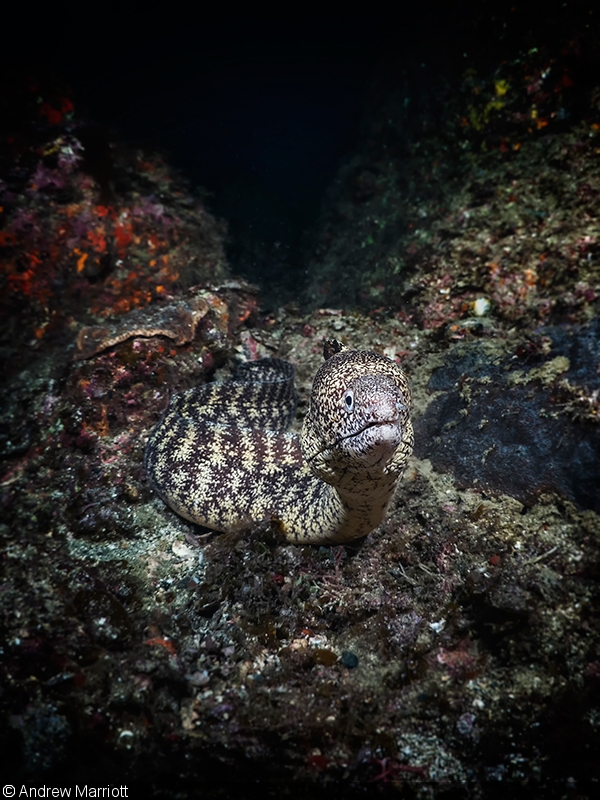
 

I was shocked at how many eels were out swimming, and they were very relaxed
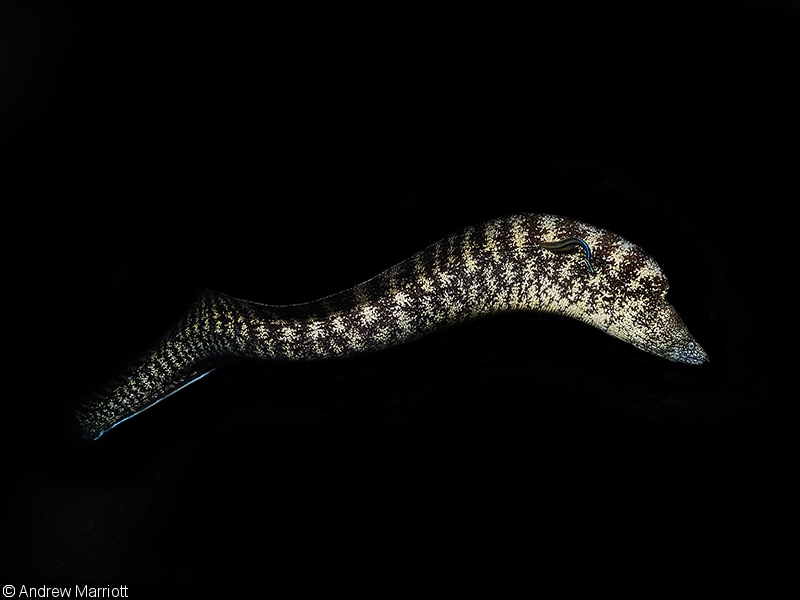
I love eels, and I was not disappointed by the number and variety that I found


Exciting Swim-throughs and Towering Seamounts

The next day, we moved down the coast to Susami, and after spending a night listening to the waves break on the beach while staying in a traditional Japanese guesthouse, I was ready to roll. I was surprised when we pulled into a small fishing port. Here was a nicely equipped dive shop, but there was not a dive boat to be seen. Imagine my surprise when we loaded up and boarded one of the small commercial fishing boats.

Usually, commercial fishing and diving are the antitheses of each other, so the journalist side of me kicked into overdrive as I talked to the dive operators and the fishermen. It turns out they have an incredible arrangement I have never seen anywhere else. The fishing boats make more money when they take out divers, but diving is pretty seasonal and mostly on weekends. The rest of the time the boats go out and fish. But I know what commercial fishing does to a dive site, so I was pretty skeptical when we jumped in.
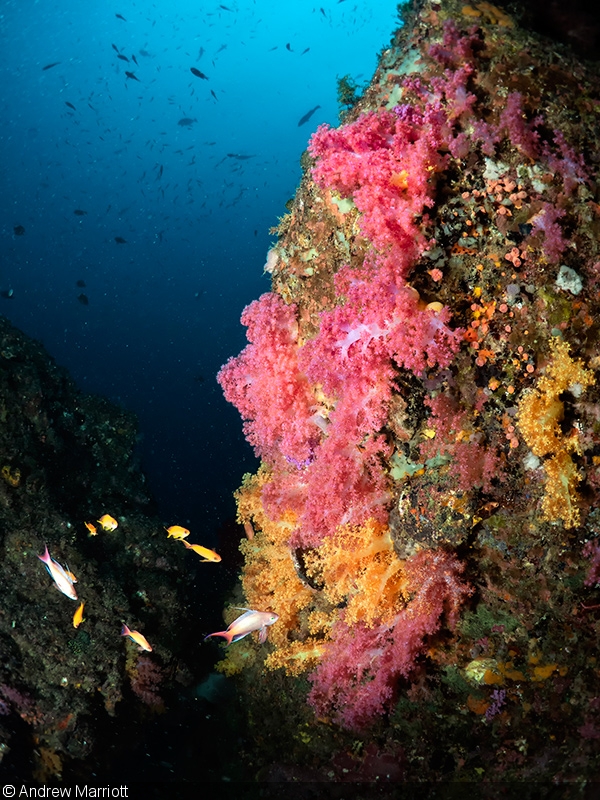
 

Dramatic rocks, colorful soft corals and a mix of tropical and cold-water fish

Imagine my surprise when I descended to the rocky bottom, set up my camera, and then looked around. The area swarmed with fish, and not just little stuff! Big schools of anchovies flashed in the shallows, while bigger jacks and even a few tuna came in and hunted them. Down lower were the usual collection of pretty reef fish, damselfish and coral groupers. It was an impressive display of life that was further accentuated by the dozens of big lobsters out walking around.

The focus of this dive was a series of giant rocks and long swim-throughs. I was impressed as the boulders had nice patches of colorful soft coral on them, which made the tunnels more than just barren stretches of stone. In the dark areas, I found my old friends the glassfish and sweepers, constant companions on many a wreck dive.
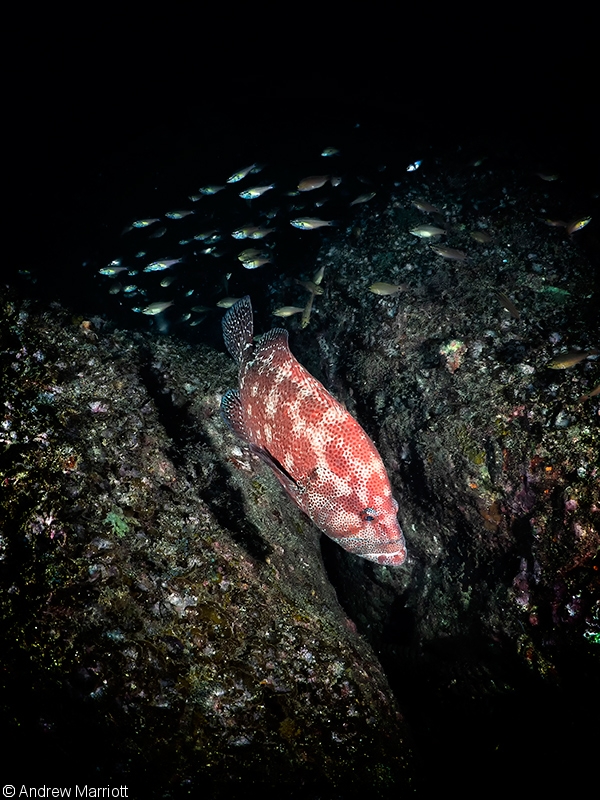
 

I found some big groupers hiding in the swim-throughs

Between dives, I asked the boat crew if they fished in the area. They looked at me like I had just grown a second head—of course, they don’t fish here! The fishermen intentionally don’t fish the dive sites, and they have expanded into undeclared protected areas. Seeing commercial fishermen protecting dive sites rich in big fish was a mind-blowing experience. They got a good laugh at my expense as we headed out into the open water towards a seamount that towers up out of the deep.

There are a series of seamounts off the coast of Wakayama, and they make fantastic dive sites. The area also has a 20-foot difference in water level between high and low tide, so some areas are prone to strong tidal currents. This worked against us, as we were forced to dive what they considered a lesser site.

But their definition of “lesser” is very different than mine: This seamount was awesome. The viz was a very solid 80 feet, the water blue, the current manageable, and the number of big fish was incredible. On the seamount itself, soft corals grew in dense patches, while the bottom contour was almost violent in how dramatic it was. You could tell this is a place where the Earth is still in constant motion.
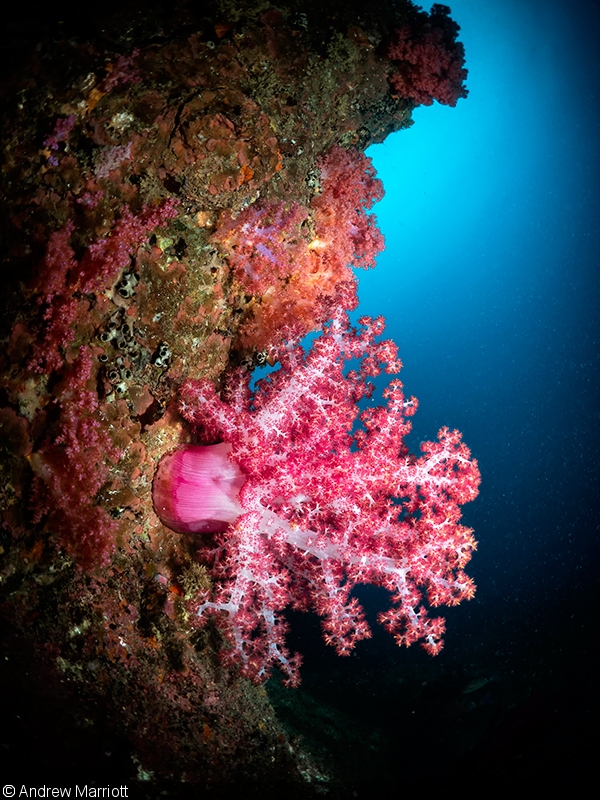
 

Soft corals growing on the towering seamount
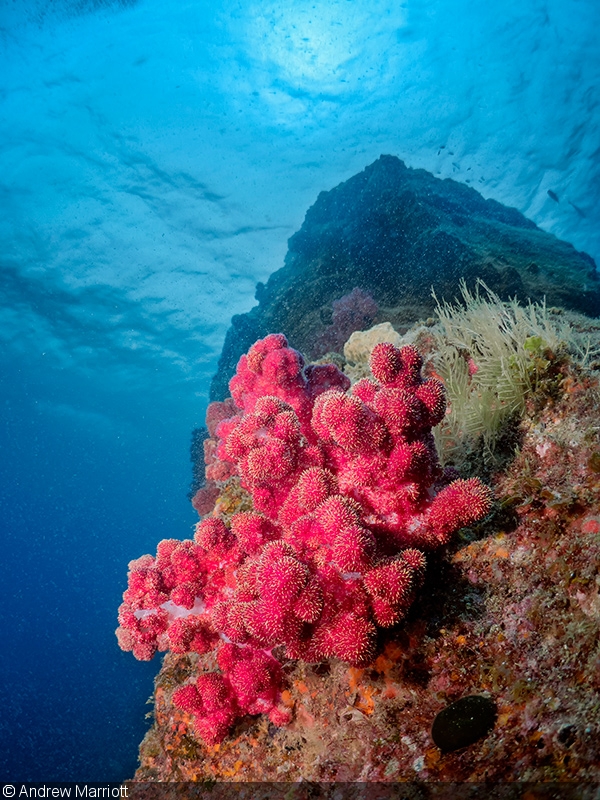
The dive sites are essentially undeclared protected areas—protected by fishermen

Above the mount, there were swarms of anthias feeding in the current. Don’t misunderstand me, this was not like Raja Ampat, but it was very good. Around the anthias feed the groupers. There were a couple of schools of three-foot-plus sized grouper that hovered over the rocks. Further out in the deep blue, the tuna and jacks fed. The yellowfin tuna were the most impressive as they shot through the water like silver-colored missiles.

Climbing back into a high-sided fishing boat in pretty heavy surf was a little interesting, but when I got on deck, I was just totally blown away. The guide told me to come back, and we’d spend some time out on the serious seamounts way out. There they told me we’d find tiger sharks, hammerheads, and even bigger schools of tuna. Well count me in, I can’t wait for next time!
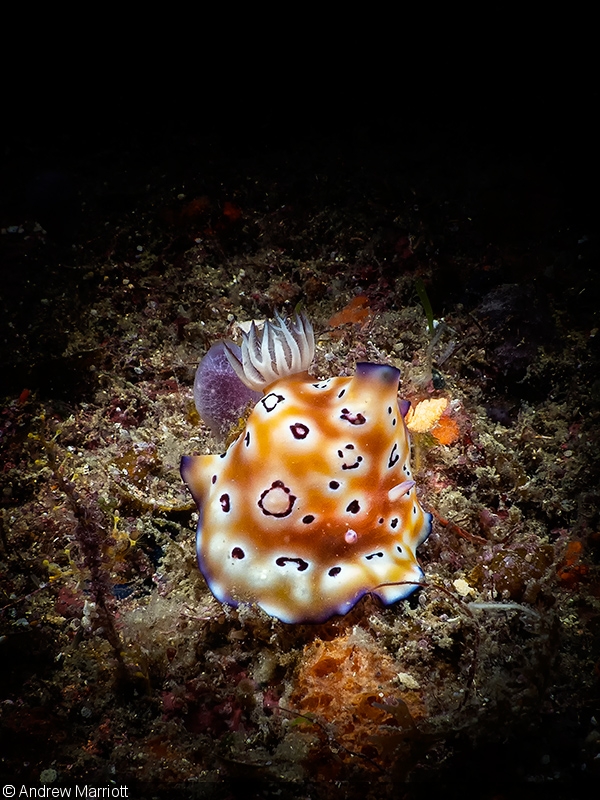
 

There is a lot of really great macro here, too


Way More Than Diving

After wrapping up my diving, we did a land shoot for the next five days. The combination of the land and water is what makes this place so unique. We went to the home of soy sauce, had beers on a perfect white sand beach, went white-water rafting on a wooden raft that you had to stand up in, and saw some stunning waterfalls.

But all these activities paled in comparison to the UNESCO World Heritage sites. I was privileged to shoot a festival where massive torches are carried down ancient stone steps from a temple in the clouds down to the foot of the tallest waterfall in Japan. We followed that up with night walks in a 1000-year-old cemetery high in the mountains, where an ancient monk has meditated for the last 800 years. That night I went to sleep listening to the bells of the temples, and I awoke to the monk’s morning chants.
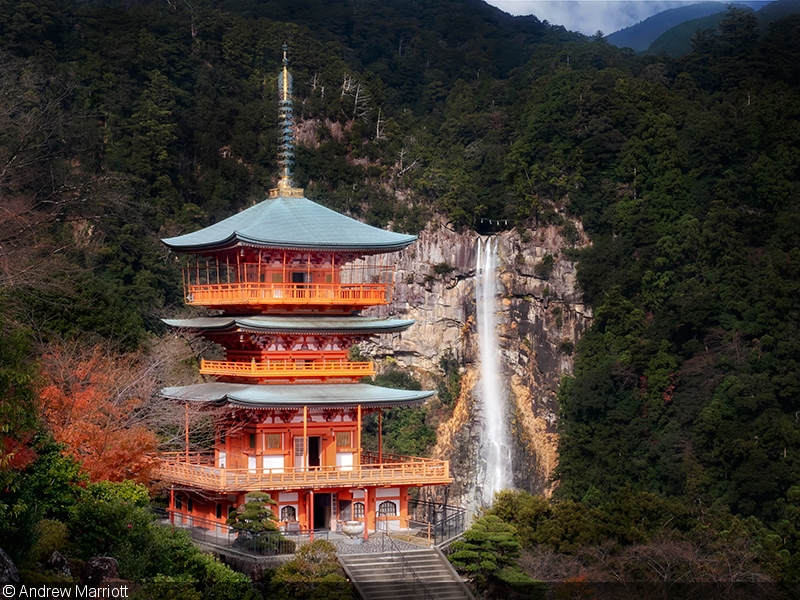
 

The Nachi no Taki waterfall is breathtaking

When I described this area as reminding me of Bali, I was serious. The diving in both is excellent if a little different. The land activities and cultural activities are very similar, and the feeling of an ancient way of life permeates. But there is one huge difference: the crowds of tourists. Wakayama is quiet and still very local; there are no busloads of tourists swamping the sites. I went in peak season, and I ran into only a few foreigners; the rest of the tourists were older Japanese coming on weekend trips from Osaka and Kyoto, which is only two hours away by train. I have also been there in the middle of winter and had the entire place to myself. Turns out there are still undiscovered paradises in the world—I just never expected to find one in the middle of Japan.
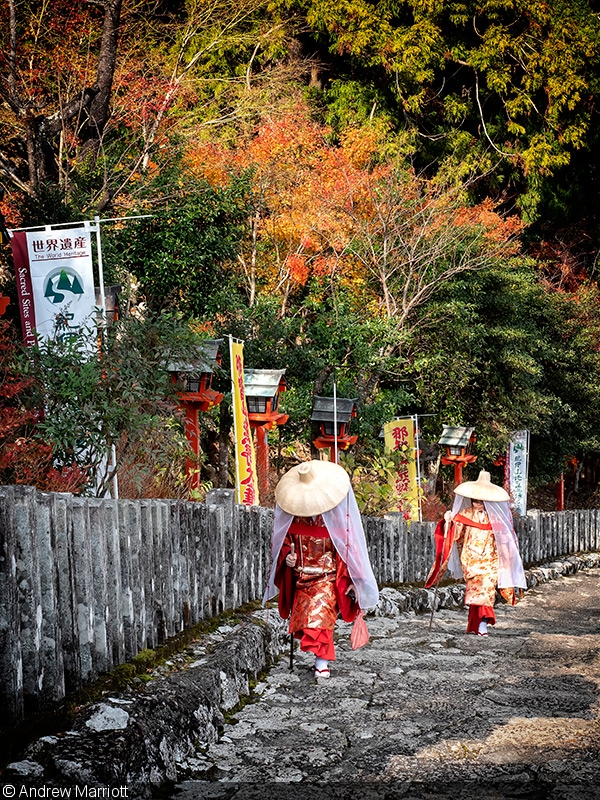
 

Pilgrims on the Kumano Kodo, a UNESCO World Heritage trail
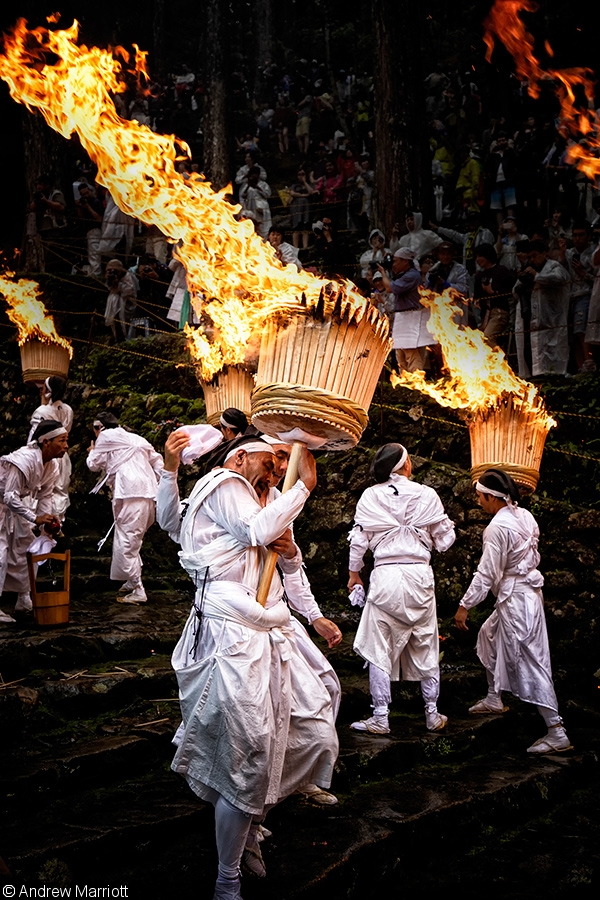
The midsummer fire festival


Planning Your Trip to Wakayama

How to Get There: Kansai International Airport (KIX) services daily flights from Europe, North America and all over Asia.

When to Go: Anytime! Summer is busier, but still not at all crowded. Weekends have more people. Diving and land activities are year-round. Summer is the rainy season, expect typhoons in the fall, and winter tends to be dry.

Information: Your best bet is to contact the local Wakayama tourism office, which has excellent information. Visit www.visitwakayama.jp for more information.
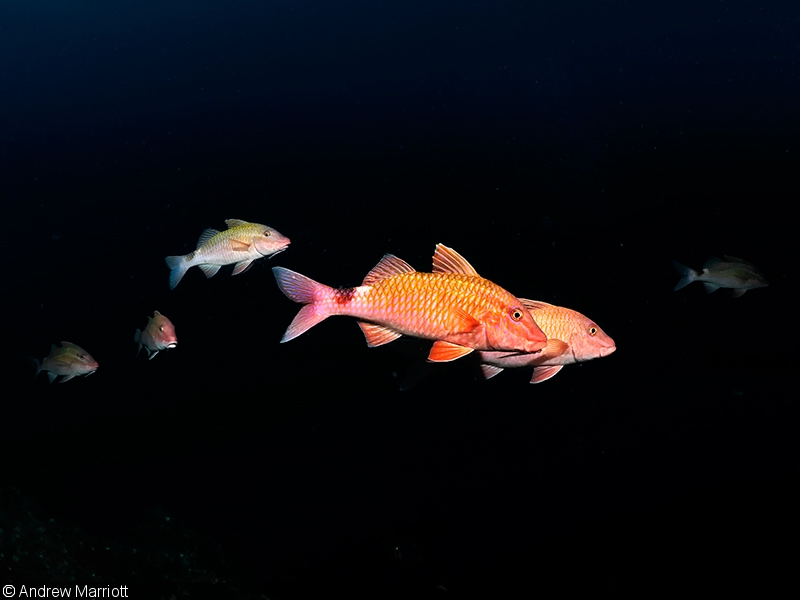
 

Goatfish are a very common site swimming in the open water
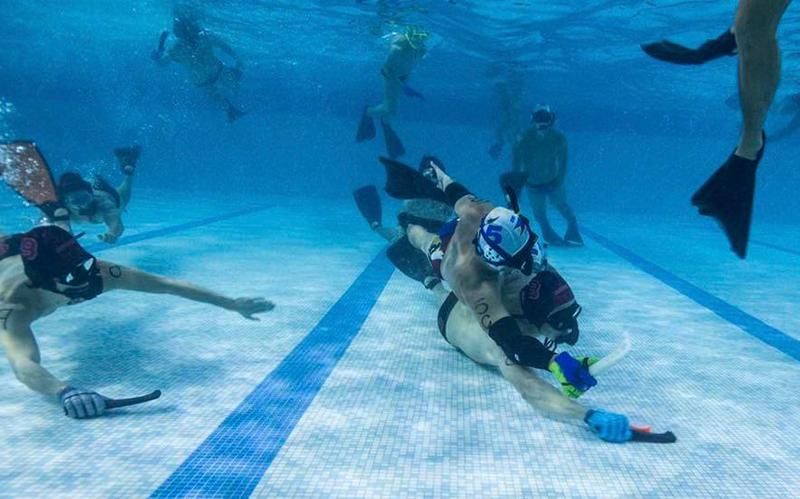
 

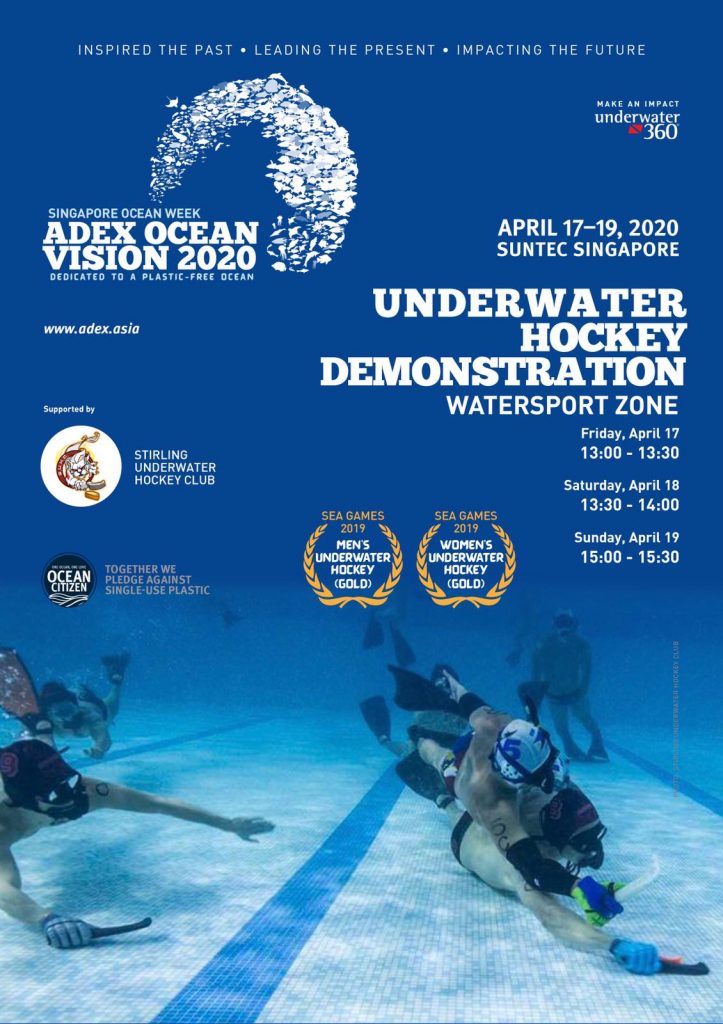
Singapore Men’s and Women’s Underwater Hockey Team Clinched Gold in the 2019 SEA Games

0

Despite their debut in the SEA Games, Singapore men’s and women’s underwater hockey teams gloriously won their first gold medal against the Philippines team on Wednesday (Dec 4) at the Vermoza Sports Hub in Imus, Cavite.

Triumphing the Philippines team with a 5-0 score for the men’s event and 4-2 for the women’s event, the Singapore team’s achievement will be one that will be much celebrated by Singapore’s nation.

Congratulations Team Singapore and see you in ADEX Singapore 2020*.

*Underwater360 will be holding a live underwater hockey demonstration by the Stirling Underwater Hockey Club during ADEX Singapore from 17-19 April 2020

US$ 106M Singapore-based Fund Launched to Protect Asia’s Oceans from Plastic

0
  • World’s first investment fund dedicated to preventing ocean plastic 
  • Biggest capital investment towards Asia’s ocean plastic crisis 
  • First investments targeted in Asia by early 2020

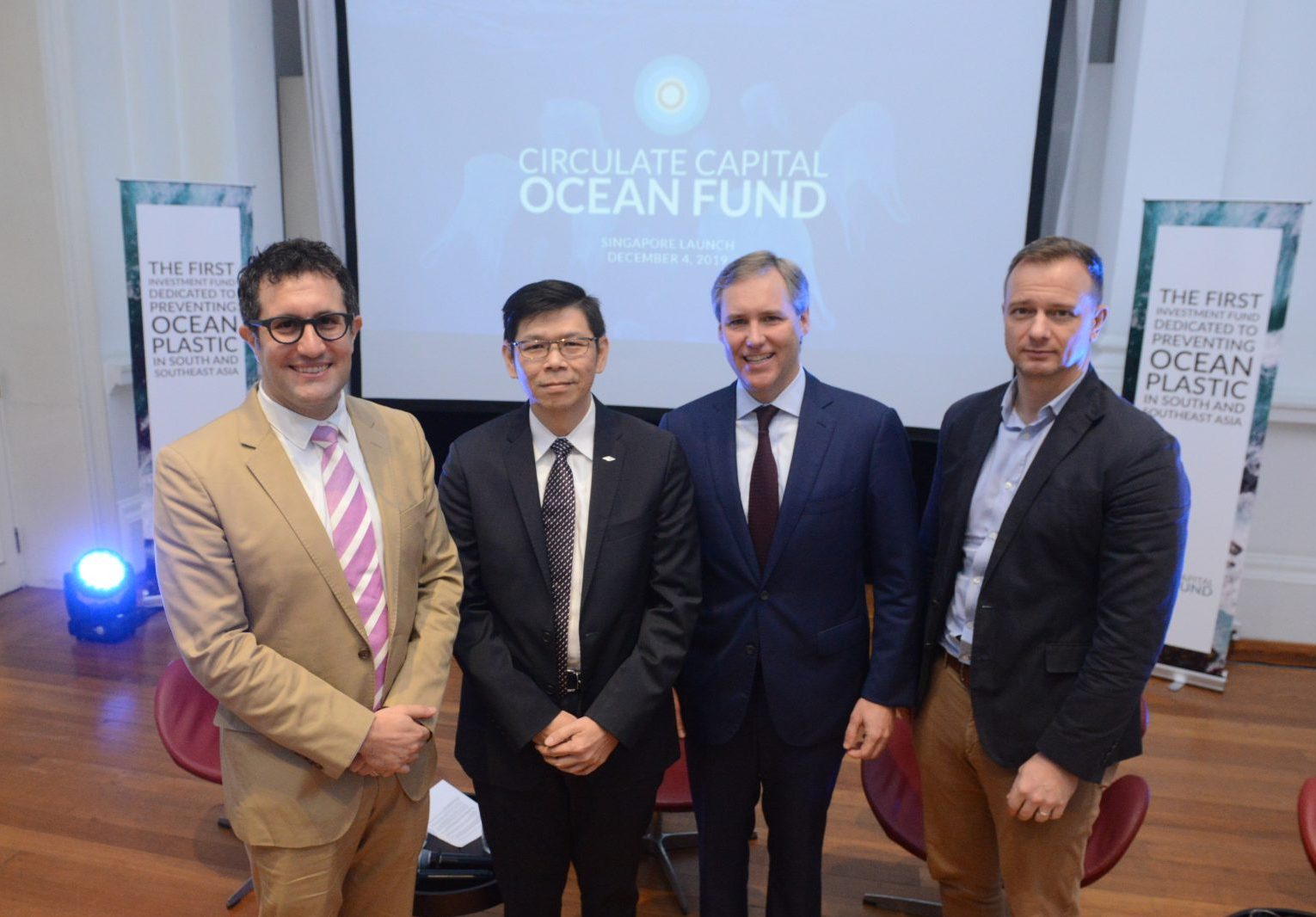
SINGAPORE, December 4, 2019 – A US$106 million (SGD$144 million) fund dedicated to preventing plastic from entering the Asian oceans was launched today. The Circulate Capital Ocean Fund (CCOF) is the world’s first investment fund dedicated to address Asia’s plastic crisis. The Singapore-based fund is also one of the ten largest ASEAN-based Venture Capital Funds in the market.

With 60% of ocean plastic originating from the region, Asia is the biggest source of plastic leakage into global oceans. A recent Ocean Conservancy Report identified a net financing gap between USD$28 and USD$40 per ton for plastic waste collection in the five top ocean polluting countries in the world – China, Indonesia, Philippines, Thailand and Vietnam.

“The good news is that we are able to reduce nearly 50% of the world’s plastic leakage by investing in the waste and recycling sector in Asia, and even more if we invest in innovative materials and technologies. This is why we are here in Singapore – a strategic hub of Southeast Asia – to prove that investing in this sector is scalable for the region and can generate competitive returns, while moving closer to solving the ocean plastic crisis,” explains Rob Kaplan, CEO Circulate Capital.
CCOF is launched by Circulate Capital, a Singapore-based and MAS licensed venture capital fund management company with founding investors and partners among the world’s leading companies; PepsiCo (the first investor), Procter & Gamble, Dow, Danone, Unilever, The Coca-Cola Company, and Chevron Phillips Chemical Company LLC. To address the financing gap between available private capital and resources needed by Asia’s waste sector, CCOF will provide both debt and equity financing to waste management, recycling, and circular economy start-ups and SMEs in South and Southeast Asia focused on preventing plastic pollution. Circulate Capital has identified more than 200 investment potential opportunities across a range of industries in the region, with their first investments targeted in the coming weeks.

The fund’s launch comes at a time where the Singapore government has initiated recent green investment programs. These include the Monetary Authority of Singapore’s (MAS) recent commitment to US$2 billion of green investments directed at sustainable projects. The city state has also launched initiatives such as the Zero Waste Masterplan and a Resource Sustainability Bill as it aims to establish itself as the regional Circular Economy Centre of Excellence, driving green investment efforts around the region and the world.
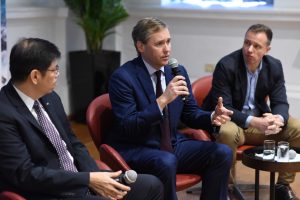
Circulate Capital’s investment model seeks to mobilize institutional investors by blending concessionary funds with investment capital. Its objective is to mitigate risk and demonstrate that investments in turning waste into value can ultimately provide attractive financial returns.

“For the beverage sector, the more recycled content used in any type of packaging such as 100% recyclable plastics, the lower the carbon footprint. That’s why at Coca-Cola we have invested in Circulate Capital and have committed to collect and recycle the equivalent of every bottle or can we produce by 2030. Beverage packaging does not need to become waste. By investing in the waste collection and recycling sector in this critical region, it can become a valuable material used again and again – a step closer towards a circular economy,” said Matt Echols, Vice President, Communications, Public Affairs and Sustainability Coca-Cola Asia Pacific.
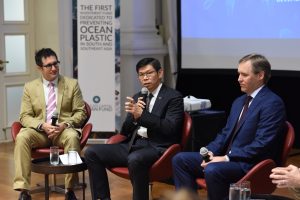
Circulate Capital plays a critical role in solving the issue of plastic waste in our environment,” said Bambang Candra, APAC Vice President Dow Packaging & Specialty Plastics. “Supporting companies and infrastructure that are addressing plastic waste will catalyze the development of systems designed to advance a circular economy for plastics.”


Financing alone cannot solve the ocean plastic crisis. It requires a full suite of solutions from policy and corporate commitments to financial incentives and changes in consumer behaviour. Many of the actions needed will have to be taken at a local level. To address these conditions, Circulate Capital has partnered with a number of nonprofit organizations, including Ocean ConservancyPartnerships in Environmental Management for the Seas of East Asia (PEMSEA), and The Circulate Initiative (TCI), a nonprofit organization launched in October 2019 dedicated to ending ocean plastic pollution and building thriving, inclusive economies. By combining the efforts of the Circulate Capital Ocean Fund, The Circulate Initiative and other partners, the quality and quantity of investable opportunities will increase and foster conditions which entrepreneurs in the waste ecosystem need to succeed.

About Circulate Capital
Circulate Capital is an investment management firm dedicated to incubating and financing companies and infrastructure that prevent ocean plastic. We focus on the prevention of mismanaged plastic waste in countries located in South Asia and Southeast Asia, regions that contribute disproportionately to ocean plastic pollution primarily because they often lack investment in critical waste and recycling infrastructure to manage the problem. We were created in collaboration with Closed Loop Partners and Ocean Conservancy, and our founding investors include PepsiCo, Procter & Gamble, Dow, Danone, Unilever, The Coca-Cola Company and Chevron Phillips Chemical Company LLC.

Singapore Venture Capital & Private Equity Association (SVCA) quarterly bulletin, October 2019
** Plastic waste inputs from land into the ocean, J.Jambeck, et al., Science (Feb 2015)

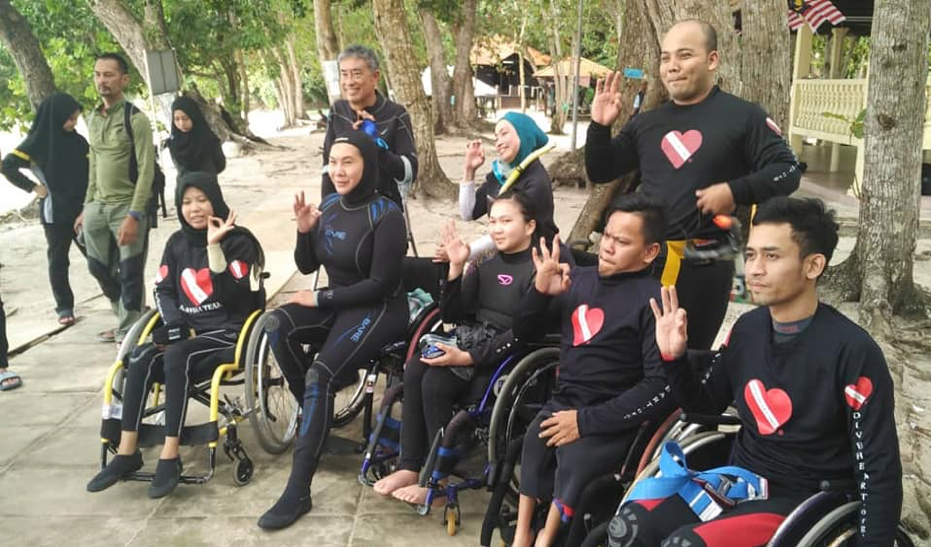
International Day of Disabled Persons

0

3 December marks the day of the annual observance of the International Day of Disabled Persons. The observance was proclaimed in 1992 by United Nations General Assembly resolution 47/3 with the aims to promote the rights and well-being of persons with disabilities in all spheres of society and development, and to increase awareness of the situation of persons with disabilities in every aspect of political, social, economic and cultural life.

When we secure the rights of people with disabilities, we move closer to achieving the central promise of the 2030 Agenda – to leave no one behind.

– António Guterres, UN Secretary-General

Underwater360 celebrates this day to honour individuals with disabilities and dive organisations who offer dive courses for this group of people.

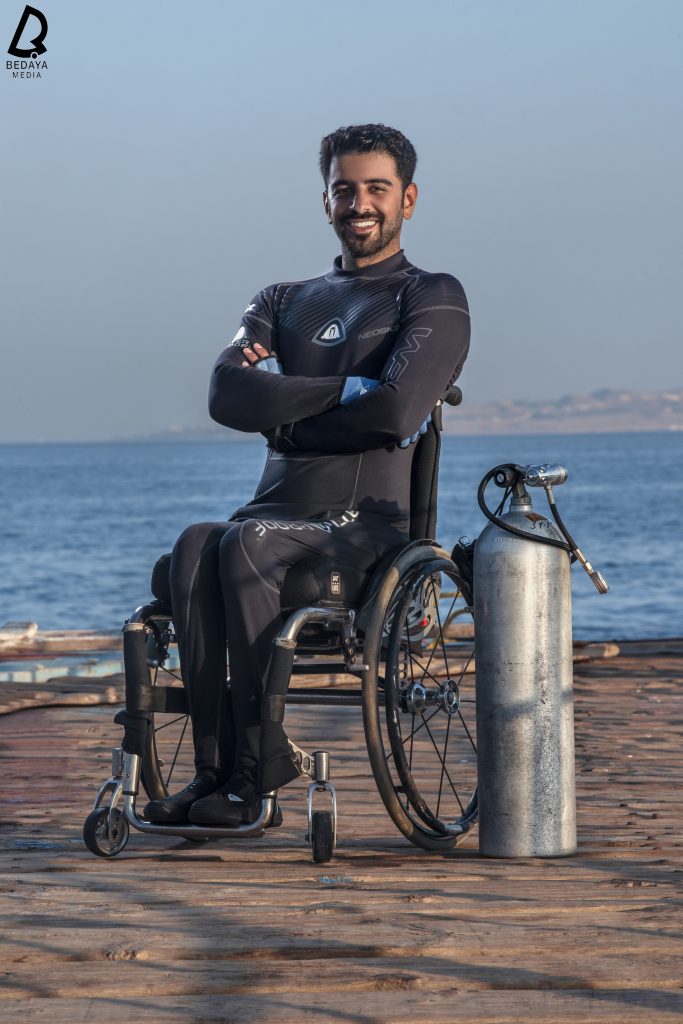
A Diver with Disability (Paraplegia)

Faisal Jawad Hashim is the Guinness World Record Holder for the Fastest 10KM Scuba Dive in 5 hours 24 minutes and is one of the many distinguished persons who served as an inspiration to many. A diver with disability, Faisal overcame depression following his disability from a horrible car accident to start Alfaisal Universal Centre – the biggest health institute in the field of physiotherapy in terms of vision and concept. Faisal enjoys diving because he can feel free underwater. His triumph over his disability has rebuilt his confidence and made him a motivational speaker and trainer.

Everyone suffers from loss in life. Some people crumble but others see that being strong is the only option.

– Faisal Jawad Hashim, Guinness World Record Holder for the Fastest 10KM Scuba Dive

Diving Associations Offering Dive Courses for the Disabled

There are many dive organisations offering dive courses for the disabled – including PADI, SSI, SDI/TDI, CMAS, and RAID. But among all these, two stood out in offering dive courses purely for the community of the disabled – namely Diveheart and Handicapped Scuba Association (HSA).

Handicapped Scuba Association (HSA)

Founded in 1975 by James A. F. Gatacre, Handicapped Scuba Association first conducted its research programme at the University of California-Irvine (UCI) focusing on changing the false perception on persons with disabilities and organising programmes for disabled scuba diving students with those who aren’t. Participants were required to perform all physical performance standards for Scuba certification, even if they had to do them differently. Nevertheless, the programme resulted to everyone, with and without disabilities, growing in ways immeasurable and living fuller and exciting lives.

The Handicapped Scuba Association has dedicated itself to improving the physical and social well-being of people with disabilities through the sport of scuba diving. Made up of over 4000 underwater educators, scuba divers with disabilities and supporting members, located in over 45 countries, the Handicapped Scuba Association is dedicated to assuring that people with disabilities are given the same opportunity to receive quality training, certification and dive adventures as the able bodied population.

Scuba diving is an adaptive sport – for everyone, with or without a disability!

– James A. F. Gatacre, President of HSA

DiveHeart

DiveHeart was established in 2000 based in Downers Grove Chicago US as a nonprofit tax-exempt 501(c)(3) organisation. The purpose of DiveHeart is to provide and support educational scuba diving programs that are open to any child, adult or veteran with a disability, with the hope of providing both physical and psychological therapeutic value to that person. DiveHeart works with individuals who have a variety of disabilities, including physical and developmental disabilities, vision and hearing impairments, amputations, traumatic brain injuries, Post Traumatic Stress Disorder and more. Diveheart seeks to help its participants “Imagine the Possibilities” in their lives.

DiveHeart would like extend opportunities to the special community in other regions in Asia to be able and share the knowledge and expertise to train more diving community to be qualified and certified in handling the special community divers underwater.

The organisation welcomes the support from other instructors, dive centers, dive agencies, hospital rehab medical departments in Asia to work together for their goal to assist the special community to scuba dive and feel the zero gravity and enjoy the dive therapy.

Underwater360 invites anyone from the handicapped community to join our ADEX events for FREE. Read more about ADEX here.

Addicted to Gear: Underwater Lights

0

Underwater Lights

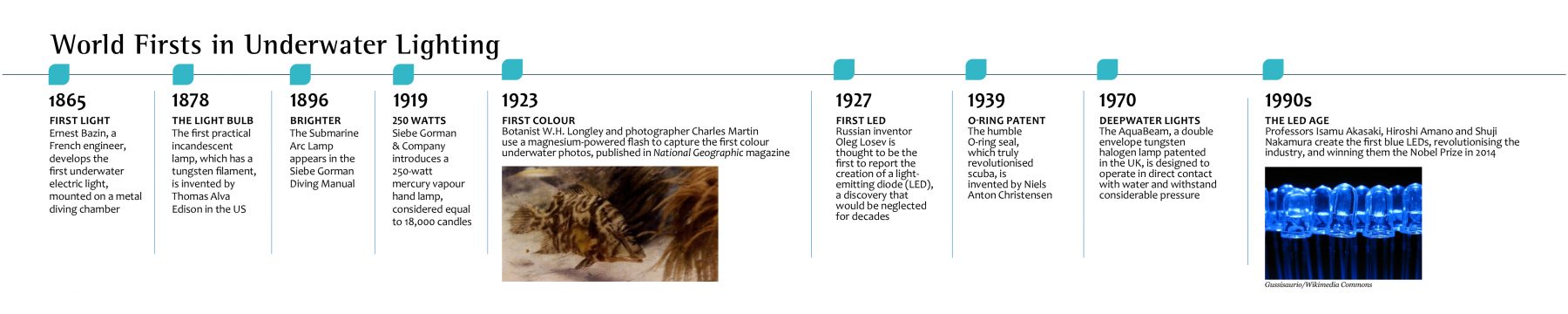
In 1893, the same year the world’s first underwater camera was built, Louis Boutan began to experiment with underwater lighting systems. He had little choice as photographs back then required more light than was naturally available underwater. Like many first-time experiments, he was left disappointed. Until this point, flash photography required oxygen and typically burning magnesium or a mixture thereof. Boutan recruited electrical engineer M. Chaffour to create a bulb that would serve as a housing for a magnesium ribbon. The reservoir was then filled with oxygen and the ribbon was lit using electricity. Unfortunately, the magnesium smoke coated the inside of the bulb and dimmed the lighting, not to mention the danger involved, as the bulbs frequently exploded! We have come along way since those days, with an array of strobes, video lights, torches, and headlamps, to illuminate any subaquatic pursuit.

For the rest of this article and other stories, check out our latest Scuba Diver No. 116 Issue 3/2019 here or download a digital copy here.

Addicted To Gear: Underwater Camera & Housing

0

Underwater Cameras

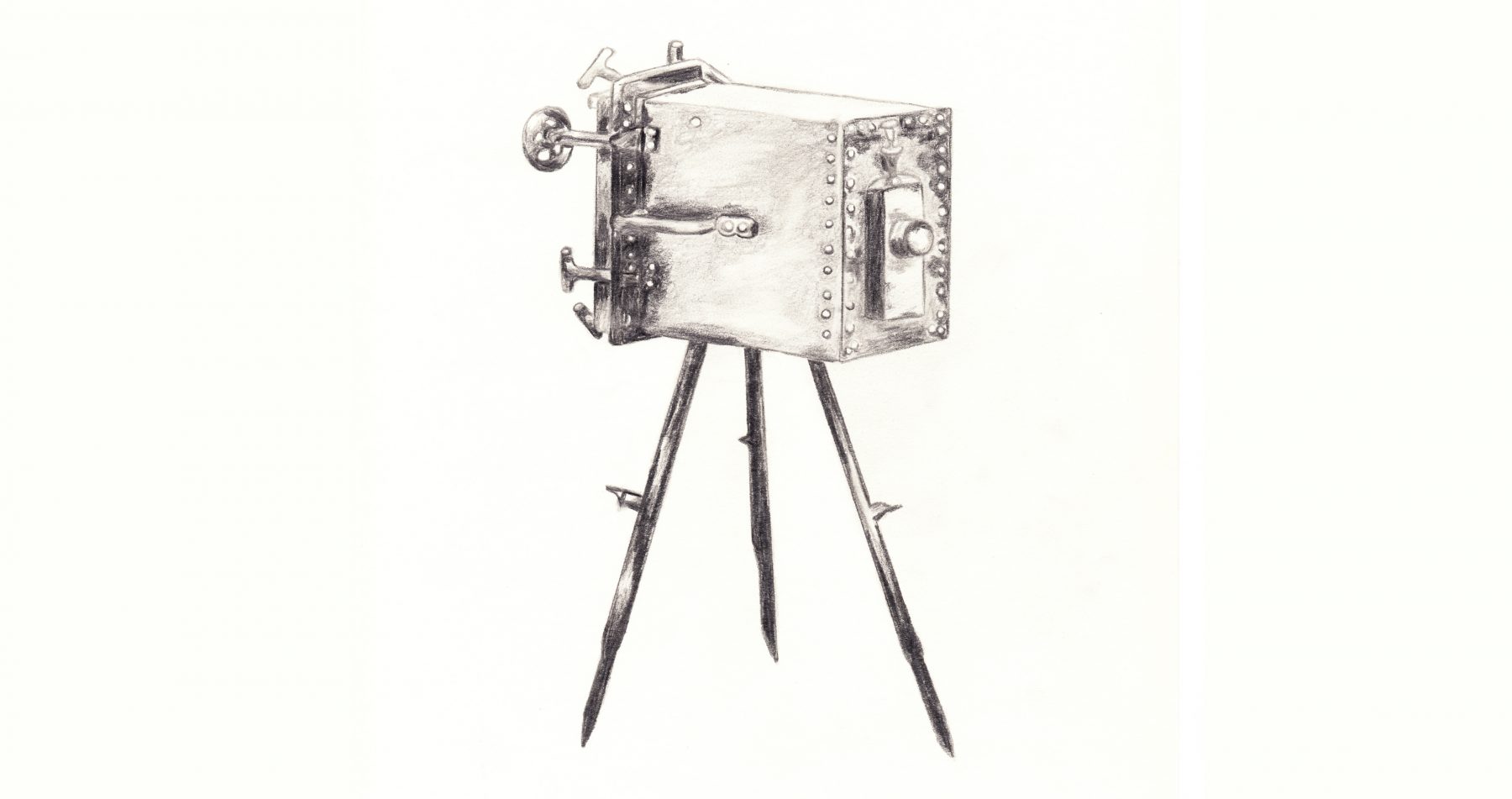
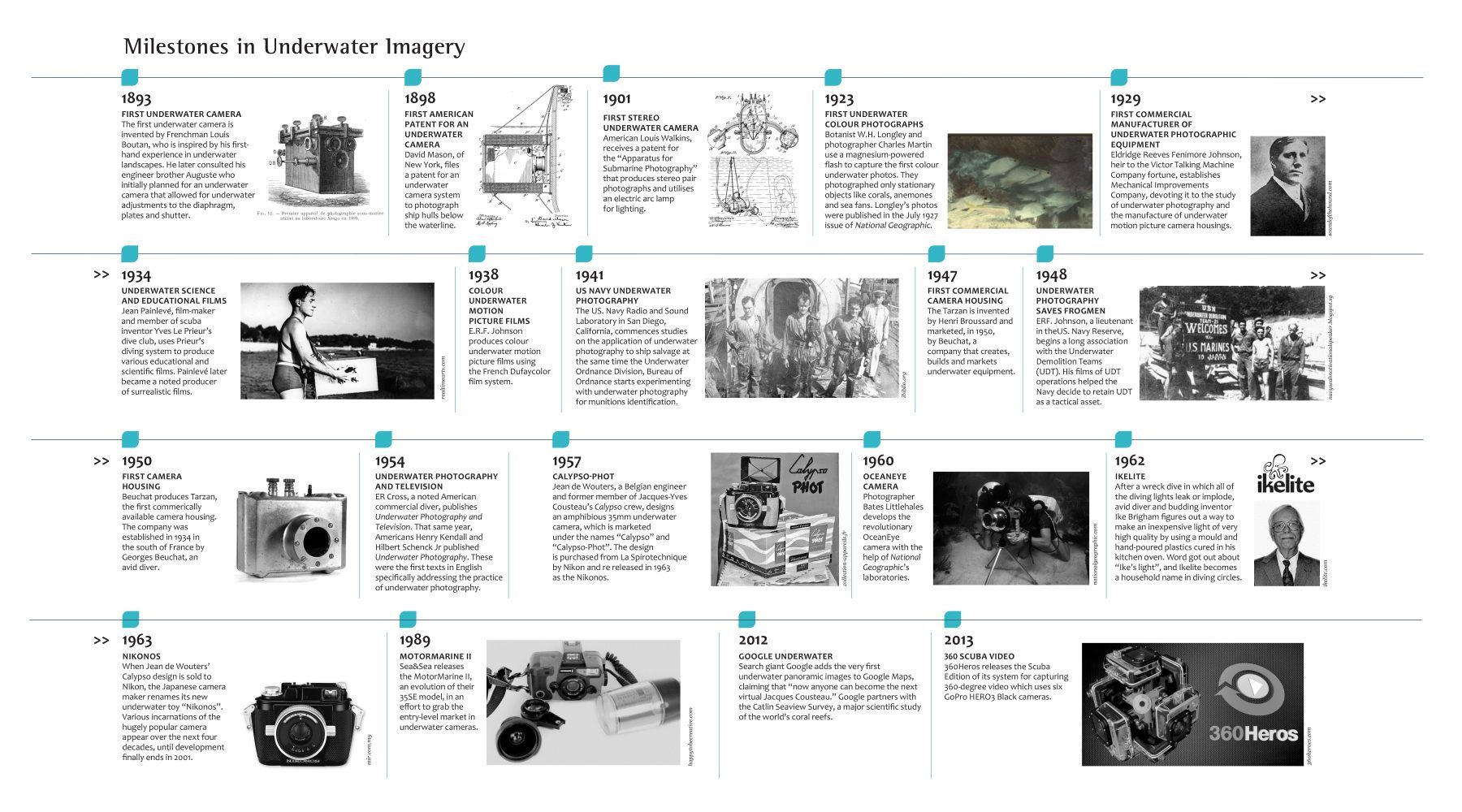
Although records date the first underwater photograph to have been taken in 1856 by William Thompson, who used a pole mounted camera, the world’s first official underwater photographer, Frenchman Louis Boutan, began his work in 1893. Boutan was first interested in biology, graduating in 1879 with a Doctorate of Science from the University of Paris. In 1893, he became a professor at the university’s marine biology lab at Banyuls-Sur-Mer. After encountering untouched underwater landscapes up-close, Boutan was inspired to find a way of capturing them and bringing what he saw to the surface. To create his concept of capturing underwater photographs, he contacted his brother Auguste.

Auguste was an engineer and drafted a plan for an underwater camera that allowed for underwater adjustments to the diaphragm, plates, and shutter. The first design even included a method of changing the buoyancy of the camera through an air-filled balloon. Eventually, they produced a smaller design of the camera box, small enough to be lost in seaweed when dropped and able to be lowered to the seafloor by hand. After further experimentation, Boutan became one of the principal – and perhaps one of the only – underwater photographers of his time.

In 1898 he published a book detailing his work with underwater photography titled La Photographie Sous-Marine (Underwater Photography). He included several of his illustrations in the book, plus many photos that he had taken over the years.

Being a photographer is all about giving back in a way that all peoples can witness our fantastic landscapes of wonder, both above and below the waves

– Ernest H. Brooks II

Housing

French underwater photographer Henry Broussard is widely credited with designing the world’s first underwater housing in 1947. Tailored to the French Foca camera, the housing was commercially produced in limited quantities by French company Beuchat under the name Tarzan. Georges Beuchat had already made a name for himself as a pioneer, having invented the underwater speargun – also named Tarzan – so his company was the natural choice to market the first underwater housing.

In the years to come, amphibious cameras like Cousteau’s Calypso, Nikon’s Nikonos and Sea&Sea’s Motor Marine line would become popular, but Beuchat’s Tarzan housing had set the stage for the rise of the dedicated underwater housing. These days, amateur and professional underwater shooters alike rely on a dozen or more established housing makers in Europe, the US, and Asia to allow them to bring the latest and greatest cameras underwater.

For the rest of this article and other stories, check out our latest Scuba Diver No. 116 Issue 3/2019 here or download a digital copy here.

Egypt Implements Environmental Standards to Protect its Coral Reefs

0

CDWS calls for diving and snorkelling operators to reduce their environmental impact by joining Green Fins

The Reef-World Foundation and Chamber of Diving & Watersports (CDWS) are pleased to announce Egypt is adopting Green Fins environmental standards to protect its coral reefs. Through the implementation of the Green Fins initiative nationally (South Sinai Governorate from September and Red Sea Governorate from March), the Egyptian marine tourism industry is playing its part in protecting coral reefs from the negative impacts associated with diving and snorkelling. The country has become the first in its region and the 11th worldwide to officially adopt Green Fins. Green Fins is one element of CDWS’ ambitious action plan to strengthen sustainability within the marine tourism sector across Egypt.

The initiative will be piloted in South Sinai Governorate and expanded to be available to all dive and snorkel operators nationwide by March 2020. Following a week of training by Reef-World (22-28 September 2019), Egypt now has a team of four Green Fins Assessors in South Sinai Governorate. The Green Fins Assessor team is comprised of CDWS representatives who are now certified to recruit, train and conduct assessments of new Green Fins members in the country. As such, dive operators in South Sinai Governorate are now able to register their interest in becoming a Green Fins member by contacting the Green Fins Team at CDWS (egypt@greenfins.net).

The new assessors are now fully certified to provide training about the ecology and threats to coral reefs, simple and local everyday solutions to these threats and Green Fins’ environmental standards to dive and snorkel operators. The second phase of national introduction will see 4-5 more assessors trained in the Red Sea Governorate in March 2019 and CDWS is calling for interested operators in the region to sign up in advance.

Egypt is a popular holiday destination with 11.3 million tourists visiting in 2018; up from 8.3 million in 2017. Of these, there are approximately 500 businesses providing diving and snorkelling activities in the Red Sea and an estimated three million divers and snorkellers visiting the region each year. The CDWS is rallying dive centres to join the Green Fins initiative to help improve their sustainability and prove they are following environmental best practice as a way of attracting eco-minded tourists.

Green Fins Assessor Team in Egypt (Photo credit: Reef-World Foundation)

Diving related damage to sensitive marine ecosystems, including coral reefs, is becoming an increasingly significant issue. This damage makes them less likely to survive other local and wider stressors, such as overfishing or plastic debris as well the effects of climate change, such as rising sea temperatures. The Green Fins initiative helps identify and mitigate these risks by providing environmental consultation and support, based on robust individual assessments, to dive and snorkel operators. Reef-World hopes to significantly reduce negative environmental impacts on coral reefs in the Egypt by reaching 30 marine tourism operators, training 150 dive guides and raising awareness of sustainability best practice among 30,000 tourists during Green Fins’ first year of implementation.

Green Fins is a UN Environment initiative, internationally coordinated by The Reef-World Foundation, which aims to protect and conserve coral reefs through environmentally friendly guidelines to promote a sustainable diving and snorkelling tourism industry. Green Fins provides the only internationally recognised environmental standards for the diving and snorkelling industry and has a robust assessment system to measure compliance. Reducing diving and snorkelling-related damage to sensitive marine ecosystems, including coral reefs, helps to make them more resilient to other stressors such as those associated with climate change.

While Green Fins is usually adopted by a government body (which integrates the programme’s activities with their annual plans and absorbs associated costs), in Egypt the industry has collaborated to bring Green Fins to the area through the CDWS. CDWS is a non-profit organisation and Egyptian operators pay an annual CDWS membership fee of 5,500 Egyptian pounds (LE) to cover costs associated with audits. For those who would like to voluntarily participate in Green Fins, an additional fee will be charged to cover the associated costs of the programme.

The Green Fins approach includes proven assessment criteria to identify and mitigate high-risk practices both above and below the water. Green Fins members are evaluated annually based on a 15-point code of conduct, which measures the company’s impact on coral reefs: of a possible score of 330, the lower the score, the lower its impact. The assessment then enables Green Fins assessors to offer practical alternatives to the most pressing threats posed by that business. To ensure its members are fully compliant with the Green Fins Code of Conduct, the CDWS will introduce a minimum environmental impact benchmark of for Green Fins certification. This is a world first for Green Fins.

The newly qualified Green Fins Assessors will be carrying out robust assessments to evaluate the environmental impact of dive and snorkel operators and providing one-to-one consultation to help the business develop and implement best practice to improve the sustainability of the marine tourism industry. The individual feedback and support provided – which includes practical, low-cost alternatives to common threats to the marine environment such as anchoring, provision of single use plastics such as plastic bottles and lack of awareness to existing rules and regulations – is based on each company’s area of highest negative impact on the reef, as determined by the assessment.

To date, four Egyptian dive and snorkel operators have already joined the global network of nearly 600 trained and assessed Green Fins members. These are: Reef Oasis Dive Club, Water Land 3 Diving Centre, Diving and Discovery and Camel Dive Club and Resort. There has also been significant interest from other operators who have signed the membership form and are looking forward to their training and assessment. The CDWS aims to certify 30 dive centres in the coming year.

Chloe Harvey, Director at The Reef-World Foundation, said: “We’re proud to be helping protect Red Sea coral reefs by bringing Green Fins to Egypt; the first country in the Middle East and the 11thcountry worldwide to adopt the initiative. As one of the original global diving destinations, the diving community in Egypt has shaped the way we dive and travel today, so I’m really pleased to be working with them to lead the way in sustainability within our industry. In fact, I learned to dive here aged 12 which has dramatically influenced my life dramatically and the way I have developed the Green Fins programme as a whole.

She continued: “Through Green Fins, dive and snorkel operators in the region can improve their environmental best practices and reduce their negative impact on coral reefs; helping to conserve these vital ecosystems for many generations to come. The programme is initially launching in South Sinai Governorate with the Red Sea Governorate to follow in March 2020 so we urge dive operators in both regions to get in touch if they are interested in proving they follow environmental best practice by achieving a Green Fins certification.”

Hesham Gabr, Chair of the Chamber of Diving & Watersports, said: “Fortunately, the Red Sea is blessed to have a pristine underwater world with crystal clear visibility, warm waters and a thriving aquatic ecosystem. From large, multi-coloured coral reef systems home to several fish species to the presence of the BIG underwater creatures, we are lucky to be the custodians of a naturally rich and beautiful environment. Since the start of the 2019 summer alone, we have already had multiple sightings of whale sharks, dolphins, manta rays, eagle rays, hammerheads, oceanic reef sharks and much, much more! It is so important that we protect and preserve the Red Sea’s exquisite marine life for future generations. As such, we are excited to promote environmental best practice to our members and help them reduce negative impacts on life under the sea, through the implementation of the Green Fins initiative.”

Ahmed el Wassief, Chair of the Egyptian Tourism Federation, said: “Sustainability is a crucial element of the Egypt Tourism Reform Program that Egypt is undertaking to improve the standards and the quality of both the touristic infrastructure and its human element. The effort will surely put Egyptian tourism at the forefront of Eastern Mediterranean destinations. And has so far resulted in Egypt being the fourth highest improvement in tourism competitiveness.”

For more information, please visit www.reef-world.orgwww.greenfins.net or http://www.cdws.travel. Dive and snorkel operators interested in signing up to Green Fins can find the membership application form at: https://www.greenfins.net/how-to-join.