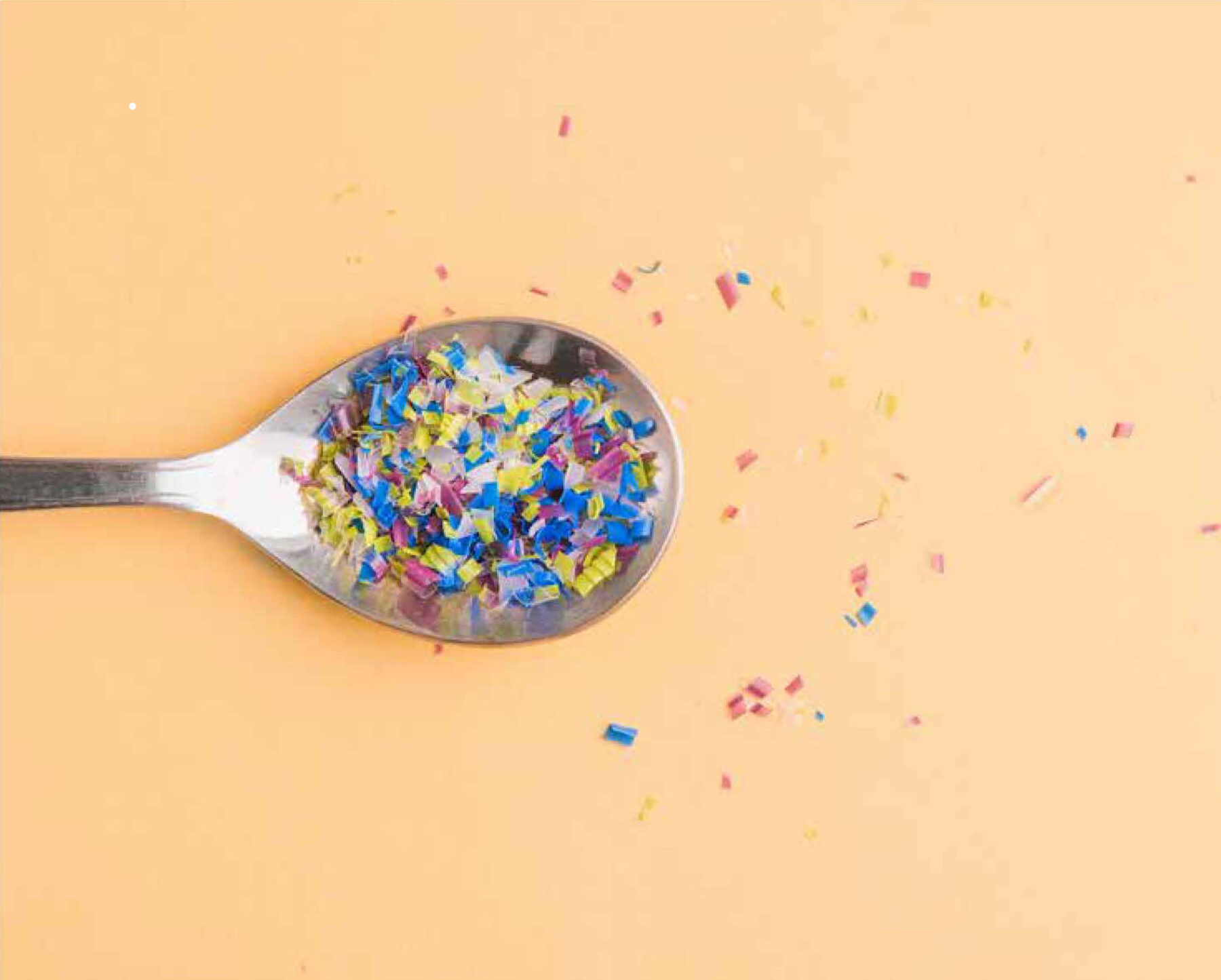
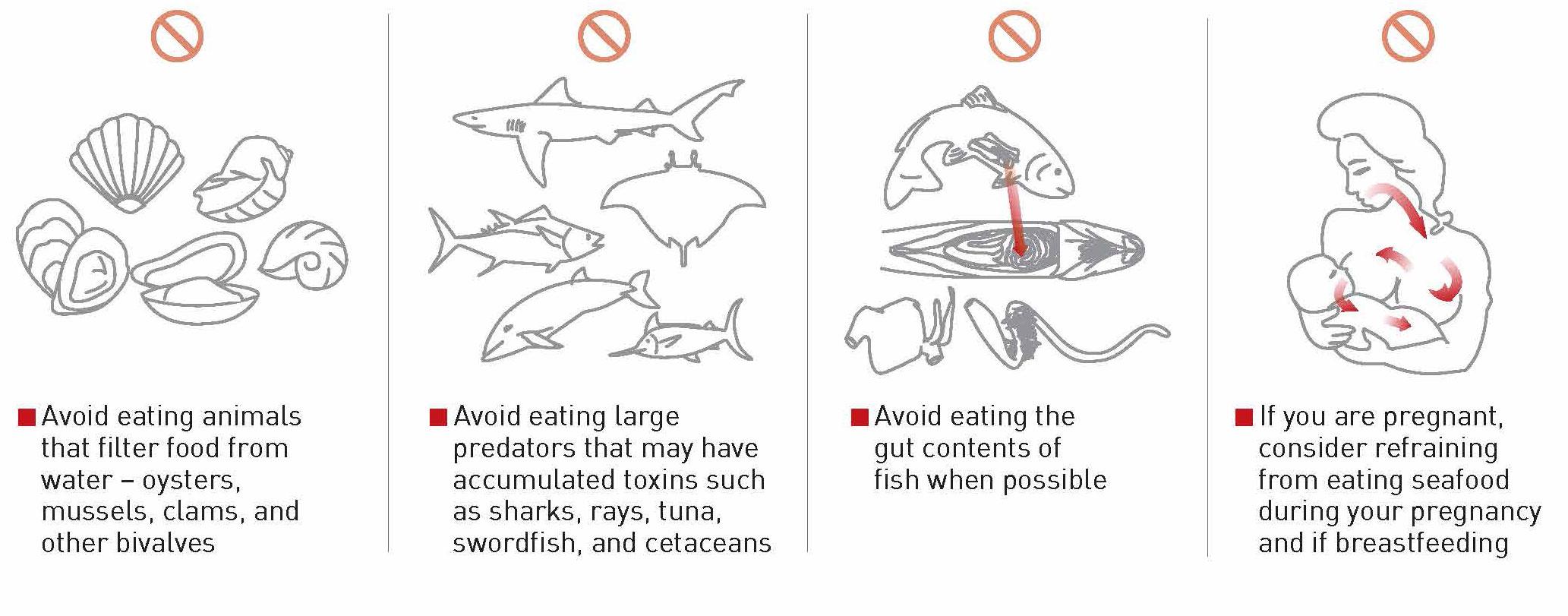
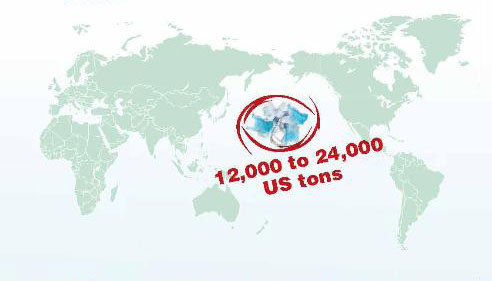
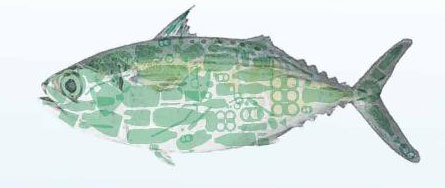
According to the Centre for Biological Diversity, fish in the North Pacific ingest 12,000 to 24,000 US tons of PLASTIC each year.
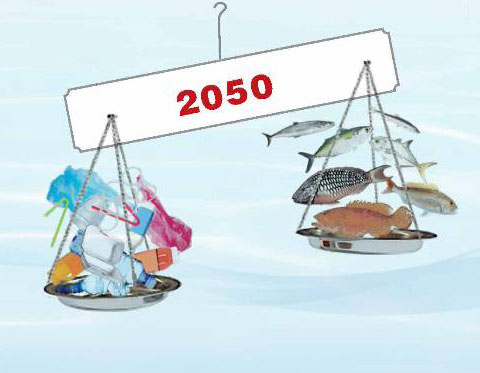
By 2050 there will be more plastics in the world’s ocean than fish by weight, unless we change our approach to plastic consumption
While the thought of eating plastics with your next seafood meal is an unpleasant and scary thought, all hope is not lost. If humans are able to shift the tides on plastic pollution and reduce the input of waste, and more specifically plastics entering oceans, there is still light at the end of the tunnel. With large scale frameworks being established and consumer-driven shifts away from unncessary plastic, a reduction in waste is possible.
Cleanup efforts are successful in rejuvenating areas that were once choked by plastic products and restoring their former ecological functions. It is critical that we, as a species, take responsibility for our actions and enact real and positive change for our oceans.
For the rest of this article (Asian Diver 2019 Issue 1 No 152) and other stories, check out our past issues here or download digital copy here.
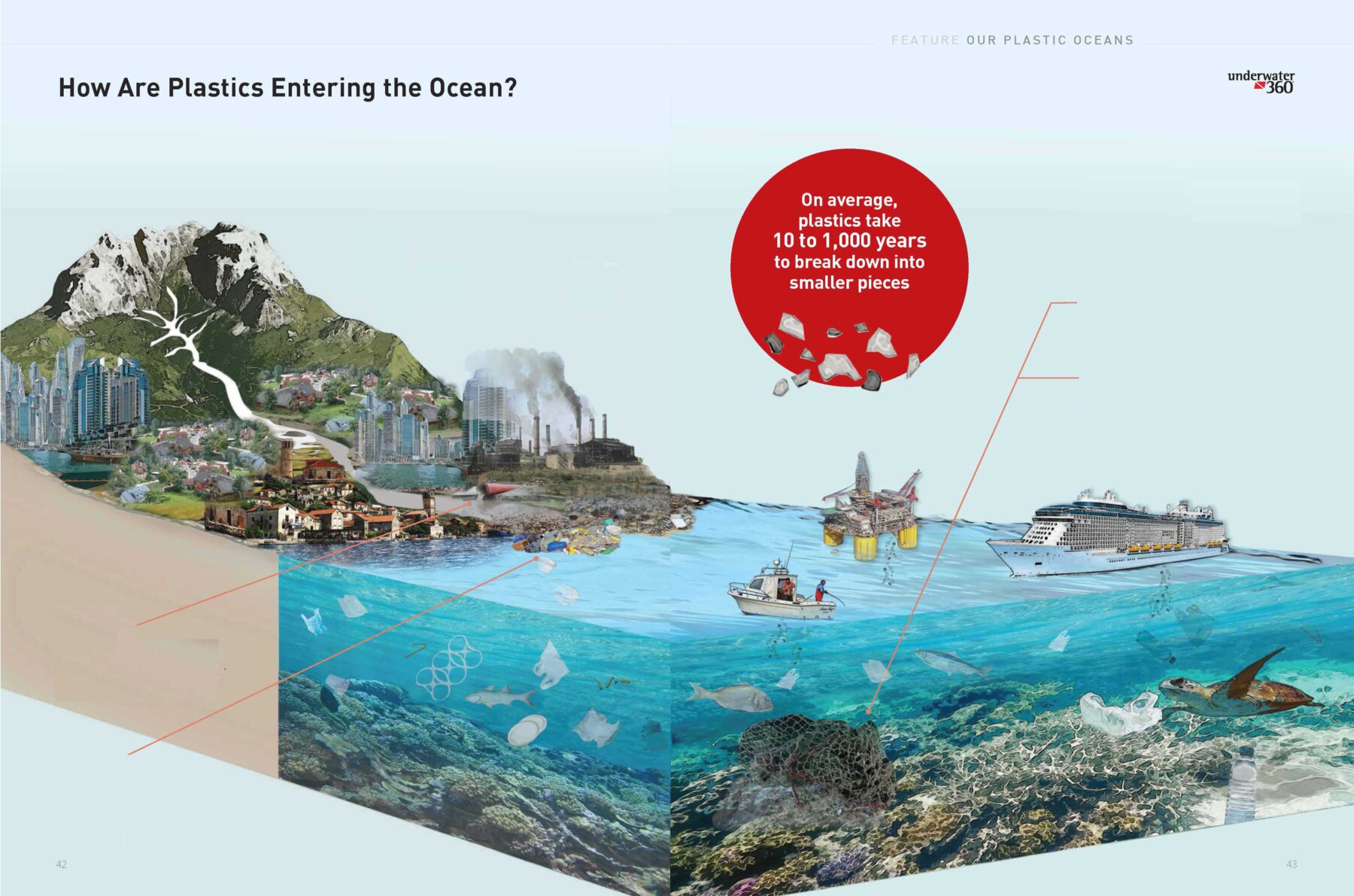
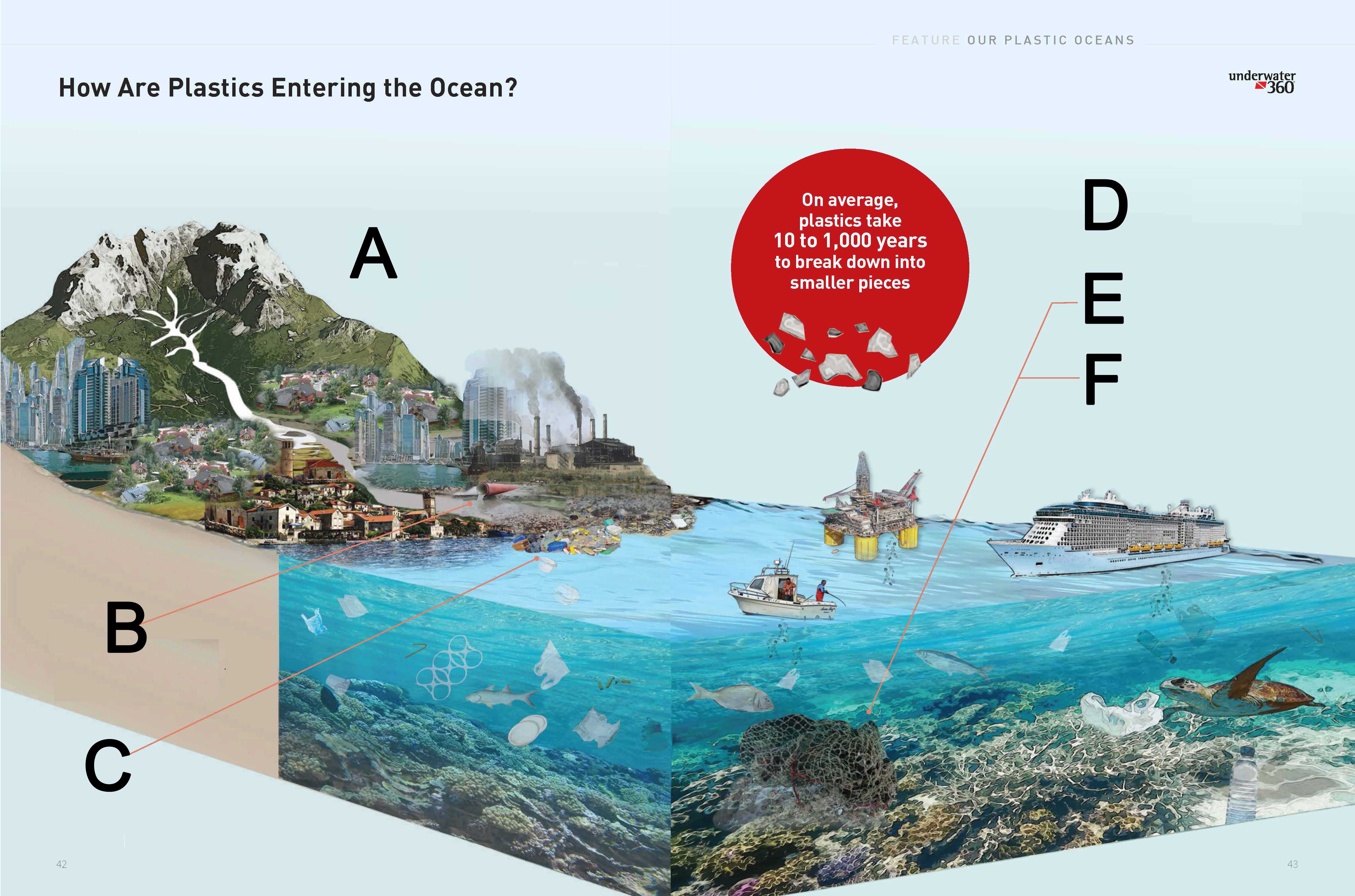
A)80% of the 8 million US tons plastic entering the oceans comes from land-based sources
B)75% of plastics from land-based sources comes from uncollected waste or litter, entering the oceans via rivers, sewage outlets, and storm drains
C) Rivers deposit 2.75 Million metric tonnes of plastic into the seas every year
D)20% of ocean plastics come from marine-based sources including oil rigs, fishing vessels, and boats transporting either goods or passengers
E)640,000 Tonnes of ghost fishing gear is abandoned in our oceans every year
F) Abandoned fishing nets make up 46% of the 79,000 metric tonnes of plastic in the Great Pacific Garbage Patch, according to a study published in Scientific Reports
For the rest of this article (Asian Diver 2019 Issue 1 No 152) and other stories, check out our past issues here or download digital copy here.
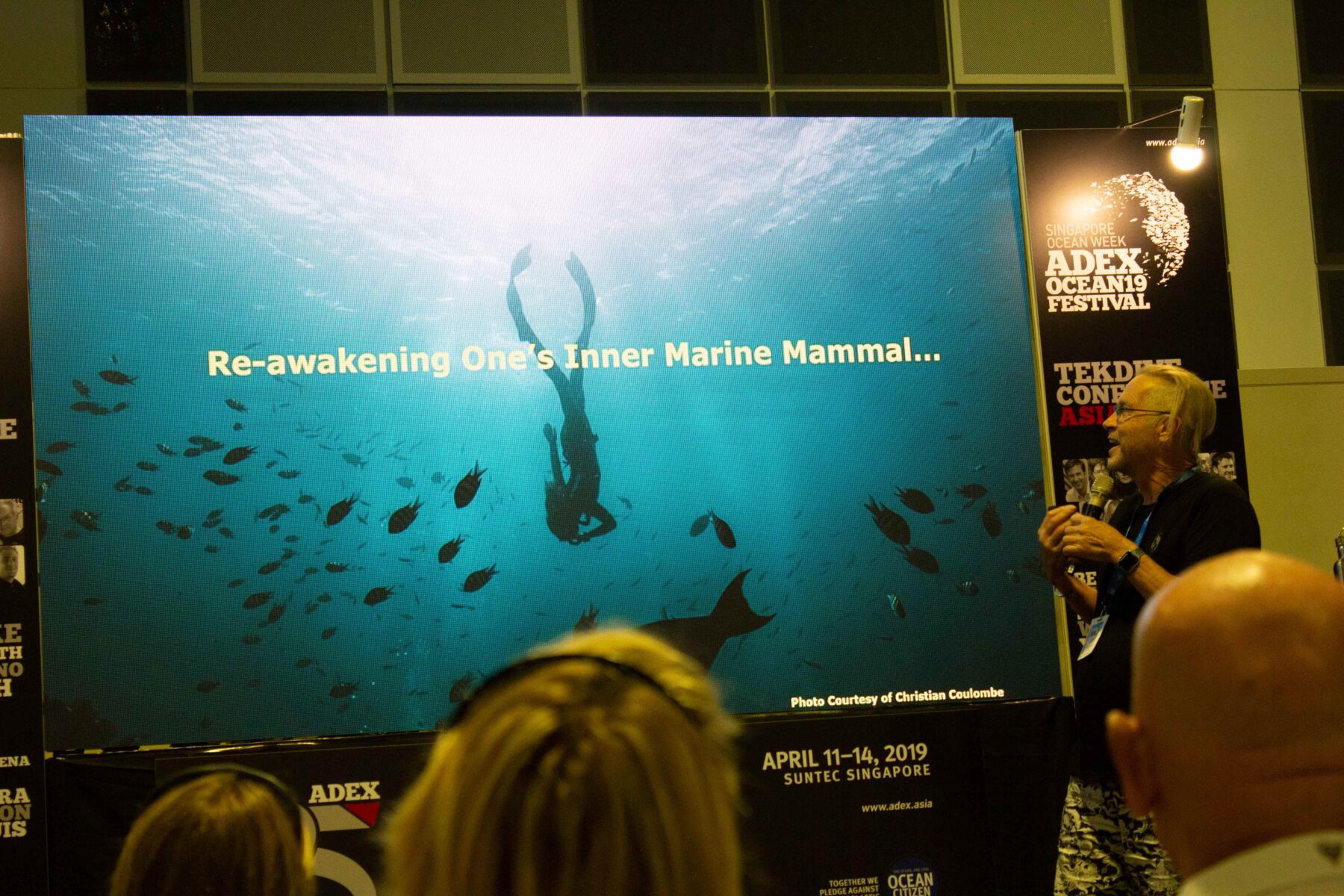
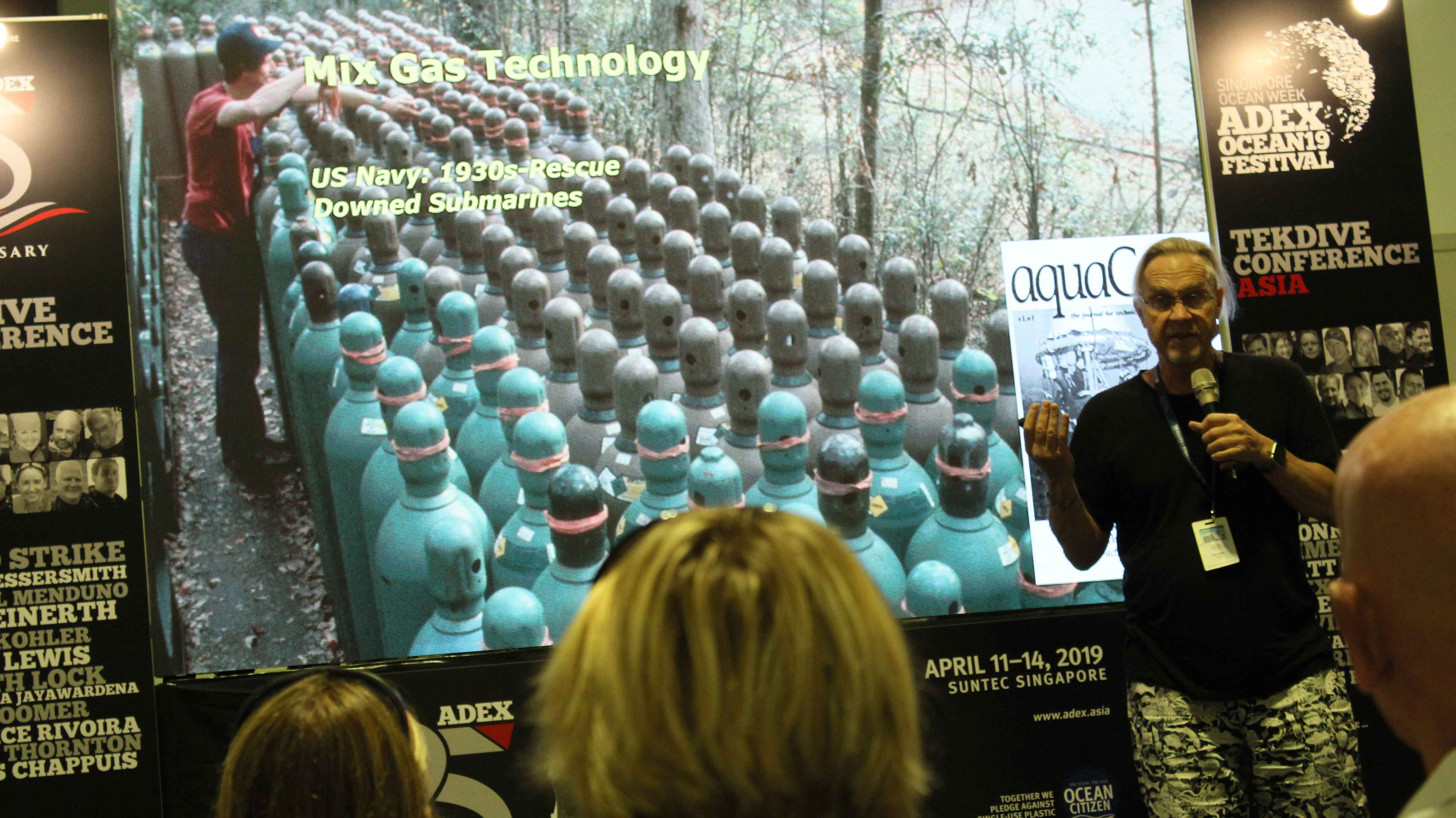
One of the pioneers of tech diving, Michael Menduno is a legendary figure in the technical diving world. Watch out as he writes about a different topic that most people like me had never heard about – technical freediving.
Briefly going over the history of tech diving at the start of his talk, Michael talked about how the navy had pioneered helium gas diving in the 1930s and commercial divers had developed their own protocols in the 1960s for deep sea oil field diving. He also talked about how mix technology optimized a diver’s breathing mix, which enabled tech divers to dive down to unprecedented depths in the ocean.
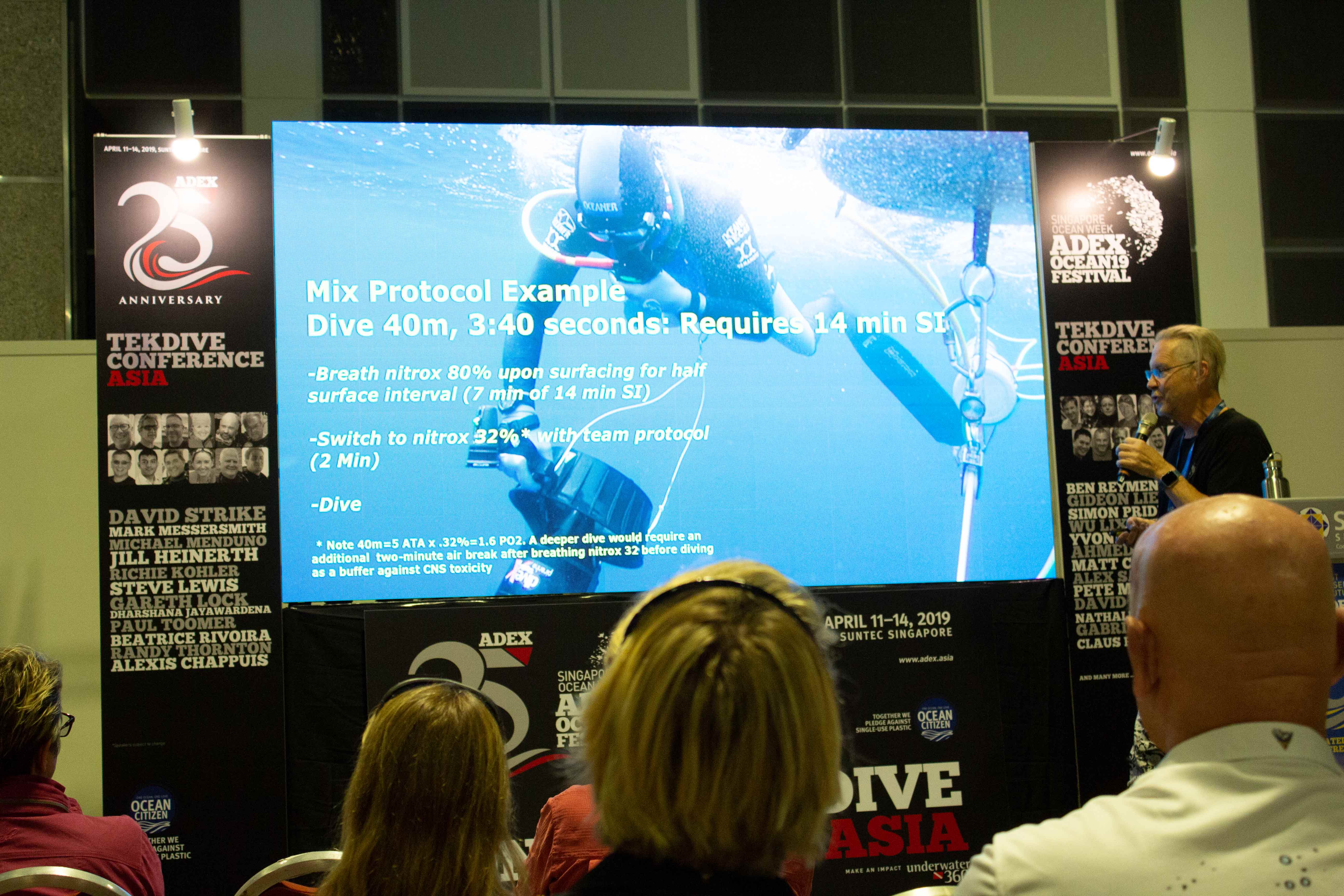
Then prefacing his love for swimming and diving, he started to explain how he stumbled upon something that was kind of in between the two sports – technical freediving – as it allowed him to dive without the gear. The concept of technical freediving is similar to that of technical diving. By using the principles established by technical diving about mix gases and its effects on human anatomy, technical freediving involves pre-breathing an enhanced oxygen gas mix to improve the freediver’s safety and performance underwater.
Two individuals are responsible for the development work that is being done on technical freediving, a term coined by Kirk Krack, founder and CEO of Performance Freediving International (PFI) and a former tech diving instructor trainer. In addition to Kirk, there is also former freediving world record holder and engineer Eric Fattah. Michael revealed that pre-breathing and post-breathing oxygen gave freedivers better times holding their breath underwater compared to just breathing air. The world record for a breathhold after pre-breathing oxygen is over 24 minutes compared to slightly over 11 minutes when just pre-breathing normal air. When used conservatively, pre-breathing oxygen before freediving can reduce risk of decompression illness (DCI) in freedivers and can reduce end of day fatigue as well.
While it sounds like a fantastical idea, the science behind how it works is rooted in the way the human anatomy works. Pre-breathing oxygen loads your body with oxygen and flushes out carbon dioxide in your body, thereby changing the blood chemistry in your body, enabling the freediver to hold his breath and dive longer. The major risk of freediving is hypoxia. Mixed gas pre-breathing may reduce the risk of hypoxia in freedivers. It also enables them to lengthen their breathhold time underwater. As such, there are plenty of freediving applications for technical freediving such as enhancing the ability of competitive safety divers, increasing the safety and bottom time of film crew and actors who need to freedive on screen and hunting. In Tom Cruise’s 2015 movie Mission Impossible: Rogue Nation, Tom Cruise’s character of Ethan Hunt had to hold his breath for more than three minutes to retrieve a chip in an underwater vault. For the scene to be shot, Cruise had to be trained to hold his breath for more than six minutes and he was trained by Kirk Krack. Kirk, who also worked on The Cove and Avatar, went to Truk Lagoon with the PFI crew in 2017 to freedive, hitting depths of 30 to 60 metres, nearly doubling their freediving time and or shortening their surface intervals by practicing technical freediving. Michael also went through the risks of technical freediving, which includes:
Central nervous system oxygen toxicity
Carbon Dioxide narcosis
Gas switching errors
Surface interval (SI) miscalculations
Oxygen handling n servicing
Lung volume reduction buoyancy changes
There are also still areas that are unknown, including the limits of CNS oxygen toxicity? How much SI is required? The current procedures were developed experimentally. Are air breaks needed? What is a decompression model for freediving? Hypoxia limits? And how pre-breathing oxygen enriched gas impacts carbon dioxide. There also many challenges on the research front regarding technical freediving. First of course is money, but there are also questions regarding the ethics of experimenting on freedivers to find the limits.
For the moment, PFI has an education programme about technical freediving – it’s not really a consumer product but for working divers.
As a parting shot, Michael also mentioned about the potential abuse of technical freediving. Only less than 10 percent of freedivers today are trained. Globally, there are 100-120 scuba deaths a year, and 20 to 25 tech diving deaths a year with most of these mostly rebreather related. These compare to 50-60 breathhold diving fatalities a year, which experts say is under reported.
The oceans regulate our climate, absorbs carbon dioxide and is the main source of protein for more than a billion people on Earth. Asia is home to incredible green bio-diversity but all across the entire Asia Pacific, there are lots of threats to marine life such as bomb fishing, plastic and waste pollution. With the growth of marine tourism and the increasing consumption of seafood all across the world, the fishing industry and marine tourism industry both depend heavily on healthy marine eco-systems.
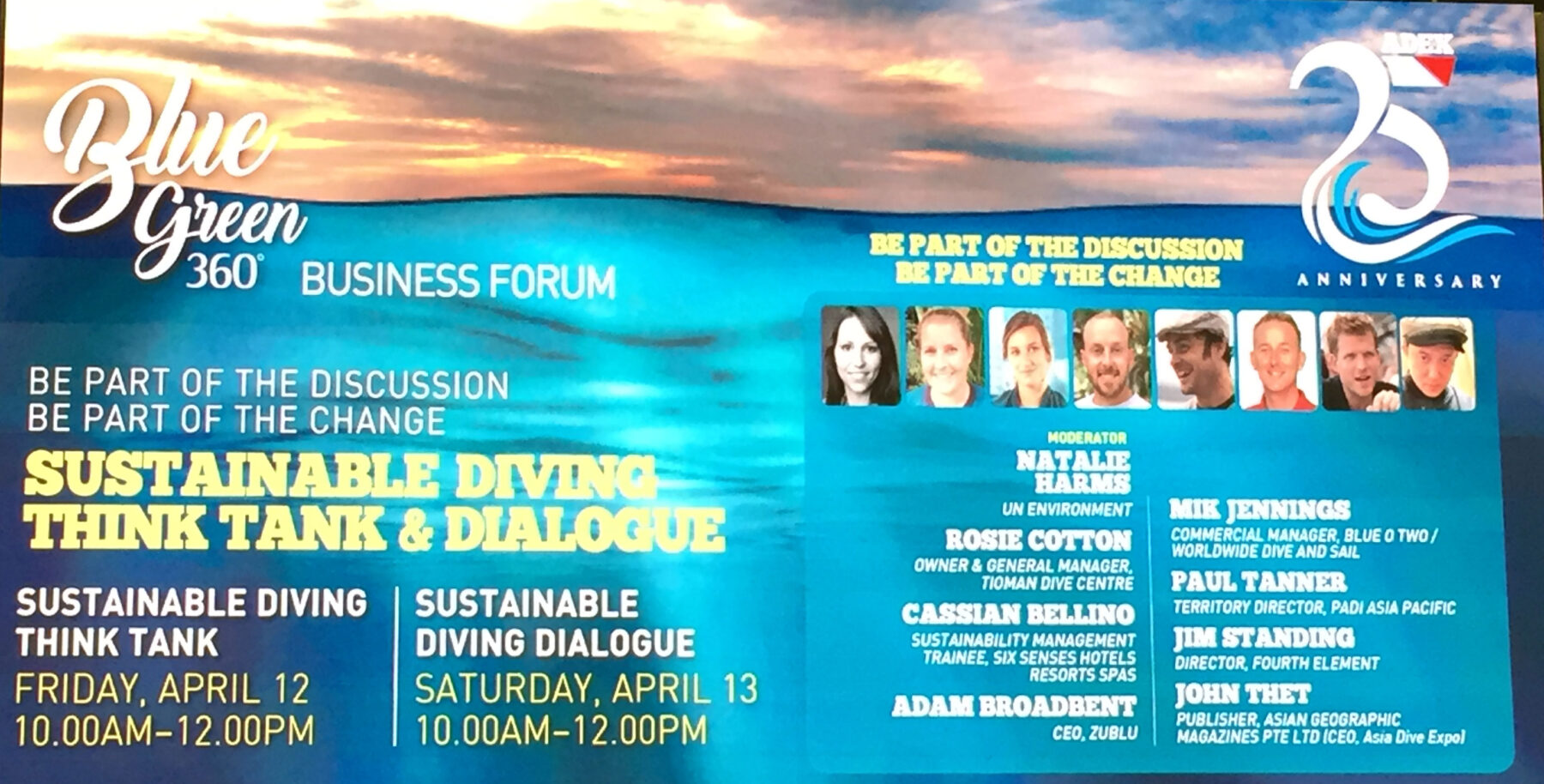
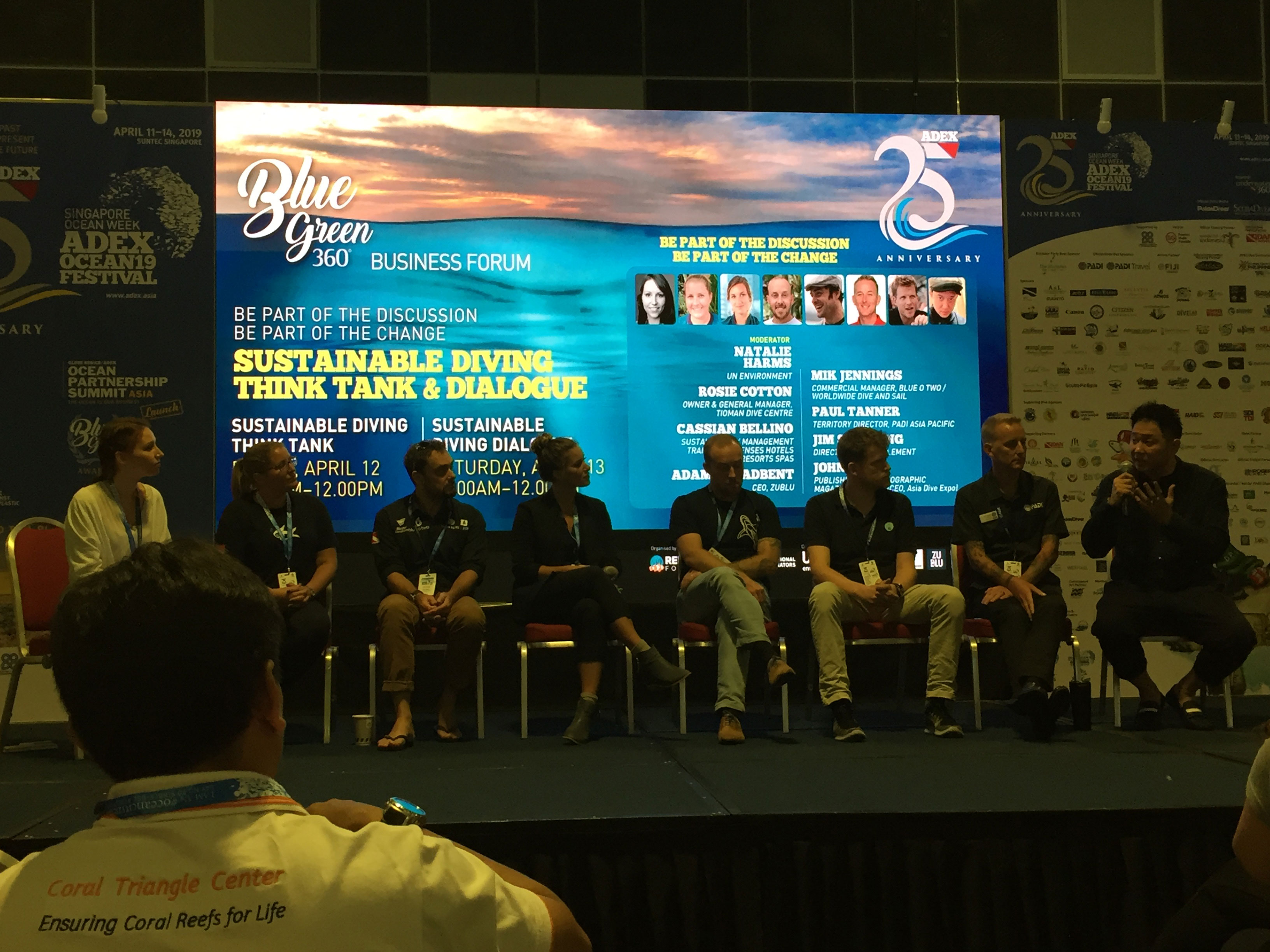
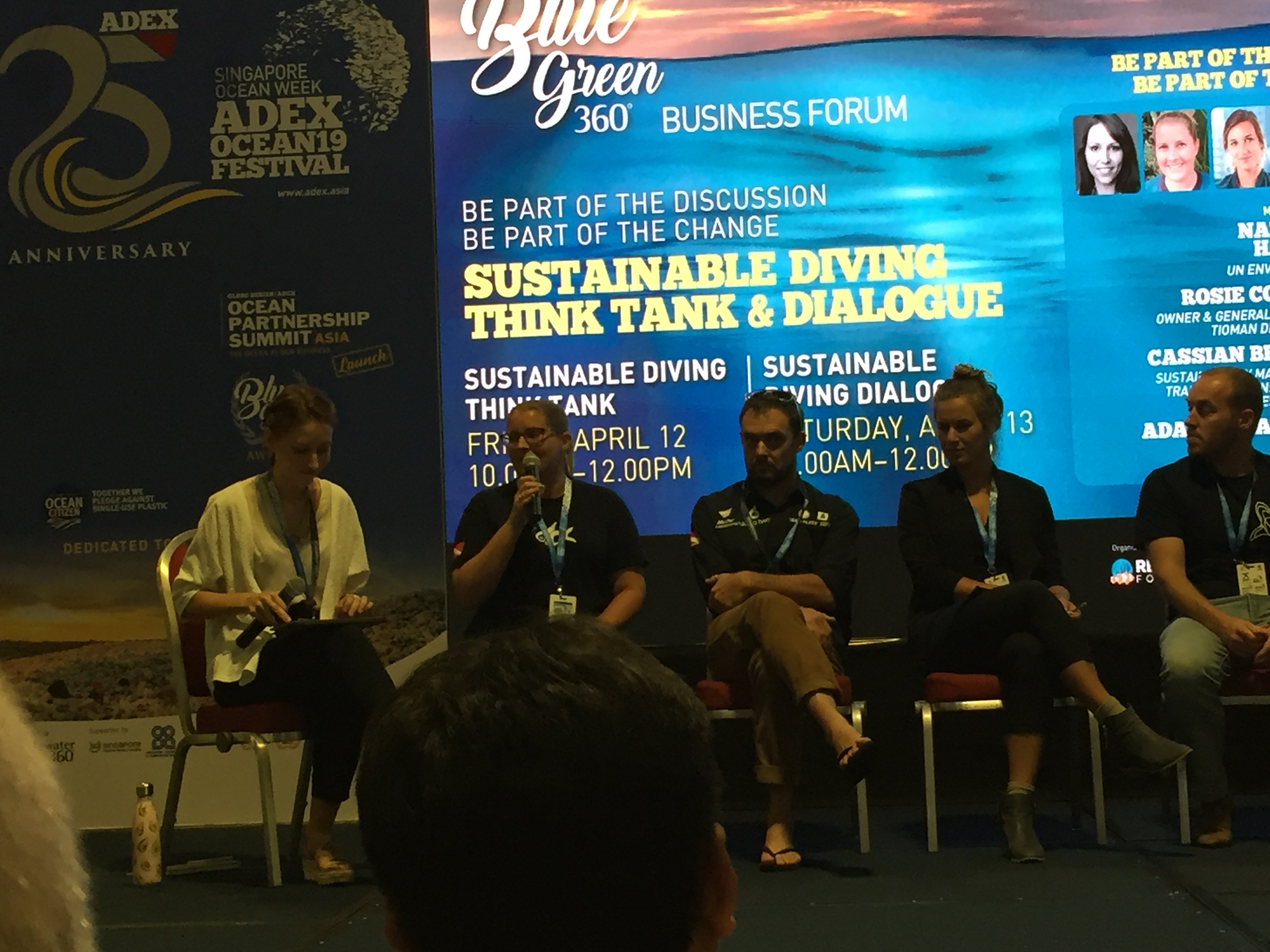
Organized by Asian Geographic Magazines in cooperation with Reef World Foundation (Green Fins), the Sustainable Diving Dialogue is an unprecedented panel discussion moderated by Ms Natalie Harms from United Nations Environment that saw some of the most influential people in the global diving industry gathered together to discuss how to combat marine pollution and the current and future direction of sustainable marine tourism across the entire Asia Pacific region. Held on April 13 2019, 10 a.m at ADEX Singapore 2019, the panelists shared the problems and solutions they encountered from implementing sustainable solutions while valuable insights and help were offered by sustainable manufacturers to the other panelists in the forum.
The Sustainable Diving Dialogue at ADEX Singapore 2019 provided audiences with a wide-ranging look at sustainability all across Asia
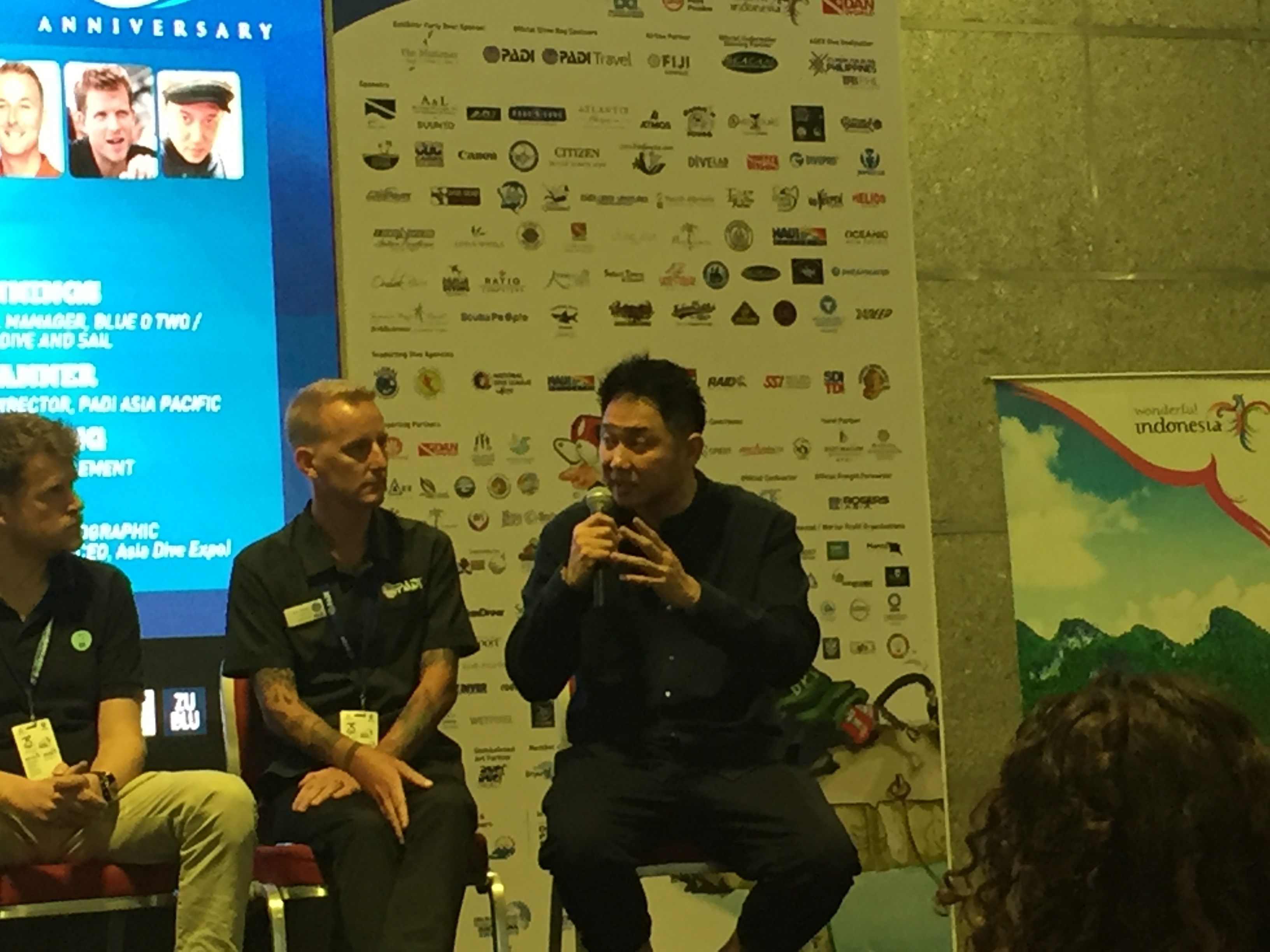
Co-moderated by Ms Chloe Harvey from the Reef World Foundation (Green Fins), the panel consisted of Ms Rosie Cotton (Owner and General Manager of Tioman Dive Centre), Mik Jennings (Commercial Manager of Blue O Two / Worldwide Dive and Sail), Cassian Bellino, (Sustainability Management Trainee from Six Senses Hotels Resorts Spas), Adam Broadbent (CEO of Zublu), Jim Standing (Director of Fourth Element), Paul Tanner (Territory Director, PADI Asia Pacific) and John Thet (Publisher of Asian Geographic Magazines).
The Challenges of Sustainability
According to Natalie, the UN is working with governments to improve ocean governance by starting regional marine programmes to reduce plastic pollution. One of the main challenges addressed in the discussion was the practical implementation of sustainable solutions.
Case Study: Tioman Dive Centre
Awarded the Green Fins Award for having the lowest environmental impact overall, the Tioman Dive Centre had put in place a series of small changes recommended by Green Fins that put them on their way towards sustainability. Rosie Cotton, owner and General Manager of Tioman Diver Centre, was grateful to Green Fins for the considered actions recommended to them which promoted change without disrupting her business. By transmitting the correct sustainability mindsets and behaviour to her staff, the Tioman Dive Centre staff were in turn able to pass on this wisdom to customers. Being consistent was key to effective change.
Rosie Cotton from Tioman Dive Centre speaking about sustainability
Case Study: Blue O Two/Worldwide Dive and Sail
Having been working on the greening of liveaboards for Blue O Two/Worldwide Dive and Sail as its Commercial Manager, Mik Jennings addressed the greatest threat to the environment – humans. With our footprint on the environment increasing proportionately with our numbers, marine protected areas (MPAs) are essential. Although a lot of governments have MPAs, the strict policing of these MPAs is key to the proper protection of the marine life in these areas.
Mik also shared that while one little company can do very little by itself, trying to get strength in numbers is also a challenge. One of the biggest roadblocks to being sustainable is obtaining the eco-friendly products. With a footprint of 15 resorts all over the world, Mik shared his difficult experience of obtaining sustainable products for all of Blue O Two’s resorts. As distributing products from a central source to all 15 resorts would lead to a bigger carbon footprint, the only option left to him was to source items in all 15 locations separately from local sources.
With audiences encouraged to join in the dialogue, Bruce Dudley, Senior Vice President of Globe Series, ADEX Singapore’s partner in the Ocean Partnership Summit in Singapore next year, posed a question to the panelists about whether any of the panelists had seen tangible rewards from being sustainable.
“We find it very mixed,” replied Mik to the question. He pointed out that while some chose holidays based on which holiday resort is sustainable, some people just don’t care. When Blue O Two put an announcement on its facebook about not throwing plastic bottles into the Red Sea, they received backlash about the move. But if they did not do this, they would lose money in the end.
Case Study: Zublu
In response to Bruce Dudley’s question, Adam Broadbent from Zublu replied that it was indeed hard to reward companies for being green as being sustainable is a process that is hard to scale up. Although it might just be a marketing benefit for now, Adam is of the opinion that “eventually it will become the status quo and you’ll get left behind if you don’t do the same”.
In response to Natalie about the demand and growth of sustainable dive tourism, Adam revealed that on the Zublu platform, they try to showcase sustainable liveaboards and dive resorts. Being “in the inspiring stage and discovery stage, Zublu plays an important role in showing consumers what is available”.
“People are making choices based on sustainability. Price still trumps for now but there are some very exciting places in trek in Borneo,” added Adam.
“Zublu is seeing demand from customers who want to get involved in conservation work while they are travelling.
“In terms of pre-travel – for us, sustainable travel starts from home. That’s where you have the biggest impact. By choosing a Green Fins member, you make sure you have a smaller carbon footprint,” Adam added.
Adam also shared what Zublu would like to do: which is to try to encourage more of their guests to be activists when they are at the destination and rewarding them for that so that they will book through Zublu again. Adam added that “rewarding people is the best way to engage people to do conservation work”.
Case study: Fourth Element
In response to the need for manufacturers and marine tourism business to be sustainable and green, Fourth Element founder, Jim Standing said, “Frankly we have to do it. If we don’t, the future is incredibly stark. We’ve accepted the higher cost and some of the kickback of making our product more expensive. If we don’t do this, the legs of the stool will fall off until you’re standing on the floor. We have to do this until consumers have no choice but to be green.”
In response to a question from Natalie about whether he felt sustainable dive tourism has an edge already, Jim answered affirmatively.
“There is a competitive advantage for sustainable businesses. We should be making something from our waste – ocean positive swimwear line, leggings from sustainable materials. Once you look into the rabbit hole, you can’t come back out.”
Jim added that committing to building sustainable products “fundamentally changed the DNA of Fourth Element to one where we make the product that is better for the ocean”. For Fourth Element, they’ve embarked on a journey where they will eliminate single use plastic by the year 2020. More of Fourth Element’s product line will be built with recycled material.
“We’re just a tiny company,” added Jim. “This is going to become important to everybody. We decided to make mission 2020 an aim. We want to make the whole industry committed to this. As a community, we can present our own pledges like a 70% reduction of plastic. Individual dive centers all over the world, we can all make changes . That can inform divers all around the world to follow and make changes – that will make a change that is positive for the ocean. I would encourage everybody to please join Mission 2020. There are phenomenal resorts out there who are doing great things. There are many conservation models that reward the poor villages to make enough money for their families.”
When asked about what support was needed, Jim laughingly added, “Just vote with your wallet and buy our stuff.” As a parting note, Jim reiterated his promise to share where his company sources their sustainable raw materials.
He revealed that his company working with other manufacturers who want to find out where Fourth Element sources their sustainable raw materials. He added that not only is there no sacrifice of performance for sustainability, the products they are making now, a lot of them perform better than non-sustainable versions.
Case Study: PADI (Asia Pacific)
Responding to a question from the public about the path forward when only one resort out of a handful in an area are sustainable, Paul Tanner from PADI was truthful.
“I don’t think there’s answer for it. It depends on what level the company is on the ladder to becoming sustainable. The dive centres here are the ones who are keen, the ones who are successful. Those dive centres who are not investing in this will die out. They’ll either destroy the community they’re in and they won’t have business or the other liveaboards who are green are going to take their business,” said Paul.
“The most successful ones, the ones who are charging more are the ones who are sustainable. It’s very difficult to do on a large scale, it always comes down to the community level. Guinea islands – they’re limited to two boats per expedition on one dive site. It all comes down to the local level.”
Paul further emphasised the importance of education, community and comunication to driving the movement. “From three to four years ago, we implemented a sea change in how we approach our teaching,” said Paul. “We are putting out materials and encouraging divers to drive sustainability and combat climate change. We are collecting as much data as we can. We are talking to manufacturers about BCDs that can tell us what kinds of environment we’re diving in. We’re using our reach – 5 million reach on social media – trying to push our message through our network. You’ll see a lot more change through this in two or three years.”
Asian Geographic Magazines Publisher, John Thet explaining the need for balanced reporting and green companies
ADEX: The Road Ahead
Natalie also asked John Thet, CEO of ADEX Singapore about how he sees ADEX supporting issues on sustainability.
“I think we are not doing enough,” replied John. “That’s why next year we are repeating our theme. We used to change our theme every year but it’s not enough time to finish everything so we are repeating our theme next year. We want to give back to the ocean. There are many ways to do this. Plastic is a problem that’s hard to resolve. People only recycle 9% of their plastic. Making new plastic is cheaper than recycling an old one. Business wise it’s a tough choice to turn down.” “That’s why next year , we are talking about policy on a government to government basis, John added. “We need to talk to governments to ban plastic. We have to start with our own mission. We have to start with ourselves first. We have to stop using plastic so that the problem will be reduced. I don’t believe it’s only for us. It’s for the young generation. We should really promote the young generation to promote more voices from the young. That is what we need. We want to do more. Next year, we want to have combined announcements about companies announcing their bans and pledges for sustainability.”
“Yesterday, we saved the usage of thousands of plastic bottles by not using them. Like Paul said, if there’s more divers, there will be more ocean lovers. But we have to educate divers, or else more divers will lead to more damage to the environment. Content is very important for us to educate others.”
With the world’s leading divers and eco marine tourism business and thought leaders coming to town for ADEX 2019, we talk to Monica Chin, Director of ADRECC, an environmental organisation in Asia, about her journey and how she’s protecting the marine bio-diversity of Asia.
Underwater360: Could you tell our audience more about yourself, what inspired you to go into this field & your journey from a kid enraptured by diving to becoming a co-founder of Trash Hero Borneo and now Director of ADRECC?
Monica Chin: I live in a small town name Kota Belud located at Sabah North Borneo, East Malaysia. It’s a 15-minute drive to beautiful white sandy beaches and a 15-minute drive to riverside clear water river flows from Mount Kinabalu, which is surrounded by virgin jungle. I was exposed to the ocean and nature since I was one years old. My parents love outdoor activities like island hopping, fishing, jungle tracking, riverside camping and exploring new islands back in 1980’s. I remembered when I was a kid, my weekend family activities would involve taking off to the South China Sea and spending an overnight boat trip fishing with my parents. I’ve never had fears swimming in the open, deep sea. Swimming in a clean, crystal clear seawater with dolphins and duyongs, I saw many huge pristine coral reefs. Once, I saw six huge whale sharks passing by my dad’s fishing boat.
I remember my first time holding my breath underwater with my late mom in year 1989, watching a duyong family enjoying their meals. Fishing along the mangrove river with my dad was another amazing experience. I love mangrove jungles so much and the smell of the muddy area. Today, what we see are piles of trash hanging on the mangrove trees! There is too much trash along the mangrove shore line.
This year (2019), sadly, I can’t see any places like what my back yard used to look like. I tried to show things I’ve seen many years ago to my son when he turned three years old. I felt sorry and disappointed the picturesque nature of my youth is not around anymore. The beaches I use to play on when I was five or six years old is full of trash. It really broke my heart and I asked myself how I can fix this from getting worse. That led me to where I am today.
I’ve dived in so many places, witnessed the sea changing from pristine to being filled up with floating trash and I’ve seen the worse up close under the sea at depths of 18 to 27 metres. That pushed me to do something to save the ocean and marine life.
I joined a beach cleanup in Krabi, Thailand during my dive trip back in September 2014. I saw the opportunity and an effective way to create awareness among the community in my home land in Sabah, North Borneo. I immediately started teaching a small group of kids living nearby my hometown by the beach. At Moon Bay Beach for three years, I committed myself to leading them on beach cleanups, coral planting, seagrass planting and taught them why marine life is essential to them. On Februay 27, 2017, I was officially appointed as the international volunteer leader and co-founded Trash Hero Borneo.
I wanted to do more for the earth and I resigned from my position as volunteer leader in January 2019 after two years of massive volunteering with Trash Hero. This year, I want to fully utilise my passion in a bigger platform called the Ara Dinawan Research Education Conservation Center (ADRECC). ADRECC is an environmental marine conservation organisation consisting of affordable accommodation, an educational section, research, work station and dive centre, that is in the midst of setting up. Its Board of Directors are experienced scuba divers, nature lovers with the same dream of contributing and preserving the ocean’s marine life and green environment for future generations.
Monica Chin, Director of ADRECC talks about plastic pollution and ADEX
uw360: What are some of the most surprising things you’ve learnt about yourself and others in your journey in diving from a learner to a teacher to now a co-founder of Trash Hero Borneo?
MC: The most surprising things I’ve learnt about myself is how I’ve become so passionate about every single living thing on this planet, so protective of the ocean, marine and wild life. If I have a small chance, I would plant a tree wherever I go! I’ve become so emotional over heartbreaking pictures in social media. Some people think I am too much but I don’t think so. I just want to protect all of them so badly! I do wish that I have a big super magic hand to turn everything back in time – change all the bad to good; Transform the ocean from dirty to clean! Yeah, I know I’m crazy.
The others in my journey? Well, I can proudly say that most of them have changed their mindsets and are trying to do the same things I do. They realise how important it is to keep our ocean planet clean and save all living things on this planet. There are some of them who just ignore everything. They say I’m a crazy diver who can’t do anything to clean other people’s trash and change the mindsets of others while saving all life (animals). Some say I’m stupid for teaching uneducated rural kids and stateless kids to become “smarter”. The negative statements thrown my way are too numerous to mention.
To me, as long as I’m alive, as long as I can breathe underwater, be able to speak and walk, no one can stop me for what I am doing now. I will keep educating all kids and share all my knowledge with those who wish to learn, and teach and guide them. I believe one fine day, I’ll witness huge changes and all humans will do more than what I am doing now. Kids are the future. We cannot stop educating them. That’s why we need to protect our ocean planet. Am I crazy? LOL
uw360: Do you have any memorable stories you can share with our audience?
MC: Yes, I have. Many were so surprised and they ask why I am doing all this without getting any pay and many of them wanted to help contribute in any way as well and they give their full support whenever I need them. Most of them are so encouraging and so supportive.
uw360: In your travels while diving, instructing or working on eliminating water pollution, how has plastic pollution impacted the places you’ve been to, products you’ve worked on or policy and strategic planning for the future?
MC: Huge impact! People are just too slow to understand the urgency of removing, reducing and eliminating trash from the water. But in my city, after two years volunteering and organising 126 cleanups, people have started to duplicate our good deeds which is great for keeping awareness going.
I’m not working on any policies currently but if I am given a chance, I would love to. As for strategic planning for the future, I will continue what I have been doing for the past five years and will actively involve myself in related programmes in addition to learning more from international experts. I’m focused on exposing and involving our programme people, especially our local community. I believe we will start from our own land and set them as a living example.
uw360: The diving industry actively advocates for sustainable marine tourism. Which of the two do you think would make more of an impact – reducing/eliminating marine tourism altogether or encouraging sustainable marine tourism?
MC: Of course encouraging sustainable marine tourism.
uw360: Going forward, where do you see the diving industry heading towards?
Diving industry is growing active. We need to control and set a strict policy in order to sustain the ocean ecosystem. All dive operations should set strict guidelines on teaching new diver to be 100% responsible scuba divers toward the underwater world and all marine animals. Otherwise, everything will be gone real soon. Additional policy, rules and regulation will be good.
uw360: What are your plans for ADRECC?
ADRECC will be open for collaboration and partnerships with all international experts in any kind environmental marine conservation programmes, activities, courses, research and education centres. We are open for new opportunities. ADRECC want to be one of the leading environmental marine conservation platforms in Asia contributing to our one ocean planet and to our future generations.
uw360: What do you see the diving industry and ADRECC ultimately transforming into? Serious good partnerships in collaboration working together protect, preserve and conserve saving the ocean planet. One voice for One ocean!
Get ready for an evening of inspiration, adventure and discovery. Joint founders of the annual Underwater Tour, Juliette Myers and Tim Hochgrebe have curated a stellar international line-up of underwater photographers for this year’s nationwide touring speaker event series across Australia.
LIVE on stage 9-14 May, David Doubilet, Jennifer Hayes and William Tan will showcase extraordinary images and share stories of discovery from behind the lens.
Doubilet’s 75 plus feature publications with National Geographic document the diversity of marine environments – from equatorial coral reefs to life beneath the polar ice. Feature presenter of National Geographic Live, a columnist, contributing editor and author of 12 books, he is the recipient of many international prestigious awards including The Academy of Achievement Award, The Explorers Club Lowell Thomas Award and The Lennart Nilsson Award in Scientific Photography. Doubilet is a member of both the Royal Photographic Society, International Diving Hall of Fame and founding member of the International League of Conservation Photographers.
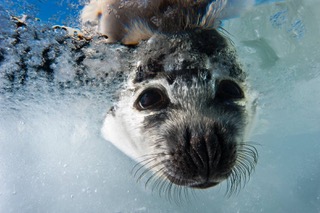
Hayes’ photography and journalism is underpinned by her marine science background and focus on science communication and conservation of endangered species. Her current work includes documenting the global status of UNESCO World Heritage Site coral reef ecosystems at risk of climate change, exploring the science and solutions to restore North American sturgeon populations and documenting harp seals as a Face of Climate Change in the Gulf of St Lawrence as their birth ice disintegrates beneath them. Who knew Hayes is a pilot with a passion for vintage planes? She is the recipient of the Presidents Medal for natural history, a trustee of the Shark Research Institute and Explorer Club National Fellow.
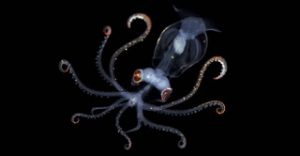
A pioneer of the blackwater macro underwater photography niche, William Tan is truly the Master of ‘blackro’. Tan captures images of the phototaxic movement of plankton and wonderfully bizarre marine critters in their nightly vertical migration from the deep or mid-water column to the shallows. A violinist with the Singapore Symphony Orchestra, between concert seasons, he leaves his prized antique Italian violin at home while diving throughout the Pacific region. A world previously exclusive to scientific academia, if you’ve seen everything and dived everywhere, William’s blackro images are guaranteed to pique your curiosity and have you wanting to set out on new adventures.
Underwater Tour 2019 event dates:
• Brisbane 9 May Gardens Theatre, QUT
• Sydney 11 May Hoyts Entertainment Quarter, Moore Park
• Melbourne 12 May Hoyts Melbourne Central
• Adelaide 13 May NEW Adelaide Festival Centre, Space Theatre
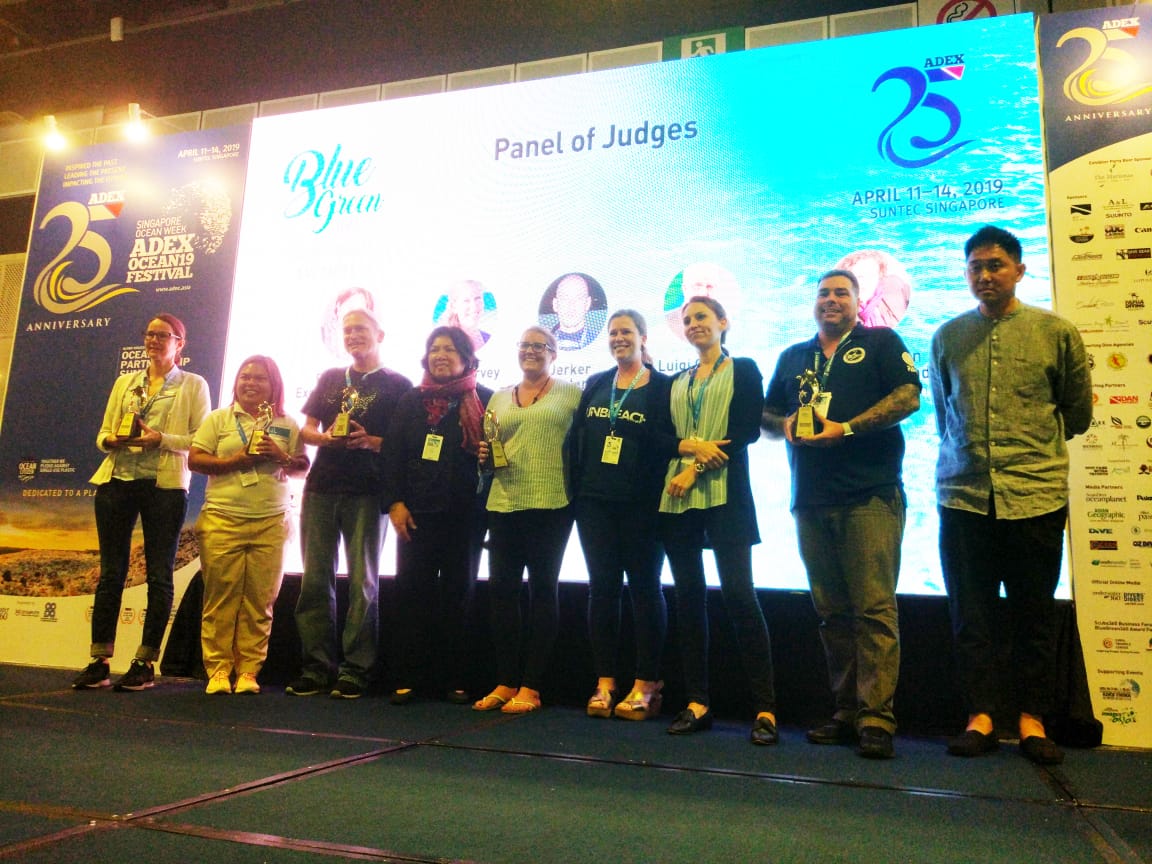
The Winners of the BlueGreen 360 awards at ADEX Singapore 2019
August 12, 2019, Singapore – Four businesses and one individual championing environmental sustainability and ocean conservation in the marine tourism industry were honoured at BlueGreen 360 Awards Year 3 held on April 12, 2019 at this year’s Asia Dive Expo in Suntec City Singapore.
Now in its third year, BlueGreen 360 Awardscelebrates businesses and individuals that are pioneers in implementing sustainable solutions in their day-to-day operations and making a positive impact in the communities where they operate. This year’s awards also highlights businesses that are implementing solutions to tackle ocean plastic pollution.
The winners were judged by sustainable tourism and marine conservation experts such as Luigi Cabrini, the Chairman of the Board of Directors of the Global Sustainable Tourism Council; Rili Djohani Executive Director of the Coral Triangle Center (CTC); Dianna Cohen CEO and Co-founder of the Plastic Pollution Coalition; Natalie Harms of the UN Environment; and Chloe Harvey of Reef-World Foundation, in collaboration with the organizers of the Asia Dive Expo.
This year’s winners have all exhibited their commitment to environmental programmes to protect marine biodiversity, successfully collaborated with various groups promoting on-the ground marine conservation efforts that benefit the environment and the local community in addition to serving as inspirations for others to do the same.
The winners are:
Dive Operator of the Year: Lembeh Resort
Lembeh Resort and its dive centre Critters@Lembeh Resort is taking major steps in addressing ocean plastic pollution. It places demands on its suppliers to reduce plastic packaging for all purchases and takes steps not to repackage items in plastic, opting instead for traditional wraps including banana leaves. It’s constructed accommodation uses green technology including solar water heating systems that reduce carbon footprint. It has a set up the Lembeh Foundation in 2018, the core aims of which is to reduce plastic waste, provide education and economic benefits, while improving the health and sustainability of local communities. It has raised funds to build a trash bank and a green library school building where locals can exchange their plastic waste for cash and learn how to re-purpose plastic waste in to items which can be sold in the resort’s gift shop. The resort and dive staff are regularly organising underwater and beach clean ups and teaching local children sustainability, wildlife, conservation and plastic pollution. The resort works with community leaders to ensure that the entire community is involved in the sustainability projects in the village. Since the creation of the Lembeh Foundation, the entire village of Pintu Kota Kecil is embracing a more sustainable way of life.
Hotel and Resort of the Year: Ceningan Divers Resort
Ceningan Divers Resort, which was last year’s Dive Operator of the Year winner, wins this year’s hotel and resort category for its continuous drive in promoting sustainability in its operations and working with the local community to address ocean plastic pollution. The resort implements an in-house training programme for all staff to teach them about the impact of single-use plastic and proper waste management. The resort has a recycling programme and has set up the local Trash Hero Ceningan chapter and conducts weekly clean ups with the community; participates in ghost net removals, coral transplantation, and reef health surveys in the Nusa Penida Marine Protected Area. The resort sponsors rubbish bins around the islands and conducts weekly workshops on various topics such as Manta, Sunfish, the impact we have on our reef and the ocean, reduction/elimination of single-use plastic and alternative options while travelling. It will begin teaching free swimming lessons to local school children and supports a scholarship for its local dive masters.
Plastic Pollution Innovator: Six Senses Laamu
Six Senses Laamu wins this year’s Plastic Pollution Innovator Award for its serious commitment to be plastic-free by 2022. This past year, the resort has undertaken an inventory of all plastic items in resort operations, and measures are being taken to eliminate or reduce the number of pieces of plastic used. It has partnered with a sustainable packaging company to use plastic-free food shipment packing made of hemp, jute, and wood fibres. The resort helps in the clean up of ghost nets and conduct weekly reef clean-ups to collect rubbish from nearby reefs. In 2018, the resort collected 2,800 pieces of plastic from its surrounding reefs and submitted the data to the Project AWARE database. Alongside community members and students, it collected 1,400 kg of plastic waste from beaches of inhabited and uninhabited islands and repurposed the materials in the resort’s Earth Lab recycling hub.
Personality of the Year: Helen Pananggung
Helen is a staff at the Lembeh Resort and has been intrinsic in creating and setting up the Lembeh Foundation as a registered Indonesian charity, which is working along side local communities on Lembeh Island to provide environmental and economically sustainable solutions to waste management. Helen is at the forefront of driving change and reducing plastic consumption within Lembeh Resort and local communities. Over the last two years, she has devoted all of her spare time and energy into making Lembeh Resort and neighbouring village Pintu Kota more sustainable. Helen liaises with suppliers of Lembeh Resort to ensure that they meet our demands of reduced packaging and plastic. She has approached village leaders to gain their trust and support as an environmentally, economically and socially sustainable model community. Helen hosts regular workshops within the village, teaching skills to re-purpose plastic as well as twice monthly Green Library classes to educate the next generation about the wildlife and eco-systems of the region, conservation and sustainable options.
“This year we had very inspiring winners for the Blue Green 360 Awards representing role models in the marine tourism industry. Each one of them provides a personal inspiration and commitment to promote responsible tourism and their commitment to empower local communities. Special attention to the plastic pollution issue which they are addressing in their operations and in their outreach and education programmes,” said Rili Djohani, Executive Director, Coral Triangle Center.
Green Fins Award: Tioman Dive Centre
Tioman Dive Centre have been Green Fins members since 2009. The winner of the Green Fins Award is decided by a rigorous assessment of business practices, which determines the company’s environmental impact. All active Green Fins members have all undergone this assessment, as well as Green Fins sustainability training, and Tioman Dive Centre was the business with the lowest environmental impact overall. TDC have implemented several processes to improve their sustainability including changing to environmentally cleaning products, educating their staff about the benefits of protecting the ocean, running Green Fins inductions for all new staff, correcting guests’ bad behaviour on dives and explaining why any corrections were made, and encouraging their staff to pick up their lunches in Tupperware boxes.
Chloe Harvey, Director at The Reef-World Foundation, said: “We’d like to congratulate Tioman Dive Centre on being the most environmentally friendly of all the Green Fins dive operators and thank you for all your hard work to achieve this amazing result. We do our best to support Green Fins members in their efforts to reduce their environmental impact by providing training, posters, information and guides and we’re delighted to see how pro-actively they have taken on board this information.”
The business nominees were reviewed on how they adopt innovative means to minimise negative impact to marine and coastal environments in their operations and widen their impact in actively engaging communities to protect the environment. The individual winner was reviewed based on pioneering efforts and commitment in promoting sustainable marine tourism in the private sector and mobilisation of various stakeholders in promoting sustainable tourism.
By highlighting businesses who value sustainability, the BlueGreen 360 awards will help to promote those people who are going about business in the right way, bringing them more customers and more success.
About the Organizers
Asia Dive Expo (ADEX) is the longest running and the largest dive expo in Asia celebrating its 22nd year in 2017. A must-attend event for anyone interested or involved in the world of diving, the event has seen a continuous increase in visitors over the past few years, with ADEX 2017 attracted a total of 60,296 visitors over three days. Taking place from April 6 – 8, 2018 ADEX 2018 proudly presents world-renowned marine life artists, conservationists and photographers to speak about their passion and work towards marine life. It is organized by Underwater360 (UW360), and is an event being endorsed by major organizations in the industry such as DEMA (USA), the Singapore Tourism Board (STB) and the Singapore Underwater Federation (SUF). www.adex.asia
Coral Triangle Center (CTC) is an Indonesian foundation based in Bali with a regional scope and global impact. CTC provides training on sustainable fisheries and ensures that marine protected areas within the Coral Triangle are managed effectively. CTC supports on-the-ground programmes through its learning sites in Nusa Penida and the Banda Islands and Atauro in Timor-Leste. CTC leads regional learning networks of women leaders, local government executives and marine protected area practitioners in the six Coral Triangle countries – Indonesia, Malaysia, Papua New Guinea, Philippines, Solomon Islands and Timor-Leste. CTC works with communities, businesses, governments, and partners to shape lasting solutions to protect coral reef ecosystems and ensure sustainable livelihoods and food security. It is developing its Center for Marine Conservation in Bali as to serve as a centre of excellence for marine conservation training programmes and outreach activities and a venue for artistic and cultural performances to inspire ocean conservation. Please visit: www.coraltrianglecenter.org
Green Fins is paving the way to unite politics and sustainability for marine conservation at diving popular diving destinations around the world. Established through a partnership between the United Nations Environment Programme and The Reef-World Foundation in 2004, Green Fins uses a unique and proven three-pronged approach; green certifications of dive centres, strengthening regulations and environmental education for dive staff, divers and government. Almost 500 dive and snorkel operators across seven countries have signed up for free membership, and are using Green Fins as a platform to set examples of sustainable business operations. To find them and to find out how you can dive your way to a more sustainable future, visit www.greenfins.net.