Underwater360

Home Articles Meet The (Marine) Mammals

Meet The (Marine) Mammals

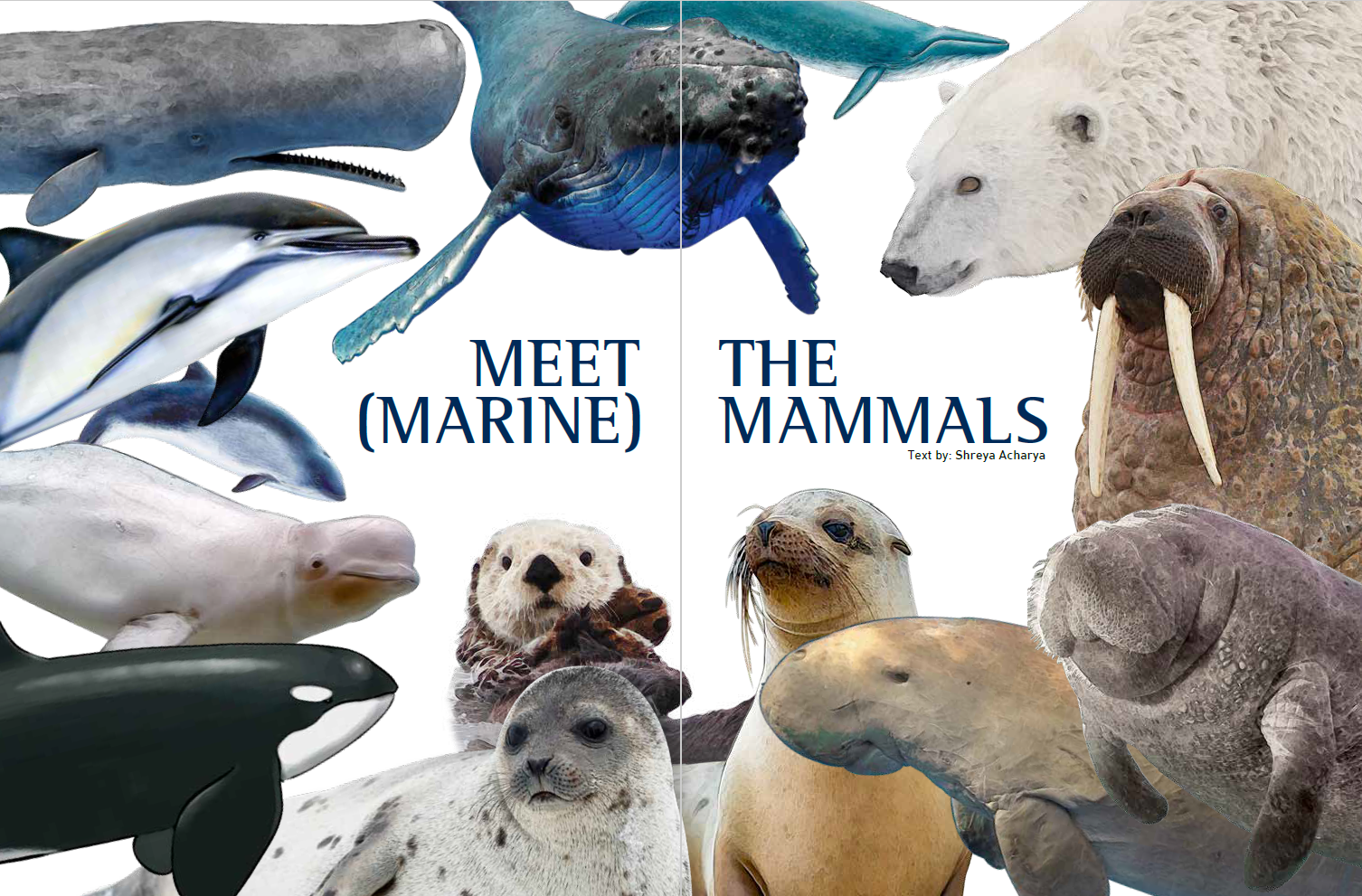
These animals meet the characteristics of all mammals – they breathe air through lungs, are warm-blooded, have hair (at some point during life), and produce milk to nurse their young – while also living most or all of their lives in or very near the ocean. Dive with us into the fascinating underwater world of marine mammals, and read about how they live and thrive in a completely different environment from conventional mammals.
0
52

What Makes a Marine Mammal?

These animals meet the characteristics of all mammals – they breathe air through lungs, are warm-blooded, have hair (at some point during life), and produce milk to nurse their young – while also living most or all of their lives in or very near the ocean. Dive with us into the fascinating underwater world of marine mammals, and read about how they live and thrive in a completely different environment from conventional mammals.
In Yann Martel’s Life of Pi, the main character, Pi, speaks of how his dad had a sign that asked if people wanted to see the most dangerous animal in the zoo. An arrow pointed to a curtain with a mirror hidden beneath. As human beings, we look for ourselves in everything we see. Anthropocentrism is an instinct that we inevitably possess: We interpret the world in terms of human values and experiences.

This is why, when someone mentions clever dolphins, dog-like seal pups, and fluffy polar bears, we squeal with delight. In contrast, googly-eyed fish and pear-shaped oysters don’t quite elicit the same response. The former, although also sea-dwelling, are underwater species that are closest to us; we see ourselves in these marine mammals.
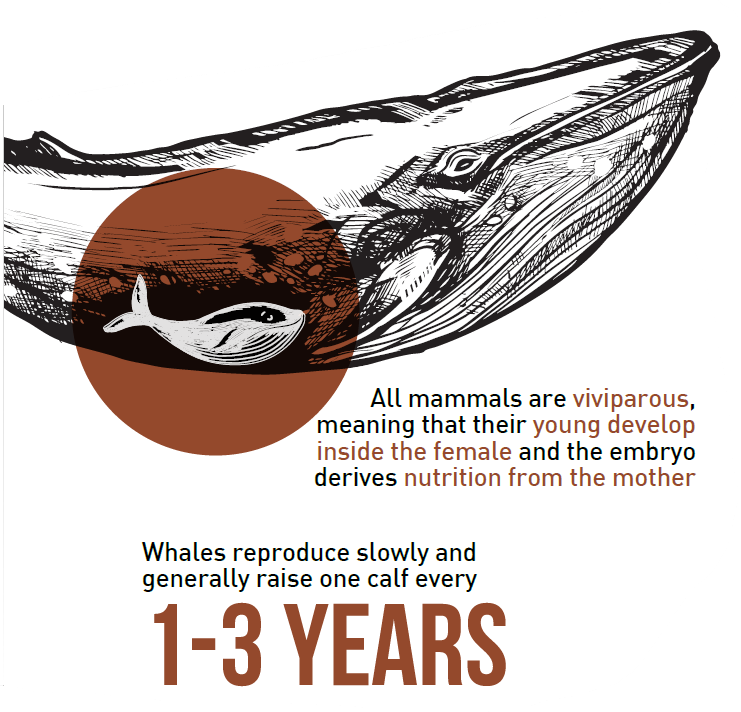
All mammals are viviparous, meaning that their young develop inside the

female and the embryo derives nutrition from the mother. Cetaceans and pinnipeds often mate and give birth in the spring, with pregnancies lasting between 12–18 months.
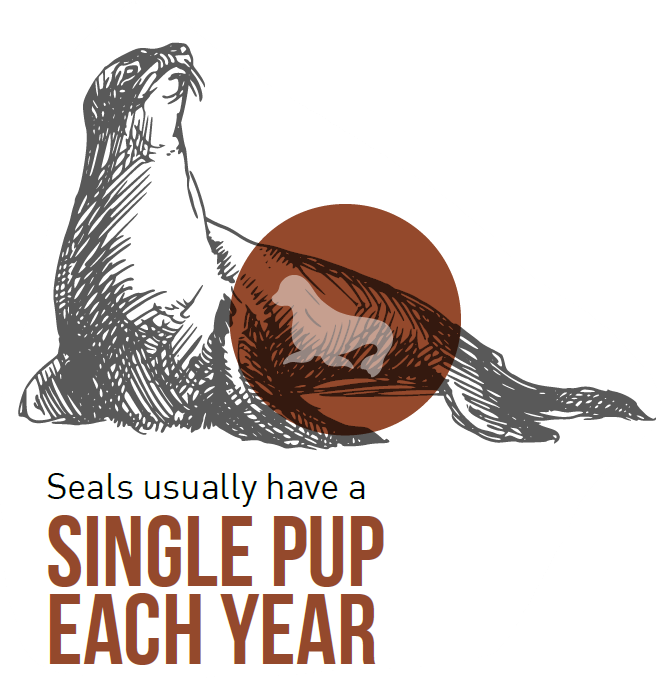
Seals usually have a single pup each year. Whales, however, reproduce slowly and generally raise one calf every one to three years. Cetacean calves are born tail first to keep them attached to the placenta as long as possible to avoid oxygen deprivation.

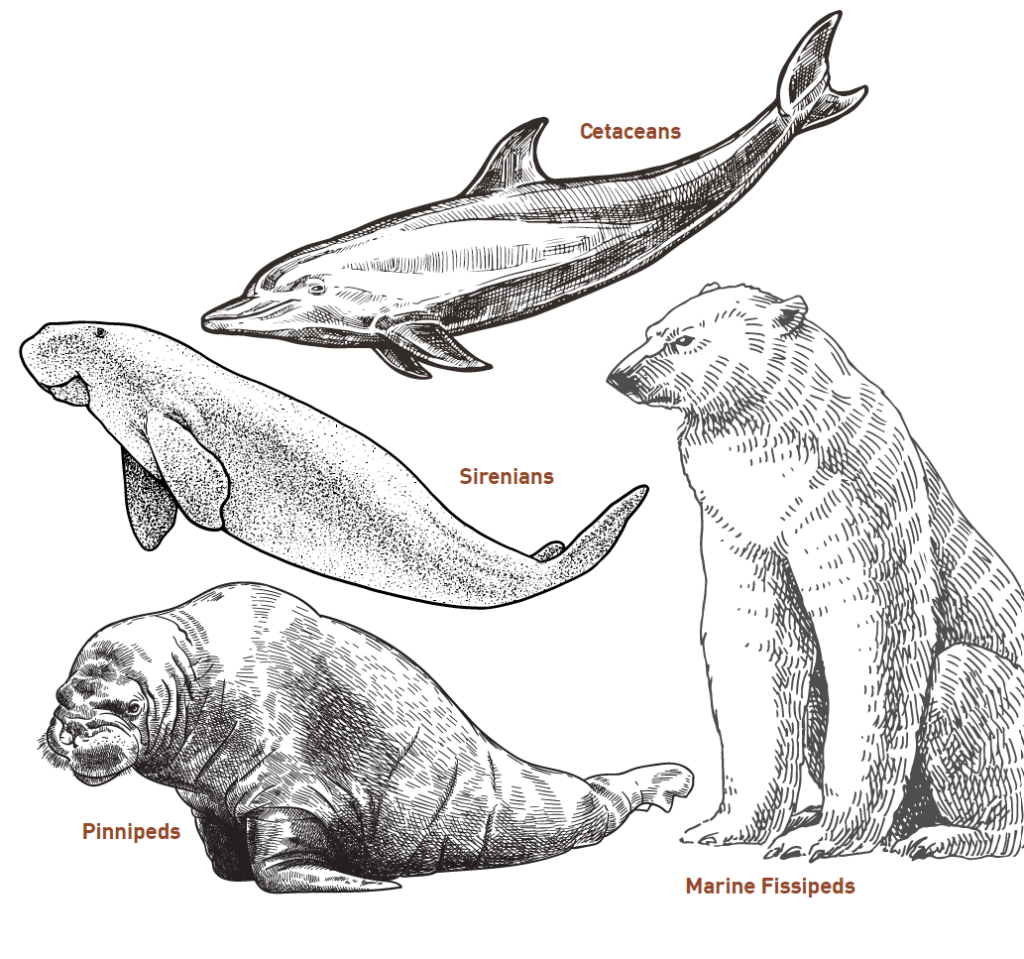
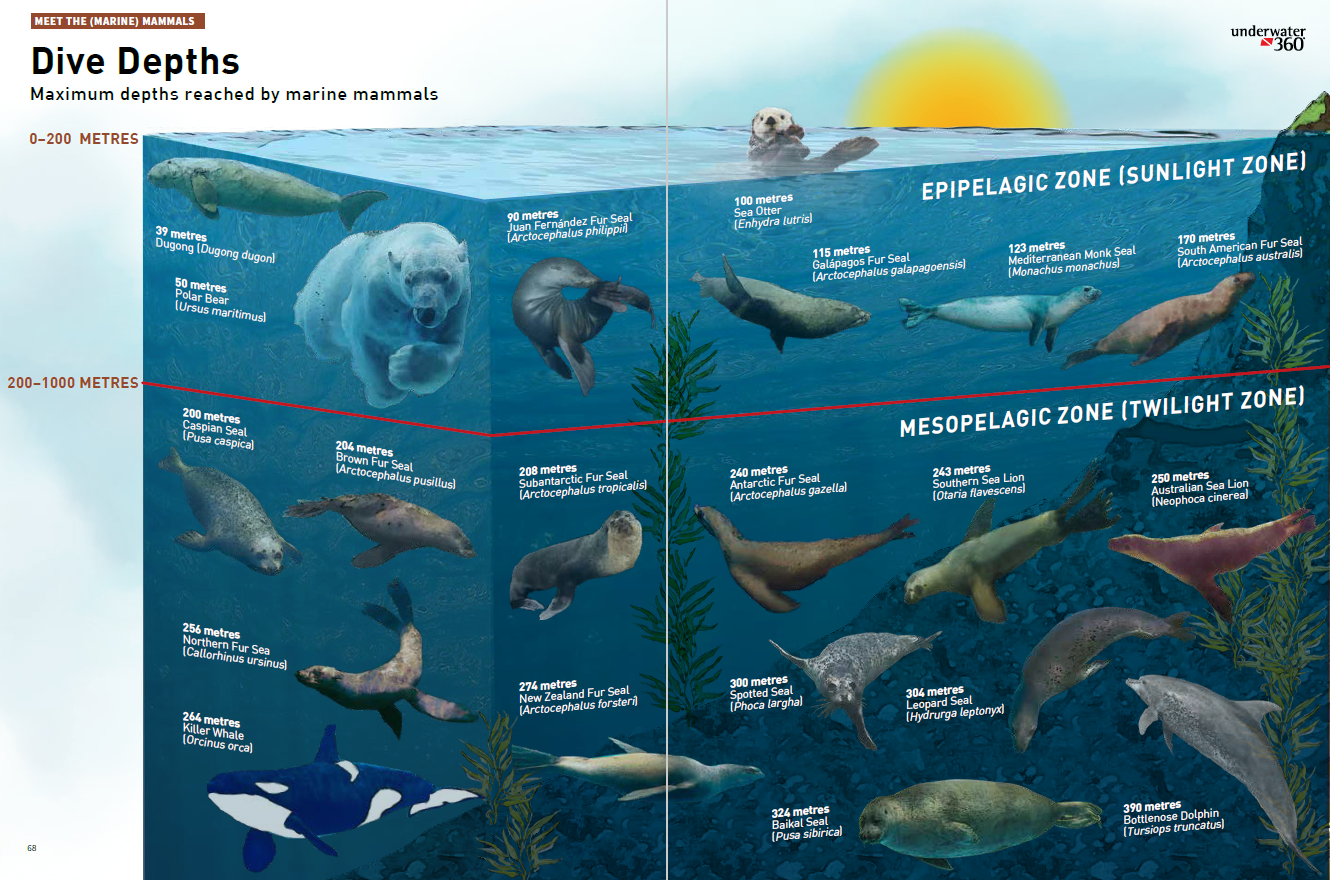
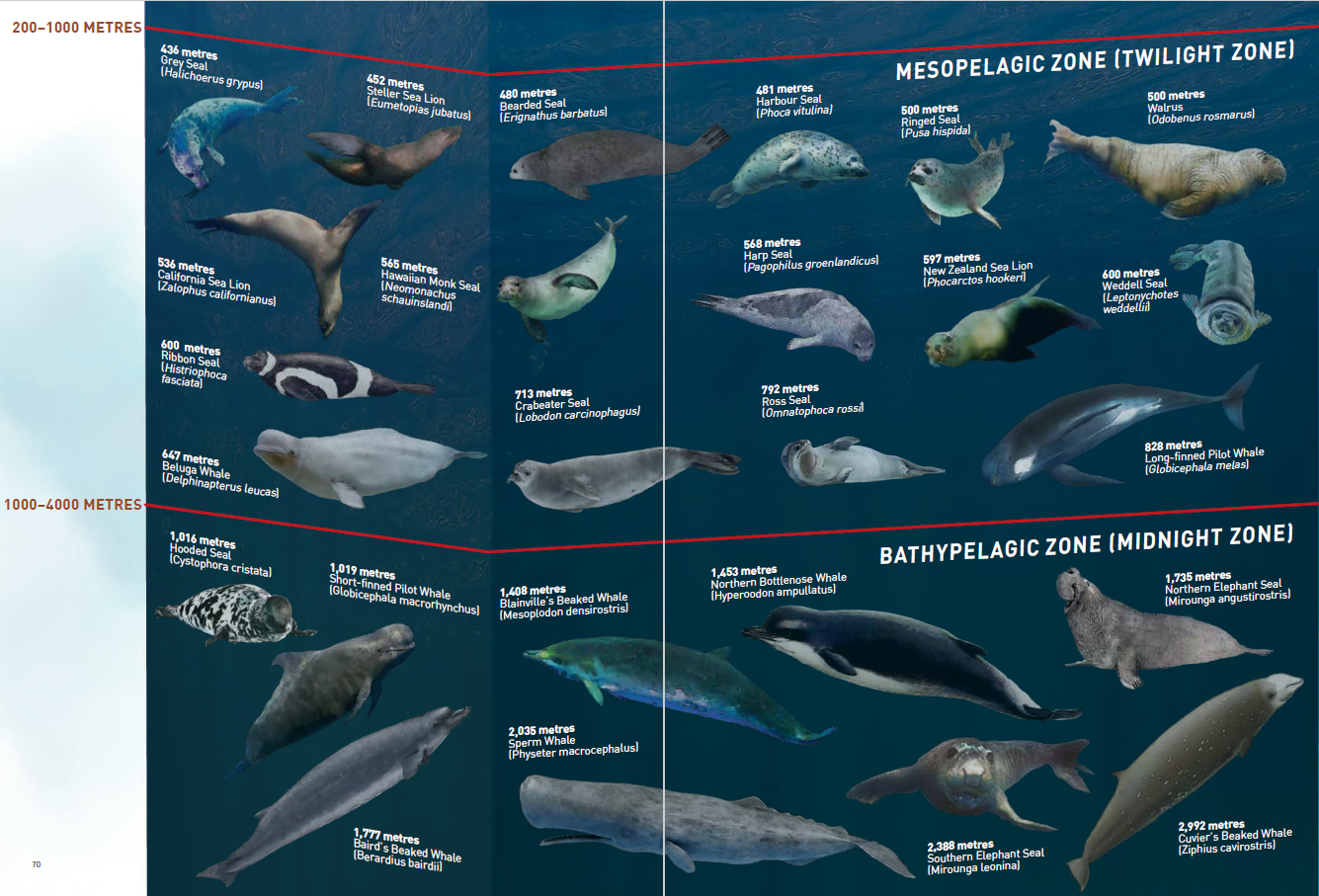
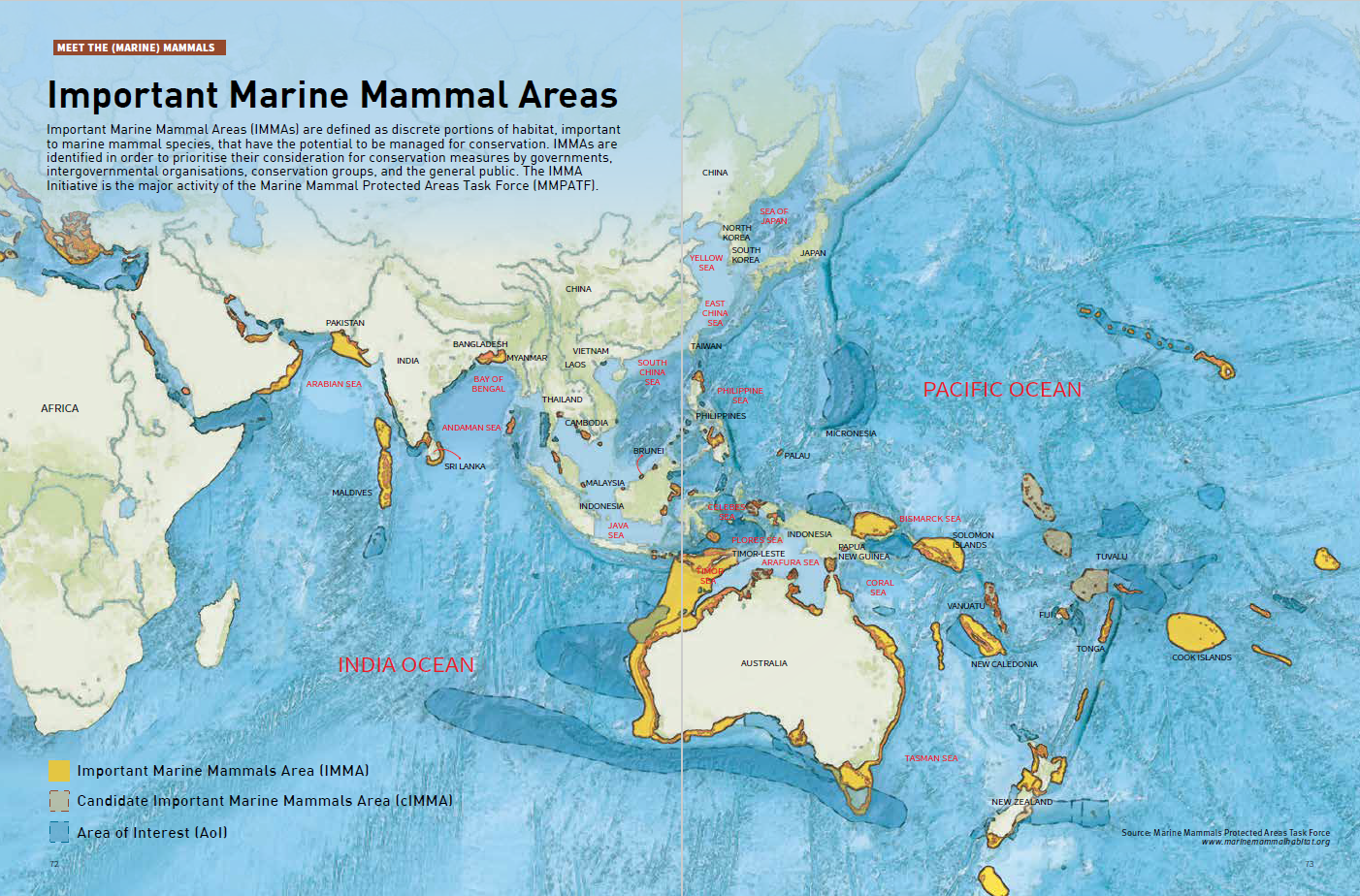
Marine mammals are found in marine ecosystems around the globe. They are a diverse group of mammals with unique physical adaptations that allow them to thrive in the marine environment despite extreme temperatures, depths, pressures, and low light. Marine mammals are classified into four different taxonomic groups: cetaceans, pinnipeds, sirenians, and marine fissipeds.

Types of Sea Mammals

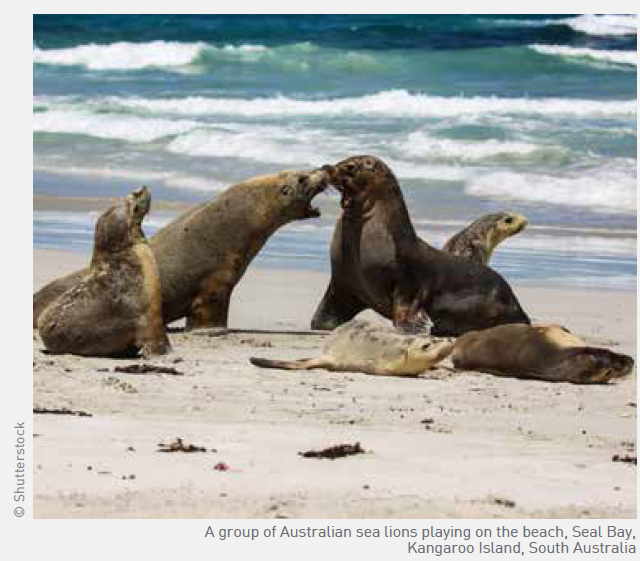
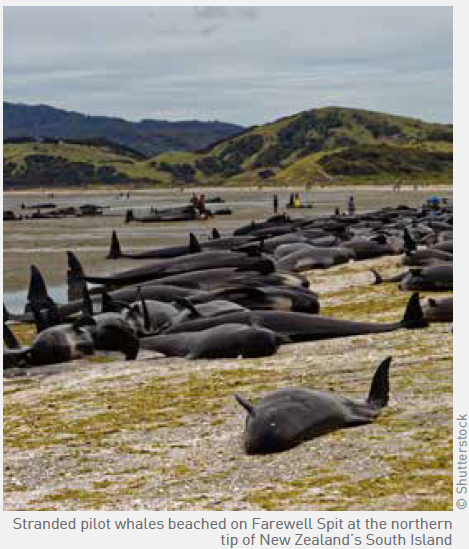
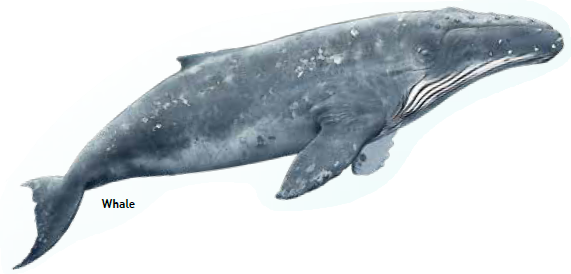
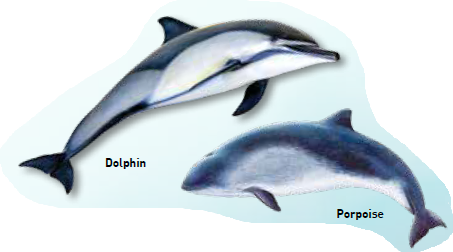
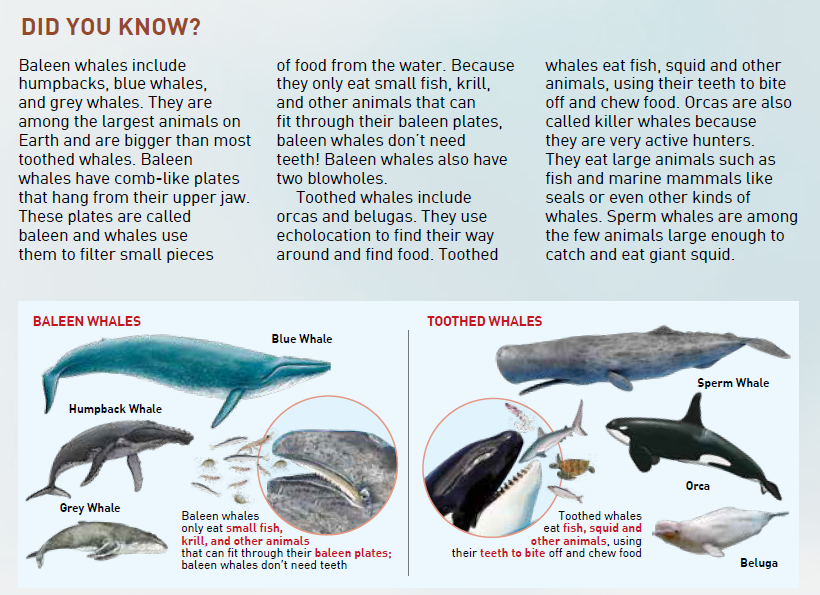
Cetaceans (Whales, Dolphins, and Porpoises)

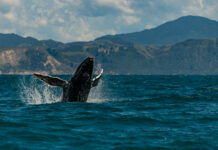
Categorised into two main groups – baleen whales (mysticetes) and toothed whales
(odontocetes) – cetaceans spend their lives in water, and have many adaptations to
their entirely aquatic lifestyle. There are over 70 different species of cetaceans.

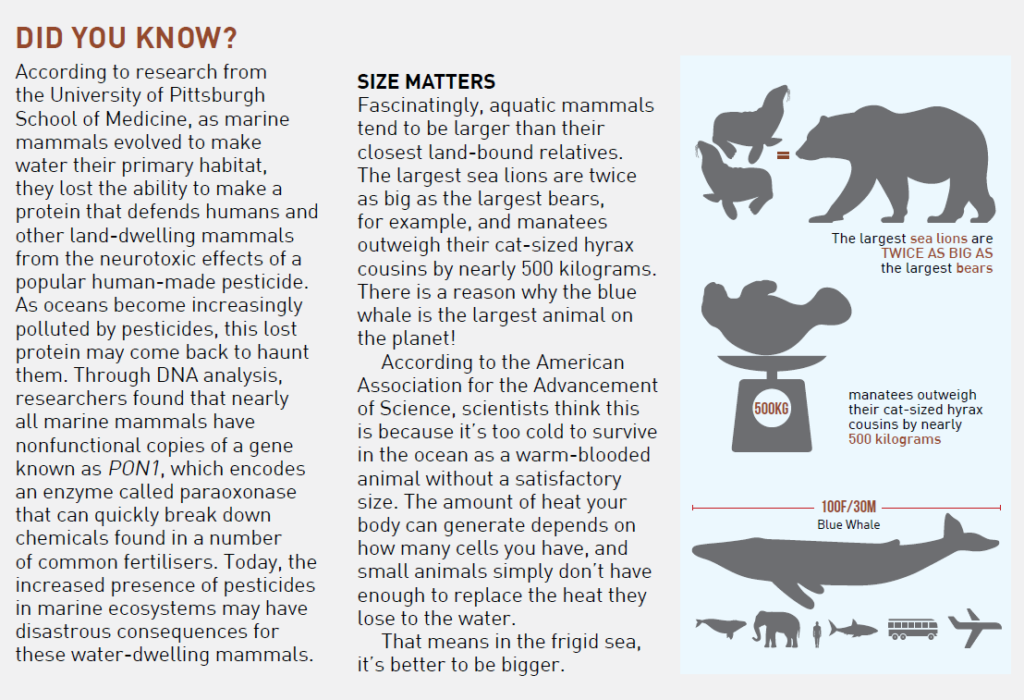
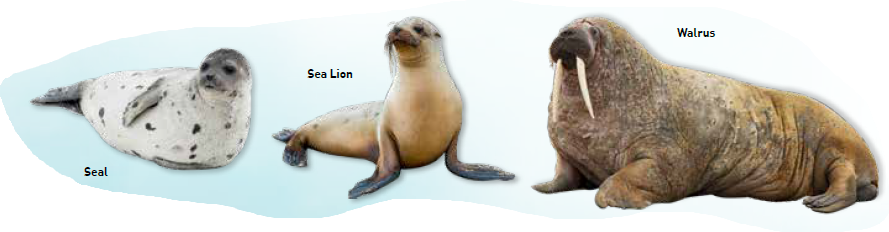
Pinnipeds (Seals, Sea Lions, and Walruses)

From the suborder Pinnipedia, meaning “fin-footed”, these carnivores use flippers
to move both on land and in the water. Pinnipeds spend the majority of their lives
swimming and eating in water and come onto land or ice floes to bear their young,
rest, and moult.

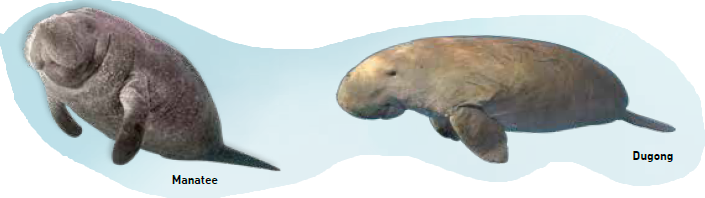
Sirenians (Manatees and Dugongs)

Like cetaceans, sirenians also spend their lives in water. They are the only entirely
herbivorous group of marine mammals. Sirenians are named for sirens, the
legendary Greek sea beauties who lured sailors into the sea. Historic mermaid
sightings were very likely sirenians, not the mythical half-woman, half-fish.

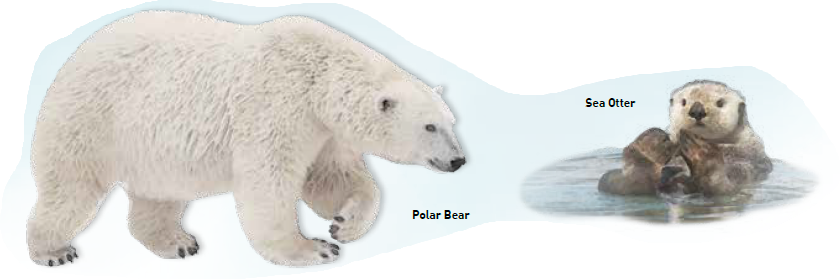
Marine Fissipeds (Polar Bears and Sea Otters)

Marine fissipeds are considered marine mammals, but spend most of their time
on land and only part of the time in the water, mainly to hunt for food.