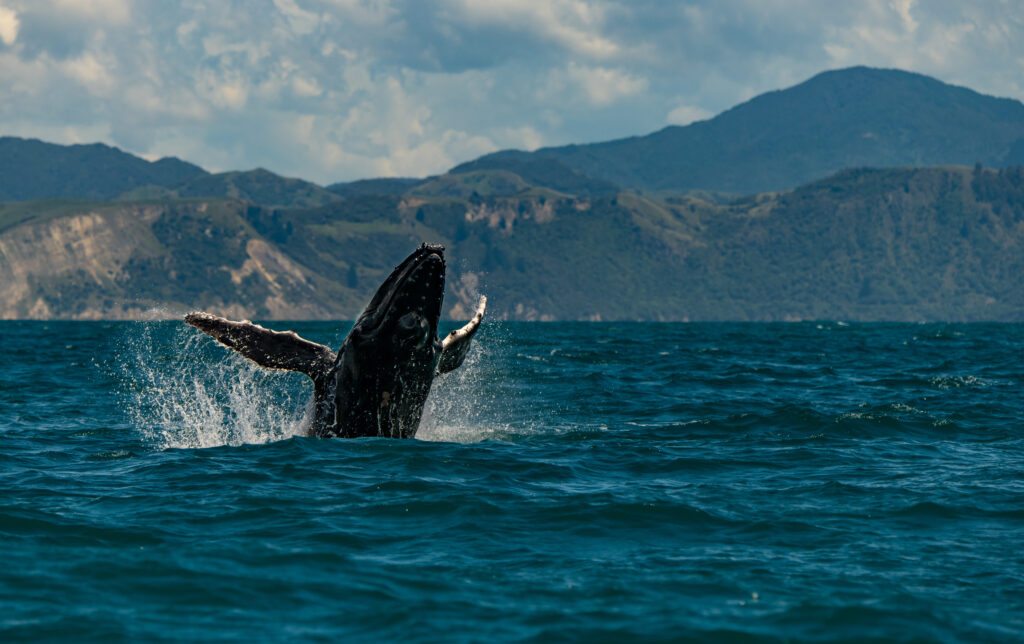
A Humpback Whale Breaching Off The Coast Of Kaikoura, New Zealand (Credit: Shutterstock)
A New Chapter in Ocean Conservation
Across the globe, conservation efforts have traditionally focused on protecting whales as endangered species. But in the Pacific, a growing movement is asking a far more profound question:
What if whales were not merely protected wildlife, but legal persons with rights of their own?
In recent years, New Zealand and Indigenous leaders across Polynesia have spearheaded an unprecedented effort to recognise whales as beings with inherent rights. The movement blends Indigenous knowledge, environmental stewardship, and modern legal theory into a vision that could fundamentally change how humanity governs the oceans.
At the heart of this movement is the belief that whales are not simply marine animals; they are intelligent, sentient beings worthy of legal recognition and protection.
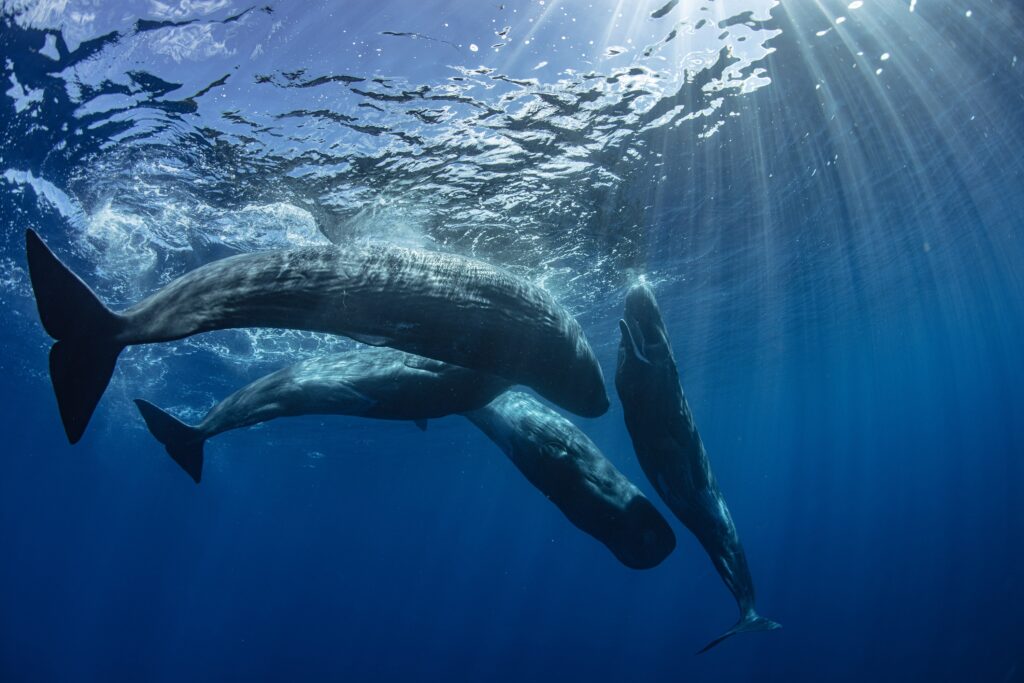
A Pod Of Sperm Whales Swimming Gracefully In The Deep (Credit: Shutterstock)
The Māori Understanding of Whales
For Māori and many Indigenous communities across Polynesia, whales occupy a special place within culture, spirituality and identity.
Within the Māori worldview – Te Ao Māori – whales are regarded as ancestors, guardians, and kin. Indeed, the ocean itself is viewed as a living entity, connected to all forms of life through whakapapa – a genealogy that links humans, animals, and the natural world.
This perspective differs significantly from conventional Western approaches to conservation. Rather than treating Nature as a resource to be managed, Indigenous traditions emphasise reciprocity, guardianship, and respect.
It is from this worldview that the movement for whale rights has emerged.
Views over the Whanganui River in the lush green countryside (Credit Shutterstock)
The Legal Foundations Were Already There
The idea of granting legal rights to non-human entities may sound radical. However, New Zealand has been pioneering such legal innovations for more than a decade.
In 2014, the New Zealand Parliament passed the Te Urewera Act, granting legal personhood to Te Urewera, the ancestral homeland of the Tūhoe people. A few years later, in 2017, the 290-kilometre Whanganui River became the first river in the world to receive legal personhood, represented by appointed guardians who act on its behalf.
These landmark developments proved that modern legal systems can recognise natural entities as rights-bearing persons.
Inspired by these successes, the Indigenous-led Hinemoana Halo Ocean Initiative began exploring whether similar protections could be extended to whales. Named after the Māori goddess of the ocean, Hinemoana (meaning “Ocean Woman”), the initiative seeks to weave Indigenous knowledge and environmental governance into a new framework for marine protection.
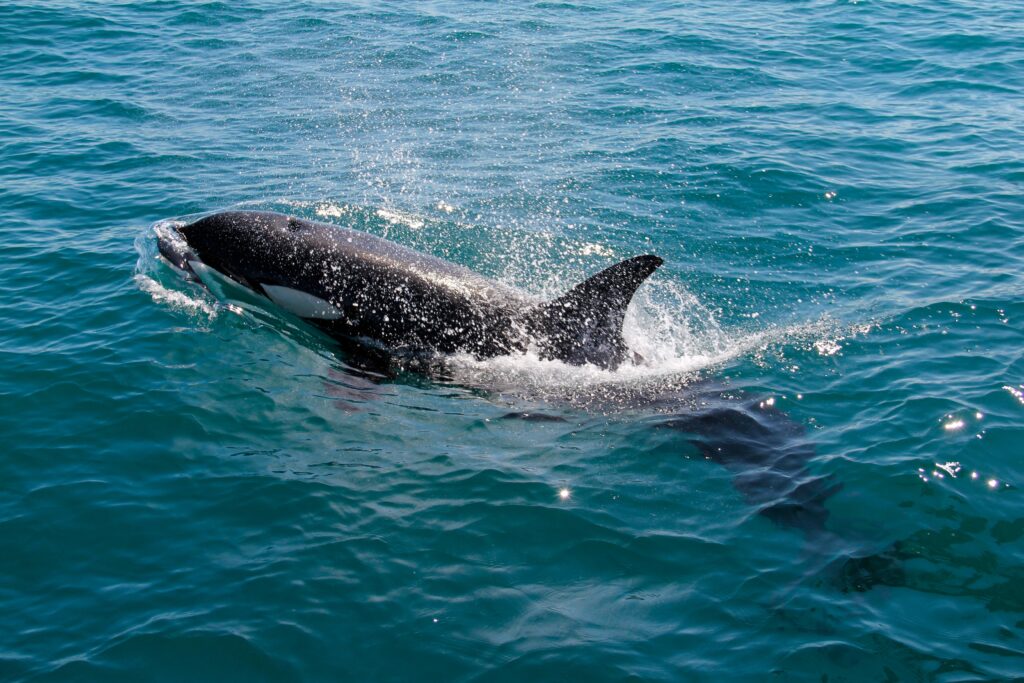
Orca Or Killer Whale Emerging Above Water Surface. Location:, Hauraki (Credit: Shutterstock)
The Māori King’s Historic Declaration
The movement reached a defining moment on March 28, 2024, when Indigenous leaders from New Zealand, the Cook Islands, Tonga, Tahiti, Hawaii, and Rapa Nui gathered on Rarotonga to sign the He Whakaputanga Moana (Declaration for the Ocean).
Among the signatories was the late Māori King Tūheitia Pōtatau Te Wherowhero VII, whose endorsement brought significant visibility to the initiative throughout New Zealand and the Pacific.
Speaking on the declaration, the Māori King described it as a commitment to future generations, stating that descendants should inherit oceans abundant with life, where the songs of whales continue to resonate across the Pacific.
For many Indigenous communities, protecting whales is not simply an environmental issue, it is about honouring ancestral relationships and safeguarding the wellbeing of future generations.
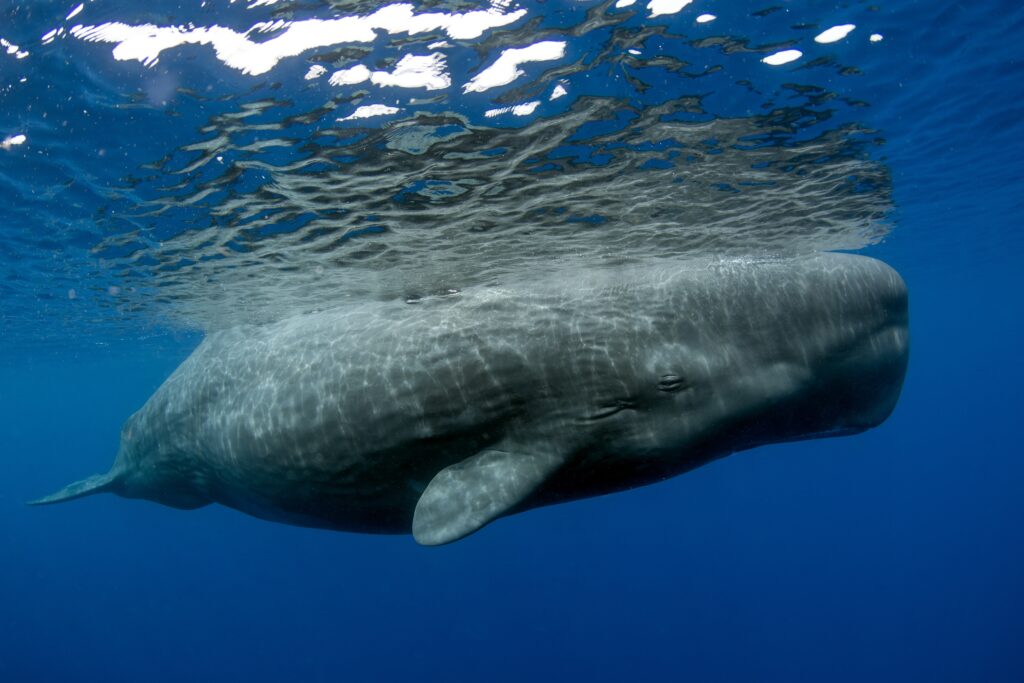
Sperm Whale Swimming (Credit: Shutterstock)
Recognising Whales as Legal Persons
He Whakaputanga Moana is the world’s first declaration recognising whales as sentient beings with inherent rights. It proposes that whales should be recognised as legal persons and granted protections that support their survival and wellbeing.
The declaration recognises several key rights including:
The right to freedom of movement and migration
The right to engage in natural behaviours
The right to communicate and express culture
The right to a healthy ocean environment
The right to population restoration and regeneration
The right to legal representation in decision-making processes affecting their wellbeing
Supporters argue that these protections are necessary in light of increasing threats to whale populations from ship strikes, pollution, underwater noise, unsustainable fishing practices, habitat degradation, and climate change.
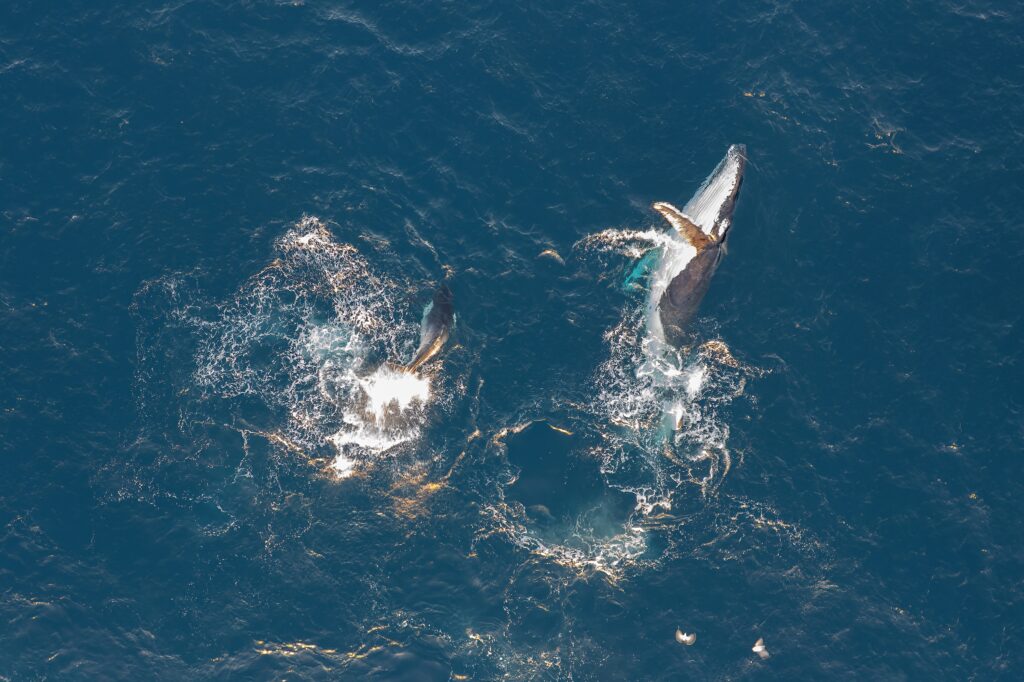
Top Down Aerial View Of Humpback Whales With Their Young (Credit: Shutterstock)
From Declaration to Proposed Law
The movement did not stop at a declaration. Advocates have begun promoting the Tohorā Oranga Bill, a proposed piece of legislation, introduced in New Zealand’s Parliament on February 5, 2026, by Green Party MP Teanau Tuiono, that seeks to formally recognise whales as legal persons under New Zealand law. If enacted, whales could gain legal standing, with appointed guardians empowered to represent their interests and advocate for their protection.
The proposed bill builds upon New Zealand’s earlier legal personhood models for rivers and landscapes and could become one of the most ambitious marine conservation laws ever attempted. According to advocates, the legislation aims to shift the relationship between humans and whales from one of management to one of guardianship and responsibility.
The proposal has attracted international attention, with conservationists, legal scholars, and Indigenous leaders viewing it as a potential blueprint for future environmental governance.
The Latest Progression
Although He Whakaputanga Moana was signed in March 2024, its contents were formally released to the public in February 2026 during ceremonies in Waitangi, New Zealand. The release marked the beginning of a broader campaign to encourage governments, institutions, and communities to adopt its principles.
To support implementation efforts, the Hinemoana Halo Ocean Initiative has partnered with New York University’s More-Than-Human Life (MOTH) Program and Project CETI, combining Indigenous leadership, rights-of-nature legal expertise and whale communication researchers in pursuit of whale rights.
While whales have not been granted legal personhood under New Zealand law, momentum behind the movement is continuing to grow.
More Than Conservation
The campaign to grant rights to whales is far more than environmental protection. It challenges humanity to reconsider its relationship with the natural world and asks whether intelligent, sentient beings should possess rights that society is obligated to respect.
For Indigenous leaders, the concept is not revolutionary, as whales have always been kin. The real transformation lies in whether modern legal systems are prepared to embrace that understanding.
Whether or not whales ultimately become legal persons, New Zealand and its Indigenous communities have already expanded the global conversation about conservation, environmental justice, and the future of ocean governance.
And perhaps, most importantly, they have reminded us that the ocean’s inhabitants may have stories and rights of their own.