Home Blog Page 113

The Most Adventurous Dive Destinations

0

Adventurous divers love to push the boundaries, and this often creates new scuba diving destinations. The 10 listed below were discovered by adventurous divers, and divers like you continue to create new dive sites in these places. Because of their remote nature, many of these destinations require divers to book a liveaboard diving holiday, only adding to the remote feel of your scuba diving adventure.

1. Cocos Island, Costa Rica

A tiny island around 550 kilometres (342 miles) from the Costa Rican mainland, Cocos Island looks like the perfect setting for a Jurassic World theme park. For now, it’s a scuba diving mecca for shark lovers. This distant rock regularly hosts huge shoals of scalloped hammerhead sharks. The only way to get to Cocos is a harrowing 36-hour journey by boat. Currents can be strong at the dive sites, so make sure you’re adequately trained before attempting the trip.

2. Revillagigedo Archipelago, Mexico

Another distant part of the Pacific, the Revillagigedo Archipelago is better known by the name of the main island, Socorro. Situated 400 kilometres (250 miles) from Cabo San Lucas, these islands are famous for their pelagic encounters. You can swim with oceanic manta rays, humpback whales, sharks and even dolphins. It takes about 24 hours to reach the Revillagigedo Archipelago by liveaboard, which is the only way to dive this part of Mexico. Again, experience diving in heavy current is a must before traveling to Socorro.

3. Tonga, Polynesia

If the top entry on your bucket list is swimming with humpback whales, you must visit Tonga. This Polynesian island is a nursery area and breeding ground for humpback whales from August to early October each year. While this isn’t really a diving destination as you can’t scuba dive with the whales, we still recommend it as an adventurous addition to your diving wish list. On most excursions, you’ll spend six days swimming with whales in a respectful and environmentally friendly manner. Warm and clear waters make this a brilliant place to swim with cetaceans.

4. Bikini Atoll, Marshall Islands

As one of the best wreck diving destinations in the world, Bikini Atoll has a dark history. It was here that the US tested its nuclear weapons on large naval vessels. As a result, the entire area was abandoned for years. It is just recently beginning to open up to scuba diving tourism with a limited number of liveaboards visiting the many wrecks inside the atoll. Of particular interest is the USS Saratoga, one of the only sunken aircraft carriers within the reaches of scuba divers.

5. Antarctica

Ice diving on its own is adventurous, but add a journey to one of the most remote places on Earth and you’ve got one of the most adventurous dive destinations in the world. Antarctica has lots of dive sites to explore if you’re properly trained. Views of ice formations under the water alongside penguins, seals and various gastropods make for fascinating sights. Petermann Island is a popular location, but liveaboard boats are becoming more and more adventurous with their itineraries.

6. South Africa

From the sardine run to cage diving with great white sharks, South Africa is a must for thrill seekers. Head to Gansbaai and False Bay if you want the quintessential shark experience. Cape fur seals dodge and weave through the vast kelp forests while sharks follow. Or, if you’re in the area from May to July, make your way to Agulhas Bank just like millions of sardines do. Dive boats trawl these waters looking for bait balls and the feeding frenzies that go along with them. If you’re lucky enough to find one, dive down and enjoy the show of sharks, whales, birds and seals all feasting on the tiny fish.

7. Andaman Islands, India

An island chain that sits between India and Thailand, the Andaman Islands are best dived from a liveaboard. Travel to the islands was prohibited until 1993, so the corals and marine life found in the area are out of this world. Turtles, manta rays, reef sharks and other big animals are likely to be seen. Most of the limited number of boats that visit these distant islands leave from Phuket, Thailand. Alternatively, travel to the islands from India and dive from land.

8. Cuba

Only recently opened to tourists from the US, Cuba is becoming one of the most popular scuba diving destinations in the Caribbean. However, it’s still off the beaten track. Its signature site, Jardines de la Reina (Gardens of the Queen), can only be accessed by liveaboard. There are also new routes popping up all the time for the adventurous diver, including those traveling to the Canarreos Archipelago.

9. Guadalupe

Possibly the best place to go cage diving with great white sharks, Guadalupe Island is a lonely rock in the Pacific Ocean off the Baja California coast of Mexico. This area can only be reached by dive charter, so get ready for full days of shark diving. Furthermore, the warm, clear waters make this a better photographic experience than many other white shark destinations.

10. Azores, Portugal

European diving isn’t often thought of as adventurous, but the Azores offer liveaboard diving like no other. Here you’ll float across two continental plates, exploring volcanic formations below the surface of the ocean. Princess Alice Bank is often a favourite. The submerged seamount is seemingly in the middle of nowhere at 80 kilometres (45 miles) from shore, but the bank is often surrounded by mobula rays. Blue sharks and mantas are also seen in the area. Because currents are strong and depths are advanced, liveaboard diving in the Azores is for experienced divers only. Ready for an adventure? Jump on a liveaboard and get out there. The world is yours to explore!
Octopuses Just Got Weirder

0

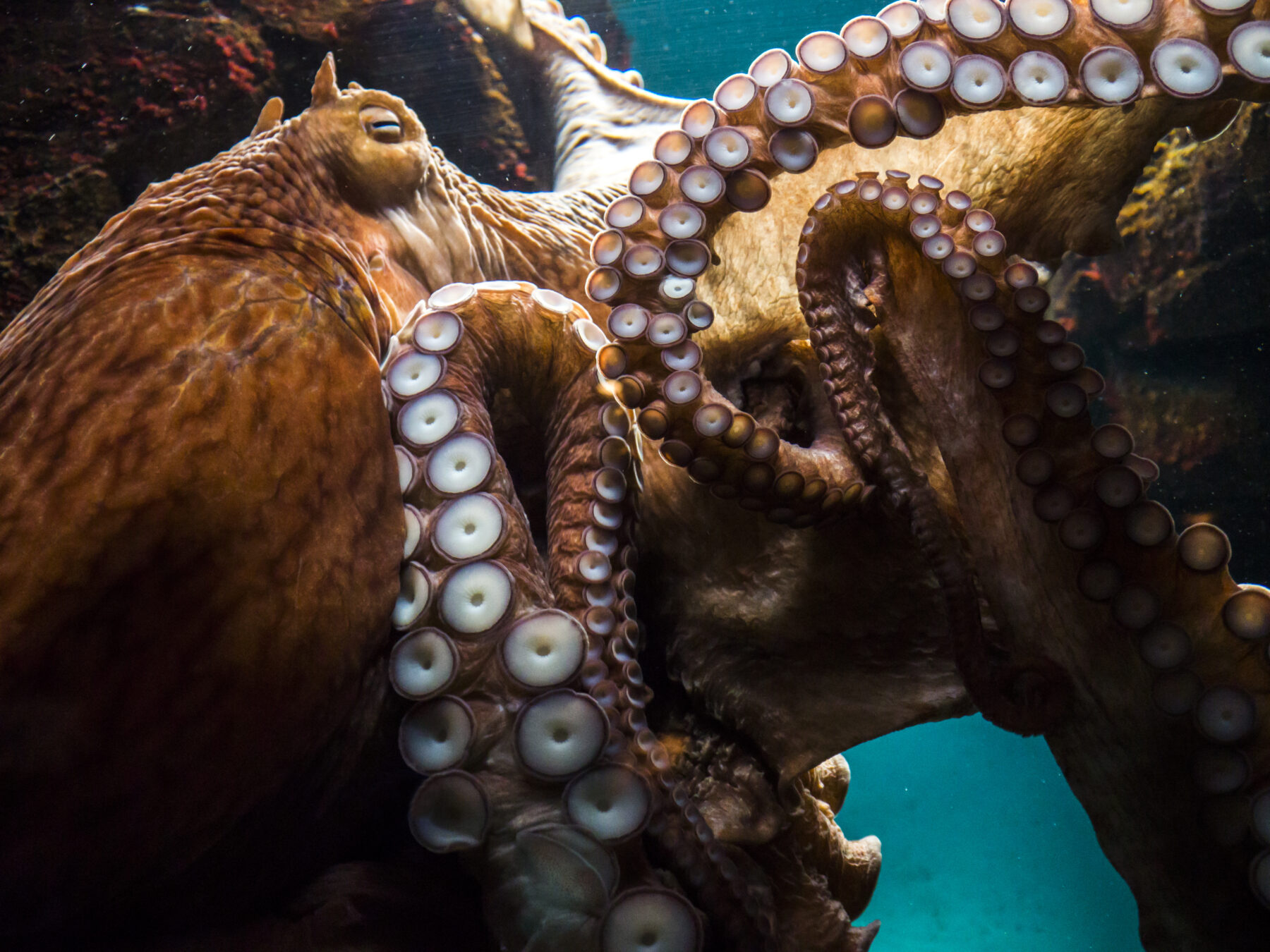
The naturalist Sy Montgomery once wrote that “no sci-fi alien is so startlingly strange” as an octopus. Aside from their obvious extraterrestrial-like characteristics – writhing tentacles, squishy bodies, bulging eyes and the ability to change colour – octopuses have a hidden “otherworldly” feature. Along with other cephalopods such as squids and cuttlefish, they can edit and direct their own genes.

Generally, an evolutionary change occurs when DNA undergoes a mutation due to various environmental factors. The mutation in DNA is then transcribed into RNA – a cousin of DNA that transfers instructions from genes to cells that produce proteins. Given the prior mutation, an altered protein is formed, which translates to an altered trait. In short, DNA – protein – trait.

Not so for our eight-armed underwater friends, however. Or is it six arms and two legs?

A recent study published in the scientific journal Cell suggests that for octopuses and other cephalopods, proteins can be altered without the prior mutation of DNA. This is referred to by the researchers as RNA editing.

To be honest, the science went over my head, so I contacted the lead author of the study, Noa Liscovitch-Brauer, to break it down.

In layman’s terms, what is RNA editing? 

RNA editing is a cellular mechanism in which an Adenosine in an RNA molecule gets modified and changed into another nucleotide, an Inosine. If this happens in a messenger RNA that codes for a protein, this can translate into a change in the protein structure – this is a way to create changes in proteins and recode them, using the RNA and not the DNA.

Still quite hard to understand… Does this mean that cephalopods have evolved differently from us?

Using RNA editing to recode proteins happens in all other animals as well, but this is a very rare thing and seems to be generally non-adaptive. In cephalopods, on the other hand, this is the rule and not the exception – most of the proteins in cephalopod brains get recoded using this mechanism. It seems as if cephalopods have developed a different way to create diversity in their proteins than any other animal.

Why is it that RNA is so widespread in cephalopods? Does it have to do with a short life span, among others?

We don’t know yet exactly how they use editing. We have looked at some specific examples and seen that editing causes a change in electrophysiological properties of ion channels – so they can use it to alter neural activity. We have wondered about the connection to their short life span – one hypothesis is that the massive recoding causes many proteins to fold incorrectly and the price they pay is in a shorter life span. But this is just a hypothesis at this point.

Does it provide answers to their high intelligence?

We can’t say that for sure, but that would be my guess. What’s interesting is that we do see this happen only in family members who display complex and unusual behaviours, while in a more ancient, simply behaving cephalopod, we do not see protein recoding.

Does RNA editing indicate that octopuses are genetically similar to their ancestors (since it isn’t their DNA that changes)?

Since we see the editing in one group of cephalopods – coleoid cephalopods [octopus, squid and cuttlefish] – but not in the more ancient nautiloids, we actually conclude that this is probably their own invention, and we think it might go together with the sophisticated behaviours these animals show.

Olympus Introduces the Tough TG-5 and Underwater Housing

0

With the new Tough TG-5, Olympus has taken the best bits from the hugely popular TG-4 and added a host of cutting-edge features, making this one of the most exciting compact camera releases of the year. At the heart of the TG-5 is a new 12MP CMOS backlit sensor and the same processor you’ll find in the flagship mirrorless OM-D E-M1 II, promising to take image quality, low-light performance, and maximum continuous shooting up a notch. Indeed, the new processing engine gives users a maximum shooting speed of 20fps.

The TG-5 retains the mind-blowing Microscope Mode found in its predecessors. For the uninitiated, this mode allows the TG-5 to shoot subjects just 1cm from the lens, making it possible to shoot just about any critter, no matter how miniscule. Otherwise, the built-in 25–100mm lens (full-frame equivalent) provides a usable range for underwater shooting, but for those who want to go wider, there’s a fisheye wet lens (FCON-T01) available that expands the field of view to an impressive 130 degrees.

While the TG-4 could record 1920 x 1080 video at 30p, the TG-5 can shoot Full HD at 120p, opening up the possibility of 4x slow-motion video playback at 30p, with image stabilisation ensuring that any wobbles will be smoothed out. But the impressive video specs don’t end there: The TG-5 can also shoot 4K 30p video for playback on the latest ultra high-definition TV screens.

On top of all that, the TG-5 earns its “Tough” moniker by being waterproof down to 15 metres as well as “shockproof” “freezeproof” and “crushproof” – no housing needed. For anyone who wants to go deeper, Olympus has also released an underwater housing that allows you to dive to 45 metres. The PT-058 housing provides control over all of the major camera functions, and features a threaded front port that accepts wet lens attachments by Olympus as well as other manufacturers.

Shipping in June, the TG-5 is priced at about $450, while the PT-058 housing will retail for $299. For more information, see the press release below.


Press Release

OLYMPUS AND ADVENTURISTS CONQUER THE OUTDOORS WITH THE NEW TOUGH TG-5
High-Speed f2.0 Lens, High-Speed BSI CMOS Image Sensor and the Latest TruePic VIII Image Processor Deliver High-Quality Images in a Rugged Design

Olympus builds on the outdoor shooting and tracking capabilities of the Tough product family with the new Tough TG-5, a compact digital camera designed to capture outstanding images in the most challenging conditions. The Tough TG-5 combines its high-speed f2.0 lens with advanced technologies, including a new high-performance backlit 12-megapixel CMOS image sensor, Olympus’ latest high-speed TruePic VIII Image Processor and a Field Sensor System that records movement and environmental data. With the Tough TG-5, users are able to tell immersive stories using brilliant videos, stills and data captured from their extreme adventures.

The new Olympus Tough® TG-5 touts the widely praised bright f2.0 lens found on previous premium Tough models. Boasting a wide-angle 25mm to a telephoto 100mm (35mm equivalent) focal length, this lens works in concert with the new high-speed backlit CMOS image sensor and the dual quad core TruePic VIII Image Processor to deliver the highest image quality of any Tough model to date.

The built-in Field Sensor System, consisting of a GPS sensor, manometer, compass and temperature sensor, records movement and environmental data independently or in conjunction with still images or videos. Data logs can be simultaneously displayed with images and videos using the Olympus® Image Track app, enhancing the experience of reliving and sharing outdoor adventures.

The Tough TG-5 excels in extreme conditions. In addition to being waterproof to 50 feet (15 meters), crushproof to 220 pounds of force (100 kilograms of force), shockproof from 7 feet (2.1 meters), freezeproof down to 14°F (-10°C) and dustproof, the camera now includes Anti-Fog Lens Cover Glass. This allows the Tough TG-5 to capture amazing action shots on the slopes, underwater and in other uniquely challenging environments where other cameras can’t perform.

New video functions include 4K Movie to capture Ultra HD video at four times the resolution of Full HD, allowing users to record beautiful scenery in amazing detail. Full HD 120fps High-Speed Movie lets users easily capture stunning slow-motion, and 4K Time Lapse automatically creates short videos of long periods of time.

Pricing and Availability

The Olympus Stylus Tough TG-5 will be available in red and black beginning in June 2017 with an estimated street price of $449.99 USD and $579.99 CAD. For a complete list of specifications, visit the Olympus website: getolympus.com/digitalcameras/tough/tg-5.html.


Main Features

1. High-speed f2.0 lens, new high-performance BSI CMOS image sensor and the latest high-speed TruePic VIII Image Processor deliver high-quality images in all lighting conditions.
The high-speed lens works in concert with the image sensor and processor for a powerful synergy resulting in improved high-quality images, even in low light or underwater.

a) High-performance BSI CMOS image sensor and the latest TruePic VIII Image Processor
The Tough TG-5 features a high-speed f2.0 lens, a newly developed high-sensitivity, high-speed backlit 12-megapixel CMOS image sensor and the latest TruePic VIII Image Processor used in the Olympus flagship OM-D E-M1® Mark II camera. The new technology produces better image quality at standard and higher sensitivity ranges. The processor is capable of more complex calculations to improve resolution in low-contrast areas, especially when shooting at low ISO sensitivity. A maximum ISO sensitivity of 12800 and RAW capture are also available, covering a wide range of shooting situations.

b) High-speed f2.0 lens with a 25–100mm focal length (35mm equivalent)
The bright f2.0 lens supports faster shutter speeds when shooting underwater or in other challenging conditions to capture fast-moving subjects with minimal blurring. Superb Olympus optical technology is incorporated into the lens, including DSA (Dual Super Aspherical), HD (High Dispersion) and HR (High Refractive Index) lenses to deliver high-quality images while reducing aberrations throughout the entire zoom range.

2. Field Sensor System adds tracking data to images and videos for reliving the moment.
The Tough TG-5’s Field Sensor System consists of built-in sensors, including GPS, a compass, a temperature sensor and a manometer for altitude or depth. Tracking data may be recorded simultaneously with images and video or independently using the camera’s Data Log Mode. Tracking data may be viewed on the camera’s monitor or on a smart device. Users are able to press the INFO button to display current real-time data, even when the camera is turned off. Using the Olympus Image Track app to simultaneously display images, videos, and tracking information, lets users tell the story behind their shots.

a) Field Sensor System

  • GPS: The built-in GPS utilizes GLONASS and QZSS satellite systems in order to precisely calculate latitude and longitude. The GPS Assist function significantly reduces the amount of time required for initial GPS signal acquisition.
  • Manometer: Altitude and water depth are calculated based on atmospheric pressure and water pressure information.
  • Temperature Sensor: This sensor measures both air and water temperature, and is shielded from the effects of heat generated inside the camera.
  • Compass: The compass measures the direction in which the camera lens is pointed.

b) Olympus Image Track App
Pairing the camera and a smartphone with the TG-5’s built-in Wi-Fi® enables the simultaneous display of images, video, and tracking information, delivering a unique way to relive users’ experiences. A data overlay can be applied to images or video for posting adventures to social media. The resizing of images and videos is also available with the app.

Reliable Tough performance: waterproof to depths of 50 feet (15 meters), shockproof from 7 feet (2.1 meters), crushproof to 220 pounds of force (100 kilograms of force), freezeproof down to 14°F (-10°C), dustproof and Anti-Fog Lens Cover Glass.

Hermetically sealed construction provides waterproof performance for worry-free shooting underwater. This sealing also provides superb dustproof performance so that users can feel comfortable using the camera in dusty and dirty environments. The Tough TG-5’s shockproof performance is made possible via its floating construction that suspends key components inside the housing of the camera, enabling the camera to clear drop tests of up to 7 feet. The Tough TG-5’s robust construction also withstands loads of up to 220 pounds of force. Reliable operation is assured down to 14°F, making it possible to use the camera in cold environments where other digital devices may fail. In addition, the Tough TG-5 features Dual Pane Protective Cover Glass over the lens, preventing condensation caused by sudden changes in ambient temperature.

Video functions now include 4K Movie and Full HD 120fps High-Speed Movie.
The Tough TG-5’s 4K Movie makes it possible to shoot Ultra HD video at four times the resolution of Full HD video, ideal for recording beautiful scenery in amazing detail. Full HD 120fps High-Speed Movie is also included to capture split-second moments with playback in stunning slow motion.


Other Features

1. Variable Macro System easily captures microscopic subjects.
The Tough TG-5 is equipped with four macro modes with a maximum shooting magnification of 7x for capturing microscopic subjects difficult to see with the naked eye. Accessories such as the LG-1 LED Light Guide and the FD-1 Flash Diffuser expand shooting possibilities by enabling proper illumination of macro subjects.

a) Four Specialized Macro Modes

  • Microscope Mode: This mode allows users to shoot subjects as close as 1cm from the end of the lens and use the optical zoom to enlarge and shoot subjects. This feature is perfect for shooting insects, the veins in a leaf, snowflake crystals and other details in nature that cannot be seen with the naked eye.
  • Microscope Control Mode: This mode uses a combination of optical and digital zoom to magnify and capture microscopic subjects. Users are able to magnify a subject that is only 1mm in size up to a maximum of approximately 44.4mm when displayed on the rear LCD monitor. In addition to switching the magnification factor with the zoom lever, the arrow pad may be used to switch between 1x, 2x and 4x with the press of a single button as if changing the objective lens on a real microscope.
  • Focus Stacking Mode: Depth of field typically becomes shallow in macro shooting. Focus Stacking Mode automatically captures eight different shots while shifting the focus from the foreground to the background. Then, the focused areas are extracted and merged so that a full resolution image with large depth of field is created.
  • Focus Bracketing Mode: This function captures up to 30 images while shifting the focus from the foreground to the background. Users can select the amount of focus shift and number of shots in three levels. Focus Bracketing Mode is convenient for focusing on low-contrast subjects such as flower petals that consist of a single color.


2. Superb controls allow for smooth shooting even in rugged environments.

The Tough TG-5’s grip’s shape and thickness have been improved to provide for a more secure hold, and the camera’s controls may be easily operated even while wearing gloves. A new control dial helps users easily adjust shooting settings such as exposure compensation. An Accessory Lock has been added to the front of the camera to secure Tough system accessories, including Tough converter lenses and the LG-1 LED Light Guide. Movie Modes are now readily accessible via the primary Mode Dial, and a variety of shooting settings may be registered to the two Custom Modes for instant use. Together, these features make the Tough TG-5 easy to use in any environment.

  • Four Underwater Modes allow users to easily capture beautiful underwater photos.
  • Grid Display assists users with composition.
  • Focus Peaking and MF Assist aids in manual focusing.
  • Zero-lag Pro Capture Mode enables users to capture precise moments, even if they happen prior to fully depressing the shutter.
  • Nighttime Live Composite Mode is ideal for shooting fireworks and star trails.
  • HDR shooting delivers a rich range of tonal expressions by merging multiple images.
  • The Olympus Image Share aApp allows for remote shooting and wireless sharing via a connected smart device.
  • 14 unique Art Filters enable enhanced creativity.


System Accessories

There is an extensive lineup of system accessories available for the Tough TG-5 for expanded photographic applications.

  1. Waterproof Converter Lenses (Sold separately)
    With Tough converter lenses, users can enjoy different angles of view while maintaining the brightness of the camera lens. Attach the FCON-T01 Fisheye Converter lens to enjoy shooting with fisheye effects with an ultra-wide 130° angle field of view. Attach the TCON-T01 Teleconverter lens to shoot at a telephoto 170mm focal length (35mm equivalent). Both lenses are waterproof and may be attached and removed underwater. The CLA-T01 Adapter is required to use these lenses. Users may also attach the bundled LC-40.5 lens cap and the PRF-D40.5 PRO Protection Filter (sold separately) to the CLA-T01.
  2. Macro Lighting Accessories (Sold separately)
    The LG-1 LED Light Guide uses the camera’s built-in LED light to evenly illuminate subject up to the closest focusing distance of 1cm for superb macro shooting. The FD-1 Flash Diffuser evenly diffuses the light of the camera’s built-in flash. This helps reduce subject blur and camera shake that tends to occur during macro shooting in low-light situations, and enables the use of lower ISO sensitivity. It also makes it possible to darken the background all subjects to better stand out in photos. Both lighting accessories enable users to easily obtain creative macro shots that rival those of an interchangeable lens camera.
  3. Underwater Housing (New, sold separately)
    The PT-058 Underwater Housing is waterproof down to 147 feet (45 meters), and features black coating on the front of the body to prevent unwanted reflections. This housing enables use of the Control Dial for exposure compensation while underwater. There is a wide range of accessories available, including the UFL-3 External Flash for dual-unit underwater flash photography. The external PTWC-01 Underwater Wide Converter Lens and PTMC-01 Underwater Macro Converter Lens may also be used with this underwater case.


Other Accessories

  1. Silicone Jacket, CSCH-126 (New, sold separately)
    This customized silicone jacket protects the surface of the camera body from scratches and improves grip performance so that users can hold the camera more securely. The LG-1 LED Light Guide and FD-1 Flash Diffuser may be used with the silicone jacket attached to the camera.
  2. Mesh Camera Case, CSCH-121 (Sold separately)
    This case is made of silicone rubber and features a mesh design that makes it easy for water to drain to keep the camera dry. Because this case contains no metal parts (including the carabineer), users don’t have to worry about rust.
  3. Sport Holder, CSCH-123 (Sold separately)
    This holder secures your camera to a backpack or belt horizontally or vertically and can be easily removed with a single hand. This accessory makes it possible to capture POV video and includes a carabineer and spiral cord to prevent the camera from falling.


Knowing When to Call A Dive

0

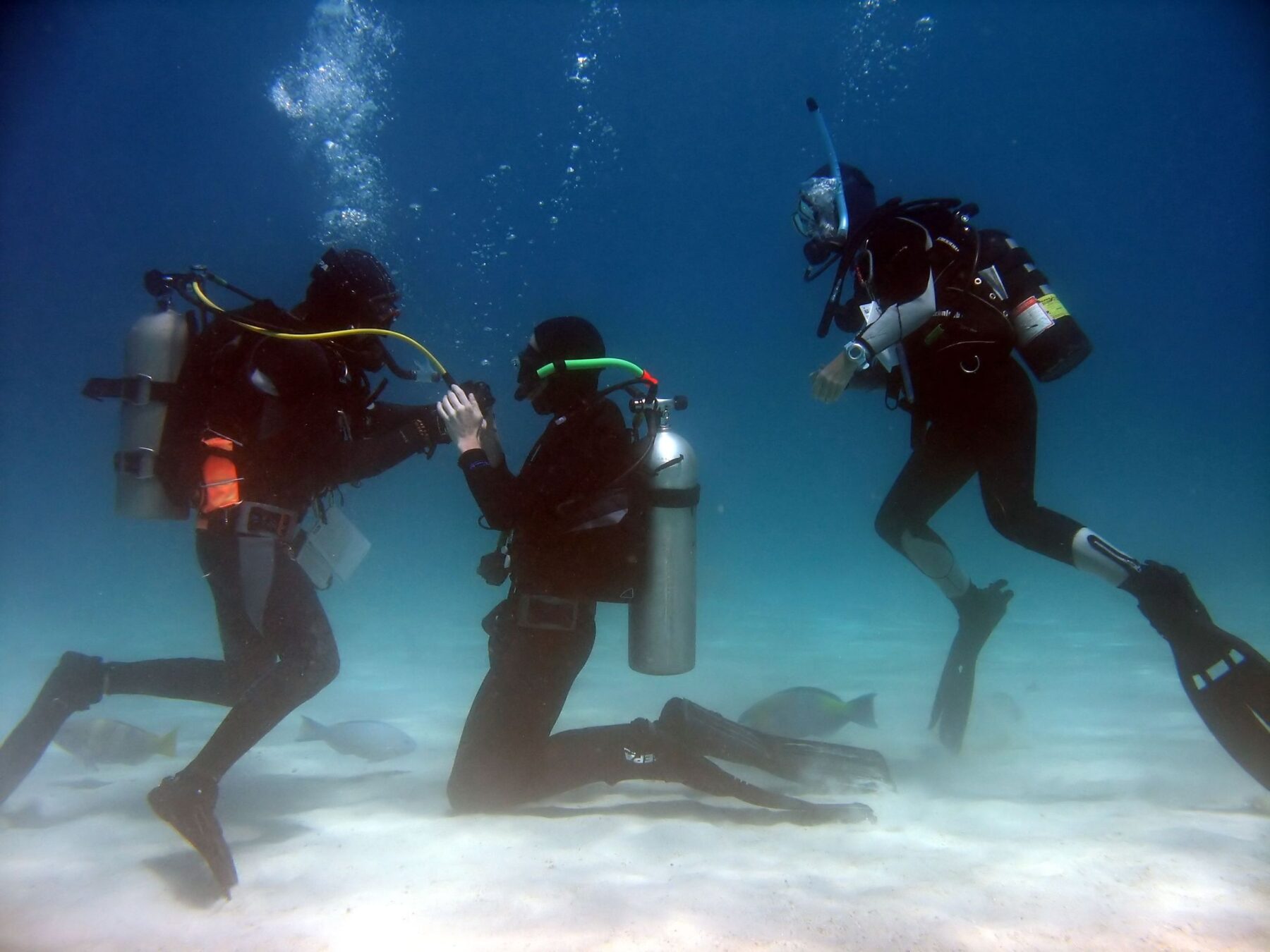
During our basic dive training, we are taught that if a dive doesn’t feel right we should abort it. The reality is, despite these lessons, many people find themselves on dives for which they lack confidence or experience to be undertaking. Such situations place unnecessary stress on the diver, both physically and mentally, and this can lead to unnecessary incidents involving injury or even death. Every diver should know their limits: Know what dives they should be doing and the ones they should avoid. However, this knowledge is only half the equation: The remainder is the confidence to say no to a dive, even if you have arrived at the site, have suited up, or even after you’ve started the dive. No diver should ever feel pressure to complete a dive they are uncomfortable with: And this is something buddies should discuss. It should be clear that there is no issue with aborting a dive, and it should be understood, by both buddies, that if either one feels uncomfortable they both end the dive immediately. At DAN AP we see all kinds of diving accidents and injuries, unfortunately a number of these are the result of divers participating in dives they were uncomfortable with from the outset.  We hear of divers expressing doubts about some aspect of the dive, going ahead with the dive anyway, and then having an issue during the dive, which lead to an injury, or worse. In order for divers to make an informed decision as to whether or not to complete a dive, it is important for divers to know, from the outset:

  • Their personal limits (type of dives they are comfortable doing, level of training etc.)
  • The type of dive to be undertaken
  • The conditions expected and possible hazards

Being able to make such decisions is an important part of every diver’s pre-dive checklist: As important as checking your cylinder contents or putting on your mask. If you don’t feel confident about doing a dive, tell the dive leader or tell your buddy: “I think I will sit this one out”. It’s much better to make this call early than to become a statistic in DAN AP’s incident reports. Safe Diving


DAN AP website

For as little as S$90 you will receive:

1 YEAR DAN Asia-Pacific Membership +
1 YEAR Subscription to Scuba Diver AUSTRALASIA + OCEAN PLANET

Want to get your hands on this package? CLICK HERE

Underwater Photographer of the Week: Tyra & Dustin Adamson

0

When living in the landlocked US desert state of Utah, scuba diving probably isn’t the easiest passion to pursue… let alone underwater photography and videography! But for this couple, location doesn’t stop them. They learned the hard way though: years of travelling and learning with each experience, while at the same time, teaching themselves new things with information and tips taken from the Web. Now, Dustin and Tyra Adamson of OceanShutter stand as an award-winning buddy team. With Dustin doing video and Tyra tackling still photography, they are able to document the underwater world from a unique perspective, and as you’ll see, they get some pretty amazing results. Dustin and Tyra both went to high school together in Utah, and in 2001, were married at the age of 23. They also earned degrees in computer science from Weber State University. Getting established as a newly married couple, they settled down and bought a home in Kaysville, Utah. In 2006, they decided to get more involved with diving and haven’t looked back since. Tyra was certified when she was 19 years old. Her first dive and swim in the ocean were in Cozumel, Mexico. Before a trip to Palau, she decided to give underwater photography a try. Sporting a Canon EOS 10D with Ikelite housing, she would soon begin to develop a passion for the art. Nearly 20 years later, she has now amassed an impressive collection of photographs from all over the world, won several international photo competitions, as well as been published by several magazines.

At the age of 17, Dustin was certified to dive, but never really considered underwater videography. He just liked breathing underwater! For many years, Dustin simply served as Tyra’s main critter spotter. Six years ago, Dustin didn’t even know what aperture was on a camera. But due to an unfortunate flooding of Tyra’s housing, he was able to inherit the old housing, and thus began his passion for underwater videography. Dustin has since won many prestigious international film competitions with his short films. In 2015, he was inducted into the Ocean Artists Society. Over the years, he has built up an impressive stock footage library – and his work has been used in many commercials and television shows.

What made you two want to become underwater shooters?

Dustin: I had spent a lot of time watching Tyra take pictures of some pretty awesome subjects over the years. But photography fails to do justice to some subjects, and that’s where video comes in. Take this example: I remember thinking about a flamboyant cuttlefish and how great that would look on video. The flashing of its brilliant colours is better conveyed with video. So after Tyra accidentally flooded her camera in the Philippines, I was able to use her old housing and start on video. That flood, while traumatic at the time, was actually one of the best things to happen to us. Video has really changed how I dive and look at subjects.

Tyra: I have always had a passion for photography. I started shooting while I was in high school and studied the art while in college. After diving for a few years, Dustin asked if I would be interested in taking my passion underwater. Without a second thought I said yes and I haven’t looked back!

What was your first underwater shot?

Dustin: My first dive trip with a camera was in 2011. It was to one of my favourite destinations – Anilao, in the Philippines. Looking back, it’s actually pretty funny. I was packing a full-frame DSLR camera with a 15mm fisheye lens. No lights and no tripod. Not exactly the best equipment setup for one of the top muck diving destinations on the planet! Despite not really getting any meaningful shots, it was a good learning opportunity for me and got me comfortable with the camera and housing.

Tyra: My first dive trip with a camera was to Palau in 2006. I’m pretty sure my first underwater shot was a poorly composed image of some small section of hard coral. I must admit, it was a bit of a rocky start shooting underwater for the first time. We hadn’t dove for a couple of years, it was my first liveaboard, my first time in the ocean with the camera underwater, and I was learning to shoot in strong drift conditions. Let’s just say that I was seriously considering selling my gear after that trip. However, I am so glad that I did not give up! In hindsight, I should have taken the camera to somewhere closer to home and gotten comfortable with the gear before going to Palau. We are headed back to Palau next year and I can’t wait to redeem myself! The story behind your most memorable underwater shot? 

Dustin: My most memorable shot has to be when I captured a beautiful frogfish eating an anemonefish in Bali, Indonesia. Tyra had just finished taking a few shots of it, and I moved in to get my camera set. As I turned on the light, the frogfish started to move. When you have the camera set up on a tripod, a moving subject isn’t ideal! As I was trying to follow it, and doing a poor job at it for that matter, it lunged at an anemonefish but missed. The shot was shaky and totally out of focus. Luckily for me, the frogfish settled down and patiently waited for another chance at it. This allowed me to get set up and try to get the shot. I waited about 20 minutes for it, and it finally happened! I was so stoked that I got that shot. I know that a lot of frogfish feeding shots on the Internet are coerced, but this was 100-percent natural and I was very proud of that. Patience can pay off.

Tyra: This is a really tough question to answer, as I have quite a few memorable moments captured underwater for various different reasons. It is hard for me to choose between my macro and my wide-angle shots, but if I had to pick one, I think it would be some of the images I captured of the Giant Pacific manta ray in Socorro, Mexico. The incredible experience of interacting with these majestic giants and them allowing me to capture their graceful moments will forever be imprinted on my heart. We had four dives with giant manta rays, and for the first couple of dives in the morning, about 20 dolphins, who playfully swam throughout the group. It was a day I will never forget and the images captured are special to me.

Do you both have a favourite dive destination?

Dustin: It is interesting because now I view destinations based on their productivity for shots. For productivity, I would say that places like Anilao and Lembeh are my favourites for macro. For wide angle – Bahamas for sharks and Socorro for mantas. Bali is great for macro and mantas! Taking productivity out of play, the Galápagos is an amazing destination that I would return to in a heartbeat. However, it is a very difficult place to get good shots.

Tyra: Like Dustin, I like different locations for different reasons as well, though the list is likely to be pretty much the same. For macro, I love Anilao, Lembeh, Bali and Milne Bay in Papua New Guinea. For stunning corals and fish life, I would say the Solomon Islands and Fiji. For wide angle (big animals), the Bahamas and Socorro.

The site you’d most like to dive, but never have?

Dustin: While I am not particularly into cold water diving, I would really like to go to Antarctica. I also haven’t been to Cocos and Raja Ampat.

Tyra: I would love to go to Raja Ampat and Cocos. Like Dustin, I am not a huge cold water fan, but one of these days I want to experience the kelp forests in California and interact with the playful seals.

The weirdest thing you’ve seen underwater?

Dustin: Anything you see on those blackwater dives is pretty crazy. Each one I have done brings new creatures from the deep.

Tyra: I have to agree with Dustin on this one. We have seen some pretty crazy creatures from the deep on our blackwater dives.

What camera equipment are you currently using?

Dustin:  I am currently using a Canon EOS 1D X Mark II with a Nauticam housing, along with a SmallHD monitor, and Sola lighting. My main lenses are a 100mm macro lens, and a 16–35mm lens.

Tyra:  I am currently shooting with the Canon EOS 5D Mark IV, with a Nauticam housing. I have two Sea&Sea YS-D2 strobes and a Sola 800 focus light. My main go-to lenses are the 100mm macro lens, with Nauticam wet diopter for macro, and 8–15mm fisheye for wide angle.

What has been the highlight of your careers?

Dustin: For me, the highlight is being able to experience the amazing things that happen underwater. I feel very fortunate to be able to see some of the amazing things that happen there.

Tyra: The highlight for me is the joy I get in sharing my images with family and friends, and in particular my nieces and nephews. Their youthful enthusiasm and excitement as I share some of my images and stories inspires me to keep shooting. I love sharing my passion with others in hopes that they will gain a better understanding of the ocean and will want to protect all of its inhabitants, big and small.

And the low point?

Dustin: We have been pretty fortunate – not too many low points. They’d include any time getting sick for a dive trip, equipment not showing up, floods, etc. Those things happen, but we can normally work around any issues that arise.

Tyra: While we have been pretty lucky in not having too many low points, I think the lowest point for me was back several years ago when on the second day of our trip to Dumaguete in the Philippines, I flooded my housing. I can’t remember feeling more devastated while diving than in that moment, seeing the water rushing into the housing. Thankfully, the manager of the resort let me shoot with her camera for the rest of the trip, allowing me to still capture some positive memories underwater.

Is there any particular shot that you still want to get?

Dustin: Every shot for me can be better. Even if the shot I have is great, higher resolution and higher frames per second are always wanted. So I am always looking to improve, even on shots that I currently have. This coming year, I will be focusing on getting some shots with crocodiles, whale sharks and great whites – all of which are new subjects for me.

Tyra: I feel there is always room for improvement and new ways to be more creative with my shots. One of the things on my bucket list is to get a shot of the psychedelic frogfish. I am also looking forward to the opportunity to tackle the challenge of shooting cavern shots in the cenote caves in Mexico this year.

PADI – A change of ownership

0

PADI has recently announced a change of ownership. A consortium of family wealth investors has now taken over the world’s largest dive training/membership organisation, which was founded in 1966 by John Cronin and Ralph Erickson. In the message from PADI’s President and CEO, Drew Richardson, the new owners constitute a group of “conservation-minded family investors” based in North America. The consortium invests long-term in premium brands that are geared towards a cause.

Richardson said that the group shares PADI’s mission and conservation agenda, and includes the likes of philanthropists who are attracted to the organisation’s commitment towards conserving and protecting the oceans.

He had the following to say: “This is a positive transition for the organisation as the family wealth investors will hold and nurture PADI for many years. This group is closely aligned with PADI’s mission and supports PADI’s efforts to remain stewards for this amazing brand we all love… And, most importantly, they respect the organisation’s dedication to PADI Member support.”

Richardson affirmed the PADI executive team’s commitment, as well as his own, in leading the organisation for its next 50 years, saying: “Together, we will continue to grow the PADI brand and through our stewardship efforts ensure PADI is not only the best in the world, but also best for the world.”

He also reaffirmed PADI’s global priorities, namely, 1) to support its members grow and improve as divers, 2) to attract newcomers, 3) to engage with their members and encourage activities, and 4) to inspire divers with its vision of conservation.

Richardson explained that this transition is to the benefit of the organisation, and confidently stated that his personal friends, John Cronin and Ralph Erickson, “would be extremely proud of this next step for the PADI organisation and heartened to see that it has transformed into a global force for good for scuba diving and the ocean planet.”

He finished off his message by reinforcing his commitment to, and appreciation of, all PADI members: “You are the heart of the organisation and the entire PADI staff remain focused on delivering the best service and support to help you succeed.”

A Whole Lot of Wrecks

0

Located near Pulau Mansinum, a picturesque little island with a small village and a pleasant beach, the Cross Wreck is one of Raja Ampat’s more accessible wreck dives. This dive site was named after a large concrete cross on the shore nearby where Christian missionaries first landed on Irian Jaya. The wreck was a Japanese Navy Patrol boat that sank during WWII. At 40 metres lengthwise, she lies in close proximity to the shore at 18 metres. Sitting in an upright position on the sandy bottom, she is completely covered in soft corals, crinoids and sponges. Two rows of depth charges can be seen at the stern and the ships lamps are still either standing in place or lying on the deck. The switchboard can be seen in the communication room and penetration into the engine room is also possible by suitable certified wreck divers. The wreck makes for a popular night dive where lionfish, scorpion fish, moray eels and parrotfish and huge napoleon wrasse can be seen. Great for macro life and numerous nudibranchs, shrimps and goby species can be found all over the wreck.

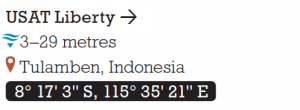
The USAT Liberty was a United States Army vessel damaged in January 1942 during WWII. Miraculously, nobody got hurt, but the wound turned the ship into a non-functioning hull. The American Navy‘s plan to tow the ship to Singaraja harbour (north Bali) failed as the harbour was completely occupied, so the ship was intentionally stranded on the rocky beach of Tulamben, where it was unloaded. In 1963, the tremors associated with the eruption of Mount Agung caused the vessel to slip off the beach. She presently rests at a depth of three to 29 metres. Since then, coral has coated the wreckage turning it into an absolute underwater wonderland of marine life, hosting extraordinary fish, coral and invertebrates. A good growth of encrusting animals covers the wreck. Marine biologists estimate that about 400 different species of reef fish live on the Liberty. Highlights here would have to be the large school of bump-head parrotfish, school of trevallies and barracuda that are regularly spotted around the wreck. Fusilier and anthias mill all over, often following you during the dive. Batfish, large sweetlips, angelfish, butterfly fish and anemone fish hover under ledges and in crevices. Lionfish, scorpionfish, hawkfish, parrot fish, pufferfish and coral trout are everywhere, as are the gobies, blennies, shrimps and dottyback out on the sand flats. There are a couple of impressive swim-throughs, but caution must be taken as her structure has since deteriorated over the years. The wreck is simply alive with life – corals, sponges and gorgonian fans are just as breathtaking, with the thousands of invertebrate life within them. Easily accessible from the shore, this is also an excellent snorkel site.

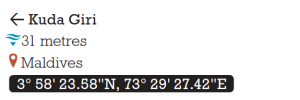
The Kuda Giri is a small fishing trawler that was scuttled some 10 years ago. The fishing trawler was sunk to form an artificial reef, which has proved to be a success. The wreck is located in the South Male Atoll approximately 22 kilometres from Male. She sits upright and can be explored from the bow, which points towards the giri (pinnacle) at 18 metres all the way down to its stern at 30 metres. Covered by staghorns, table corals and colourful soft coral, divers can penetrate the wreck through the machine room and exit at the stern, or enter at the front cargo hold and exit at the bridge, while discovering the plethora of marine life. Large schools of glassfish and batfish have made this sunken ship home and divers can also expect to see turtles, napoleon wrasse and trevallies, among other gaudy sea souls. Currents here are moderate to gentle and is an easy enough dive from entry level certified divers. Diveable all year round, it has visibility between 10–25 metres, depending on weather conditions.

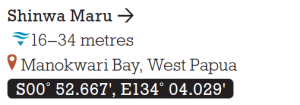
The wrecks off the coast of Manokwari in Indonesia’s Papua Province are mostly pristine and you can be sure that you’ll be one of the few divers to visit these ghostly remains. The bay at Manokwari provided a safe anchorage point to the Japanese in WWII. The surrounding hills are riddled with tunnels, a trademark of Japanese occupation. A number of Japanese ships were sunk in the harbour and over 20 wrecks have been located in the bay, but only five are diveable. One of the five wrecks that can be readily dived off Manokwari is the Shinwa Maru. The Shinwa Maru wreck was a Japanese WWII cargo vessel. This impressive 120-metre long vessel lies on her port side at a depth of 16 to 34 metres. The superstructure is intact, despite two big bomb blast holes in the starboard side. Diving helmets, car batteries, ammunition, dishes, cables, small tanks and mine sweeping equipment are some of the artefacts strewn all over the wreck. The wreck is also home to schools of jack, as well as impressive macro life.

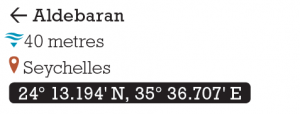
The Aldebaran was a confiscated fishing boat that was seized in the Seychelles waters by the Seychelles Coast Guard for illegal fishing. Abandoned by the owners after legal proceedings, the Seychelles Tourism Board acquired the vessel to commemorate the SUBIOS Festival of the Sea, themed Wrecks as Ocean Habitats. The vessel was sunk after careful consideration at an appropriate location with heavy sandy bottom, rocks and existing marine life where currents passing through will provide a healthy amount of nutrients. On July 11, 2008, the Aldebaran was towed by a Seychelles Port Authority tugboat to her current resting place. Just a mere 15 minutes boat ride off the coast of Willie’s Bay in the northwest of Mahe, you will find some world class diving. At 40 metres and fully intact, she lays upright and is teeming with marine life and coral growth. With visibility as far as your eye can see, this is a definite must-dive site for wreck lovers.

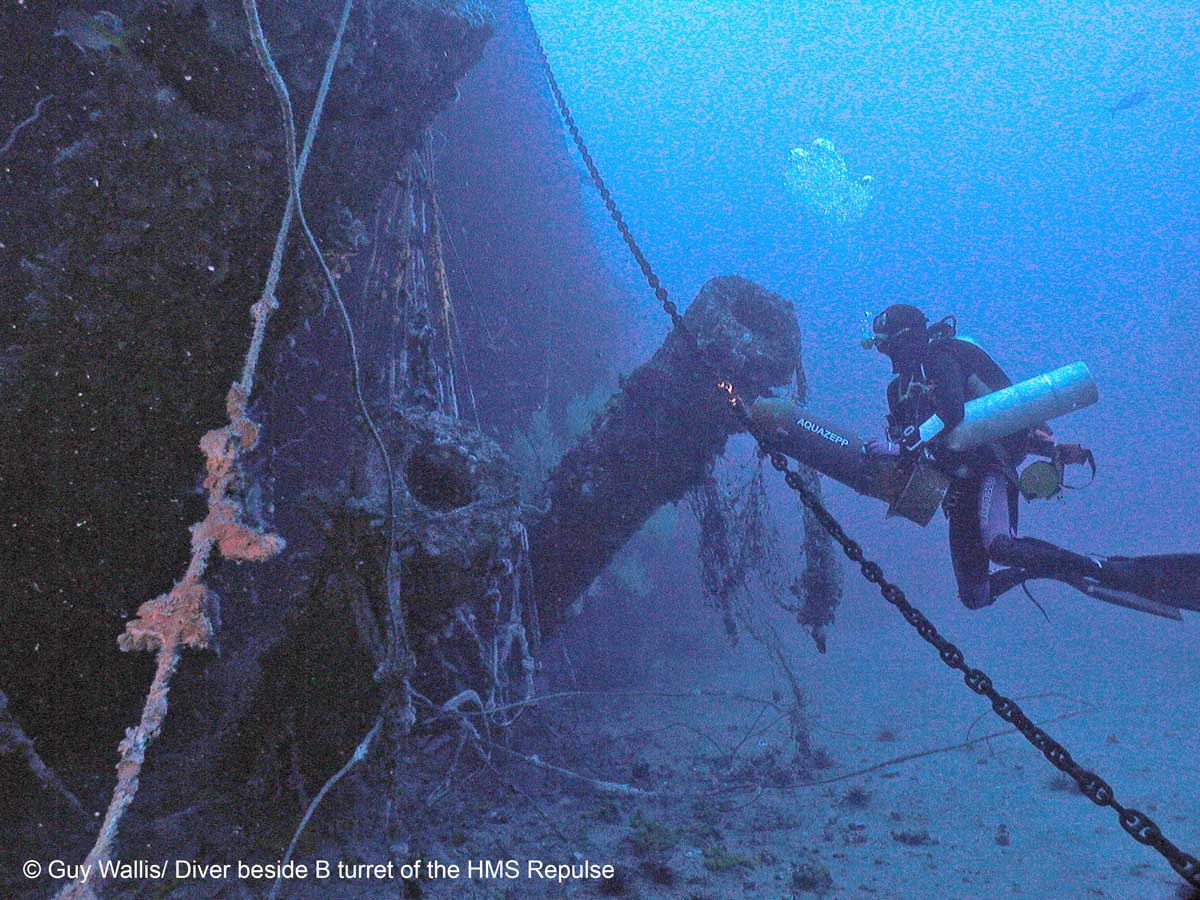
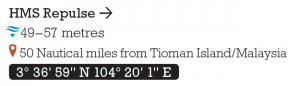
At 242 metres in length, British Battle Cruiser HMS Repulse is one of the biggest and most interesting WWII wrecks. She was sunk (together with Battleship HMS Prince of Wales) by Japanese torpedo bombers on December 10, 1941, and now rests on her portside in 55 metres of water with her hull being accessible at 33 metres. Fully penetrable, this is a wreck divers dream come true. While much her superstructure was crushed as the ship sank, her full armaments are still visible. She was designated by the British government as a war grave in 2001 and penetration of the wreck is thus not officially allowed. Marine life includes massive schools of barracuda, cobia, snappers, batfish, jacks, resident marble rays, turtle, giant morays, groupers and blacktips sharks. The occasional whalesharks, manta rays, eagle rays, marlin and dolphins can be sighted if you’re lucky. FORCE Z SHIPWRECKS of the SOUTH CHINA SEA

HMS Prince of Wales and HMS Repulse

Author: Rod Macdonald

The tragedy of the loss in 1941 of two Royal Navy capital ships, HMS Prince of Wales and HMS Repulse, the core of Churchill’s deterrent Force Z, stunned the world. Churchill had hoped that sending a small powerful squadron of ships to Singapore would deter a threatened Japanese invasion of Malaya and Thailand. He was to be proved tragically wrong. Denuded of aircraft cover, Force Z was left disastrously exposed to air attack. Within eight days of their arrival at Singapore both ships were sunk with huge loss of life in a mass attack by 85 Japanese bombers. It was the Royal Navy’s greatest loss in a single engagement and the first time a modern battleship had been sunk by air power. The information here was taken from Asian Diver Issue 1/2013. Asian Diver magazine contains in-depth and up-to-date articles on various topics, covering the best diving destinations, the latest from leading conservationists and marine biologists, as well as fantastic compilations of underwater photography. You can check out the various themed issues at the shop. CLICK HERE.