Home Blog Page 112

The Lungs Of The Earth

0
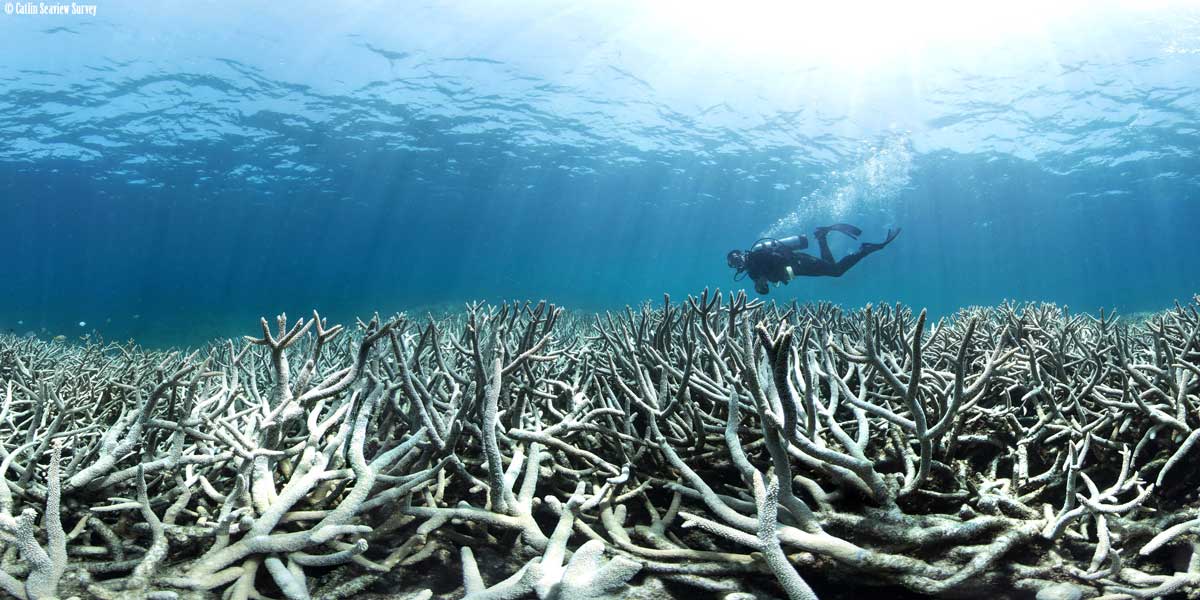
Warmer water temperatures can result in coral bleaching. When water is too warm, corals will expel the algae (Zooxanthellae) living in their tissues, causing the coral to turn completely white © Catlin Seaview Survey

On the 27th of May 2017, the Paris Agreement was reaffirmed by six of the world’s largest economies. They are committed to revamping their economies along the lines of sustainable energy, investing heavily in the transition, and creating new jobs in the market. Not so for the USA, however. The sceptical Trump administration has deferred announcing its support for the agreement. Notably, Trump previously dismissed climate change as a hoax conjured up by China.

In today’s uncertainty, it is appropriate to remind ourselves about the science of climate change, particularly on behalf of divers – many of whom can see first hand the damage caused to oceans and the marine life inhabiting them. Below, Dr. Emma Camp brings us the facts about the impact of climate change on our oceans. Note: you can also check out our interview with her for “Ocean Defender of the Week“.

Dr. Emma Camp:

Trying harder and harder to breathe 

The oceans are crucial to regulating climate and act as “the lungs of the Earth”, with algae and cyanobacteria in seawater providing up to 80 percent of the atmospheric oxygen which we rely on to breathe. The oceans also house over 230,000 marine species, with estimates that there are between one and 10 million species still undiscovered. Alongside their own intrinsic value, many of these marine species provide important goods and services. Collectively, ocean-related services and business are estimated to contribute over USD500 billion to the world’s economy.

Our survival is undeniably dependent on a healthy ocean. However, climate change, in tandem with other human impacts, such as pollution and overfishing, threaten the very resource that life on Earth depends on. These threats will continue to intensify as the global population grows, placing an ever-increasing strain on the world’s marine ecosystems. 

The oceans have a two-way relationship with the Earth, with the oceans influencing climate, weather and coastal landscapes, while the Earth’s climate directly alters the oceans’ physical and chemical conditions. Consequently, the increasing temperatures on Earth, owing to global warming over the past 50 years, have also resulted in warmer surface waters and greater heat storage in the world’s oceans. Furthermore, the oceans currently absorb approximately a quarter of all excess carbon dioxide generated by human activities – significantly reducing the levels of carbon dioxide in the atmosphere, which helps to regulate the Earth’s temperature. The absorption of this excess carbon dioxide, however, causes a fundamental shift in seawater chemistry, which ultimately results in the oceans becoming more acidic. Warmer and more acidic oceans are the result of climate change and are linked to numerous impacts that scientists globally are still uncovering.

Warmer oceans

The oceans have a high latent heat capacity, which means they are very good at storing energy – so efficient, in fact, that they have absorbed an estimated 93 percent of the additional energy created from the greenhouse effect. This, combined with the slow mixing time of the world’s oceans, means that it can take up to a decade for changes in climate to alter ocean temperatures. That being said, since the start of the 20th century, there has been warming of the deep oceans, and an increase in the global mean sea surface temperatures.

Rising sea level is a direct impact of ocean warming. Warmer temperatures cause seawater to physically expand (known as thermosteric sea level rise), while melting glaciers, snow and ice add volume to the oceans (known as eustatic sea level rise). Since the mid-19th century, sea level has risen at a greater rate than the mean values from the last two millennia. The consequence of this is that habitats are being lost – glacial habitats that house animals such as the iconic polar bear are diminishing, with the simultaneous effect of coastal habitats being flooded. Scientific estimates suggest that sea level is rising at a rate of 3.5 millimetres per year, a trend that threatens coastal communities globally and could mean low-lying islands, such as the Maldives, are lost to the sea.

Melting ice and glaciers also transfer fresh water into the oceans, which changes the salinity (how much salt is in the water) of seawater. Over the last 50-odd years, changes in ocean salinity linked to climate change have corresponded with shifts in rainfall patterns and an acceleration in the evaporation and rainfall cycle. Changes in where and how often it rains has profound repercussions for crop production and food security.

Variations in rainfall patterns and freshwater input, along with elevated temperatures, also threaten to disrupt ocean currents. The oceans are in constant movement, resulting from surface wind-driven currents and deep-water thermohaline currents (thermo meaning temperature; haline meaning salinity). Colder and more saline seawater sinks and is replaced by warmer surface waters – creating the Great Ocean Conveyor Belt. Disruption to the oceans’ currents has the potential to alter global weather patterns, as well as the migration and dispersal of marine organisms. Already, changes in thermal stratification (heat layering in the ocean) have been detected, resulting in reduced mixing of seawater in the deep ocean. Changes in seawater mixing can decrease nutrient availability, limiting the fundamental building blocks needed by marine organisms to grow and sustain life.

Optimistically, scientists do not believe the tipping point of irreversible change has yet occurred

As unpredictable as the weather 

Changes in ocean currents and precipitation patterns also contribute to the frequency and intensity of extreme weather events, which are predicted to become more common. Large storms such as hurricanes and cyclones can cause significant habitat loss, with increased storm surges resulting in dramatic coastal erosion. The impact of large storms can be devastating on both the environment and local communities.

El Niño events are also becoming more common, warming the eastern and central Pacific above their normal seasonal averages. El Niño events alter global weather patterns, which affect extreme weather systems worldwide. The potential increase in severe El Niño events threatens ecosystems and could have large socio-economic consequences. For example, 2016 saw the third mass global coral bleaching event, resulting from warmer-than-normal seawater, which was attributed to it being an El Niño year. Bleaching is a stress response of corals, resulting in the loss of their microscopic algae that they depend on for energy production. Scientists believe that up to a third of the northern Great Barrier Reef was lost from the El Niño in 2016. With predictions that El Niño events will become more frequent, the ability of the reef to recover is worrying, especially when other climate impacts, such as ocean acidification, are intensifying.

The osteoporosis of the sea

The oceans absorb atmospheric carbon dioxide, which initiates chemical reactions that reduce seawater pH and carbonate ions in seawater. pH is the scale used to measure how acidic something is. The scale ranges from 0 to 14, with the lower values measuring that which is more acidic. Seawater is slightly basic (higher than seven on the pH scale) meaning that the process of ocean acidification is a shift towards pH neutral (pH equals seven) rather than acidic conditions. The shift in chemistry also reduces the carbonate ions in seawater, which are the fundamental building blocks needed for marine organisms that have a calcium carbonate shell or skeleton. The greater acidity also increases the risk of dissolution, making ocean acidification “the osteoporosis of the sea” – compromising the structural integrity of organisms made of calcium carbonate.

The impact of climate change on the world’s oceans is extensive. Collectively, the effects threaten to disrupt the balance of the oceans’ ecosystems. Already, there are reports of the poleward migration of marine organisms to cooler waters where conditions are more optimal.

Unfortunately, not all species are capable of relocating; many species face an increasing risk of extinction. As scientists continue to understand and uncover the planet’s responsive processes, we are seeing how intricately balanced life on Earth is. Optimistically, scientists do not believe the tipping point of irreversible change has yet occurred. There is, however, an urgent need to implement policies and practices to reduce carbon dioxide emissions, to ensure the effects of climate change do not negatively change our oceans .

Dr Emma Camp is a marine biologist who studies the impacts of climate change on marine ecosystems. She works at the University of Technology Sydney in the Climate Change Cluster (C3). Emma is also a passionate diver, photographer and conservationist, acting as an ambassador for preserving biodiversity for the international charity Ibex Earth.

This article was published in our magazine, Asian Geographic Issue 1/2017, dedicated to climate change. Get the magazine at the shop or read it online.


Dr. Emma Camp has also written articles in Asian Diver – check out the issues at the shop or read them online HERE

Unravelling The Seahorse

0

Seahorses are an elusive species that turn divers giddy with excitement. But what is it about them that fascinates people so much?

It’s not a horse of course 

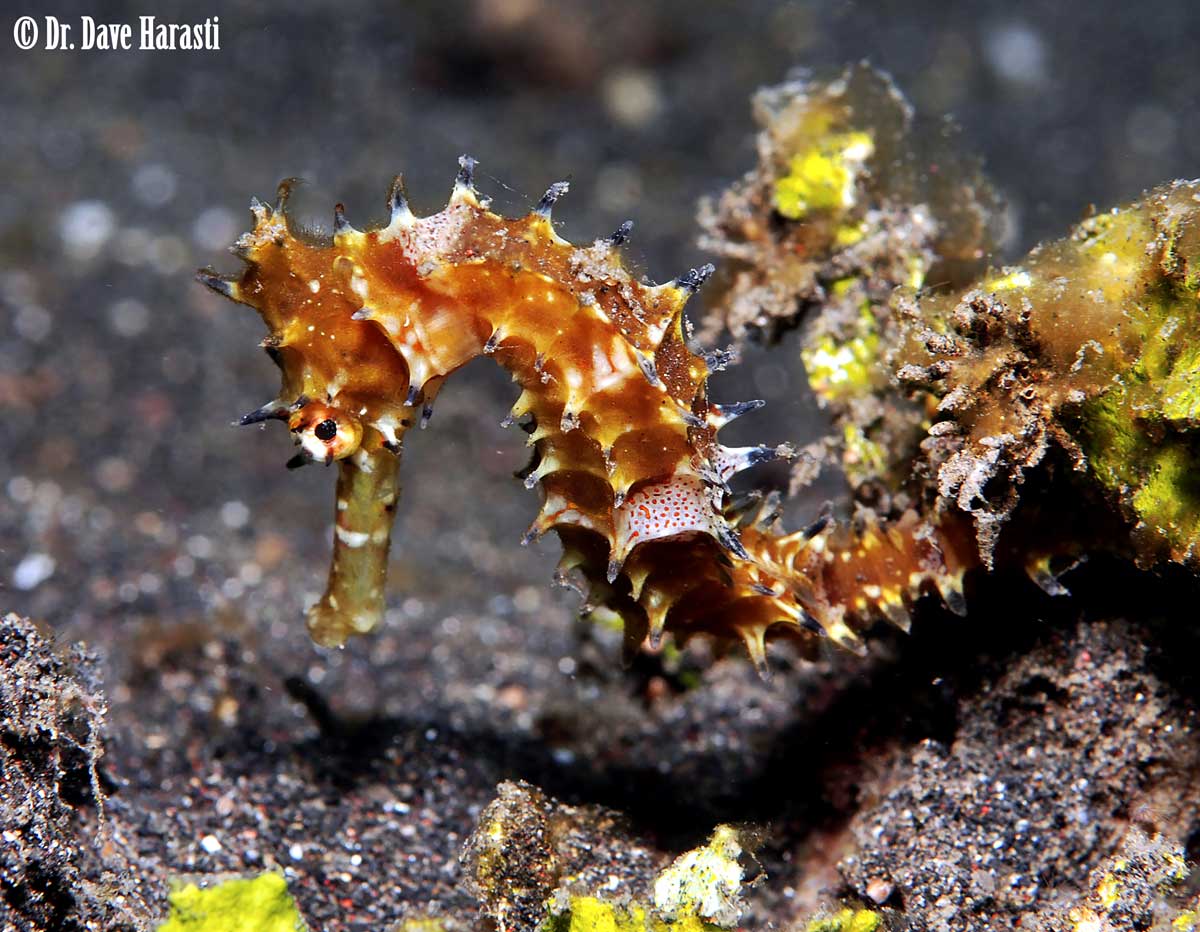
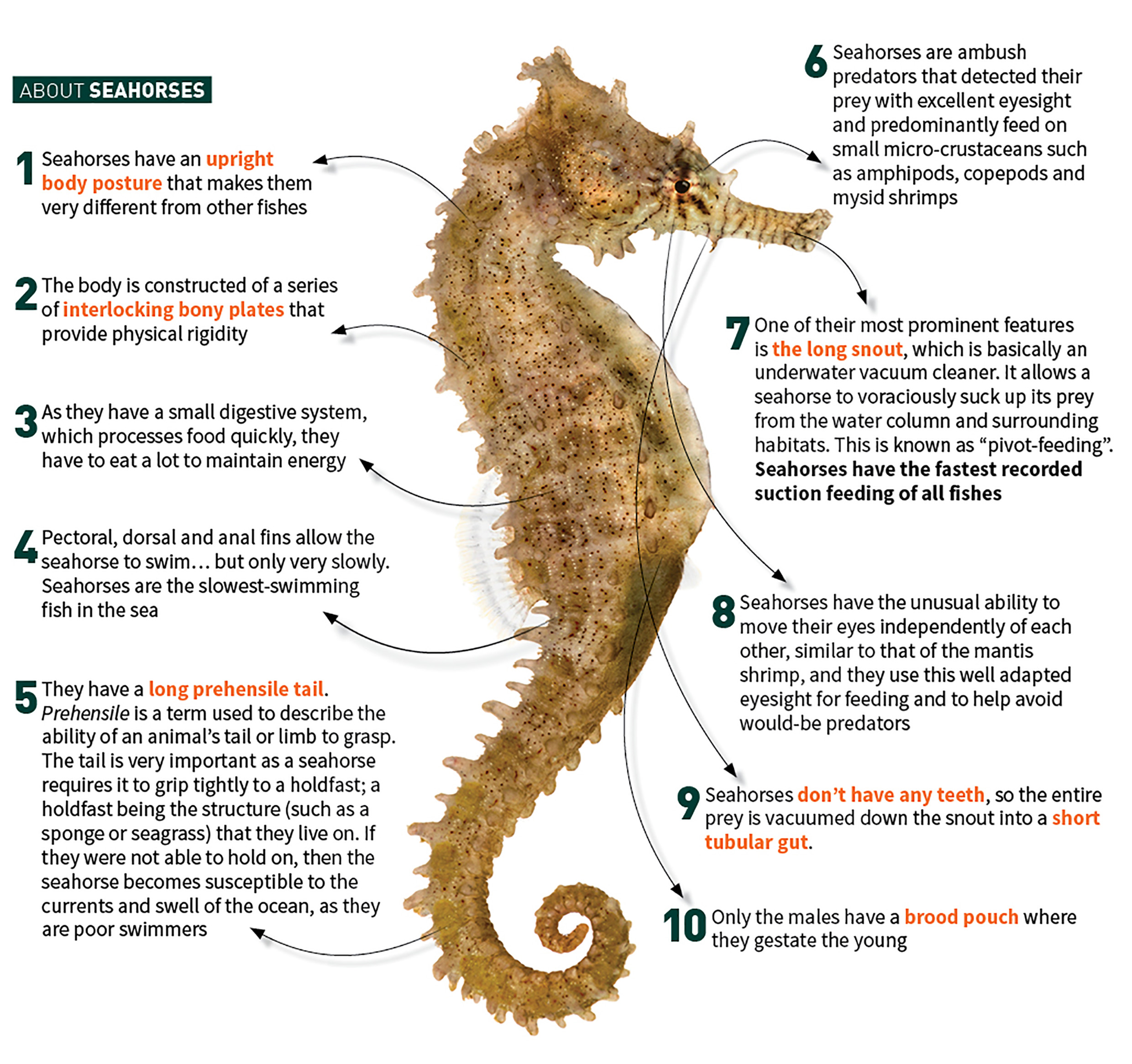
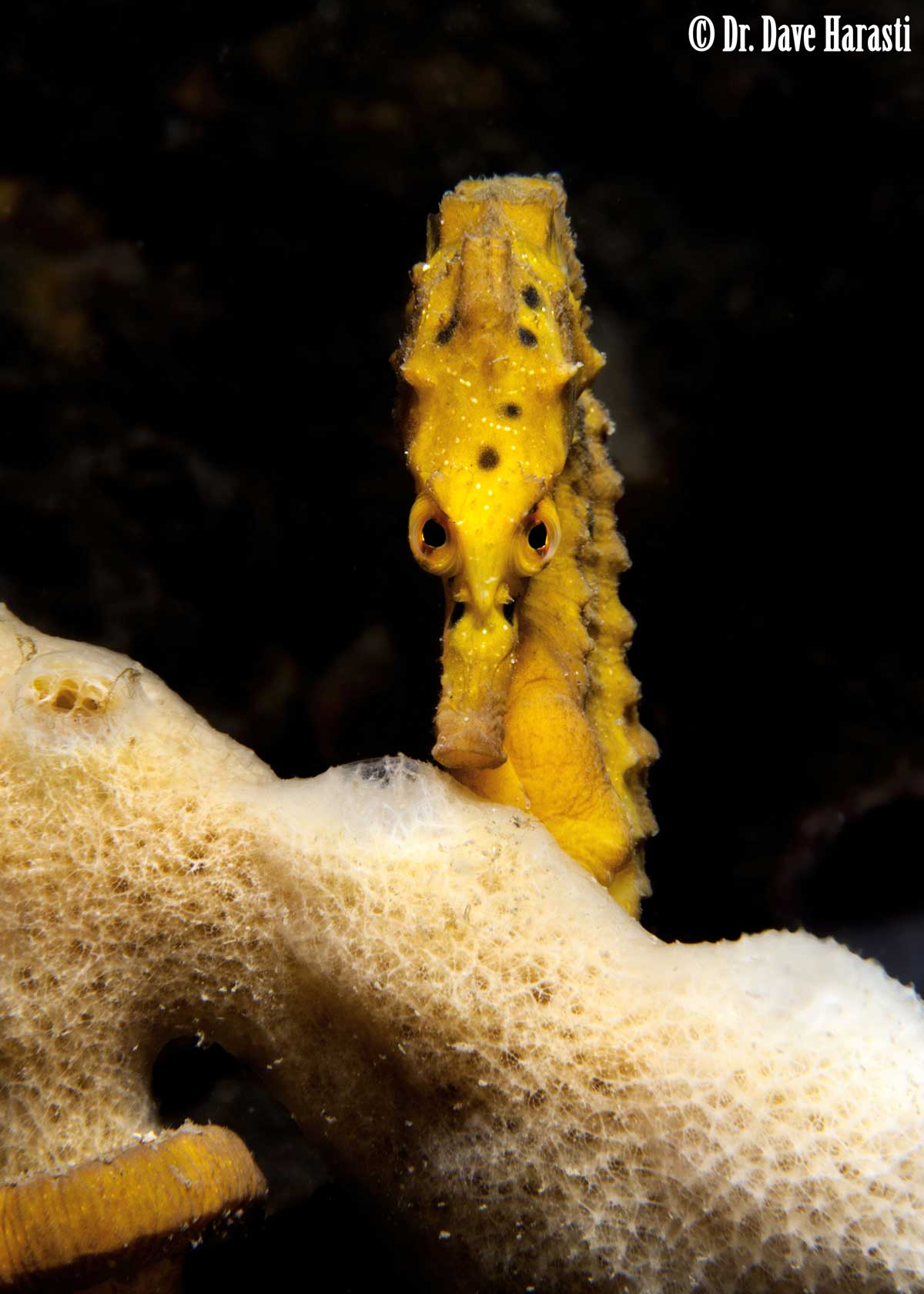
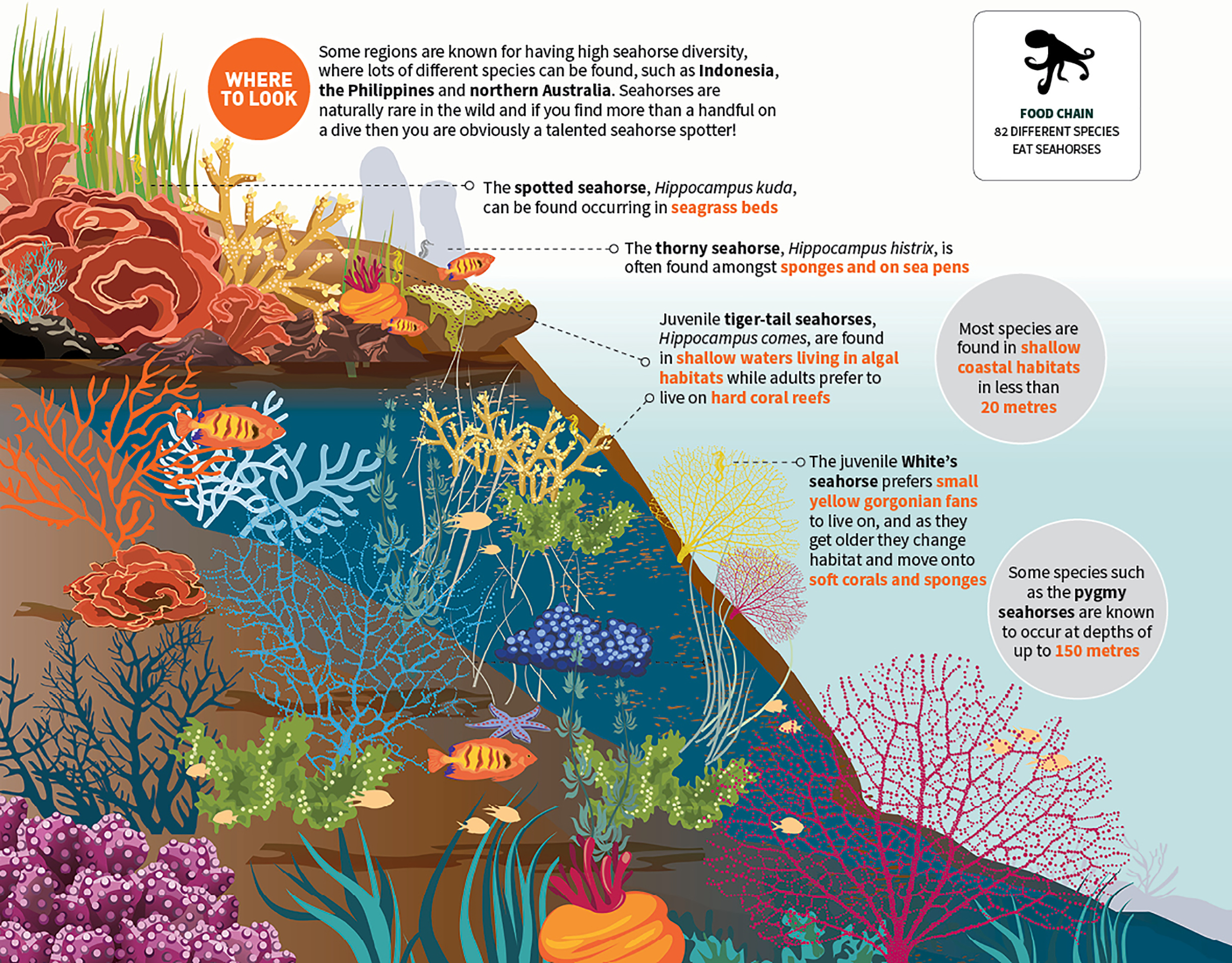
Seahorses are unusual little marine creatures that belong to the fish family “Syngnathidae”, which includes seahorses, pipefish, sea dragons and pipehorses. They occur throughout the oceans of the world (except in the coldest seas at both poles) and can be found living in a variety of habitats including seagrass meadows, coral reefs, sponge gardens, and even on artificial structures such as jetties.

All seahorses belong to the one genus, Hippocampus, derived from the Greek: “hippo” meaning horse, and “kampos” meaning sea monster. So the head of a horse on the body of a sea monster – the term Hippocampus couldn’t describe a seahorse more perfectly!

Falling in love 

Did you know that seahorses can mate for life? Throughout the year, and especially during the breeding season (which is generally over the summer months), a male and female seahorse will come together in the early morning light, and perform a ritual mating dance for several minutes to cement their bond. During the dance, both seahorses can change colour and they will curl their tails together, slowly turning as they perform their greeting dance. And if the time is right, at the completion of the dance, the female will transfer her eggs to the male.


Big-belly seahorse, Hippocampus abdominalis © Dr. Dave Harasti


Growing up

Birth: When seahorses are born, they are fully developed and look just like tiny adults. Depending on the species, babies can range in size from two to 10 millimetres.

Four months: Initially, they grow quite rapidly. In the White’s seahorse, it was found that a small eight-millimetre baby can grow to 80 millimetres and reach maturity in just four months: this is when it can be determined if the baby has grown into a male or female, through the presence or absence of a pouch.

Pelagic life: Depending on the species, some seahorses will have a pelagic stage where the young will drift in the open water or “raft” on flotsam such as sargassum seaweed.

Six months: Other species (like the White’s) have no pelagic stages and the babies will settle in the area where they were born and likely remain in the same location as they mature to adulthood. After six months, White’s are about 100 millimetres long and fully mature, ready to breed.

Six years: The life expectancy of seahorses in the wild varies considerably depending on the size of the species – larger seahorses will live longer. The White’s seahorse is known to live for up to six years in the wild, with the oldest known living wild seahorse being a large female appropriately named Grandma, which was seen on the same site for five years.


Read more: The Do’s And Don’ts of Diving with Seahorses 


The information here was taken from an article by Dave Harasti (a marine scientist for Fisheries NSW) in Asian Diver’s “The Big Blue Book” issue 2/2016. In order to read the full article, which includes detailed analysis, images and infographics, purchase the magazine at the shop or get the e-magazine. The issue itself is dedicated to seahorses (the theme of ADEX 2016) and includes stunning images, tips for divers, destinations where you can find seahorses, as well as input from conservationists about protecting this beautiful marine creature.

Europe’s Underwater World

0
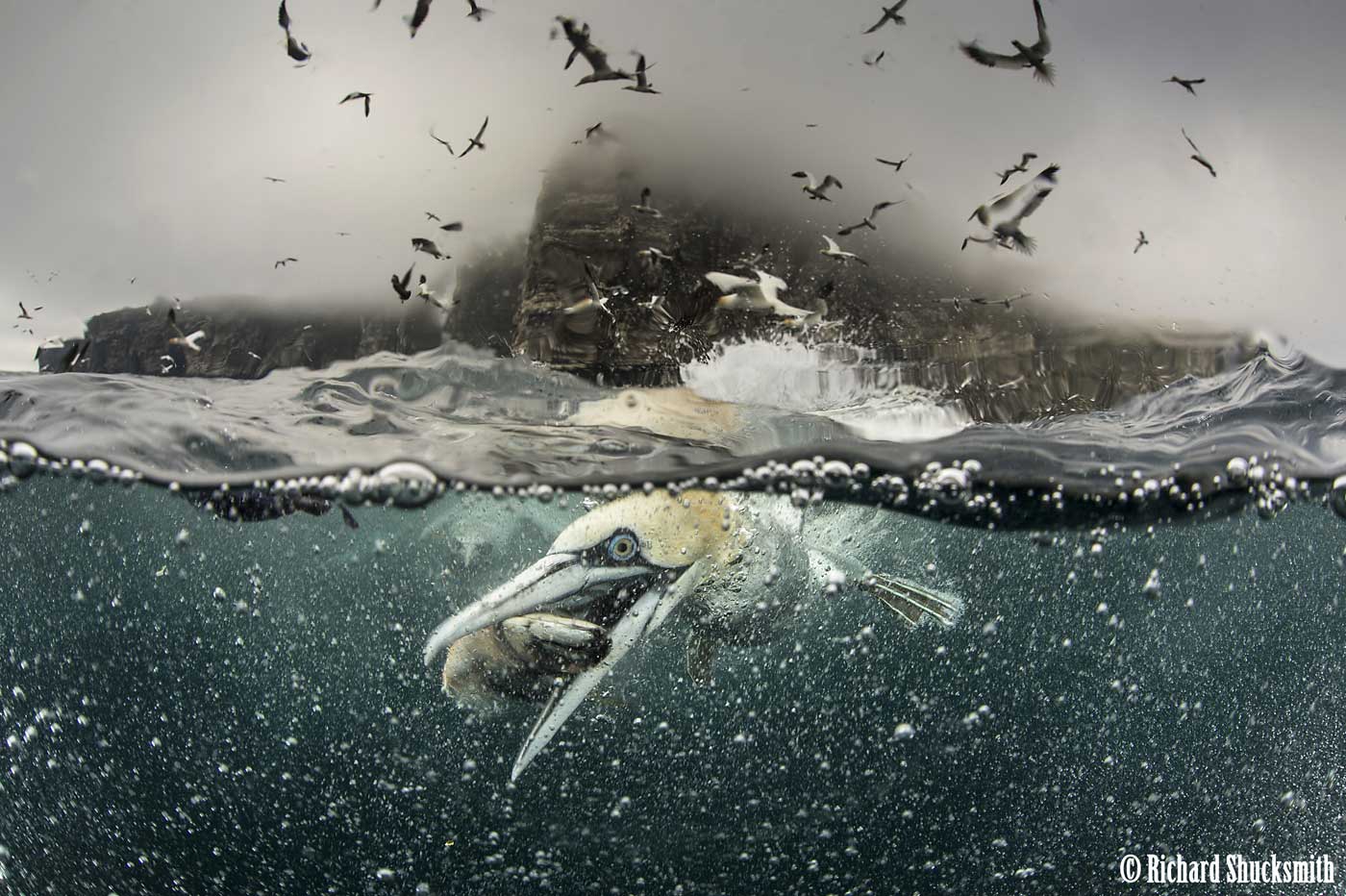
A Foggy Day In Scotland © Richard Shucksmith

Into the Old World, through the rolling lands of Romanticism, revolution and conquest. Europe has a vast and celebrated history that not only still stands on hillsides and in its cobblestone streets, but under its coastal waters and deep in its lakes.

From the clear blue Azores, to the sunken Roman city of Naples, as the continent has thrived, developed and fallen to war – the underwater world has laid almost untouched.

Fin-kick through the world’s greatest sub-aqua canyon in the ice-clear water of Silfra, or descend through the Blue Hole into the warm waters of Gozo. This fairy-tale world has captured the imagination of grand pioneers and radicals, and paved the way for its own epic poetic narrative.


A Foggy Day In Scotland © Richard Shucksmith

A Foggy Day In Scotland

UK: Morus Bassanus Islands, Scotland 

By Richard Shucksmith 

Bouncing around in a small inflatable boat, I was heading to one of the most remote coastal cliffs in Shetland, and I was starting to feel a little nervous. As I ploughed through a wave, a wall of spray hit me in the face, leaving me squinting to see the shoreline. Weighted down by 150 kilograms of mackerel, camera gear and dive kit, and the fact that thick fog was making navigating around the headlands difficult, I started to question my sanity. It was a gamble, as the forecast was for the fog to clear.

Then, my feeling of hopelessness passed as I sensed it was getting brighter. A faded sun could be made out through the white filter of fog, and suddenly I could see more of the cliffs and more importantly I started to see gannets. Within 10 minutes, the fog was halfway up the cliffs and it
was much brighter.

Right on cue, a great swirling mass of gannets started circling the boat. I threw a mackerel into the water and within seconds, the gannets were diving.
It quickly turned into a feeding frenzy, with wings hitting me in the face as I tried to capture the raw emotion. All the anxiety was forgotten and the fog proved to be a blessing more than a hindrance. Filtering the sun to create bright white light, it protected the image from the harsh direct midday sun. One hour later, a card full of images and 150 kilograms of mackerel lighter, I headed back with not a worry in the world.

When: April 2016

Equipment: Nikon D4, 15mm fisheye, Nauticam housing, dual Inon Z-240 strobes

Settings: f/13, 1/250s, ISO400


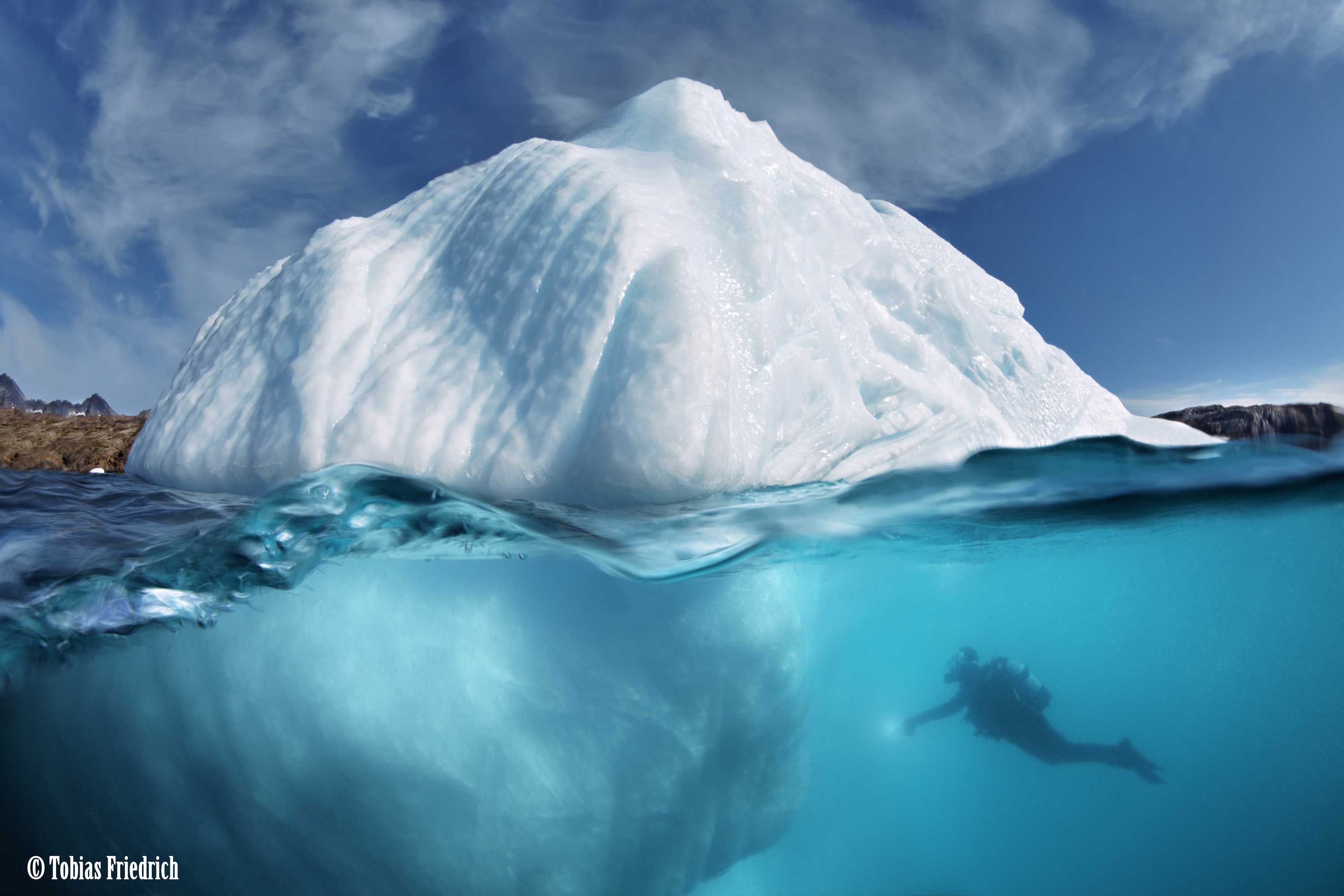
Above And Below © Tobias Friedrich

Above And Below 

Greenland: Near Kulusuk and Tasiilaq 

By Tobias Friedrich 

An iceberg above and below the waterline dwarfs a diver. In this cold sub-aqua world, some rare and very strange creatures reside in some of the most extreme locations on this ocean planet.

When: August 2015

Equipment: Canon EOS 5D Mark 11

Settings: f/22, 1/80s, ISO100


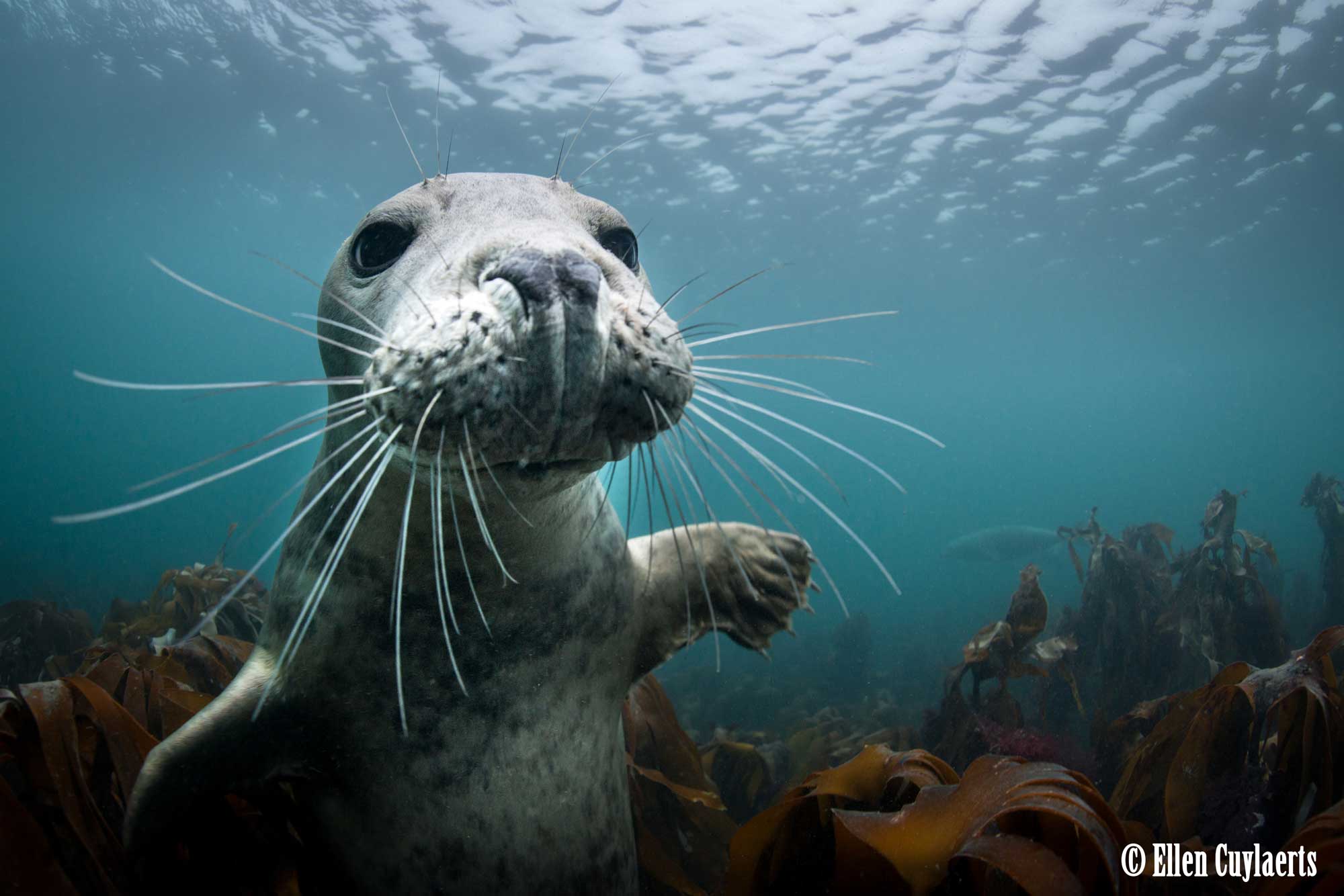
Playful Grey Seals © Ellen Cuylaerts

Playful Grey Seals

UK: Farne Islands, England

By Ellen Cuylaerts 

Grey seals, playful as ever, great photographers in the waters of Farne Islands. Grey seals spend around 80 percent of their time underwater.

When: November 2015

Equipment: Nikon D800, 16mm lens, Subal housing, dual Light & Motion Sola 3000 lights

Settings: f/7.1, 1/200s, ISO800

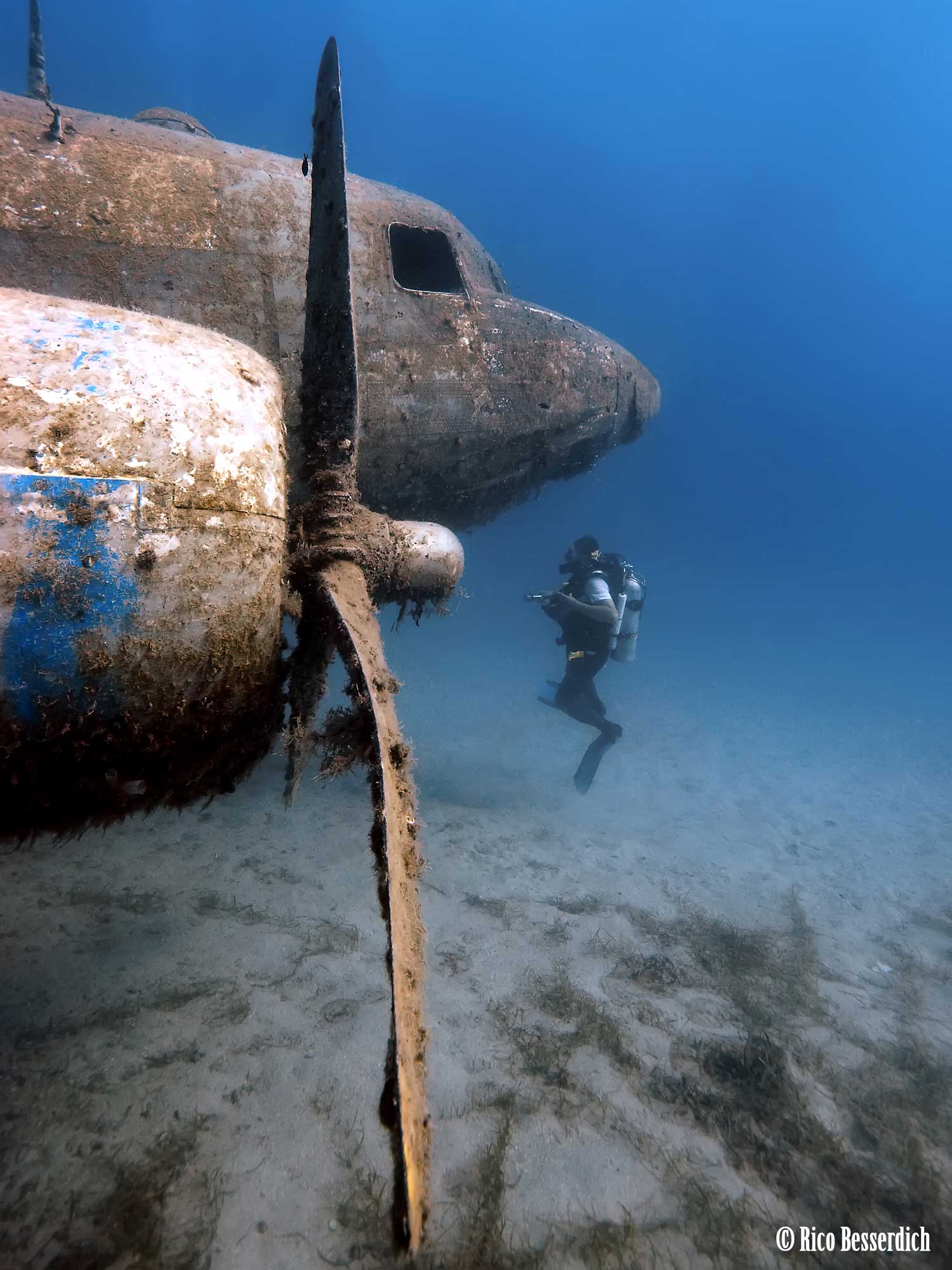
The Wreck Of A Douglas © Rico Besserdich

The Wreck Of A Douglas 

Turkey: Kas, Antalya

By Rico Besserdich

The wreck of a Douglas “Dakota” C-47 aircraft, which served for decades in the Turkish Airforce, and after its retirement was sunk in the waters of the town of Kas, as part of an artificial reef projects.

When: September 2011

Equipment: Canon EOS 40D, 10-20mm lens 10mm, Ikelite housing, natural light

Settings: f/8, 1/160s, ISO800 Want to see more? Article: Inspiring Images: Europe


Check out the full compilation of photos, as well as many more stunning images, in our special edition of Scuba Diver, dedicated to photography.


CLICK HERE to go to the shop

Or ClICK HERE to check out our e-magazines

Singapore: World’s No.2 Shark Fin Trader

0

Singapore has seen some improvements over the years. Major hotels have made pledges against the sale of shark fin soup, and according to a study by WWF-Singapore in 2016, 82% of Singaporeans had not eaten shark fin for at least a year because of support for shark conservation and other environmental reasons. The latter was a significant statement from Singaporeans, reflecting a cultural shift from an obedience to tradition (with shark fin soup valued at banquets, weddings etc.) to an openness and appreciation about the need to protect the dwindling number of sharks (100 million sharks are killed every year).

However, Singapore is still miles away from where conservationists – and conscientious people – would like it to be. To drive home the point, the WWF and TRAFFIC have recently released a report, The Shark and Ray Trade in Singapore, which identifies Singapore as the world’s second largest shark fin trader.

The report found that for 2012-2013, shark fin exports were valued at US$40million (S$50.4 million), while imports were US$51.4 million (S$65 million). These numbers placed Singapore behind the world’s No.1 for shark fin trade, Hong Kong, with its US$45 million (S$57.2 million) export value and US$170 million (S$215.4 million) import value.

The report strongly recommended that Singapore get to grips with transparency in the trade by implementing more accurate and robust monitoring. It suggested that Singapore Customs start recording shark data via Harmonised System Codes (HS Codes), which has been developed by the World Customs Organisation for the very purpose of classifying goods. WWF reports that their organisation, as well as TRAFFIC, have been notified by the Agri-Food and Veterinary Authority of Singapore (AVA) that this implementation is underway.

The WWF reports Kanitha Krishnasamy, Senior Programme Manager for TRAFFIC in Southeast Asia, as saying, “any country that dominates a particular trade has an extra responsibility to ensure it is transparent and traceable… Key to any effort aimed at enabling legal and sustainable sourcing, and long-term viability of shark populations, is the open availability of product-specific trade data.”

The change to a more robust monitoring is vital for shark conservation. It permits, for example, a distinction between dried and frozen shark products. This is vital for measuring actual trade volumes, and allows for further details about the species of shark being traded (which is clearly an important feature in a climate where some sharks are in greater jeopardy than others). Finally, the transparency that comes from such an accurate monitoring enables Singapore to clearly present the facts to individuals and businesses, who can then make an informed decision as to whether they wish to sell/ consume sharks.

Elaine Tan, Chief Executive Officer of WWF-Singapore, said the following to WWF: “Support to reduce the consumption of shark fin has grown as more people and businesses now believe in keeping sharks off our plates and in the oceans. The fact that Singapore is a significant trader means that the solution to the global shark crisis lies right here on our shores. More robust monitoring of volumes and protected species will set a positive precedent for other countries and contribute to healthier shark populations and oceans.”


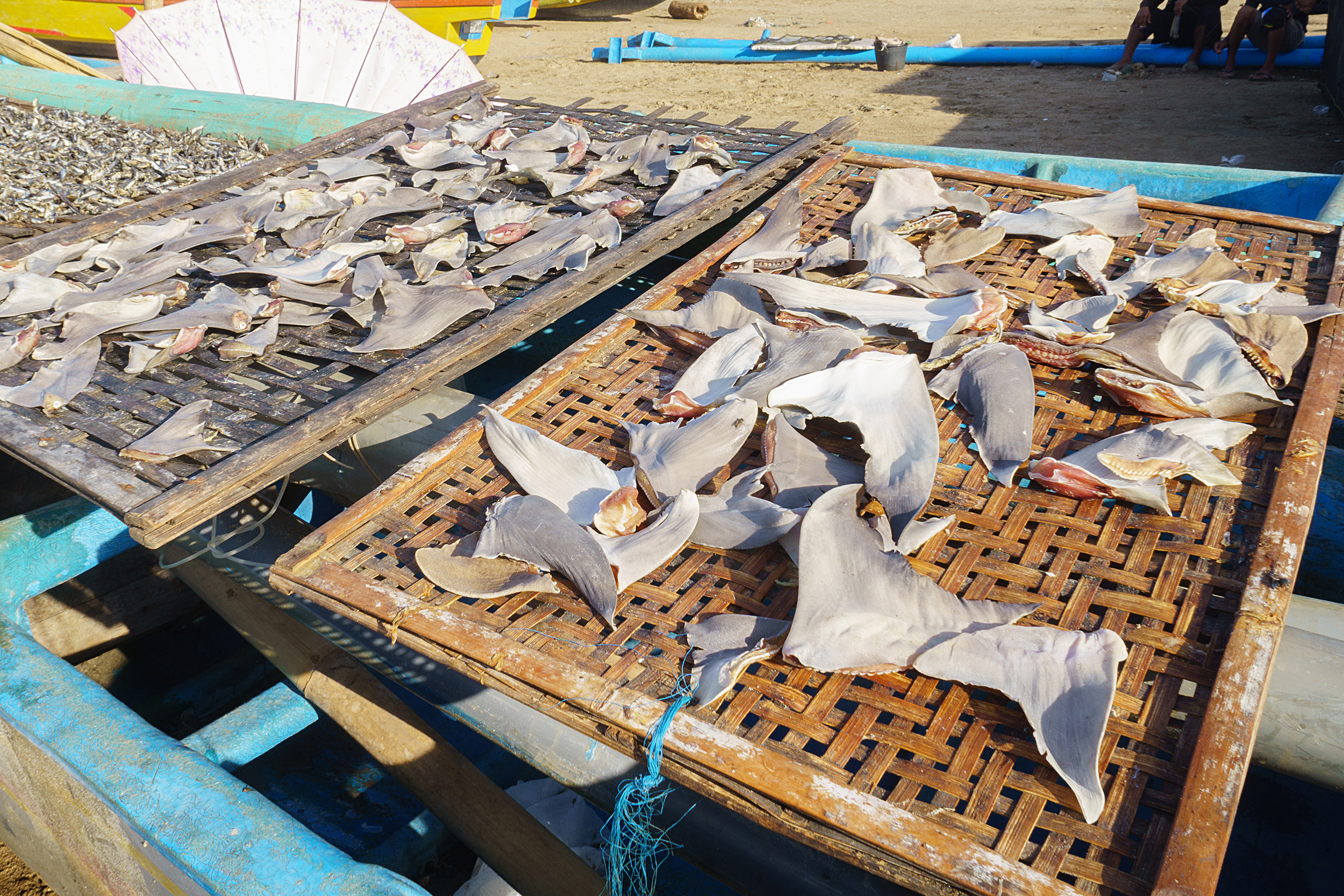
Shark fins dried under the hot sun © Shutterstock


At UW360 and Asian Geographic, we feel strongly in our opposition to shark fin soup. ADEX Singapore 2018 is dedicated to sharks, and at ADEX Shenzhen 2017, we are calling on our visitors to sign a pledge against the consumption of sharks. We intend to have a record-breaking number of Chinese people – gathered from all over the world – make this commitment (10,000+). In doing so, we will spread awareness about shark conservation and their dwindling numbers: And we will help send a message against shark fin soup and prompt real change among the Chinese.

Underwater Photographer Of The Week: Becky Kagan Schott

0
"It shows that wild animals can choose to interact with humans if they want to and those moments are so incredibly special" © Becky Kagan Schott

Becky Kagan Schott is not your average underwater photographer and cinematographer. From exploring virgin shipwrecks in 100 meters of water in the Great Lakes, to rappelling into caves, filming under ice in the Arctic, and even diving cage-less with Great White sharks, her work takes her to some pretty extreme environments. She’s got a lot to show for it too, with five Emmy Awards and her work seen on major networks including National Geographic, Discovery, and Travel Channel (not too mention various other magazines, books, advertisements and gallery exhibits that have published her images!). Her experience of working in remote and challenging locations around the world has earned her a reputation of producing quality images in some of the most demanding underwater environments.

Becky is extremely passionate about sharing the underwater world with others: Through her imagery, in teaching people to dive, and by telling stimulating stories that can make an impact or inspire change. She’s been diving since she was 12 years old and began teaching scuba in 2000. Becky is currently an active technical diving instructor and TDI Megaladon Rebreather Instructor. She has participated in dozens of exploration projects that have earned her a place as a Fellow in the Explorers Club, and in 2013, she was inducted into the Women Divers Hall of Fame. She is also the co-owner of Liquid Productions, which specialises in bringing back video from demanding underwater environments.


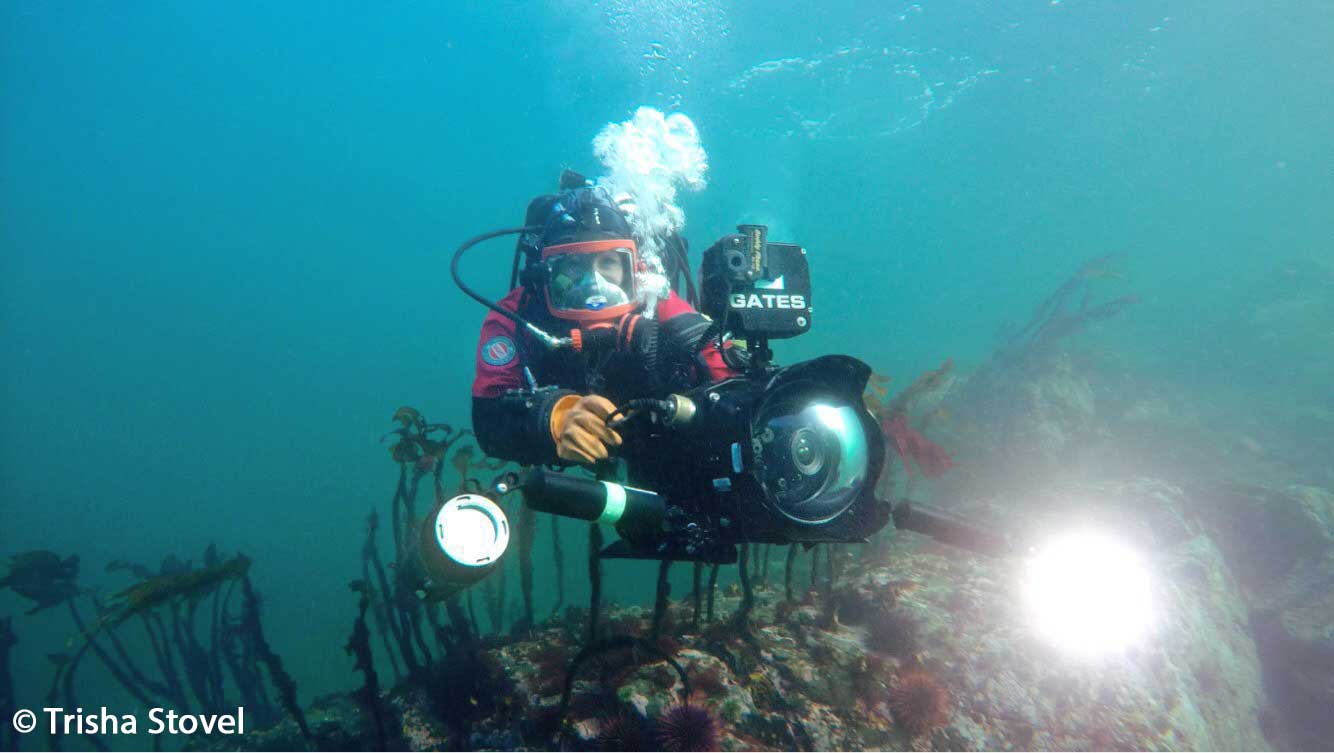
Becky on an underwater shoot: “I love the challenge of trying to capture new and unique shots and sharing those images with others” © Trisha Stovel


What made you want to become an underwater photographer/ camerawoman?

I wanted to become an underwater image maker because I was inspired by so many underwater documentaries and images that got me into scuba diving (which became such a huge part of my life!). I love the challenges of trying to capture new and unique shots and sharing those images with others.

Your first underwater shot?

I started taking photos underwater when I was just 13 years old with an underwater disposable camera. My first shots were in Pompano Beach Florida on a shallow 10m reef of the fish and turtles. I was so in love with marine life and I couldn’t wait to show my family what it looked like underwater.

The story behind your most memorable underwater shot?

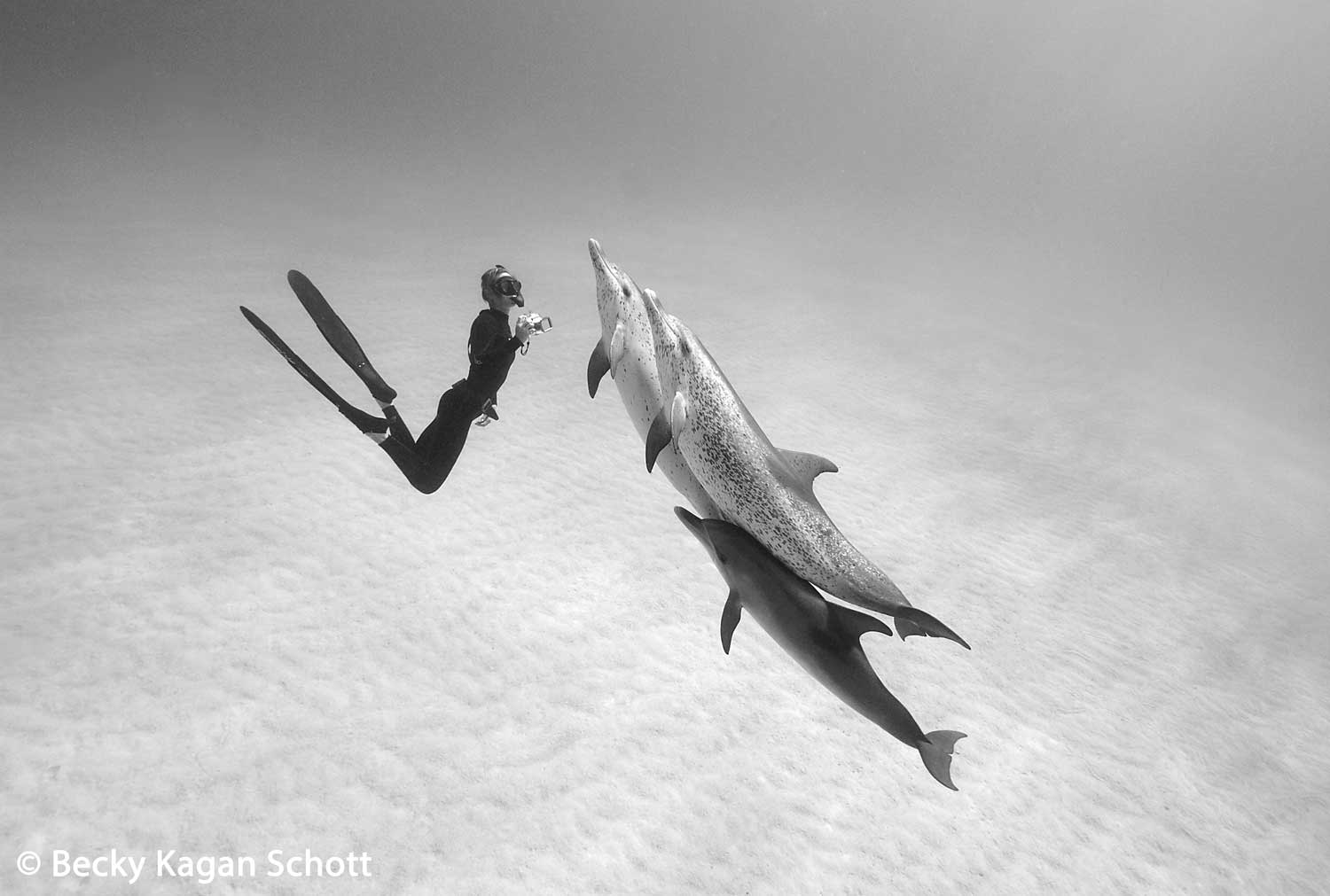
I have a lot of memorable images that mean a lot to me, but one that stands out is a friend that was free diving and she is face to face with a small pod of wild dolphins. The moment happened so quickly but in the image it just looks like they are frozen in time looking into each others eyes. I was also free diving and the dolphins were moving very fast through the water so the shot wasn’t planned. I think it’s one of my more memorable shots because it shows that wild animals can choose to interact with humans if they want to and those moments are so incredibly special.


“It shows that wild animals can choose to interact with humans if they want to and those moments are so incredibly special” © Becky Kagan Schott


Your work takes you to some challenging environments. What got you into diving and taking photos/ footage in caves, under ice, in shipwrecks and among sharks? 

I began diving because of my love for marine life, but starting at the age of 12, I couldn’t afford to be diving off of boats every weekend. I lived in Florida and there are a lot of freshwater springs to explore. I started out in the open water and then I wanted to venture a little further, so I did my cavern and cave certification. I was taking photos every weekend and perfecting my lighting techniques. I really enjoyed the challenges of shooting in caves. From an artist point of view, it’s special because you have so much ability to be creative with lighting. I wanted to see deeper caves so when I was 19 years old I got certified in trimix and discovered real shipwreck diving. After another few years passed and I wanted to be able to stay longer on deeper dives while shooting, so I learned how to dive with a rebreather. I never thought I’d specialise in shooting extreme environments, it just sort of found me. I’m attracted to shooting exploration and new discoveries and places no one has seen or shot before.


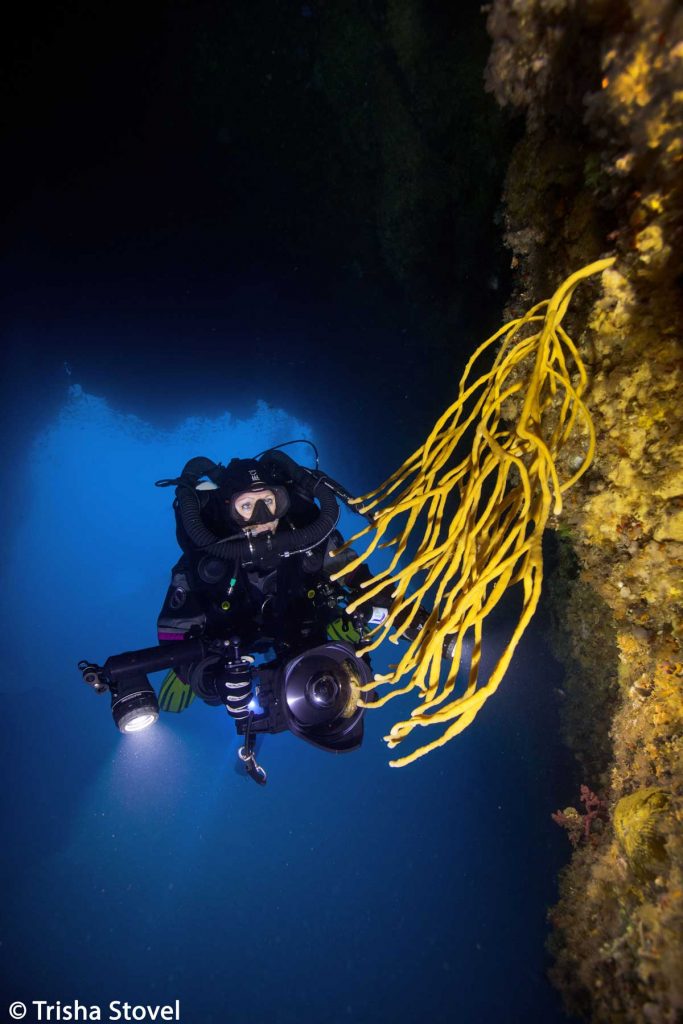
Becky in the Taravana Cavern, New Zealand: “I’m attracted to shooting exploration, new discoveries and places no one has seen or shot before” © Trisha Stovel


Do you have any safety tips for those wanting to dive in challenging environments? 

Yes I do! Make sure you have a lot of experience in the environment you’re in before taking a camera with you. Cameras can distract a diver and cause mistakes to happen. Make sure your diving skills are second nature before trying to take photos or video. You’ll end up getting much better shots if you’re comfortable first.

Where is your favourite dive destination?

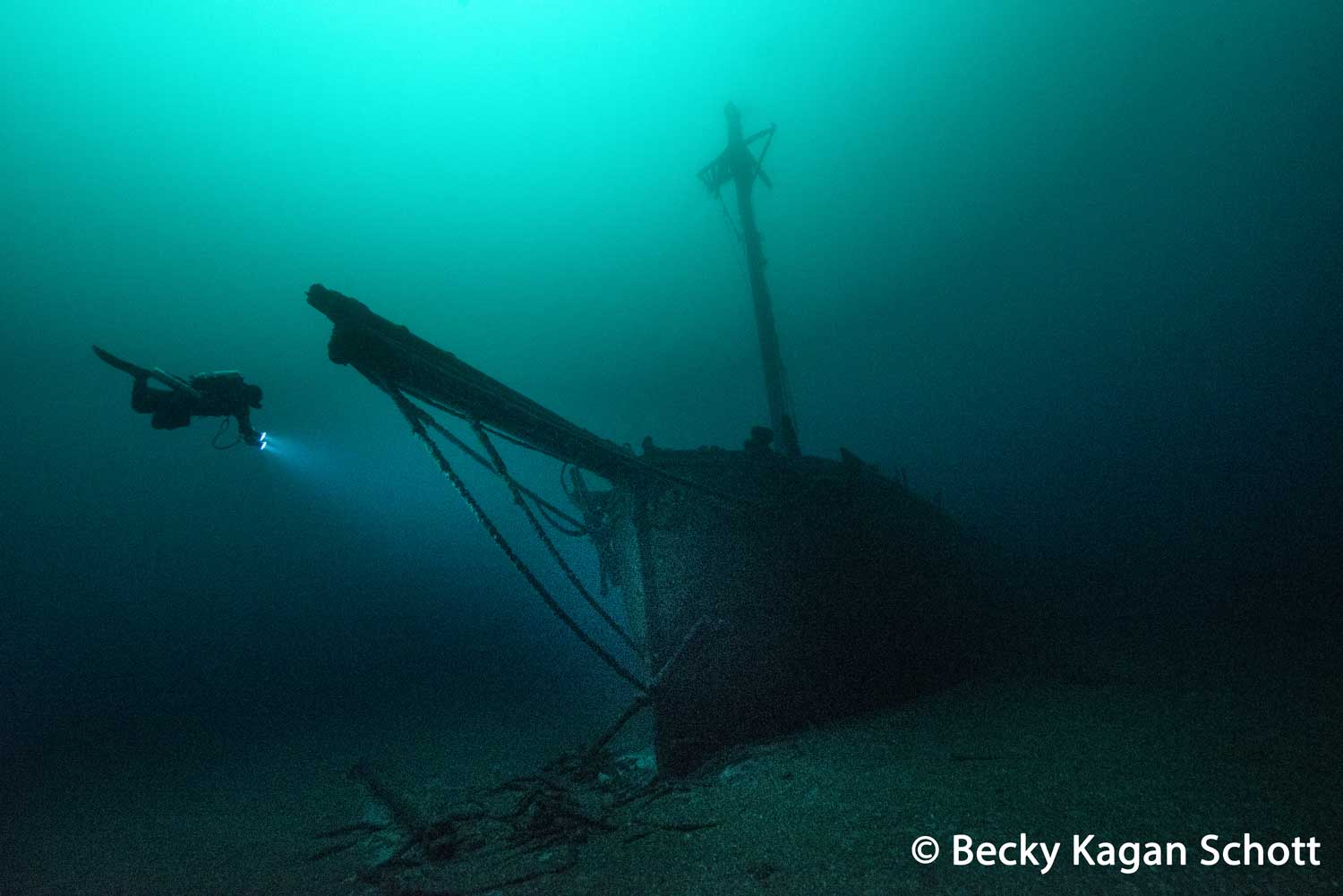
My favourite place in the world to dive is North America’s Great Lakes. The shipwrecks are preserved in the cold fresh water, and diving them is like visiting a time capsule. Most of the shipwrecks are over 100 years old so it’s really special to see them so intact. Not only are they stunning to photograph, but they all have a unique history and story to go along with them.

{Becky has dived four out of five of the lakes and continues to be inspired by the history, the stories of heroism and tragedy, and challenges of diving the area.}


“The shipwrecks are preserved in the cold fresh water, and diving them is like visiting a time capsule” © Becky Kagan Schott


The site you’d most like to dive, but never have?

I’d like to dive in Antarctica! I’d really like to dive with Leopard Seals, penguins and whales in this area. It’s such a remote part of the world with giant icebergs and so much topside scenery to take in as well.

The weirdest thing you’ve seen underwater?

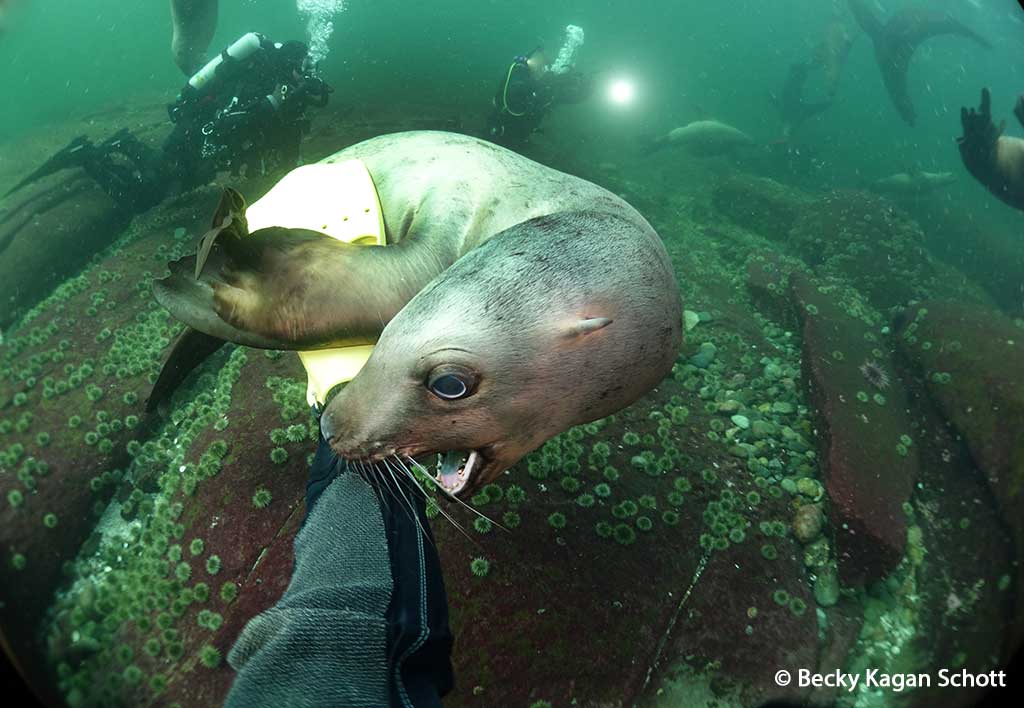
Over the past 22 years of diving, I’ve seen my share of weird things underwater, but one of the strangest things is being bitten by a massive marine mammal! Let me start off by saying it doesn’t hurt!  I’ve been diving with Stellar Sea Lions in British Columbia Canada, and a few months ago while filming, they were extra rambunctious and really curious about the camera and the funny looking animal holding it (me). I would be focusing on a shot and all the sudden dragged backwards because they got a hold of my leg. One even wrapped it’s entire body around my leg and started nibbling on my ankle! I couldn’t stop laughing but it was weird.


“One even wrapped it’s entire body around my leg and started nibbling on my ankle!” Becky Kagan Schott


What camera equipment are you currently using?

I have a lot of different cameras, I’m a bit of a gear nerd! I’m currently shooting a RED EPIC DRAGON in a Gates Underwater Housing for video up to 6k resolution and for still photography I use a Nikon D800 in an Aquatica housing and Light & Motion lights! I have a lot more than that but this is my main equipment for shooting stills or documentaries.

What is the highlight of your career?

One of the highlights would be winning several Emmy Awards for my work on a Cave Diving special called “Cave Diving Beyond the Limits” that aired on CBS. It’s special because I like to promote cave diving in a positive way and it’s only showed in the news when there is a death or accident. This special focused on exploration, the people that do it, training, rescue and a fatality that shouldn’t have happened. It went on to win four Awards. I did that out of passion and not only captured beautiful imagery but also told stimulating stories that can hopefully make an impact or inspire change.

… And the low point?

There are always high points and low points. This type of work comes with them but I try and focus on the good things. I took a decompression sickness hit back in 2009 and it scared me. I wondered if I’d be able to continue the work I’ve been doing. I had no idea what I would do if I couldn’t be an underwater photographer. Luckily, everything was okay after a few months and I haven’t had any issues since. It taught me to be extra conservative, especially in remote locations.

 Any advice that you’d like to give to aspiring underwater photographers?

Do it because you’re passionate about it first. Be persistent and patient. Nothing happens overnight and it will probably take years to gain dive experience and photography experience, and then to merge them together. Just make sure you’re shooting for fun and enjoying the process. Oh, and don’t forget to take the camera away from your eye every so often and really look at what’s around you. The underwater world is so inspiring.

Is there any particular shot that you still want to get?

There are plenty of shots on my personal wish list! I’d really like to get some big wide shots around ice bergs in Antarctica, dive in the mines in Finland, and come face to face with an orca whale. That’s just the beginning of what I want!

Becky and David Schott – with Emmys! © Becky Kagan Schott


Websites

www.LiquidProductions.com

www.MegDiver.com

Explorers: Documentaries S3 E4 – The Crystal Labyrinth © Red Bull


Fascination In The Russian Realm

0
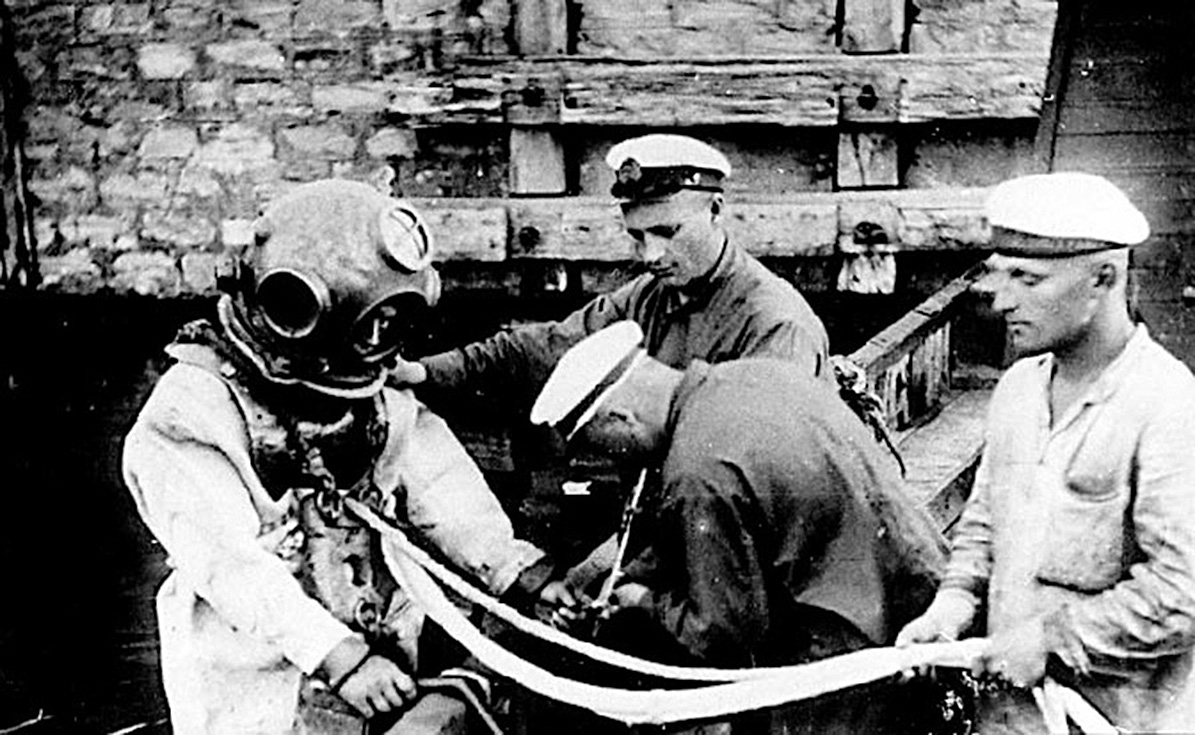
Military-Medical Academy at Black Sea harbour of Novorossisk: Blood test on a diver goes on by the academy physicians © Historical Diver

Dr. Alexander Sledkov reveals the Russian deep diving achievements during the last century


At the beginning of the 17th century, the profession of a diver (vodolaz in Russian, meaning, “getting into water”) appeared in Russia. In the peace treaty signed between Russia and Sweden in 1721 – after the war – the right to recover sunken goods from the bottom of the sea was granted. Since that time, the underwater work in Russia was carried out regularly and with growing intensity.

In 1829, a mechanic from Kronstadt named Gauzen, designed diving equipment consisting of a waterproof suit and metal helmet. The helmet was secured to a metal trunk, which was placed between the diver’s legs. As a matter of fact, this equipment was a kind of individual bell, ventilated from the surface by a manually operated pump through a flexible hose. Gauzen replaced the trunk, which essentially complicated movements, with two belts fixed under arms. However, if the diver moved from the vertical position, water would began to penetrate under the helmet. Despite this disadvantage, Gauzen’s equipment was used in Russia until the late 1870s.

In 1834, Karl Shilder, who had built the first metal submarine, equipped the sub’s crew with a “swimming dress”, supplied with a knapsack containing compressed air. Unfortunately, the exact description of the Shilder dress was not recorded.

The position of a diver in the staff of the Russian Navy ships was established in 1861. However, the foundation of the Kronstadt Diving School did not take place until 1882. It was located on the Island of Kotlin, near St. Petersburg, and was a first rate school. The training process at the school consisted of “winter course”, which dealt in greater detail with diving theory, and a three to four month “summer course”, which focused more on practical diving. Before the revolution of 1917, an average of about a hundred divers graduated annually from the school. As a result, by 1892, more than 700 ordinary divers and 133 diving officers had graduated. During this same period, only one person out of eight who applied was selected for training.

In 1854, during the Crimean War, a group of British ships arrived in Balaklava Bay on the Black Sea to supply the army, which was besieging Sevastopol. Among them was the ship Prince, later on nicknamed in Russia as the Black Prince, which carried the wages for the British army. Some days after arriving, 21 English vessels, including the Prince, were wrecked upon the rocks as a result of a hurricane. Only six sailors were saved.

Before sailing to Sevastopol, the Prince had unloaded its cargo of money in Istanbul. But the Russians did not know this, and in 1923, they decided to organise an expedition to search for the gold. The order was signed by the chief of ChK (which later became the KGB), Felix Dzerghinskiy. The ChK official, Zaharov-Meyer, was appointed the head of that expedition, which was called “The Expedition of Underwater Works of Special Purposes” (EPRON is the Russian abbreviation). The shipwreck of the Prince was detected one and a half years later. By that time, the expedition had already spent a significant sum of state money, and the question of expediency of the work had arisen.

Suddenly, in early 1926, the Japanese diving firm Sinkai Kogiossio Ltd. offered to recover the gold for the Soviet government, and to leave all its diving equipment in Russia. At the same time, the firm wanted to get 40 percent of gold cargo as its salvage fee.

During the summer of 1926, the Japanese carried out a huge amount of work, but found only seven coins and according to the conditions of the contract, took away only three coins with them. The Oghushi Peerless mask was among the diving equipment left by the firm, and it was later known in Soviet Union as the “raid mask”. In the process of the work, the EPRON’s physician, Konstantin Pavlovskiy, paid attention to the fact that the Japanese divers, even having dived to significant depths, breathed “at the bottom” five to six times per minute, and at a frequency of breath of more than eight breathes per minute, they usually were lifted to surface without any decompression procedure.

In 1929, to investigate the physiological features of operation in the Japanese mask, Pavlovskiy addressed the Faculty of Physiology at the Military-Medical Academy, where young Eugeniy Kreps worked. He assumed that at such decreased breathing rates the divers’ blood was poorly saturated with nitrogen from the air.

At that time, academician Leon Orbeli was the head of the Faculty of the Academy of Physiology. Starting in 1929, hyperbaric physiology and diving medicine were included in the sphere of scientific interests of Leon Orbeli. At the beginning of 1935, Leon Orbeli headed an Interdepartment Commission on Emergency-Rescue Affair of the Navy, which united the department of physiology of the Military-Medical Academy, EPRON and the Training Group of Diving that produced diving instructors. A high-pressure chamber with hand pumps and some equipment for scientific research was soon mounted at the facility.

Since the summer 1930, the researchers from the facility carried out expeditions at the marine base of EPRON in the Black Sea harbor of Novorossisk, where they continued the experimental checking of their own assumptions. In the autumn of the same year, Kreps visited Great Britain, where he met John Scott Haldane and discussed with him a number of issues concerning decompression regimes. In 1939, the commission directed by Orbeli got a status of “The Constant Commission on Emergency-Rescue Affair of the Navy,” and it existed till the late 1980s.

In the early 1930s, the personnel of the Academy, having studied the designs and construction of equipment by Davis, Dreger and Belloni, began working to create modifications of Russian oxygen rebreathers. Simultaneously, research on decompression regime calculations, thermoregulation, toxical action of high-pressure oxygen and carbon dioxide, nitrogen narcosis, etc. was carried out. However, soon afterwards it became clear that nitrogen in respiratory gaseous mixtures should be replaced with a less toxic gas. This was in spite of the fact that in 1932, compressed air diving had been carried out to depths of 105 metres by Alexandr Razuvaev at the inspection of the submarine worker (Rabochiy in Russian). There had been other deep air dives too, including one to 113 metres by Ivan Chartan, and another to 137 metres by the diver Vladimir Medvedev.

In 1919, Elihu Thomson, from the USA, offered helium as a component of a respiratory mixture, and American divers used this gas in a number of research and practical dives. Helium also generated interest in the Soviet Union.  In 1936, Pavlovskiy and Êråps began researching the influence of helium-oxygen mixture on animals. In 1939, on the Black Sea, some experimental dives to the depths of more than 100 metres were performed from rescue tow Shahter (Miner, in English), which showed the significant advantages of this new gas mixture.

In 1946, between these events and under the direction of Orbeli and Kreps, Soviet divers Viskrebenzev, Ivanov, Kiyko, Kobzar and others achieved a 200-metre depth in the Black Sea from the ship Altay. They used an open diving bell, nicknamed Phaeton and close-circuit apparatus “ISA”. In 1952, divers Shvez and Martinovskiy – and I may have that name wrong – achieved a depth of 255 metres in the Barents Sea using a closed bell descending from the ship Hibini.

In 1940, in Leningrad (now St Petersburg), during tests in a chamber, a depth of 200 metres was achieved by divers breathing heliox at pressures of 18, 19 and 20 atmospheres. During these experiments, the divers experienced shivering of fingers and hands, which was reflected in a distortion of handwriting.

Vladimir Smolin was the physician that recorded ECG in 1956. This ECG was deforming by electrical activity of rigid muscles, i.e., the additional electrobiological signal deformed the usual electrocardiogram. It was an unusual picture of ECG. At first, Smolin could not understand why it happened, but some years later, the rigidity of muscles during HPNS was discovered. He encountered this during the record attempts of Soviet divers to depths of up to 300 metres in the Caspian Sea in GKS-3 equipment.


Click on the cover to get the e-magazine!

The original article was written by Dr. Alexander Sledkov for the Historical Diving Society Asia section in Asian Diver Issue 3/2013.  Description of the Issue: It is nothing less than awe-inspiring when ocean phenomenons play out in resplendent fashion. Few topside affairs can match, but then again, we might just be a little bias. Whichever way one swings, no one can deny the presence of God in some of Earth’s sensational spectacles across the Seven Seas.

Teasers – articles in the issue


The Churning Beneath

In the event of a devastating tsunami, diving on an oceanic pinnacle in deeper waters is ironically the safest place to be. Dive instructor Taishiro Miyayauchi was underwater when the 2004 natural disaster hit. He gives some rare insight into what it felt like below the surface.

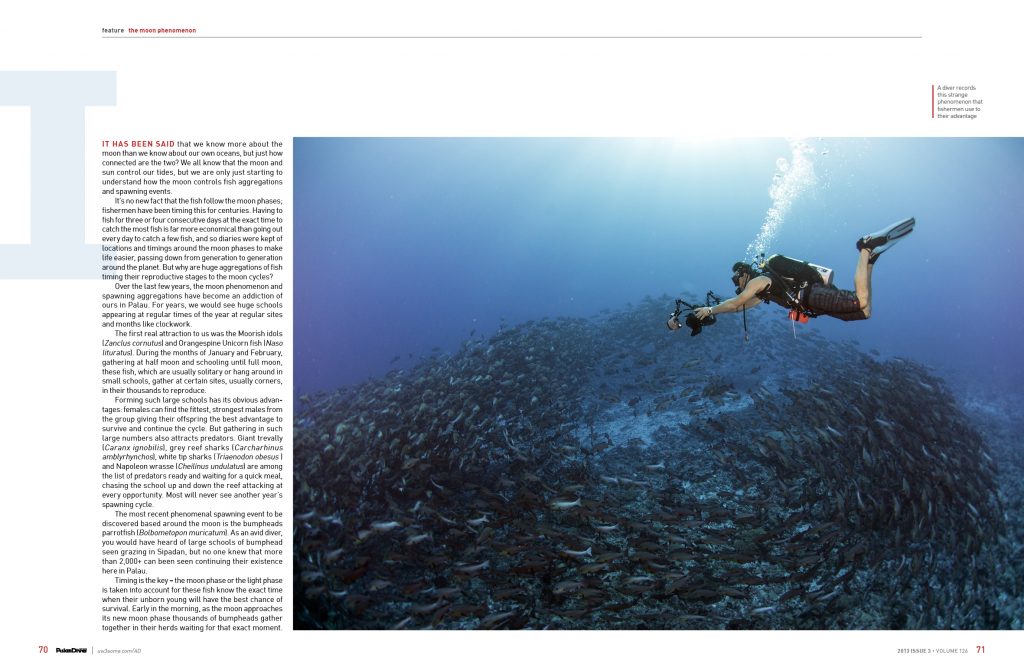
The Moon Phenomenon

Moon tides have been known to sway the movements of marine species, but why it influences the courtship ritual of the bumpheads parrotfish still perplexes the ardent diver. The huge school unfolds into a cacophony of colour and wild competition – a strange aggregation that only the lunar phase can bring about.

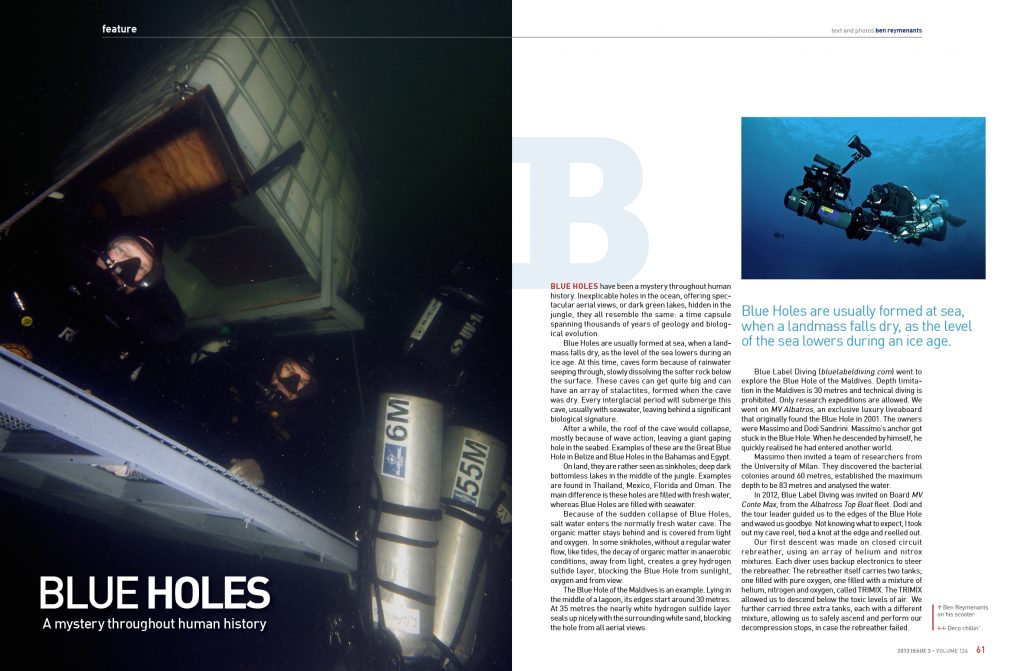
Blue Holes

Descending into the Blue Hole of the Maldives  conjured up a whole scene of enigmatic wonders. But what made getting into this difficult space extra exciting was the employing of a closed circuit rebreather, replete with TRIMIX,  backup electronics and three extra tanks for a risk-packed dive.


ADEX China 2017: Shenzhen

0

Introduction

ADEX – Asia’s largest and longest running dive expo – has seen its popularity grow throughout the world. In 2014, ADEX held its first dive expo in Shanghai. Since that time, the ADEX brand has continued to develop in China – a nation with a burgeoning dive industry, a growing number of individuals eager to explore the seas, and of course, an increasing amount of environmentally-conscious people willing to support ocean conservation, which is a central focus of ADEX.

Following from three years of experience and success in the country, including two expos at Beijing in 2015 and 2016, we are pleased to announce our latest event. For the first time, ADEX is coming to Shenzhen in southern China. The expo will be held at the Shekou iFactory from 8-10 September 2017.

Shekou is the first export-oriented economic development zone by China Merchant Holdings. Shekou iFactory itself is surrounded by three industrial clusters – Sea World Shopping District, Taizi Bay Harbour, and the Research and Technological Development District. Collectively, they give the place a hip and creative atmosphere, which accounts for the vibrant hub it is today.

Occupying almost 50,000 square metres of space and formerly a float-glass factory, the iFactory has been protectively reformed and refurbished into a manufactural innovation-orientated creative centre, focusing on art and technology.

We chose this area because it is a focal point of activity and energy. With the latest gadgets and kit being offered by our exhibitors, along with speeches from leading figures in the dive community, and inspirational talks from conservationists calling on the youth – and people of all ages! – to help make a change, the iFactory’s creative waves make this a fitting location for the introduction of ADEX in Shenzhen.

People from all over China – and the world – will be coming to the event. Hong Kong borders the region to the south, and so expect to see famous dive enthusiasts from the island make the trip to Shenzhen!

What’s going on?

Before the expo, and to prepare the way for it, there will be a series of festival celebrations – The Shenzhen Ocean17 Tour. As a film, book, image, art and music festival, there will be various activities, exhibitions and workshops taking place. This is an opportunity for divers and others to get recognition and publicity for their efforts and achievements, and to open the minds of our audience to their amazing work!

The expo itself is divided into two parts. From 10am to 7pm, the trade show will be open for you to check out the various exhibitors offering dive gear, photo and video equipment, dive trips, and so much more! During this time, speakers will be delivering their presentations on different topics covering the various forms of diving, innovations in equipment, ocean conservation, and so forth.

Here are some of the activities lined up:

  • Advanced diving equipment on display
  • Crossover presentations on surfing/ sailing
  • Meeting sessions with a wide range of renowned divers
  • Mermaid performances
  • Scuba try-outs
  • Underwater model photography
  • A presentation from the world’s freediving champion
  • Technical diving conference
  • Underwater photography/ videography talks
  • Ocean Gallery
  • Ernie Brooks book signing session – Silver Seas

From 7pm, the party begins, and lasts until 1am. Stay up to party and network with others till the early hours while listening or dancing to some of Asia’s top DJs!

The pledge

The consumption of shark fin soup is widespread in Asia, particularly in China. Across the world, 100 million sharks are killed every year. We feel strongly in our opposition to the slaughter and consumption of sharks.

At ADEX Shenzhen 2017, we are calling on our visitors to sign a pledge against the consumption of sharks. We intend to have a record-breaking number of Chinese people – gathered from all over the world – make this commitment (10,000+). In doing so, we will spread awareness about shark conservation and their dwindling numbers: And we will help send a message against shark fin soup and prompt real change among the Chinese. Ticket information

Full day ticket 10am – 1am:  RMB $50

Day ticket 10am – 7pm: RMB $30

Night ticket 7pm – 1am: RMB $30

FREE REGISTRATION until the 31st of August

Address

Shekou iFactory

8 Haiwan Rd, Shekou,

Nanshan District, Shenzhen

Train

Shekou Bay MRT station , Exit D1 (Shuttle Bus)

Bus

M400, 70 and 204

Car

Carpark Reserved for Visitors & Exhibitors For maps, photos and information for exhibitors, click here – ADEX-china-Slide-160x90mm-ENGLISH-Folder-2-1.pdf