Home Blog Page 114

Mystery solved: Indonesia’s “sea monster”

0

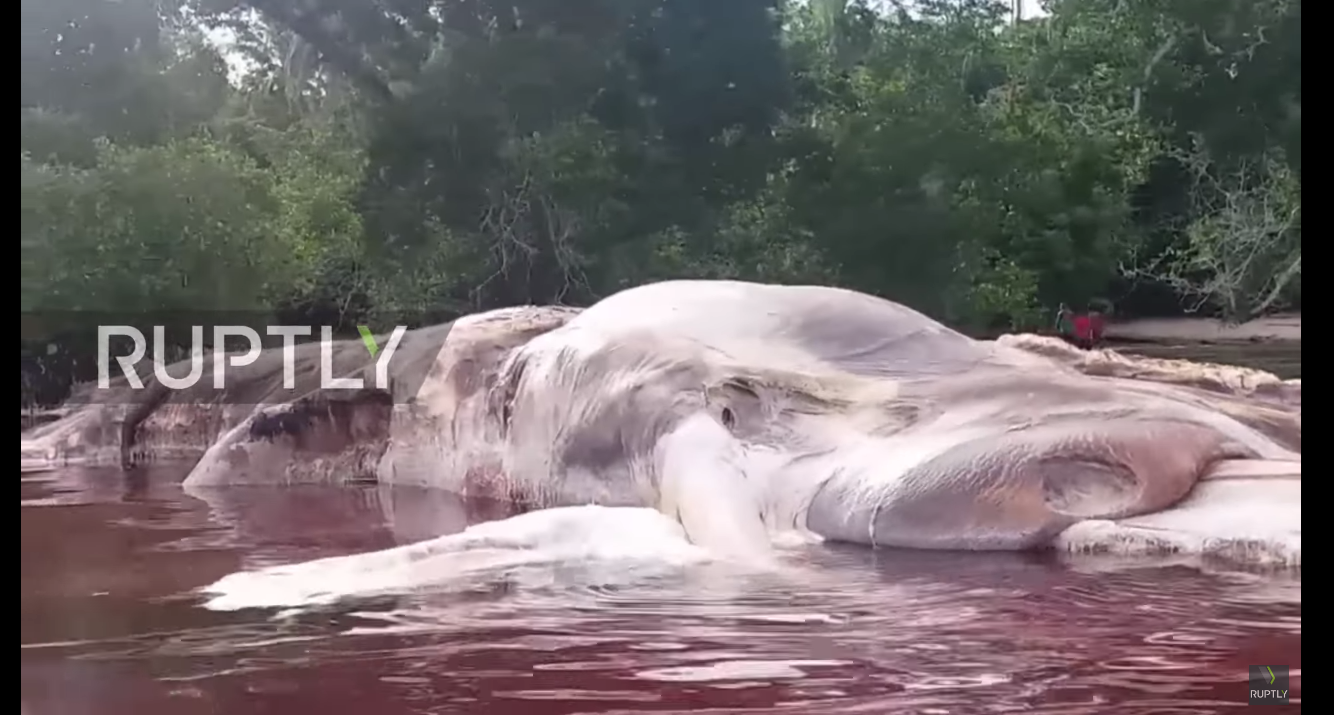
On Tuesday last week, a huge, fleshy blob washed up on the shores of Hulung Beach in Serum Island, Indonesia. Running the waters red with blood and grease, and filling the air with an awful stench, locals rushed around the 15-metre long decomposing carcass, perplexed as to what on earth it was. A local man, Asrul Tuanakota, 37, stumbled across the carcass in the dark and actually mistook it for a stranded boat, reports the Jakarta Globe. The following morning, locals came out to inspect the body, with some convinced that it was the remains of a giant squid. The internet was equally taken aback as the clip went viral – headings referred to it as a monster from the depths of the ocean, and internet-users shared their ideas on what they thought it was. Alas, some of our more imaginative friends may be slightly disappointed. Well… there’s still some debate about what particular species it is, but it is quite clear that it is a whale. Live Science spoke to Alexander Werth, a whale biologist at Hampden-Sydney College in Virginia, who was adamant that the carcass is that of a baleen whale. He said, “there is lots of stuff in the ocean that we don’t know about — but there’s nothing that big.” His reasoning is drawn from two pieces of evidence. The first is the “throat pleats”, and the second is the upper jaw where the two racks of baleen plates would have been – these are used to filter out food from the animal’s mouth. Regardless, he notes that the jury is still out as to whether it is a blue whale or a Bryde’s whale. How did it die exactly? Well, the jury is out on that one, too. Generally, whales sink to the bottom of the ocean to be a feast for all sorts of critters, fishes, sharks and others. That it washed up ashore as an inflated, floating carcass – which is not unheard of – indicates an irregular means of death. It could have been hit by a ship, the impact of which caused internal injuries that prevented the gases – caused by bacteria in the gut – from escaping into the environment. Alternatively, it may have had a nasty bacterial infection. Only investigation will reveal more.

Video and cover © Ruptly Tv


On the verge of extinction

0

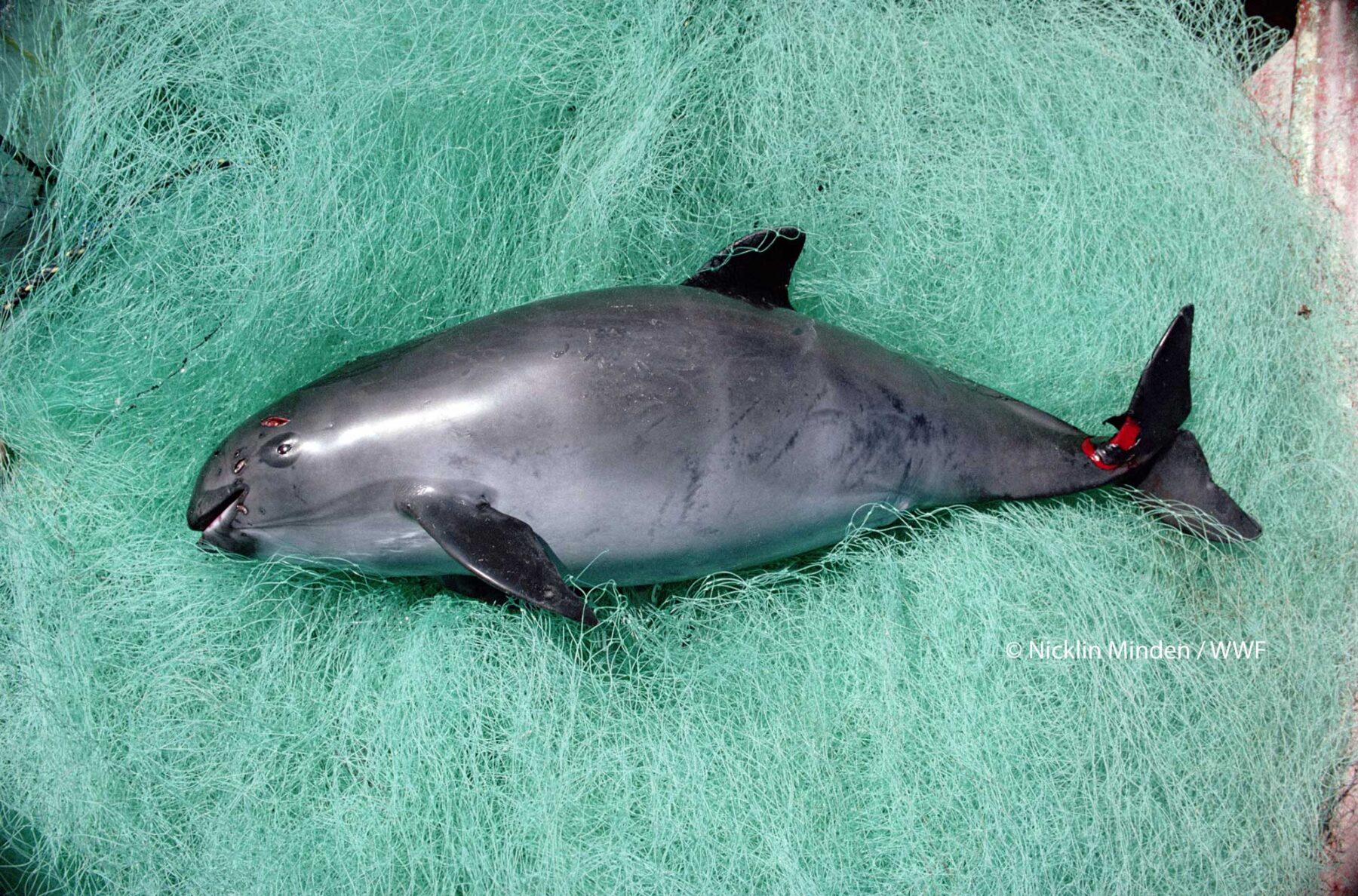
Commonly referred to as the ‘panda of the sea’ due of its distinctive markings, the vaquita is endemic to the Upper Gulf of California. Various parts of the gulf are listed as UNESCO World Heritage Sites due to the presence of biologically unique ecosystems, including ecologically and economically significant marine populations, such as the Vaquita. Yet despite the recognition of their habitat, things aren’t looking good for them. With roughly 30 individuals left, they are now the world’s most endangered marine mammal – on the verge of extinction. The World Wildlife Fund (WWF) have made a plea for a coordinated global effort to help preserve the remaining vaquita. The WWF refers to Jorge Rickards, acting CEO of WWF-Mexico, who says, “having discovered the vaquita less than sixty years ago, we humans have now brought it to the brink of extinction. Their incredibly low numbers are a stark reminder of how our efforts to protect this incredible species and its habitat are falling short. Unless we act decisively today, we could lose the vaquita forever.” The WWF identify gillnets as the biggest threat to the species. Gillnets, which are widely used throughout the world, are vertical panels of netting designed such that the fish gets caught by the gills. They are very effective, and while there is a difference in size selectivity, they are known for a high degree of by-catch (picking up unintended fish or marine mammals). The WWF also notes that these gillnets, which inadvertently catch the vaquita, are being used to fish another critically endangered species – the totoaba fish. The totoaba’s swim bladder is a delicacy in Asia, and they are illegally trafficked from Mexico to China via the United States. The WWF calls for a crackdown on the illegal totoaba fisheries. The Mexican government implemented a temporary two-year ban on gillnets, but it is due to expire this month. Regardless, according to the WWF, the ban was ineffective anyway. It was unable to be properly enforced, and resulted in what they describe as “unabated illegal gillnet fishing, causing vaquita populations to decline by 90 per cent between 2011 and 2016.” The WWF is actively calling for the government to enact an immediate and permanent ban on gillnets, and to remove all “ghosts nets” (nets that have been left or lost in the ocean) in order to prevent the marine mammals from getting entangled in the them and subsequently drowning. For this ban to be effective, the analysis notes that the government must support local fishing communities by providing them with alternative fishing gear. Rickards adds that “a healthy Gulf of California is not only part of people’s natural heritage but also critical to safeguard their future. The Mexican government must engage local communities in conservation efforts, rapidly providing profitable gillnet alternatives to fishermen, as well as incentives to use them.” The WWF recognises plans to capture the vaquita and place them in breeding programmes. However, they highlight that this should only be a last resort and one that accompanies a long-term plan to conserve wild vaquita. WWF notes Margaret Kinnaird, Leader of the Global Wildlife Practice, WWF International, who says, “to ensure long-term recovery of the vaquita, and the overall effectiveness of the captive-breeding programme, we must also urgently tackle the illegal wildlife trade, including the removal of gillnets – the sole threat to their survival.” In line with this, the WWF is calling on international institutions, notably the UNESCO World Heritage Committee and the Convention on International Trade in Endangered Species of Wild Fauna and Flora (CITES), to apply pressure on Mexico and hold them to account (along with other governments) if they fail to act to protect the Upper Gulf of California. SIGN THE PETITION: WWF launched an e-action inviting people to write to President Enrique Pena Nieto of Mexico and urge him to immediate action to protect marine wildlife like the endangered vaquita, and to protect the local livelihoods in the Gulf of California.

Best Scuba Diving Japan: Ishigaki Island

0

Prepare to be blown away by famously colourful coral, transparent waters, the blueness of the ocean, picture-perfect palm trees, lush green mountain areas, mangroves and stunning scenic views. Ishigaki is the main island and second largest in Okinawa’s Yaeyama archipelago. Only 3.5 hours from Tokyo by direct flight, Ishigaki is the perfect getaway for those wanting to escape the hustle and bustle of city life and do some scuba diving!

This was originally published in Scuba Diver Australasia + Oceanplanet, Issue 1/2017, “Celebrating Women in Diving”. Check it out for informative and inspirational content about pioneering women, making waves!


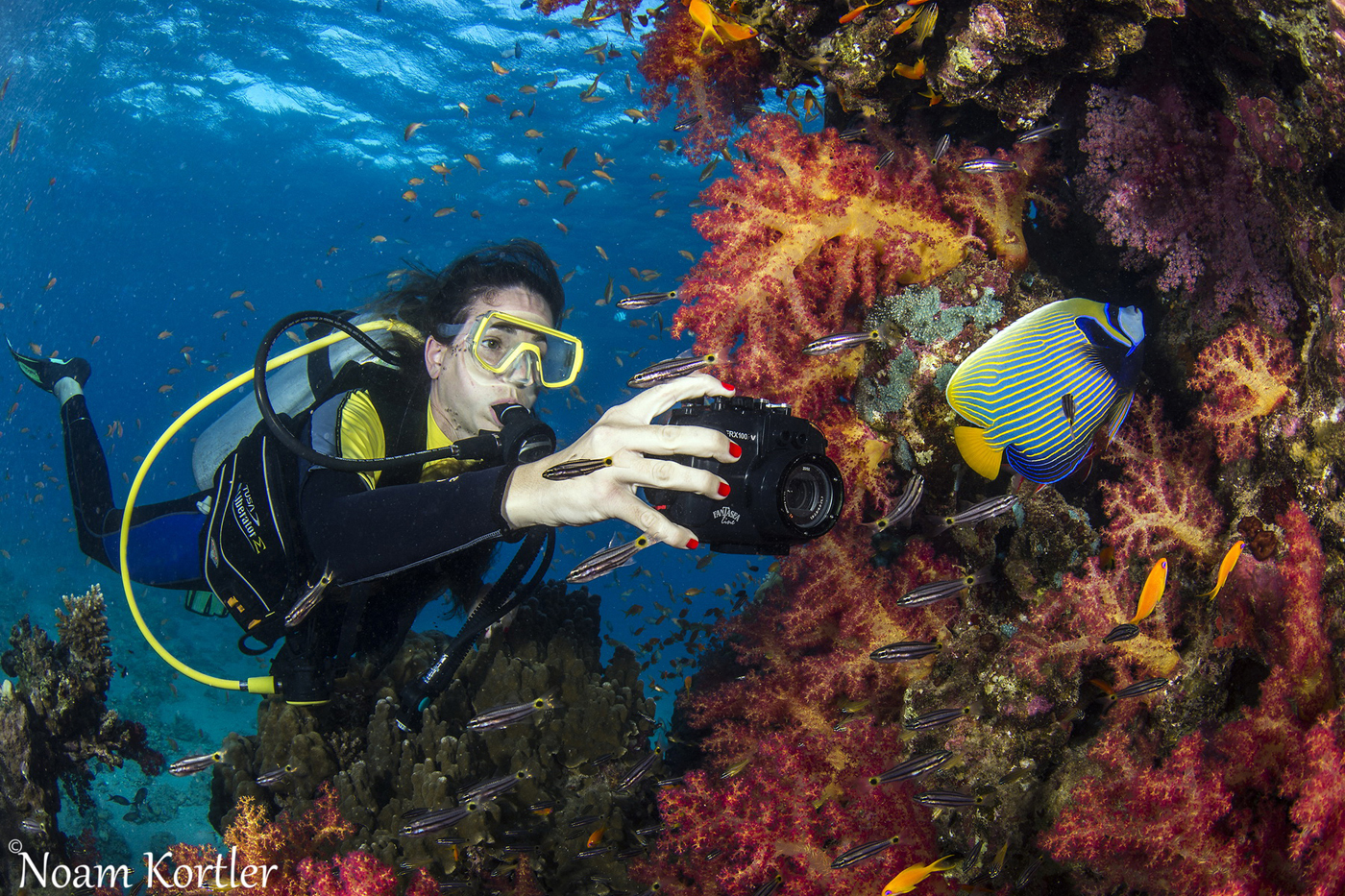
Fantasea launches the rugged and stylish FRX100 V Housing

0

There’s never a dull day for Fantasea: Following from their recent release of the FA6500 Housing for the Sony a6500 and a6300 mirrorless cameras, Fantasea have now announced their latest bit of kit – the rugged and stylish FRX100 V Housing for the Sony RX100 V, RX100 IV and RX100 III cameras. The housing is now taking orders!


Press Release

FANTASEA LINE INTRODUCES
FRX100 V HOUSING
for
SONY RX100 V, IV and III
NOW TAKING ORDERS!


ABOUT THE FRX100 V HOUSING

The FRX100 V Housing was specially designed for the Sony Cyber-shot RX100 III, RX100 IV and RX100 V digital cameras.

The FRX100 V Housing is manufactured to the highest professional standards of function, style and durability. It is fully functional with ergonomically designed and labeled controls.

The FRX100 V Housing is ideal for outdoor and underwater photography. Underwater photographers can dive or snorkel and capture all the excitement of this fascinating world, while outdoor photographers also have the option of capturing the action of activities such as white water paddle sports, sailing, boating, surfing, fishing, hunting, backpacking and camping.

The FRX100 V Housing is shock resistant and protects the camera from water, sand, dust, frost and other damaging elements.

The FRX100 V Housing has been successful depth tested to 80 meters (240 ft.) and is depth rated to 60 meters (200 ft.). This rating is well beyond the 40 meter (130 ft.) depth rating of most compact housings.

The FRX100 V Housing was designed to be compatible with a complete accessory system, enabling photographers to enhance the quality of their images.

Feature Highlights:

  • Depth rated to 60m/200 feet
  • Ergonomic design
  • Made from durable injection molded Polycarbonate
  • Full access to all essential camera controls & functions with clearly marked controls
  • Shock resistant
  • Double O-ring seal
  • Special mount for lighting accessories
  • Removable double fiber optic cable connection
  • Removable flash diffuser
  • Easy and secure installation of camera
  • Removable anti-glare hood for the LCD screen
  • BONUS – Moisture Detector comes installed inside each FRX100 V Housing at no additional cost!
  • BONUS – Hand Strap and Port Cover included
  • Dedicated video control button for easy video filming in any shooting mode
  • Compatible with a wide range of underwater photo accessories
  • Weight (with camera on land): 900g
  • Weight (without camera on land): 600g
  • Dimensions: 15.5 x 14.5 x 12 cm \ 6.25 x 5.75 x 4.75 inch (W x D x H)
  • Manufacturer’s warranty included

LINKS & USEFUL INFORMATION


Video, images and press release © Fantasea


Confronting Climate Change

0
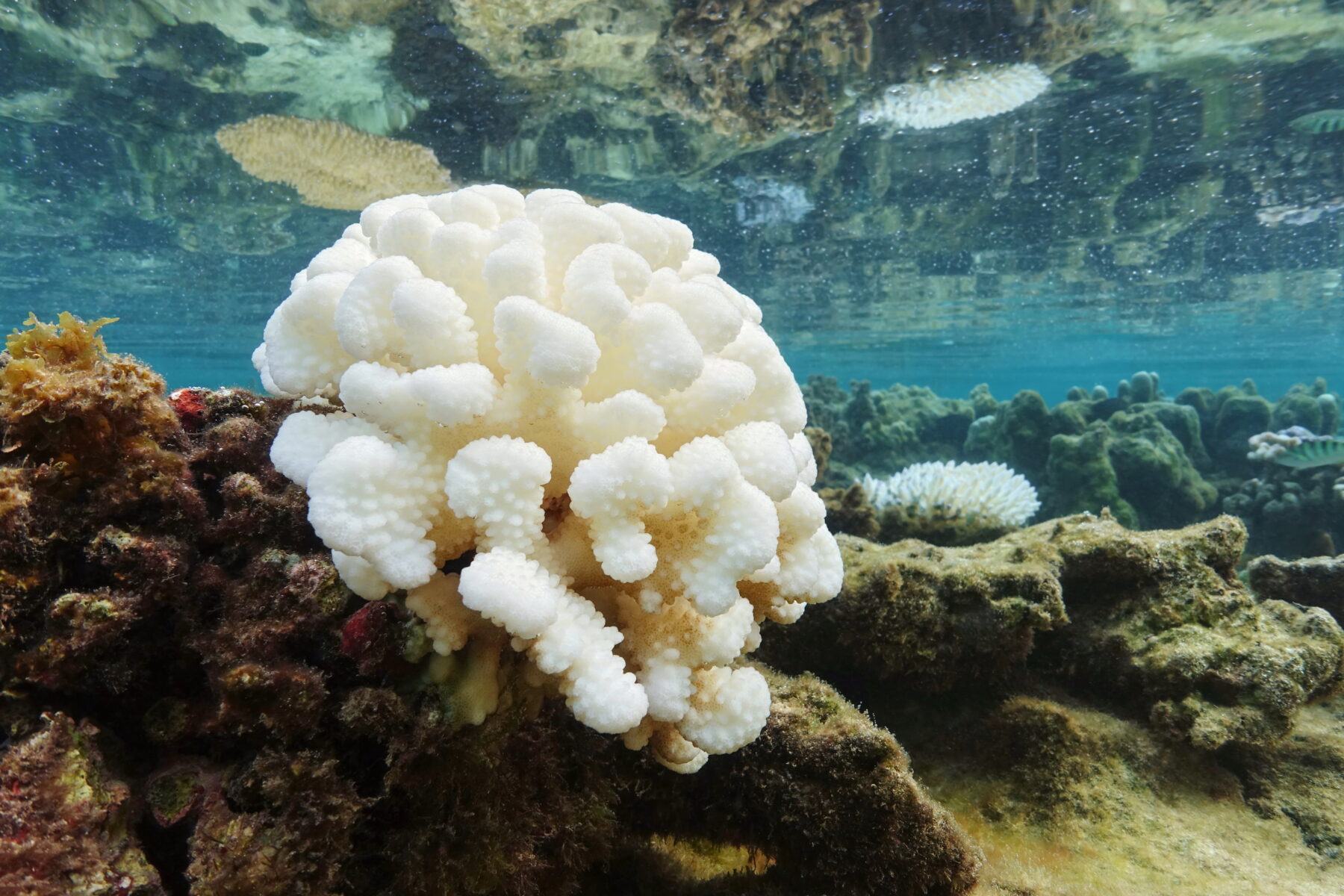
Coral bleaching due to El Nino in the Pacific ocean, lagoon of Huahine island, French Polynesia

When I wrote this, Sydney had the hottest days on record: Nearby, Hunter region grape growers are harvesting five weeks earlier than 20 years ago: Perth had the wettest days on record: New Zealand and Chile are suffering massive fires: And in California, the large Oroville dam is at risk of collapse due to excess rain. What does this have to do with divers? A lot. Wider fluctuations in local climate are major predictions of global climate change: And climate change will certainly affect where divers go to dive. In the summer of 2016, there was massive coral bleaching on the Great Barrier Reef (GBR) with the death of 22 percent of corals along the complete length. Almost all of that was in the far northern quarter, where 50 percent of corals died. There were similar bleaching losses in other parts of the Pacific including New Caledonia and Fiji. The southern half of the GBR escaped bleaching because the category 5 Cyclone Winston that devastated Fiji, arrived at the GBR as a large tropical storm and lowered temperatures – just in time. This was the most damaging bleaching event since 1998 when the Global Coral Reef Monitoring Network assessed that 16 percent of the whole world’s coral reefs had effectively died through coral bleaching. In 2005, there was massive coral bleaching throughout the wider Caribbean, with only the northern parts being “rescued” by hurricanes, including Katrina. Bleaching has since broken out again on the GBR and has been damaging reefs to the south of the 2016 damage. These events are all linked to climate change, and these are all key areas for scuba divers – like you. The major theme for ADEX 2017 was climate change and for good reason. Asian Diver’s Big Blue Book covers many aspects of climate change threats to the oceans, especially the tropical areas.

How is climate change affecting coral reefs?

There are two clear impacts. The first is the increases in sea surface temperatures in summer that stress corals which then expel their energy systems, the symbiotic zooxanthellae algae. Temperatures just 1 or 2 degrees Celsius above the summer maximum can result in bleaching: If it is prolonged or very severe, the corals will die. Bleached corals are “starving”, so they are more susceptible to disease and pollution stress. Global warming is resulting in a steady increase in ocean temperature, and these rises in temperature are exacerbated during El Nino events. The second major and current threat to reefs is through stronger tropical cyclones. The development of cyclones is not a result of climate change, but such cyclones (hurricanes, typhoons) build up strength over warmer tropical surface waters, into more Category 4 and 5 very severe storms – these smash islands and coral reefs. The main “sleeping” threat to coral reefs is via the “soda water” effect. When carbon dioxide dissolves in water it increases the acidity: This increase in acidity is a major threat to anything that lays down a calcium carbonate skeleton. That includes many molluscs, coralline algae and especially the hard corals. Ocean acidification is an inevitable consequence of the increase in greenhouse gases. Sea level rise will have little direct effect on coral reefs, but will spell the doom for many low-lying islands and indeed some whole countries.

What can a diver do to help combat climate change and maintain the health of the ecosystems that divers love to visit?

Actions range from global to local activities you do every day. At the global scale, you can pressure all governments including you own to reduce greenhouse gas emissions, and especially to promote electricity generation and transport via renewable sources. You can observe changes to coral reefs and report to monitoring networks like Reef Check, or you can join an NGO working on conservation, and support ecotourism ventures and boats that use less energy or use biofuels. In your day-to-day life, you can reduce energy consumption, reduce waste and recycle as much as possible. Dr. Clive Wilkinson was the Coordinator of the Global Coral Reef Monitoring Network that operated in more than 80 countries and published the Status of Coral Reef of the World reports every two years. Formerly, he was the Chief Technical Advisor for a coastal resource research programme in five ASEAN countries and an active field scientist on the ecology of the Great Barrier Reef at the Australian Institute of Marine Science. He received Bsc and Phd training in marine microbiology and ecology from the University of Queensland. He is based at the Reef and Rainforest Research Centre in Australia.


This was published as the forward of Asian Diver’s Big Blue Book Issue 1/2017. The magazine presents a detailed and up-to-date coverage of the threat of climate change on our oceans, with contributions from world-renowned scientists and conservationists.

Cover – © <a href=’https://www.123rf.com/profile_vilainecrevette’>vilainecrevette / 123RF Stock Photo</a>


Celebrating Women In Diving

0

There are so many incredible women out there, making waves! From dedicated conservationists and scientists, to underwater image makers, freedivers, and cave divers!  We were honoured to have these “women of the water” at ADEX Singapore 2017! Keep an eye out for some of them at the next ADEX! From veterans like Sylvia A. Earle, who was a Guest of Honour at ADEX, to celebrities here in Asia such as Joyce Tang, ADEX’s Ocean Ambassador, here are the profiles of these amazing ladies (initially published in Scuba Diver Australasia + OceanPlanet!)

Formerly Chief Scientist of NOAA, Dr Sylvia Earle is the founder of Deep Ocean Exploration and Research, Inc. (DOER), Founder of the Sylvia Earle Alliance (S.E.A.)/ Mission Blue, Chair of the Advisory Council of the Harte Research Institute, inspiration for the ocean in Google Earth, leader of the NGS Sustainable Seas Expeditions, and the subject of the 2014 Netflix film, Mission Blue. She has led more than 100 expeditions and logged more than 7,000 hours underwater, including leading the first team of women aquanauts during the Tekite Project in 1970, setting a record for solo diving in 1,000 metres depth. Her research is in marine ecosystems with special reference to exploration, conservation and the development and use of new technologies. Her focus is on developing a global network of areas in the ocean, “Hope Spots”, to safeguard the living systems that provide the underpinnings of global processes, from maintaining biodiversity and yielding basic life support services to providing stability and resiliency in response to accelerating climate change.

Joyce Tang is a Hong Kong actress and PADI Rescue Diver. She played one of the main roles in the movie “Armed Reaction” and she has gained recognition for both her acting skills and work ethic. She has also acted in various roles for TV series, including “Dragon”, “Step Into the Past”, “Wars of In-Laws II” and “Who Loved Women”. A Nature lover and sports enthusiast, Joyce enjoys skiing, kite-surfing, and golf, but she really found her passion when, encouraged by her husband, she started to explore the underwater world in 2012. By 2014, she had become a certified Rescue Diver, and is constantly striving to gain further knowledge about safety and rescue in diving, so that she can help others when in need. Joyce has also become a passionate advocate for the ocean and its inhabitants. Keen to spread awareness of marine conservation, she hopes to motivate more people to pay attention to the problems faced by marine ecosystems and the impact humans are having on the ocean environment.
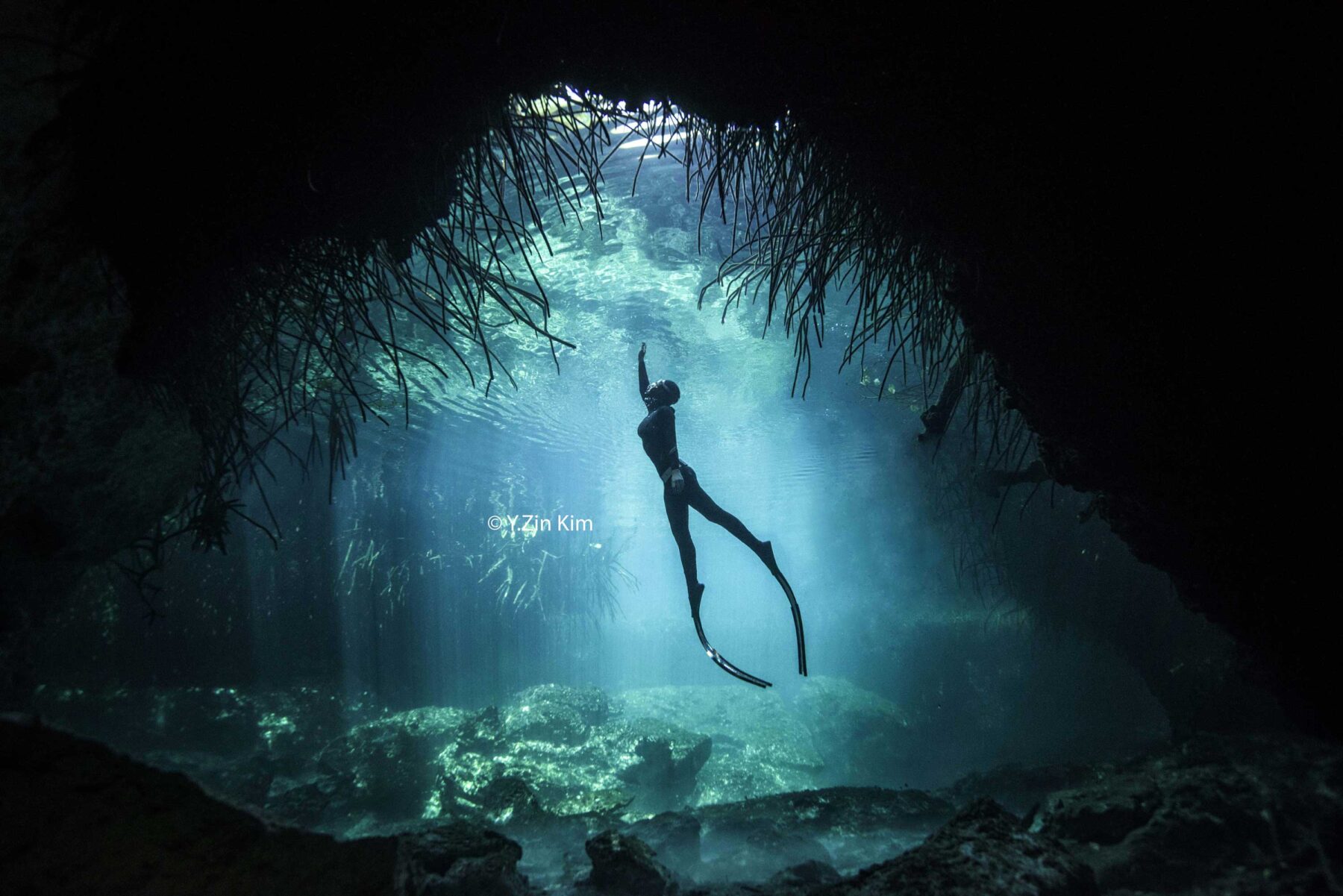
As a young girl, Dada Li got her first taste of the freedom that comes with diving on breath hold, and has pursued the goal of becoming a real-life mermaid ever since, creating her own tail to realise her dreams. Today, ADEX’s Freediving Ambassador is a professional mermaid, underwater model, and AIDA International Freediving Instructor and Judge

 

Eve Young has worked as an actress, won various beauty pageants in China, and hosted the 2010 Shanghai World Expo, and she now hopes to use her influence to bring people together to help protect the future of the oceans. Her love for diving led her into marine conservation and research, and she has developed a passion for understanding how human activities are impacting marine habitats. Eve is planning on making a film on marine science.

 

Michele Hall and her husband Howard specialise in underwater giant-format film production. Together, they have produced numerous award-winning television films for PBS Nature, National Geographic, the BBC, and others, and are the recipients of seven Emmy Awards, as well as other industry awards and accolades. Michele is a member of the Women Divers Hall of Fame and the Academy of Television Arts and Sciences. In 2016, Howard and Michele were named as recipients of the prestigious Hans Hass Award.

 

Becky Kagan Schott has been obsessed with what lies beneath the waves from an early age. An Emmy Award-winning underwater cameraman, photographer and technical diver, Becky specialises in shooting in challenging environments. Her projects have taken her all over the globe, from documenting historic wrecks in Japan and the Great Lakes, through rappelling into caves, to filming under the ice in the Bering Sea. Becky is a member of the Women Divers Hall of Fame, the Karst Underwater Research Team, and the National Academy of Television Arts and Sciences.

 

After 10 years of teaching diving, Adrienne Gittus found a new outlet for her love of the underwater world by capturing her surroundings in imagery, allowing her to share her passion with others. Working as a self-taught professional cinematographer since 2011, she founded Soulwater Productions in 2015. Adrienne has since created promotional videos for a variety of operations, including high-end liveaboards. She has also supplied footage to CNN, Discovery and National Geographic.

 

Alex Rose is a professional violinist, photographer, and lover of all things aquatic. A freelance science writer and editor, she is also the Science Editor and a principal writer for Ocean Geographic Magazine as well as the Managing Editor of Ocean Geographic Explorers.  Alex also composes violin pieces for use in ocean-themed films and exhibitions. Her driving goal is to find ways to protect our world’s precious marine habitats through diving, writing, photography, education, and research.

 

Beatrice Rivoira is an Italian marine biologist and scuba diver. Following in her brother’s and father’s footsteps, she began diving at the age of 16 and subsequently went on to study marine and oceanographical biology at university, completing her master’s in 2011. At the same time, she has continued her diving career, working for many years in some of the most beautiful islands in the Mediterranean Sea, including Isola d’Elba and Sardegna, and on the reefs of Pulau Bangka in Indonesia.

 

Hong Kong’s first professional mermaid, Joyce Ng is also a PADI divemaster and a passionate underwater photographer. Her images have won her awards in a number of international underwater photo contests, and she has been published in various magazines. Passionate about the connection between humans and the ocean, Joyce hopes that her photos will inspire people to recognise the urgent need to protect the ocean and its inhabitants. She also puts her camera down, and swims into other photographers’ frames as a mermaid and underwater model.

 

Nora Lestari discovered her love of breath-hold diving after a visit to Indonesia’s Gili Islands in 2012, when she took a freediving course out of curiosity. The following year, she participated in a “Flying with Manta” campaign in Komodo with Mermaid Kat, and had the opportunity to train with professional freedivers for the national record attempt at the One Breath Jamboree freediving competition. In early 2014, she worked on an underwater photo project with Benjamin Von Wong on the wreck of the USS Liberty in Tulamben, Bali’s premier dive location.

 

Suzy Lim’s love of the ocean and its inhabitants began during her youth, and she is now using her freediving skills to collaborate with Project:C:Change, an organisation dedicated to generating awareness in China and Asia about global environmental degradation, climate change and conservation through the media arts. Suzy is a PADI and AIDA Master Freediver Instructor and an AIDA International Judge. She is the Co-founder of Freediving Planet, which is dedicated to providing quality freediving education and equipment.


And let’s not forget these badasses! 

For more on women in diving, check out Scuba Diver Australasia + Oceanplanet, Issue 1/2017. We’ve got some fantastic articles lined up. Among others, Anna DeLoach reports on swimming with the rare and recently discovered flasher wrasse: Madison Stewart, or the “Shark Girl”, lets us in on the passion that drives her and tells us why it’s time we need to stand up for the ocean’s inhabitants: And Catherine “Dimpy” Jacobs, an Indonesian marine biologist, jets off to explore Norway’s underwater world!


You can purchase the issue at the shop HERE or you can get the e-magazine HERE

Underwater Photographer of the Month: Jonathan Lin

0

Welcome to the hidden world of little underwater critters… Even after years of diving, and many encounters with large, majestic pelagics, Jonathan Lin is unwavering in his passion for the art of shooting tiny critters in the deep. There is something captivating about these miniscule creatures. The big blue is full of alien-like beings of different sizes, but as we descend further into the micro, things just get weirder. Let’s not fail to mention that sense of achievement at managing to take a picture of a critter, which all too often scurries away! In 1996, at the age of 23, Jonathan took to scuba diving. Now, he stands as a veteran with over 2,000 dives under his belt. In 2011, with his first compact camera and a borrowed housing, Jonathan quickly fell in love with underwater photography. Before that, he had always enjoyed taking pictures of small insects, hence the preference for macro photography! Jonathan’s visual work has been published in various scuba diving publications, including UW360’s ScubaDiver AustralAsia and Asian Diver. He’s also been featured in the prominent Underwater Macro Photographers Facebook group, the Editor’s Choice section for the premier photography community, 500px, as well as SilkAir’s inflight magazine and official website (on diving in Manado, Indonesia). These days, Jonathan teaches underwater photography and continues to take pictures of sea life, primarily in the waters of Asia Pacific. Thanks to his eye for photography, Jonathan has also been commissioned to carry out photo shoots for a number of resorts in well-known scuba diving destinations, such as Manado, Lembeh, Derawan, Ambon and Bintan. From macro photography to super macro photography, Jonathan wants to show you the wonderful world of nearly-microscopic beauty – fascinating marine creatures which cannot be seen with the naked, untrained eye.

What made you want to become an underwater photographer?

As a child, I watched countless underwater documentaries that fed my curiosity – what mysteries and wonders lay beneath the seas? I picked up diving when I was 23, and for many years I continued as an avid diver, but I never actually clicked with underwater photography. I used to dive alongside professional underwater photographers, and to be quite frank, I always found it slightly boring having to wait up on them! But on one trip, a photographer offered me an old housing and encouraged me to try it out. This opened my mind to a whole new world and a new passion-for-life. Given the fact that I was already into macro photography on land, it took no time at all before I was in the grasp of taking pictures of underwater critters.

Your first underwater shot?

I don’t really remember, but I think it was a clown fish in Tioman Island, Malaysia.

The story behind your most memorable underwater shot?

I have two memorable underwater shots. The first is a black background reflection of a jelly fish lake. About a week before my trip to Kakaban, Indonesia, I’m having dinner and drinks with some underwater photographer friends. We’re discussing how to get a reflection shot on a black background in the middle of the day. After some discussion of different techniques, I manage to try and combine the techniques a week later and the outcome was very satisfying. The second one is the Pontohi Seahorse in midwater. After taking some shots of the seahorse, the seahorse starts to feel irritated by my lights. I start to back off to give the seahorse some space, and in that moment, the seahorse starts to move and swim towards another coral patch. I was so lucky to have adjusted the right lighting and managed to get it in focus mid-water. It’s really a lucky shot.

Where is your favourite dive destination?

My favourite destination is Manado and Lembeh. I really recommend it and your readers should definitely come and visit. You’ll have the chance to see both wide angle and macro in the same trip. We have the famous Bunaken National Park in Manado and some macro on the Manado Bay. I’ve personally seen sperm whales, whale shark, dugongs, mantas, eagle rays, barracudas, and of course, lots of turtles. I’ve also heard that Mola Molas and hammerheads are regular sightings too. Lembeh straits is a Mecca to all macro lovers, and apparently, muck diving started up in the Lembeh straits in the early 1980s. New species are constantly being found over the years, and so you never know if you might be the next person to discover a new species – and perhaps name it!

The site you’d most like to dive, but never have?

I would love to dive the tiger beach in the Bahamas. I’m currently planning a trip there at the end of this year. Fingers crossed, I’ll strike that one off my bucket list!

The weirdest thing you’ve seen underwater?

The weirdest thing I’ve seen is probably a used sanitary pad. I actually pointed it out to a fellow diver, and she thought I was showing her some small critters. In turn, she went in for a very close look. Before long, she realised it was a used sanitary pad, and I could hear her screaming in her regulator while trying to swim away. As funny as the scene was, and as weird as it was to find it, any form of trash pollutes our oceans and it has absolutely no place there.

What camera equipment are you currently using?

I’m currently using a Canon 5D MKIII with Hugyfot Housing and Sea&Sea Strobes.

What is the highlight of your career?

My career has involved a series of highlights. I have been very fortunate to have had the opportunity to collaborate with big brands like Fourth Element, Hugyfot, Tasik Divers, Dive into Indonesia, and a new brand called Hydrosphere. In 2015, I conducted a joint exhibition with a fellow underwater photographer at the LiShui Photography Festival in China. We were interviewed by Beijing Joy FM and Beijing RBC. I was even invited to do a presentation and workshop about 100 pax for a photography society, and to give talks to children at the International Schools in Beijing China. On top of this, I was recently approached to be featured in an online streaming channel targeted to the diving community, and I saw two of my students win one of the major underwater photo competitions in China. Sufficed to say, seeing people you’ve mentored attain recognition is a very rewarding experience.

And the low point?

I wanted to give up underwater photography at one point because I reached a bottleneck and didn’t know how to improve. I was at a cross-roads where I had to decide whether to stay in diving, which doesn’t bring in a lot of money, or to give up diving, which would bring in the money but not a lot of joy.

Is there any particular shot that you still want to get?

There are still so many shots I want to get, and I’m still learning from other underwater photography masters on how to get certain shots. Photography is a learning process that never ends! Websites featuring Jonathan:

Goodvis

500px