
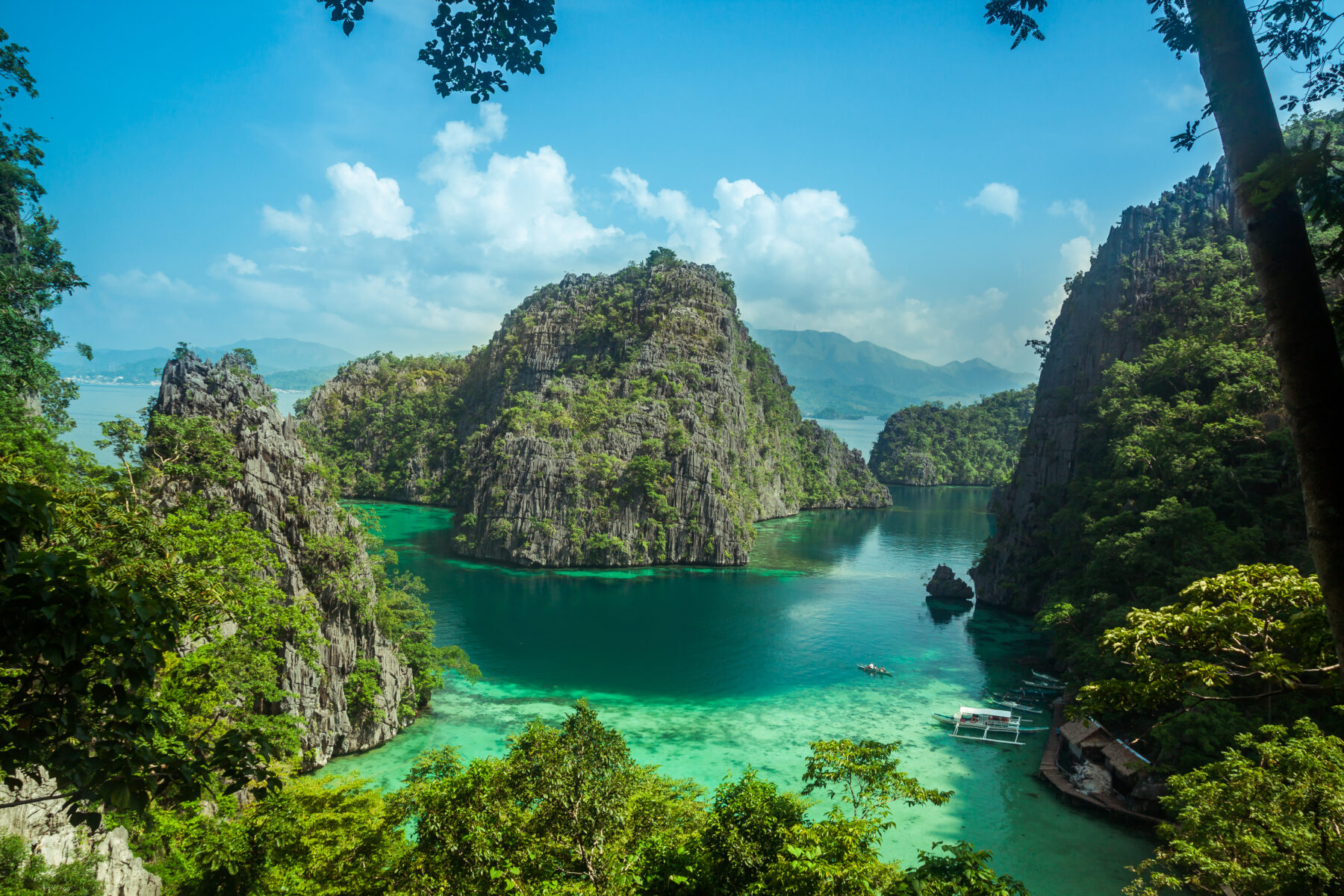
There is a terror plot to kidnap tourists on Palawan island – a major dive destination in the Philippines. The Straits Times reported that Lieutenant-General Raul del Rosario, the commander of the military’s Western Command, announced that intelligence had been received indicating that the terror group, Abu Sayyaf, were targeting Coron. This is a resort town in the north of Palawan, known around the world for its chalk-white beaches and popular diving sites. The Straits Times spoke to Mr Allan Carlos, owner of a hotel in Puerto Princesa. He said that following from previous terror activities in the region, there has been a “high concentration of police and intelligence operations in tourism areas in Palawan”. He also noted that resort owners lend their own planes and speedboats to local security forces in order to help them patrol the area and stop terrorists from entering the island. The plot emerged following an event last month (11 April 2017) when the nation’s authorities successfully tracked down and confronted a group of terrorists on Bohol island. According to the authorities, the group had journeyed on three speedboats to a quiet river town on the island. They intended to kidnap tourists. However, a day later, police and soldiers engaged them in a gun battle that left nine militants dead, three soldiers and one policeman. Another militant died in custody. It was also reported that Muamar Askali, who was connected to several kidnappings, as well as Joselito Milloria, a key Abu Sayyaf figure in Bohol, died during the clashes. Thus far, it is unclear whether or not the authorities have any leads or are currently aware of an imminent or significant threat. Nonetheless, security forces are on high alert. The threat has been vindicated by the U.K. and U.S. embassies. A travel advisory from the United States embassy has noted that the threat is real and based on “credible information”, stating that Abu Sayyaf “may be planning to conduct kidnapping operations targeting foreign nationals in the areas of Palawan province”. The two main targets that have been identified by the embassy collectively bring in a million visitors per year–they are “Puerto Princesa City, and the areas surrounding Puerto Princesa Subterranean River National Park”. The British embassy has also encouraged their citizens to be cautious, stating, “carefully consider travel plans and exercise heightened vigilance in these areas” Puerto Princesa itself is a long way away from Abu Sayyaf‘s strongholds in Sulu province – 400km, in fact. However, the terror group is renowned for kidnapping foreigners and locals, as well as various bombings and piracy-related activities. Palawan itself is no stranger to the attacks of Abu Sayyaf. In 2001, a group of militants raided the Dos Palmas resort and took hostages. At the end of the incident, 22 soldiers were dead, along with five hostages (two of whom were American), and an unknown number of militants.
Shark attack on porn star – accusations it was faked
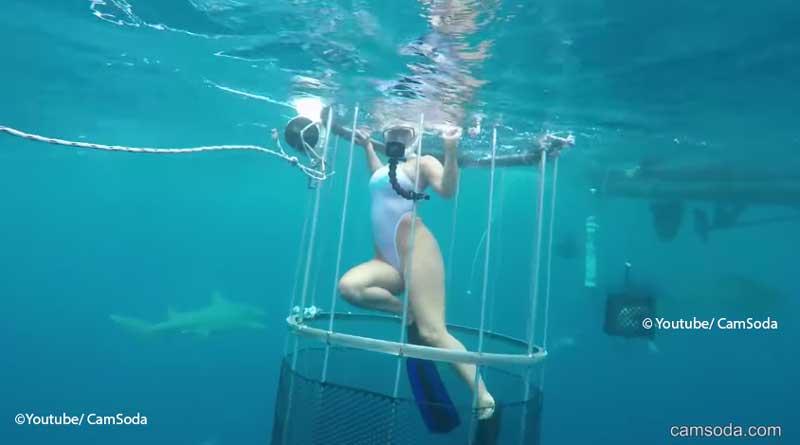
It was a headline that you probably didn’t miss out on – “Porn star attacked by shark: See the Horrifying Video”. The footage went viral, and has been seen by tens of millions of people since it emerged last week. It was a catchy “shark vs. porn star” narrative, where a shark bites a porn star and the promo ad for a sex cam company ends up in disaster. Sympathy and a large amount of coverage follow suit – greatly amplified in our era of “fake news” and a focus on catchy click-bait headlines.
Watch the full video © Youtube/ Spearfishing Reviews (/CamSoda):
The video shows porn star Molly Cavalli “shark diving” off the coast of Palm Beach County, Florida. She gets into a cage as a school of sharks are swimming around. A short while into the shoot, she is screaming and holding her foot as blood rushes from it, darkening the water – she’s been bitten by a lemon shark (although it should be noted that the actual attack is not visible in the footage that was released). She is in a great deal of pain and requires twenty stitches. Yet recently, certain revelations about this incident have come forth. Talking to the Palm Beach Post, Bryce Rohrer, the owner of Florida Shark Diving, claims that this was all staged. He says that the actress actually approached his company around two months ago, and shared their plans on making a video that would go viral. He also notes that she even sent him a picture of a fake wound created with special effect makeup, providing an indication of what it would look like. Rohrer flat out refused: “We immediately declined. We are pro-shark, pro-wildlife, and want to show the importance of sharks, not villainise them”. He continued saying, “It’s so bad for business, so bad for the image of sharks in general, and makes shark diving look really bad.” The revelations don’t stop there. Various local experts have been vocal in their claims that this footage was an elaborate PR stunt. George Burgess, a widely respected shark expert and head of a shark research program (the International Shark Attack File, created by the US Navy in 1958 and now housed at the Florida Museum of Natural History), lent a scholarly eye to the footage and quickly dismissed it as a hoax. In speaking to the same newspaper, Burgess says, “I can tell you for a fact, it was not a shark bite… How it was inflicted is conjectural, but the main thing is, the injury is not a shark bite. It was a PR stunt, and it worked.” Stephen Kajiura also shared his thoughts with the paper. A shark researcher at Florida Atlantic University, Kajiura comments that the linear gash on the woman’s foot was not at all like a typical bite caused by shark teeth. Rather, a bite tends to involve multiple slashes in light of the fact that their teeth are a semi-circular pattern. While not completely dismissing the possibility of a bite, Kajiura says, “for a wound that deep, one would expect to see multiple parallel slashes from teeth, not a single slash.” He also adds, “it makes more sense that she was cut on the side of the cage, then blamed the sharks for the publicity.” That she cut her foot on the cage seems fairly reasonable since the cage was poorly designed and there was only a protective mesh surrounding the bottom part (not the top): It could be the case that she cut herself on a section where the metal was welded together. Yet Burgess notes the heightened publicity that would be caused by reports of a shark attack, saying, “sharks and shark bites have a cache value that there is no getting around.” He finished by saying, “anyone who wants to talk about shark attacks will get publicity, and frankly, that’s what this is about. If you say you’ve been bitten by a shark, you will be the object of discussion.” While public perception about sharks has somewhat improved, we still have miles to go before we fully overcome that negative image. Particularly here in Asia, there is a long road ahead, with the consumption of shark fin being extremely prevalent in parts of the continent. Utilising that negative and dangerous image of sharks – if that is indeed what happened (and there has been sufficient input from experts to warrant this accusation) – is unacceptable in a global climate where sharks are being slaughtered (according to research published in the journal Marine Policy – 100 million a year).
Parasites driving fish from inside eyeballs?
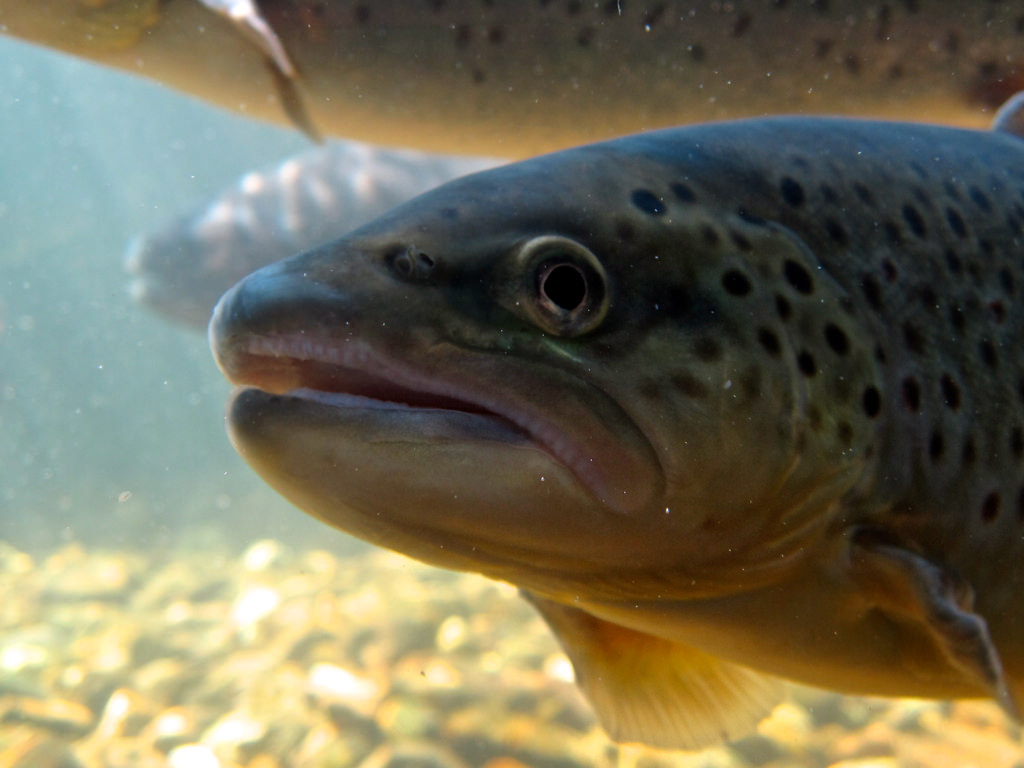
Nature is full of some wonderful surprises – and some rather weird ones. This piece of news definitely falls into the latter category. We hear of parasites leaching onto their hosts, but rarely do we hear of them controlling their hosts! It does happen though – Tocoplasma gondii can modify the behaviour of rodents and make them unafraid of cat urine (as you can imagine, they make a quick meal for felines!).
In 2015, another parasite was found to control their hosts – the eye fluke Diplostomum pseudospathaceum.
This parasite controls the host for the greater part of their life cycle.
Mikhail Gopko, from the Severtsov Institute of Ecology and Evolution in Moscow, made the initial discovery upon studying young rainbow trout that had been infected by young eye fluke.
He found that the trout were far less active and so less likely to be caught by dip-nets. This lack of activity – playing it safe, as it were – was certainly advantageous for the parasites since they were reliant on their hosts’ survival.
In an interview with New Scientist, Gopko noted that the parasites were “too young and innocent to infect a next host”.
However, as the parasite gets older and becomes ready to move onto the reproductive phase of its life cycle, it begins to exert a more active control over the fish. Rather than the initial dormant behaviour, the fish ascends to the waters’ surface and begins to swim a lot faster – catching the eye of predators.
For the study, Gopko and the team simulated bid swoops over the fish. All the fish froze, as was expected because it is a natural response. However, those fish that had been infected resumed swimming much faster than their uninfected counterparts.
This is all apart of the parasites’ plan – to make the fishes an easy target for birds. This is because the parasites reproduce within birds. Their eggs are then shed in a bird’s faeces.
Following from birth, the young eye fluke seek out more hosts, starting with snails, within which they multiply, and then onto fish. They will penetrate a fish via the skin, and force their way towards the eye. It is here that that they can exert an influence on their hosts behaviour.
Alas, as with much of nature, we have no idea how they do this!
A stomach-churning example of a parasite buried into the eye of a fish (a freshwater common bully, native to New Zealand) © parasiteRP:
Tao Fest – Something Special
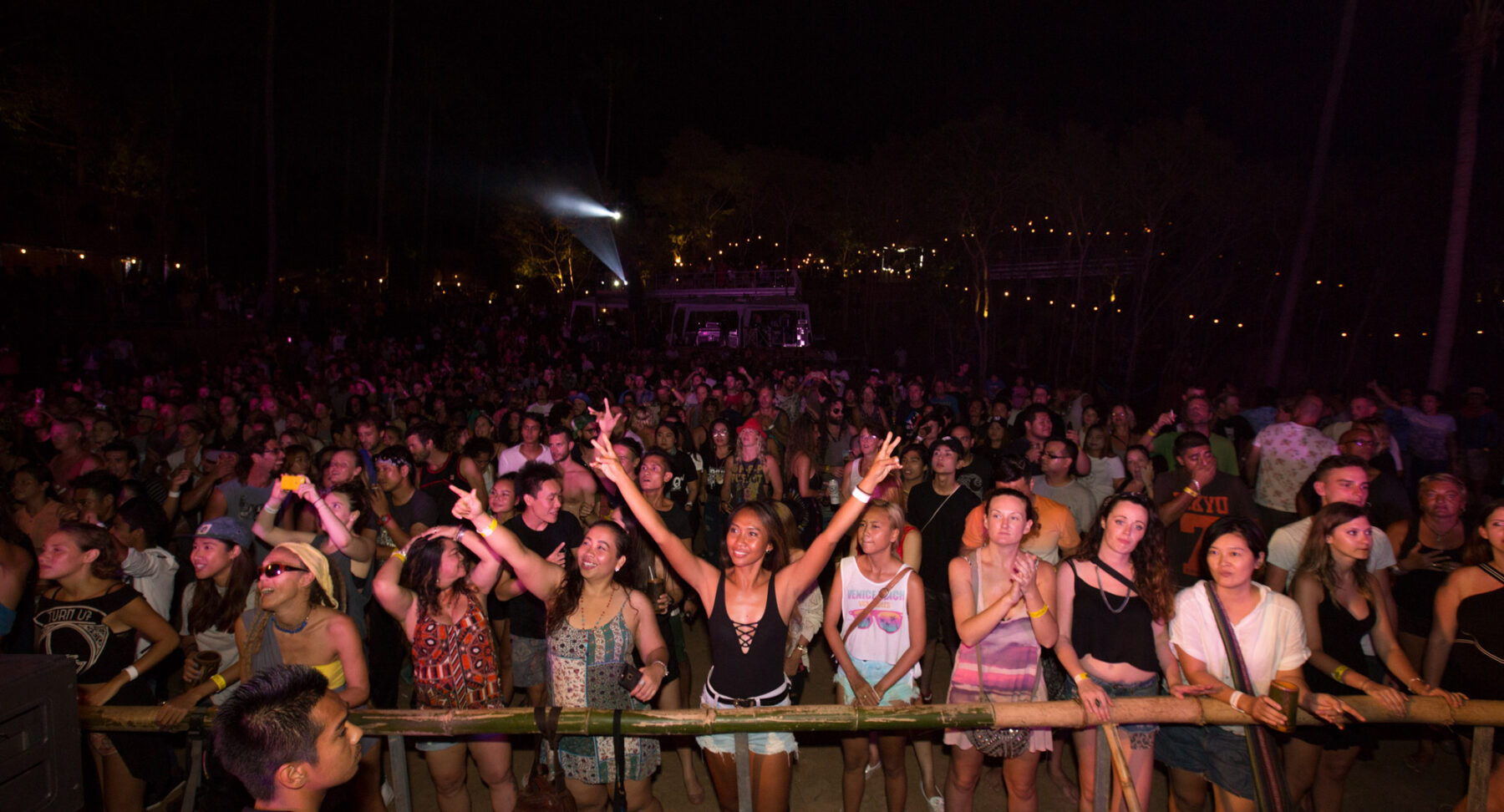
Picture yourself sitting on a sandy beach on an island in the Gulf of Siam, drinking delicious sangria from a bamboo cup, and indulgently dancing to the chill house beats of DJ Kevin Yost or Giles Peterson along with 300 other people. One would think this is the famous Full Moon Party of Koh Phangan, but you’re really on Koh Tao, enjoying the Turtle Island’s first international music festival – the Tao Music Festival. The smallest of the three main islands, Koh Tao (“Turtle Island” in Thai) is famous for being a scuba diver’s certification destination – the 2nd most popular in the world behind Cairns. Still, it’s a laid-back island with an almost bohemian attitude – and a sense of nature. Its southern neighbor, Koh Phangan, is better known for partying, being home to the various moon phase parties. Yet on the 28th-30th March 2017, international acts such as Arrested Developed, DJs like Alex Barck, Gilles Peterson, Kevin Yost, as well as local bands including Paradise Bangkok, descended onto this small island for the biggest music festival it had ever seen. The Tao festival is the brainchild of local architect and developer, Khun Naruepon (Pong) Charoenittikul, who moved to Koh Tao when it was a burgeoning island. The festival actually started as a landscape and architecture design festival. It was only when Khun Pong met with local expatriate and festival co-founder, Eric Bochet, a DJ and freediver, that they noticed something was different about the scuba divers and the tourists who went to Koh Tao. Like themselves, the scuba divers seemed more “woke” about environmental issues, especially those problems facing our oceans. With that in mind, Pong and Eric developed the Tao Music and Underwater Festival, infusing an underwater theme (a nod to Koh Tao’s main industry) with music performed by a mix of local and international acts. One important aspect they both agreed upon was minimising the festival’s impact on the environment. Ecological concerns are relevant to all big festivals. The Glastonbury Festival, which claims to have “green” programs, somehow ends up with over 200 tons of trash – from cigarette butts to tents. Pong and Eric were determined to avoid such issues with the small and fragile ecosystem of Koh Tao. The festival was held over 3 days. The format was a “Day” session – with a free beach afternoon/ sunset party at Sairee Beach’s Cabana Resort, featuring top DJs playing tunes till a little past sunset, as well as a ticketed “Night” session, which saw 2000+ tickets sold. The main stage and other cultural activities were held on the side of the hills overlooking June Juea Bay. The beach party “Day” session featured a lot of the eco-friendliness that Pong and Eric had dreamt about. The avoidance of plastic and hard-to-degrade materials was very perspicuous. Bamboo – one of the more sustainable materials with high carbon absorption characteristics – was highly featured in all aspects of the festival. The official festival T-shirt by Rip Curl was 70% bamboo viscose. The food retailers used a Chinese bamboo steamer with a banana leaf base, making it highly biodegradable (unlike most festivals, which use plastic containers!) Drinks were served in bamboo cups, which required a 100b deposit so that the user is more inclined to bring it back to be washed and reused, as opposed to using a new cup every time for beverages. Drinking water was free, and stainless steel canteens were available for purchase as well. The attention to detail went all the way, even to wooden forks and spoons. While dancing to the grooves of afro beat house around the beach party, it was pleasantly surprising to see that the grounds were quite clean – even of cigarette butts, which is something I’ve rarely seen at any festival. Large ashtrays were situated all around, but the astonishing thing was that they were being used by the majority of the festival-goers. Maybe it’s something about scuba divers and the way they care about the environment, but it’s still amazing. As the sun went down on the last “Day” session at the beach, the underwater theme took center stage with the screening of Guillaume Néry’s film, Narcose. This is a journey into Guillaume’s narcosis while diving – shot and directed by his partner, Julie Gautier. Apnea diving had recently become quite popular on Koh Tao, and Eric Bochet, a fellow apnea diver, built a 50ft outdoor screen specially for the film. Like any startup, there were unforeseen problems. With climate change affecting weather patterns worldwide, an unseasonal storm system hit the area while the festival was on, with uncharacteristically high winds and big storms. The heavy rains caused problems for the main stage, and the first night’s activities were cancelled. They even had to get technicians from Bangkok to fly in to fix the problem. The first “Night” session, held on the second day, opened with Paradise Bangkok, a popular UK/ Thai band that uses traditional Thai instruments to play a mix of blues, folk and roots music. Judging from the audience’s response, music is universally loved if there’s a good tune, regardless of the language. Impressively, there was a blind lead-guitarists playing a Thai electric lute guitar. On the third and final day, festival headliner Arrested Development came on. They are one of the iconic Afrocentric hip hop bands of the 90s, responsible for hip hop classics like Mr Wendal, People Everywhere and Tennessee. The crowds reflected their popularity, filling the area for the first time in the festival. Speech and One Love’s rhymes melded with the powerhouse vocals of Tasha L and the frenetic energy in the singing and dancing of Zafreeda, producing a wonderfully tight set. Needless to say, the crowds loved it! However, the weather tried to dampen the festivities – rain forced the engineers to shut down the stage lights and projection equipment. Yet there was still power to the sound equipment, so while revelers danced in the rain, Los Angeles DJ Salazar Santiago played his entire set under a tent – with no stage lights or projection. As they say, the show must go on, and so does the partying – no matter what! To make up for the cancellation on the first day, Pong and Eric decided to hold a free concert on the fourth night, with DJs Alex Barck and PillowTalk Michael Tello as the closing acts for the festival. It was on this night that the Tao Fest magic was brought to life: Arrested Development’s One Love took up the mic to rhyme for PillowTalk, setting the stage for a great night of music and festive camaraderie. I’ve been to Ultra and Tomorrowland, and I’ve hardly ever seen a bunch of musicians just come out to enjoy the art of music together. It was a special way to end a special festival. To sum it up, despite all the technical hiccups and the unavoidable transport-logistic problems on a small island with limited vehicles, the Tao Fest turned out to be a wonderful music festival where the musicians enjoyed playing their tunes and dancing to other acts with revelers. And due to the organiser’s careful planning, the damage to the environment was minimal. The Tao Fest shows that we can have music festivals without 200 tons of trash left all over in its wake. All it takes is determination from organisers to care about the environment – and of course, that special ingredient of “woke” in the party-goers.
Article by Drew Wong
All photos © Drew Wong
Ocean Defender of the Week: Dr. Emma Camp
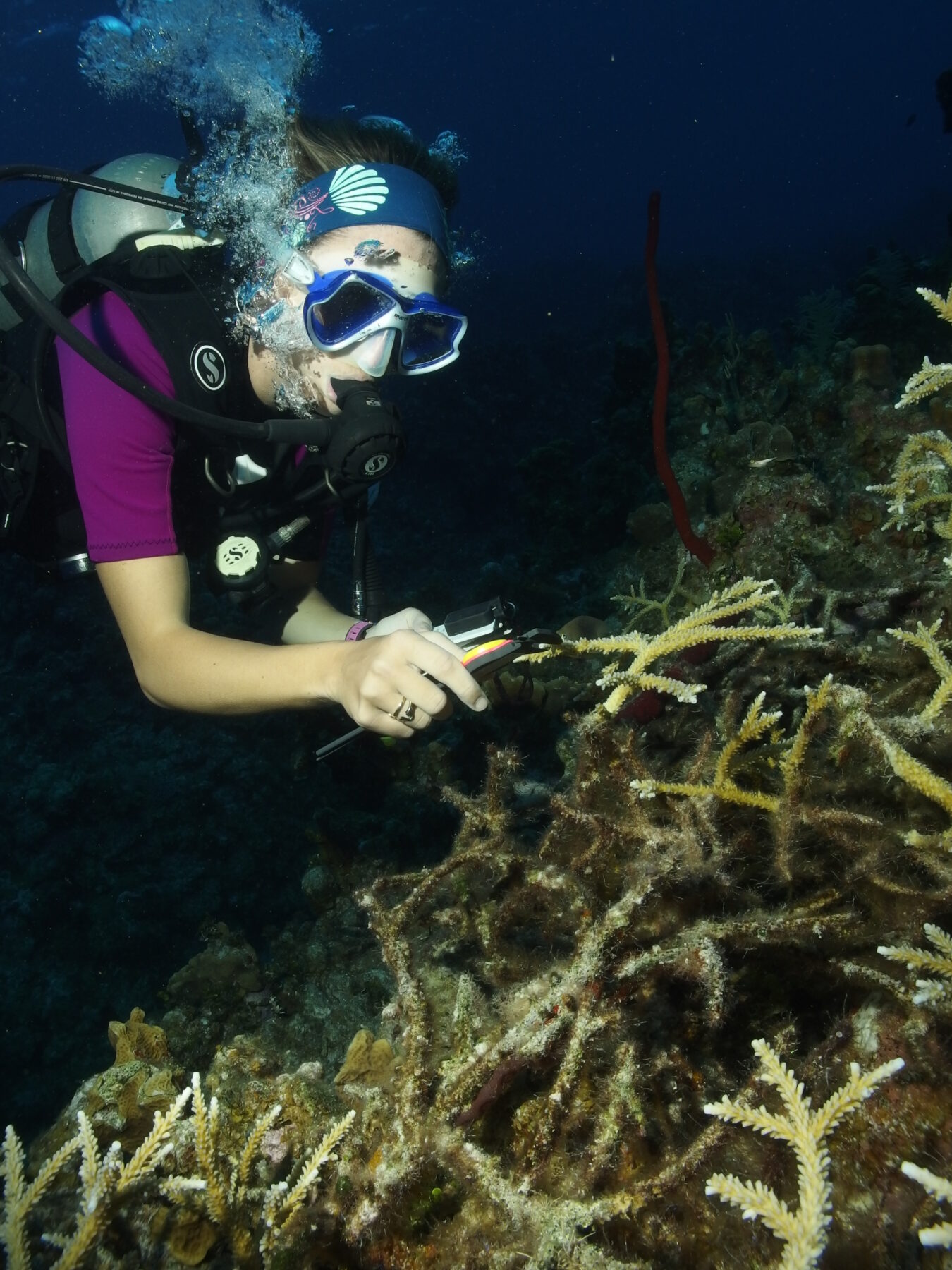
As a marine biologist, a climate change scientist, and a coral reef researcher, Dr. Emma Camp‘s work takes her straight to the front-line. Her focus is on coral habitats – particularly “unsexy” ones like seagrass and mangrove systems. Aesthetics aside, and unbeknown to most, these habitats are the secret to finding out the future impact of climate change on coral reefs around the world. With her time balanced between hands-on field work and experiments back in the laboratory, Dr. Camp aims to unlock these secrets. Dr. Camp currently works as a Post-Doctorate Research Associate at the University of Technology Sydney. Over the past four years, she has been involved with Earthwatch and Operation Wallacea as a coral reef researcher, and is currently an ambassador for global biodiversity at the charity IBEX Earth. She has been awarded grants from the Women Diver’s Hall of Fame, National Geographic, and the French and Australian Governments for her research on marginal reef environments. She is also a PADI Dive Master with a passion for underwater photography.
What got you into marine bio-geochemistry?
I have always loved the ocean and even as a child I wanted to be a Marine Biologist. My specific focus area on coral reefs and climate change evolved overtime. I was given the opportunity to do a Ph.D. investigating how the chemistry of different marine habitats can influence the survival of resident corals, particularly considering the current and future threats of climate change. In order to complete this Ph.D., I had to learn about seawater carbonate chemistry, coral physiology and ecology: This evolved my speciality towards marine bio-geochemistry. In short, this means that I study how the biological and abiotic calcium carbonate structure of corals change under different seawater chemical conditions.
What are your main research interests?
My passion and research focus is exploring non-reef systems, such as seagrass habitats and mangrove systems that house corals. These places are generally considered unfavourable for coral survival. The reason I explore these “unsexy” coral habitats is because they often experience conditions (hot, acidic and deoxygenated waters) that are predicted to become the norm for coral reefs worldwide under climate change. Coral reefs all over the world are struggling to contend with warmer waters and lower pH, and therefore, by exploring these often overlooked systems, we can look for clues as to how corals are able to survive under extreme conditions. Furthermore, we can use these habitats as natural laboratories to see what the costs are for corals to survive under these conditions, and to discover species that have naturally adapted and/or acclimated to tolerate stress.
What are you currently working on?
I am currently exploring the bacterial communities that associate with corals within these extreme and marginal systems and comparing how these differ to a more traditional coral reef. Bacteria play an important role for corals, and understanding community differences is significant to advance our understanding of coral survival within these extreme environments. Alongside this work I am planning our next expedition to look for new extreme sites along the Great Barrier Reef.
Is there any bit of research or a discovery that has notably struck you during your career?
On a trip in 2016 to New Caledonia, I was part of a team of Scientists that found one of the most extreme coral habitats recorded to-date. Corals here were found living in very warm and acidic conditions. Although different to a coral reef, the coral populations found can provide a lot of novel information on how corals may persist in the future, making it a very exciting site to find.
What’s the hardest thing/best thing about your job?
One of the hardest parts of my job is seeing firsthand the global loss of coral reefs. In 2016, I was on a research trip when a mass coral bleaching event occurred. Within a week, large areas (the size of football fields) of coral had died. To witness these sorts of events firsthand is heartbreaking, but it also motivates me to continue my research efforts. The best part of my job is being privileged enough to travel to some amazing locations and work with a variety of people. I also love the diversity of activities I am involved with – one week I could be working in the field collecting data and the next week I am in a laboratory extracting DNA. This variation keeps the job interesting and exciting.
What do you hope to achieve through your work?
Through my work, I hope to help preserve the important ecosystem services (e.g. coastal protection and fisheries) that coral reefs provide to millions of people globally. I also want to help preserve marine biodiversity and help ensure that future generations will be able to have coral reefs.
What do you think lies ahead for our reefs?
Coral reefs worldwide are threatened, with many reefs dying at an alarming rate. Immediate effort needs to be taken by governments globally to reduce carbon emissions in order to help mitigate the increasing pressure that climate change is having on coral reefs. Without combined local and international efforts, I fear many reefs could be lost within my lifetime.
What can the average person do – and particularly divers- to help protect our reefs?
Everyone can help coral reefs by making an effort to reduce their carbon footprint, to eat sustainably, to recycle, and to get involved with local projects such as beach clean-ups. Divers in particular can help by ensuring they reduce their footprint on the reef. For my Masters research, I investigated the impact Scuba Divers have on coral reefs. My results found that divers, irrespective of experience or number of dives, interacted with the reef on an average of 18 times in a 50 minute dive (fin kicks and loose equipment being key culprits). These statistics become alarming when you extrapolate them across multiple dives, divers, and dive operations that use a single reef. Importantly, findings from that study found that Conservational Dive Briefings (briefings that include the value of the reef, the threats they are facing, reminders to divers about their buoyancy and lose equipment, and the need for generational equity to preserve reefs for the future) reduced the number of impacts that divers made. This is an important activity dive professionals can adopt to help reefs. Divers can also help the reefs by diving with operations that have a conservation focus: Those that take action to recycle their oil, provide conservation education briefings, and get involved with local marine conservation. Finally, be aware of what chemicals you have on yourself – they could be contaminating coral reefs. For example, sunscreen contains many chemicals that are toxic to corals, therefore, using products that are eco-friendly, such as Stream2Sea (www.stream2sea.com), can help the local marine environment.
Singapore Divers’ Bi-Monthly Party (8 June 2017)
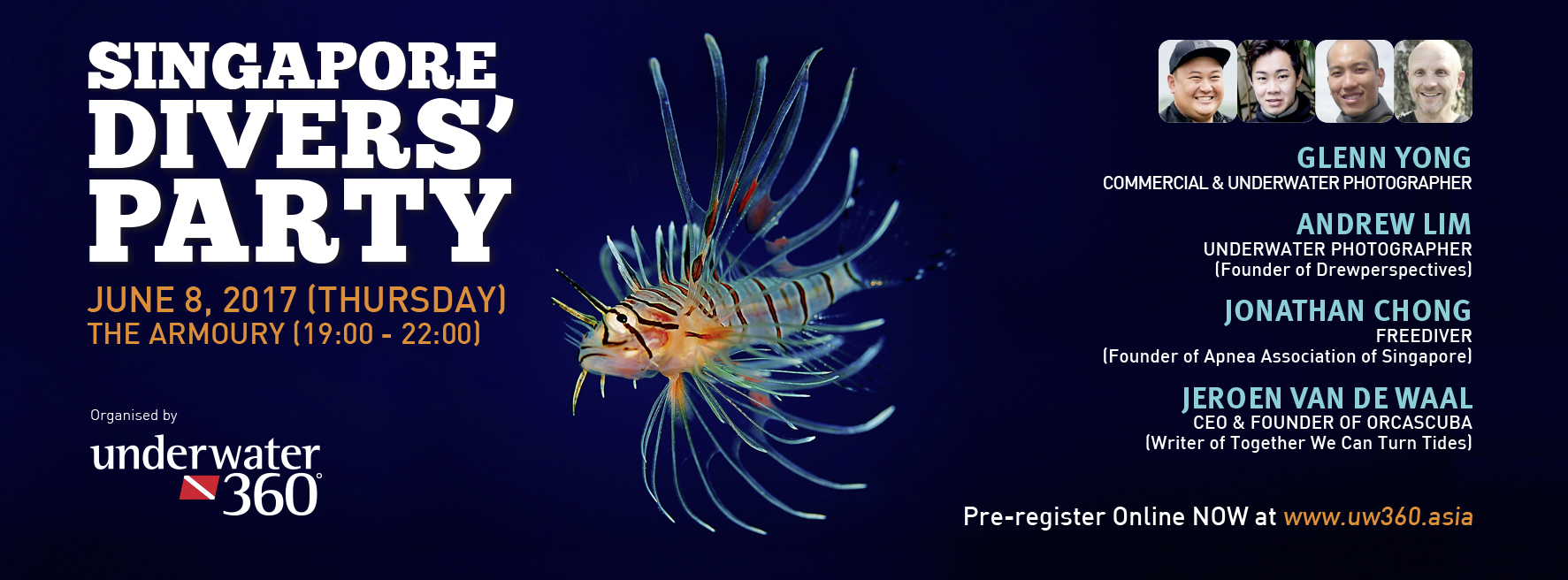
The party doesn’t stop – UW360 is back once again with the Singapore Divers’ Party. Taking place at the The Armoury, 36 Beach Road, Singapore, the party brings together anyone with a passion for the ocean (and partying!), regardless of whether or not they are a diver. With a special line-up of speakers covering various topics related to the ocean, it’s the ideal party to follow up after Asia’s largest diving event, ADEX!
Speakers include: Jonathan Chong: A PADI Master Freediver Instructor, Jonathan formed the Apnea Association of Singapore, an organisation focusing and supporting the growth of freediving in Singapore. He’s also a competitive freediver and currently holds all six Singapore National records, four of which are currently South East Asian records. To Jonathan, freediving is more than just a sport – it is a gateway to understanding oneself and overcoming inner barriers. When not freediving, Jonathan can be found playing underwater hockey and underwater rugby. Glenn Yong: Having received a design education from a young age, he usually presents his visuals very much in a rather “minimalist” approach, defining only what is essential and critical to the needs of the user. Even till now, we see the minimalist design approach in his professional photography. Glenn has recently been accredited as a Master Photographer in the United Kingdom with the Master Photographer’sAssociation for his confidence and consistency in producing images of professional quality, and visuals of stunning details and colours. He is also a member of Weddings, Portrait Photographer International, WPPI ( United States), and has memberships with Canon Professional Services and Nikon Professional Services. Jeroen Van De Waal: Jeron is a PADI IDC Staff Instructor and the CEO and founder of Orca Scuba. He grew up in the east of the Netherlands – far away from the oceans. At an early age, he was intrigued and inspired by the expeditions of Jacques Cousteau and the crew of the Calypso. Life events took him away from his dreams and trapped him in the corporate career rat race. After having lived and worked on most continents over the past 25 years, he is now ready to put his life experience towards protecting the oceans and creating positive footprints. Andrew Lim: His first foray into serious photography began with arguably the most difficult form of the art – underwater photography. His love for nature and documenting wildlife in its element has been his greatest passion and honour at the same time. At age 21, Andrew published his first underwater photography book, Silhouette of Serenity, and donated part of the proceeds to charity. He was invited to meet the President of Singapore, Dr Tony Tan, in recognition for his work, and was also invited to speak on platforms such as TEDx. He has since founded Drewperspectives, a Singaporean-based underwater photography firm, and his work has been showcased by organisations such as River Safari Singapore, Silkair, and SKII. Alongside the talks, there are fabulous lucky draw prizes to be won from dive trips to dive gears – it’s a party you simply cannot afford to miss!
Lucky Draw prizes
TO NOTE – there’s not simply one lucky draw, but FOUR – including our GRAND DRAW! The first 100 visitors will get one-for-one for all house pours, fourpure beers and Tiger beers till late, and also 10% off food.
Visitors who pre-register online will also receive a complimentary copy of Asian Diver’s “The Big Blue Book” Special Edition, and Scuba Diver OceanPlanet 2017 Collector’s Edition (collectively worth SGD 17.50).
Fill out the form below or just turn up at The Armoury and we will register you on the spot! So make a date with us!
Read about the last (February) Divers’ Party HERE
Seareq Receives Industrial Award for Its ENOS Rescue System
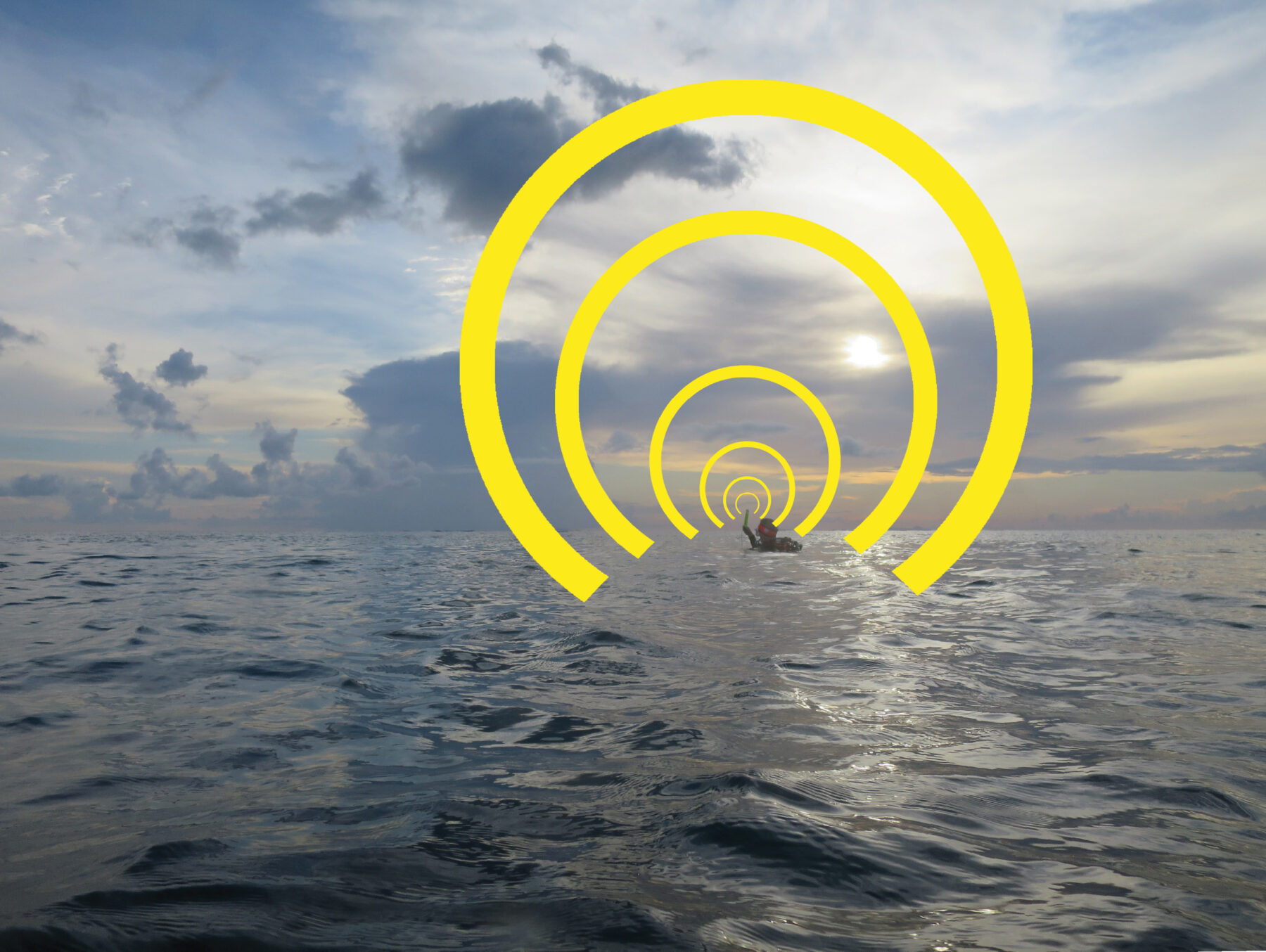
The Industrial Award 2017, which is conferred by Huber Verlag für Neue Medien, has honoured the Seareq ENOS-Beacon ETX in the “Electrical Engineering” category. Since 2005, the ENOS-System has been used around the world, leading to countless successful rescues of divers in need. After surfacing, the diver simply activates their ENOS-Beacon, which relays an alert and the diver’s precise GPS position to the dive boat, immediately prompting a speedy rescue operation. The jury of the Industrial Award 2017 was impressed by the ENOS-Beacon due to several unique factors:
- The device is lightweight, weighing only 165 g/36 lbs, including batteries
- The alert is relayed on a legal frequency, licence-free and free of charge
- The frequency used by ENOS does not interfere with international shipping frequencies (GMDSS)
- A large LED on the top of the ENOS-Beacon provides additional support
- The ENOS-Beacon is easy to handle even under stress because it lacks confusing buttons
- The activation switch is easy to operate even with thick gloves and/or cold, wet fingers
- The antennas are well protected inside the ENOS-Beacon’s robust housing
- The running time is 170 hours (1 week), so it is not necessary to change the battery after each rescue
- Batteries can easily be changed by the user; there is no need to return it to the manufacturer
- The ENOS-Beacon is powered by two AAA lithium batteries, which are commercially available worldwide
Efficient Rescue
The prevalence of false alarms is problematic for other rescue systems: Search and rescue (SAR) is not a mandatory response to an alert from a personal emergency system based on the AIS frequency because the extent of false alarms has provided an allowance for an optional response. This is not the case for ENOS, however, which does not require support from SAR. Instead, the alert from ENOS is relayed straight to the boat, which is always the closest help.
Safety Tips from Seareq
Seareq encourages divers to get to grips with their equipment and international maritime law, as well as radio frequency rules and regulations. For example, simply calling “Mayday” three times on Channel 16 will not necessarily initiate help. Since the channel has been misused in the past, ship captains are allowed to switch off the channel.
#1: No dives without SMB
Ideally, use an SMB (safety marker buoy) with a pouch for a flashlight or ENOS-Beacon. Holding a signalling device high above the surface will maximise the signal’s effect, making flashes easier to see and allowing radio signals to be transmitted further. Water absorbs radio waves, which is why GPS doesn’t work underwater.
It looks easy to inflate your SMB underwater – until you have to do it in a real situation! An SMB and/or the line can be dangerous if you are not used to handling it. Be sure to train regularly in a pool or after a shallow dive.
#3: Get safety information from your preferred operator prior to booking
Don’t just focus on operators’ amenities (“free beer on-board”, “beach BBQ”, and so on). Be sure to keep an eye on safety as well: Ask precise questions concerning safety and only be satisfied after getting clear assurances. And don’t forget to double-check: Investigate on the Web to make sure the answers are justified.
#4: Research individual rescue systems prior to purchasing
There are several rescue devices on the market – addressed to the individual diver – that claim huge transmission distances of 30 or even 50 nautical miles, and promise speedy rescues on the basis that all boats “must” provide help. Many of these claims are false.
Help is not mandatorily given simply on the basis that one uses an emergency beacon. Some devices require a radio licence, so divers could actually be breaking the law if they have not done the appropriate paperwork. One needs to take an exam in order to learn how to communicate on Channel 16, the international distress channel. If you do not use the correct language when using this frequency, boats are not obliged to respond to your alert. The use of the AIS frequency is also not straightforward. AIS is an anti-collision system which is mandatory on all commercial ships. Since 2010, this frequency has been used by the Man Overboard (MOB) devices of private sailors, surfers, waterboarders, and others. It is licence-free and free of charge. However, since 2010, after AIS became legalised for leisure water sports, the rate of false alerts increased tremendously because many people activated their AIS emergency beacon to see what would happen or to become familiar with its handling. In some regions, fishermen attached AIS beacons to their fishing nets in order to find them again! As a result, since 2013, SAR does not have to be dispatched after an alert from a Class B beacon (for private persons), unlike a Class A beacon (for commercial ships). It is also important to note that AIS requires a special receiver on-board, as well as dedicated software. Not all dive boats are equipped with these, because AIS is not mandatory for dive boats and liveaboards. Furthermore, it has to be taken into consideration that the receiving range of a Class B Beacon is not as far as the receiving range of an AIS-SART Class A. Class B signals cannot transmit 30 nautical miles (or more), as claimed, for the following reasons: (i) The radio antenna of a Class B beacon is too short, (ii) water absorbs the AIS radio wave after a while, and (iii) the curvature of Earth absorbs the radio waves after approximately 5 nautical miles.
Conclusions:
If you’re considering purchasing a rescue beacon, inform yourself about the law and regulations first. This includes all countries where you intend to use the device, since in some countries, radio frequency supported devices are not allowed for individuals. At the same time, it may be much more convenient to choose dive centres and liveaboards employing reliable and proven safety measures.