Home Blog Page 134

ADEX China Day 1: Post Report

0

It was an incredible opening day for ADEX in one of the world’s busiest cities. With a wide-range of speakers and products on show, visitors were treated to seven hours of non-stop entertainment.

crowd ears enhance seashepherd

The Main Stage: What Happened

The main stage opened with Michael Maes’ stunning blockbuster, Epiphany. Followed by speakers James Harvey, Paul Montgomery and John Fang. 

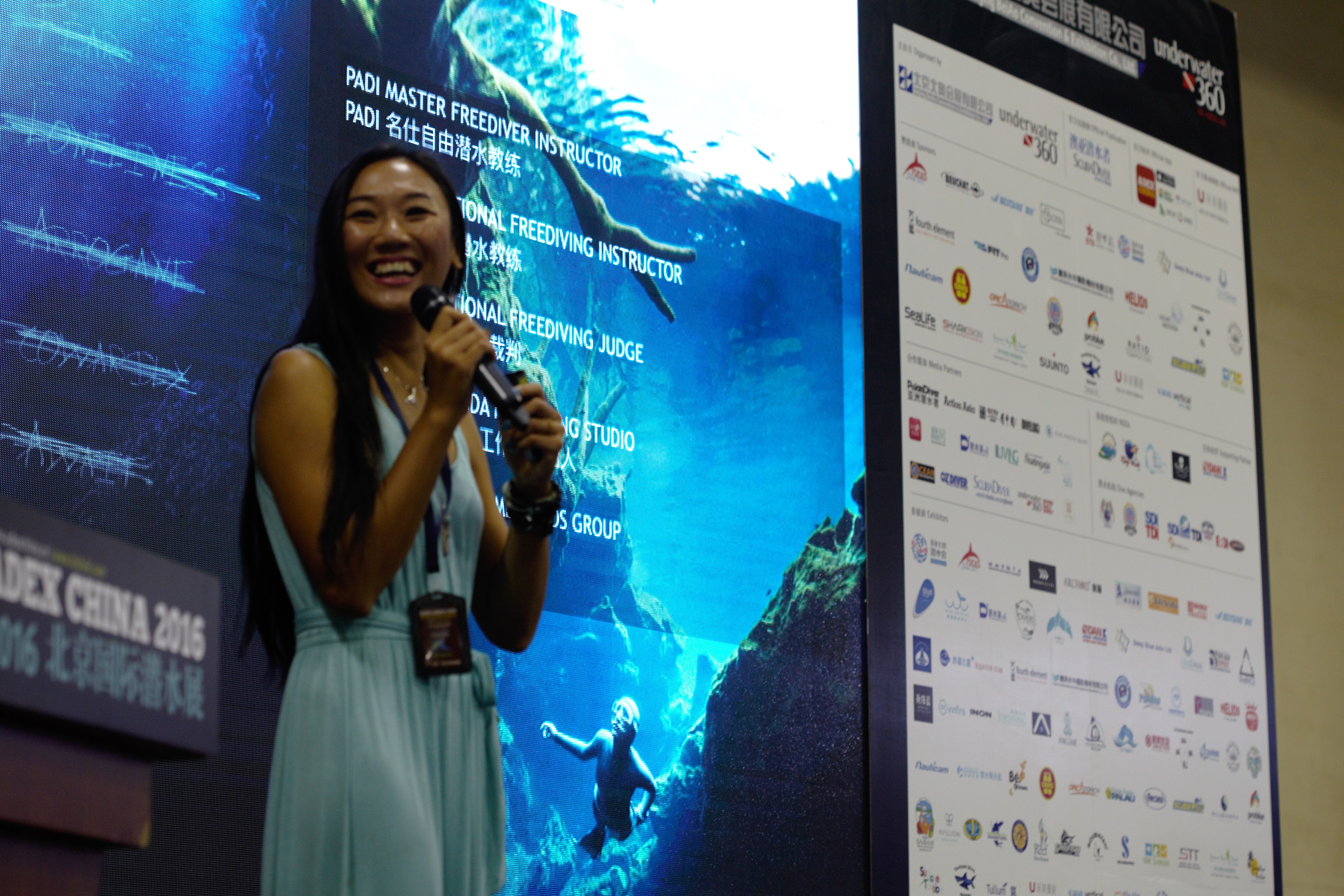
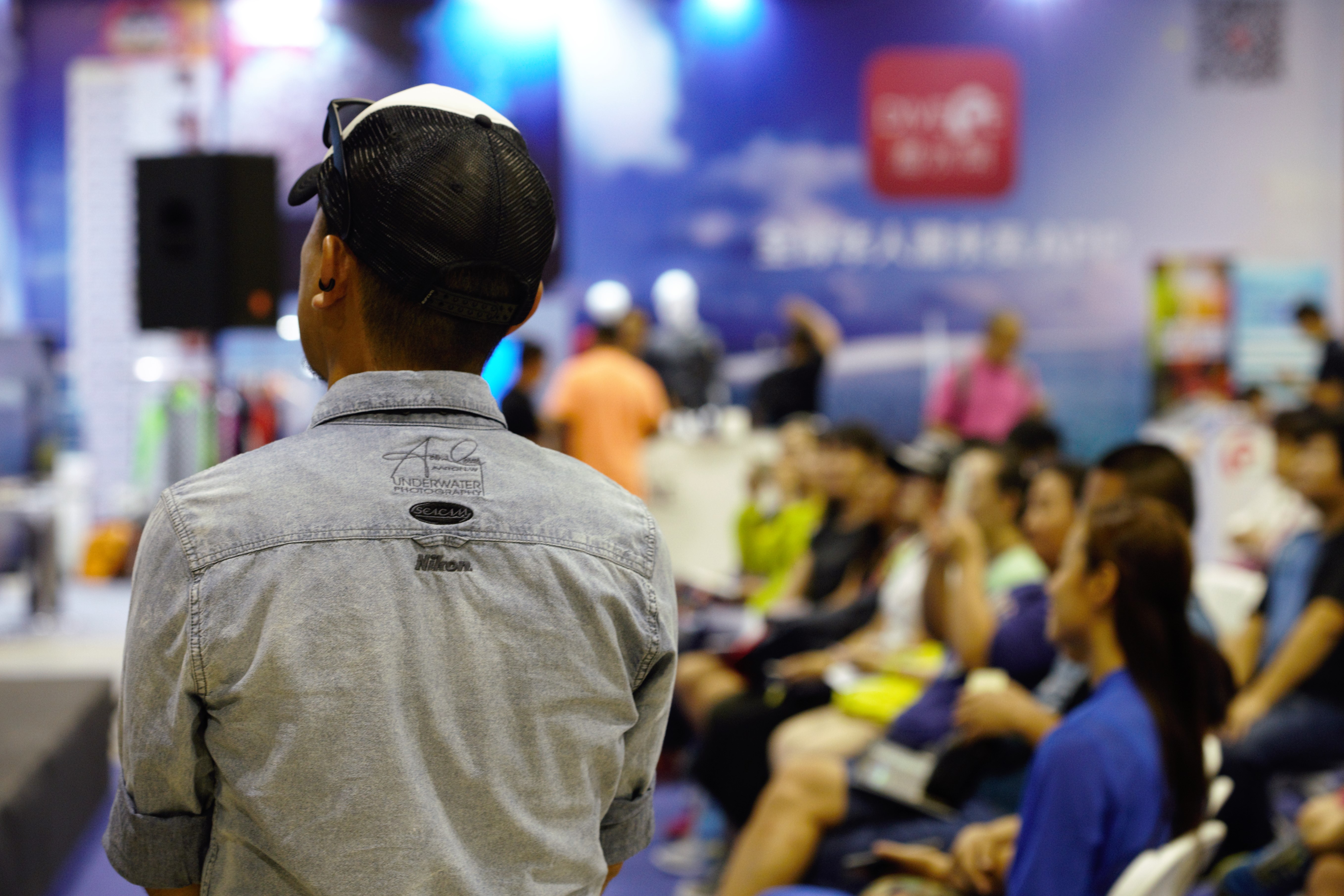
Hidy Yu gave the huge crowd a look into how diving has changed her life. There was no seat free for Dada Li’s talk. Aaron Wong explained the techniques behind Watercolors just before the start of the Opening Ceremony.
dada hae-nyeo

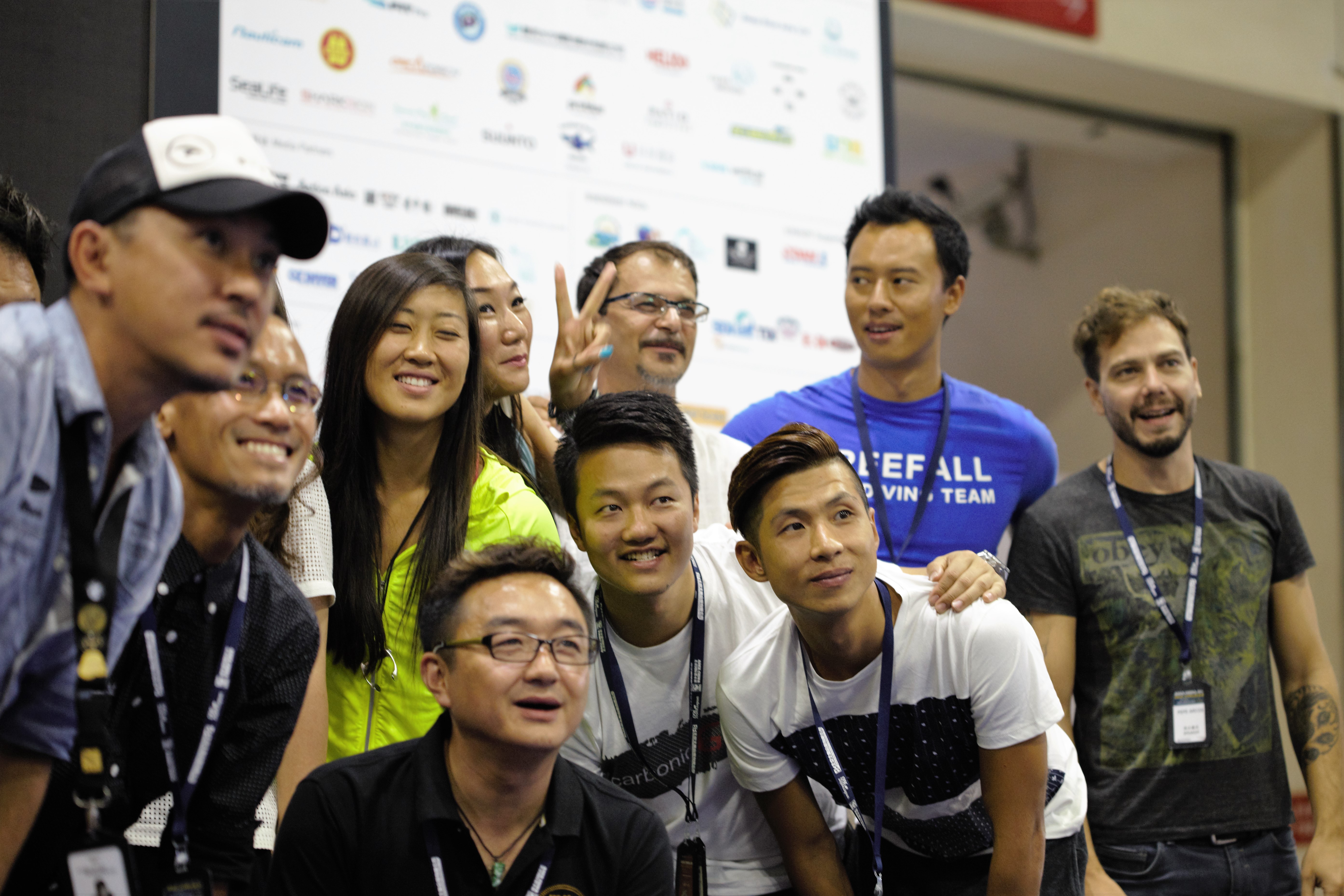
The Opening Ceremony attracted the biggest crowd of the afternoon, with ADEX Organiser John Thet kicking off the celebrations. Ms. Wenxi Zhao gave a welcome message, before the Miss Scuba China girls performed.

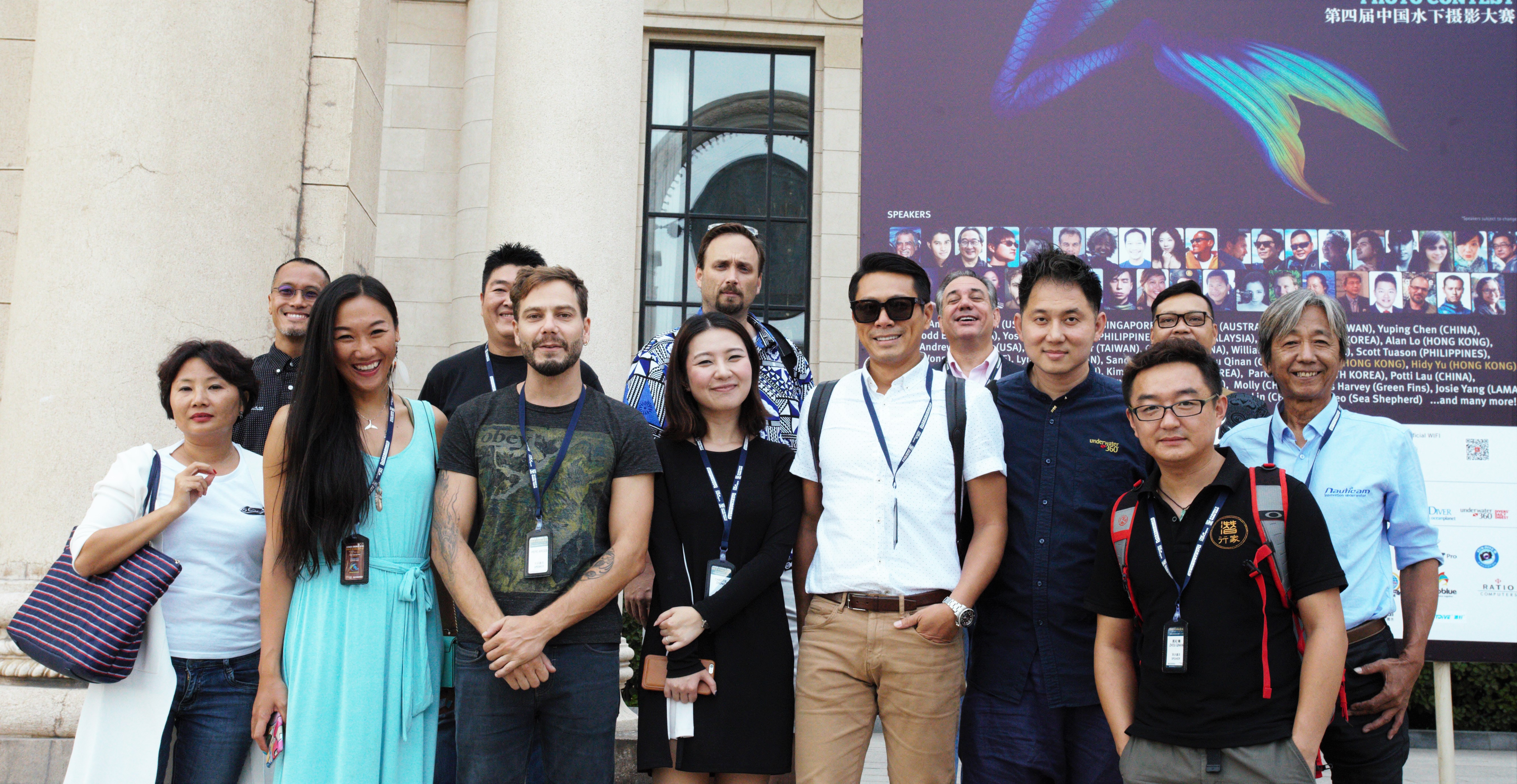
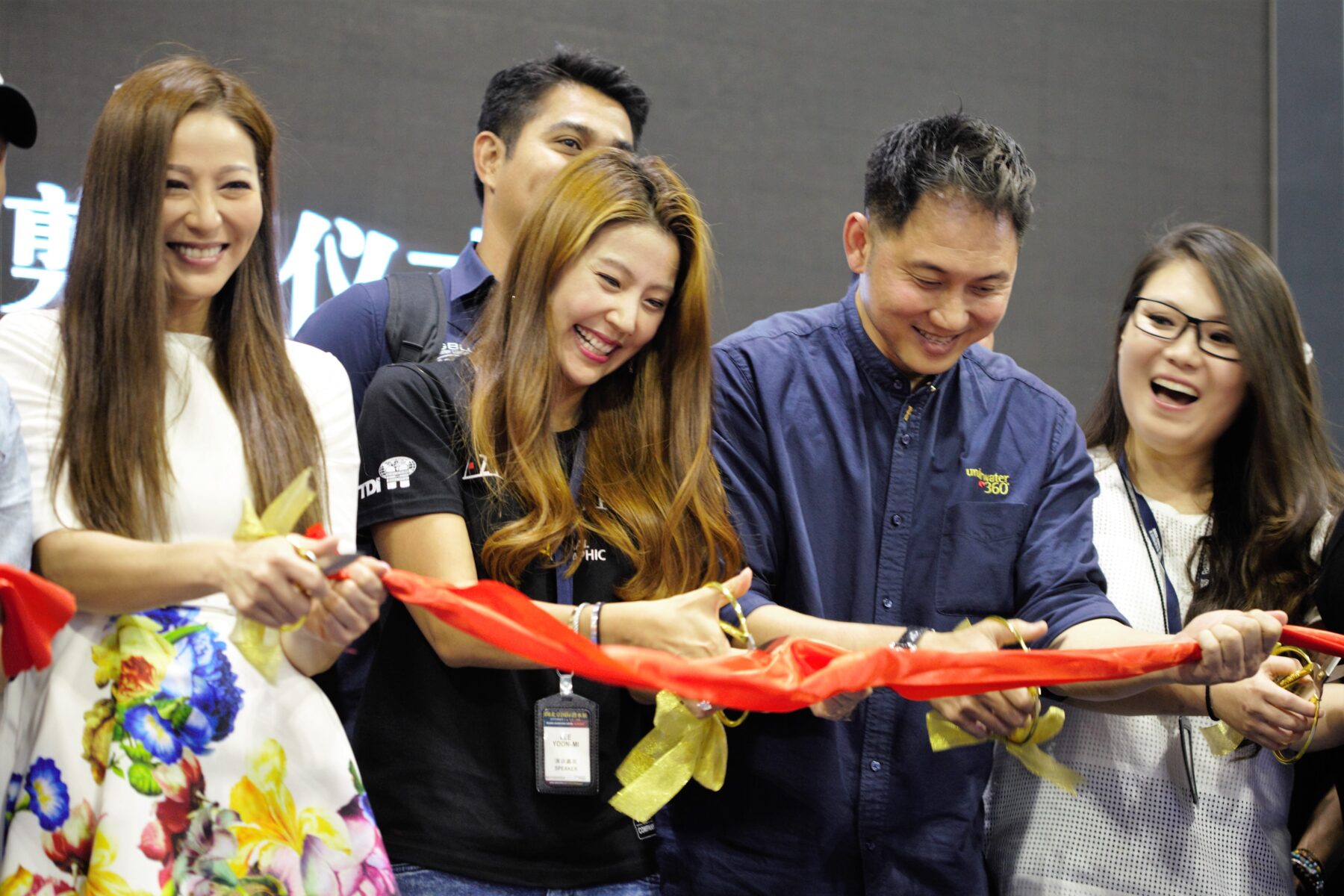
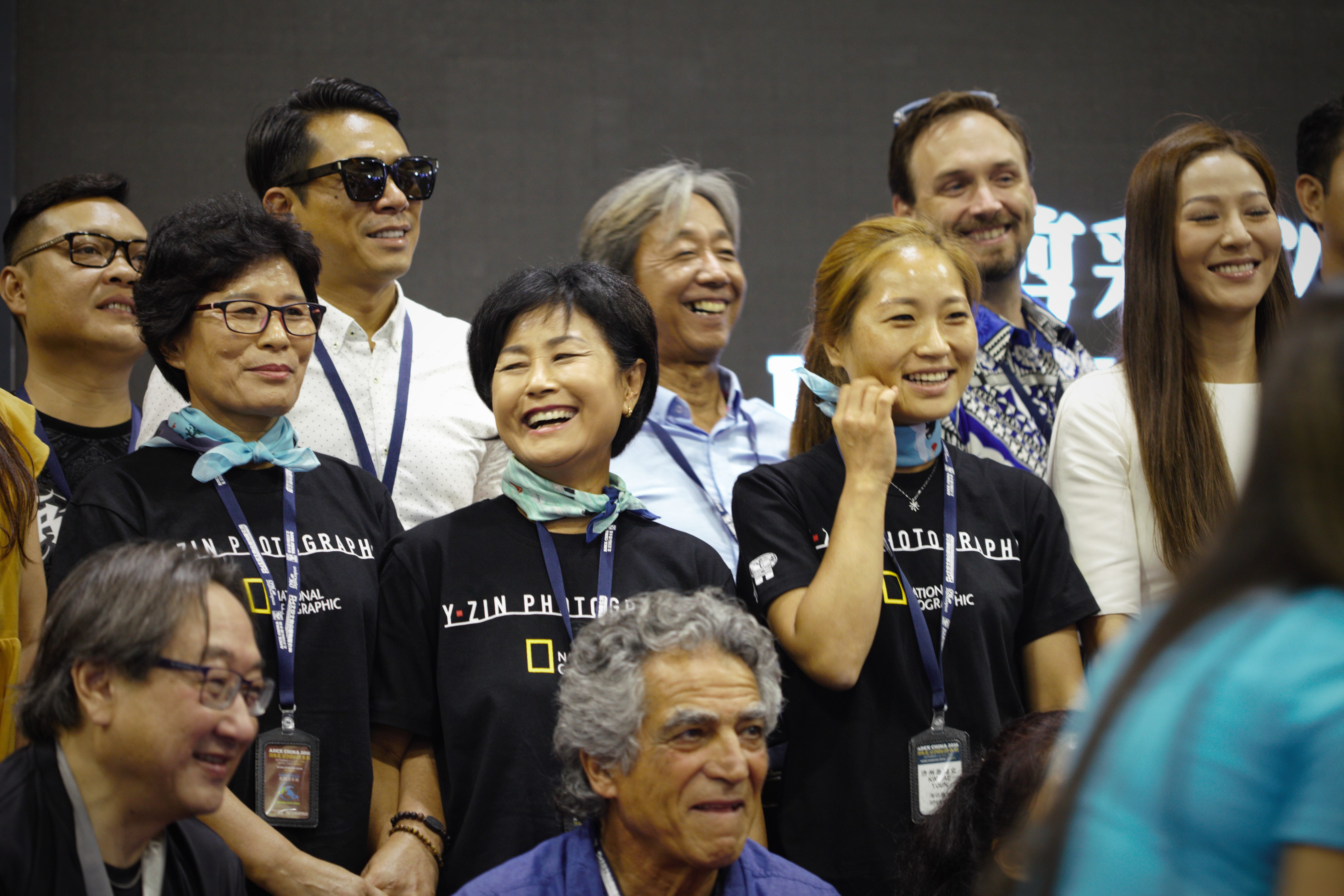
Freedive speakers, Jessea Lu and Potti Lau and 2016-2017 ADEX Freediving Ambassador Dada Li gave quick introductory talks. John Fang, Tek Dive speaker, and Zhou Qinan, Photo/Video speaker, also introduced themselves on stage. ADEX Ambassador for Compact Cameras, Tim Ho – who has a large following in these parts – was welcomed on stage to loud cheers, before he got the crowd to join him in singing “Happy Birthday” to John Thet. Ambassador of Photography, Aaron Wong, who is a well-known underwater fashion photographer, gave an insight into his upcoming talks. Amos Nachoum gave a humorous introduction, before Hidy Yu – who is ADEX Ambassador for Mermaids – also came to the stage. It was a welcoming introduction for the “mermaids” from Jeju Island, the Hae-Nyeo divers and Y.Zin Kim who introduced themselves and ADEX Ocean Ambassador Lee Yoon-Mi. Before Hong Kong actress, Joyce Tang, who stands as ADEX Ambassador for Greater China, gave the final speech of the night. The ceremony closed with the cutting of the red ribbon, which saw all of the speakers and special guests take to the stage to declare the event officially “Open”.

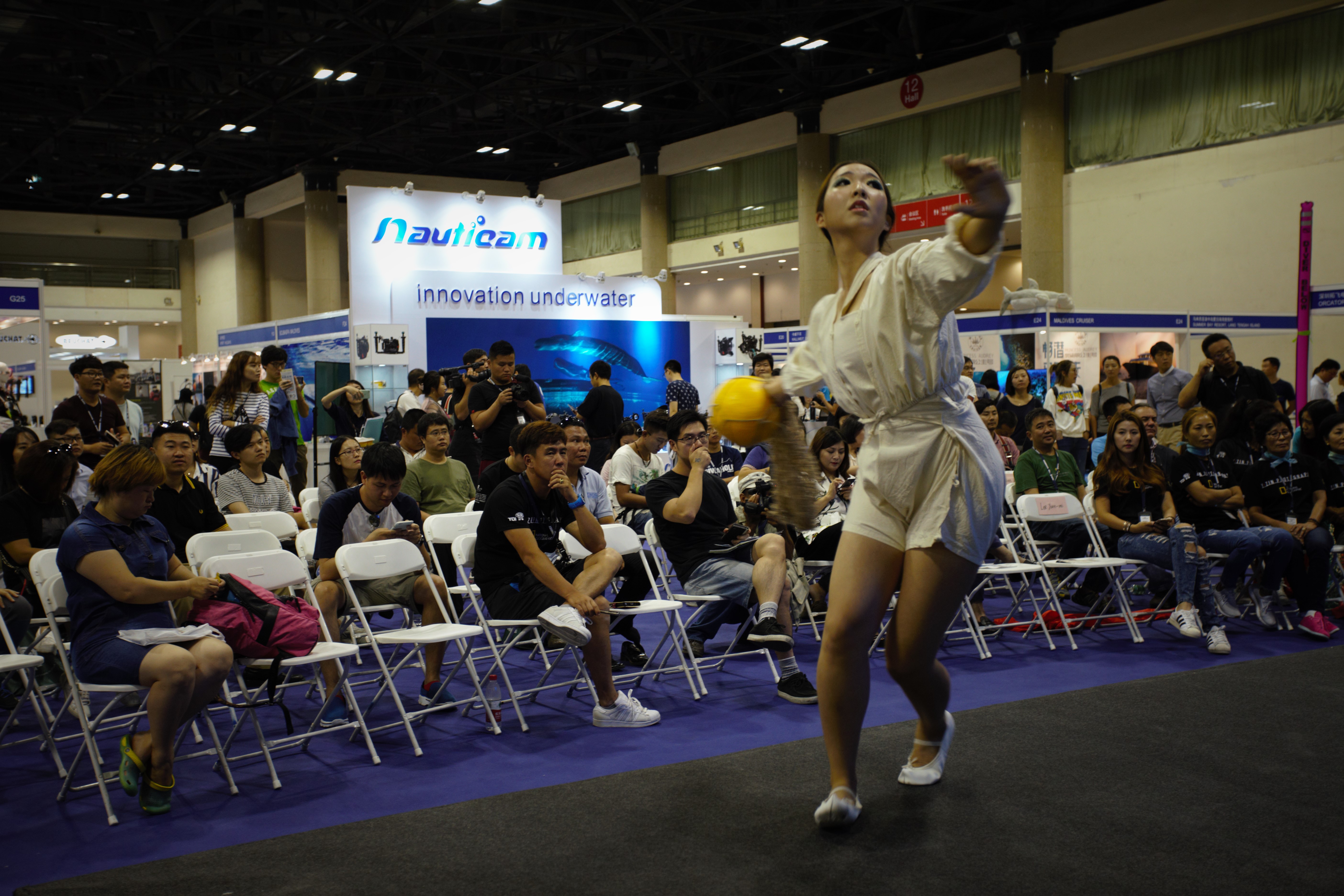
Following the end of the Opening Ceremony, the audience was treated to a traditional Hae-Nyeo dance (Leodosana) and this was followed by Y.Zin Kim explaining the origin, heritage and techniques of the famed Hae-Nyeo. Hidy Yu closed the speaker line-up, before the Lucky Draw hit the centre stage. Many prizes won through all the heckles and shouts from people waving lucky draw tickets.

speakers hot

winners dancing

Ocean Zone

Neatly tucked away in the corner of the event hall, the Ocean Zone attracted record-crowds for a long list of inspirational speakers. From turtle conservation by Wang Yamin, to extreme freediving by Molly. Many talks on photography from the likes of Tim Ho, Yoshi Hirata, Imran Ahmad, Alan Lo and Andrew Marriott. Joyce Ng presented her underwater modelling and mermaid experiences, and Pepe Arcos showcased breathtaking images. Wang Ao Lin, Jim Chen and Thomas Dederichs also gave dazzling talks, to fully-packed crowds.

aaron timho

Overview

It was a unique and wonderful first day: Large crowds, big-name speakers and many gimmicks which have come to make ADEX a household name in the residences of divers and ocean enthusiasts. Beijing, so far, has been one exciting experience for the ADEX team. Now we look to tonight’s entertainment.

Cheers!

ending final photo

Ocean Defender of the Week: Chloe Harvey

0
"I’m responsible for the international development and delivery of Green Fins, a programme aiming to enhance environmental sustainability within the diving and snorkelling industry."

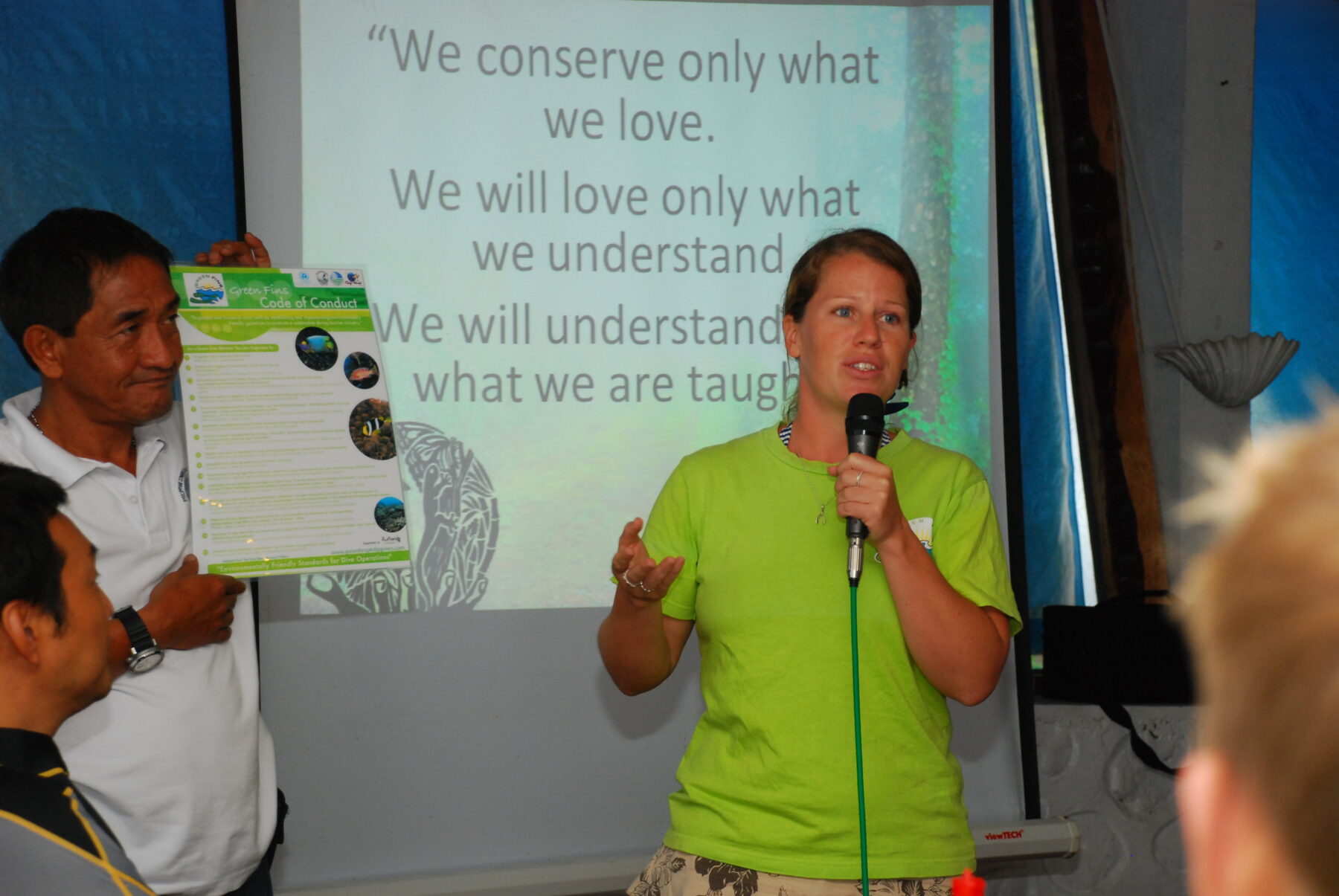
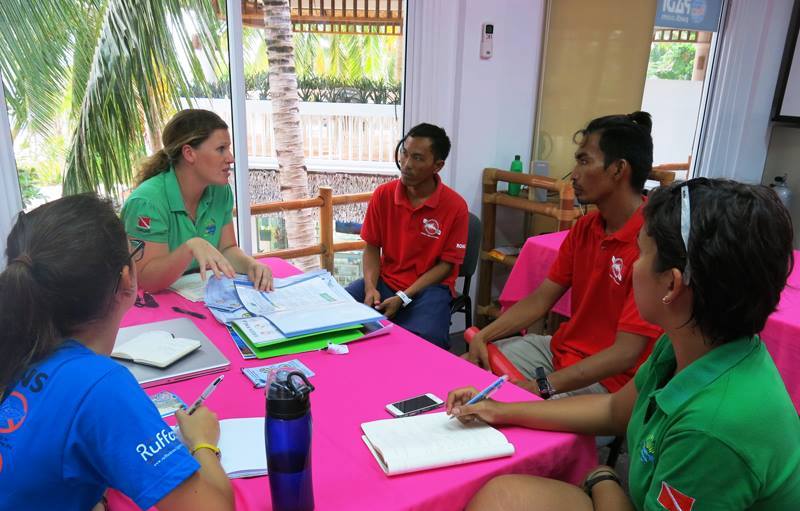
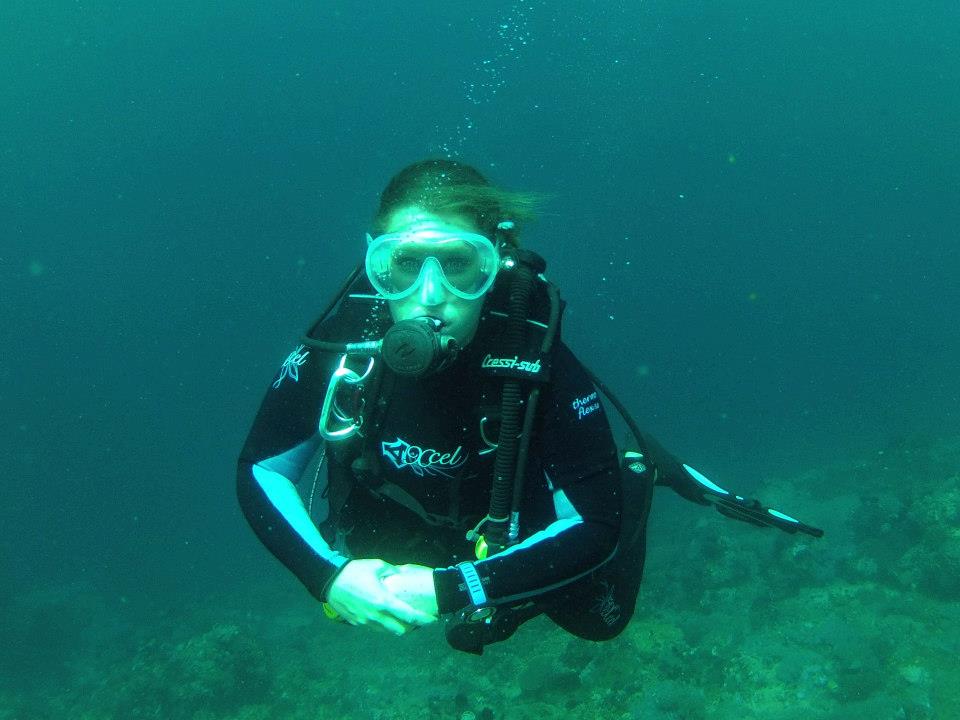
This week’s “Ocean Defender”, Chloe Harvey, is a marine biologist and professional diver working internationally to drive sustainable dive tourism through the Green Fins programme. Chloe believes strongly in the concept of Green Fins; to unite governments and the industry key-players to apply environmental standards and drive a sustainable industry. She’s also passionate about the educational aspect of Green Fins having always felt that this is the best way to inspire behavioural change. Chloe works within a team at Reef-World, the lead technical partner of UNEP for Green Fins. UW360 caught up with Chloe for a quick Q&A:

What got you into marine biology?
I was a diver by the age of 12 and a British Sub-Aqua Club (BSAC) Assistant Instructor by 15. I was always fascinated by the underwater world and wanted to know more about how it worked. At the same time I was really enjoying science at school. After learning about marine biology during a college open day there wasn’t a question in my mind about what I wanted to study at University.

"We’ve changed laws, we’ve influenced the way departments are run, we’ve changed job roles so that government employees learn to dive as part of their jobs."
“We’ve changed laws, we’ve influenced the way departments are run, we’ve changed job roles so that government employees learn to dive as part of their jobs.”

What’s the hardest thing/best thing about your job?
I’m responsible for the international development and delivery of Green Fins, a programme aiming to enhance environmental sustainability within the diving and snorkelling industry. Alongside the Reef-World team, I am committed to partnering with governments to achieve this. In each country we work in, we position relevant authorities at the centre of everything we do, empowering and inspiring them to promote sustainable diving activities within their country. The payout is great; we’ve changed laws, we’ve influenced the way departments are run, we’ve changed job roles so that government employees learn to dive as part of their jobs. At the same time, this aspect of my job is extremely frustrating. Key personnel are often moved without a moment’s notice and change generally takes time.

"While assessing dive centres’ environmental credentials I’ve witnessed some pretty insane behaviour above and below the water over the years."
“While assessing dive centres’ environmental credentials I’ve witnessed some pretty insane behaviour above and below the water over the years.”

What’s the craziest thing you’ve ever seen/discovered while on the job?
While assessing dive centres’ environmental credentials I’ve witnessed some pretty insane behaviour above and below the water over the years. But I think the craziest was watching a high profile underwater photographer uprooting and moving a gorgonian fan to create a better scene for a photograph. He’s well known for promoting environmental messages through his work. My regulator fell from my mouth as my jaw dropped.

What do you hope to achieve through your work?
10 years ago I was sat with a head honcho from a major global tour operator for hotels and he said that tourists aren’t demanding sustainable holidays, they expect it. I want this to be the case in the diving industry. I want to be part of an industry where a dive guide receives better tips for explaining the ecological reasoning of natural behaviour observed on dives, instead of having to harass marine life for entertainment of customers. Or to hear that dive centres stop providing their guests with water in single use plastic bottles, because the customers simply won’t accept it. Or to see that underwater photographers are receiving international recognition for employing skills to minimise environmental impact. I want to be part of a change within the industry, so that the most sustainable choice is no longer a sacrifice, but the one that makes business, and professional, sense.

Who is your marine biology role model?
Niphon Phongsuwan, a coral reef biologist and leader of marine conservation in Thailand. It’s rare that you meet extremely good scientists who are also amazing communicators; Niphon was the first person to teach me that both are possible. Along with his ability to consider the bigger picture in every conservation conundrum, he also consistently prioritises engaging all sectors and communities in conservation efforts. He also believed in me, as a fresh-out-the-UK faced 23 year old, and introduced me to Green Fins which is why I’m doing what I’m doing today.

"I have great confidence in the leaders of tomorrow making the choices past generations should have made 50 years ago to protect our oceans."
“I have great confidence in the leaders of tomorrow making the choices past generations should have made 50 years ago to protect our oceans.”

What do you think lies ahead for marine ecosystems?
Our marine ecosystems face unprecedented threat; they are showing great signs of stress and reduction in health globally. This is a direct result of human actions and choices made in the past and today. During my work across Southeast Asia over the past 10 years, I have seen a huge change in the awareness to marine conservation issues within the younger generation. I have great confidence in the leaders of tomorrow making the choices past generations should have made 50 years ago to protect our oceans. Whether this will be fast enough to save our marine life, I don’t know. But I’m looking forward to being part of that change.

What can the average person do to help protect life in the oceans?
Daily choices we all make have a huge impact. The choice to drink from single use plastic straws, to drive two minutes to a supermarket instead of walk, or to buy jewellery made from marine life. Sometimes smart living can seem overwhelming. You see people who are completely dedicated to that way of life and you know your lifestyle simply couldn’t adjust to that change. That’s okay. Just make small changes which are manageable, give it a go, the collective impact would be huge. And of course, choose a Green Fins dive centre on your next dive trip and always be a responsible diver (see the Green Fins guide here).


6 of the Weirdest Sea Creatures

0
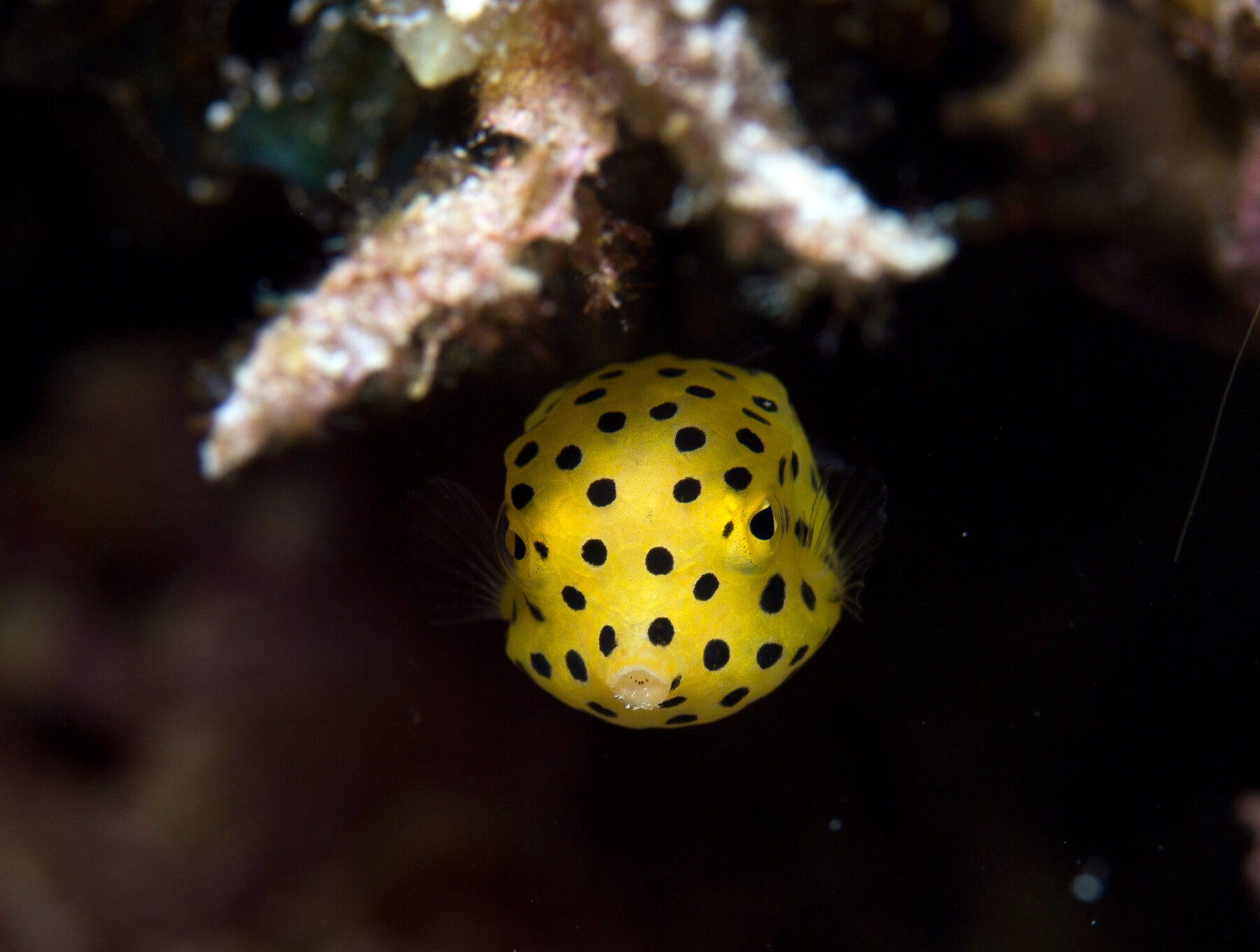
“The yellow boxfish looks like a cube – initially their young come in yellow with dark-blue spots” © Flickr.com

The oceans hold the key to incredible underwater mysteries. Despite the thousands of species that have been discovered, studied and catalogued, we have only examined a tiny fraction of the subsea realm. And with more than 95 percent of this underwater world remaining unexplored, it seems many of the ocean’s weird and wonderful secrets have yet to be revealed to us. We bring you six of the world’s weirdest sea creatures discovered so far:

Blobfish

Species: Psychrolutes marcidus

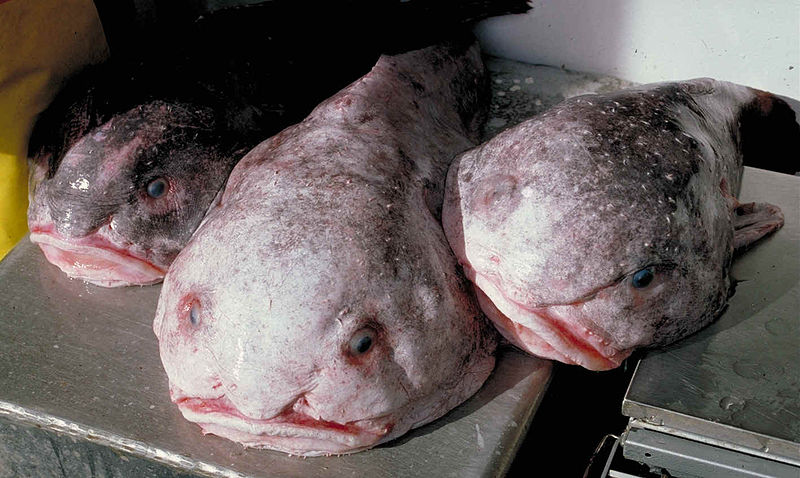
Some marine scientists call them “fathead”, but at first glance, they look like a mass of human brain. The blobfish is rarely seen near the shallow parts of the ocean, but lurks in the deep waters off the coasts of Tasmania, Australia and New Zealand. While lacking a gas bladder, the blobfish compensates by having a jelly-like body and a near-absent skeleton. The high pressure underwater enables the blobfish to retain its regular fish-like appearance, but the change in pressure when it’s pulled above water causes it to look like a pile of flesh.

The blobfish does not hunt purposefully; instead they wait patiently for food like shellfish, crabs and sea urchins to come their way before sucking them into their gaping mouths. If there is a scarcity of food sources, it is likely that the blobfish will die of starvation. The practice of bottom trawling is currently threatening the long-term survival of the species.

The blobfish, while lacking a gas bladder, is compensated with a near-absent skeleton and a jelly-like body © Wikimedia Commons
“While lacking a gas bladder, the blobfish compensates by having a jelly-like body and a near-absent skeleton” © Wikimedia Commons

Pink See-Through Fantasia

Genus: Enypniastes

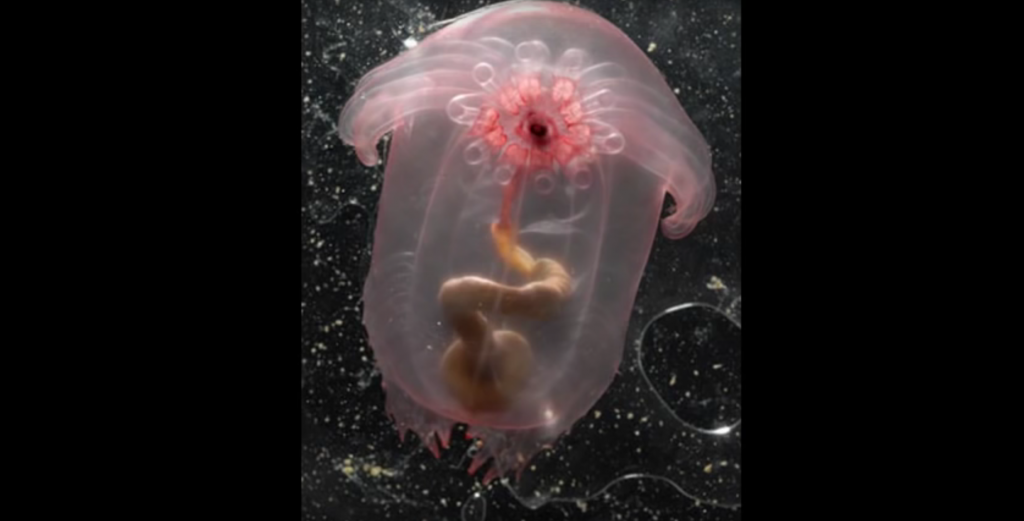
Sounding like a seductive title of a lingerie line, the pink see-through fantasia is actually a swimming sea cucumber found in a remote area of the western Pacific Ocean (bordered by Sulu Archipelago, the Mindanao Islands of the Philippines, and Indonesia).

A team of National Oceanic and Atmospheric Administration marine scientists and underwater photographers unexpectedly found this animal during a research expedition, 2,500 metres deep in the Celebes Sea. Apart from scientists knowing that it uses the tiny finger-like webbing below its body to swim around, the behavioural patterns and biology of this sea cucumber are a complete mystery.

"A team of National Oceanic and Atmospheric Administration marine scientists and underwater photographers unexpectedly found this animal during a research expedition, 2,500-metres deep in the Celebes Sea." © Youtube.com
“A team of National Oceanic and Atmospheric Administration marine scientists and underwater photographers unexpectedly found this animal during a research expedition, 2,500 metres deep in the Celebes Sea” © YouTube.com

Tiny Pink Flapjack Octopus

Species: Yet to be confirmed

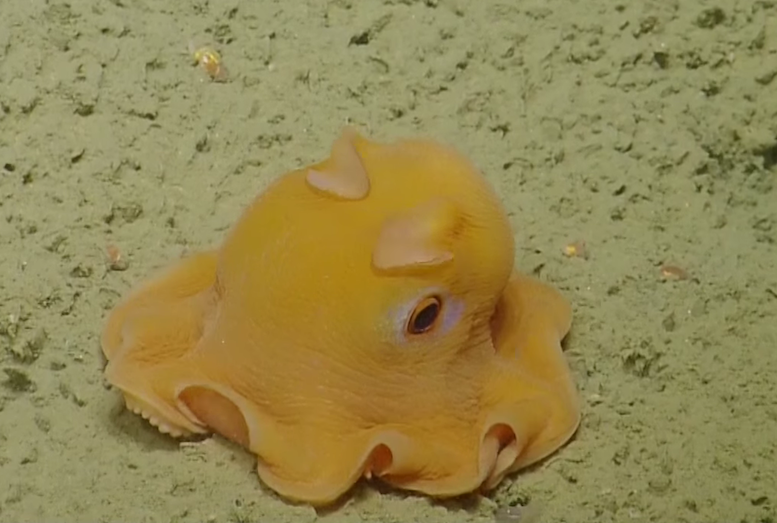
The size of a human fist, and with features vaguely reminiscent of those of the ghosts in Pac-man, the tiny pink flapjack octopus has caught the attention of the marine science world. Researchers are still looking for a suitable Latin species term for it, most in favour of the name Opisthoteuthis adorabilis. These big-eyed critters are still in the early research stage, but have so far been found to dwell in the deep sea, moving on the seabed to find food and mates. The octopus has special webbing between its tentacles that give it a balloon-like bounce when it swims. Marine enthusiasts would have to dive 200 to 600 metres below the Pacific Ocean just to get a glimpse of these enigmatic cephalopods.

"The size of a human fist, and with features vaguely reminiscent to those of the ghosts in Pac-man, the tiny pink flapjack octopus has caught the attention of the marine science world." © Youtube.com
“The size of a human fist, and with features vaguely reminiscent of those of the ghosts in Pac-man, the tiny pink flapjack octopus has caught the attention of the marine science world” © YouTube.com

Basket Star

Species: Gorgonocephalus eucnemis

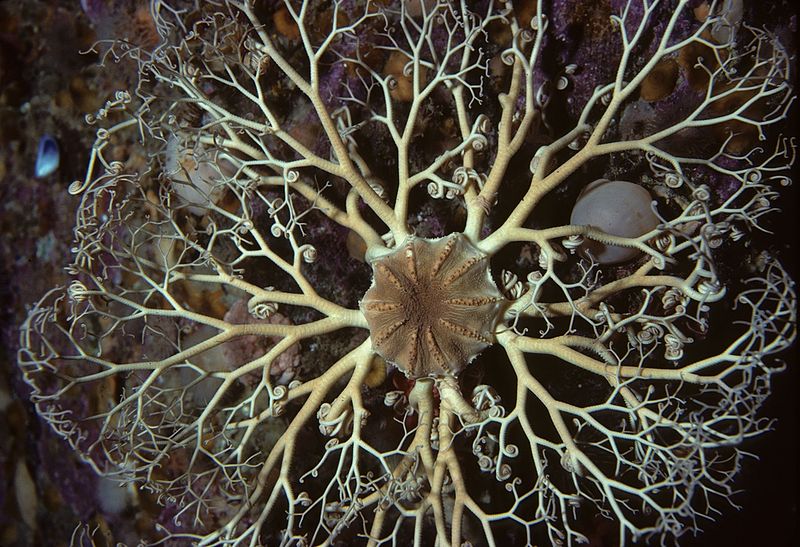
If you don’t look carefully enough, you may mistake this creature for a bunch of seaweed, and run a mile once it starts to wiggle on its own! The basket star is described as having a central disk with thick arms and short vein-like tendrils branching out. The bigger ones can be found deep under the sea while the smaller ones are seen in shallow tide pools. The basket star loves being around corals and sponges, so much so that they will purposely curl up with a poisonous sponge to frustrate their predators.

The basket star hunts for their prey at night and uses their tendrils and mucus to trap small molluscs, fishes and crustaceans, before waiting until morning to feed on them. When they feel threatened, these creatures curl into a tight ball.

The basket star is described to have a central disk with thick arms and short vein-like tendrils branching out. © Wikimedia Commons
“The basket star is described as having a central disk with thick arms and short vein-like tendrils branching out” © Wikimedia Commons

Tassled Scorpionfish

Species: Scorpaenopsis oxycephala

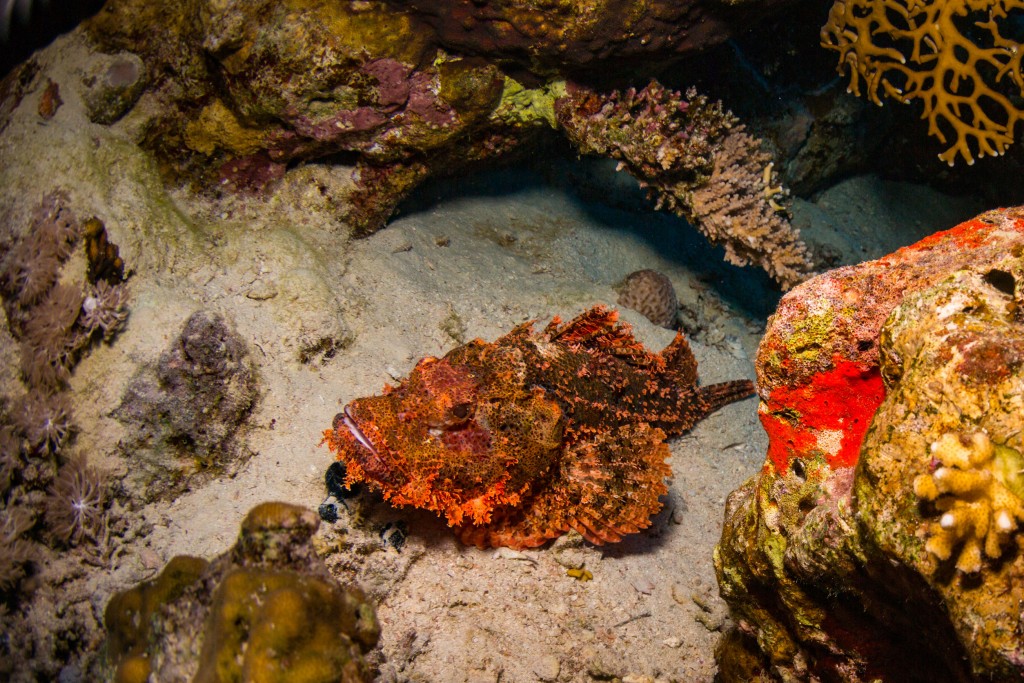
Commonly found in the shallow areas of the Western Indo-Pacific and South Africa, the tassled scorpionfish is constantly on the lookout for unsuspecting fishes, shrimps and crabs. Once its target is close, the scorpionfish’s mouth becomes a powerful suction device that sucks the prey into its mouth in the blink of an eye. Its clever camouflage, which changes according to its surroundings, makes it hard to differentiate them from regular corals.

The tassled scorpionfish’s anal, dorsal and ventral fins are venomous, and used to ward off predators. The animal lacks a swim bladder, and is thus found near or on the seabed waiting for its prey. Normally, its poisonous fins will deter predators, but it does not pose a problem for adult octopuses, which will readily and effortlessly chomp them down.

"This animal lacks a swim bladder, thus it is found near or on the seabed waiting for its prey." © Wikimedia Commons
“The animal lacks a swim bladder, and is thus found near or on the seabed waiting for its prey” © Wikimedia Commons

Yellow Boxfish

Species: Ostracion cubicus

The yellow boxfish looks like a cube – initially their young come in yellow with dark-blue spots. As it grows older, the boxfish grows longer and their colours change with their spots, eventually progressing to white with blue rings. Though their size seems tiny at first, they can grow up to 45 centimetres as adults.

Yellow boxfish are not aggressive by nature, but when provoked can release a deadly toxin called “ostracitoxin” – which appears as foam on the water’s surface when released. Due to their low tolerance for stress, they find security in
crevices among rocky or coral reefs but have been known to venture out into the open ocean.

For more weird and wonderful creatures, including those caught on video, check out “The Man Who Captures Never-Before-Seen Underwater Videos“.

Liquid Guru: The Man Who Captures Never-Before-Seen Underwater Videos (Part 3)

0

Last week, we revealed four of the Liquid Guru’s top underwater videos. This week, as the final part of our three-part series, we bring you the final four: 

Soft Coral Pipefish

Soft Coral Pipefish – Siokunichthys breviceps from liquidguru on Vimeo.

Siokunichthys breviceps is a marine species that is associated with tropical soft coral habitats, it has no recorded predators or prey, but likely preys on small planktonic or benthic crustaceans.

“These are tiny, around four to five centimetres long and very slim. I had seen some photos that our guests had taken, and was very excited to go and film one, especially as they look like a challenging subject!

“Soft coral is, as the name suggests, soft. This means that it moves around, swaying to and fro. And this means [that soft coral pipefish], together with their diminutive size, are rather tricky to film. Undeterred, as always, I was lucky to find a few of them and managed to keep them in focus for long enough to capture.

“They are very beautiful, and they move around, seeking cover in the coral, occasionally poking their heads out to look ‘outside’. After studying the footage on a big screen when I got back, I noticed that I had managed to film a male pipefish, and halfway through this clip you can see, on the side of his body, small eyes where the eggs are forming! A wonderful thing to see.”

Wonderpus Barricade

Wonderpus Barricade from liquidguru on Vimeo.

Wunderpus photogenicus is a species of octopus that is found in shallow waters, and has well-defined white spots on the mantle, and bars on the arms.

“A wonderful Wonderpus, trying to hide by building a coral barricade. These incredible octopus are tiny. This one’s head is about 3centimetres from top to bottom.”

Syllid Worm

Syllid Worm from liquidguru on Vimeo.

Syllids are a large and diverse group of active worms which are mostly found creeping over sponges, ascidians, hydroids, bryozoa and algae or burrowing in the surface layers of silt and are common in protected sandbanks. They feed by piercing the skin of certain marine animals and pump out the juice.

“A rather interesting critter has been seen and photographed recently. After a bit of research we discovered it was a type of something called a Syllid Worm.

“I finally found one of these very pretty creatures yesterday and managed to film one. They are smaller than I thought they would be, as this one is only about three or four centimetres long. It is great to watch its multiple little feet moving…”

Rare Nudibranch

Melibe colemani – Rare Nudibranch from liquidguru on Vimeo.

The Melibe genus is unique in comprising of active predators versus the typical Nudibranch that feed on sessile inverts. Melibe colemani was first discovered by the late great underwater photographer, Neville Coleman.

“This amazing nudibranch is often called the holy grail of the sea slug world. Incredibly cryptic and only known from a few areas, I have wanted to see this critter for many years. Finally, I have…

“When seen still, i.e. on a photograph, it can be hard to work out exactly how this creature works. Where’s its head? Is it all body? Is it real? I was lucky enough to film it feeding, and so you can clearly see how it’s put together, with the distinctive Melibe extendable oral hood, which it throws out in front of it, like a net, to capture small crustaceans.”


Check out the rest of the series

Larval Stage Moray Eel


Liquid Guru: The Man Who Captures Never-Before-Seen Underwater Videos (Part 1)


editScreen Shot 2016-08-26 at 11.34.08 am copy

Liquid Guru: The Man Who Captures Never-Before-Seen Underwater Videos (Part 2)

Underwater Photographer of the Week: Christian Vizl

0
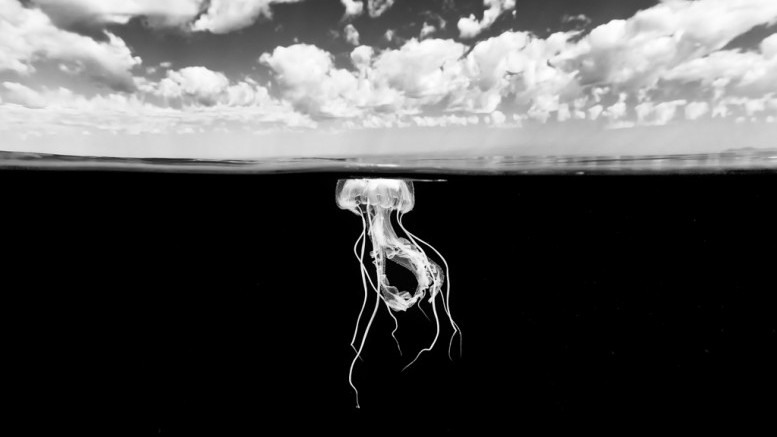
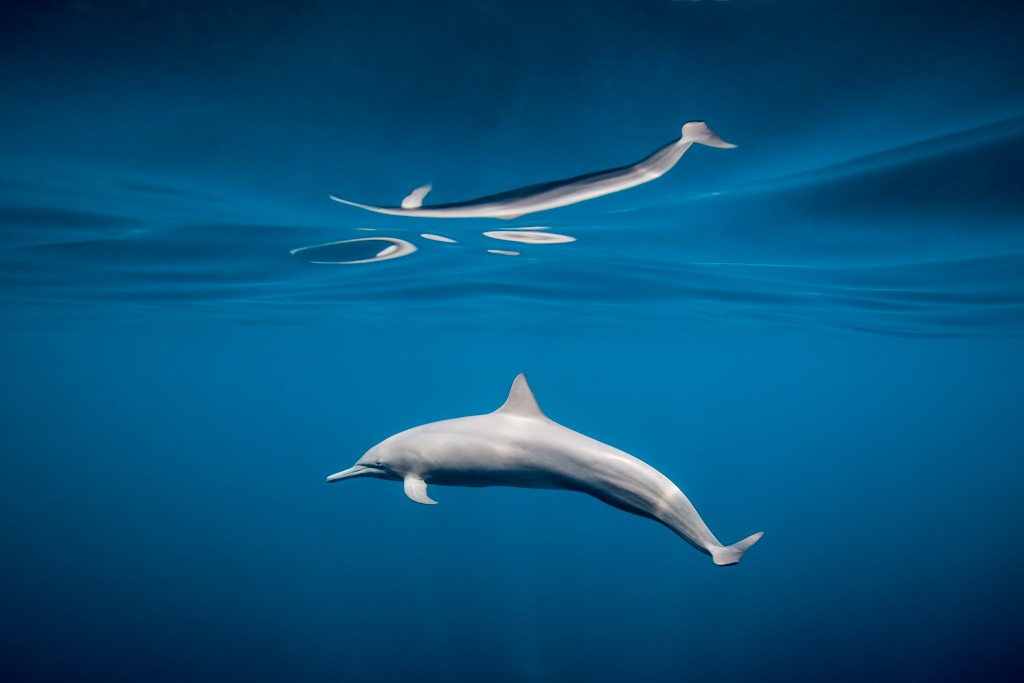
Half-and-half portrait of a jellyfish swimming in the open ocean some five miles off of the coast of Ixtapa, Guerrero, Mexico © Christian Vizl
Born in Mexico City, underwater photographer Christian Vizl has created a portfolio of images that present the underwater world in never-before-seen ways. Focusing mainly on using ambient light to create dramatic and emotionally touching photographs, Christian has made a career out of crafting unique portrayals of marine animals. We caught up with the man to talk about his work and personal life, and also to showcase some of his top images:
 
Xcalak.16.07.16-3973
“I have always loved photography, Nature, and the ocean. As far as I can remember I’ve been taking photographs (above water) and as soon as I could pay for my dives, around the age of 22, I started diving. © Christian Vizl
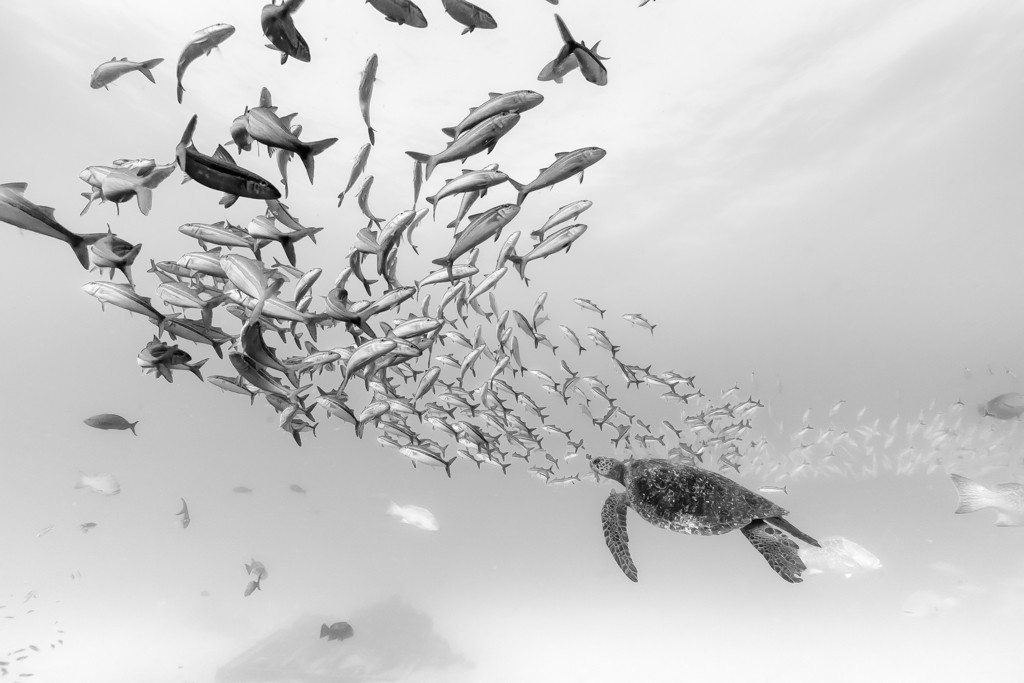
México, Baja California, Sea of Cortez, Cabo Pulmo. A sea turtle and a school of fish swimming above the remains of a shipwreck. © Christian Vizl
A sea turtle and a school of fish swimming above the remains of a shipwreck, Cabo Pulmo, Baja California, Mexico © Christian Vizl
What made you want to become an underwater photographer?
I have always loved photography, Nature, and the ocean. As far as I can remember I’ve been taking photographs (above water) and as soon as I could pay for my dives, around the age of 22, I started diving. In 1997 I became a diving instructor, but it wasn’t until many years later (in 2011) that I took my first underwater images. Suddenly, I combined my two lifelong passions and that was a turning point in my life. Since then all I can think of is being underwater taking pictures, and the main reason remains the same: For me taking pictures underwater is just a pretext to be exactly where I love to be – in Nature, in the ocean, in the presence of all its amazing life.
 
Your first underwater shot?
My very first shots where in [swimming] pools in Mexico City in early 2011. Then I went to shoot my first cenotes in southeast Mexico in the state of Quintana Roo, and my first shot in the ocean was in December 2011.
 
PezVela.04.03.16-1592
A great image comes from the heart, and from passion and love for what you are photographing and then it transforms through the use of your creativity. © Christian Vizl
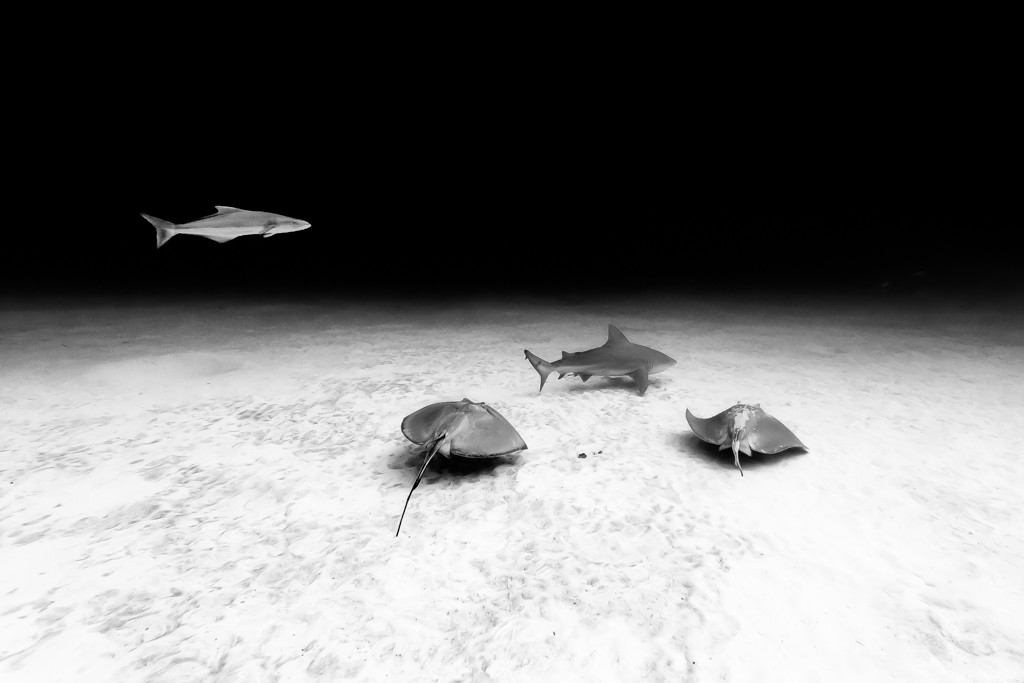
México, Quintana Roo, Playa del Carmen. A bull shark, two southern stingrays and a cobia swimming some 60 ft deep in a sandy bottom. © Christian Vizl
A bull shark, two southern stingrays and a cobia swimming some 60 feet deep over a sandy bottom, Playa del Carmen, Quintana Roo, Mexico © Christian Vizl
 
The story behind your most memorable underwater shot?
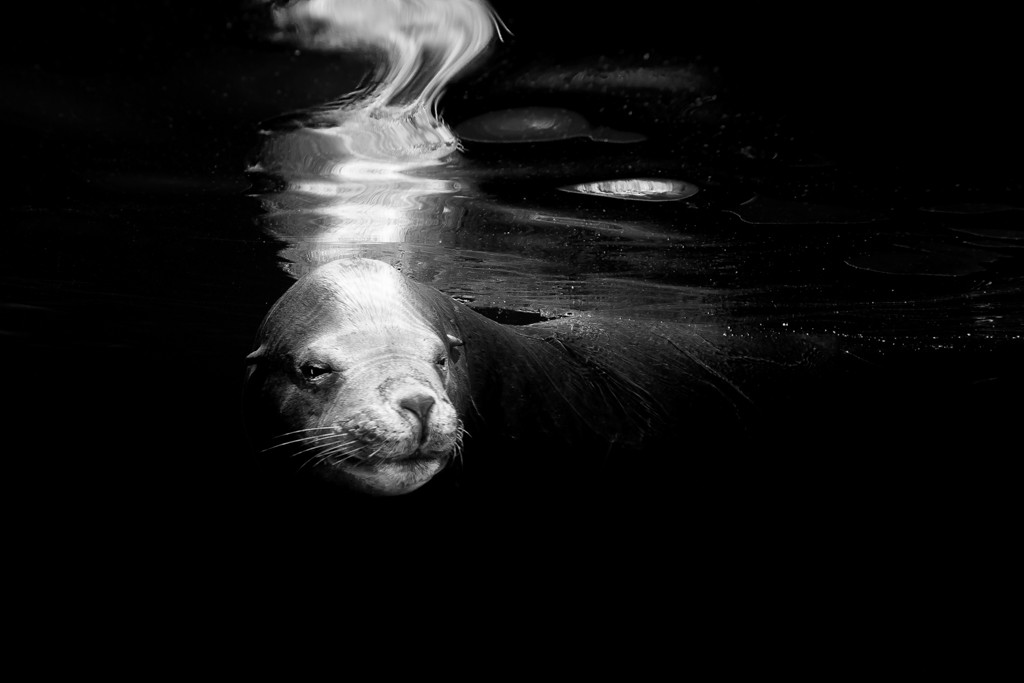
It was in La Lobera, a small island outside La Paz, Baja California, Mexico, where hundreds of sea lions live all year round. Usually there are other divers in the area, but this day in particular I managed to stay in the water after everyone had left. It was a perfect, calm afternoon, when I realised one of the males had started to swim in a circular pattern around me. The males can be aggressive because they are always watching out for their territory, and watching over their females (especially during breeding season) and their babies during their first months. But this one was very calm, almost as if he felt his job was done for the day and that he could relax in my presence, and he did!
 
His swimming slowed, and he was getting closer to me. This went on for around 20 minutes, and during all this time I stayed in the same place and eventually took pictures of him as he swam by me. We ended up about a metre away from each other, when suddenly he stopped swimming and just rested at the surface. He only took his head out of the water from time to time to take a deep breath, and went back to just relax and float on the water. I felt very honoured and happy that he had allowed me to be so close to him, and the feeling to be so close and intimate in the presence of such a magnificent and beautiful animal is something I will never forget.
 
México, Baja California, Sea of Cortez, La Paz. Portrait of a male sea lion swimming at la lobera. © Christian Vizl
Portrait of a male sea lion swimming at La Lobera, La Paz, Baja California, Mexico © Christian Vizl
 
Where is your favourite dive destination?
That is a very hard questions to answer, since I love just about everything in the ocean, from the smallest critters to the mighty whales. I have found so much beauty and awesomeness in each animal that it is hard to choose one in particular. But I have been exploring the open ocean in the Mexican Pacific and find so much life there that today it is one of the areas where I have a particular interest in. 
 
The site you’d most like to dive, but never have?
So many! Fiji, Cocos Island, Galápagos, and countless places in Asia!
 
The weirdest thing you’ve seen underwater?
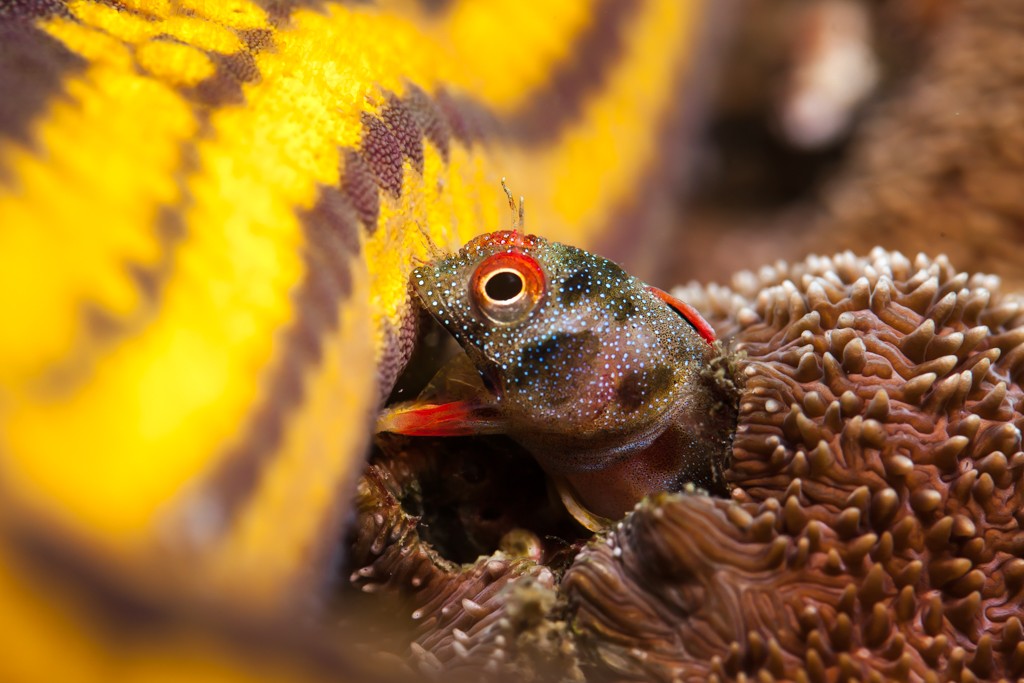
Again, so many! That is one of the things I love about the ocean. One example is a Mexican barnacle blenny biting a starfish!
 
A Mexican Barnacle Blenny coming out of his hidding inside a coral biting a starfish at Ixtapa, Guerrero, México. © Christian Vizl
A Mexican barnacle blenny coming out of his hiding place inside a coral and biting a starfish, Ixtapa, Guerrero, Mexico © Christian Vizl
 
What camera equipment are you currently using?
Canon EOS 5D Mark II, with an Aquatica housing.
 
What is the highlight of your career?
Winning a category in the Wildlife Photographer of the Year in 2014. 
 
…And the low point?
Being stuck on a liveaboard with a very painful lower back injury.
 
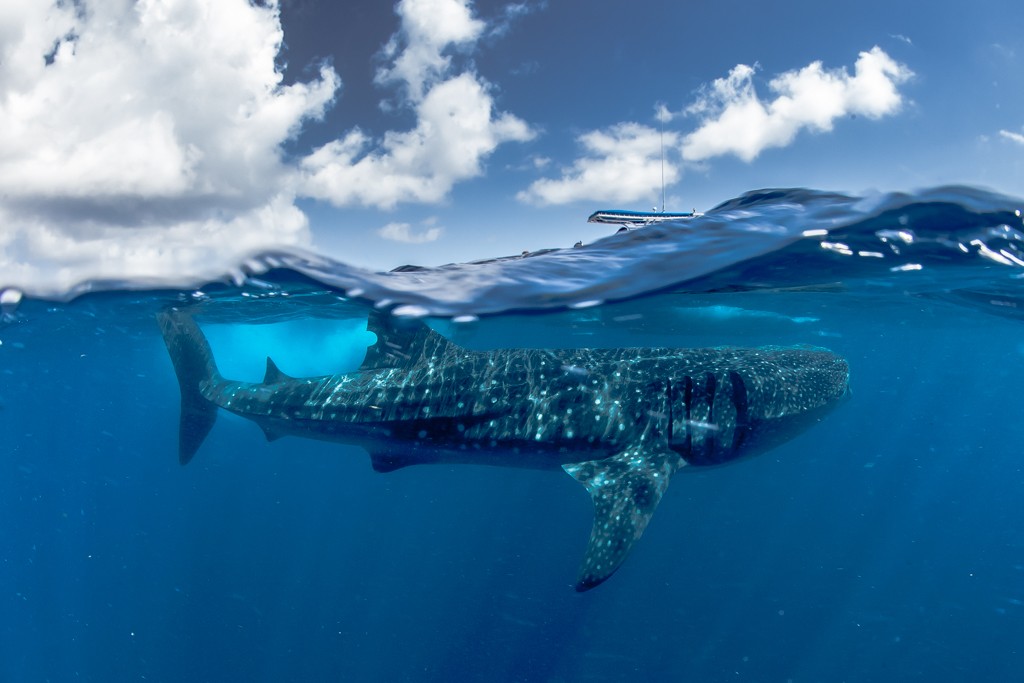
TiburonBallena.07.07.16-3805
“Get inspiration from other photographers that you admire, go to art shows to find inspiration from other forms of art, read books or guides on underwater photography, but most importantly practise again and again to master techniques” © Christian Vizl
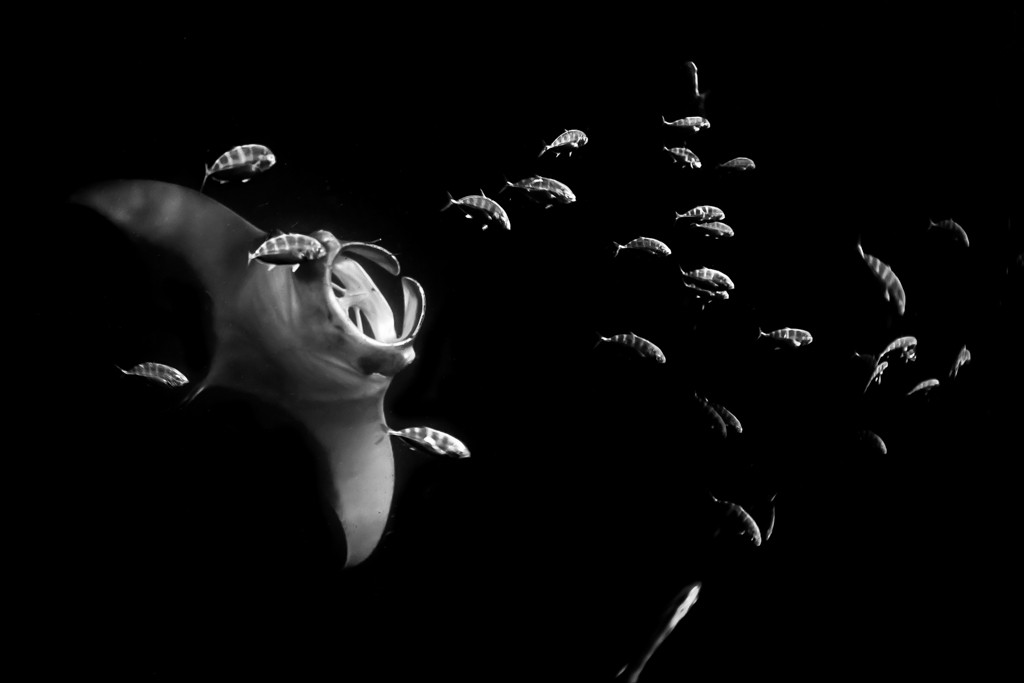
Maldives, North Ari Atoll. Portrait of a giant manta and fish at night. © Christian Vizl
Portrait of a giant manta and fish at night, North Ari Atoll, Maldives © Christian Vizl
 
Have you any advice that you’d like to give aspiring underwater photographers?
I see too many people thinking that they need to upgrade their equipment to take better pictures. A great image comes from the heart, and from passion and love for what you are photographing and then it transforms through the use of your creativity. So if you are not happy with your results so far and want to take better images, I suggest photographers should work on those issues before upgrading their cameras. Go out and shoot with whatever equipment you have. Don’t wait for the perfect dive destination or the most impressive subject. Go to any place where you can get your camera in the water and shoot, shoot, shoot! Even going to a pool to practise your techniques on whatever you find there is useful. Beauty is everywhere but we need to develop our sensitivity in order to see it.
 
Get inspiration from other photographers that you admire, go to art shows to find inspiration from other forms of art, read books or guides on underwater photography, but most importantly practise again and again to master techniques.
 
I also see too many photographers willing to destroy a reef or harass their subjects in order to take a picture. I believe that no image is worth that, and especially in today’s world, where the future of the ocean is in grave danger. Every underwater photographer should be asking themselves how to put their images and love for the ocean in the service of conservation. The ocean and all its living animals need our collective voices… 
 
Is there any particular shot that you still want to get?
Yes, in fact, a series of images with human figures asking for forgiveness to individual animals underwater, for all the killing, suffering and harm we have done to them during our time together on this planet.
 
Ixtapa.06.04.16-2421
“I have been exploring the open ocean in the Mexican Pacific and find so much life there that today it is one of the areas where I have a particular interest in” © Christian Vizl
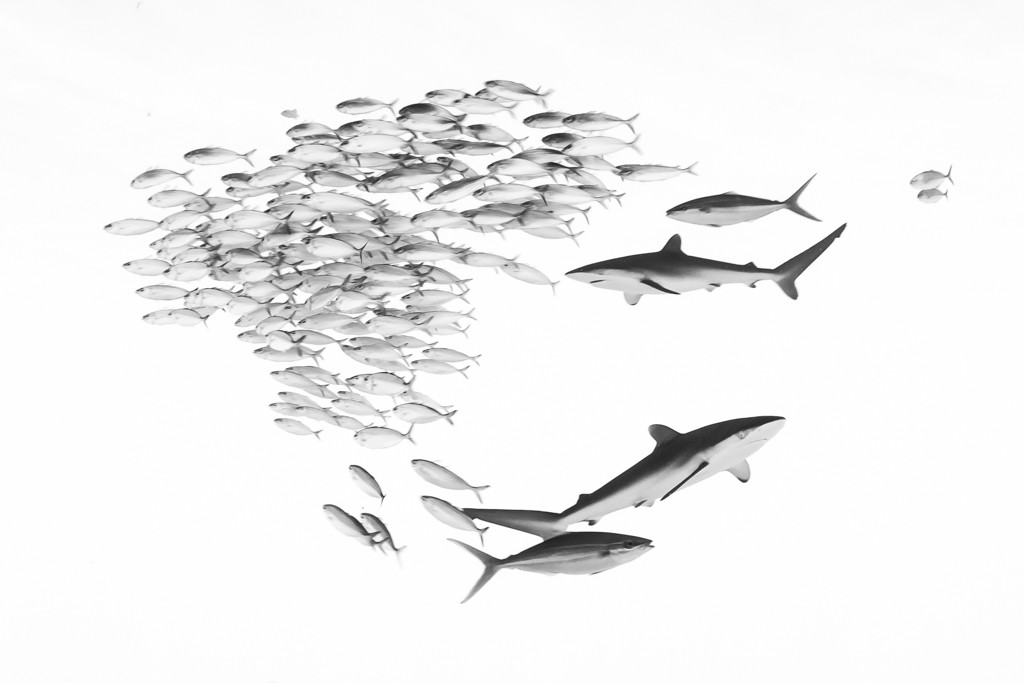
México, Guerrero, Ixtapa. Two silkie sharks swimming among a school of fish at open ocean, some 10 miles off the coast. © Christian Vizl
Two silky sharks swimming among a school of fish in the open ocean, some 15 kilometres off the coast of Ixtapa, Guerrero, Mexico © Christian Vizl
 
For more of Christian’s images, click HERE.

Featured Destination: Anilao, Philippines

0
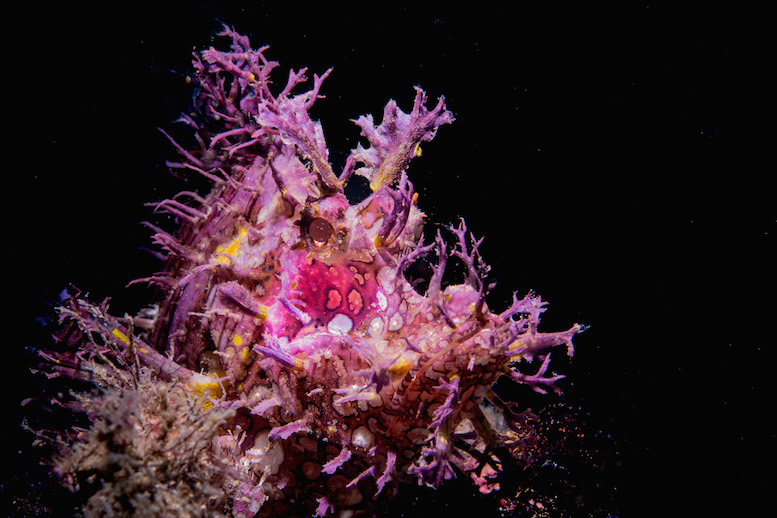
Rhinopias frondasa: These ornate members of the scorpionfish family are regarded as a top find for photographers and naturalists. © Mike Bartick

Anilao is a unique dive destination located in the Batangas region on the main island of Luzon just 2.5 hours southwest of the Philippine capital, Manila. Anilao’s calm waters have been a favourite amongst the local dive community for more than 50 years and claims to be the birthplace of diving in all of the Philippines.

Over the years, countless Manila divers have come to complete their open water dive training, expand their dive skills or just enjoy the quick access to great dives. What many of these divers didn’t realise was the significance of the abundant marine life found here. Ocean and tidal currents, depth and other elements have come together in a way to make this small enclave a very unique dive destination indeed.

Geographically, Anilao is located on the middle part of a large “W” shaped peninsula, surrounded by two large bays. To the west is the Balayan Bay and the east is Batangas Bay. The “Verde Island Passage”, known for its dense biodiversity, also supplies this coastal region of Batangas with a fresh and abundant supply of sea life that naturally makes scuba diving here so exciting.

While remaining a local favourite, Anilao has also gained an international reputation as being a prime destination for underwater macro photography. The area is regarded as a “muckdiving” paradise, with critter-rich dive sites like Secret Bay, the Mabini Pier and Arthur’s Rock boasting numerous sought-after and highly photogenic critters. Hairy frogfish, stargazers, rare nudibranchs, even Rhinopias can all be seen with regularity in Anilao – especially with the help of a local spotter.

But if hovering over a sandy bottom isn’t your thing, perhaps a colourful wall dive at Kirby’s Rock might do the trick. Alternatively, explore the coral gardens of Sombrero Island, a local wreck dive, or visit the shallow pinnacles of Apohls Point. Anilao is never short on dive sites and has something to offer divers of all skill levels.


Must-Do’s

It’s true that diving remains supreme in Anilao but there are also some other things to see and do when visiting. Anilao is best known for its underwater nightlife as opposed to a bar scene (which doesn’t really exist), so if you fancy a drink or two, you’re better off hanging out at your resort. Instead, to really feel the pulse of what Anilao is all about, use the following ideas as a pointer for visiting like a local:

Hiking

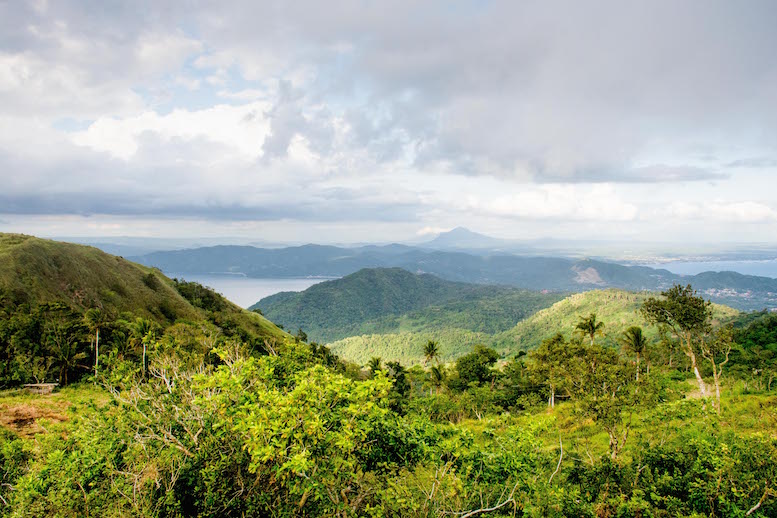
Hike to the top of “Gulugod Baboy” (roughly translated as the “hog’s spine”) for a commanding view of the two bays. On a clear day you can see across the pass to the island of Mindoro and all the way from Verde Island on the left past Sombrero Island to the right. The “spine” is a narrow single file walkway from one hilltop to the next on a green windswept hillside.

Island Hop

Island hopping and sunbathing on one of the scenic nearby islands will give you a true “castaway” feel. Spend the day without seeing another soul as the sun crosses the sky.

Relax

Relax like a local in one of the volcanic superheated mineral hot springs. A local resort has harnessed the heat and built large mineral pools that make a fun night out that adds to the local experience.

Windsurfing and Kiteboarding

Windsurfing and kiteboarding in Balayan Bay are very popular amongst the locals and a seasonal favourite. Plan to be here from January to March to take advantage of the cool easterly winds that gust across the bay each afternoon.

Ocean Kayaking

Ocean kayaking over shallow reefs and clear blue waters is a memorable experience and a great way to unwind from the demands of another world. Either by shore or by boat, kayaking is a great way to get away and enjoy the quiet.

Barbecue on the Beach

Enjoy a barbecue and picnic on the secluded Sepoc Island beach, just a short 30-minute boat trip away. It’s perfect for get-togethers with family and friends, or even that special one-of- a-kind wedding photo.

Snorkel

Snorkel in one of the protected marine parks. Twin Rocks, Arthur’s Rock and Cathedral Rock are all marine protected areas that offer colourful corals, and an assortment of reef fish and turtles.

A hike to the top of Gulogod Baboy is a great wat to spend a non-diving day © Mike Bartick


Top Dive Resorts

  • Crystal Blue Resort is built for underwater photographers, with renowned guides, a 23-bay camera room, on-site photo pro, 17 air-conditioned rooms and a trained chef. The resort conducts underwater photo workshops year round.
    www.divecbr.com
  • Vivere Azure offers 13 boutique suites with lovely views of Anilao, and activities ranging from diving and snorkelling to surfing and kayaking, with the promise of a relaxing spa massage afterwards.
    www.vivereazure.com
  • Sea’s Spring Resort, facing Secret Bay, has over 65 rooms for leisure, a dive operation, Korean barbeque restaurant and mineral hot springs. 
    www.seasspringresort.com


Best Restaurants

  • Anilao Beach Club serves up a mean menu of native Filipino dishes and international fare, but many come for the famous giant burgers, designed for four!
    www.anilaobeachclub.com
  • Johanna’s Grille (P. Burgos, Batangas) in Bauan is famous for their baby back ribs. Be sure to order the large rack with extra barbecue sauce if you’ve had an exhausting day’s diving. Johanna’s also has a nice assortment of beers and a full bar.
  • Sea’s Spring Resort Korean barbecue is a great treat when visiting the hot springs. Be sure to order the Spicy chicken soup and enjoy the assorted kimchi.
    www.seasspringresort.com
  • OMG (Majuben, Mabini) is another local restaurant that serves up a thick hearty noodle soup called lomi. Lomi is made with seafood or chicken (or whatever the menu has to offer) but is always topped with pork crackling. Lomi shacks can be seen at many of the dive sites and make a great way to warm up between dives.


Practicalities

When

Anilao is a year-round destination but the ideal times are October to June. The strong monsoons in July and August are best avoided. Throughout the year, expect great visibility, around 20 metres, and air temperatures averaging 25°C. The water temperature is around 27°C in the April–May peak season, dropping to about 25°C in the cooler January–March months.

How

International Airport, which is well connected to cities around the world. Your resort can arrange your transfer from Manila. Alternatively, hire a private car or take a taxi, bus or jeepney if you’re feeling adventurous.

Entry

Most foreign nationals will be granted a visa on arrival for stays of up to one month, but check with the Philippines embassy in your country. Check the luggage weight restrictions for inner island flight transfers and ferry systems.


sdop 2 Issue 7This article featured in SD OCEAN PLANET “Big Animals & Little Critters Edition”

shutterstock_42695098

Five of the Best Dive Sites in East Timor

0
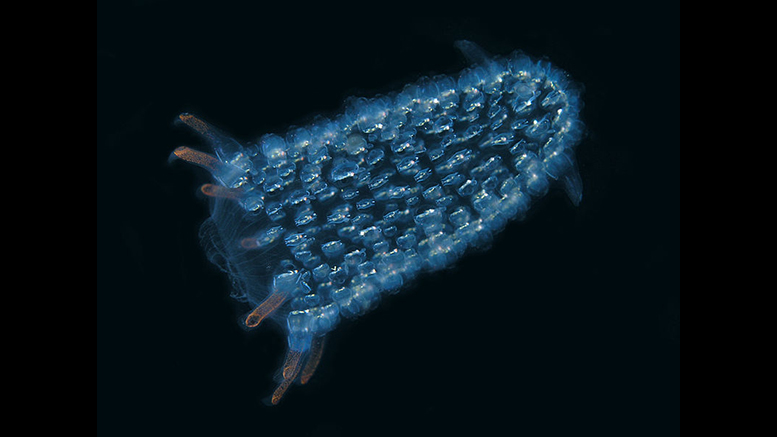
A pelagic colonial tunicate encountered off Ataúro island, East Timor © Nick Hobgood

After the recent discovery that East Timor’s Ataúro Island trumps Raja Ampat in hosting the most biodiverse waters in the world, we decided to ask the experts what else the country has to offer for divers. The tropical island of Timor, which is divided between East Timor on the eastern part and Indonesia on the western part, is largely mountainous and sparsely populated – offering an abundance of rare species both on land and below the waves. Francisco Mesina, Operations Manager at Dive Timor Lorosae offered his list of the five best dive sites in the region:

K57

The farthest dive site in the east and a top site for nudibranchs, K57 is famed for its unusual topography of overhangs and swim-throughs, as well as an abundance of rare critters. With coral that varies in shape, size and formation, the site also features tight crevices and caves, with the chance to spot razorfish, lionfish and boxfish.

Bob’s Rock

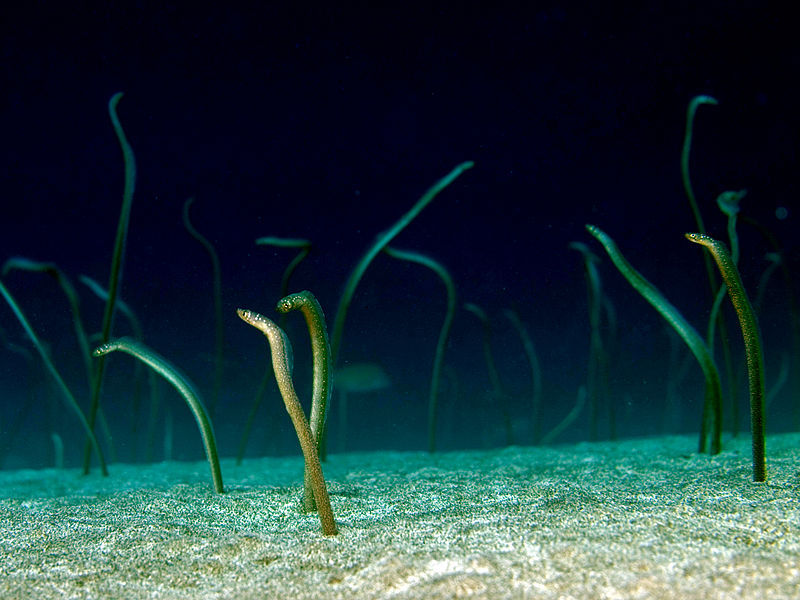
A great muck dive, Bob’s Rock also has a reef and shallow wall to explore. Offering the chance to see leopard sharks, big groupers and plenty of diverse reef fish, it’s a top dive site among those in the know. Near the entry point, there’s a chance to watch garden eels on the seabed sway like reeds in the wind.


Garden Eels on the seabed © Nick Hobgood
Garden eels on the seabed at Bob’s Rock © Nick Hobgood

Lone Tree

A fantastic drift dive that offers great visibility, Lone Tree treats divers to a huge anemone garden that shelters millions of clownfish. There is a variety of reef fish that inhabit the sandy patches and gardens, along with beautiful nudis.

Tasi Tolu

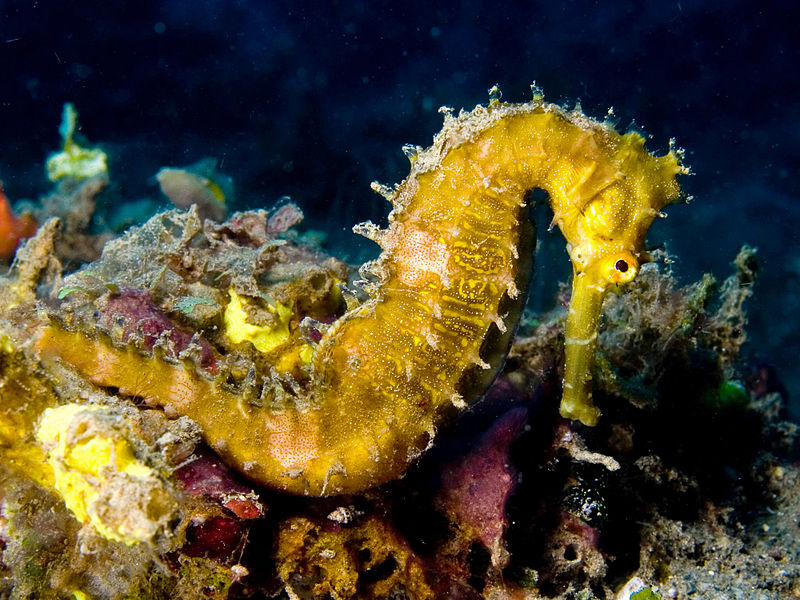
Tipped as the site for muck dive enthusiasts, Tasi Tolu offers divers the chance to seek out plenty of unusual macro subjects, such as seahorses, leaffish, and nudis. It’s also a good site to spot the ever-elusive dugongs, or sea cows, who visit to graze on the seagrass.

Spiny seahorse at Tasi Tolu © Nick Hobgood
A spiny seahorse at Tasi Tolu © Nick Hobgood

Black Rock

Black Rock is known for its spectacular wall that descends down into darkness. Francisco has been to a depth of 50 metres and still hasn’t found the bottom. The site is full of caverns and pelagics passing by in the blue. The currents can, at times, be extremely strong, so we suggest doing it as a boat dive.