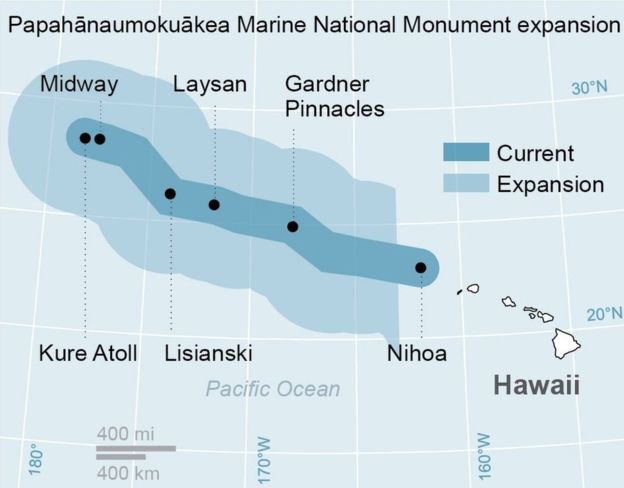
In this day and age, where every marine-related headline is to do with warming oceans or newly-extinct species, it makes a change to finally have a feel-good story of large-scale conservation. Last Friday, August 26, Barack Obama officially expanded the Papahanaumokuakea Marine National Monument off the coast of Hawaii, creating the world’s largest marine protected area.
The move quadrupled in size a monument that was originally created by George W. Bush in 2006, and declared a World Heritage Site in 2010. Spanning 1.5 millon square kilometres, the marine area is known for its many shipwrecks and downed aircraft from the Battle of Midway – a decisive allied victory and turning point in World War II where the U.S. pushed back towards Japan.
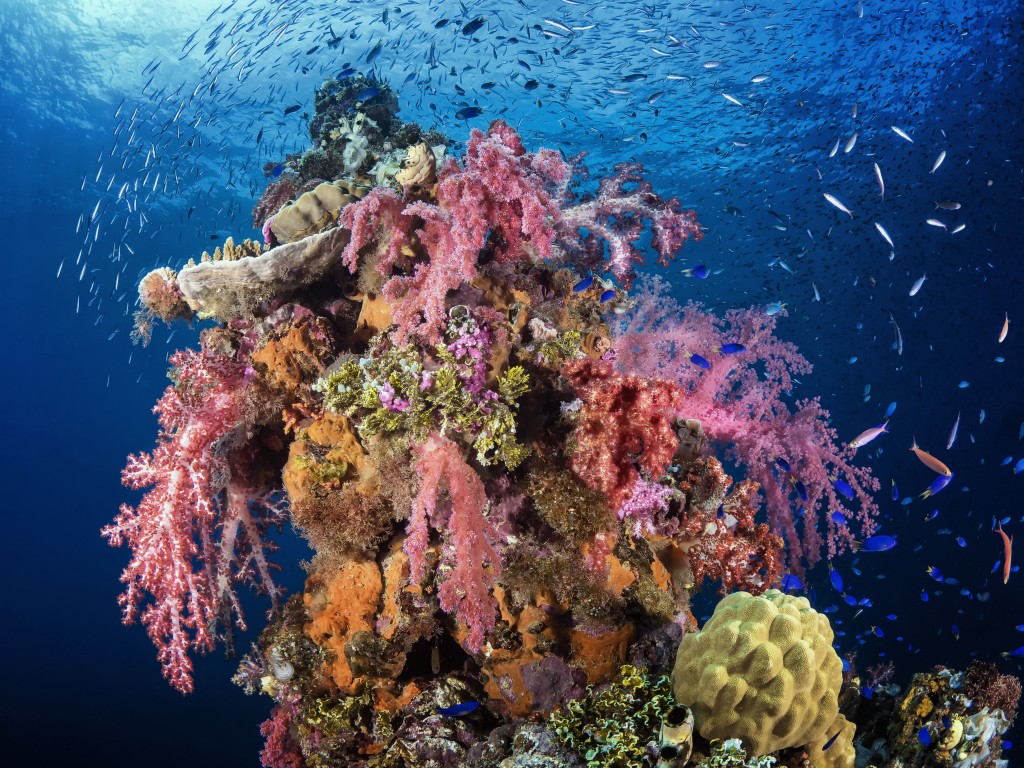
To protect its largely pristine corals and over 7,000 resident marine species, commercial fishing and new mining in the marine reserve is now banned – although it is unclear how the reserve will help mitigate the effects of ocean acidification. A quarter of the life that resides there is unique to the area: rare species such as the endangered green turtle, the Hawaiian monk seal and a 4,500-year-old black coral can be found nowhere else on the planet. The reserve also aims to protect those deep-sea marine habitats that still remain vastly unexplored, allowing scientists to carry out research with an authorised permit.
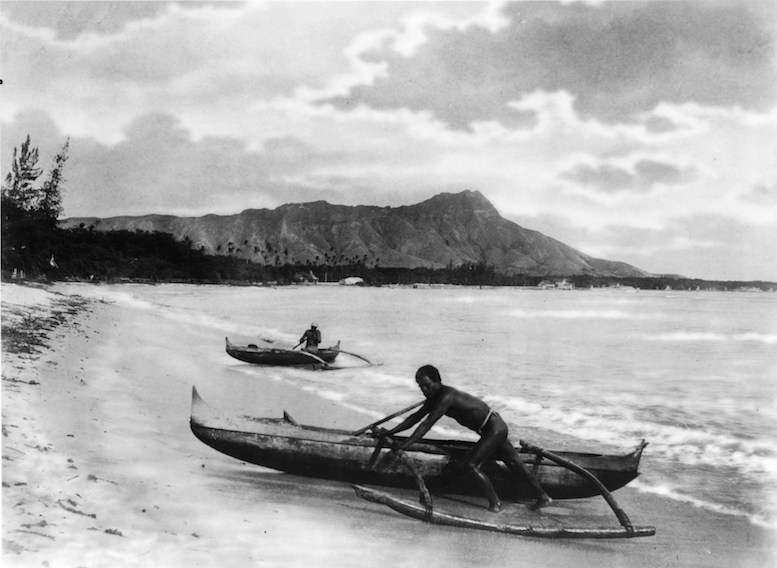
Firmly in Polynesian territory, the area is also of great cultural significance to the native Hawaiian community, who view the waters as sacred due to the many local creation and settlement stories that are based there. For the locals still set in traditional ways and dependent on the water’s resources to feed their families, the government will grant fishing permits.
The marine reserve follows the idea that to make coral reefs less vulnerable to ocean acidification – as they are being severely hit all over the world – all other threats must be reduced to give them at least a fighting chance. This latest development for marine conservation from the U.S. Government is likely to reassure those who think that the U.S. is not doing enough in terms of ocean protection. Still, it is unclear how successful the project will be, and there are many questions concerning how the extremely large area is to be protected – however, for Obama, it is a sweet swan song and addition to his “eco-legacy” that at least suggests “I tried.”
Can’t make it to Beijing for Asia’s largest dive expo, ADEX? Fear not, as the official ADEX media partner, www.uw360.asiawill be your first-stop for live event updates and coverage.
Visit us and get updated with all the latest news rolling in, from live video streaming of speaker talks, to personal interviews and other event happenings. For the first time ever, parts of ADEX China will be streamed live to our dedicated Facebook followers.
Live video streaming
From the ADEX Facebook page, you can gain exclusive access to behind the gates of the event via our live stream. We provide video coverage of the top happenings within ADEX; from the opening ceremony to the Voice of the Ocean competition. With live streaming, you’ll have all the best moments on your laptop, or mobile device. We’ll also be conducting behind-the-scenes interviews with speakers and VIPs, and giving you a lowdown on the whole event.
Constant updates
With constant text updates, including images from the event, you’ll be able to stay truly up-to-date. We’ll bring you a round up of each day – the highlights, the prizes, the fantastic underwater art – and provide a feast of diving experiences more exciting than being face to face with a great white, or smiled at by a frogfish.
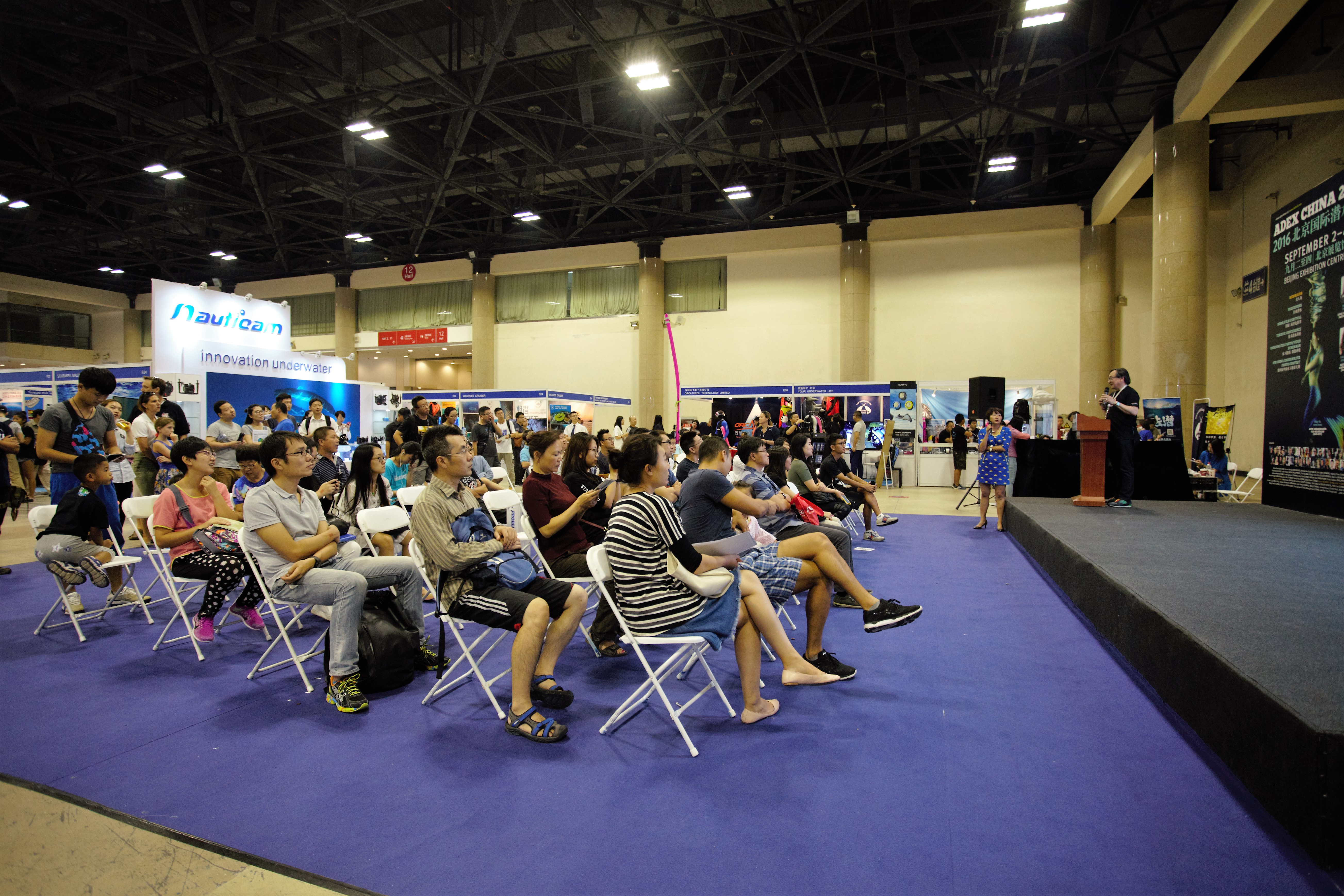
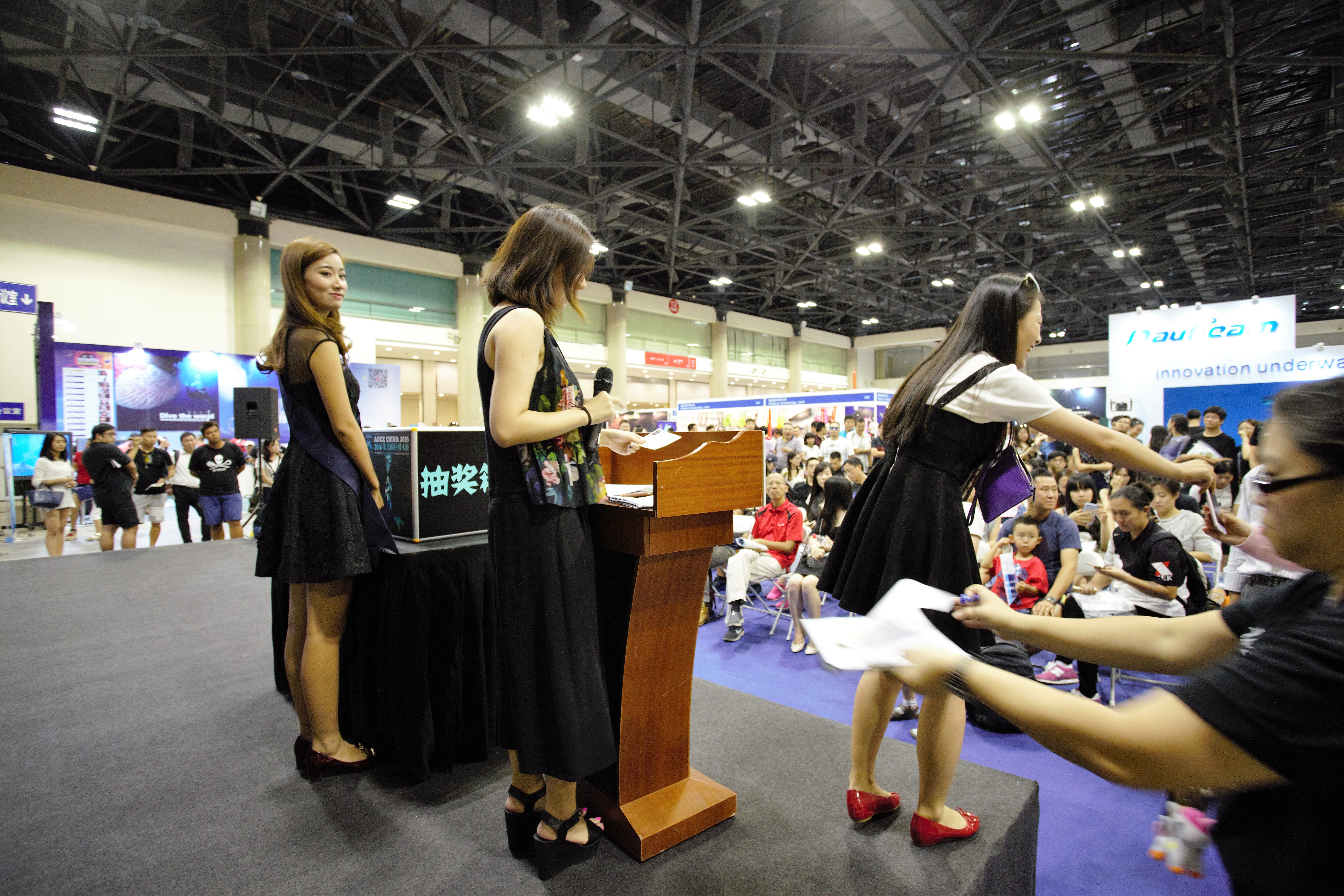
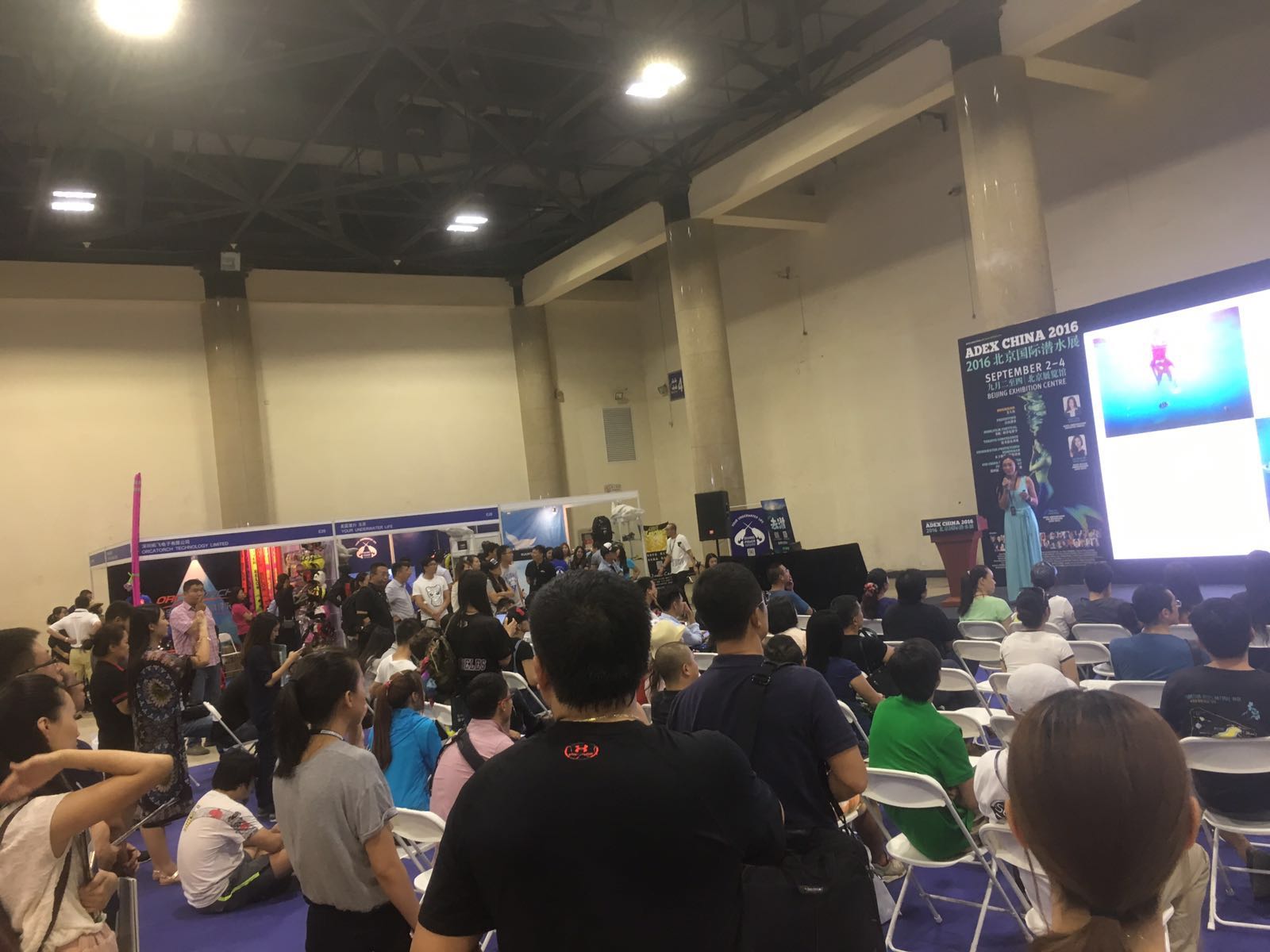
16:00 – What an end, the final prize to the final winner of the Lucky Draw. Huge celebration from the crowd. That’s it. ADEX China 2016 has finished.
15:00 – Get to the Main Stage now for the Lucky Draw. Your last chance to win incredible prizes.
14:00 – We’re here with the images from the show…
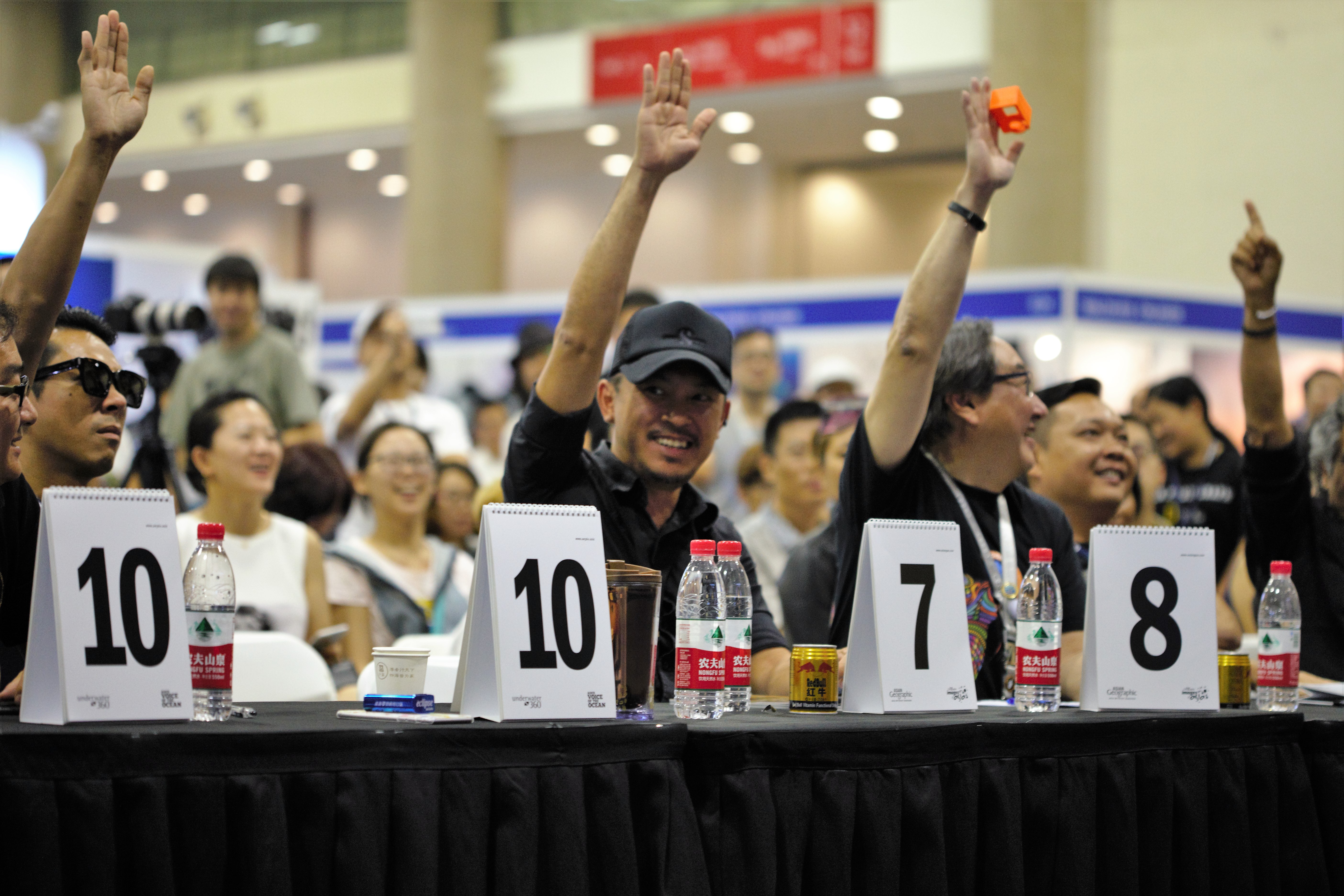
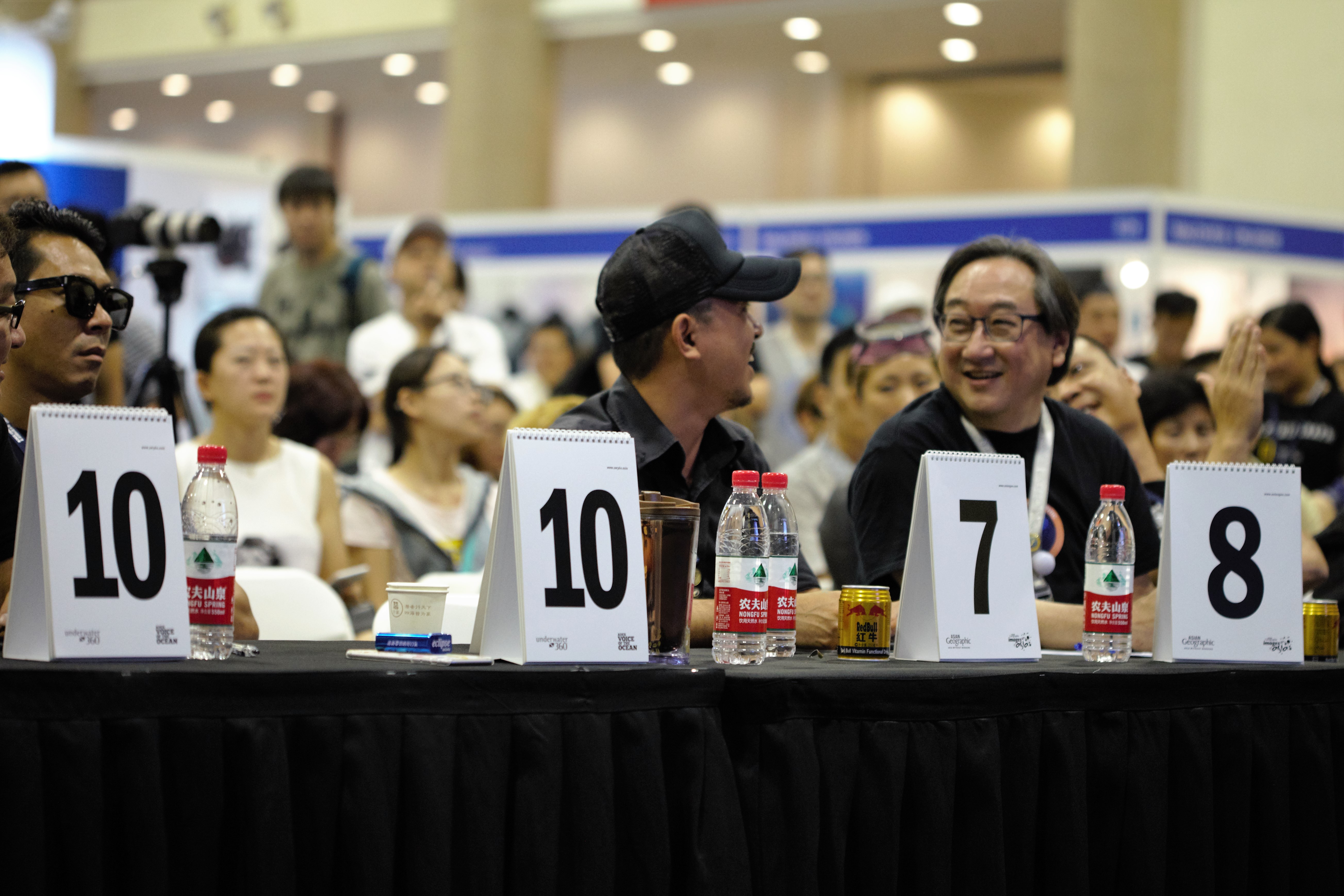
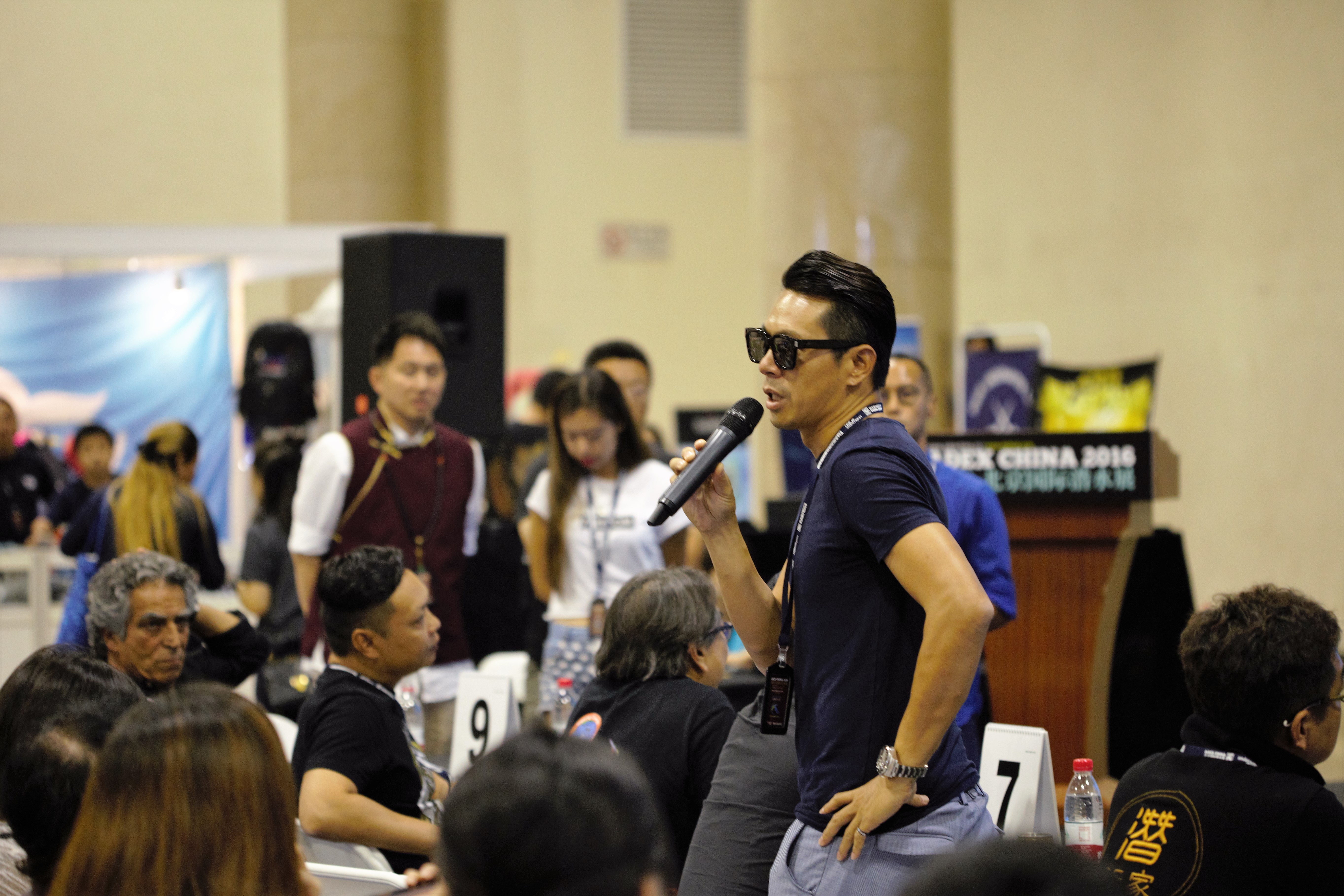
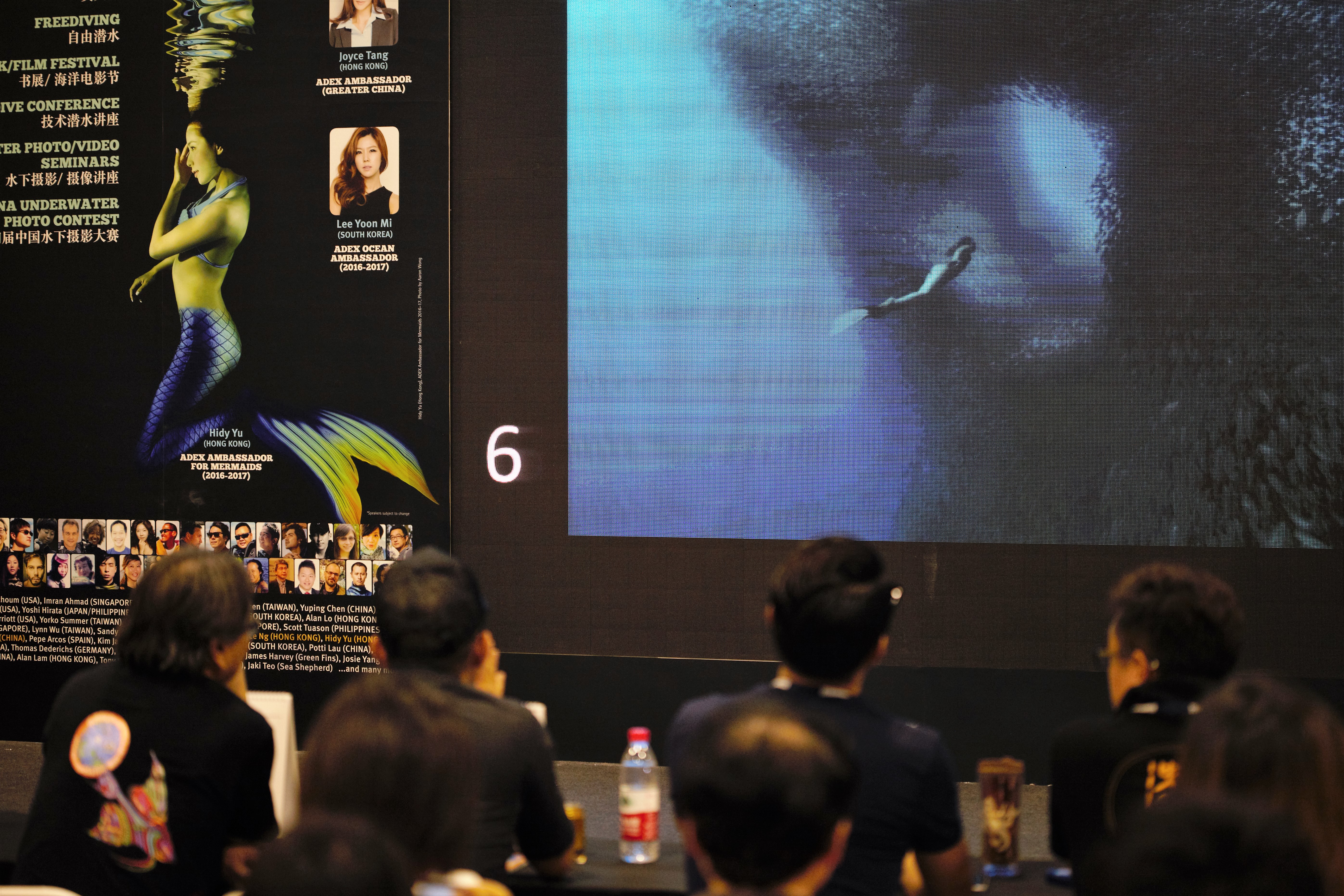
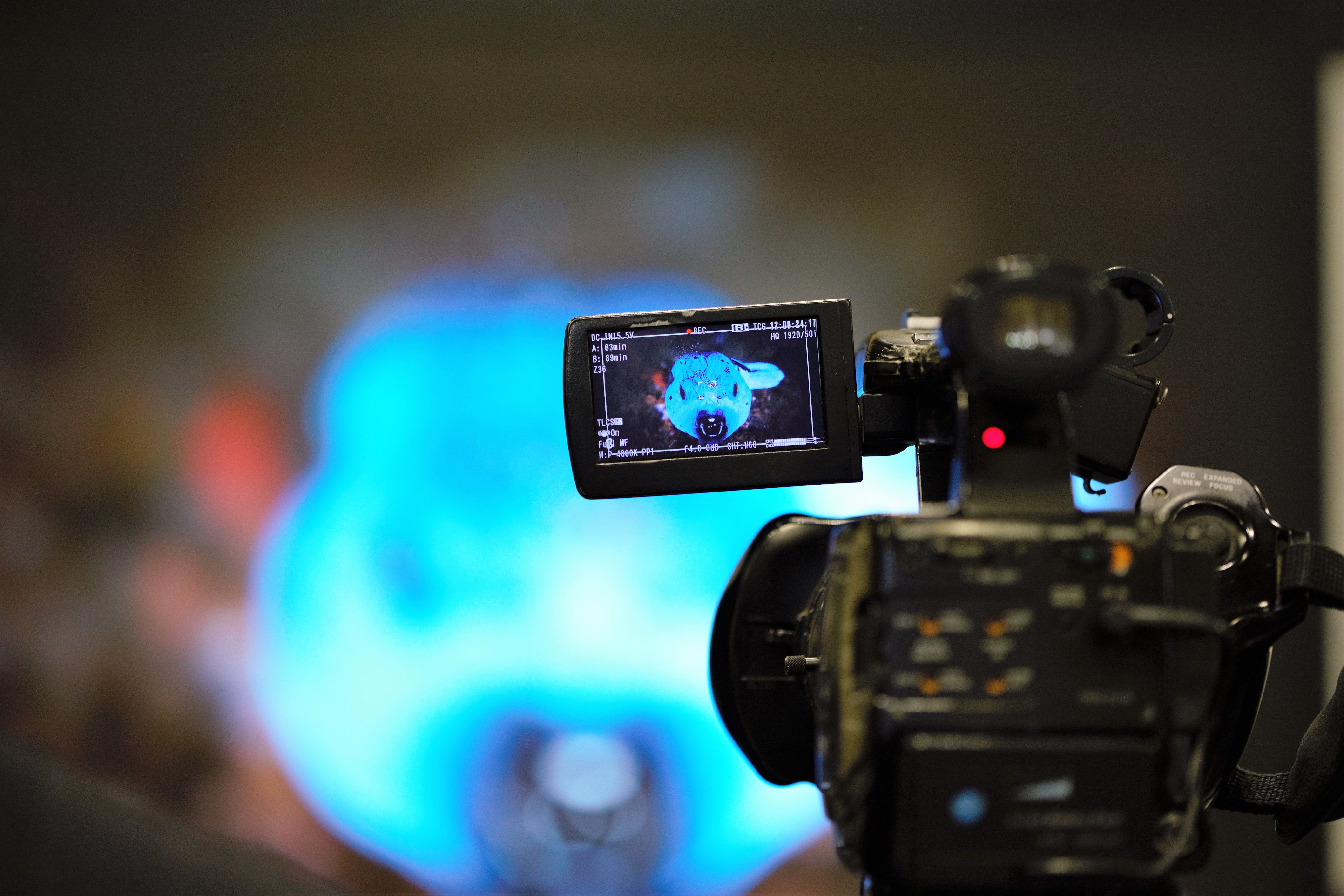
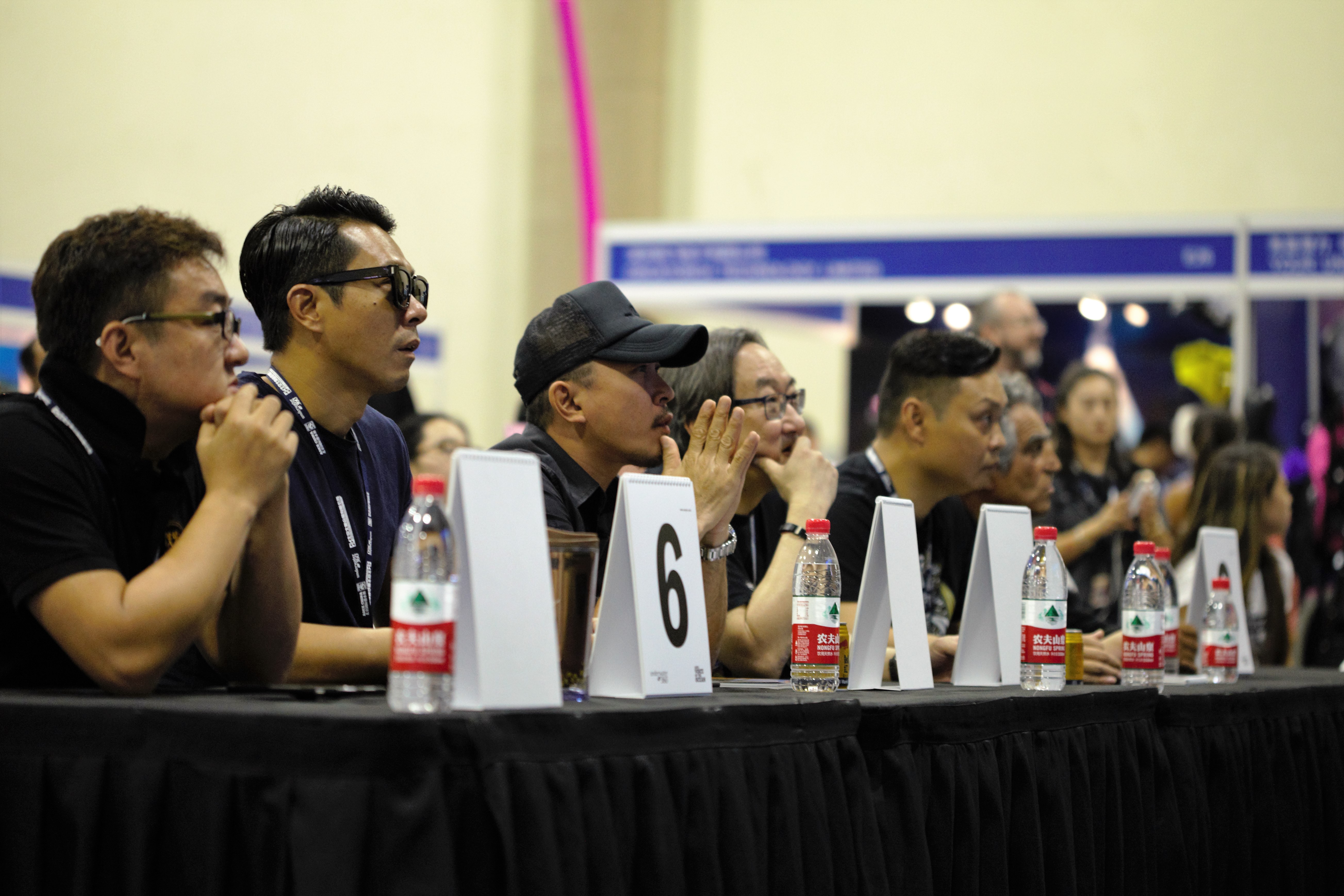
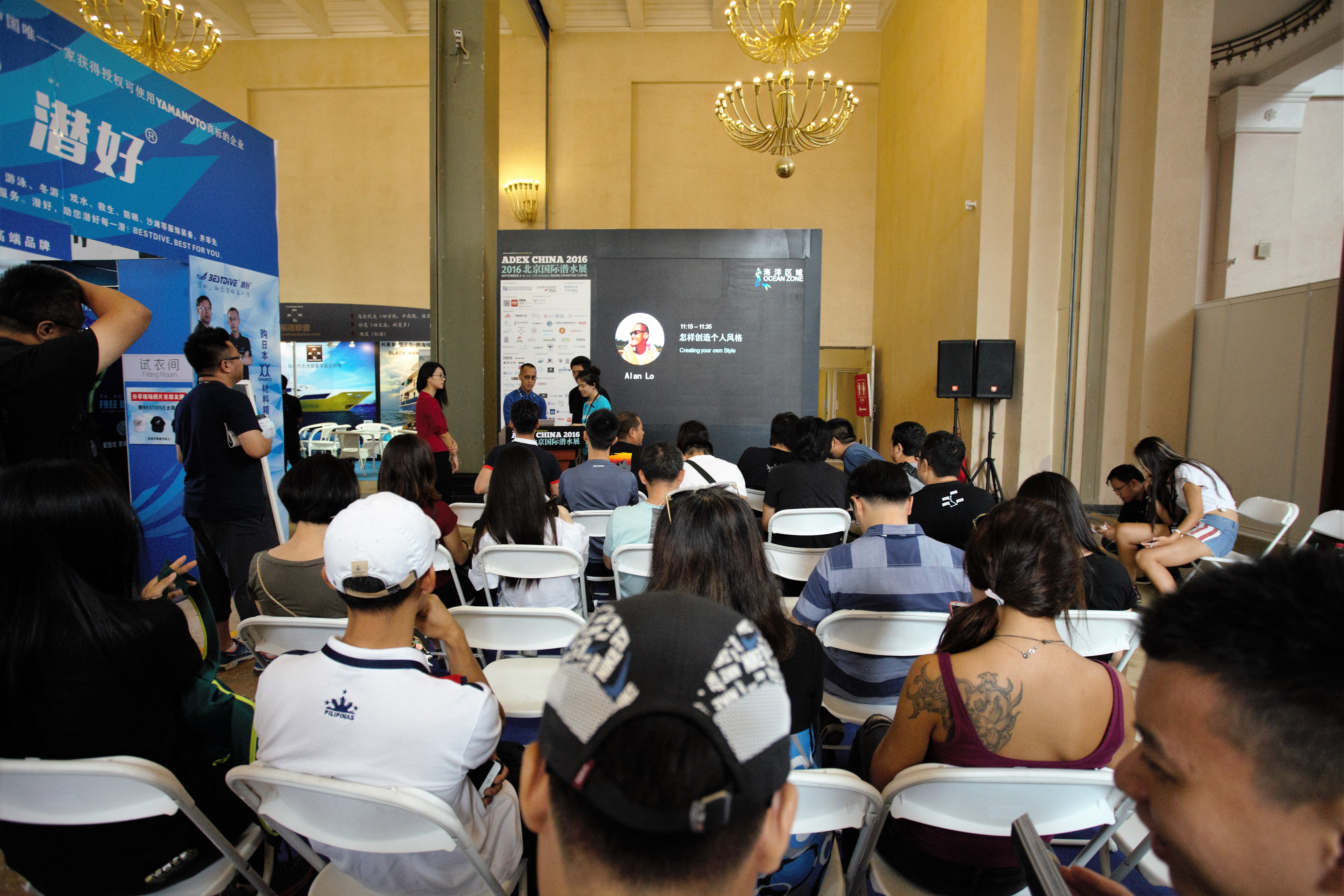
The final vote for “Best of Show”Aaron Wong and Michael Aw comparing their scoresYorko Summer addressing the crowdThe judges analysing a shortlisted imageFootage of ADEX China is being streamed worldwideThe judges analysing a shortlisted imageAlan Lo, moderator for the photo contest
12:00 – The Underwater Photography Contest is taking place at the ADEX China main stage right now!
11:30 – The latest images from the show
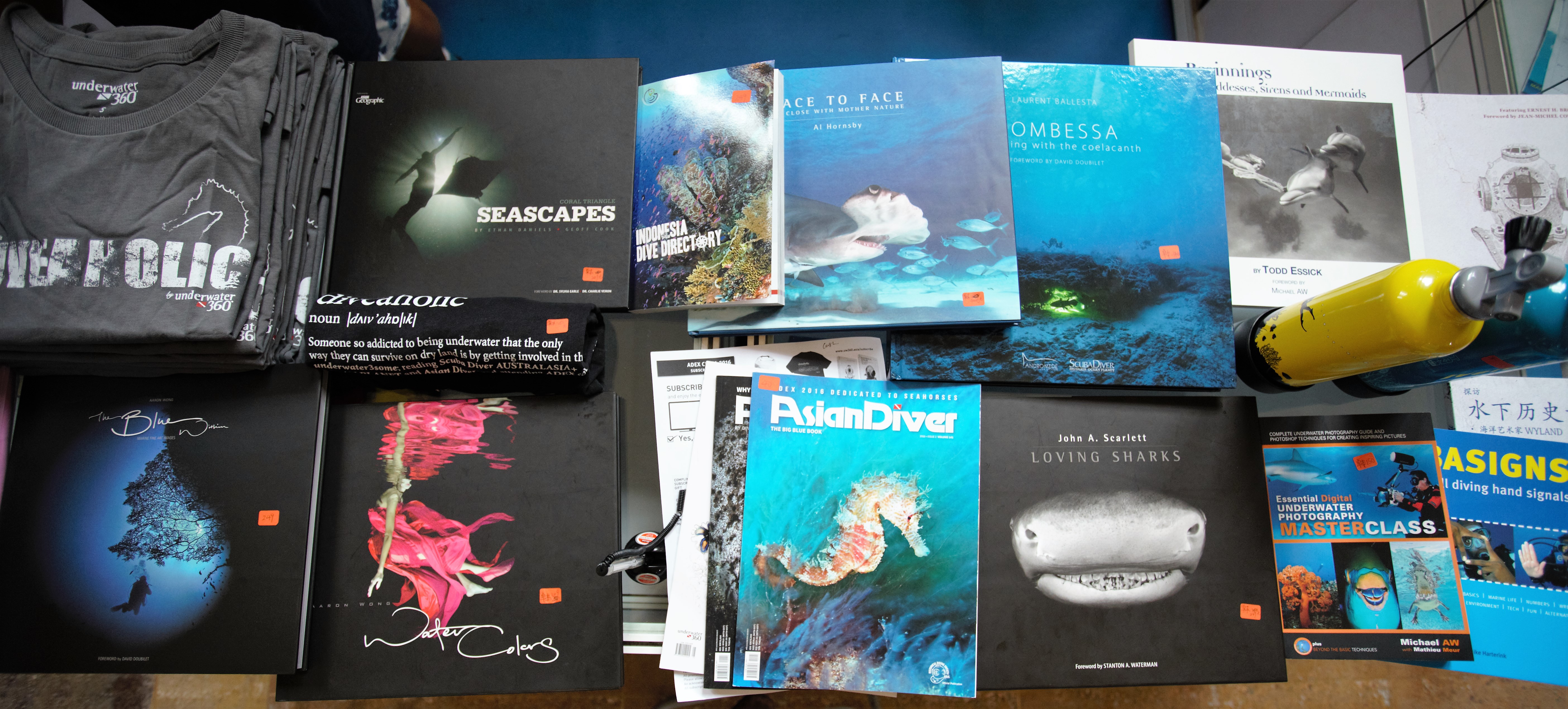
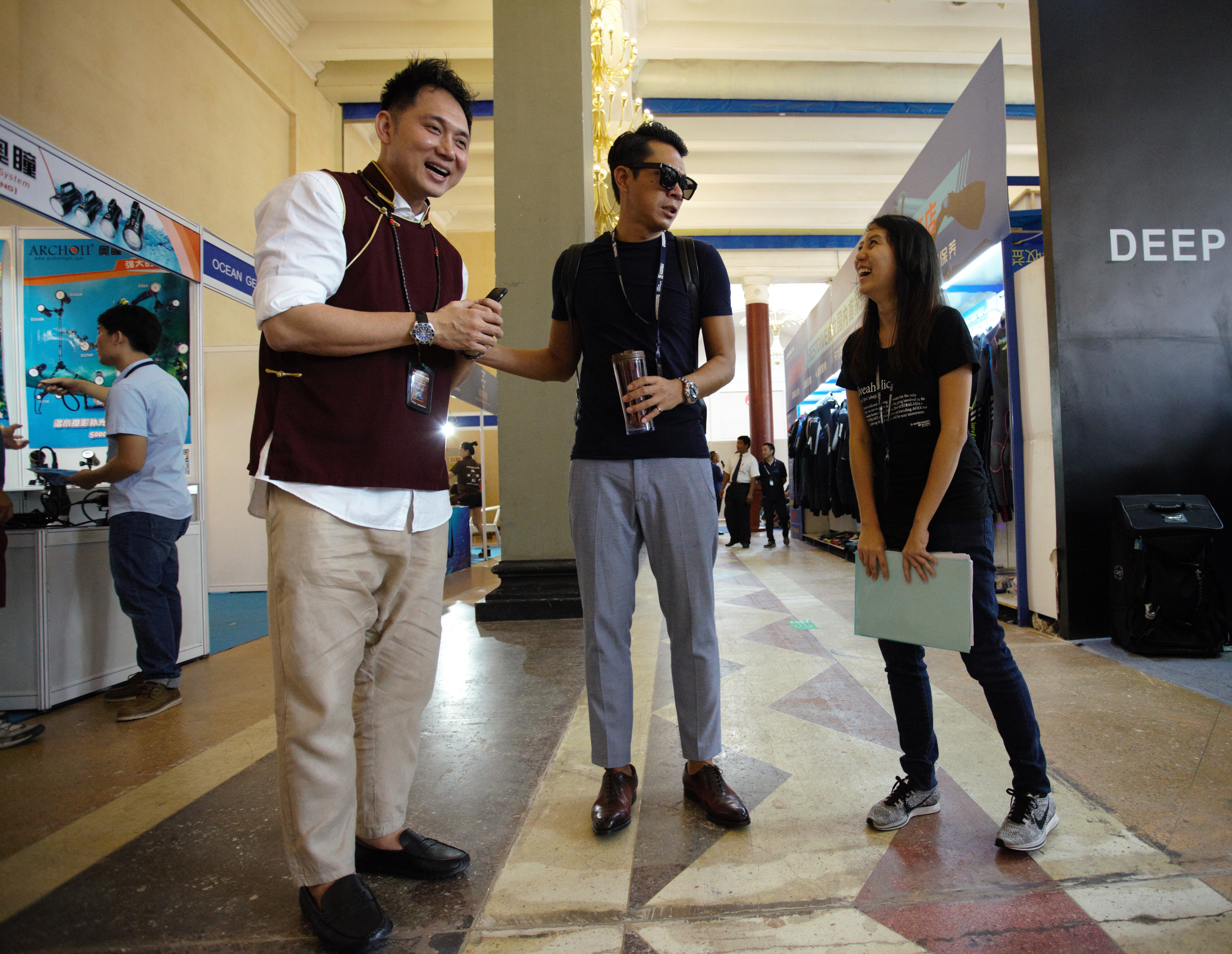
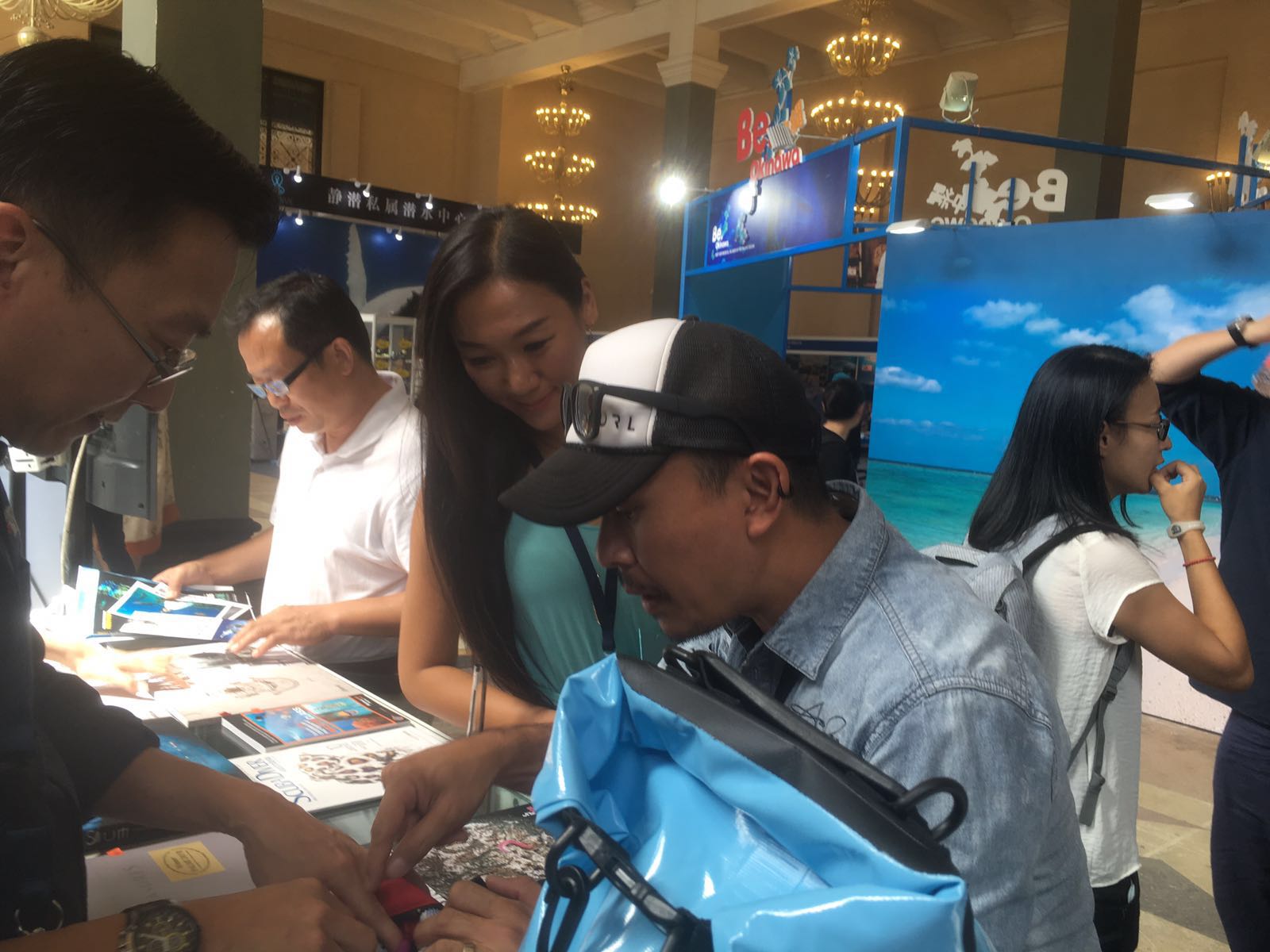
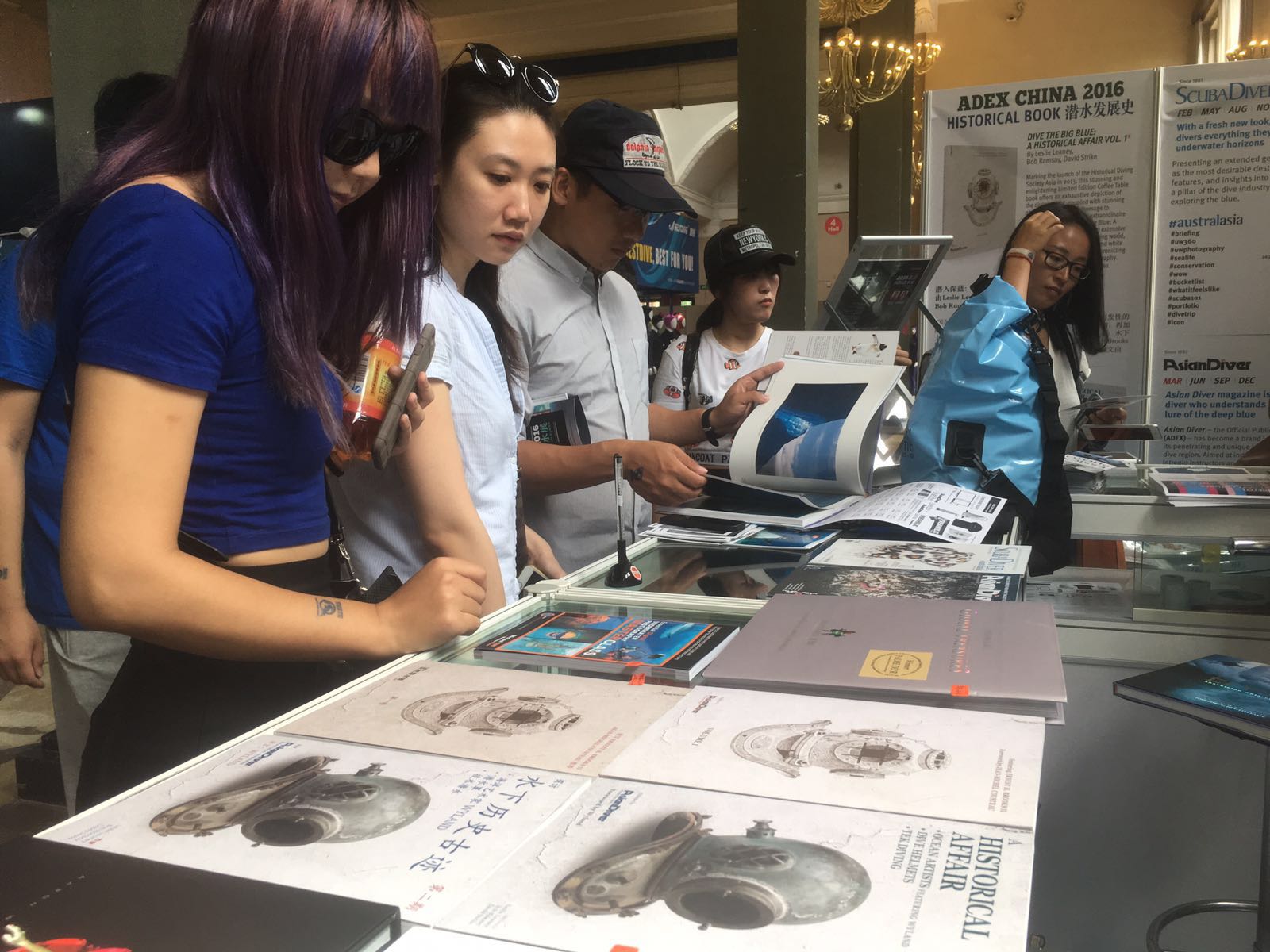
Incredible books and magazines available at the Underwater360 booth right now. Alan Lo at the Ocean ZoneOrganiser, John Thet with Yorko Summer and Rachel Ng
11:10 – Images from the day so far…
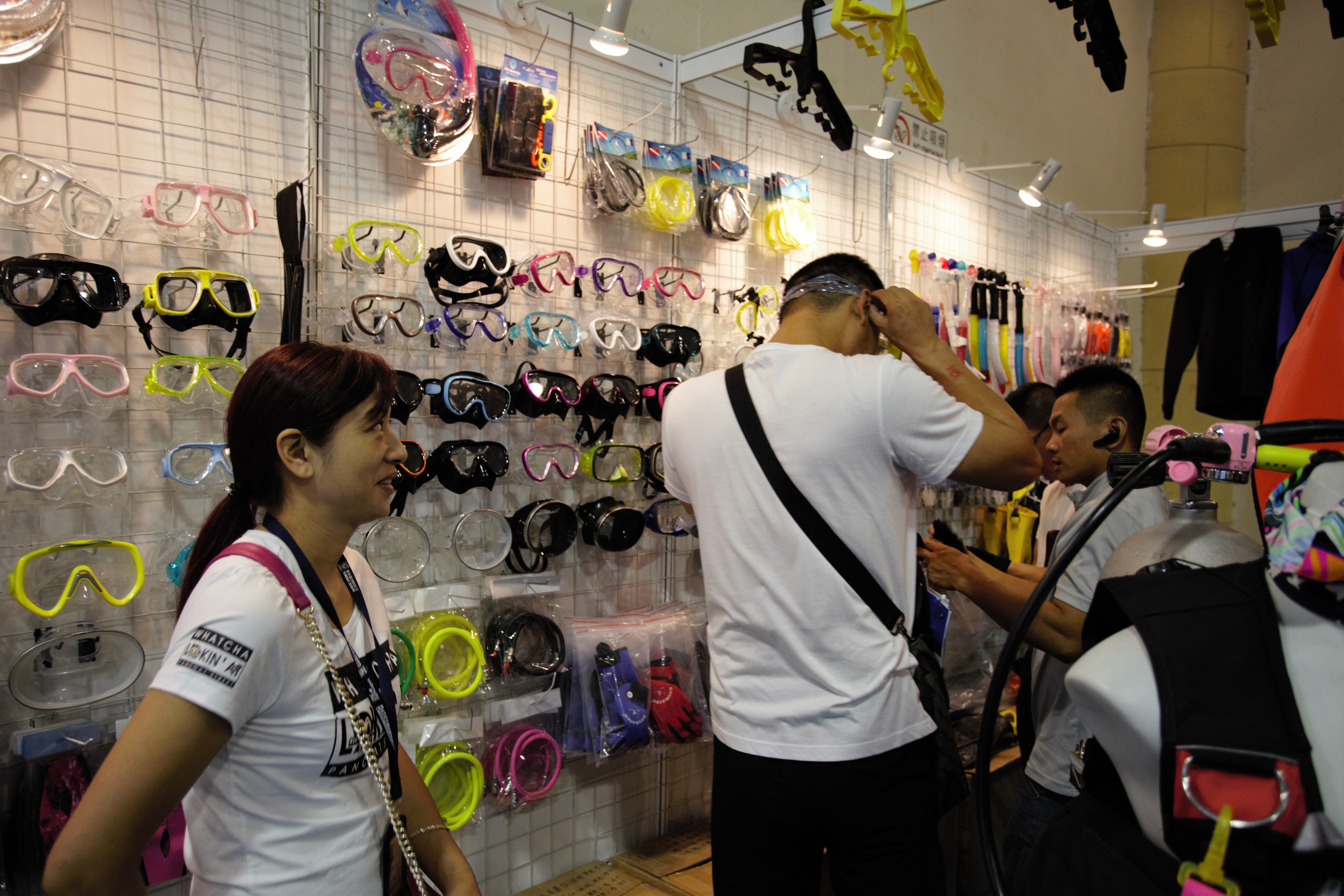
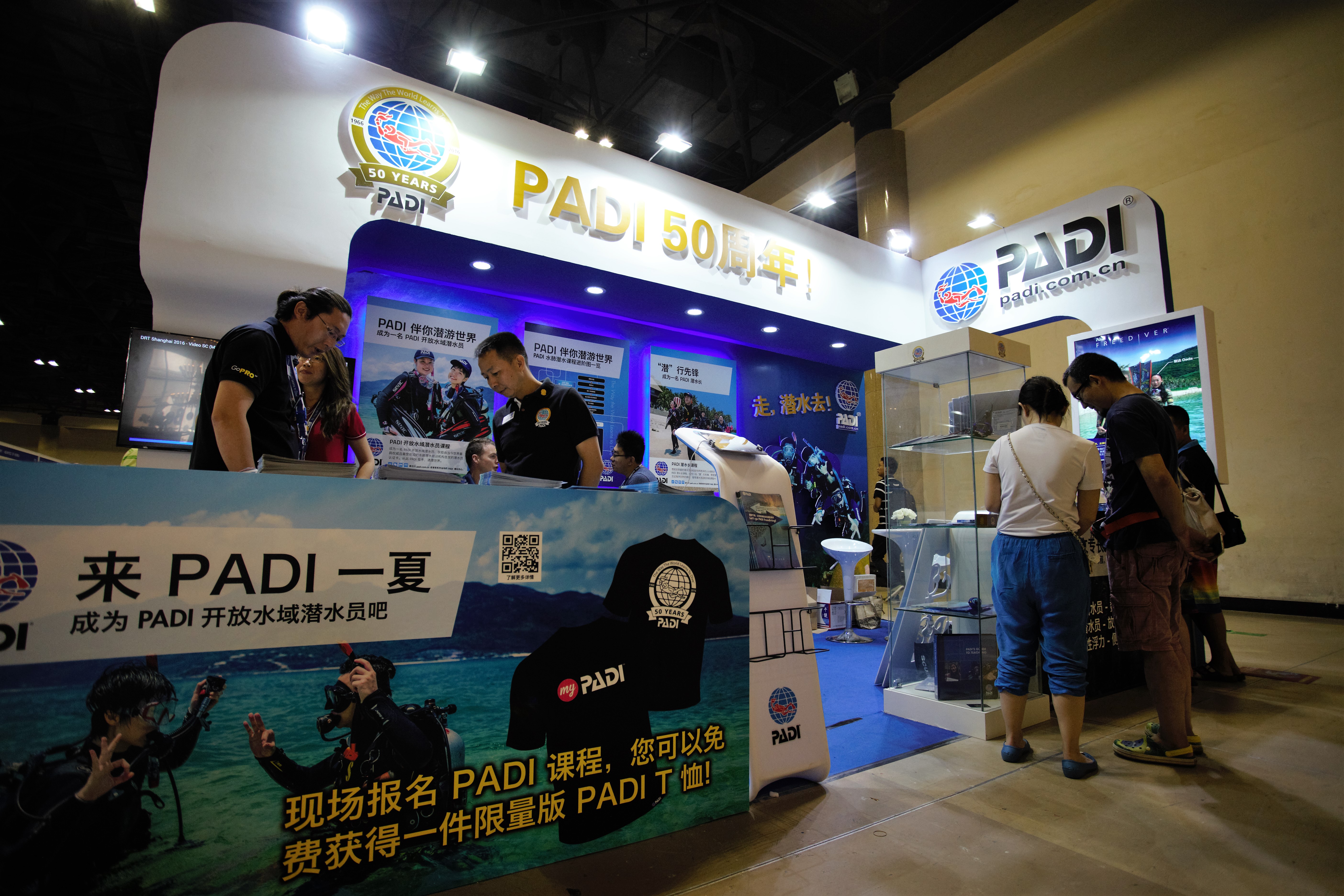
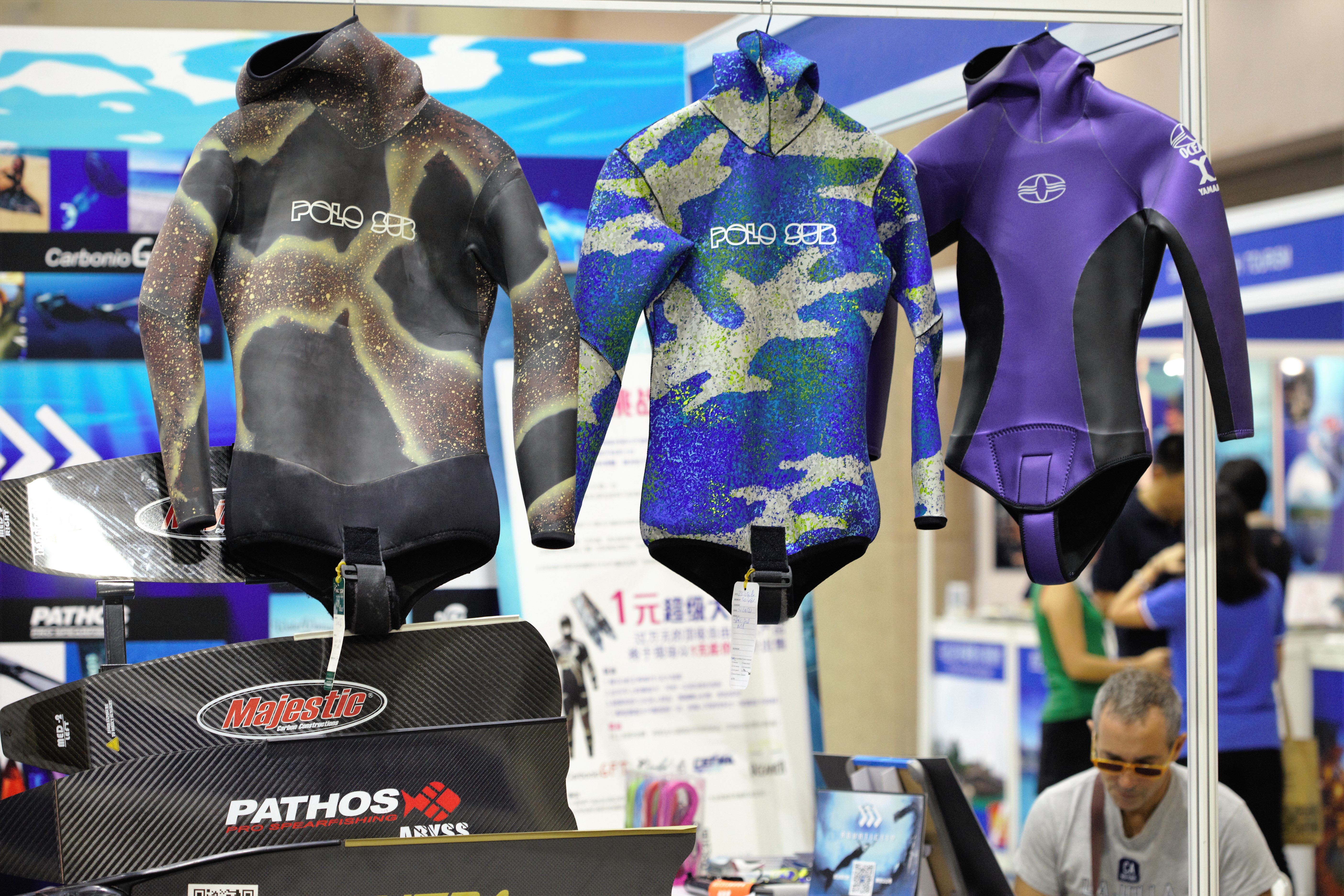
Guests testing out some of the various dive gear at the showPADI is celebrating its 50th Birthday at ADEX China this year Want to know the top products in the industry available now? Get to the Main Stage
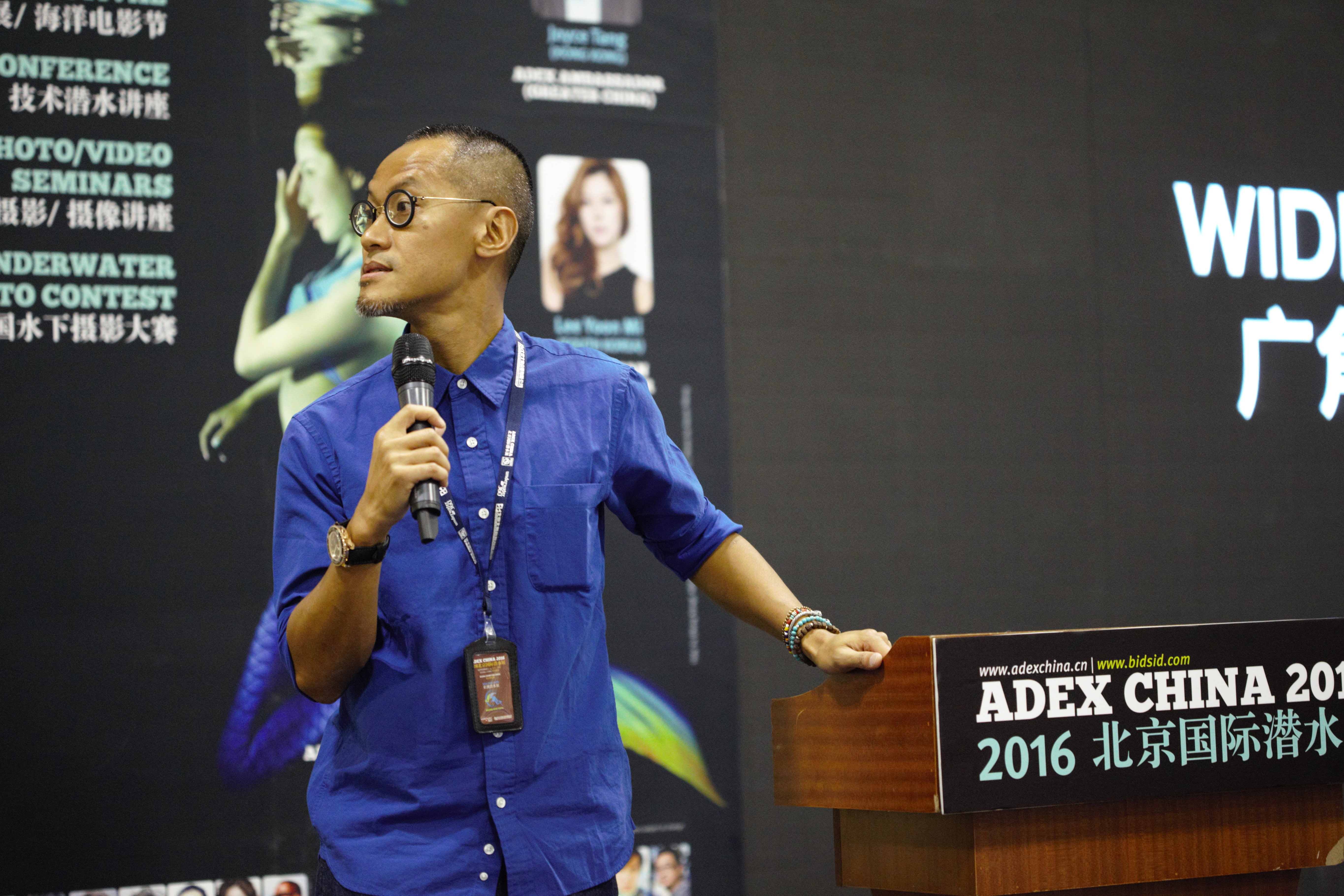
10:55 – Michael Aw on the Main Stage
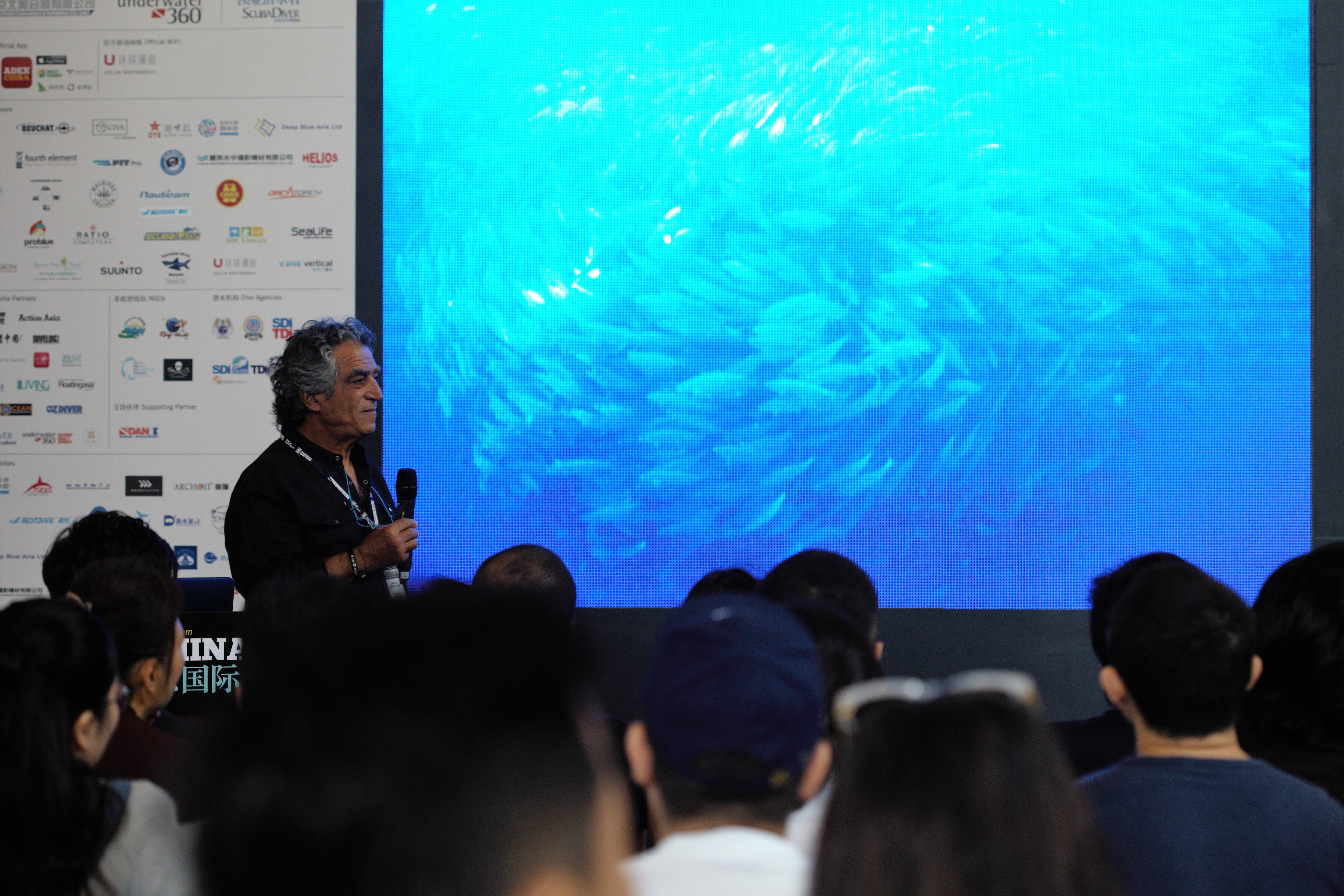
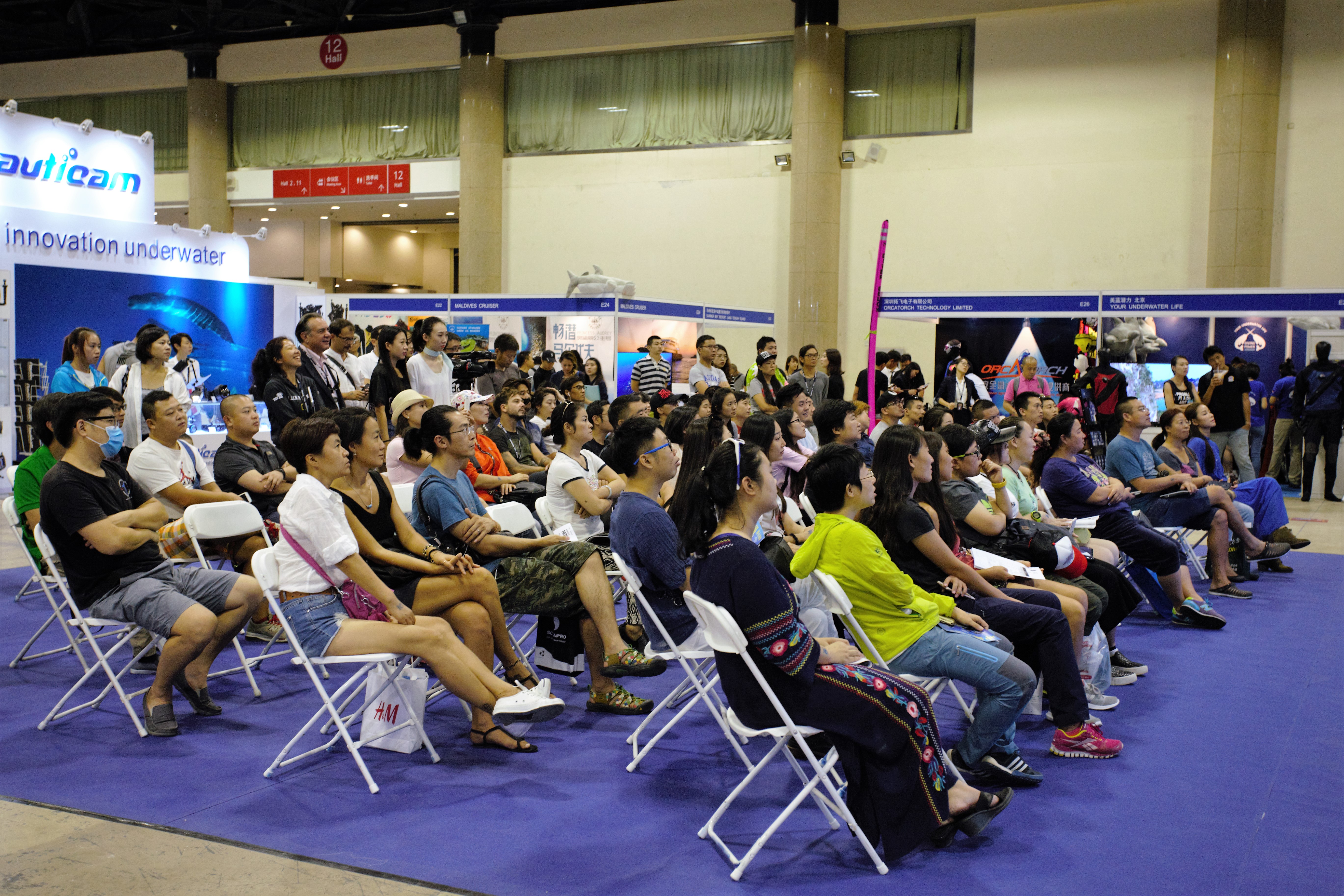
10:35 – Amos Nachoum at the Ocean Zone presenting to a packed crowd
10:00 – It’s the start of the third and final day
Day 2
16:30 – The Lucky Draw gets underway, once again
The Lucky Draw
14:00 – Plenty of discounts and deals on a range of products at ADEX
A range of underwater products are featured at ADEX
13:00 – It’s a full crowd at the main stage in anticipation for Todd Essick’s presentation
12:30 – Beginning at the Ocean Zone, Aaron Wong is discussing the art of light, and understanding underwat
er lighting.
12:00 – It still amazes us how many incredible dive sites are being discovered in the world’s most unlikely of places. Sandy You presents the hidden far East, Kahmchahtkuh underwater on land.
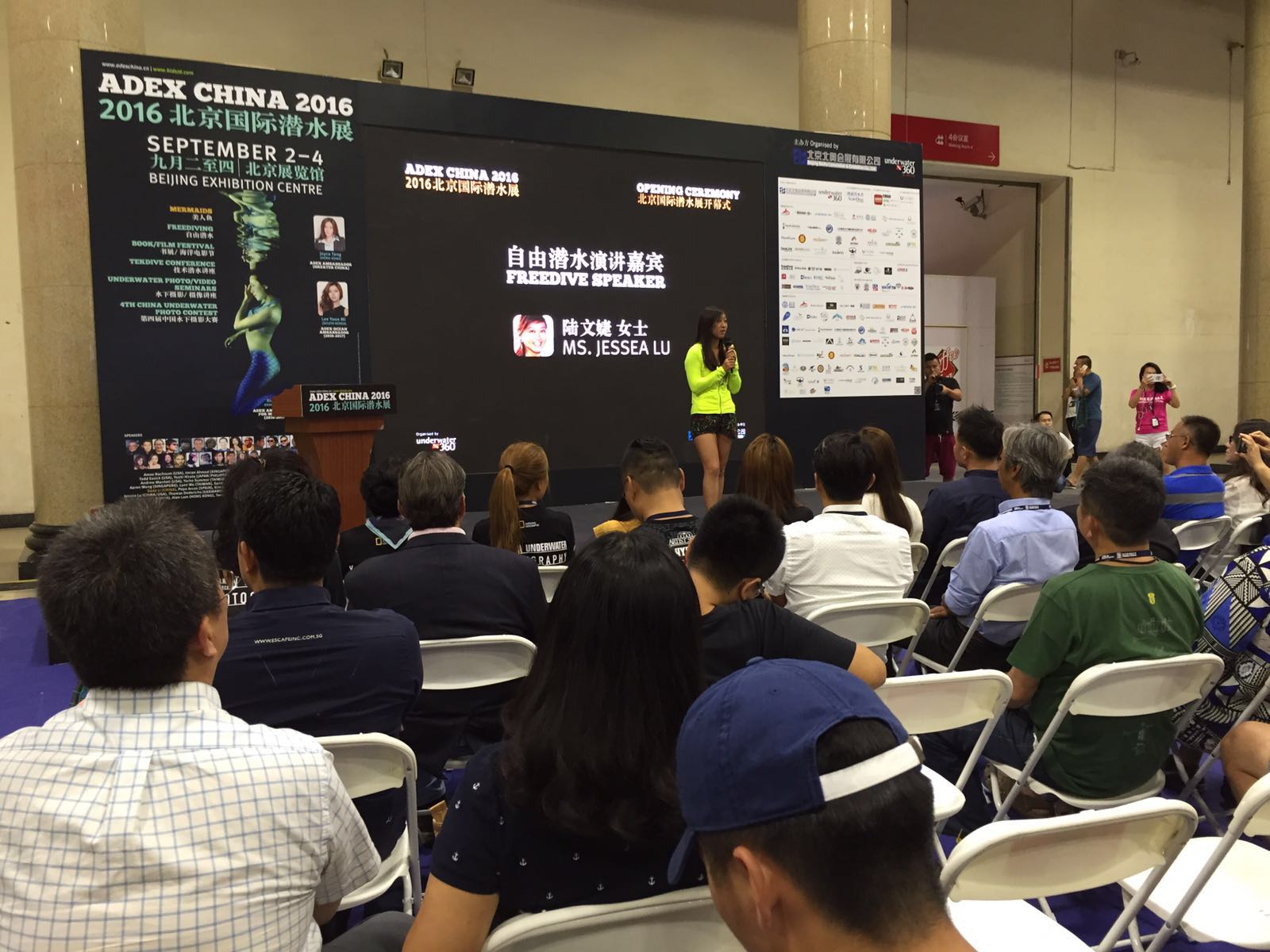
11:30 – Jessea Lu has just come off the stage. The record-breaking freediver, gave an incredible presentation on why she freedives.
11:00 – Yoshi Hirata performs in front of a full crowd at the Ocean Zone, explaining how to shoot underwater without strobes.
10:40 – Get to the Main Stage to catch Louise Chau presenting the fun side of the closed circuit re-breather system.
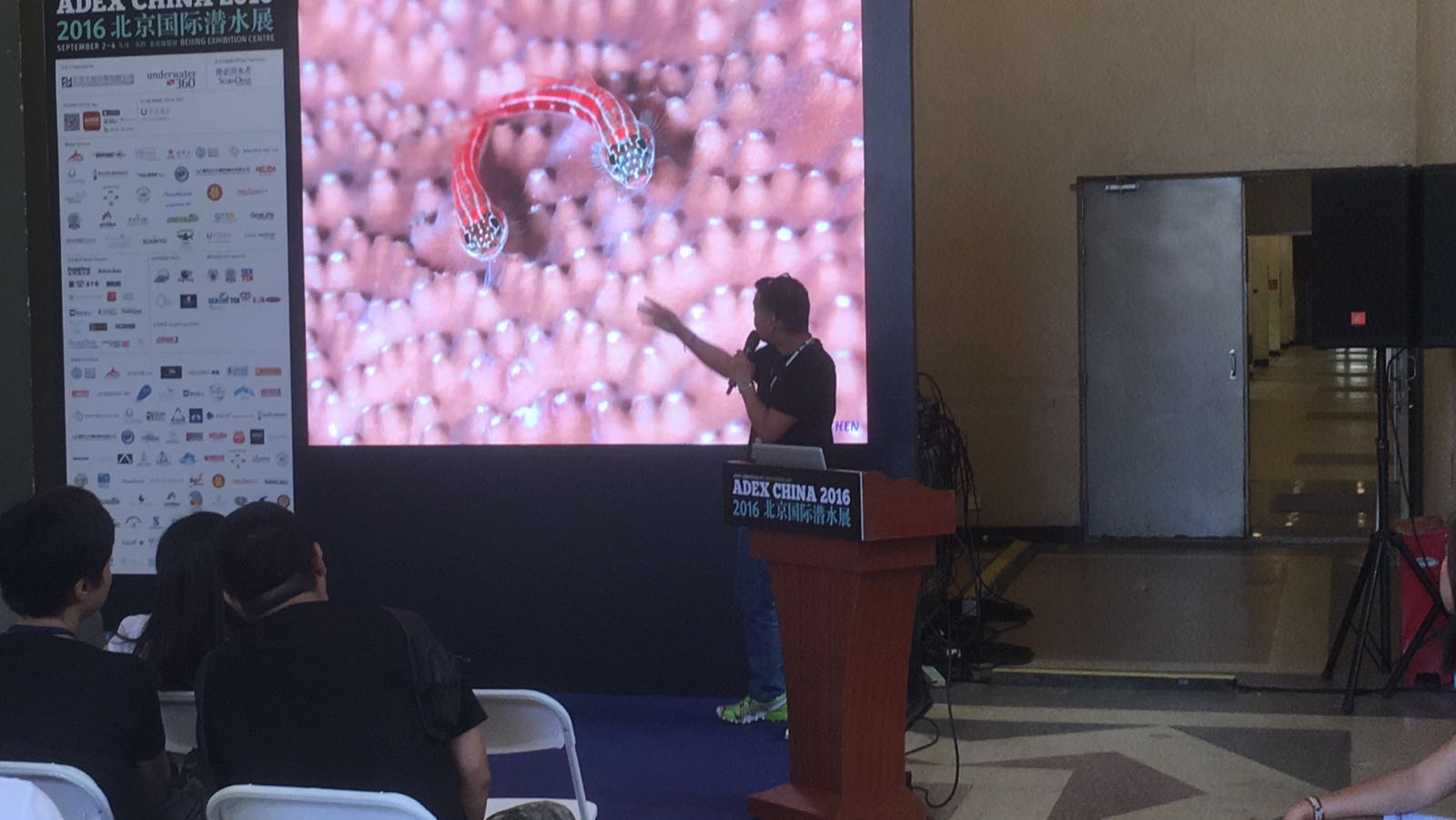
10:20 – It’s a chance to learn about shooting tiny creatures up close with Yuping Chen’s talk at the Ocean Zone happening from now until 10:45
10:00 – And the second day is underway. The Main Stage is kicking off with Josie Yang about LAMAVE, and their efforts to conserve marine life. Jonathan Lin is at the Ocean Zone, presenting on the incredible species that you can find when diving in Manado or Lembeh.
Day 1
17:00 – That’s it. Day One has come to a close. After an exciting Lucky draw which saw many winners and fantastic prizes, we have finished for Friday.
Images from the show so far:
16:15 – Coming up in 15 minutes, the LUCKY DRAW. With tons of great prizes to be won, this is promising to be one of the highlights of the day.
16:10 – Hidy Yu and Gary Sun are now on the Main Stage giving an insight into their ocean conservation efforts
16:00 – We hope you’re enjoying the show. Tonight we will bring you the full first day coverage, all the pictures and videos that made it such a colourful opening day!
15:40 – Coming up with have Mermaid of the Sea, with Hidy Yu and Gary Sun
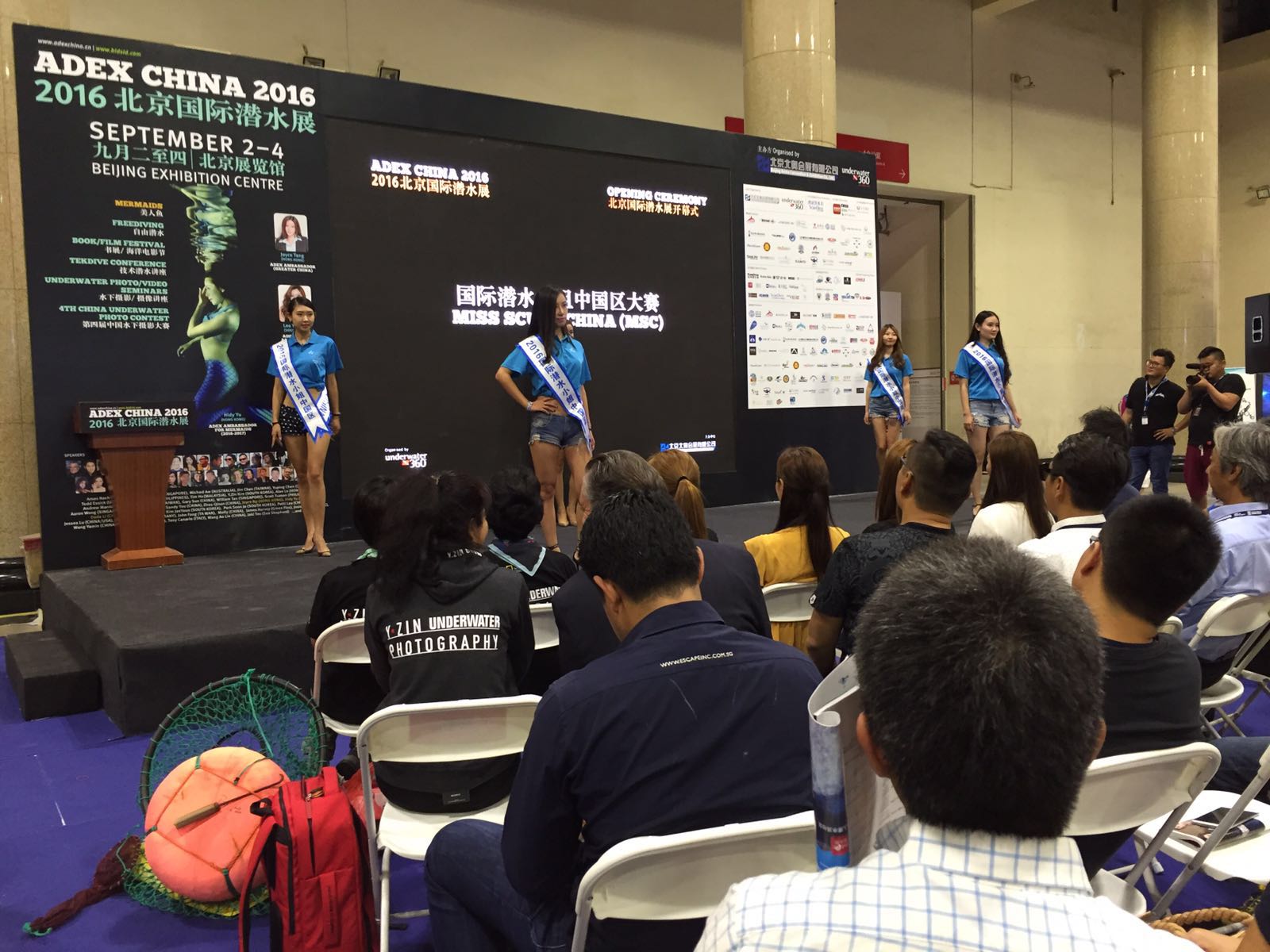
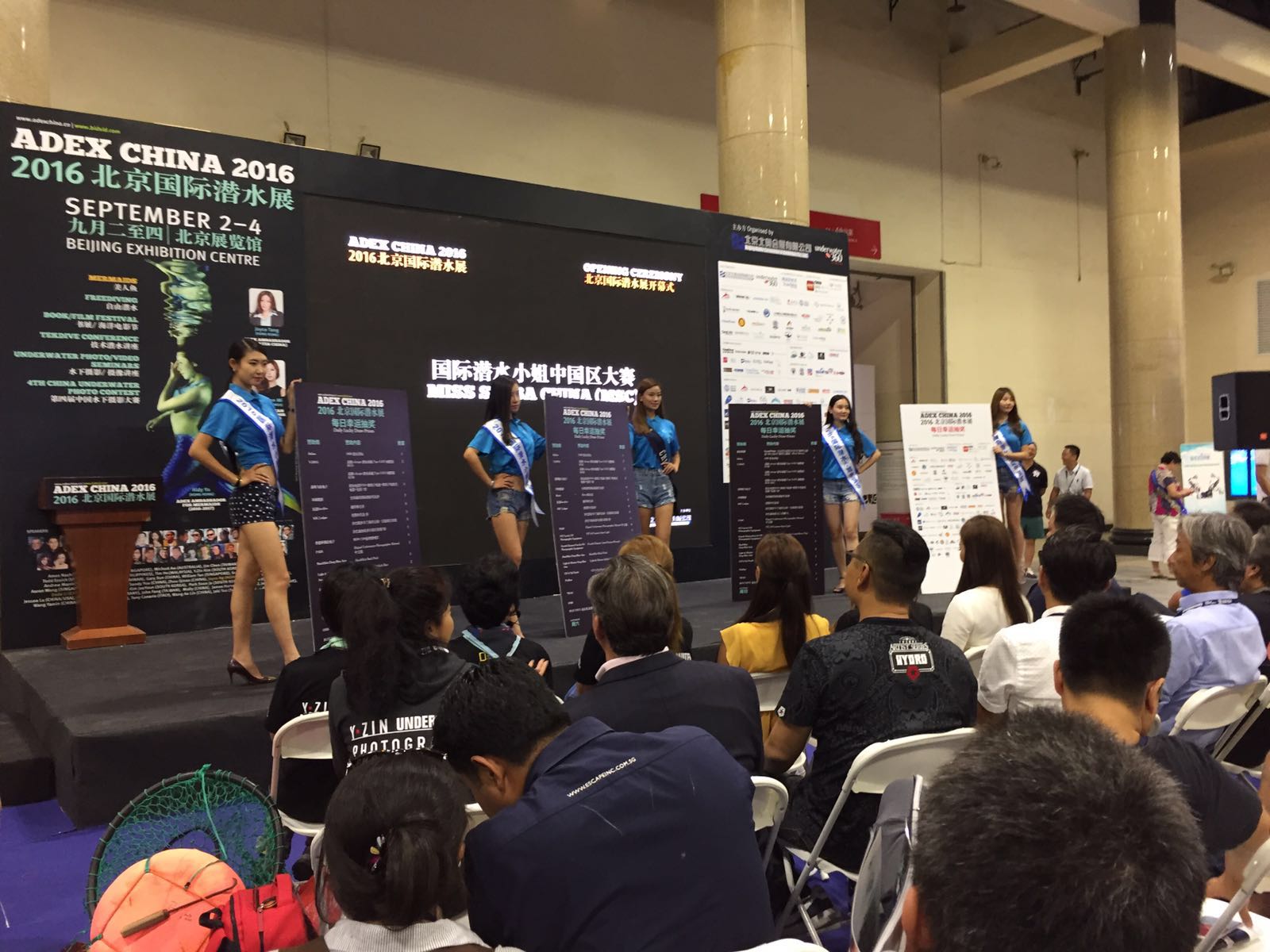
15:00 – Y.Zin Kim and the Hae-Nyeo Divers light up the Main Stage just after the Opening Ceremony
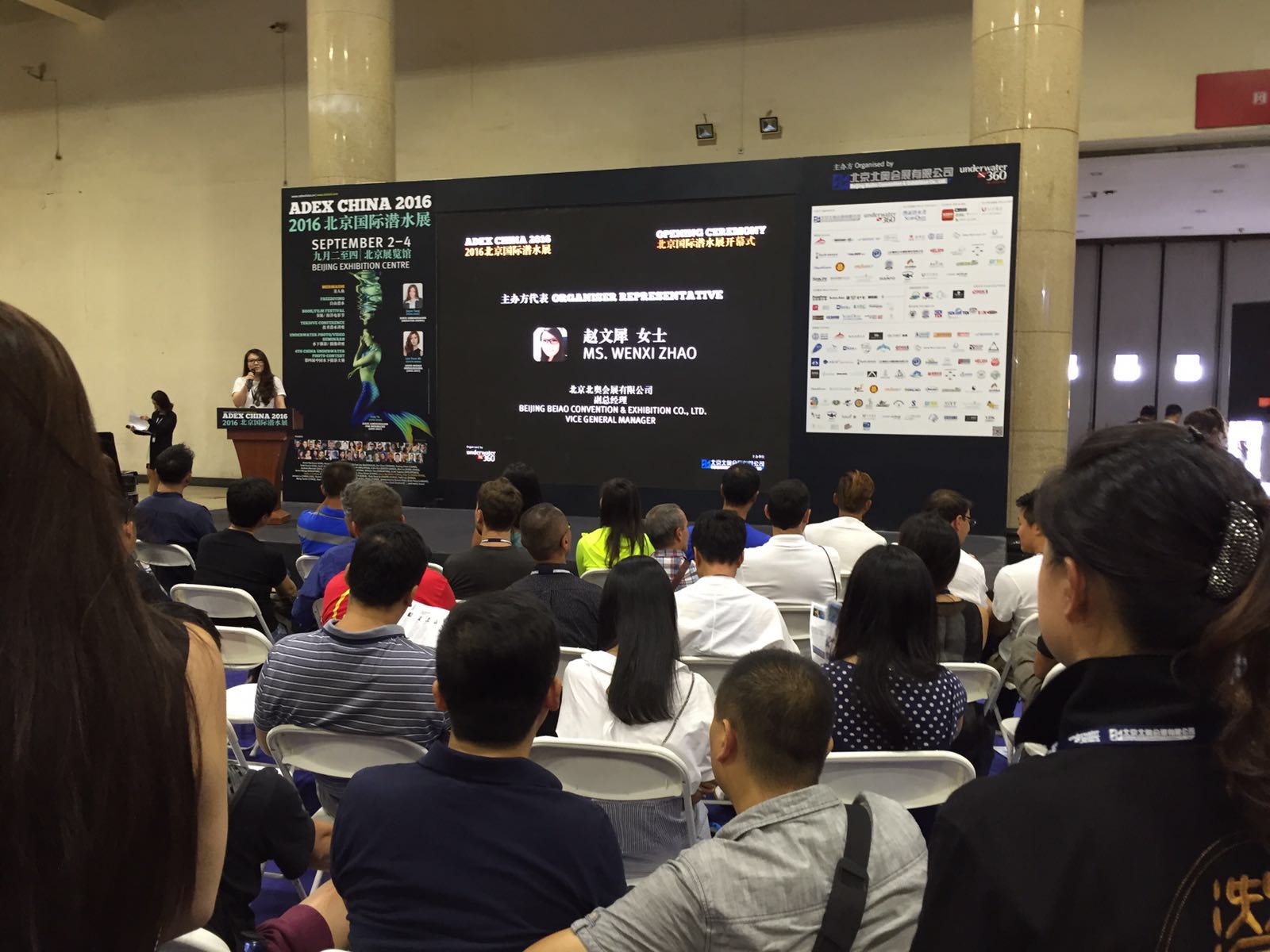
14:00 – Opening Ceremony: Jump over to the ADEX Facebook page to see live coverage of the ceremony.
13:55 – We’re offering incredible merchandise and books at the UW360 Booth, there’s still time to swoop by and grab a good deal before the Opening Ceremony.
13:50 – It’s ten minutes until the start of the Opening Ceremony, and we’re getting ready to bring you full LIVE coverage of the entire event!
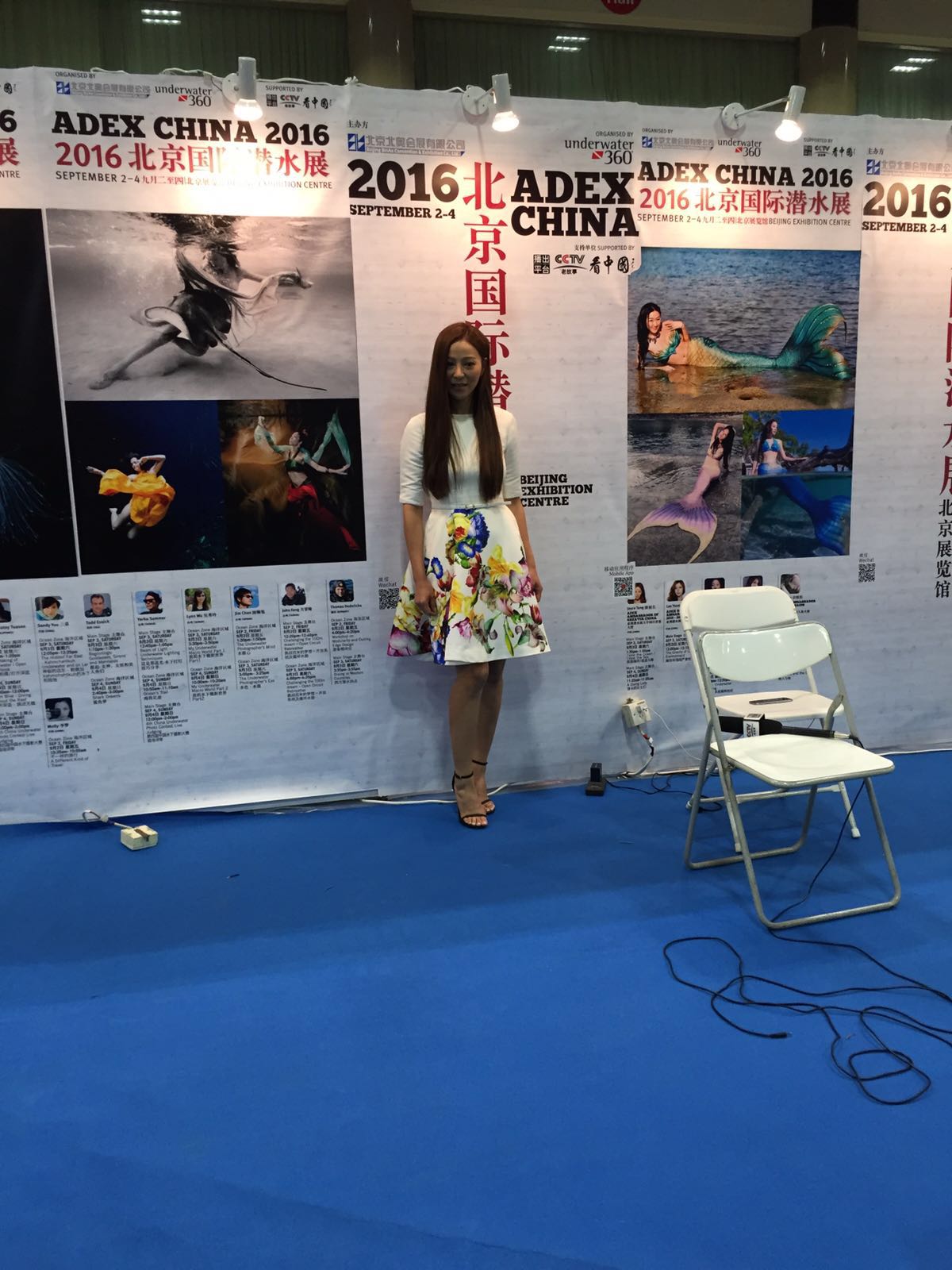
13:35 – Celebrity Joyce Tang arrives at the show!
13:30 – Aaron Wong takes the main stage, presenting the story behind his underwater fashion book, Watercolours
13:10 – Dada Li in front of a huge crowd on Main Stage, explaining her freediving journey.
13:00 – Hidy Yu on the main stage, on how diving has changed her life! In ADEX Singapore we interviewed Hidy on her fascinating career and love for the ocean.
12:40 – Alan Lo at Ocean Zone, once again a near-full crowd. Alan was our Underwater Photographer of the Week!
12:20 – Two familiar faces. Underwater Model Dada Li and underwater photographer Aaron Wong are currently at the UW360 booth.
12:10 – Our booth is buzzing! Showcasing the top diving manuals and underwater photography books (in the world!). Those in Beijing who are not at the show… you’re missing out on top deals!
12:00 – Coming up next on the Main Stage, Paul Montgomery discussing the various courses out there for divers to improve their skills!
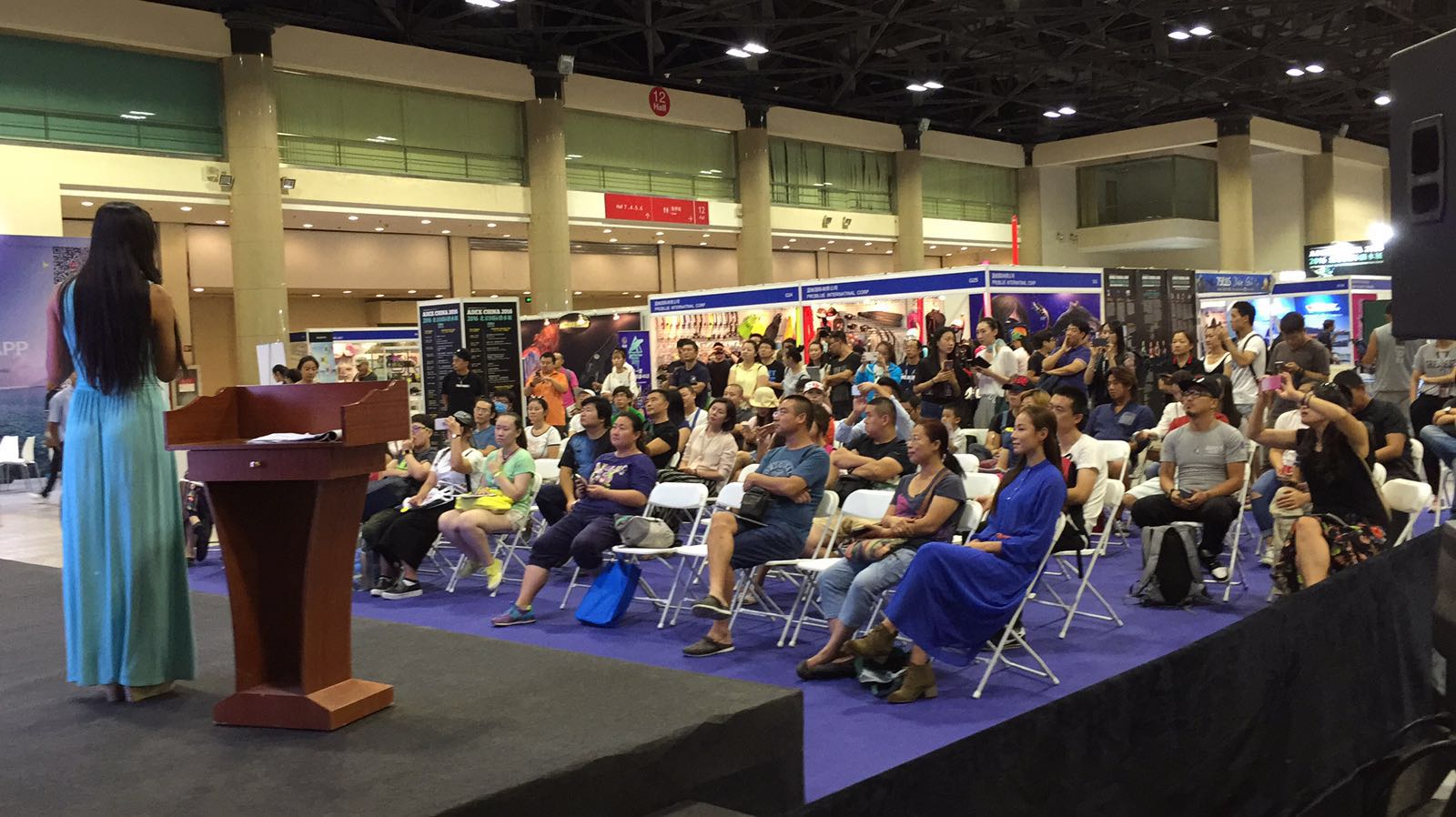
11:30 – Tim Ho speaking to a full crowd at the Ocean Zone
ADEX Speakers
Introducing the star-studded line up of speakers and special guests making their way to Beijing this year for the show:
ADEX AMBASSADOR (GREATER CHINA)
JOYCE TANG (HONG KONG) Joyce Tang is a Hong Kong actress and PADI Rescue Diver. She played one of the main roles in the movie “Armed Reaction” and her hard work and acting skills made her recognized in the Chinese media industry. She also acted in many other television series including “Dragon”, “Step Into the Past”, “Wars of In-Laws II” and “Who Loved Women”.
OCEAN AMBASSADOR 2016 – 2017
LEE YOON-MI (SOUTH KOREA) Lee is a South Korean actress and entrepreneur. She won the top prize in the Super Elite Model Best Talent Awards in 1998, and made her entertainment debut in 2003 as a member of the Kpop girl group THE S (더에스). Afterwards, Lee ventured into acting, appearing in successful television dramas, and also playing a lead role in the stage musical The Golden Days in 2011. After learning scuba diving in Saipan in 2010, she fell in love with the ocean and has since shown her affection towards its beauty. Lee regularly sponsors children through Compassion International, an organization founded in 1952 to help children orphaned by war in South Korea.
PHOTO VIDEO SPEAKERS
AARON WONG (SINGAPORE) Ambassador of Photography Aaron Wong is one of the most published and recognised underwater photographers in Asia. With over a decade of field experience, Aaron’s images and his trademark lighting technique have won him international acclaim. He is also the official ADEX Ambassador of Photography. www.aaronsphotocraft.com
ALAN LO (HONG KONG) Alan Lo is a commercial photographer based in Hong Kong and a scuba diving aficionado. He expresses his passion for the underwater world through his multifaceted approach to photography, which is grounded in his innovative and artistic interpretation of life, people and Nature. Alan’s work has evolve
d and progressed significantly over the last 20 years, from his early creative print work and exhibitions, through a range of architectural commissions, commercial projects and personal photographic explorations. www.alanlo.com.hk
AMOS NACHOUM (USA) Amos is a master of photographing big animals worldwide. He free dives with blue whales, scuba dives in the Okavango delta with crocodiles and goes face to face with the Great white shark and Polar bear. For 35 years, he has explored every body of water from the North Pole to Antarctica. Amos’s photographic vision is to raise awareness of ocean giants in their habitats. His images reflect respect and compassion for animals and wilderness. His photographs strive to dispel the myth of “dangerous” wildlife and show harmonious interactions between man and animal. Also, Amos is an explorer. He leads wildlife photography expeditions with his company BigAnimals.com. www.amosphotography.com
ANDREW MARRIOTT (USA/CHINA) Andrew Marriott is a longtime diver, photographer and writer. Originally from the USA, he found the ocean while working in the world of financial derivatives. After a move to Guam, Andrew became fully focused on the ocean, helping many new divers fall in love with the water while working as an instructor and enthusiastic underwater photographer. Andrew has garnered numerous awards and first place finishes at major competitions for both his photography and art both above and below the waves. His writing and photos have appeared in major magazines across the world. www.marriottphotoandart.smugmug.com
GARY SUN (CHINA) Gary Sun is a long time diver who has been taking underwater photography for many years, whose works has won many awards and published in numerous magazines and newspapers. He is the Director of Guangdong Photographers Association Underwater Photography Committee and the Standing Director of Guangdong River Ocean Ecological Environment Protection. He is also China’s first RAID closed circulatory and respiratory systems instructor trainer officer, as well as a NAUI Diving Instructor.
IMRAN AHMAD (SINGAPORE) Imran Ahmad Bin Rayat Ahmad, Nikon Professional Photographer and Ocean Artist Society Member, has been named “Top Asian Underwater Photographer in the World” by Dietmar Fuchs, Chief Editor for Blancpain – Editions Fifty Fathoms. Imran’s works have been exhibited around the world. He is part of the judging team for various underwater and travel photography competitions as well as Nikon’s “Big Shot” Competition. He is also a celebrity judge at the “Celebrate the Sea” underwater photo competition, along with National Geographic’s Emory Kristoff. www.escapeinc.com.sg
JIM CHEN (TAIWAN) Jim Chen loves extreme sports and underwater photography combines both adventure and art creation perfectly. In 2007, he was certified as an open water diver and in 2008, his underwater photography journey began. Jim hopes to capture all the transient beautiful moments during his underwater photography sessions, and the moving pictures interweaved by the submarine world and the benthos is what drives him to continue photographing. His works are published on various magazines and newspapers and has won over 20 awards. He also received exclusive interviews from British Daily Mail, Apple Daily, TVBS and other media. www.jimandlynn.net
LYNN WU (TAIWAN) Lynn Wu found a passion for the underwater world during a trip to Palau in 2006, it was love at first sight for her. She was so fascinated by the “blue world” that it became part of her life to discover the ocean with her cameras. She likes taking macro objects and her works have been published in various magazines and newspapers, she also won several awards including the Deepblu ADEX Voice of the Ocean 2016. She hopes to share her works with people who love the oceans and continue improving herself by capturing more beautiful pictures. www.jimandlynn.net
MICHAEL AW (AUSTRALIA) Michael Aw is an author, explorer and conservation photographer. His accolades include winning more than 63 international photographic awards including being named as one of the world’s most influential Nature photographers by Outdoor Photography, and in 2013 he was the first Asian to be awarded a NOGI by the American Academy of Underwater Arts and Science. In 2012, Michael’s Indonesia’s Global Treasures won the Palme d’Or International Prize for Best Book of the Year at the World Underwater Pictures Festival (Festival Mondial de l’Image Sous-Marine). www.michaelaw.com
MOLLY (CHINA) Molly began her underwater photography journey in 2005 and her works has since been featured in various magazines and media. She set up King Dive Club and “Blue Corner” in 2015. She is now the spokesperson for “Photography Journal”, Xinhua News Agency, Sony a club and Canon and a Leica photographer.
SANDY YOU (CHINA) Sandy You, who is also known as 3DU or 三弟 in Mainland China diving community, is the founder of a dive club called 57diving. She is an underwater photographer who also runs Seacam/Gates housing distribution business in China, developing for the new high end market.
SCOTT TUASON (PHILIPPINES) Scott “Gutsy” Tuason began his romance with the sea when he was still legally too young to dive, but this did not prevent him from going with his father on diving trips around the country. Over the years, his work has been published in numerous books and magazines. Gutsy’s photographs have been exhibited at several shows sponsored by WWF and he continues to be a WWF contributing photographer. Gutsy is also a director of Concerned Divers of the Philippines, an environmental group engaged in marine conservation awareness and environmental rehabilitation projects.
TIM HO (MALAYSIA) Ambassador for Compact Cameras Tim Ho left the city in 2009 to become a full-time dive instructor, but today he sees himself as just a “full-time diver”. When he’s not teaching dive courses, he works as a videographer on a liveaboard as well as contributes photos and articles to various magazines. He also organises specialised “dive and shoot” trips for people who want to do two-hour-long dives with the best guides and spotters available. Over the years, Tim’s adventures have seen him based across Malaysia, Thailand and Indonesia, but he is currently spending his time in the Philippines. www.underwatercompact.com
TODD ESSICK (USA) Todd is an award-winning underwater fine art photographer and photojournalist. In Germany, he appeared on several television programmes, including Germany’s Next Top Model with Heidi Klum. Named one of the top 10 underwater photographers in the world in 2005, Todd’s innovative photographs are often mistaken as montages – created using Photoshop or a computer – when they are not. With a diving career spanning over 30 years, Todd has travelled the world for inspiration to create his photographs. He enjoys showing his passion for the sea through his photography/adventure dive safaris and sharing his stories in presentations and magazines. www.essickphoto.com
WILLIAM TAN (SINGAPORE) William Tan has been fascinated with the creatures of the sea since his childhood. While studying at Johns Hopkins University in the USA, much of his spare time was spent gazing at the marine collection of the National Aquarium in Baltimore. William travels extensively throughout the Pacific region judging underwater photo competitions, and photographing marine life for tourism organisations, scientific research groups, dive magazines, camera manufacturers, and resorts.
YORKO SUMMER (TAIWAN) Yorko Summer is a Taiwanese certified dive instructor and travel journalist who has visited many countries and exotic islands. Being an underwater photographer, he loves to spend time taking photographs from the unique and amazing underwater world, as well as the vast culture around the world. He has lived in the exotic island of Palau for six years, where he fell in love with the mysterious, yet elegant, oceanic world and its inhabitants. www.yorkosummer.com
YOSHI HIRATA (JAPAN/PHILIPPINES) A marine biologist and accomplished underwater photographer, Yoshi Hirata began his passion for diving when he was researching the rich marine resources of Sipadan and Mabul back in 1993 as a marine consultant. During the course of his work, he expressed his love for the sea by featuring thousands of amazing photos of Mabul in various magazine titles such as Oraga Umi. www.unyaraunyara.blog101.fc2.com
YUPING CHEN (CHINA) Yuping Chen had her first encounter with diving in 2009. She was instantly attracted by the magnificent and colorful underwater world, which marked the start of her diving career, changing her life from then on. In the subsequent two to three years, she left imprints of herself with cylinder tanks in the waters of Asia, America, and Europe.
Y.ZIN KIM (SOUTH KOREA) Y.Zin Kim is the first National Geographic underwater photographer in Korea, and the very first female sidemount cave diver in Asia. She is introducing high-quality underwater photography techniques and underwater modelling education in her home country. Y.Zin has also worked on posters and commercials for movies, soap operas and magazines. www.yzinkim.com
ZHOU QINAN (CHINA) Zhou Qinan is a video culture media founder, senior director and an underwater videographer. His works covers many documentaries, videos, microfilms and advertisements. Being an expert in image narration, he emphasizes strongly on content, rhythm and music, thus making his works are affluent and powerful. For eight years, the Scorpio director’s “obsessive-compulsive disorder” and perfectionist personality have reflected most vividly in his lens insights. Most of his works creates a connection with people, using “love” as his directing style in filmography.
FREEDIVE SPEAKERS & MERMAIDS
DADA LI (CHINA) Ambassador of Freediving 2016 – 2017 There was a girl who got addicted to the feeling of freedom since her first free dive in the crystal blue ocean, which made her believe she was a mermaid in her previous life. With this belief, she practiced almost every single day, making her own tail to realise the mermaid dream. Her name is Dada Li. She has been wandering within the blue, advancing to become an underwater model, as well as an AIDA international Freediving Instructor and Judge.
HIDY YU (HONG KONG) Ambassador for Mermaids 2016 – 2017 Hidy started modeling at a young age of 18 and was the 2011 Miss Scuba International Ambassador. She is a dive instructor qualified by NAUI (National Association of Underwater Instructors) and also the Naui Worldwide Ambassador. Hidy has participated 3 action movies[Kick Ass Girls, 紅毛道士, Special Female Force (in production). Her hobbies include Ultra Trail, Boxing, Running, Hiking, Yoga, Traveling, Eating, Movie, for sure DIVING!
JESSEA LU (CHINA/USA) PFI instructor, Jessea, holds 6 National Freediving Records, including Static Apnea (6:28) and Free Immersion (63 meters / 206 feet). She obtained a PhD. degree in Medicine in 2011 and moved to Hawaii to embrace her relationship with the sea. She became a PFI instructor in 2014. Jessea has published a number of peer-reviewed, original research articles on human biology. She brings her biomedical expertise in discussing the physiological and psychological effects of freediving. She teaches students how to overcome mental and physical barriers in freediving in order to dive longer, deeper and safer. www.JesseaDiving.com
JOYCE NG (HONG KONG) Joyce Ng started learning diving in 2011 in Phuket, Thailand. It was then that she got addicted to the sea and fell in love with underwater photography. She was attracted by the beauty of the tiny macro creatures, huge sea fans, fishes and sharks, which motivated her on getting great images of them. Every diving trip drives her to protect the ocean and she hopes that her photos will let non-divers see the beauty of the oceans, joining her in protecting them. Underwater modeling expresses the beauty between humans and oceans, and Joyce Ng made the legend of the ocean come true by becoming a mermaid. www.ajunderwater.com
PEPE ARCOS (SPAIN) Pepe Arcos is a passionate Ocean Explorer. He came from a long way of being a competitive Freediver athlete and achieving several records to running a Freediving school and nowadays, to become a devoted underwater photographer and Filmmaker with the mission of inspiring the world, by capturing the wonders of the most loving place in the world for him, under the oceans… www.pepearcos.com
POTTI LAU (CHINA) Potti Lau took 6 days to dive down to 38m on his first free dive. He fell in love with freediving from then on and went fur
ther to do competitive freediving, breaking the National China’s freediving record 8 times. He also does underwater photo and video production and has over 30 million fans on the Meipai Short Movie app.
WANG AO LIN (CHINA) Wang Ao Lin is a freediving athlete. In 2015, he founded “Jie Ta Freediving School”. The school is known for its first-rate AIDA freediving training and now has a team of 15 outstanding freedivers and instructors. Ao Lin is also the president of China’s AIDA International Freediving Association. He represented his country in the AIDA Individual Apnea Depth World Championship in the same year and set National records in 3 different categories. In 2016, he become the first China freediving athlete to enter the Vertical Blue Freedive Challange at Dean’s Blue Hole, Bahamas.
ALAN LAM (HONG KONG)
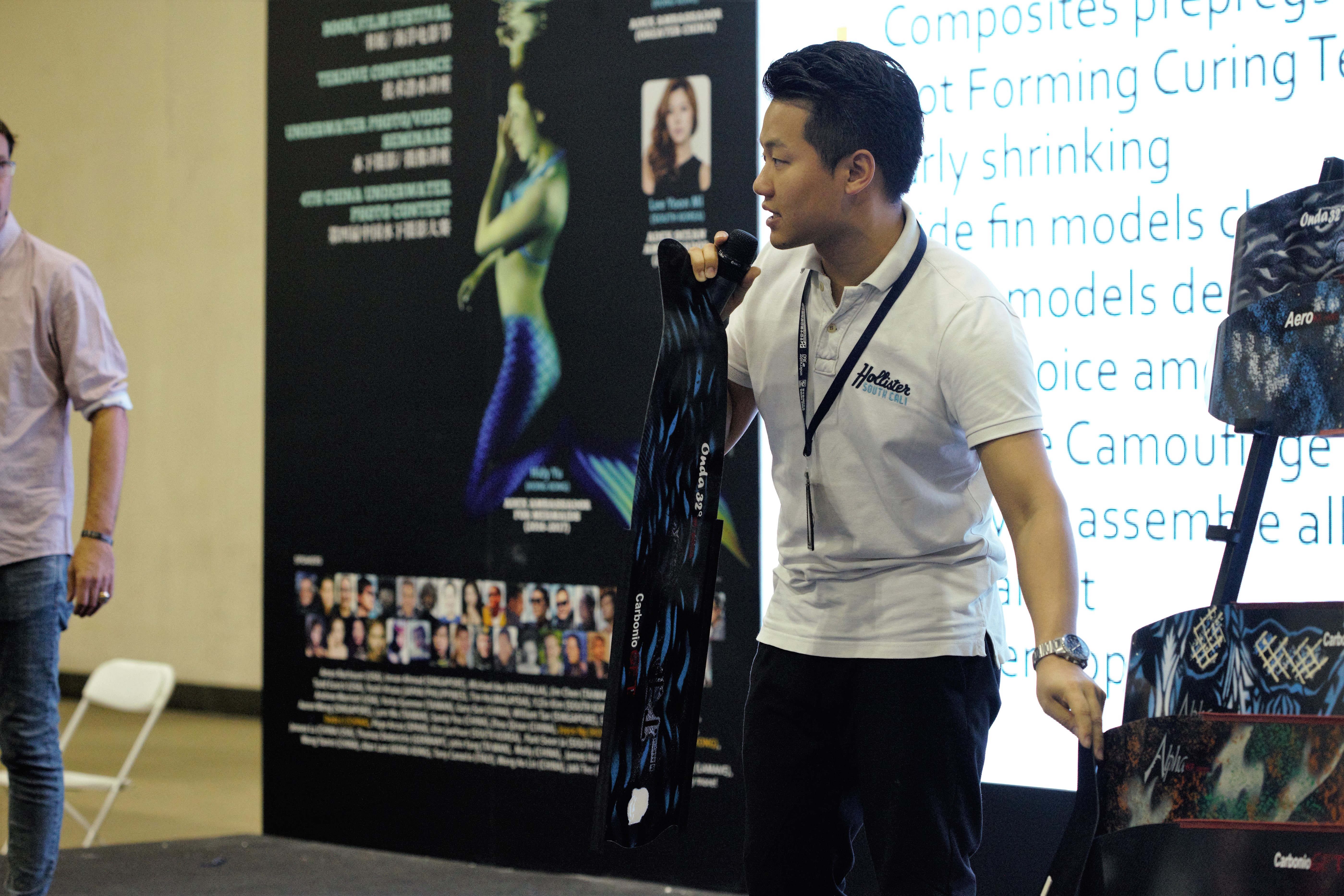
Alan is the founder of AQUATICITY freediving/mermaid academy and key Distributor of high end Freediving equipments in HK & China, caring brand Pathos, Carbonio GFT, Cetma, Blacktech, Majestic, Oceaner, polo sub, merman, etc.. In 2008, he went for a volunteer project in Costa Rica building schools for the local villages, which widen his horizon and initiated his idea to develop his own diving school – AQUATICITY. In 2012, Alan became an advanced instructor of CMAS and started his scuba instructor trainer journey. In 2015, he became an AIDA Freediving instructor.
TONY CANARIO (ITALY)
Tony Canario graduated from technical Odonto and joined an aeronautical company, acquiring knowledge, experience and the most sophisticated techniques in composite materials. He was a freediver but unfortunately, due to health problems, he had to give up this sport. His passion remained and he hopes to link the world of composites to his passion for the sea at CarbonioGFT.
TEKDIVE SPEAKERS
JOHN FANG (TAIWAN) John Fang is a doctoral candidate, majoring in Leisure Industry Research and Business Administration. He is currently the regional manager of Taiwan for TDI / SDI / ERDI, and also skilled in SCR and CCR, advanced mixed-gas and a cave diving instructor. In Taiwan, he is the Government Public Safety Diving instructor, responsible for training firefighters in underwater rescue operations in Taiwan.
THOMAS DEDERICHS (GERMANY) Thomas Dederichs is the President of OMS – Ocean Management Systems, and the CEO and Founder of BtS EUROPA AG. He has been diving for more than 35 years and has clocked more than 2000 dives. He has over 10 years of experience as a TDI Inspiration Instructor and TDI Advanced Trimix Instructor Trainer. He is also qualified as a GUE Fundamentals Instructor, GUE Cave II diver as well as PADI OWSI. Furthermore, Thomas led a Dive & Travel adventure team to explore wrecks in the Irish Sea. www.omsdive.com
CONSERVATION/NGO SPEAKERS
JAKI TEO (SEA SHEPHERD) Scuba diving brought a new direction to Jaki Teo’s life as she bid farewell to big city and moved to the islands to educate divers first hand. After volunteering for Sea Shepherd in Australia, Singapore and Japan, she now lives in the Philippines and is Sea Shepherd Asia’s China Liaison. www.seashepherd.org
JAMES HARVEY (GREEN FINS) As the Operations Manager at Reef-World, James has led the development of Green Fins across 7 Asian countries since 2008. As a marine biologist with over 10 years’ experience working in tropical marine environments, James has worked closely with national governments, dive professionals and international environmental agencies in order to develop Green Fins into a system that is meaningful to all stakeholders. www.greenfins.org
JOSIE YANG (LAMAVE) Josie was born in Beijing and she is a PADI dive master and AIDA freediver. Since 2012, she has been volunteering for the Large Marine Vertebrates Research Institute Philippines. She is part of a whale shark and turtle conservation project in the Philippines, studying the effect of tourism on these incredible creatures. www.lamave.org
WANG YAMIN (CHINA) Wang Yamin is a professor of the Ocean Academy at Shandong University (Weihai) and the deputy secretary-general at the China Fisheries Branch of Agricultural Ecological Environment Protection Association. He is also the aquatic wildlife branch director of the China Wildlife Conservation Association.
GUEST SPEAKERS
JOHN LIPPMANN (DAN) John Lippmann is the Founder, Chairman and Director of Training of the Divers Alert Network Asia-Pacific (DAN Asia-Pacific), which he founded in 1994 in an effort to improve the safety of scuba diving within the Asia-Pacific. John has been involved in researching, teaching, writing and consulting on safe diving, decompression and accident management for more than 30 years. www.diversalertnetwork.org
LOUISE CHAU (SDI TDI ERDI CHN/HKG/KOR) Louise Chau is a SDI/TDI Instructor Coach and TDI Circuit Rebreather System Instructor. She obtained her instructor license in 2003 and has 100m CCR experience. www.sditdierdi.com
PAUL MONTGOMERY (SDI TDI ERDI CHN/HKG/KOR) Hailing from Maine, Paul started diving recreationally, becoming an instructor as well as owning and operating a retail dive center. Paul is responsible for 24 global regional offices over 100 countries and territories as well as new business development. www.sditdierdi.com
WILFRIED DICKES (DIWA) Wilfried Dickes is the Owner and president of Diving Instructor World Association (DIWA). He became fascinated by the idea of breathing underwater and started diving at the tender age of seven. Today, he owns several dive centers around the world and has more than 30,503 dives, he hopes to get Dive Nr. 31,000 in his Log Book.* www.diwadiving.com
Panic: The sudden and often unpredictable onset of intense, sometimes blinding, fearfulness or terror; usually associated with feelings of impending doom. When a diver experiences panic underwater, it creates a dangerous situation, not just for the diver experiencing the panic, but for those endeavouring to help them.
How to Spot a Diver in Distress
Active panic is often easy to identify with the diver racing towards the surface, throwing away their regulator and ripping off their mask.
Other signs include:
Fixed stare with eyes bulging
Rapid, shallow, inefficient breathing
Flailing with the arms and legs (“climbing a ladder” in appearance)
Passive panic is harder to spot and the diver can often just freeze and become unable to move or respond in any way.
This passive panic can be just as dangerous to a diver as an active panic as they may sink if they are negatively buoyant and may drop to depths where it is unsafe to rescue them.
Passive panic can very suddenly turn to active – often when the diver is approached by a rescuer at this stage the diver may grab for the rescuer’s regulator, dislodge their mask or attempt to “climb” the rescuer to get to the surface.
What to Do to Help Manage Panic in a Diver
The best way to manage panic is to prevent it. Try to eliminate triggers before they occur.
Is your buddy comfortable with the dive you are about to make?
Is he talking too much… or too little?
Is he behaving erratically underwater?
Is all his equipment in good condition – no leaking masks or almost broken fin straps.
Observe for unusual behaviours during the dive.
Once panic occurs the first concern is your own safety do not put yourself in danger to try and help another. One person in trouble is easier to manage than two.
If possible approach from behind.
Try to slow the ascent down
Once on the surface:
Assist them to establish positive buoyancy
Inflate their BCD/wing
Drop their weights (if necessary)
Speak calmly and reassure them
You may need to assist them to the boat or shore.
Dive safe and watch your buddy.
Scott Jamieson
General Manager DAN Asia-Pacific
Notes to the video above:
In the video early signs of panic start with the diver fixating on a task, not returning signals and making small erratic hand movements. (about the 17 second mark).
This progresses during the initial attempt to surface where breathing becomes rapid (lots of bubbles) and the diver starts to “claw” to the surface with a very ineffective swimming technique – flailing.
Eventually the full panic hits. Wide fixed eyes, mask and regulator ripped off and no thoughts of anything at all except getting to the surface.
Andrew is a long time diver, photographer and writer. Originally from the USA he found the ocean and diving almost 20 years ago while working in the world of financial derivatives. After a move to Guam he devoted himself full time to the ocean, helping many new divers fall in love with the water while working as an instructor and enthusiastic underwater photographer. After much encouragement from his friends and students, he devoted himself full time to taking and sharing his images and writing about diving.
Andrew has taken numerous awards and first place finishes at major competitions for both his photography and art above and below the waves. His writing and photos have appeared in major magazines across the world and he will soon be launching a new series of books. Currently living in Beijing with his wife Dalice and two daughters Elly and EJ “Doomy”, we caught up with Andrew for a quick Q&A on his work and career:
What made you want to become an underwater photographer? I was an amateur photographer when I got certified, so carrying that hobby with me beneath the waves was a natural next-step. The decision to do it professionally was driven by the encouragement of my students when I was a dive instructor. Looks like they were right!
Your first underwater shot? On my Open Water dive number four, but don’t tell my instructor! I brought a film(!) camera with me on that dive in the kelp forests of Santa Catalina Island in California.
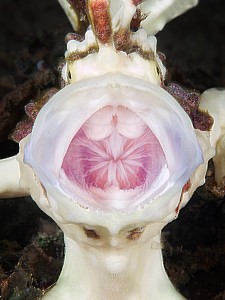
The story behind your most memorable underwater shot? That shot was in Anilao, Philippines. I was looking for ornate ghost pipefish and found three on the last dive of the day, but when I setup the shot my camera battery died! The next evening I decided to head back to the same spot and just see if they were still there. Surprisingly they were, and there was seven of them! I spent an hour shooting them and got very lucky when one grabbed a small goby to eat. Best shot I’ve ever taken!
Where is your favourite dive destination? Chuuk in the Federated States of Micronesia hands down. I’m a hardcore historian and wreck diver and Chuuk/Truk is the greatest underwater museum there is.
The site you’d most like to dive, but never have? Bikini Atoll for the amazing historic ships there. It may not have the numbers of ships of Chuuk, nor were they sunk in battle, but the ships that are there are without equal. Diving the USS Saratoga and IJN Nagato are my personal Mount Everest.
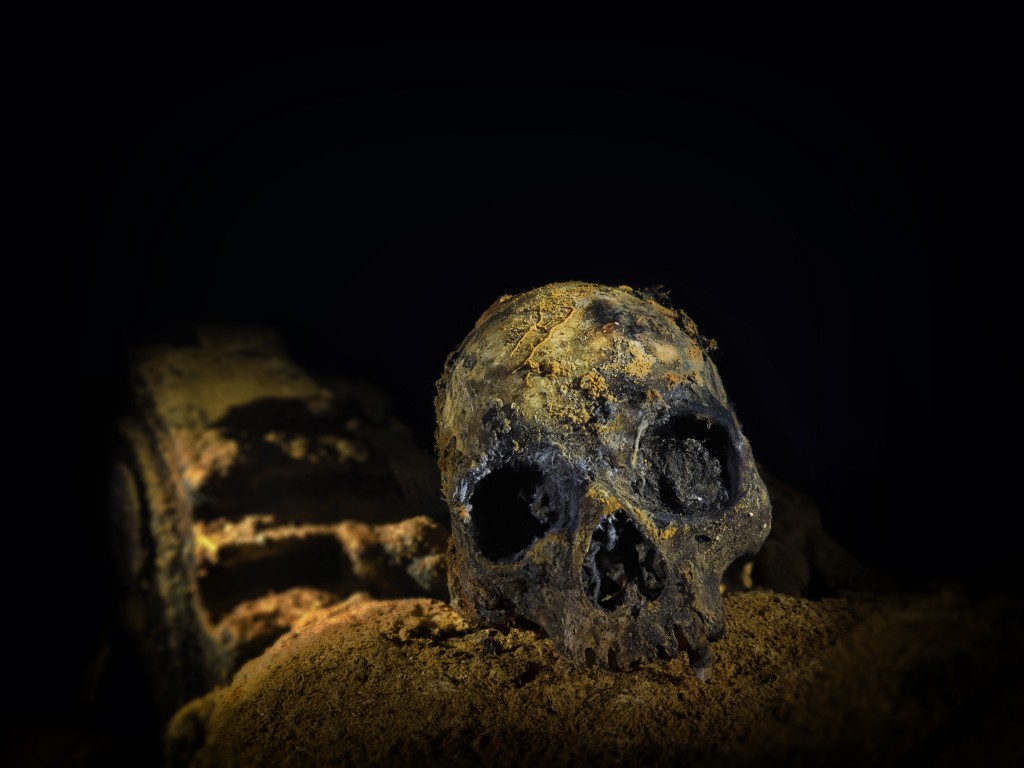
The weirdest thing you’ve seen underwater? Besides my wife? Joking of course. That would have to be the bones of the crewmen who were killed in the holds of the Aikoku Maru in Truk Lagoon. Deep inside that wreck there are still a huge amount of remains, all from men killed doing their duty in combat.
What camera equipment are you currently using? I shoot an Olympus EM1 with a wide variety of lenses inside a Nauticam Housing. My strobes are Sea & Sea YSD1’s and I also use a large number of independent video lights for some of my setup shots.
What is the highlight of your career? Teaching my oldest daughter her Open Water, which I’m doing right now. It may not be specifically photography, but I am still a teacher at heart.
…And the lowpoint? When I shoot inside wrecks I am regularly pretty deep and usually solo to minimise silt. I often leave my second camera and ascent tanks outside where I am shooting as it is just too much gear to bring inside. On one dive I left my gear outside and after I finished shooting I emerged to find my second camera and ascent tank gone! Luckily I had the air to make my decompression stops, but I was still really mad. I had thought I was the only person on the wreck, but it turns out another boat had arrived. They had seen my gear and taken it, thinking I had dropped it. They were very happy to return it to me when I surfaced! Their heart was in the right place, even though it almost sent me to the chamber.
Have you any advice that you’d like to give aspiring underwater photographers? Get good lights and when you have them then go get more! Light is the ultimate factor in making an underwater shot. My ancient first generation digital camera can still shoot better pictures with good lighting than the most expensive DSLR can with poor lights. Spend your initial money on buying good lights and plenty of them. You can always use your lights on all your future cameras, the reverse does not hold true if your priority is quality pictures.
Is there any particular shot that you still want to get? A selfie of myself in front of the guns on the IJN Nagato in Bikini Atoll. I hate selfies, but think that would be worth my pride.
Last week, we caught up with Kaj Maney to discuss more on his “stranger than stranger” videos of sub-aqua life and introduced the first of his top 12 wonderfully weird underwater videos. This week, as part two of our three-part series, we bring you the next four:
Back in 2015, the see-through swimming nudibranch Phylliroe caused quite a stir among scientists. Around the size of a goldfish, the nudi feeds on unsuspecting jelly prey and glows in the dark.
“It’s always great to be filming something underwater when you have no idea what it is. When filming macro critters though, finding something in blue water is not ideal. Trying to keep a small, moving object in focus is not easy… but that’s what makes it a challenge and a joy.
“I was recently going through some old footage that I hadn’t catalogued, looking for a clip that I knew I had filmed (A crab shedding its skin). As I was looking through thousands of thumbnails of clips, I came across something that I had completely forgotten I had filmed, and I had no idea what it was.
“Was it a larval-stage fish? A weird jelly? I put together a quick few seconds of video then uploaded it to the fountain of all knowledge, Facebook. There are some truly excellent groups for divers on Facebook and one of the most useful is the ID Please (Marine Creature Identification) group. Within a few minutes I had my answer, I had filmed a very rare creature, a Phylliroe. I had no idea… but the provided links showed me that it was a highly transparent pelagic nudibranch.
“The moral of this story? Don’t leave your unwatched underwater videos/photos on a hard drive without looking at them from time to time! You never know what you might find…”
The small flamboyant cuttlefish is too heavy to swim or hover like other cuttlefish, instead, it crawls on the seafloor like an octopus – and is only one of the non-octopus cephalopods found to be toxic.
“Flamboyant cuttlefish are one of the most wonderful creatures we get in Lembeh. They are small (of course) but have the ability to flash bright colours when excited.
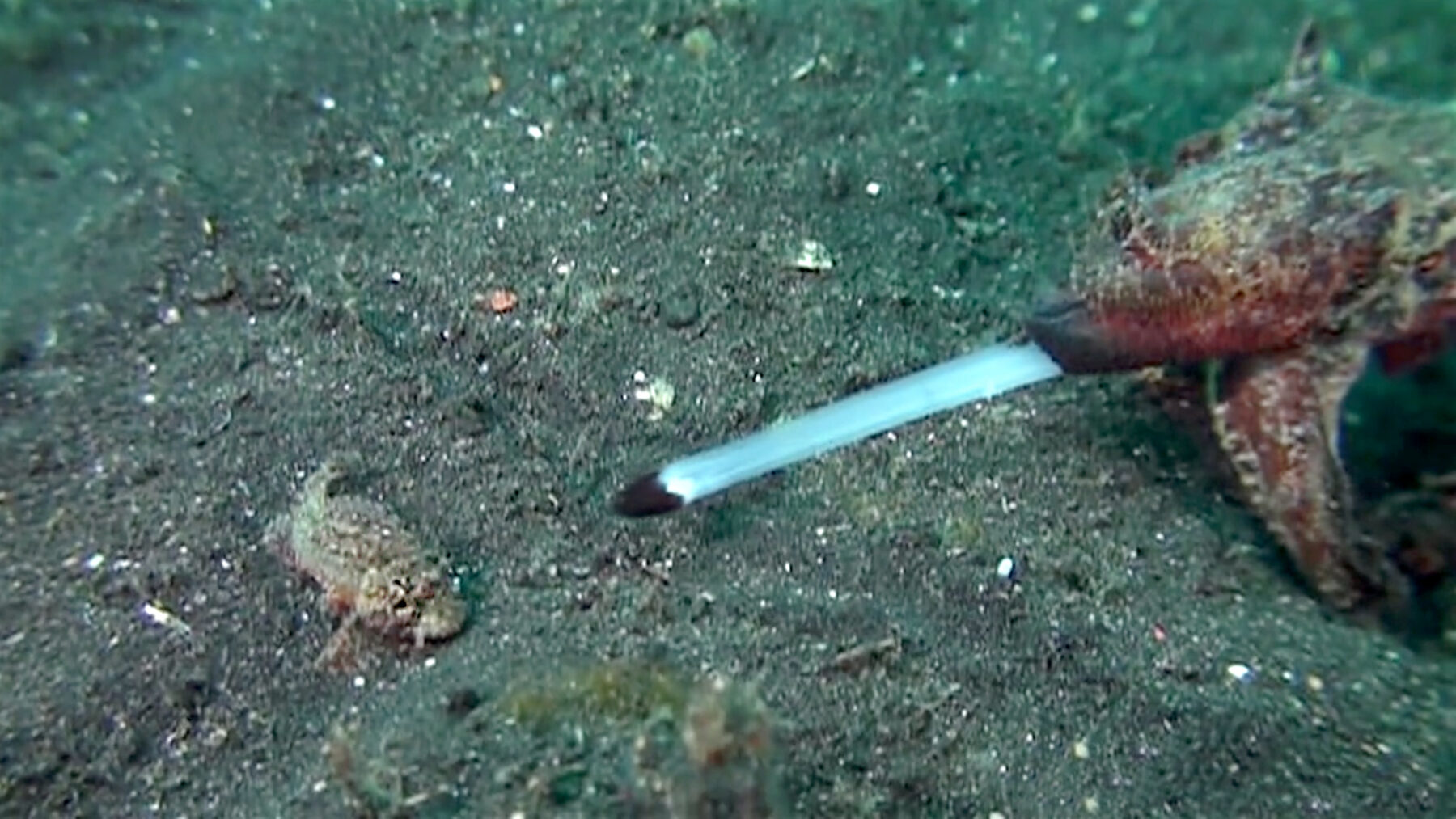
“They are also amazing to watch feed, as they crawl around, searching for small prey. When you watch them it looks like they extend a tube which is fired at their prey and then suck it into their mouths. Anyway, that’s what it looks like…..
“However what is really happening is that they have two adapted feeding arms. They put these two arms together then slowly extend them. When they are near their prey they make a lighting fast strike, grab the bit of poor unsuspecting food and gobble it up.
“I was extremely lucky to get a couple of bits of action. This clip starts off with a normal speed strike. After that I managed to get in front of a Flamboyant and film the two feeding arms coming together and stretching out. The next sequence is of the strike in slow motion. When slowed down you can actually see that the ‘tube’ is made of two arms that grab the small scorpionfish and drag it into it’s mouth.”
Idiomysis is a genus of minuscule crustaceans that reach just a few millimetres in length. Their head and upper-body is fused into a more or less slender cephalothorax (fused head and upper-body of spiders and other chelicerate arthropods) with a long abdomen trailing behind. They have two pairs of antennae and large eyes on stalks.
“Even though Lembeh is all about the small things, some things are smaller than others – and they don’t come much smaller (or harder to film) than Idiomysis.
“These are a tiny little crustaceans that seem to hover around like flies. They are only a few millimetres long and are always in constant motion. This makes it very difficult to photograph or film them.
“It has been a pet project of mine, over the last year or so, to try and video of them, using my woefully inadequate equipment. My idea is simple… use the slow motion feature to capture these creatures, so you can see them. The trouble is twofold: One: The depth of field is very small, and it’s impossible to refocus, either manually or automatically, at these distances and speed that the Idiomysis move; Two: When I hit the ‘slow motion’ function on my camcorder, it goes into a three second 240fps auto mode – you hit it and it immediately takes the three second shot, with no control, no re-focusing…
“So for a shot of these Idiomysis to come out, I need the tiny little thing to just move up and down while it happens to be in focus, and not to move back or forth away from the camera. Believe me, this is not something that happens often…
“But finally, today, I think I have enough to present the world’s first macro slow motion (nearly all in focus) video of these creatures. They are fascinating little things, and have wonderful eyes, bodies and it is really cool to finally be able to see one.”
One of the least studied parts of an octopuses life cycle, but the bottleneck in making their aquaculture viable, the planktonic stage of Octopus vulgaris is baffling. Little is known about how and where these paralarvae are growing, so to catch one on video is exciting.
“I’ve been very lucky, as a macro videographer, to have lived and worked in Lembeh and Ambon over the last six years or so. It has given me the opportunity to film some of the rarest and most unusual critters in the underwater world. My critter checklist has been getting smaller over the years, but there is still plenty of creatures to go.
“One thing I realised pretty early on, is that for the ultra-rare stuff, you can never go and look for them. They always appear by chance when you’re not expecting them. It doesn’t matter if you dive five times a day or once a year… sometimes you are just in the right place at the right time. This week was a perfect example.
“I don’t get out diving as much as I would like any more. This season it’s only been a couple of times that I’ve managed to go diving. We had a lovely group from Thailand here and they had done a night dive at one of our Baguala Bay muck sites, Frangky’s Corner. They had had
an amazing dive, with flamboyant cuttlefish, blue-ring octopus and many many bobtail squid. I love bobtail squid, so when they said they wanted to go back two nights later I was determined to go along.
“It was also a good chance to try out a new small video dive light I bought earlier this year, but hadn’t had a chance to try. The dive was great… I actually lost count of how many bobtail squid I found, really amazing. Then, about 40 minutes into the dive, I found a very special octopus, one I never expected to see.”
Next week, in Part three, we reveal the remaining four of Kaj’s 12 weirdest underwater videos
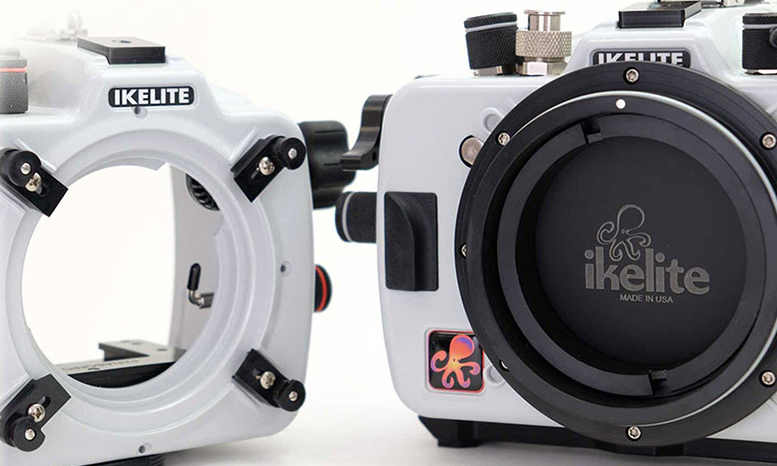
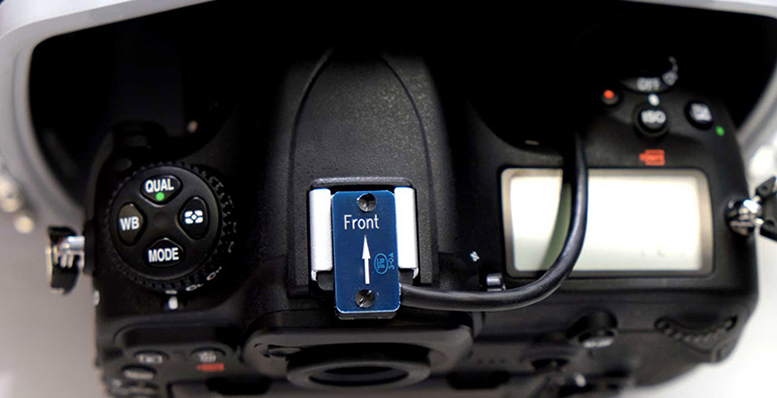
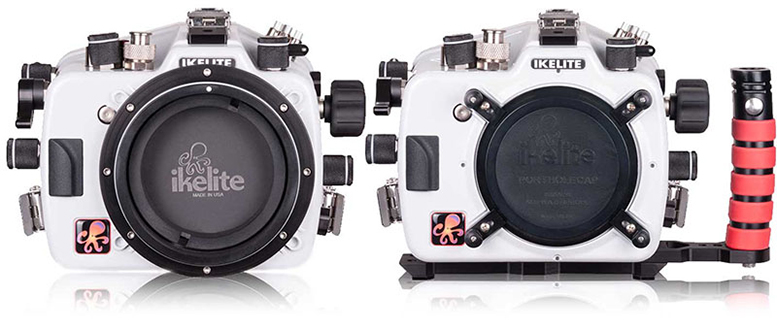
Ikelite’s new housings for the D500, Nikon’s flagship APS-C DSLR
The highly anticipated successor to the now six-year-old D300s, the Nikon D500 – the Japanese giant’s new flagship APS-C sensor DSLR – has already been eagerly supported by several of the major housing manufacturers. Now it’s Ikelite turn, and they’ve really gone to town, with not one but three different housing options, designed to accommodate the needs of different users.
Fashioned out of the company’s distinctive new white ABS-PC material, the three models comprise two depth-rated to 60 metres (200 feet) and aimed at scuba divers, while the third is depth-rated to 15 metres (50 feet), 225 grams lighter, and designed for use in freediving, surf imaging, pool shoots, and the like.
The 200-feet housings differ only by their port mount locking systems. One is equipped with Ikelite’s “Four Lock Port Mount” and supports Ikelite’s older ports for legacy users; the other features the company’s new “Dry Lock Port Mount” system, which boasts a novel exterior O-ring that stops water from dripping onto the camera when removing the port. The new port system accepts the company’s new 8-inch dome, which is designed to be extra compact without loss of optical quality.
Also featuring the new “Dry Lock Port Mount” system, the 50-feet model sports the main controls found on the other two models, but some non-essential controls are absent (i button, Trash button, Key button, and Fn2 button) to simplify operation.
The 200-feet legacy model is priced at $1,395 and will be available in early September. The 50-feet and 200-feet models with the new “Dry Port Lock Mount” cost $1,395 and $1,595, respectively, and can be preordered now for delivery in October. For more information, read the press release below or visit the Ikelite product page.
Press Release
The “Best Enthusiast DX Offering”
Nikon has finally given us a successor to the D300s camera with fantastic speed and processing power in a relatively compact and durable body. Some highlights include:
Same 153-point Autofocus system and EXPEED 5 processor as the Nikon D5
4K/UHD video recording
20.9MP APS-C CMOS sensor
Excellent low light performance with an ISO range of 100-51,200
Same rugged weather sealing as the Nikon D810
The D500 is up to almost any photographic challenge—so it’s fitting to offer a housing system that can be built to suit almost any need. Three base housing versions are available to suit the Nikon D500 DSLR camera. Skip to the side-by-side comparison…
All three versions start with a fully functional, white ABS-PC housing front which is depth rated to 200′ (60m)
Form + Function
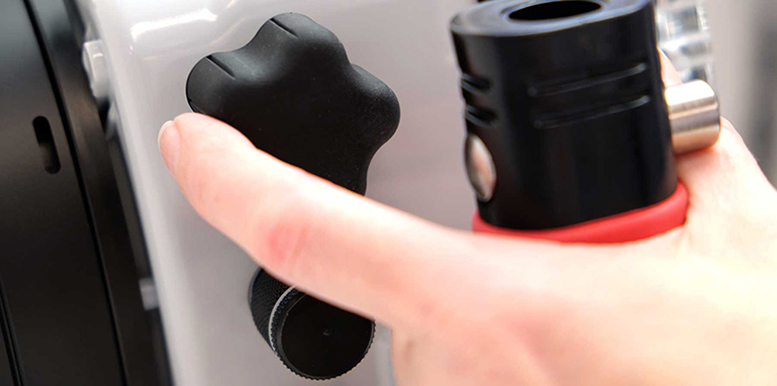
The D500 slides into the form fitting housing using a simple tripod-style attachment. Controls are provided for all important camera functions and positioned intuitively to take advantage of the muscle memory you develop when using the camera on the surface. A unique universal gearing system puts zoom or focus at the tip of your finger with a brand new soft-touch, 5-lobed knob.
The AF-ON Trick
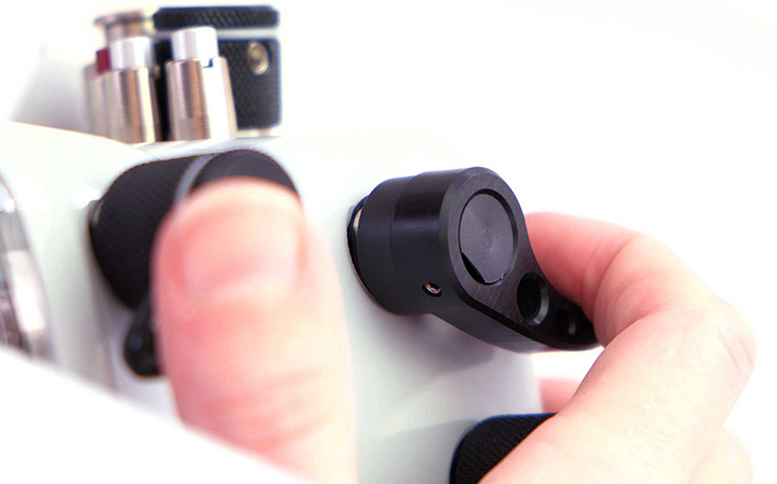
Take full advantage of the camera’s superb autofocus system and fast continuous frame rate by using AF-ON to lock focus. A convenient lever on the side of the housing feels so natural that we promise you’ll never think about half-pressing the shutter again.
Groovy Groove-less O-ring
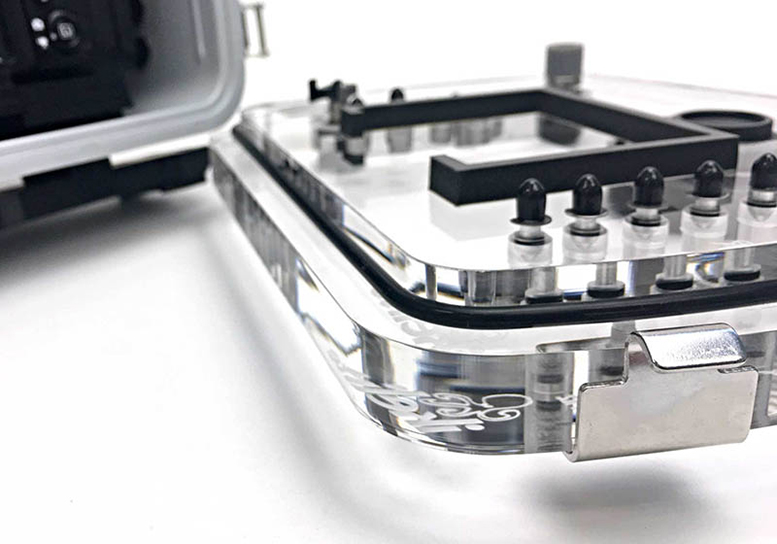
O-ring channels trap dirt and debris, and cause the O-ring to twist and deform in various ways. Our unique groove-less design is the most user friendly and reliable sealing method currently available. For added assurance, the all-clear back allows you to see the O-ring form a solid, black line once the housing is sealed.
Very Flashy
Optical slaves have come a long way, but electrical sync cords are still the fastest and most precise way to trigger a strobe under water. Each housing comes equipped with a manual flash hot shoe and Ikelite ICS-5 bulkhead. The hot shoe and bulkhead are user changeable for in-field modifications and serviceability.
An optional TTL hot shoe and Nikon TTL Converter provide industry leading accuracy in exposure when combined with a compatible Ikelite DS strobe.
The flash system is almost endlessly expandable with lots of options for remote units triggered by extension cords, optical slaves, Pocket Wizards, and more. It’s time to get creative with your lighting and think way beyond the classic two-strobe set-up.
Lens Port Authority
And now… the main event. Introducing the NEW Dry Lock (DL) Port Mount. Building off of our popular port system for compact mirrorless cameras, we have re-designed and refined the concept and it’s ready for the big leagues. Key features include:
A unique exterior O-ring which prevents water from dripping onto your camera when the port is removed;
Solid, sure-stop press fit with no threading, turning, or twisting of the ports or extensions;
Built for reliability in remote locations with standard locking thumbscrews and no complex moving parts;
Accommodates large diameter lenses with ease;
A new compact 8″ dome port provides the optical quality of a large dome with the size of a much smaller dome—perfect for close-focus wide angle work;
Plus the new featherweight full 8″ dome is less than half the weight of its predecessor and several pounds lighter than the glass alternatives with nearly identical optical quality!
Not quite ready to let go of your legacy ports? The Four Lock (FL) version can be sent in at a later date for upgrade to the DL mount. However, our original standard flat, 6″ dome, and modular port components are not adaptable to the new system. We promise that once you switch over, you won’t miss them anyway…
Our new white ABS-PC blend is specially formu
lated for added strength and durability. Compared to black, colored, or clear alternatives, the white shell keeps the camera running cooler, longer in hot, sunny climates.
Two Faced… and Two Backed?
The new 50ft (15m) Water Housing version features a slimmed down acrylic back and paired down control set which is over 1/2 pound lighter and streamlined for use at the surface of the water, in surf and pool work. The two backs are interchangeable and can be purchased separately so you can pack lighter when shooting the whale sharks in Isle Mujeres or dolphins in the Red Sea.
Side-by-Side Comparison
Three housing versions are available to suit the Nikon D500 DSLR camera. All versions feature:
Controls for Shutter-release button, Power switch, Movie-record button, Sub-command dial, Exposure compensation (+/-) button, ISO button, MODE button, WB button, Metering button, BKT button, Lens release button, AF-ON button, Main command dial, Multi selector, Info button, Live view selector, Lv button, i button, Playback button, Trash button, MENU button, Key/? button, Magnify + button, Magnify – button, OK button, Fn2 button
Ikelite ICS-5 bulkhead and manual flash hot shoe
Aluminum base with Left-Hand Quick Release Handle
A completely clear back for an unobstructed view of the camera and O-ring seal
Control symbols laser etched into the back for easy to read labeling that will never fade or rub off
A quick install camera mount plate which does not need to be removed for battery or memory card access
1-Year Limited Warranty
All versions are available for pre-order now through your local Authorized Ikelite Dealer. Product numbers and pricing will be made available before the end of August for the new DL port chart components; optional TTL flash hot shoe; optional vacuum system components; and much more! Keep visiting the website for the latest details.
Why Ikelite?
Like the other manufacturers, we were born out of a passion for photography in and under water. It’s our extra 50 years of experience, 100% USA-based production team, and our dedicated customer support staff that set us apart. This exciting new line of housings offer an unparalleled versatility and functionality for truly professional performance. Your Nikon D500 camera… anywhere there’s water.
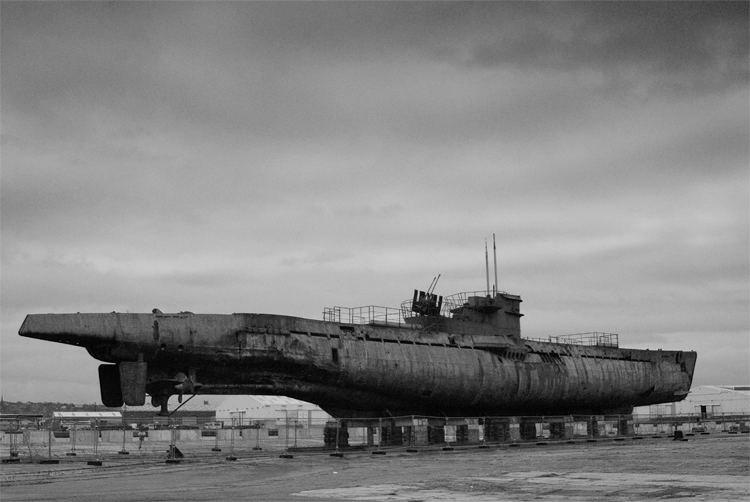
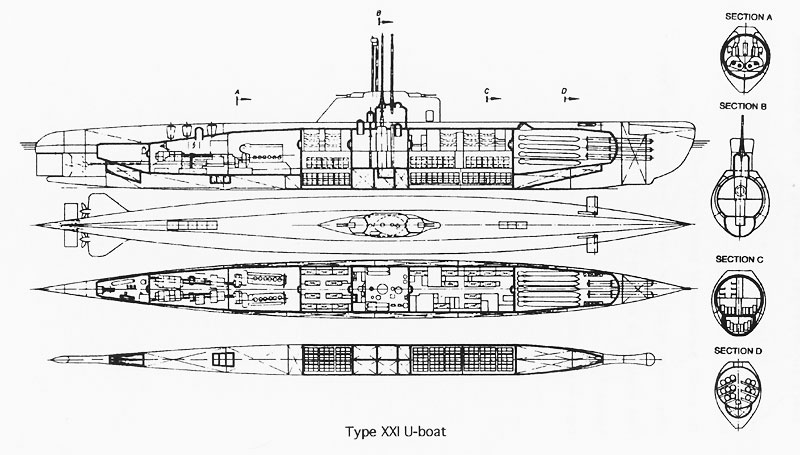
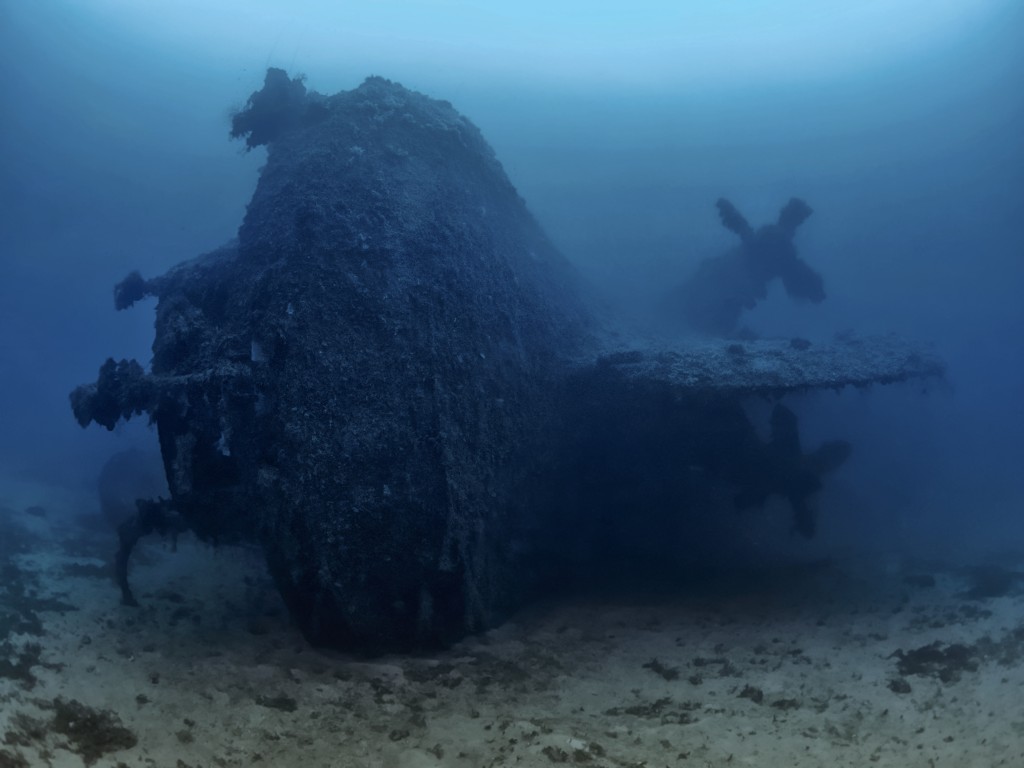
Known for having the poorest living conditions of any vessel of war, the German U-boat was a forbidding deep-sea carrier and an expert in sneak-attacks on merchant convoys and Allied warships.
Part of the largest submarine fleet in the world, the U-boats played a huge part in securing the ocean depths for Germany, carrying out various sneak-attacks and late-night offences during the Second World War. They were an important component of the Battle of the Atlantic, a side-war aimed at halting any supplies making it to mainland Britain. Travelling in “wolfpacks” – where multiple submarines would stay close together making it easier to sink specific targets – they were able to outsmart initial antisubmarine radar defences, and were formidable in creating havoc along the trade routes.
Striking at night was the best way for the U-boats to sink enemy vessels, and until the Allied forces developed truly effective antisubmarine warfare tactics the German submarine fleets were almost unbeatable. Their heat-seeking torpedoes, “spider-web” mines and oversized deck guns have become glorified in classic Hollywood war films, but perhaps most fascinating of all was the crew that operated them.
A U-boat war patrol could take anywhere between three weeks to six months, depending on their deployment location and mission objectives. During this time, U-boat crews were not able to fully bathe, shave or even change their clothes – for a crew set constantly on high-alert, life was unpleasant. The crew had specialists, such as radiomen, torpedomen and machinemen, who were responsible for the operation and maintenance of equipment aboard the U-boat. The other general duty tasks such as loading torpedoes, standing watch on the bridge, operating deck guns and housekeeping activities were performed by the seamen.
Their workload was divided into several shifts, with the seamen working in three eight-hour shifts – whilst one slept, the other two would share regular duties and miscellaneous tasks. For the specialist crew, their shifts were broken down into three four-hour shifts in the day, and two six-hour shifts during the night. Freshwater was limited and strictly rationed for drinking – diesel tanks were reported to be favoured over water tanks so to extend the submarine’s operational range. Washing and showering was not permitted, and no change of clothes. In such a confined space, with little hygiene, deodorant was used to control body odour.
There was no privacy, and all space was filled – crew members even slept in the loading torpedo room. With such limited bunks available, the crew often resorted to hot-bunking – where as soon as one person had crawled out, the next person would crawl in. Simple situations, like going to the toilet or eating were difficult. Due to fresh food becoming spoilt from exposure to diesel fumes and being stored in a damp environment, the crew could only store canned goods.
The long war cruises – which could last up to six months – took a large psychological toll on many of the crew members. Aside from the excitement of chasing the enemy, or being chased themselves, there was little to do at such deep depths. Recently, standards of submarines have largely improved, and space has been used more effectively. Some now contain treadmills for crew to exercise, dedicated laundry rooms and kitchens for hot food. Of course, just like the U-boat, they are built for efficiency rather than luxury.

.png) JOYCE TANG (HONG KONG)
JOYCE TANG (HONG KONG) LEE YOON-MI (SOUTH KOREA)
 AARON WONG (SINGAPORE)
 ALAN LO (HONG KONG)
 AMOS NACHOUM (USA)
 ANDREW MARRIOTT (USA/CHINA)
 GARY SUN (CHINA)
 IMRAN AHMAD (SINGAPORE)
 JIM CHEN (TAIWAN)
 LYNN WU (TAIWAN)
 MICHAEL AW (AUSTRALIA)
 MOLLY (CHINA)
 SANDY YOU (CHINA)
 SCOTT TUASON (PHILIPPINES)
 TIM HO (MALAYSIA)
 TODD ESSICK (USA)
 WILLIAM TAN (SINGAPORE)
 YORKO SUMMER (TAIWAN)
 YOSHI HIRATA (JAPAN/PHILIPPINES)
 YUPING CHEN (CHINA)
 Y.ZIN KIM (SOUTH KOREA)
 DADA LI (CHINA)
 HIDY YU (HONG KONG)
.png) JESSEA LU (CHINA/USA)
JESSEA LU (CHINA/USA) JOYCE NG (HONG KONG)
 PEPE ARCOS (SPAIN)
 POTTI LAU (CHINA)
 ALAN LAM (HONG KONG)
 TONY CANARIO (ITALY)
 JOHN FANG (TAIWAN)
 THOMAS DEDERICHS (GERMANY)
 JAKI TEO (SEA SHEPHERD)
 JAMES HARVEY (GREEN FINS)
 JOSIE YANG (LAMAVE)
 WANG YAMIN (CHINA)
 JOHN LIPPMANN (DAN)
 LOUISE CHAU (SDI TDI ERDI CHN/HKG/KOR)
 PAUL MONTGOMERY (SDI TDI ERDI CHN/HKG/KOR)
 WILFRIED DICKES (DIWA)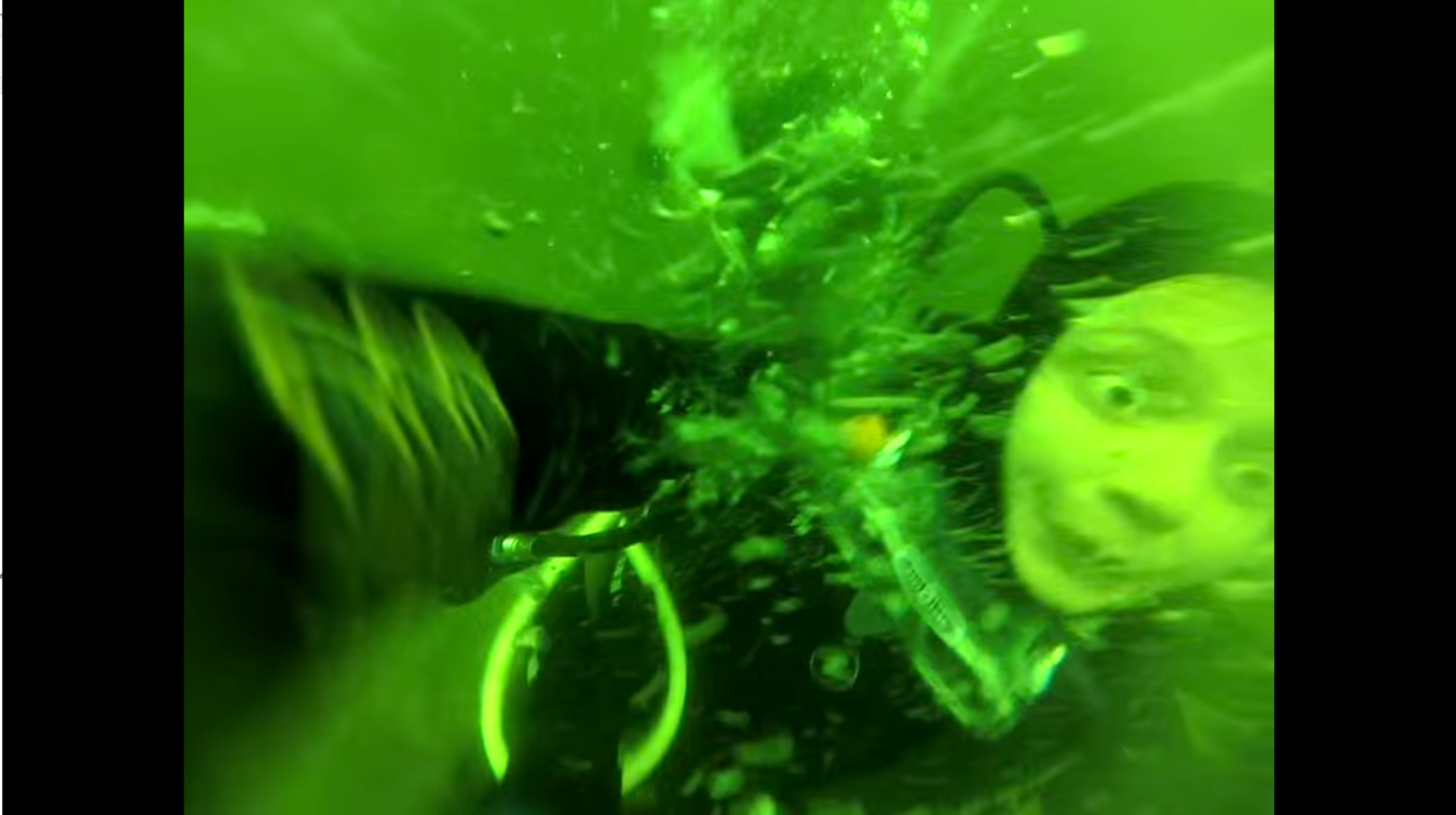
!["I spent an hour shooting them [ornate ghost pipefish] and got very lucky when one grabbed a small goby to eat. Best shot I’ve ever taken!" © Andrew Marriott](http://staging.uw360.asia/wp-content/uploads/2016/08/P1015759-1024x768.jpg)
 What camera equipment are you currently using?