Home Blog Page 136

Wildlife of the Week: Harp Seal

0
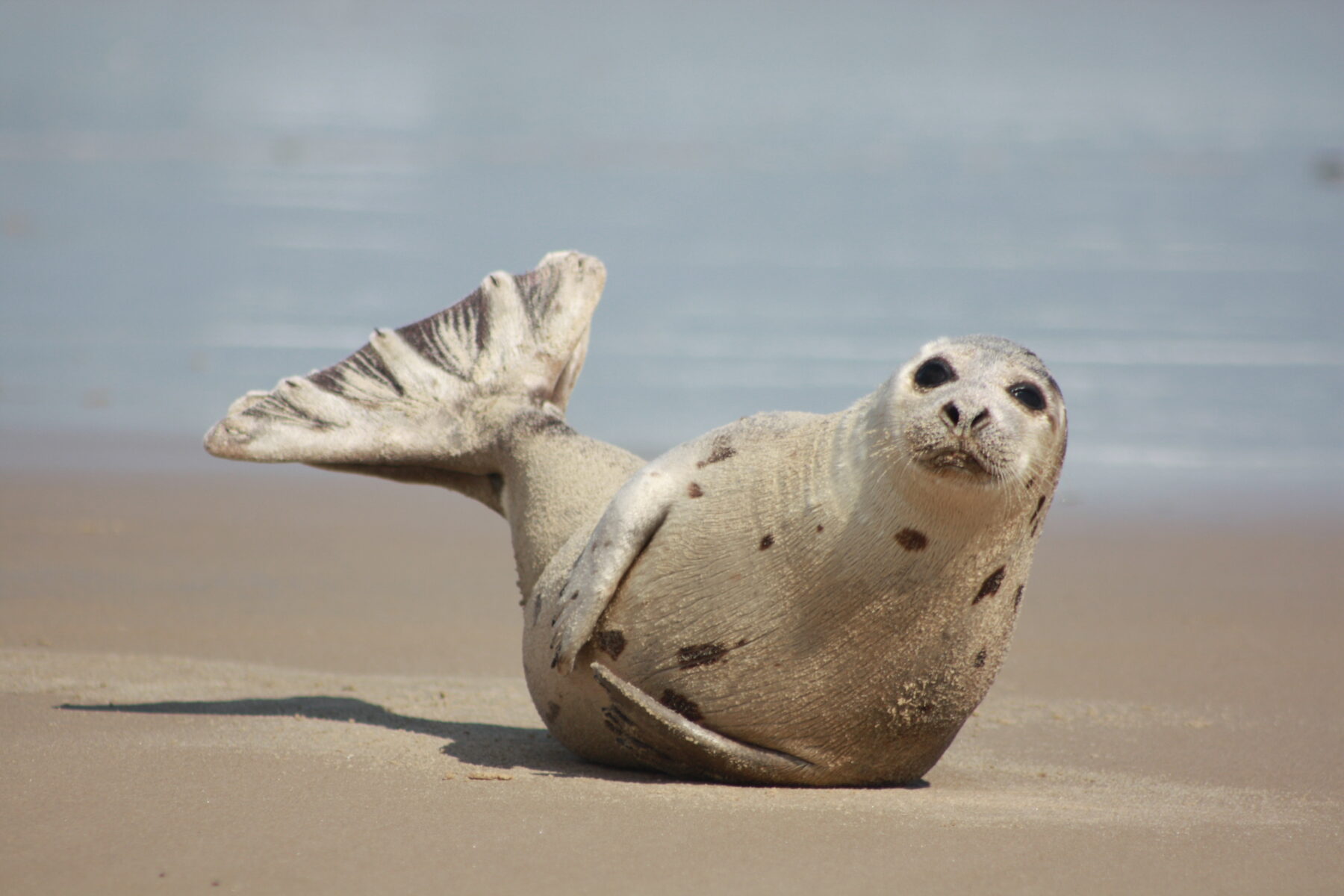
A juvenile harp seal relaxes on the beach © Wikimedia Commons

Often seen from expedition ships in the Arctic Oceans and north Atlantic, harp seals are grey bodies of blobs often caught lying around languidly while their white-coated pups play in the waters. The name of this species derived from the harp-shaped markings on the backs of the dark-coloured adults. Harp seals have existed for over 20 million years, thus these wide-eyed, earless beasts garnered the right to be featured as this week’s Wildlife of the Week:

Species: Pagophilus groenlandicus

Class: Mammalia

IUCN Status: Endangered

Diet: Mainly fish like Arctic cod, herrings and crustaceans like crabs and shrimps

Size: Adults can grow up to two-metres long, weighing from 150-kilograms to 190-kilograms

Behaviour: Behavioural patterns vary due to harp seal location, for example a harp seal in the Northwest Atlantic will travel southwards to Greenland in early summer and continue travelling south reaching as far as Hudson Bay by late summer, whereas those breeding near East Greenland will be found feeding in Northern Iceland and Northern Norway. In total, the seals can travel between 2,500 to 4,000 kilometres each year

Distribution: The harp seal population is divided into three groups: The Western North Atlantic herd is the biggest group located off eastern Canada and further divided into two groups based on breeding location

Followed by the Front herd and the Gulf herd, the former breeds off the coast of Labrador and Newfoundland, while the latter breeds near the Magdalen Islands

Ecosystem: In late February, female seals gather in groups to give birth on the ice and differentiate their offspring by a distinctive scent. From this day onwards she will feed the pup

5 Fast Facts:

  • These carnivores do not chew their food, but swallow them down in large chunks
  • Some mother harp seals have been observed to abruptly leave halfway through weaning and never return. The abandoned pup must attempt to fend for itself from predators, and becomes largely inactive to conserve body fats until about 25 days old, when they are able to catch food for themselves
  • Harp seals have delayed implantation, which means that the fertilised egg does not implant itself to the uterus immediately, but will float for about three and a half months
  • In 2015, Canadian Government permitted the killing of nearly 470,000 seals to obtain their fur. The seals were skinned alive and their remaining carcasses cast aside towhere they slowly died from their injuries
  • Besides the fur, seal hunters also sell their blubber, used to make “seal oil” health supplements. Seal penises are sold in Asian markets to promote male virility and strengthen the kidneys

6 Underwater Monuments

0
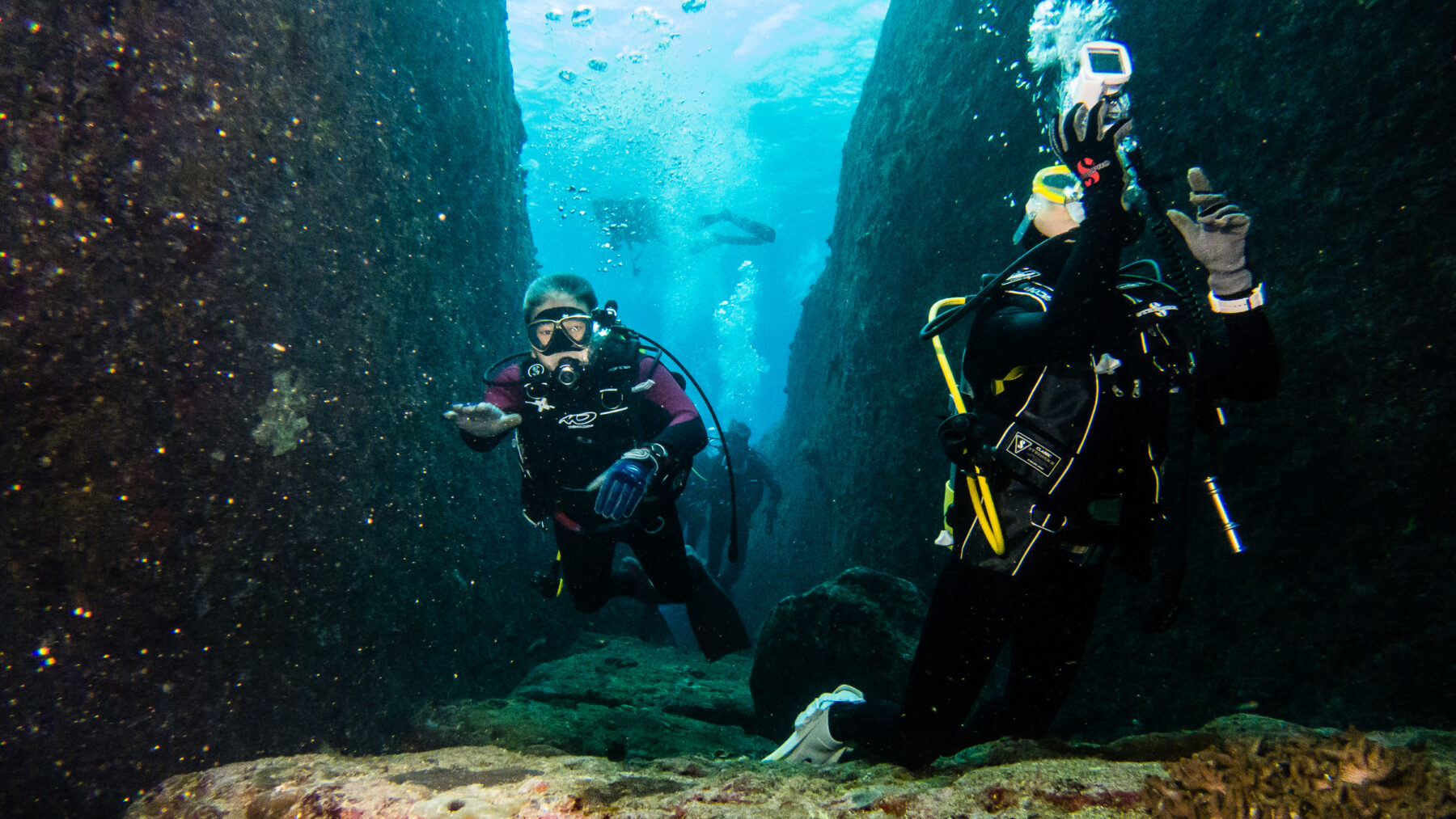
Two divers explore the Yonaguni Monument © Wikimedia Commons

Mysterious and forbidding, these underwater cities have laid, mostly intact, under the sea for 50 years to more than a century. Regardless of how old they are, they are significant archaeological findings that give us a rare glimpse of how things used to be:

Sunken Ruins of Cleopatra’s Palace, Alexandria, Egypt

In 1998, a team of marine archeologists chanced upon the ruins of the ancient Alexandria off the shores of the present-day Alexandria. It is likely to have been taken to sea as a result of earthquakes, but fortunately the general structure of Cleopatra’s palace such as statues, temples and columns did not suffer any devastating damages to it.

Considered to be the richest archeological site in the world, containing complete stone monuments, coins and everyday objects, the location and treasures found matched with a 2,000 year old city once described by Greek historians. One of the memorable findings was a stone head which is believed to be Caesarion, son of  Cleopatra and her lover, Julius Caesar, as well as statues of Cleopatra’s father and son, shedding light onto the scandalous lives of the royalty behind closed doors.

Plans to build an immersed fibre-glass tunnel leading down to the submerged palace are underway, it will be built near the New Library of Alexandria, the famed site where Cleopatra was rumoured to have hid with one of her other lovers, Marc Antony before both committed suicide.

USS Arizona Memorial Battleship Wreckage, Pearl Harbour

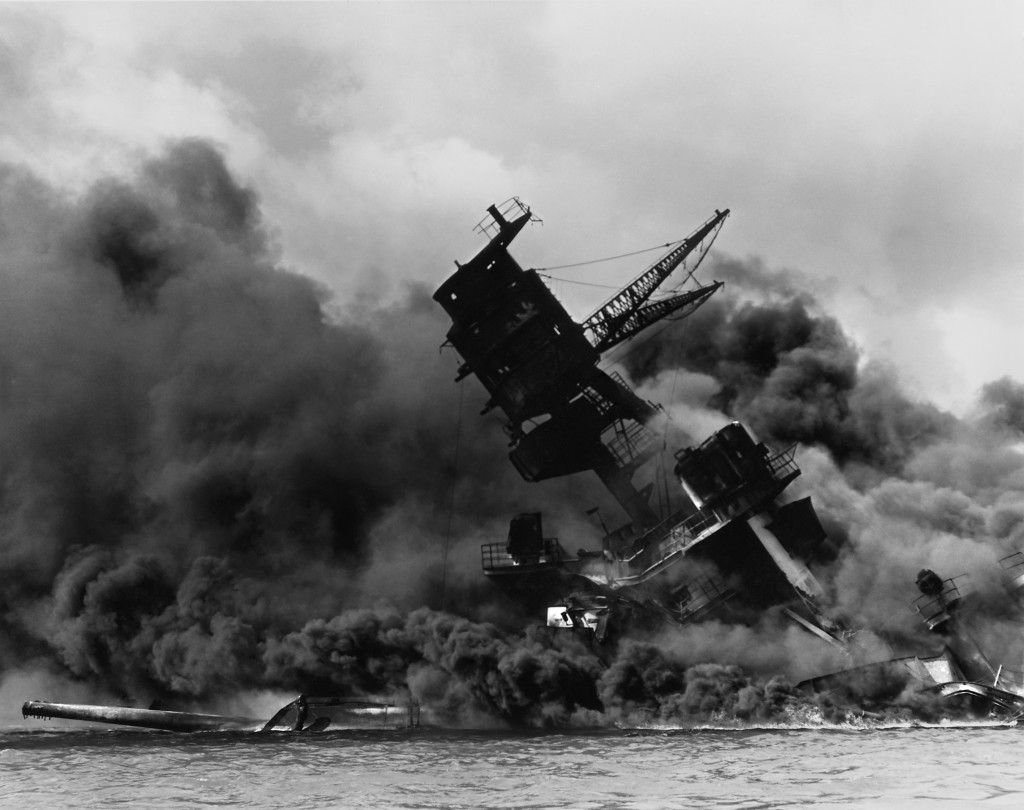
USS Arizona is the resting place of 1,177 sailors who lost their lives on seventh December 1941, due to the events at Pearl Harbour in World War II. It was a deliberate decision from the Navy to leave the bodies there, because it would be extremely troublesome to remove the bodies in a respectful manner. Out of all the battleships deployed, USS Arizona sustained the most severe damage, where she suffered four direct-hits from 800-kilogram bombs. The last bomb that penetrated her deck detonated a powder magazine, splitting the ship in two.

Located in the middle of the Pacific Ocean, a memorial was built above the spot where the shipwreck is to honour the valiant servicemen who tragically lost their lives, and a flagpole was erected over the sunken battleship. Currently, Pearl Harbour is open to visitors from all over the world, to reflect on the past sacrifices of the previous generations during World War II.

"The USS Arizona (BB-39) sunk and burning during the attack on Pearl Harbour, 7 December 1941" © Wikimedia Commons
“The USS Arizona (BB-39) sunk and burning during the attack on Pearl Harbour, 7 December 1941” © Wikimedia Commons

Submerged Shore Temples of Mahabalipuram, India

An ancient legend tells of the seven temples of Mahabalipuram that were so dazzling that Indra, the Hindu deity of rain and storm, became jealous. Bearing a grudge, he chose to submerge all but one temple, leaving that single Shore Temple companionless. During the tsunami of December 2004, eagle-eyed tourists spotted a long row of granite boulders pushing through the waves. A little more than a decade later, scientists and archaeologists found out that the “boulders” were actually remains of an ancient port – from one of the six shore temples that went underwater.

After extensive exploration along the coast of Mahabalipuram, the structures are said to be around 1,100 to 1,500 years old. The general structure was still intact, but many details were rubbed away by years of water erosions and covered by thick algae growth. It was possible that the building complex could be part of a submerged township. The rising of sea levels – over a period of 2,000 years – was believed to have engulfed several hundred metres of the Indian coastline, including the temples. There was also evidence of a tsunami-like event in 952AD which may well have drowned the temples.

Yonaguni-Jima Ruins & Pyramid, Japan

Much controversy surrounds whether the Yonaguni-Jima structures are man-made or just natural stone formations. The world’s largest recorded tsunami struck Yonaguni-Jima in April 1771, with waves believed to be over 40-metres, it apparently drowned the ancient Mu civilisation (a mysterious civilisation that was thought to have resided in this region). 

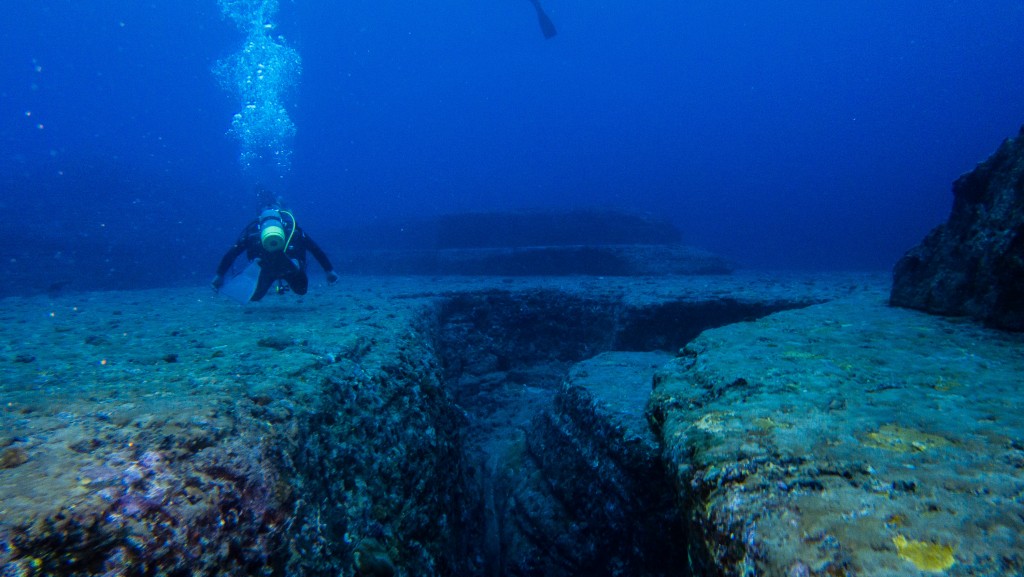
The origin of this ancient civilisation is unknown, and much speculation remains around whether it even existed – some believe that the eroded ruins are hard-evidence of the missing Continent of Mu. Masaaki Kimura, a marine ecologist at the University of the Ryukyus in Japan is strongly convinced that although these ruins might not be the remains of the Mu civilisation, this 5,000 year-old structure was inhabited by people and they are man-made structures. Especially the largest structure: A complicated, stepped pyramid that resides at a depth of 25-metres. Holding a different view, Robert Schoch, Professor of science and mathematics from Boston University deduced that it is basic geology that caused these sandstones structures to evolve naturally.

To date, the site has not been selected for extensive conservation efforts or research; instead it is left to those who wish to examine in greater detail.

A diver explores the Yonaguni Monument © Wikimedia Commons

Underwater Lion City of Qiandao Lake: China’s Atlantis

An Oriental Atlantis has been located 40-metres below water, showcasing a maze of white temples, paved roads and houses. Situated in the eastern province of Zhejiang, this city of Shi Cheng, or “Lion City”, is located in a man-made lake formed by the Chinese government in 1959 due to a need for a new hydroelectric power station. This grand-scale project displaced nearly 300,000 citizens, some of whose families have stayed there for centuries.

Ultimately, grand plans failed to bear fruit and the Lion City was forgotten for 53 years. Despite many years in the lake, Shi Cheng has been well-preserved from the natural weather elements because of the water.

This underwater city is being utilised as a tourist attraction for diving trips, but it is limited to advanced divers with deep water, night and buoyancy experience because the ruins have not been fully mapped out and explored.

Underwater Archaeology Park of Baia, Pozzuoli, Italy

During the Roman times, Baia was a resort city that played hosts to the Roman elites. The city was above natural volcanic vents, famous for its effective medicinal hot springs and large spas. Many important people like Nero, Caesar and Cicero built permanent vacation villas there. Unfortunately, Baia city was overpowered by the Saracens in the 8th century and by 1500, the remains of the luxurious town were abandoned.  Rising sea levels swallowed the ancient ruins, and much of the coastline sunk into the shallow bay.

Currently, visitors can explore the crumbled structures around this underwater archaeological park while riding in glass-bottomed boats. Opportunities to scuba-dive and snorkel give visitors a thrill of a lifetime to come in close and personal with one of Europe’s historical wonders.

Death of Corals Worldwide

0
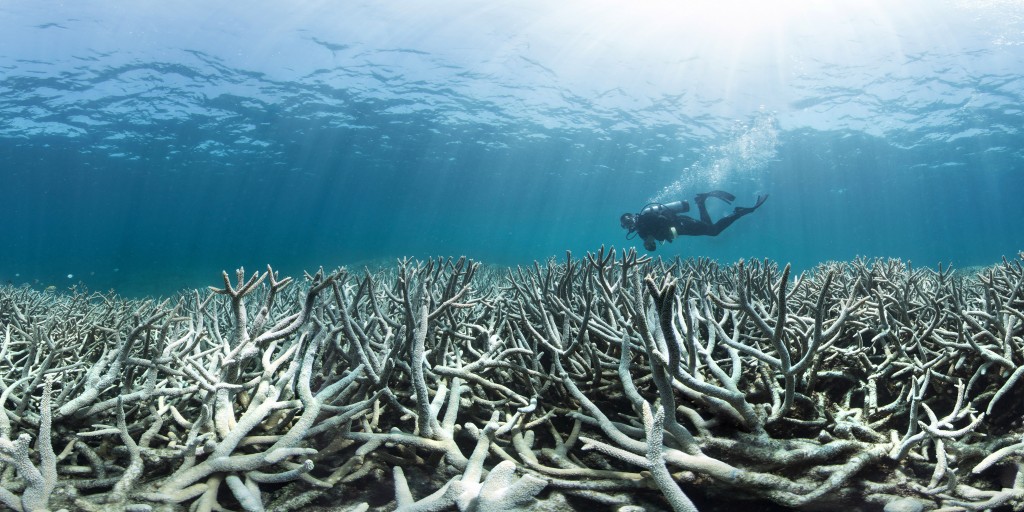
"A global-scale change on our blue planet is dulling previously colourful reefs, and killing off countless organisms. © Wikimedia Commons

Many of the once-magnificent corals in our oceans are dying. A global-scale change on our blue planet is dulling previously colourful reefs, and killing off countless organisms.

Coral reefs are underwater ecosystems that are formed using calcium carbonate structures. They are built by and made up of thousands of tiny animals – clusters of polyps – which have small tentacles and produce colourful pigments, responsible for giving the coral its various colours. Those that do not have tentacles to grab small fish and plankton, obtain their nutrients from  zooxanthellae – tiny in-house algae that convert the sun’s energy to food via photosynthesis.

In recent years, the decline of coral reefs has entered the spotlight, causing panic among environmentalists and marine scientists. Among all the coral reefs in the world, WWF (World Wildlife Foundation) has reported that out of the corals reefs found in 109 countries, severe reef degradation has been found in 93. Without human intervention, over 60 percent of the world’s coral reefs will be gone indefinitely.

The current global coral bleaching event has sparked action from many conservation groups, which are pointing the finger at those in power who are failing to make the necessary eco-adjustments. Recently, the 2016 International Coral Reef Symposium concluded with a pressing letter to Australian Prime Minister Malcolm Turnbull highlighting the urgency to save the Great Barrier Reef from rapid bleaching. Above all, the Australian Government was heavily criticised for their lukewarm approach towards protecting the reef’s fragile ecosystems.

Mass Bleaching

Bleaching occurs when stressors such as pollution and elevated water temperature cause corals to expel their zooxanthellae, turning the corals completely white. No algae means no food for the coral. Though it is not necessarily life threatening, it is a sign that the corals are under tremendous stress, and if conditions don’t normalise, it can ultimately result in death.

Not all bleaching incidents are due to warming waters; there have been instances where unusually cold water temperatures have resulted in corals being bleached. According to reef biologists working in the waters of the Florida Keys National Marine Sanctuary, during the first two weeks of January 2010, the plunge in water temperature caused the death of many of its Montastrea corals. These boulder-sized slow-growing corals – likely over a century old – had survived past bleaching events and hurricanes.

Currently, the Great Barrier Reef has seen 93 percent of its corals bleached. This is a direct result of the El Niño phenomenon warming water in the Pacific Ocean, and leaving only 68 of the reefs untouched. The scale of this bleaching  could escalate drastically due to the formation of fewer clouds and a higher level of UV radiation blasting the corals.

"When water temperatures are too high the algae start to produce free radicals which damage the coral. If temperatures do not return to normal soon, and the coral reabsorb the algae, it will likely die." © XL Catlin Seaview Survey
“When water temperatures are too high the algae start to produce free radicals which damage the coral. If temperatures do not return to normal soon, and the coral reabsorb the algae, it will likely die.” © XL Catlin Seaview Survey

Human-Based Threats

Coral reefs have endured for millennia, powering through years of earthquakes and tsunamis, only to be heartlessly destroyed by careless fishing practices and unregulated commercial tourism.

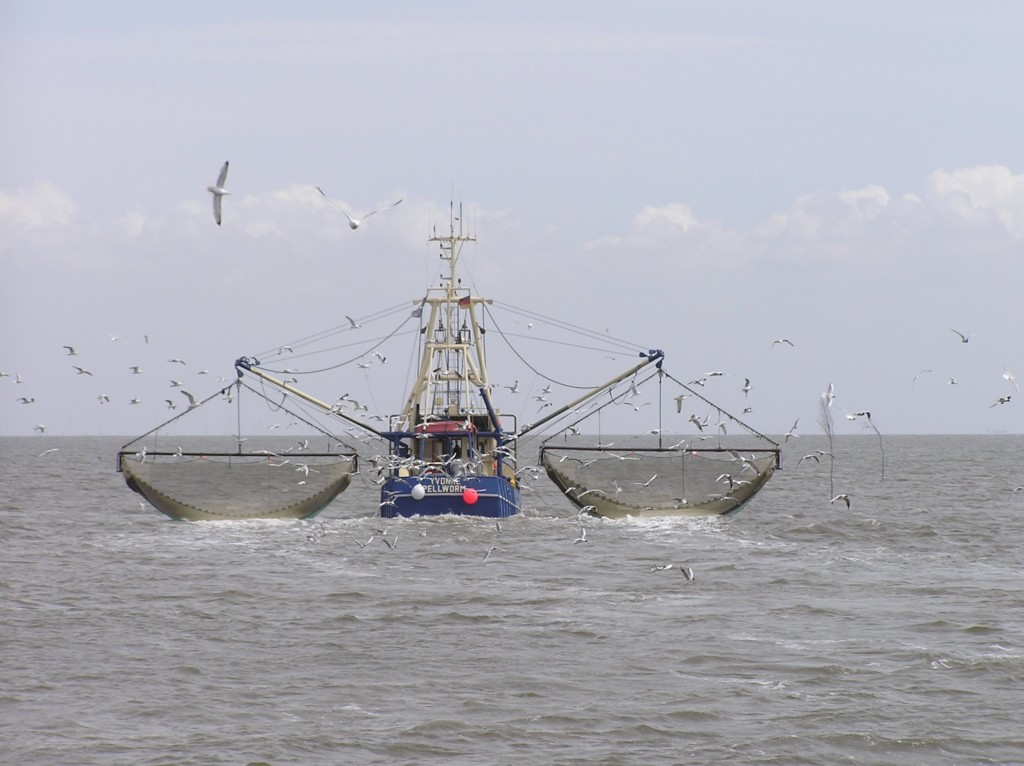
Common examples of destructive fishing practices are bottom-trawling and the use of poison and underwater explosives. Bottom-trawling is a customary industrial fishing method to catch as many fish as possible by dragging enormous nets along the sea floor. Along with sea creatures, corals get ripped off the reefs and accumulate in the nets. Coral and other unwanted species are thrown back into the ocean – “discards” that  can reach up to a shocking 80 to 90 percent of the catch.

Cyanide is used to capture live fish for the viewing aquariums and the restaurants of Hong Kong, Singapore and mainland China. The poison only stuns the fish, making them easier to catch. However, its already-lethal formula mixed with water becomes even more toxic, killing marine organisms, including corals, and turning these “rainforests of the sea” into barren deserts. The practice is banned in many countries across Asia, but in Philippine waters, for example, it is reported that an estimated 65 tons of cyanide are poured into the ocean yearly.

Dynamite fishing is the indiscriminate killing of fish from the shockwaves of exploded bombs. The blasts demolish various reef structures and wipe out many of the organisms. It takes a few hundred years for a reef to rebuild and time is not on our side. Though the number of illegal fishing cases has declined in the Philippines, the country’s fishing bureau estimates that there are still around 10,000 dynamite fishing incidents every day.

Coral mining is a profitable business; corals are used in the construction industry where coral pieces fill roads and are even made into bricks. Sand and limestone from coral reefs are ingredients to make cement. In addition, corals are harvested for calcium in the manufacture of health supplements, and are collected to be made into ornamental souvenirs. The continuous removal of rocks means that corals cannot attach themselves to a permanent structure. As such, drifting corals are left to rot away on the seabed. Corals are much more than attractive playgrounds for divers and underwater photographers. A coral reef provides a barrier against waves, storms, floods and even tsunamis. Healthy reefs have rugged, rough surfaces that provide friction to attenuate the speed and magnitude of the rolling waves caused by underwater earthquakes.

"Coral reefs have endured for millennia, powering through years of earthquakes and tsunamis, only to be heartlessly destroyed by careless fishing practices and unregulated commercial tourism." © Wikimedia Commons
“Coral reefs have endured for millennia, powering through years of earthquakes and tsunamis, only to be heartlessly destroyed by careless fishing practices and unregulated commercial tourism.” © Wikimedia Commons

Consequences of Dead Coral Reefs

A future without these multicoloured reefs is looking more and more like an unavoidable consequence for ocean enthusiasts, marine biologists and researchers.

Coral reefs are the core components of the marine world – nearly half of all fish live in them and depend on them. If they disappear, common species like groupers and snappers will become a thing of the past, elevating fish to a luxury gourmet cuisine.

The economic damage following the demise of our coral reefs would be a tragedy. Commercial tourism from the hotels to water-sports businesses targeting tourists would suffer financially because there will be no more underwater experience to enjoy. Not to mention, pharmaceutical companies are constantly finding cures for cancer, heart diseases and viruses using the reefs, create tonics and painkillers. In short, they are our hope to advance medical science.

What You Need to Know About ADEX China 2016

0


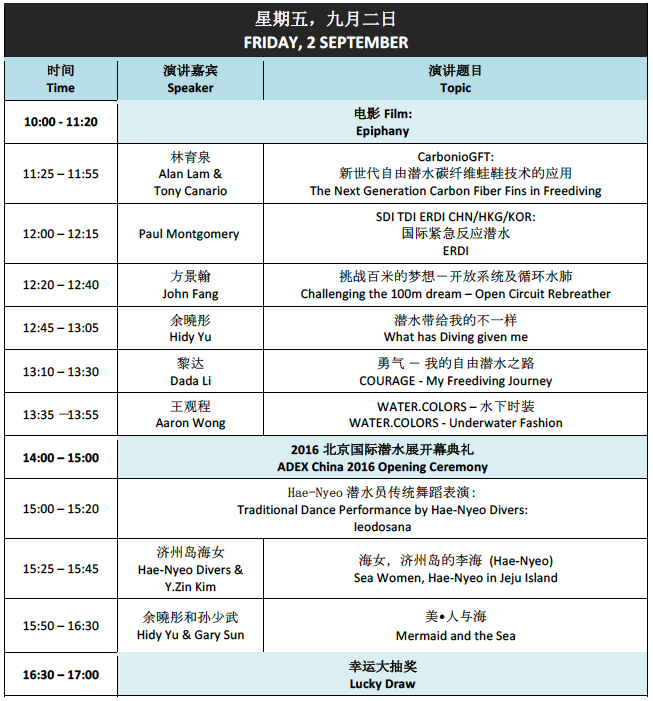
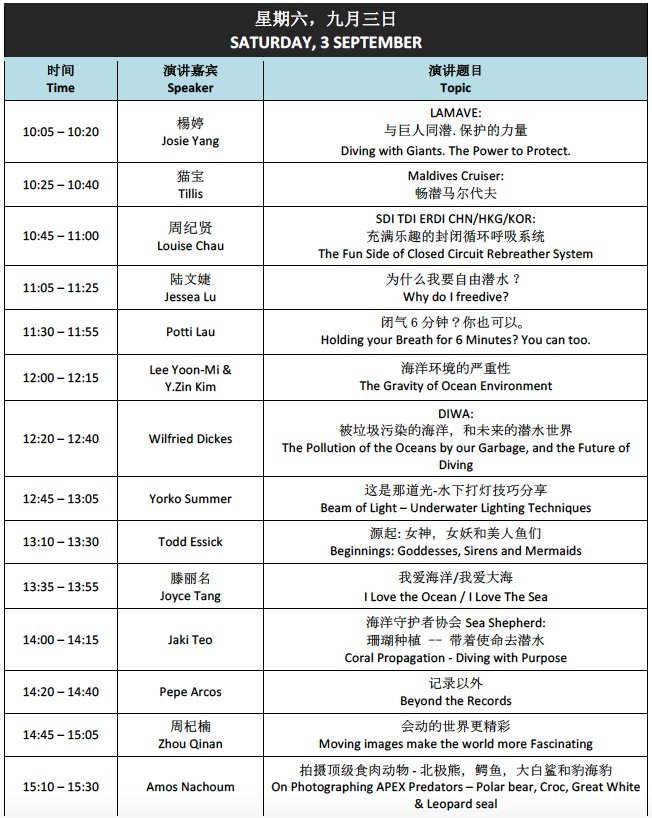
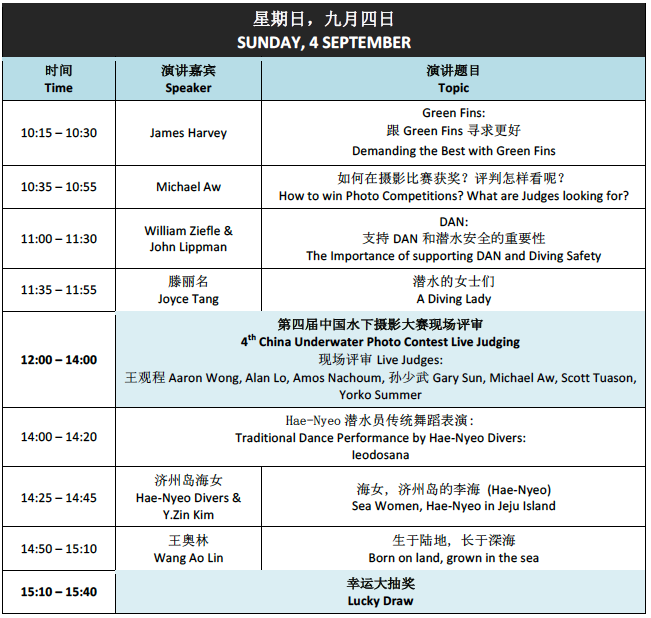
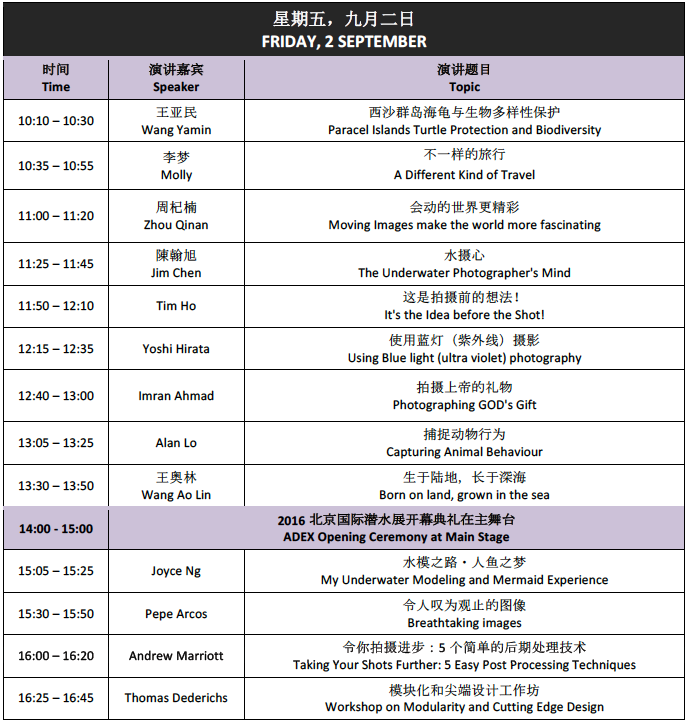
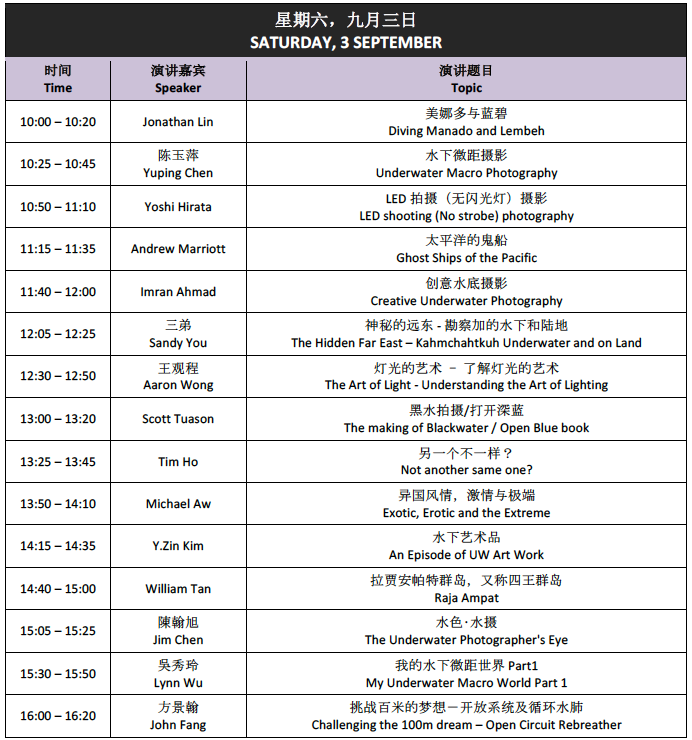
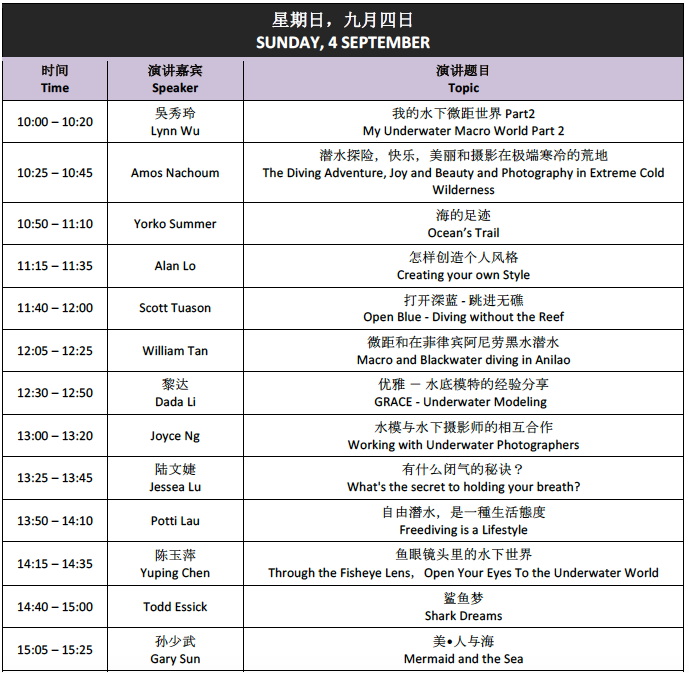
China’s leading dive trade show, ADEX China in association with Beijing International Diving Expo 2016, will be taking place at Beijing Exhibition Centre from September 2 – 4, 2016. The expo aims to gather all individuals and organisations that have businesses in the diving industry, regardless whether their business core revolves around product management, service management or conservation. 

ADEX China in association with Beijing International Diving Expo 2016 is co-organised by Underwater360 (UW360) and Beijing Beiao Convention & Exhibition Co., Ltd. The dive expo includes programmes related to recreational diving, freediving, tek diving, underwater photography and marine conservation efforts. There will also be the sale of diving products, gears, underwater equipment, diving trips and much more! Gathering underwater sports enthusiasts from across the region, ADEX China 2015 attracted a total of 10,442 visitors over three days!

We’re bringing in a range of exciting speakers, from Hong Kong actress Joyce Tan to famous underwater photographer Amos Nachoum. There’s a chance for aspiring underwater photographers to submit their images into our Underwater Photography contest and have their work judged by an expert board of moderators (Aaron Wong, Michael Aw, Zhou Qinan etc.). We also offer top prizes for winning entries, and give the audience a chance to not leave the venue empty handed with our Lucky Draw.

Visitors will also receive our celebrated show guide for FREE. This is more than just your average show guide – containing history, speakers’ articles and exciting photographs. In an event that continues to grow year-by-year, this promises to be ADEX China’s best show yet.

Main Stage

MainStageFri MainStageSat MainStageSun

Ocean Zone

OceanZoneFri OceanZoneSat OceanZoneSun

For more information, click HERE

14 Year Old Robby James Coming to ADEX Singapore 2017

0

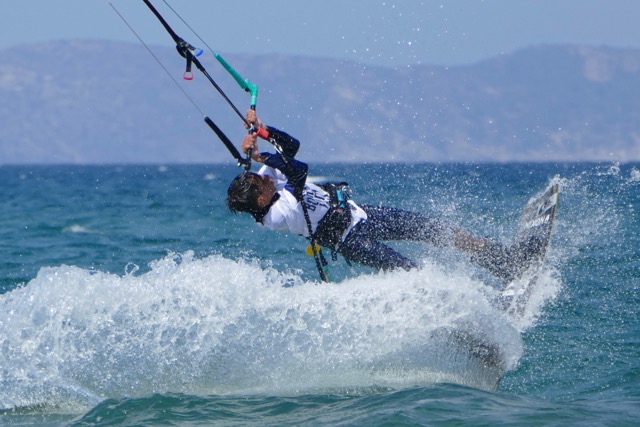
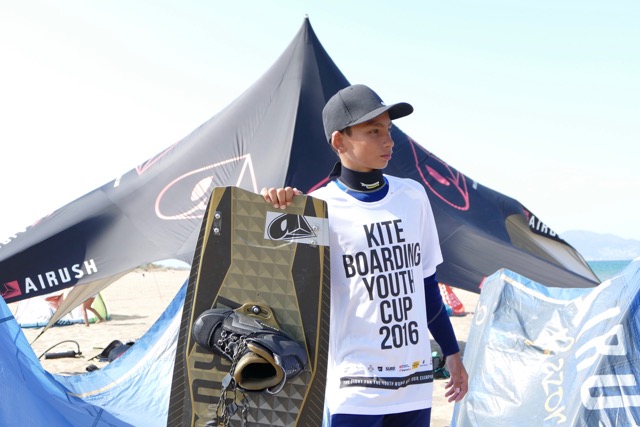
The longest running and largest dive expo in Asia, ADEX and the Asia Surf Expo (ASEX) are welcoming the upcoming Singaporean star, Robby James to the much-anticipated 2017 show.

The 14-year old, who finished 11th in the world kiteboarding youth freestyle U15 event in Costa Brava, Spain (an official world ranking event), is to be an official ambassador of ASEX.

noname (2)

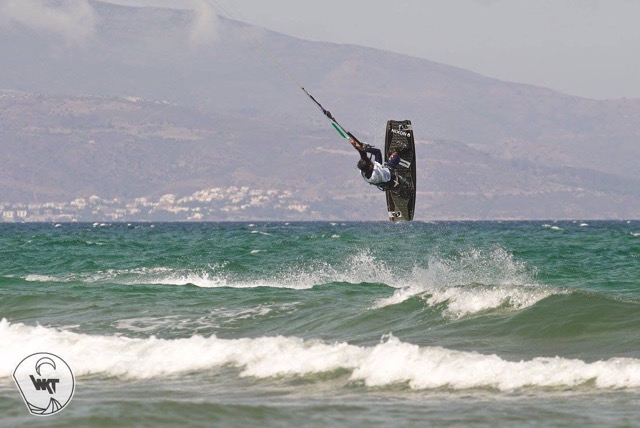
Competing in a number of KTA (Kiteboard Tour Asia) events where he competes professionally at the same level as the experienced men. Due to it being a non-contact sport, Kiteboarding offers aspiring juniors the opportunity compete at the same level as the men – whereas in other contact sports they would otherwise be restricted by strength and size.

Robby is on a journey, where his real goal is to win and make history by winning the first ever Olympic Medal in the Youth Olympics, Buenos Aires, Argentina 2018 for Singapore, where there will be Kiteboarding racing for the first time.

noname (5)

What is remarkable is that Robby only started kiteboarding a year ago and is already a sponsored team rider for a top brand. 

ADEX 2017+Waterplay logoADEX 2017

“ADEX is going to be BIGGER and BETTER in 2017!”

In celebration of our 22nd year, we introduce “ADEX + ASEX (Asia Surf Expo)”!

For the first time in dive expo history, attendees can expect a whole new experience at ADEX + ASEX 2017 where you can find everything related to not only diving, but water sports as a whole.

Yes this includes all water lovers!

Taking place from April 7 – 9, ADEX + ASEX 2017 will be,
MORE THAN JUST A DIVE SHOW.
Keep a lookout for program updates at
www.adex.asia

Underwater Photographer of the Week: Wesley Oosthuizen

0
“This range of talents eventually brought him full circle back to diving with skills that were honed and developed.” © Wesley Oosthuizen

Born and raised in East London, South Africa, professional underwater photographer Wesley Oosthuizen moved to Grand Cayman shortly after graduating from high school – a decision he has never regretted. While working as a snorkel guide, he started freediving and was mesmerised by the amazing ocean life that he encountered. After a couple of close calls while freediving, he decided to try out scuba diving.

A nomad at heart, Wesley later moved to Taiwan, where he hung up his fins for much longer than anticipated – 13 years – to pursue other avenues such as music, video editing and directing. This range of talents eventually brought him full circle back to diving – with skills that were honed and developed. This led to Wesley starting a production company in Taiwan, which has been operational for around a year now. UW360 caught up with the man to find out more about his career and to showcase his top underwater photographs:

OLYMPUS DIGITAL CAMERA

"I’ve been taking photos since I was 11 years old and filming since 15, so when I started diving and managed to get a camera in my hands I was instantly hooked." © Wesley Oosthuizen
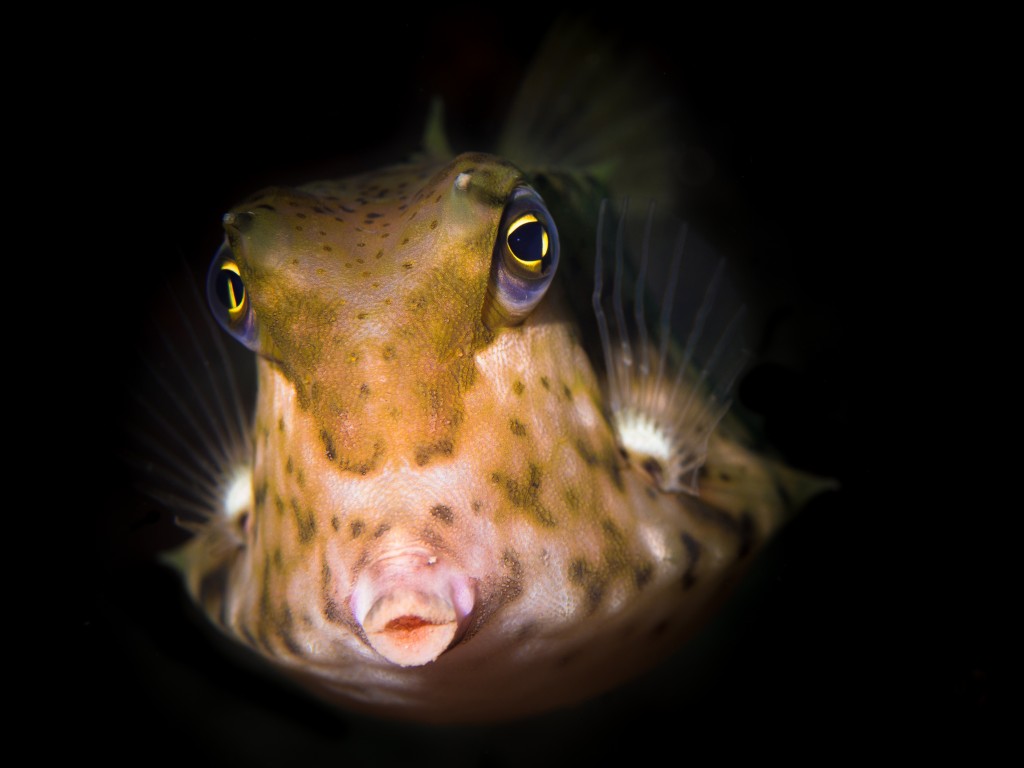
“I’ve been taking photos since I was 11 years old and filming since 15, so when I started diving and managed to get a camera in my hands I was instantly hooked.” © Wesley Oosthuizen

What made you want to become an underwater photographer?
I’ve been taking photos since I was 11 years old and filming since 15, so when I started diving and managed to get a camera in my hands I was instantly hooked.

Your first underwater shot?
My first underwater video was mostly of other divers who visited Grand Cayman and who we were trying to sell the videos to. Soon after that, to the disapproval of my bosses, the shots of divers I was supposed to take started to be replaced by marine life!

As for underwater photography, my first shots were taken only after my 13-year break from diving. Most of them were unusable, but I took a picture of a Sabellidae (feather duster worm) that I’m still pretty proud of. At this time I didn’t even have strobes, so I just used my dive light and a high ISO to get the shot.

OLYMPUS DIGITAL CAMERA

"I don’t find the creatures in the ocean weird at all. I find them wondrous." © Wesley Oosthuizen
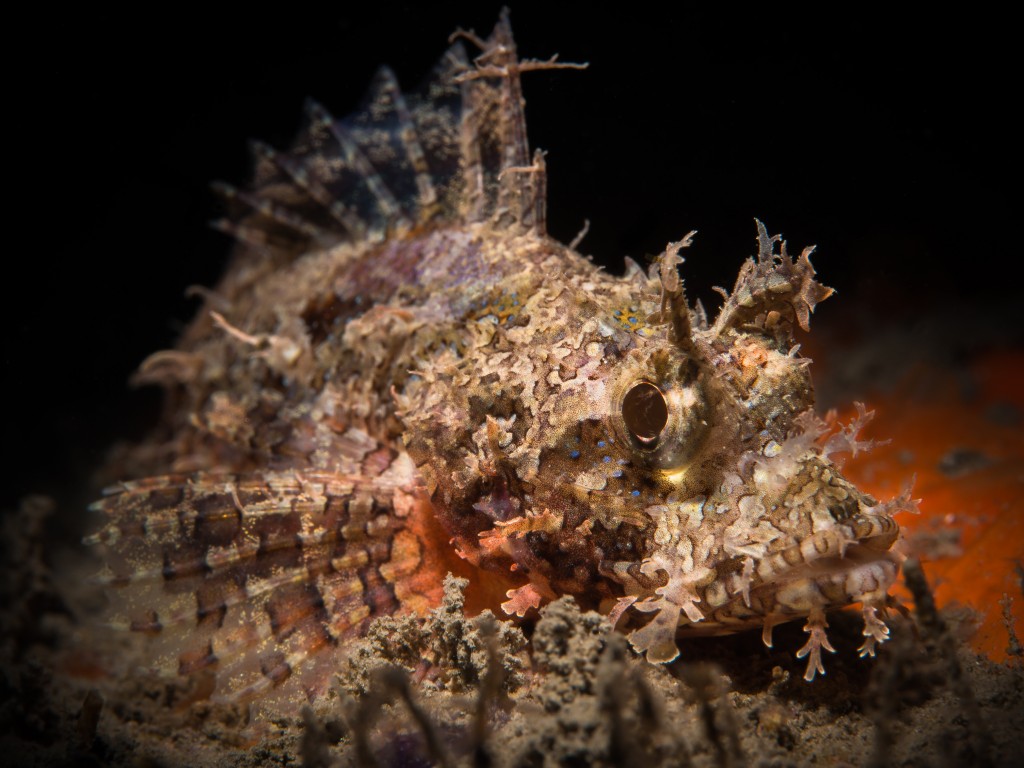
“I don’t find the creatures in the ocean weird at all. I find them wondrous.” © Wesley Oosthuizen

The story behind your most memorable underwater shot?

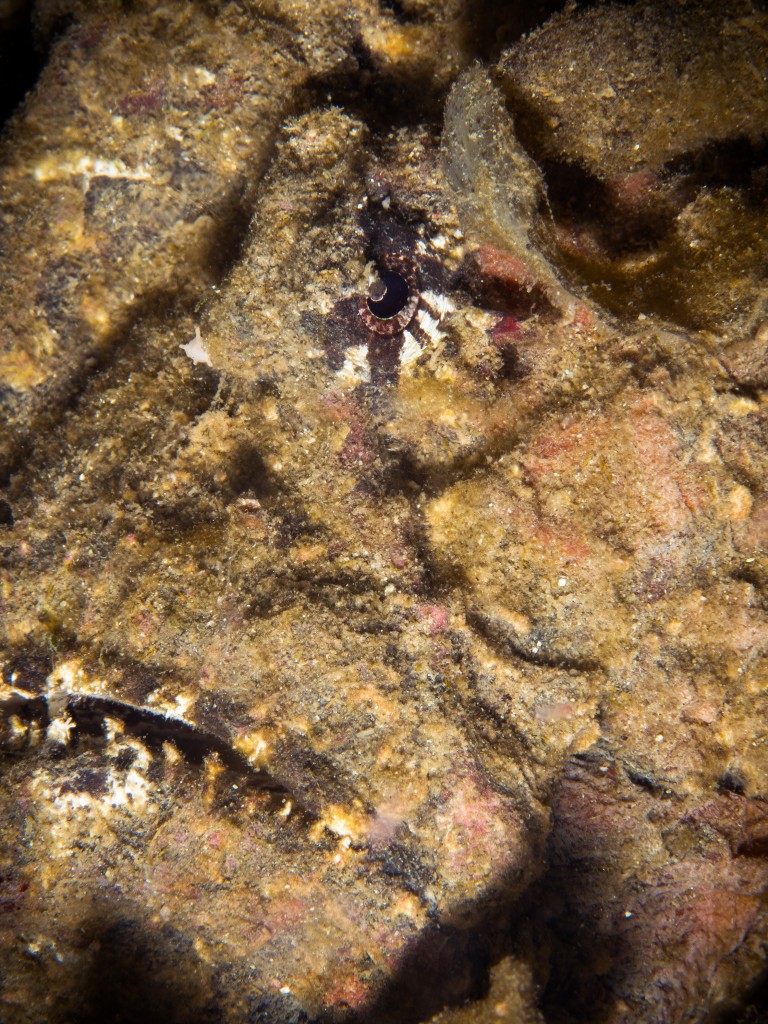
"This fella was so well camouflaged that the only reason I saw it was because of the glint off its eye when my focus light hit it as I was turning. How on earth it managed to blend in so well with its surroundings still baffles me." © Wesley Oosthuizen
“This fella was so well camouflaged that the only reason I saw it was because of the glint off its eye when my focus light hit it as I was turning. How on earth it managed to blend in so well with its surroundings still baffles me.” © Wesley Oosthuizen

With video, it has to be the one time I was filming garden eels in Grand Cayman. I had my eye in the viewfinder for quite a while, as I liked to get a pretty lengthy shot of them and then speed it up later in post, and when put to music it would make it look like they were dancing. I finished getting the shot and looked up to see where the dive group was. What I saw though was something so big, and so close to me, that I actually started reeling backward. I soon realised it was the biggest turtle I’d ever seen in my entire life. I’m 187 cm tall and this turtle was about 3/4 of my size. I quickly regained my composure and hit record. Its head was as big as mine and its fins were as long as my arms, but three times the width. It had about 20-plus fish swimming underneath it, barnacles on its back. It was really old. Our eyes met for a second, then it pushed once with its fins and was gone. I’ll never forget the power in that single push.

With photography, it was while I was on a night dive in a little port on Green Island. If you had to look at the site you’d think there was nothing there, but the diversity of life was astounding. Honestly I think my strobe was firing every couple of seconds. The shot that stands out the most for me is an image of a stonefish (Synanceia verrucosa) that I got. This fella was so well camouflaged that the only reason I saw it was because of the glint off its eye when my focus light hit it as I was turning. How on earth it managed to blend in so well with its surroundings still baffles me.

Where is your favourite dive destination?
Little Cayman, in the Caribbean, hands down. I have never seen marine life like that anywhere else in the world (although I’m sure there is!). It was like diving into a [Nature] documentary.

The site you’d most like to dive, but never have?
I’d like to explore Indonesia, specifically Lembeh and Komodo. After that, it’d be the Philippines, namely Tubbataha, Moalboal, Dumaguete and Anilao.

The weirdest thing you’ve seen underwater?
I don’t find the creatures in the ocean weird at all. I find them wondrous. What I do find weird is the divers who claim love for marine life and yet have absolutely no regard for it while diving. Things like people kneeling on the reef,  harassing marine life, poking the reef with reef sticks to prop themselves up, or photographers literally laying sprawled over the reef so they can get their shot. It just doesn’t make sense. I know accidents happen, but doing it deliberately is selfish and goes against what all of us are taught and what we are supposed to stand for. OLYMPUS DIGITAL CAMERA

"The best advice I can give is to shoot responsibly. Please respect marine life." © Wesley Oosthuizen
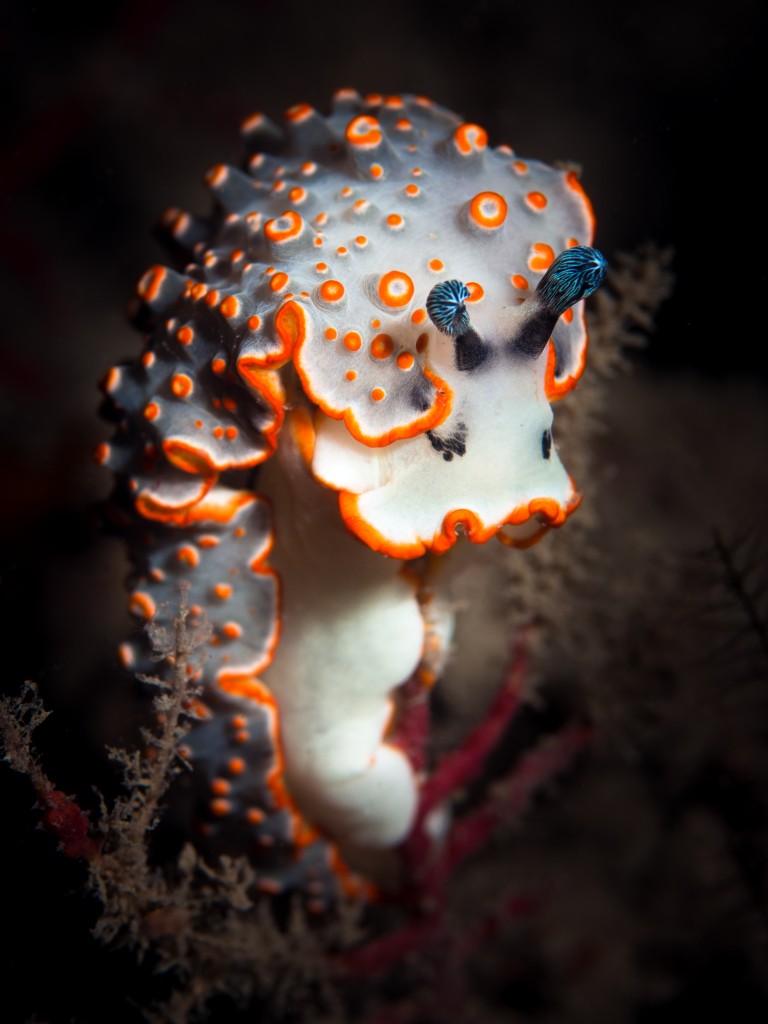
“The best advice I can give is to shoot responsibly. Please respect marine life.” © Wesley Oosthuizen

What camera equipment are you currently using?

"I embrace the challenge and am quite pleased with my progress over the past eight months that I’ve had my camera, so I see the low as the road to the high, which is now." © Wesley Oosthuizen
“I embrace the challenge and am quite pleased with my progress over the past e
ight months that I’ve had my camera, so I see the low as the road to the high, which is now.” © Wesley Oosthuizen

I currently use an Olympus OM-D E-M5, which pretty much lives with my M.Zuiko 60mm f/2.8 macro lens on it. My housing is Olympus as well and I’m using two SEA&SEA YS-01 strobes with an H2OGear focus light. For my snoot work I use a CV boot from a car. Believe it or not, it works surprisingly well. A brilliant photographer named Dave Johnson turned me on to that one.

What is the highlight of your career?
I am still in the very early stages of my career, because I took such a long break from diving. Recently, though, some of my images were published in the Daily Mail in the UK and another one will be featured  in the August edition of the BBC Focus magazine.

…And the low point?
That would be trying to figure out why I stopped diving and shooting for so long. So much time wasted, so much to catch up on. But I embrace the challenge and am quite pleased with my progress over the past eight months that I’ve had my camera, so I see the low as the road to the high, which is now.

Have you any advice that you’d like to give aspiring underwater photographers?
The best advice I can give is to shoot responsibly. Please respect marine life. You are a diver, not a demolition expert. It is possible to get a great shot just by using fin control. If you’re going to hit into the reef, rather scoop your fins backwards, or cup your hands and scoop them to move yourself away. If hitting into the reef is unavoidable, and you need to stop yourself. You don’t need a full hand to do so; you can stop yourself with a pinky finger. We want to bring this amazing world to everyone, but there’s no point in destroying it in order to do so.

Is there any particular shot that you still want to get?
Anything and everything. The pinnacle would be shooting something that hasn’t been discovered yet. 

"We want to bring this amazing world to everyone, but there’s no point in destroying it in order to do so." © Wesley Oosthuizen
“We want to bring this amazing world to everyone, but there’s no point in destroying it in order to do so.” © Wesley Oosthuizen

Liquid Guru: The Man Who Captures Never-Before-Seen Underwater Videos (Part 1)

0

The goings-on of our underwater world is still a mystery to many. From the variety of species to their behavioural patterns, photographers and videographers spend a lifetime trying to capture unique footage. Kaj Maney, otherwise known as the Liquid Guru, has dedicated an online platform to revealing some of the craziest happenings in the ocean. We caught up with him for a quick Q&A, and to showcase the first part of his 12 best never-before-seen underwater videos:

What got you into underwater filming?

Back in 2002 I had just started work as a PADI Instructor/Divemaster in the Commonwealth of Dominica (Eastern Caribbean). I had been an instructor for four years previously and worked in the West End, Roatán. In those days, believe it or not, the Internet was not quite as developed as it is now. This meant that you really didn’t stay in much contact with your family back home (in the United Kingdom for me). So in 2002 my father helped me buy a Sony camcorder – I think it was a Sony TR7000, a Hi8 tape camcorder – and an Ikelite housing. I could then take movies, burn a CD and show my family what I was up to! It rapidly got me hooked on filming and making videos of my guests’ dives in Dominica.

I then made my own website, partly as there was not a lot to do on Dominica once diving had stopped, and partly because I thought it was incredible that I could go out diving, film it, then upload the footage to the Web and that day, anyone in the world could see what I had seen underwater. Right from the beginning I have wanted to share the amazing underwater world with anyone who is interested.

Video fascinates me and it brings a different dimension to media. Photographs are wonderful at capturing the moment, that frozen image. Video can bring something else, movement, a story and a glimpse at behaviour that is near-impossible with photography.

After Dominica I went to Tioman, in Malaysia, then Fiji, another spell in the Caribbean (Belize this time) before getting a job as a dive manager with my partner at Kungkungan Bay Resort (KBR) in Lembeh, Indonesia. At the time I knew nothing about “muck” (macro) diving. Like most I was instantly hooked. The variety of bizarre and incredibly rare critters that live in what looks like a desert is unbelievable. Lembeh has been a mecca for divers and underwater photographers and videographers since KBR opened in 1994. I was incredibly lucky to be able to dive there every day for three years, with my video camera. This enabled me to capture more macro videos than probably anybody before. And this made me become a complete muck addict, so when I got the chance to open my own dive centre, it was an easy choice to want to continue in a muck location, and Ambon 100 percent fits the bill, with uncrowded dive sites and more amazing muck.


Bobbit Worm – Dinner time from liquidguru on Vimeo.

Kaj was patiently filming a couple that were close together and his waiting paid off, the first bobbit worm attacks and eats a foolish scorpionfish that wandered in too close. The second went for a long-arm octopus that got too close, but luckily the plucky little octopus was too tough for the bobbit worm and escaped after a few seconds.


Your first underwater video?

My first underwater video was taken in Dominica. I can’t remember exactly what it was, but it probably involved medical students from the States – there is a large US medical school on Dominica, Ross University.

The story behind your most memorable underwater video?

The most memorable and luckiest dive I ever had was in Ambon in 2014. I’ve seen some amazing things underwater (I’ve been diving full time since 1998) and mainly because you just get lucky, some dives are just luckier than others.

When we opened in Ambon, in 2013, the one fish that we (and most critter divers in the world) wanted to see is the psychedelic frogfish. It was properly discovered and identified in 2008/2009, after it was found on a dive site in Laha, Ambon. It is a unique frogfish. Amazing patterns, great colour and only ever seen at one dive site in the world.

After one gave birth, they disappeared and had not been seen again.

So one day in September 2014 we were out diving, on the other side of the bay to where the frogfish had originally been found. It was to be a normal dive; we had a group form the States diving with us. I jumped in last, as usual, got my video camera and finned down. When I got to the bottom, my guide, Fadly, had found an incredible critter, a transparent larval stage moray eel. I had seen one once before (in Lembeh) and always thought, at the time, that this was a once-in-a-lifetime find. This time I felt more prepared: I had, as well as my macro setup, a GoPro as well, so I could take more wide-angle shots.

I had probably spent about 30 minutes filming the transparent eel, very happy and feeling very lucky, when Fadly came over and tried to show me something else. I was not interested. I just wanted to keep filming the eel. What could be better than that? I kept waving Fadly away… Shoo shoo, go away! Fadly was persistent though, and after about another 10 minutes I finally relented and went to go and see what he had found… This time it was the psychedelic frogfish! I wasn’t even sure that it was the frogfish at first. It was so completely unexpected to find it after it hadn’t been seen for four years, and we were so far away from where it had been seen then – and to find it on the same dive as the transparent eel? Wow! I will never ever have another dive like that – although I will keep hoping that the next dive I do will be better! And that’s the wonderful thing about diving; you never know what you will see!


Transparent Larval-Stage Moray Eel from liquidguru on Vimeo.


Where is your favourite dive destination?

Wow, what a hard question! Apart from Ambon? I think Sipadan was incredible. I went with a bunch of friends. We dived Sipadan itself every day, all day, for four days. The schooling bumpheads, schooling barracuda, schooling jacks, sharks and turtles everywhere – it was amazing diving.

The site you’d most like to dive, but never have?

Coco Islands, Costa Rica.

The weirdest thing you’ve seen underwater?

An American cruise ship diver – head to fins in orange. Orange wetsuit, gloves, mask, reg, lipstick and nails! Critter-wise, it would have to be the Melibe colemani [an exotic nudibranch first discovered by Neville Coleman].

What camera equipment are you currently using?

Sony XR500 with a Light and Motion Stingray housing, two Keldan 4000 lights, Light and Motion Super Macro Zoom-Through lens, GoPro mounted on the Stingray housing, and an underwater tripod.


Changing Skin… from liquidguru on Vimeo.

“This was shot when I thought I was filming one crab eating another. When looking at it afterwards, I realised that the crab had in fa
ct just shed its skin and was transferring the sponge from its previous exoskeleton onto its new one.

“You can see the crab pick little pieces of red sponge from the old skin, gather them into its mouth to coat it in saliva, then fix it on to its transparent new body. Very fascinating to watch.”


Have you any advice that you’d like to give aspiring underwater videographers?

Steady shots, edit your footage, tell a story. Keep your edit short. No one wants to watch you floating over a reef for 30 minutes… Be brutal when looking at your footage. If it’s not in focus, too shaky, don’t use it. Listen to criticism and advice.

Is there any particular footage that you still want to get?

More of everything! As I usually concentrate on macro critters, I would love to see and film whales. Dugongs are another I would love to film – and anything small I haven’t seen before!


Psychedelic Frogfish – Histiophryne psychedelica – 2016 from liquidguru on Vimeo.

“Everyone who comes to Ambon to dive, not surprisingly, wants to see the psychedelic frogfish, Histiophryne psychedelica. And it’s a critter we would love to show everyone too. The last sighting was at the end of 2014, when we found it in Ambon Bay and before that it had been about four years since one was found. And they have only been found in Ambon Bay.”


Next week, in Part 2, we reveal the remainder of Kaj’s 12 weirdest underwater videos