Home Blog Page 137

Study Reveals Marine Animals Live Longer at High Latitudes

0
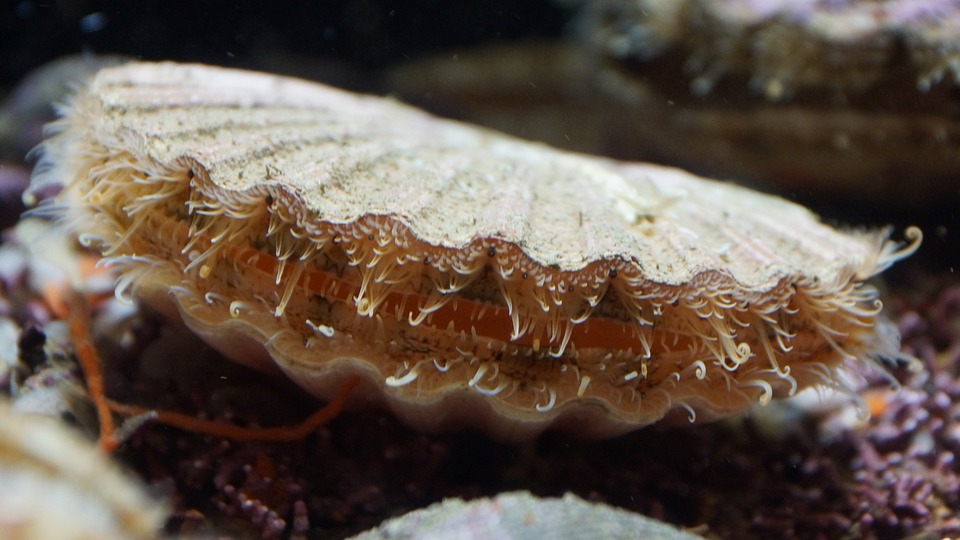
Bivalves such as oysters, clams, scallops and mussels – marine molluscs that have laterally compressed bodies enclosed by a shell comprising of two hinged parts – live longer if they reside in the North or South Pole than if they live in the tropics."

Finally, a study that shines a light – albeit a dim-but-optimistic one – on the fundamental patterns in the evolution of animal life on this planet. Researchers have discovered that by living closer to the Earth’s poles, certain marine animals live longer. 

Bivalves such as oysters, clams, scallops and mussels –  marine molluscs that have laterally compressed bodies enclosed by a shell comprising of two hinged parts – live longer if they reside in the North or South Pole than if they live in the tropics. 

To find out why this is, and further understand the research, we caught up with the lead author of the study, David Moss, who is a Ph.D. student in the Department of Earth Sciences at New York’s Syracuse University.

“Our leading hypothesis right now is that the extremely seasonal food supply at high latitudes is promoting slow growth and long lifespans. For most bivalves, the primary food sources are phytoplankton that they filter from the water column. During high latitude winters there is essentially six months of darkness so there is very little food supply. Lots of research (done by others) has shown that caloric restriction promotes longer lifespans by decreasing metabolic rates.”

For the study, Moss and his team created a global database of more than 1,100 populations of marine bivalves, documenting their maximum reported lifespan and growth rate, along with body size.

“Most of the tropical bivalves in our database had maximum reported lifespans of less than five years,” Moss says. “The only tropical species with significant lifespans were the giant clams, Tridacna, which contain a photosymbiotic algae.” 

There was a wide range of growth rates reported at any latitude, but on average tropical bivalves were seen to grow two to three times faster than high latitude species.
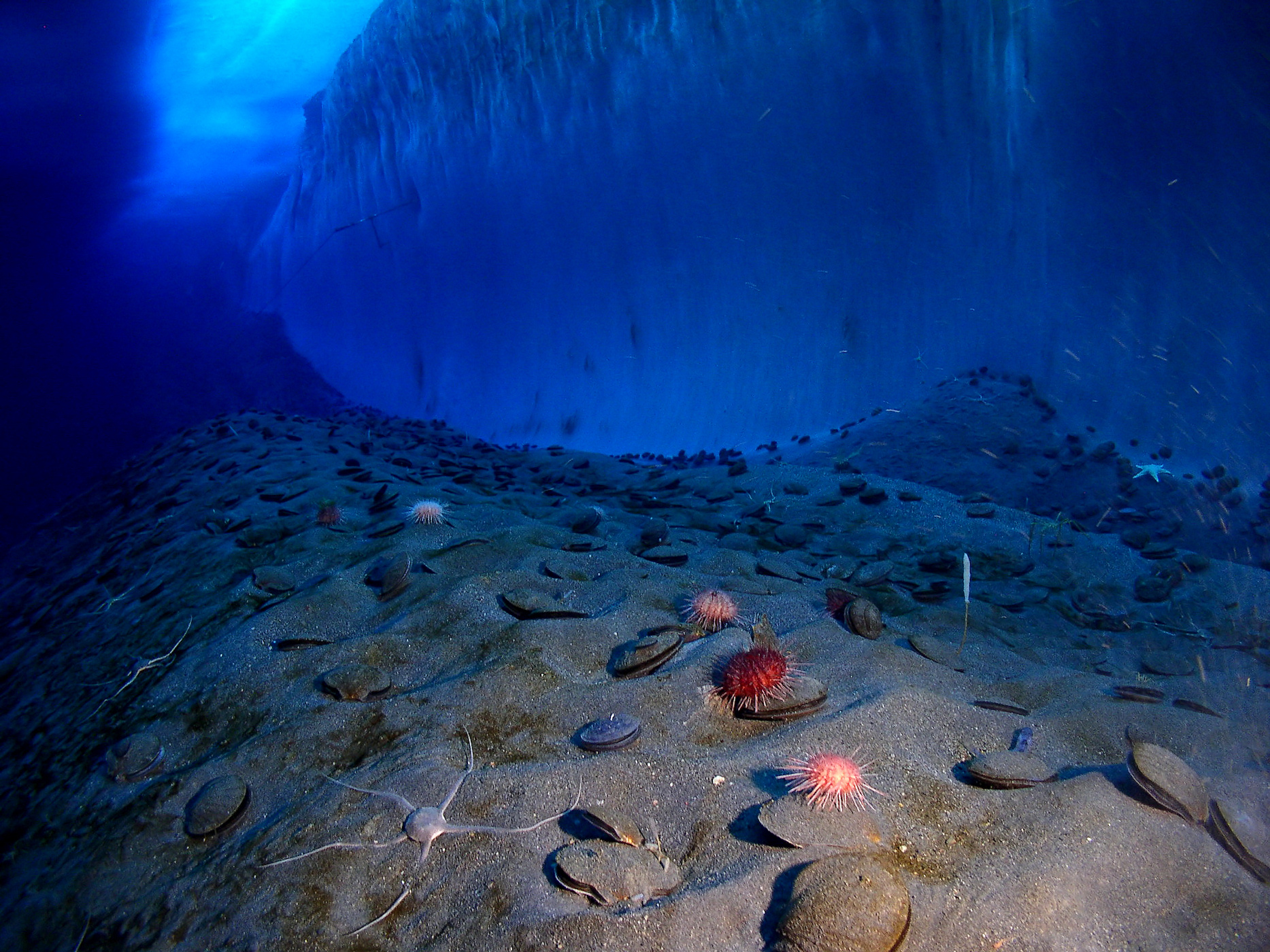
The underwater world of the North Pole. © Wikimedia Commons

So does this new study (which could well appeal to land-hugging vertebrates) suggest that humans balancing on the equator belt should trade in the sun and sand for ice floes and six-month blackouts? More data is needed to confirm whether the latitudinal patterns that exist in bivalves exist in other invertebrates, but Moss seems to believe that it is “very likely”.

“If we are correct and the pattern is driven by environmental factors like food availability then we would expect other invertebrates to show the same pattern as well.”

Sadly, any of this research directly linking to human lifespans and growth appears rather far-flung at this stage.

This could, however, give scientists a view of how evolution has shaped marine life over millennia. Many believe that polar ecosystems look and behave similar to ancient ecosystems, meaning the fauna could vaguely mirror the creatures of earlier times – creatures that once upon a time also opted for a slow-growth strategy.

“We set out to determine whether this [latitudinal] pattern exists [in other invertebrates] (anecdotal data suggested it did),” Moss states, “because we want to examine lifespans and growth rates of fossil bivalves through time. It is now well documented that the mean size of marine animals has increased over the past 500 million years, but the role that lifespan and growth rate play is not known. Bivalves offer a potential avenue to address this question because they record in their shells size at age.

“Since we now know that a latitudinal pattern does exist, we have to keep that in mind when heading to the fossil record and comparing lifespans/growth rates through time. Many people have suggested that animals today grow faster (have higher metabolic rates) than those in the past. If that is true, then we would expect that animals today might be living shorter than their ancient counterparts – an enticing statement when you know that at least nine modern bivalves can live for over 100 years!”
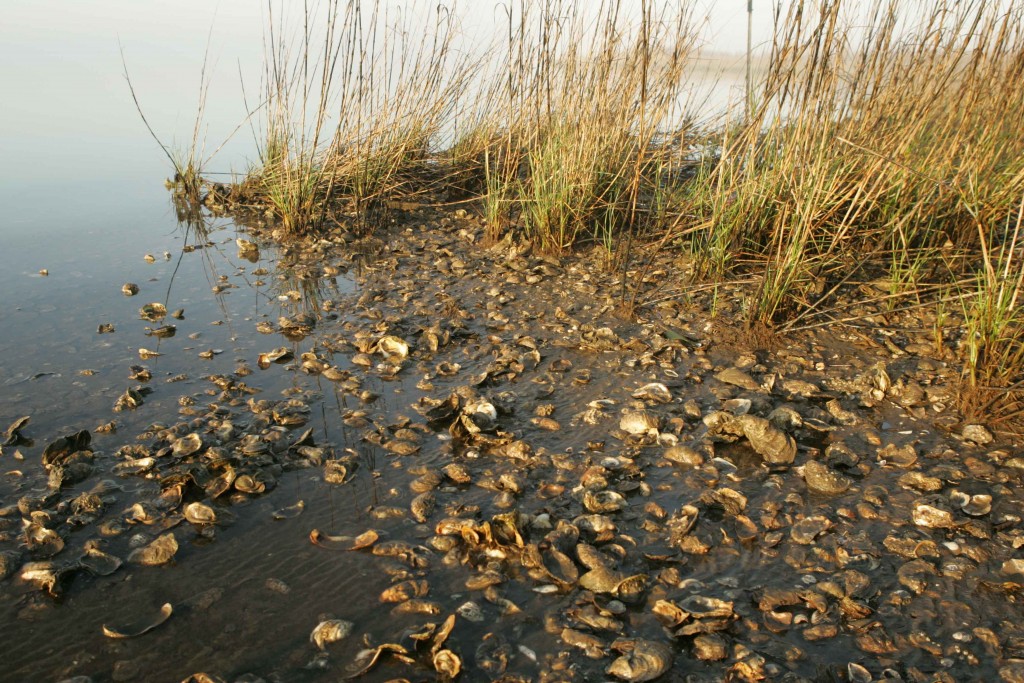
Oyster shells washed up in a marsh © Wikimedia Commons

Moss’ research forces open the door to further explore the lifespans of marine organisms in much more detail. With an estimated 20-40,000 extant bivalve species, Moss and his team are looking to update their database of just under 300 bivalve species – currently the largest dataset of its kind.

“My efforts now will be focused more so on the fossil record. Bivalves have been on the planet for over 500 million years but so far only a handful of studies have examined their lifespans in the fossil record so the field is open for exploration. One of my next projects will be to examine lifespans of two closely related species of bivalves from Pliocene deposits on the Atlantic Coast of the US.” 
Wildlife of the Week: Port Jackson Shark

0
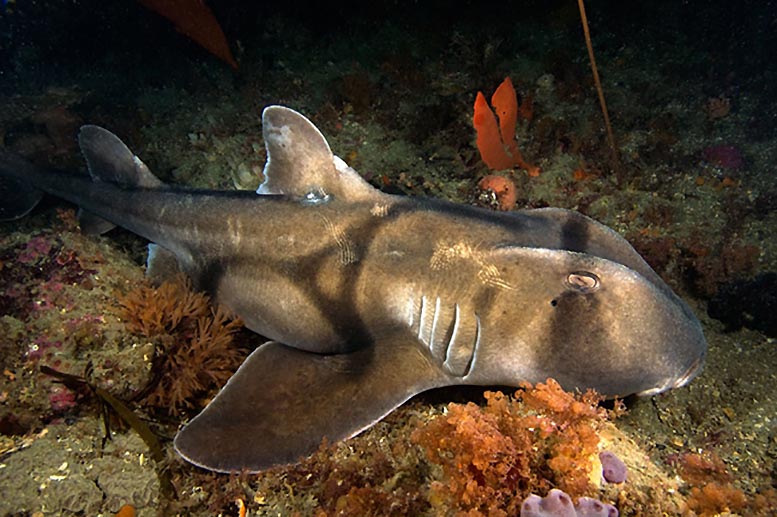
A Port Jackson shark (Heterodontus portusjacksoni) at Wilsons Promontory, Victoria. © Mark Norman

In the light of the groundbreaking study that Port Jackson sharks have individual personalities, we decided to look further into these common bottom-dwelling sharks of Southern Australia. Sometimes referred to as the “oyster crusher”, this unusual-looking species is our Wildlife of the Week:

Species: Heterodontus portusjacksoni

Class: Chondrichthyes

IUCN Status: Least Concern

Diet: Feeds on sea urchins, molluscs, crustaceans and fishes

Size: Grows up to 165 cm in length. More commonly, males grow to 75 cm and females between 80 cm and 95 cm

Behaviour: Active at night to hunt their prey, they segregate themselves into same-sex groups. Males and females occupy different habitats during most parts of the year and only encounter each other briefly for breeding

Distribution: Australia and New Zealand

Ecosystem: Live in rocky environments on, or near, the bottom. Sometimes they are found in muddy and sandy areas, or where seagrass occurs

5 Fast Facts:

  • They have the ability to eat and breathe at the same time. This ability is unusual for sharks, many of which need to swim with the mouth open to force water over the gills
  • A recent study found that they have individual personalities, just like humans
  • When they hatch, juvenile Port Jackson sharks, called pups, are about 25 cm long
  • They feed by sucking in water and sand from the bottom, blowing the sand out of the gill slits, and retaining the food which is swallowed
  • Female Port Jackson sharks mature at 11 to 14 years of age, whereas males only take around 8 to 10 years

Heroic Humpback Whales Are Rescuing Animals from Orca Attacks

0
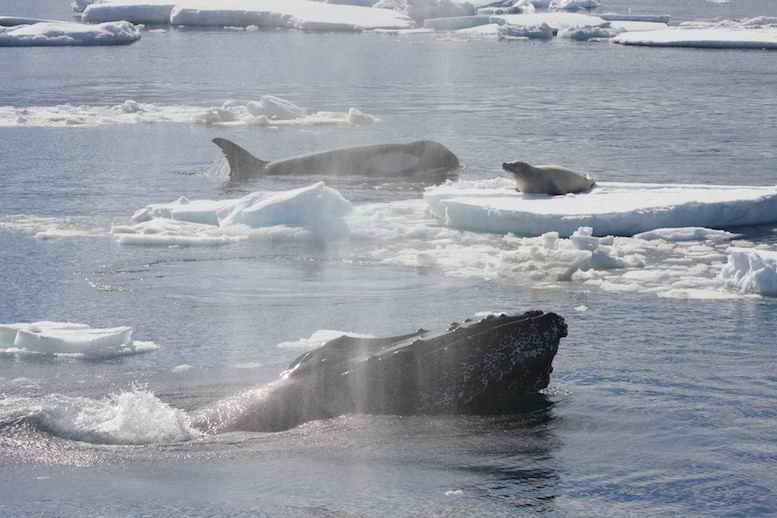
A Weddell seal lies frozen out of fear as orcas surround its floe – but just as there seems little hope for the tiny mammal, a heroic humpback whale breaches in the foreground. The rescue is on. © Robert Pitman

The seal that lived

A Weddell seal, surrounded and trapped on an ice floe by a group of killer whales, caught the attention of research biologists Robert L. Pitman and John W. Durban – along with the attention of a pair of large humpbacks – in Antarctica. To get their catch, the killer whales implemented their infamous hunting trick – forming powerful waves to wash the seal off of the floe in an attempt to expose the animal to a lethal attack in open water – and it worked. With death a high chance, the seal swam frantically toward its last remaining hope, the pair of incoming humpbacks. 

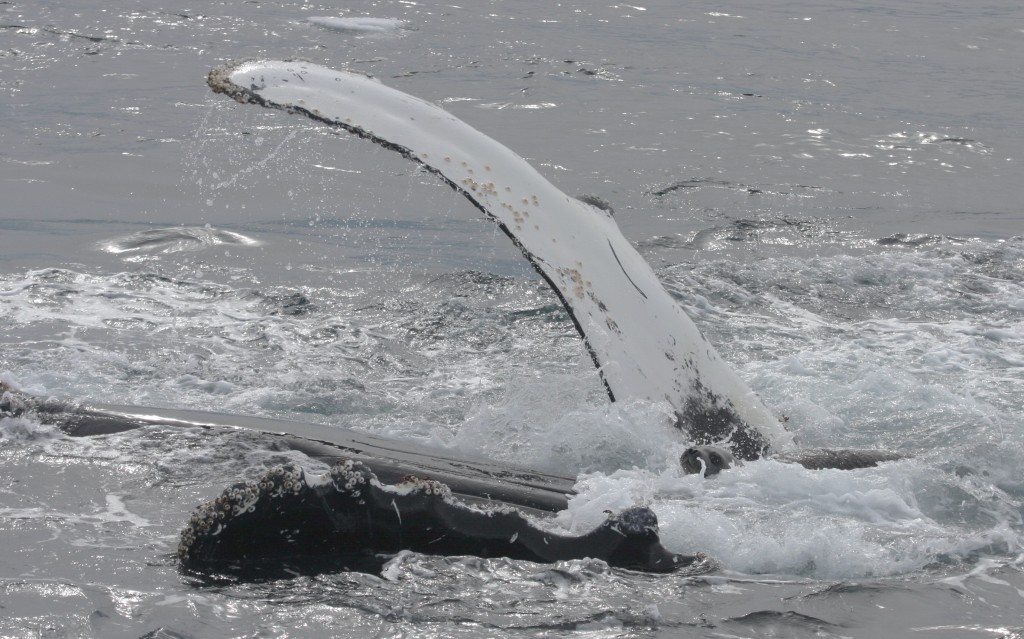
In a make or break moment for the seal, something incredible happened. Just as it reached the closest humpback, the whale rolled over onto its back – and the seal was swept up onto the huge chest between the massive flippers. Then, as the killer whales moved in closer, the humpback arched its chest, lifting the seal out of the water. Even when the water that was rushing off of the whale’s belly almost washed the seal into the sea, the humpback gently nudged the seal with its flipper to place it back in the middle of its chest. Moments later, as the orcas gave up their pursuit, the seal scrambled off and swam to the safety of a nearby floe.

"Even when the water that was rushing off of the whale’s belly almost washed the seal into the sea, the humpback gently nudged the seal with its flipper to place it back to the middle of its chest." © Robert Pitman
“Even when the water that was rushing off of the whale’s belly almost washed the seal into the sea, the humpback gently nudged the seal with its flipper to place it back in the middle of its chest.” © Robert Pitman

A full-blown cetacean war?

“The first time I knew unequivocally that humpbacks were protecting other species from attacking killer whales was when I saw [that] humpback in Antarctica roll over on its back and lift [the] Weddell seal out of the water as it was being attacked by killer whales. I was shocked, but then immediately curious: Animals don’t help other animals unless there is something in it for themselves,” recounts Pitman, who works at the Southwest Fisheries Science Center, National Marine Fisheries Service, National Oceanic and Atmospheric Administration, in California.

To many, the above story might seem a one-off act of kindness from a solitary cetacean. But for the two biologists, only a week before had they witnessed a similar situation, when another helpless Weddell seal was saved from a pod of 10 killer whales by a different pair of humpbacks. As Pitman began to look into this phenomenon, he realised that all over the world, from Antarctica to the North Pacific, these humpback rescue missions were being reported. Interestingly, it’s more than just the mammals and humpback calves that are being saved, with reports of humpbacks also attempting to thwart an orca attack on the ever-strange Mola mola.

This apparent full-blown cetacean war is not only between humpbacks and killer whales; there have also been indications of humpbacks driving off attacks from false killer whales and pilot whales – as well as one observation of a humpback escort (a male that accompanies a humpback cow-calf pair) driving off a white shark in Western Australia.

But it’s difficult to determine why the humpbacks are attempting to frustrate these attacks, especially those carried out by killer whales.

“Ultimately, as in all animals, self-interest is the driver,” suggests Pitman. “If humpbacks interfere when killer whales are attacking a humpback calf, they might end up saving a related individual (offspring, sibling, distant cousin, etc.). Their behavioural response may be general enough that they end up protecting other species at times, but if the net effect is that they project more of their genes into future generations, then the behaviour will persist. We referred to it as ‘inadvertent altruism’.”

Pitman hints that personal motive could drive them to respond to hunts: “We say in [our] paper that the response of the humpbacks seemed to vary among individuals and that that could reflect a number of factors, including personal history with killer whales. A humpback that was attacked as a calf may have learned from its mother to respond aggressively to killer whale attack vocalisations, regardless of the species being attacked.”

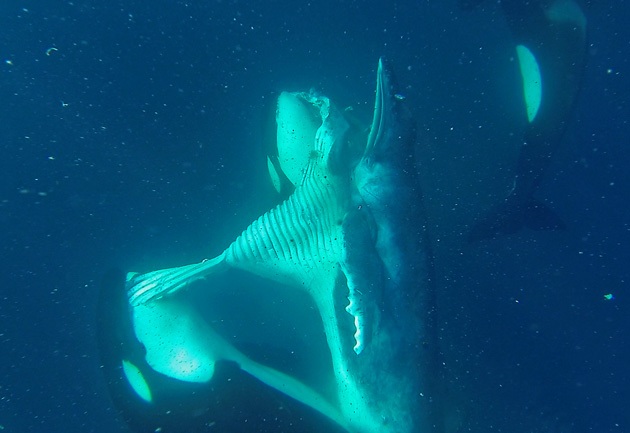
A calf being torn to shreds by a pack of orcas. "A humpback that was attacked as a calf may have learned from its mother to respond aggressively to killer whale attack vocalisations, regardless of the species being attacked.” Video © J. Totterdell
A calf being torn to shreds by a pack of orcas. “A humpback that was attacked as a calf may have learned from its mother to respond aggressively to killer whale attack vocalisations, regardless of the species being attacked.” Video © J. Totterdell

So it appears to be a case more of self-interest than selflessness on the humpback’s part. From the outside, rescuing a small seal from the jaws of killer whales could be described as compassion, but ultimately it is most probably a survival strategy for humpbacks. It’s a widely spread notion among scientists to intensely scrutinise anything that could be regarded as compassion in animals.

Pitman says: “I think if humpbacks were cleverer they wouldn’t spend their time and efforts intervening when other species are at risk from a killer whale attack. They are as smart as they need to be, but no more!”

How to save a life

How the rescue mission is identified and takes place appears to alter through different observations. In 89 percent of the recorded incidents, the humpbacks intervene only as the killer whales begin their hunt, or when they are already engaged in a hunt.

“We suggest in the paper that they cue in on killer whale attack vocalisations – mammal-eating killer whales are mostly silent when they hunt because their prey has acute hearing. But once they start an attack and especially after they have made a kill, they get quite vocal. It is only at these times that we have seen humpbacks aggressively approach killer whales.”

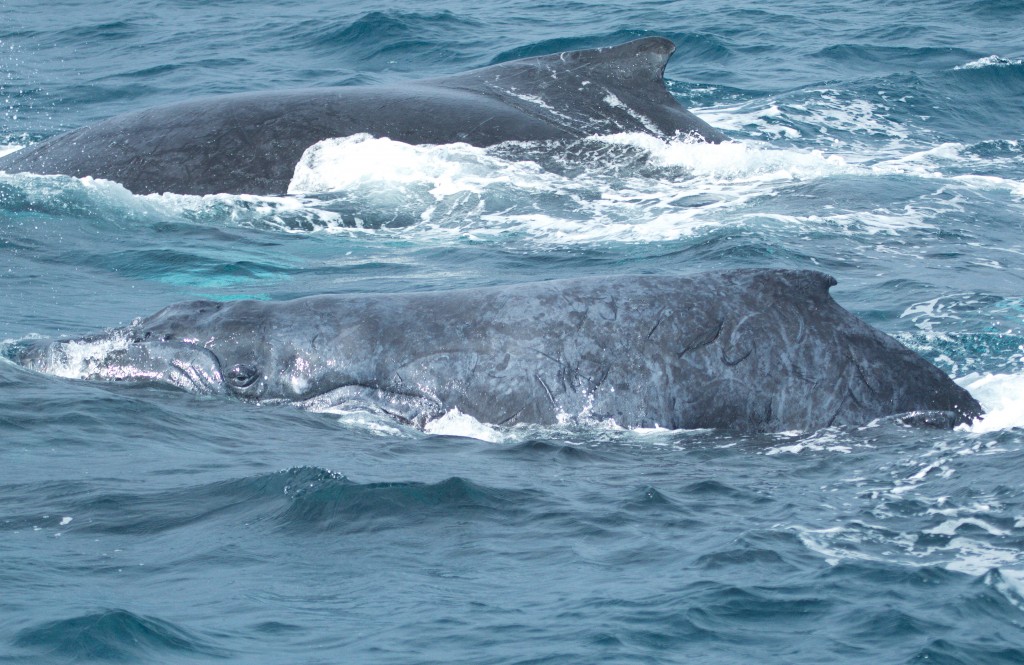
More often than not, the humpbacks thwart the attack in pairs. The reason for this, as Pitman points out, is that humpbacks often travel in pairs. Sometimes cows with calves or sometimes cows with escorts, or a male that hopes to mate with the female that he accompanies. Travelling together is mainly a strategy for reproduction, but also works for predator defence: If a cow has an escort with her, he will also help defend the calf.

A young calf humpback that was being attacked by a group of killer whales off Western Australia is being lifted out of the water by the head of its mother. Coming in from the side is an escort, to help defend the mother and calf. © Liss Ballance
A young calf humpback that was being attacked by a group of killer whales off Western Australia is being lifted out of the water by the head of its mother. Coming in from the side is an escort, to help defend the mother and calf. © Li
ss Ballance

As orcas are renowned for being top-of-the-trade group hunters, it seems odd that they cannot do anything about this irritant. Mature humpbacks are just too large and too formidable to be hunted by them, but their calves are vulnerable. As mainly adolescent humpbacks – who have also been the subject of orca attacks – are known not to back down from an orca fight, this behaviour could also be a way of humpbacks displaying dominance to the orcas.

Whale behaviour still remains little understood. Mainly due to commercial whaling in the 20th century slapping whale meat onto the dinner table, and changing ocean ecosystems depleting prey, huge gaps in whale knowledge has been left. But as their populations continue to recover, even more information about the behaviour and impact of these massive animals will be on show for researchers to scrutinise.

11 Tips for Choosing the Right Dive Operator

0
Get ahead of the game with these top tips

Simon Pridmore is the author of the bestseller Scuba Confidential, and best-placed to offer tips and tricks to getting the most out of your diving experience. In the latest Scuba Diver AUSTRALASIA, he brings us eleven tips for choosing the right dive operator:

Checklist

Read your training manual and other books for divers (like mine!). Make a personal checklist of things, in terms of safety, service and environmental awareness, which you would want a dive operator to offer.

Safety

Is emergency oxygen always immediately available? Do guides have a safety role or are they only spotters?

Service

Is there a covered area on the boat? Is drinking water provided?

Environmental Awareness

Does the operator have a “no touch” policy? Does it reduce use of plastic to a minimum?

Research

Research operators online to narrow down favourites. Don’t judge based on pretty pictures or website quality. Look at the content. Compare each operator’s selling points with your checklist.

Ask Around

Talk to friends; use social media, Scubaboard, Tripadvisor and the like. Search each operator’s historical safety record.

Black Spots

Are the sites the operator dives OK for you? Some famous and popular dive sites and destinations are not for beginners. Avoid them until you have more experience.

Don’t Compromise

Make sure your choice ticks ALL your important boxes.

Money

Never choose on price. Choose on value. If an operator is much more expensive, ask why? Sometimes good service and top safety precautions come at a price. Beware of cheap deals. You will pay for these in poor service or safety standards.

Make Contact

Write to your chosen operator with questions that its site does not answer. Expect a quick, direct and clear reply. If the operator has no time for you BEFORE you book, you will not be cared for AFTER you have paid. Choose again.

Walk Away

Don’t hesitate to walk away if you arrive and discover that, despite all your research, your operator is careless or not properly prepared or equipped. Have a back-up choice, just in case.


SDAA 5 CoverSubscribe to Scuba Diver AUSTRALASIA now for just S$25

Text by Simon Pridmore. This article featured in Scuba Diver AUSTRALASIA (Issue 5/2016)

Are you ready to leave all reason at the surface? Because you won’t believe the world of wonder that awaits you in the next issue ofScuba Diver AUSTRALASIA!

Freed from the constraints of gravity, and able to fly about like aquatic superheroes, as divers we get to visit places that most landlubbers couldn’t even imagine in their wildest dreams.

From mysterious mangroves to dramatic ravines, from moody canyons and caves to fields of insanely colourful coral and reef formations that seem to defy common sense, these seascapes are also inhabited by far-out creatures that have inspired legends and literature.

shutterstock_42695098


KINDLE_Cover_SF.11110433_std (1)Scuba Fundamental -“Start Diving the Right Way” is a unique concept. It is not just another run of the mill “how to dive” manual. It is primarily for people who do not yet dive but are thinking of learning. It takes them from the germ of the idea that they might like to try scuba diving up to the point where they have done around 20 dives.
This is a crucial phase in every diver’s diving life. This is the time when a person decides if they will be a diver forever or if diving will just become something they did once upon a time. Too many people stumble into diving without being properly prepared or doing enough research and, sadly, end up abandoning the sport, wasting both money and time and missing out on a lifetime of incredible experiences.

The aim of Scuba Fundamental is to make sure that doesn’t happen, by guiding new divers along the right path and helping them make all the right decisions and avoid the many pitfalls that lie in wait for the unwary.

Grab your copy today! Click here


Sustainable Marine Tourism: Changing the Game for Dive Operators Around the World

0
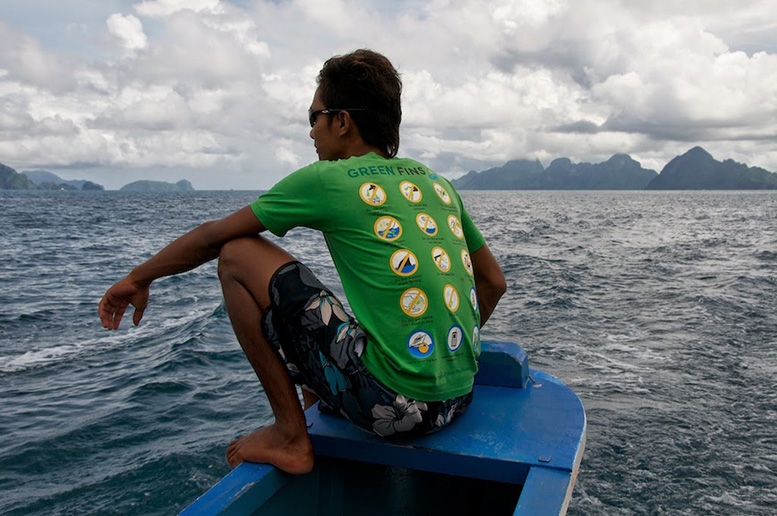
Green Fins monitors every aspect of a dive centre’s operations, and staff are proud to be part of it Image © J Tamelander

In 2007, my partner JJ and I packed our backpacks and jumped on a flight for Southeast Asia. As UKbased marine biologists, we had little experience of tropical marine biology, and the lure of the Coral Triangle – the most biodiverse area of coral reefs in the world – was too great to resist. As it turned out, this would not only be the trip of a lifetime, but a journey that would change our lives forever.

Diving has been a huge part of my life since I first donned fins and got my Open Water qualification in the Red Sea when I was 12. By 15, I was a British Sub-Aqua Club (BSAC) assistant instructor, which saw me spending many happy weekends exploring the UK underwater world, and teaching others to do the same. Diving had a profound influence on my strength of character and drove me towards studying marine biology.

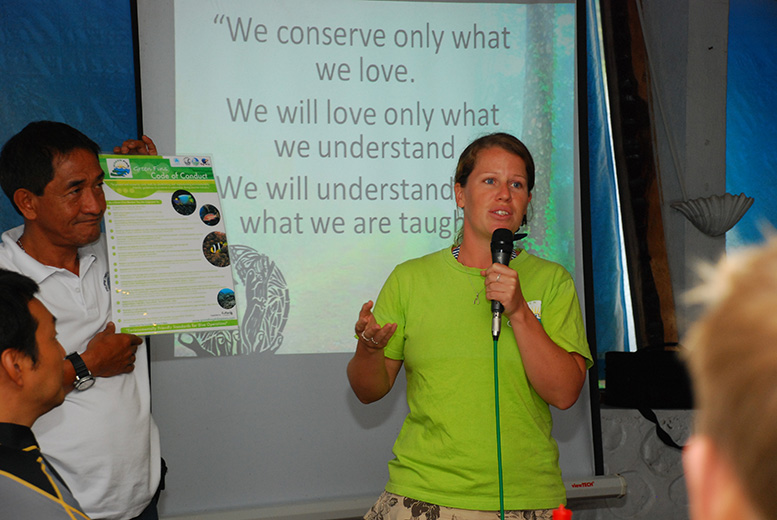
Chloe Harvey giving an impassioned presentation as part of the Green Fins training programme
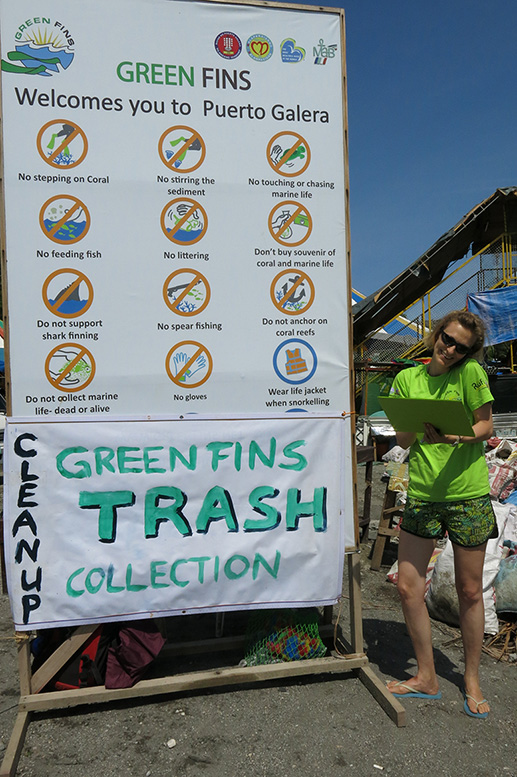
Beach and reef clean-ups are an integral part of the programme that involve staff, guests and the local community

On the way home

As our year of volunteering drew to an end in early 2008, we decided to get our Dive Master qualifications and find work as dive guides. Sadly, we weren’t successful and it was with heavy hearts that we began our journey to Bangkok to catch our return flight home. Before we headed off, we stopped in Phuket, where we met the awe-inspiring Niphon Phongsuwan at the Phuket Marine Biological Centre. He was running a United Nations Environment Programme (UNEP) conservation project called Green Fins that was promoting an environmental code of conduct within scuba-diving operations, aiming to reduce environmental impact and raise conservation awareness.

Having seen, firsthand, the destruction caused by the mass diving industry, we thought the concept of environmental standards for diving was brilliant but surely not unique. After a few days of sitting in sweaty, dark Internet cafés in Phuket searching for similar programmes, we realised that it was entirely unique – and desperately in need of support. We missed our flight and agreed to stay on as volunteers. It was the best decision we have ever made.

Laying the foundations

Over the next year, we worked hard to drive grassroots implementation across Thailand, working directly with the diving industry. We designed an assessment system to evaluate and monitor the environmental impact of independent dive businesses. Alongside this was a lot of strategic development to enable us to replicate Green Fins in other popular diving destinations.

By 2009, our work had attracted the attention of the UNEP and the UK charity The Reef-World Foundation, which had been working alongside Niphon since 2004. As part of the Reef-World team, we were awarded a US$15,000 grant by the UNEP to investigate the receptiveness of the diving industry and national authorities in Malaysia and Indonesia, and if there was indeed an environmental need for Green Fins; the answer was a resounding “yes”. Eventually, Green Fins was also introduced into Vietnam and the Maldives with tremendous success.

From divers to governments

Green Fins membership for a dive centre is completely free, and consists of annual environmental assessments and training for their staff. The outcome is a sit-down session where Green Fins assessors talk the manager through how their dive centre is doing against the Code of Conduct. Both parties then agree on three (or more) points to work on for the next assessment. To maintain their membership, dive centres have to show improvement year on year.

My favourite part of this process is the staff training. In just 45 minutes, the assessor gives an informal presentation providing solutions for dive guides, instructors, and boat captains to protect their reefs. It’s fascinating to hear the passion dive staff have for coral reefs, and their enthusiasm for learning the tools needed to manage guests in a fun and sensitive manner.

Green Fins has now been adopted into national legislation, and national budgets are shouldering operational costs in four of the six active countries. We have nurtured unique collaborations between NGOs and national governments, and dive staff and local communities. But while the national success of Green Fins was booming, finding support for our work was proving exceptionally difficult. From the outset, we had agreed that any national funds should be used for Green Fins activities, not Reef-World’s international operations.

Threatened by success

Meanwhile, government partners were requesting more support to help national expansion and dive centres were jumping on board across Southeast Asia. Overseeing these developments and maintaining communication with project partners across each of the six countries was becoming unmanageable for just the two of us; we became frustrated and jaded and desperately needed more resources. By mid-2014, we faced the real prospect of having to shut down operations. We put Reef-World into “survival mode”, cutting back on all project costs, and just continued to push for funding. The realisation that things might be coming to an end was a very bitter pill to swallow.

At the end of 2014, we received fantastic news: a coral reef partnership we were helping to develop within the UNEP was approved, making funds for Reef-World available. It secured US$80,000 to develop exciting new tools to further support the diving industry and resource managers to implement Green Fins. The pressure is off, and we’re now finally able to focus on making the programme even more effective.

Chloe Harvey giving an impassioned presentation as part of the Green Fins training programme.
Chloe Harvey giving an impassioned presentation as part of the Green Fins training programme.

Making change starts with you

As divers, we like to think that we’re exploring the planet’s incredible marine habitats in a responsible manner. Show your support by following best practices and praising those who do the same. Choose Green Fins dive centres when you can. Don’t be afraid to speak up when you see irresponsible behaviour. This way, we can preserve our dive sites and ensure that divers for generations to come get to experience them, too.

Developing the Correct Mindset for Underwater Photography (Part III)

0
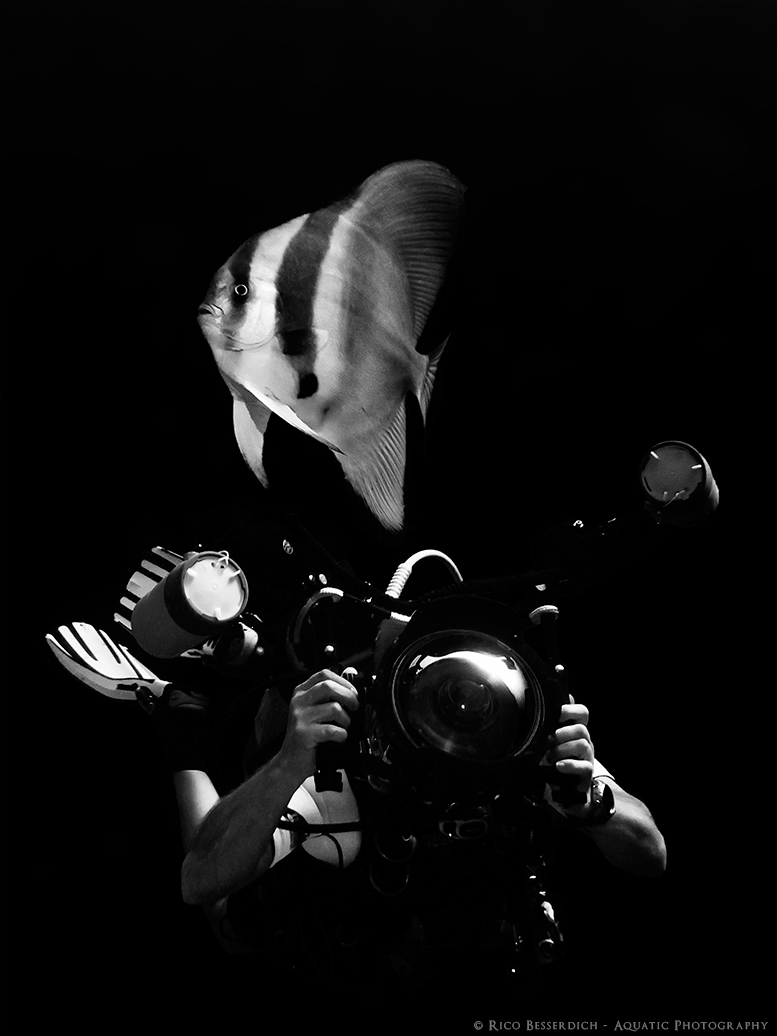
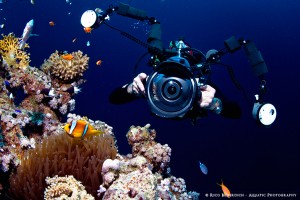
“Each successful underwater photographer has his/her own ‘master plan’ on how to stay organised” © Rico Besserdich

Professional underwater photographer Rico Besserdich takes us through the importance of developing the correct mindset for underwater photography, in this final part of his three-part series.

Having prepared ourselves, and our photography equipment, well for our photo dive (part 1 of this series) and having finally done that dive (part 2), the last part of our mindset development is to think about what to do after the dive. The idea is to stay organised, prevent stress, and do things systematically. Each successful underwater photographer has his/her own “master plan” on how to stay organised, but there are many things they all have in common. Let’s have a look!

"Keen underwater photography shooters always think of their photo equipment first and of themselves second" © Rico Besserdich
“Keen underwater photographers always think of their photo equipment first and of themselves second” © Rico Besserdich

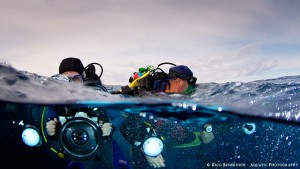
Keen underwater photographers always think of their photo equipment first and of themselves second, after re-entering the dive boat, shore or wherever they planned to get dry again. The first step here is to take care of the camera in its housing. Larger dive boats and almost all shore-based dive centres have special rinse tanks filled with fresh water. Turn your camera and strobe off and place them in a freshwater tank, preferably in one that is provided for photo gear (meaning not the one where people rinse their regulators or other scuba gear).

If there is no such a tank, use the freshwater shower to rinse the salt water away. Salt water itself does not damage your underwater housing and strobe, as long as it stays wet, but once it dries, things could become tricky.

If there is no fresh water available, it is now time to remember the towel. What towel? Well, the towel that you have in your camera bag or box that was packed! Wet the towel and cover your camera (leaving it in its housing, of course) with it and store everything in a shady, safe place. This will prevent the salt from crystallising, as long as the towel stays wet. You can rinse your underwater photo gear later on, when you are back at home or in your hotel room.

Never open the camera housing before you’ve cleaned and dried it properly.

In-between two dives (e.g., during your lunch break), the best place to store an underwater camera is always the freshwater rinse tank. Just leave it in there if possible. Push each button of the housing a couple of times while the housing is in the tank.

"Keen photographers usually can’t wait to review their recent shots directly after the dive, often while still wearing their neoprene suit and half of their scuba gear." © Rico Besserdich
“Keen photographers usually can’t wait to review their recent shots directly after the dive, often while still wearing their neoprene suit and half of their scuba gear” © Rico Besserdich

Keen photographers usually can’t wait to review their recent shots directly after the dive, often while still wearing their neoprene suit and half of their scuba gear. That’s fine, but please bear one thing in mind: Don’t judge the photos by what you see in your camera’s LCD display. No matter if you shoot RAW, JPG or DNG, the camera’s LCD displays only a JPG preview at a very low resolution. Only by reviewing your photos on a computer with a larger screen and by zooming in to 100-percent picture size can you find out which are good and which aren’t.

"The idea is to stay organised, prevent stress, and do things systematically." © Rico Besserdich
“The idea is to stay organised, prevent stress, and do things systematically” © Rico Besserdich

Unless a photo is not totally black or blurry, don’t delete images directly from your camera while reviewing them on the camera’s LCD screen. Sometimes, photos that don’t look so promising on the LCD actually have that “little extra” something (when seen on a larger screen), and photos that look awesome on the first view on the LCD don’t always appear as nice as when reviewed on a large screen.

Please keep in mind as well that the LCD screen consumes a lot of battery power, so if you’d like to review your photos between two dives, make sure that you have a spare battery with you, especially when you are using compact or mirrorless cameras.

"Unless a photo is not totally black or blurry, don’t delete images directly from your camera while reviewing them on the camera’s LCD screen." © Rico Besserdich
“Unless a photo is not totally black or blurry, don’t delete images directly from your camera while reviewing them on the camera’s LCD screen” © Rico Besserdich

Once back home, you should transfer the images from the camera to a computer, regardless of whether the memory card still has space for more photos. Just stay organised and transfer your images after each day of diving. Empty the memory card to prepare it for the next day of diving. You may now charge the batteries (camera and strobes) as well.

Create folders sorted by date, location, or a specific photographic project you are working on and store your images in there. Once again, stay organised.

Tip: Do not start transferring images from the camera to the computer if the camera battery is already low. Replace the battery before the transfer or use a common card-reader instead.

"Sometimes, photos that don’t look so promising on the LCD (when seen on a larger screen) have that “little extra” something." © Rico Besserdich
“Sometimes, photos that don’t look so promising on the LCD have that ‘little extra’ something (when seen on a larger screen)” © Rico Besserdich

Now you can start reviewing your photos of the day on your computer. For the first round of selection, I recommend deleting only the really bad or unsuccessful images (totally out of focus, totally black, etc). Stay calm if your RAW photos don’t look like they did while reviewing them on your camera LCD. Remember that LCD can’t show you RAW images; it can show you only low-resolution JPGs that are often altered by the camera’s own image processor.

If you are out for a couple of days for diving and photography, don’t spend endless hours on post-production during your trip. These things are better left to do at home. However, during a dive trip you can review your photos for a primary selection, and for further developing on your idea. Your photo review can show you what to improve on or do differently during your next dive. And don’t forget your towel.


Take a look back at the series

Developing the Correct Mindset for Underwater Photography (Part I)

Developing the Correct Mindset for Underwater Photography (Part II)


Underwater Photographer of the Week: Jason Bradley

0
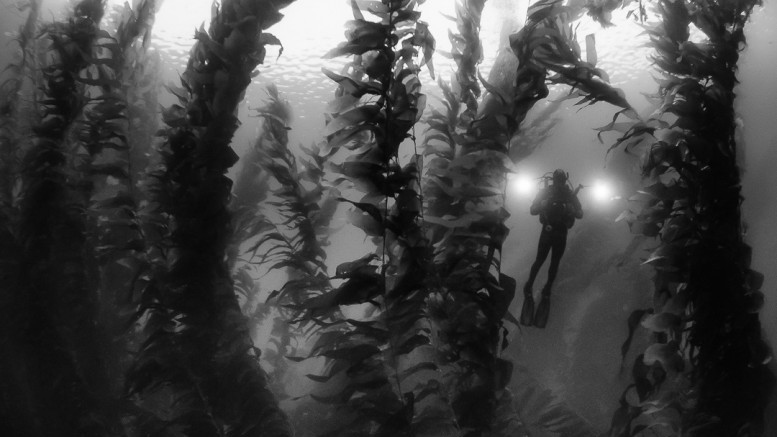
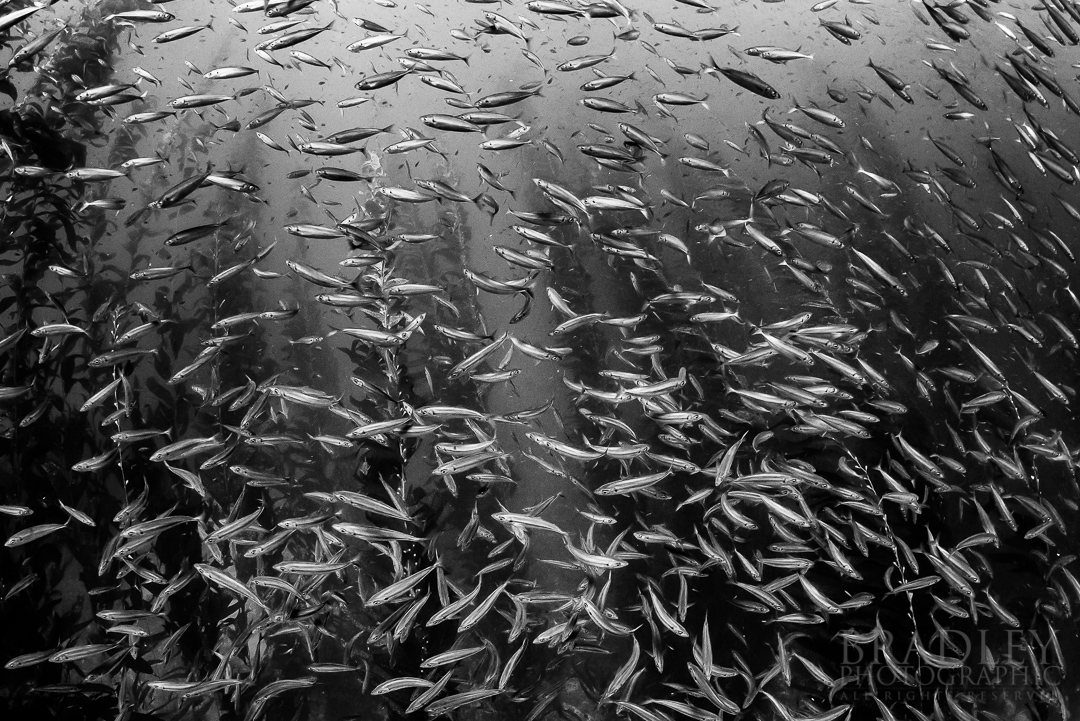
"There’s nothing like diving through an underwater forest of giant bladder kelp. It’s a magical thing." © Jason Bradley
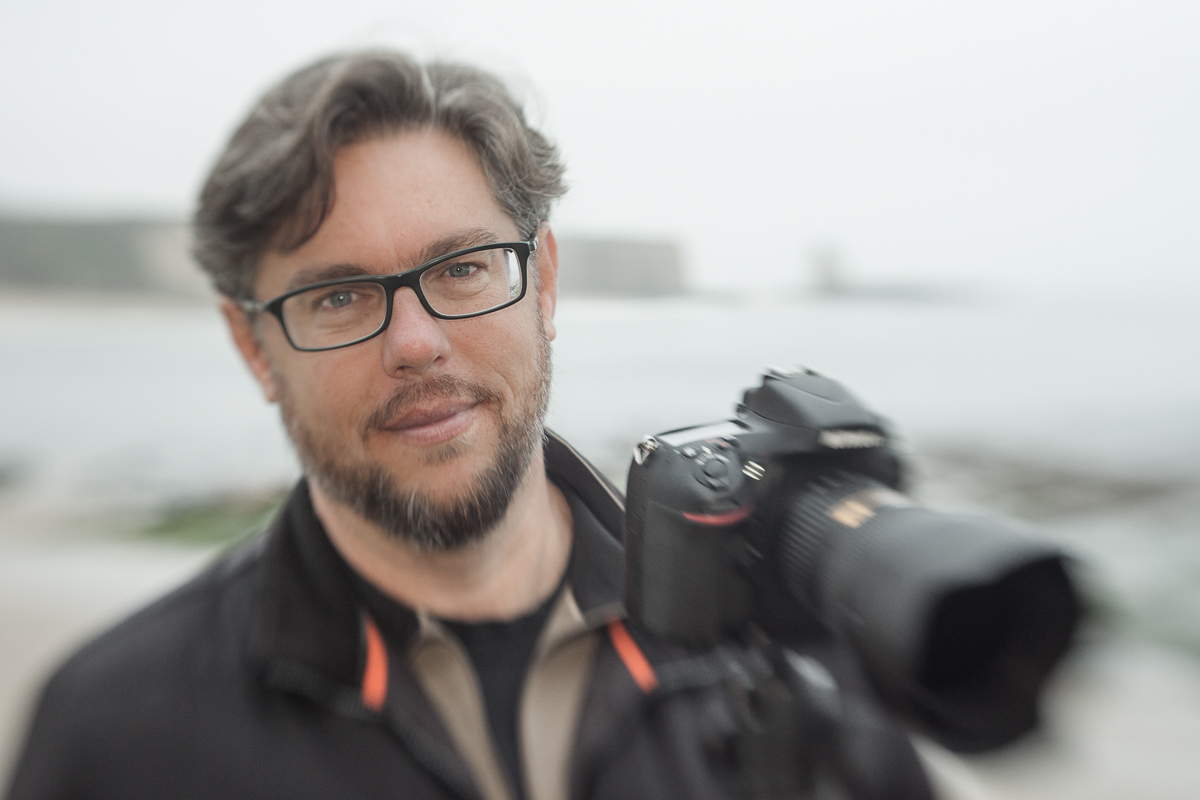
One of photography’s top storytellers, Jason Bradley uses his images to craft honest and emotive narratives of our aquatic ecosystems. With a unique set of skills, he specialises in more than just underwater photography, also aiming his lens at topside wildlife and Nature.
 
"My motivation was to create a career where I could work in, with, and for the oceans." © Jason Bradley
“My motivation was to create a career where I could work in, with, and for the oceans.” © Jason Bradley
He is also the owner and operator of Bradley Photographic Print Services – a fine art print lab – and leads photographic expeditions around the world. We caught up with Jason for a quick Q&A about his life, career, and imagery:
 
What made you want to become an underwater photographer?
Prior to my decision to pick up a camera, I wanted to be a marine biologist. My motivation was to create a career where I could work in, with, and for the oceans. However, just before graduating from college, I changed my mind. Science was not the path for me, but my underlying motivation for being immersed in the ocean remained as strong as ever. One day, a light bulb just went off in my head, and I thought, “I could be an underwater photographer.” Of course, I had no idea what an aperture or a shutter speed was, but it was an idea nonetheless. Fortunately, I fell in love with photography, and not just underwater. I enjoy it all!
 
Your first underwater shot?
That would be a shot of a gorgonian with a Nikonos V I took many years ago, and I used a macro frame attached to the 35mm. It wasn’t my camera. I was diving on a boat and there were a lot of photographers with a Nikonos on board. Someone was nice enough to let me do a dive with one, and I remember being quite excited at the time. But this was long before I made my decision to take photography seriously. I do, though, still have a Cibachrome print of that shot.
 
©jasonbradley_141025_16511
(c)jasonbradley_120713_10990
“I need my photography to have a narrative, a story. I want my work to speak to things beyond ‘the ocean is pretty’ and ‘diving is cool.’ © Jason Bradley
 
The story behind your most memorable underwater shot?
Sorry, I don’t really have one. We photographers are funny people and tend to like our most recent images. I, for one, like my most recent work because it’s stylistically aligned more with the kind of images I’m compelled to make now.
 
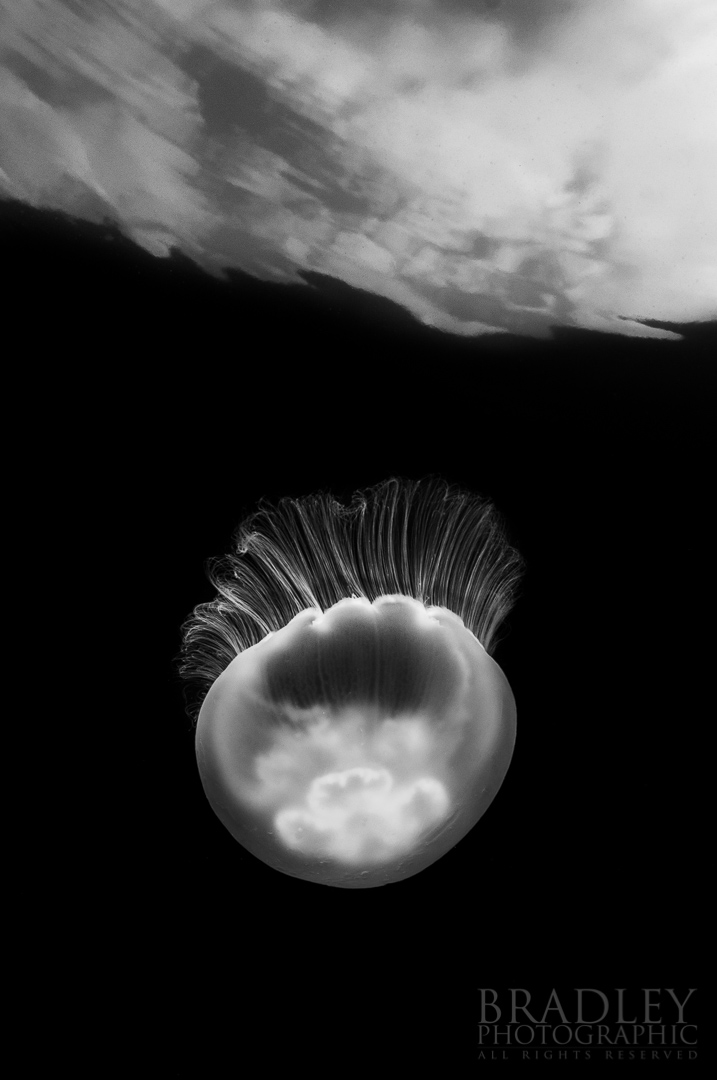
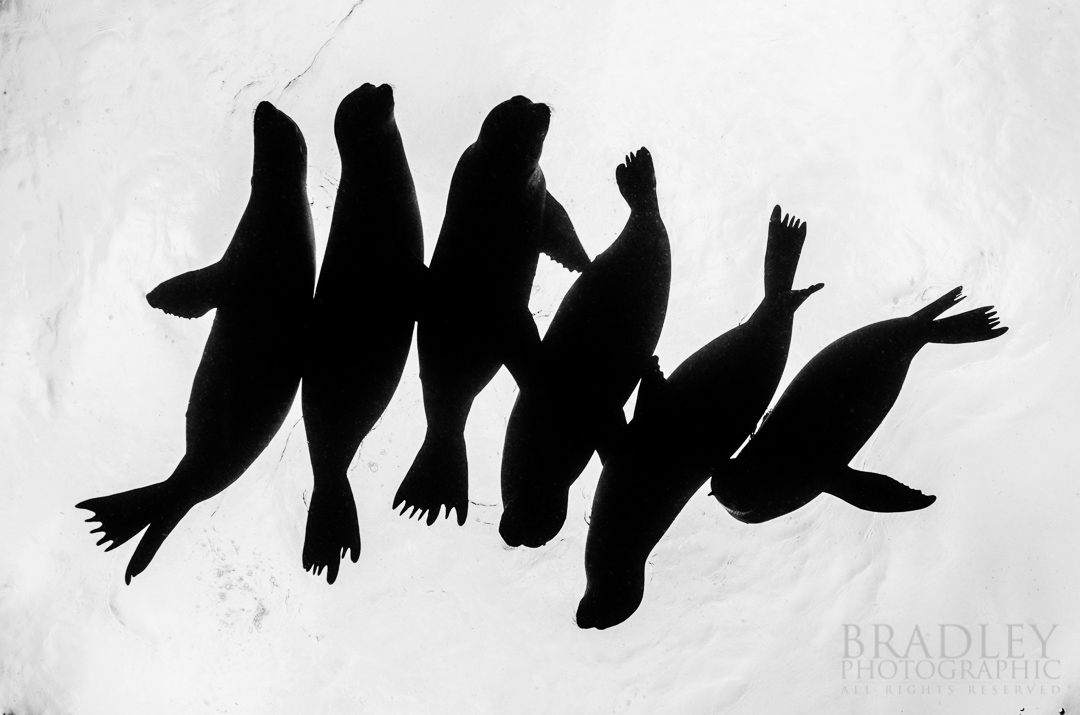
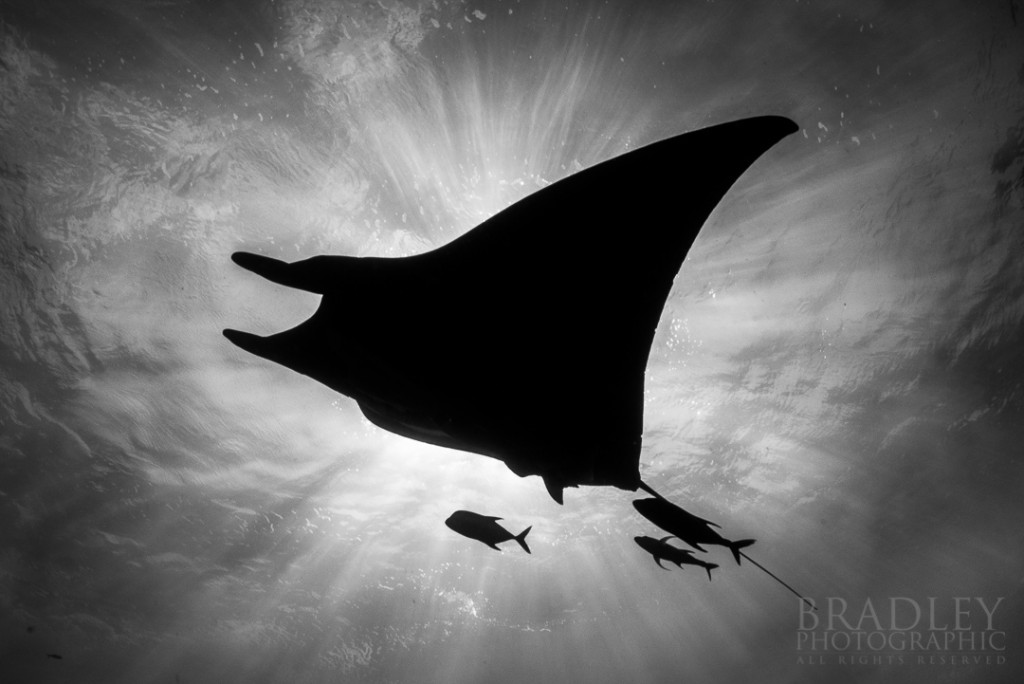
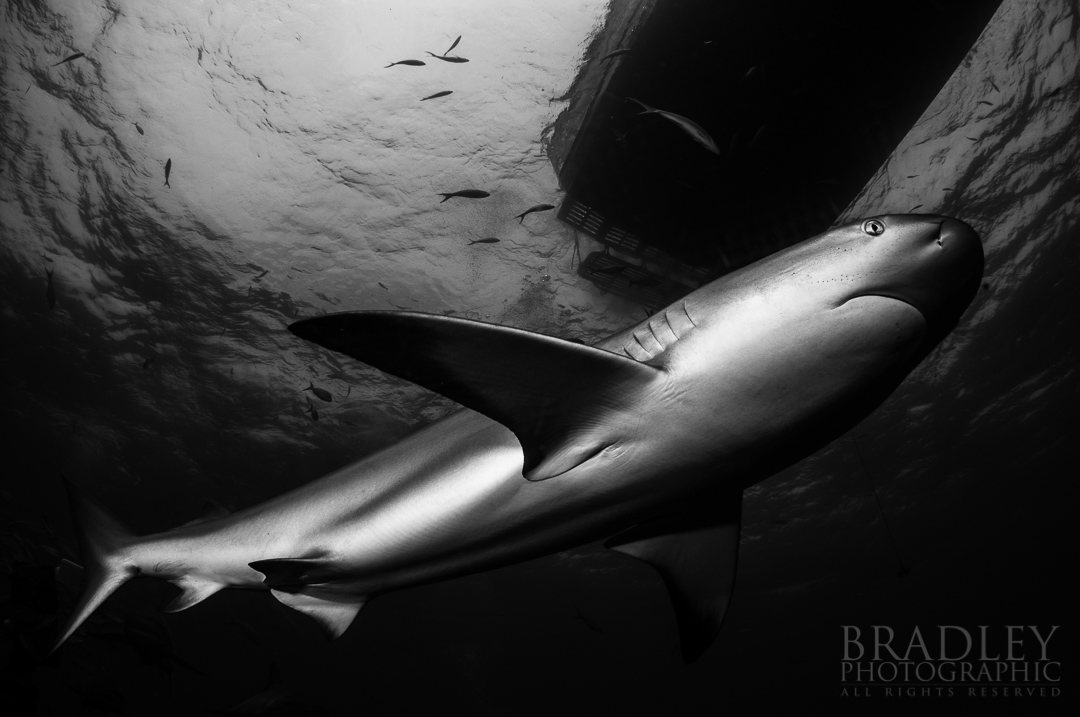
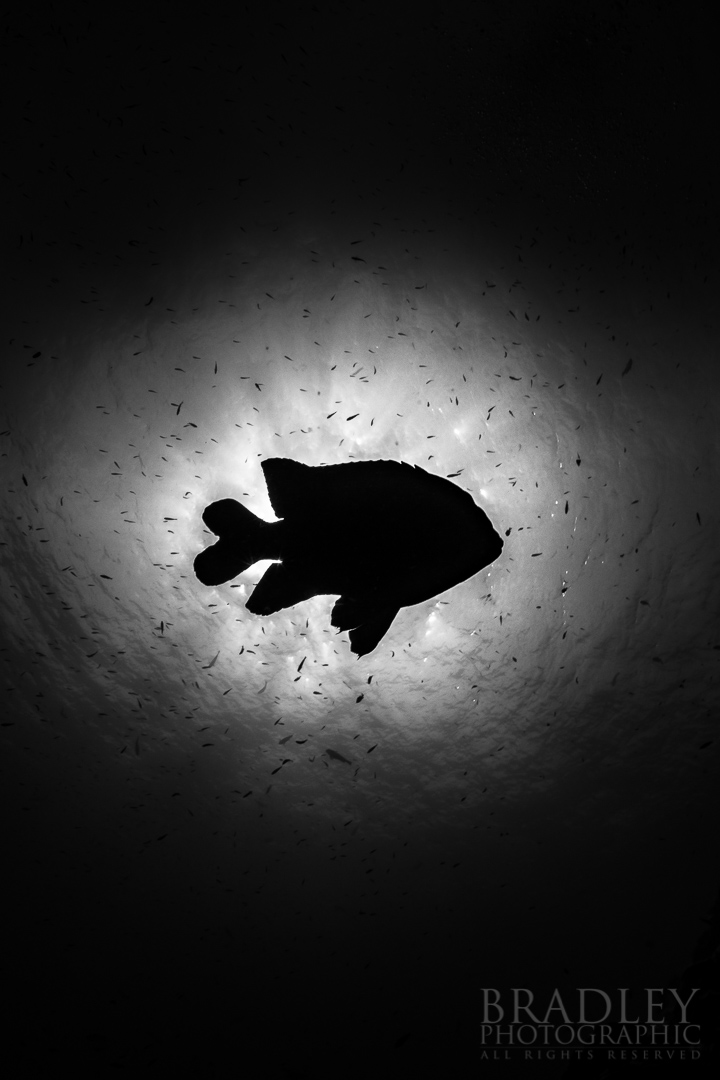
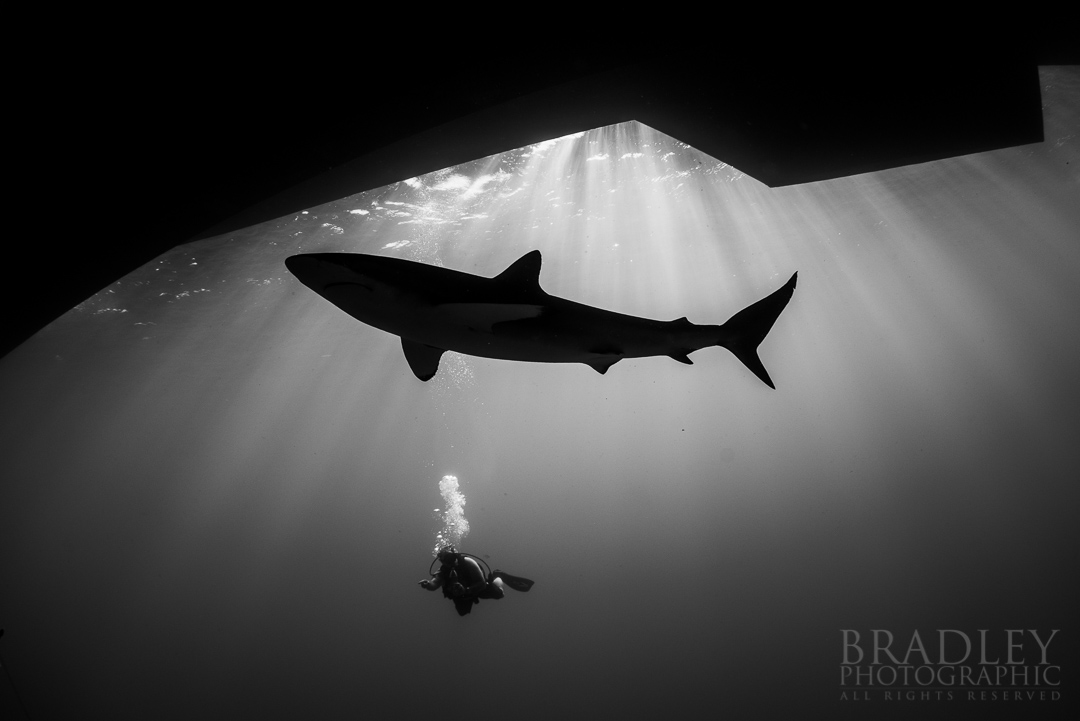
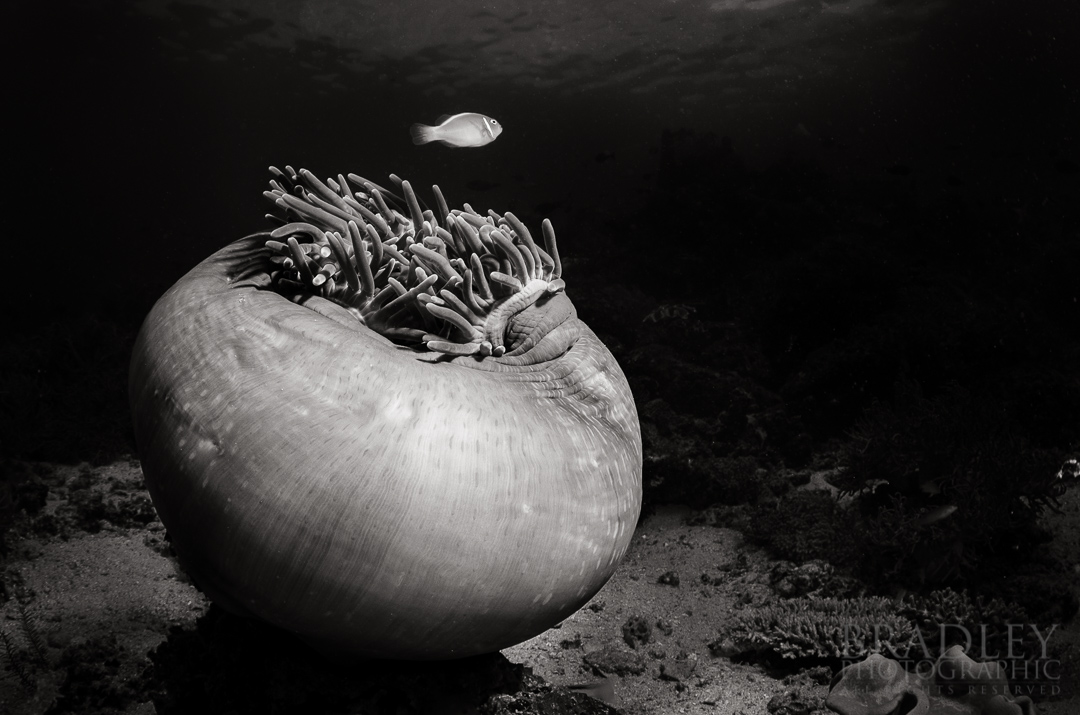
My old stuff feels… old. Bearing that in mind, at present I’m enjoying my manta and shark images that I just took a few weeks ago in Socorro. I like shooting ambient light and converting it to black and white, which is all I did on my last trip. I loved it!
 
©jasonbradley_151001.3648
(c)jasonbradley_120622_9515
“At present I’m enjoying my manta and shark images that I just took a few weeks ago in Socorro. I like shooting ambient light and converting it to black and white, which is all I did on my last trip.” © Jason Bradley
 
"Science was not the path for me, but my underlying motivation for being immersed in the ocean remained as strong as ever." © Jason Bradley
“Science was not the path for me, but my underlying motivation for being immersed in the ocean remained as strong as ever.” © Jason Bradley
Where is your favourite dive destination?
Of all the places I’ve travelled to in the world, there is nothing like diving the kelp forests in California. It’s where I was certified, where I live, and where I’ve hung my hat most of my life. Admittedly, there are better places in the world for animal encounters, but there’s nothing like diving through an underwater forest of giant bladder kelp. It’s a magical thing.
 
The site you’d most like to dive, but never have?
Most definitely with walrus in the Arctic. There are a couple places I’d like to go, but I think Svalbard is the top of my list. Svalbard is a Norwegian archipelago that sits between Norway and the North Pole.  
 
The weirdest thing you’ve seen underwater?
Ummm… everything at Lembeh.
 
What camera equipment are you currently using?
A Nikon D810 in Nauticam housing. For wide angle I use the 15mm fisheye Sigma, and the 105mm Nikon for macro. But I don’t shoot a lot of macro. And I love my old-school Sea & Sea YS-300 strobes. They’re big and yellow, and I love them!
 
What is the highlight of your career?
I’m happy to say right now, as I’m doing some exciting things. As previously said, I’m very excited about my black-and-white work, but I have a new book that just came out called Creative Workflow in Lightroom published through Focal Press, I run a fine art print lab in Monterey, California that’s doing well, and I have some great workshops and underwater photo expeditions lined up for the next couple of years. Things are good!
 
©jasonbradley_150927.2021
(c)jasonbradley_140226_2213
“I feel we underwater photographers can do good by focusing less on ‘Did I nail the shot?’ and more on: ‘Am I building a cohesive body of work that clearly shares my vision of, and for, the oceans?'” © Jason Bradley
 
…And the low point?
Well, the last two to four years prior to now. I had gone through some sad changes in my personal life, and more than any point in my career I felt totally disconnected from my work. I had no desire to shoot no matter where I travelled, and the work that I was producing was boring to me.
 
"I’m very excited about my black and white work, but I have a new book that just came out called Creative Workflow In Lightroom published through Focal Press" © Jason Bradley
“I’m very excited about my black-and-white work.” © Jason Bradley
Is there any particular shot that
you still want to get?

That list is too long to share, but I will say this, and encourage those reading this to consider the same idea. I’m far less driven by individual photos than I am by the idea of creating a body of work. And this ties a bit into the answer to your last question, as I highlighted the low point in my career. One of the reasons I had the low point is that I had gone through many years of no photo projects. Trip after trip was just gathering pretty underwater photos. As fun as that is, I need my photography to have a narrative, a story, I want my work to speak to things beyond “the ocean is pretty” and “diving is cool.”
 
Fish stocks around the world are being ravaged, coral bleaching is destroying our tropical reefs, and climate change is causing sea levels to rise and changing our the ocean’s chemistry. I feel we underwater photographers can do good by focusing less on “Did I nail the shot?” and more on: “Am I building a cohesive body of work that clearly shares my vision of, and for, the oceans?”
 
For more of Jason’s work, visit his website: www.bradleyphotographic.com
 
©jasonbradley_160408_389