Did You Know? The signs and symptoms of decompression illness (DCI) are many and varied as bubbles can affect a variety of body organs, including the brain, spinal cord, nerves, lungs, heart, tendons, muscles, bones, skin, bladder and inner ear. The severity can range from almost undetectable minor symptoms, such as mild tingling in a fingertip, to severe life threatening symptoms such as unconsciousness and absent breathing.
Common Signs and Symptoms of DCI include numbness / tingling, nausea, headache, feeling unwell, rash, weakness, pain/discomfort at the joint, dizziness, chest/torso or back pain; and extreme fatigue. Numbness and tingling are very common symptoms as is extreme fatigue. Such symptoms, if relatively mild, are often overlooked or thought to be due to something other than DCI, such as muscle strain; as a result first aid and treatment is often delayed.
Other signs and symptoms include blotchy skin, confusion, convulsions, coughing, death, difficulty breathing, difficulty passing urine, hearing loss, lack of coordination, itch, loss of balance, loss of bladder/bowel control, paralysis, personality change, ringing in ears, impaired responsiveness, speech disturbances, visual disturbances.
Any signs or symptoms that appear within 24 to 48 hours of diving should be suspected of being diving-related. It is important to get specialist diving medical advice as soon as possible and not to dive again until this is done. Call a DAN-supported diving emergency hotlinefor advice.
ALL divers can call a DAN Hotline for advice; HOWEVER, DAN can only arrange an Emergency Evacuation and Treatment and cover associated costs for current DAN Members, within the limits of their coverage.
Check out this incredible offer from DAN Asia-Pacific and UW360:
1 YEAR DAN Asia-Pacific Membership + 1 YEAR Subscription to Scuba Diver AUSTRALASIA + OCEAN PLANET Want to get your hands on this package? Click here.
One of the greatest, and most dangerous, programmes of its time, the Tektite project was the USA’s first nationally sponsored scientists-in-the-sea scheme. A cooperative government-industry-university effort that took place in Lameshur Bay, Virgin Islands (1969-70), it attracted some of the big names of the diving industry, from Sylvia Earle to Ed Clifton, to go and reside below the waves for around 60 days.
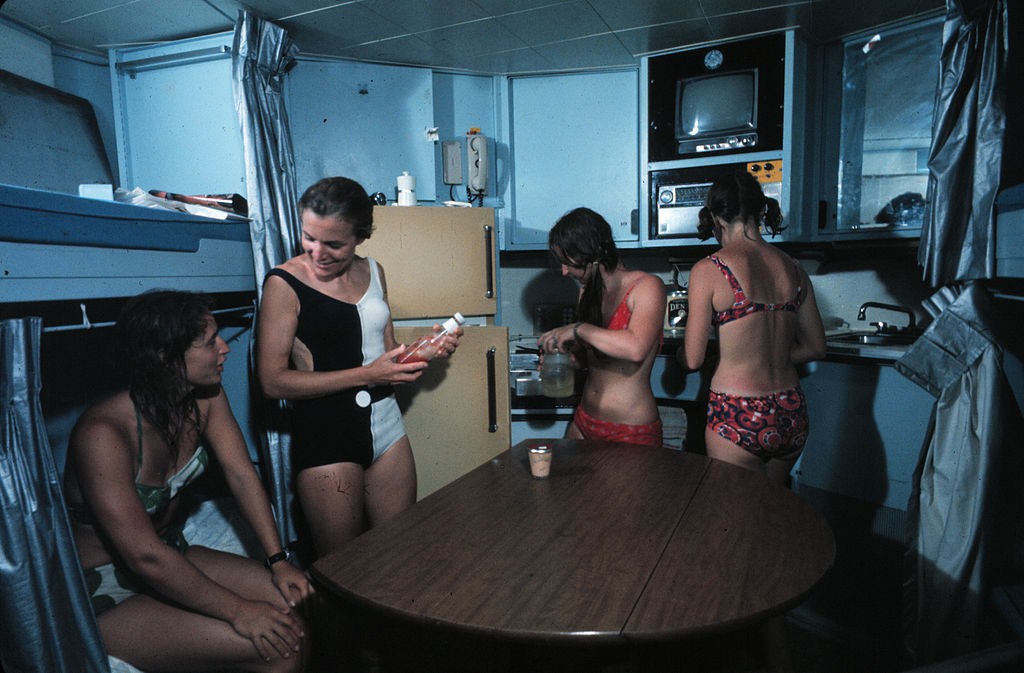
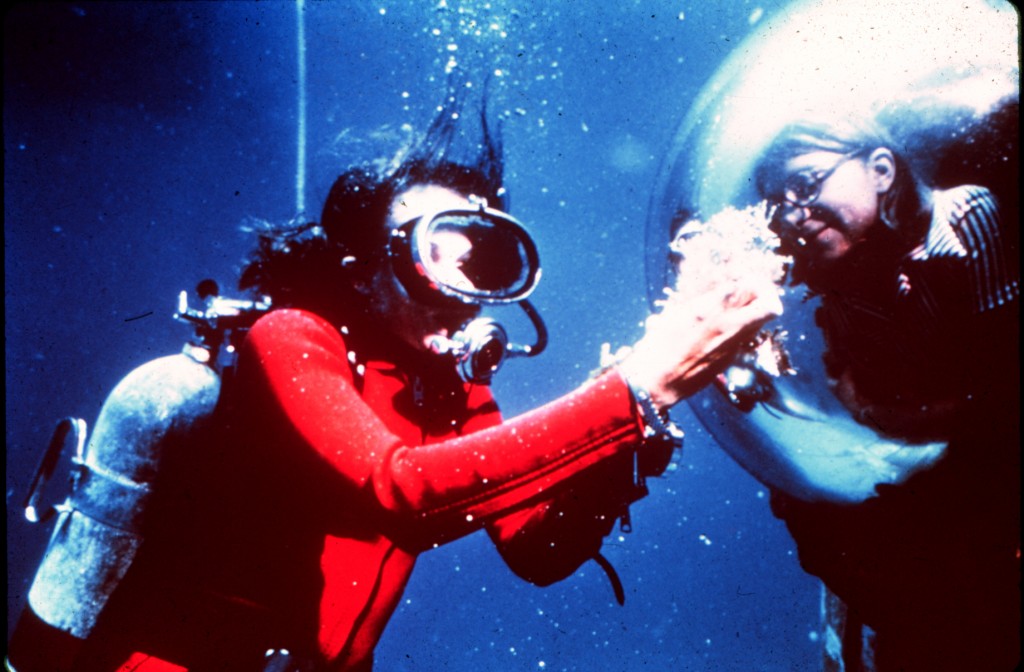
As nationally sponsored programmes, there were two projects conducted – Tektite I and II. The Office of Naval Research coordinated Tektite I; the Department of the Interior, Tektite II. Scientists were selected as Tektite aquanauts primarily on the basis of research proposals submitted, and secondarily on the basis of health and diving skills. In Tektite I, four men lived in the Tektite habitat for 60 days, while Tektite II comprised of 10 missions lasting 10-20 days with four scientists and an engineer on each mission. The famous “Mission 6” was historic in that it was the first team of women to conduct research of this type in the world – it effectively shifted the patriarchal structure of ocean exploration and paved the way for many more female explorers.
Living Underwater
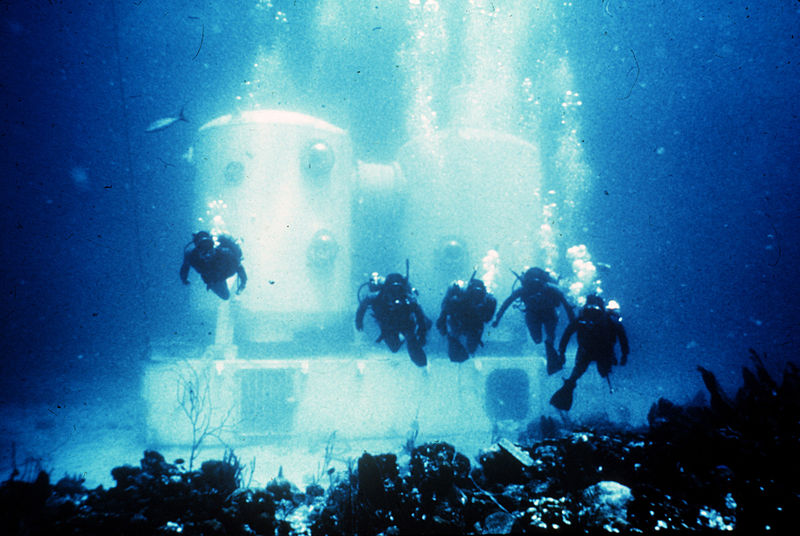
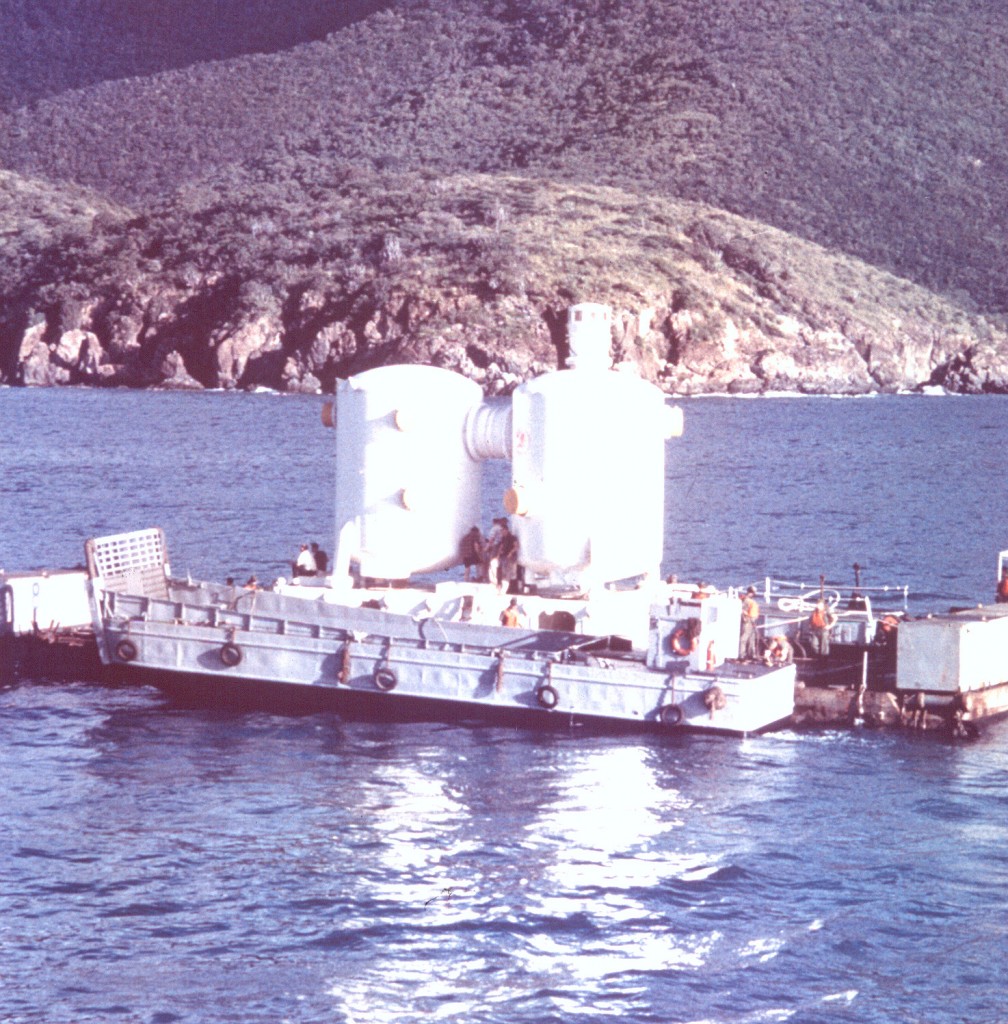
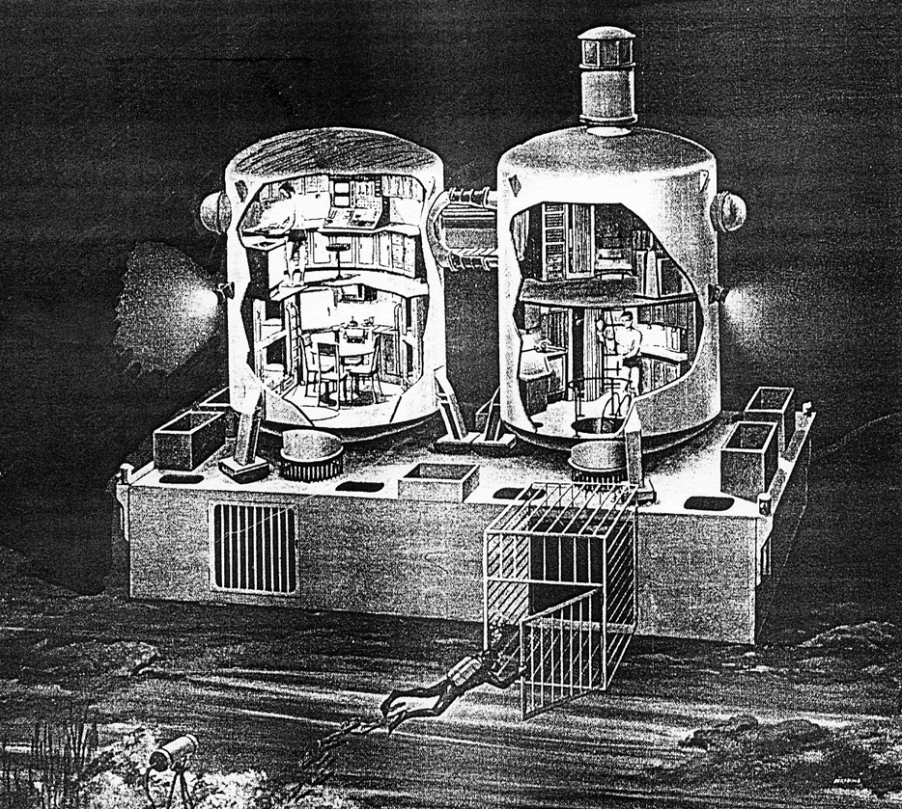
Looking like two sunken silos, the Tektite habitat was designed and constructed by the General Electric Company. On the exterior, there were two white metal cylinders four metres in diameter, six metres high, joined by a flexible tunnel and seated on a rectangular base in 15 metres of water. To get air, water and electric power, multiple cords extended from the habitat to the shore, and sewage was deposited by a pipe 300 metres away to a site 22 metres deep.
A clear example of hell for anybody who is claustrophobic, each cylinder housed two rooms – meaning four in total. The main entrance was in the floor of the “wet room”, a laboratory and storeroom for scientific and diving equipment. A ladder led down into the sea through an open well, and pressure was maintained at 2.5 atm, sufficient to keep water from rising through the entry well. These wet rooms were ideal for pre- and post-diving operations but also housed typical topside items such as a clothes dryer and a hot freshwater shower. Keeping things compact, above the wet room was the engine room, containing essential life-support systems, a freezer for food storage, and a small but private bathroom with sink and toilet.
To access the “third room”, referred to as the control room or bridge, the scientists had to cross through the tiny tunnel connecting the two cylinders. To communicate with the world above, the room contained communications and monitoring systems, and to make complete use of space, a dry laboratory, and library. It was the primary domain of the habitat engineer, who even slept there on a folding cot.
Cutaway view of the Tektite habitat showing arrangements of the four rooms. Image courtesy of Smithsonian Institution
The habitat did a good job of making the scientists forget that they were totally submerged by hundreds of gallons of water, with carpeted floors, television and controlled temperature and humidity. The bottom left room was the crew quarters, including four built-in bunks with draw curtains, and personal storage drawers filled two sides of the room. There was also a refrigerator, stove, sink, and storage cupboards – and they were able to dine at a table in the centre of the room.
The only reminders of them being so far away from civilisation and the topside world was the emergency escape hatches located in the two bottom rooms, and the hemispherical ports allowing the scientists to gaze out at the reefs, but which also acted as a stark reminder of how deep and alone they really were.
The bay was chosen as the site for the programme due to a number of favourable characteristics. As it is within the Virgin Islands National Park, it was a relatively undisturbed area with a variety of plant and animal life inhabiting the various coral reefs, seagrass beds and sandy plains. Living in this diverse underwater world allowed scientists to get closer to, and stay longer with, the marine life – gathering information on diurnal (daytime) and nocturnal behaviour. They had more time to make observations, and the time that was available for productive research in the water, day after day, exceeded that previously experienced by any of the aquanauts.
Research
One goal of the programme was to show that saturation diving from an underwater laboratory could be done efficiently, safely, and at a relatively small cost. These selected pioneering scientists were journeying into dangerous, unchartered lands and active research techniques such as these had not been used before.
Nine studies conducted during Tektite I and II dealt with some aspect of coral reef ecology. Many of the studies are still being continued – and more relevant than ever – to this day: bio-acoustic studies on reef organisms, such as parrotfishes and groupers; influence of herbivores on the marine plants of the location; patterns of behaviour of coral reef fishes, looking into the times that diurnal fish species awoke. It was an incredibly exciting time for ocean exploration.
During the course of the project, over 60 scientists and engineers lived and worked beneath the sea. Working simultaneously on land were teams of scientists, professors, students and other participants observing and studying the aquanauts. The project was a success and helped NASA to understand how astronauts could work in completely isolated and confined areas. An intriguing preview of what future life could be like, with perhaps many inhabiting the world’s oceans in such sub-aqua habitats, Tektite I and II could be described as ahead of its time.
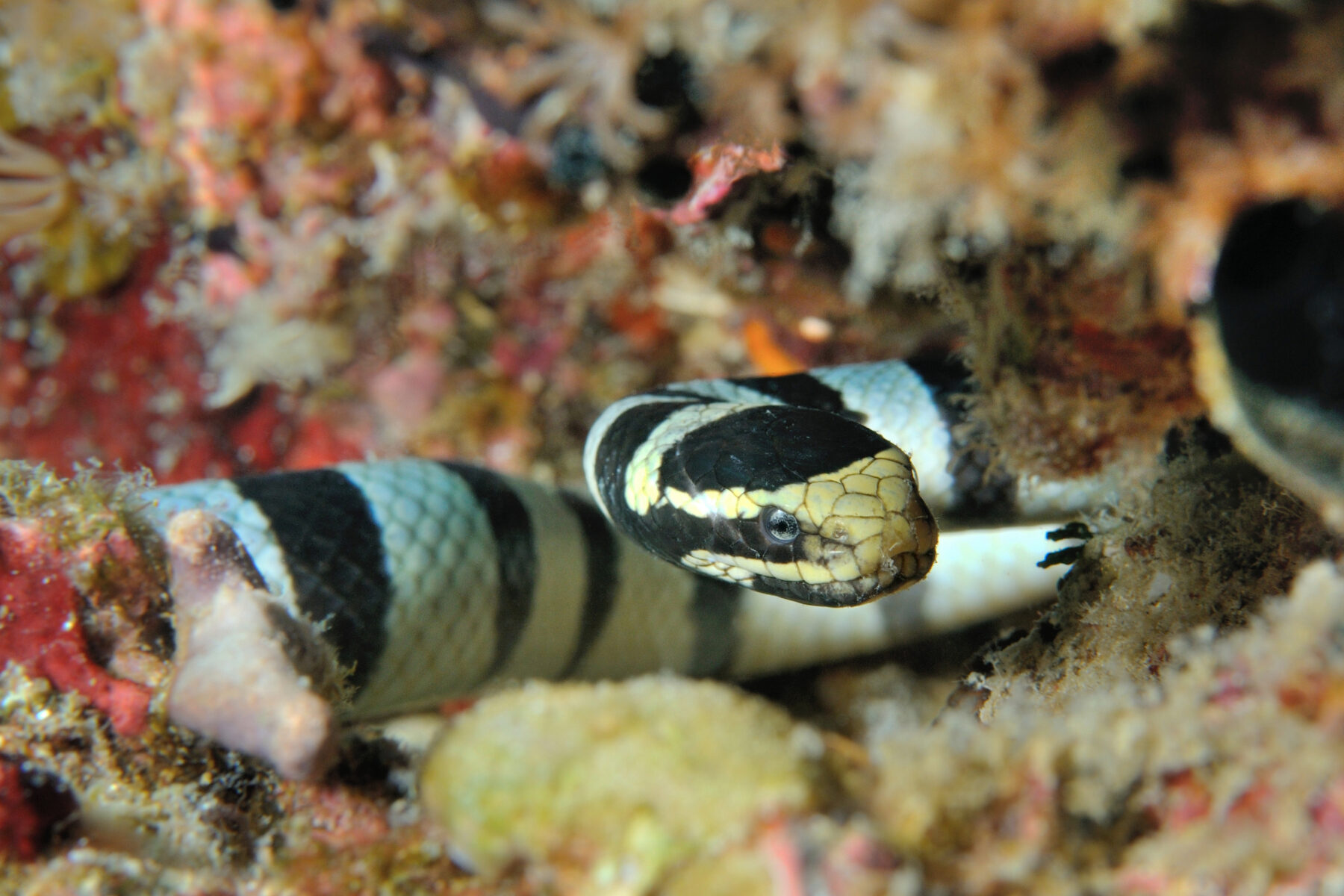
Typically docile in behaviour, one of the world’s most venomous animals is a guaranteed “top sight” of any reef dive. Often found swimming through the water, or hiding in crevices both on land and in the ocean, this fascinating sea snake is our wildlife of the week:
Species: Laticauda colubrina
Class: Reptilia
IUCN Status: Least Concern
Diet: Feeds on eels in shallow coastal waters and returns to land to digest its prey
Size: Females weigh around 1800 grams and measure 150 centimetres in length on average, and are larger than males, which are only 600 grams on average and 75 to 100 centimetres in length. A giant 3.6-metre sea krait was once spotted
Behaviour: They often return to land to rest, shed their skin or shelter in vegetation, under beach rocks or in crevices and caves. The females deposit their eggs on land
Distribution: A large portion of the Pacific Ocean, from Malaysia to New Zealand
Ecosystem: They are found in a wide range of habitats, including coral islands, coral reefs, mangroves, and in the open ocean – most often in shallow waters up to a depth of 10 metres
5 Fast Facts:
Eggs laid on land are rarely encountered in the wild, with possibly only two nests reported over the entire distribution of the species – they are extremely secretive
The banded sea krait is highly venomous and bites can prove fatal, but its relatively docile nature means that it rarely bites humans
Coastal development and habitat destruction, including the loss of shore habitats required for laying eggs and digesting prey, are major threats to the species’ survival
When the young hatch from their eggs they resemble small adults. They do not undergo any metamorphosis
The head and tail are very similar in appearance, and this can trick predators into thinking that the sea krait has two venomous heads – acting as a preventive, mimetic adaptation
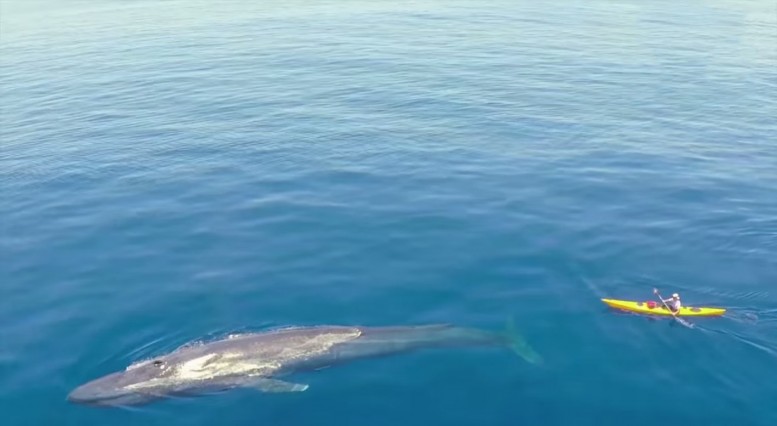
A blue whale breaches near a kayaker. Image courtesy of YouTube
The world’s largest mammal. So much remains unknown about these creatures, occasionally swimming into the view of lucky marine biologists or right-place-right-time photographers. We’ve selected five videos that capture the incredible form and elegance of this animal, from close-up encounters to bird’s-eye drone footage:
Amazing Blue Whale
In this rare footage we witness a blue whale diving down into the deep blue, and then returning to the surface for air. Filmed by underwater cameramen Roger Munns and Jason Isley, who spent several weeks in Sri Lanka filming and photographing blue whales, they had to use special techniques to reduce noise and disruption when approaching these shy creatures.
Up at the surface a blue whale emerges from the blue and swims under two freedivers – dwarfing the diver in the frame. With this incredible size, they can swim up to 48 km/h and have a tongue that weighs the same as an elephant. Their main catch is found at incredible depths, often diving as deep as 500 metres.
From the sky, a drone captures the first aerial footage of nursing in a blue whale. Shot at South Taranaki Bight in New Zealand, this bird’s-eye view shows the the animals’ tender interactions – the calf alternating between coming to the surface to breathe, and then going to its mother to suckle. In an area that experiences a high volume of industrial activity, this touching video highlights the need to conserve these creatures.
Set in the tropical waters of Sri Lanka, the story follows underwater photographer Patrick Dykstra’s journey to photograph the blue whale. Revisiting the same spot off the Sri Lankan coast every year, Patrick became one of the first photographers to document the local blue whale population. Using technology to his advantage, he could photograph both above and below – capturing the immense size of the animals.
How could we not sign off this list with the moment a blue whale interrupted a live BBC broadcast, causing Steve Backshall and his interviewee to gasp and fidget, and almost lose it on television? As the whale surfaces at just the right moment, helicopter footage reveals the silver lining of the blue whale’s back as it slowly travels past the boat, which it dwarfs. The huge mammal then dives down, to background groans from the presenter, dramatically closing the coverage.
This blue world is changing. In the last century the global sea level has risen almost 20 centimetres, we have lost half of our wildlife in the past four decades, and this year, our oceans are facing one of the worst coral bleaching events in history. Our marine ecosystem is delicately balancing on an uncertain edge, and there is no group better placed for attempting to rescue it than the dive industry. Heading this industry are the myriad dive centres that stand on the beaches of far-flung islands, and dive-tourism hotspots – these are the ones who can help kick-start change.
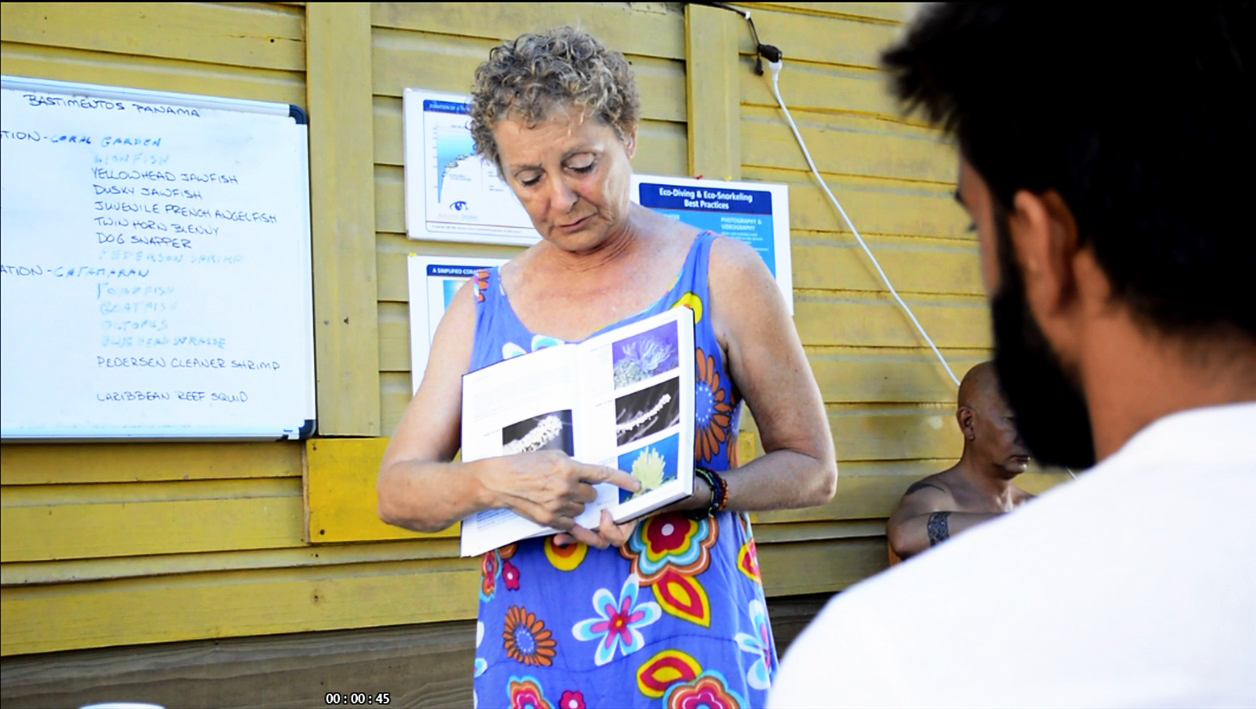
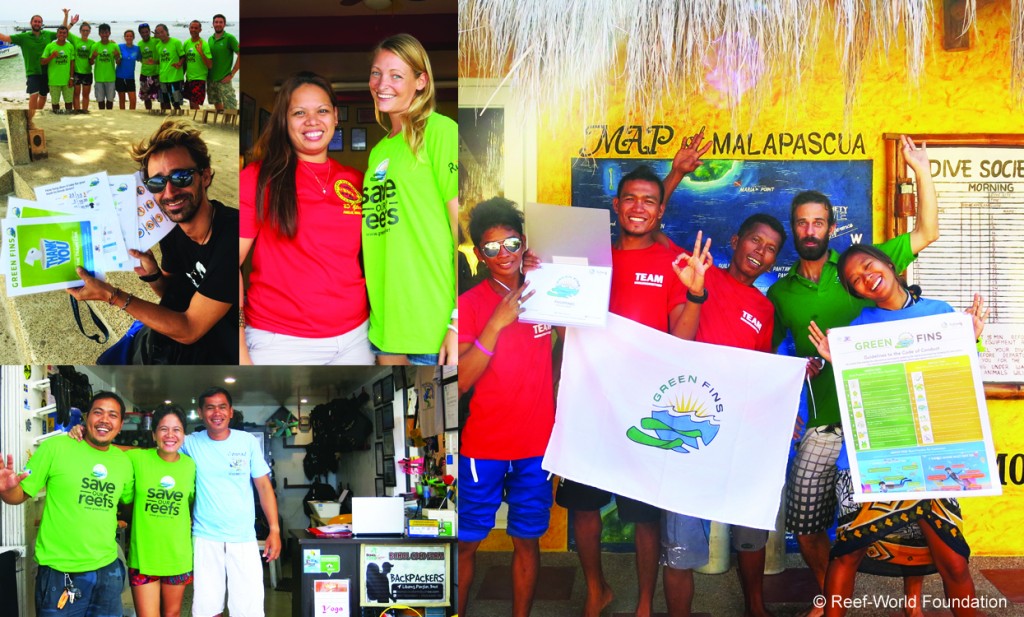
In this first of a three-part series to be released over the next six months, we introduce Ginette Bariteau, a dive centre owner in Panama, who we will be following through the ups and downs of her groundbreaking journey to improve the way her business deals with the environment. Situated in Bocas del Toro, Panama, Ginette’s dive centre is located in one of the most biodiverse regions in the world. Seeing the diving industry as the frontline for protecting the marine environment, and how the industry directly relies on the health of the marine environment, she is looking to inspire change within her local community as to how they think and act towards the environment.
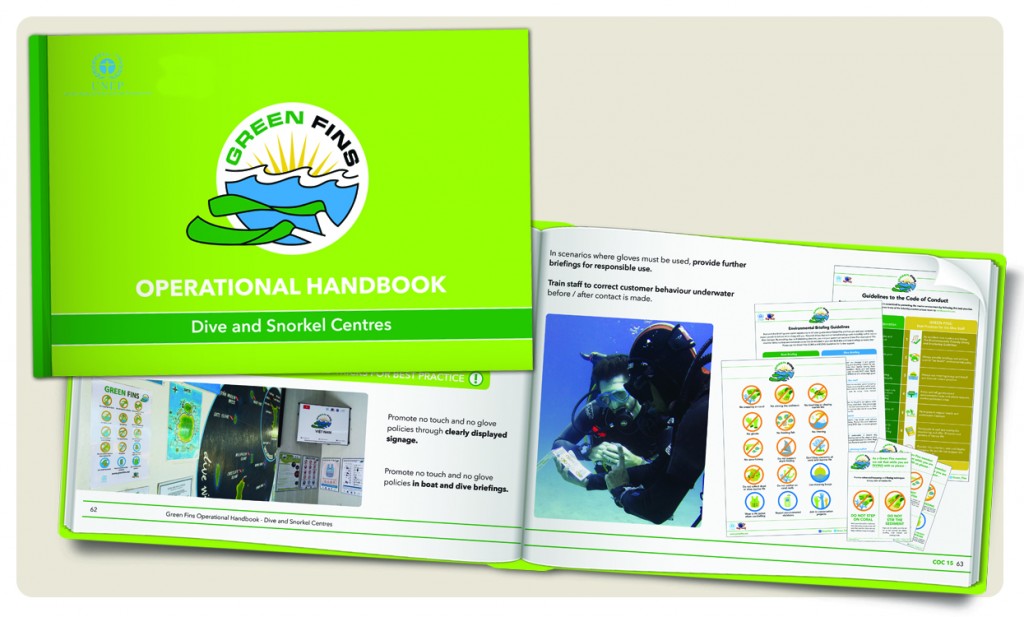
After stumbling upon the guidance provided by the Green Fins initiative – aimed at building environmental best practice into dive and snorkel operations – Ginette decided to plunge in feet first using the e-Handbook for Dive and Snorkel Centres to do a review on the way she does business, setting her beliefs in a project that will hopefully help improve her customers’ diving experiences, alongside boosting the resident ecosystem.
“After stumbling upon the guidance provided by the Green Fins initiative – aimed at building environmental best practice into dive and snorkel operations – Ginette decided to plunge in feet first using the e-Handbook for Dive and Snorkel Centres to do a review on the way she does business.
Two years ago, instead of embarking on a regular life of retirement, Ginette and her husband Michel decided to take on the long-hours, low-pay work that is running a dive centre. To reflect their passion for the marine environment, they changed the dive centre’s name from Scuba 6 to Scuba 6 Eco Diving.
Initially getting caught up with the normal administrative duties associated with running a dive centre, she decided to set her priorities on getting out there and conducting regular surveys to monitor the local marine life – even by supporting three Marine Biologists from Smithsonian Tropical Research Center, Panama City to to come to the area and give a talk about and guide a dive to observe coral (unfortunately, out of the six dive centres of Bocas del Toro only one attended the presentations and none participated in the night dives).
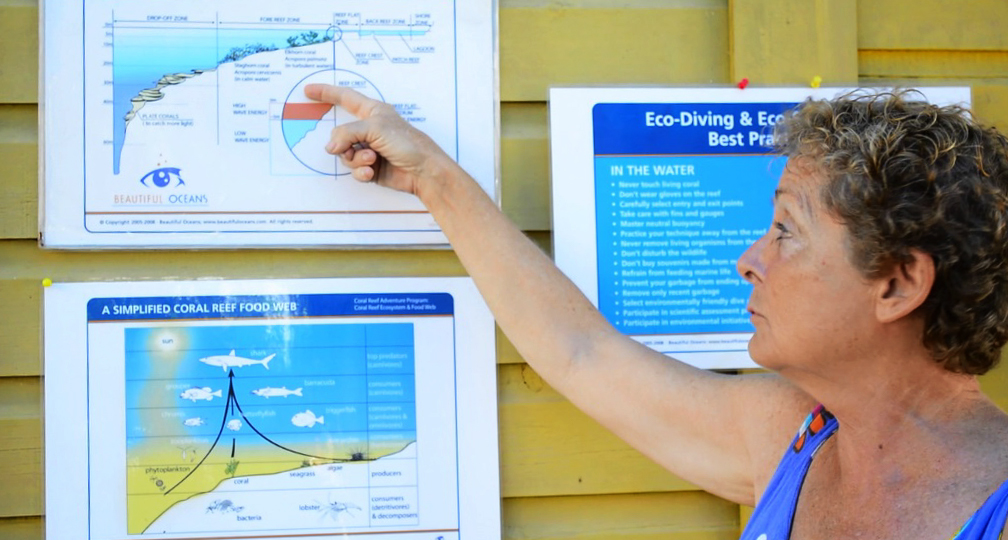
Now, by printing and laminating Green Fins materials, such as the Green Fins Code of Conduct, and including the Code in her pre-dive briefings, Ginette is taking the time to explain to her customers about marine-related issues and the threats associated with climate change. Along with her glowing Trip Advisor reviews and their environmental credentials, the dive centre sees high numbers of repeat customers, and local businesses are recommending them based on the strong reputation they are building through word of mouth. What started as a means to educate people about the marine environment has metamorphosed into a valuable marketing tool.
“By printing and laminating Green Fins materials, such as the Green Fins Code of Conduct, and including the Code in her pre-dive briefings, Ginette is taking the time to explain to her customers about marine-related issues and the threats associated with climate change”
Currently, Ginette doesn’t believe that divers will pay more for an environmentally sound product, and she doesn’t think they seek it out when making their bookings. But she strongly believes that by providing sustainable packages, and giving that extra value through the environmental talks she gives, people go away feeling like they have received a high value experience at no extra cost.
Ginette first heard about Green Fins through the Coral List, a forum for Internet discussions and announcements relating to coral reef ecosystem research, conservation, and education. She immediately found the educational materials, available for free download from the website, interesting and clear. Digging deeper, she became interested in the assessment process used through the Green Fins approach to measure businesses’ compliance to best practice. You don’t just get to talk the talk, you have to walk the walk – and you get assessed on it.
She was also drawn to the bigger picture behind Green Fins – the fact that it’s a United Nations Environment Programme initiative (presumably giving it some muscle), that it’s being run by a small UK charity called The Reef-World Foundation and that it’s been adopted as a national programme by eight governments, some of whom are hosts to the most popular diving destinations on Earth, such as Thailand and Malaysia. Almost 500 dive centres have already joined the programme and are working systematically to improve their environmental practices and reduce their impact on their local dive sites. And what’s more – it’s free!
Ginette instantly wanted to become part of this international network, to tap into that group of united voices and to contribute to it. She also hoped that with Green Fins, she could inspire some change within her local community. This is not an elitist programme – you don’t have to be super environmental to be involved; you just have to show an interest and commit to improving your practices. The website provides clear and easy-to-follow guidance, which is accessible to everyone. Perhaps she could instigate a movement to follow more environmentally friendly diving practices across all of Bocas del Toro – or even Panama-wide?
“Ginette instantly wanted to become part of this international network, to tap into that group of united voices and to contribute to it. She also hoped that with Green Fins, she co
uld inspire some change within her local community.”
Starting her Green Fins journey, she downloaded the Green Fins Dive and Snorkel Centre Handbook, which provided her with a step-by-step guide to implementing the Code of Conduct within her dive centre. It also provided links to posters, guidelines and other resources to help her with common challenges she will meet along the way. She found the handbook clear, very comprehensive and full of useful information, but not overwhelmingly so. The posters are bright and cheerful, relaying simple messages but also providing the reader with an explanation for every do and don’t.
The “no fish feeding” poster, for example, explains in clear and simple steps why feeding fish is so bad for the health of the fish and the surrounding environment. She started to test the posters on her customers and found that they had a real impact on changing people’s attitudes towards the environmental policies she wanted to adopt. From just a bit of background information people became much more accepting of the rules by which she wanted to run her dive centre. Their behaviour started to change. She was hooked.
So here we are at the beginning of this journey. The people at Reef-World are behind Ginette, providing her with support, encouragement and advice over e-mail and over the phone. The team plans to map her and her dive team’s journey over the next six months and tell their story – the good, the bad, and the ugly.
In January next year, Reef-World will be sending one of their team to visit the Scuba 6 Eco Diving centre and conduct an official Green Fins assessment of their diving practices, which will activate their Green Fins membership. While the government of Panama have not adopted Green Fins, and there are no local Assessors to sustain these assessments, it’s inspiring to document just how much one local dive centre can do when they set their mind to it – and when they have the support of the international Green Fins network behind them. It could be enough to inspire a global change.
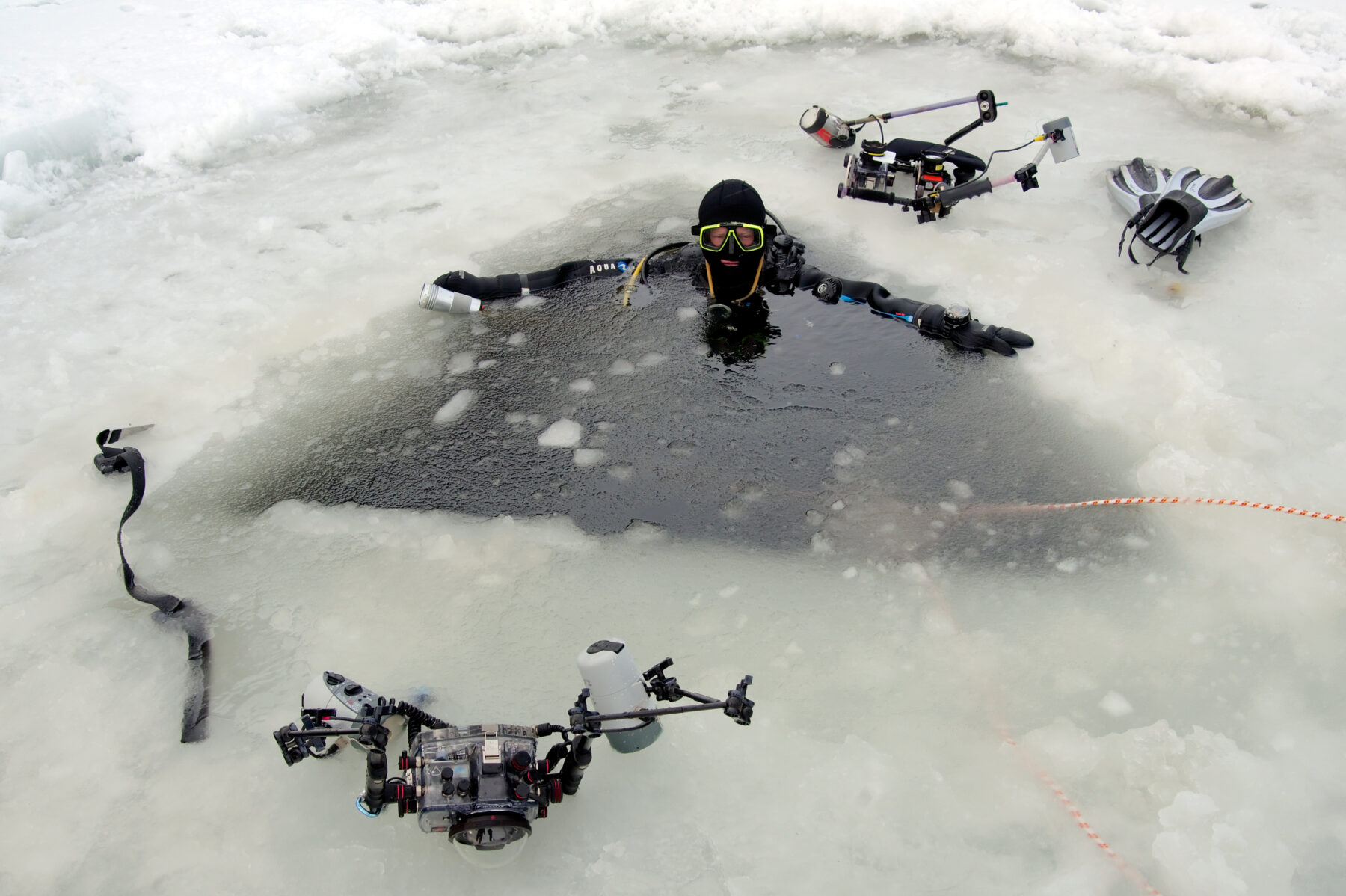
It might sound obvious, but diving in cold water is very different from diving in the tropics, and not just in terms of the noises you might make as you hit the water. There are all sorts of things to take into consideration if you’re going to be submerging yourself in chilly places.
It goes without saying that it’s vital to have the right training and equipment – an ice diving certification (if relevant), adequate thermal protection and an environmentally sealed regulator. But we’ve also put together some tips to make taking the frigid plunge a little bit more comfortable.
Start off warm
Fill your heat bank! Prime your body by wearing the right clothes topside, drinking warming liquids and staying as warm as you can for as long as possible before the dive.
Timing
Have all your gear ready before you get your suit on. Don’t let your body heat seep away while you’re setting up.
Layer it up
Whether you’re in a semi or a dry suit, you’ll be glad of every extra layer. Some divers even wear latex gloves under their neoprene to stop water coming into contact with the skin.
More gear more buoyancy
Remember you will likely need extra weights.
Prime your gear
If you’re diving in a wetsuit, soak your gloves, hood, and boots in warm water before you put them on. Some people also recommend filling your suit with water as you put it on and just before you jump in so that your body won’t have to expend valuable heat warming the water layer trapped between your skin and the neoprene.
Dive gloves on last!
You’ll be surprised at all the little things you need your fingers for before you jump in.
If it’s your first dive in cold water, be prepared for the shock of the temperature. You might find it hard to breathe, and clearing your mask in water that’s near freezing is much harder than it sounds. Don’t worry, with a little practice, it gets easier.
Minimise movement
Counter-intuitively, moving around a lot in cold water doesn’t help you to stay warm, and can actually increase the risk of hypothermia.
Be streamlined
If possible, keep your arms tucked at your sides to increase your body mass and reduce the surface area where heat is lost.
Watch your air!
Burning calories to keep warm requires more oxygen and so your breathing rate will naturally increase. Make sure you are properly equipped for the temperature and keep a close eye on your gauge.
Call the dive
Don’t wait until you’re too cold to end the dive. It’s not a contest. Once you start feeling cold in the water, hypothermia can set in very quickly.
Change wisely
Back on the surface, get warm and dry in stages. Start with your hood, dry your hair, put your warm hat back on. Peel off the top of your wetsuit, dry off and put on warm clothing. Then get out of your boots and take off the rest of your suit.
Warm water
Bring plenty with you – it’s useful for so many things – warming hands, defrosting zips, stopping frozen regulators.
This article featured in SD OCEAN PLANET “Cold & Fresh”
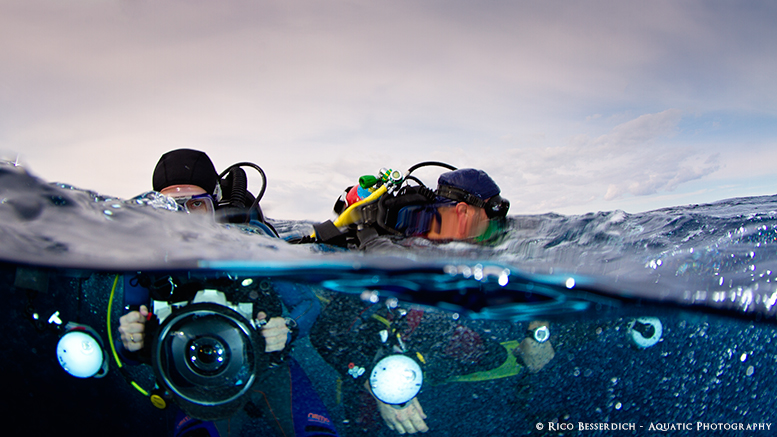
Professional underwater photographer Rico Besserdich takes us through the importance of developing the correct mindset for underwater photography, in this second part of his three-part series.
In a way, our mindset is our small master plan/checklist of how we do things. The idea behind it is to be prepared. Although there are some “basics” that we see often as “general habits” of advanced photographers, each single underwater photographer will have (or create with time) his/her own individualistic mindset.
We are now ready to dive and our photography gear is set as well (read part 1 of this series). We can finally go and do what we want: take photographs!
But hold on… Did you switch your camera and strobe(s) on? Surely you did. Any settings? If not, let me share my personal settings with you, which I use at the beginning and end of every dive: f/8, 1/125s, ISO 200. And if I am diving with a strobe, I have it set to around 40 percent power (in manual mode).
Why do I do this? There are plenty of stories where underwater photographers (advanced ones among them) hop in the water, descend to just a couple of metres, and suddenly find themselves surrounded by awesome photogenic – and unexpected – objects. Sharks, turtles, and huge shoals of fish – you name it. Lots of photos with “National Geographic potential” were not made because the photographers were “fighting” with their camera settings, trying to get things ready, and while doing so having their awesome models swim away.
For this simple reason, it is better to have your camera ready right from the beginning. You never know what unexpectedly and surprisingly swims in front of your lens while you are busy descending (or ascending), so be ready and prepared. Mine – f/8, 1/125s, ISO 200 – are good start settings that will have you ready for the unexpected.
A mindset of a successful underwater photographer depends on one simple but important thing: What do I want?
There are underwater shooters that are happy to follow a guide/group, happy to take a quick shot here and there, keen to see as many different things as possible during their dive. Others, then, prefer to spend one entire dive concentrating on underwater photography alone and even often on only one particular subject. They hate to follow groups or guides, and they are just happy hanging around in shallow waters under the boat, investing all their air, concentration, and energy on the “shots of the shots”. If you’re from the latter bunch, keep on reading.
Instead of swimming around and shooting everything that can’t swim away from you fast enough, I recommend just descending a few metres and keeping your eyes open. If you haven’t started your dive with a planned idea of what to shoot, just stay where you are and have a good, long look around.
If macro photography is your passion, find yourself an interesting-looking part of the reef and watch out for small critters. If wide-angle photography is your goal of the day, watch out for the sunlight (direction) and for interesting structures and shapes. Take your time to just hang around in the blue and get inspired. If you need to swim (to reach the reef), swim slowly, very slowly. Incredibly interesting subjects might appear on your way, but if you swim too fast and don’t look around, you’ll miss them.
Once you’ve found an interesting subject or your planned destination, give yourself a minute to think about:
Keep a distance first, get your settings ready, and then approach your subject very slowly. Take as much time as you want to create your shot. It is not a matter of quantity; it’s a matter of quality. Good quality needs time.
Try to make it a part of your mindset to eliminate disturbing factors as best as possible. Think about what is disturbing your concentration and consider what to do to get rid of it. This is a very important step of mindset development.
Here are a few examples and solutions:
“Equipment paranoia” – Camera or strobes are flooding. Relax; part of having this mindset is having your gear prepared well.
“Stress with buoyancy” – Proper buoyancy skills should come before taking a camera underwater.
“Fogging or flooding dive mask” – Only use dive masks that work well 100 percent for you. Test (and maybe replace) them before it comes to a serious photo dive!
“Stress with the group/dive buddy” – Dive with a buddy who shares your passion, and avoid being stuck in a dive group. Consider a private guide if no dive buddy is available.

 This article featured in SD OCEAN PLANET “Cold & Fresh”