Home Blog Page 139

Underwater Photographer of the Week: Brandi Mueller

0
"But still there stand those photographers that hone an ability to capture incredible moments in a frame, and turn common sights into wonders time and time again." © Brandi Mueller
There are those who believe that our world is so incredibly tricked-out with images of every place imaginable that it seems near impossible to capture anything that they haven’t seen before. To briefly concur, the Great Barrier Reef has been captured at every angle, in every style – turned black and white, shot under moonlight – that it’s now more an everyday visual than world wonder. And social platforms like Facebook and Instagram throw top images into the mix alongside “selfies” and blurred holiday snapshots.
 
But still there stand those photographers that hone an ability to capture incredible moments in a frame, and turn common sights into wonders time and time again. Part of the reason we kicked off this Underwater Photographer of the Week series was to pay tribute to these incredible underwater photographers who have an innate ability to spin this sub-aqua world that many experience on a unique axis, and create ever-changing compositions that can continue to wow us and feed our hunger to dive. To continue this, we bring you the amazing work of underwater photographer Brandi Mueller.
 
Born in landlocked Wisconsin, in the United States, Brandi picked up diving whilst a foreign exchange student in New Zealand at the age of 15. Trading in the snowy peaks and grand lakes for better climate and the ocean, Brandi studied seagrass and seahorses in college in Florida while becoming a divemaster and eventually an instructor (which she has been for 12 years).
 
Travelling and diving has always been her obsession, and even while working on liveaboards around the world, she spent most of her time visiting other places to dive. Dedicated to giving the ocean a voice through her photography, Brandi talked to UW360 about her career and images:
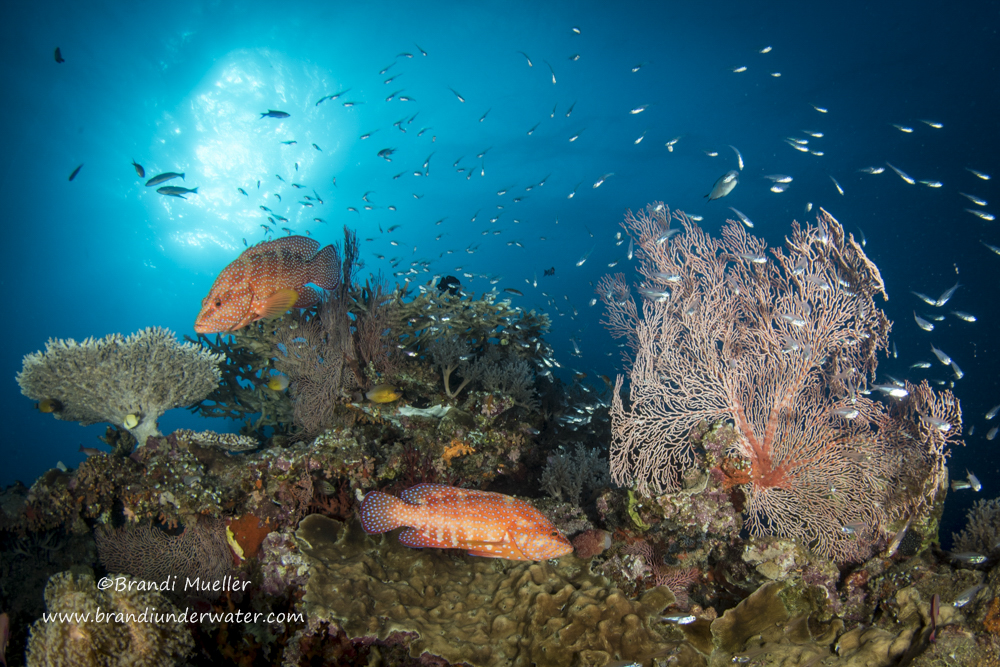
 
Great Barrier Reef, Australia
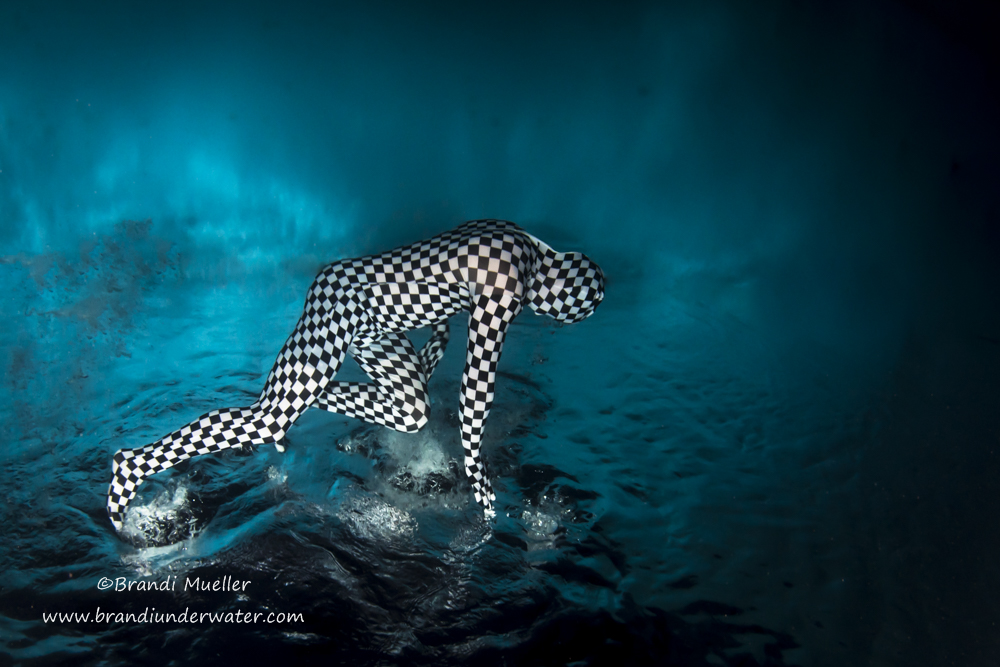
"Lately I’ve been obsessed with doing portrait shoots in pools and in the ocean." © Brandi Mueller
“Lately I’ve been obsessed with doing portrait shoots in pools and in the ocean.” © Brandi Mueller
 
What made you want to become an underwater photographer?
I was working as a dive instructor for Aggressor Fleet and met several professional photographers, and each Aggressor boat has its own photo pro, and I very much admired ours and the shots he would get. Several years later I saved up enough to get my own DSLR and housing, and a few years after that, I went back to work for Aggressor Fleet as one of their photo pros.   
 
Your first underwater shot?
The first camera I took underwater was an Olympus Stylus in a housing, probably 15 years ago. I took a lot of mediocre – or shall we say bad – photos with that. I think the first good image I can remember was from Hawaii on Kona’s manta ray night dive (after getting a DSLR). Two mantas were doing barrel rolls and I caught them belly-to-belly. It won DivePhotoGuide’s photo of the month contest way back when. That was super exciting.
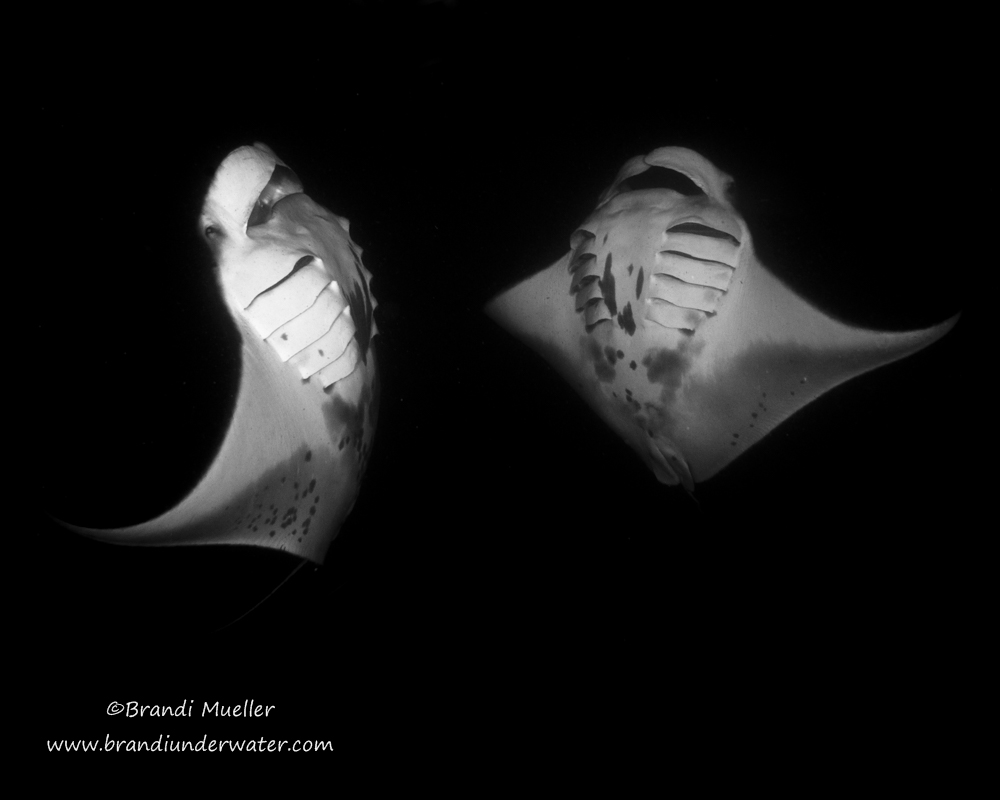
 
"Two mantas were doing barrel rolls and I caught them belly-to-belly..." © Brandi Mueller
“Two mantas were doing barrel rolls and I caught them belly-to-belly…” © Brandi Mueller
 
The story behind your most memorable underwater shot?
That’s so hard! For me, every photo I look at brings back the memories of whatever dive it was – where I was, who I was with, what was going on in my life at that time, and what it took to get the shot. I love getting requests for photos from a certain location and then going back through the photos and instantly feeling like I’m back in that place. I think some of my most popular photos are from the Airplane Graveyard in the Marshall Islands. After WWII excess military equipment wasn’t needed anymore and would have been expensive to transport back to the United States, so over 150 planes in perfect condition were dumped into the lagoon of Kwajalein Atoll. Diving on them is absolutely amazing and no matter how many dives I do on the planes I keep going back for more. There’s something just ghostly about these planes just sitting in the sand as if they might be started up and take off into the sky.
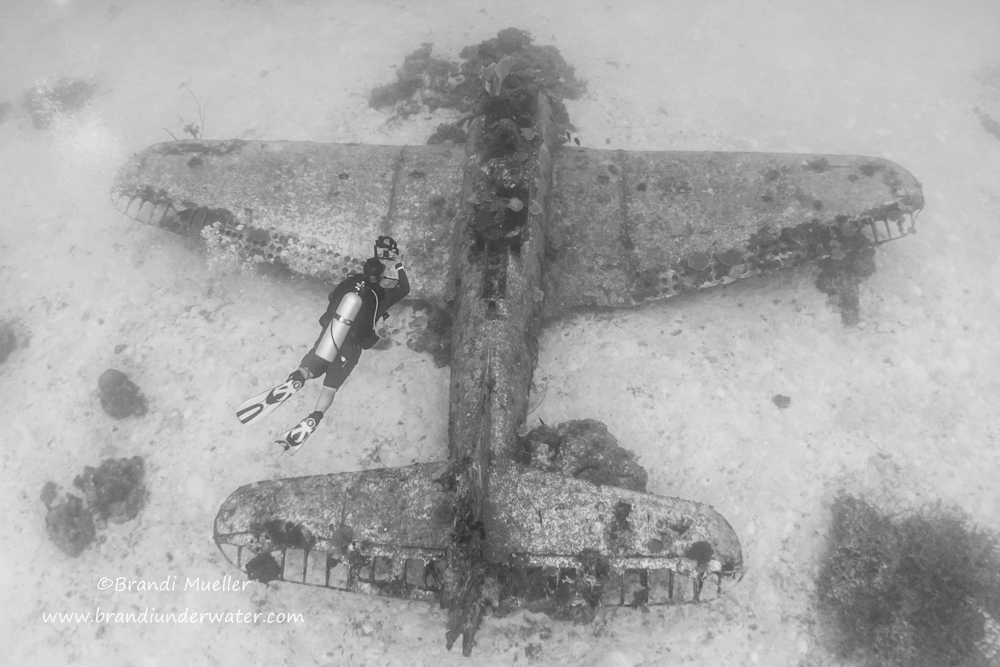
 
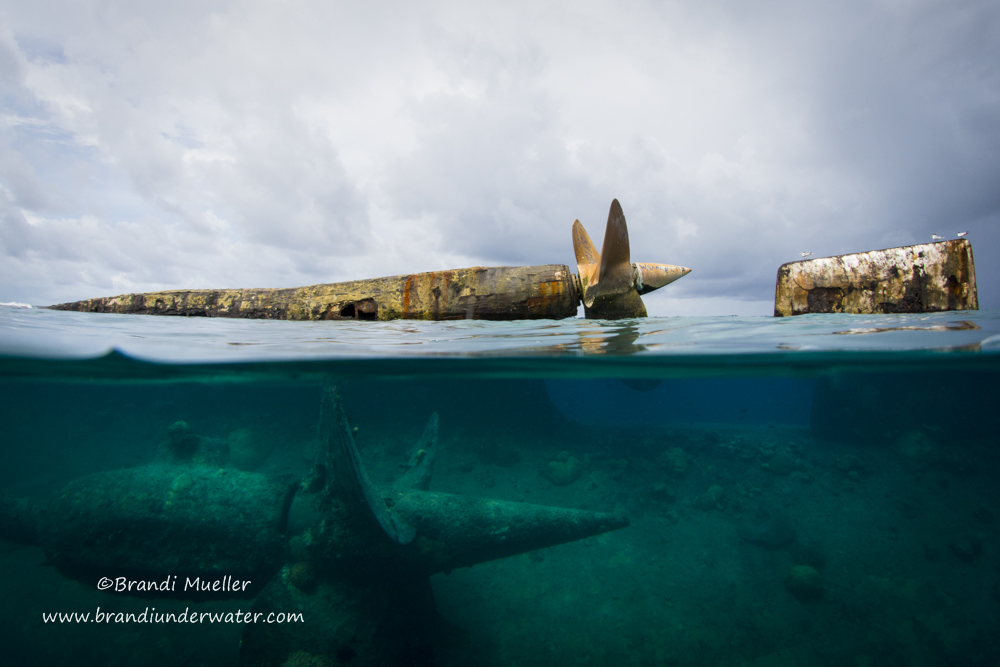
WWII Airplane Graveyard, Kwajalein Atoll
"After WWII excess military equipment wasn’t needed anymore and would have been expensive to transport back to the United States, so over 150 planes in perfect condition were dumped into the lagoon of Kwajalein Atoll." © Brandi Mueller
“After WWII excess military equipment wasn’t needed anymore and would have been expensive to transport back to the United States, so over 150 planes in perfect condition were dumped into the lagoon of Kwajalein Atoll.” © Brandi Mueller
 
Where is your favourite dive destination?
All of them. I’m just happy underwater. Put me in a bathtub in scuba gear and it’s a good dive!
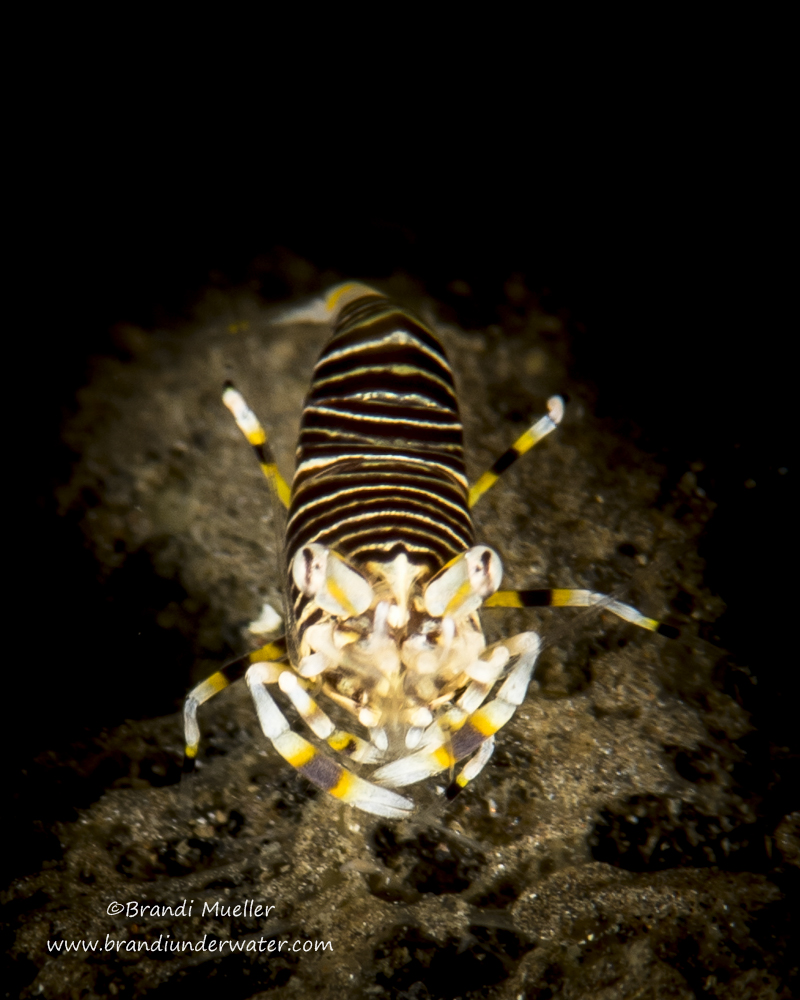
"It’s all a highlight. Seeing my photos get published in magazines and online never stops being exciting." © Brandi Mueller
“It’s all a highlight. Seeing my photos get published in magazines and online never stops being exciting.” © Brandi Mueller
 
The site you’d most like to dive, but never have?
My list is still huge. I like going to places not on everyone’s list. Right now near the top of the next destinations list is New Caledonia, Nauru, Madagascar, and Réunion. I don’t know much about them or if the diving is any good, but it sounds like fun. 
 
The weirdest thing you’ve seen underwater?
I’m terrified of bobbit worms. I love muck diving and to get good muck shots you usually need to get super low in the sand. Whenever I see their creepy antennae sticking out of the sand I’m scared I’m going to accidentally be close to the sand above them and they will cut off my leg or something. (I don’t really think that could happen, but they can be up to 10 feet long under the sand and they inject toxins that can kill animals much larger than them.)    
What camera equipment are you currently using?
Nikon D750 in an Ikelite housing and Ikelite DS-161 strobes. For super macro, I use ReefNet Subsea diopters. 
 
What is the highlight of your career?
It’s all a highlight. Seeing my photos get published in magazines and online never stops being exciting, and the diving that comes with getting the shots is always amazing. 
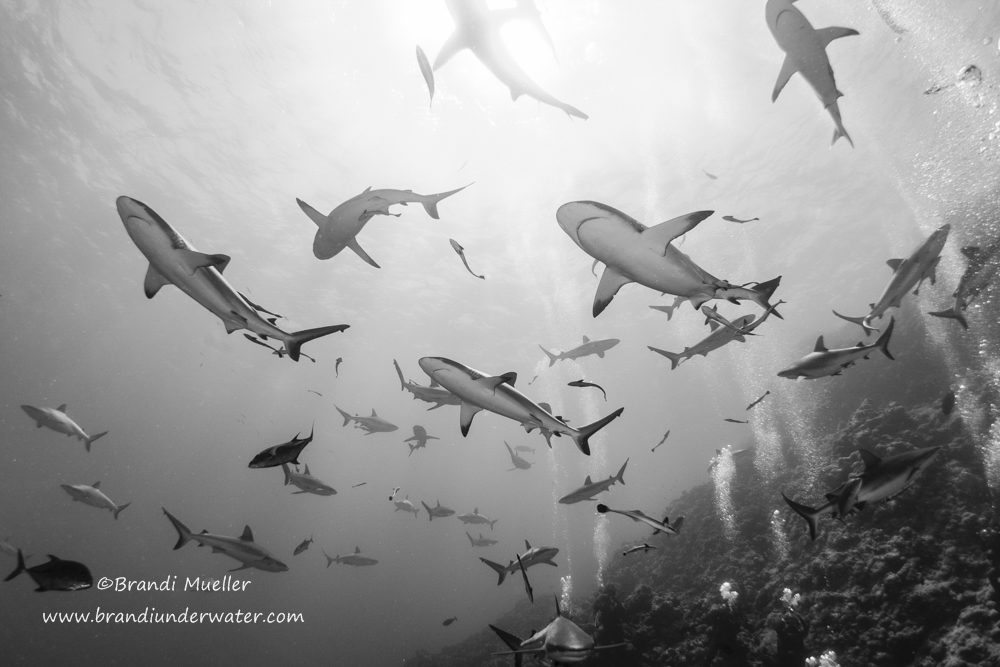
Sharks at Osprey Re
ef, Australia
"I love trying to take different types of photos of common things. Trying to make something that everyone already has a shot of more interesting." © Brandi Mueller
“I love trying to take different types of photos of common things – trying to make something that everyone already has a shot of more interesting.” © Brandi Mueller
 
And the low point?
I’ve been super lucky to have worked on, in, and around the ocean for pretty much all of my adult years. Either as a dive instructor or boat captain I have always had easy access to the water and what lies beneath, and I’ve had lots of opportunity to travel, so I can’t really say there’s been a low point. I hope there isn’t.
 
Have you any advice that you’d like to give aspiring underwater photographers?
The more time you spend underwater with a camera, the better you will develop your skills and the more chances you will have to see something epic. Go diving, anywhere, as much as you can.   
 
Is there any particular shot that you still want to get?
All of them. I love trying to take different types of photos of common things – trying to make something that everyone already has a shot of more interesting. I’m not sure if I’m doing that or not, but I’m trying. Lately I’ve been obsessed with doing portrait shoots in pools and in the ocean. I’ve been so lucky to have some amazing friends who are willing to dress up and hold their breath in the pool for the sake of photography. It’s been really fun and I love the fun and creativity that comes along with it.
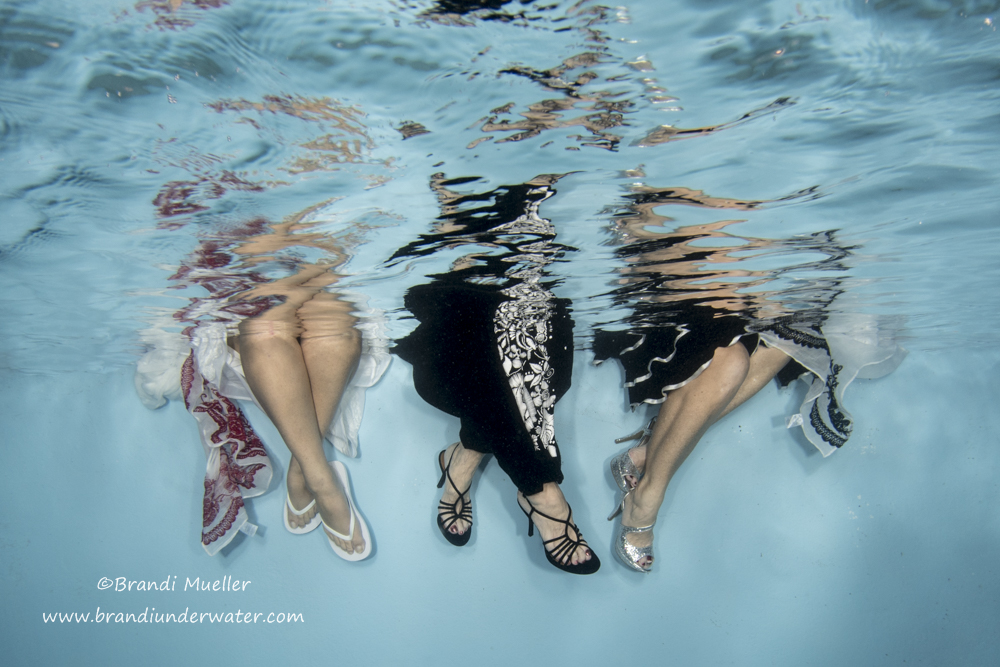
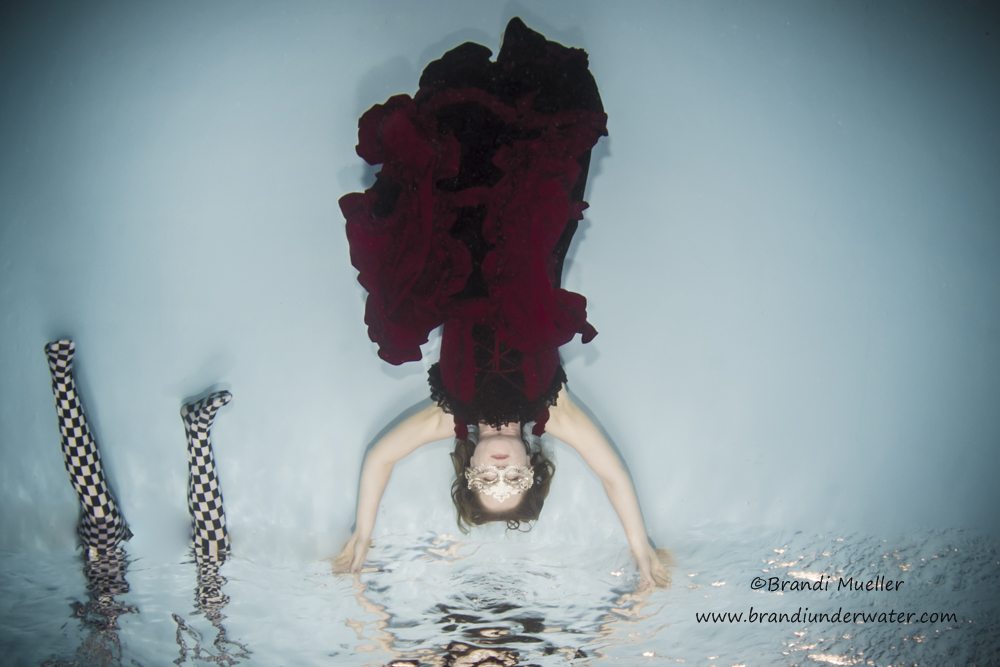
pool session4
"I’ve been so lucky to have some amazing friends who are willing to dress up and hold their breath in the pool for the sake of photography." © Brandi Mueller
“I’ve been so lucky to have some amazing friends who are willing to dress up and hold their breath in the pool for the sake of photography.” © Brandi Mueller
 
 
For more of Brandi’s work, visit her website, Facebook or follow her on Instagram

Jill Heinerth: Becoming a Tek Diver

0
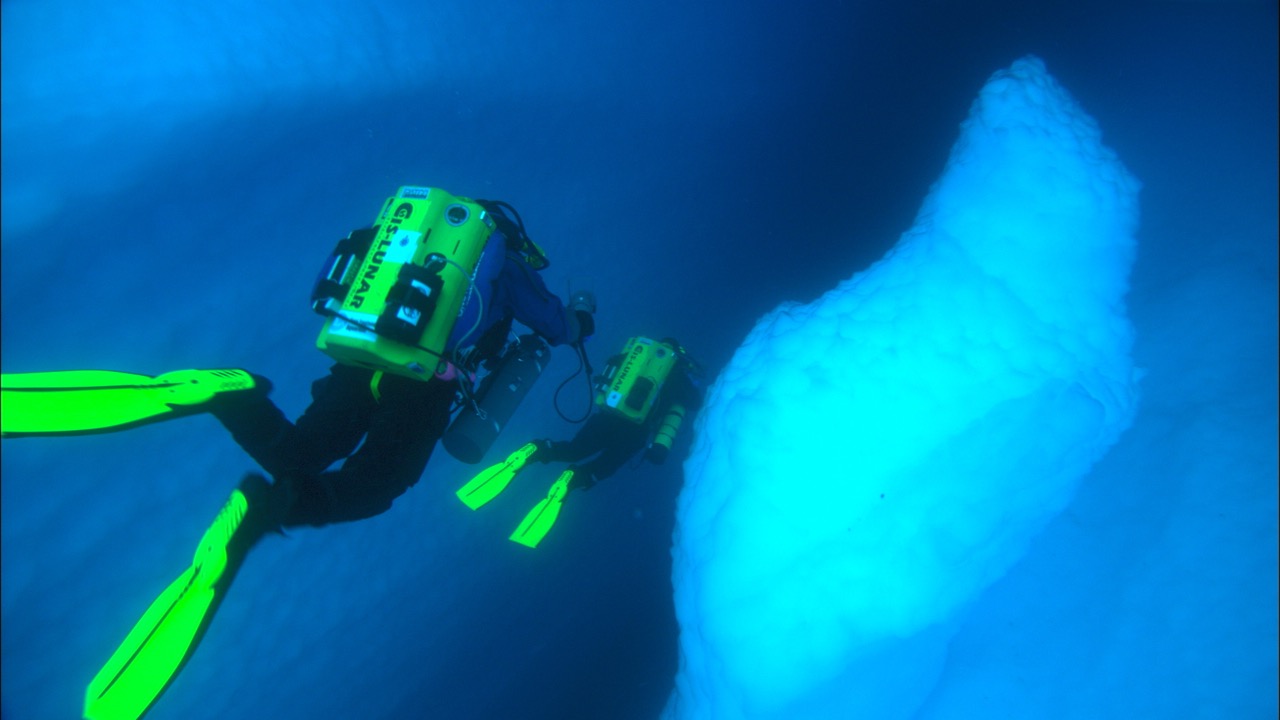
Inside an Antarctic iceberg for National Geographic © Wes Skiles

For those tormented with that perpetual itch for things remote and seemingly out of reach, the ocean provides the ultimate test of endurance. Fronting this incredible exploration movement is the discipline of technical diving, allowing those who are up to the challenge to descend deeper, journey longer, and visit places few have ever been.

From being stuck inside an iceberg to discovering ancient human remains deep in caves, Jill Heinerth holds a career of accolades and challenges that have labelled her as one of the greatest explorers of our time. UW360 caught up with her to discuss her journey as a tek diver, and what it takes to become one:

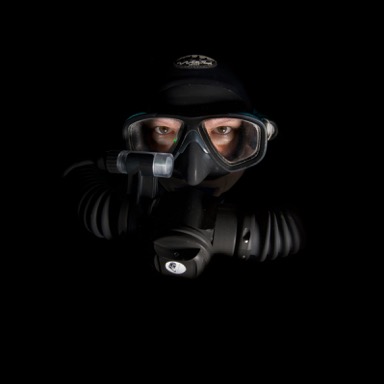
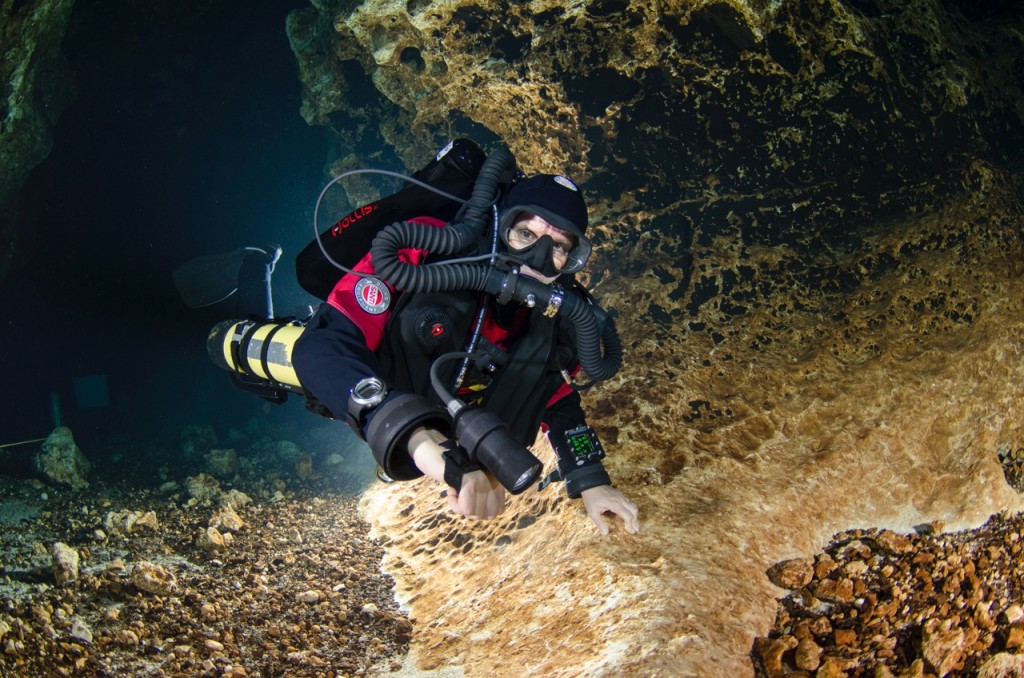
A shameless Selfie in closed circuit rebreather during decompression
A shameless selfie wearing a closed-circuit rebreather during decompression

How long have you been a tek diver?
The term “tek diving” took hold in the early 1990s when Michael Menduno was trying to describe the outliers and explorers in his magazine AquaCORPS. I suppose my real tek focus was spawned at that time.

What initial steps did you take to become one?
Frankly, I did not know we were doing anything different or was not even aware that we were some sort of subgroup of divers. In general, I was training, collaborating with others and exploring.

And any initial challenges?
The biggest hurdle was that as a young woman, I was sometimes pulled aside and told that I must be in the wrong place! Women were not always welcomed into the extreme circles and at times I was told that I was “going too fast” or was “too big for my britches”.

"Women were not always welcomed into the extreme circles and I was told that I was 'going too fast' or was 'too big for my britches.'" Jill completing the deepest manned dives ever conducted in Bermuda during an NOAA Project
Jill completing the deepest manned dives ever conducted in Bermuda during an NOAA Project: “Women were not always welcomed into the extreme circles and I was told that I was ‘going too fast’ or was ‘too big for my britches’.”

What made you want to become a tek diver?
I never aspired to be a tek diver. I aspired to explore places nobody had been before and solve problems that nobody had considered. The technical aspect of my diving was the problem-solving part… What will I need to help me achieve a specific goal? How can I do this safely?

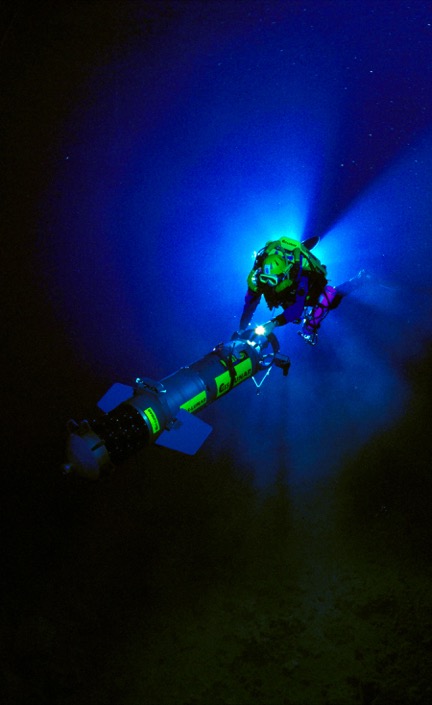
Driving a Digital Wall Mapper in 1997. © US Deep Caving Team
Jill driving a Digital Wall Mapper in 1997 © US Deep Caving Team

What is the most exciting experience you have had underwater?
Perhaps diving inside an Antarctic iceberg and delving downward through tunnels to discover an ecosystem of life thriving in the ripping current. That was really special.

Have you ever encountered any “extreme dangers” when diving?
Certainly. I face danger on a daily basis. However, I like to think of myself as risk averse. I’m not in it for the adrenaline. I’m in it for discovery and getting home safe at the end of the day. I have been stuck inside an iceberg pinned down by current, trapped on the wrong side of a buddy wedged in a cave, I have removed the bodies of dead divers from caves and dealt with myriad equipment failures in terrible places, from an exploded battery in my rebreather at 300 feet to driving a diver propulsion vehicle that is stuck on full speed in a delicate cave.

The best site you have dived?
I truly love the Pacific Northwest of Canada on the north end of Vancouver Island. Pure magic.

The most amazing find in a cave?
We have found many human remains in caves in Mexico but one stands out as bizarre since it was perhaps 3,000 feet from an entrance. Presumably this ancient person walked into the cave over 13,000 years ago according to scientists… an early cave explorer perhaps!?

Jill diving near her home at Devil's Ear Cave © Mark Long
Jill diving near her home at Devil’s Ear Cave, Florida, USA © Mark Long

What does a tek dive offer that a typical recreational dive does not?
A recreational diver can surface at any time without delay. A technical diver has a far greater range of depth and penetration into caves, wrecks or other overhead spaces. Of course, the tek diver needs a lot more gear redundancy and training to deal with the fact that they have a ceiling over their head, either real or decompression-related.

As an underwater photographer and filmmaker, what are the challenges of underwater photography with tek diving?
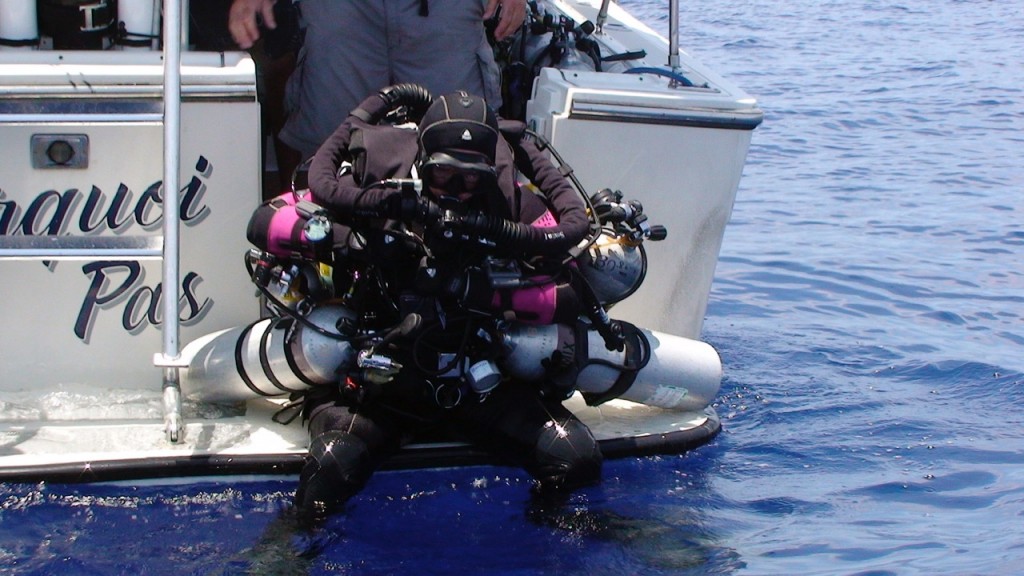
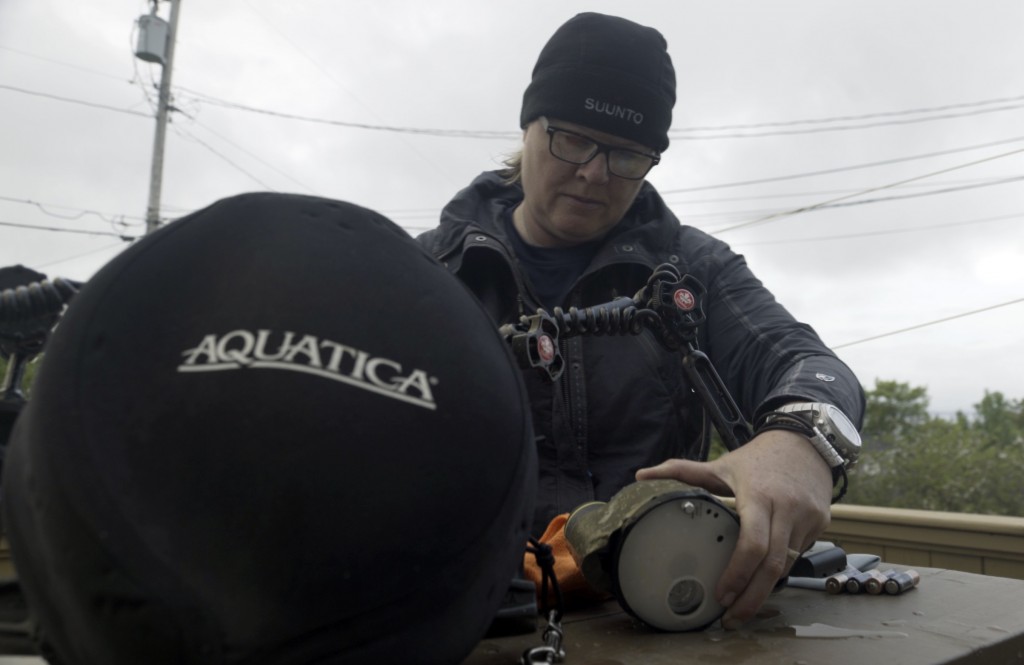
There is a ton of gear to deal with on a technical dive. Add a camera system and lights and you are well burdened. You must also stay extremely vigilant regarding monitoring your life support. Shooting is a focused activity that is extremely task loading.

"There is a ton of gear to deal with on a technical dive. Add a camera system and lights and you are well burdened." Jill preparing camera gear
Jill preparing camera gear: “There is a ton of gear to deal with on a technical dive. Add a camera system and lights and you are well burdened.”

… and the rewards?
I get to bring home shots and sequences of things and places that nobody has ever seen. It is challenging, but the rewards are incredible.

Aside from photography, what diving equipment do you use?
I specialise in using closed-circuit rebreathers. For over 20 years now, this has been my gear of choice for deep and lengthy excursions.

What does it take to become a tek diver?
The first step to becoming a tek diver is to develop the right attitude toward diving and training. Be Patient. The process takes time and tenacity. Dedicate yourself to disciplined diving and good safety protocols and be happy to sit out a few dives when everything is not quite right.

Becoming a tek diver requires a ton of diving and repetition. It is imperative to own all of your own technical diving equipment so that it fits properly and is well maintained. That means the second step is to save some money to slowly acquire proper gear such as a double tank set, side-mount gear or closed-circuit breather.

Finally, make a training plan beginning with fundamental techniques of good buoyancy and skills wearing technical diving gear to decompression procedures and a slow progression to techniques needed for deeper dives and perhaps mixed gas use.

The process will take years of repetitive diving and practice and a slow progression through training.

What drives you to continue to explore these unchartered places?

There is still so much to see. I don’t think my wish list will ever be fulfilled!


How to become a tek diver

If you want to break out of your NDLs and take your diving to the next level, there are a number of ways you can make your foray into the world of tek diving – it all depends on where you want to go with your underwater exploration, and how you want to get there. Here are some of the entry-level courses that will let you start extending your bottom time by making planned decompression stops:

GUE-Logo-transparent

GUE TECHNICAL DIVER LEVEL 1

What it lets you do:
• Become familiar with the use of different breathing and decompression mixtures
• Expand on the essential skills required for safe technical diving

IANTD_Logo_small

IANTD ADVANCED NITROX DIVER

What it lets you do:
• Qualifies you to dive to 42 metres and do decompression stops required dives up to 15 minutes
• Further develop diving skills and provide a greater understanding of the EANx concept of diving (the programme employs EANx mixes up to 1.5 PO2)

Logo_of_PADI.svg

PADI TEC 40 DIVER

What it lets you do
• Gain experience and begin building the skills you need to continue your tek diver training
• Qualifies you to make limited decompression dives to 40 metres

SSI_LOGO_Horizontal_RGB_Black

SSI EXTENDED RANGE NITROX

What it lets you do:
• Dive to 40 metres using nitrox and 15 minutes of accelerated decompression using one stage decompression gas (oxygen)
• Continue to SSI XR Extended Range and XR Limited Trimix courses

TDI-logo

TDI DECOMPRESSION PROCEDURES DIVER

What it lets you do:
• Conduct decompression diving activities without direct supervision provided the diving activities and environment approximate those of training
• Enrol in TDI Advanced Nitrox, TDI Extended Range, TDI Advanced Wreck, TDI Trimix courses


To find out more about Jill and her work, click HERE.

Rise of the Mermaids: Understanding the Latest Underwater Trend

0
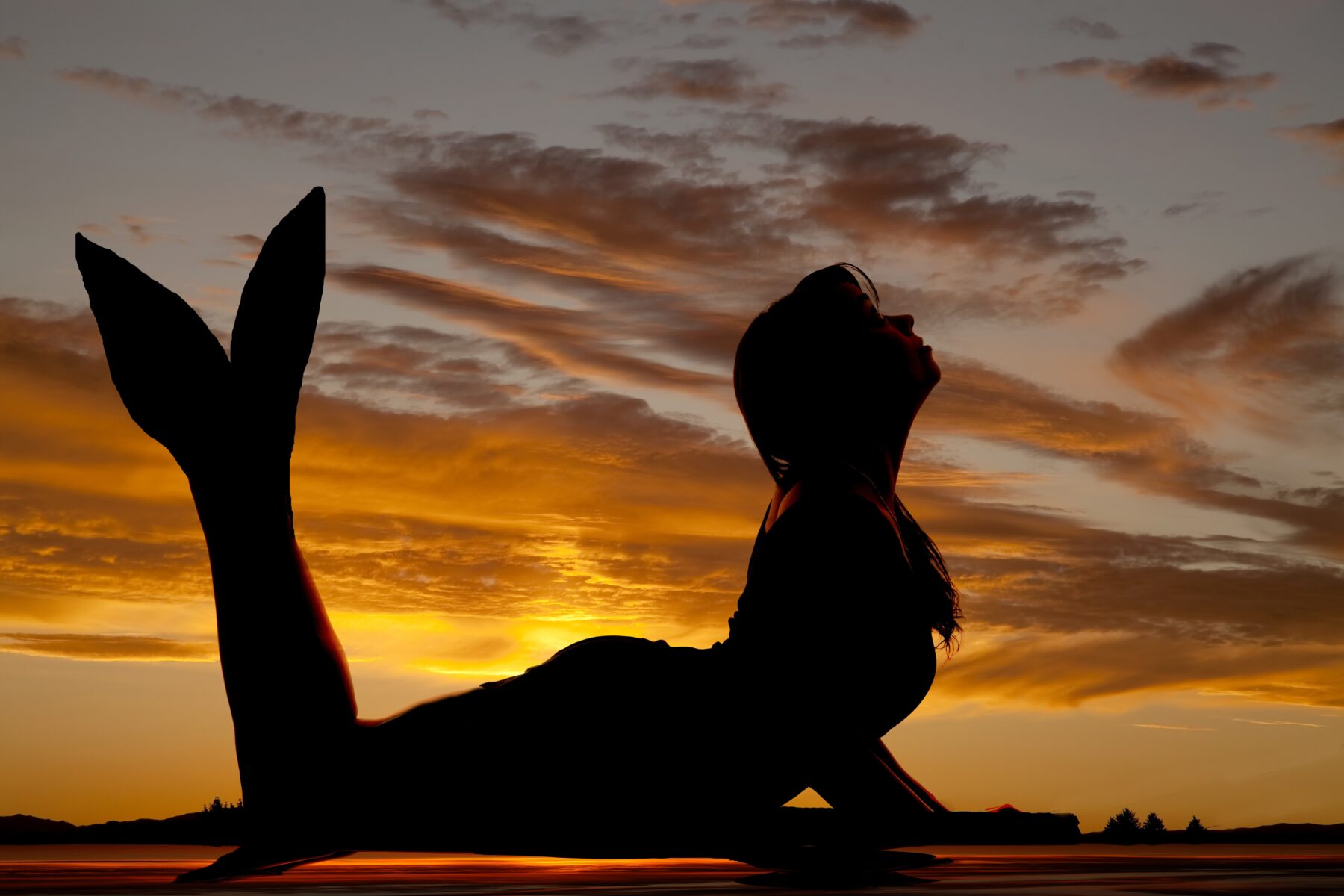
The silhouette of a mermaid in the sunset. © Alan Poulson

In-house writer Amanda Yap picks apart the recent rise in mermaids…

Mermaids are glorified mythical creatures with soulful singing voices that echo across the oceans. Their upper body is that of a female, while their lower body is a fish tail. Historically, mermaids have been presented as seductive sirens that lure sailors to their watery deaths, but arguably Disney’s introduction of Ariel (The Little Mermaid) reignited a desire in children to exude that air of beauty and gracefulness, as only a mermaid can. This fantasy has now been brought to life: Teaching proper swimming techniques while wearing the realistic fin, designed to allow aspiring mermaids – and mermen – to swim faster. For those, like me, who question the seemingly unnecessary additional elements of this unique style of swimming, we are about to find out what makes being a professional mermaid so appealing.

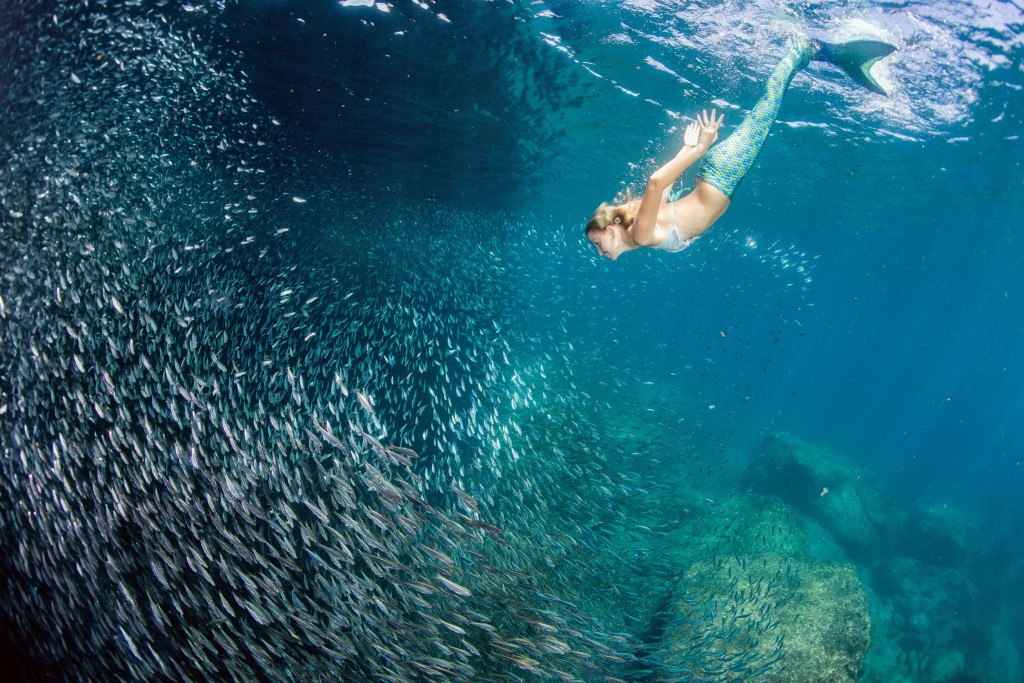
"Most mermaids are qualified freedivers, which means they are exposed to competitive breath-holding whilst swimming great distances without re-surfacing at any point in time." © Andrea Izzotti
“Most mermaids are qualified freedivers, which means they are exposed to competitive breath-holding whilst swimming great distances.” © Andrea Izzotti
"Mermaiding" has its origins in ancient Greek mythology © 123rf.com
“Mermaiding” has its origins in ancient Greek mythology © 123rf.com

“Mermaiding” involves elements of freediving and physical training

Swimming like a mermaid doesn’t just mean wearing colourful fins and frolicking about in the water. This curious activity could very well be the next fitness craze – working the core muscles, avoiding the “burn” because you are too busy swimming. Furthermore, it trains one’s physical stamina, especially the strengthening of the lower body from the abdomen to the feet, using the dolphin kick to swim forward.

As for submerging for more than three minutes without looking pained or uncomfortable – this is also another hurdle mermaids must overcome without the help of scuba gear, a feat that people often underestimate. Most mermaids are qualified freedivers, which means they are exposed to competitive breath-holding whilst swimming great distances. Having this skill gives them greater mobility and visibility in the water as they perform.

The final qualifying factor for becoming a mermaid is the art of appearing graceful and beautiful, just like in those fairy tales. It also takes a certain amount of skill and endurance to control body movements, as well as the self-confidence to make the performance look believable. 

The art of performing

Performing on land is passé; the real challenge comes when the performance is underwater. The art of appearing serene and completely at ease in your own skin while swimming with a tail (aka monofin), while not looking like a blue-faced, oxygen-deprived extra from Titanic, is one of the aspects that are often overlooked. Mermaids are used as underwater performers to add to the magic and aesthetics of underwater exhibitions like  ADEX (Asia Dive Expo). Just like any professional performer, being a mermaid is a serious occupation where maintaining full control of your body and a wet 15-kilogram tail is a constant chore. What do their performances entail, you may ask? It involves synchronised swimming and various tricks, from doing back flips and floating on their backs to blowing bubble hearts for entertainment.

And the challenges don’t end there. Once these mermaids go back to being ordinary humans, they’ll inevitably have a raft of earthly ailments to deal with: sunburns, blistered toes, sore muscles, bloodshot eyes, and even bouts of flu, because of the long periods in cold water. So what makes it all worth it? Answer: The wonderment of their audience as they are transported to this imaginary realm. For these mermaids, their simple hope is that people treat their passion with the same respect and professionalism as they do with other occupations, and encouragement that a dream can come true when one acts on it.

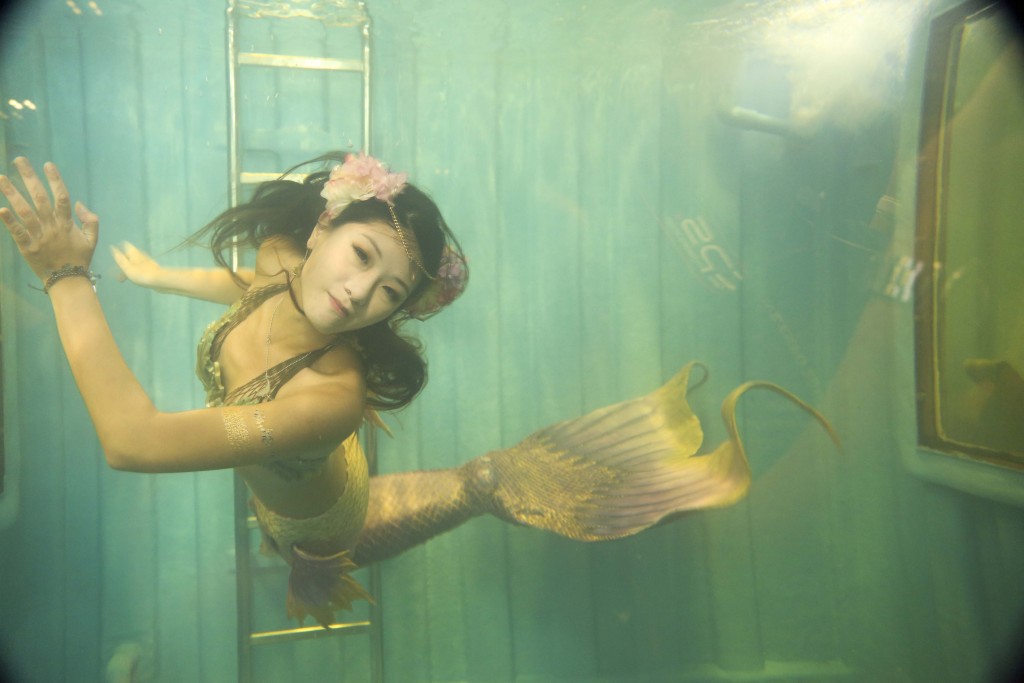
Hidy Yu, Cara Keilani and Dada Li – the mermaids of ADEX Singapore 2016
Hidy Yu, Cara Keilani and Dada Li – some of the mermaids at ADEX Singapore 2016

Feeling empowered – Initiate climate awareness and self-confidence

As a mermaid, attracting business is not all about beauty and entertainment. Character also plays a pivotal role in securing bookings, what kind of impression to portray and what kind of values you would like to impart. It may seem unimportant since it’s all part of the act, but from the public’s perspective, especially with children being a significant component of an audience, moral standards have to be upheld.

As ambassadors of the ocean, mermaids also hope to bring about awareness of the ocean and its inhabitants. While facing a crowd of children at a party, founder of Tiggs Tails, Fifi Fogg, will show the rubbish that’s typically found in the ocean, explaining how each object can be hazardous to marine animals, for example, how turtles mistake floating trash for jellyfish and eat it. Urging people to spare a thought for the oceanic world is all part of a day’s work for mermaids. They gain contentment and a sense of achievement playing the role of a mermaid with a voice that represents marine life, to save the many vulnerable creatures from joining the extinction list.

Finding their own bubble of serenity

As humans, we all need our “alone time”, and it’s no different for mermaids; their comfort zone happens to be underwater where the noise of the bustling modern world cannot reach. Without the burden of scuba gear, their senses are unhindered, allowing them to see the aquatic universe and admire its fascinating inhabitants. Their deep-breathing techniques allow them to still their minds, connecting them to their underworldly surroundings.

Joyce Ng in the famous ADEX Mermaid tank
Joyce Ng in the famous ADEX mermaid tank

It is not a cushy 9-to-5 job that earns big cash, but mermaids are as deeply committed to their profession as anybody. It’s their mission to keep the passion and love alive so that it can spread to others around them, as well as do their part to protect the world’s oceans and its inhabitants. For the naysayers, this swimming of a different form will quickly die out after people tire of their childhood fantasies. However, whether “mermaiding” is destined to become the next fashion in extreme sport, only time will tell.

The Metal Diving Suit That Reached the Sea Floor

0
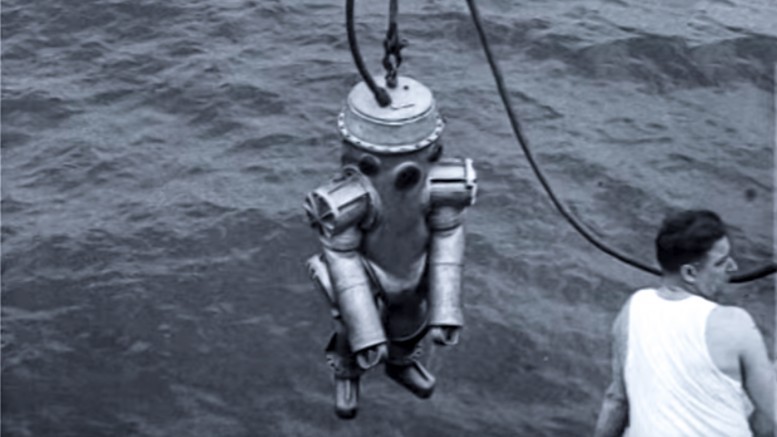
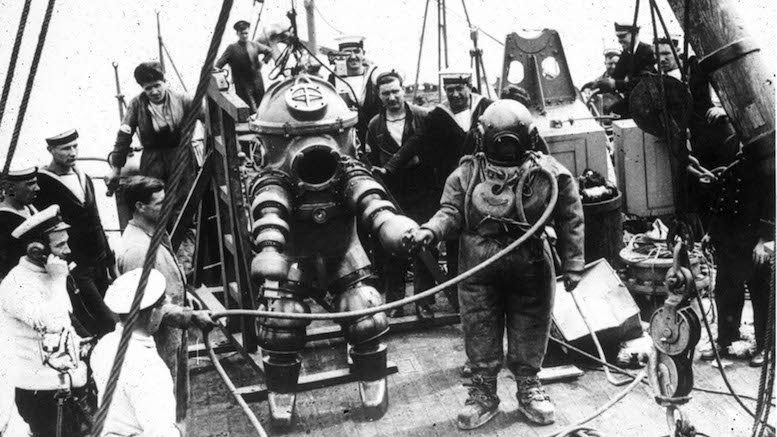
"Designed to explore the deep sea caves and the hulks of sunken ships, the suit was robust and bulky in design." © British Pathe/ Youtube
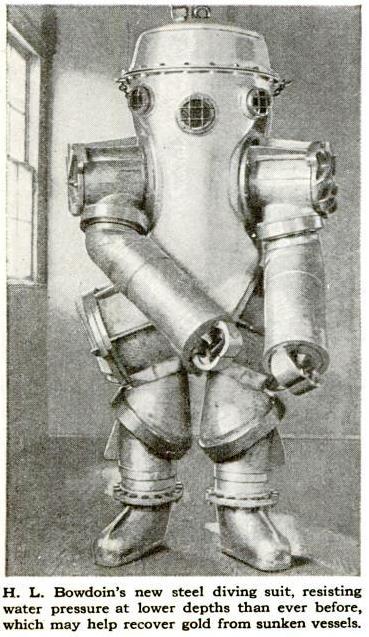
"The suits and equipment have looked nothing short of terrifying." Source: Popular Science, August 1926
“The suits and equipment have looked nothing short of terrifying.” Source: Popular Science, August 1926

What we’ve come to realise through researching into the history of diving is that the suits and equipment have looked nothing short of terrifying. Last week, we brought to light the post-apocalyptic style of Leonardo da Vinci’s diving suit, and now we are introducing Harry L. Bowdoin’s “submarine armour”. Looking like a cross between a Dalek and the Tin Man from The Wizard of Oz, this leaden suit could be lowered to depths of 120 metres and withstand incredible water pressure.

Designed to explore deep-sea caves and the hulks of sunken ships, the suit was robust and bulky in design. It allowed Bowdoin to descend to depths never before reached by divers and enabled him to remain below, on the sea floor, for longer periods.

Inside his miniature submarine, Bowdoin could use gears and levers to move his arms, legs and body freely and was nimble enough to be able to pick up small objects. Bowdoin filed his metal suit patent in 1914, and it was granted in 1915. By 1918, he had completed his invention, after working on it tirelessly in a little workshop opening inside a dance hall, and that same year he tested the suit before groups of engineers and naval experts.

The application for patent of "Submarine Armor" Source: Daily Star, March 30, 1931
The application for patent of “Submarine Armor” Source: Daily Star, March 30, 1931

For the deep-sea tests, Bowdoin’s suit was lowered, without an occupant, to test if the design could withhold the pressure at 120 metres. It did, and was then tested with Bowdoin himself inside to a dangerous 60-metre depth somewhere off the Jersey coast. Quite incredibly, Bowdoin was able to walk on a sea ledge with the air being pumped into his suit from above, and he remained there for around 45 minutes. To combat the discomforting issue of not being able to see through the darkness at that depth, the latest lighting device of the time, a “special lamp”, was installed in his diving helmet over his head, enabling him to see clearly for up to seven metres.

The suit and Bowdoin gained fame with an attempt to salvage the sunken treasure of Spanish gold and jewels from the Golden Hoard of Davy Jones, which was believed to be worth more than USD80 million. Supported by “men of wealth”, the expedition aimed to have Bowdoin descend to the seabed in his suit and retrieve the many treasures as well as study the mysterious realm below.

The outcome of the expedition isn’t known, and little further information has been printed on the suit’s design.


Related articles:

With a leather cloth, a protective facemask and goggles, the suit was attached to a long snorkel made of bamboo which ran up to the water’s surface. © Wikimedia Commons

Da Vinci and His Diver Army


6 of the Most Influential Deep-Sea ExpeditionsTritonia_Lusitania_1935

8 Incredible Facts About Fish Eyes

0
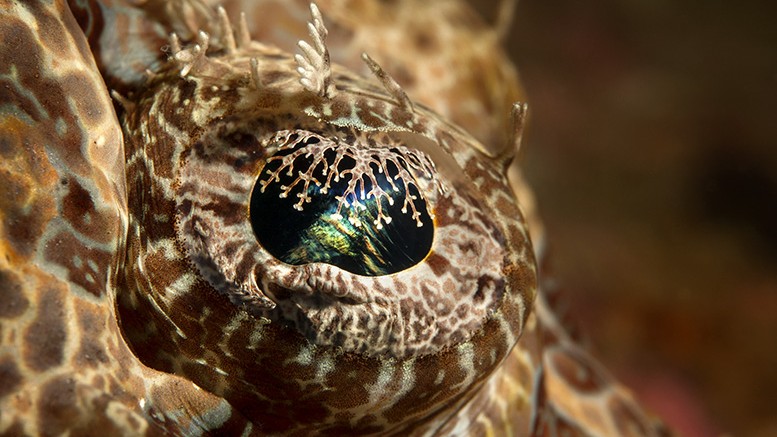
The eyes of the crocodilefish, Cymbacephalus beauforti, have frilly iris lappets, which help break up the black pupil of the fish, and thus improve its camouflage © Umeed Mistry

The bustling coral seascape appears a very different world for a fish—less colourful than that which we humans see, and for good reason. We bring you eight incredible facts about fish eyes:

Some can detect ultraviolet light

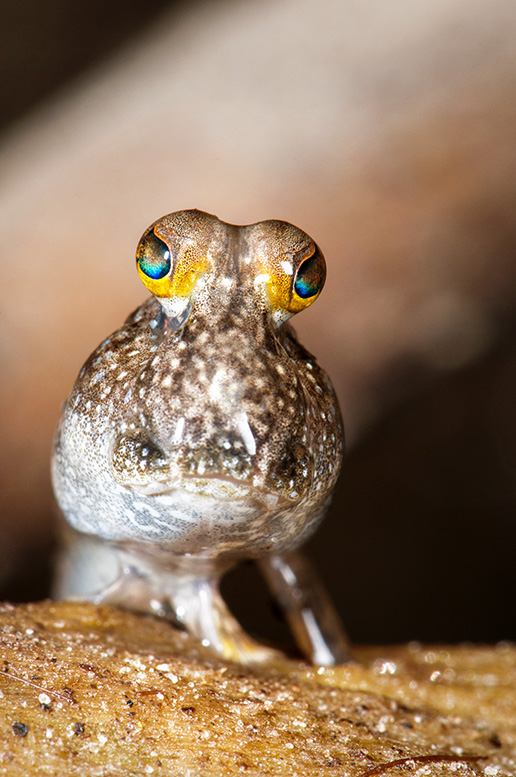
The eyes of the mud skipper are actually better adapted to see in air than water © Umeed Mistry
The eyes of the mudskipper are actually better adapted to see in air than water © Umeed Mistry

At least 100 species from 26 fish families can detect ultraviolet (UV) light. Several species are adorned with colours and patterns that reflect UV and can only be seen by fish equipped with eyes possessing the necessary light-sensitive pigments. Some examples are threadfin butterflyfish, Chaetodon auriga (on its dorsal fin-edge) and coral grouper, Plectropomus leopardus (markings on the flank).

Colour vision allows them to communicate

Colouration and colour vision help fish communicate with competitors, allies and mates, hide from predators, and search for prey. UV vision is thought to enhance these functions further by:

(a) detecting predators and prey, since objects appear in much higher contrast against their backgrounds when seen in UV
(b) identifying others of the same species (two-stripe damselfish, Dascyllus reticulatus)
(c) coordinating with neighbours while schooling (green chromis, Chromis virdis)

Some are just like us

Like in most vertebrates, a fish eye contains light-sensitive visual pigments. Each pigment absorbs a different wavelength from the spectrum, allowing the beholder to perceive different colours.

They change with the times

Depending on which wavelengths of light are able to penetrate through the water, light determines to a significant degree what colours fish can see and how their own colours look to the eyes of their neighbours. For example, moving from coastal waters to further offshore, the retinal pigments of snappers turn from being green sensitive to blue sensitive, a change reflecting how the colour of water changes across these parts of the ocean.

It matters where they live

Coral reefs occur in shallow seas where most wavelengths still penetrate and here fishes see a relatively wider range of colours from the visible spectrum (compared to deep-sea fish), including ultraviolet (UV), which the human eye cannot.

To them, a coral reef is more minimalism than colourful post-modernism

Humans tend to see more of the long-wavelength colours (reds, oranges and yellows) while missing the different hues of blue, while fishes pick up more easily on the latter. A coral reef may therefore not appear as vibrant to a fish as it does to us. In fact, to the eyes of a fish, yellow is perhaps an effective colour to camouflage with. For example, some fish like the regal angelfish are coloured in closely spaced yellow and blue stripes – a combination that to us would appear conspicuous. To another fish on the reef, yellow would blend in with the disruptive background of coral. Fish also have relatively poorer abilities to resolve fine patterns compared to humans. If a regal angelfish were to dart through the water rapidly, the combination of yellow and blue would effectively appear grey.

Sharks, like this nurse shark, are known to have better colour vision than other fish © Umeed Mistry

Some have telescopic eyes

Extraordinary visual adaptations are also seen in the deeper seas, where fishes are equipped with large, tubular lenses with only rod pigments to see in extremely dim light (comprising of largely short-wavelength blue light). Eyes placed on top of the head allow them to detect the slightest movements against the gloom above them. Some fishes like the telescopefish, barreleye and sabretooth even have fine-tuned telescopic eyes.


AD 140 CoverTo read more, purchase Asian Diver “Colours of Asia”…

This article was written by Chetana Purushotham and images are by Umeed Mistry

shutterstock_42695098

Revillagigedo Archipelago: The Top Place for Big Encounters

0
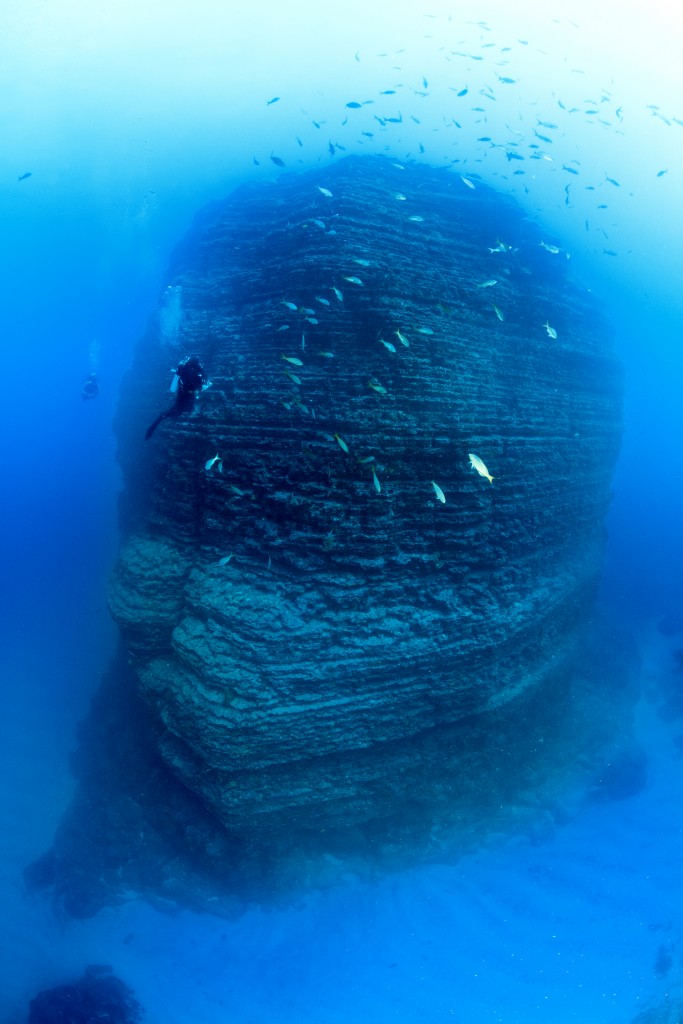
"The quality and quantity of life we saw were astonishing" © Franco Banfi


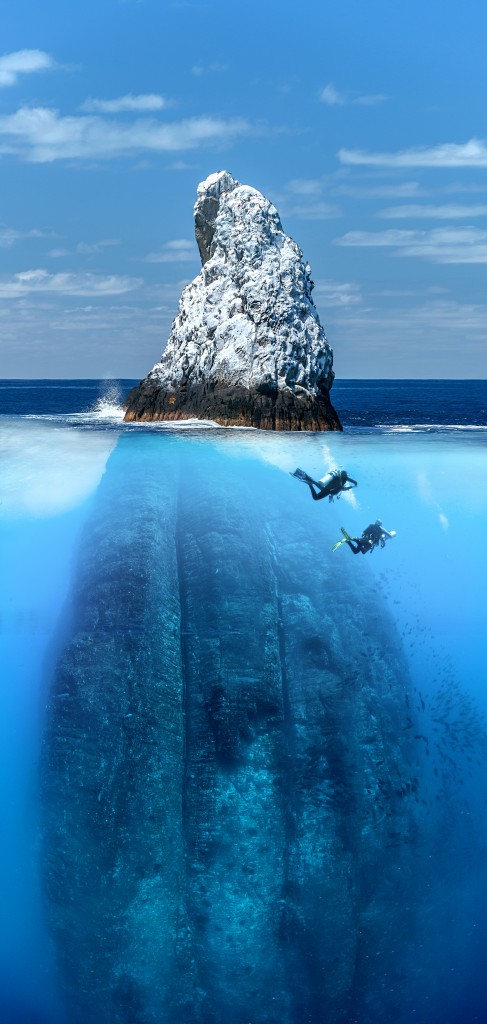
Roca Partida, 95 kilometres from San Benedicto and an underwater hotspot © Franco Banfi

It is said the world is a smaller place these days. The Internet allows us instant connection with people and news half a planet away and affordable, convenient air travel means regions once remote and impossible are now within reach. However, happily there are still some frontier trips to be had and none more so than a dive expedition to the Revillagigedo Archipelago, far off the coast of Mexico.

The arch of Revillagigedo is part of an underwater volcanic structure called Las Montañas de los Matematicos. Some peaks reach the sea surface forming the four islands of Roca Partida, Socorro, San Benedicto and the even more remote Clarión. Together with the more famous island of Malpelo, the Cocos Islands and the Galápagos Islands, Revillagigedo delimits the marine area known as the Eastern Pacific Triangle.

Our adventure began at the port of Cabo San Lucas at the southernmost tip of the Baja California Peninsula, itself rated as one of Mexico’s top five holiday destinations. But we were heading further afield, away from mass tourism, away from the relentless march of buildings and people and cruise ships. Our crossing took an incredible 25 hours, showing just how off the grid this destination is. The time at sea can vary depending on weather conditions but, despite being in open ocean, we were blessed with clear blue sky and calm seas. We could not believe the surface was mirror calm, broken only by leaping dolphins and the reflection of boobies flying around.

We were on the Solmar V, a luxurious liveaboard with all possible comforts. There is little to do on the crossing than relax, get to know your fellow travellers, organise your equipment and listen to the instructional briefings by the crew. All this wrapped around eating delicious food and snacks. Wave after wave, mile after mile, the bow of Solmar V ploughed the water of the Pacific Ocean 390 kilometres southwest-wards.

Thanks to the ocean currents and water masses channelled by the underwater mountain chains, an incredible hub of marine environments is created here. The underwater fauna is abundant indeed. This very special area was awarded marine protected area status in 1994. Additionally, much earlier, in 1957, the Mexican government had already set up a naval base on Socorro Island, forbidding all unauthorised people from landing.

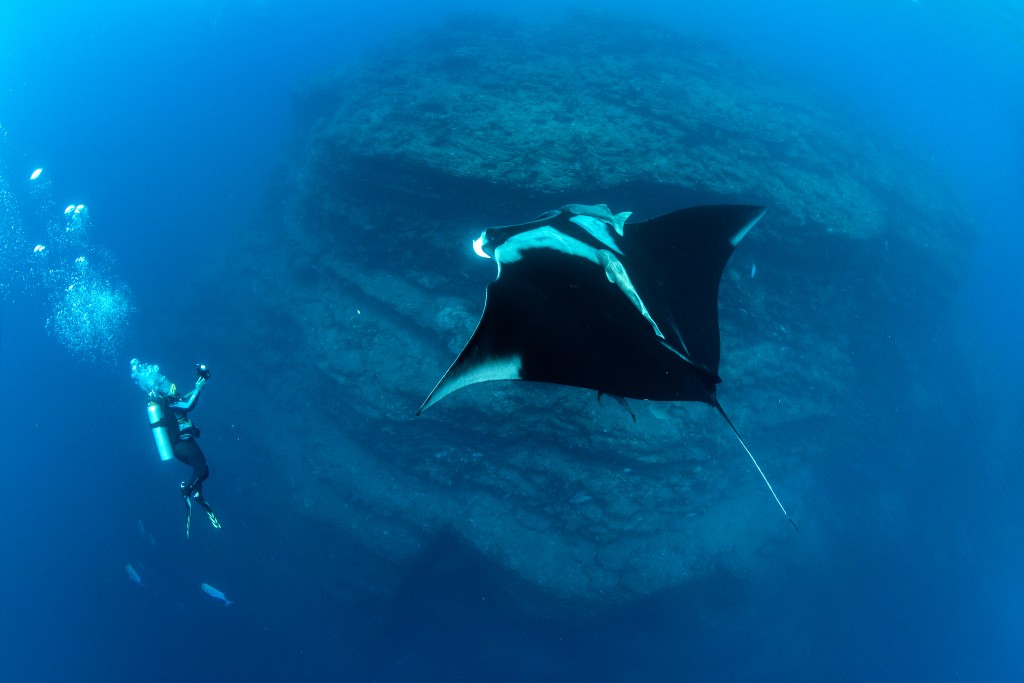
A diver has a close encounter with a giant oceanic manta © Franco Banfi

This act saved the wonderful natural ecosystem. The naval base controls the liveaboard dive boats, recreational fishing boats and the fishing industry, even though the resources are limited and the staff is minimal. Remoteness from the mainland, difficulty landing due to the rough coasts and the absolute prohibition imposed by the government all help maintain this as a unique wildlife reserve.

The ocean floors are volcanic soil, so there is no thin sand or suspended mud reducing visibility. Nevertheless, the visibility was not great for us because the abundance of plankton makes the water cloudy. But of course, this brings in the wonderful wildlife.

This is the kingdom of the magnificent giant oceanic manta, Manta birostris. Like other manta destinations, they gather here to feed and visit regular cleaning stations. However, the mantas of San Benedicto offer much, much more. They are not frightened by divers and actively seek out interaction with exhaust bubbles heading for the surface. I would not have believed this if I had not seen it for myself.

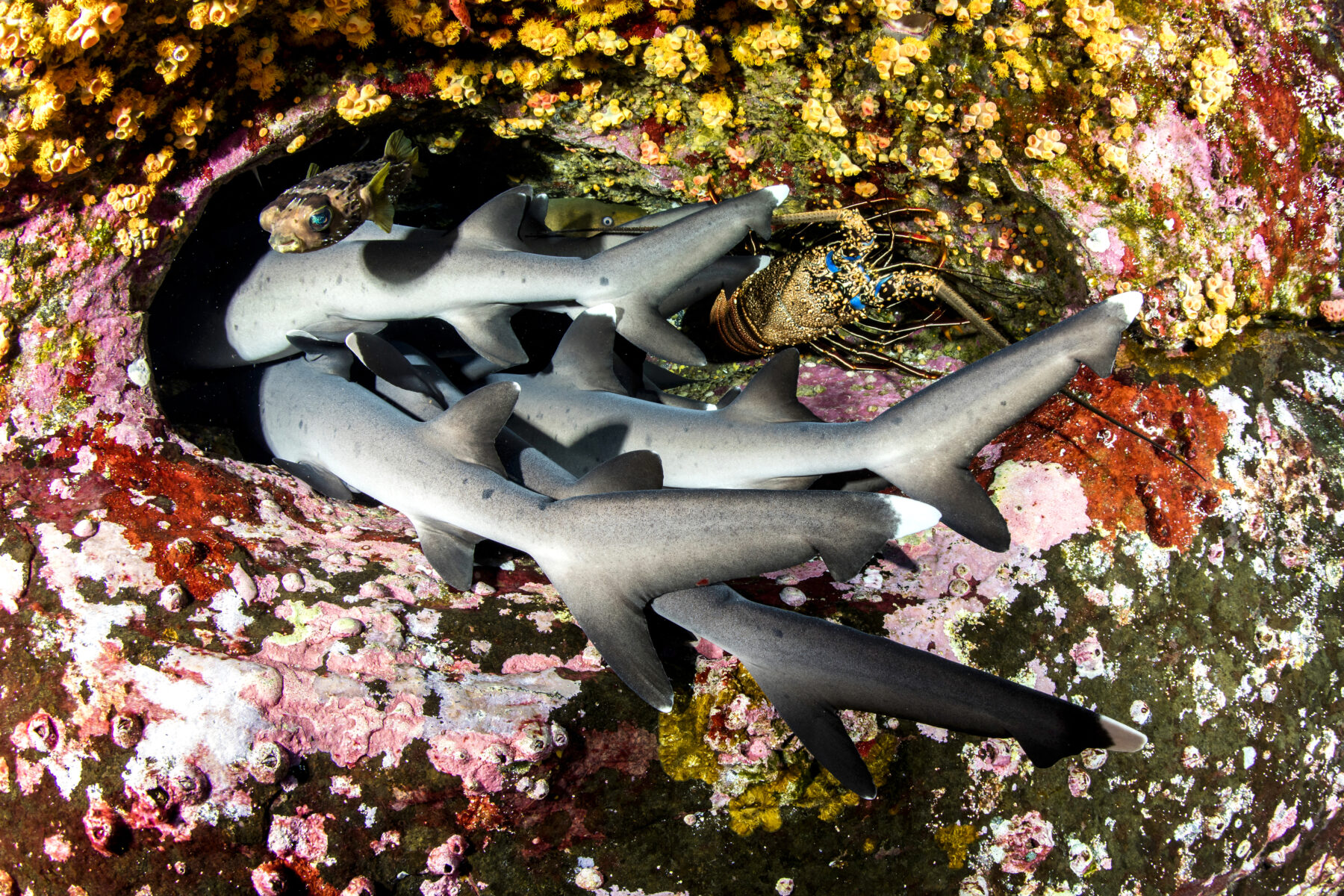
We arrived in San Benedicto Island in the afternoon, in time for a check-dive, if you could call it that. Because this dive, apart from the scarcity of depth and lack of current, did not flow like the usual, tedious checkouts. The bottom is formed from lava flows creating caves and ravines, while towards the open sea it slopes down to a sandy bottom with many blocks of rock. The quality and quantity of life we saw were astonishing: on the very first dive we met whitetip reef sharks dozing in a cave, rays swimming close to the sand, green morays, lobsters, triggerfish, Moorish idols and a fabulous number of other creatures.

"But we were heading further afield, away from mass tourism, away from the relentless march of buildings and people and cruise ships." © Franco Banfi
“But we were heading further afield, away from mass tourism, away from the relentless march of buildings and people and cruise ships.” © Franco Banfi

The two hotspots in San Benedicto are “El Boiler” and “El Canyon”, located at opposite sides of the island. The guides are able to choose the best spot according to the weather conditions, current direction and winds. The crew are extremely experienced and their guidance means the dives are as safe and enjoyable as possible. These sites’ well-deserved reputation mainly springs from the interaction between the giant mantas and the divers. There are many places in the world that offer manta dives but none is comparable to what we experienced here. We can confirm without any doubt that, in the realm of fishes, mantas are the most empathetic animals, in the same way that mammals are, with their natural grace and beauty, the flowing movements, the somersaults, the looping; a creature that combines the elegance and nimbleness of a teenager with the power and strength of an acrobatic jet.

Most fish are cautious and shy around divers, particularly if their equipment creates bubbles and noise. By contrast, the mantas of San Benedicto actively seek divers out and perform enchanting dances that only end for the lack of air in our tanks. They would stop two or three metres above our heads and delight in feeling the touch of the exhaust bubbles from our regulators. They literally “thrilled” when the fragile bubbles of air broke against the white surface of their belly and they clearly enjoyed the hydro massage. Then, each manta screened the group and selected one of us as a companion; it kept that diver a little apart from the group and performed a personal dance. With their powerful lateral fins, they determined the direction and intensity of the swimming, avoiding contact with other divers and the rocks on the bottom. We were stunned by this behaviour and in a dreamlike state, we handed over control of the dive and let ourselves be seduced by the whirls of the dance, forgetful of the time and air we were devouring to keep pace with our “partner” who, in turn, was luxuriously enjoying the bubbles breaking against its belly at as close a distance as possible.

An enormous sadness overcame us when, due to our human limits, we were escorted to the boat by two or three giant mantas who could not believe the encounter was over. Their charming and intelligent eyes scanned us with disappointment. From the bridge of the boat, we could see their dorsal fins ploughing the surface of the sea as they patiently awaited our return to the water.

There was nothing to fear. We were at 8 to 10 metres depth and 50 metres from the Solmar V, along the anch
or rope, and at any time we could climb on board, change our tanks and jump in again to this overpowering passion. Like Ferraris in a pit stop during a Grand Prix, on the boat all is streamlined and efficient. In a few minutes we rejoined our friends.


SDOP4coverTo read more, purchase SD OCEAN PLANET “Budget & Luxury”. Text by Sabrina Monella and images by Franco Banfi

shutterstock_42695098

International Coral Reef Symposium: ADEX Speakers Win Major International Awards

0

Held every four years, the ICRS is sanctioned by the International Society for Reef Studies (ISRS) and is the primary international meeting focused on coral reef science and management. The 13th Symposium, which was held in Hawaii, brought together around 2,500 coral reef scientists, policy makers and managers from different nations around the world to present the latest research findings, case histories and management activities, and to discuss the application of scientific knowledge to achieving coral reef sustainability. 

Founded in 1980 and with over 800 members, ISRS is the largest society of reef scientists in the world. The main objective is to promote the production and dissemination of scientific knowledge and understanding of coral reefs, both living and fossil, for public benefit.

ADEX 2016 Conservation and Scuba360 Business Forum speaker, Judi Lowe was awarded best PhD Candidate Presentation from around 500 presentations at the event held in Hawaii. Judi’s research thesis is “Dive tourism and its impact on integrated coastal management and livelihoods for artisanal fishers”. Judi’s research shows that best practice dive tourism can contribute to the conservation of coral reefs and reduce destructive fishing and overfishing in less developed countries around the tropics.  Judi’s model of sustainable dive tourism raises the importance of dive tourism as a private sector participant in the conservation of coral reefs.
 
Maarten De Brauwer, who was also an ADEX 2016 Conservation and Scuba360 Business forum speaker, received the award for best PhD poster presentation (those who don’t give talks submit posters and meet guests to talk about their research – giving the public the opportunity to ask researchers pressing questions face to face). Maarten’s research studies camouflaged critters that are crucial for muck dive tourism. He collaborates with universities and dive centres in Indonesia and Philippines to develop new methods to study these species, so we can protect them better in the future.

Relive ADEX Singapore 2016