Home Blog Page 176

The 48 Hours Project

0

The Maldives

Maldives has been in the dreams of any diver, sea-lover and newly married couple for many years and unfortunately for the past years also on the news for climate change & coral bleaching.

The country is one of the most dispersed countries in the world and is the smallest Asian country in area and the population is dispersed along 26 Atolls and 1,120 islands.

The islands sit atop a vast underwater mountain range in the Indian Ocean and the highest point is only 1.5 meters above sea level and this is why Maldives and other countries in the world have been in the news so much during the last Climate Change summit in France.

The Threats

Maldives depends highly on inbound tourism, around 700,000 people visit Maldives every year and around 15% of them (100,000) are divers. The country has been seriously affected by coral bleaching in 1998 and by the Tsunami in 2004. These were events that caused a significant drop in the tourist’s arrivals.

Although the Tsunami damaged the city, some villages and some hotels structures, most of this infrastructure damages could be easily repaired or rebuilt in a year time, while on the other hand the Coral Bleaching effects could take decades or centuries to recover due to the coral growth speed.

Some scientists say 90% of the Maldivian coral reefs were affected and large areas were completely lost reducing the income generated by visitors such as scuba divers and affecting the underwater fauna.

Specialist from all over the world as well as climate change scientists are predicting a similar if not worst El Nino for 2016 (April ~ May), the worldwide climate scenario is getting closer to what we have experienced just before the 1998 El Nino and this new one will have devastating effects.

Coral reefs are a colony of organisms, animals which depend on food = algae to survive, when coral “bleach” they are not dead yet, they are actually “starving” as the micro-algae’s which are their food are not available anymore – dead by the rise of the raise of the ocean’s temperature.

When the reef is not healthy anymore, algae is not there, coral’s are dying there is also no more food for other small fishes and therefore no more food for the larger fishes, gently but surely the reef dies and becomes a vast pile of brown coral skeletons.

No diver in the world wants to dive and experience this scenario, they tend to go to other places or simply stop diving at all disappointed of he saw, slowly the number of tourists, number of nights, and number of dive packages, dive gear and jobs start to fall.

Our goal is to raise sufficient awareness to avoid other El Nino to happen or at least to happen naturally way and affect less the reefs, our world our lives.

The Project

A group of divers has decided to do something about and if we cannot stop this nature’s act we can at least provide information and knowledge for scientists to reduce or minimize the effects and more important to raise public awareness to stop/reduce carbon emissions around the world.

Our mission will be to conduct a 48 hours duration dive at Maaya Thila in the North Ari Atoll on the south-west region of the Republic of the Maldives.

Although Ari Atoll is conveniently far from the country’s capital – Male, the atoll and its reefs receive a large number of visitors every year, being considered one of the Top 10 dive sites in the Maldives.

The team of eight professional divers from different parts of the world will install 5 underwater action sport wide-angle style cameras in GPS marked positions which will record for images for 48 hours nonstop. Our team of divers will make sure that the cameras are working and securely fixed on the reef without damaging or interfering with any marine organism.

The team will be taking turns to constantly monitor the cameras during the 48 hours dive and making sure they are recording without interference or technical problems. In case of any technical problems as well as due to battery life, the cameras will be replaced by same ones and on the same stop in order no to stop the footage.

The team will be equipped with CCR and open circuit equipment and high quality thermal and sun protection to avoid any risks associated to the large exposure to the pressure and sun.

With our 48 hours footage will be analyzing fauna movements, fish schools, sharks, turtles as well as vast areas of coral reefs, the images will be fed live on the projects’ website so people around the world will be able to virtually dive on a Maldivian reef at any given time no matter the time zone.

The data recorded will be sent over to different scientific institutions so to keep a visual data bank of the reef and compare to previous and future images/footages.

IUCN – International Union for Conservation of Nature through their office in Male will be one of the organisations that will publish the data produced during the project.

Asian Diver and Scuba Diver AUSTRALASIA magazines are some of the printed and online media which will be publishing articles in order to raise public’s awareness.

Other sponsors/partners on this project are: Turkish Airlines, Deep Blue Diving Services, Atoll Scuba, SSI and others are coming on board on a daily basis.

The Location

The 48 hours duration dive will be conducted at Maaya Thila one of the top 10 dive sites in the Maldives visited every year by hundreds of divers on February 26th through 28th 2016.

The spot was chosen due to its geographical location, variable currents allowing a large number of fauna to come closer to the shallow top of the reef and its reef formation.

The Team

Our team is made of some top-notch divers who have been working or living in the Maldives for decades and have logged in thousands of dives in the Maldives among them a good hundreds on Rasdhoo Atoll and Maaya Thila. They will be supervised by the two teams:

Mohamed Shafraz Naeem

Born in Maldives on December 17th 1975, Shafraz or Shaff has been actively involved with scuba diving since his early days, nowadays he shares his time between diving on CCR rebreathers and developing technical diving in the Maldives, as well as shooting pictures and videos. Some of his work has been published in different magazines and aired in TV channels around the world such as BBC, EDA, Asian Diver & Maldives Finder. He is also a SSI Instructor Trainer and has spent some time diving and teaching at the Maldives Military as a combat diver.

Marcelo Guimaraes

Born in Rio de Janeiro – Brazil on March 29th 1966, Marcelo has a degree in Marine Biology and has been a diving instructor since 1985, a NAUI Course Director, CMAS 2** Instructor and also a PADI MSDT he has been a diving instructor at the Brazilian Navy School since 1990 and have live and worked in the Maldives for 3 years and logged over 2,000 dives in Maldivian waters.

The Equipment

For such a complex event some high quality equipment will be needed as well as some infrastructure on the surface for safety and comfort of the divers team.

  • Live aboard vessel equipped with generators and water desalination unit
  • Diving Dhoni equipped with tanks, weights and air compressor
  • Personal Dive Gear and back up (wet suits, masks, regulators, BCD, fins & dive computers
  • CCR – Fully Closed Rebreathers
  • UW Sport Cameras and cables
  • Laptops and live-cam software
  • Dive Medical Team on stand-by
  • Sea Plane on stand by for diving emergencies

The Media

Facebook: www.facebook.com/Dive48

Twitter: @dive48maldives

Website: http://www.dive48.com

Instagram: https://i.instagram.com/dive48

The Sponsors

In order to be successful on our mission to generate public awareness we need to join forced with sponsors, partners and the public to be able to gather all equipment, people and structure we need.

Without them on board our goal will be hard or even impossible to achieve, we already have on board quite a few sponsors/partners, people who in one way or the other share the values, love and care for the ocean and their living creatures.

We would like to ask you to join our mission in a way suitable for you, there is no minimum, there no maximum, there is no too little, there is what each of us can put it and together we can make a difference.

We of course need funds to make it possible, but we also need equipment, media space, infrastructure, air tickets and so on, so each of you can participate in the way best suitable for you.

We will be waiting for your contact, the coral reef thanks you.
Tovatec Search Light Redesigned

0

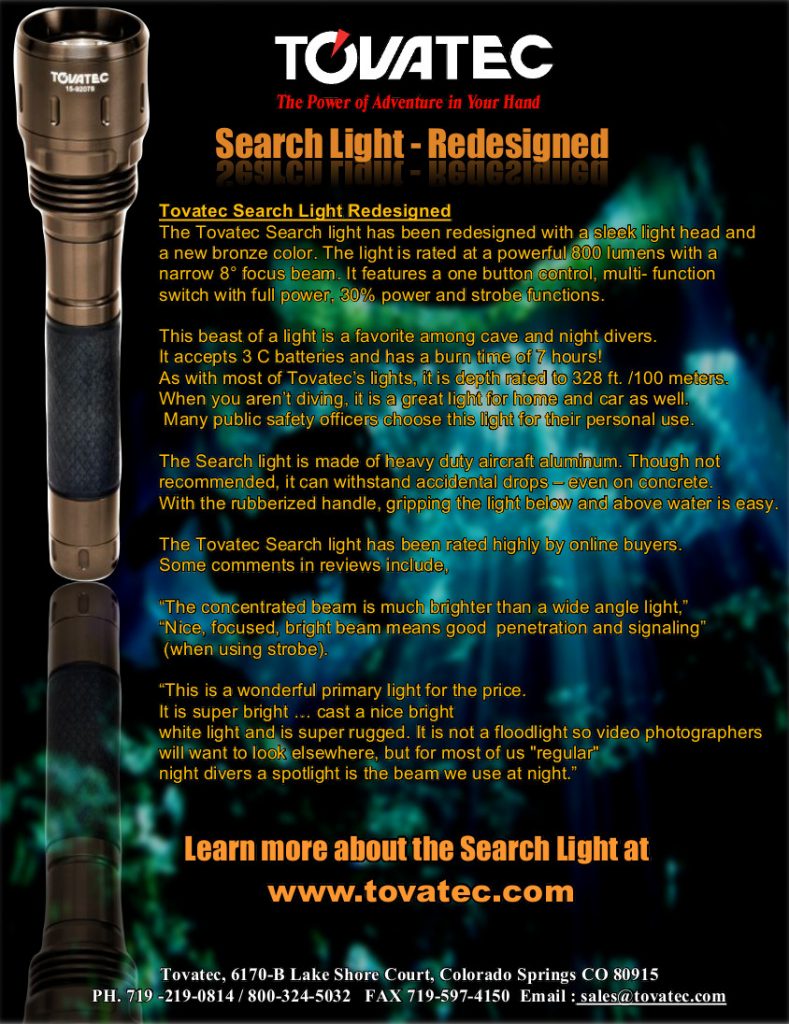
Into cave diving and looking for a strong underwater flashlight? Tovatec recently unveiled a redesigned Search Light SL1.

Redesigned with a sleek light head and new bronze colour, the torch even has a light rated at a powerful 800 lumens with a narrow focus beam. It features a one button control, multi-function switch with full power, 30 percent power and strobe functions. Already rated highly by online buyers, with favourable reviews. We bring you their press release:

tovatecsearchlight

‘Fluorescent Flashlights’: Newly Discovered Glow-in-the-dark Polyps Light up Snails in the Red Sea

0
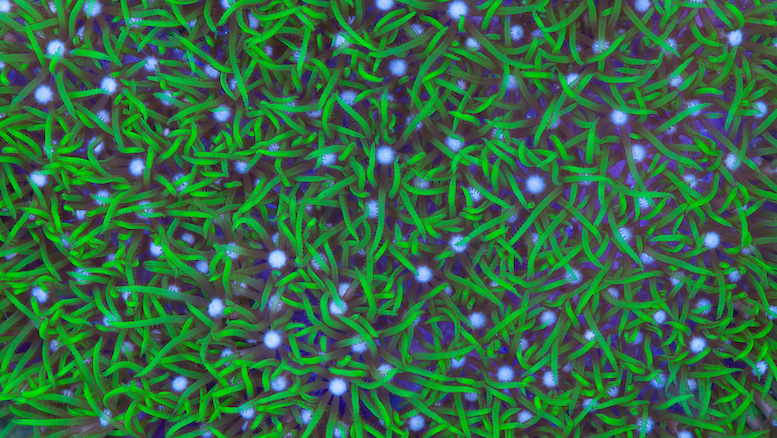
A mat of green star polyps encrusting a rock

In the southern Red Sea, scientists have discovered what could be a new species of luminous polyps that light up the mud snails they piggyback on. These polyps or sea hydroids most likely belong to the genus Cytaeis, a team of researchers from Russia and Japan write in a recent study published in PLoS ONE.

The newly discovered sea hydroids are tiny — about 1.5 millimetres in length — and live in colonies on the shells of the miniature Nassa mud snails (Nassarius margaritifer), forming what looks like green “fluorescent flashlights”, scientists say. Like the distantly related freshwater hydra, sea hydroid or polyp is a life stage of a group of small marine predators called Hydrozoa. So far, fluorescence has only been reported from the hydroids of six species, scientists write.

During the day, the Nassa mud snail buries into the sand and comes out only at night to hunt other marine creatures. It was during a night dive at Hindiya Reef on Farasan Islands, Saudi Arabia, in October 2014, that the researchers managed to collect 32 specimens of the mud snails. The tiny polyps were embellishing the shells of the snails.

“The gastropods were on the surface of the sandy bottom, actively burying into the sand in response to the blue light of an underwater flashlight,” the authors write. “The colonies of hydroid polyps were attached to the outer shell surfaces of actively moving N. margaritifer and were observed underwater and aboard the research vessel immediately after collection in petri dishes.”

The green glow of these polyps is localised around their “mouth”, the team found. Other known species of luminous sea hydroids have fluorescence localized on their tentacles or stalk or elsewhere. While species identification of hydroid colonies remains problematic, scientists say that the “species-specific fluorescence patterns may be a useful diagnostic tool in field identification and taxonomy.”

“The fluorescence can be useful for quick identification of hardly recognizable species and for the studies of ecological peculiarities and distribution of hydroids and their hosts – molluscs,” co-author Vyacheslav of the Lomonosov Moscow State University, said in a statement.

The ecological role of the fluorescence in Cytaeis however remains unclear, the researchers say. They speculate, though, that the fluorescence which is localized around the “mouth” of these polyps could be because prey are likely to be attracted to the tentacles and the mouth.

“If this is the case, the fluorescence of polyps could be utilized in sampling and study of nocturnal activity as well as in elucidating the distribution of the hydroids and their hosts,” they write.

Many questions still remain unanswered though. For example, many aspects of the Nassarius snails and Cytaeis hydroids association remains murky, the team says, including the “diurnal/nocturnal activity of the Nassarius snails and Cytaeis hydroids, host specificity, and intra- and interspecies variation of fluorescence of hydroids at different developmental stages.”

“Finally, the physiological state of Cytaeis hydroids and environmental conditions during which fluorescence is observed also require additional study,” they write.

Ivanenko added that many such species with unusual features could be lurking around in the shallow waters of seas, waiting to be discovered.

Citation:

Article published by Shreya Dasgupta, source: Mongabay

7 Top Tips to Achieve Great Wide-Angle Blue Shots

0

Text and images by Joel and Jennifer Penner, this article featured in SD Through The Lens (Issue 8/2015)

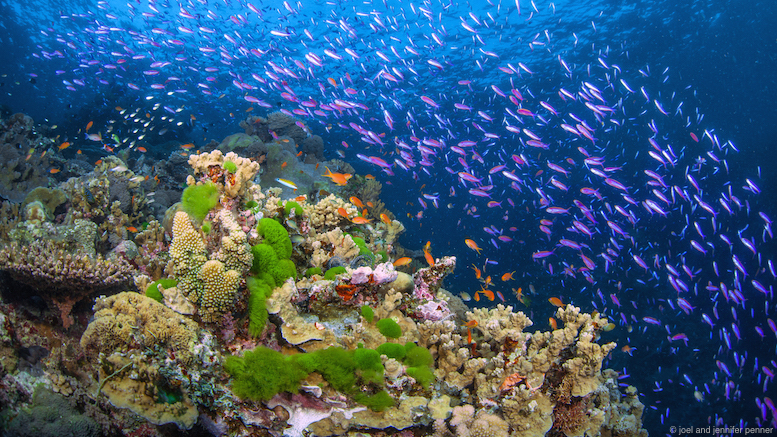
The oceans are vast and many different shades of blue depending on where you’re diving. By following the simple seven tips outlined in this article, you will be able to capture wide-angle scenes with pleasing blue water backgrounds.

Know your camera

As a novice underwater photographer, one of the first lessons is to know and understand your camera basics. What is ISO? What is aperture? What is shutter speed? How do they all relate to one another? What is depth of field? Let’s review in everyday terms.

ISO is the level of sensitivity of your camera to available light. The lower the ISO number, the less sensitive it is to light. Aperture is a measure of how much light your camera’s lens is capturing.

It is measured in terms of f-stops, and a lower number is an indication of more light coming in. Shutter speed is the length of time a camera shutter is open to expose light onto the camera’s sensor. A fast shutter speed can help freeze motion, while a slow shutter speed can create a motion blur effect. Finally, depth of field refers to the range of distance that appears acceptably sharp in your image.

Be in control: Change to manual mode

The next step is to change the shooting mode of your camera from auto to manual. This will give you the most creative control over your images, rather than an automatic mode where the camera decides for you.

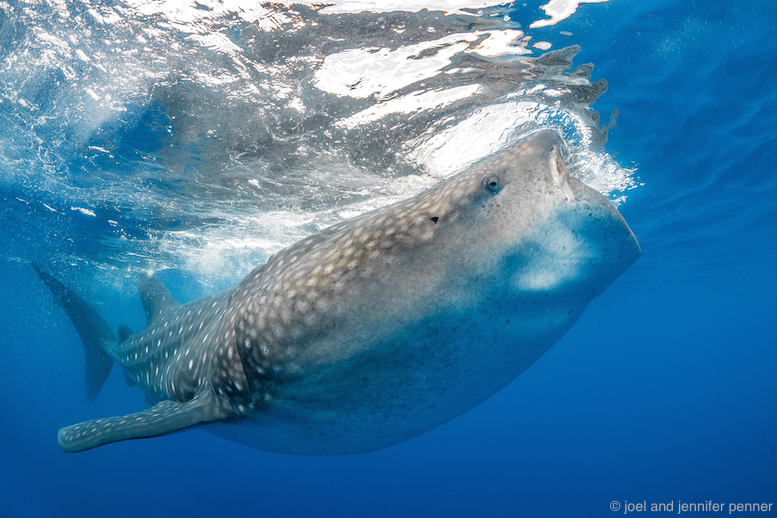
Snorkelling with whale sharks in the early morning required a departure from the recommended blue water jump settings. Equipment & settings: Canon EOS 5D Mark III, 15mm lens, Nauticam housing, available light, f/9, 1/250s, ISO 640

White balance

Today’s cameras have many white balance presets to get accurate colours in many different types of lighting. This really only applies to topside shooting. Set your camera to Auto White Balance (AWB); use this as your default white balance setting for most underwater shooting. If your camera supports the RAW format, we recommended shooting in this format versus JPEG because fine adjustments to your white balance can be accomplished non-destructively when editing in Adobe Photoshop or Lightroom.

Jump settings

A “jump setting”, as in “before you jump in the water”, is a starting point for your camera’s settings for a particular type of shooting. Before your dive, while you are fastidiously putting your camera into its underwater housing, set your camera to manual mode and the following: ISO 100 or 200 for sunny conditions, aperture f/8 and shutter speed 1/125s. While these may not be the exact settings you use throughout your dive, it gives you a jumping-off point that is in the ballpark for getting rich blue backgrounds.

Finding a balance between the artificial strobe light and the ambient light from the sun is key to producing a pleasing image. Equipment & settings: Canon EOS 5D, 15mm fisheye lens, Subal housing, Inon Z-240 strobes, F.9, 1/125s, ISO 200

Adjust one knob

The saying, “There’s more than one way to skin a cat”, rings true in photography once you understand the relationships between your camera’s ISO, aperture and shutter speed. However, while scuba diving, freediving or snorkelling, we want easy. We don’t want to be turning a bunch of knobs and dials while we are in our beloved underwater environment.

In most blue water diving scenarios, and presuming your ISO is set correctly for your diving conditions, with the above jump settings on your camera, you will only have to adjust one knob on your housing to dial-in the blue water background you desire – the shutter speed knob. Making the shutter faster (1/160s, for example) will make your blue water darker, and making the shutter speed slower (1/100s, for example) will make your blue water lighter. The key to rich blue water backgrounds is to find the right shutter speed for your desired blue water colour.

If you don’t have aperture and shutter controls on your camera, you can use exposure compensation (the +/– button) to control the background. By using the exposure compensation feature on your compact camera, you can achieve a darker and richer water colour by adjusting your exposure compensation to the minus side.

Available light

While freediving or snorkelling, you don’t want to be encumbered with an imposing underwater camera rig with strobes. Most likely, you would be shooting with just available light. Use the jump settings mentioned above, but you may have to increase your ISO. Using the same technique, adjust your shutter speed to darken or lighten your blue water background. If it’s a sunny day, be sure that the sun is behind you when shooting – that natural light source will illuminate your underwater scene beautifully. Stay shallow for better marine life colours in your images. Once you are deeper than three metres (10 feet), you will quickly lose the red spectrum of light and your photos will be all blue.

Adding strobes

Artificial light will only illuminate your foreground, about one to one-and-a-half metres (3–4 feet) from your camera, not your background. The key is to mix your strobe light with the ambient light to make it appear balanced. Like our camera setup, we prefer to shoot with our strobes in manual mode for optimal control. With your rig set up, and the camera’s jump settings mentioned above intact, set your strobe output to three-quarter power. Adjust your shutter speed, as needed, for your background colour; adjust your strobe output, as needed, for your foreground.

Photographer of the Week: Lia Barrett

0

We take a look at the fantastic life and times of Lia Barrett:

Lia Barrett is a veritable dynamo of energy and talent. She is well known for her pictures of freedivers (the “super humans”), and, most controversially, for her picture of Nick Mavoli that made the front page of the New York Times when he died in a freediving record attempt. Lia has also explored the oceans’ depths in a homemade submarine, and given her creative mind a practical outlet with the launch of her clothing company, Prawno Apparel. We felt it was high time we pinned down the highly esteemed photo editor of DivePhotoGuide. com and found out a little more about what makes her tick, the inspiration behind her unique vision and where she developed her mad skills with the camera.

What got you into underwater photography?

You could say it was borderline plagiarism really. Many other photographers would say it was a love of the ocean, a want to contribute to conservation efforts, or a desire to unveil a serene world to those poor folks who spend their days with their feet chained to the ground. But no, I got into underwater photography because I was copying fish out of one of Jacques Cousteau’s books. Shamelessly and in the spirit of precision, I would copy them into pencil drawings, watercolours, and ultimately, an entire mural around the walls of my adolescent bedroom. And after a few years of doing this, I realised that I was more interested in creating the photographs than in making copies of them.

What inspires you?

A stranger on a plane, something I read in the news, other photographers, subliminal injections from popular culture I suppose. Motivated by a general ignorance of what we cannot see beneath the surface, I try to pinpoint things that make me stop and think, which in return trigger and satiate stimulation.

What was your biggest “breakthrough” moment in your development as an underwater photographer?

When I was 17, I went to the Red Sea. I was a new diver, fuelled by a naïve, pipe dream of an ambition to be an underwater photographer when I grew up. All that stood in my way was, well, knowing how to scuba dive, and knowing how to take photographs.

I literally knew absolutely nothing; I was going in blind as they say. What I did have was a Nikonos V, rolls of 36-exposure slide film, and a strobe. I was determined to make this work; I had to produce something. So I thought. Confused by the range of focus on the rangefinder camera, not knowing what the little numbers on the knobs meant – 60, 30, 15 – what does this mean? ISO what? 100 looks like a nice number. Not to mention I was, for at least the first few dives, that diver whose butt was mysteriously at the surface after 40 minutes, or whose fins were, ahem, sometimes making contact with the reef. I was that worst nightmare – a diver with a camera. And the most nervewracking part was that because I was shooting film, I had no idea what I was making.

And sure enough, when I got back to the US, picked up those freshly processed slides from the lab, my face dropped – so many black images, blurry images, and green images. And there were several of those little white boxes of disappointment.

But finally, that so-called breakthrough happened. I opened a box with beautiful, blue images, red soft corals, fish that were the colour I remembered. I must have either shot these before I started messing with settings, or mysteriously flipped the dials to a magical combination at some point in my experimentation. But what I realised were two things. One: I needed to become a better diver. And two: I needed to seriously take a photography course. I knew this was all possible; it would just take dedication and a lot of effort.

IMG_5025 85

Some of your images have a dream-like quality. What’s the story behind these surreal visions?

I would say that art school – studying art history and the great masters of surrealism, and even the Early Renaissance, notably Hieronymus Bosch and his triptych The Garden of Earthly Delights, combined with a love of childhood fairy tales when I was growing up, is what has led to these sorts of visions. Also, creating something lush, otherworldly, or idyllic to me is symbolic of a place that you can get lost in, escape to, and perhaps lose yourself in. I am guessing that a lingering Peter Pan syndrome that I am still trying to shake, might also have something to do with these images.

What is it like being one of the few women shooting underwater professionally? What do you think would help to redress the gender balance in underwater photography?

Well, I think it’s great to be a female in this profession – and in life, really! There are most certainly a whole host of added challenges, but if you are persistent and assertive, there are eventually more opportunities to stand out from the stagnant pond of male photographers (sorry boys, some of you overthink technicality and sacrifice artistic sensibilities; not all, of course). But redressing this balance is multifaceted.

First of all, to the husbands out there, don’t just use your wife for her excess baggage, her patience, or her modelling skills. Encourage her to take part, get her involved, and perhaps photography is a challenge you can enjoy together. Secondly, editors need to start being more female-inclusive. To actively search for fresh talent, and to encourage promising abilities within the amateur photography community. And thirdly, mentorship, person-to-person critiques, and motivation are really important for building skills and confidence that are vital to pressing through a phase of intense learning and frustration that we all go through when we first pick up underwater photography. And finally, young divers. The pool of future shooters is endless, so arming young women and girls with interest or opportunity is a great way to bring more women into the professional world.

What is it about freedivers that you find so captivating?

Other than the obvious skill of holding one’s breath for a few minutes at depth, the fact that they are so mentally motivated wildly intrigues my attention-deficit-disordered brain. Or maybe it’s because I personally reserve my concentration for very few things, and when I try to do things like yoga or meditation, I am thinking about what I am going to eat for lunch, or, “Man, that cat-pushing-a-stroller meme was hilarious…” In short, I am in awe at their discipline, and feel that it translates into a physical presence in photographs.

Can you tell us a little about the controversy surrounding your picture of freediver Nicholas Mevoli?

Nicholas Mevoli becoming the first American to freedive below 100 meters to set a national record during the Caribbean Cup off of Roatan, Honduras in May 2013.

Nicholas Mevoli was the US freediver who died in November at Vertical Blue, a competition in the Bahamas organised by William Trubridge, world record freediver. I was on assignment for the New York Times with the writer I work with, Adam Skolnick. When Nick’s fatal accident occurred, I was shooting from the platform where the freedivers surfaced. It is thought that Nick suffered from a severe lung squeeze, and shortly after he surfaced, he blacked out, and never regained consciousness.

His blackout occurred about 30 seconds after surfacing. In that time I was shooting as I would anyone who had just surfaced, even if they were struggling or were giving signs that a blackout was coming. Blackouts are a part of the sport – perhaps the side the freediving community is not partial to talking about. In his face, you could see that something was wrong; his expression was vacant, his teeth grimaced. In that moment of pause, I snapped several images, one of which appeared on the front page of the New York Times.

I knew it was a difficult image. You can read the distress of a person moments before death, a confronting and sobering reality for any human conscious of the brevity of our time on Earth. And while I knew this image was going to (and did) stir a storm of controversy, I somehow, after much soul searching, was glad this was the image chosen. There wasn’t anything sensational about the use – in fact it was one of the more tame images. It merely told the truth about a sport that needed to take a hard look at itself, its policies, and the medicine involved.

What is your next photographic challenge?

The challenge as a photographer, always, is to find new inspiration, new material, not just for your audience, but also for yourself to keep you motivated. I almost always have a series of upcoming trips and projects to work on. And with Prawno, my clothing company, the added challenge of creating new designs and seeking fresh material makes life extra interesting. But perhaps a little terra firma work is on the cards for the upcoming year. At least I hope!

This article featured in SD Through The Lens (Issue 4/2014)

Get psychedelic with Asian Diver “Colours of Asia” Edition

0

“Let me, O let me bathe my soul in colours; let me swallow the sunset and drink the rainbow.”

                                                                                              – Kahlil Gibran (1883–1931)

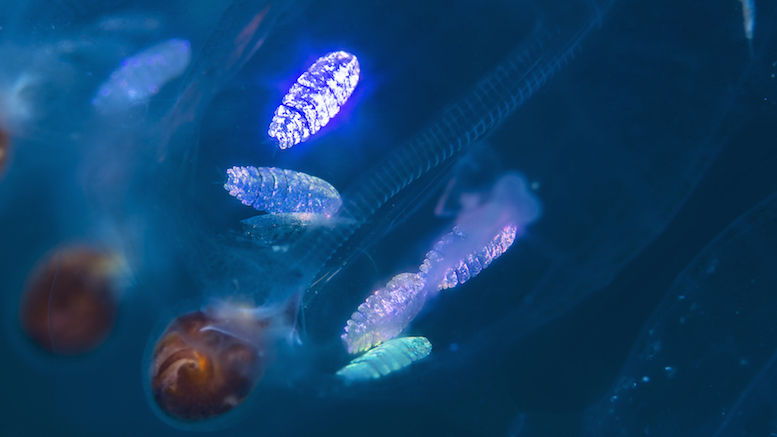
It is often said that pictures speak 1,000 words, and the images in the latest issue of Asian Diver certainly bear that out. Opening this tantalising, Technicolor exploration of the water, Richard Smith has captured a mind-blowing image of the often seen, but little-known, sea sapphires.

It is likely you have seen them, but mistaken them for floating fish scales. The crystal structure of the backs of these tiny copepods reflects light in the most amazing shades of blue, green or purple. Only the males shimmer, to attract the less shiny females, who live inside pelagic tunicates, known as salps. This shot, taken in Raja Ampat, shows six male sea sapphires sharing a salp with a non-descript female just visible at the top right.

What Bubbled

With pink mantas in Oz, new findings on the rise of the jellyfish, and an incredible offer of unlimited House Reef dives for readers with Scuba for Change in the Philippines, AD bubbles up the most interesting dive news round-up in the region.

Colour by Numbers

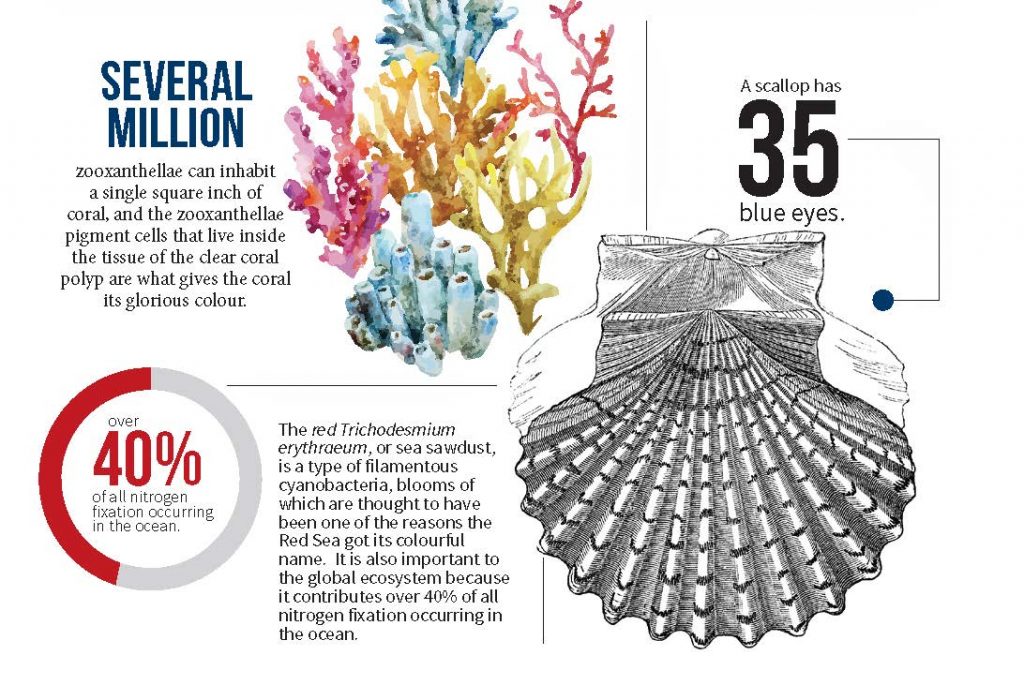
The numbers don’t lie: Prepare to have your mind blown with AD’s insane info about colour underwater! Like the fact that the goldfish is the only animal that can see in both infrared and ultra violet, or that scallops have 35 blue eyes, 14 species of whales and seals can not see blue light, or that one in two million lobsters in the Atlantic are blue!

Asian Diver Issue 1_2016 emag 20

Seafood Guide

WWF brings us some scary stats about the state of seafood, and the ways we can help halt the destruction. If we continue as we are, our oceans will be empty by 2048, but choosing sustainable seafood will go a long way to making sure your choices are kind to the ocean we love.

All Eyes on Mantis Shrimps

Man & Sea comes face to face with the mantis shrimp fishery in Borneo. Mantis shrimps are amazing creatures for all sorts of reasons, not least for the fact that their eyes contain 16 types of colour receptive cones (compared with a human’s measly three), which suggests they can see around 100,000 colours – 10 times more than we can!

In Borneo, fishermen will spend a whole day trying to catch a mantis shrimp to sell to nearby restaurants, in a day’s effort that earns them only about USD 1. Borneo From Below’s Aaron “Bertie” Gekoski brings you the full story.

Read all of this, and more, in the latest issue of Asian Diver! Get your copy here.

Dolphin Dies After Being Pulled from the Sea for Selfies

0

A young dolphin has died after beachgoers in Argentina pulled it from the sea to pose for “dolphin selfies”.

Pictures posted on social media show a huge crowd mobbing the scared baby dolphin, holding and touching it, and taking in turns to take their own individual picture with it.

dead-dolphin-1-589x442
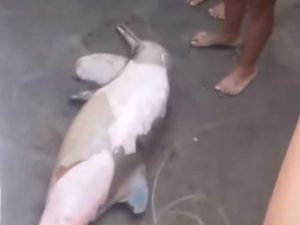
Shocking image of the dead dolphin being left on the sand.

The photos have sparked condemnation from wildlife experts and social media users worldwide.

The Franciscana dolphin is vulnerable to extinction, and conservationists say only 30,000 of them live in the wild.

The shocking video shows a man taking the dolphin from the sea and proudly walking around with it. The dolphin had appeared to have quickly overheated whilst out of water, causing it to die. Even after its death, beachgoers continued to pass it around and it was later left discarded in the sand.