Home Blog Page 177

Pioneer of the Week: Jacques-Yves Cousteau

0

This week we pay tribute to the legendary Jacques-Yves Cousteau, told through the words of his grandson, Philippe Cousteau:

The innovator

My grandfather was an innovator. As a young man he wanted to be a pilot in the French military, but unfortunately he broke his back in a car accident and was removed from the aviation programme. He started swimming in the Mediterranean to rehabilitate himself and his curiosity about the oceans was born from there. He co-invented the Aqua-Lung because he wanted to spend more time underwater, and he created underwater cameras because he wanted to tell the story of what he saw.

Throughout his life, when my grandfather saw a problem, he worked to fix it. It wasn’t until the 60s that he really began to see a change in the health of the oceans that shifted his perspective from one of pure exploration to one of conservation. I believe he was initially driven by a passion for adventure and over time became increasingly concerned about what he was experiencing, the changes he was seeing with his own eyes.

It was an evolution for him just like it is an evolution for all of us.

Father and son

My father, Philippe Sr., was the heir apparent to my grandfather’s work. A sense of adventure was passed on to him by my grandfather at an early age and my father was very well known in his time as an integral part of his father’s work. But it went both ways. I know that my father was more passionate about the human connection to the environment than my grandfather initially was. As you watch the films of the 70s, The Undersea World of Jacques Cousteau, many of which my father filmed, directed and produced, my grandfather’s desire to explore that connection becomes more and more evident as the decade wore on and my father’s influence increased.

My father died six months before I was born. My mother moved back home to Los Angeles – the place where she grew up – and my upbringing was a lot more normal than most people would imagine. We lived in a regular middle-class house and my mother worked to support us. Like everyone else, I went to the local school and even experienced a few awkward teenage years.

But every once in a while I got to see my grandfather and he would share stories of his adventures with my sister Alexandra and me. He was fun and engaging and while I never went on expedition with him or spent much time on the Calypso, he did inspire us to recognise that no matter what we are passionate about doing with our lives, no matter what career we wanted to follow, we should embrace the fact that we have a responsibility to make the world a better place.

But I would have to say that an even bigger influence on me was, and continues to be, my mother. She spent 13 years on expedition with my father and she is the real hero who kept the Cousteau legacy alive for us. It was she who sent me, at the age of 16, on my first longed-for expedition with a scientist friend Dr. Eugene Clark, and that was when the world of exploration and adventure really opened up to me.

A changing world

My grandfather and father were both stewards of an idea, best articulated by my father actually when he wrote, “I believe that every child born has the fundamental right to walk on green grass, under a blue sky, to breathe fresh air and drink clean water.” Their legacy is to inspire all of us to fight for a world where that is possible. They were great men who achieved incredible, world-changing things. I have always been instinctively motivated to contribute to that legacy and do what I can to make the world a better place and honour their pioneering work.

Yet the condition of our oceans has changed since my grandfather’s time. Climate change and ocean acidification were not on the agenda back then. We now live in an age where declining fisheries and the disruption of the biochemistry of the oceans are the new normal. From ocean acidification to climate change, to dead zones caused by too many nutrients in the water, we are recklessly undermining and changing the very system that we rely on to survive. Population continues to be the driver of many of these problems, and that has only grown. The scale of the challenge has increased.

The good news is that since my grandfather’s era, we have developed new technologies like renewable energy, carbon sequestration and made advances in aquaculture; all these things have a major role to play in restoring the oceans and our planet, bringing it back into balance. In many cases it’s simply a matter of giving nature the space and time to do what it needs to do with a helping hand from all of us. Regulations that help replenish and protect fish stocks, restoration and conservation projects to protect and nurture natural barriers like reefs and wetlands, and reforestation efforts are all things that can have a huge impact on ocean health.

Cousteau1972_(cropped)The legacy today

By following our own dreams, in our own ways my sister Alexandra and I are now working to bring the Cousteau legacy into the present.

I am keeping a strong presence on people’s TVs through my series on CNN International. I have also expanded into education by co-founding one of the leading youth environmental education organisations in the USA, EarthEcho International, and we are now even harnessing financial markets as a major driver of positive change through building socially responsible businesses.

Alexandra is doing terrific work through her Blue Legacy organisation; connecting people to the defining crisis of the 21st century – the fresh water crisis. I am very inspired by my sister’s work. She is such a gifted communicator and advocate for these issues.

There are a lot of ways that everyone can take action. Future-focused groups are providing us with some great tools and resources to get inspired and make smart decisions. I know my grandfather would have loved using the new technologies that exist today. Being a storyteller, the Internet and smartphones would have been a dream come true for him – being able to reach people and have a dialogue with them anywhere in the world in real time was the stuff of science fiction when he was alive.

Take, for example, the Monterey Bay Aquarium’s Seafood Watch pocket guide and Ocean Conservancy’s Rippl app or my own EarthEcho International’s Expedition programme for use in schools. We have even launched an investment fund that has a positive social, environmental and governance policy, and anyone with access to the New York Stock Exchange can purchase shares and buy into it – the ticker symbol is GIVE.

It is important that each of us take stock of our choices in life, and realise how everything, from where we invest our money to what we eat to how our children learn, impacts the world around us. If my grandfather were alive today, I think his message would remain the same, so I will quote him: “For most of history, man has had to fight nature to survive; in this century he is beginning to realise that, in order to survive, he must protect it.”

By Philippe Cousteau. This article featured in Scuba Diver Through The Lens (Issue 8, 2013)
Ubiquitous Microplastic Pollution in Oceans Found to Disrupt Oyster Reproduction

0

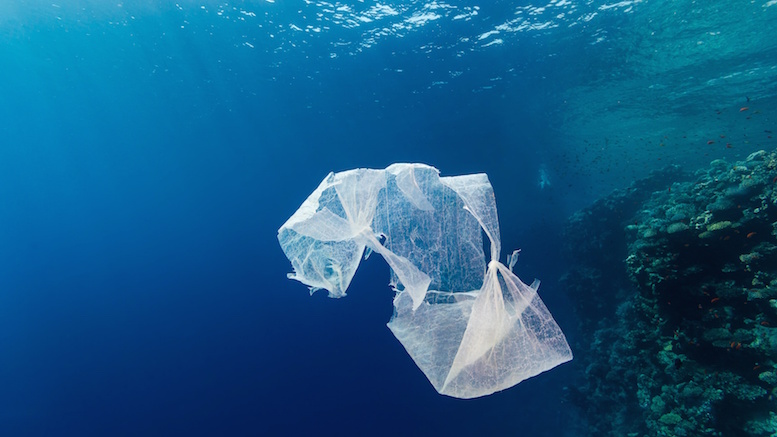
We dump a lot of trash into the world’s oceans — so much that there’s a massive trash vortex swirling around in the North Pacific, as you’ve probably heard.

A lot of that trash is plastic. In a study published last year, researchers estimated that the world generated 275 million metric tons of plastic waste in 2010 alone, and that as much as 4.8 to 12.7 million metric tons of that entered the ocean.

With the amount of plastic waste produced every year expected to grow by an order of magnitude over the next decade, the impacts of microplastics on marine ecosystems is a cause of growing concern among scientists.

“Given their ubiquitous nature and small dimensions, the ingestion and impact of microplastics on marine life are a cause for concern, notably for filter feeders,” according to a study published in the Proceedings of the National Academy of Sciences this month.

Larger pieces of plastic break down in the ocean into what are called microplastics, while industrial processes and consumer products — especially the type with plastic microbeads, like toothpastes and cosmetics, that get washed down the drain and eventually end up out in the ocean — are direct sources of microplastics entering marine environments.

Scientists at the French Research Institute for Exploitation of the Sea studied how microplastics impact Pacific oysters (Crassostrea gigas) by feeding a group of them a mixture of polystyrene microspheres and microalgae, a more typical meal. A control group, meanwhile, was fed just microalgae.

After two months, the oysters being fed the microplastics were found to have also consumed more microalgae and to have digested it more efficiently, too, which the researchers say was most likely to compensate for all of the plastic they had eaten.

The more serious effect was that the additional expenditure of energy required to digest more microalgae compromised the oysters’ reproductive systems, the researchers discovered. Male oysters had slower sperm, and female oysters produced fewer and smaller oocytes, the cells that become eggs. That led to offspring that were 18 percent smaller and 41 percent fewer in number.

“This study provides evidence that [microplastics] cause feeding modifications and reproductive disruption in oysters, with significant impacts on offspring,” the researchers write in the PNAS paper.

Arnaud Huvet, a marine physiologist at the French Research Institute for Exploitation of the Sea and a co-author of the PNAS article, told the LA Times that much more research is needed to determine the full impacts of microplastic pollution in marine ecosystems.

But Huvet is not worried about the ability of “strong populations” of Pacific oysters to withstand the reduced reproductive capacities. Pacific oysters are native to Asia’s east coast but have been introduced the world over and become a “core constituent of many coastal ecosystems” as well as an important seafood item, Huvet and his co-authors write in the study.

For weaker populations of Pacific oysters that are less well established, as well as populations of less robust native species like the European flat oyster or North America’s Olympia and eastern oysters, Huvet said having fewer, smaller offspring could pose a significant problem.

A 2014 study estimated that there is a minimum of 5.25 trillion particles of plastic weighing as much as 268,940 tons polluting the world’s oceans.

CITATIONS

  • Eriksen M, Lebreton LCM, Carson HS, Thiel M, Moore CJ, Borerro JC, et al. (2014) Plastic Pollution in the World’s Oceans: More than 5 Trillion Plastic Pieces Weighing over 250,000 Tons Afloat at Sea. PLoS ONE 9(12): e111913.doi:10.1371/journal.pone.0111913
  • Jambeck, J. R., Geyer, R., Wilcox, C., Siegler, T. R., Perryman, M., Andrady, A., … & Law, K. L. (2015). Plastic waste inputs from land into the ocean. Science 347(6223), 768-771. doi:10.1126/science.1260352
  • Sussarellu, R., Suquet, M., Thomas, Y., Lambert, C., Fabioux, C., Pernet, M. E. J., … & Corporeau, C. (2016). Oyster reproduction is affected by exposure to polystyrene microplastics.Proceedings of the National Academy of Sciences, 201519019. doi:10.1073/pnas.1519019113

Article published by Mike Gaworecki, source: Mongabay

Global Ocean Business Community to Meet on Corporate Ocean Responsibility and Ocean

0

World Ocean Council Sustainable Ocean Summit: Rotterdam, 30 Nov-2 Dec 2016

The World Ocean Council (WOC) is proud to announce that the 4th Sustainable Ocean Summit (SOS) will be held from 30 November – 2 December, 2016 in Rotterdam.

The SOS is the only international, multi-sectoral, business event dedicated to sustainable development, science and stewardship of the seas, and is now an annual event.

The SOS 2016 theme is “Ocean 2030: Sustainable Development Goals and the Ocean Business Community”.

This unique ocean industry gathering will address the 2015-2030 U.N. Sustainable Development Goals (SDGs) and what they mean for the ocean business community. The Rotterdam event will spotlight the targets and indicators being developed with and for the Ocean Business Community via the WOC during 2016.

The program and topics for SOS 2016 are being developed with input from the business community. Speakers, session organizers and sponsorship opportunities will be announced in the near future.

The SOS is uniquely designed to bring together leadership companies from the diverse Ocean Business Community: shipping, oil and gas, fisheries, aquaculture, seabed mining, tourism, renewable energy, ports, dredging, mining, submarine cables, marine science, engineering and technology, the maritime legal, financial and insurance communities, and others – as well as ocean stakeholders from the government, inter-governmental, academic and environment communities.


WOC Outreach this Month

3-4 February
SINGAPORE: Conservation and Sustainable Use of Marine Biological Diversity of Areas Beyond National Jurisdiction: Preparing for the PrepCom, National University of Singapore (NUS), Centre for International Law (CIL) – Participant

8-10 February
HONOLULU: Human Dimensions of Large Marine Protected Areas, Big Ocean – Panelist

16-18 February
CAPE TOWN: Sustainable Oceans Lab, GIZ – Participant

19 February
CAPE TOWN: Integrated Ocean Management Forum, South African National Biodiversity Institute – Participant

22-23 February
CAPE TOWN, PORT ELIZABETH: WOC meetings with South Africa industry and other ocean stakeholders

24-25 February
CAPE TOWN: Marine Coastal Management Conference – Speaker

29 February-1 March
LONDON: Inmarsat Developer Conference – Speaker


About the World Ocean Council (WOC)

The WOC is the only international, cross-sectoral alliance for private sector leadership and collaboration in “Corporate Ocean Responsibility”. Companies and associations worldwide are distinguishing themselves as leaders in ocean sustainability, stewardship and science by joining the WOC. Members to date include 80+ leadership organizations from a wide range of ocean industries: oil and gas, shipping, seafood, fisheries, aquaculture, mining, marine mining, renewable energy, ocean technology, maritime law, marine environmental services and other areas. For the current list of WOC Members, click here. The WOC News Release is received by 34,000+ ocean industry stakeholders around the world. The WOC is a registered not-for-profit organization in the US and the UK/Europe.

For more information visit: www.oceancouncil.org

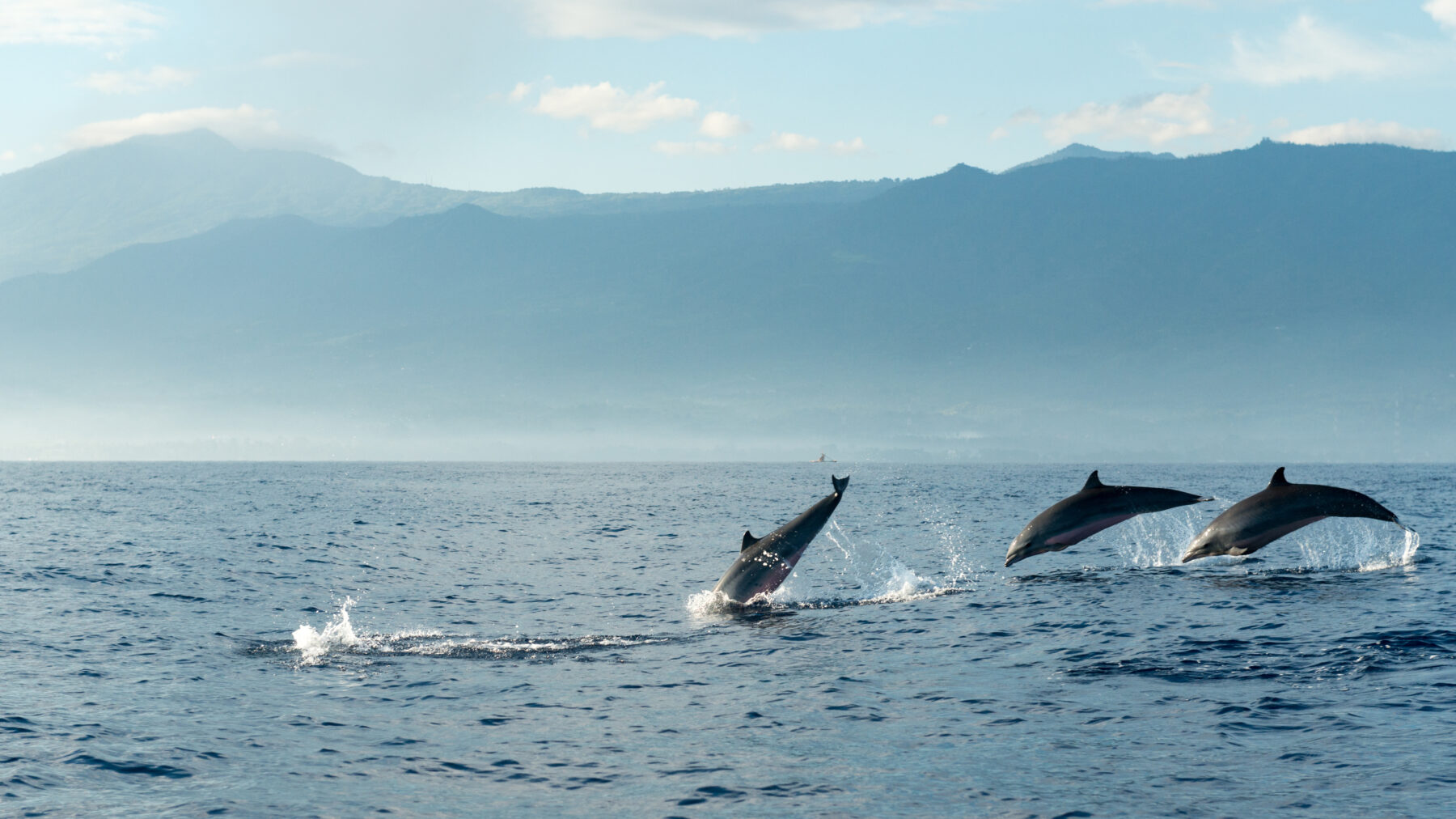
5 Reasons Why You Should Care About the Tragic Taiji Dolphin Hunt

0

The dolphin hunt that takes place in Taiji, Wakayama, Japan every year is a shocking slaughter that has environmentalists and animal rights groups up in arms, but all efforts have so far failed to end the brutal practice.

Shocking Discovery in Gabon: New Electric Fish

0

The discovery of a new species of mormyrid, a “weakly electric” fish endemic to the continental freshwaters of Africa, has led to the creation of a new genus containing not one but two new species.

Mormyrids emit electric discharges so weak that humans can’t feel them. The fish have highly sensitive receptor cells on their skin, however, allowing them to use those electric discharges for navigation — they detect objects in their way as a distortion of the electric field they produce — as well as for communicating with other mormyrids.

John Sullivan, an ichthyologist at Ithaca, NY’s Cornell University who is an expert in the Mormyridae family, found the first new species of mormyrid on the Ogooué River in Gabon, a country on central Africa’s west coast.

“I distinctly recall pulling this fish from the trap, looking at it in my hand, and thinking, ‘I do not know what this is,’” Sullivan said, according to a blog post by the Nature Conservancy, which helped fund the expedition that led to the new discoveries.

When Sullivan and his colleagues compared the new catch to two existing specimens — one caught in the Moukalaba River at its confluence with the Nyanga River, the other caught in the Mabounié River — the scientists determined the three fish represent a new genus, which they called Cryptomyrus, or “hidden fish.”

The team writes in a paper describing the new species and genus published in the journal ZooKeys that they used mitochondrial and nuclear sequence data to establish that the three mormyrid specimens, collected at widely separate localities in Gabon over a 13-year period, represent a heretofore unrecognized lineage of the subfamily Mormyrinae, which contains the majority of the more than 220 known species in the Mormyridae family.

This is the first new genus of Mormyrid discovered in nearly 30 years, the researchers note in the Zookeys paper.

The researchers are convinced there are several more finds to be made in the region. The Moukalaba-Nyanga river system of Gabon, where the existing specimens of what has now been named Cryptomyrus ona were found, for instance, “remains understudied and is likely to produce additional taxonomic novelties for Mormyridae and other groups.”

The Ogooué River, where Sullivan collected the first specimen of what came to be called C. ogoouensis, has already been subject to some scrutiny by scientists, but not in well over a century.

In other words, even though they’ve been described to science, we’re not done learning about C. ona and C. ogoouensis, let alone the unknown species out there.

“Given the perception that Gabon is better sampled for fishes than other parts of Central Africa,” Sullivan and team write, “having no more than three individuals of this mormyrid lineage in collections may seem surprising.”

But only a small percentage of Gabon’s aquatic environments have actually been visited by scientists, meaning there’s not currently a sufficient amount of data to say for certain whether the two new Cryptomyrus species are rare throughout their entire range or simply don’t occur frequently where scientists have already chosen to collect specimens.

Sullivan and his co-authors found that, until their collecting trips in 2011 and 2014, the locale where C. ogoouensis was discovered appears to not have been visited by ichthyologists since the late 19th century. “Tropical freshwaters harbour a high proportion of narrowly distributed fish species and in poorly inventoried regions like Gabon such species may long go undetected,” they write.

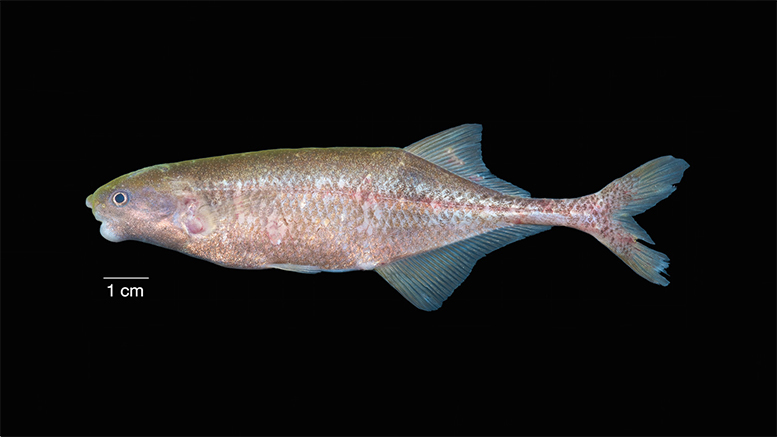
Cryptomyrus-press-release-image-2Photograph of preserved specimen of Cryptomyrus ona from the Mabounié River in Gabon, Africa (left view and right view) above x-ray image of specimen. Photo © John P. Sullivan.

Cryptomyrus press release image 1Photograph of live Cryptomyrus ogoouensis holotype specimen from the Ogooué River in Gabon, Africa above its electric organ discharge waveform. Photo © John P. Sullivan.
Article by Mike Gaworecki, source: Mongabay

ADEX 2016: 10 Reasons Why You Should Learn to Dive

0

For all you landlubbers out there thinking ADEX 2016 is only for divers, and that diving is just an excuse for going on fabulous holidays to exotic, far-flung places and befriending the local fish (although this is an undeniable part of the attraction of this addictive sport), there is so much more to it.

Here are 10 reasons why you need to get underwater:

You will meet creatures you never thought existed

13535929_xxl-001

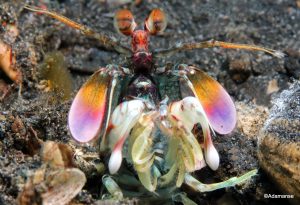
From the multicoloured mantis shrimp that will make you think you’ve gone all Purple Haze in the brain, to the red-lipped batfish who looks like a late-night drag act – the ocean will always amaze you.

It’s Easy!

If you haven’t tried it yet, don’t be put off by that one diver who talks about the time he had to wrestle off a carnivorous turtle weilding nunchuks – he’s probably lying. When taught properly, diving is easy. Just be careful – it’s also addictive.

It’s always different, everytime

It sounds like a dive-ad cliché, but that’s because it’s true. Every dive is completely different, from the critters you see, to the behavior of the fish, even when you dive the same sites again and again.

It’s a great leveller

15803082_xxl-001

Low gravity, breath-controlled movement and a silent world means that diving is accessible to almost everyone, no matter what age, size or level of physical ability. Even if you’re wheelchair-bound on land, underwater you may well be able to move freely, and being deaf is actually an advantage!

It’s like flying

Floating, weightless in the water is one of the most dream-like experiences possible. when you’ve cracked your buoyancy, you’ll even be controlling your position in the water with your breath. How Superman is that?

Take your camera underwater

Looking for a new creative challenge? If you’ve got your buoyancy under control, pick up a camera, stick it in a housing and say hello to the rest of your life, and goodbye to your savings account! Underwater photography is a splendid addiction.

Explore a vast amount of history

Sweetlips and other tropical fish school around manmade wreckage

From downed WWII bombers, to sunken ships and lost cities, the ocean holds countless secrets and extraordinary pieces of our past…

Meet new people

642694_xl-001

Forget Tinder – diving is one of the best ways to meet a cool, new crowd. It’s a club of millions; just remember that real life isn’t all like online dating.

Bond with the family

Diving is a fantastic way to spend time with the kids, helping them to develop self-reliance, self-confidence and a passion for the world we live in! You never know, you might have a young marine biologist on your hands.

Salt water is a cure all

From Roman Baths, to spa-breaks – water has been linked to health benefits for centuries. imagine the advantages of being totally submerged in warm seawater, full of life energy, for hours at a time.

It doesn’t matter whether you are an experienced diver or someone whom has never been more than a metre underwater, ADEX 2016 is for everyone.

For more information on ADEX, please visit www.adex.asia.

Videozone: Why the Octopus Brain is So Extraordinary

0

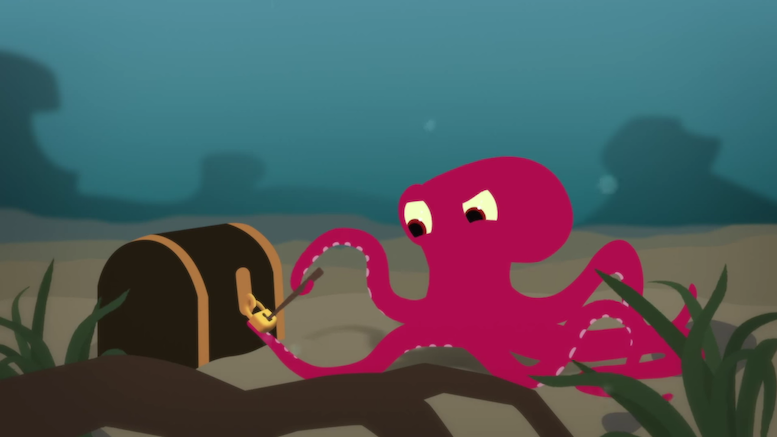
We present Cláudio L. Guerra’s fantastic cartoon depicting just how incredible the octopus is. With the ability to solve puzzles, learn through observation, and even use tools – just like we can, it is more than just a boneless, brainless creature with a biological structure completely different to our own.

Here’s how:

Video credit: TED Ed