
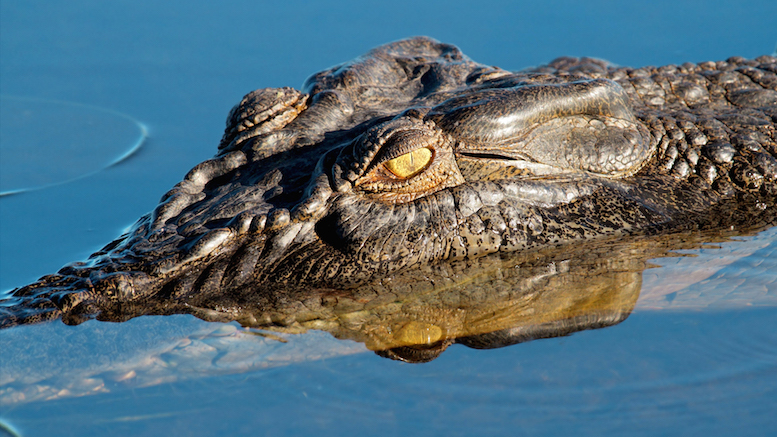
The largest of all reptiles, the saltwater crocodile, Crocodylus porosus, is one of the most impressive of all the crocodilia. With a hunting technique that has worked for 200 million years, “salties” are some of the last living predators from the Jurassic period. With an average life expectancy of about 70 years, fully grown salties can be up to six metres long and weigh just under a ton. While they have a reputation for being incredibly aggressive and territorial, saltwater crocodiles are also some of the most intelligent and sophisticated reptiles, being fantastic problem solvers, and patient, stealthy, cunning hunters.
Diving Myanmar: 5 of the best sites
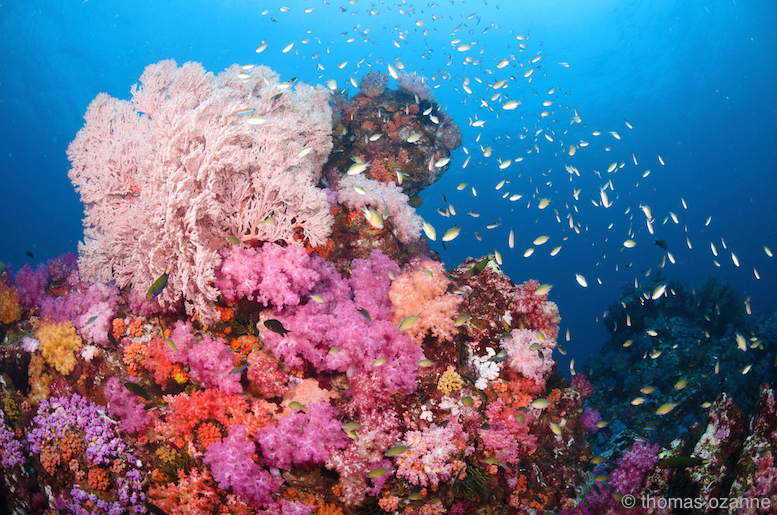
It’s as accessible as the diving in Thailand but home to a much healthier and greater biodiversity of corals, crustaceans, nudibranchs and fish, yet only a handful of liveaboards explore the diving on offer in Myanmar. This meant that on our trip, we didn’t see any other divers underwater, or even another dive boat for all five days we were there. I haven’t found many places within such easy reach that make it possible to get away from the crowds and experience a genuine feeling of adventure – exploring rarely dived and unspoiled sites.
9 underwater wonders

Traditionally, the seven wonders of the Ancient World were a collection of remarkable constructions listed by various Greek authors. The list contained the likes of the Great Pyramids of Giza, the Lighthouse of Alexandria and many other ancient land constructions… But the Greek authors, when compiling this list, never considered exploring what “wonders” may have lay beneath the waves. Grand underwater canyons and abandoned temples were submerged underwater, out of sight.
6 reasons why you should care about the ocean
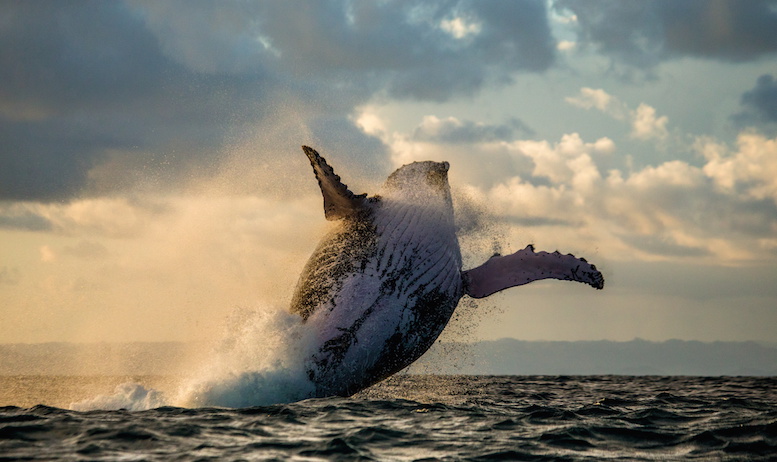
When NASA launched Apollo 8 – the first manned spacecraft to leave the Earth’s orbit, reach the moon and return – they became the first humans to ever witness “Earthrise”. Floating in the perpetual darkness of space over 300,000 kilometres away from civilisation, they gazed back to take a look at our Earth; only half visible, a blue marble slowly spinning. Our blue planet.
Marine Biologist of the Week: Dr. Andrea Marshall
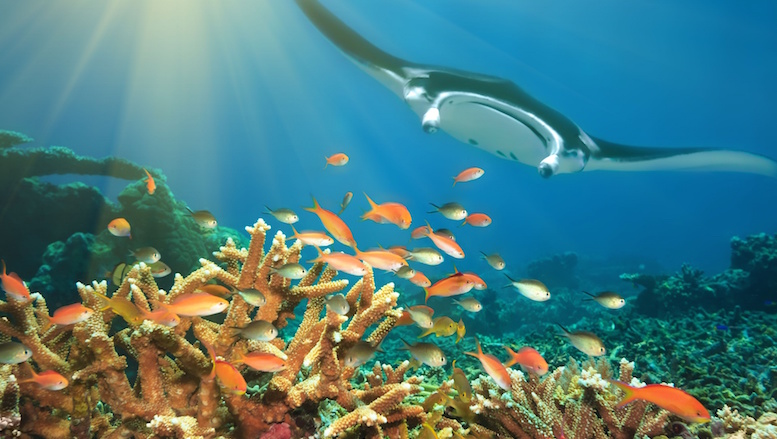
This week we pay tribute to the incredible work of Dr. Andrea Marshall. A leading scientist whose research on manta rays has helped redefine the way people see them:
Educated in the United States and Australia, Andrea was the first person in the world to complete a PhD on manta rays. After completing her thesis in 2008, Andrea stayed on in Mozambique to spearhead the conservation efforts of this species along this remote coastline. Along with the other members of her team, she founded the Marine Megafauna Association, which grew into the now widely known Marine Megafauna Foundation. Vowing to dedicate her life to the preservation and management of the manta ray population in southern Mozambique, Andrea still calls this coastline home. Her passionate commitment to marine related issues in eastern Africa helped to shape her goals as a conservation biologist. Now a global ambassador for manta rays, Andrea continues to pursue international conservation initiatives for manta rays and fight for their protection worldwide.
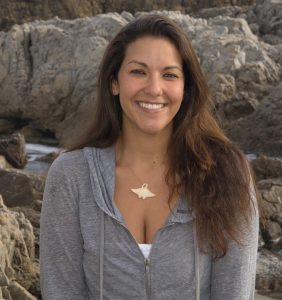 As lead scientist for one of the Marine Megafauna Foundation’s flagship research programs, Andrea travels the globe researching manta rays full-time. Her travels have taken her from Ecuador to Egypt and seemingly everywhere in-between. Over the last five years alone Andrea has traveled to over a dozen countries on five continents as a part of her ”Ray of Hope” research expeditions. Having amassed some of the largest photographic databases and genetic libraries of manta rays in the world, she and her collaborators aim to develop robust research programs on these poorly understood rays. Over a decade since she began her work in Africa, Andrea continues to examine aspects of their biology, reproductive ecology, habitat use, migrations and social behaviour. Aside from dramatically increasing the level of knowledge on manta rays themselves, Andrea’s discovery of a new giant species of manta ray in 2008 was one of the largest new species to have been described by any scientist in the last 50 years. She is currently working towards the description of a third Manta species. Using her extensive travels to uncover anthropogenic threats to manta rays and expose unsustainable fisheries for them, Andrea remains deeply committed to developing better management strategies for regional populations of these rays and their critical habitats.
Learning to scuba dive at a young age, Andrea was certified at the age of twelve. Thousands of dives later Andrea dives for both pleasure and her profession, as one of the leading marine field biologists in southern Africa. During her 24-year dive career Andrea has traveled to the ends of the globe both as a scientist, researching sharks and rays, and also as a professional underwater photographer. She fell in love with photography at an early age when she was taken under the wing of marine cinematographer Tom Campbell. Years of mentoring deepened her appreciation of photography and prompted a lifelong affair with the art. Also early in her career Andrea began exploring the world of technical diving and found it to be useful for both research and photography. Throughout the years she has used her technical diving background to push the limits of her research in an effort to survey new habitats and remote locations.
A bona fide marine explorer, Andrea has logged several thousand dives around the world and particularly enjoys scouting for new reefs and documenting rare marine life. Her extraordinary encounters with elusive species such as the small-eyed stingray and the snaggletooth weasel shark have earned her publications in numerous scientific journals and popular magazines alike. Armed with her own camera and often accompanied by documentary crews, Andrea has introduced the world to a new frontier of African diving. From the BBC’s award-winning documentary on her life to National Geographic’s Pristine Seas expedition to Mozambique, Andrea continues to use hard science and visually stunning media to capture the world’s attention and focus it towards conservation.
Aegean Sea: The site with the best visibility?
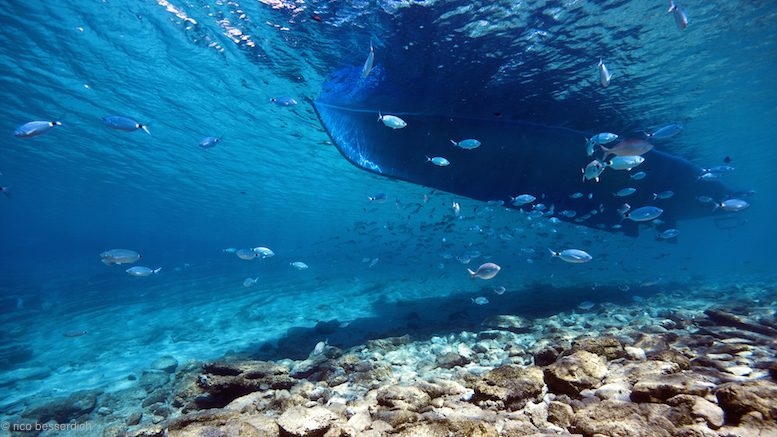
There is something about a certain kind of blue that gets the diving juices flowing, and whatever blue you need to get into, you’ll find it in the Aegean.
There are some places that, quite easily but undeservedly, could fall through the cracks when you’re drawing up your dive destination bucket list. Some like it hot, some like a lot of fish, some like easy diving and some might like places with 1,001 tones of blue and the pleasure of exceptional underwater visibility. If it’s these last two that decide it for you, then look no further than the Mediterranean Sea of Southern Turkey.
Arriving at the domestic airport in the small town of Bodrum on southwest Turkey’s Aegean coast, and being picked up by the dive centre boss himself, gets the trip off to a good start. The boat is just a short drive away and, on the road, I am already treated to the stunning view of the Turkish Aegean Sea. One thousand and one blue tones, indeed! Maybe even one thousand and two! I have to jump into it right away!
It’s August and that means that the air is around 40°C, dry, and with a constant slight breeze from the sea. In even better news, the water is 27°C and just a shorty will do.
Kara Ada
The area has round about a dozen different dive sites, most of them around a place called Kara Ada, the “Black Island”, which is where I finally get to jump into the water.
Certainly, the Mediterranean Sea is not a big player when it comes to diversity or biomass of marine life. There are not a lot of fish here – it is a small sea and it’s been drastically overfished. Everybody knows this. But then just below the boat, as if to prove me wrong, we are surrounded by hundreds of sea bream, some Turkish wrasse and, on the rocky ground, two octopuses observing the scene. Not a bad welcome!
And then there is the blue of the water. Not one tone of blue but countless. From bright blues and turquoise in the shallows to indigos and other darker blues in the deep… and everything in between. There is not enough air in the tank to count the colours. Sunbeams are drawing pleasing patterns on the sea floor. And yes, the visibility must be around 45 metres or more and I actually don’t see any reason to swim around at all; I just could stay where I am and enjoy the view. But for the sake of the sport, let’s swim around a bit.
The impressive underwater landscape is composed of huge, rocky reefs, and, thanks to the incredible visibility, we can enjoy the majesty of the scenery. Everything is touched by light. Ancient amphorae scattered everywhere and the highlight of the dive is the wreck of a sunken plane.
But better leave those amphorae where they are – the local authorities have absolutely no sense of humour regarding this kind of “collecting” and the fines are rough stuff.
Some groupers swim around us and I see a smaller bunch of jacks swimming by at a distance. And all those different blue tones! I feel like an astronaut in space, and B.B. King’s “How Blue Can You Get” is ringing in my ears.
Kas
The next day, after a four-hour (rented) car journey, we reach the small town of Kas – our next destination. With around 25 different dive sites and more than 20 dive centres, Kas is known as Turkey’s “Eldorado” of scuba diving.
Here, the waters are deep and if you’re not careful you can easily find yourself at depths that might exceed your training level. A dive of 40 metres is quite standard, and tec divers can visit the wreck of an Italian airplane at 70 metres at the bottom of the Flying Fish reef.
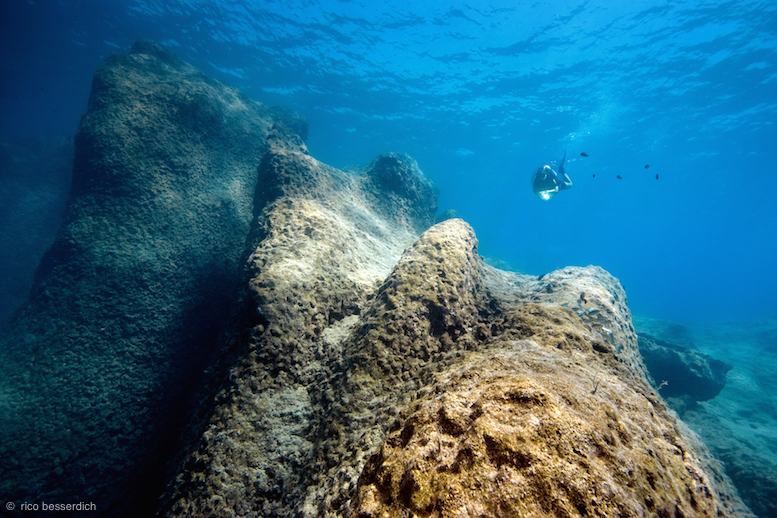
A dive at the Canyon is one of the area’s highlights and almost legendary among Turkish scuba divers. Starting at three metres, we fly through an underwater canyon that ends at around 25. From there we visit the wreck of a Greek cotton freighter, a diveable underwater chimney, and with any luck the sight of a Mediterranean monk seal, of which there are only 500 left worldwide.
Soaring around this extraordinary underwater landscape is incredible fun, thanks to the more than 40 metres of visibility. Currents are common but usually only at the surface. Once we get to six metres, all is fine and our flight through the big blue can begin.
Flying Fish reef the next day. According to European dive magazines (and to almost all Turkish divers), this is considered to be Turkey’s top spot. An underwater mountain, boats anchor at its peak, just six metres under the surface. If you want to see the fish (jacks, huge groupers, and tuna) you will need to deal with the current – there is no other way. The hardest part is the descent, but below 10 metres, large rocks provide quiet areas to rest and have a look around (or take some photos!). From 20 to 30 metres, you can see the wreck of the Italian aircraft lying at 60 metres below you.
Shallower dive sites are certainly worth a visit, too. The Dakota wreck, Pidgin Island, Neptune Reef and Two Brothers are good spots, as well. Squids, turtles, smaller jacks, cornet fishes, stingrays, wrasse, sea bream, groupers and macro critters such as nudis, shrimps, Neptune’s veils, and flatworms are common sights here, especially when the water starts to cool down slightly around middle of September.
And even if none of these creatures shows up on the day (what you see on a dive, as you know, is always a matter of luck), there is always the blue. One thousand and one different tones (or even 1,002!) make for an underwater oriental dreamscape. This might be what makes the waters of Southern Turkey special in their very own, unique way.
For more of Rico’s incredible work, visit his website: www.maviphoto.com
This article featured in SD OCEAN PLANET (Issue 8/2014)
3 pro tips to mastering colour
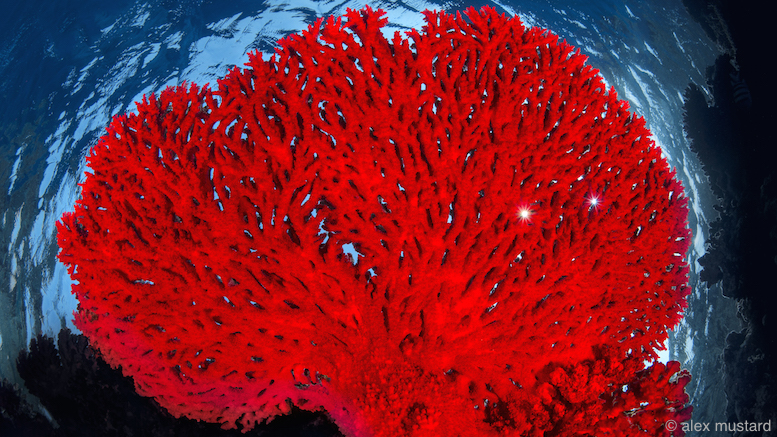
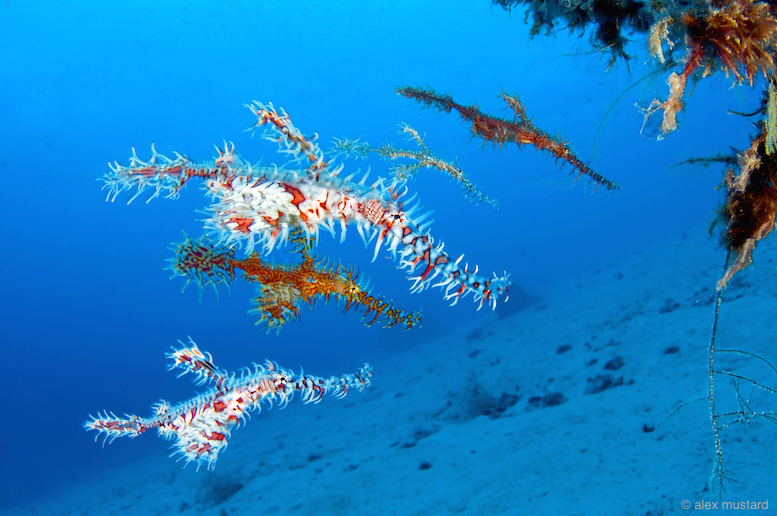
Colour is incredibly powerful in our pictures. It transforms atmosphere, grabs attention and communicates the splendour of the underwater world. Cool blues speak of the tranquillity of the deep, while warm primary colours push subjects forward, making them jump out of the frame. The work of the world’s best photographers is often distinguished by how they capture light and colour, combining the richest blue backgrounds and all the magnificence of vibrant life.
Colours become even more interesting when we consider how to combine them. A palette of similar hues is restful for our eyes and creates a feeling of peace, such as the blues and greens of a kelp forest or seagrass meadow. Opposite colours jar, increasing visual contrast and the impact of our images. Background water colours are typically blues and greens, so when we shoot foregrounds of the opposite, warm colours – reds, oranges, yellows, pinks and purples – they really stand out strikingly against them.
Think of how eye-catching an orange garibaldi looks framed in front of giant kelp or a yellow anemonefish and red skirted anemone balled up in the late afternoon against the deep blue waters around a coral reef. It is why one of the oldest pieces of advice in underwater photography is simply get a bit of red in the frame! The deeper message is that when we take control of the colours in our pictures, we can truly move to the next level.
Equipment & settings: Nikon D2X, 10.5mm lens (15mm equiv.), Subal housing, Subtronic strobes, f/10, 1/15s, ISO 100
Filters on your lens
Filters are not new to underwater photography, but in sharp contrast with land photography, their use has blossomed in the digital decade as an alternative to strobes for capturing colour in the big blue. Underwater filters, also called red filters (despite all the best ones not being red), are valued because underwater colour casts are far greater than on land.
White balancing alone will always give inferior results. This is because whatever magic the camera’s or computer’s software weaves, a physical filter ensures that the sensor captures a more evenly balanced picture to start with. Your starting point is much closer to your goal. The difference between using a filter and not using one is often most visible in the backgrounds, which are a much richer, more pleasing blue.
Creatively, filters are exciting because they add colour in a different way to strobes, with colour penetrating much more deeply into big scenes. They require suitable subject matter, in the right conditions. The best subjects are coral gardens, wrecks, big animals, schools of fish, divers in relatively shallow water – working best in the top 15 metres (50 feet). The best colours come through when we shoot with the sun behind us. Shooting against the sun and particularly up towards the surface mutes colour in silhouettes.
Coloured light
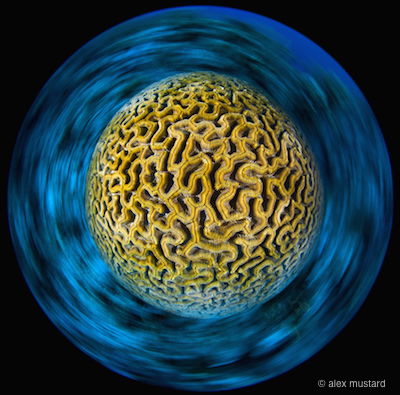
Many of us have our regular haunts, dive sites that we’ve visited and shot repeatedly. These are places where it is hard to get excited about subjects we’ve already shot. Experimenting with coloured light is a fun way to transform familiar scenery and critters. Strobes normally produce white light, but we can easily change it by adding a sheet of coloured transparent plastic.
Photographic lighting gels are not expensive, but coloured cellophane gift wrap also works perfectly. Double sheets over for a more intense colour. Orange, red and yellow colours will work best against blue underwater backgrounds.
Take control of your strobes
Powerful blue backgrounds are the essential canvas of stunning wide-angle photography. Conditions, the direction of light, and exposure are all critical, but the factor that is often ignored is strobes. It seems strange that our strobes can affect the water colour of our pictures, but it happens as a result of how digital images are processed. It is locked into our pictures whether you process them with software or take them straight from the camera.
Strobes produce white light, but some strobes produce bluer, cooler light, and some more orange, warmer light. This difference is small, but since blue is such an important colour in underwater photos the difference is very noticeable.
The effect is easiest to get your head around when we consider how the camera handles colours in a photo. When we shoot, the camera selects a white balance to reveal neutral, correct colours in the foreground. This is determined mainly by the colour of the strobe light. If the strobe produces cool light, then the camera compensates by slightly warming up the image. This is applied to the whole image: the foreground is now correct, but the background is also warmed up, and this makes blue water a more greeny, muddier blue. If we use warm strobes, the camera cools down the picture to correct the foreground colour and also adds blue to the background, giving a richer blue.
It is straightforward and cheap to use mild lighting gel filters to adjust the colour of your strobes. A few years ago I even persuaded Inon to make diffusers with this correction built in. So they are now available off the shelf. The effect of warming up your strobes is not huge, but taking control of it will pay you back in every image you take.
The final twist in the tale comes in green water. Here, of course, cooler strobes are preferable, because most photographers want to produce an emerald green water colour, rather than push it towards a greeny-blue.
This article featured in SD OCEAN PLANET (Issue 8/2015)