Home Blog Page 5

CUSTODIANS OF TUBBATAHA

0

Text by Anna Oposa, images by Jon Cabiles, TMO

A salute to a small group of ocean defenders who look after the Philippines’ largest marine protected area.


At 97,030 hectares, Tubbataha Reefs Natural Park is the largest no-take marine protected area in the Philippines. It is found in the Sulu Sea, over 150 kilometres from Puerto Princesa (capital of Palawan) and 130 kilometres from Cagayancillo. It is also the country’s most abundant and biodiverse, with over 700 species of fish, 361 species of corals, 28 species of sharks, and more than 100 species of birds.

Guarding this marine and bird sanctuary is no easy feat. This task falls on several organisations and government agencies, with the Tubbataha Management Office (TMO) at the forefront. Leading the pack are the Park Area Superintendent, Angelique Songco, and the marine park rangers.

Terms of Reef-erence

To know Tubbataha is to be in awe of its marine park rangers. This group of defenders was established through a Presidential Task Force in the mid-1990s and formalised through the Tubbataha Reefs Natural Park Act of 2009. Members are composed of the Philippine Navy, Philippine Coast Guard, the Cagayancillo Local Government, and the TMO. They follow guidelines and training programmes developed by the TMO and WWF-Philippines.

More Than Just Law Enforcers

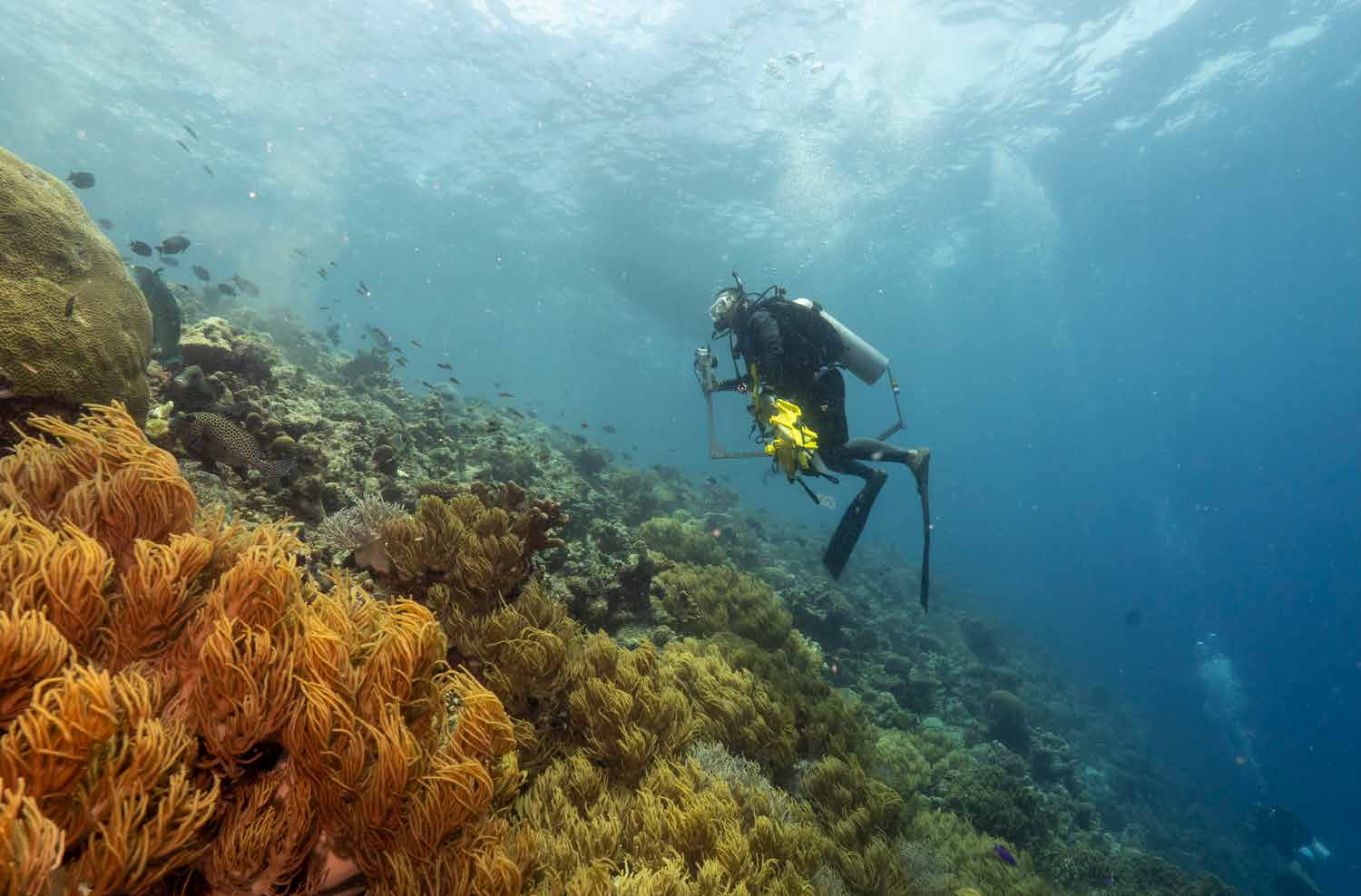
One of the main responsibilities of the marine park rangers is law enforcement. They watch out for any illegal activities and apprehend fishers and poachers if needed. But they are more than law enforcers. They are researchers who collect data on fish, corals, and birds. They are mechanics and construction workers who must do boat and home repairs, and install and maintain mooring buoys. They collect garbage, picking up marine debris underwater and on the surface, and they are also salespeople and cashiers, selling T-shirts and other merchandise to divers who have the chance to visit the ranger station.
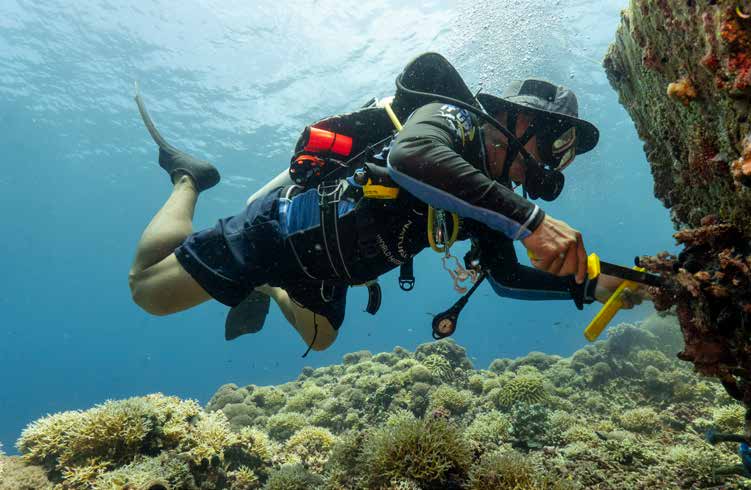
Segundo Conales measuring the coral growth

The Ranger Station

The rangers are on two-month rotations in this isolated area. Their home is called the ranger station, which is also the name of the dive site surrounding the sandbar. The current ranger station is made of concrete and reinforced with polystyrene, and a new one is being built on the same sandbar.

The rangers are equipped with two patrol boats, a radar, radio, an automatic identification system (AIS) and GPS units. For entertainment, they have a volleyball net, a basketball hoop, and a karaoke machine (a staple in the Philippines). Last year, a Starlink device was donated by Blacklist International, enabling them to finally have Internet! Part of the sacrifice they make as rangers is missing milestones of family and friends, such as birthdays and graduations, and being able to communicate with their loved ones makes being away just a little easier.

The composite team of marine park rangers pose in front of their 24-year-old ranger station

Threats and Successes

Any threat to Tubbataha becomes part of the park rangers’ duty, from illegal fishing to invasive species. In 2024, two of the biggest threats they face are coral bleaching and (don’t laugh) bird poop. Around the ranger station, hard corals are turning white, which could affect the fish and other species residing in the reefs. Thousands of birds have begun staying at the ranger station, with excessive bird droppings covering the roof and patrol boats. Its effect is no laughing matter: Bird poop can carry diseases and cleaning it up takes a lot of time and effort.

The efforts, sacrifice, and dedication of Tubbataha’s marine park rangers have not gone unnoticed. Last year, the Tubbataha rangers, represented by the four TMO rangers, Segundo Conales Jr, Noel Bundal, Jeffrey David, and Cresencio Caranay Jr, received the International Ranger Award from the International Union for the Conservation of Nature. The award came with a cash prize of USD10,000 to support their conservation efforts.

The marine park rangers’ existence is a testament to the Filipino value of bayanihan, which loosely translates to “a spirit of communal unity and cooperation”. It is their dedication and hard work that Tubbataha is teeming with marine life and continues to attract divers from all over the world.

If you enjoyed this story, and want more, go to https://shop.asiangeo.com/product/asian-diver-no-168/

Asian Diver No. 168

911! SAVE OUR SHARKS

0

Text and images by Annie Crawley

Sharks are still being decimated on an industrial scale, and we must redouble our efforts to stop the killing

Sharks have been the top predators since before dinosaurs roamed the Earth. Unfortunately, people are killing sharks at an alarming, unsustainable rate. We must rise together against the slaughter of these animals and crush the myths surrounding them. We are sounding the alarm around the world with a 9-1-1 emergency call for sharks and rays. To kick off the campaign, here are nine important facts everyone should know.

Shark fins for sale at a traditional Chinese medicine shop in Hong Kong, China.

9 ALARMING FACTS


  1. In less than 50 years, people have fished more than 70 percent of all oceanic shark and ray species from our world’s oceans. Their slow reproduction rates make them even more vulnerable to extinction. Many species are on the brink of extinction.
  2. Selling shark fins and meat around the world is a multi-billion dollar industry.
  3. Hong Kong is the top importer and exporter of shark fins, supplying mainland China, Malaysia, Singapore and others. Singapore is the world’s second-largest importer and exporter of shark fins. While the trade is legal, many endangered species illegally pass through its borders.
  4. Sharks have been apex predators in the ocean for more than 450 million years. Sharks maintain the balance of our ocean’s ecosystems, keeping prey populations in check. Unfortunately, they have been heavily overfished.
  5. As a top predator, sharks often have higher levels of mercury, PCBs, DDT, arsenic, lead and other toxins. People that consume sharks may experience headaches, tremors, birth defects, memory problems, damage to the central nervous system, cancer, brain damage, lung damage, stroke, heart attack or death.
  6. Fisheries deliberately and vaguely mislabel seafood, so many imports and exports labelled as seafood are really often endangered sharks and rays. We know this from DNA barcoding.
  7. Even if you don’t eat seafood, you might still be part of the shark decline. Many brands of sunscreens, anti-aging creams, lotions, hair care products, deodorants, makeup, lip balms, facial cleansers, pills and supplements contain squalene or shark liver oil.
  8. Sharks don’t have swim bladders to aid their buoyancy. Their large, oily livers do that for them and can make up to 25 percent of their body weight. In general, deep sea sharks have a higher content of squalene.
  9. Live sharks and rays are worth far more money than dead on a plate or in a bowl. Sharks are crucial to healthy ocean ecosystems, while shark ecotourism makes big contributions to local economies.
A live shark is worth so much more than a dead one.

1 CRUCIAL MOVEMENT

We do not have 50 years to act and reverse the damage people have caused to the declining populations of sharks and rays. We must act now, uniting as one voice. Public awareness drives corporate and policy change.

Shark ecotourism is a trending, lucrative business

1 UNITED SOLUTION

The decimation of sharks and rays in a people problem and only people can be the solution. Will you answer the call?


Come and be part of this global movement now!

If you’d like to read more about our work in education and conservation, subscribe to https://shop.asiangeo.com/product/asian-diver-no-168/

FISH AND EELS

0

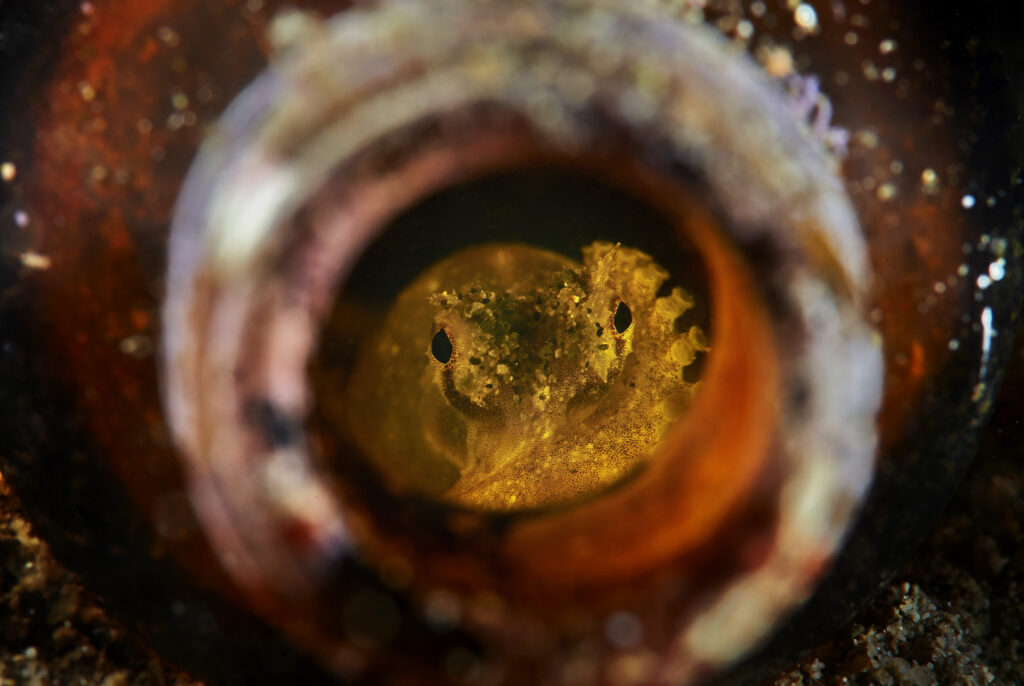
Coral reefs occupy less than one percent of the surface area of the world’s oceans, but they provide a home for between 6,000 and 8,000 species of fish, about 25 percent of all marine fish species. The various species have evolved complex adaptive behaviours, such as hiding in reef or rock crevices, developing venomous spines, and in muck dive sites, residing in trash, like bottles, cans or empty crisp packets. They also exhibit a dazzling array of colours and patterns, unlike the pelagic fish, which are usually shaded in silver hues. Eels are a strange group of fish with elongated, snake like bodies. However, unlike most fish, eels have no scales, but instead have smooth and slimy skin. This aids them in moving through narrow crevices and burrows using fins that run along the length of their bodies. Some eels, like morays, have a second set of jaws that helps to pack large prey into their narrow bodies.

PHOTOGRAPHER Tofer Morales


PHOTOGRAPHER Jeen Snidvongs


PHOTOGRAPHER Mike Bartick


PHOTOGRAPHER Mike Bartick


PHOTOGRAPHER Pipat Cat Kosumlaksamee


PHOTOGRAPHER Aaron Wong


PHOTOGRAPHER Libbie Tan

CRUSTACEANS

0

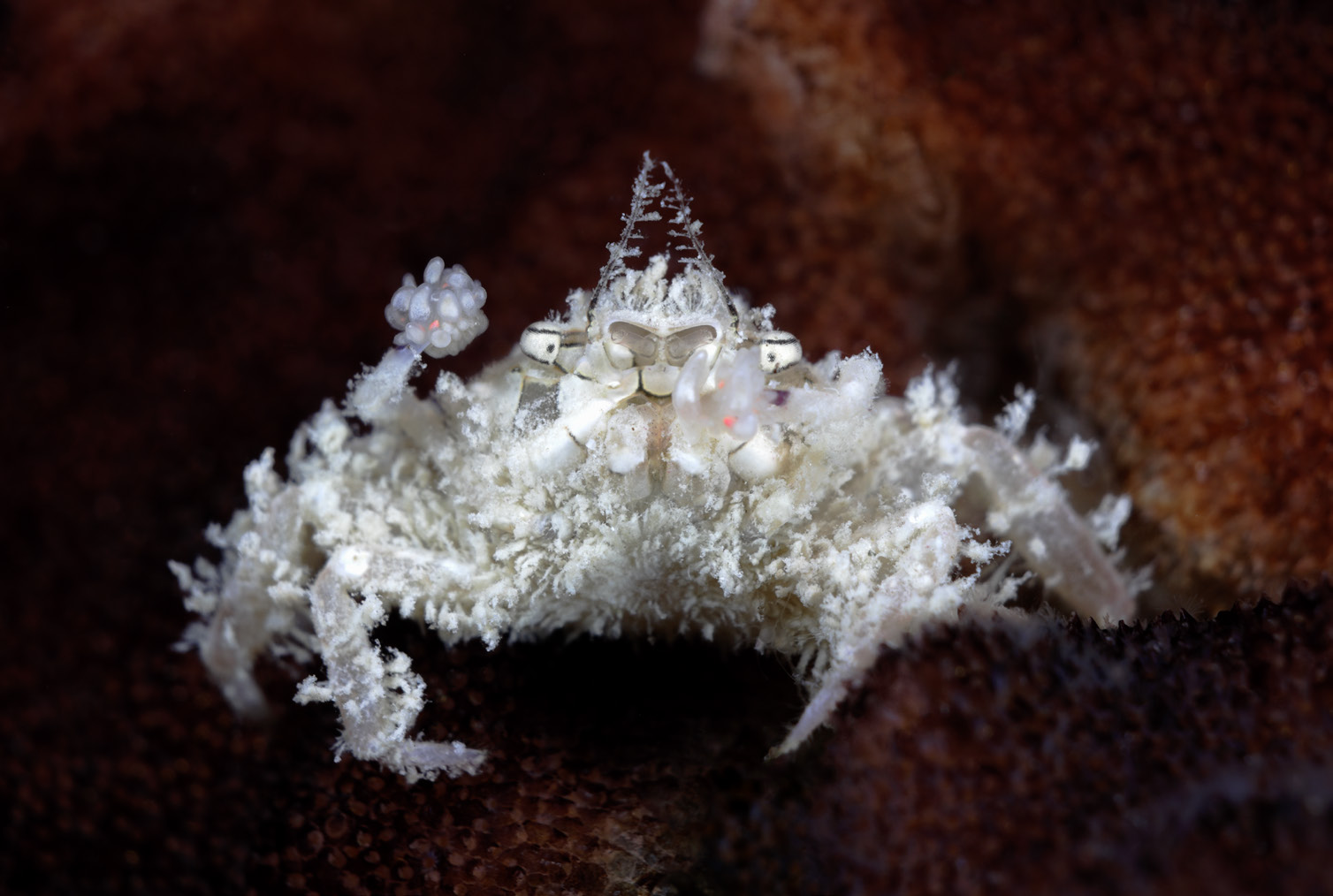
These animals make up a very large group in the Arthropoda phylum and most of them are found in freshwater and marine environments throughout the world, even high􀇦altitude mountain lakes. Crabs, shrimp, krill, barnacles, copepods and mantis shrimp are but a few that are found in the ocean.

PHOTOGRAPHER Jeen Snidvongs


PHOTOGRAPHER Jeen Snidvongs


PHOTOGRAPHER Jeen Snidvongs


PHOTOGRAPHER Patrick Neumann


PHOTOGRAPHER Patrick Neumann


PHOTOGRAPHER Patrick Neumann


PHOTOGRAPHER Trina Biazon


PHOTOGRAPHER Anna Ewa Manzel


PHOTOGRAPHER Jim Chan


PHOTOGRAPHER Aaron Wong


CEPHALOPODS

0

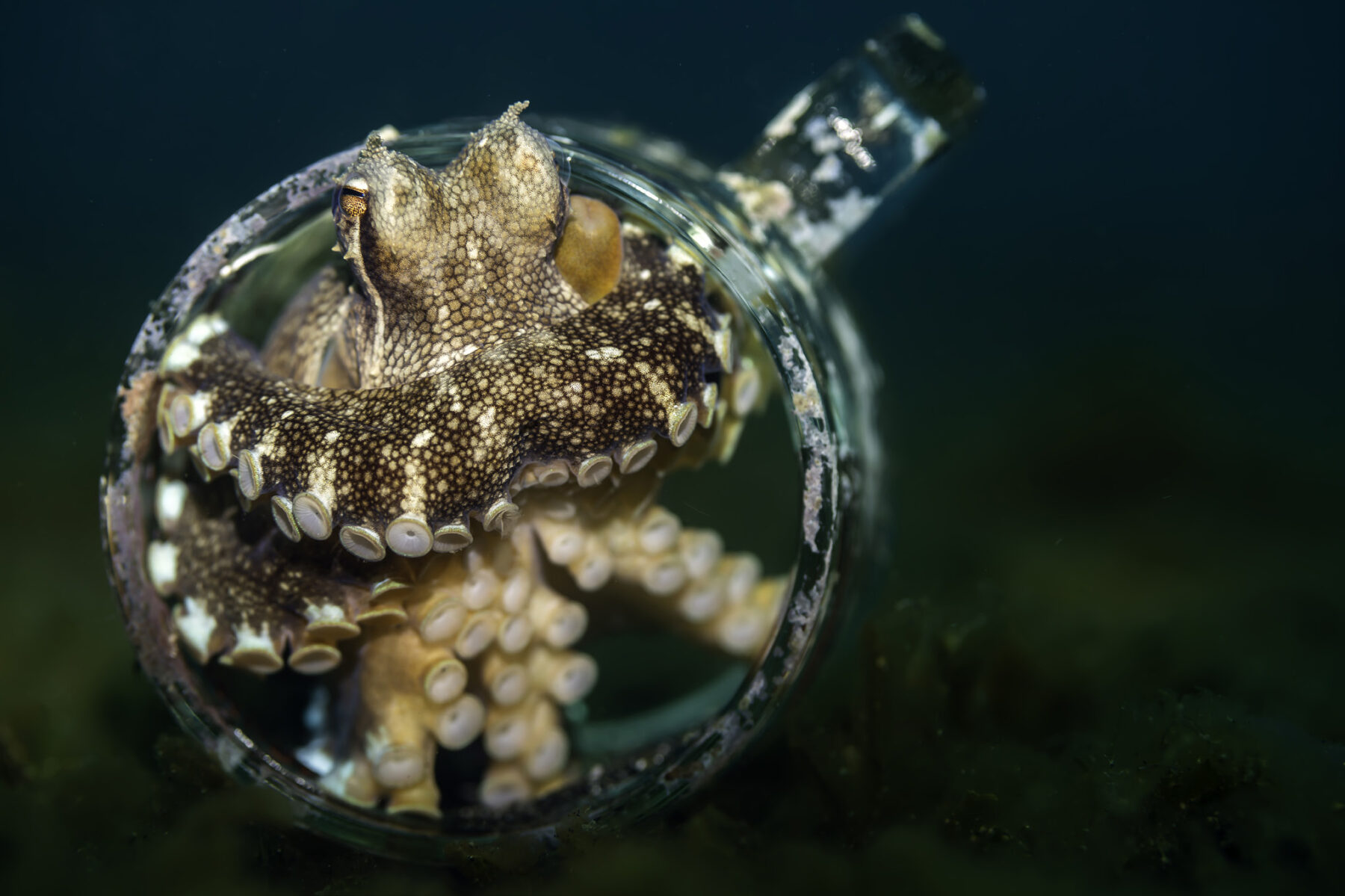
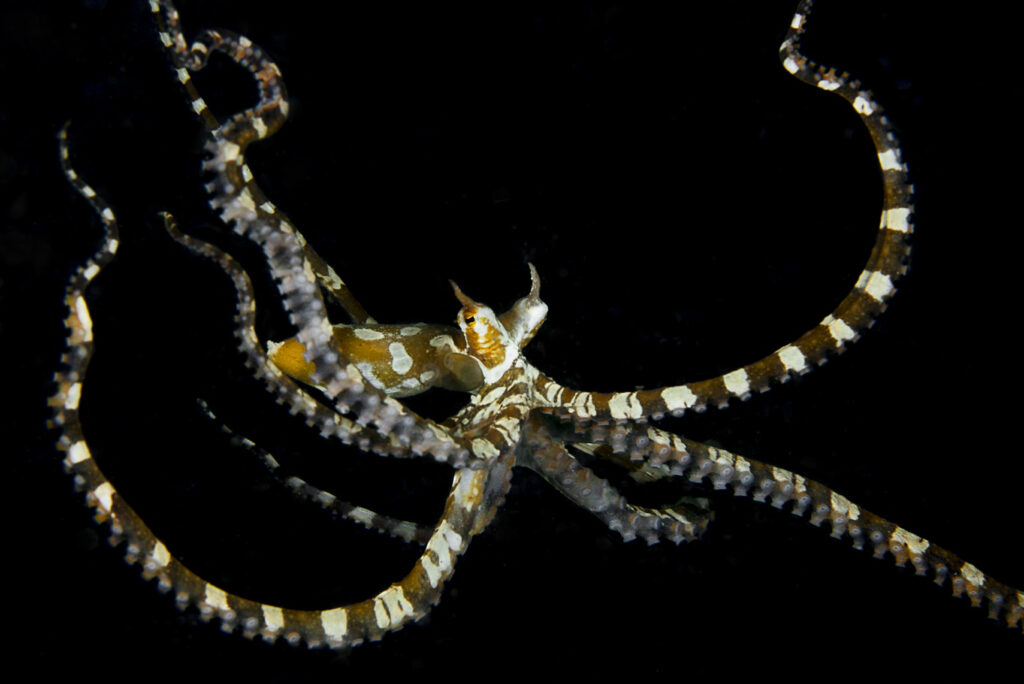
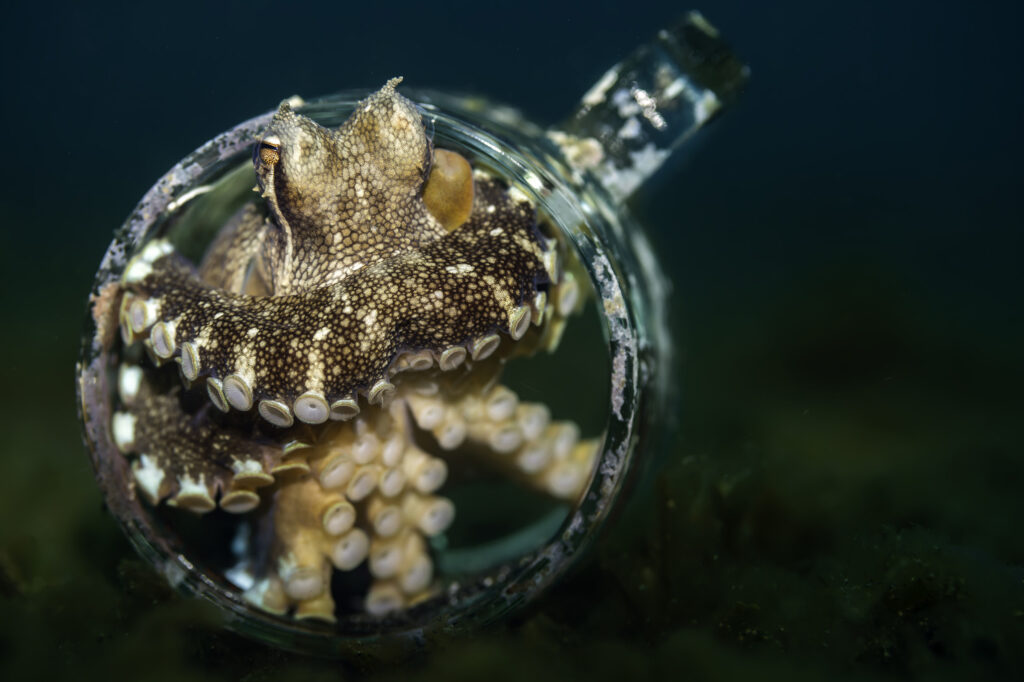
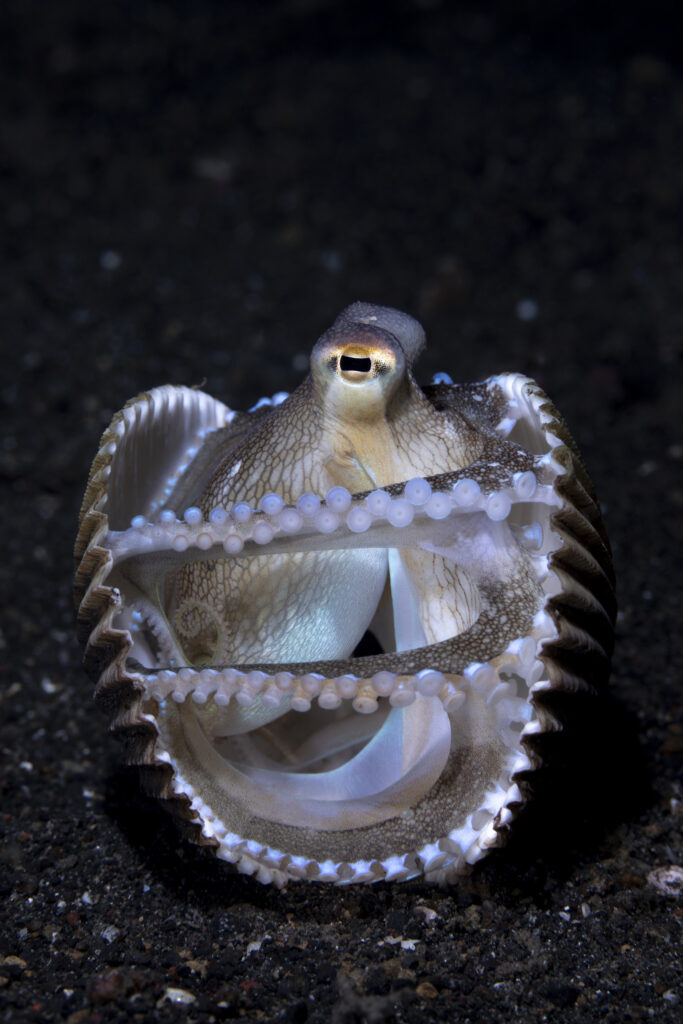
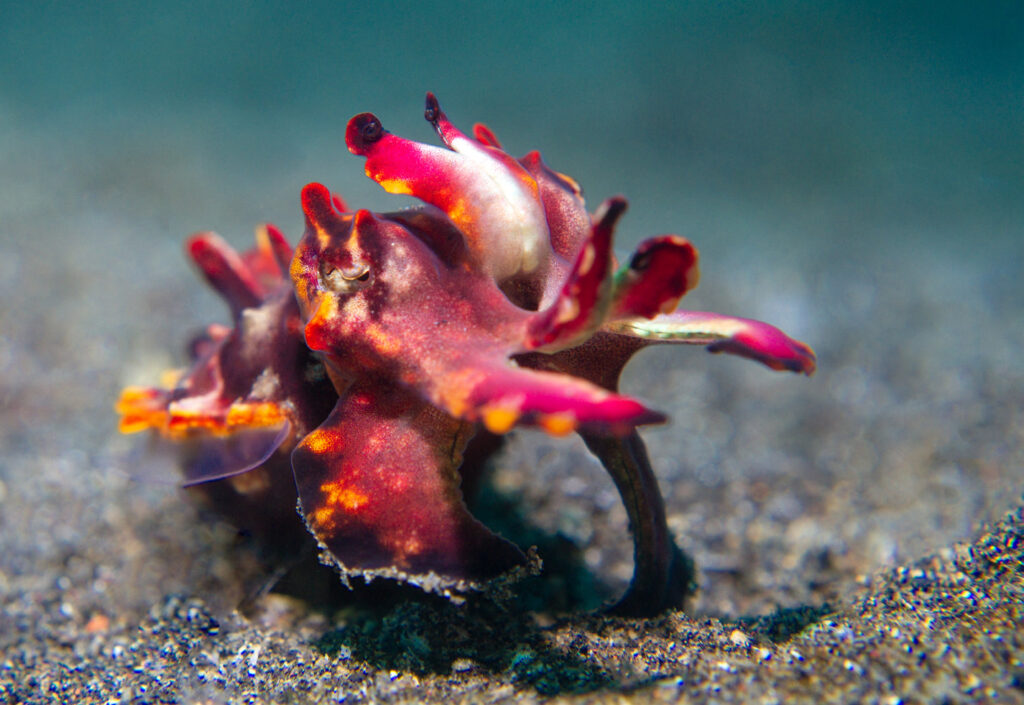
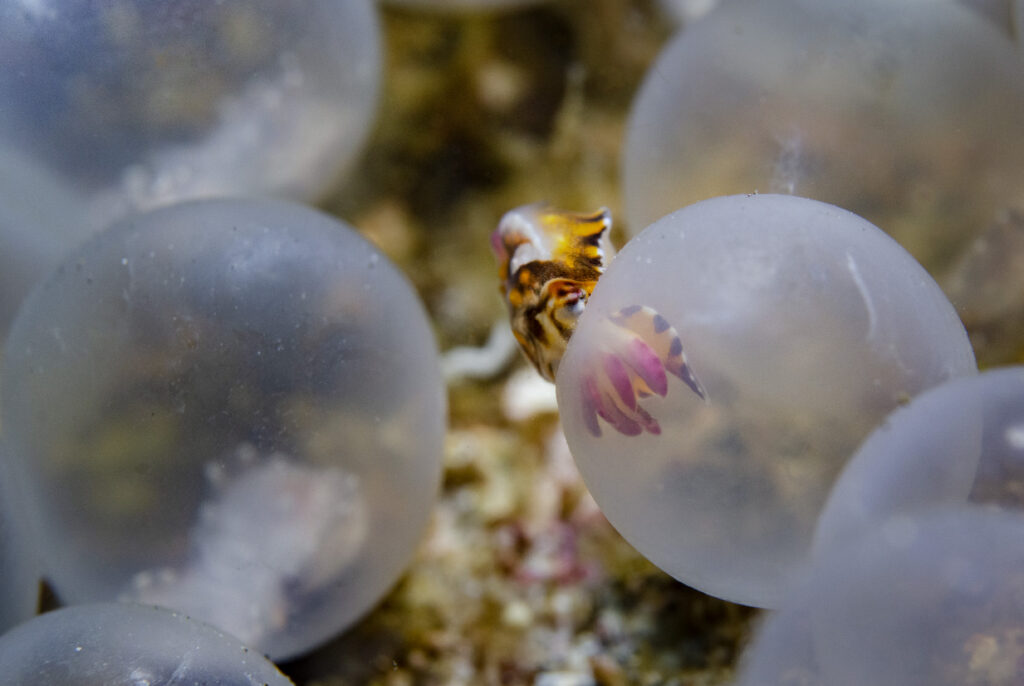
This class of molluscs is the most intelligent and mobile, and displays a remarkable diversity in size and adaptations for predation, locomotion, camou􀆪age and communication. highly advanced and organised, these invertebrates are exclusively marine􀇦dwelling animals that have suckered tentacles and arms, camera like eyes and colour shifting skin. They range in size from the giant squid at 20 metres (the world’s largest mobile invertebrates) to the smallest, pygmy squids (Idiosepius), which are barely an inch long.

PHOTOGRAPHER Patrick Neumann
PHOTOGRAPHER Aaron Wong
PHOTOGRAPHER Lilian Koh
PHOTOGRAPHER
Pipat Cat Kosumlaksamee
PHOTOGRAPHER
Pipat Cat Kosumlaksamee
PHOTOGRAPHER
Pipat Cat Kosumlaksamee

BLACKWATER

0

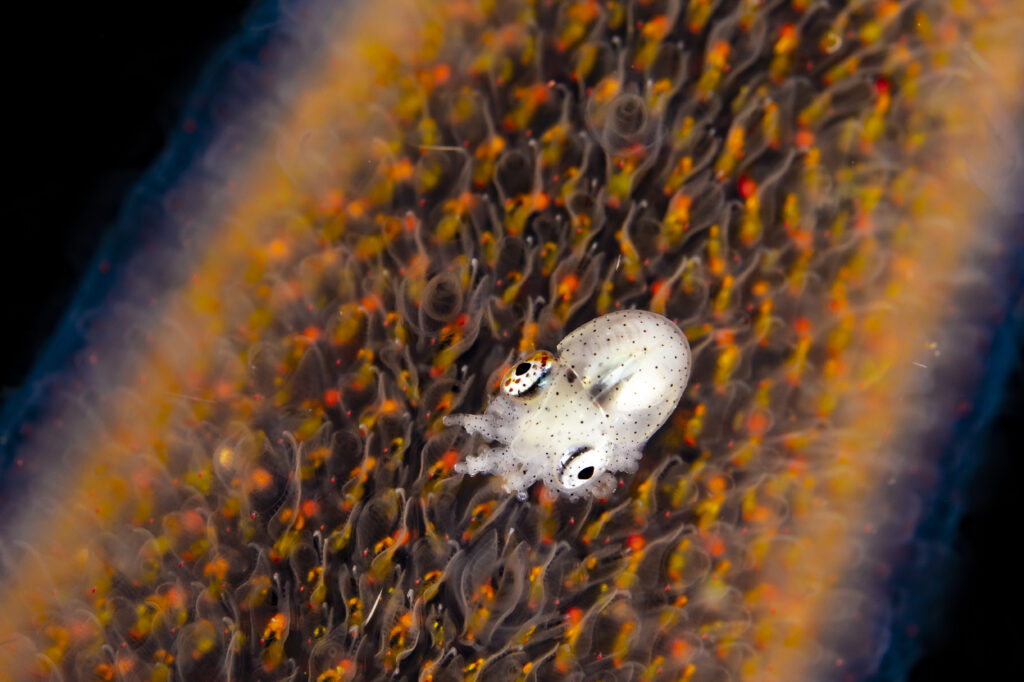
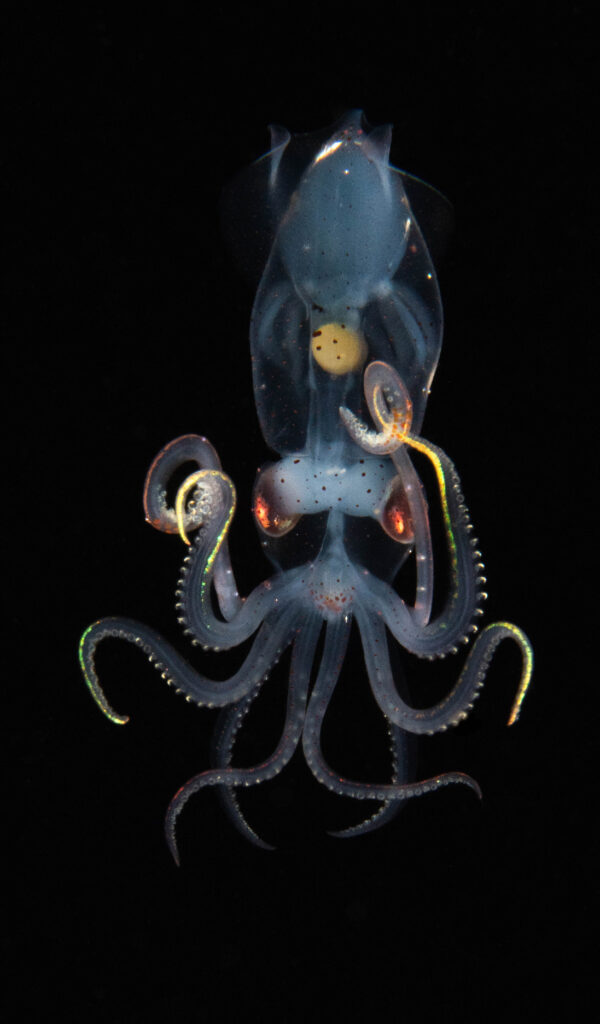
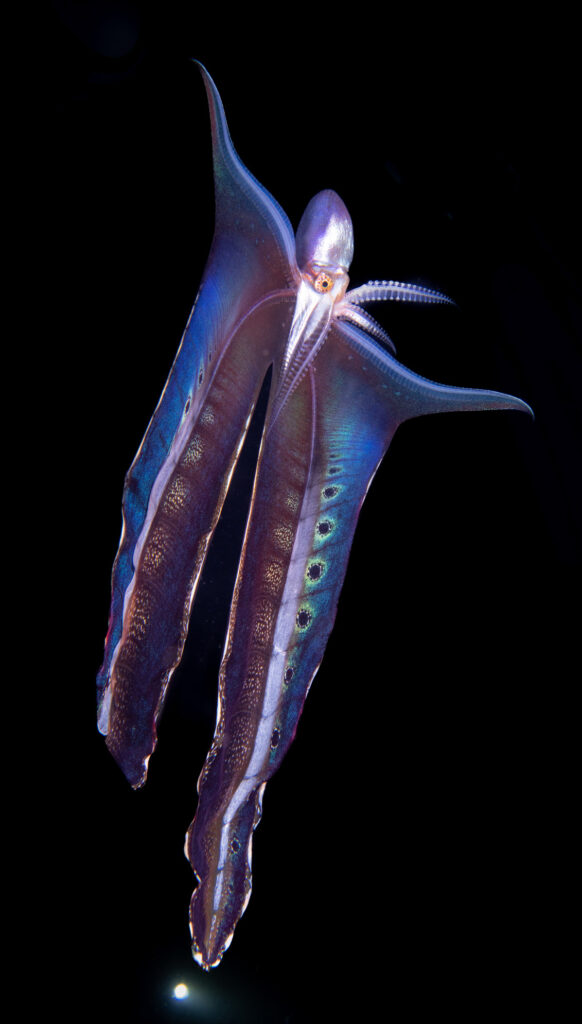
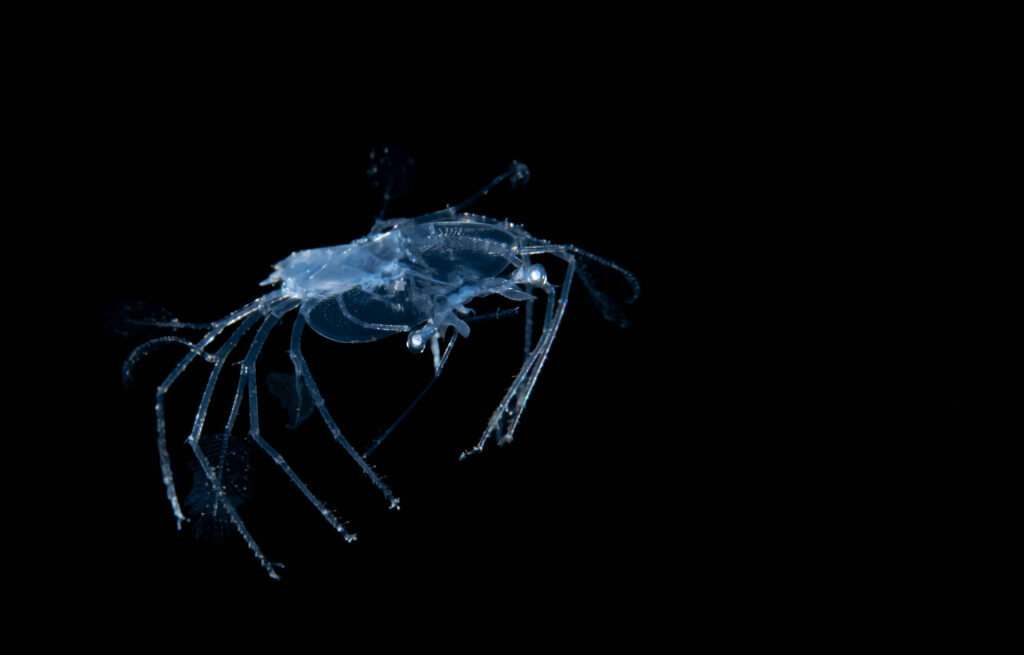
In this next-level type of night diving, the ocean serves up the kind of life you’ll only find in sci-fi movies. Attracted to floodlights suspended in midwater, creatures emerge from the depths to feed. This is the largest animal migration on Earth, and it happens every night! The macro life includes crabs, squid, fish larvae, and the larvae of other alien creatures. They are usually transparent or bioluminescent, although there are some exceptions like the shimmering blanket octopus (Tremoctopus violaceus).

This squid managed to snag a snack, thanks to the blackwater lights
PHOTOGRAPHER Thomas Zumbrunnen


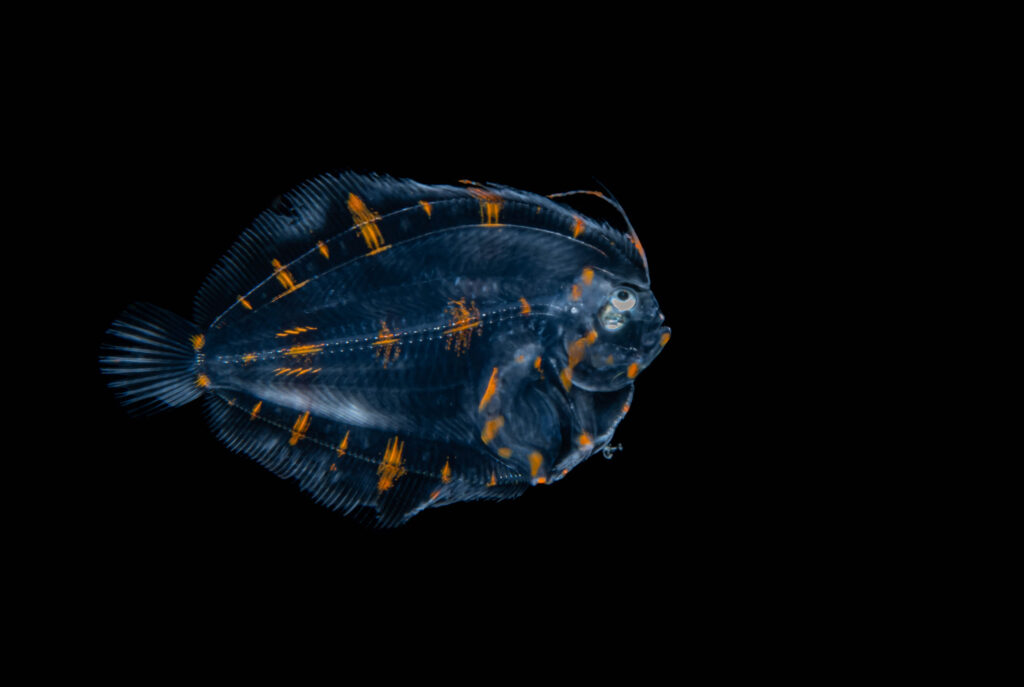
Flounders have a body geometry that has adapted to life on the sea bottom, and as juveniles, they swim efficiently in the water column by undulating their bodies to create propulsion
PHOTOGRAPHER Thomas Zumbrunnen


The sharpear enope s􀂓uid can be found in tropical and subtropical oceans, can grow to about 25 centimentres, and is usually found between 200 and 1,000 metres
PHOTOGRAPHER Thomas Zumbrunnen


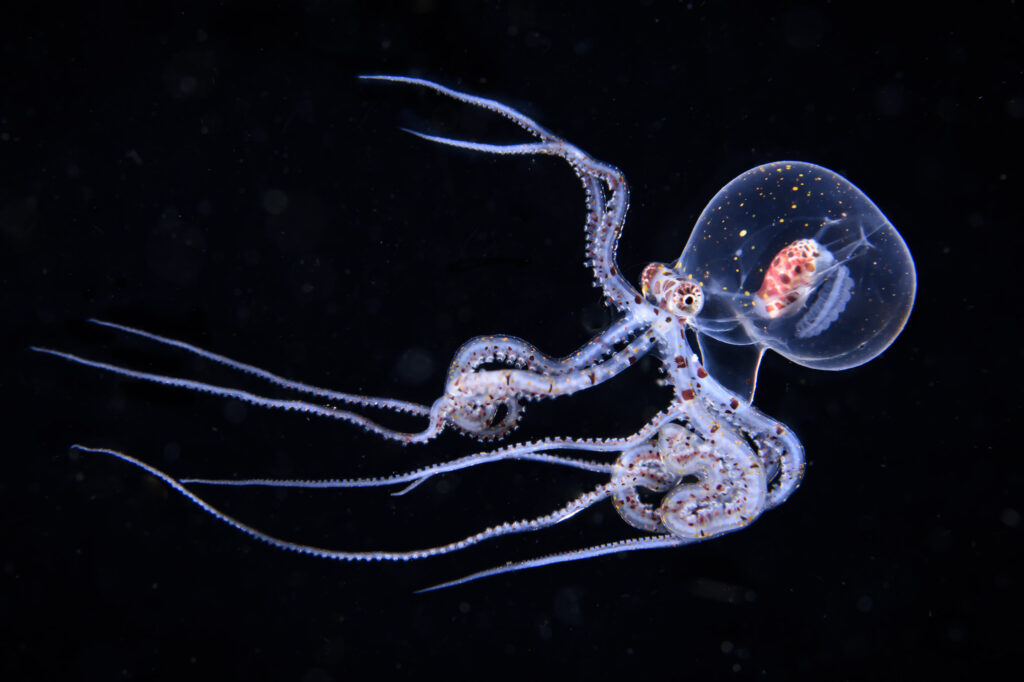
When threatened, blanket octopuses stretch their arms out to create a blanket like silhouette, designed to frighten would be attackers away
PHOTOGRAPHER Mike Bartick


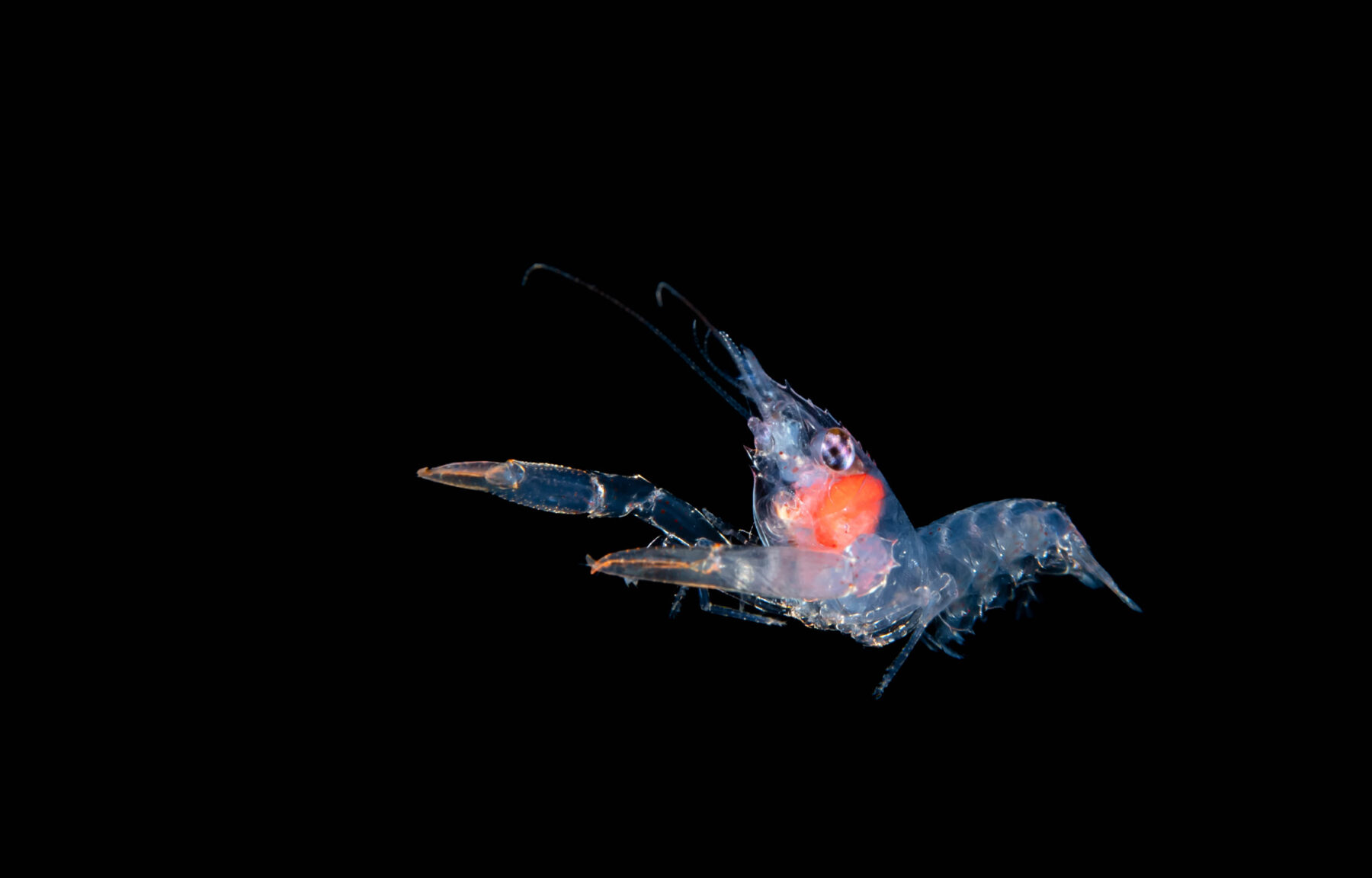
Lobster larvae drift up into the midwater where food is abundant and currents can carry them to new homes
PHOTOGRAPHER Thomas Zumbrunnen

ALIEN CREATURES

0
PHOTOGRAPHER Anna Ewa Manzel

There’s no end to the wonder about the kind of life that exists beneath the water’s surface. And that’s probably what keeps divers (and photographers, of course) coming back into the water over and over again. To encounter these creatures, see them up close and ponder about how they thrive in their environments is enough to challenge any surreal dream.

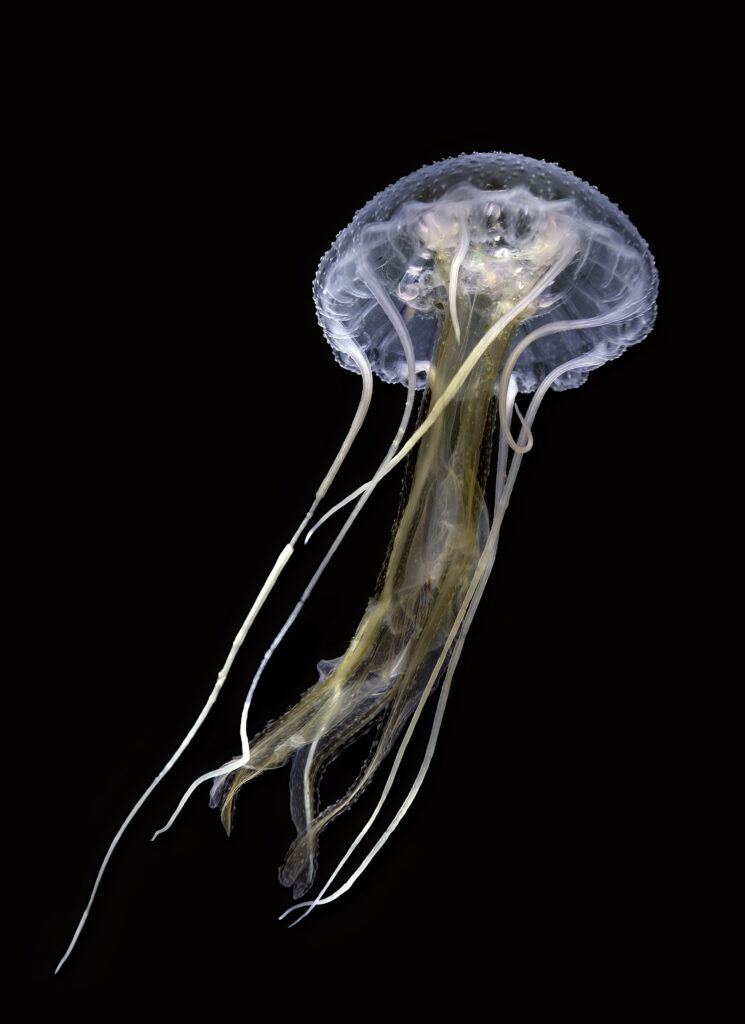
JELLYFISH
Cnidaria

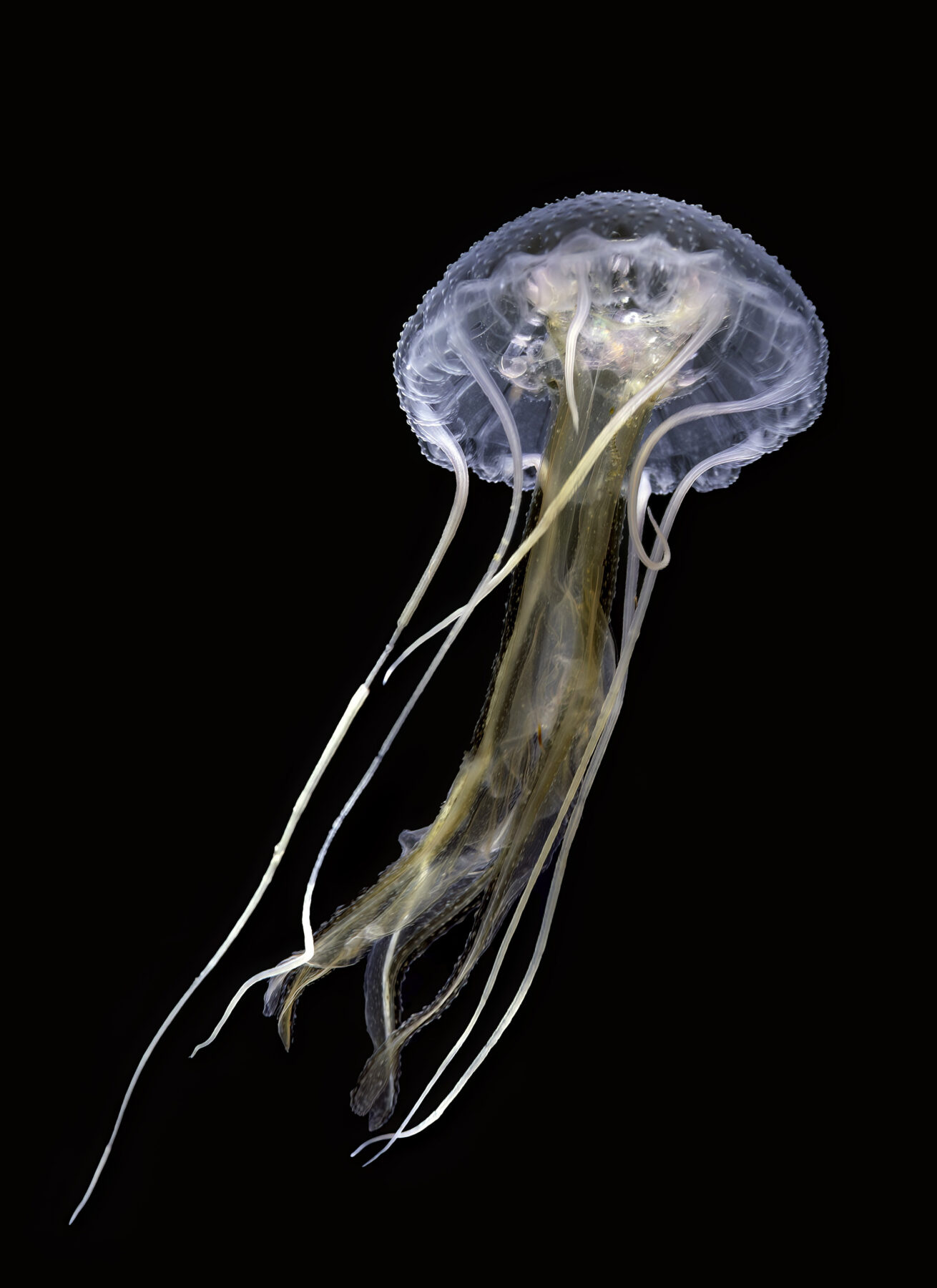
Pulsing along on ocean currents, jellyfish have been around for millions of years. Some are clear, and others have vibrant colours of pink, yellow, blue and purple. They have no brains, hearts, bones or eyes.

PHOTOGRAPHER Anna Ewa Manzel

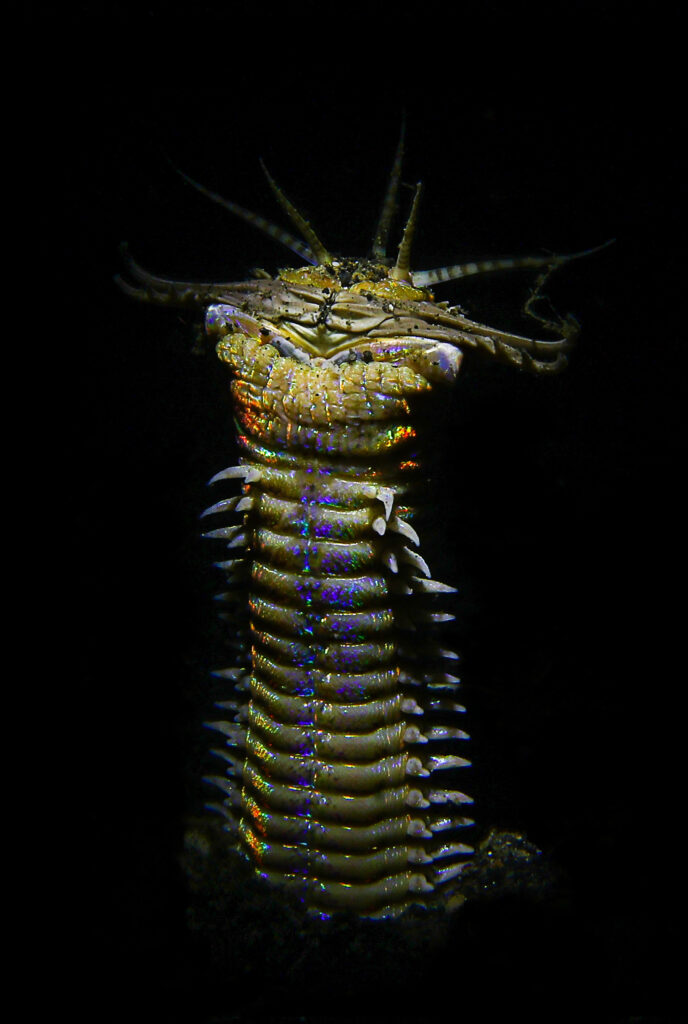
BOBBIT WORM
Eunice aphroditois
This glittering ocean terror can reach up to three metres in length, and has teeth so sharp it can chop fish in half with its retractable jaws. It also injects its victims with a toxin to make them easier to digest.

PHOTOGRAPHER BK Chin

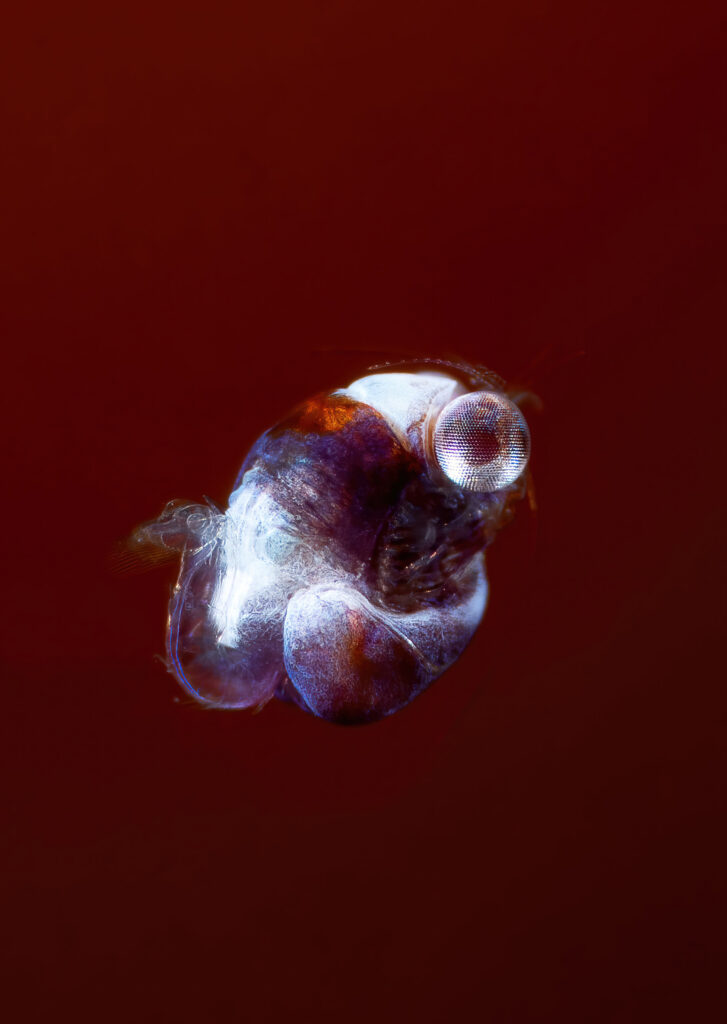
IDIOMYSIS SHRIMP
Their tiny, rounded bodies, bulbous eyes and attractive colours make them look like cute cartoon characters. While they do have tails like other shrimp, they tuck them under their bodies and look like little bees instead. No larger than about four millimetres, they “flock” in small groups to avoid predators, swarm about the reefs, and are often found around stinging anemones for extra protection.

PHOTOGRAPHER Jonathan Lin

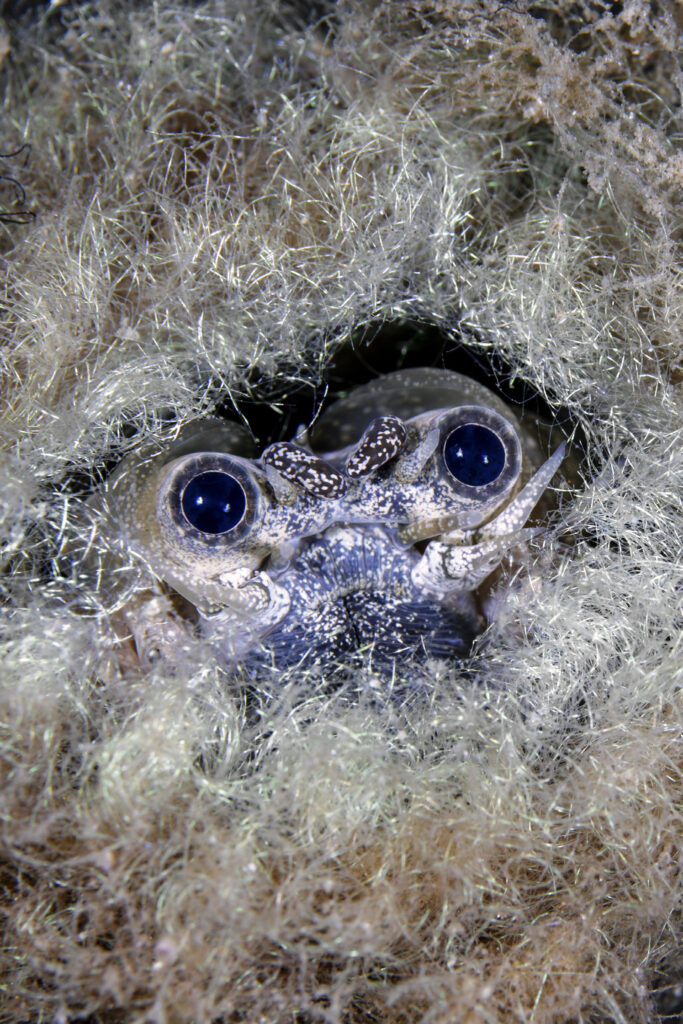
POLYCHAETE WORM
Eupolyodontes amboinensis
Highly elusive, tiny (about 3mm eye to eye) and terrified of the light, this specimen was captured with very low red light and a huge dose of patience.

PHOTOGRAPHER William Tan