Home Blog Page 7

Minigear Snoot Diving Light Review

0

A GAME CHANGER FOR SNOOT FANATICS

Text and images by Patrick Neumann


“Should I use strobes or lights for my underwater photos?” I don’t know how often I’ve heard this question. Until a few years ago, I used to give advice on underwater photography equipment at trade fairs. My answer was always: “Strobes for photography, lights for video!” That changed for me over the last year in a revolutionary way when I was introduced to the Minigear MS-03 snoot diving torch.

TRADITIONAL SNOOTING IS HARD

With the advent of snoot photography – where a narrow beam is used to light a subject but not its surroundings – the equipment used had to change radically. Snoot attachments became available for all common underwater strobes. However, handling them was quite a challenge. The snoot attachment on the strobe was difficult to align simply because of its size and unwieldiness. The challenge increased when there was no dive guide or buddy to hold the snoot for you. On your own, you needed one finger on the shutter release, an eye looking through the viewfinder, and your other hand “blindly” trying to align the snoot correctly. In addition, of course, you can only see the results of your attempts after the flash has fired.
THE GAME CHANGER

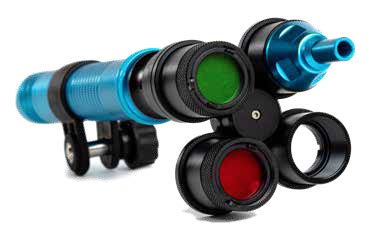
When the Minigear snoot diving light arrived on the market, it became easier to snoot more precisely, even without the help of a guide or buddy. They were smaller and easier to handle than the conventional snoot-flash combinations. It was also easier to check the lighting effect immediately, not only after taking the picture.
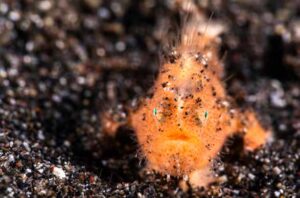
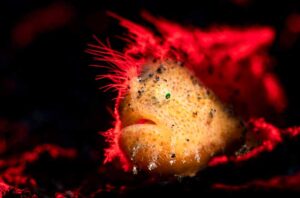
This orange baby hairy frogfish on black sand is a classic macro shot as well. With an open aperture, the frogfish is differentiated from the black sand
For this image, two snoot diving lights were used: one to backlight the baby hairy frogfish with a red colour filter, and the other to snoot just its face


OTHER SPECIAL FEATURES

The Minigear MS-03 has another special feature – it has a very narrow beam of light, like a laser beam. If you place two of the snoot diving lights to the right and left of the animal and align them accordingly, you can light the animal so precisely that none of the surroundings, foreground and background, nor the substrate, can be seen in the picture. And because the lamps are placed on the sand, the photographer has both hands free to operate the camera and adjust the lighting with pinpoint precision. Another effect of this type of lighting is that the light makes the animals look as if they are glowing from within.

NO MORE LIMITS TO THE IMAGINATION

To make macro images more interesting, photographers have used strobes to illuminate materials like steel wool or foil behind the subject to create bokeh background “bubble effects”. But now, with snoot diving lights, there are no longer limits to the imagination when it comes to lighting artificial backgrounds, or even foregrounds. Anything that reflects light can be found at any DIY store.
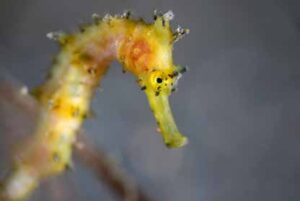
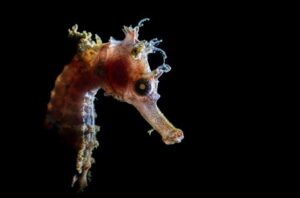
This yellow seahorse was photographed in Lembeh, Indonesia with a common 100mm macro lens and two strobes
For this backlit image of a seahorse, one Minigear snoot diving light was placed behind the seahorse to illuminate only the head and part of the body


NEW ARTISTIC FREEDOM

This “new” type of snoot photography allows photographers to decide what should and should not be in the picture, and also gives them the artistic freedom to add props and special effects to their images. This has created a whole new category of underwater macro photography for me, and kept me captivated over the last year.

QUALITY OVER QUANTITY

Precise snooting takes practice, and you will spend exponentially more time with a single subject. The number of animals photographed per dive also plummets. Sometimes, I spend an entire dive with only one animal. But for me, it’s always going to be quality over quantity.
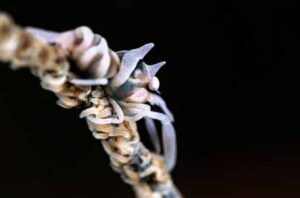
A black-background image of a Zanzibar shrimp on a whip coral is a good example of a traditional macro shot. The black background is achieved by photographing against the water column with a fast shutter speed
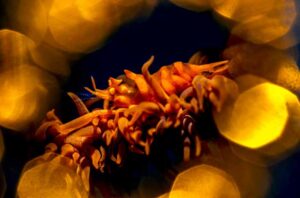
A Zanzibar shrimp on a whip coral is illuminated with two Minigear snoot diving lights. A third snoot diving light was used to light up the “bling” in the foreground


PRECISION AND CREATIVITY COMBINED

It should be said that this new creative type of underwater macro photography can theoretically also be done with conventional snooted strobes, particularly the Backscatter Mini Flash with its accompanying Optical Snoot. Still, you only see the results after the flash has fired, and most importantly, it is difficult or near-impossible to manage two, three, or even four strobes at the same time.

ADDITIONAL ACCESSORIES

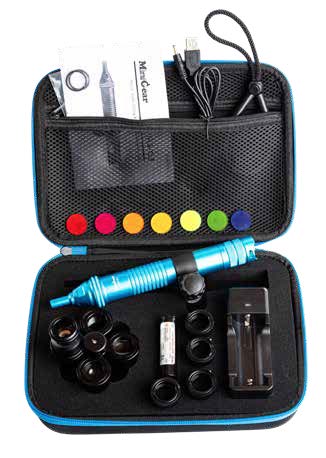
There are additional accessories such as colour filters available for Minigear snoot diving lights. There’s even a revolver of different condensers that creates different light beams for even more options to expand your creativity. These days, it’s hard to find something that adds a new facet to underwater photography, and for me, the Minigear MS-03 snoot diving lights – I usually enter the water with four of them! – give me that same buzz I felt at the beginning of my underwater photography career.

Check out the rest of the magazine for more great stories!
Scuba Diver oceanplanet No.128


https://shop.asiangeo.com/product/scuba-diver-oceanplanet-no-128/
A Painful Lesson

0
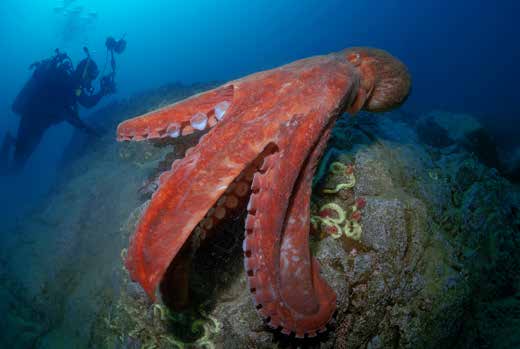
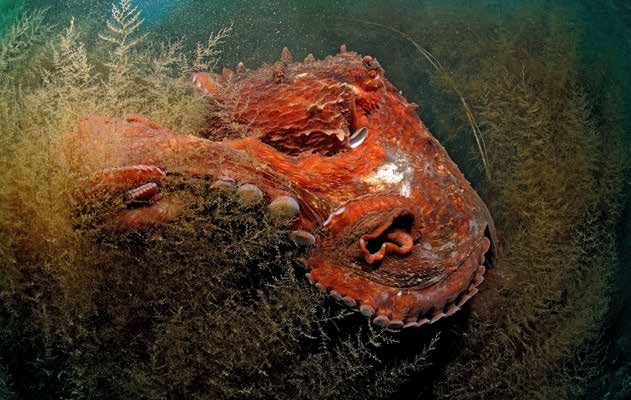
Giant Pacific octopuses (Enteroctopus dofleini) can grow up to 10 metres and weigh up to 300 kilograms!

WITH BITES AND STINGS FROM MARINE ANIMALS, IT IS ALWAYS PRUDENT TO HAVE THEM LOOKED AT AND TREATED IMMEDIATELY


THE SITUATION

On one of the dives, a diver collected what he thought was an empty moon snail shell. The divers did not realise that a juvenile giant Pacific octopus (Enteroctopus dofleini) had taken up residence in the shell. When the octopus crawled out after the dive, another diver picked it up with her bare hands to return it to the water. But before she could, the octopus bit her three times in the same place, on the back of her left hand. She said the bites felt like bee stings. As the wound bled moderately, the diver rinsed it first with salt water, and then 40 minutes later with soap and fresh water. Swelling appeared within 30 minutes and became severe within about an hour.

The diver was a healthy, 32-year-old woman with 130 logged dives. She had no allergies or health problems and had just completed her second dive on day two of her dive trip. Although blue-ringed octopus bites are famous for being potentially deadly, bites from most other octopus species are generally not problematic. Recently, however, scientists have come to understand that all octopus bites are venomous to some degree.

These cephalopods can be found in the temperate waters of the Pacific, from southern California to Alaska, west of the Aleutian Islands and Japan

IGNORING THE PAIN

About four hours later, this diver went for another dive. Upon surfacing, she felt nauseous and vomited. It must also be noted that she had not previously experienced such symptoms after diving. The nausea receded quickly, however, and the diver went on five more dives over the next two days despite significant swelling and compromised mobility.

INEFFECTIVE SELF-TREATMENT

The diver wore a drysuit and neoprene gloves on every dive. When not diving, she kept the wound dry and applied an over-the-counter antibiotic ointment. She also took an over-thecounter antihistamine and applied crushed aspirin to the skin surrounding the puncture site (not directly on the wound), but none of these provided any relief. Significant itching and pain reached their peak five to six days after the incident.

THE CONSEQUENCE OF INFECTION

About three days after the bite, the wound became infected and developed into a dark, quarter-inch lesion surrounded by a raised, reddish area that turned blackish-green nine days after the incident. Moderate pain, significant itching and swelling lasted for more than a month. The lesion took approximately seven weeks to heal, although pain, sensitivity to touch, and itching lasted for three months, with minor flare-ups still occurring four to five months after the incident.

The diver’s physician first prescribed a 10- day course of antibiotics. Evolving symptoms and progressive discolouration, however, prompted the doctor to prescribe an additional antibiotic along with an antihistamine for another 10 days to manage the itching.

RESULT OF DELAYS IN PROPER CARE

The delay in proper wound care may have been a complicating factor. DAN recommends washing marine bites immediately with soap and clean water to minimise the risk of infection. Infection can impair healing and lead to significant tissue damage. Divers should not dive with open wounds because exposure to the aquatic environment, with its myriad of antigens and toxins, can increase further infection.

WATCH FOR SIGNS OF INFECTION

Monitoring the wound is important since signs of infection can appear between a few hours and several weeks following an injury. The immediate swelling the diver experienced may have been a consequence of the initial trauma, but further exposure to the sea on her subsequent dives prolonged the symptoms and likely resulted in a serious infection.

TREAT WOUNDS IMMEDIATELY

An additional complication in this case may have been the delay in proper medical care. DAN advises divers to treat wounds caused by marine life like any other animal bite, and seek prompt, medical attention. In this case, the wound was evaluated 10 days after the incident, and the delayed treatment limited the progression of the diver’s recovery.

This incident should serve as a reminder that timely treatment of wounds can reduce the risk of serious infection. Whenever possible, divers should photograph their wounds, because images can help medical staff provide more effective and efficient care. Divers should also understand that handling marine life may lead to injuries, some of which can result in serious complications.

For more information, visit World.DAN.org

If you’d like to read more stories, you can find them in our latest issue of Scuba Diver Through the Lens!

Scuba Diver oceanplanet No.128


https://shop.asiangeo.com/product/scuba-diver-oceanplanet-no-128/


New Species Discovered

0

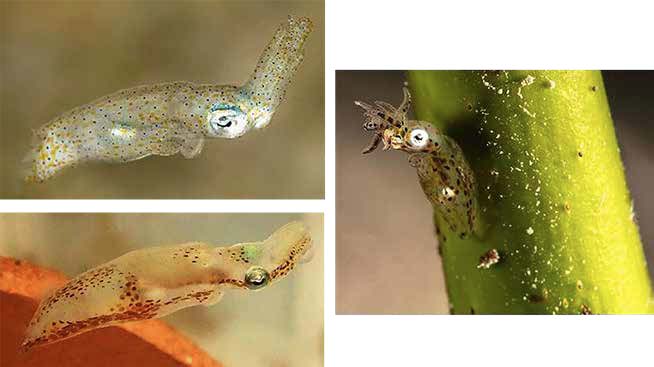
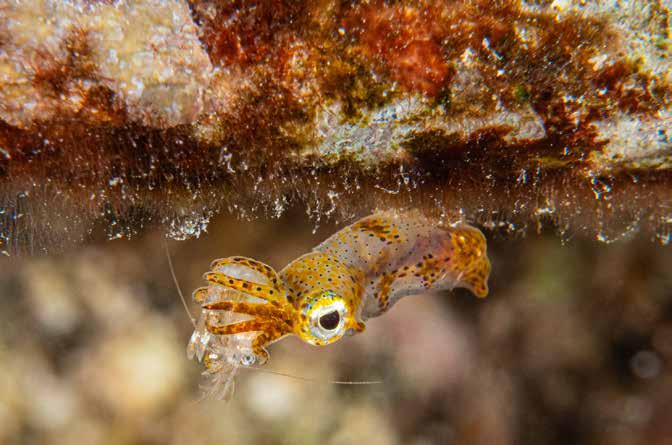
Two cephalopod species have been discovered in the coastal waters of the Okinawa Islands in Japan – the Ryukan pygmy squid (Idiosepius kijimuna) and Hannan’s pygmy squid (Kodama jujutsu).


INSPIRED BY JAPANESE FOLKLORE

The Kijimuna are mischievous, red-haired spirits who, according to Japanese folklore, are said to live in banyan trees

The scientific name of the Ryukan pygmy squid was named after the feisty, red-haired forest fairies believed to reside in the banyan trees of Okinawa. Like its namesake, the squid is tiny, has red colouration, and spends most of its time attached to the vegetation in shallow seagrass beds close to shore.

Ryukan pygmy squid (Idiosepius kijimuna) n. sp. a, c: swimming; b: attached to vegetation

Hannan’s pygmy squid is named after the Kodama spirits who live in ancient trees, and whose presence indicates a healthy forest. The squid uses its small arms to grapple with prey larger than itself, alluding to the movements that resemble the Japanese martial art jujutsu, which involves grappling and using the opponent’s strength against him. The squid also raises and curls its arms above its head, like a martial arts pose!

Hannan’s pygmy squid (Kodama jutjutsu) using its tentacles to “grapple” with its unfortunate prey

The discovery and documentation of the two species was made possible through the collaboration between scientists and underwater photographers. It was the images of Shawn Miller, Keishu Asada and Ryan Hannan (Kodama jujutsu takes its common name from him) that kickstarted the interest and subsequent research that catalogued the species.

HARD TO FIND

Both species, each measuring only about 12 millimetres in length, were a challenge to find. Morever, both species are only active at night, and the Ryukan only shows itself in the winter! The Kodama is even more elusive, and is only found in coral reefs.


Did you enjoy the article? Read on and find out more about all the amazing creatures and wonderful photographers who have captured their images in our latest issue of Scuba Diver Through the Lens, fresh off the press now!

Scuba Diver oceanplanet No.128

https://shop.asiangeo.com/product/scuba-diver-oceanplanet-no-128/
Samantha Whitcraft to be Inducted into the Women Divers Hall of Fame

0

Aggressor Adventures Director of Conservation & Outreach, Samantha Whitcraft, will be inducted into the Women Divers Hall of Fame in 2024. Whitcraft is recognised for her efforts in protecting and preserving marine environments worldwide.

“I am so deeply honored and humbled to be counted among the incredible leaders and change-makers in the Women Divers Hall of Fame, many of whom have long been my mentors, role models, and heroes throughout my career. I am and will always be grateful to them for their guidance,” says Whitcraft. “In conservation, success often requires a team, and I’ve been blessed to work with some of the best including the New England Aquarium, NOAA-Fisheries Early Life History Lab, Shark Savers, Oceanic Society, and now the Sea of Change Foundation.”


Every year, the Women Divers Hall of Fame acknowledges women divers who have made outstanding contributions to the exploration, understanding, safety and enjoyment of our underwater world. The Hall of Fame supports the underwater world and its associated careers by promoting opportunities in diving through grants, scholarships, internships and mentoring, as well as providing a worldwide network of industry contacts. The Women Divers Hall of Fame was founded in 1999.

Samantha Whitcraft is a marine conservation biologist, environmentalist and oceans advocate. Logging 5000+

research and educational dives around the world, she created the first classroom-at-sea in Gardens of the Queen National Park, Cuba. After earning her Bachelor’s in natural science at Harvard and her Master of Marine Affairs & Policy at University of Miami, she worked to legally protect endangered marine species, especially sharks, whales, and manatees. She has studied coral reef MPAs’ connectivity and investigated the shark fin trade in China, all while promoting sustainable ecotourism over her 30+ year career. Whitcraft initiated and developed Aggressor Adventures® award-winning sustainability program, Green the Fleet®, and is Executive Director of the Sea of Change Foundation, providing leadership in community-based conservation around the globe. Aggressor Liveaboards® was among the first in the scuba industry to create and maintain a dedicated Director of Conservation & Outreach position.

Aggressor Adventures reservations can be made online at www.aggressor.com, by calling 800-348-2628, +1-706-993-2531, or at your travel center.

DAN Launches Academy of Dive Medicine in Bali!

0

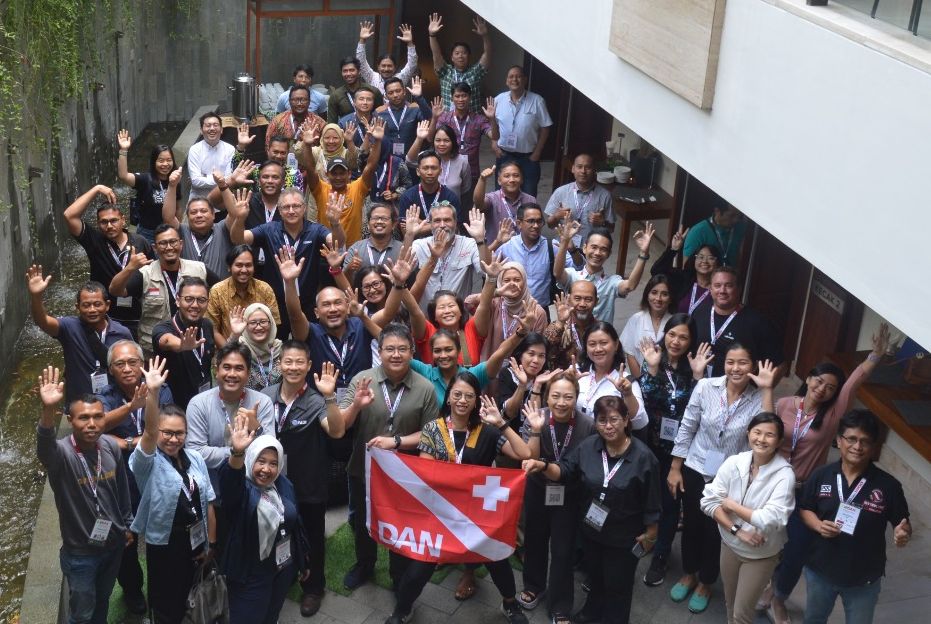
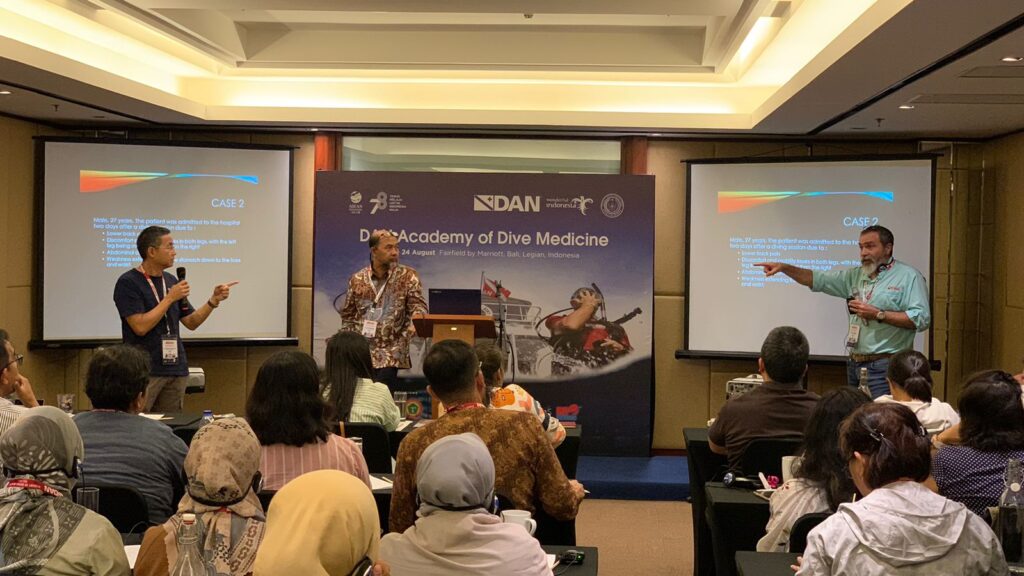
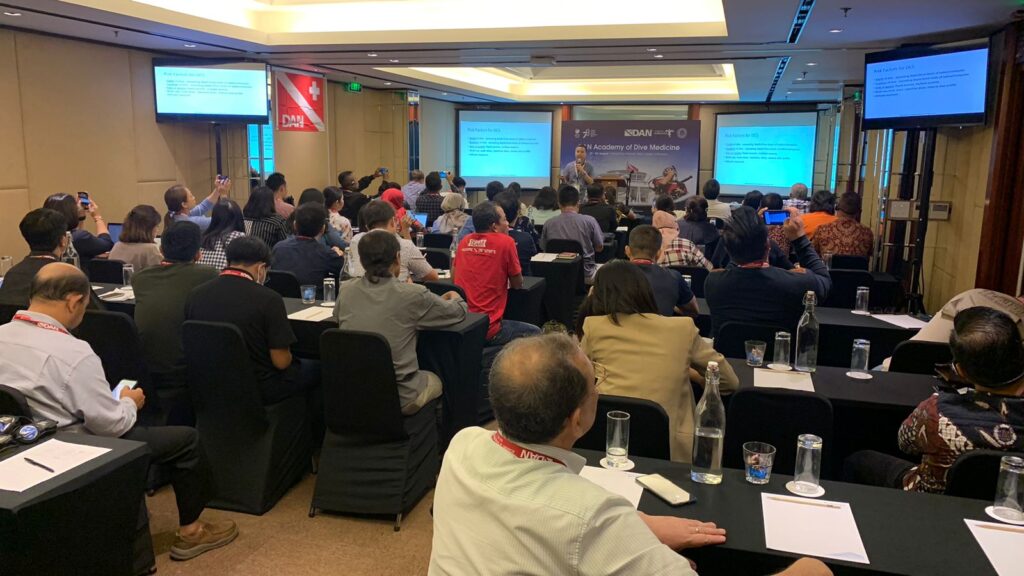
This August, DAN’s Academy of Dive Medicine, supported by the Ministry of Tourism and Creative Economy (MoTCE) Indonesia was successfully undertaken in Bali.

The primary objective of the Academy was to enhance the availability of medical professionals trained in providing diving medicine to support injured divers at key diving destinations across Indonesia.

We are proud that the 50 alumni consisted of physicians, nurses, and dive professionals from across the country including Raja Ampat, Morotai, Derawan, Manado, and Lombok.

And several of the alumni have already been involved in attending to injured divers since completing the Academy, a real achievement for the local diving community.

The Divers Alert Network (DAN) Team, led by Dr Matias Nochetto (DAN Medical Services Vice President), Mr Francois Burman (DAN Safety Services Vice President), Mr Rendra Hertiadhi and Mr Bayu Wardoyo (DAN’s Indonesia Management Team), played a crucial role in conducting the Academy.

The scale and scope of what DAN and MoTCE have set to accomplish in Indonesia is of unprecedented scale and depth. We have made great strides so far with much more to come, including our initiative to train 1,000 dive professionals in basic life support and emergency oxygen administration, that will enable divers to receive prompt and effective first aid in the event of a diving incident.

About DAN: The world’s most recognised and respected dive safety organisation, Divers Alert Network (DAN), has remained committed to the health and well-being of divers for more than 40 years. The organisation’s research, medical services, and global-response programs create an extensive network that supports divers with vital services such as injury prevention, educational programs, and lifesaving evacuations. Every year, hundreds of thousands of divers around the world look to DAN as their dive safety organization. Join the DAN community or learn more at World.DAN.org.

A Decade of Diving Palau’s Spawning Aggregations

0
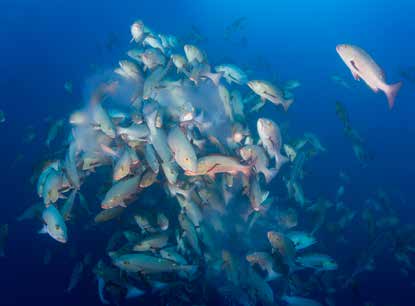
Bohar snapper balling up high before spawning
Text and Images by Richard Barnden

It’s been 10 years nearly to the day since I sat down and wrote my last article for Asian Diver magazine, Scuba Diver AUSTRALASIA’s sister title. Lots of things have changed in the intervening years, but one thing remains the same – my love for diving in Palau and my fascination for spawning aggregations.

10 YEARS OF LESSONS AND DISCOVERIES

When I wrote my first story for Asian Diver, I had only really just started to understand these spawning events. Back then, I thought I had itall dialled in, but as usual, Mother Nature loves to show us who’s boss and I have been humbled many times in the process. So here are my thoughts and discoveries from a decade of diving Palau’s spawning aggregations.

PLANNING DIVES AROUND LUNAR PHASES

I have been fortunate enough to dive in Palau for more than 20 years. I have yet to get bored of diving here with the number and diversity of dive sites. But the real attraction that keeps me coming back year after year is the predictability of certain spawning events. The more you start to learn and understand these events, the better the diving becomes each year when you start piecing together itineraries based around these lunar phases.

WHAT ARE SPAWNING AGGREGATIONS?

A spawning aggregation is a natural phenomenon that occurs when a group of fish or other marine organisms gather together in a specific location for the purpose of reproduction and continuing their species. These aggregations can range in size from just a few hundred individuals to thousands and thousands of fish, and they occur in the same location year after year. The timing of these aggregations is often linked to lunar cycles and other environmental factors, like tide, temperature of the water, and sunlight. Over the last decade, Palau has become very popular in discovering these aggregations and some of these unique itineraries even offering combo spawning trips targeting multiple species in one trip.

Twinspot snapper spawning

UNIQUE PALAU

The people of Palau have always had a special understanding of spawning aggregations from very early on. Even before Western scientists came to the island to study Palau’s diverse marine ecosystems, there have been legends carved in wooden storyboards describing the predictability of marine life around lunar cycles and the dangers of overfishing. Through this local guidance and extensive knowledge shared from the Palauans, researchers have been able to gain a better understanding of the behaviour and ecology as well as the importance of spawning aggregations in the overall health of the local marine ecosystem. This research has also helped to raise awareness about the need to protect these important natural resources from overfishing, especially during these vulnerable times of spawning.

THE PALAU PROTECTED SPECIES ACT

Palau first protected the bumphead parrotfish (Bolbometopon muricatum) along with Napoleon wrasse (Cheilinus undulatus) in 2009, when the country’s government listed the species under their Protected Species Act. This made it illegal to catch, sell, or possess these fish in Palauan waters. In addition, Palau also implemented a number of other conservation measures to protect the species and its spawning aggregations, implementing a no-take zone in the area where the bumphad parrotfish aggregation occurs, prohibiting fishing and other activities that could disturb the fish during their spawning months.

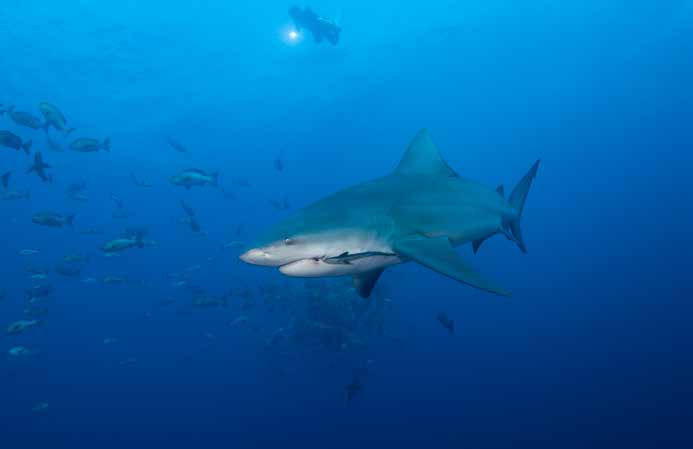
A bull shark on the prowl during the spawning

A LEADER IN MARINE RESOURCE PROTECTION

That same year, in September 2009, Palau was also the first country in the world to start a shark sanctuary, covering an area of 800,000 square kilometres and prohibiting all commercial shark fishing in Palauan waters. Through these conservation measures, Palau has become a leader in protecting its marine resources. The country’s efforts have been recognised internationally, and Palau has received praise for its commitment to marine conservation and sustainability.

I always ask myself why Palau has such large schools of fish, and why there seems to be far more spawning aggregations than anywhere else in the world. Is this due to the fact that Palau has protected its aggregations for so long or is Palau just blessed? Maybe it is a bit of both.

To find out more about the spawning, why not subscribe? Click the link below!

https://shop.asiangeo.com/product/scuba-diver-oceanplanet-no-126


French Polynesia – Shark Paradise

0
Surface intervals become a thing of joy when surrounded by sights like these. Image: Aaron Wong

French Polynesia is composed of about 118 islands spread over five archipelagos in the South Pacific Ocean, including Tahiti, Bora Bora and Moorea. The territory is renowned for its pristine waters and coral reefs, as well as for its abundant marine life.

The waters around the islands offer various types of dive sites, including walls, caves and drop-offs. Divers will encounter sharks, dolphins, manta rays and a huge variety of reef fish.

RANGIROA

The largest atoll in the Tuamotu Islands, Rangiroa is surrounded by beaches and green vegetation, creating a stunning contrast against the turquoise waters of its massive lagoon, which houses pristine coral reefs. Divers will see hammerheads, manta rays, dolphins and lots of colourful reef fish.

Tiputa Pass

This popular dive site promises schools of barracuda, eagle rays, dolphins and congregations of grey reef sharks.

Avatoru Pass

The large coral formations here are quite stunning and divers can expect

to encounter dolphins, eagle rays and the occasional manta ray.

The Blue Lagoon

This is a shallow dive site that is home to beautiful coral gardens and small reef fish.

The Aquarium

Ideal for novice divers, this aptly named site is brimming with schools of reef fish, moray eels and octopuses.

White Valley

Here, a wall covered in white corals forms the perfect backdrop for hammerhead sharks, manta rays and dolphins.

Pink Sand Beach

This is a shallow dive site known for its pink sand and crystal-clear waters. Expect a variety of colourful fish and lovely coral formations.

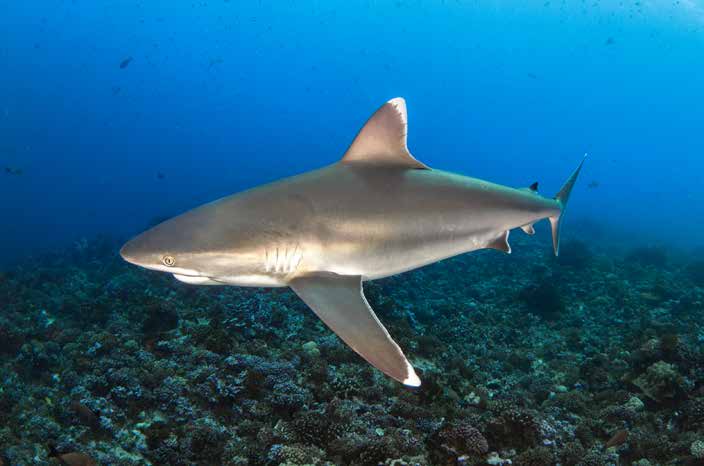
A silvertip shark patrols the reef at Rangiroa

BORA BORA

Famous for its beaches and luxury resorts, Bora Bora is also surrounded by a stunning reef that shelters a beautiful lagoon. The dive sites here offer wonderful experiences for divers of all levels, from easy, shallow dives to more challenging drift dives.

Anau

This shallow site with a sandy bottom is ideal for novices who can enjoy the colourful reef fish and coral formations.

Tapu

Located just off the southern coast, this is a favourite site to spot lemon and blacktip reef sharks.

Teavanui Pass

Divers drift in the currents here to spot large pelagics like eagle rays, tuna and sharks.

Muri Muri

Located on the island’s west side, this site contains a large number of black coral trees where large schools of snapper and jacks like to hang out.

Toopua

On the northwestern side of Bora Bora, you’ll find large schools of barracuda, jacks and snapper that hover around a big coral-encrusted wall full of smaller reef fish.

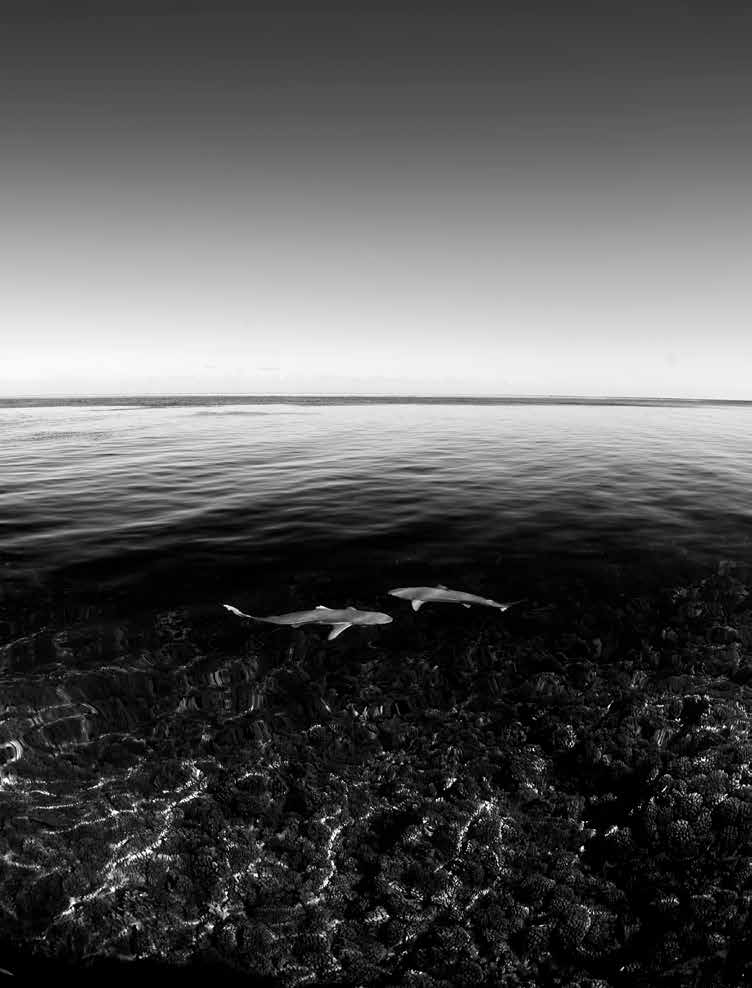
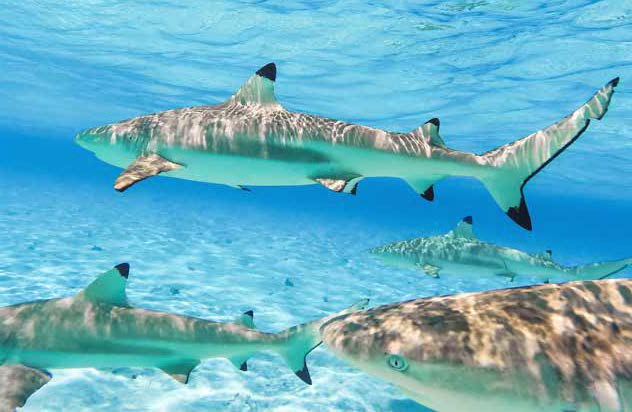
Blacktip reef sharks are common in Bora Bora’s waters

TETIAROA

This private atoll was once the summer home of legendary Hollywood icon, Marlon Brando. It is surrounded by a barrier reef, creating a lagoon with crystal-clear waters that attract diverse marine life.

The Canyon

This deep underwater trench is filled with corals and schools of fish. Various shark species like blacktip and whitetip reef sharks, hammerheads and tiger sharks are spotted here.

Motu Nao Nao

This sloping coral reef drops off into a deep channel where divers can expect to see schools of jacks, barracudas and snappers.

Shark Wall

Located on the southern side of the atoll, this site features large populations of lemon sharks and blacktip, whitetip and grey reef sharks.


MOOREA

The largest island in French Polynesia, Moorea is situated just a few miles from Tahiti. In addition to diving, the island has beautiful beaches, visitors can go hiking in rainforests, or go on safari to see the island’s wildlife like junglefowl, red-vented bulbuls, Tahiti kingfishers and a variety of lizards and geckos.

Shark Pit

This shallow, sandy area is great for diving with sharks in a safe and controlled environment. This experience is both thrilling and educational, as divers can learn about the behaviour and biology of sharks.

Garden of Roses

This advanced dive site is known for its stunning coral formations. Expect to see blacktip reef sharks, morays and barracuda during the dive.

The Canyon

Divers can swim through a canyon and meet large schools of resident snappers, jacks and surgeonfish.

The Three Coconuts

Great for both snorkellers and beginner divers, this easy dive offers a variety of corals and reef fish to enjoy.

Opunohu Canyons

This series of deep canyons feature large gorgonian fans and black coral trees. Look out into the blue for eagle rays, barracuda and other pelagics.

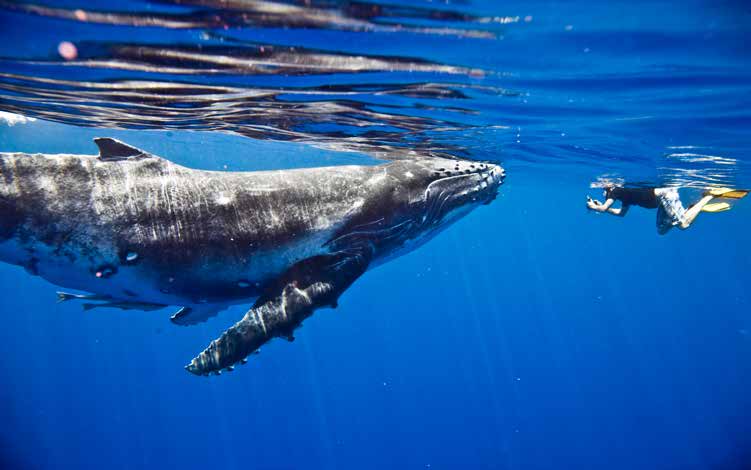
Humpback whales are seasonal visitors to Moorea

TIKEHAU

This atoll is formed by a ring of coral reefs that encompass a large lagoon of about 426 square kilometres. Besides diving, visitors can go snorkelling, fishing and kayaking. The waters are known for their exceptional visibility, which can reach up to 50 metres!

Manta Ray Alley

As the name suggests, large populations of manta rays can be seen all year round. There are also various shark species, including blacktip and whitetip reef sharks.

Shark Hole

This natural hole in the reef is visited by a host of shark species, including blacktip and whitetip reef sharks, lemon sharks and the occasional tiger shark.

Tuheiava Pass

This is the main inlet to the lagoon and is characterised by strong currents. Advanced divers can enjoy the large schools of fish, sharks, rays and the occasional dolphins and whales.

Pink Wall

The pink corals covering the wall made this site easy to name, but don’t forget to look into the blue for sharks, rays, turtles and dolphins.

Tumakohua Pass

This site brings in large schools of jacks, tuna and sharks riding the strong currents.


MARQUESAS ISLANDS

Breathtaking above the water as they are below the surface, this group of 12 volcanic islands is remote and relatively untouched. The topside landscape typically features soaring volcanic peaks, deep valleys and lush tropical forests, while the local people are known for their traditional art, music and dance.

Tahuata Pass

One of the best dive sites in the area, this site has strong currents bringing in large pelagic life including barracuda, reef sharks, eagle rays and hammerhead sharks.

Ua Huka

Divers flock here during the humpback whale mating season, from July to November.

Fatu Hiva

This site boasts stunning coral formations, schools of reef fish, manta rays and eagle rays.

Hanavave Bay

The underwater rock formations here attract reef sharks, barracuda, and schooling fish. The site also has several caves that can be explored by certified cave divers.

Cover image courtesy of Aaron Wong.


Do you want to find out  about more amazing dive destinations around the world? Click the link below to subscribe!

https://shop.asiangeo.com/product/scuba-diver-oceanplanet-no-126/