Home Blog Page 97

Ocean Realm Publisher, Richard Stewart, passes on

0

The UW360 team has just learnt of the passing of Ocean Realm magazine’s Publisher and Editor-in-Chief, Richard Stewart. We would like to extend our condolences to Richard’s family and friends. Today, we mourn the loss of an inspirational figure in the dive media industry.

Dedicating his life to the ocean since young, Richard’s passion and enthusiasm for the ocean impacted many. From co-founding OceanFest to becoming the Publisher and Editor for Sport Diver magazine, Richard’s contributions were indispensable to the dive industry.

May he rest in peace as his legacy lives on.


Cover image taken from Richard’s Facebook page.

Post-Report: Scubapro Divers’ Party (1 February 2018)

0

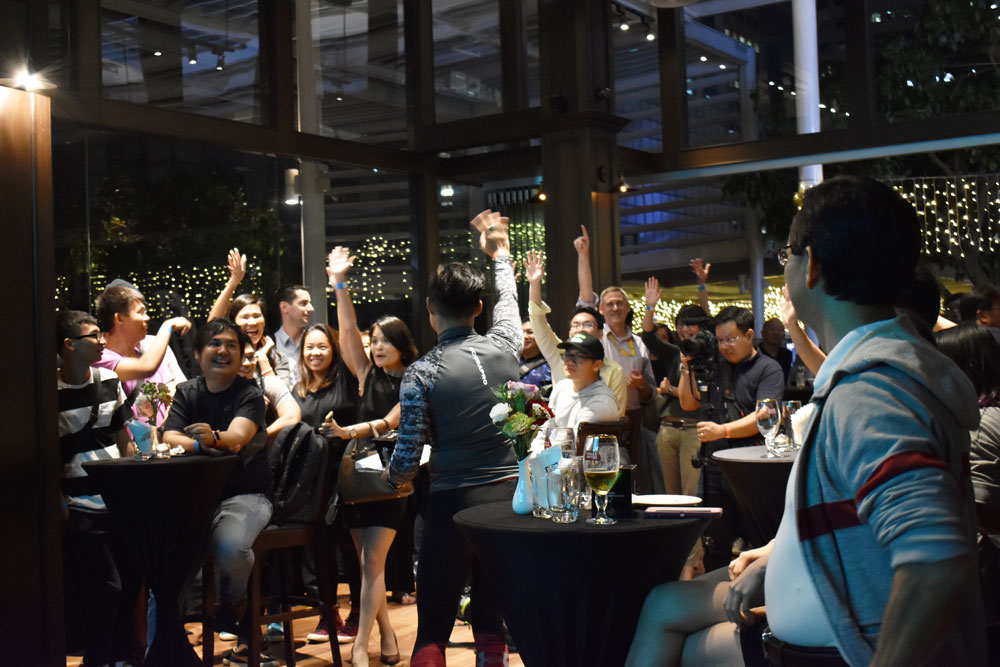
For the first time, ADEX collaborated with Scubapro Asia Pacific to kick off the year with the Scubapro Divers’ Party. With an overwhelming response of around 300 guests, it was an unforgettable night filled with laughter, drinks, and goodies!

Brimming with excitement, guests began streaming into Dallas Restaurant and Bar, forming a line even before the registration booth opened. All guests who brought any Scubapro item and liked the Facebook page of Scubapro Asia Pacific and ADEX were entitled to two free drinks. As the sun went down, the place started to pack, with guests enjoying the charming ambience and delectable food. The night opened with Scubapro Asia Pacific Regional Manager, Mr. Christopher Lim, welcoming the audience and inviting underwater photographer Aaron Wong, the first and only Asian Ambassador for Scubapro Asia Pacific, up on stage to share his diving journey.

Aaron Wong is one of the most published and recognised underwater photographers in Asia. With over a decade of field experience, his images and trademark lighting technique have won him international acclaim. The audience marvelled at his stunning images, from wrecks, to adorable seals, to underwater models, it was clear why Aaron was chosen to be Scubapro’s only Asian Ambassador. Next up, Mr. John Seddon, Sales and Technical Training Manager for Scubapro Asia Pacific, gave a run-down of the Scubapro dealers that offer Scubapro’s latest rash guard collection. The audience were in for a treat as the first fashion show of the night commenced, with the models dressed in Scubapro’s latest UPF 50 rash guard collection. Two more walks featuring Scubapro’s UPF 80 line , SWIM, Instructor, Everflex, and Hybrid collections took place, inviting cheers from the crowd. In between each walk, the audience had the chance to win exclusive Scubapro products by participating in the Q&A session. Tons of smiles and laughter erupted from the audience thanks to our amazing emcee, Derrick, who entertained the audience with his animated personality. To end off the night, the audience stood the chance to win some attractive prizes in the Grand Draw including a 5D4N package to Sipadan-Mabul Resort worth SGD2820. Congratulations to all our lucky winners! As the programme came to a close, the guests walked home with a goodie bag in hand, each containing a copy of Asian Diver, Scuba Diver Ocean Planet, Loving Sharks by John A. Scarlett, a Scubapro cap, keychain, and sticker.

We’d like to thank Scubapro for helping to make this party a success, Dallas Restaurant and Bar for the fantastic venue, Derrick, our emcee, as well as all our guests. See you at the next Divers’ Party!

PADI launches new global travel platform to support and grow the dive industry

0

<<Press Release>>

Rancho Santa Margarita, California – January 23, 2018 – As the world’s largest scuba diver training organisation, PADI® is committed to growing the scuba and freediving markets by both attracting new people to the sport and motivating existing divers to dive more often. To this end, PADI has introduced the all-new global PADI Travel™, featuring an online travel platform and full-service team dedicated to providing top-notch travel services – inspiring divers to explore more of the underwater world and take care of our oceans. PADI Travel is designed to energize and grow the overall diving community for the benefit of everyone in the dive industry, offering hundreds of dive destinations around the world and poised to expand over the coming months with more dive resort offerings.

Catering to groups and individual travelers alike, PADI Travel combines the best of online booking with concierge-level travel consultancy. Offering one of the largest online selections of liveaboards and dive destinations in the market, PADI Travel provides expert customer support 24 hours a day, seven days a week. Its dedicated team of dive travel experts are able to provide in-depth dive knowledge, while directing you to the right dive centre based on your personal preferences. Eco-friendly trip options are available to help people dive with a purpose.

The new travel platform is made possible by integrating tried-and-tested technology and a global team of dive travel experts from Diviac, a startup dive travel company that has been successfully operating in the online scuba travel space since 2015. Explore travel.padi.com to discover all that PADI Travel offers to the dive community.

Green Fins: Save the Reefs on Your next Dive Trip!

0

As you might have already seen in the first part of this series, the Reef-World Foundation, in partnership with online platform, Divebooker, has developed a unique and fresh approach to protecting coral reefs in some of the most pristine and attractive marine tourist spots.

Since 2004, Reef-World has been working alongside the UN Environment, governments and diving businesses to protect and conserve coral reefs with Green Fins, an initiative that manages sustainable diving by changing laws, behaviours and attitudes of the marine environment. As international coordinators of the Green Fins initiative, Reef-World has reduced threats from over 500 dive centres across eight countries in Asia. “Green Fins shares Evolution’s goal in promoting a sustainable dive industry that can grow without harming the precious marine environment that we rely on. It means a lot to be able to promote this goal with like-minded members from many countries,” says Matt Reed, owner of Evolution Dive Resort (Green Fins Top 10 member). How it works is simple. Green Fins is a free programme for dive centres to join. They will be trained and assessed by a qualified team of Green Fins assessors and given practical solutions to everyday risks. This ranges from providing advice on recommended instructor behaviour to instructions on how to provide pre-dive briefings using specially designed briefing cards.

With the increasing threats of climate change and other local threats becoming more apparent, the importance of helping to protect the sensitive marine habitat is increasing. “After 26 years in the (diving) industry, I’ve witnessed many changes in the marine environment: depletion of fish in general, exponential increase of plastic debris, but mainly a spectacular increase in the diving population,” remarks JC Cergneux, owner of Fun & Sun Dive and Travel (Green Fins Member). With these recent changes in the marine environment, current conservation initiatives are having to focus on new strategies and think outside the box to encourage divers to book with responsible dive operators that have been accredited.

In collaboration with Divebooker, Reef-World is putting the power in the hands of divers. At no additional cost to the diver, Green Fins centres will donate 5% of each online booking to support Green Fins. These raised funds will help protect dive sites in popular diving destinations. As with all partnerships, it must be a win-win situation, and the benefits of each stakeholder in this collaboration is clear and concise:

  • The tourist who books a Green Fins diver centre is helping to protect the reefs through the 5% donation.
  • Reef-World will allocate the donations by dedicating more time and resources to Green Fins work.
  • All Green Fins members enjoy waived commission at Divebooker. In return, Divebooker receives more bookings while looking out for the health of reefs.
  • Dive centres also benefit from additional bookings as Divebooker will prioritise and promote Green Fins members, ranking them higher in searches.

Evolution Dive Resort and Fun & Sun are Green Fins members that are already experiencing the benefits of this partnership, JC says, “It’s a good way to raise awareness within the diving community and create a win-win situation.” Matt Reed, owner of Evolution Dive Resort, testifies, “Anything and everything that helps create zero impact diving is welcome. Customers who are aware of their donation at the point of booking are more likely to be conscious of their practices when they go diving. We love to welcome divers who choose environmentally-friendly dive operators.”

Next time you decide to book a dive trip online, make sure to choose a Green Fins dive centre at Divebooker! You will be directly supporting dive centres that care for the dive sites, which means a more enjoyable and rewarding dive for you!

David Mearns: The Shipwreck Hunter

0

Born in the US, David L. Mearns trained as a marine scientist but has spent the entirety of his professional career working in the offshore industry and specialising in the research, location and investigation of deep-water shipwrecks. He also makes television documentaries and has written books about the shipwrecks he has found and the histories behind their losses.

How did you get into shipwreck hunting?

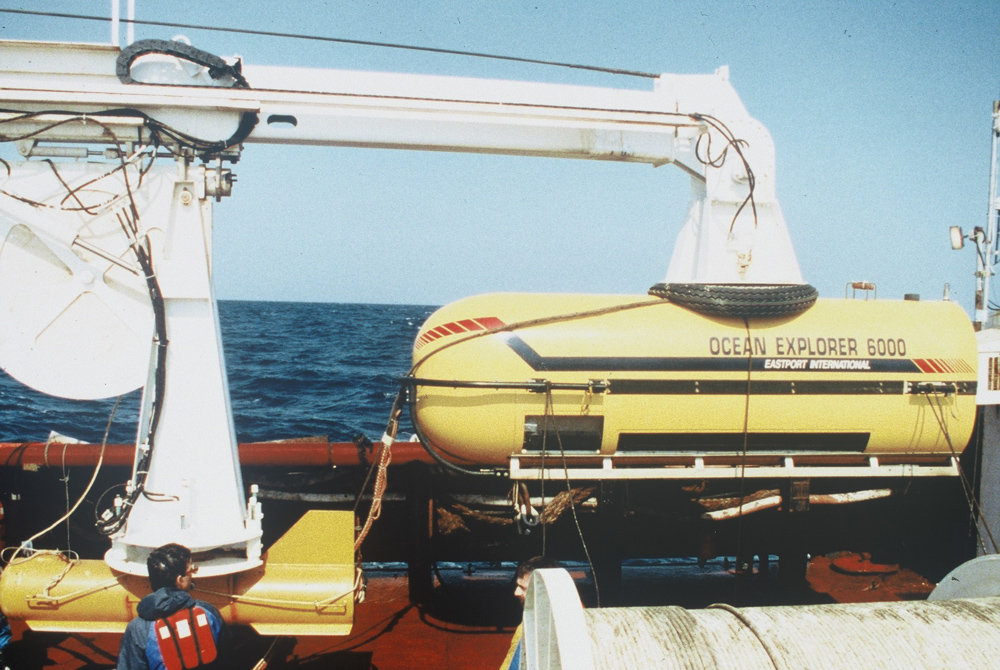
My first job after leaving Graduate School was with Eastport International, a small Maryland company, as a contractor to the US Navy Supervisor of Salvage. I conducted recoveries of downed aircraft and other objects lost in the deep ocean. I was hired specifically to develop a geophysical survey department in the company. This led to Eastport winning a high profile and lucrative contract to locate and film the Lucona, a cargo vessel that was purposely sunk by a time bomb as part of a conspiracy to commit insurance fraud. I was the project manager of that  search and the expert witness to the criminal court trying the defendant, Udo Proksch, for murder. Despite the great depths involved (Lucona had sunk in water depths of 4,200 metres), we successfully located the wreck and our video was used as the evidence in court to convict Proksch. The project was an overwhelming success for Eastport and it started me on a personal path to specialise as a shipwreck hunter.

What do you love about it?

What I love most about my job is that it combines so many different disciplines and skills; I conduct historical research in archives and libraries, I have to put together large, complicated technical expeditions, and then I get to go to sea and lead teams of highly trained experts. Every shipwreck has a different story to tell, and as 70 percent of the planet  is covered by water, the geographical scope of where I get to practise my trade is huge. I have worked in all the world’s oceans and have even searched for a shipwreck in the waters around Antarctica.

Could you talk us through the process of shipwreck hunting?

Once you’ve got a good idea where a ship has sunk and have defined an area to search, you can put together your technical plan, taking into account the environmental conditions of the search area, such as the water depth and seabed topography, as well as details about the ship itself – its size, weight, and how it might be lying on the seabed. The main tool for finding shipwrecks is still side-scan sonar, but we’ve increasingly used other technologies such as multi-beam echo sounding, magnetometers and visual imaging systems to make the searches more efficient. The key is choosing the right equipment for each specific search given these factors, while keeping with the funding available for the project.

In the 30 years you have been in the business, how has technology evolved over the years? Has the process of shipwreck hunting changed much over time?

The process hasn’t really changed much, but advances in sonar technology means we can be more efficient while searching and have a greater chance of finding what we are looking for. When I started out, the sonars were all single-frequency analogue systems that produced relatively poor images, so interpreting sonar records was almost an art form. The digital sonars we use today have  advanced signal processing that produce stunningly clear images, which require almost no interpretive ability at all. The range of sonars available has also mushroomed: There are multi-frequency sonars, CHIRP sonars, synthetic aperture sonars, multi-beam echo sounding sonars, and interferometric sonars to choose from when planning a search or survey operation.

Have you ever encountered any difficulties on a hunt?

The projects I have worked on throughout my career have all been challenging; record setting operations are almost always conducted in extremely deep water in remote parts of the world, so I have encountered every conceivable difficulty at sea – the most common being impossibly rough weather, engine breakdown, equipment failures and lost gear. The worst by far is when people are injured or they suffer an illness that requires urgent medical attention, so I am very thankful I’ve only experienced this a few times.

What about the most memorable shipwreck hunt you’ve been on?

It is hard to pick the most memorable one because I’ve been very lucky in having led quite a few remarkable searches. I will always remember Lucona because it was my first major search. However, the most exciting moment was when we discovered the wreck of HMAS Sydney off the coast of Western Australia in March of 2008. Not many people gave us a chance of ever finding the Sydney as they likened the search to a “needle in a thousand haystacks”. When the wreck of Sydney popped up on our computer screens, after just 68 hours of searching, we all went a bit crazy jumping around like little children on Christmas morning! It was the single most exhilarating moment in my career.

What are some interesting artefacts you have found on your excavations?

I personally found two truly amazing artefacts during our excavation of the Esmeralda. The first is a Portuguese nau (cargo vessel) in the fleet of Vasco da Gama that sank off a remote Omani island in 1503. I found a clump of gold and silver coins that contained an extremely rare coin called the Indio that had been especially commissioned by the Portuguese King Dom Manuel I for trade with India. There was only one other Indio in the world, in a museum in Brazil, so the one I found was only the second example. The other artefact was equally as rare and historically important. It was a mariner’s astrolabe (a type of early navigation device) decorated with the Portuguese royal coat of arms and the personal emblem of Dom Manuel. Only 108 mariner’s astrolabes are known to exist and the one I found (certified as CMAC-108) is the oldest one ever discovered.
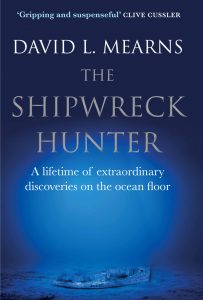
Lastly, please tell us more about your book, The Shipwreck Hunter, and what readers can expect from it.

The Shipwreck Hunter is a memoir of my career to date, as told through some of the most important shipwrecks I have found. It includes such famous shipwrecks as HMS Hood, the British bulk carrier Derbyshire, the Australian World War II hospital ship Centaur, the passenger liner SS Athenia, and the other shipwrecks mentioned in this article. In each chapter, I discuss the historical background of the ships, how they were lost and why the wrecks needed to be found. Most importantly, I write about the people lost in these ships and the impact these tragic events had on relatives who made sure their loved ones were never forgotten. Interested readers can purchase the book on amazon.co.uk.

 

Going to Gorontalo

0

The Indonesian island called Sulawesi is most known among divers for Manado and Lembeh in the north, and Wakatobi to the south. Even the Togean Islands, nestled in the Gulf of Tomini, draw their fair share of tourists in search of adventure. But few divers venture beyond these highly regarded sites. Surely many other decent dive areas exist in Sulawesi, but it takes a very special kind of place to compete with the world’s best. Does Gorontalo, an emerging town along the northern arm of the island, have what it takes to turn heads? A small team from Scuba Diver AustralAsia was invited by the Governor of the province, Fadel Muhammad, to dive key sites that have supported a small industry for a decade or more. We were also asked to explore and evaluate potential new sites for the upcoming Olele-Go underwater photography competition. Hosted by the brilliant Indonesian photographer Hendra Tan and one of his proteges and founder of a brand new dive operation, Dedy Cono, we were in good hands. What these guys showed us during our short trip was that the Gorontalo area, much like Manado, can please divers who love pristine, broad and sweeping sub-seascapes, as well as those who love the tiny and strange creatures that lurk in the muck.

Our first stop was Jinn Cave, so named for a fan-wreathed swim-through at 24 metres. The dive starts with an entry into a channel carved by two steep walls that converge to create a dramatic scene. Following one of these walls left, we eased into deeper waters where the iconic Salvador Dali sponges grabbed all the attention. Their weird contours reminded me uncomfortably of the folds and lobes of the human ear – very Daliesque! I tried my hand at capturing these sponges on video and found the combination of depth and resultant low ambient light, along with the sheer size of these structures, to be very challenging. The deep grooves made camera movements very obvious as shadows moved along the grooves – great fun of course, but a steady frame proved best. The still photographers loved the sponges however, stopping to help each other by posing to show scale and for dramatic effect. After that we headed to Tanjung Putih and West Point, where I turned my attention from sponges to the hard corals. I was immediately struck by the density and complexity of the reef. Huge plate corals and branching colonies stretched out in all directions. The word pristine is perhaps over-used in wilderness writing, but this was as close as I have seen. The reef was immaculate. In the coming days, I realised that this was a common feature of the sites here. Probably due to its proximity to the shore (and as such to law enforcement) the reef has escaped much of the dynamite bombing that has affected other areas nearby.

Likewise, coral bleaching does not appear to be of major concern at the sites, where delicate corals thrive even in the shallows. At Mopuya Point, these structures reflected off the surface just one metre above the reef crest creating a stunning scene. It’s how we imagined Manado might have been about twenty years ago, but with one significant exception. The fish life here was not nearly as abundant as at Sulawesi’s more well known sites. This was acknowledged by those with more experience. Although some sites were eerily reminiscent of Bunaken, with impressive schools of pyramid butterflyfish (Hemitaurichthys polylepis), there wasn’t the abundance of fish one might expect. We soon learned however, that Gorontalo makes up for this in two ways: a high potential for blue water encounters with large animals, yet almost no chance of seeing other divers.

It was quite a feeling never seeing another diver underwater aside from those in our small group. It was like having an entire reef to ourselves. Lunch breaks were spent on completely isolated beaches, with Sulawesi’s mountainous interior painting a heartbreakingly beautiful scene. We daydreamed that resorts would one day be erected here, unsure if that was a good thing (cocktails poolside) or a bad thing (crowded dive sites). Our hosts regaled us with stories of visits from large pelagic animals, including whale sharks and even whales, which migrate through the area on a seasonal basis. We kept an eye on the blue during our dives but, this being the very end of the diving season, had no luck. It was then we turned our attention to the tiny world of muck. It’s taken me some time to develop my taste for muck diving. At first it seems odd to seek out the dirtiest-looking sites, close to villages, in order to take the plunge. But here, in the global heart of ocean biodiversity, such diving can blow you away. The experts uncovered all sorts of critters that photographers adore, from pygmy seahorses to bumblebee shrimp and teddy bear crabs. We found fish here that, according to renowned macro photographer William Tan, “you may never see again in your life.” On a single dive we saw four species of pipefish, including ornate and halimeda ghost pipefishes, as well as a yellow shortfin lionfish. It was becoming clear why William, along with Stephen Wong, Takako Uno and Rantje Allen, had named their coffee-table book about this destination Gorontalo: Hidden Paradise. The still photographers in our group nearly lost their minds, shooting like madmen from one pile of mud to the next. It was clear evidence that the upcoming Olele-Go photo competition will be a huge hit among local and international divers alike, especially those with a taste for real adventure and a passion to dive in places that few have visited.

It remains to be seen what future awaits Gorontalo’s nascent dive industry, but the local government is keen on seeing it grow. The photo competitions will be annual events, and further investment is being sought to make diving a bigger part of the economy here. It seems certain that, without major investment in the form of beachside resorts or upscale hotels, the rustic simplicity of Gorontalo will keep the diving crowds at bay. And maybe that is what makes Gorontalo so special, at least for the time being. After all, if you really want to dive pristine reefs, you’ve got to go the extra mile and search out places like Gorontalo, before the rest of the world catches on.

Taken from Scuba Diver Austalasia Issue 04/2011

Steve Jone’s Guide to Wreck Photography

0

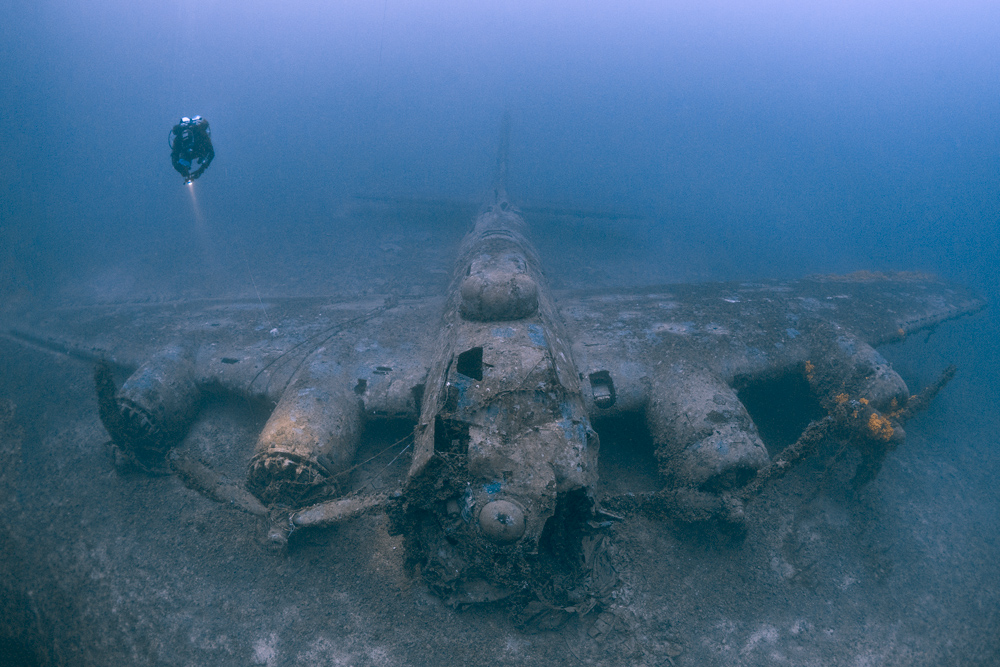
A fascination with maritime history has led to some of my most exciting and challenging assignments as a photographer. Cold, deep water, poor visibility and strong currents are all conditions in which I’ve had to operate in to deliver wreck stories. Yet despite appearing daunting, I quickly realised that rather than changing my subjects to easier ones, I would have to change and improve my skills as both a diver and a photographer.

Becoming a deep wreck photographer has progressed my diving and photographic skills more than any other discipline, but before I could take on the more challenging assignments, I first had to master the basic principles. Here are my top tips for improving your wreck photography, regardless of how deep you choose to venture.

  1. Go Wide

Wrecks are big, so a wide-angle lens is essential. Nearly all of my wreck images are taken with a fisheye lens, the number one choice for capturing large scenes.

2. Make A Plan

With a journalist’s mindset, I am trying to tell the story of the wreck via my imagery, so it is important to have a plan, or I could end up coming away with random shots of unrecognisable rusting metal! I consider the visibility, if it allows me to shoot the entire wreck, or if I should be photographing the details. I read the history and familiarise myself with the wreck’s layout before the dive. I talk to people who have dived it. Such planning is the most important for a deep dive, where I may only have one brief chance at nailing the images.

3. Identify the Key Shots

Find a recognisable feature to focus on rather than random wreckage. Winches, guns and propellers are a good start and may even become my main shots if the visibility is not good enough to capture the whole wreck in one image.

4. Use Models

Models can be people or animals. Divers are really useful for providing scale and instilling that sense of exploration and adventure, whereas marine life shows how the wreck has become a living reef. If you are lucky enough to have a willing diver to model for you, then good communication before and during the dive is essential. Agree signals for manoeuvring, talk about the plan, tell them where to look (not into your lens!), how to pose and where to point the torch so that it guides the viewer’s eye to the main subject.

Most importantly, remember to be nice to your models!

5. Capture the Atmosphere

Conveying scale is an essential aspect of wreck photography and something I try to do whenever I have the visibility. I want to produce an image that inspires the sense of awe that I felt on the wreck and also tell a story of exploration and discovery.

6. Be Where Others Aren’t

Other divers and their bubbles can ruin your composition, so keep them out of the shot. Wherever possible, I always aim to jump first, and work quickly, especially if the wreck has sediment as once this is kicked up, it can take a while to dissipate. Go for clean compositions where you isolate your subject from the background clutter.

7. Master Your Lighting

Wrecks offer vast areas to light and can prove a challenge if you choose the wrong technique. Don’t try and light up the entire wreck with strobes as the light output won’t illuminate such a large area. Save strobes for when you have a close-up foreground subject, and balance that light with the ambient-lit background. Ambient light photography is an important aspect of wreck lighting, whether black and white or coloured, and you will need to concentrate on the form and contrast of the wreck. Look at the shadows and highlights being created by the sun. Off-camera lighting techniques involve powerful LED lamps or remote-triggered strobes to light faraway areas and is one of the most creative and fun forms of wreck lighting. Experiment with it.

8. Practice Makes Perfect

In order for me to get key images on important shoots, I practise my techniques constantly. I use purposely sunk wrecks at inland dive sites, and practise the same techniques in shallow water that I will then use on deep wrecks. The more effort I put into this preparation, the higher my image yield will be when it really counts.