Home Blog Page 117

A Hidden Gem of Asia Pacific

0
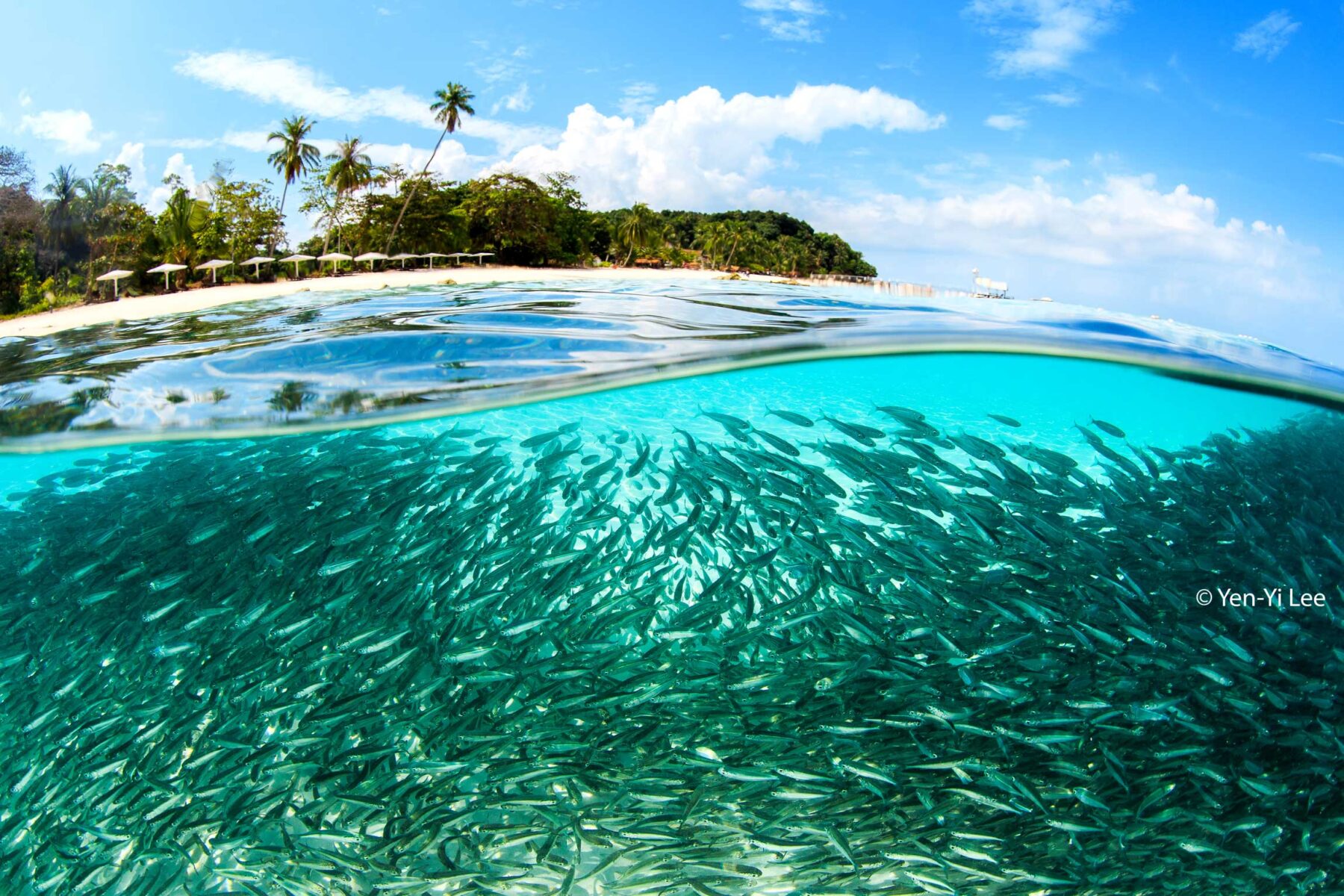
© Yen-Yi Lee

Such is the way of the 21st century that most places on this planet – be they paradisiacal or extreme – have been exposed on social media. In our increasingly globalised and interconnected world, it seems that we have covered everything there is to see or do on this blue marble.

As a result, the world pauses when news of some uncovered gem breaks the surface. Lang Tengah is one tropical destination that’s gaining a name for being an up-and-coming diver hangout – thanks to some recent whale shark sightings, huge schools of fish in the shallows and recently sunk wrecks. A short boat ride away from the sleepy town of Terengganu, Malaysia, this is an island of sandy beaches and green jungle surrounded by crystal blue water. Underwater360 was keen to seek out this new wonder. Before our departure to Lang Tengah, we spent a night in Terengganu. The town is a mix of a mix of cultures that have come together to create something special. The town’s streets are lined with colour: Incredible eateries and various temples and mosques (the floating mosque is a notable low-key tourist attraction in a beautiful setting on water). The town has areas of serenity and vibrancy, combining tradition with modernity, and it is starting to see a gentle influx of tourism. Summer Bay Resort, the premier resort on Lang Tengah, blends naturally into the beach setting between the palm trees. Aside from the resort itself, there is no sign of human activity, except for the small wooden jetty that leads out into the shallows. On our approach to the location, we passed through azure water and over large coral reefs – immediately flagging it as a top destination to dive. For our first shore dive, we were greeted by a huge school of fish at a depth of only five metres. Better still, the fish were being harassed by baby reef sharks. The water was clear, the marine life abundant, and the coral in great condition. Our next dive saw us exploring the recently sunk fishing boat, set perfectly below the waves, providing a breeding ground for marine life. With the threats our oceans face, it is important for destinations to actively attempt to conserve their marine life. Summer Bay Resort has kick-started plans to help restore its local ecosystems. The resort works closely with the local World Wildlife Fund turtle restoration initiative, which has already seen a rise in the number of turtle encounters in the area. Their sunken wrecks at popular dive sites have seen an increase in coral and marine life, and the sustainable management of the resort has seen it develop as an eco-conscious organisation. For divers who have explored the sites and feel they need to kick back and relax, the island offers a range of activities. If food and drink is your thing, the two restaurants cook up some top quality cuisine and provide a range of options. The laid-back nightlife happens mainly around the beachfront bar, which overlooks incredible sunsets and hosts open mic nights and other entertainment activities. With Lang Tengah being a tropical island, jungle trekking and rock jumping are favourite pastimes. For adrenaline junkies, dropping like a pin into the sea from a 15-metre height is one such activity that your personal guide will undoubtedly show you. You can also island hop to the larger arterial islands of the archipelago, or canoe into the sunset. At night, the island comes alive as the phytoplankton in the waves light up like blue LEDs, with the stars shining across the Milky Way. Our visit to Summer Bay Resort was an unforgettable experience, showcasing the best that Malaysia has to offer in terms of marine activities. With the spirit of conservation, the underwater world is thriving and has made way for whale sharks, turtles and reef sharks to congregate. With this world so exposed, it is amazing that such places still remain hidden. This article was published in the latest issue of Asian Diver’s Divaholic, 2017. Check out Asian Diver for plenty of information about destinations, conservation, photography, and much more.

The Arctic Ocean – A “Dead end” for Floating Plastic

0
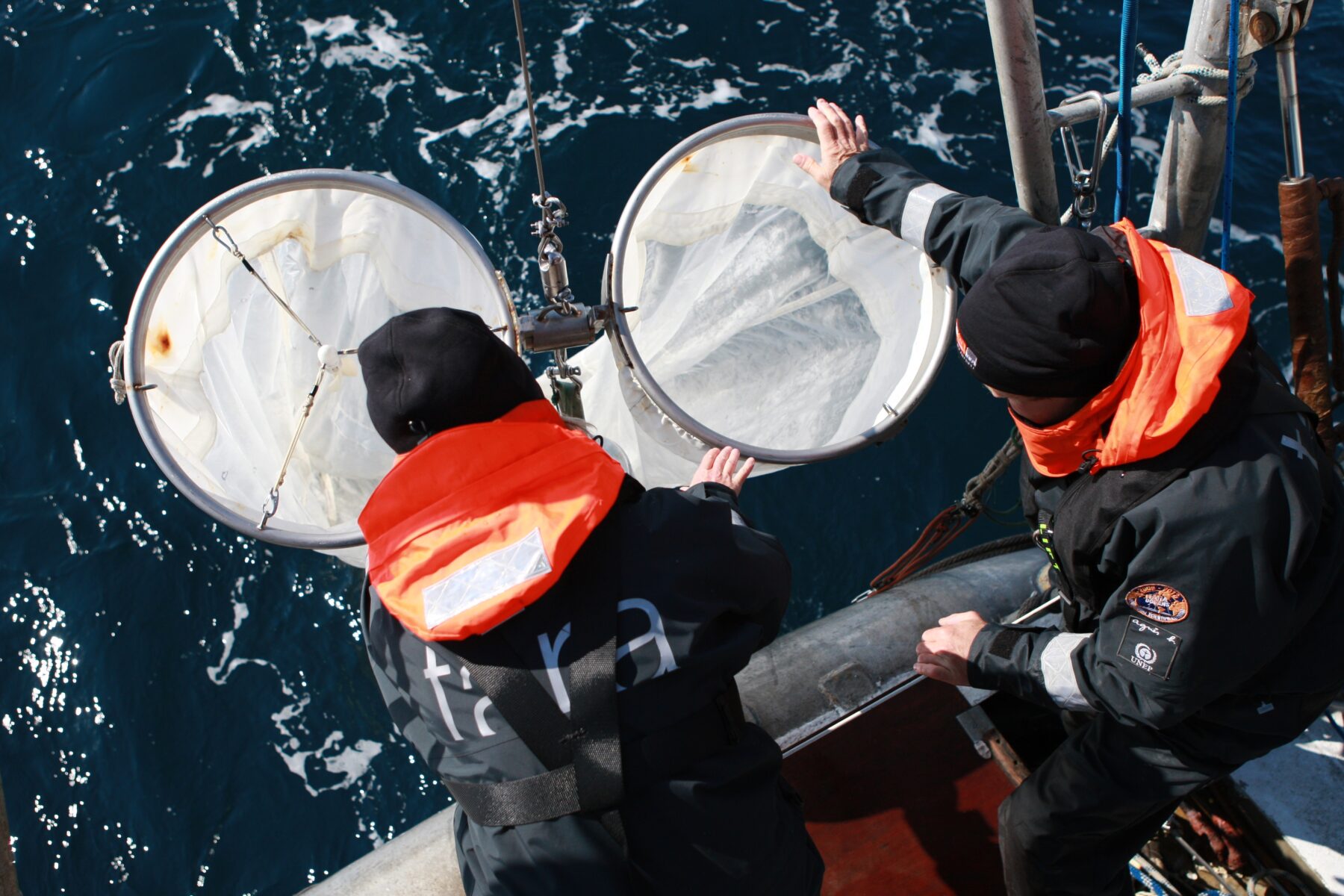
Tara scientist putting nets into the water to collect plankton and microplastics. © Anna Deniaud/ Tara Expeditions Foundation

A survey by the 2013 Tara Oceans circumpolar expedition, published in Science Advances, has found that the Arctic Ocean is a “dead end” for plastic dumped into the North Atlantic off Europe and North America.

The expedition to the Arctic Ocean – on-board Tara, their research vessel – was the final stage in a mission to map floating plastic pollution in the world’s oceans. They sampled 42 Arctic sites with nets, collecting floating plastic debris that included fishing lines and a variety of plastic films, fragments and granules.

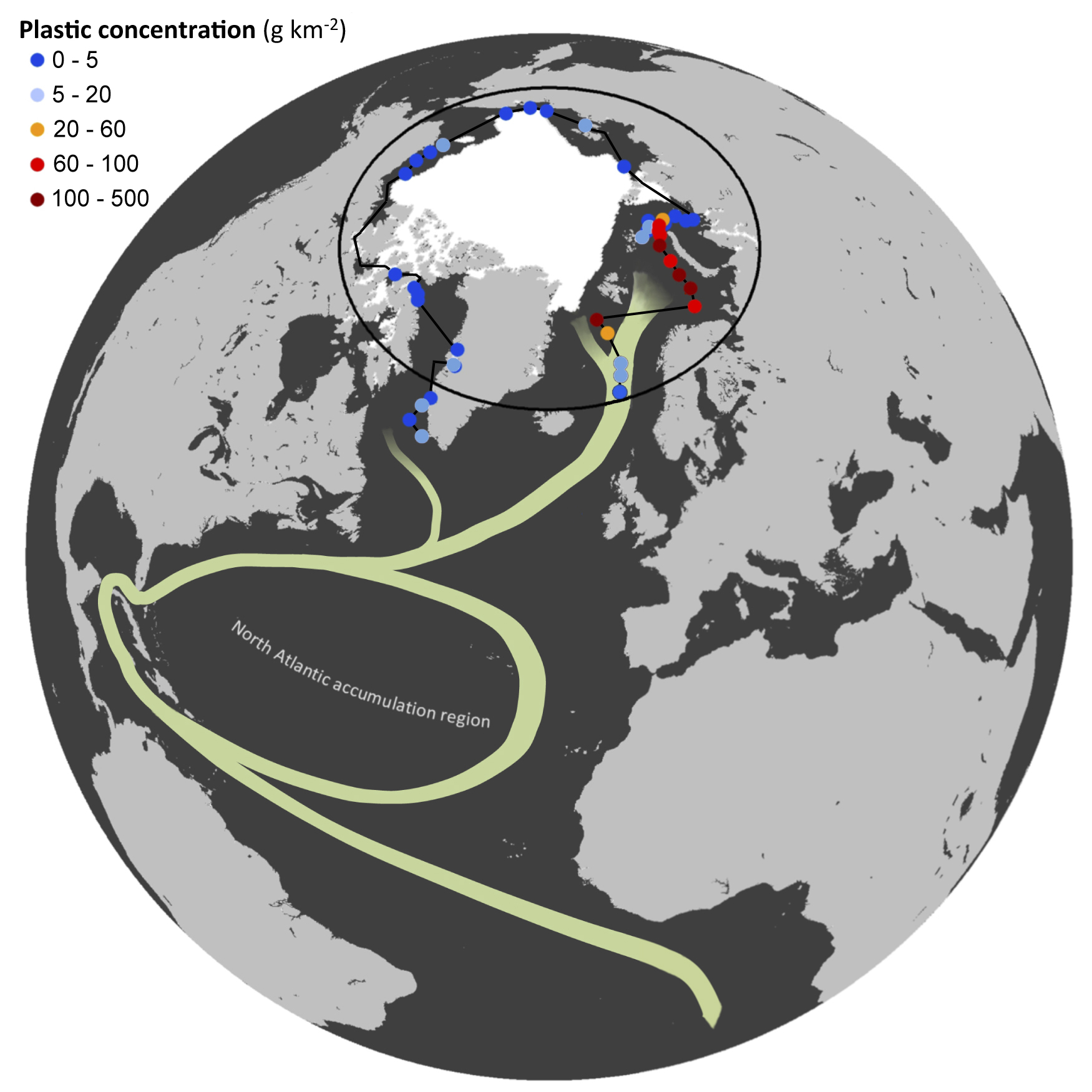
The study found that most of the surface waters in the Arctic Polar Circle were only slightly polluted with plastic debris, but the Greenland and Barents Seas were heavily polluted. They found hundreds of thousands of small bits of plastic per square mile, and a great deal more is expected to be lying on the seafloor. Overall, they estimate that these seas have accumulated hundreds of tons of debris, composed of roughly 300 billion tiny pieces of plastic.

The reason for the vast amount of plastic in the Arctic is due to ocean currents, which carries waste up to the region. This was verified by the proportion of film-type plastic (plastic bags, label, packaging, etc). The researchers also monitored the pathway of plastic in the North Atlantic Ocean by using 17,000 satellite buoys. This confirmed the poleward flow of pollution via thermaline circulation, which is a current known as the global ocean conveyer belt. Upon reaching the Arctic, the current sinks back towards the equator, but the plastic does not sink with it and so accumulates at this “dead end”.


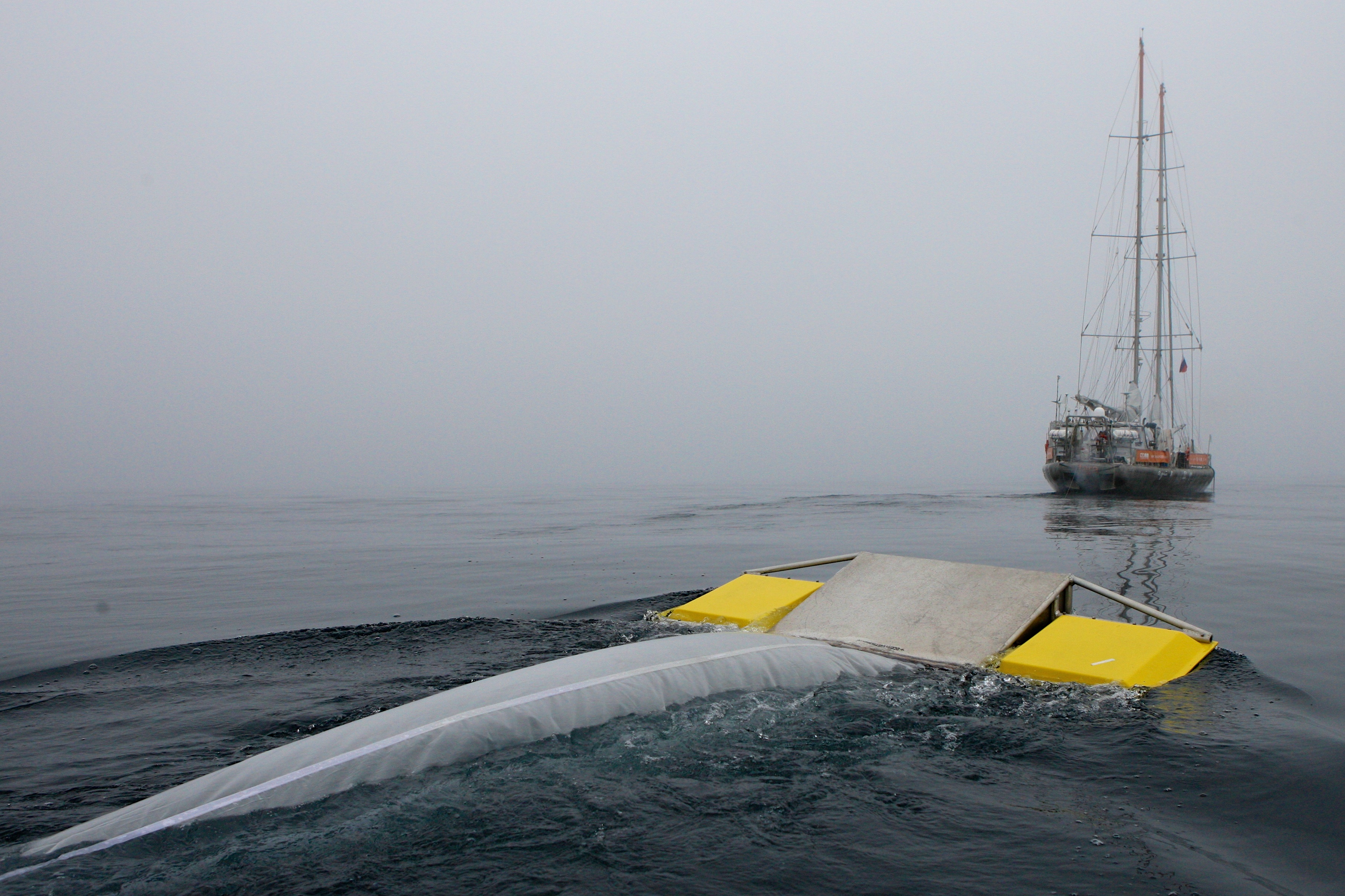
Tara dragging the Manta net to collect plankton and microplastics © Anna Deniaud/Tara Expeditions Foundation


The results illustrate the need to properly manage litter at its source, since upon entering the ocean, our waste can end up in faraway oceans. It highlights our collective responsibility for the damage caused to the oceans: Waste dumped by one country can be carried by currents to a place half a world away and threaten its fragile marine ecosystem. Plastic waste is a detrimental issue – marine organisms are poisoned when they mistakenly eat it, and they can become tangled in floating plastic, which can kill them.

It may be the case that floating plastic in the Arctic only accounts for less than three percent of the global total (according to the study), but the findings show that plastic will continue to accumulate in the region as it is carried up from lower latitudes.

The authors stress the serious effect of this pollution on the Arctic’s unique ecosystem and encourage people to take responsibility and make a change.


Plastic concentration © Andrés Cózar/Tara Expeditions Foundation


The team behind the study involves researchers from eight different countries. It is led by Professor Andrés Cózar from the University of Cadiz in Spain, as well as Dr. Erik van Sebille from the Grantham Institute at Imperial College London.

Check out Tara Expeditions’ website to read up on the work they do in studying the impacts of climate change and the threats to our oceans: www.taraexpeditions.org.

© Images and infographics courtesy of the Tara Expeditions Foundation


Mistakes Divers Make and How to Avoid Them: Insufficient Dive Planning

0

One of the most important pre-dive steps is dive planning. Learn as much as possible in advance about any dive site you plan to dive.

Always do your homework

Before you even head out to a site, make sure to investigate currents, depths, marine life, entry and exit points, surfacing techniques, boat traffic, environmental health concerns, etc.

Check out what surface support you may need and what local laws or regulations may apply to your planned diving activity.

Have someone lookout for you

Inform someone who is not coming on your trip what your dive plan is and when you expect to be back.

Ensure that you and your buddy are on the same page

Prior to your dive, make sure you and your buddy are on the same dive plan. Discuss contingencies should conditions change during your dive. Establish the maximum depth, maximum bottom time and minimum air supply to terminate the dive.

Review what you and your buddy would do if you were to become separated, exceed your planned dive or experience an out-of-air emergency or an equipment issue underwater. Having these discussions on the surface helps you prepare as a buddy team to manage any situations that may arise while underwater.

Review hand signals with your buddy.

Check your equipment

Conduct a pre-dive test on all of your equipment, particularly any rented gear. Use a written or mnemonic checklist to ensure you don’t overlook an essential step. Don’t skip the buddy check.

Devise an emergency plan

Remember to create an emergency action plan (EAP). This essential tool that divers are taught how to construct in their advanced training courses should include what prompts an emergency response, important contact information, the nearest medical facility and the best means of getting there as well as essential first aid equipment.

Dive plans don’t have to be complicated or inflexible, but they are essential to prevent and manage diving incidents.

Safety content provided by the Divers Alert Network

For as little as S$90 you will receive:

1 YEAR DAN Asia-Pacific Membership +
1 YEAR Subscription to Scuba Diver AUSTRALASIA + OCEAN PLANET

Want to get your hands on this package? CLICK HERE

ADEX Voice of the Ocean Photo/Video/Art Competition 2017

0

Held annually during ADEX, the Voice of the Ocean Photo/Video/Art Competition (VOO) has the best works by underwater photographers and videographers presented and judged live by a celebrated panel of distinguished experts.

Congratulations to the winners of this year’s competition:

Photo of the Year

Looking for what photographers manage to capture underwater, at the right moment, entries were judged in all aspects, from the technical (lighting, exposure) to the situation (subject rarity, difficulty level). Standing out from 300 submitted entries is “Protection” by Yung Sen Wu (Taiwan), shot with a Canon EOS 5DS R in Lembeh, Indonesia.

Wu walked away with the following prizes:

  • SONY Alpha Camera a6300 E-mount camera camera with APS-C sensor
  • 9D8N dive cruise onboard MV SEEiSEA 1 in Maldives for 01 pax sponsored by SEEiSEA
  • Weefine Smartphone housing sponsored by DIVESEA
  • One year print subscription to ASIAN DIVER & SCUBA DIVER Magazine

Artwork of the Year

In conjunction with the theme of ADEX this year, the Artwork of the Year category focuses on illustrations and/or artwork that depicts Climate Change. Done in watercolor, catching the judges’ eyes from over 300 submissions, this year’s winning entry is the intriguing and somewhat haunting “Vanishing World” by Olga Suslova (Israel).

Suslova walked away with the following prizes:

  • 5D4N Accommodation only in Ocean Room bure for 01 pax sponsored by Tavenui Dive Resort
  • One year print subscription to ASIAN DIVER & SCUBA DIVER Magazine

Compact Camera Photo of the Year

Don’t have a DSLR and feel that it is impossible to compete with the “big boys”?  Fret not as we have a separate category just for compact cameras, and as self-explanatory the category name is, we only accept entries shot with a compact camera for this. The winning entry is the captivating “Medusa” by James Mamoto (Indonesia), shot in Lembeh, Indonesia with a Canon PowerShot G16.

Mamoto walked away with the following prizes:

  • SONY RX100V & Underwater housing for RX100 Series
  • 5D4N acoomodation + 5 dives in Superior room for 01 pax sponsored by 7SEAS Dive Gilli
  • WeeFine ring light sponsored by DIVESEA
  • One year print subscription to ASIAN DIVER & SCUBA DIVER Magazine

Underwater Fashion Photo of the Year

Putting a fresh-spin on an aspect of photography that has lit up the pages of Vogue, we flip the conventions and seek stunning underwater fashion shots that capture that which is quintessentially beautiful about the underwater world. This year’s winner is “Standing on Top” by Andrew Lau (Hong Kong), shot in Bali, Indonesia. Captured with a Nikon D810, this gorgeous shot beat over 250 submitted entries for the top spot.

Lau walked away with the following prizes:

  • SONY RX100V & Underwater housing for RX100 Series
  • Yucatan Explorer Dive Package for 01 pax sponsored by Pro Dive International Dive Centers Mexico & Dominican Republic
  • Bigblue VL3500P, 3500 lumens LED Video Light sponsored by DIVESEA
  • One year print subscription to ASIAN DIVER & SCUBA DIVER Magazine

Environmental Photo of the Year [Climate Change]

The requirements for this category are simple – a photograph that represents the effects of climate change, or the efforts made to confront it. The right photo would make people stop and stare, and be inspired to take action regarding environmental protection. Beth Watson’s (USA) “Hope Spot” does precisely just that.  Shot in the Apo Reef of the Philippines, using a Canon EOS 5D Mark III, this beautiful photograph beat over 100 other entries to capture the attention of our judges.

Watson walked away with the following prizes:

  • SONY RX100V & Underwater housing for RX100 Series
  • 7D6N Acoomodation + Dive package for 01 pax sponsored by Atlantis Dive Resorts & Liveaboards
  • One year print subscription to ASIAN DIVER & SCUBA DIVER Magazine

Video of the Year

A video documentation of dives? A collection of stunning underwater shots?  We wanted the best video a diver can put together, and received over 30 amazing submitted entries. This year’s winner is “Behind the Mask Worldwide” by Florian Fisher (Germany) – a compilation of footage from around the world, illustrating the tranquility of the underwater world and the sheer beauty of the creatures who roam the seas.

Fisher walked away with the following prizes:

  • SONY Alpha Camera a6300 E-mount camera camera with APS-C sensor
  • 1 week/trip on Turks & Caicos Explorerer II in the Turks & Caicos Islands for 01 pax sponsored by Explorer Ventures Liveaboard Diving
  • Bigblue Black Molly 2600 lumens photo/video light sponsored by DIVESEA
  • One year print subscription to ASIAN DIVER & SCUBA DIVER Magazine

VLOG of the Year

For this category, we were not only looking for the best captured moments on video. The winner would need to have  the “WOW factor” – something that would take our breath away. “Mating Flamboyant” by Kathleen Ng (Singapore) provides just that.  Shot in Lembeh, Indonesia, the 30 second video will take viewers on a roller coaster journey – watch it to experience it for yourself!

Ng walked away with the following prizes:

  • SONY FDR-X3000 4k Action Cam with WI-FI & GPS
  • 5D4N Nusa Ceningan Dive and Stay Package for 1 Pax sponsored by Ceningan Divers
  • One year print subscription to ASIAN DIVER & SCUBA DIVER Magazine

Best of Show

Selected from all categories, only the best of the best, creame de la creame of all entries will be awarded the Best of Show. This mesmerizing shot of the majestic creatures of the sea captivated the attention of the judges to win our most prestigious title. “Stingray” by Gazzaroli Claudio (Switzerland), was shot with a Canon EOS 5D Mark II in an unknown location.

Claudio walked away with the following prizes:

  • SONY Alpha Camera α7S II E-mount Camera with Full-Frame Sensor
  • 10 nights Komodo National Park itinerary Suite from Aggressor Fleet Omba Biru
  • One year print subscription to ASIAN DIVER & SCUBA DIVER Magazine

Voice of the Ocean Judges

This year we are honored to have on our panel:

A.G Sano (Philippines)
A.G Sano is a professional photographer whose works have appeared in different international and local media.  He is a conservationist who has been involved in whale and dolphin research for the past 16 years. He is a co founder of Balyena.org, a non profit group undertaking marine mammal conservation efforts in the country.

Aaron Wong (Singapore)
Aaron Wong is one of the most published and recognised underwater photographers in Asia. With over a decade of field experience, Aaron’s images and his trademark lighting technique have won him international acclaim. He is also the official ADEX Ambassador of Photography. ADEX Ambassador of Photography,

Becky Kagan Schott (USA)
Becky Kagan Schott is a 5 time Emmy Award-winning underwater cameraman, photographer, and technical scuba Instructor whose work can be seen on major networks including National Geographic, Discovery Channel, and Travel Channel. She specializes in bringing back video from extreme environments including caves, deep wrecks, and under ice.

Cristian Dimitrus (Brazil)
Cristian Dimitrus is a Brazilian Emmy Award Winning cinematographer, photographer and television presenter specializing in wildlife and natural history films around the world. Cristian’s innovating cinematography and unorthodox camera techniques are helping revolutionise the way people perceive wildlife. In addition to several film credits, Cristian has shot for the world’s top television networks including the BBC, National Geographic, Discovery Channel, History Channel, Animal Planet & Globo TV

Howard & Michele Hall (USA)
Howard and Michele Hall specialize in underwater giant format film production. IMAX films produced and/or directed by Howard and Michele include Into the Deep, Island of the Sharks, Deep Sea 3D, and Under the Sea 3D. The Hall’s have produced numerous award-winning television films for PBS Nature, National Geographic, the BBC and other broadcasters. They are the recipients of seven Emmy Awards, and numerous other industry awards. Howard is a member of the Directors Guild and Academy of Motion Picture Arts and Sciences while Michele is a member of the Woman Diver’s Hall of Fame and the Academy of Television Arts and Sciences. In 2016 Howard and Michele were named as honorees of the 2016 Hans Hass Award.

Marty Snyderman (USA)
One of approximately 80 people inducted into DEMA’s SCUBA diving Hall of Fame, Marty Snyderman is a proud recipient of DEMA’s 2008 Reaching Out Award. Marty is an EMMY Award winning cinematographer, still photographer, author and speaker specializing in the marine environment. The Marine Life Editor of Dive Training magazine, Marty produces at least three columns a month in every issue. He is also the Senior Editor and a columnist for California Diving News, and the co-author of a series of apps on underwater photography. Marty teaches underwater photography seminars in dive centers in North America and at destinations around the globe.

Richie Kohler (USA)
Richie Kohler is a filmmaker, author and explorer. Host of the popular History Channel program “Deep Sea Detectives”, Kohler has produced numerous other television programs detailing his explorations on some of the most famous shipwrecks in the world, including the Andrea Doria, RMS Titanic, and the HMHS Britannic. Kohler has worked on film projects for Paramount Pictures, CBS, PBS/NOVA, National Geographic, Discovery Channel, Universal Studios.

VOO prizes are proudly sponsored by:


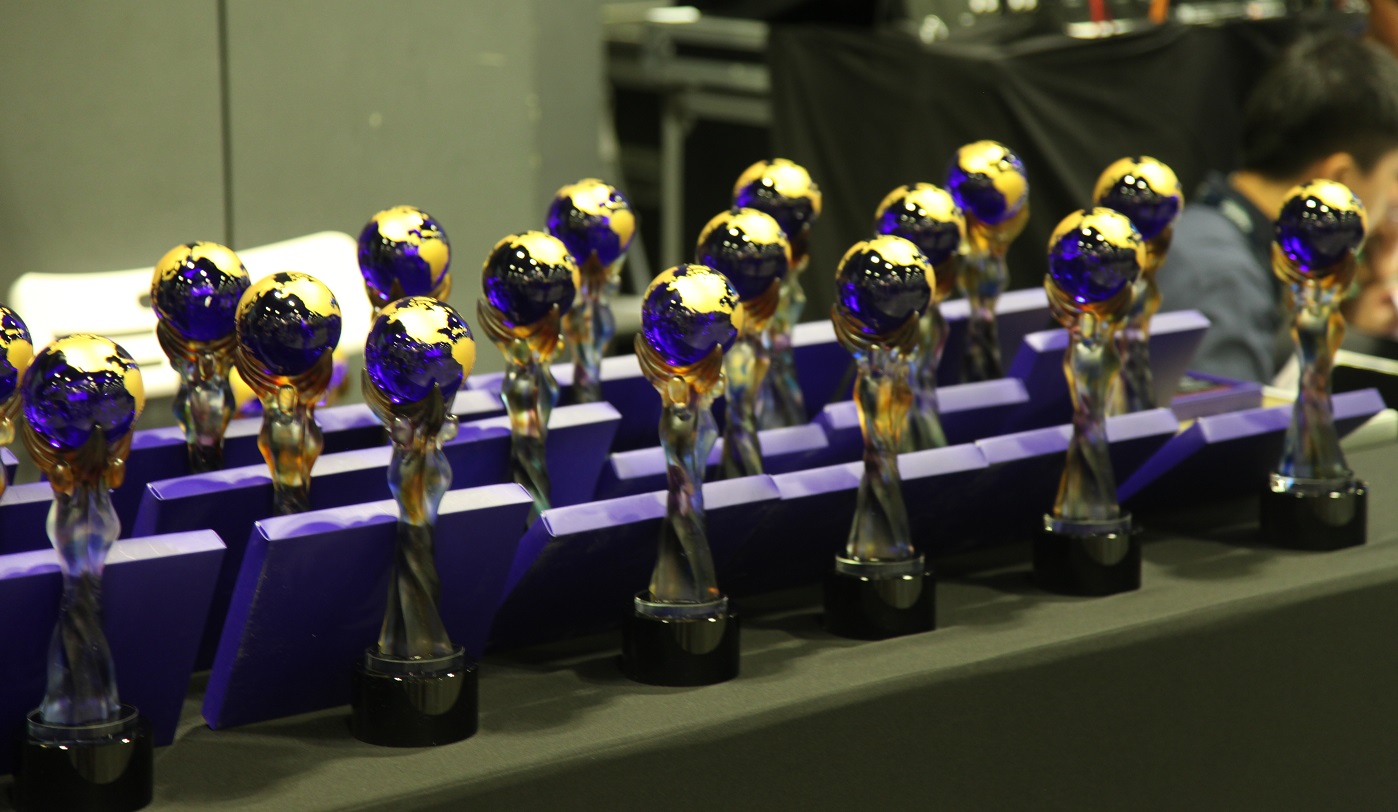
Blue Green 360 Awards Honors Marine Tourism Industry Pioneers

0

Three businesses and one individual championing conservation and sustainable business practices in the marine tourism industry were honored at the first ever Blue Green 360 Awards held on April 7, 2017 at this year’s Asia Dive Expo in Suntec City Singapore.

BlueGreen360 Awards celebrates businesses and individuals in the marine tourism industry pioneers that are leading the way, dedicated to inspiring and championing sustainable solutions in their day-to-day operations and sharing their invaluable knowledge and resources with the wider community. It also aims to highlight the value of healthy marine and coastal ecosystems to the industry. This year’s winners have all exhibited their commitment to environmental programs to protect marine biodiversity and has successfully collaborated with various groups promote on-the ground marine conservation efforts that benefit the environment and the local community.

The Winners Are:

Dive Operator of the Year: Scuba Junkie (Malaysia)
Scuba Junkie, based in Mabul, Malaysia, runs environmental programs which includes a sea turtle hatchery program that it implements together with local government authorities, weekly beach clean ups with guests and local communities, a marine biodiversity research program with universities, and an environmental education program for school children in collaboration with local non-government organizations and community groups to raise awareness in marine conservation and marine mammal protection. In its operations, Scuba Junkie utilizes rainwater catchers to supply its dive resort and use solar panels to provide a portion of its power supply. It employs a state-of -the -art sewage system that provide freshwater for the resort’s garden, segregates waste, provides water refilling stations for guests, and uses biodegradable cleaning products. It strictly follows marine animal interaction code of conduct and responsible dive practices and 20 of its staff are trained how to conduct reef health monitoring.

Hotel/Resort of the Year: Six Senses Laamu (Maldives)
Six Senses Laamu, based in Laamu, Maldives, promotes sustainable seafood practices by enforcing a strict “no-take” stance on the purchase of endangered or vulnerable fish species from local fishermen. It provides free marine education to the local youth, including 13 schools in Laamu using innovative materials, interactive videos and fun activities. The resort staff meets bi-monthly with local community leaders to local environmental issues and is establishing a reusable bag initiative, teaching local women to make bags from old clothes, to reduce the need for single use plastic bags. In cooperation with the local authorities, it helped develop a dolphin watching code of conduct and organized the first sea turtle festival gathering more than 600 people to raise awareness on marine sea turtle protection. In its operations, Six Senses Laamu ulitizes an onsite desalination plant and glass bottling system eliminating the need for single-use plastic water bottles. Its onsite wastewater treatment facility enables it recycle grey water for gardening. It has a recycling center where guests can see how glass is recycled into pots, vegetable waste becomes compost or wood is made into charcoal. Guests are actively encouraged to participate in beach and reef cleans, tree planting sessions, local community visits and turtle and manta naming. It supports marine

Green Fins Award: AB Wonderdive (Philippines)
AB Wonderdive, based in the diving hub of Puerto Galera, Philippines, have worked tirelessly to strengthen daily management to ensure the Green Fins Code of Conduct is incorporated into every aspect of the daily running of their dive operation. It has committed to improving the general environmental awareness of its staff to help them to manage a more environmentally friendly operation, but also because they believe that the messages the staff learn at work will be taken home into their local communities to have a more far reaching impact. The dive shop operations have been assessed each year for the past 6 years by Green Fins and have shown an incredible improvement in their score – which represents the environmental risk being posed by the diving activities. The dive shop owners tackled each challenge we set with a solution driven mindset, so they could consider how different management practices could be mainstreamed within their business to effectively overcome environmental risks on a daily basis. They believe that the value of the product they offer to their diving guests has been enhanced because of these greener practices.

Personality of the Year: Dennis Bait-it (Philippines)
Dennis Bryan Bait-it is the manager of one of only two Filipino-owned dive shops on Malapascua Island, Philippines, an area known for diving with thresher sharks. He set up Project Sharklink, a community-based organization of divers, conservationists and educators determined to teach locals about the benefits of dive tourism when it coexists with a well maintained ecosystem. He has developed projects such as Migo sa Iho (Friends of Sharks) an initiative that consists of local volunteer fishermen who, since 2014, have been deputed by the Philippine Government to patrol and protect Monad Shoal, where thresher sharks congregate, and its surrounding waters by reporting any illegal activity and apprehending illegal fishers. The project also develops educational campaigns to reach the local fishermen, and in general positively influence the local community to understand their direct relationship with the marine environment, especially with the sharks. They winners were selected from more than a dozen nominees and judged by marine conservation technical experts from the Coral Triangle Center (CTC), United Nations Environmental Programme and Reef-World Foundation, in collaboration with the organizers of the Asia Dive Expo.

“The Blue Green 360 Awards can help motivate the dive industry to embrace environmentally sustainable practices in their business so it will become the norm and not an exception. The industry can lead by example and by recognizing business and individuals for their efforts it will also have a positive impact for them. In this way, we create a win-win situation for people, planet and profit,” said Rili Djohani, Executive Director of the Coral Triangle Center.

The business nominees were reviewed on how they maximize benefits and add value to marine biodiversity and coastal environment, adopt innovative means to minimize negative impact to marine and coastal environments, actively engage communities in sustainable marine tourism, and adopt sustainable environmental practices in its operations.

“It is critical that the marine tourism industry integrates environmentally sustainable practices as all what they do have a direct impact on the oceans, coastal and marine ecosystems such as coral reefs, and iconic species such as mantas, rays, turtles, reef fish and other animals. Healthy oceans are pivotal for the marine tourism industry to strive and provide food security and jobs to millions of people,” Djohani said.

The individual winner was reviewed based on pioneering efforts in promoting sustainable marine tourism in the private sector and mobilization of various stakeholders in promoting sustainable business practices.

On the other hand, Green Fins Award honours the top Green Fins member who has most effectively aligned their entire business strategy towards the protection of coral reefs. Hundreds of environmentally conscious dive and snorkel centers throughout popular reef tourism destinations in Asia received thorough environmental performance assessments of their everyday business practices for the chance to win this prestigious award!

“As Green Fins grows in membership and reputation, we wanted to recognize the hard work of those dive centers who are really achieving incredible quality of environmental standards with the support of the Green Fins network. In the future we hope that the anticipated competition for this award will help to drive sustainability within the diving industry and help us to achieve our mission, to create an industry where sustainable businesses are always the winners.” Said Chloe Harvey, Coordinator for Green Fins and Programmes Manager, The Reef-World Foundation.

By spotlighting businesses who value sustainability, the Blue Green 360 awards will help to promote those people who are going about business in the right way, bringing them more customers and more success.

About the Organizers

Asia Dive Expo (ADEX) is the longest running and the largest dive expo in Asia celebrating its 22nd year in 2017. A must-attend event for anyone interested or involved in the world of diving, the event has seen a continuous increase in visitors over the past few years, with ADEX 2016 attracting a total of 57,793 visitors over three days! Taking place from April 7 – 9, ADEX 2017 proudly presents world-renowned marine life artists, conservationists and photographers to speak about their passion and work towards marine life. It is organized by Underwater360 (UW360), and is an event being endorsed by major organizations in the industry such as DEMA (USA), the Singapore Tourism Board (STB) and the Singapore Underwater Federation (SUF). Coral Triangle Center (CTC) is a n Indonesian foundation based in Bali with a regional scope and global impact. CTC provides training on sustainable fisheries and ensures that marine protected areas within the Coral Triangle are managed effectively. CTC supports on-the-ground programs through its learning sites in Nusa Penida and the Banda Islands. CTC leads regional learning networks of women leaders, local government executives and marine protected area practitioners in the six Coral Triangle countries – Indonesia, Malaysia, Papua New Guinea, Philippines, Solomon Islands and Timor-Leste. CTC is an official partner of the Coral Triangle Initiative on Coral Reefs, Fisheries and Food Security (CTI-CFF) and is one of the convenors of the CTI-CFF Sustainable Marine Tourism Task Force. CTC works with communities, businesses, governments, and partners to shape lasting solutions to protect coral reef ecosystems and ensure sustainable livelihoods and food security. Please visit: www.coraltrianglecenter.org

Green Fins is paving the way to unite politics and sustainability for marine conservation at diving popular diving destinations around the world. Established through a partnership between the United Nations Environment Programme and The Reef-World Foundation in 2004, Green Fins uses a unique and proven three-pronged approach; green certifications of dive centres, strengthening regulations and environmental education for dive staff, divers and government. Almost 500 dive and snorkel operators across seven countries have signed up for free membership, and are using Green Fins as a platform to set examples of sustainable business operations. To find them and to find out how you can dive your way to a more sustainable future, visit www.greenfins.net.

Greening The Dive Business: One Woman’s Quest To Take On The World (Part 3)

0

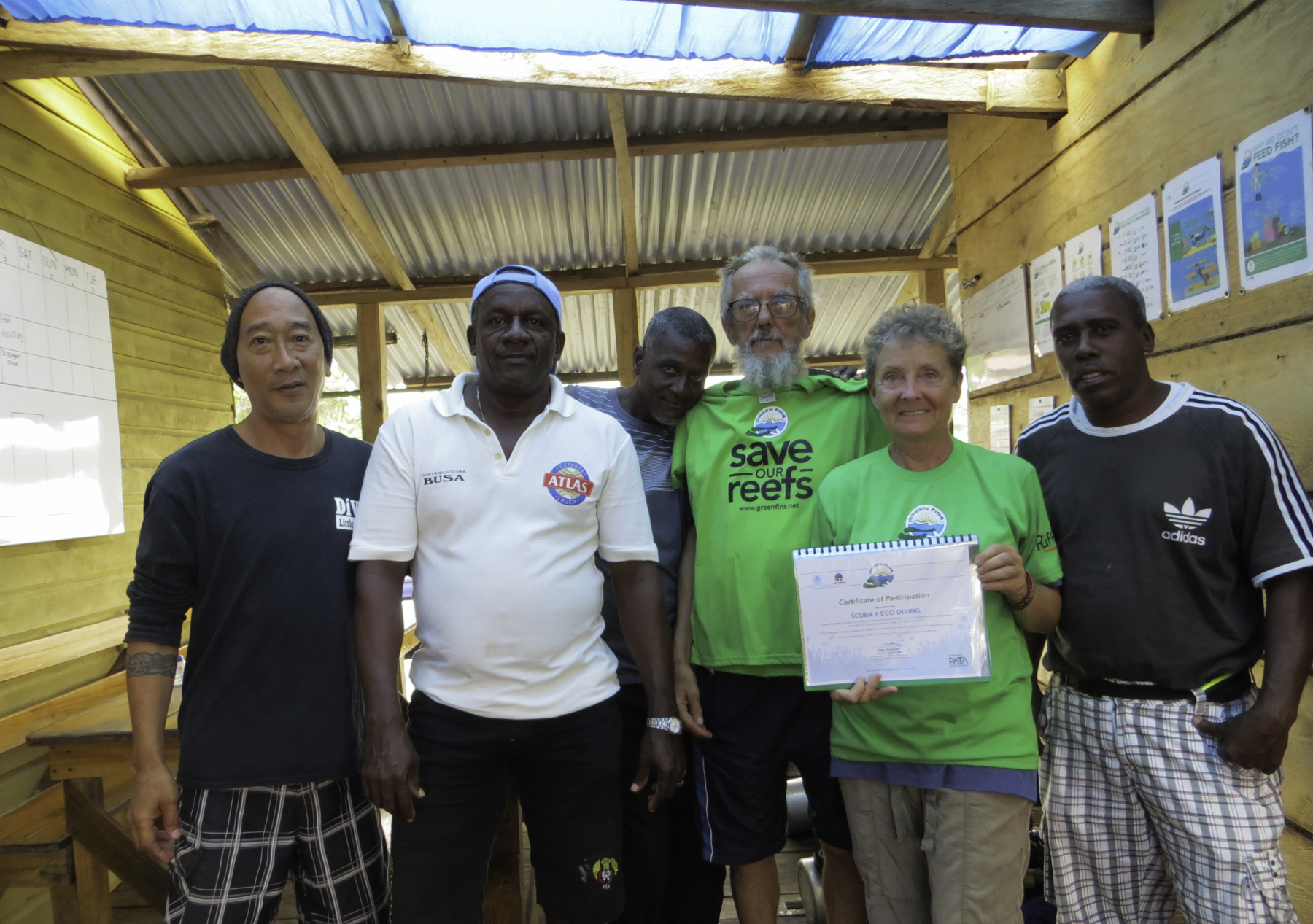
As coral reefs all over the world become more vulnerable to the growing impacts of global climate change and regular, mass bleaching events, it is more important than ever for divers to stand up for the protection of their precious reefs. Ginette Bariteau and the Scuba 6 Eco Diving team in Panama are doing just that by following Green Fins environmental practices.

This is the third, and final, chapter in their story, following a demanding journey towards a sustainable future. Scuba 6 Eco Diving faced trials and triumphs but Green Fins assessors from The Reef-World Foundation have immensely enjoyed supporting them every step of the way.

Now we want to share Ginette’s journey; the good, the bad, and the ugly.

We want to show other business owners that a switch towards environmentally friendly practices isn’t a drain on resources; it can result in a more thriving business, resilient to global market fluctuations and privy to healthy coral reefs. By adopting Green Fins best practices, dive centres reduce their environmental impacts and protect the key asset that their businesses solely depend on. As the awareness grows, more and more dive centres around the globe are requesting to be part of the Green Fins community, but unfortunately not all of them are located in areas where Green Fins teams can access them to provide environmental performance assessments and tailored support.

Reef-World wanted to make sure no one was left out and that the support of the Green Fins network is available to as many dive centres as possible for greater protection of coral reefs. And so in 2016 the Green Fins Dive Centre Operational Handbook was released, as an option for remote support. This is an e-book packed full of guidance, tips and solutions to implement the Green Fins Code of Conduct seamlessly within a diving operation, gathered over more than a decade working with the industry. Created by divers for divers!

Ginette purchased this Handbook and started using the step-by-step guidance to help her to begin small actions towards implementing the Code of Conduct within her daily business operations. Since Green fins isn’t the first environmental programme they are part of this initial process wasn’t so difficult. Ginette’s passion towards environmental protection is reflected in every aspect of her business. In her own words, “I would love to go back to school and study marine biology, study the interconnections of all species. It’s amazing to see how everything works together!”

The second step brought her closer to the traditional Green Fins environmental performance assessment.

Reef-World’s Chloe Harvey, who has been helping the dive industry ‘Green their Fins’ for over 10 years, guided Ginette to compare the daily practices of her dive centre with the Green Fins Code of Conduct. Together they created the first ever Green Fins system for self-assessment. This gave Chloe the opportunity to provide three actions for Ginette to focus on to address the greatest threats being posed to the environment by the Scuba 6 Eco business operations. These actions would help to reduce their impacts on the marine environment and protect coral reefs. The actions agreed upon were the following:

  1. To provide environmental training for dive staff to streamline role model diver behaviour through the dive operations;
  2. To identify alternatives to sending used oil to landfill;
  3. To find alternatives to sending used batteries to landfill.

The third and final step was to be visited by a certified Green Fins assessor. This was the finale of this unique process, aiming to evaluate the effectiveness of both the use of the Green Fins Handbook and the remote support of the novel self-assessment system. Juliana Corrales, Reef-World staff and certified Green Fins assessor, had the pleasure to meet the passionate Scuba 6 Eco team and assess their hard work recently on the 3rd of February 2017.

Through the Green Fins assessments the assessors get the chance to really immerse themselves in the day-to-day life of the dive operator. This was no exception during Scuba 6 Eco’s assessment, it provided the opportunity for Juliana to meet the team, see the famous Panamanian archipelago and get to grips with the challenges and opportunities facing Scuba 6 Eco Diving and the rest of Isla Bastimentos. Situated in the Bocas del Toro Province, the Bocas Archipelago covers an area of 4,643.9 square kilometres along the Caribbean coast and offers divers and snorkellers thriving coral reefs and mysterious wrecks.

It is no coincidence that Scuba 6 Eco was the first dive centre to be assessed in the Americas; they are definitely no ordinary case. Scuba 6 Eco Diving is managed by Ginette Bariteau and Michel Lavoie, a wife and husband who decided to run a dive centre as their ‘retirement project’. Avid divers, environmentalists and lovers of the ocean, they recognise the monumental task they embarked on by choosing to run a dive centre. However, they really value the opportunity to use their business as a way to raise awareness towards marine and coral reef conservation. They truly believe that scuba diving is one of the best ways to communicate scientific knowledge to the general public. “We use our Eco-briefing as a way to channel all the knowledge that we gather from research into a way that can be easily digested by our guests. It gives a whole new perspective to their diving experience,” Ginette mentioned.

Both Michel and Ginette have been in the industry for more than 20 years, they have seen the changing trends, and recognise that now the ‘eco-diving trend’ is peaking. “Before, people used to make fun of Ginette and her ways”, Michel said. She is a dive instructor who is passionate about protecting the marine environment and she makes sure to pass on that passion to every guest they have. For her, there’s no such thing as a bad dive; she says “there is always something interesting to see”. Michel is a PADI course director, and supports Ginette to give their customers something more than just the diving, to raise awareness and use the opportunity they have as instructors and business owners to share their passion and knowledge.

Staff member Roberto Downer is their local gem and within the Green Fins community he would be easily qualified as an environmental ambassador. He grew up in Bocas and has seen the negative impact that development has had on the marine environment and sees the urgency for change. “You can see mattresses, even kitchens; locals throw everything in the ocean, they don’t know better. I try to talk to my family and friends to open their eyes, but it is difficult to change their way of thinking”. Being so far from Panama’s capital, he feels that the area has been forgotten. As a boatman and dive guide, alongside Michel and Ginette he is now a central part of Scuba 6 Eco’s team, aiming to have a positive impact for lasting environmental awareness.

The local communities live in very close proximity to the marine environment they depend on, placing that essential commodity under further threat. Beautiful wooden houses on stilts hover over the ocean, allowing rubbish and debris to be discharged into the water every single day. Lack of environmental awareness is evident in the area, despite the breath-taking scenery. As you step closer to the water you can see a lot of waste and contamination coming from the land. For this reason, and because they are aware of the severity of this situation, the Scuba 6 team uses every opportunity they have to pick up trash from the ocean. On route to and from the dive sites, there is always time for a quick stop to fish some marine debris out of the sea. The only way of moving from one island to the other is by using boat taxis, and some of the locals also have their own. This results in a lot of water traffic, boats moving from island to island 24 hours a day, 7 days a week. Where does all this associated used oil go? Do they have a way to re-utilise it or safely dispose of it? The answer is no. This is one of the biggest challenges Scuba 6 has to deal with and probably one of the biggest environmental impacts in the area. At the moment, the majority of the community disposes of their used oil by burying it in holes inland. This will still directly impact the marine environment, as the chemicals leach into the groundwater.

Previously, Ginette found a solution; a local vendor who collected and recycled used oil. Unfortunately, he could not keep up with the demand and had to close. At the moment, Roberto stores their used oil at his farm because there are no environmentally responsible options for disposal. This may not be a long-term solution but at least the risk to the environment has been mitigated.

To work with Scuba 6 Eco Diving during the assessment and awareness raising session was very smooth and enjoyable. It was evident to Juliana that the team were already implementing most of the feedback points provided by Chloe, only a few months before. Ginette and her team really valued this experience and made everything as easy as possible, from supporting Juliana during the logistics for planning the trip to being very responsive and helpful during the day of the assessment.

Thanks to the use of the Green Fins Dive Centre Operational Handbook and the support of The Reef-World Foundation, the team were no strangers to the Green Fins Code of Conduct. However they found the assessment process very valuable. They identified it as a way to see their business practices through another set of eyes, helping them to shed light on the everyday practices that could be improved. Ginette implemented and changed everything she had control over but local infrastructure for hazardous waste disposal, such as for used oil and batteries is non-existent, which makes finding a solution very difficult. Following Chloe’s recommendation, they are slowly moving towards the use of rechargeable batteries. At the moment they are collecting the disposable batteries and asking their guests to take them back to their countries where they can be properly disposed. This is an excellent option for businesses who cater to environmentally conscious guests who have better options for disposal at home.

At the end of the Green Fins assessment, dive centres are given an environmental impact score, which is confidential between the assessor and the member.  For Scuba 6 Eco it is a clear indication that all of their efforts to make their dive centre more environmentally friendly are paying off. Usually, when Green Fins is implemented in a new site, all local stakeholders are rallied together to form a collaborative network, encouraging everyone to play their part to support sustainability in the tourism sector. It is more difficult for dive centres to work independently, without the support of other local stakeholders, such as local governments. Nonetheless Ginette and her team are taking outstanding steps to lessen their impact in every area they can.

According to Ginette, tourism dropped by 40% in Panama last year alone, but they managed to keep their business, not only up and running, but even busier than their competition. They truly believe their guests choose them because they follow environmental best practices and help raise awareness, giving that extra wow factor to their divers’ experience. Now, they are the first fully certified Green Fins member in the Americas and very happy to be part of the global Green Fins community! The final assessment proved that this process of remote support and self-assessment was a huge success, and who knows, this may be the first story of many more to come.

Photo credits to The Reef-World Foundation & Scuba 6 Eco Diving


Read Part One of this incredible story

“This blue world is changing. In the last century the global sea level has risen almost 20 centimetres, we have lost half of our wildlife in the past four decades, and this year, our oceans are facing one of the worst coral bleaching events in history. Our marine ecosystem is delicately balancing on an uncertain edge, and there is no group better placed for attempting to rescue it than the dive industry. Heading this industry are the myriad dive centres that stand on the beaches of far-flung islands, and dive-tourism hotspots – these are the ones who can help kick-start change…”

 

ADEX 2018: Dedicated to Sharks, the Predators of the Ocean

0

On the 9th of September 2009, at 9am, the agreement for Underwater360 to organize ADEX was signed.  Come 2018, it will be our 9th year running ADEX.

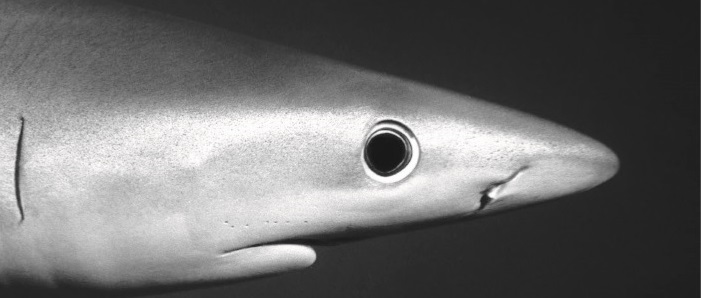
With 9 being an auspicious number for us, we will be returning to our roots for our 9th; and that means: sharks – the first marine creature ADEX was dedicated to back in 2009.  ADEX 2018 will continue the theme of climate change.  Expect presentations focusing on this magnificent animal, with the intention of educating the public about their survivability and how everyone can play a part in ensuring that they will continue to be in existence for the next generation to marvel at.

Theme aside, we plan to make 2018 the best and most comprehensive show yet.  It will also be the largest thus far, with almost 10,000 square meters of floor space.

ADEX will continue to bring together the very best the diving world has to offer – from diving equipment manufacturers, retailers to training agencies, diving destinations… and more.  Look forward to workshops and presentations from the world’s most renowned photographers, ocean artists, marine conservationists, scientists, tek divers, freedivers… etc., with hands-on educational activities for children of all ages.

As usual, ADEX 2018 will be the one-stop place for everything dive related, offering something for all divers and divers-to-be. Vote for the Theme of 2019!

For the Largest Asia Dive Expo’s 24th year, we want you, the public to decide the theme ADEX will be dedicated to in 2019.  Vote for your favourite marine life or cause, and stand to win an Underwater360 VIP Memership.

You Get to Decide.  Should ADEX 2019 be dedicated to the Napoleon Wrasse, the Bluefin Tuna or Climate Change II?