Home Blog Page 16

What it Feels Like Cage Diving with Great White Sharks

0
Shark named ‘Paparazzi’ by Anita and Peter

An extract from a piece written by Anita Verde
Images by Anita Verde and Peter Marshall

So here we are, about to enter the world’s only ocean floor shark cage. While a surface cage is also in operation, as qualified scuba divers, we are privileged to enter the deep and secretive realm of the great white shark. We cannot help but feel the symbolism of the cage itself. While we are grateful for the reassurance the metal bars provides us, it seems somewhat fitting that we are the ones behind them – just like at zoos, where dangerous animals are kept in cages. It’s a poignant reminder that it is the sharks that need protecting these days, not us.
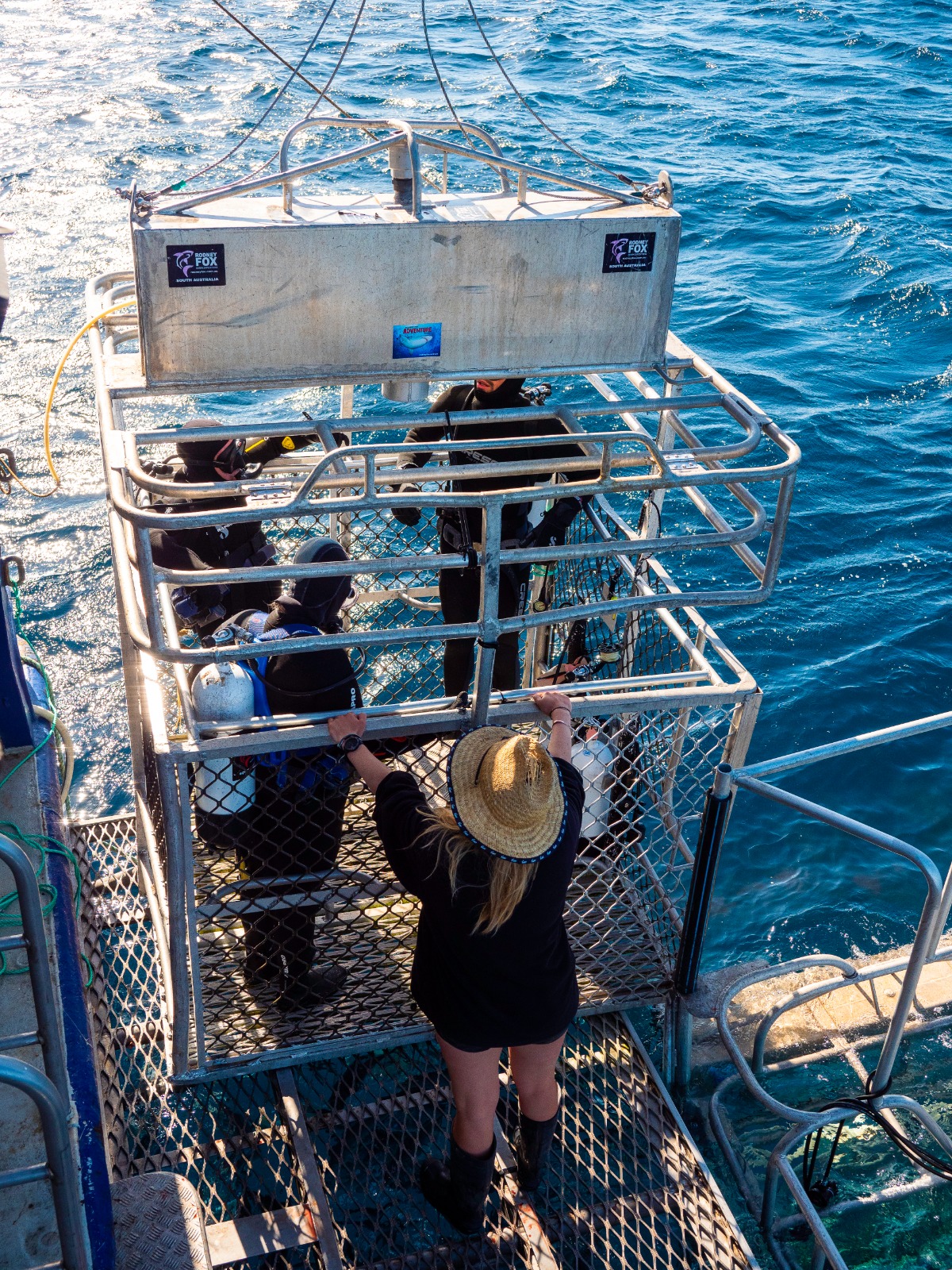
Divers descend in the ocean floor cage

The cage door slides shut and the onboard Below left: crane slowly lowers us to a depth of 25 metres. We have entered the great white’s realm; an aquarium of rocky outcrops, blinding white sand and mystic seagrasses.The waters are teeming with fish and we are greeted by a myriad sea creatures.

Giant blue groupers survey the area, while elegant stingrays sweep gracefully across the grassy meadows surveying the ocean floor.

We wait patiently, but it is not long before we are joined by our first sharky visitor. It is a young male, who also takes first prize for being the happiest shark on the expedition – you only have to look at him to see why. With friendly beaming eyes and grinning gill to gill, he closely inspects the cage, nudging it to test its vulnerability. Clearly, he is checking us out, and we cannot help but wonder what he is thinking!

On his snout, we see a cluster of little black dots. These electroreceptors, known as the ampullae of Lorenzini, provide the shark with a sixth sense, allowing it to detect electromagnetic fields and temperature changes in the water column.These specialised organs are connected to the shark’s nerve receptors so it can sense the Earth’s electromagnetic field to enable navigation and migration. These sensory organs also help the shark to ind its prey by detecting the electrical fields of other animals (like us) in the ocean.
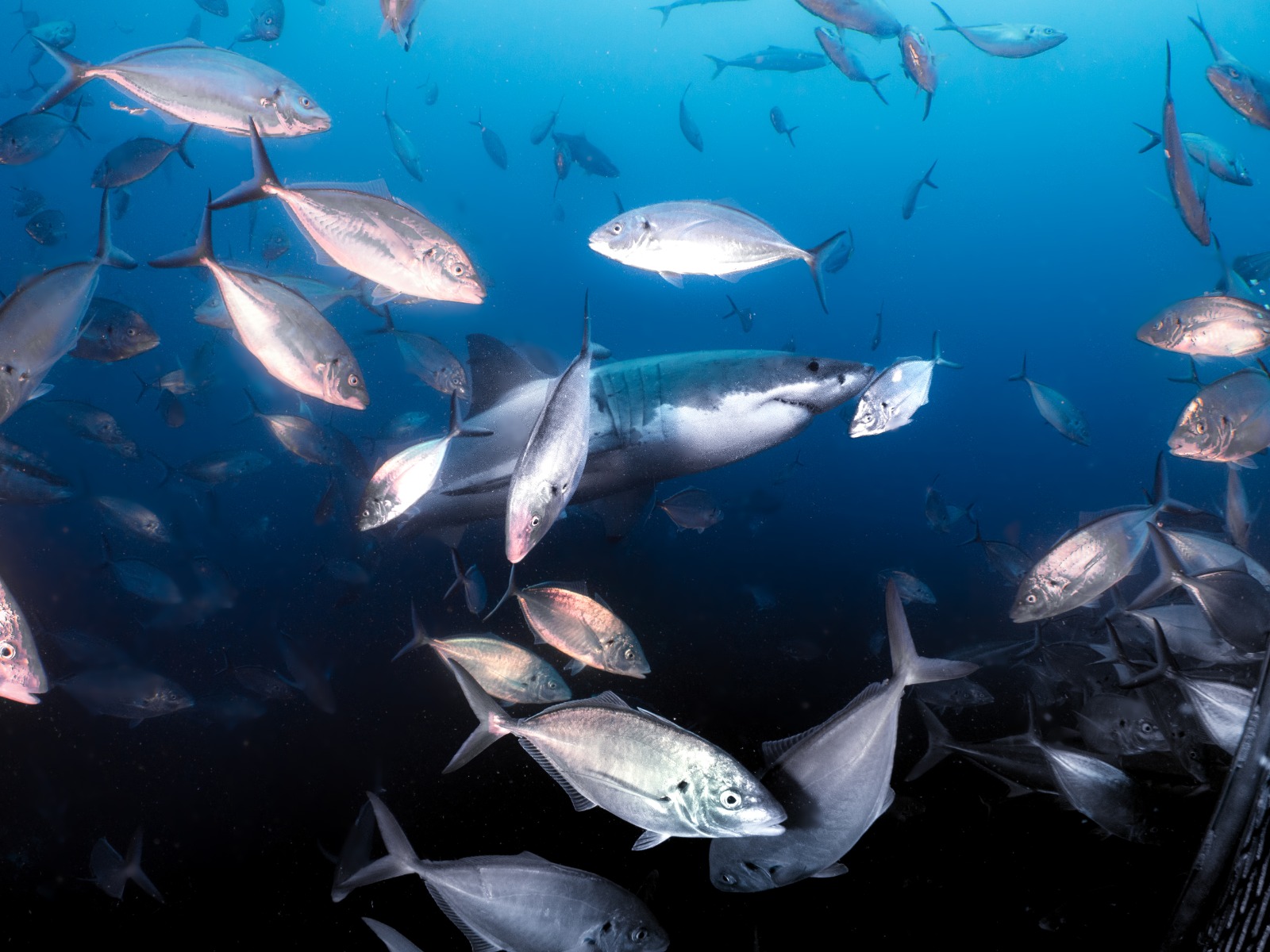
A great white shark among the many trevally that inhabit the north Neptune Islands

We immediately feel privileged to spend time in the company of this majestic and formidable animal. After all, there is no guarantee you will see a shark on this trip. “Sometimes we don’t see sharks for weeks, and we have no idea where they actually are,” Andrew admits. “Despite all our research, so very little is known about the species – but that in itself is part of their magic.”

To our delight, we are soon joined by more great white sharks. Our Cage Captain Nick pulls on a rope that leads back to
the surface, indicating to the crew (via a complex ritual of tugs) the number of sharks at our cage below. Incredibly, we had eight individuals circling our cage. Andrew later tells us that this is the best they have seen over the last six years! We have come to know many different sharky personalities: Deadly (so named because he is small, of course), Tom, Cosmo, McQueen and Slash.

And then there is Paparazzi, as we affectionately named him, a large 4.2-metre male who had an obsession with cameras; ambushing us from behind and having a taste of one of our strobe lights as he passed. “Every shark we encounter here at the Neptune Islands has its own individual personality. We ind the sharks that are new to the experience with us tend to be more active, come closer to the cage, move faster, and show greater interest,” Andrew says.
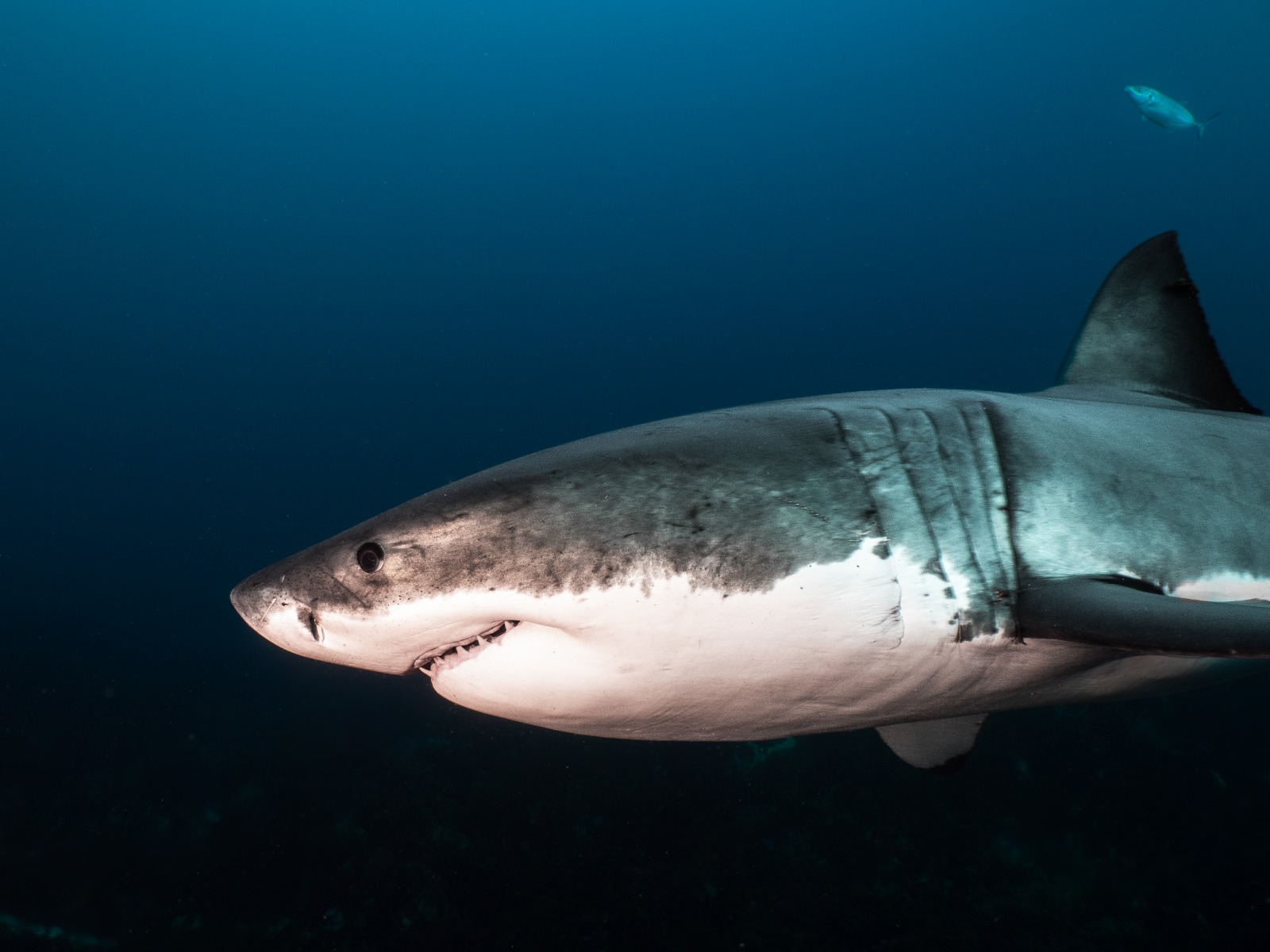
Paparazzi showing his good side to the camera

Effortlessly, the great whites glide through the water, pivoting back and forth from the cage, each time more curious of the wild animal confined within. We cannot help but feel a great sense of awe and immense respect for these animals. At this depth, they are both imposing and majestic, and behave differently than when near the surface.

They are far from the man-eating menace portrayed in Spielberg’s film.


WHEN TO GO

Rodney Fox Shark Expeditions run great white shark cage diving expeditions all year round. Although you can dive with the sharks at any time of the year, the sharks themselves are seasonal. Male great white sharks visit the Neptune Islands all year round, whereas the impressively larger females grace divers with their presence in autumn and winter. The late spring and summer months have the added attraction of scuba diving or freediving with the endemic and endangered Australian sea lion.
Trips run from two to six days depending on the season, with longer expeditions in autumn and winter (April to August), where the days are shorter and the weather is less stable – maximising the opportunity for great white shark interactions.


HOW TO GET THERE

All trips depart from and return to the relaxed coastal town of Port Lincoln on the eastern tip of the Eyre Peninsula in South Australia. Port Lincoln is a 7-hour drive or a 50-minute light from South Australia’s coastal capital, Adelaide. Adelaide is serviced internationally and domestically from all major Australian cities.

If you have time, South Australia also ofers several other endemic marine encounters. Leafy and weedy seadragons are found at numerous jetty sites along the coast, while the annual Australian giant cuttleish aggregation from late May to early August is an experience not to be missed, as it happens nowhere else on Earth.

For more information, visit Rodney Fox Shark Expeditions at: www.rodneyfox.com.au


Anita Verde and Peter Marshall – Australia

Anita Verde and Peter Marshall have a passion for the planet’s wild places, and through their images and narratives hope to inspire better appreciation and protection of the natural world. Based in Melbourne, Australia, they have professional backgrounds in tourism strategy, environmental sustainability, and government relations. When they are not underwater or on a mountaintop, they also work professionally as strategic consultants, advising governments and industr y on sustainable destination planning and development, investment attraction, government relations, brand strategy and marketing. Read more about them at www.summitstoseasphotography.com.
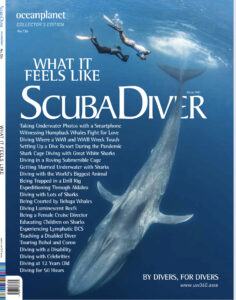


To read more inspiring stories with unique encounters divers have had, pick up your copy of ‘What it Feels Like’ Scuba Diver issue No.124/2022 here

From underwater marriages to being courted by belugas, there are some beautiful and entertaining pieces you won’t want to miss!
 

Exciting Magazine Deals Just For You!

0

Asian Geographic’s Asian Diver/Scuba Diver oceanplanet magazines are replete with fascinating facts and stories about the oceans and diving. At Asian Geographic, we always strive to make knowledge affordable and accessible for all, so we hope that these ongoing deals will encourage you to subscribe to our magazines so that these stories and facts can reach a broader audience!


Asian Diver & Scuba Diver oceanplanet

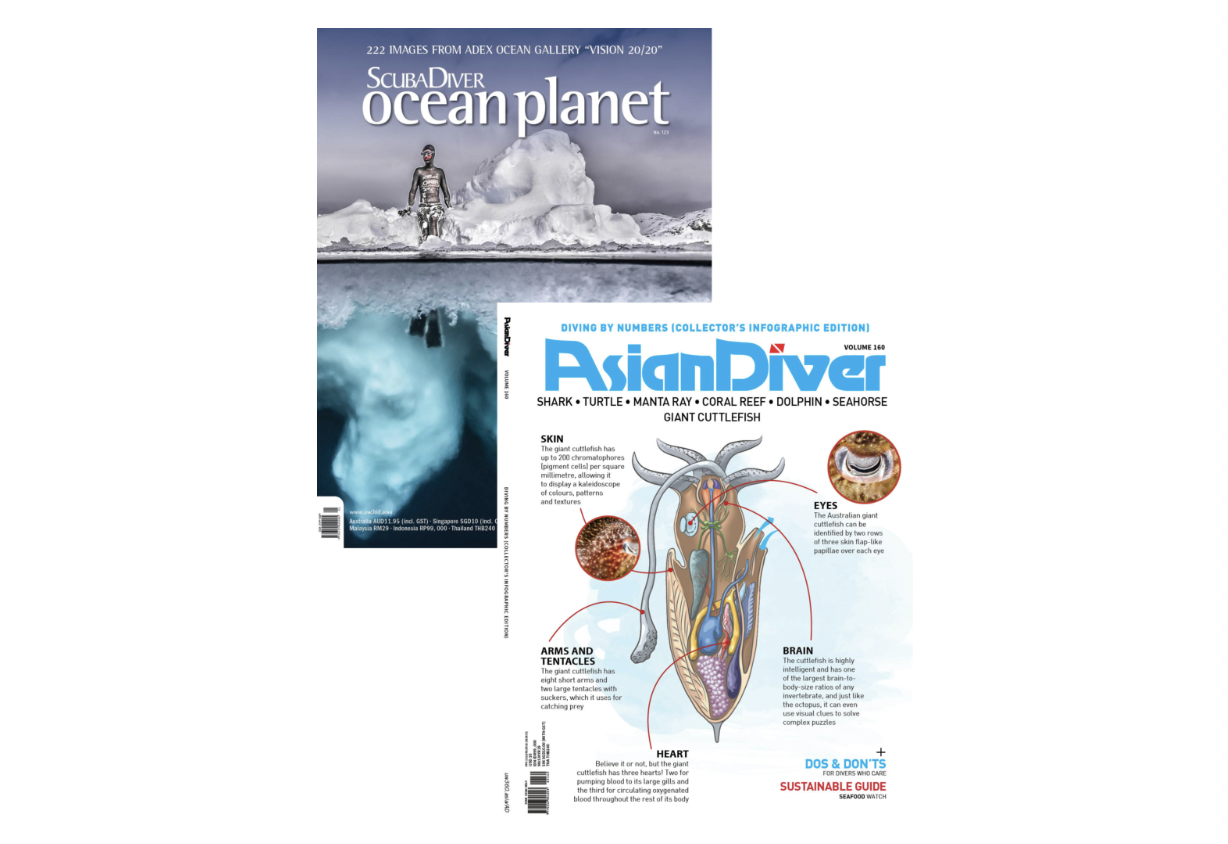
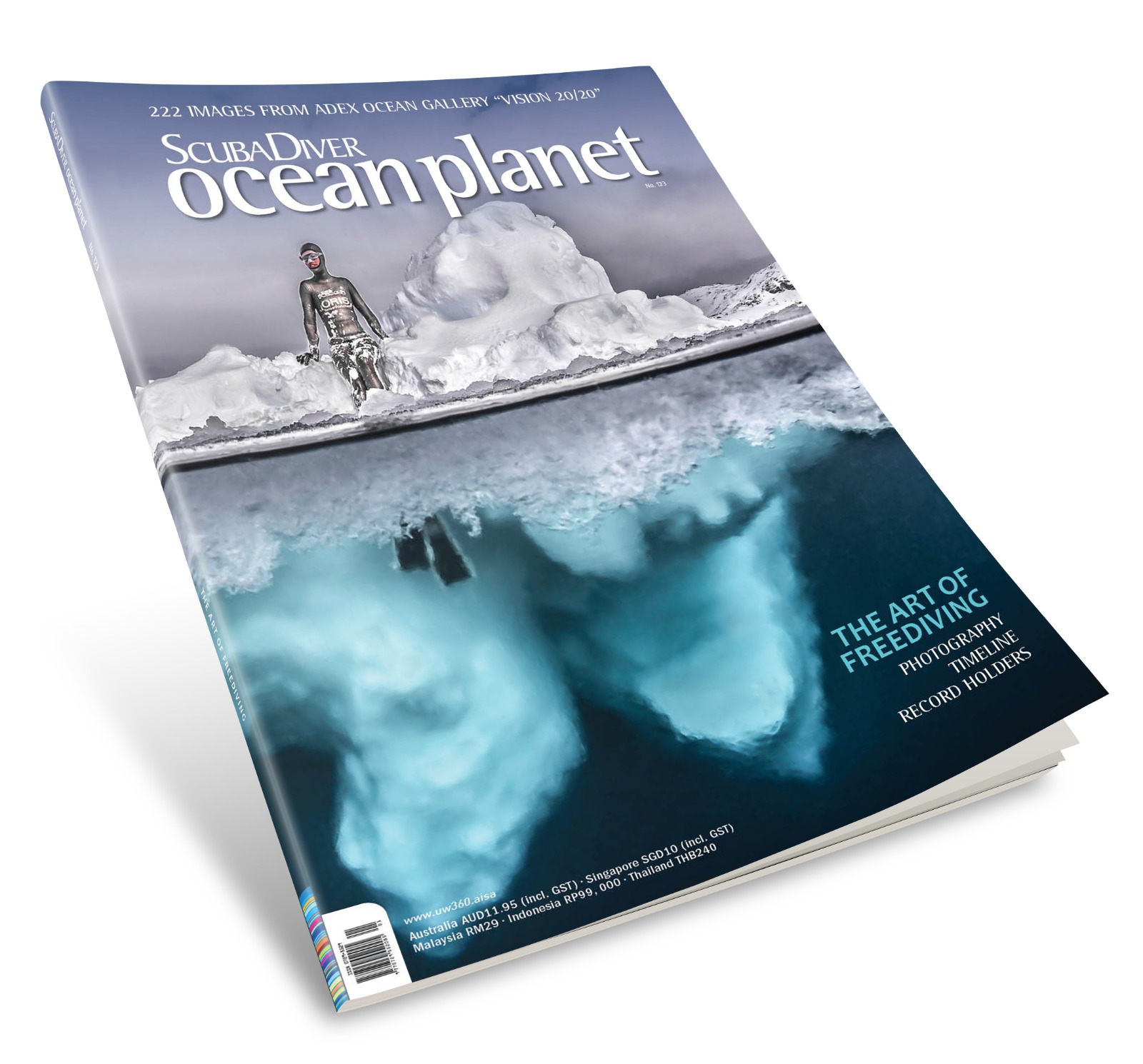
Get a FREE physical copy of Scuba Diver oceanplanet No.123 (Photography edition) simply by subscribing to Asian Diver and Scuba Diver oceanplanet magazine, either for the 1-year subscription (6+1 issues) and the 2-year subscription (12+1 issues)! While stocks last!

More about Scuba Diver oceanplanet No.123 (Photography edition) 

In this annual photography edition, Scuba Diver oceanplanet Magazine will be dedicated to the amazing world of freediving and the finalists and winners of the monthly submissions from the Ocean Gallery Vision 20/20. Seek out the art of freediving with a deeper appreciation for its freediving photography coupled with the timeline, history, and record holder.


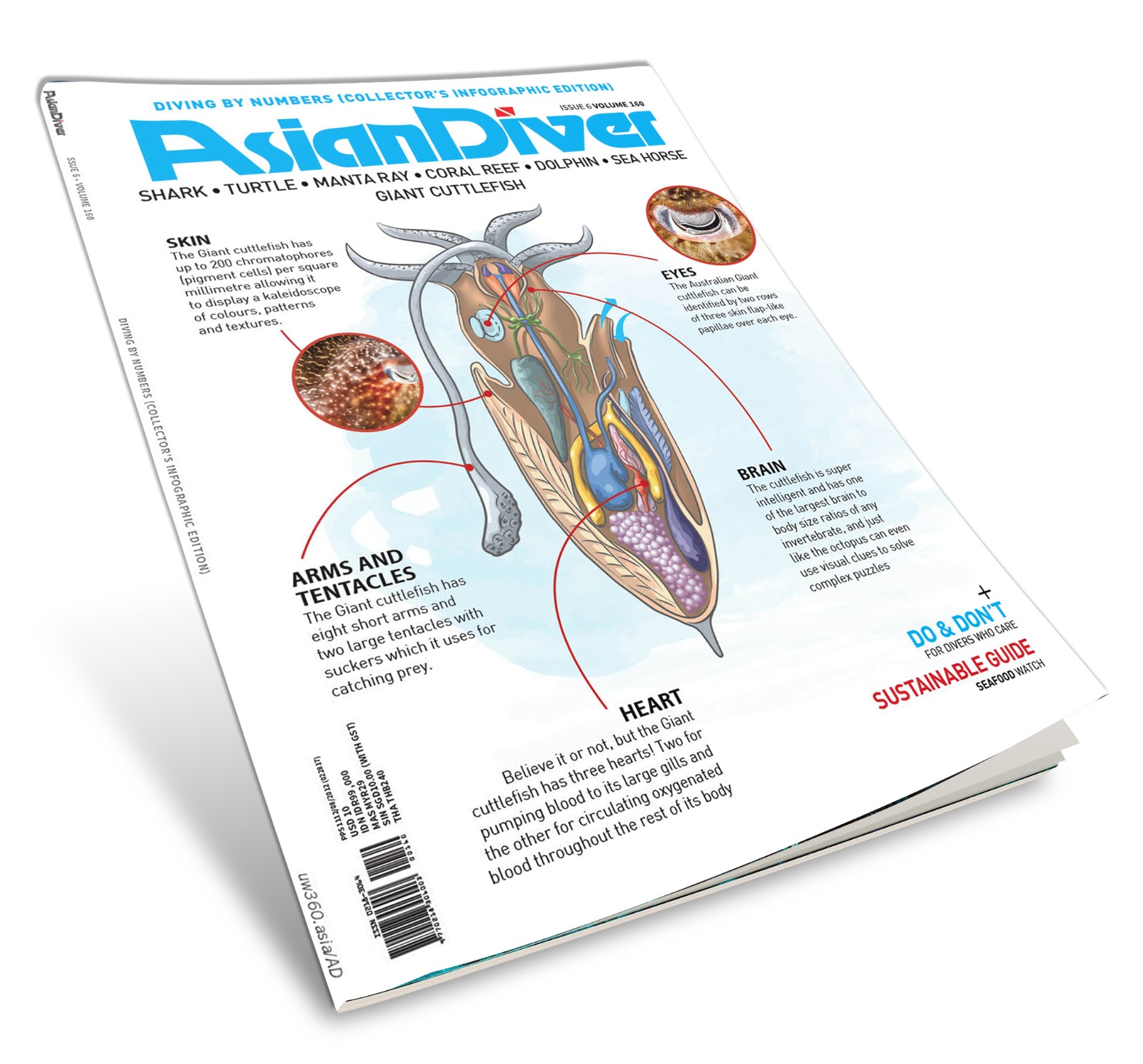
You can also get a FREE digital copy of Asian Diver Infographics edition (Asian Diver No. 160) when you take part in ADEX Voice of the Ocean Photo/Video/Art Competition (VOO) or ADEX Ocean Gallery 2022 this year! All you need to do is submit a photo entry for either of this event and you will receive a digital copy of the magazine.

More about Asian Diver Infographics edition (Asian Diver No. 160)

The Asian Diver Infographics edition will be your ultimate visual guide for your next dive trip. Learn about the Australian giant cuttlefish that mate in the warm waters of the tropical Australian coast before diving into the most comprehensive collection of diving and marine infographics. Everything and anything you will need to know about sharks, turtles, manta rays, coral reefs, dolphins, and seahorses are rounded up with a holistic list of do’s and don’ts when diving in the deep blue waters.

Head over to shop.asiangeo.com/product/asian-diver-scuba-diver/ now to start your subscriptions and you’ll receive the free copies of magazines in no time! We can’t wait to have you onboard with us on this journey to exploring the diving world!

What it Feels Like Expeditioning Through Aldabra

0
Gorgonia on a deep reef, Cosmoledo, Seychelles

Text and Images by Al Hornsby


What follows is a collection of excerpts from my journal of the remarkable journey we’ll always remember as “Expedition: Aldabra”.


Day 1: Approaching the Seychelles

Sunrise over the Indian Ocean; it’s a quickly-brightening dawn. The sea stretches away far below us in all directions, a pale, medium blue. Ahead, a string of lush, green islands comes into view; each surrounded by bright turquoise water; each fringed with brilliant, white sand; each a small jewel awaiting us on the morning – and where Fantasea II is awaiting our arrival.


Day 2: Open Ocean

We had moved onto the boat with a huge mass of equipment. By rough count, we have some 29 housed cameras, 15 Nikonos V’s, seven Nikonos RS’s (David and I had some of the first ones recently introduced into the US), four housed video systems, and 70 strobes and movie lights, all of which virtually cover Fantasea’s rear deck.

Our first day closes with a lovely sunset and a thin sliver of moon, flanked by Venus at its brightest, emerges as the light fades. At the bow, we salute the rolling sea before us – it is obvious that a unique adventure awaits.


Day 4: Bijoutier Island

Several of us are transported by Zodiac to this tiny, postcard-perfect sand islet; its interior thick with coconut palms. We walk in across the shallow reef-flat through a foot of water. The bio-system is pristine and unusual, with a heavy, deep-green seagrass covering everything, with small corals growing underneath and in-between. Large, spotted tiger cowries lie about, nestled in the grass by the hundreds.


Blacktailed Snappers in Cosmoledo


Day 7: Cosmoledo

We have arrived at desolate Cosmoledo – hundreds of miles from anywhere. It is a large lagoon surrounded by thin, duned islands. The vegetation is mainly low, rough scrub.

We dive just north of its pass into the lagoon. John, Robin, and I move down the reef and see potato cod, groupers, and schooling jacks. At the drop-off edge, we encounter a strong, cold-water upwelling.

Then, magic happens. I see a gigantic school of at least a thousand blacktailed snappers moving over the reef edge below me. As I near them, at just over 30 metres, I find a large star coral mound covered with swaying white and purple soft corals. The milling snappers move in to form a solid, swaying backdrop, a living curtain. A school of oriental sweetlips hovers over the coral, and more potato cods drift in and out of the panorama. I shoot picture after picture, nearly mesmerised by the scene before me. Finally, film gone, out of air, and visually blown away, I must reluctantly ascend.


Day 9: Astove

We have anchored off Astove, a low, sandy spit of land with low, dry bushes and grass surrounding a shallow inner lagoon. We enter the water just at the channel-mouth. The spot is lovely; bright, clear water on a steep slope of intermittent coral and sand valleys. Huge schools of snappers, large giant sweetlips, groupers, and other fish abound, as do green turtles, which seem to be everywhere. A school of circular spadefish joins us and stays for the rest of the dive, nipping at our fins and exhaust bubbles.

As I move away from the boat, I reach an area massed with schooling humpback snappers squeezed closely together; from underneath, they are a solid two-to-three foot, thick mat, packed so tightly side-to-side that I can’t see through them to the surface. I glance below me and discover I’m hovering over two large black-blotched stingrays, nestled closely together in the sand.


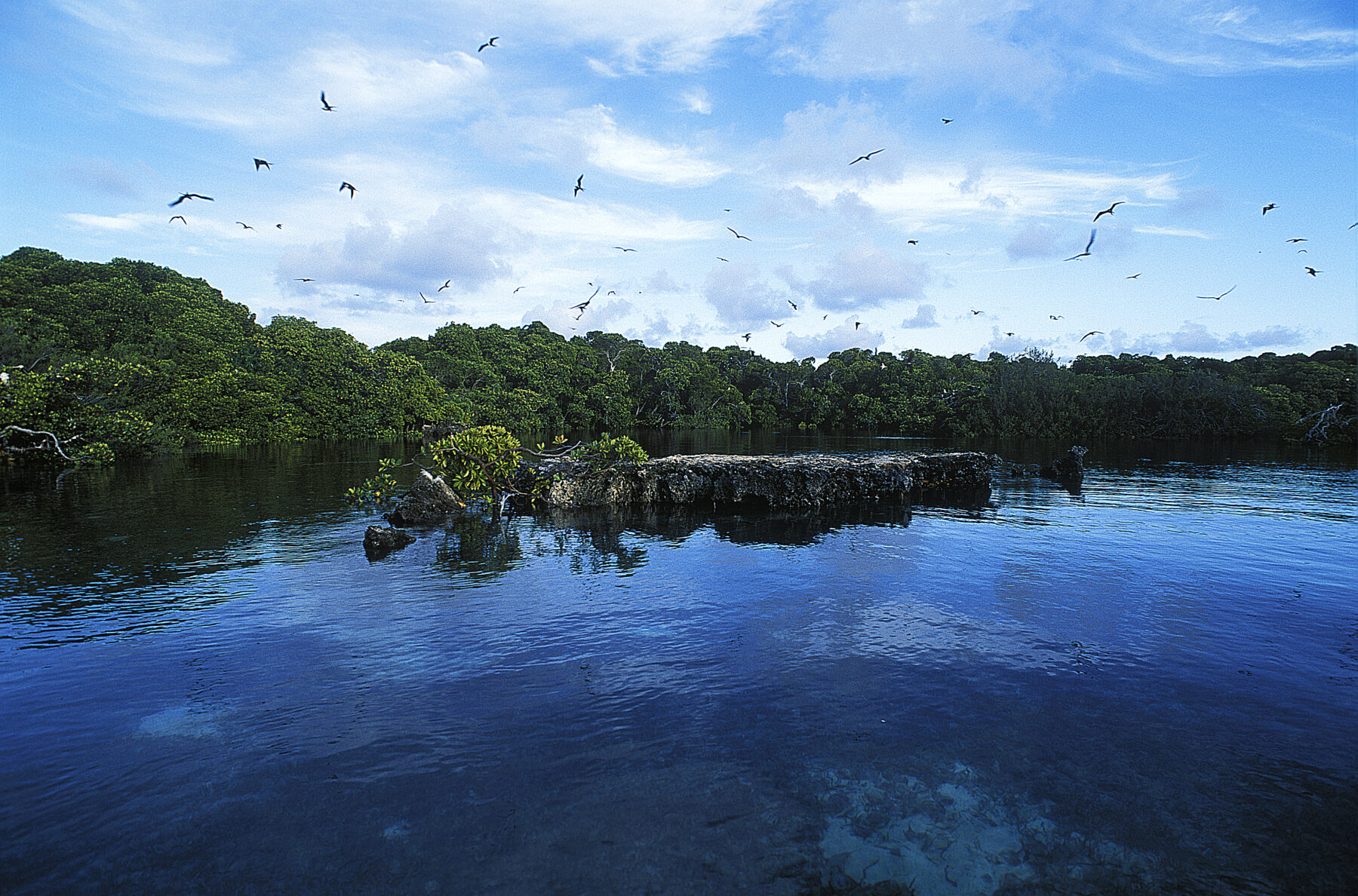
Aldabra Lagoon with frigate birds

Day 11: Aldabra Lagoon

After an all-night, rolling, stormy run from Astove, we arrive at Aldabra, the largest, most remote, coral atoll in the world, with thin, fringing islands of sand and iron shore strung around a gigantic, central lagoon.

As we cruise near shore looking for a potential dive site, we see mantas breaking the surface. We grab cameras and skin diving gear, and jump in. The mantas, two of them, large with dark backs and brilliant white undersides, move away slowly and we follow. I notice that one manta is leading crew-members Betty, Ruth, and Tally in a large circle. I swim hard and position myself in its expected path, then free dive down to about 10 metres and wait. It’s not long until he comes into view and then swims directly to me – stopping about two metres away, claspers curled. I shoot. A moment more and he swims closer and directly over my head; my second image is manta overhead, full-frame.


Day 12: Aldabra

We take a Zodiac to the beach just before sunrise to hopefully find a turtle who has yet to return to the water after her nighttime egg-laying. A fresh set of tracks leads up over the sand; in her deep crater, a green turtle remains.

After laboriously flipping sand over her precious eggs, she begins to head back to sea. She looks exhausted as she drags her ponderous weight across the beach. We are all very quiet afterwards, filled with wonder at this rare and beautiful encounter.

Later, we move Fantasea up-island to the Grande Pass and enter the lagoon. The current is incredible – water is running into the lagoon, which stretches over the horizon, at more than 14 knots, creating a wild maelstrom as millions of gallons pour in. The lagoon takes four hours to fill; the water level then drops three to four feet over the next four hours as the cycle reverses itself.

That night, Howard reads from Cousteau’s writings about Aldabra. As best we can determine, we are where Calypso was anchored in 1954. To me, whom as a young teen diver read dog-eared copies of The Silent World and The Living Sea over and over, the moment is near mystical.


Day 13: Assumption Island

We make the two-hour run to Assumption – a long, sandy island with dune hills and low trees, and anchor off a curving, white sand beach. The water is brilliant cobalt, turquoise in the shallows. We jump in to find a sandy bottom sloping away to deep water, interspersed with large coral bommies. Life is amazingly prolific; each bommie is a small community, with anemones, small schooling fish, morays, groupers, coneys, hawkfish, lionfish, and angelfish.

As Robin stretches out on the bottom filming a close-up of a curious lionfish and me, he jumps and gives a muffled yelp. As he turns over, we see a small moray has emerged from a crevice under him and latched on to his inner thigh – right through his wetsuit! I laugh enough to flood my mask; the little morays in this area are ferocious – I’ve been bitten three different times so far, myself


Day 15: Off Aldabra

Late night; after a day of diving Aldabra’s lush outer reefs, we now drift in the open sea. Lionel and I slip into the blood-warm water on snorkel to photograph whatever may be attracted to the huge spotlight David has lowered beneath the boat. It is a mysterious, a moonless night on the rolling surface, of the deep, dark ocean. We sweep our lights around and are met with a parade of small creatures flowing by in the current, including thousands of minuscule, squirming, jetting, golden octopi, smaller than a fingernail, that latch onto anything they encounter, be it camera, strobe or us; and, something marvellous I had never seen before – several, small jellyfish with slightly larger fish living, unharmed, inside their bells.


Day 18: Inside Aldabra Lagoon

Robin, Chris, and I go to a quiet beach to photograph tortoises and birds. There are several large tortoises under the trees, and they gaze at us with wrinkled, ancient faces as we move close to shoot. Unconcerned, they browse as they move slowly about, seeming to eat anything and everything – leaves, pine needles, grass.

That evening, under a steady rain, we stand at Fantasea’s rail looking down at the dark water; a horde of baby turtles swims slowly by. The terns know this is a night of hatching; by the hundreds, they are everywhere, hovering just over the surface, searching for baby turtles. One rain-battered tern approaches us, and Tally extends her arm. The fearless bird lands, shakes his feathers dry, and then flies off into the deep night.


Day 20: Assumption

We move the boat back to Assumption for a last day of diving. Afterwards, we head out for a final, late afternoon snorkel. I swim as a glowing, setting sun breaks from under the clouds at the horizon. As I surface from a free dive, the sun’s rays suddenly pierce the surface of the water, showering down a brilliant cascade of sparkling, golden light. I rise through it, mesmerised by this scene of such breathtaking beauty. I rest on the surface, immersed now, not simply in the sea, but in a moment shared with a magical universe.


Contributor’s Bio:

Al Hornsby is a well-known dive professional, diving and wildlife photographer, author, and environmentalist. With four books to his credit, Al also is a regular contributor to international dive magazines. Along with his photography and writing, Al is a longtime executive (currently Senior Vice President, Legal Affairs) for PADI; former Editor/Publisher of Skin Diver Magazine; former President of the Dive Equipment and Marketing Association; and a founder of the Project AWARE environmental organisation.


To read more inspiring stories with unique encounters divers have had, pick up your copy of ‘What it Feels Like’ Scuba Diver issue No.124/2022 here

From underwater marriages to being courted by belugas, there are some beautiful and entertaining pieces you won’t want to miss!
17 Fascinating Facts About Sea Sponges

0
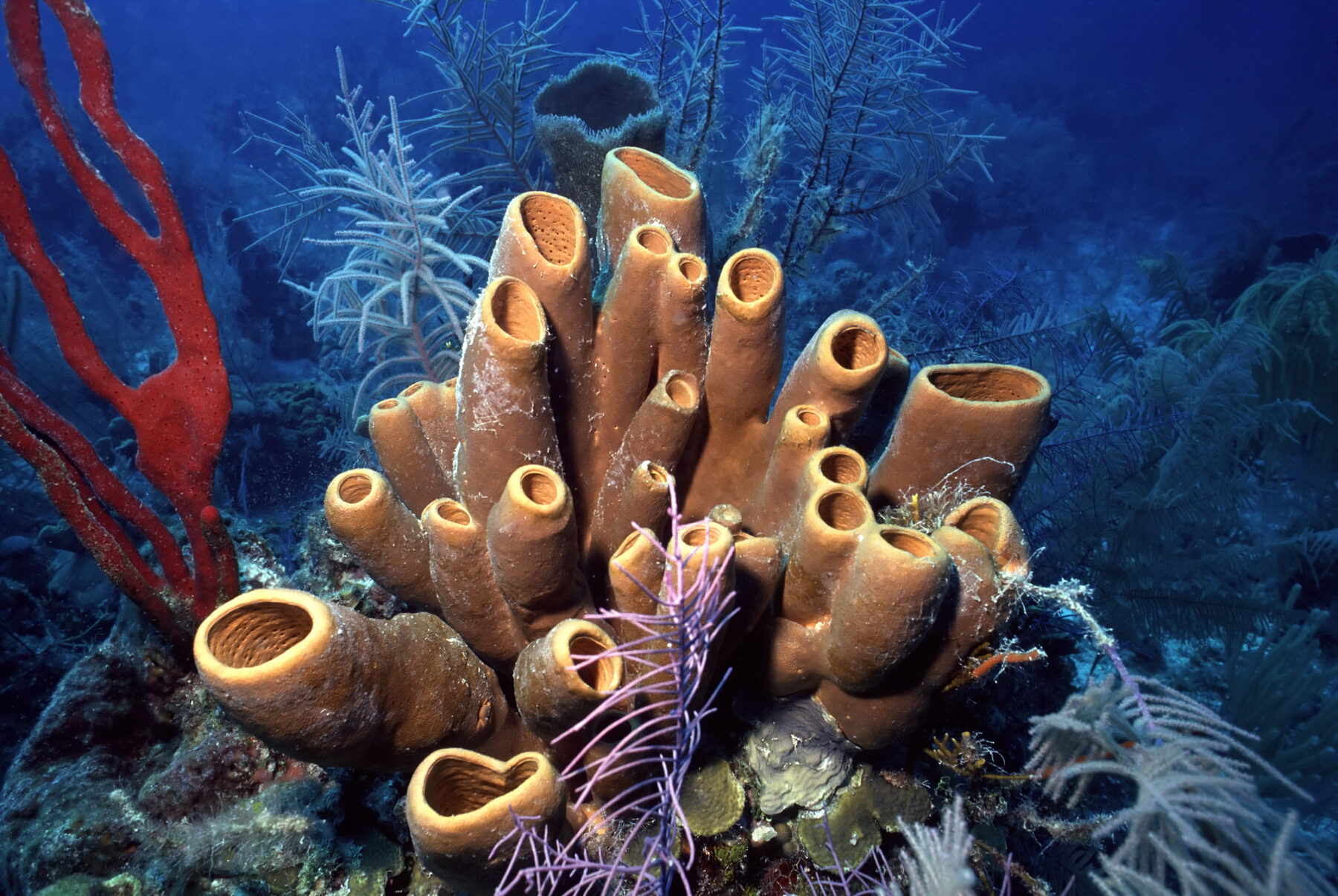
Colorful red finger sponge and brown tube sponges on Belize reef

Image from Shutterstock


The sea sponge is one of the world’s simplest multi-cellular living organisms. They have been present on Earth for around 500 million years. There are over 5,000 identified species – 200 of which can be found in fresh water.

They are often mistaken as corals or plants; lacking the features we commonly associate with living animals, such as brains and hearts. Nevertheless, despite their seemingly uninteresting appearance, sponges are actually vital and dynamic creatures. Here are 17 fascinating facts about them.


1. Sponges belong to the phylum Porifera, Latin for “pore-bearer”, which refers to the countless tiny openings, or “ostia“, visible on all sponges.


2. Sea sponges are “filter feeders“, as they feed by actively filtering water through their pores, ingesting water-borne plankton and other simple microscopic life.


3. Sponges can filter a huge mount of water every day – roughly 20,000 TIMES their own volume.


4. Sponges excrete essential nutrients, and are extremely important nutrient sources in the marine ecosystem.


5. Sponges are also now recognised as a vital carbon sink, absorbing carbon dioxide from the water.


6. One family of sponges, the Cladorhizidae, feed on tiny crustaceans.


7. All adult sponges are sessile (they do not move).


8. Some sponges have spiny defensive “spicules”, made out of a mesh of protein, spongil, and calcium carbonate.


9. Sea sponges are hermaphrodites, with the characteristics of both sexes. Reproduction amongst sponges occurs in two forms, sexual and asexual:

  • During sexual reproduction, sponges release sperm into the water column, which is then absorbed by other sponges. Fertilisation takes place within the receiving sponge which will then release larvae into the water to form the next generation.
  • Asexual reproduction involves producing genetic clones. Sponges will grow “gemmules”, which bud, break off, and then settle elsewhere.


10. Sponge larvae have cilia, or tiny hairs, that they use to propel themselves through the water to find a good place for them to settle.


11. Sea sponges contain a significant amount of iodine. As a result, from the time of the ancient Greeks and Romans, through to the Middle Ages, people used them for medicinal purposes. Scientists are currently researching sea sponges for possible applications in the treatment of cancer.


12. The size of a sponge is determined by the rates at which water can flow through their body. Large, healthy sponges can often be found in places through which nutrient-rich currents flow.


13. The smallest species of sea sponge is around THREE CENTIMETRES, with the average size of the largest sea sponge being from one to two metres.


14. The largest sea sponge ever discovered was a Monoraphus sponge that grew to be over THREE METRES WIDE.


15. Sea sponges can be found in all oceans of the world, from the tropics to the poles.


16. Sponges inhabit a huge range of marine ecosystems, from intertidal zones down to the deep ocean trenches, and from sunlit reefs to dark caves.


17. Some sponge species may live for 200 YEARS or more. Based on growth rates, scientists speculate that some specimens could be as much as 5,000 YEARS OLD.


To browse more intriguing stories about conservation, marine life and underwater photography, check out Scuba Diver Issue 2 / 2017 here.

For more insightful features and stories like this, subscribe to Scuba Diver here.

‘What It Feels Like’ to get Married Underwater with Sharks

0
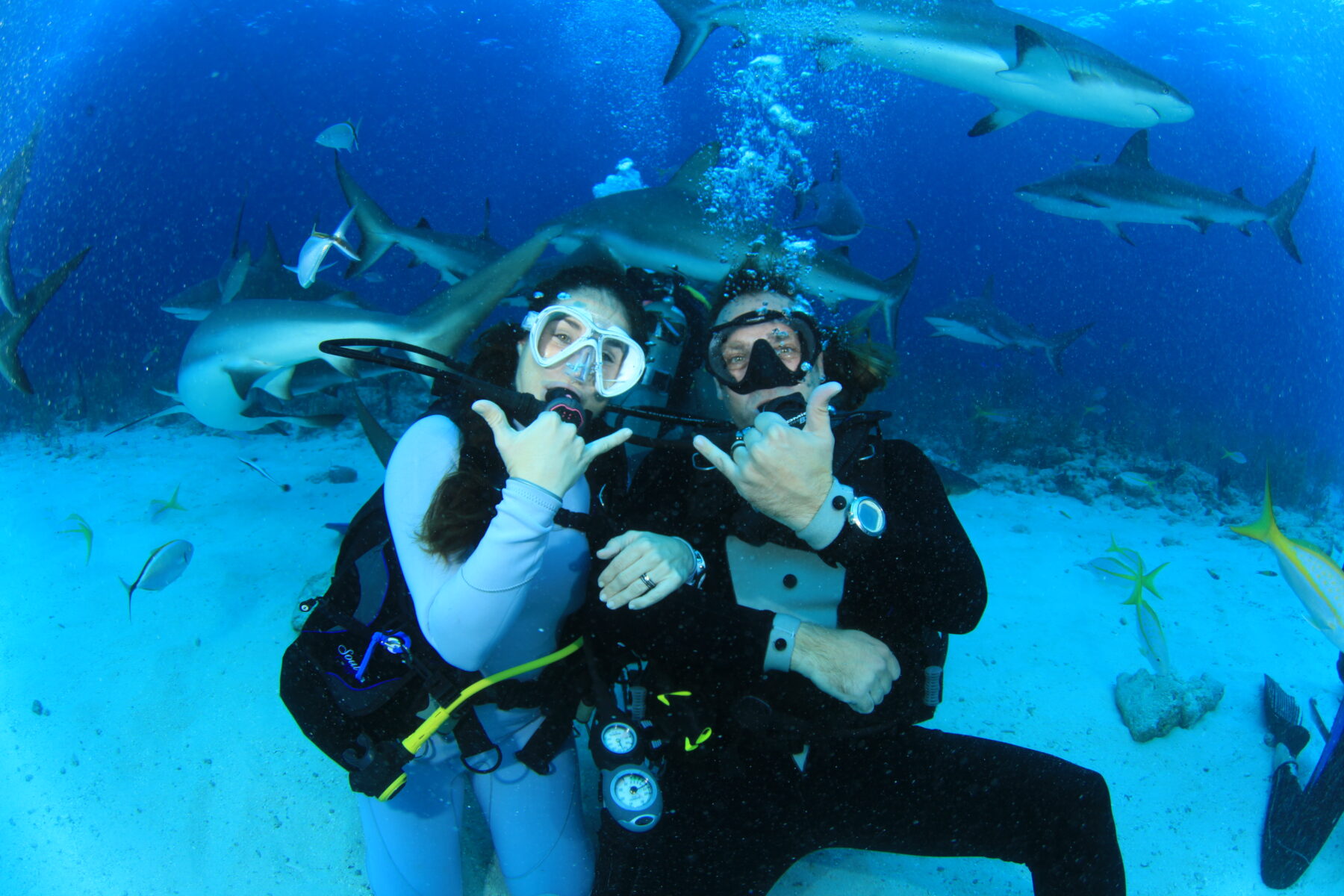
The married couple with their friendly wedding guests

Text and Images by Alexandra Dimitriou Engeler


So, what does it feel like to get married underwater with 50 shark guests? Two words – wet and wonderful. It was the best day of my life and the most unforgettable dive of my career.

My husband and I are both divers and my family are all divers. Diving has been my passion since I had a mouth big enough to hold a regulator, and sharks have been my absolute favourite creature that swims for as long as I can remember.

So when my husband popped the big question, it was only logical to do it underwater. And why not travel somewhere where they have a high shark population and an underwater preacher?

Turns out the Bahamas ticked all the boxes. Underwaterpreacher.com had all the answers and worked out all the logistics for us.

So we packed our dive gear, loaded the diving family, and hopped on a few planes from Cyprus to the Bahamas. 

It was an early start – a 5 a.m. wake up allowed me to get my wedding diving hair secured and waterproof makeup applied. All in time for the limo to pick us up at the hotel and drive us to Stuart Cove Dive centre. 

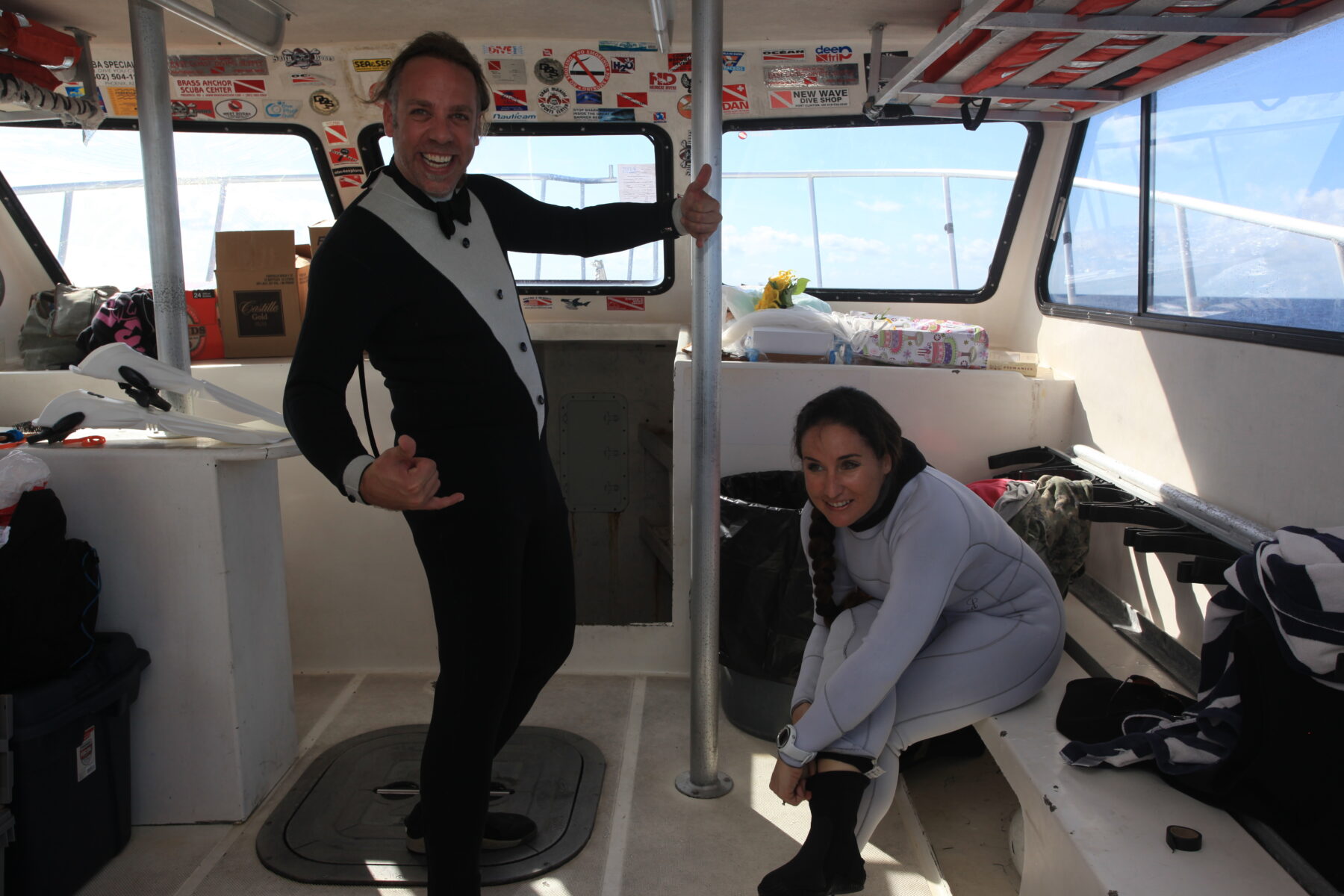
I built my equipment wearing a white dress and a veil, weighted down with fishing weights that had been sewn into the hem. My husband started donning his very special custom-made tuxedo wetsuit. A short briefing from the shark guide, who was wearing chain mail and a helmet to protect her from any guest that felt partiality “nibbly” that day, prepared us for the day. We signed all the official paperwork on the boat with the preacher too and he ran through how the vows would be agreed upon while underwater.

Alexandra and her husband in their wedding dive suits


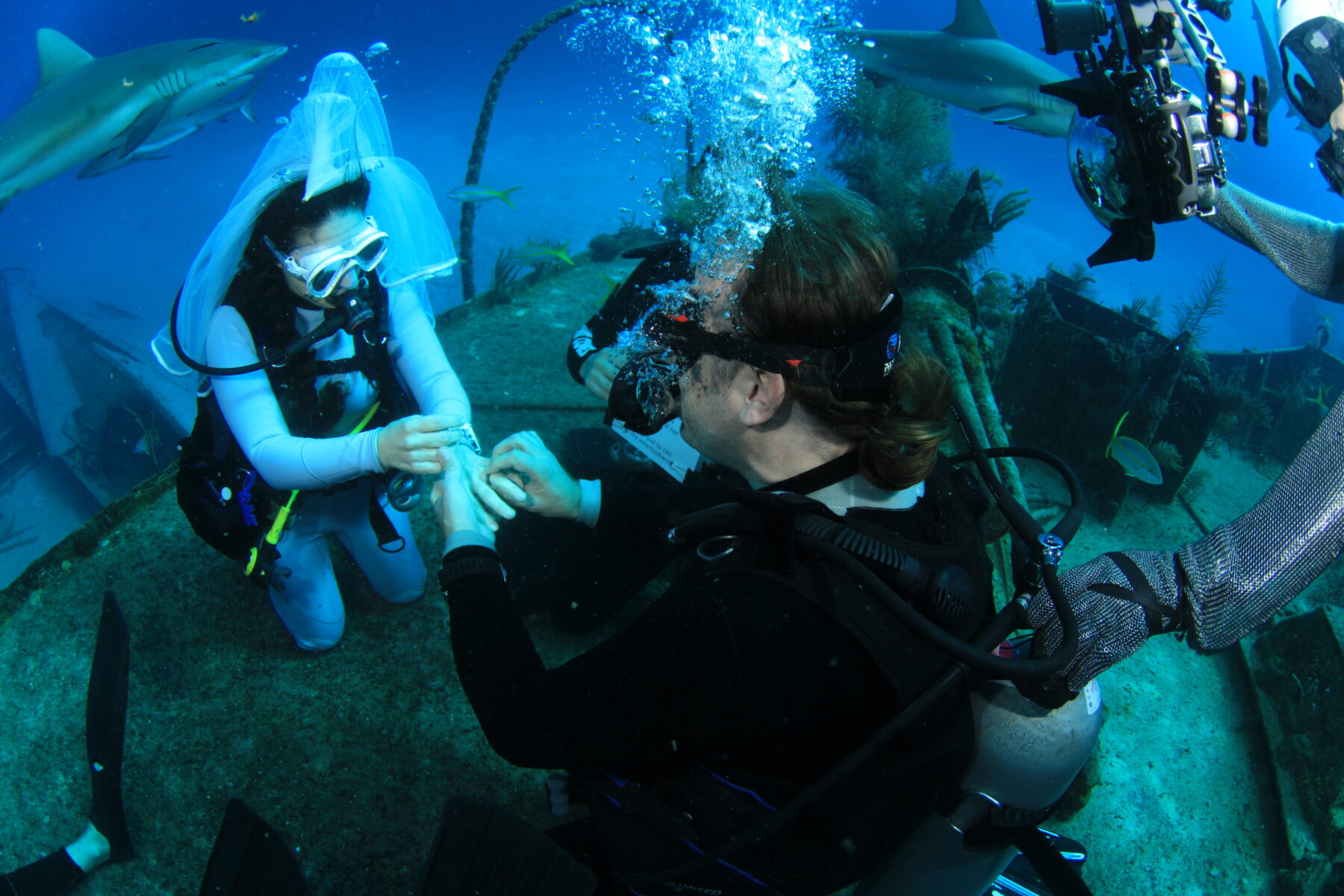
We chose a shipwreck for the official ceremony. My father “swam” me down the aisle. My brother was waiting there with a clamshell containing the rings.

The ceremony was short and sweet. The preacher ran his finger across each line of the wedding vows, finally resting on the answer options of “Yes”, “No” or “Maybe”.

We circled our “yes’s” – we took our regulators out and had our first kiss as a married couple. Sharks circled around us. A rather friendly grouper got in the way. I think he felt left out and wanted to be a shark too.

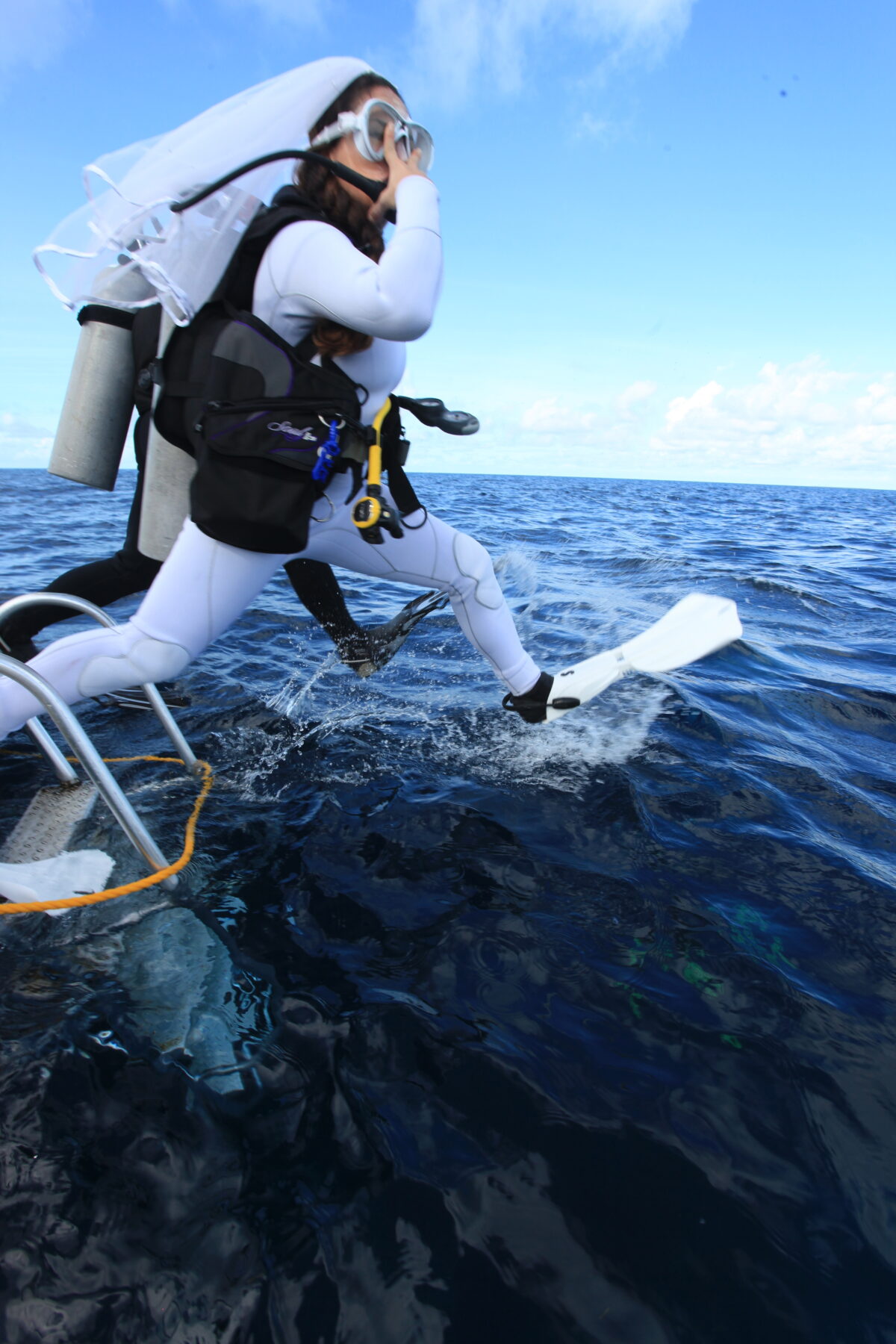
A leap of faith


The joy I felt has never been matched. The happiness was overwhelming, but our adventure had only just begun. We then left the wreck and made our way onto the sand for our second dive. This dive was all about the sharks. The shark guide was there with huge metal boxes full of fish – after all, it’s rude not to feed your wedding guests. I normally do not agree with feeding marine creatures, but Stuart Cove has managed to maintain a high shark population due to these practices. In a world of ever-dwindling shark populations, I must say that this is the exception that I agree with. The sharks were friendly and got very close I’ve never been dumbfounded in such a profound way before. These fantastic beasts were circling our group in a feeding frenzy that can’t be described easily. Our guide had told us to keep our fingers together, just in case they were confused for fishy flesh. My white wetsuit looked blue and my veil was catching every expelled bubble from my exhalations. The water was a cool 18 degrees Celcius and my heart was in my mouth, both with love and excitement.

I can’t imagine a better way to get married. I will never forget the tears of joy I had when I surfaced. I never felt more “in the moment” than that day. I think of it daily. I live my life happy knowing I found my life partner who shares my passion for the underwater world!

Exchanging rings underwater


Contributor’s Bio

Alexandra Dimitriou Engler is the owner of Scuba Monkey Ltd, a dive centre in Agia Napa, Cyprus. She became a diver in 1992 and received her bachelor’s degree in Oceanography at Plymouth University in 2003. Her love of the ocean has always been her driving force and this has led to the natural progression of becoming a diving instructor in 2005. She is currently a PADI staff instructor. Read more about her at www.scuba-monkey.com.


To read more inspiring stories with unique encounters divers have had, pick up your copy of ‘What it Feels Like’ Scuba Diver issue No.124/2022 here

From underwater marriages to being courted by belugas, there are some beautiful and entertaining pieces you won’t want to miss!

5 Common Mistakes New Scuba Divers Make

0

Text by Megan Denny, PADI
Image from Shutterstock


As a new diver there are plenty of unknowns. Everything is new and exciting. which can lead some divers to make some rookie mistakes. Set yourself on the path to a fun and relaxing scuba career by avoiding these common missteps.


5. RUSHING

Don’t push yourself to keep up with experienced divers. Take your time assembling your gear and remember to do each step in the buddy check before each dive. Once in the water, descend slowly and equalise every few feet. When you get down, make sure your buoyancy is dialled in.

A good diver is a relaxed diver. Diving outside of your limits or experience in trying to keep up with more experienced divers is how accidents happen, so stay slow and controlled.


4. NOT INVESTING IN PERSONAL GEAR

Your own gear will fit well and be familar to you. There’s a lot to be said for intuitively knowing where everything is, especially if the unexpected happens. Think about when you borrow a car versus driving your own vehicle.

Once you have your gear, maintain it well and it can last for years. The Equipment Specialist course is a great way to learn basic care and maintenance.


3. HOLDING BACK WHEN YOU HAVE QUESTIONS

Every diver was a beginner at some point and we learn by asking questions and gaining experience. There is no shame in requesting clarification or looking for guidance. In a lot of cases, you’re not the only person who needs more info; others may be embarrassed to speak up!


2. DOING TOO MANY THINGS AT ONCE

It takes time to get familiar with being in an underwater environment: buoyancy, monitoring your air and being aware of your position relative to the reef and other divers. As a new diver, it’s important to get some dive experience under your belt before adding extra activities like shooting photos or video. Trying to do too many new things at once can task load your brain.

If you’re interested in gaining more experience under the guidance of a PADI Instructor, the PADI Advanced Open Water course is a great way to try different types of diving including underwater photography / videography – with an experienced dive professional at your side. Don’t let the name fool you: You won’t be asked to do some crazy intense activities. Think of it more as a specialty sampler course.


1. DELAYING A DIVE AFTER CERTIFICATION

The biggest mistake a new diver can make is to lose touch with their new skills.

  • If possible, plan a dive as soon as possible following your open water certification
  • Join a local dive club
  • Dive more than just once a year on holiday

Your PADI certification is good for life, but as with any skill – if you don’t use it, you lose it. If you won’t be able to dive for a while, review the PADI materials you received with your course to keep important dive procedures top of mind.

If a significant amount of time passes between dive adventures, consider the PADI ReActivate programme. Quickly refresh your scuba skills and knowledge online or by using a tablet and visit your local dive centre for in-water skill review sessions. You’ll also receive a new PADI card showing your dive skills have been refreshed. And don’t forget to keep active! Get something on the calendar by planning your next scuba trip with PADI Travel.


To find out about numerous diving courses you can undertake and read up on various diving-related stories, get your copy of Asian Diver Issue 3 / 2019 here.

For more insightful features and stories like this, subscribe to Asian Diver here.


Diving with Celebrities: An Underwater Hollywood

0
Filming in a shark cage dive

Interview with Stuart Cove
Images by Stuart Cove’s Dive Bahamas

For Stuart, who founded Stuart Cove’s Dive Bahamas, there is an underwater world he wants to share with us all. The coastline waters offer world-famous underwater film sets for scuba divers, snorkelers, and swimmers. There’s a whole cinematic masterpiece beneath the surface to be seen. From stunning, lively reefs and an expansive array of marine life (most notably the sharks) to dramatic drops and mysterious wrecks, the experiences on offer are a treat for every diver, whether you’re a newbie or veteran – or a celebrity with a film crew in tow.

Will Smith’s fear of sharks had haunted him his whole life thanks to Steven Spielberg’s Jaws. This fear of sharks
would come up in any environment, even irrationally in the bathtub, as he admits in his Facebook Live video clips from 2019. Will decided to overcome his fears and team up with Stuart Cove’s Dive Bahamas to undertake a PADI Discover Scuba course. The location of this spot? Exactly where Jaws was filmed. He really did tackle his fear head on. The Bad Boys star wanted not only to learn how to dive but to appreciate sharks and their roles in our ecosystems.

Will said it had always been on his bucket list and he wanted to learn to love the creatures, not shake in terror at the thought, let alone the real life sight, of them. Indeed, Stuart notes celebrities are no “superheroes” and Will was terrified on the boat before entering the water. Then, remarkably, Stuart had the privilege, as he calls it, to watch this fear “dissipate into a sense of wonderment”.

Whether it’s dive enthusiasts, holidaying families or movie stars, for Stuart, it is so humbling to see people interact with sharks “so close that their bellies brush over their heads”. He notes that it is a powerful feeling when these individuals of all ages and all backgrounds “put their lives into your hands”.

Staged Aircraft wreck on film set

In the case of celebrities, Stuart is always struck by how these famous figures have so many people looking up to them, yet they are just as humbled as anyone else when they’re underwater experiencing unique encounters with marine life. He concludes that after all his experiences underwater with celebrities, they are “just individuals who have high pressure jobs”.

Stuart also recalls in his years in The Bahamas how he has hosted numerous film crews and seen his dive school turned into a film set. Sean Connery, Sandra Bullock, and Heidi Klum are just some of the celebrities he’s seen. He has also witnessed how marine protection protocols have changed the way films are made. Before these were in place, crews would manipulate animals such as sharks, physically handling them like props or puppets to create the perfect shot. Now, thankfully, marine life must be left largely untouched by law. Other tricks are still employed, however, like altering the environment to match the characteristics and colours of different filming locations. For example, whiter sand might be brought in to mimic the colour of the sand from the Virgin Islands, another popular setting for movies.

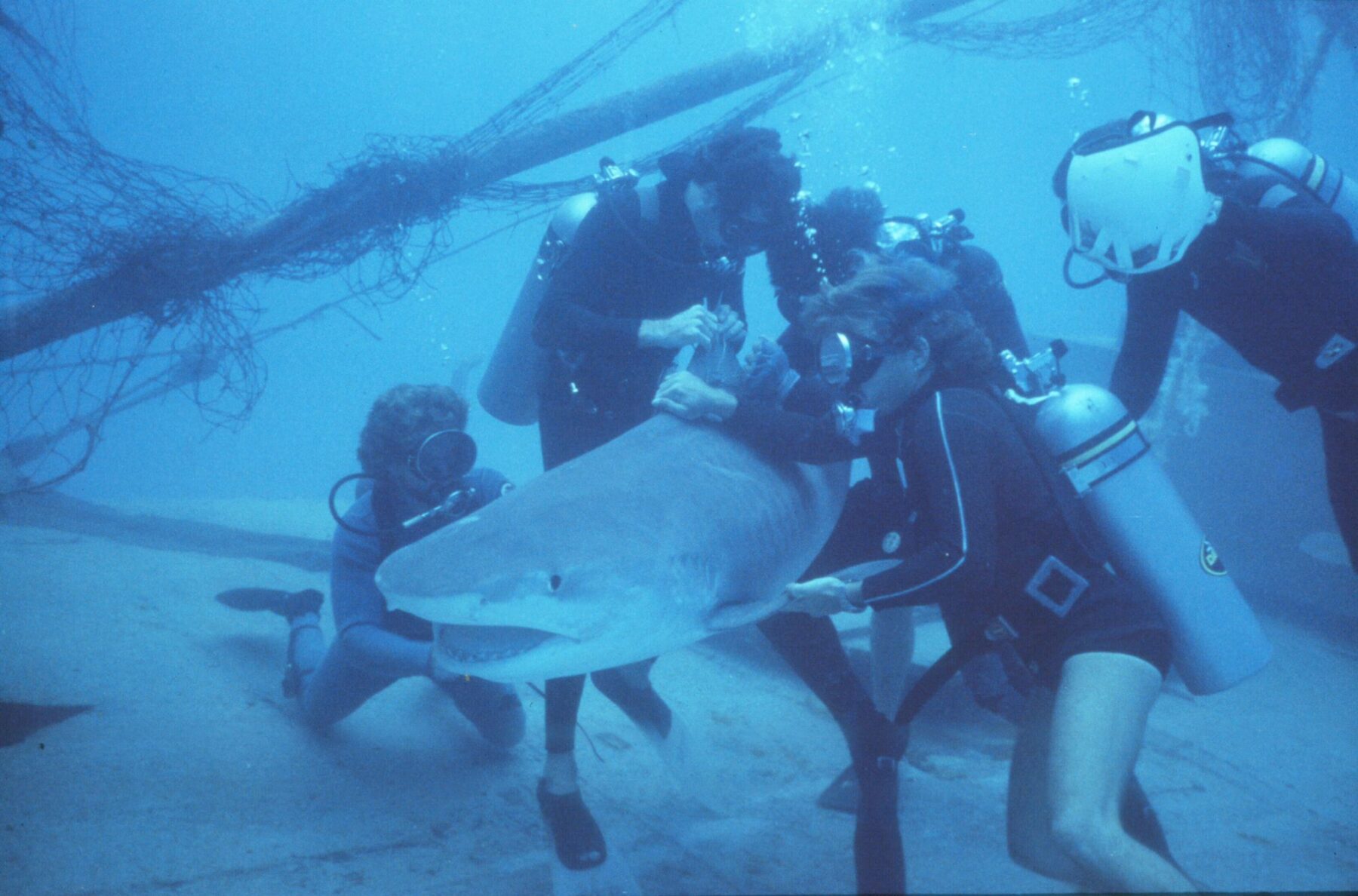
Film crew handling a shark (please note: this photograph is from old archives and this is no longer practiced)

From the Bond films to Avatar, The Bahamas has been chosen for countless movies for its photogenic beauty both above and below the waterline. But looking to the future, computer-generated imagery (CGI) is gradually changing that, with stunning locations like The Bahamas simply providing a backdrop that is then heavily reworked digitally. Actors are filming less and less in authentic underwater environments, instead shooting in swimming pools or tanks bathed in harsh artificial light and covered in green screens – with marine life added in digitally later. It is arguably easier for Hollywood, but the underwater world is so picture perfect, it is perhaps a shame. At least the sharks are left alone, and anyone can still enjoy the chance to dive with them.

Whether diving with novices, families or celebrities, or indeed anyone bravely overcoming intense fears, Stuart is passionate about introducing people to the underwater world and helping to create better divers. He has shared many remarkable moments and forged lasting memories. But, he says, although we may be starstruck when we hear about the famous people he has met along the way, for him it’s all in a day’s work, and he’s always looking for his next adventure. Indeed, these days, Stuart is looking up, not down, taking to the skies as he trains to become a pilot. In the meantime, Stuart Cove’s Dive Bahamas will continue to showcase the most exciting underwater life The Bahamas has to offer and you can be sure that you haven’t seen the last of this beautiful corner of the Caribbean on the big screen.


Quotes from Stuart Cove

Text by Sienna Lakin


To read more inspiring stories with unique encounters divers have had, pick up your copy of ‘What it Feels Like’ Scuba Diver issue No.124/2022 here

From underwater marriages to being courted by belugas, there are some beautiful and entertaining pieces you won’t want to miss!