Home Blog Page 17

Diving with a Disability

0
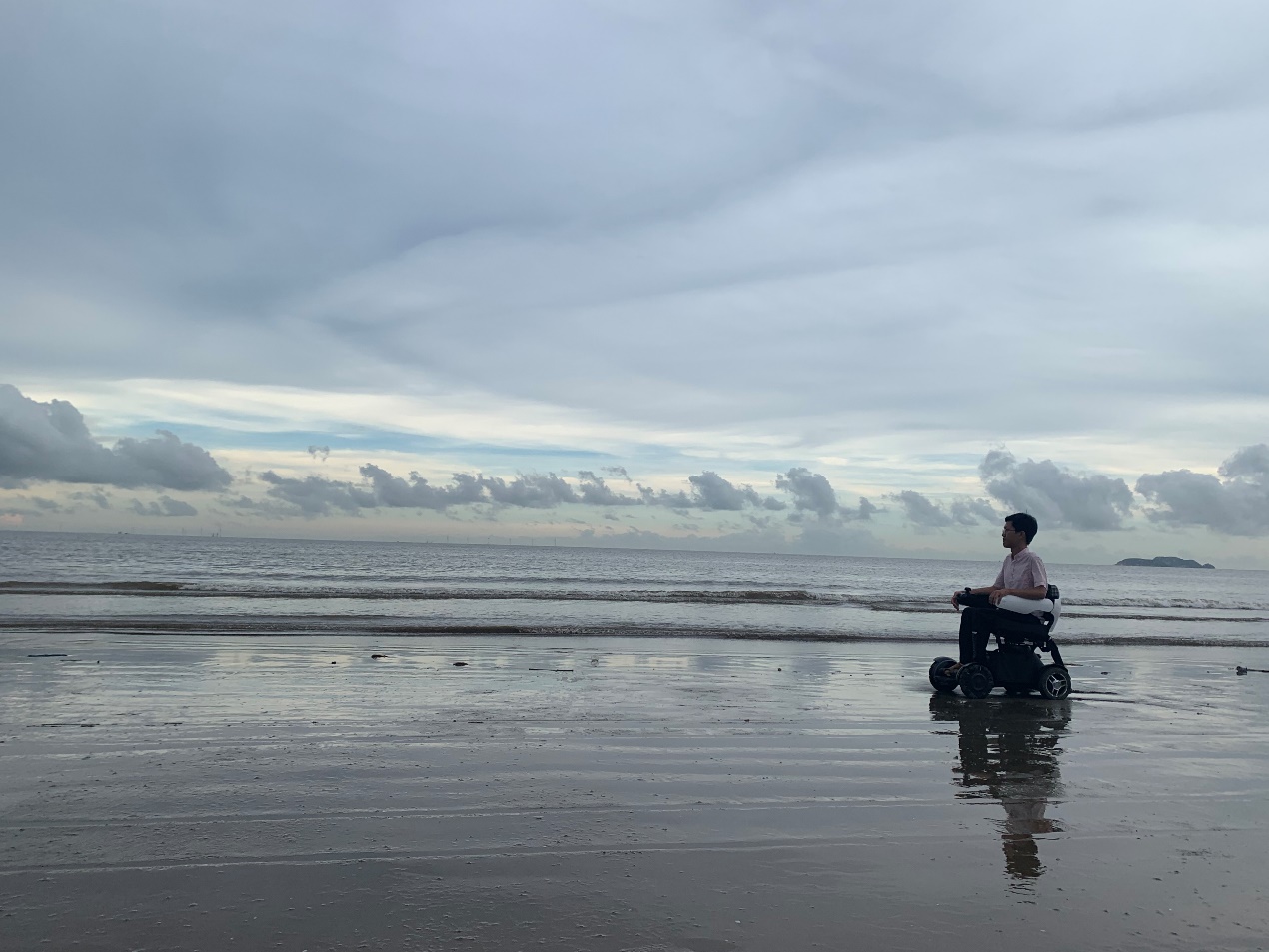
Jianze Fang by the sea in Zhuhai, China

Text by Jianze Fang
Images by Yihong Wang

When I was born, I was diagnosed with muscular dystrophy. The disease causes a loss of muscle function, affecting mobility. Since elementary school, I’ve lived in a wheelchair. I started diving in my fourth year of university in 2020 and because of the pandemic, I had a lot of spare time. I was inspired to dive by my father, who came from a seaside town in Guangdong Province, China. In the 1990s, my father became a sailor and went to Europe and Morocco on a boat. His story has always motivated me to be near the sea and so, I thought I should finally embrace it, too.

I contacted the Handicapped Scuba Association (HSA) instructor in China, and started diving soon after. I obtained my HSA-approved diving certificate on August 19, 2020.

Learning to dive was a difficult process. Initially, my physical strength was low. In fact, after being in water for an hour, my physical strength was exhausted. I exercised every day and, eventually, my body was strong enough to dive in the sea.

When I’m in the ocean, I feel that the world belongs to me. The sea is so quiet: I can only hear my own breathing and I feel incredibly focused.

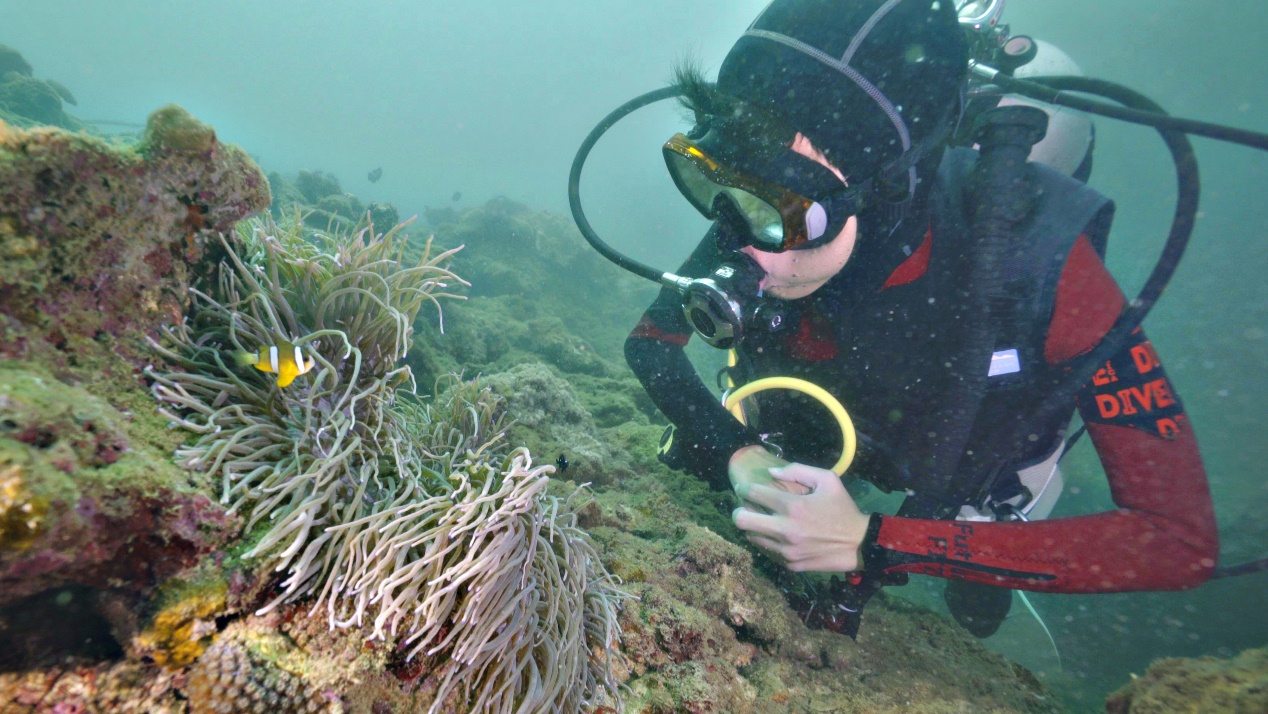
Jianze diving in the Sanya Sea amongst vast gorgonian coral and spotting clownfish within it

I am proficient in using diving equipment to dive, ascend, swim, and turn around. On land, I can only use an electric wheelchair for mobility. In the water, buoyancy is my strength; it rids me of the negative effects of gravity.

Before I learned to dive, I felt like a lost fish. However, after learning to dive, I felt that the sea accepted me – I might be like a son of the sea. Underwater, I am reminded of our duty as human beings: to coexist with Nature peacefully.

When I was little, it never occurred to me can that I could become a diver. It was a huge challenge for me to obtain qualifications at such a young age. It’s not been easy and has taken a lot of work. Nonetheless, I faced it all bravely and I am proud of myself.

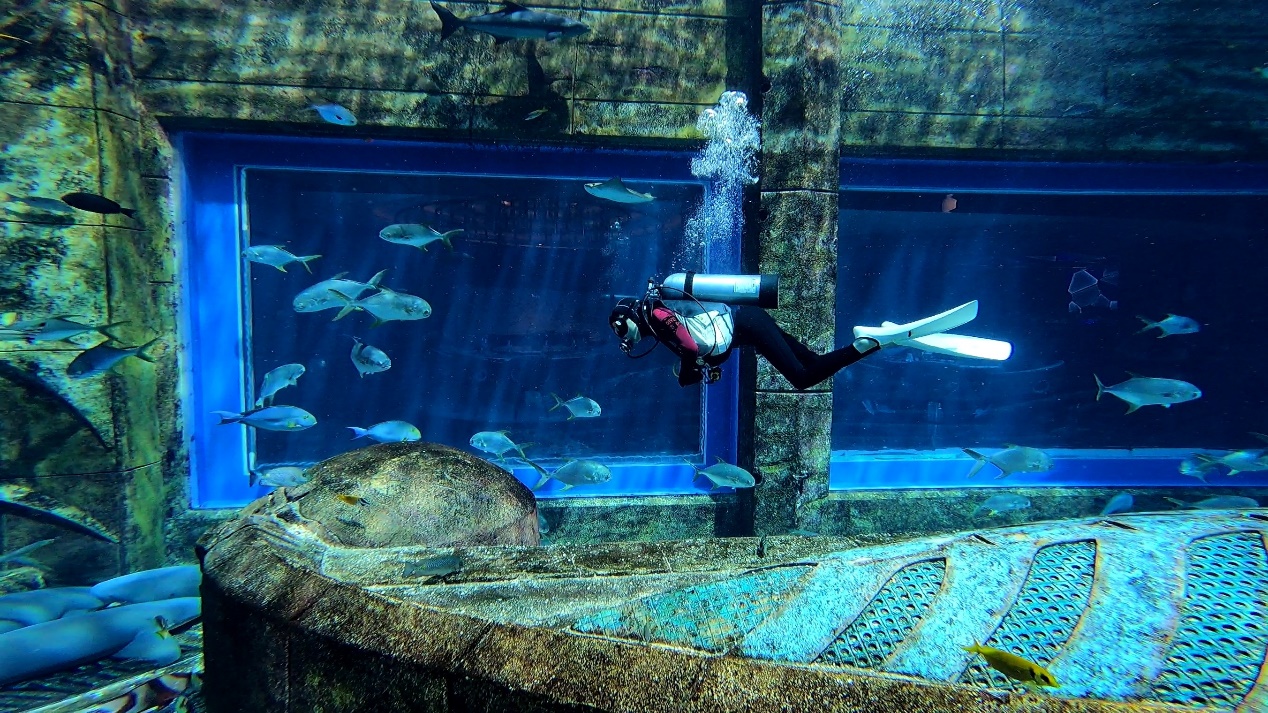
Jianze diving at Atlantis Hotel, Sanya, China

“Underwater, I am reminded of our duty as human beings: to coexist with Nature peacefully”
Jianze Fang, China

From Guangzhou, Guandong Province in China, Jianze Fang is a passionate diver with muscular dystrophy who hopes he can inspire others to overcome challenges in their life to enjoy and achieve their goals. He is doing a master’s programme in management with a non-profit organisation at Macau University of Science and Technology. His goal is to obtain a master’s from Schwarzman College at Tsinghua University, or another international institution.


To read more inspiring stories with unique encounters divers have had, pick up your copy of Scuba Diver issue No.124/2022 here

From underwater marriages to being courted by belugas, there are some beautiful and entertaining pieces you won’t want to miss!

For more insightful features like this, subscribe to Scuba Diver here.

12 Sustainable Alternatives to Plastic

0
Plastic pollution is a major environmental hazard due to the material's widespread use and non-biodegradable nature

Plastic pollution is a major environmental hazard due to the material’s widespread use and non-biodegradable nature


Due to its ubiquity and its non-biodegradable nature, plastic is one of the top pollutants found in the environment. Fortunately, many eco-friendly materials can be used as a viable and practical substitute for plastic in order to prevent this unsustainable material from further contaminating our fragile planet. Here are 12 of these sustainable alternatives to plastic.


Text by Terence Koh
Images from Shutterstock


1. DAIRY PLASTIC

Made from casein, the protein found in milk, dairy-based “plastic” hasbeen in existence for more than a century but was replaced by synthetic plastics. French company Lactips has combined the protein with clay and a reactive molecule (glyceraldehyde) to make a hardier plastic that is still biodegradable.


2. CRUSTACEAN PLASTIC BAGS

Chitosan, made from prawn and crab shells, has the potential to replace plastic in packaging for food and drinks.


3. CALCIUM CARBONATE PAPER

Billed as “paper made out of stone”, calcium carbonate paper is printable, recyclable, and water-proof. It can be used to make FDA-certified food grade packaging, paper bags, takeaway food cartons, grease paper wraps and zipper storage bags.


4. LEAFY PLASTIC

Instead of single-use plastics made from styrofoam, bioplastics can be made from a variety of sources like corn and can be broken down into polylactic acid (PLA). These types of plastics can be made into drinks bottles, food grade containers and films.


5. MYCELLUM PACKAGING

Ecovative Design uses agricultural waste with mycelium (mushroom roots] in moulds to produce packaging.


6. PALM (OPEH) LEAVES

Palm leaves from the areca palm tree can be collected and moulded into the desired shape. In Singapore. the broader stem of the palm leaves is used by fried Hokkien prawn noodle sellers, Char Kway Teow (fried rice noodles) sellers and Hor Fun (broad rice noodles) sellers as proof of their authentic “old-fashioned” taste street-cred.


7. GREEN LOOSE FILL

Made from corn starch, EcoFlo loose fill is used the same way as polystyrene loose fill in packaging.


8. SUGARCANE PACKAGING

Made from the by-product of sugarcane processing, bagasse is malleable and sticky and can be made into packaging for food delivery, similar to polystyrene. It’s biodegradable and compostable.


9. EDIBLE WATER BUBBLES

Water bubbles made of seaweed – bubbles you can eat. Made by Ooho, a UK startup, the manufacturing process uses five times less carbon dioxide and nine times less energy than PET.


10. BARLEY AND WHEAT SIX-PACK RING

SaMater Brewery in the US has produced a six-pack ring for its beer that is edible and biodegradable. It’s made from barley and wheat buttons from the beer brewing process.


11. SILBERBOARD — METALLISED PAPER

Recyclable and compostable, Silberboard is an alternative to traditional composite metalised paper and boards.


12. BIODEGRADABLE CELLOPHANE

Biodegradable and made from wood pulp, NatureFlex is a sustainable cellophane. The uncoated version can be used for chocolate and confectionary, the semi-permeable for fresh produce and diary, and the barrier version can be used for baked goods, snacks, coffee, tea and personal care items.


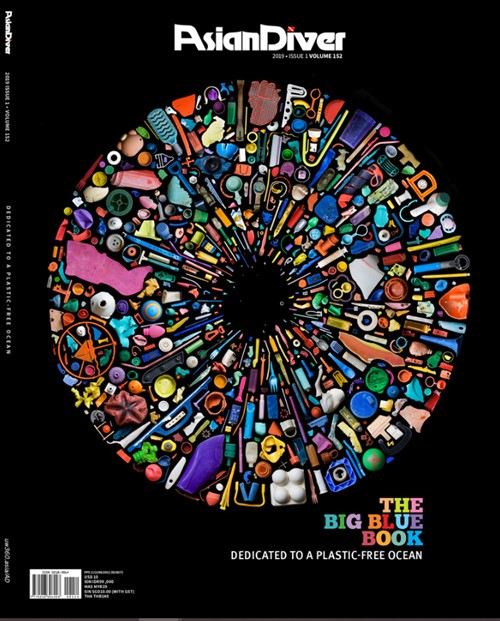
To find out more about the hazards of plastic pollution and measures that have been enacted to mitigate this hazard around the world, get your copy of Asian Diver Issue 1 / 2019 here.

For more insightful features and stories like this, subscribe to Asian Diver here.

6 Mega Migrations of the Marine

0

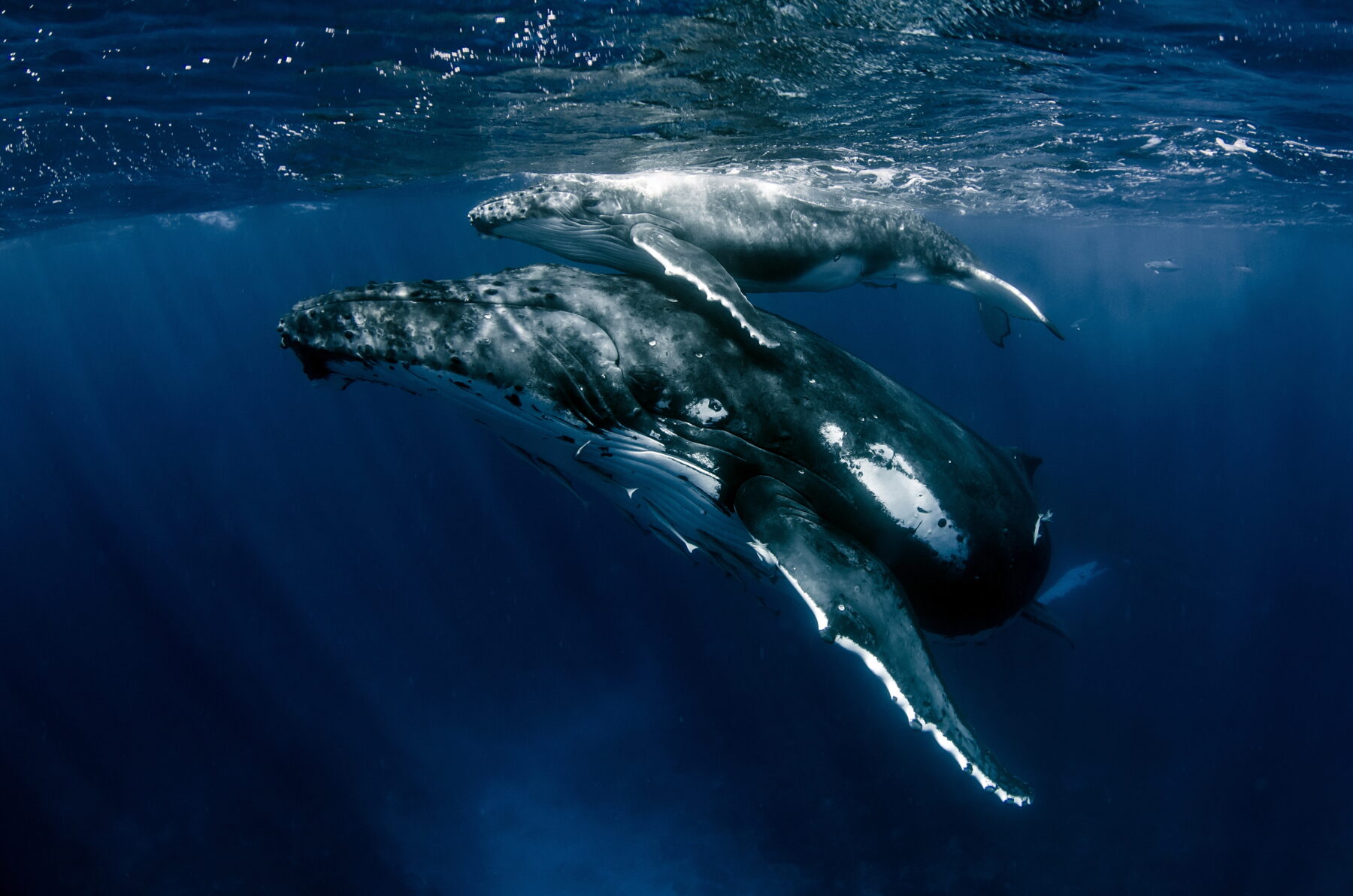
The humpback whale is one of several migratory marine animals 


Text by Sally Snow from Large Marine Vertebrates Research Institute Philippines (LAMAVE)
Images from Shutterstock


The ocean is home to some of the world’s greatest travellers: sharks, turtles and even rays undertake phenomenal journeys, usually in search of places to feed and reproduce. Here we take a look at some of Asia Pacific’s greatest voyagers, and what divers can do to support them.


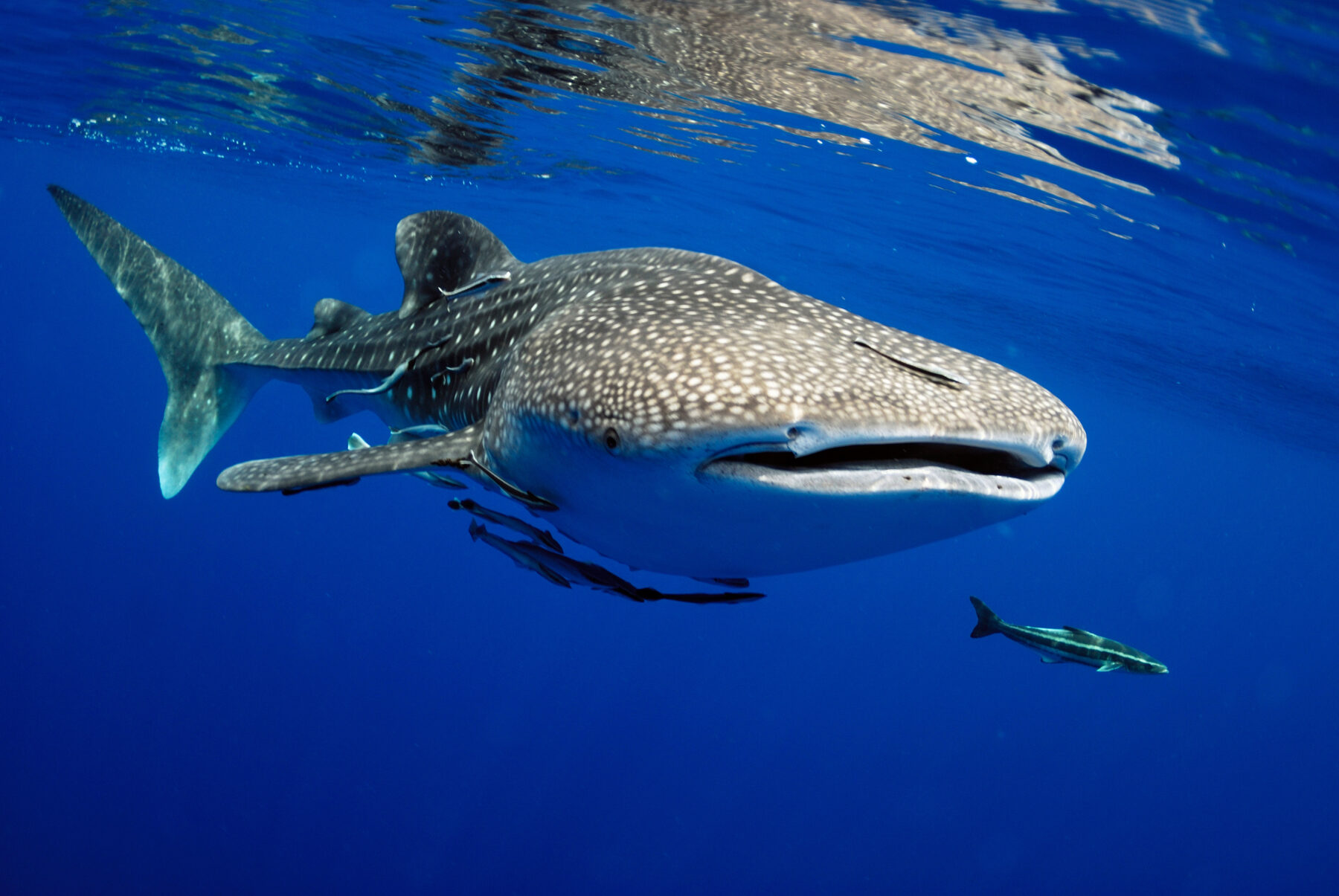
1. WHALE SHARK
Status on the IUCN Red List of Threatened Species: Endangered

Best Place to See Them: Donsol and Southern Leyte in the Philippines; Ningaloo, Western Australia; Ari Atoll, Maldives

Journeys: Early satellite tag research (by Eckert et al. 2001) revealed one of the greatest Asia Pacific journeys by a whale shark, with one individual travelling over 4,000 kilometres from the Philippines to just off the south coast of Vietnam. In 2013, a whale shark photographed by a LAMAVE researcher in Southern Leyte, Philippines became the first whale shark in Asia to have been identified in two different countries, having previously been photographed in Taiwan, racking up a 1,600-kilometre minimum journey! Ongoing research by a number of organisations including LAMAVE, Marine Megafauna Foundation and Dr Hua Hsun Hsu at the National Taiwan Ocean University are using satellite tags to investigate whale shark movements between Taiwan, the Philippines and the South China Sea.

Fact: Whale sharks are the world’s largest fish. The largest known population of whale sharks in Southeast Asia is in the Philippines; today over 1,000 individual whale sharks have been identified in the country, with each shark recognised by its unique spot pattern.

What Divers Can Do: Avoid tourism destinations that feed or lure whale sharks, as this has been shown to cause a change in behaviour. The impacts of these practices are still under investigation.


2. TIGER SHARK
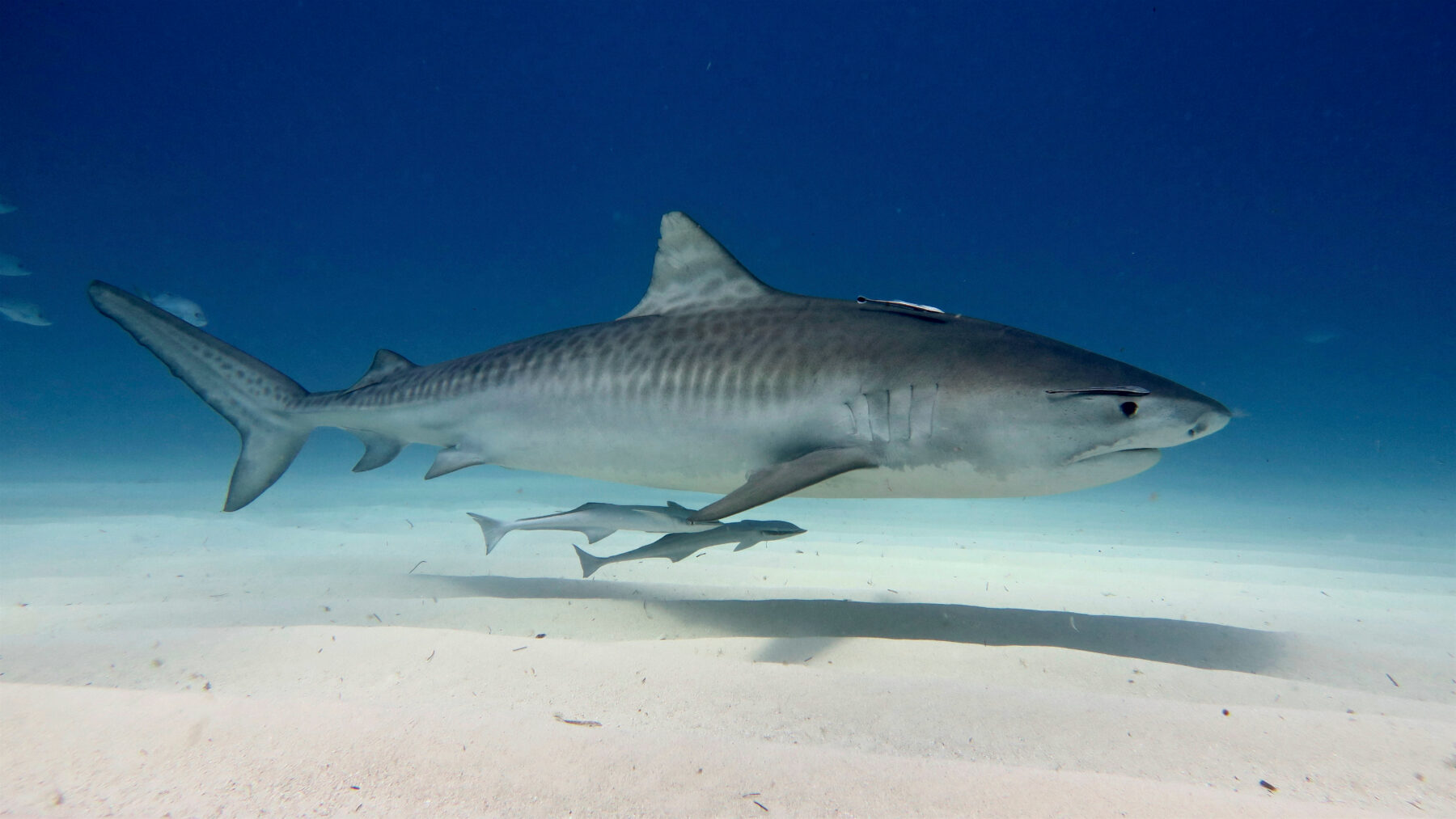
Status on the IUCN Red List of Threatened Species: Near Threatened

Best Place to See Them: Tubbataha Reefs Natural Park, Philippines; Ningaloo Reef, Western Australia

Journeys: A female tiger shark fitted with a satellite tag by a research team from the Australian Institute of Marine Science (AIMS) travelled over 4,000 kilometres during 517 days of tracking, between Ningaloo Reef, Australia and Sumba Island, Indonesia (Reference: PLOS One February 11, 2015, “Crossing Latitudes – Long-Distance Tracking of an Apex Predator”).

Fact: Amazingly, researchers from LAMAVE and Tubbataha Management Office (TMO) tagged the first tiger shark in the Coral Triangle in 2016. The tags, which use satellites to transmit locations, will reveal the habitat used by these incredible sharks in this part of the world.

What Divers Can Do: Divers visiting Tubbataha Reefs Natural Park can submit tiger shark encounters caught on camera to LAMAVE (www.lamave.org) who, with TMO, are building a catalogue of the park’s tiger sharks to help understand the population present in the area.


3. GREEN TURTLE
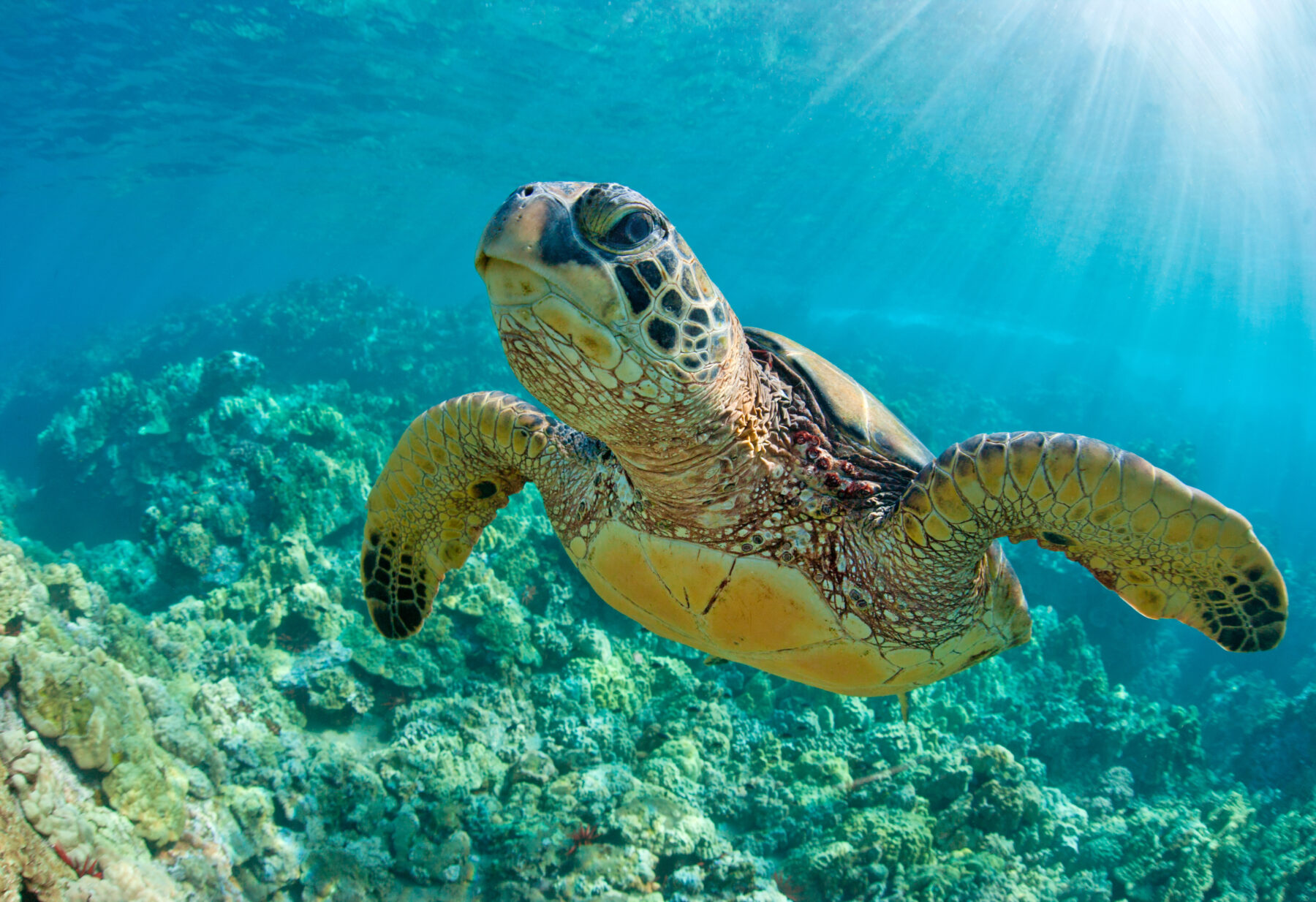
Status on the IUCN Red List of Threatened Species: Endangered

Best Place to See Them: Apo Island, Philippines; Sipadan, Malaysia

Journeys: Turtles (green and hawksbill) tagged with flipper tags in Palau, were resighted around the Philippines and Indonesia, Linking Micronesia, Indonesia, and the Philippines (Reference: www.seaturtle.org)

Fact
: Green turtles are so named due to the green colour of their fat and skin.

What Divers Can Do: Become a citizen scientist. Ask your dive operator if they are collecting turtle photo-identification data. If so, be sure to share your photographs (showing the scutes on the side of the turtles’ head) to help study the local population.


4. LEATHERBACK TURTLE
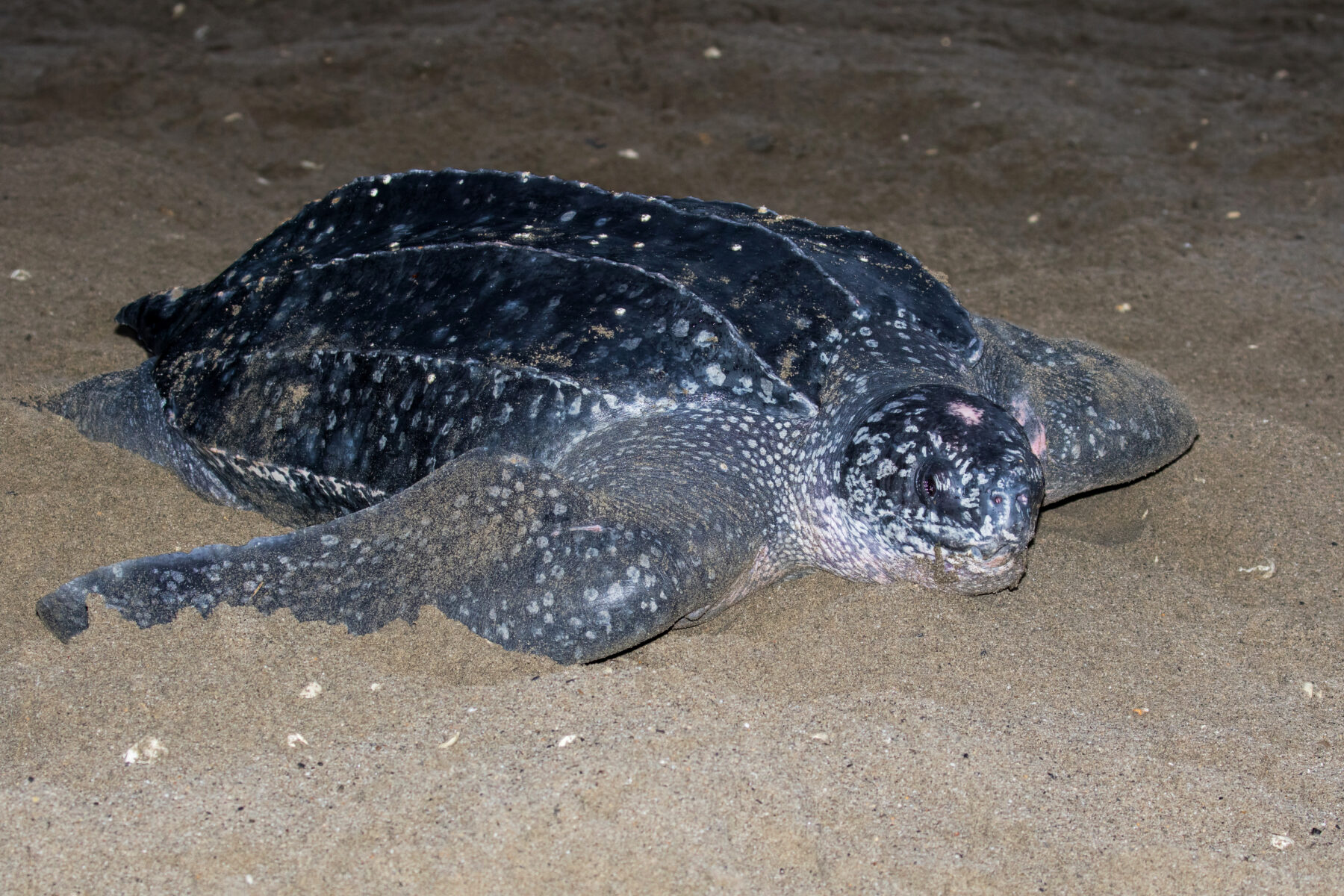
Status on the IUCN Red List of Threatened Species: Critically Endangered (West Pacific Ocean subpopulation)

Best Place to See Them: Indonesia, Costa Rica

Journeys: A female leatherback turtle embarked on an epic journey from Papua, Indonesia to Oregon on the Pacific northwest coast of America, and halfway back again! She racked up a distance of at least 12,774 kilometres before researchers lost the signal from the satellite tag attached to her back. (Reference: Chelonian Conservation and Biology, “Post-Nesting Migrations of Leatherback Turtles (Dermochelys coriacea) from Jamursba-Medi, Bird’s Head Peninsula, Indonesia”)

Fact: The leatherback turtle is the world’s largest turtle (the largest recorded weighed an enormous 916 kilograms). The leatherback gets its name from its shell, which is flexible and covered in a thin layer of leathery skin.

What Divers Can Do: Take at least five bits of plastic home when you next visit the beach. Turtles are just one marine animal that are suffering from our plastic fetish. Reduce, reuse and recycle to help clean up our oceans.

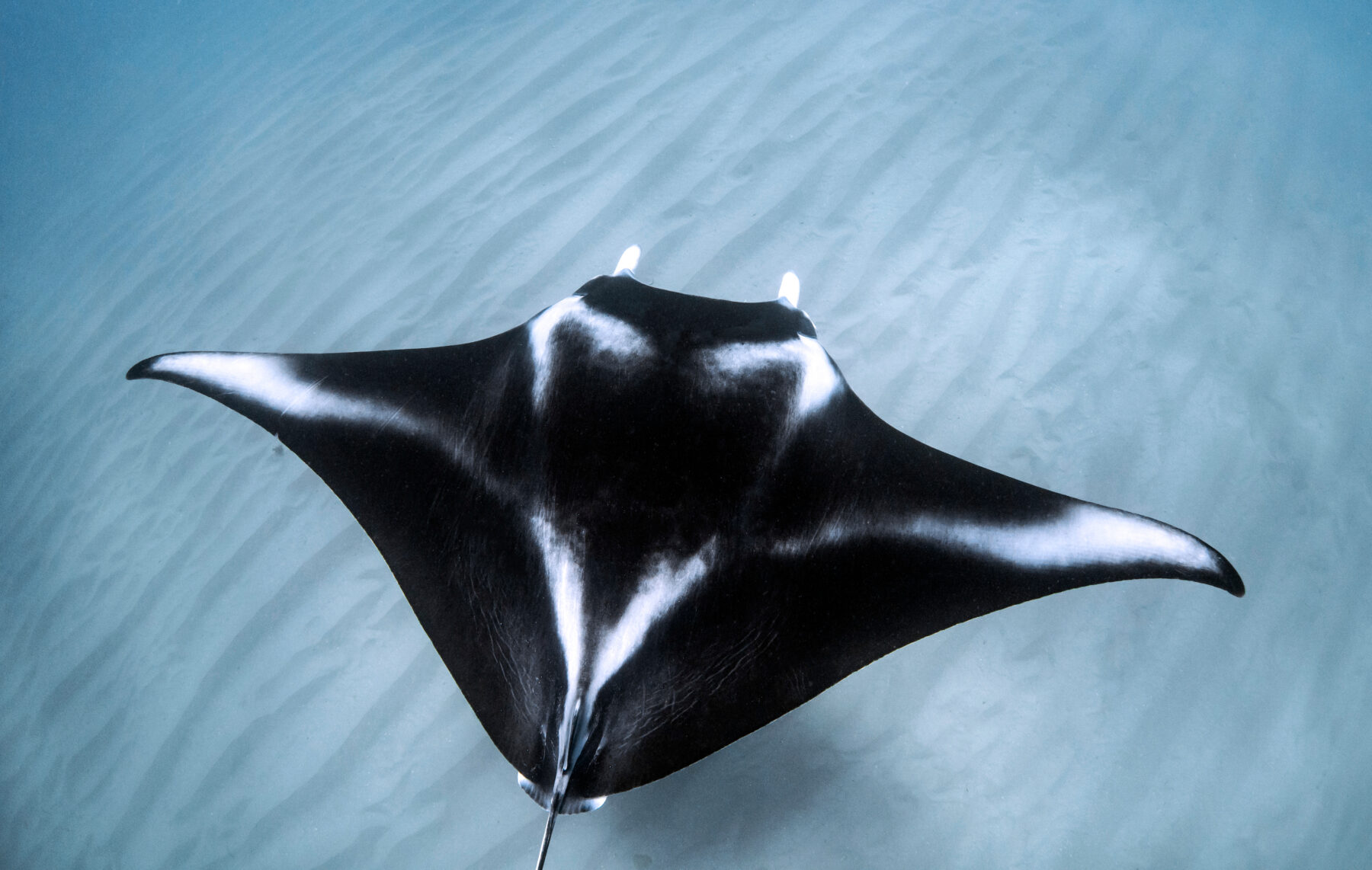
5. MANTA RAY 

Status on the IUCN Red List of Threatened Species: Vulnerable

Best Place to See Them: Raja Ampat, West Papua, Indonesia; Komodo and Flores Island, Indonesia; Manta Bowl, Philippines; Manta Point, Nusa Penida, Bali, Indonesia

Journeys: Individual manta rays can be identified by taking photographs photo ID) of their unique spot pattern on the ventral (belly) side of their body. In Indonesia, photos revealed a 450-kilometre journey by a reef manta ray (Manta alfredi) across regional sanctuaries including Nusa Penida and Komodo National Park (Reference: Germanov and Marshall 2014).

Fact: Manta ray refers to two different species: the oceanic manta ray (Manta birostris) and the reef manta ray (Manta atfredi).

What Divers Can Do: Submit your manta ray belly shots to Manta Matcher, an online database matching manta ray encounters. Check out www.mantamatcher.org for full details on how your photo can identify and help protect manta rays.
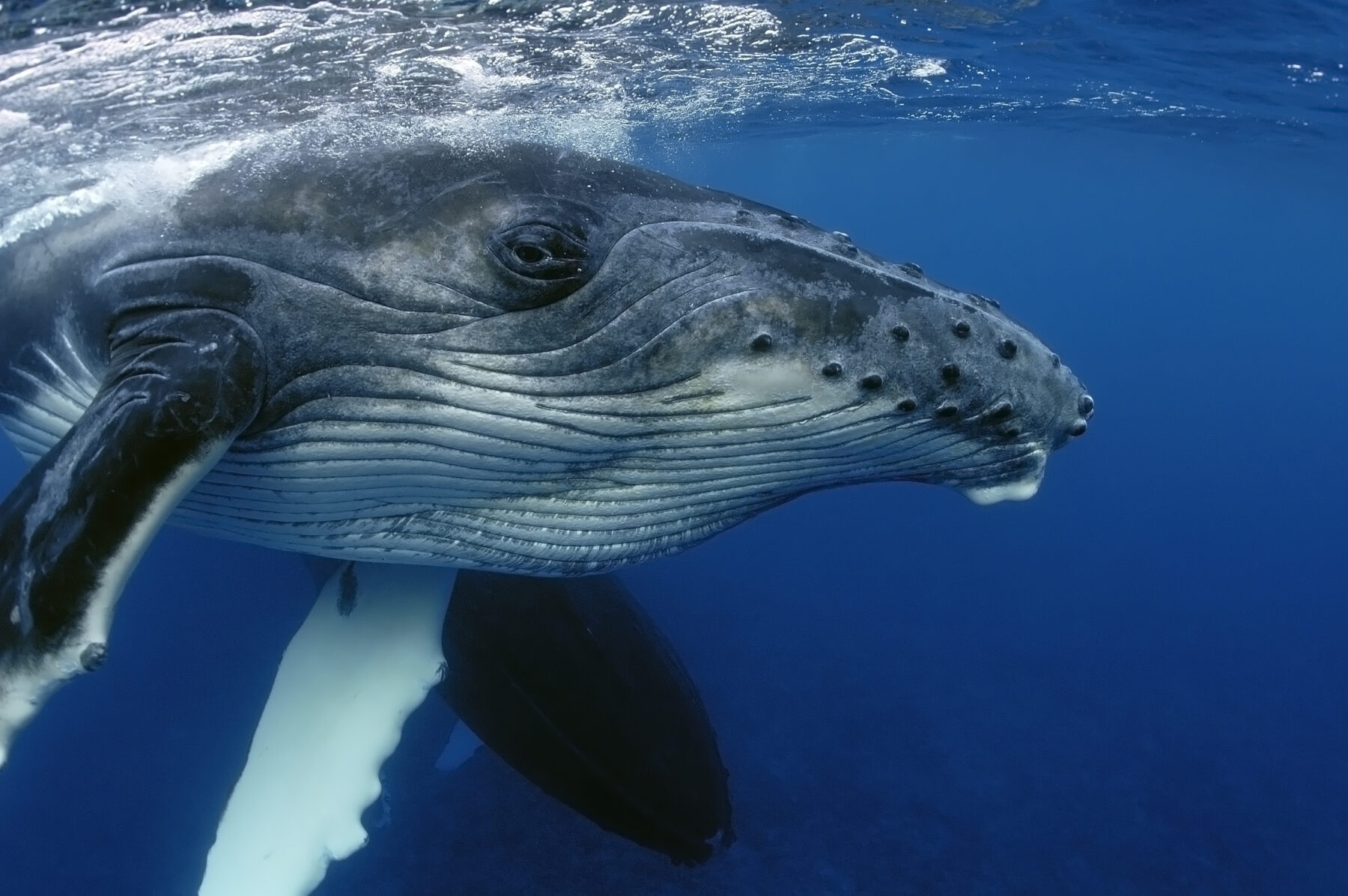
6. HUMPBACK WHALE 

Status on the IUCN Red List of Threatened Species: Least Concern

Best Place to See Them: Exmouth and Coral Bay, Western Australia; Babuyan Islands, Northern Philippines; Vava’u, Tonga

Journeys: Individual humpbacks have been shown to travel between the breeding grounds of the Babuyan Islands, Philippines to feeding grounds situated in the Commander Islands, Russia (Reference: Journal of Cetacean Research and Management, “New Insight into Migration Patterns of Western North Pacific Humpback Whales Between Babuyan Islands, Philippines and the Commander Islands, Russia”, Silberg et al. 2013). One individual was photographically matched between the Philippines and Hawaii, having made an extraordinary journey across the Pacific Ocean (Reference: www.swfsc.noaa.gov).

Fact: The Babuyan Islands is the only known breeding ground of humpback whales in the Philippines and a number of whales migrate there every year.

What Divers Can Do: You can now snorkel with humpback whales in the water off Exmouth (and Ninagloo), Western Australia.
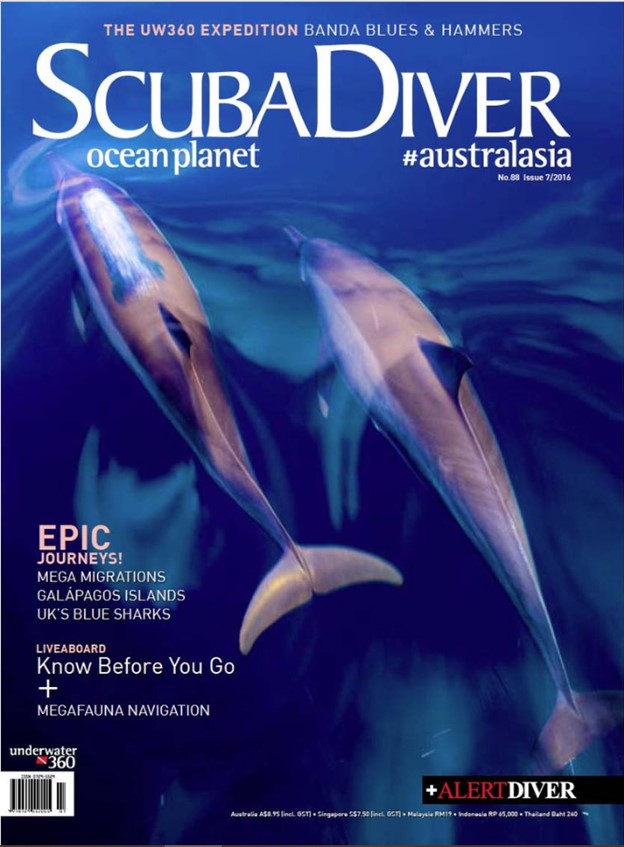

To discover more intriguing facts about marine life and sites, get your copy of Scuba Diver Issue 7 / 2016 here.

For more insightful features and stories like this, subscribe to Scuba Diver here.

8 Environmental Pitfalls of Farmed Seafood

0


Text by WWF
Images from Shutterstock


Eighty-five percent of the world’s marine stocks are either fully exploited or overfished, driving accelerated growth in the farmed seafood industry. With annual revenue in excess of USD60 billion, that industry is on the verge of passing the total volume of wild-caught product.

Farmed seafood provides an answer to increasing demand for protein sources as the world’s population becomes more affluent, urbanised and approaches 9 billion before 2050.

However, irresponsible aquaculture is also threatening marine ecosystems. Here are 8 environmental pitfalls of farmed seafood you should know about.


1. CHEMICAL INPUTS

Excessive use of chemicals – such as antibiotics, antifoulants and pesticides or the use of banned chemicals can have unintended consequences for marine organisms and human health.


2. NUTRIENT POLLUTION AND CARRYING CAPACITY

Excess food and fish waste increase the levels of nutrients in the water and have the potential to lead to oxygen-deprived waters that stress aquatice.


3. ENERGY USE

Electricity use can be very high on aquaculture farms. A high flow of electricity is required to run large-scale flow-through and recirculating culture systems for abalone production. On freshwater trout farms, a massive amount of energy can be used to operate water pumps, recirculation systems and other equipment.


4. LAND CONVERSION AND DEGRADATION

Clearing of land for agriculture feed sources affects high conservation value areas. For example, ecosystems such as mangroves are often cleared to create fish farms, and pollution from fish farms can impact coral reefs and kelp forests.


5. DISEASE AND PARASITES

Disease can be present among farmed seafood. Pests and pathogens often carry the diseases and it can spread from wild populations to farmed populations, as well as from farmed stocks to the wild populations. For instance, with tilapia, overstocking of fish pens can lead to susceptibility to viruses and disease. Also, the inappropriate use of antibiotics and chemicals used to fight disease in farmed species can have unintended consequences on the environment and human health.


6. FEED

Fish caught to make fishmeal (used to feed farmed fish) and fish oil – a primary ingredient in the feed for farmed fish – currently represent one-third of the global fish harvest. Aquaculture must responsibly source and reduce its dependency upon fishmeal and fish oil so as not to put additional pressure on the world’s fisheries.


7. BIODIVERSITY LOSS

Chemicals and excess nutrients from food and faeces associated with aquaculture farms can disturb the flora and fauna on the ocean bottom.


8. ESCAPEES

Escaped farmed species can compete with wild fish and interbreed with local wild stocks of the same population, altering the overall pool of genetic diversity.


This article is an excerpt from WWF’s article “Is Farmed Seafood Good for the Environment”? In addition to the negative impacts of farming seafood, WWF also described their efforts in helping to improve practices in farming seafood.

To read up about WWF ‘s contributions, get your copy of Asian Diver Issue 3 / 2017 here.

For more insightful articles like this one, subscribe to Asian Diver here.

Check out Al Hornsby’s Face to Face

0

Face to Face – Up Close with Mother Nature

Face to Face – Up Close with Mother Nature is a collection of author/photographer Al Hornsby’s most exciting underwater and topside wildlife encounters, as captured through his camera and words. With forwards by two longtime friends and dive buddies, Jean-Michel Cousteau and Amos Nachoum, the colour and B&W images feature sharks, whales, mantas, crocodiles, grizzly bears, leopards, cobras and many more of nature’s most lovely and exciting creatures. In the accompanying text, Al’s first-person impressions of the encounters that led to the images, share his feelings and emotions during those oft-times intense, face-to-face moments.

Read on for an exclusive short story from Al’s wonderful book!

11 Marine Species on the Brink

0

The Mediterranean monk seal is just one out of many species of marine life that are near extinction


Images from Shutterstock


Due to factors such as human encroachment and overfishing, numerous forms of life in the sea are endangered, and sadly, some are even on the brink of extinction. Here are 11 of these species. 


1. MEDITERRANEAN MONK SEAL

Monachus monachus, with a population of just 350–450, are the most endangered pinnipeds in the world. Once hunted for skins, and despite being able to dive up to 100 metres, depleted food sources are just one of many threats they face today.


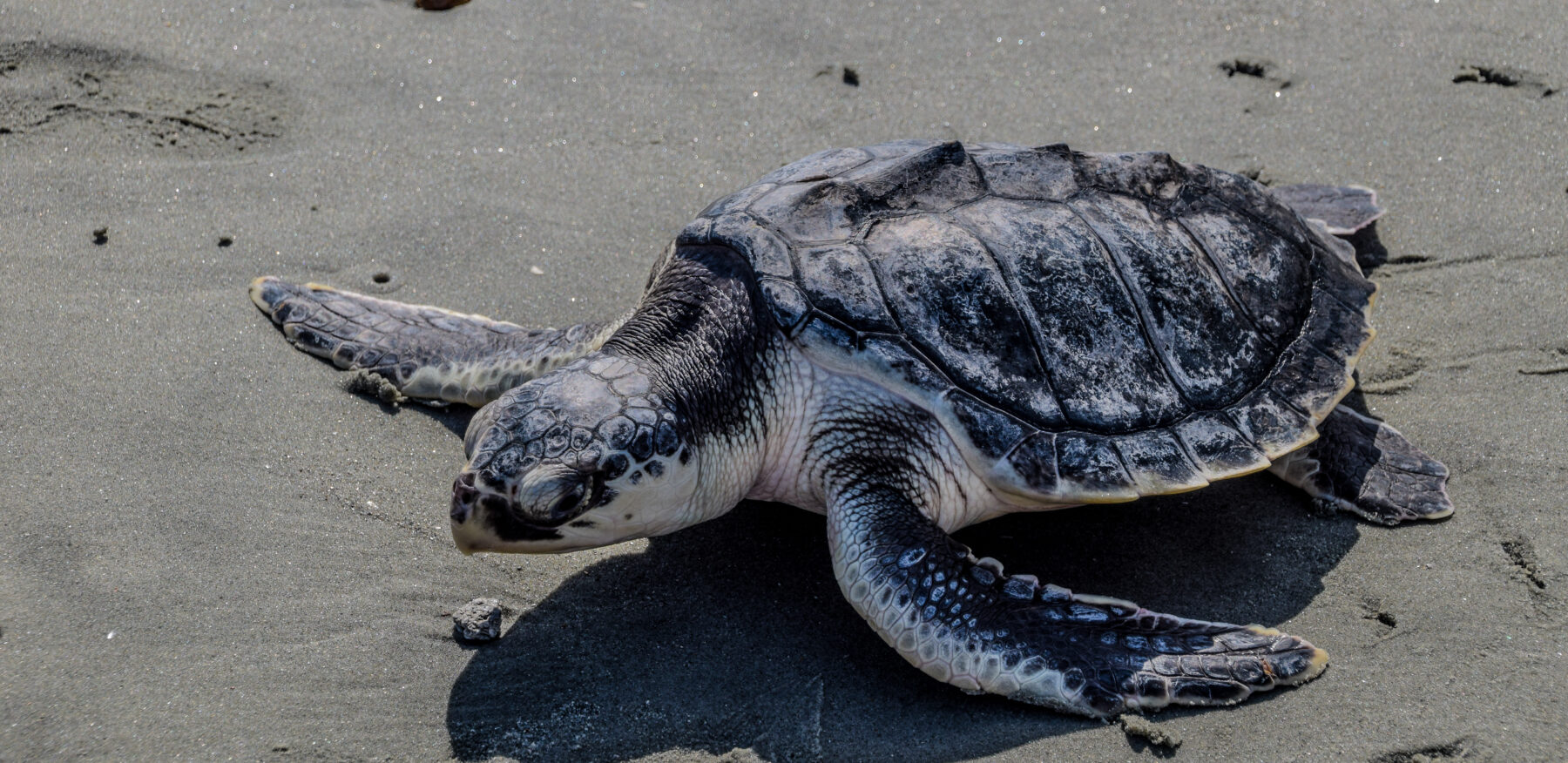
2. KEMP’S RIDLEY TURTLE

One of the smallest and most endangered of all the turtles (which is really saying something), Lepidochelys kempii populations are slowly recovering from an estimated low of just 1,000 nesting females in the mid-1980s.


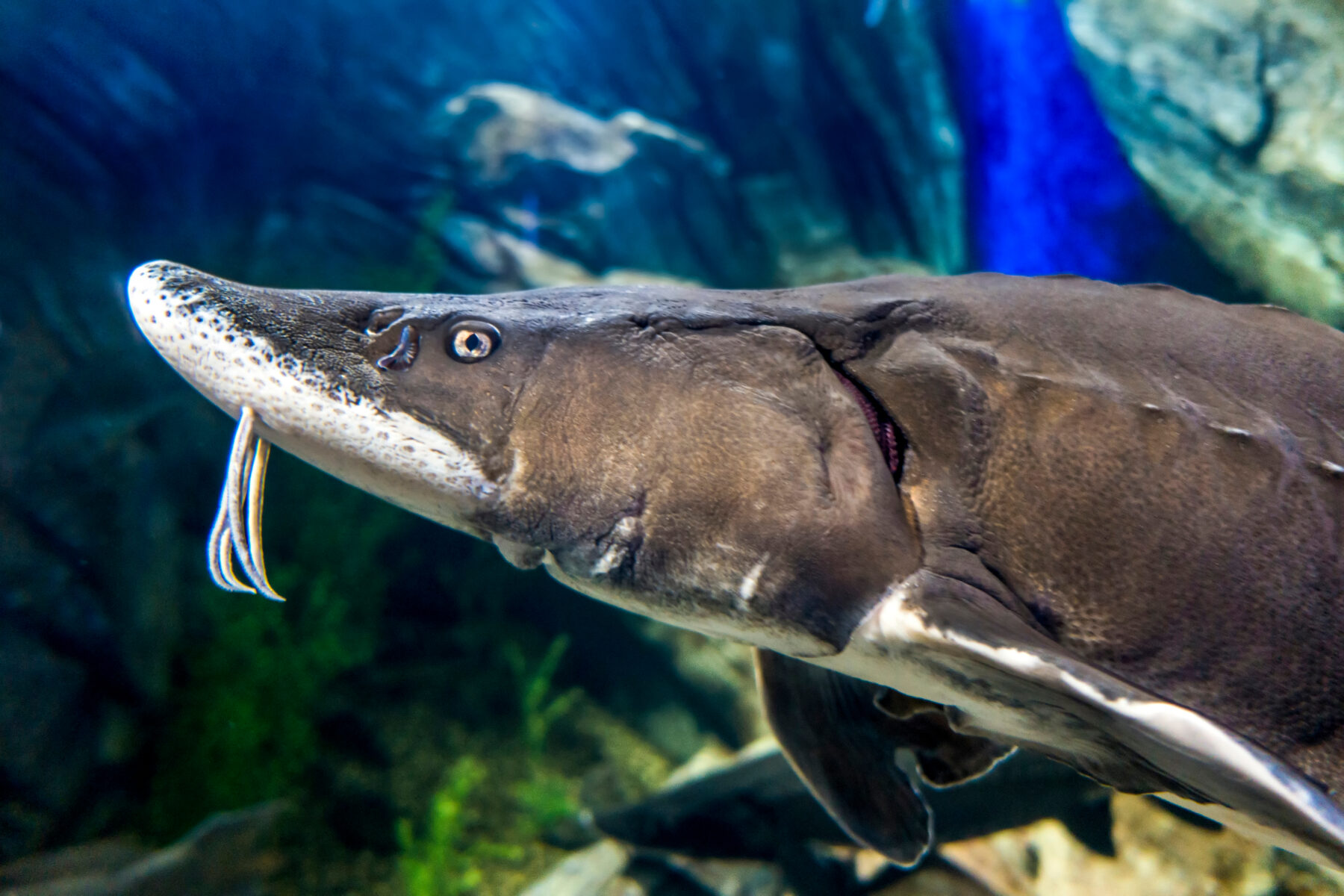
 3. BELUGA STURGEON

Critically endangered due to demand for their “roe”, which is eaten as caviar, the Huso huso is also the largest European freshwater fish – the largest one ever caught measured over seven metres long, unsurprising when you consider they can live for more than 100 years.


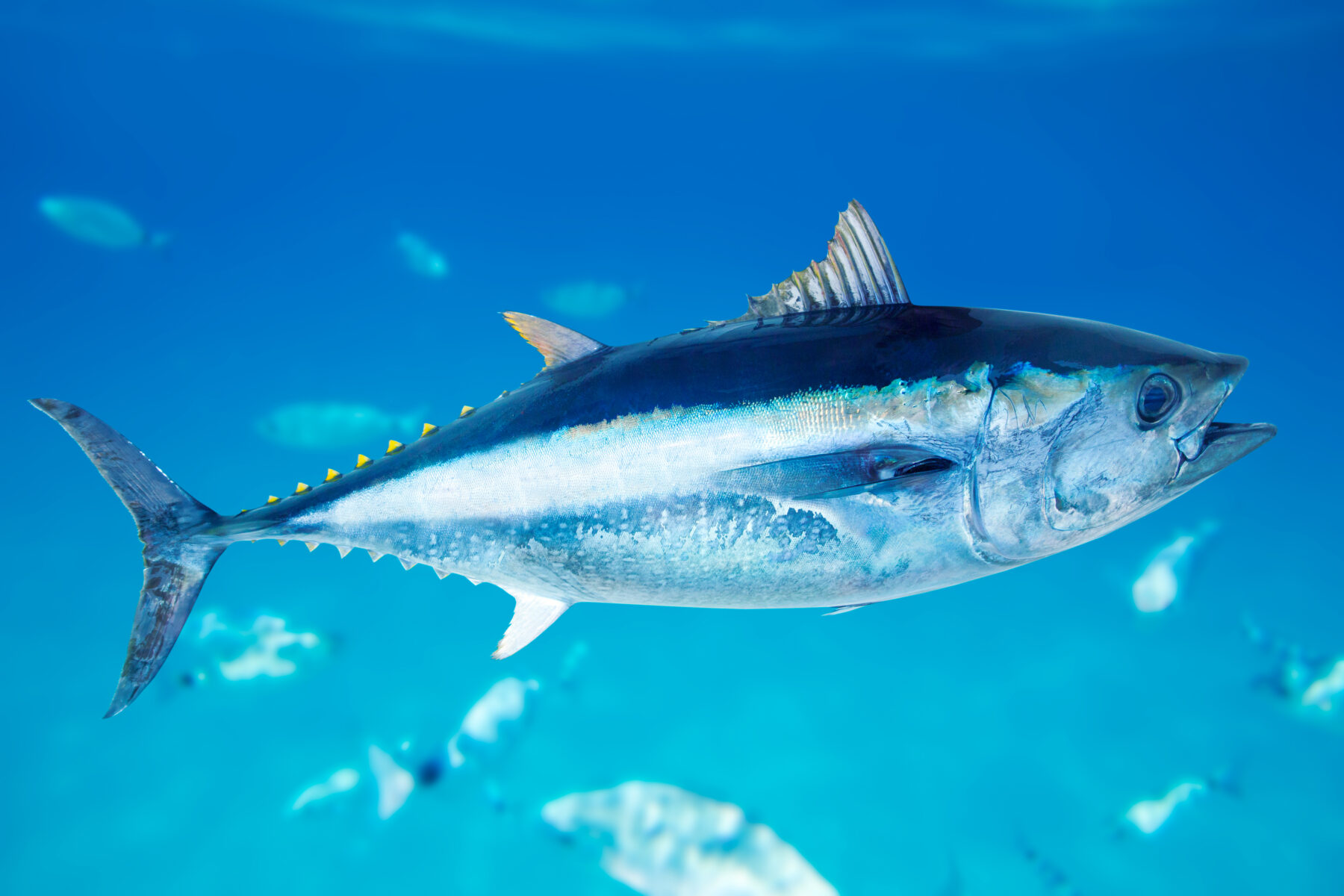
4. BLUEFIN TUNA

Commercial fishing has driven tuna populations to the brink of collapse, with Thunnus maccoyii, southern bluefin, listed as critically endangered. These fish grow to an average of two metres long, and reach speeds of up to 70km/hour.


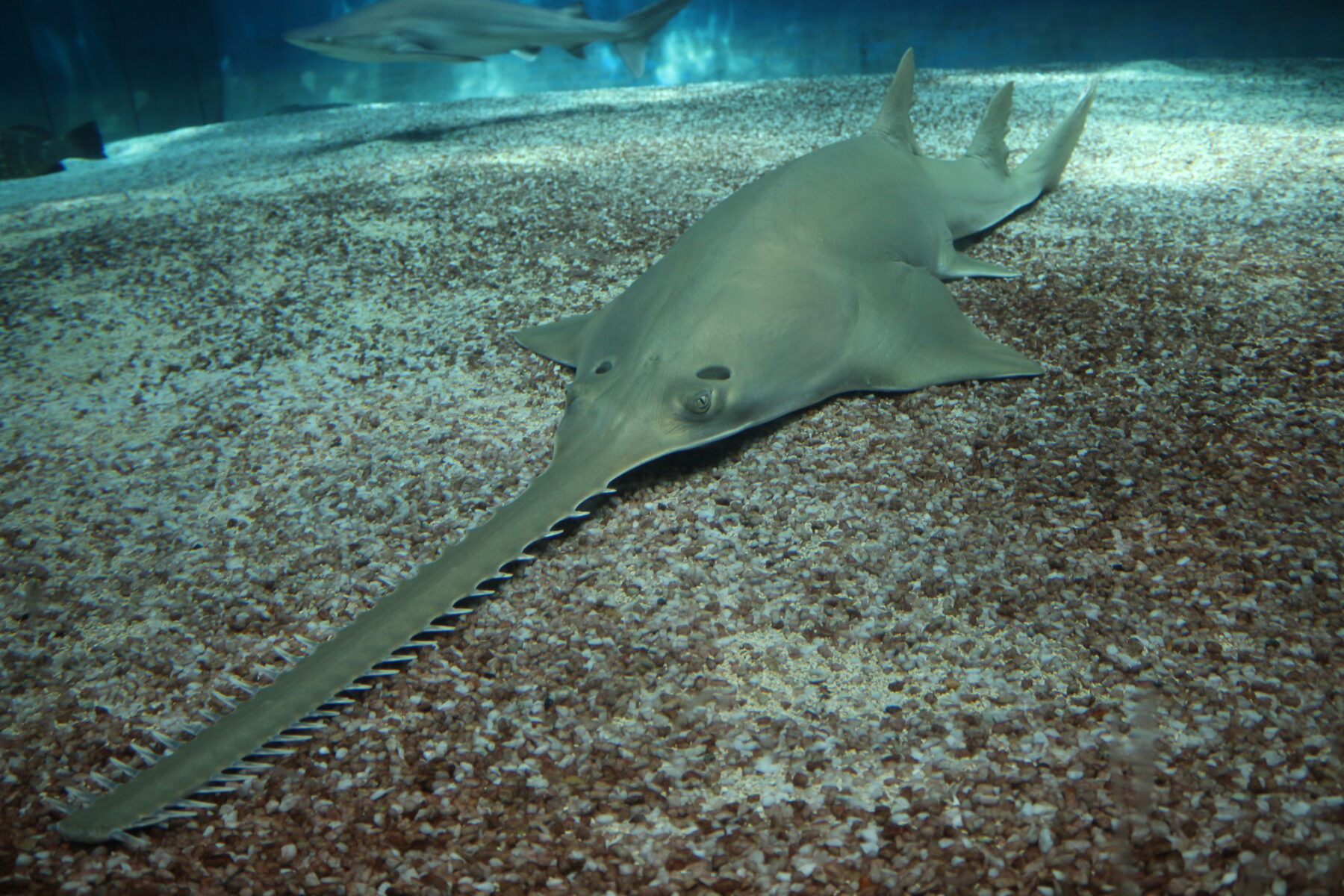
5. SAWFISH

The nocturnal Pristidae family comprises seven species of ray, some of which are recorded to grow up to seven metres long. They are adapted to live in rivers, estuaries and the ocean: Their eyesight is relatively poor but their “saw” is highly sensitive.


6. AMSTERDAM ALBATROSS

Nesting only on the tiny Amsterdam Island in the southern Indian Ocean, Diomedea amsterdamensis has a wingspan of almost 3.5 metres. Pairs mate for life but only produce one chick per season. There are likely fewer than 100 left.


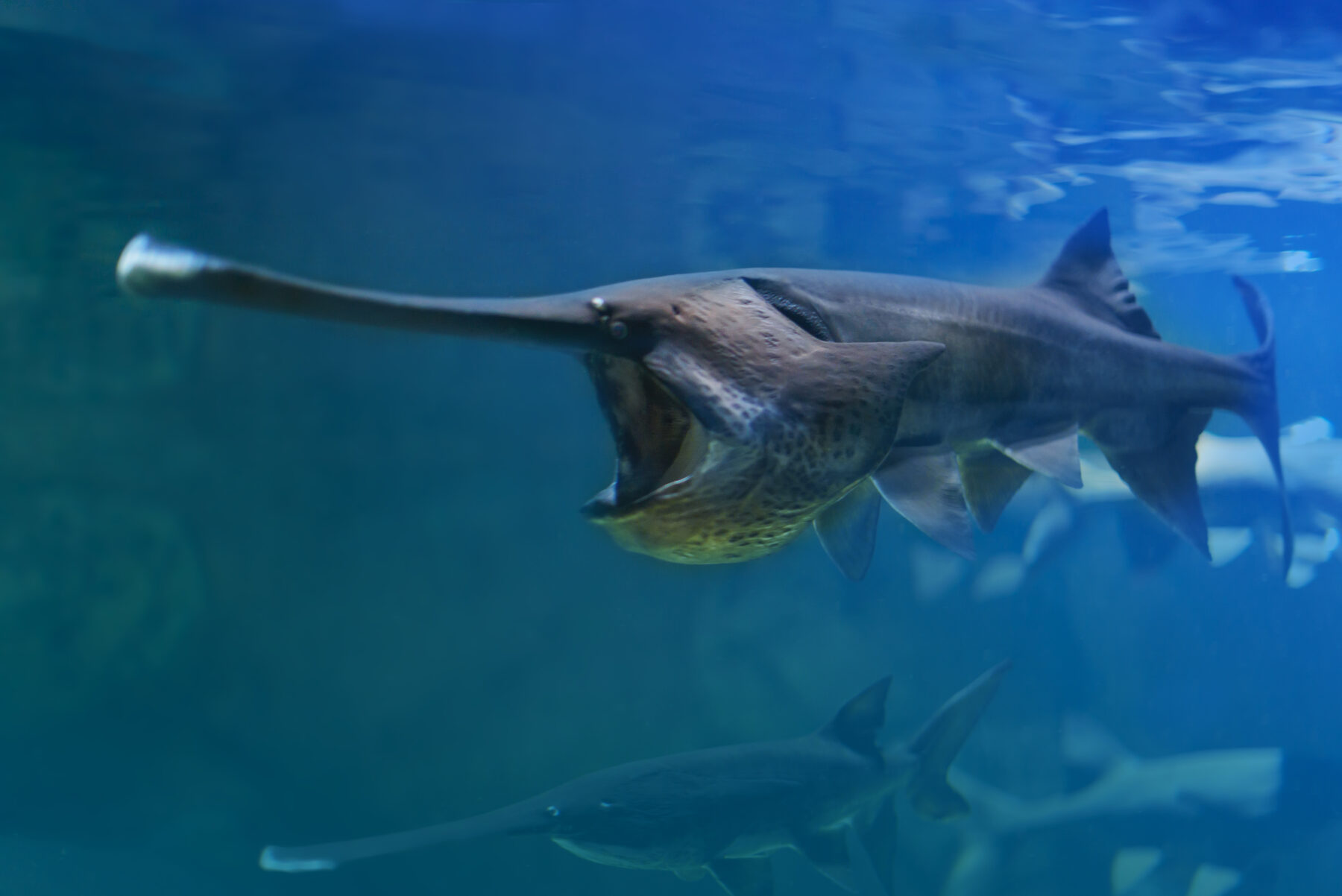
7. CHINESE PADDLEFISH

There is a chance that the huge (up to seven-metre) Psephurus gladius is already extinct. As a result of the Gezhouba Dam and overfishing, none of these filter-feeding “elephant fish” have been seen in the Yangzte River since 2003.


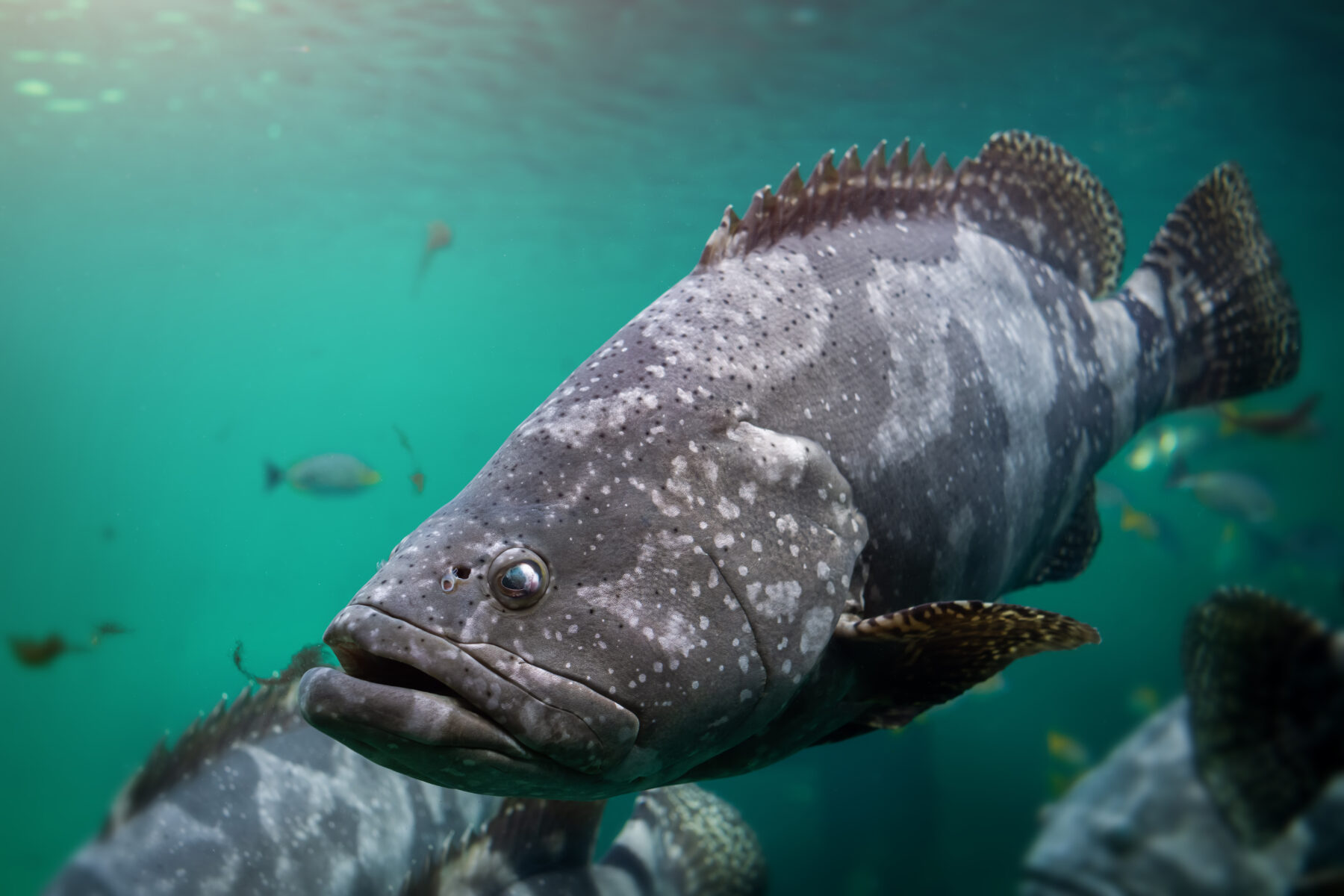
8. GIANT SEA BASS

Jewfish or black bass, Stereolepsis gigas, are now critically endangered due to overfishing, vulnerable due to their massive spawning aggregations that make them an easy target. It is thought they might be able to change their patterns or spots at will.


9. ORNATE SLEEPER RAY

All we know about these electric rays, Electrolux addisoni, comes from just a handful of sightings and specimens. They are endemic to a 300km-long strip of South African coast and their conspicuous colours advertise their “shocking” defence mechanism.


10. RIVER SHARK

River sharks of the genus Glyphis are possibly the most critically endangered of all shark species, with their habitats directly and regularly affected by human activity. Most have barely been studied before they are disappearing.


11. VAQUITA

With fewer than 100 left, these tiny porpoises, Phocoena sinus, are some of the world’s most endangered cetaceans. Found exclusively in the Gulf of California, they were only described by science in 1958.


To find out more intriguing facts about marine life and read up about various diving sites and tales, get your copy of Scuba Diver Issue 6 / 2015 here.

For more insightful articles like this one, subscribe to Scuba Diver here.


5 Must-Dive Sites in the Great Barrier Reef Marine Park

0

An aerial shot of the gorgeous Great Barrier Reef


One of the natural wonders of the world, the Great Barrier Reef is the largest coral reef system on the planet. Although several shallow parts of the reef have undergone severe bleaching due to climate change,  many of the deeper sites and outer reef remained unbleached. Here are 5 of these sites that you can explore when diving at the reef.


Text by Dave Harasti
Images from Shutterstock


1. OSPREY REEF

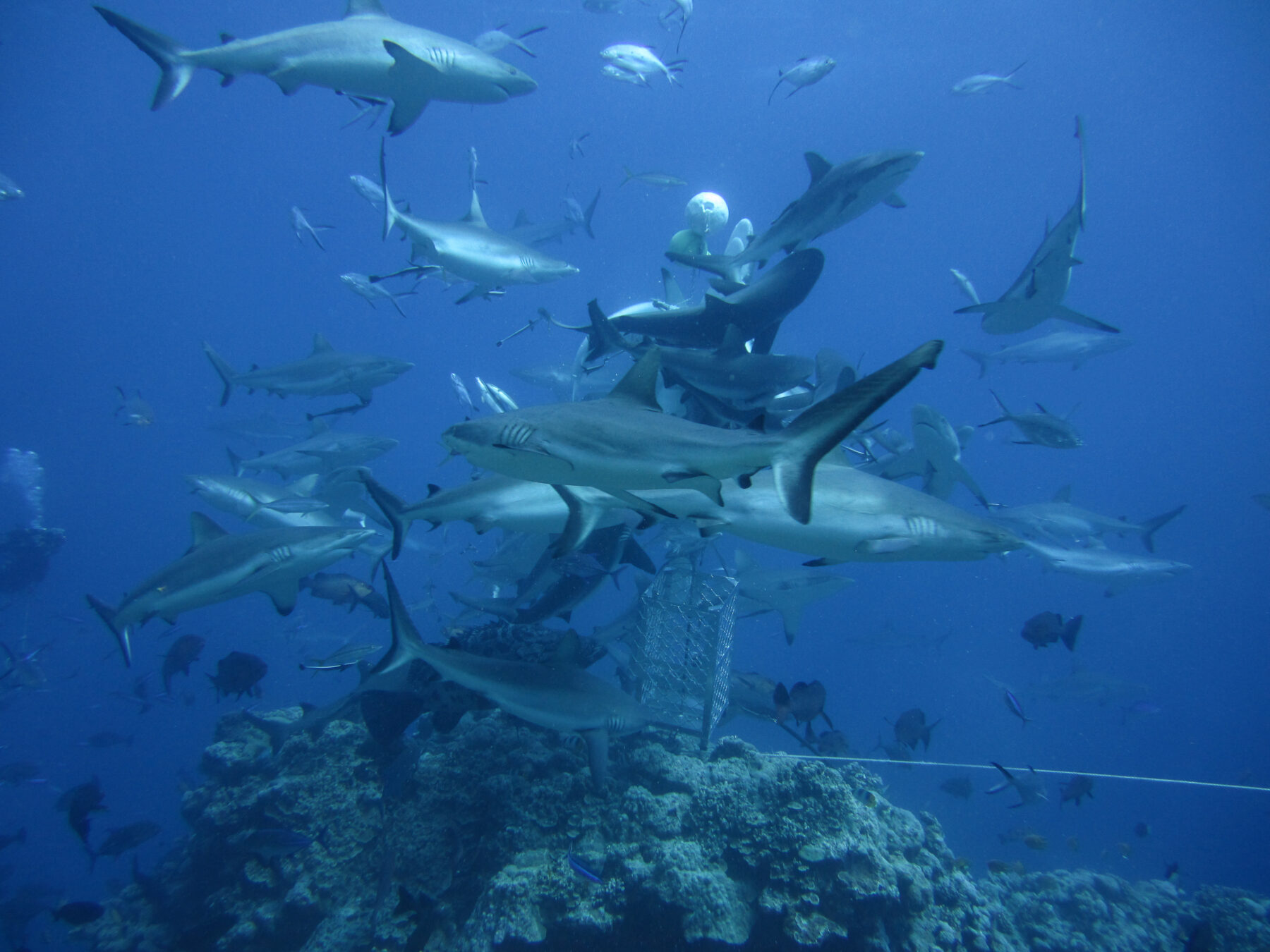
Shark feeding at Osprey Reef

Max. Depth: 50m+

Viz: 30m

Site Type: Wall diving

Highlights: Shark feeding at North Horn where grey, black and whitetip sharks are abundant. Also lots of large reef fish such as coral trout and cods

Difficulty (1-5): 2

Challenges: Very deep walls so maintaining appropriate depth is important


2. SS YONGALA

Hundreds of glass fish abound at the SS Yongala shipwreck

Max. Depth: 30m

Viz: 20m

Site Type: Shipwreck

Highlights: Considered by many to be one of the best wreck dives in the world. Bull sharks, leopard rays and large Queensland groupers can be found on the wreck

Difficulty (1-5): 4

Challenges: Strong currents

Essential Kit: Nitrox to extend bottom time


3. HERON ISLAND

One of Heron Island’s famous turtles

Max. Depth: 30m

Viz: 10-20m

Site Type: Patch reef, walls

Highlights: Heron Bommie is the most famous site with 6 large coral heads that go from 5 to 18 metres. Turtles are abundant around Heron, and manta rays, Queensland groupers and reef sharks are often seen

Difficulty (1-5): 1


4. RIBBONS REEF

Max. Depth: 40m

Viz: 30m

Site Type: Walls, Patch reef and large bommies

Highlights: Steve’s Bommie and Temple of Doom are two very large bombora sites covered in colourful corals and have masses of fish. Also can contain numerous macro subjects such as leaf scorpionfish

Difficulty (1-5): 2


5. COD HOLE

Max. Depth: 30m

Viz: 30m

Site Type: Patch reef with bommies and wall

Highlights: The highlight of this dive is the world-famous potato cod that divers from all around the globe come to see

Difficulty (1-5): 1

Essential Kit: Wide-angle lens for the big cod


ADDITIONAL INFORMATION

Management: The park is managed by the Australian Government through the Great Barrier Reef Marine Park Authority

Best Time to Dive: Year round

Park Fee: The reef levy applies: AUD6.5 (-USD5) per person per day

Getting There: Fly into Cairns, Townsville, or Gladstone

Restrictions: You must not damage, collector otherwise “take” or “possess” coral, including dead coral, and “take” protected shell species (that is: the giant triton shell, helmet shell and giant clam)


This is an excerpt from an article titled “13 Must-Dive Marine Protected Areas (MPAs) in Asia Pacific”. To find out about more amazing dive sites like the Great Barrier Reef Marine Park, get your copy of Asian Diver Issue 4 / 2016 here.

For more insightful articles like this one, subscribe to Asian Diver here.