Home Blog Page 173

Photographer of the Month: Dr. Alex Mustard

0
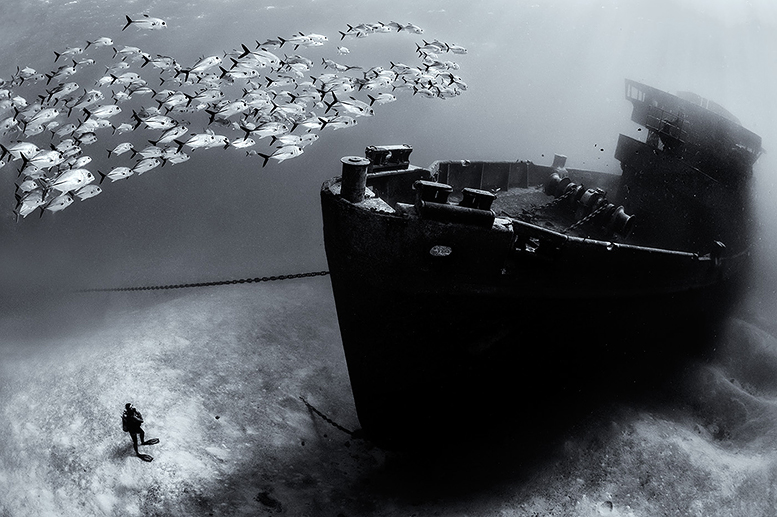
Wreck of the Kittiwake, Grand Cayman. Equipment: Nikon D4 and Sigma 15mm fisheye.

Marking the imminent launch of Underwater Photography Masterclass, ADEX Singapore 2016 speaker and Voice of the Ocean Head Judge Alex Mustard talked to underwater360 about his career, the stories behind some of his favourite shots, and his new book.

Dr Alexander Mustard trained as a marine biologist, but has worked as a full-time underwater photographer for the last 12 years. He is well known throughout the underwater photography community not only for his groundbreaking images, but also his willingness to share the techniques behind them.

His photos have attracted many awards, including being category winners in both the Wildlife Photographer of the Year and British Wildlife Photography Awards. His last book, Reefs Revealed, won the International Grand Prize for the best book of underwater photographs. In 2013, Alex was named European Wildlife Photographer of the Year, which is the only time an underwater photographer has won this prestigious award.

Alex’s knowledge of underwater photography techniques, his experience in a wide range of diving conditions and his understanding of marine life makes him a highly sought-after competition judge. In 2015, he chaired the jury for the Underwater Photographer of the Year competition and also acted as a judge for the Wildlife Photographer of the Year, the CMAS World Championship of Underwater Photography, among others.

He has published over 500 articles on underwater photography, writing for all the world’s major scuba-diving magazines. He currently writes monthly columns on underwater photography for Sport Diver (USA) and Diver (UK). He has been invited to make major contributions to nine previous books on underwater photography, but Underwater Photography Masterclass is his first book on the subject.

Alex was part of the photo team for 2020VISION – a British conservation photography project. He has been a committee member of the British Society of Underwater Photographers for the past 14 years and is Associate Editor of Wetpixel. Nissan designed and built its NV200 concept car specifically around his needs as an underwater photographer. He is also the inventor of Magic Filters and runs very popular underwater photography workshops around the world.

www.underwaterphotographybook.com
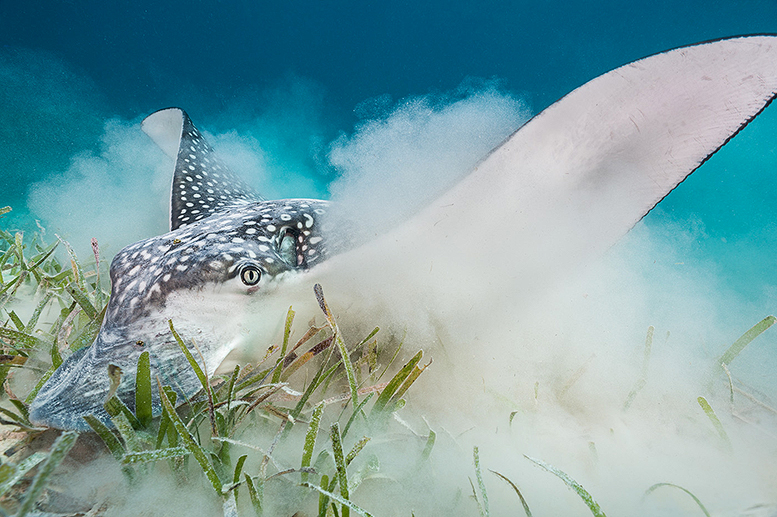
Eagle ray feeding, Grand Cayman. Equipment: Nikon D4 and Nikon 20mm, Zeiss corrector port.

What made you want to become an underwater photographer?

When I was young, my favourite book was one of Jacques Cousteau’s. My Mum still has a picture of me lying on the carpet, when I was three years old, looking through all the pictures of the fish. So I don’t remember a time when I wasn’t fascinated by the ocean.

My interest in underwater photography came from a desire to record what I was seeing when I explored rock pools or snorkelled in the sea. I was a mad-keen snorkeller and it became a family joke that I would return from my holidays with a completely tanned back and a white front! When I was 9 years old my father finally relented to my incessant demands and bought me a basic underwater camera. It was bright yellow and took 110 cassette film. I took lots of bad photographs with it! I used to be allowed two films per holiday.

That said, I never actually wanted to be a professional underwater photographer. My focus growing up was on becoming a marine biologist – which I did. But I think that much of what I thought a marine biologist did – travelling around the world, going underwater, discovering things and then showing and telling others about them – is pretty much what I do now.

Your first underwater shot?

I remember 1992 being a real breakthrough year for me. I spent years looking in wonder at the images in books and magazines. This was the trip when I suddenly started getting images that were as good as them – photos of a quality I never thought I would achieve. I think that is a pretty special moment in any photographer’s development. And I think we all remember that.
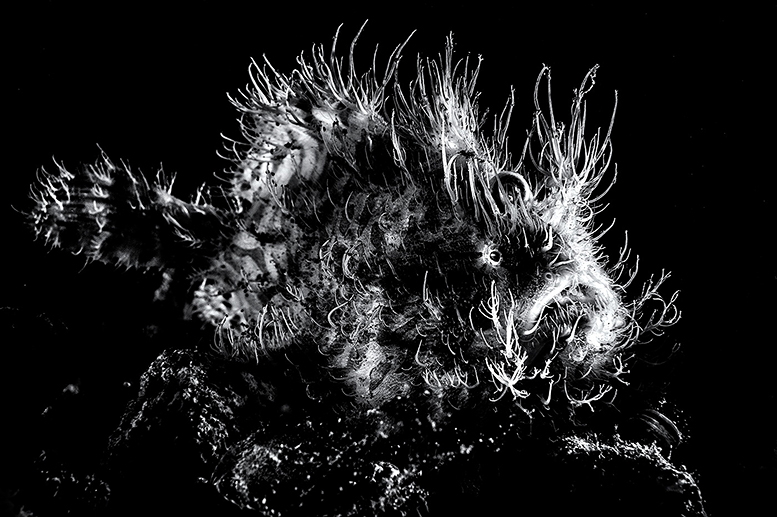
Backlit hairy frogfish, Lembeh. Equipment: Nikon D4 and Nikon 60mm lens.

And now you are launching Underwater Photography Masterclass! What level of underwater photographer is your book targeted at?

The title implies that it is not focused on the absolute basics, but it is very readable for enthusiastic photographers of all levels. The book presents classic techniques and also cutting-edge ones that have never been in books before. But to me that doesn’t mean it has to be advanced or technical. I have taught these ideas and techniques on workshops all around the world and know that new photographers can put them into practice from their very first dive. There is a lot of knowledge packed in there, so it is definitely a book to work through slowly and grow with.

Although it is totally contemporary, with advice based on the capabilities of the latest camera technology and current photographic standards, the book also celebrates and tries to learn from the rich history of underwater photography. The book presents techniques for the full range of diving conditions, from clear tropical water, to chilly, murky conditions. There are cold water and low viz techniques in there, that I think green water divers will appreciate and everyone will benefit from understanding. 
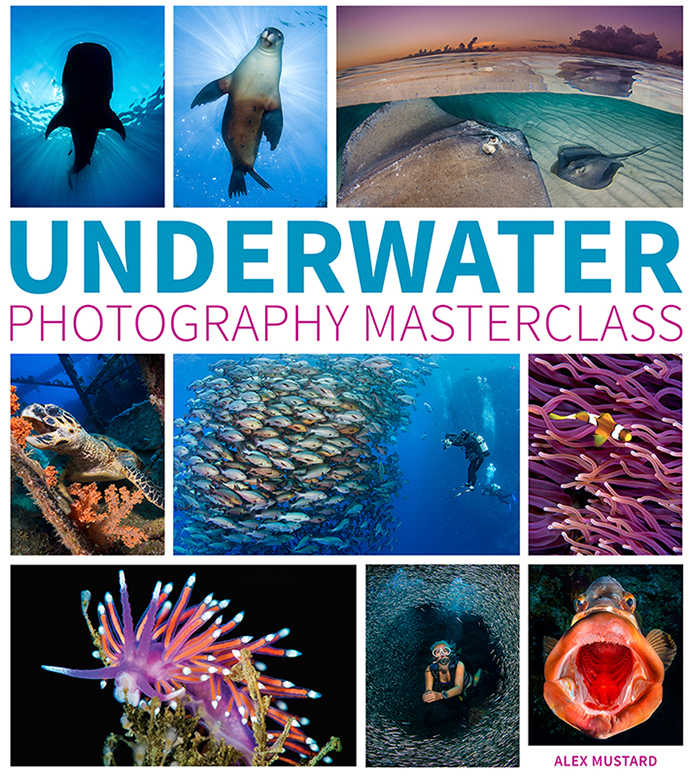
Cover of Underwater Photography Masterclass

What are the main areas the book covers?

The book is a full course on underwater photography. It covers all aspects from equipment to novel creative techniques, but its focus is particularly on light and lighting. I think this is the big area that many photographers lack a deep knowledge of, and it is area where they can really improve their images. Understanding, controlling and exploiting light really is the key to photography.

It is also packed with detailed, real-world tips that I have picked up shooting all around the world, diving with lots of different underwater photographers. It includes everything from how to get a pygmy seahorse to face your camera to why you want to flinch first when playing chicken with a basking shark!

Are there particular sections that readers may not have seen before?

I am very aware that there is already plenty of information on underwater photography, in books, magazines and online. I have written quite a bit of it! Lots of it is excellent, some less so. So I felt that this book had to offer something different, while still covering the essentials. I started with a blank piece of paper and I set out to write the best photography book I could.

I suspect more photographers join me on workshops each year, than anyone else, so I have learned what information and ways to present it are most helpful. I spent a month listing all the things that I think really make a difference and formed the structure of the book around them. I learned plenty of new things researching and writing it, and I am sure that everyone will learn something rea
ding it. I’ve also tried to write something that’s enjoyable to read and will expand your horizons of what underwater photography can be for you.
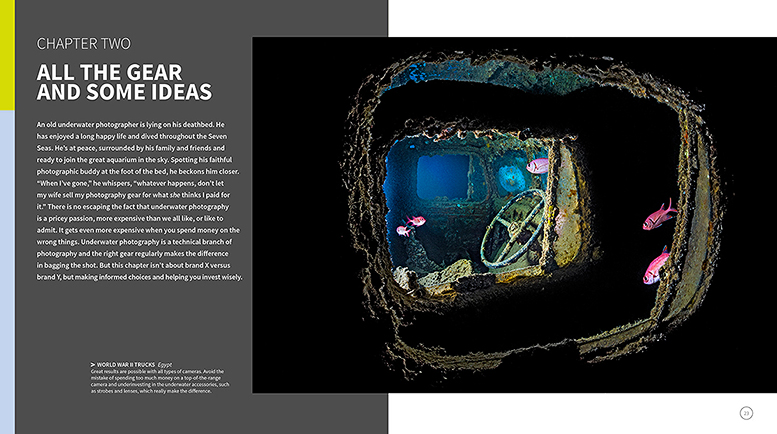
Opening spread of Chapter 2

What do you believe sets your new book apart from similar books on underwater photography?

I’ve tried to write something fresh, so whatever you’ve read before you’ll want to read this too. It is designed to be very easy to use in the field. It is a travel friendly size (lighter than some iPads), but packed with content. I tried not to waste a single sentence. The book is structured to be read from front to back, but because each new spread covers a new topic or technique you can dip back into it easily. You can open the book on any page and start reading – ideal for refreshers, even between dives.

It is also really my book. I think on every page you can tell that whatever I am writing about, I have tried it, taught it and know the subject matter thoroughly. My friends who have read bits say that they hear my voice in their head when they read it!

Is there an overall message, or lesson, you wish your readers to take with them after reading this book?

There are many. But a main one is to have a proper reverence for light. Not just the quantity of light, or exposure, but the quality of light. How to choose and produce the right quality of light for the subject or scene.

The book describes the challenges and solutions for lighting techniques based on basic principles. So it is not just about this is how to do it. It also explains why and relates that to the simple fundamentals of light. I think it has a lot of “of course” moments for the reader. Understanding techniques makes them easier to remember, use and perfect. The aim is to immediately help you get better photos, and then, over time, make you a better underwater photographer.

What’s the story behind your most memorable underwater shot?

I am not sure I have a most memorable shot! I think particular favourites of mine were the backlit coral spawning shots that I took a few years ago. It is great to work with local experts to find great subjects, but even more rewarding when you figure something out for yourself – when you are the expert and the photographer. Nobody had ever seen coral spawning in Grand Cayman until 13 years ago, when I calculated the timing, and since then we’ve seen it every single year. It is a difficult thing to see, because it happens late at night and for most species lasts just a few seconds each year. So I used my own predictions to be in exactly the right place at exactly the right time to get the shot. I knew how to recognise that a coral is about to spawn and I used this to set up backlighting with an off-camera strobe. The image combined marine biology skills, fieldcraft and technical skills to produce an image that captures a wonderful moment.
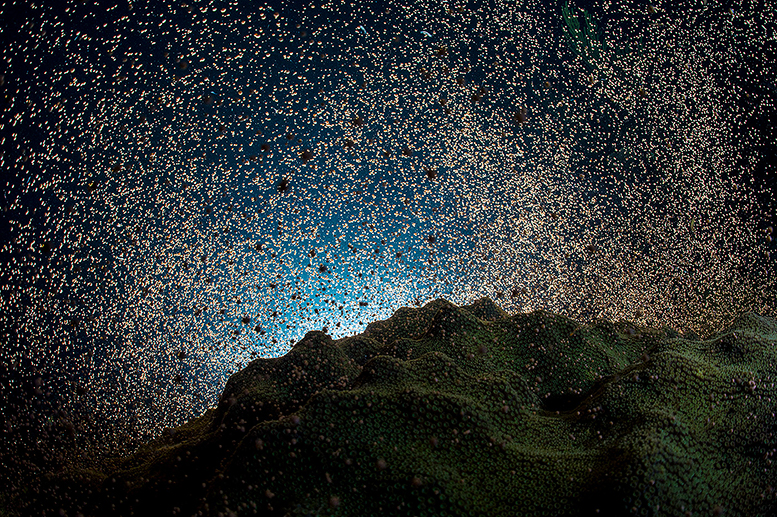
Backlit coral spawning, Grand Cayman. Equipment: Nikon D4, Sigma 15mm fisheye and 1.4x teleconverter.

Where is your favourite dive destination?

The next one! I love the diversity of diving in different places, so I could never pick a favourite. But as a photographer I believe it is important to shoot with passion. My book is focused on techniques, the techniques that allow you to create shots. But on top of that you have to have an emotional reaction to your subjects because that drives what you are trying to say with your images. Therefore, you really have to connect with the destination and subjects you are shooting. So my favourite place to be shooting is always where I am currently shooting, or where I am about to go. If you are not excited by what you are shooting, it will show in your images.

The site you’d most like to dive, but never have?

So many. I have never dived in Galápagos or Cocos. I have never dived north of the Arctic circle or south of the Antarctic circle. I have never swum with a great whale. But I am happy about that. I am 41 now and I would hate to have already done it all! I am sure I will do all those things. I am sure I will love them when I finally do. And I am pretty confident I will produce memorable images. But I like the anticipation of having big things left to do!
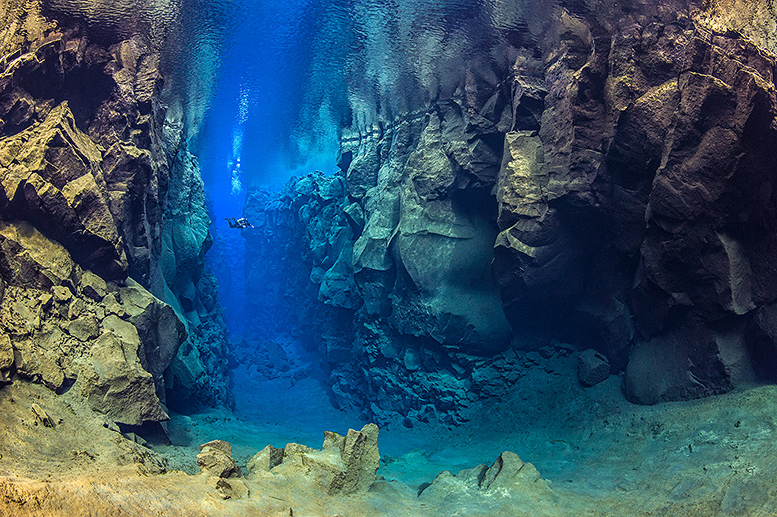
“The Cathedral” Silfra, Iceland. Equipment: Nikon D4 and Nikon 16mm fisheye.

What camera equipment are you currently using?

I am changing my camera this month. Currently my main camera is a Nikon D4, but my D5 arrives soon. I use a Subal housing and strobes from Seacam and Inon. I use lots of different lenses, ports and accessories. We could be here a long time listing them! I am currently experimenting a lot with wide-angle optics. I currently use seven different dome ports, plus a water contact Nikonos RS 13mm fisheye and an optical corrector port made by Carl Zeiss for my rectilinear wide angle. I am the only person who uses one of those. The Nikon D4 is full frame, but I also have a 1.5x crop sensor system (Nikon D7200) and 2x crop mirrorless camera, a micro four-thirds Olympus.

What is the highlight of your career?

The greatest reward of being a photographer is seeing your work being used and inspiring others – especially when your work generates interest in the projects and causes that are important to you, such as helping to conserve the marine world.

And the lowpoint?

Very few. Photographically a big frustration is probably seeing the underwater world being represented by poor images (that a publisher has got for free), which fail to inspire the public and miss the opportunity to win the ocean more friends.
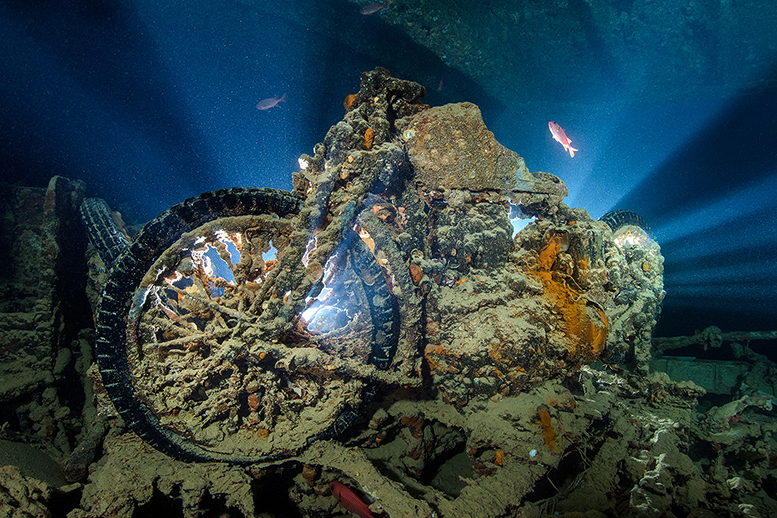
Backlit BSA Military motorbike, Thistlegorm wreck, Egypt. Equipment: Nikon D4 and Sigma 15mm fisheye.
Backlit BSA military motorbike, Thistlegorm wreck, Egypt. Equipment: Nikon D4 and Sigma 15mm fisheye.

Is there any particular shot that you still want to get?

Many. I think I always come back from any shoot with a bigger list of “to get” shots than I set out with. That’s what makes underwater photography so addictive! Catch Alex Mustard at ADEX Singapore 2016!
Cyclone Winston: Fiji Ravaged on Land, Underwater Paradise Survives

0

Jon M. Piepkorn, Resort Manager of Taveuni Dive Resort in the Fiji Islands, gives a first-person account to underwater360 of how people are dealing with the effects of Cyclone Winston, and its impact on the marine world:

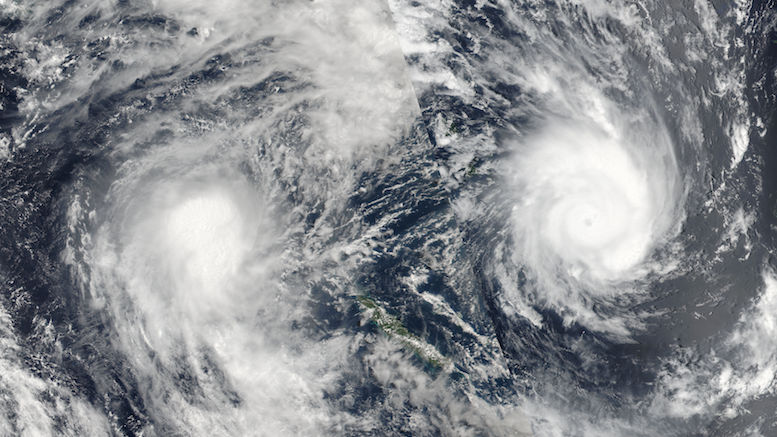
Tropical Cyclone Winston made its appearance in the northwest of Fiji on the morning of February 20, starting at about 4am with some wind and light rain. By 10am that morning, the winds were blowing at about 170km/h in the northern part of Fiji (Taveuni and northern Vanua Levu). As the largest Category Five cyclone to ever hit the South Pacific, the storm pummelled the island nation, its full force felt throughout the country. The cyclone continued on its westerly path and devastated the small island of Koro, which is about equidistant between Taveuni and the mainland of Viti Levu. Meanwhile, the storm wreaked havoc in the town of Savusavu on Vanua Levu (Fiji’s second mainland), home to the country’s second-largest marina. Winston then moved in a mostly westerly direction and continued its path of destruction in Ra, Rakiraki, and Ba – all on the northern coast of Viti Levu. By just after 12 noon on February 21, the storm had finally moved past Fiji and the cleanup was well underway around the country.

I live in Taveuni, which was one of the first places to get hit. We were lucky in that it was daylight, so we could see what was going on. We watched the wind increase to sustained speeds of 270km/h, with gusts of up to 330km/h! It was also fortunate that the storm was moving quickly, and we only had to endure those winds for about five and a half hours. At 3pm in the afternoon on February 20, we finally ventured outside to see the full extent of the damage. Walking down to the marina to watch the waves that were still pounding the shoreline – some six to eight metres high, I noticed one of the things that drew me to Fiji in the first place. Some of the local Fijians were walking on the roads and gathering fallen coconuts and fruits, with smiles on their faces, and giggles coming out of their mouths. I remembered then that the people were the reason I decided to move to this beautiful country more than eight years ago.

© Heather Sutton
© Heather Sutton

The people are generally not rich monetarily, but they are the richest people in spirit of any people I have met on my travels around the world. They laugh, play, and joke. They value family, and they are “giving” people. As I’ve walked through villages or small towns since the passing of the storm, I’ll hear “Jon, kana”, which means they are inviting me in to eat – although there may not be enough food for the family. Even in times such as this, everyone is there helping each other out. It will take some time, but the country will clean up and rebuild. The resilience of the Fijian people is amazing. Assistance, aid and help is pouring in from around the globe and many, many places, businesses, and resorts have already reopened for business – just one week after the storm. And the smiles remain on the faces of the Fijian people.

One of the biggest questions I have been getting from the diving world is: “What happened to the reefs? What do the reefs look like? Have the reefs sustained much damage?” Although the sea wall in our marina was destroyed, and the marina itself became clogged with rocks, trees, silt and debris – our boats sustained no damage. Unfortunately, not everyone was so lucky. Our staff worked tirelessly for three days to clear, by hand, the boat ramp and the path leading to it. By February 25, we had managed to get two of our four boats in the water, and the following day we were able to go out to get a look at the world-famous “Rainbow Reef” – post Cyclone Winston.

© Heather Sutton
© Heather Sutton

You could tell everyone was nervous, curious, and apprehensive. Most of us kitted up in silence, as we dropped in for the first dive at one of the pristine dive sites, Jerry’s Jelly. Although visibility was a bit reduced (10 to 15 metres) we knew immediately when we got down to the bottom of the sloping reef along the sandy bottom that things were going to be okay. The hard corals, soft corals, and the marine life were just as before, as if nothing had happened. We had some guests from China diving with us, and when they came up to the surface after our 55-minute dive, they were all smiles and could not believe the beauty they had just witnessed. They kept saying over and over, “we didn’t want to come up!” Everyone was smiling and happy, the guests, and the crew alike. After an hour-long surface interval relaxing on the boat while floating on the glassy calm seas of the Somosomo Strait, we dropped in for our second dive at the “Fish Factory”.

In a very different area and with a very different reef structure than our first dive, this mostly hard coral dive site did sustain some minor damage near the surface (at depths of one to four metres). At times during a very low tide, there are parts of this reef where the live rock will pop above the surface of the water. Once we dropped below 5 metres and descended down to “The Pinnacle” we again all breathed a combined sigh of relief, excited to see that no damage had been done and all the macro life this dive site offers were thriving. To end off the dive, we were treated to a large manta ray slowly gliding past, as if surveying the reefs herself – to make sure all was right with the underwater world in Fiji.

© Heather Sutton
© Heather Sutton

Just two days later we were out diving again where we checked out two more dive sites on “Rainbow Reef” – “Nuku’s Reef”, and “Rainbow Passage”. The water clarity had improved during the day we hadn’t been diving, and we were treated to 15 to 20 metres visibility. The dives (this time shared with some Austrian guests) amazed, as they always have in the past. Giant trevally, whitetip reef sharks, garden eels, pipefish, several species of nudibranchs, schooling fusiliers, unicornfish, schools of glassfish flashing back and forth, and the soft corals were in full bloom in all colours of the rainbow – which is how this reef system in northern Fiji gets its name. It was on this day we were once again reminded why Fiji and her reefs are known as the “soft coral capital of the world”.

After just two days and four dive sites explored post Cyclone Winston – it was clear to all of us that the reefs are fine. We will continue to assess all of our dives sites over the coming days to ensure the reefs are ready for the best possible diving experience for divers wanting to come and visit Fiji. The most important thing that Fiji needs right now is your support! Looking for a unique experience for your next dive trip and want to know you made a real difference in people’s lives and the rebuilding process? Come to Fiji and discover the land, the people, and most of all the diving. I’ve only been able to get out and explore “Rainbow Reef” in Fiji’s Northern Division since the cyclone, but I’m confident, via preliminary reports from friends around the country, that all of the other excellent areas for diving in Fiji are also ready for you to visit!

© Hea
ther Sutton
© Heather Sutton

6 Marine Conservation Projects in Asia Pacific That You Should Know About

0

Looking to dedicate your time to improving a reef ecosystem, or protecting a specific marine species? We bring you some of the best marine conservation projects in Asia Pacific that you should know about:

Scuba for Change (SFC)

Scuba for Change believes that scuba divers and tourists alike can all leave behind positive and lasting legacies for people living in developing nations. Apart from the initiatives to fund programmes to help stop child exploitation, they also look to up-skill locals to manage and operate all of Scuba for Change’s operations — funding their training and qualifications needed to help local staff to attain the required level of competence and experience. Their mission is to open dive centres across the Philippines, employing and training local staff to work in and eventually run the dive centres. Reinvesting 100% of their profits in local people and their communities, they are hoping to create positive and lasting legacies.

Find out more: www.scubaforchange.com

Large Marine Vertebrates Project (Lamave)

Using proven scientific data collection methods, Lamave research the abundance and habitats of cetaceans, whale sharks, turtles, mobula rays, and manta rays in the Philippines. They strive to identify critical threats facing these species. Researchers and volunteers work closely with local governments, communities, businesses, and tourists to ensure the conservation of large marine animals through science, education, and advocacy. The scientific data gathered is used to advise local governments on conservation policy and legislation, to counsel local and regional authorities on sustainable tourism, and to describe important aspects of the biology of marine animals.

Find out more: www.lamave.org

Fins Attached: Marine Research and Conservation

The mission of Fins Attached is to conduct research, promote conservation, and provide education for the protection of the marine ecosystem. They believe in the preservation of our world’s precious resources and that through the protection of the ocean’s apex predators, marine ecosystem balance can be maintained for the benefit of all living things on earth. They direct their efforts in the following categories: shark research, shark conservation, public awareness and education, and advocacy.

Find out more: www.finsattached.org

Project Seahorse

Project Seahorse is dedicated to securing a world where marine ecosystems are healthy and well-managed. Beginning with cutting-edge research, they turn their findings into highly effective conservation action, in collaboration with governments, local communities, and other stakeholders. As the IUCN global authority on seahorses and their relatives, Project Seahorse aims to protect seahorses, and through seahorses, they support marine conservation more broadly.

Find out more: www.projectseahorse.org

Green Fins

Aiming to protect and conserve coral reefs by establishing and implementing environmentally friendly guidelines to promote a sustainable diving and snorkelling tourism industry, Green Fins was originally initiated by the United Nations Environmental Programme (UNEP). Part of the effort to increase public awareness and management practices that will benefit the conservation of coral reefs and reduce unsustainable tourism practices, it is overseen by the Coral Reef Unit of UNEP based in Bangkok in collaboration with UK charity The Reef-World Foundation.

Find out more: http://www.greenfins.net/

Project AWARE

Project AWARE Foundation is a growing movement of scuba divers protecting the ocean planet. With new programmes and more online resources than ever before, Project AWARE supports an unprecedented global movement of divers acting in their own communities to protect the ocean and implement lasting change. They focus on two major ocean issues; Shark in Peril and Marine Debris, or waste in our ocean.

Find out more: www.projectaware.org 

Indigenous Communities are Forced to Clean Up a 3,000-Barrel Oil Spill in Peru’s Amazon

0

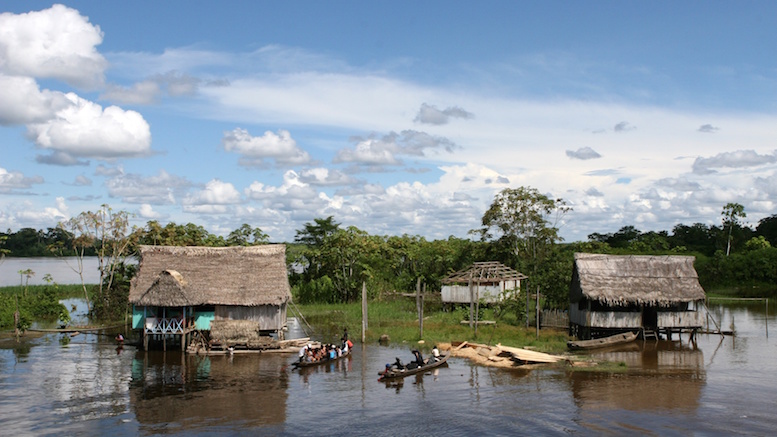
The images being shared on social media and by the international press these days show to the average eye what the impacts of a broken oil pipeline can be: water dyed deep black, turned into a liquid as thick as the oil that has contaminated them.

Those recent photos from northern Peru document how the oil spill is covering rocks on the rivers’ shores, and also the white suits donned by the men who have been hired to clean up the spill in the Amazon tributary.

This isn’t the first time that an oil spill affects the region. In July of 2014, an oil pipeline burst and 8,000 gallons of oil ended up in the Marañón River. The damaged pipeline —a piece of infrastructure that is almost 40 years old and without much maintenance– directly impacted the town of Cuninico, where around 130 families live, according to an article that appeared in Environmental Health News. Months after the spill, the communities of Cuninico and its surroundings areas complained of nausea and skin rashes, and of being afraid to eat the local fish, especially around the time of the seasonal flooding when the contamination would extend beyond the disaster area.

What’s known so far, is that the two most recent oil spills along the Oleoducto Nor Peruano pipeline are the responsibility of the state company, PetroPerú. The company says it will clean up the disaster, but says it is not to blame for yet another spill, the third in a month, which locals say took place earlier this February in Pucará, in Cajamarca province, during a maintenance job.

However, experts believe the two recent oil spills in the Amazon are some of the worst to have happened in Peru –around 3,000 barrels of oil have ended up in Amazon River tributaries, affecting more than 8,000 people. Among them, are the Awajún and Wampis indigenous peoples. All along, starting with the first spill on January 25, local indigenous communities have done everything they can to contain the problem.

Peru’s national government declared a public health emergency on February 17, and got together with community leaders three days later. But help was late to arrive, and by then, local men, women, and children had come to the shores of the Marañón River to help with the cleanup.

Local media reports say that within a few days of the spills, PetroPeru representatives offered the equivalent of eight dollars per bucket of oil that people could get out from the rivers. The laborers were not warned about the dangers of such activity, nor were they given special protection or training.

In an investigation by Univisión, a number of children explained to Rodrigo Lazo, an archeologist, that they received between two and four soles per bucket. A sol is worth around 28 cents of a dollar.

“They paid us two soles for every bucket. We were gathering the oil with our hands and the oil fell on us. We were asking for more money, but the engineer said no,” explained one of the children in the news report.

Peru’s environment minister, Manuel Pulgar-Vidal, has declared that the restoration of the flora and fauna in the regions affected, Loreto and Amazonas, could take up to a year.

“PetroPeru has already fulfilled the first stage of containment; now it is focusing on gathering the oil that is closest to the site of the spill,” explained Pulgar-Vidal. “The last stage is the restoration of fauna and flora.”

According to the minister, PetroPeru’s fine could end up being as much as 17 million dollars.

Article published by Ruxandra Guidi, source: Mongabay

10 Things You Might Not Know About Decompression Illness (DCI)

0

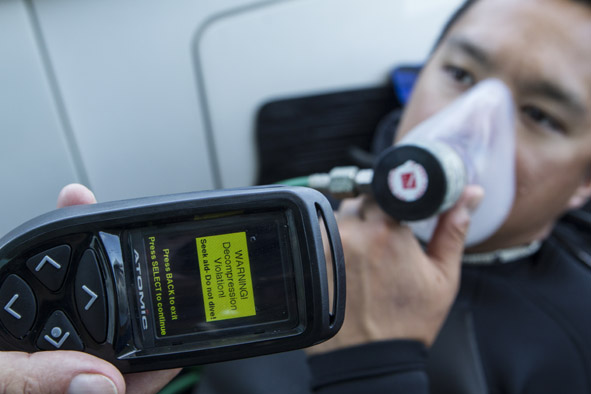
Remember that the term decompression illness (DCI) includes both decompression sickness (DCS) resulting from dissolved nitrogen (or another inert gas) being eliminated from a diver’s body tissues; and arterial gas embolism (AGE) which is caused by air entering the arterial blood as a result of a burst lung.

DCI was first reported in 1667 in a snake – not a diver!

Boyle (from Boyle’s Law) placed a viper in a vacuum and noticed a bubble forming in its eye.

It’s possible to get a burst lung and subsequent DCI (arterial gas embolism) in as little as 1.2 metres of water

If a diver fills his lungs with compressed air and surfaces without exhaling, there is enough pressure change in the first 1.2 metres from the surface to over-expand the lungs sufficiently to cause a tear.

Divers have suffered from DCS after ascending from depths as shallow as about 6-7 metres

It used to be thought that one had to dive deeper than 10 metres before DCS was a risk, but this is now known to be untrue.

Bimini, Bahamas.  On expedition to photograph great hammerheads.

Most divers (possibly around 90 percent) who get DCI have been diving within the limits of their dive computer or tables

However, the risk of DCI increases when a diver exceeds these limits.  This indicates that the limits cannot accurately account for individual differences between divers and the various factors that can influence nitrogen uptake and elimination during a dive.  All divers should add conservatism to their decompression calculations, especially if the diving is purely recreational and dive time doesn’t need to be maximised.

Bubbles form within divers’ bodies during or after many dives, especially repetitive and deeper dives

These bubbles can be detected using ultrasound and usually do not cause symptoms. Some divers “bubble” more than others. A slow ascent rate and doing a safety stop reduces the amount of bubbling and therefore the risk of DCI.

Some divers are more susceptible to DCI than others

Divers with a patent foramen ovale (PFO),which is a common heart defect that can enable blood to flow across the heart, have a significantly higher risk of DCI (sometimes quoted as two to eight times, depending on the size of the hole). Other factors such as being overweight, increasing age, lack of fitness and dehydration may also play a role although there is little hard evidence to support some of these beliefs.

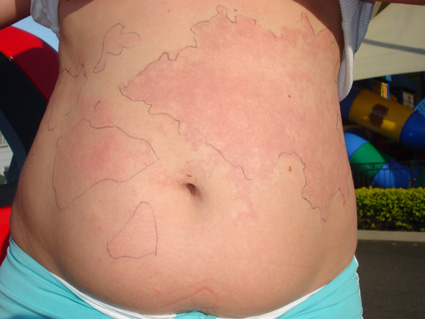
A mottled reddish/purple/bluish rash is an increasingly common sign of DCI and is often associated with the presence of a PFO

Skin-related DCI used to be relatively uncommon in recreational divers. However, over more recent years it has become far more common. Part of the reason for this could be the result of the more frequent and longer dives and shorter surface intervals enabled by dive computers.

Skin Bend Pic

Oxygen first aid is often delayed, given using unsuitable equipment and for too short a period

Good oxygen first aid is very important in the management of DCI and this is often poorly done.  To maximise the benefit, near-100 percent oxygen should be given from the time symptoms first occur, and continued until a diving doctor advises that it be stopped.

Many dive operators in remote areas do not have access to a sufficient supply of oxygen to last until an injured divers receives appropriate medical care

It can sometimes take over 24 hours for an evacuation team to reach some remote locations, so a large supply of oxygen is required. Check this out before you go on a dive trip to an area without good access to suitable medical care.

About 800 divers are treated for DCI in the Asia-Pacific each year

By DAN AP’s John Lippmann


Check out this incredible offer from DAN Asia-Pacific and UW360:

1 YEAR DAN Asia-Pacific Membership + 1 YEAR Subscription to Scuba Diver AUSTRALASIA + OCEAN PLANET Want to get your hands on this package? Click here.fd493c7d-1611-41db-b305-7f81ee2c24cc

Seabed as a Long-Term Deposit for Plastic

0

Marine scientists from Kiel have examined whether and how quickly bacteria deplete plastic bags in the sediment of the seabed. The study shows that classic carrier bags made of polyethylene and biodegradable plastic bags didn’t change at all after hundred days in the seafloor. The results were recently published in the international journal Marine Pollution Bulletin.

Whether on the coasts of the Antarctic or on the sediments of the deep sea – there is barely a place on Earth without plastic waste. But how long plastic will remain in the seas until it is decomposed, is hardly investigated. A group of scientists of the GEOMAR Helmholtz Centre for Ocean Research Kiel, the Kiel University and the Cluster of Excellence “The Future Ocean” now have compared the changes of standard polyethylene carrier bags with those of so-called biodegradable plastic bags in two chemical environments, which are typical for the seabed. As the team in the international journal Marine Pollution Bulletin writes, bacteria have colonized the biodegradable bags significantly faster. However, “there is no reduction or change of material detectable in both kinds of bags within hundred days,” says Alice Nauendorf, first author of the study.

photoThe team used sediment samples from the Eckernförde Bay in the Western Baltic Sea. “In the upper layers of these sediment samples oxygen was still present, but not in the lower layers. That is typical for seafloors around the world”, says the biological oceanographer Nauendorf and adds: “These layers also differ in the types of bacteria who live therein.”
The two bags were placed in both oxic and anoxic sediments for about one hundred days in a laboratory experiment. According to the manufacturer, the biodegradable bag was made of compostbale polyester, cornstarch and undisclosed ingredients.

After the 100 days the team used a number of analytical methods such as high-precision weight measurements, scanning electron microscopy, and Raman spectroscopy to demonstrate possible changes of the material. “We could clearly see that the compostable bags were more populated with bacteria – in the oxygen-containing layers five times more, in the oxygen-free layers even eight times more than the polyethylene bag”, says Nauendorf.

The studies also showed that the material of both bags has not changed at all in the hundred days of the experiment. “We found no weight loss or chemical alteration. Therefore no decomposition of the material is suggested”, emphasizes Prof. Dr. Tina Treude, principal investigator of the study, who now works at the University of California, Los Angeles (UCLA). The exact reason for the different settlement with bacteria remains uncertain. “We found an antibacterial substance in the polyethylene bag, which could have restricted bacterial colonization “, says Nauendorf.

But despite the still remaining questions the study shows that plastic reduction is only a very slow process in the sediments. Even the settlement with bacteria is obviously no guarantee for the chemical conversion of a substance. “The study suggests that the seafloor would become a long- term deposit for plastic waste if we don’t stop polluting the seas. Future studies have to show what impact plastic waste has on benthic ecosystems,” says Professor Treude.

Reference:
Nauendorf, A., S. Krause, N. Bigalke, E. V. Gorb, S. N. Gorb, M. Haeckel, M. Wahl, T. Treude (2015): Microbial colonization and degradation of polyethylene and biodegradable plastic bags in temperate fine-grained organic-rich marine sediments. Marine Pollution Bulletin.

4 Incredible Waterproof Cameras

0

Looking for a camera that is easy to use, tough and dynamic? We bring you four of the best waterproof cameras out now:

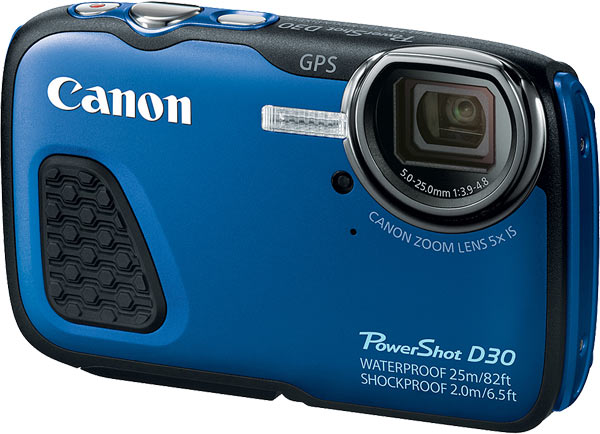
201402171539483604Canon Powershot D30

  • A tough camera for recording your adventures on the go
  • No housing needed, waterproof to 25 metres, shockproof from two metres and temperature-resistant to –10°C
  • 12.1MP, 5X zoom
  • Modes include underwater and underwater macro
  • Approximately one hour of video recording time

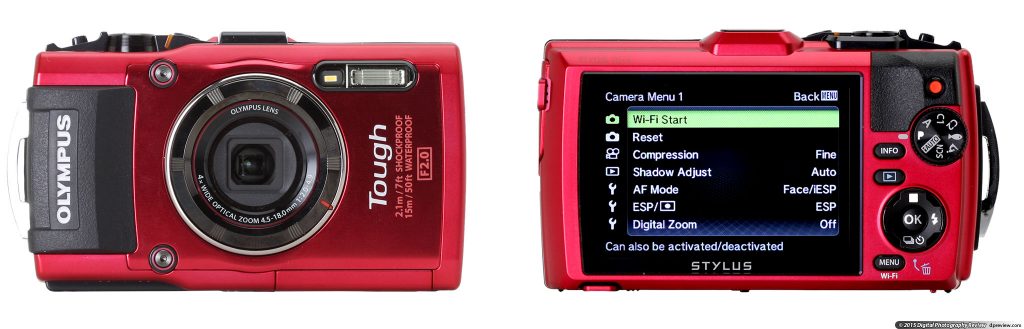
Olympus Tough TG-4

  • 16MP BSI-CMOS sensor with RAW support
  • Waterproof up to 15 metres, crushproof to 100kgf, shockproof to 2.1 metres and freezeproof to –10°C
  • High-speed f/2.0–4.9 wide-angle lens, full HD 1080p video
  • Built-in Wi-Fi

tg-4

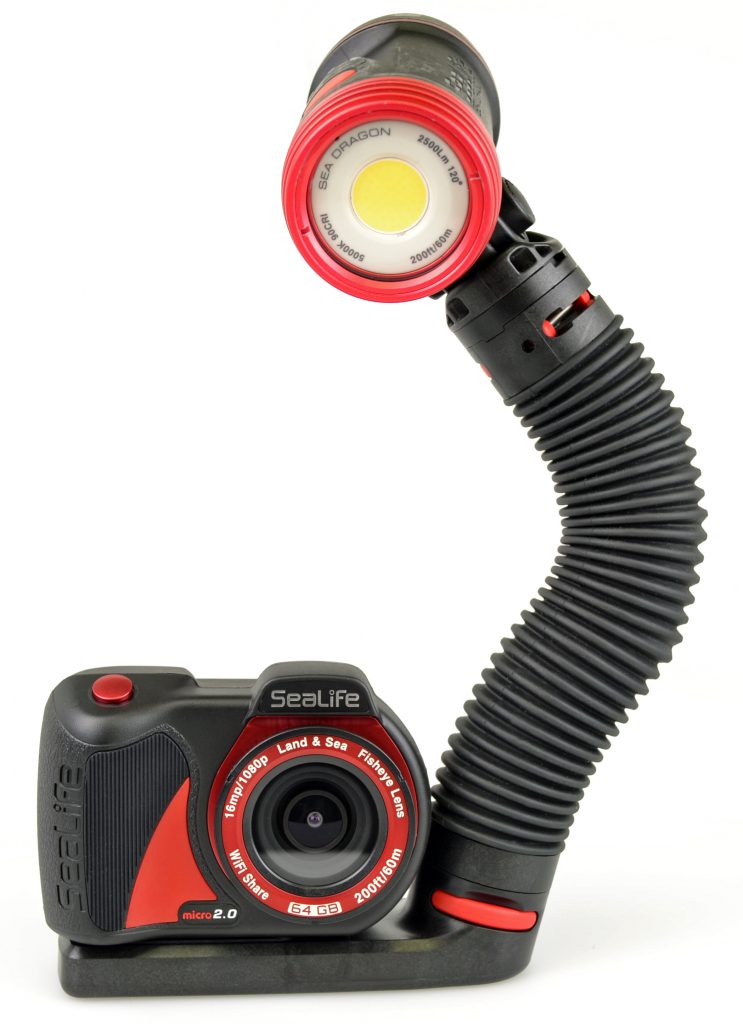
SL516 Micro 2.0 Pro 2500 SetSeaLife Micro 2.0 Pro 2500

  • A complete underwater photography package
  • Micro 2.0 WiFi 64GB underwater camera
  • Flex-Connect tray, arm and grip
  • Sea Dragon 2500 photo/ video light head
  • Components also sold separately

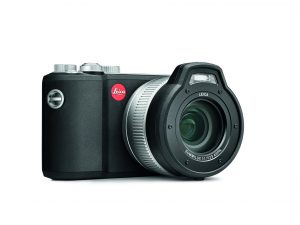
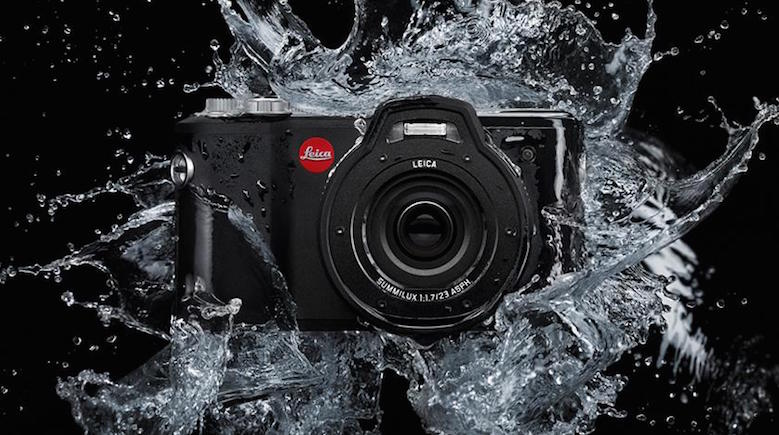
Leica X-U

  • Shockproof from 1.22 metres
  • Dustproof
  • Waterproof to 15 metres
  • Simple, logical handling
  • 16.5-megapixel APS-C sensor
  • Bright Leica Summilux 23mm f/1.7 ASPH lens
  • 3-inch LCD screen
  • Dedicated underwater snapshot button
  • Designed in collaboration with Audi Design
  • Stylish and minimalist, aluminium anti-slip shell
  • Built-in flash above the lensLeica-X-U_2 (2)

This article featured in Scuba Diver DIVEAHOLIC (Issue 1/2016)