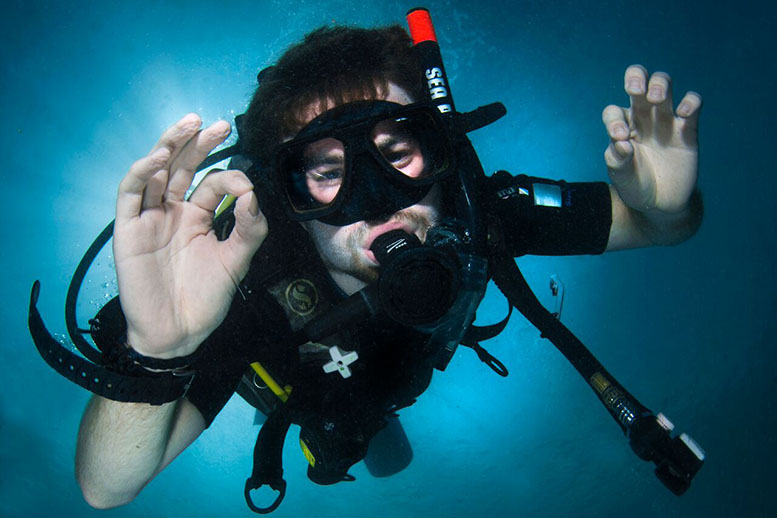
A brand new offer from Scuba Diver AUSTRALASIA + OCEAN PLANET and DAN Asia-Pacific now lets you get your dive safety, travel, education, entertainment, lifestyle and underwater photography, in one fell swoop and for a killer price. Don’t miss out! If you live in the Asia Pacific region, become a Member of DAN Asia-Pacific and have the world’s best dive magazine land on your doorstep eight times a year, all for the special price of just SGD90!
One of the world’s most renowned wildlife photographers, Nicklen’s romance with nature began when he was growing up on Baffin Island in the Canadian Arctic. Academically trained as a biologist, Nicklen has been an assignment photographer for National Geographic for nearly 20 years, with more than 17 full-feature articles to his credit, he has won over 30 prestigious international awards including the UVIC Alumni Lifetime achievement award. His lectures, of which has given more than 500, are continually sold out, including his 2011 TED Talk where he revealed his unusual Antarctic encounter with an inquisitive leopard seal. Nicklen remains an undisputed underwater photography legend.
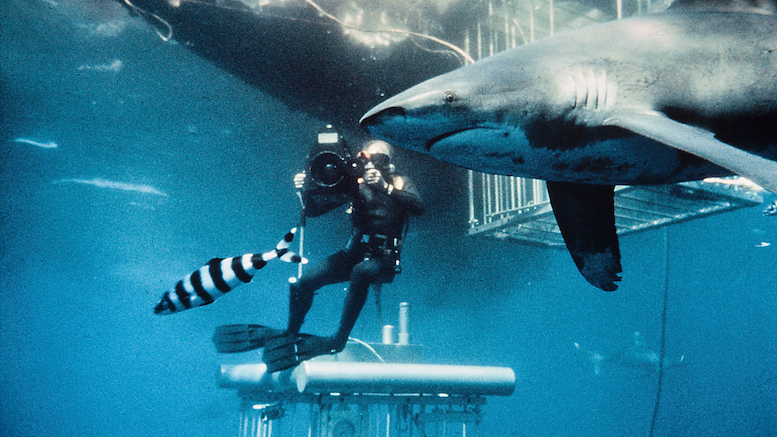
Stan Waterman out of the cage for the first time filming oceanic white tips feeding on dead whale carcass above, off South Africa 1969.
Stan Waterman
Stan Waterman was among the first to embrace the sport of recreational diving and has spent over 60 years exploring the underwater realm. He has filmed everything from underwater scenes in Hollywood movies to documentaries for National Geographic, winning numerous awards, including five Emmys for his ground-breaking work. He has also produced two films for the Cayman Islands Department of Tourism, promoting the Islands as a dive destination. Waterman has had numerous honors and awards for his work in television; including five Emmys, two Gold Medals from the U.K. Underwater Film Festival, four Golden Eagles, a lifetime Achievement Award from the Miami Expo and from Boston Sea Rovers, and the Cousteau Diver of the Year Award.
Brian Skerry – a name known throughout the world of underwater photography. A photojournalist for National Geographic, Brian has spent over 10,000 hours beneath the waves capturing iconic images many of us are familiar with. The legendary shooter is a busy man – from diving with southern right whales in New Zealand’s far-flung subantarctic islands to photographing harp seals in Canada’s Gulf of Saint Lawrence – but we’re thrilled he found the time to sit down and chat about what it takes to be an underwater photographer for one of the world’s most renowned publications, his favourite dive destination of all time, and his most memorable shoot yet.
From Jaws to Sharknado, the world has been fascinated by the power and physique of the ocean’s apex predators. Often misrepresented as bloodthirsty and spiteful killers by Hollywood cinema screens and newspaper headlines, sharks are gradually undergoing an image makeover, with education about marine life slowly flooding the globe to help change this inaccurate perception. Now, shark tourism is on the increase, as more and more people are looking to glimpse beneath the waves and past Youtube shark attack compilations, and truly discover what these creatures are really like. To help fuel this newfound addiction to the beauty of sharks we bring you the best dive spots for up-close shark encounters around the world.
Isla de Guadalupe, Mexico
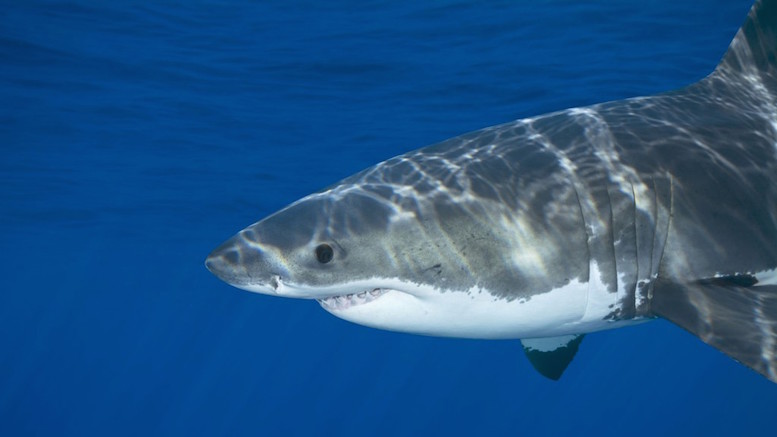
When to dive: July – November Fancy being lowered into those beautiful blue waters just off the Mayan coast? Isla de Guadalupe is tipped as the place to see great white sharks at their most active. Through the slits of the steel cage, witness rowdy teenage boys showing off their scales to those five-metre-long “Big Momma’s” , or dominant males keeping a steady eye on what’s lurking above.
A great white shark swimming at Guadalupe Island looking for food
Malapascua, Philippines
When to dive: Year-round The only place on the blue planet where you are practically guaranteed an encounter with the elusive and ever-startled-looking thresher shark. These bullet-shaped beauties are regular visitors to Monad Shoal, Malapascua in the Philippines where they emerge from the deep waters to have their skin maintained by the resident cleaners.
Beqa Lagoon, Fiji
When to dive: July – September Not many shark dives around the globe offer a multi-level dive all year round, on which you can have close encounters with up to nine different species of shark – blacktips, whitetips, grey reefs, silvertips, tawnies, sickle fins, lemons, tigers and bulls. Book a flight to Fiji for picture-postcard beaches, pellucid, coral-filled waters, and a high-octane shark dive you will never forget.
Tiger Beach, Grand Bahama, Bahamas
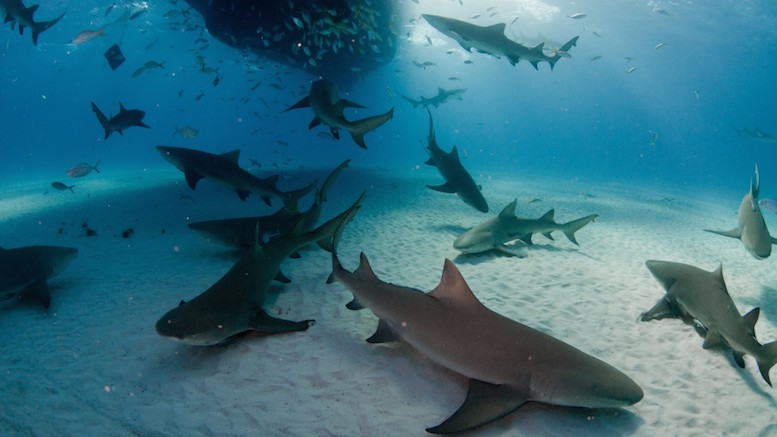
When to dive: October – January Tiger sharks, great hammerheads, Caribbean reef sharks, lemon sharks, and spotted dolphins all make up the flowing, mobile mosaic on the six-metre-deep white sandy beach floor. It’s the picture perfect location to shoot those toothy creatures, who will playfully pose for your shots by coming within a fin’s length of your lens.
A large group of lemon sharks underneath a dive boat, Bahamas
False Bay/Seal Island, South Africa
When to dive: April – September When observing the cape fur seal carpet that fringes Seal Island you may be able to hear the faint wail of a dinner bell that never stops ringing. The premier place to see fully-athletic shark breaches, the predators may just host the most entertaining seal lunch you’ve ever attended. Not only do you get to catch the sharks in flight topside, but also through the steel-jawed cage where only the daring will float, you get to stare off with the toothy predators.
Fish Rock, Australia
When to dive: Year-round One of the few dive sites in the world where you can swim with the critically endangered grey nurse sharks in their hundreds. The 120-metre-long cave is one of the best in Oz, providing an exciting dive for even the most experienced of divers. You’ll dive into the tunnel entrance over huge wobbegong sharks and spot large bull rays resting on the bottom, whilst your torchlight pierces through the dark shadows discovering other tiny critters that rest in the cracks.
Galapagos Islands, Ecuador
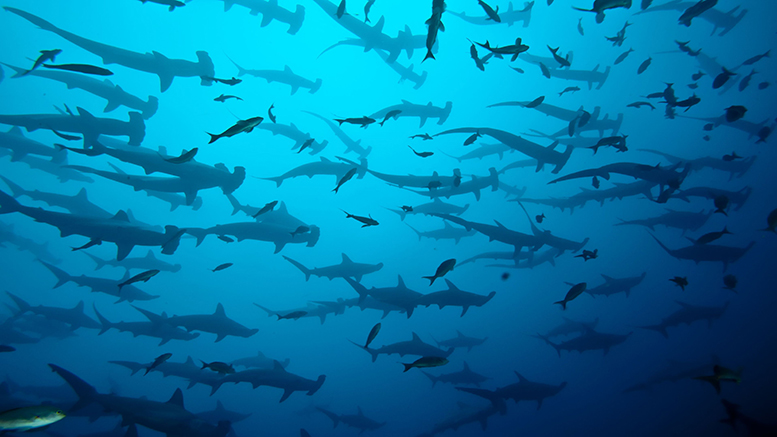
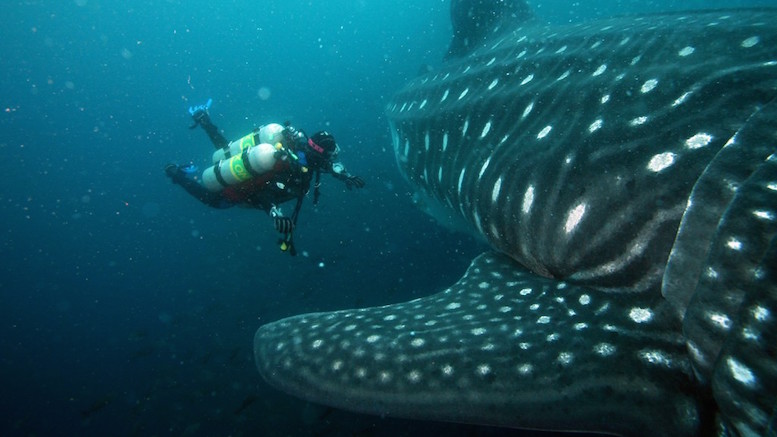
When to dive: June – December Dive with the shy hammerheads who travel in numbers like biker gangs, circling overhead in groups of 100 to 250 strong. In the high season you can swim near the fins of the largest fish in the sea, the whale shark – which often brings its own tag-along mini-ecosystem of remoras, cleaner fish, tuna and mackerel.
Scuba diver approaching whale shark in the waters off Galapagos
Oban, Scotland
When to dive: May – September If you can brave the finger-numbing water off the Scottish coast, then you may just be able to witness a 12 metre giant nonchalantly pass you by. During the high season, the basking sharks are out in their hundreds (up to 130 individuals were documented in one day). It’s not just the two metre dorsal fins of the sharks you’ll be catching a glimpse of, as other common sightings are whales, dolphins, otters, seals among other fascinating marine wildlife.
The Brothers Islands, Red Sea, Egypt
When to dive: Year-round The pair of tiny islands, Little Brother, which is shaped like a raindrop, and Big Brother, the larger of the two, is host to an abundance of fish and sharks including whitetips, greytips, silvertips, grey reef and hammerheads. If you dip down at dawn you might be lucky enough to spend the sunrise with thresher sharks, or spend the rest of the day chasing marine life around the islands’ various wreck sites. Find out more about this dive destination and read Christopher Bartlett’s article about diving the Brothers Islands.
Cabo San Sebastian, Mozambique
When to dive: November – March Often spotted from the surface, whale sharks traverse in numbers over the rocky reefs of Cabo San Sebastian. Dive down with your underwater camera and get front row seats in the coral amphitheatre where bull sharks put on a show to a crowd of nudibranchs, shrimps and crabs, garden eels and schools of fusiliers.
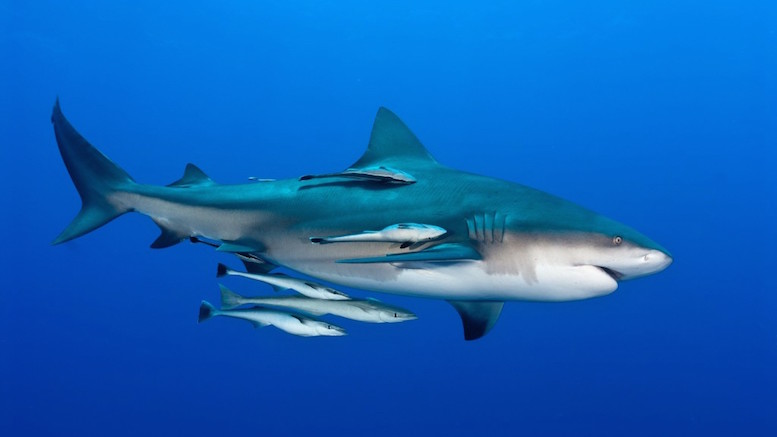
The view of a bull shark and fish swimming along, Pinnacles, Mozambique
Cocos Island, Costa Rica
When to dive: Year-round To those who know, the Cocos Island is the island of sharks, with a coral cove of active whitetip reefs. One of the night dive rules is to not come within two metres of the bottom to avoid any collision with shark traffic and causing a chockablock. At night witness the whitetips out in full force, attending the twilight buffet of sleeping prey.
Rhode Island, USA
When to dive: June – September Have an adrenaline pumping experience from the safety of a metal cage, or be right in the middle of the action without the bars. You can swim into the lives of mako and blue sharks as they feed, mate or just investigate their surroundings. Rhode Island is that experience all divers dream of, but only few ever get the chance to feel.
Palau, Micronesia
When to dive: January – May, September – December The wo
rld’s first ever shark sanctuary, Palau offers divers an unspoilt dive setting. There’s everything from big schools of fish, to World War II wrecks guarded by groups of sharks, all presented in perfect visibility. With rushing currents paving paths for grey reef, whitetip and blacktip sharks, and nutrient dense water filled with over 1,000 different fish species, it really is hard evidence of this area being part of the most biodiverse region in the world.
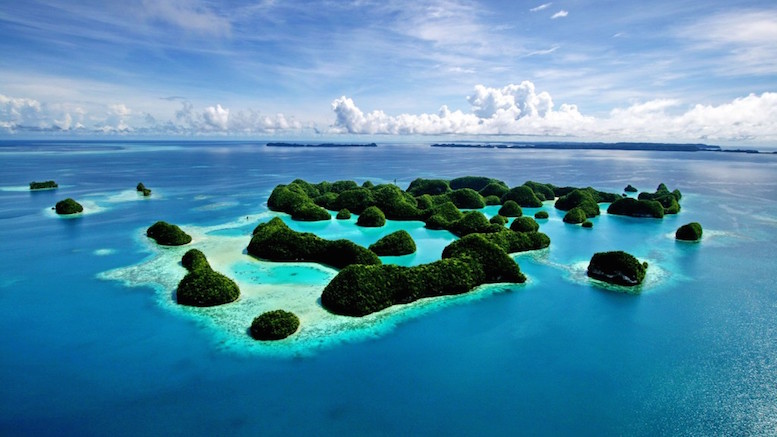
View from above of the many islands of Palau
Cenderawasih Bay, Indonesia
When to dive: Year-round Going where few others dare to visit the underwater treasures of Cenderawasih Bay, which reveals a great diversity of diving. Alongside four species of turtle, dolphins and dugongs, the bay hosts a seasonal guest of honour, the whale shark. For both the big and small species in beautiful reefs that are bursting with life, diving in Cenderawasih Bay is a must.
Neptune Islands, Australia
When to dive: May – October Centred in the remote islands, the Neptune Islands Group Marine Park includes sheltered seagrass, a sandy seafloor and deep water habitats with a range of marine life. The park is an internationally significant site for great white and bronze whaler sharks and is fittingly named after two world-renowned shark experts and marine conservation pioneers, Ron and Valerie Taylor.
One of the world’s most celebrated underwater photographers, David Doubilet has spent five decades under the surface in the far corners of the earth from Africa’s interior, to remote tropical coral reefs, rich temperate seas and recent projects under the northern and southern ice. David’s personal mission is to create a visual voice for the world’s oceans and to connect people to the incredible beauty and silent devastation happening within the invisible world below. His powerful work has been recognised with numerous Picture of the Year, BBC Wildlife, Communication Arts and World Press awards. David was also awarded an Honorary Fellowship of The Royal Photographic Society in 2000, the Sara Prize, the Lowell Thomas Award, and the Lennart Nilsson Award in Photography.
Specialty
All-rounder
Inspiration
Bates Littlehales, Luis Marden, Jacques-Yves Cousteau
Oliver Jarvis, in-house writer for uw3some, was given the opportunity to learn to dive by Scuba Junkie in the incredible waters surrounding Mabul Island, Borneo. In a flurry of dive-related enthusiasm, he documents exactly how learning to dive changed his life.