Home Blog Page 40

The Peace of Restoration

0

IMAGINE FOR A MOMENT a garbage-strewn harbour bereft of fish, toxic chemicals leaching from the debris into the water. How many times have you seen this in a news article? Last August I visited Bahowo, a small village in North Sulawesi, where that wasn’t the case and it wasn’t a stroke of luck. It was a stroke of intention.

It was dusk and we paddled an Austronesian outrigger canoe through shallow water. Two of the villagers, Nyomen and Alexander, were taking me to see some mangroves.

“We knew mangroves are nurseries for juvenile fish and protect the coastline from storms,” Nyomen told me. “If we want more fish to return to this coastline, we need the mangroves.” The villagers were very happy when three years ago university students came and planted seedlings. Years before many of the mangroves had been cleared to build a lobster farm that failed, leaving the coastline damaged.

Once we got out of the harbour, Alexander started a small diesel engine. We motored along the coast with a soft chortle. To the left a large volcanic island jutted out of the sea.
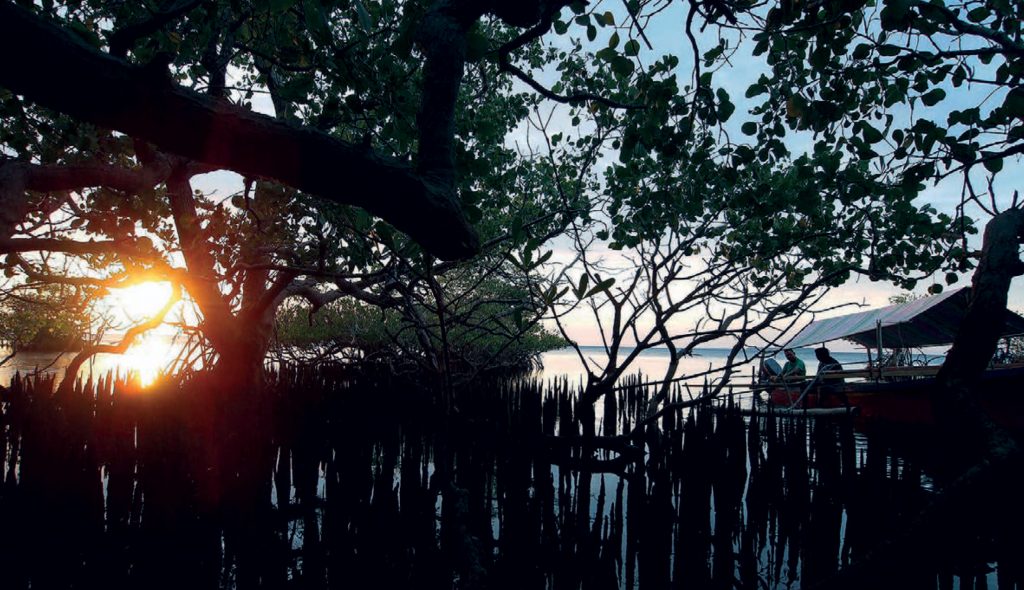
After a few minutes, Alexander pointed the canoe towards shore and stopped the engine. Silence. We glided into a small water forest. Birdsong from the lush jungle filled the air. There were hundreds of large mangroves, 5 and 10 metres tall. The stubby tree trunks grew from large, arc-shaped roots half-submerged in water. The labyrinthine patterns of the roots cast circular shadows on the water.

I slipped over the side of the boat into waist-deep water and several inches of sticky mud. The silky shade was a welcome relief at the end of a hot day. One of the soles on my shoes had cracked slightly. When I took my first steps in the mud, the suction was so strong that the sole of the shoe came off in the mud.

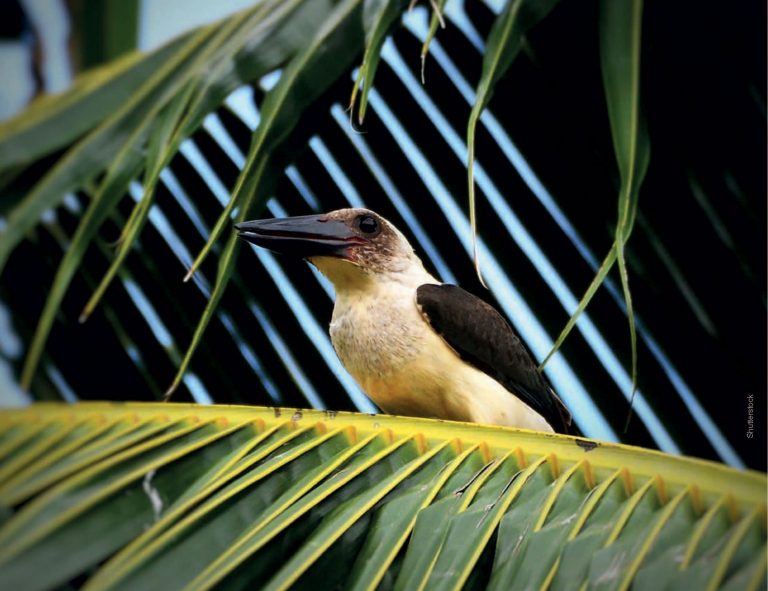
Oh, well. Too beautiful to worry about the shoe. The last bit of light flickered through the deep-green mangrove leaves. The short rattling call of a kingfisher sounded nearby.
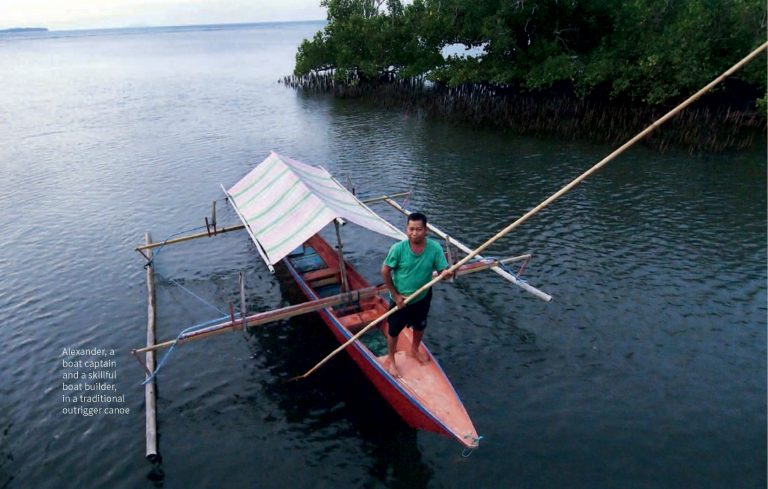
Alexander, a boat captain and a skillful boat builder, in a traditional outrigger canoe


Water forests like these – the meeting place of forest and sea – encapsulate so much of life’s essence. Start with water, add photosynthetic organisms, now you have oxygen and carbohydrates – the origins of all the life around us.

For the villagers replanting the mangroves was no ornamental exercise. One of the fisherman, Arnold, had explained to me that when he was a child there were plenty of fish in the harbour. Now they travelled for over seven hours by boat and sat on a platform for days in the open ocean, in the hopes of getting a good catch. Overfishing in Bahowo isn’t something you read about, yet it’s the equivalent of going to the grocery store and the shelves are empty.

For the rest of this article and other stories, check out our latest Asian Diver Issue 3/2017 Vol.147)  here or download a digital copy here.
6 Tips For Safety at Depth

0

Regardless of depth, there’s no such thing as an “easy” dive: once a diver recognises that fact, then many of the so-called “accidents” that sometimes occur in deeper technical diving become avoidable. Rather than being “events without apparent cause”, incidents are, invariably, attributable to a failure on the part of the diver to safeguard against what – in retrospect – becomes the obvious.

There’s an old adage that goes “plan your dive and dive your plan”; in that regard, the deeper the dive – and the more complex its objective – the greater the need to consider every aspect of the dive plan.

Plan every aspect of the dive. Define its objectives and become accustomed to using a written checklist. Reviewing each item will help ensure that nothing is overlooked and that all members of the team understand the absolute parameters of the dive and what is expected of them. Include a contingency plan detailing missed decompression schedules as well as emergency protocols.

Do not rely on memory to recall details of the dive plan. Encourage the use of an easily accessed slate, or wet-notes, to record key parameters of the dive, including turn-around times, gas switches, decompression schedules, etc.

Ensure that every member of the team is suitably trained and qualified to carry out the proposed dive, e.g., deep wreck or cave penetration; that they have recent experience of the projected deepest depth, possess the necessary skill levels and are familiar with the stated objectives of the dive.

Do not plan any dive that exceeds the experience level of the least qualified team member.

Do not cave in to peer-pressure and commit to carrying out a dive that causes the least trepidation or concern. Never be afraid to say, “No!” Everyone has the right to call a dive at any time, and for any reason, without fear of ridicule.

Maintain a high level of physical fitness and good dietary habits. Generally speaking, deeper technical dives rely on cumbersome, bulky and often-heavy equipment items. Apart from greater ease when handling this equipment, a high level of fitness will help increase endurance levels, improve cardio-vascular health and assist in the faster metabolism of CO2 – an excess of which may trigger stress and lead to possible panic. (A regular medical examination – and, for older divers, a stress test – is highly recommended before contemplating a schedule of more extreme dives.)

For the rest of this article and other stories, check out our latest Asian Diver Issue 3/2012 Vol.120)  here or download a digital copy here.

Genders Through The Viewfinder

0

In the last issue, this column discussed whether men or women were better divers. This sparked an interesting debate among some contributing photographers as to whether there’s a difference between the male and female perspective of underwater photography. Surely men and women often have different approaches to achieve similar goals, so is this true when we take our cameras underwater?

HERE’S an important caveat: no two divers are truly alike, male or female. Diving and underwater photography are so subjective that one diver’s thrill could be another diver’s bore. But in the interest of debate, I’m going to point out a few observations I’ve noticed over the years working as an underwater photographer.

Let’s start with what unites us – an undying passion for the underwater world. This is undeniably solid, common ground. Imaging is our way of sharing the magic and beauty of our seas, whether it is for memories, conservation, expression or art. How we get to those final images, however, may be more different than we realise!

My most recent dive job was as cruise director and photopro on a live-aboard in Indonesia. On any given trip, at least 70% of guests would come armed with cameras ranging from compact cameras to rigs that needed a forklift to get them onboard – I exaggerate, but only a little. As soon as the first bit of gear appeared, some differences between the sexes would already be easy to spot.

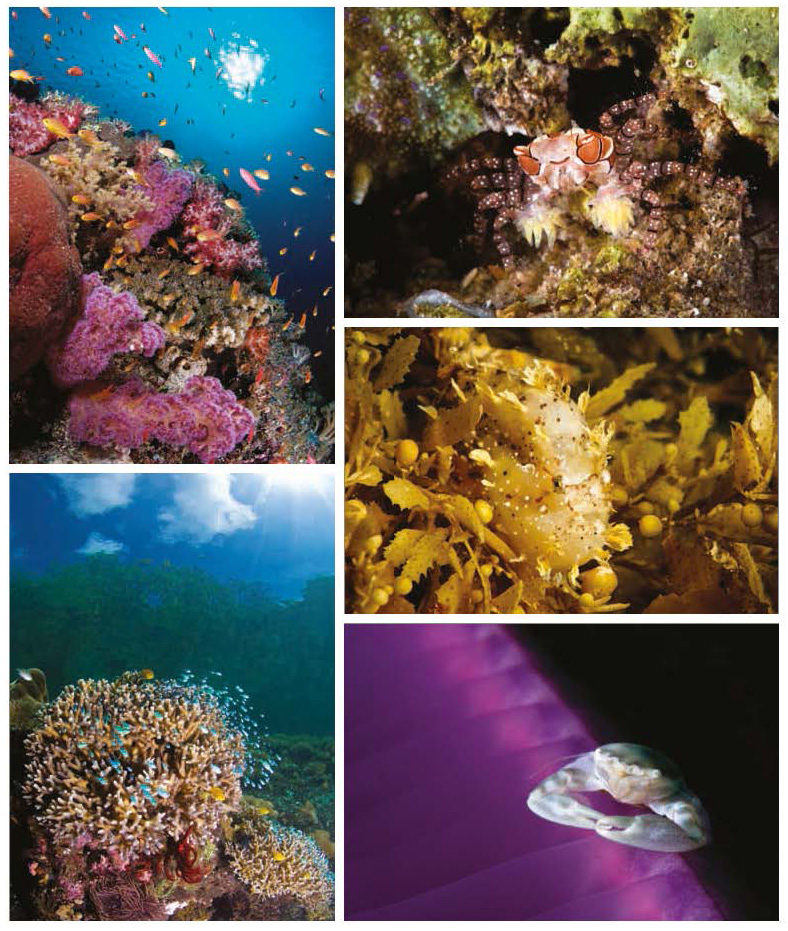
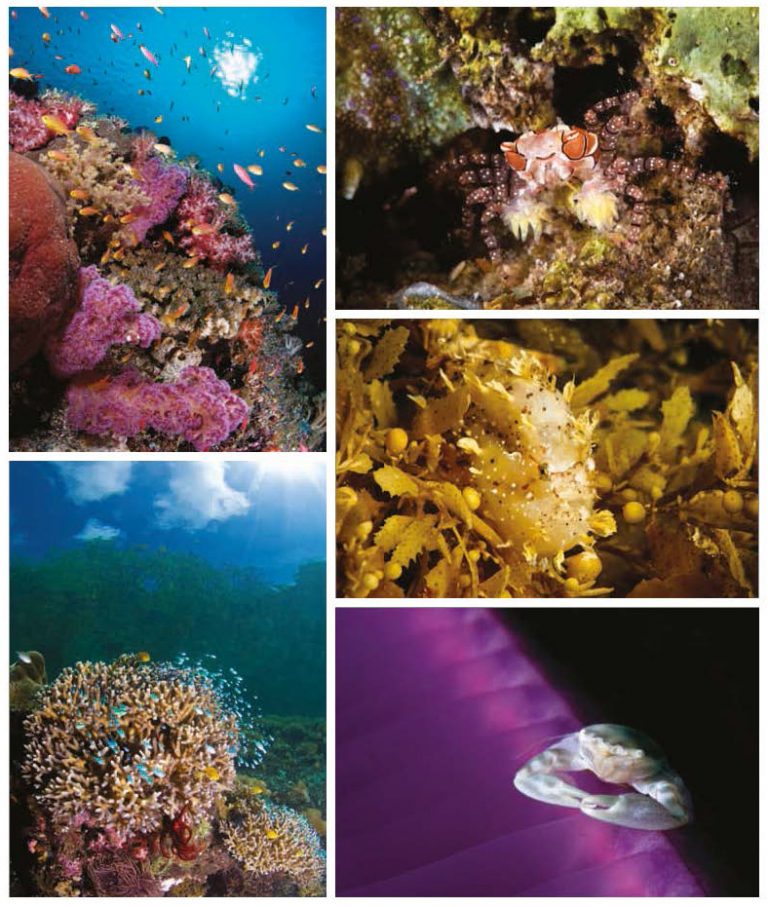
Photographs taken from one woman’s perspective (clockwise from top left): Soft coral and anthias on Tubbataha Reef, Philippines / Boxer crab / Sargassum frogfish / Porcelain crab on sea pen / Anthias in the blue water mangroves in Raja Ampat. (Photo by Francesca Diaco)


Men sure do seem to love their gear! And the more the better! Always the first to start unpacking and assembling, they seemed to revel in this process as much as a dive. They would begin comparing kits and heartily engage each other in the whose-is-bigger/cooler/newer ritual. And the technical talk would flow (even with those who didn’t really know what they were talking about!).

For women, gear seemed to play more of a supporting role rather than being a hobby in-and-of itself. They tended to be more streamlined with the gear they bought and used with their photographic inspiration coming from a more visual, emotional place. They seemed to let their individual photographic style grow naturally through their diving experiences, rather than try to predetermine it… which leads me to my first hypothesis.

Hypothesis 1: It seems that men let gear and technical knowledge guide their photography while women take a more organic approach.

When it was time for the dive brief, more differences began to emerge. The men would be pressing us for specifics about what we were going to see – a hit list, so to speak! They wanted a goal, or battle plan for the dive while the women were more turned on by the possibilities of a given dive. Women seemed more interested in hearing about the overall characteristics, or personality, of the dive site.

Back at the surface, the post-dive chatter often gave way to more differences in the way we interpret our dive and photo booty. The guy talk was often quantifiable, as they would compare their conquests in relation to their pre-dive hit list. The girl talk, on the other hand, was less specific and seemed to emphasise the overall beauty or feeling of the dive.

For the rest of this article and other stories, check out our latest Asian Diver Issue 1/2011 No.112)  here or download a digital copy here.

Eight Runty Wreck Rules

0

Small, insignificant, little rules, however you describe it, are as noteworthy, weighty, momentous, as the time and money you have spent diving a wreck. Here are seven rules to remember which will keep you safe when you are contemplating diving down to the ocean floor in search of ship wrecks.

RULE 1 For any wreck dive and especially one that involves penetration, observe all principles including the configuration of equipment for technical diving, i.e., all elements providing you life support down there would need to be duplicated.

RULE 2 On wreck dives, it is better to carry out dives in a team, not solo.

RULE 3 All equipment has to be the most streamline and not have such elements where you can be hooked or that won’t be under your continuous control.

RULE 4 Equipment that hangs down or isn’t filled, will surely be hooked. Of course, filled or inflated equipment will, sooner or later, be caught on somewhere as well, but it is less likely.

RULE 5 When penetrating a wreck, always think of how you will come back, especially in conditions of zero visibility and with a partner who is out of gas. A situation like this will significantly complicate matters, but plan-ning such a situation and following the rules above can save your life.

RULE 6 Do not penetrate without a line. However, an ineptly laid line can get snagged. Complacency also creates gaps and gives feelings of false confidence that you have a guaranteed way back.

RULE 7 Don’t think that if you learned to dive caves, you automatically know how to dive wrecks. Despite the similarities of these types of dives (since they both work with line and lights, equipment performance requirements are similar), the specifics differ and in some situations can differ greatly.

For the rest of this article and other stories, check out our latest Asian Diver Issue 1/2013 Vol.124)  here or download a digital copy here.

In the Still of the Night: Recovering UXO From Cambodia’s Rivers

0

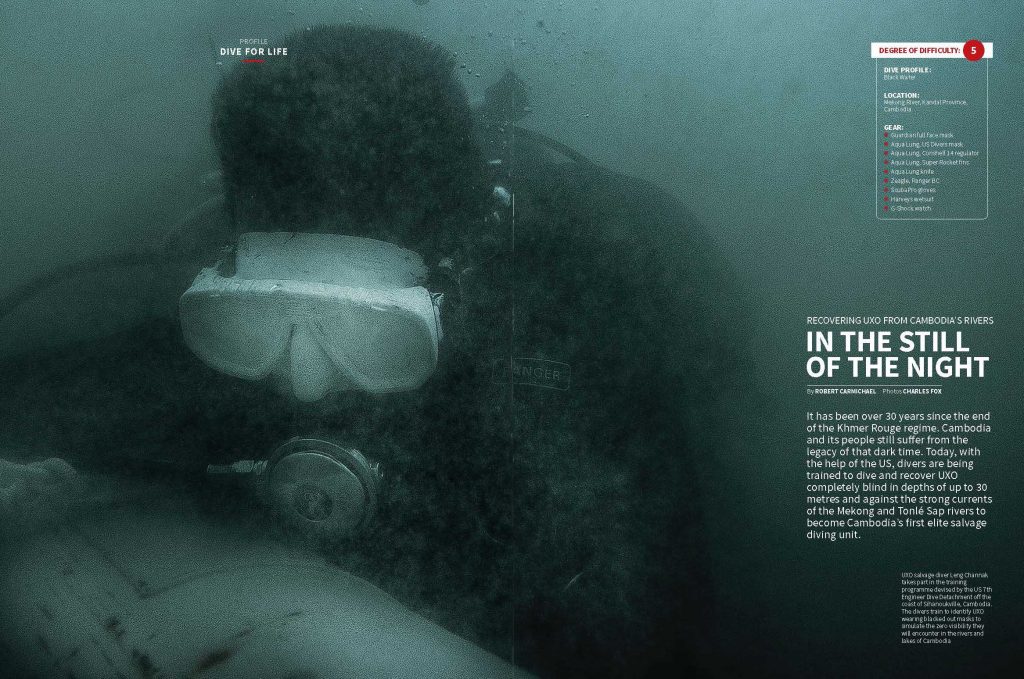
It has been over 30 years since the end of the Khmer Rouge regime. Cambodia and its people still suffer from the legacy of that dark time. Today, with the help of the US, divers are being trained to dive and recover UXO completely blind in depths of up to 30 metres and against the strong currents of the Mekong and Tonlé Sap rivers to become Cambodia’s first elite salvage diving unit.

KANDAL PROVINCE. In late May, 26-year-old deminer Lorn Sarath shrugged into his wetsuit, donned his two-way communications mask, and slipped into the silt-heavy waters of the Mekong River near Cambodia’s capital Phnom Penh. The dive marked the culmination of two years’ work by former US Navy dive experts to train a team of Cambodian deminers to take their land-learned skills and apply them underwater. It’s a unique programme that attracted Sarath for several reasons.

“First of all, I find it interesting and this is valuable work. Secondly, Cambodia hasn’t had this kind of expertise until now,” says Sarath, whose parents are rice farmers from Battambang, one of the most heavily mined provinces in the country. “[And] there is a lot of UXO in the rivers.”

Unexploded ordnance, or UXO, is a legacy of Cambodia’s violent late-20th century history. Between 1968 and 1979, the small nation endured civil war and then four years of rule by Pol Pot’s murderous Khmer Rouge regime, which killed one in four of the population. The end of the Khmer Rouge government was followed by another two decades of civil war.

The result: hundreds of thousands of landmines buried in the soil; and thousands of unexploded bombs, many due to the illegal US bombing in the late 1960s and early 1970s, which saw 500,000 tons of bombs dropped on Cambodia.

And although the Cambodian Mine Action Centre (CMAC), the government’s demining authority, has cleared some 4,000 bombs from above ground, the operation in May was the first to recover a submerged bomb, in this case a 500-pound (227-kilogram) US-made Mark-82.

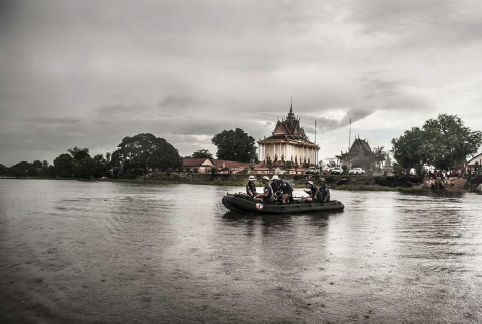
Members of US 7th Engineer Dive Detachment take part in a training exercise with the Cambodian UXO salvage dive team off the coast of Sihanoukville, Cambodia (Photo by Charles Fox)


Special Skills
Mike Nisi, an ex-US Navy diver who took over the team’s training in early 2015,says the job requires not just impressive physical skills, but a mindset that sees divers remain calm under pressure. That meant the 40 volunteers had to pass a series of gruelling physical and mental tasks that by the end saw most weeded out. It began with the basics – learning to swim, something Sarath and his colleagues couldn’t do when they signed up.

For the rest of this article and other stories, check out our latest Asian Diver Issue 4/2015 Vol.139)  here or download a digital copy here.
Sea of Cortez – Vaquita Habitat – Listed as ‘World Heritage in Danger’

0
  • The UNESCO World Heritage Committee has decided to list the Sea of Cortez and its islands in Mexico’s Gulf of California, the only place where the critically endangered vaquita is known to occur, on the List of World Heritage in Danger.
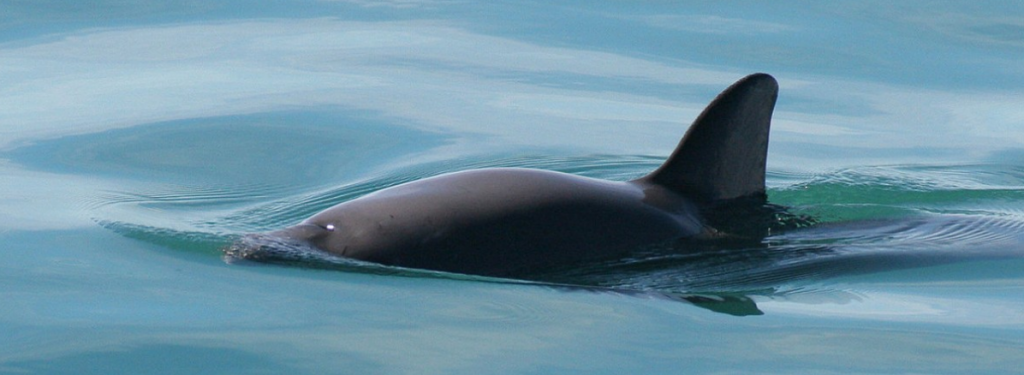
  • The porpoise’s numbers have dropped drastically, from around 300 in the mid-2000s to just 10 individuals, according to the latest estimate, mostly as a result of getting entangled in gillnets used in the poaching of totoaba fish.
  • The continuing illegal totoaba trade poses a threat to the outstanding universal value of the World Heritage Site, the World Heritage Committee said, recommending that the site be placed on the List of World Heritage in Danger.

The UNESCO World Heritage Committee has decided to list the Sea of Cortez and its islands in Mexico’s Gulf of California, the only place where the critically endangered vaquita is known to occur, on the List of World Heritage in Danger.

The story of the vaquita (Phocoena sinus), the smallest and the most threatened species of porpoise, is one of tragedy. The porpoise’s numbers have dropped drastically, from around 300 in the mid-2000s to just 10 individuals, according to the latest estimate, mostly as a result of getting entangled in gillnets meant to catch the totoaba (Totoaba macdonaldi).

The totoaba, too, is critically endangered and found only in the Gulf of California. It’s prized for its swim bladders in China, and demand for the delicacy has given rise to totoaba poaching using gillnets and a massive illegal trade in Mexico.

In its report, the World Heritage Committee welcomed Mexico’s efforts to protect the vaquita by taking steps such as creating a refuge area for the species, promoting alternative fishing gear, and stepping up surveillance in the upper Gulf of California. “Unfortunately, these efforts appear not to have significantly reduced the pressures on the property from illegal fishing of totoaba, nor prevented the further decline of the vaquita population,” the report notes.

The few remaining vaquitas live a very small area, most of which lies within the Vaquita Refuge, the report says, where illegal fishing for totoaba continues to occur at high levels.

“It is an alarming indicator of the severity of illegal wildlife trade that we may soon witness the extinction of such an iconic species as the vaquita — within the supposed safety of a World Heritage site,” Peter Shadie, director of the IUCN’s World Heritage Programme, said in a statement. “Mexico’s constructive approach to the Gulf of California’s danger-listing will help mobilise action to stop this threat before it depletes more of our precious marine heritage, and IUCN stands ready to support its efforts.”

Inscribed on the World Heritage List in 2005, the Islands and Protected Areas of the Gulf of California (also called the Sea of Cortez and its islands) contains the vaquita’s habitat, and is recognized as an area of global marine conservation significance. The area, with its spectacularly diverse habitats, landscapes and species, is also considered to have “outstanding universal value,” or OUV. The continuing illegal totoaba trade poses a threat to the OUV, the report notes.

Recommending that the area be placed on the List of World Heritage in Danger, the World Heritage Committee requested Mexico to “develop, in consultation with the World Heritage Centre and IUCN, a set of corrective measures, a timeframe for their implementation and a proposal … to address the issue of illegal fishing and to enable the necessary regulatory and operational reforms for legal fisheries to ensure that they are sustainable and do not cause bycatch of marine mammals, sharks and turtles, in order to guarantee the long-term protection of the OUV of the property.”

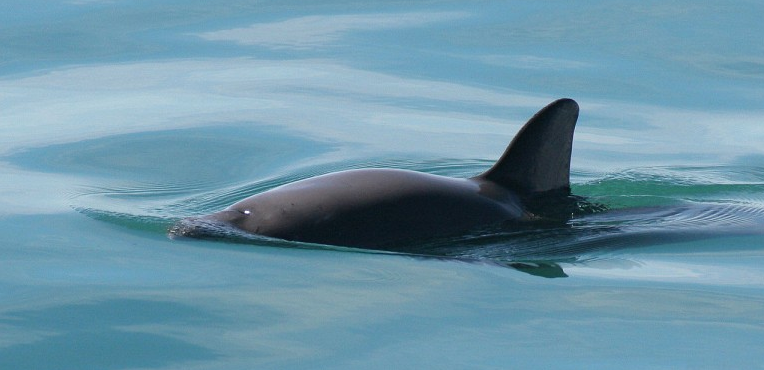
A vaquita swims in the Gulf of California. Image by Paula Olson/NOAA via Wikimedia Commons (Public domain).

This article is extracted from Mongabay.com

A Quick Getaway to Bali

0

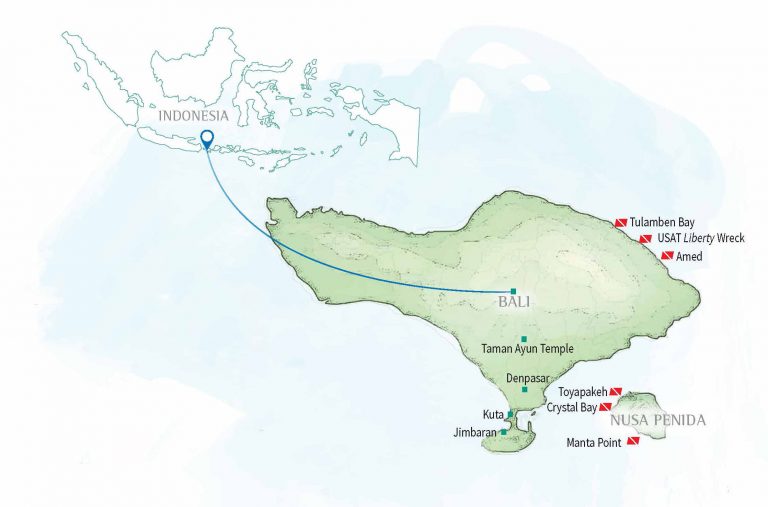
After a long first day of travel, our small group wasted no time on our second day. We quickly chartered a boat and headed straight for the world famous dive site known as Manta Point. We were understandably tired after air and overland travel, but fortunately for us, the Artotel Sanur hotel afforded us a good night’s rest and smooth transition to underwater adventure. The divers in our group were all smiles when we realised the walk to the dive boats was only a five-minute stroll from the hotel doors.

To be honest, my expectations were low. I’d been to Manta Point before but unfortunately did not see any mantas so I never really understood the hype. Part of me was skeptical about the rave reviews this site has received over the years. However, this trip totally changed my mind.

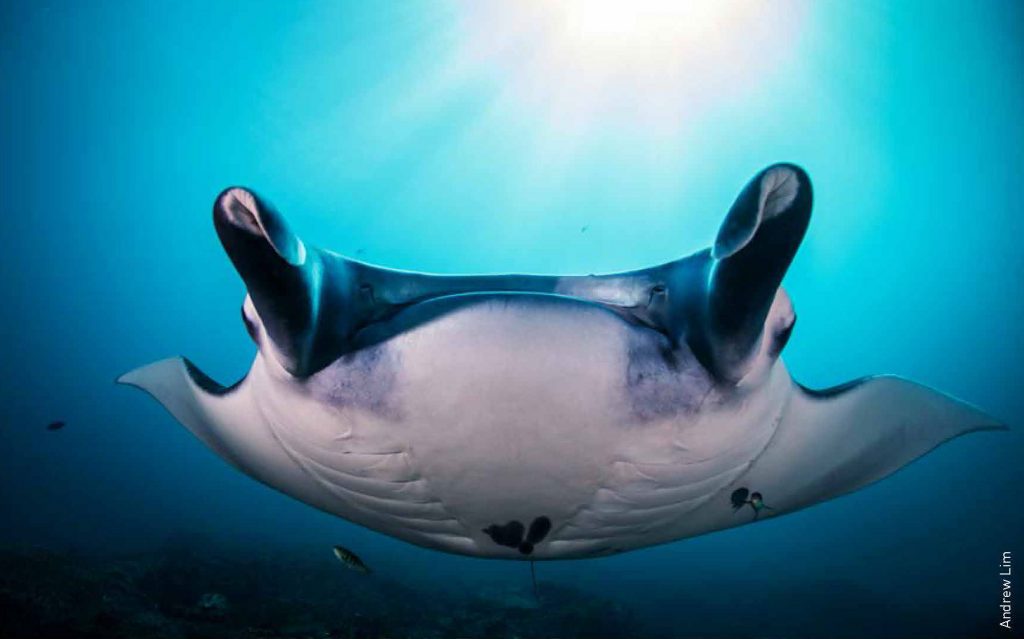
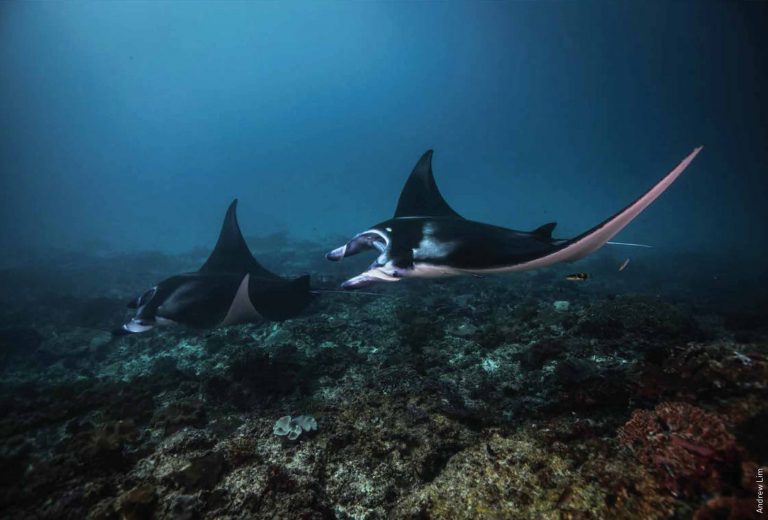
We were really lucky that day as the sea was flat and Manta Point actually had calm waters! We jumped in right away and were greeted by three bamboo sharks within the first few minutes of the dive. As I was distracted and busy trying to get a shot of one of the sharks, the shadow of a behemoth passed right above me. As I looked up, I soon realised that a squadron of six mantas was swimming alongside us, and would stay with us the entire dive. I savoured every minute of it. I remember thinking to myself “so this is what Manta Point is all about”. I fell deeply in love with Bali that day.

Manta Point delivers once again on this quick trip, with only one dive at the legendary site (Photo by Andrew Lim)


Every time I dive with these majestic creatures, I can’t help but feel humbled by their sheer size and grace. It was truly magical. But naturally I couldn’t help but think that every other dive that followed would pale in comparison after such a wonderful first dive. Our boat circled around Nusa Penida to the more sheltered side of the island. Who’d imagine I’d have such fun at the dive sites Crystal Bay and Toyapakeh too.

The quality of both hard and soft corals was amazing. I was surprised to see minimal signs of bleaching and breakage, which indicated a healthy reef despite the large volumes of tourists Bali sees each year. It’s also remarkable that a reef so intricate is just a day trip from the busy vacation centre that is the south, with Kuta and Denpasar just a stone’s throw away. The biodiversity at these dive sites was incredible, with plenty of reef fish. Where there’s plenty of food means there are predators around too, but they stayed well hidden on this occasion. Still, it was a day worth remembering.


For the rest of this article and other stories, check out our latest Scuba Diver Issue 2/2019 No.115)  here or download a digital copy here.