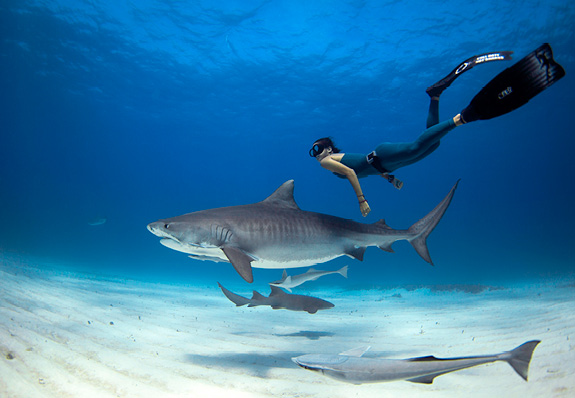
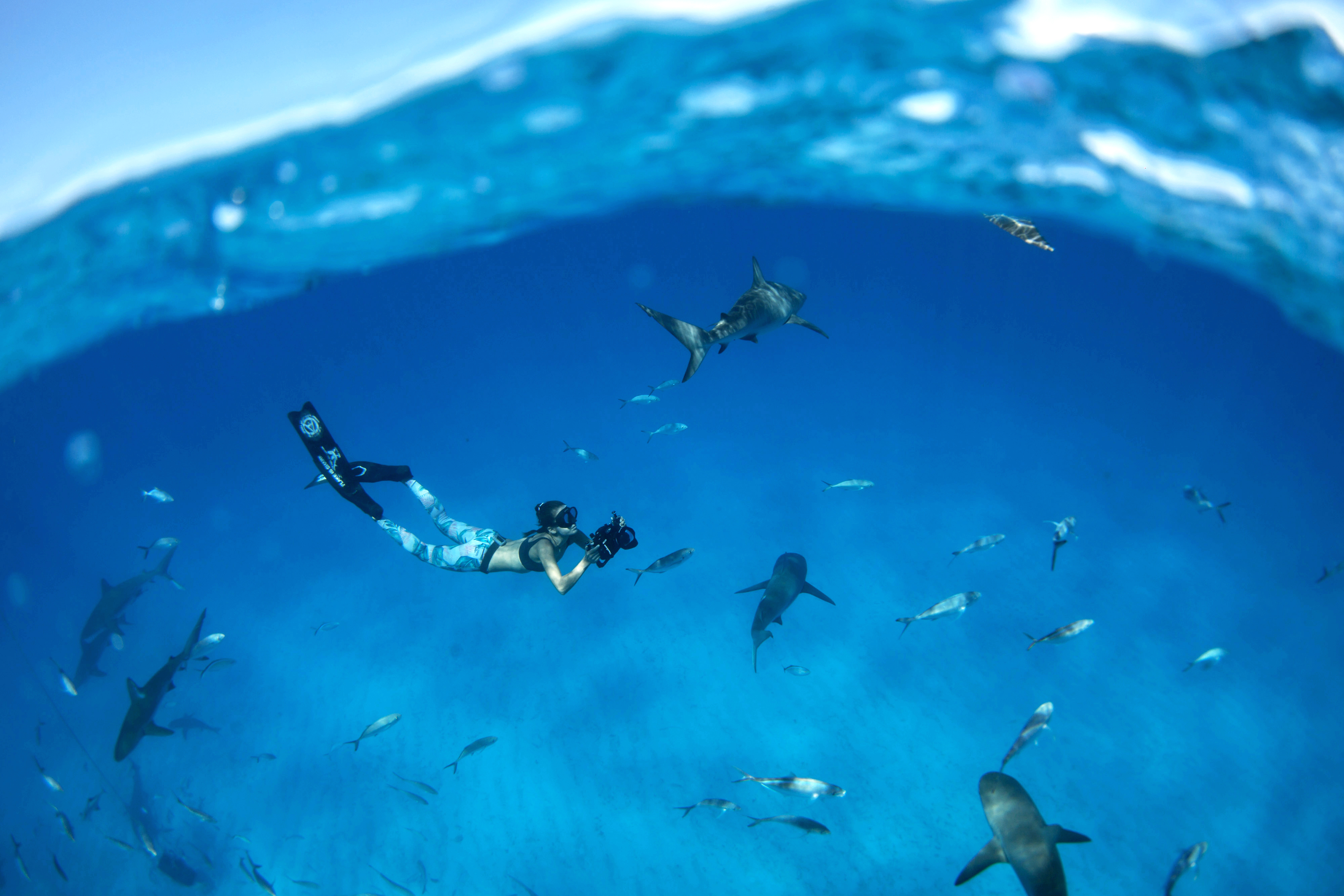
Madison swims with tiger sharks. Her work challenges public perceptions of sharks as mindless killers
I was 14 when the world turned its back on me.I grew up around sharks – diving, sailing, I was part of an ocean-obsessed family, and I made my home amongst the reefs. I began to gravitate towards sharks before I can remember; I related to them, I fitted in with them, the fact that I swam with them separated me from other people.
Then, at 14 years old, the shark populations I had loved as a child began to disappear. I found myself in a state of panic, returning to spots I had always associated with sharks, only to be confronted with an empty reef. I can assure you, and ocean with sharks may be scary, but true fear is an ocean without them.
I later learnt that there was a dedicated shark fishery legally operating inside the Great Barrier Reef Marine Park and World Heritage Area, and the attitude of the Australian public towards sharks had blinded people to it. I began to rally against the fishery, expose its faults, to tear it down.
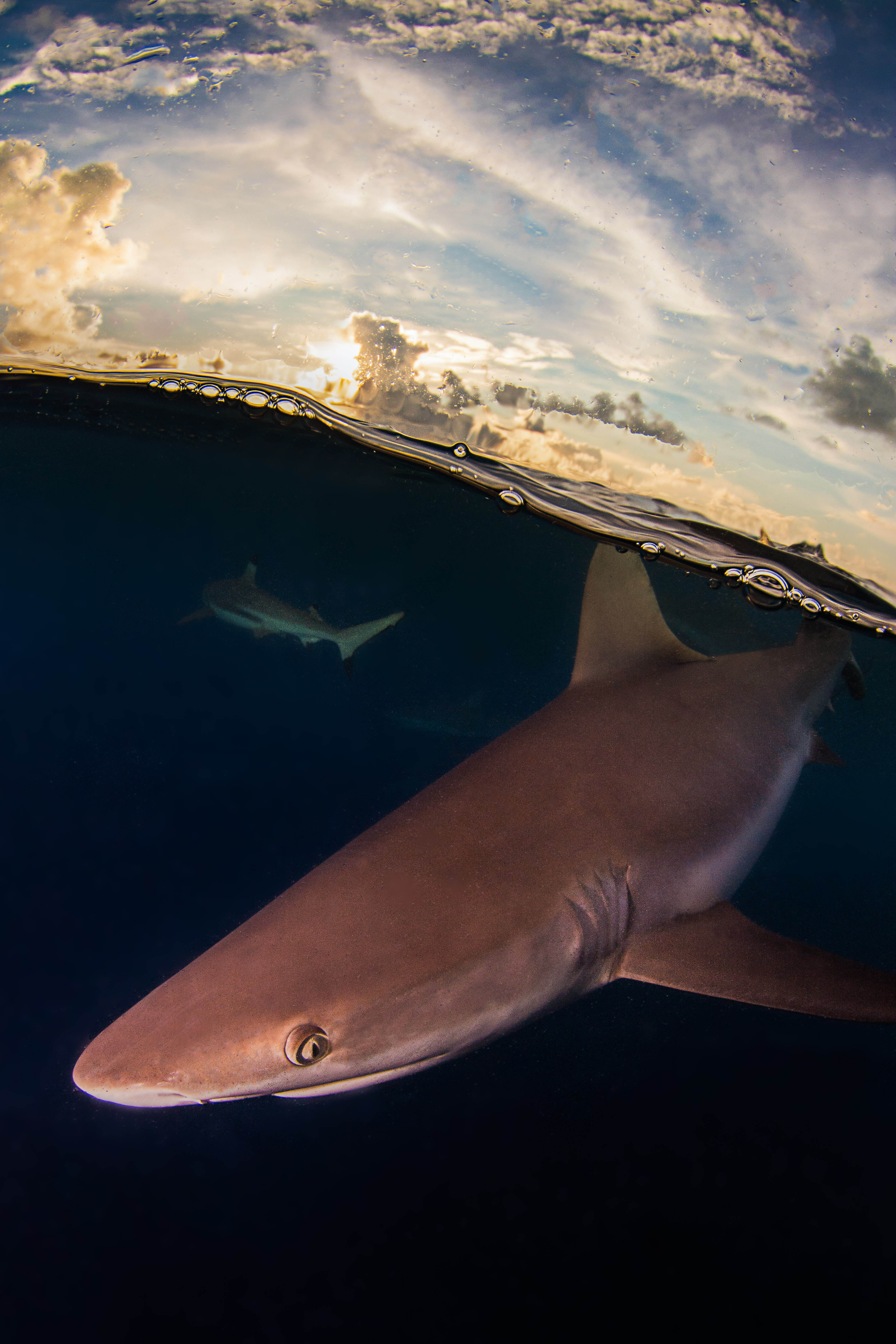
Madison has been swimming with sharks since she was a child, and has watched their populations decrease. Images like these seek to make the fight for their survival more accessible
After failing to change government policies, I realised I needed to take my fight to the public. Not long after, I left school to homeschool and agreed with my dad that my school fees would be spent on an underwater camera. That’s when I began to make films. I wanted to go to school and become a marine biologist; instead, I dropped out and happily took a more effective path towards filmmaking which gave me an avenue for change.
Now I’ve had extensive presence in the media in the name of sharks, including my documentary Shark Girl, which has won international awards. I act to break down the fisheries and the laws that allow the destruction of the animals I love, and change the perception the public has towards them, to make the fight for their survival more accessible.
My work against that fishery became a foundation for several other avenues of conservation that I pursued. These include research into toxins in shark meat, shark control programmes, international fin trades and more recently working with the surfing community to promote safety through education. These animals quickly became my responsibility, and my life passion, and I’ve learnt from them and fought for them. I began to understand that the human perception of an animal dramatically affects its chances of survival, and if people couldn’t love sharks, I would show them why I loved them, in ways that they could relate to. To this day I fight against the legal shark fishery that operates within the Great Barrier Reef and acts to remove 100,000 sharks a year from our reefs, often fed to us as flake or fish and chips.
We live in a society where injustice often slips through the cracks and only through individual vigilance and passion can we have any hope of fighting that. We should be taught in school that the natural world is more important than the economy. Wild and dangerous animals should be respected for their power, not condemned.
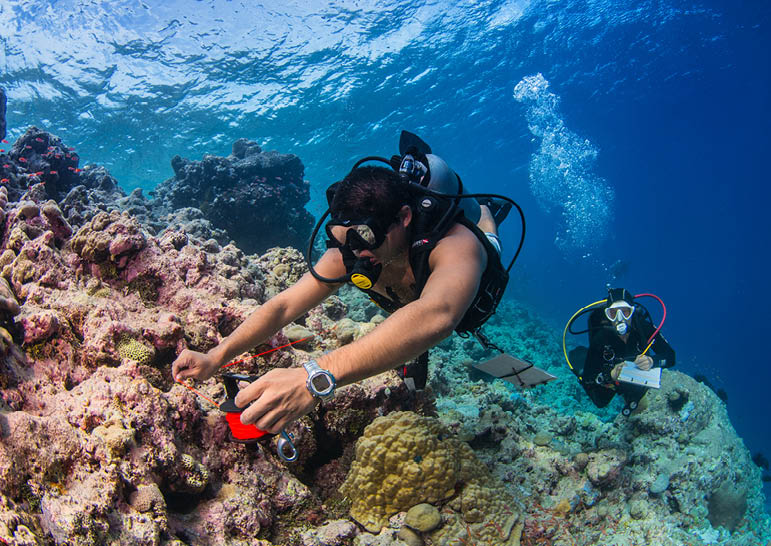
Over three weeks, scientists collected data on the status of Chuuk's reefs, the extent of coral bleaching and distribution of marine life (Photo by Simon Lorenz)
WHILE SOME HARD-HEADED politicians still believe climate change is a hoax, the vast majority of scientists are in agreement – our oceans and atmosphere are heating up. To make things worse, the world’s seas are polluted and under pressure from overfishing and natural disasters. To prove how climate change is having a direct impact on marine environments, research must be conducted in remote, undisturbed areas.
Few atolls are as remote as Chuuk in the Federated States of Micronesia, where 36,000 people share an archipelago of largely undeveloped jungle islands. Known to divers as Truk Lagoon, with its more than 60 well-preserved wrecks from the Pacific War, this is considered to be the world capital of wreck diving.
With its exposure to major ocean currents, Chuuk is perfectly located for maximum coral diversity, with hundreds of species of colourful hard and soft coral inhabiting its reefs’ outer walls and inner lagoons. The continued health of these reefs is crucial to local communities and the dive tourism industry, not to mention the health of the entire Pacific, as, when these corals spawn, they help repopulate reefs near and far.
One key threat to many Pacific reefs is coral bleaching, when distressed coral turns white as they expel the algae that live within them. Warming seawater and more frequent El Niño events accelerate bleaching and destroy coastal habitats. Chuuk sits smack in the middle of a zone defined as “high risk” by the National Oceanic and Atmospheric Administration (NOAA) Coral Bleach Alert.
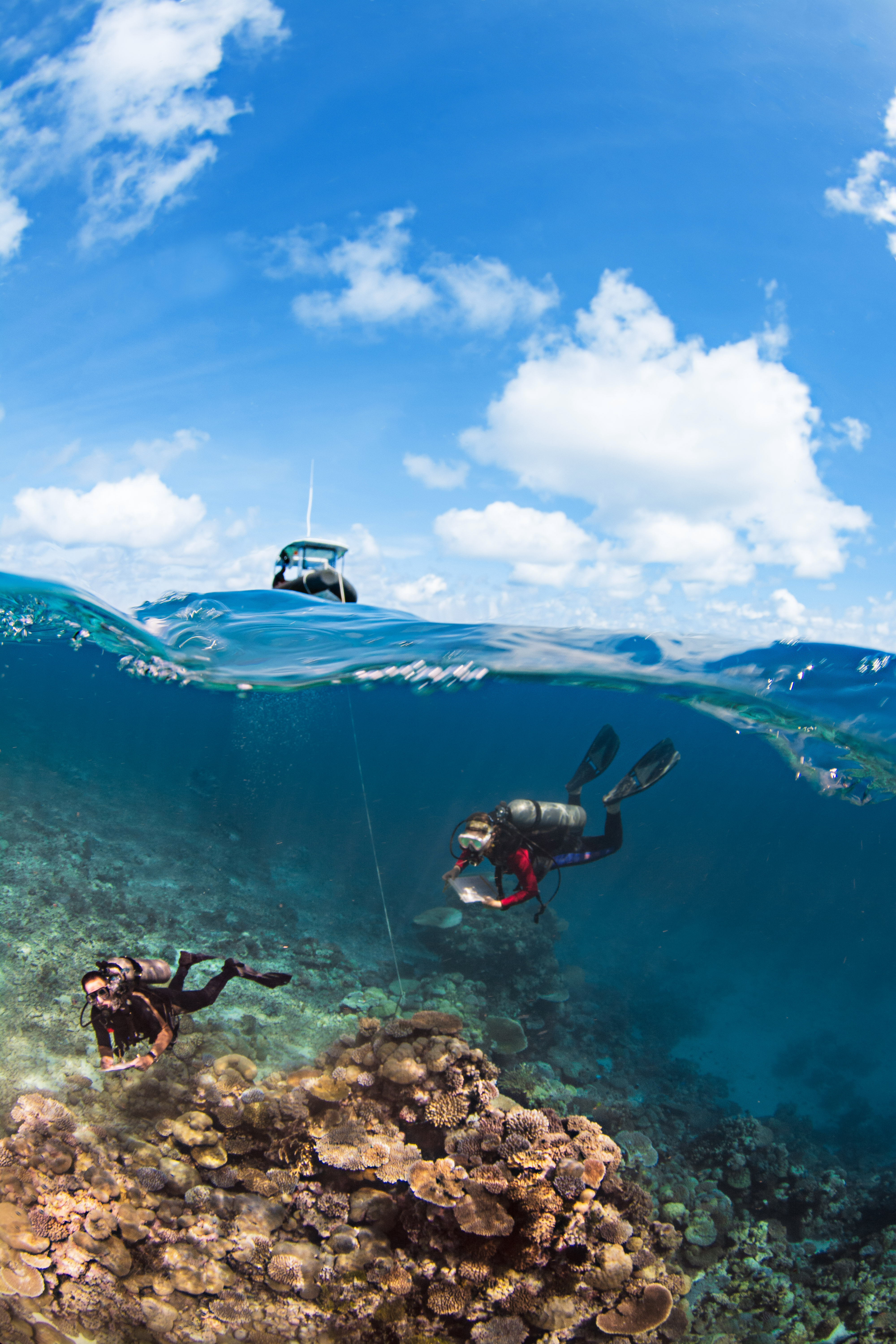
The team found differences in both diversity and abundance of marine life throughout Chuuk’s reefs
PRESSURE CHECK
In June 2016, an expedition of more than 20 scientists embarked on the largest reef assessment ever conducted in Micronesia. Over three weeks of hard work in the equatorial sun, scientists collected data on the status of the reefs, the extent of coral bleaching and the distribution of marine life.
Chuuk has also been exposed to several natural disasters: In 2015, super-typhoon Maysak hit the reefs hard, and a massive outbreak of the voracious crown-of-thorns starfish (COTS) threatens whole segments of the outer reef. One of the world’s biggest starfish, it feeds on coral, leaving a trail of devastation.
“We are interested in finding out how successful the reefs are in responding to such threats,” says Dr Rodney Salm, a 45-year veteran of ocean conservation, and senior science advisor to The Nature Conservancy.
If reefs are resilient they bounce back from natural impacts quickly and effectively, as Salm explains: “Healthy reefs not only heal themselves, they also help repopulate other reef systems with regular larval spawning events.”
INTENSE SURVEYS
The project surveyed 75 locations around the atoll. Some teams conducted qualitative coral resilience assessments, while others focused on the quantity of every coral species. Even the youngest corals were counted, so-called “coral recruits”, with as many as 50 species in a location. Another team took photographs of the bottom, every three metres per search area. These photos were later analysed to get statistical measures of coral cover. Invertebrates were manually counted on the reef, the focus being on COTS and sea cucumbers, a highly-prized export, and therefore critically overfished. Coral recruit density and invertebrate diversity are a key indicator of reef recovery.
Studies of fish population also formed a critical part of the survey. Despite Chuuk’s remoteness and its low population density, the ecosystem is threatened by overfishing. Local communities rely on fish as their main protein source, depleting the reefs in the process.
Sharks are still abundant, though villagers report they are catching fewer fish than they used to
RESULTS
This massive data collection exercise showed that the health of Chuuk’s reefs varies considerably. While generally little bleaching was recorded, the reefs differed massively in coral diversity, coral recruitment and fish abundance. The northwest and southern parts returned the best results for larger fish, presumably showing less fishing pressure there. Many eastern and inner reefs showed signs of the devastation caused by dynamite fishing. Most reefs in close proximity to populated islands were more or less dead and covered in suffocating algae, with limited chance of recovery.
Ironically, our journeys to visit the reefs we love so much are directly contributing to their demise. What to do?
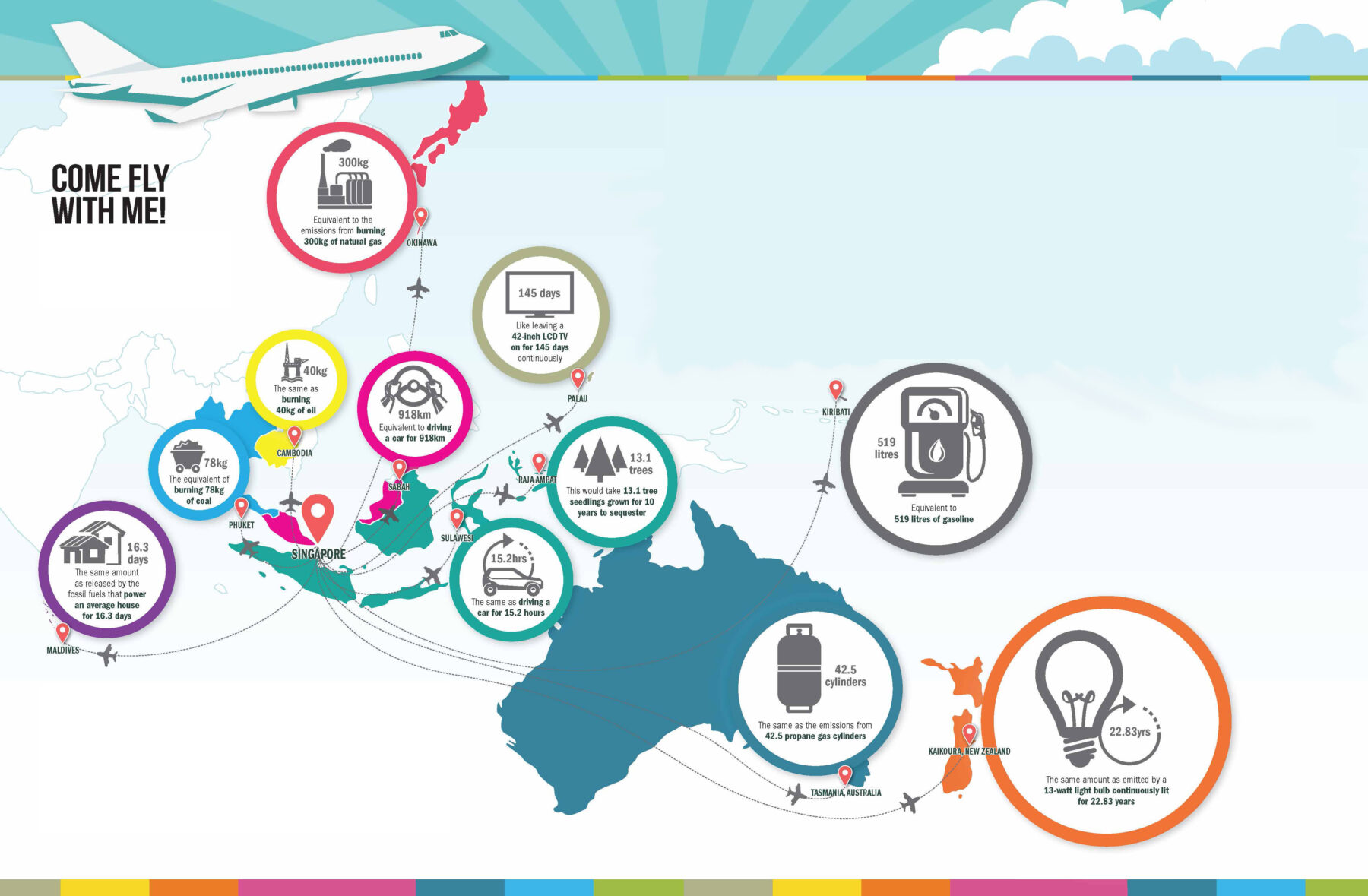
As we know, aeroplanes are not, as yet, solar powered, and jet fuel is not exactly eco-friendly. The Intergovernmental Panel on Climate Change (IPCC) estimates that for every kilogram of jet fuel used on a flight, approximately 3.15 kilos of carbon dioxide, CO2 is released into the atmosphere. CO2 is one of the biggest threats to our planet’s reefs, causing ocean acidification and rising water temperatures. Both are killing corals, resulting in mass bleaching events, and creating an environment with a pH that makes it very difficult (and, if it continues to rise at these levels, will eventually make it impossible) for corals to grow their reef-building skeletons. But this information is pretty abstract. How does it relate to our dive holidays?
Remember that the figures shown only correspond to one person – you. Look around the plane: Every single person on it is also responsible for the same amount of CO2, and this is only one flight of thousands. To give you an idea, in 2014 there were 864,681 Singaporean visitors to Thailand, which, alone, added around 140 million kilos of CO2 to the atmosphere, or the same amount as burning over 67.4 million kilograms of coal. As you can see, the cost of our air travel soon adds up.
Qantas
Operates the largest airline voluntary carbon offset programme in the world
Qantas’ carbon offsetting projects include the provision of two million new stoves to replace traditional wood-burning stoves in Cambodia, projects protecting Tasmania’s wilderness and the Peruvian Amazon, and initiatives aimed at empowering rainforest communities in Papua New Guinea All employee travel is offset
AIR NIPPON AIRWAYS (ANA)
Offers voluntary carbon offsetting programme. Funds go towards reforestation initiatives in Japan. ANA has been engaged in reforestation efforts since 2004, working with volunteers to plant trees in seven areas around Japan. Their coral restoration project has also seen 1,600 heads of coral being planted in waters around Okinawa
AIR NEW ZEALAND
Offers a carbon offsetting scheme
The Air New Zealand Environmental Trust supports Nature conservation projects around the country such as the Mangarara project in Hawkes Bay, where over 85,000 trees will be planted in the next three years
They have invested NZD4 billion in designing new aircraft, with
the aim of producing the world’s most fuel-efficient planes in five years
EMIRATES
Offers a voluntary carbon offset programme.
Emirates invests in two conservation-based tourism projects, the Dubai Desert Conservation Reserve in the UAE, and the impressive Wolgan Valley Resort in Australia
SINGAPORE AIRLINES
Offers a carbon offsetting scheme
Singapore Airlines, through Bird Life International, invested USD3 million in the Harapan Rainforest Initiative, which aims to conserve 100 square kilometres of rainforest in Indonesia. The forest is one of the few remaining tracts of lowland rainforest left in the country, and is home to diverse species such as the endangered Sumatran tiger
Invests in new and efficient aircraft and fuel-saving flight operations, and is involved with the development of sustainable aviation fuels
ASIANA AIRLINES
Passengers can opt to offset their carbon footprint from their flight; funds are given to governmental efforts to offset carbon usage
In 1996 Asiana was the first airline to achieve an environmental management certification
Serves Rainforest Alliance coffee on-board
Offsets corporate flight emissions.
THAI AIRWAYS
Offers passengers voluntary carbon offsetting.
Thai Airways started the Nong Bua Farm Ratchaburi Biogas Project, which makes use of the methane produced by swine farms to generate power. It provides local employment and a sustainable solution for potentially hazardous by-products
CATHAY PACIFIC
Offers a carbon offsetting scheme
Cathay Pacific invests in clean energy, through the Guangdong Chaonan Shalong wind project and the Guangdong Lankou hydropower project, which together offset 160,000 tonnes of greenhouse gasses every year. These initiatives also employ local manpower, contributing to the
local economy
WHAT CAN WE DO ABOUT IT?
But how many of us have world-class reefs on our doorsteps? And we’re not going to stop diving, right? Well, the good news is that you can mitigate some of the impact of your dive travel.
Choosing the right airline, and spending a minute and a few dollars contributing to a carbon-offsetting scheme means that your journey could end up being completely carbon neutral.
MAKING THE RIGHT CHOICE
Carbon offsetting projects usually involve regenerating ecosystems (forests, mangroves, coral reefs, etc.) that can sequester carbon dioxide, and the cost of offsetting your carbon footprint is determined by the distance to your destination – the more carbon released, the more trees or mangroves will need to be planted to soak it all up.
A lot of airlines will offer you the chance to offset your carbon footprint, but that’s not all there is to it. Every part of the aviation industry’s infrastructure is responsible for releasing CO2 into the air, from the food you eat on the plane, to the company’s HQ. Many airlines have in-house carbon offsetting initiatives, and some are even going that little bit further.
Some of Asia Pacific’s regional airlines are investing time and resources into trying to reduce the impact of their operations (see above).
Other airlines are also trying to make a difference and “green” their businesses. If the airline you’re flying doesn’t offer carbon offsetting, or you’re booking through a third party that doesn’t give you the option, check out www.climatecare. org and do it yourself! The corals will be grateful.
IT MAY SEEM as if climate change presents an overwhelming problem. While the magnitude of the issues we have created cannot be understated, there is cause for hope!
The good news is that WE have created the problem, and so WE can also create solutions. Each and every one of us has the capacity to make small changes in our own lives that soon add up. We can also have a massive influence on the people making the big decisions on our behalf.
Changes are happening every day – cities going single-use-plastic free, more people choosing to eat less meat, electric cars are ever more popular. Even celebrities are stepping up to be a voice for our natural world. Being conscious of the environment has never been cooler or sexier. The time to act is now!
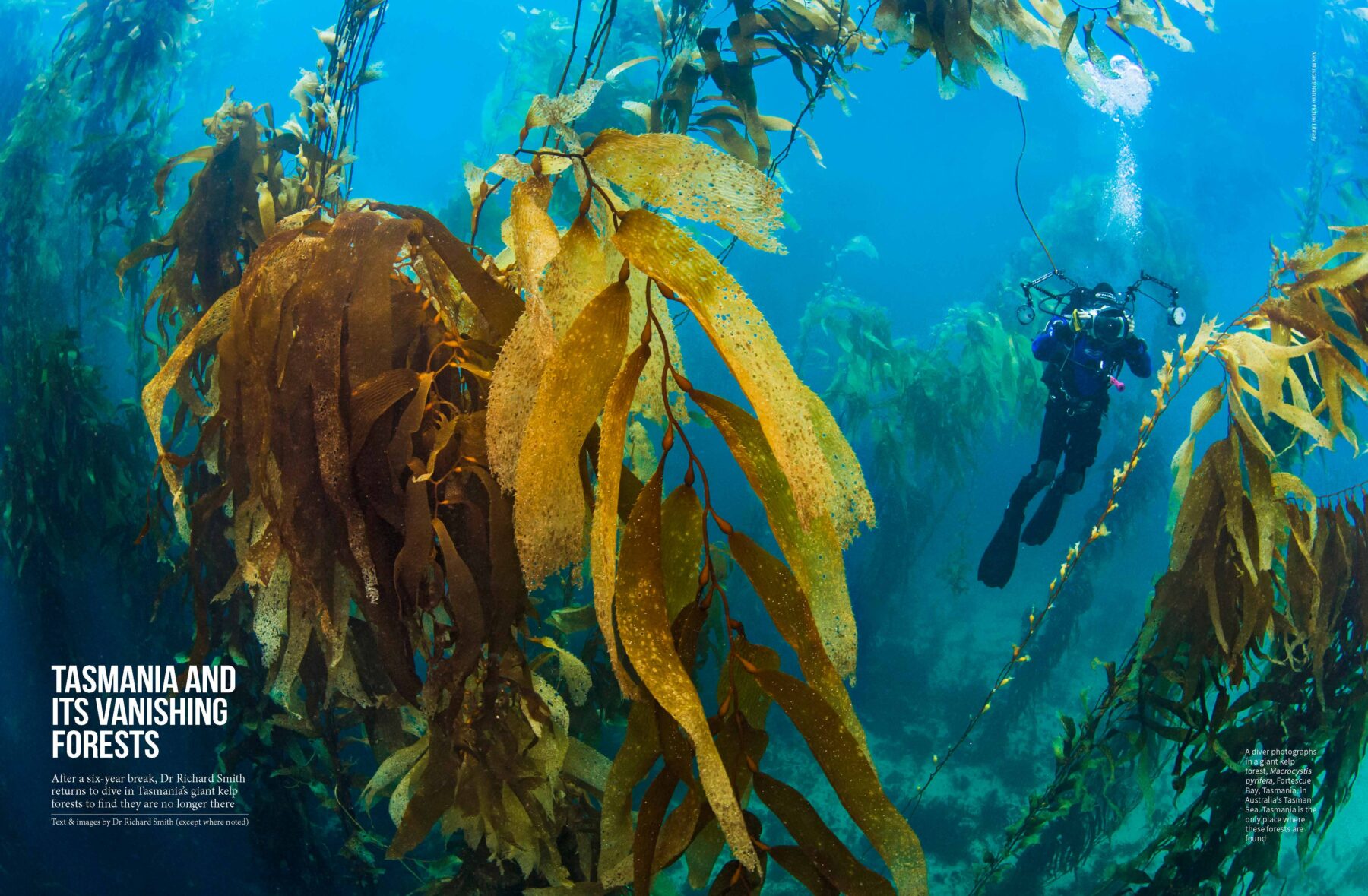
A diver photographs
in a giant kelp
forest, Macrocystis
pyrifera, Fortescue
Bay, Tasmania, in
Australia's Tasman
Sea. Tasmania is the
only place where
these forests are
found
CLIMATE CHANGE IS AN insidious entity, creeping up on the world and largely occurring so gradually that naysayers claim it to be an elaborate hoax by the world’s scientists. Whilst many effects of climate change happen so slowly they’re almost imperceptible, its impacts can be more concentrated in certain parts of the world. The most dramatic effects of climate change on the world’s oceans have been the three global coral bleaching events, where huge swathes of coral reefs have been decimated. In 1997–9, 16 percent of the planet’s hard corals died; worryingly the impacts of the world’s longest and most widespread event that began in 2015 are yet to be fully tallied.
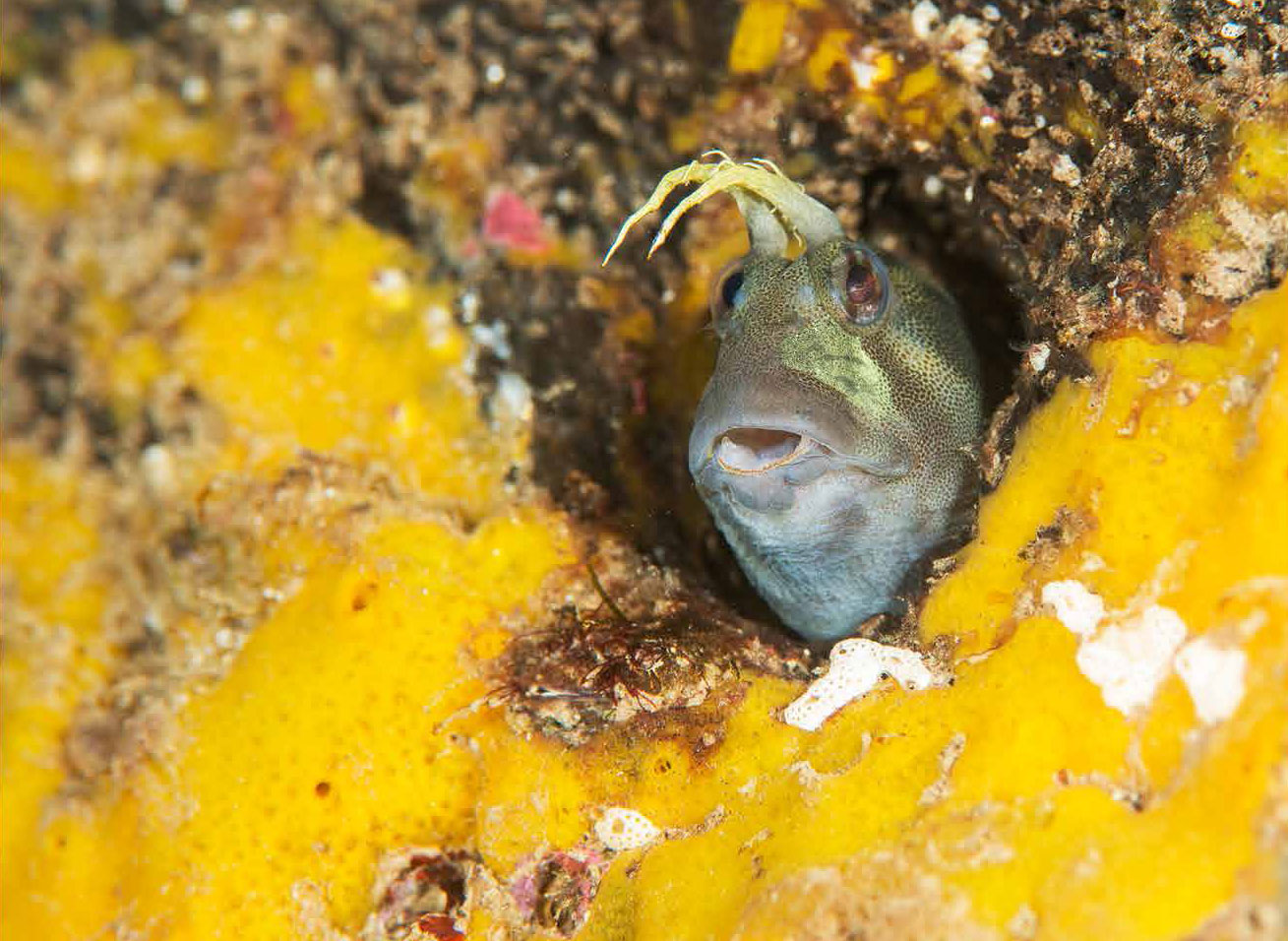
ABOVE The Tasmanian blenny is a local species, which has potential to be affected by changing climatic conditions (Photo by Dr. Richard Smith)
FIRST HAND
Being a marine biologist, and having dived the world’s oceans for over 20 years, I have seen firsthand the effects of human-induced changes on our planet’s oceans. In 1998, I saw the Maldives at the pinnacle of their bleaching, and returned 15 years later to see how little some of these reefs have recovered.
Whilst the tropics are often the media’s focus, climate change isn’t only happening in tropical seas. In March of 2011, I dived the cold waters of the Tasman Peninsula in southeast Tasmania. At that time we dived an area called Waterfall Bay, which was home to one of the region’s last giant kelp forests. Previously, Tasmania’s kelp forests were so dense as to allow commercial harvesting, but in 2011 they were restricted to just a few small areas in the very south of the island.
In February of this year I returned to dive these giant kelp forests again, only to learn that they are no more. Warming waters, uncharacteristically vicious storms and the arrival of new species have all contributed to the kelp’s demise. But why has Tasmania been so disproportionately affected?
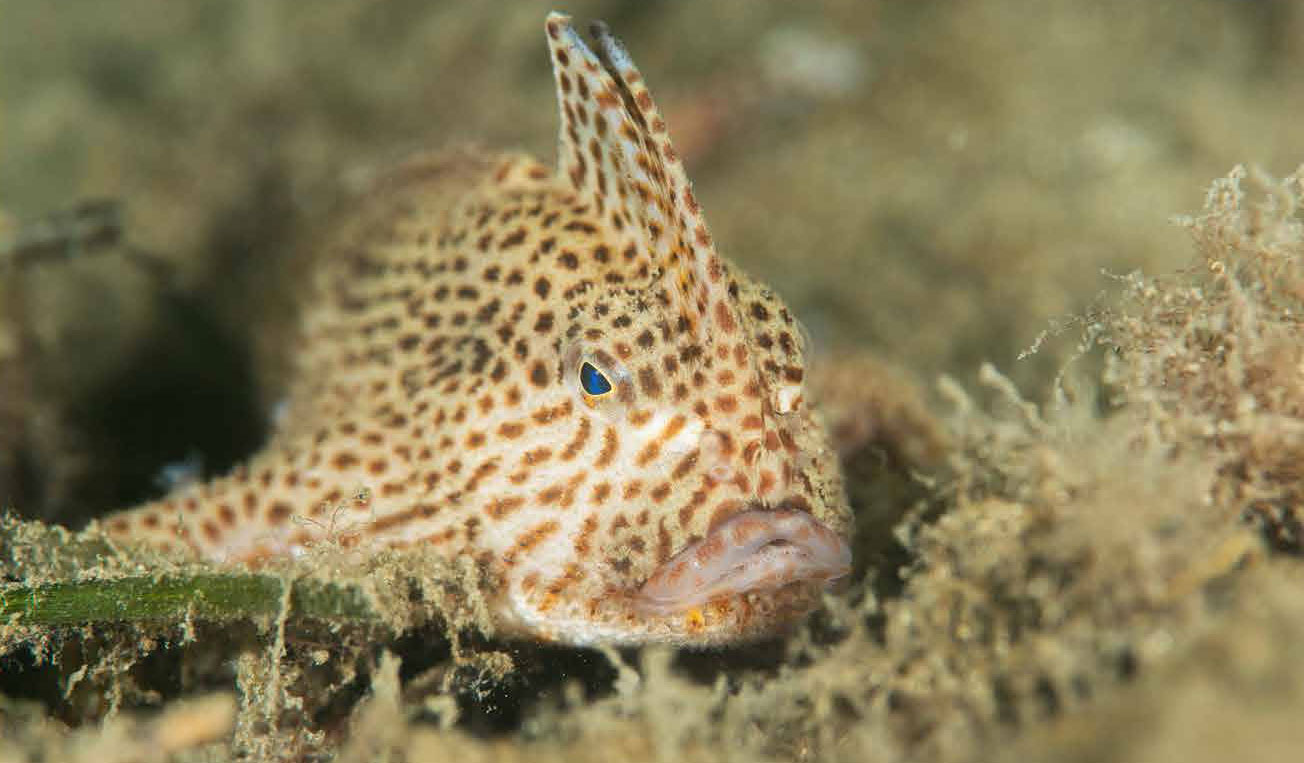
Spotted handfish in the Derwent Estuary (Photo by Dr. Richard Smith)
WHAT’S HAPPENING IN TASMANIA?
Although the population of Tasmania is very small, it’s suffering a huge amount of marine degradation. The southeast of Australia is a hotspot of marine climate change, and among the top 10 percent of areas where the oceans are warming fastest. Australia’s southeastern waters have warmed at almost four times the average global rate and indications are that this will continue. Due to the huge amount of research interest in the area, it is acting as a living laboratory for how other areas are likely to change in the future.
When researchers began to notice the arrival of new species in Tasmanian waters some decades ago, they started to sit up and take note. Warming waters can have various different influences on the native organisms that live there. Some species move towards the poles or into the deep, where waters are cooler; some already exist in such a narrow window of biological tolerance that their numbers dwindle. Warmer waters can also change the timing of an organism’s life cycle as well as impacting their growth. Tasmania has seen many of these influences on its marine ecosystems.
TASMANIA’S WARMING WATERS
Why are Tasmania’s waters warming so much faster than other areas of the ocean? Thankfully there has been a long history of research off Tasmania and it’s been possible to collate all this data to give a clear picture of the situation.
One of the biggest influences in oceanic currents around the Australian mainland is the East Australia Current (EAC), which flows down the east coast, carrying tropical water south. Nemo, from Finding Nemo, was caught up in this current and it carried him from the Great Barrier Reef to Sydney, although this current also continues southwards beyond Sydney. Generally, the cool waters of the sub-Antarctic zone abut the EAC at its southern reaches and the Antarctic waters move northwards in winter when the EAC retracts.
However, over recent decades the EAC has penetrated some 350 kilometres further south, bringing its warm waters into areas that were previously dominated by cold. This change in the power of the EAC is believed to be a result of greenhouse warming and local ozone depletion.
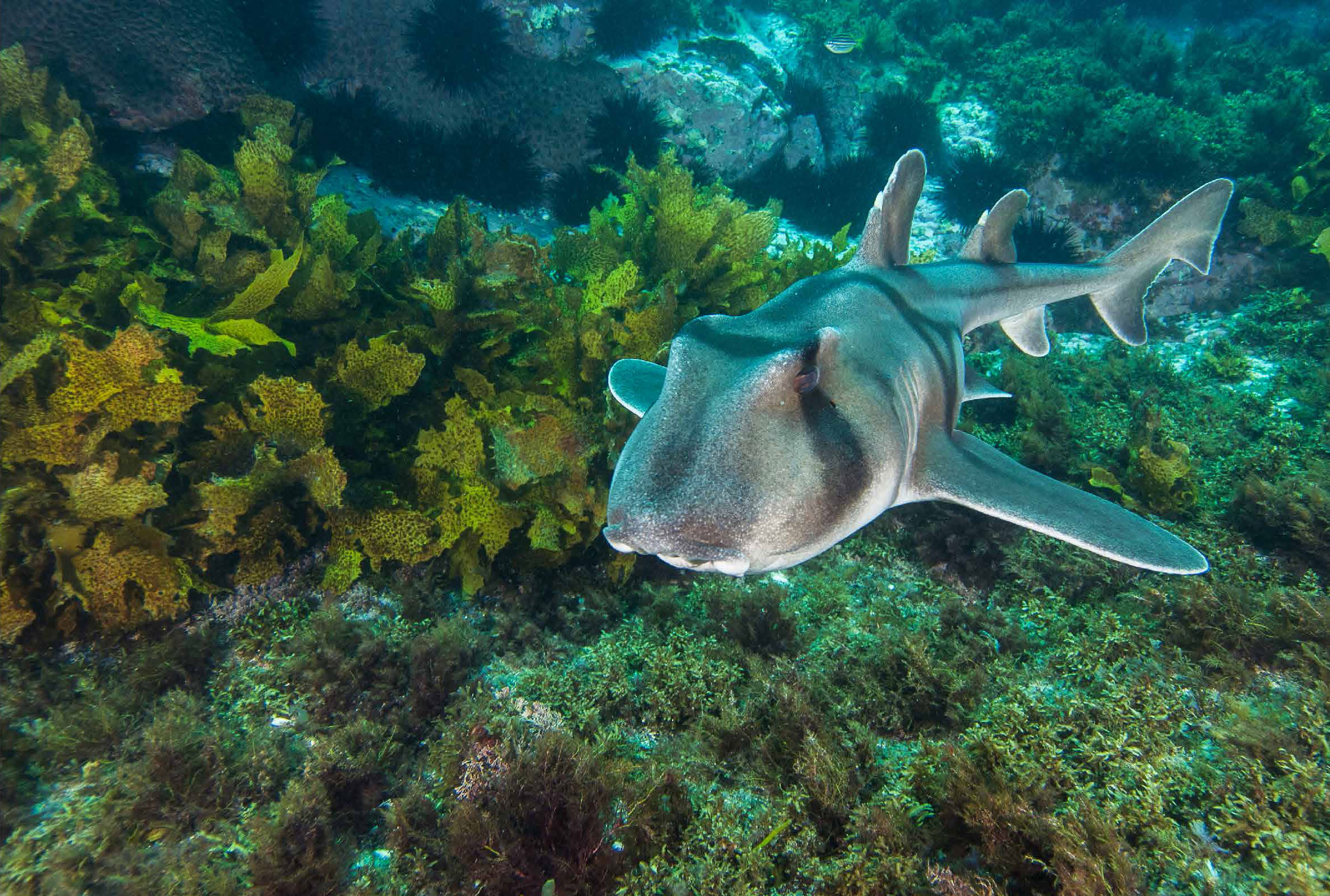
ABOVE Thanks to the warming waters, Port Jackson Sharks have for the first time been recently found in northern Tasmanian waters (Photo by Dr. Richard Smith)
GOOD FOR SOME, BAD FOR OTHERS
Whilst I was diving in Tasmania, I met a group of researchers and citizen scientists who were searching for handfishes. This elusive and interesting group of prototype frogfishes are only found in southeastern Australia, and most are in Tasmania. Of the 14 species, several are known from only a single specimen. Meanwhile, many of those that have been historically more common have suffered dramatic population crashes and these are some of the species that the researchers were hoping to find. Some species haven’t been seen alive for a decade.
After diving the very south of Tasmania, we went in search of the spotted handfish, which is critically endangered and now only known from a small area within the Derwent Estuary outside Hobart. The introduction of the invasive North Pacific sea star has had a huge impact on its populations. These voracious invaders eat the tiny stalked sea squirts that the handfish lays its eggs on. The tiny planktonic larvae of these sea stars probably arrived here in the ballast water of huge tankers from the north.
Tasmania’s giant kelp, on the other hand, has been impacted by another Australian resident, not one introduced by man. Longspine urchins are common along the east coast of mainland Australia, but the cold waters in Tasmania have always hindered their extension southwards. As climate change has warmed the waters in Tasmania, the urchins have taken up residence in Tasmania, extending their range southwards by 640 kilometres over the past 40 years. They prevent young kelp from becoming established and create “urchin barrens” where they eat every living thing down to the rock.
(Text by Jon Aars. Photos courtesy of Norwegian Polar Institute)
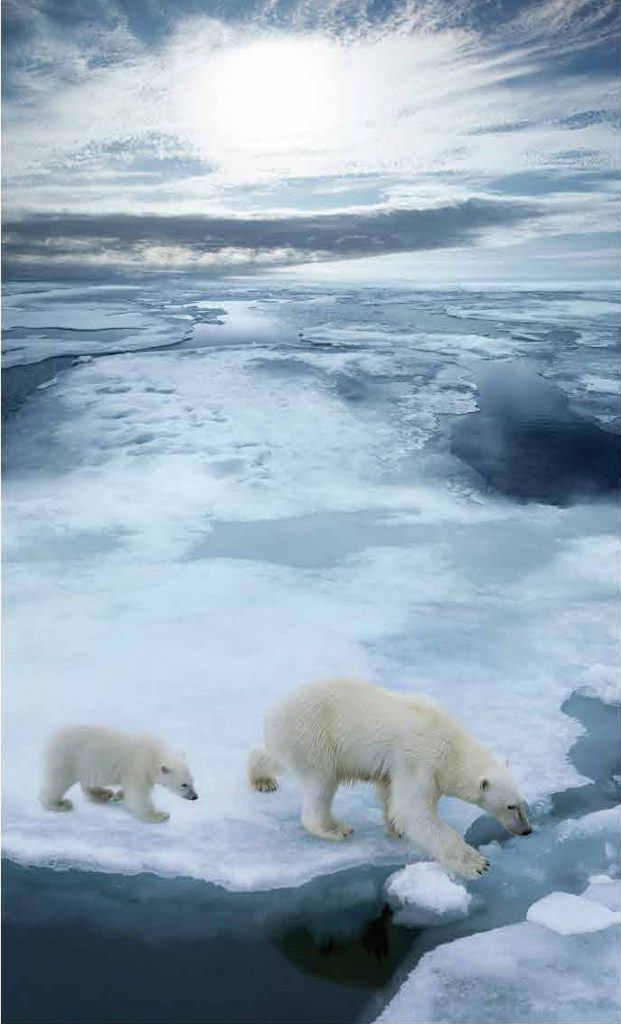
A warm north pole poses complex issues for polar bears. Jon Aars from the Norwegian Polar Institute reveals all about the threats faced by polar bears.
POLAR BEAR PREY
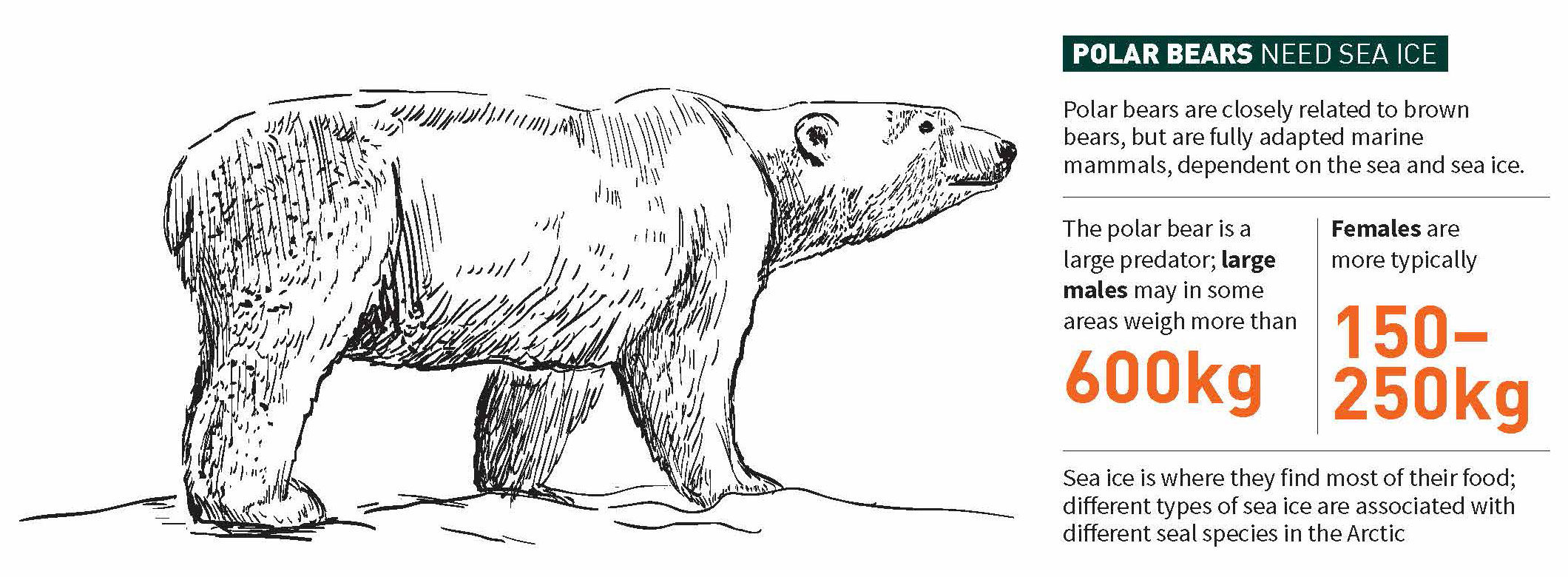
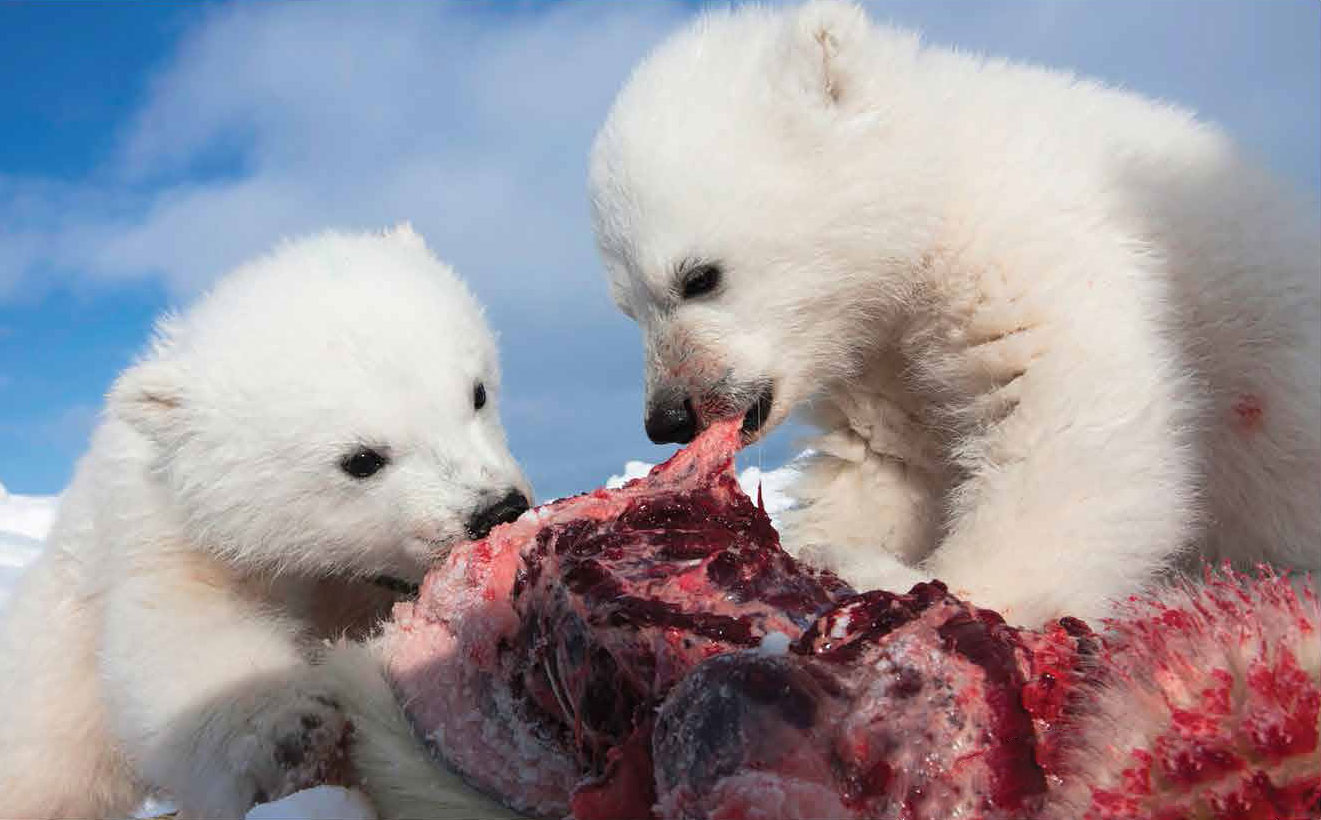
Ringed seals are the polar bears’ most common prey. Ringed seals are highly dependent on sea ice, where they rest and make lairs for their pups. Spring and early summer are the best months for polar bears to hunt ringed seals: In spring, they hunt the pups in the lairs, and often the mothers as well; in early summer, when larger ringed seals shed their hair, they bask in the sun on the ice, where the bears can ambush them. Polar bears will also hunt ringed seals by waiting at their breathing holes, and taking them when they surface for air. This technique can be used year-round. So, in areas with sea ice year-round, polar bears may also hunt for 12 months a year.
Bearded seals are another important prey species. It is a big prey, and adults usually weigh more than a female polar bear! Even so, the adult female bears may take them. Bearded seals rest on drifting ice floes, and the bears will swim and dive between the floes, trying to catch the seals by surprise before they get into the water.
Harp seals and hooded seals are also hunted by polar bears.
Narwhals and belugas are also sometimes targeted by polar bears.
The most important time for polar bears to hunt and build up their fat reserves is spring and early summer. With a large fat reserve, the bears can survive for many months without eating.
Females need certain types of sea ice in which to make “dens” to give birth to their cubs.
Ice is important to enable polar bears to travel between feeding areas, and to make it to land where they can rest in the summer to wait for the sea ice to form again in autumn
A mother may give birth in a den where she will stay for half a year, nursing the cubs for several months, without eating any food.
Fast increases in the temperature in the Arctic and loss of vast areas of sea ice in many parts is considered by far the greatest threat to polar bears.
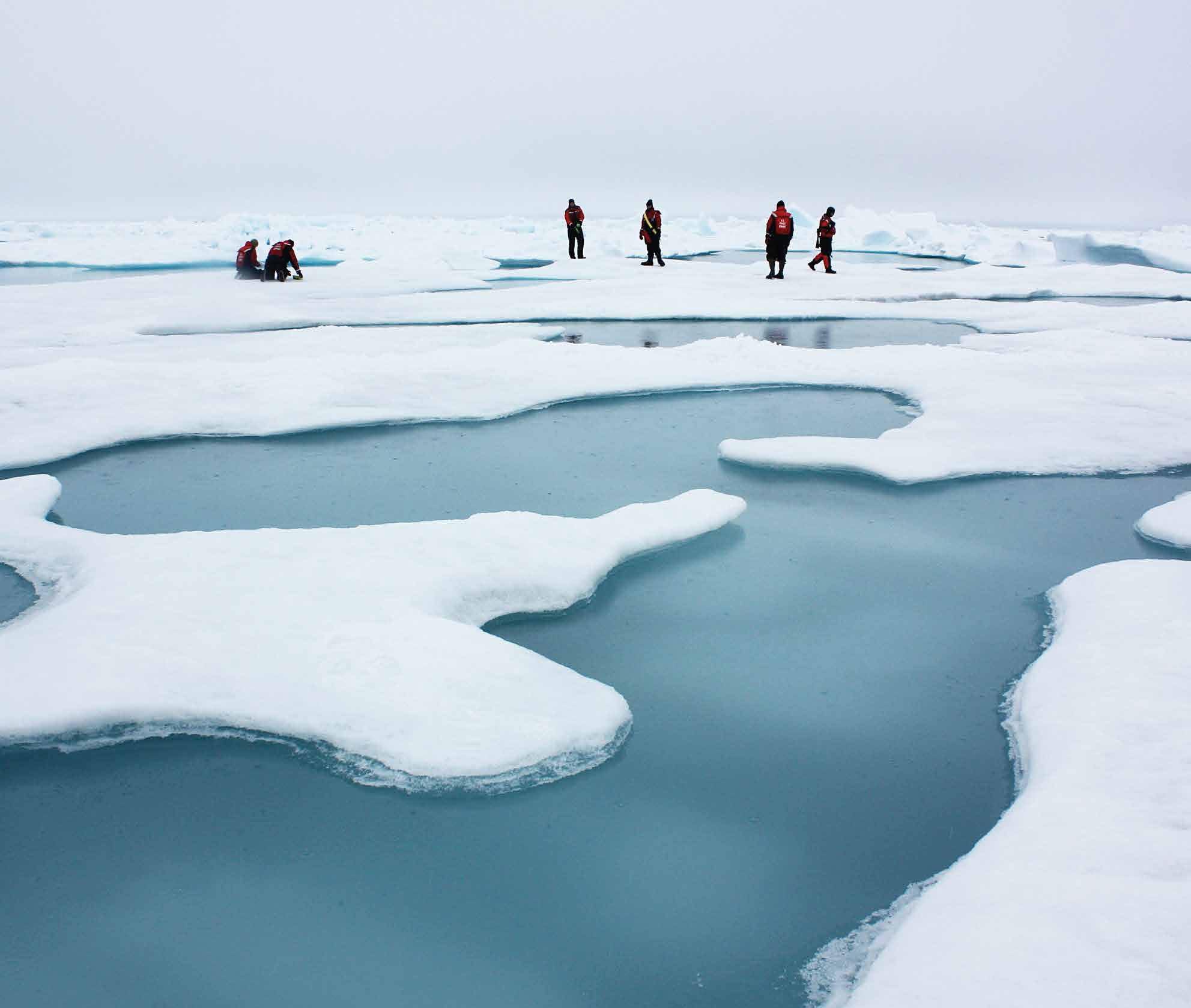
Scientists conducting research on melt ponds in the Chuckchi Sea (Photo courtesy of Norwegian Polar Institute)
SHIFTING ICE, SHIFTING HABITATS
The unique ability to survive for long periods without food means that polar bears can thrive and survive in many parts of the Arctic where sea ice is not accessible for significant parts of the year. But it is vitally important to them that sea ice is present in the critical period of spring and early summer. So, as the period of sea ice coverage gets shorter and shorter in many areas, we will see a shift in areas where polar bears can live.
NOT ALL BEARS ARE AFFECTED EQUALLY
How polar bears react to the changes in sea ice availability is more complicated than the picture one usually gets through the media:
In some cases, bears may be able to cope with a substantial reduction in the total number of days of sea ice, as long as prey and sea ice is available in the critical parts of the year.
Areas with a lot of “multi-year ice” (ice that forms over several years, and can measure several metres in thickness), actually makes it more difficult for bears to hunt. Thus, a milder climate may lead to more “annual sea ice”, a substrate where polar bears can hunt with larger success.
Temporarily, and in some areas, climate change may improve the conditions for the bears. A few areas in Canada and Greenland in the high Arctic may become places where polar bears could find a refuge, with conditions that may be better than today, or at least good enough to host a viable population.
HARD-HIT AREAS
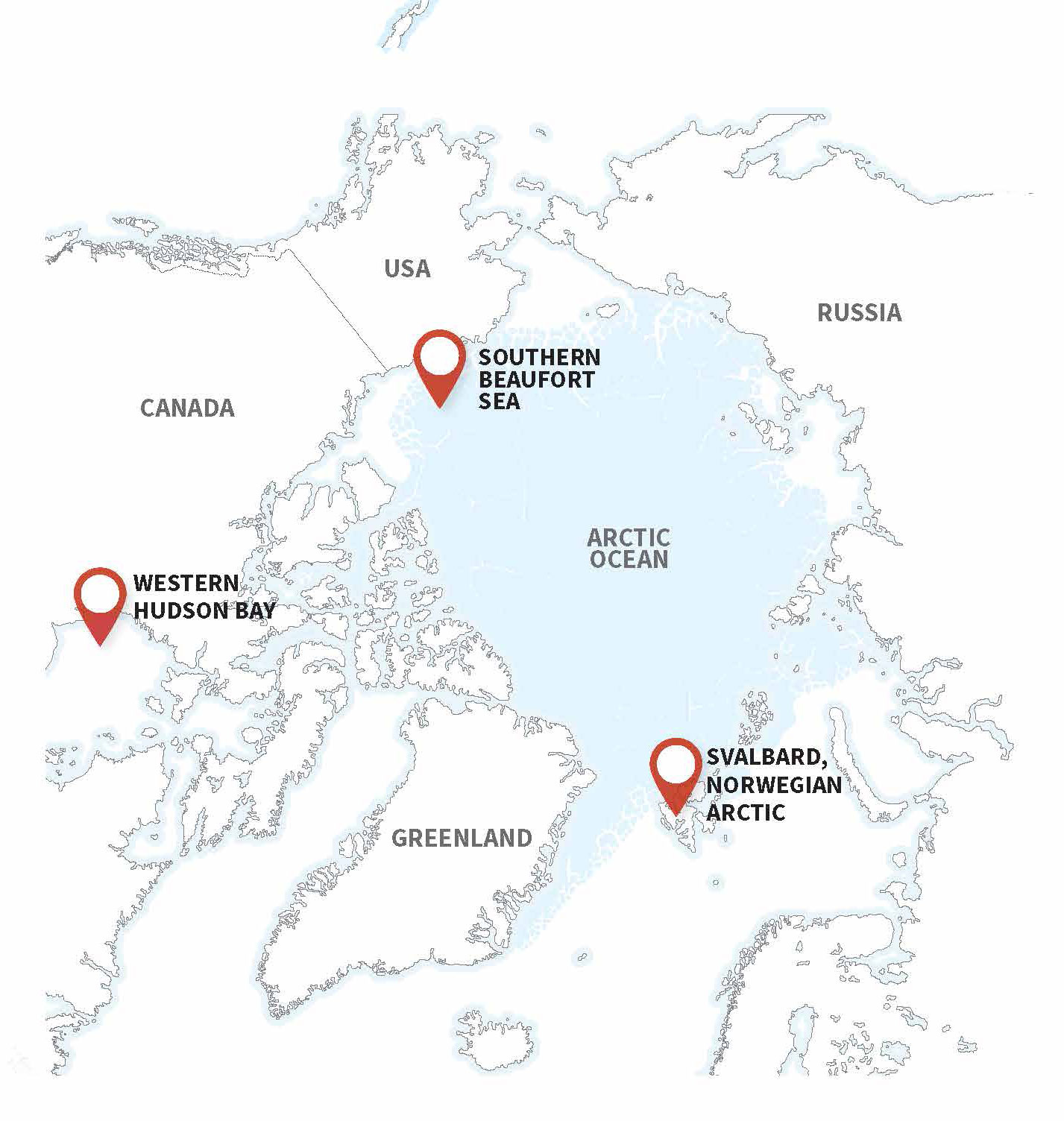
The areas where we have seen the clearest effects on polar bear populations due to loss of sea ice are Western Hudson Bay in Canada and Southern Beaufort Sea in Alaska.
SVALBARD, NORWEGIAN ARCTIC
Nowhere else in the Arctic has the reduction in sea ice been as severe
In large parts of this area, we now on average have a three-to-four months’ longer sea ice-free period compared to a few decades ago
The Russian western islands of Franz Josef Land still have good sea ice conditions most years, although in 2016 there was no ice until well into the winter months
Sea ice has been unavailable in more southern areas of the archipelago
Impact on polar bears:
• Bears in Svalbard are part of the Barents Sea population, shared with Russia.
• Severe reduction in the number of dens on traditional denning islands in the eastern islands of the Norwegian Arctic archipelago – lack of sea ice in the autumn makes them inaccessible at the vital time of year.
• Likely more bears use Franz Josef Land in Russia as an alternative denning area, but there may be a cost for the bears that used to den in Svalbard to reach these areas.
• Large shift northward in the distribution of bears
• Male adult polar bears in Svalbard are leaner in spring in years with milder weather
• Despite the effects seen on denning areas and condition, polar bears still seem to be surviving in Svalbard: We found no evidence of a reduction in population size between 2004 and 2015
THE COMING DECADES WILL BE CRITICAL
There will be a critical point in the reduction of sea ice availability up to which polar bears can cope, and still be able to survive and reproduce. With the very fast reductions of sea ice availability seen around Svalbard, if the trend in sea ice reduction continues at the pace seen over the last decades, we may reach this point soon.
In some other Arctic areas, bears are struggling. In some, they are doing well, and may even thrive also in the coming decades. But for every area, there will be some critical level regarding how much sea ice bears will need, and for how long, to exist into the future.
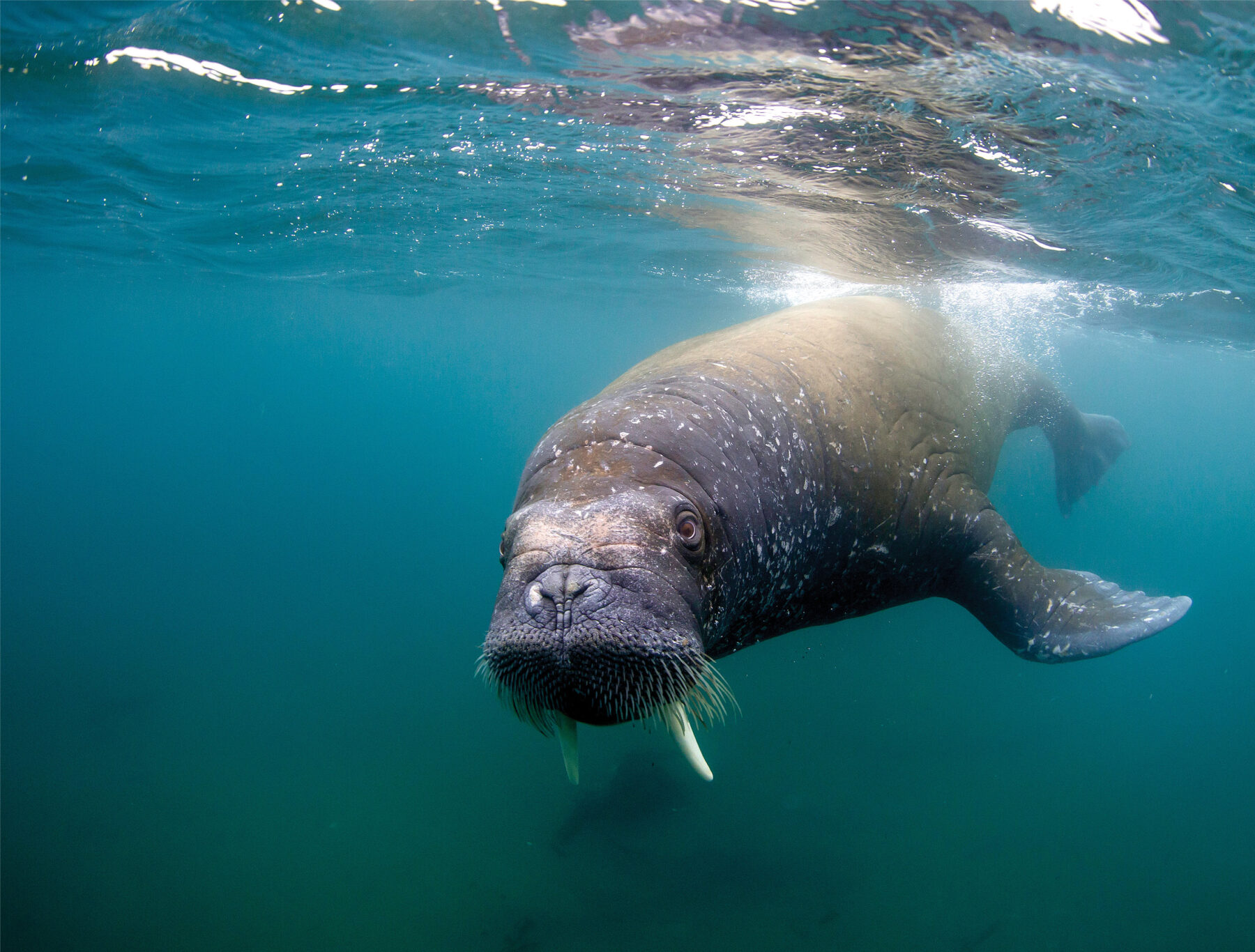
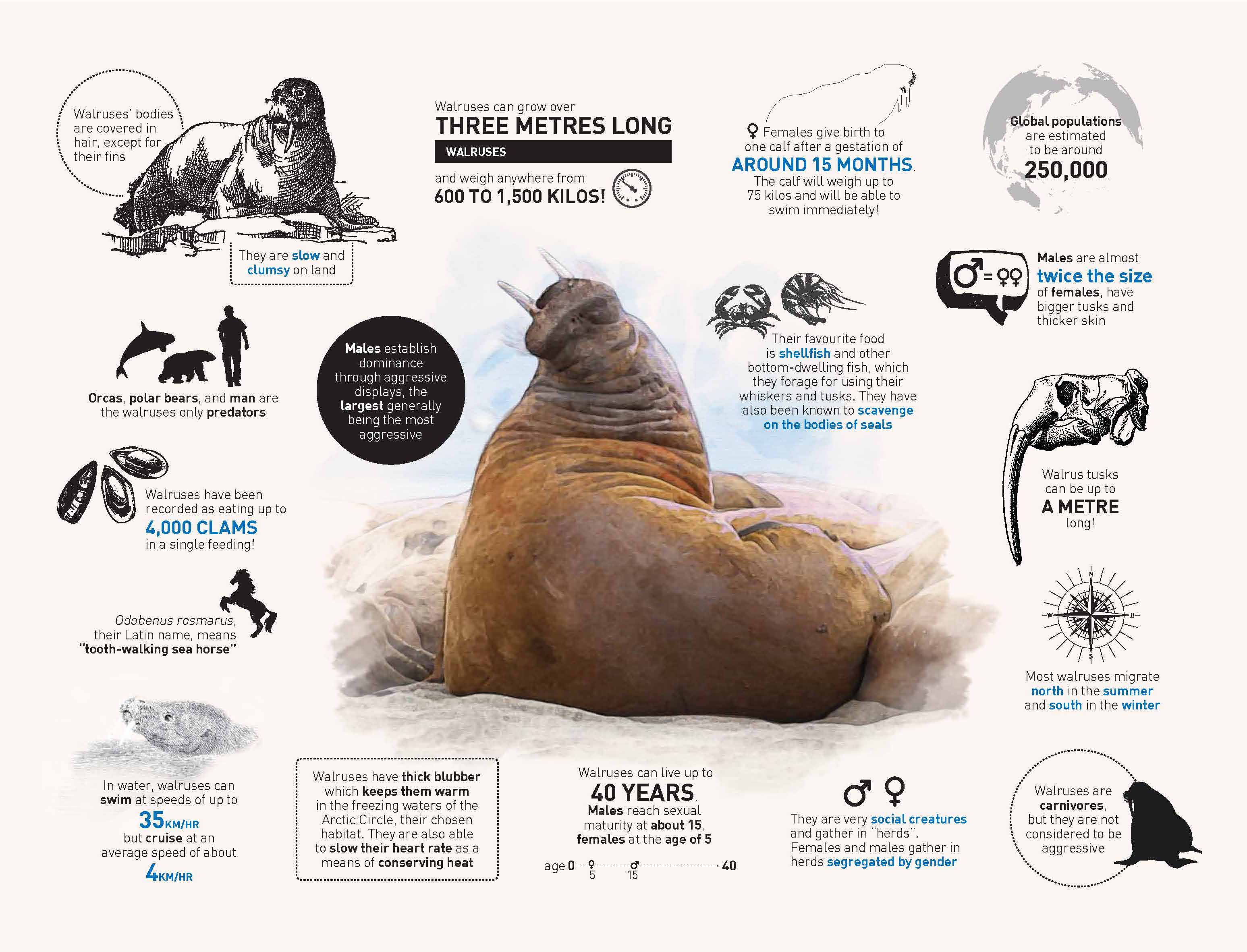
Immortalised for all time as the tragically sympathetic devourer of a family of oysters in Lewis Carroll’s famous poem, ‘The Walrus and the Carpenter”, from Alice Through the Looking Glass, these majestic creatures were given a reputation as gentle, lumbering giants, soft-hearted victims of their own unavoidable appetite. And, as the world’s second-largest pinniped [narrowly losing out to elephant seals in terms of sizel, Carroll’s poem summed up their true natures rather well!
Almost driven to extinction in the 1950s, populations made a come back in the 1980s as a result of stringent conservation initiatives, but they are once again listed as Vulnerable on the IUCN Red List of threatened species. It is almost inevitable, however, that the changing climate and melting sea ice will have a negative impact on walrus populations.