Home Blog Page 65

Gentle Giants of Djibouti

0
A new whale shark aggregation emerges of gargantuan proportions

Along a small stretch of uninhabitable coastline off the coast of Djibouti lies one of Nature’s treasures which, up until now, few have been privileged to witness. During the months of October to February, large aggregations of young whale sharks visit the Gulf of Tadjoura to feed on the plankton-rich waters within the Gulf of Aden. Although Djibouti is most definitely a no-frills destination that most governments advise against visiting, I can’t resist the lure of these gentle giants.

I have joined a team of researchers and volunteers from non-profit groups Megaptera and the Marine Conservation Society Seychelles (MCSS). We are heading off for five days to build on the existing research data on the large aggregation of whale sharks that are attracted to this region. Sailing alongside the deserted coastline you gradually forget fears of threats such as piracy, and you give in to being unreachable, with no mobile reception. By the time we arrive at Acacia Bay, I find myself finally relaxing and enjoying the adventure. The skiff boats are lowered into the water and we prepare ourselves for a couple of hours of whale shark research.
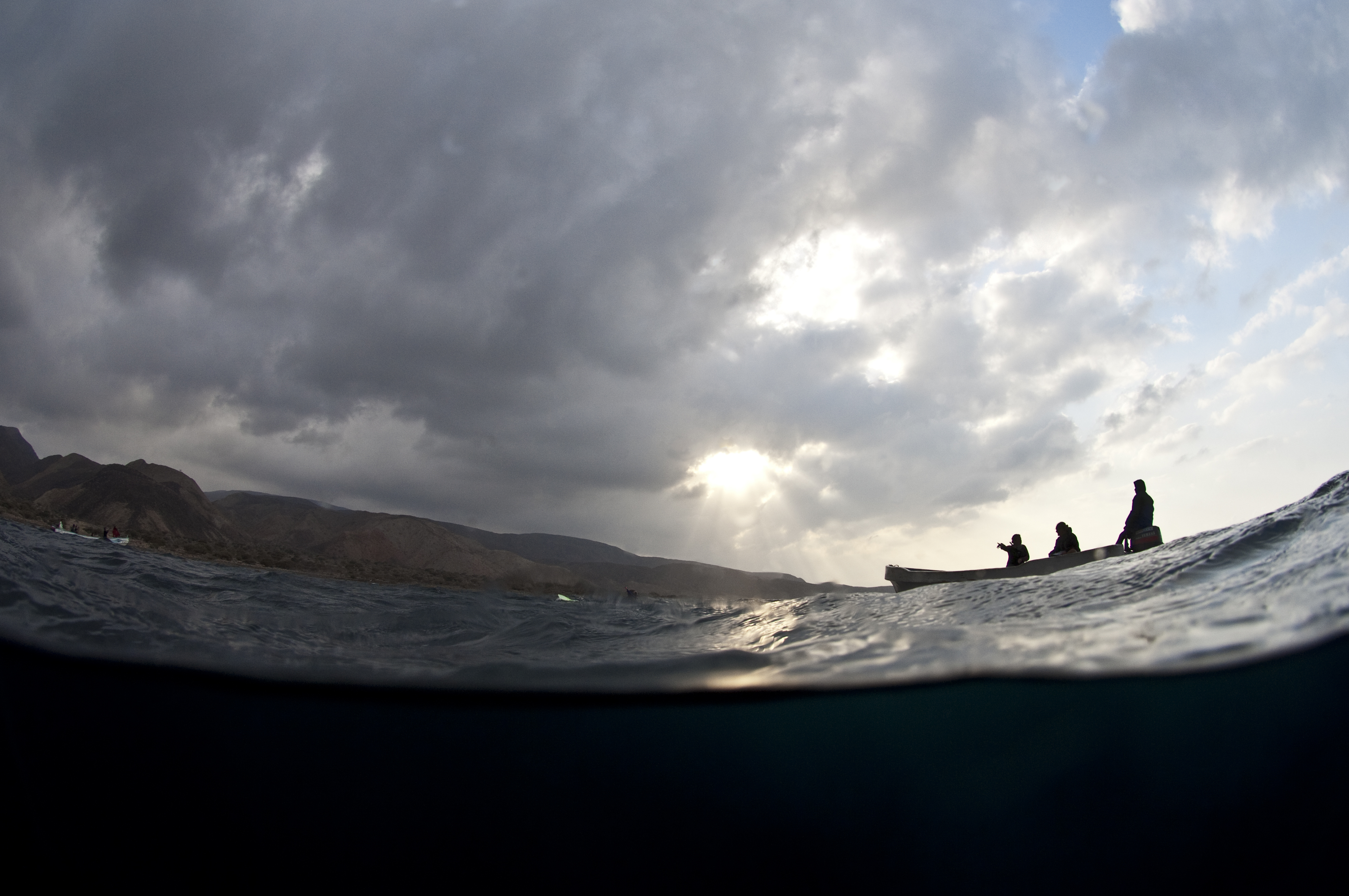
The waters of Acacia Bay bloom with plankton

The Search Begins

Sitting in the skiff and moving at a snail’s pace just five metres from the shoreline, our research team sits in anticipation, surveying the surface for sharks. Suddenly one of the team members shouts and points and everyone grabs their cameras and enters the water. Timing your entry to meet a fast-moving shark is not easy, especially during your very first encounter. Invariably, I found myself waiting for the bubbles to clear in front of my mask only to find that the shark had raced past me.

Finning after the shark, I watch the team taking their photos for spot pattern identification. Using waterproof military-grade laser sights mounted on either sides of a camera, the team’s images can be used to determine the length of the shark, as well as the sex. Eventually, I give up trying to keep up and instead tread water to get my breath back.

As the cooler months arrive in Djibouti, so do young whale sharks measuring three to six metres in length, although sharks up to eight metres have been sighted. Little is known about where the sharks come from. Local reports from ecotourism operators suggest that these sharks move around a small area of coastline in search of food.

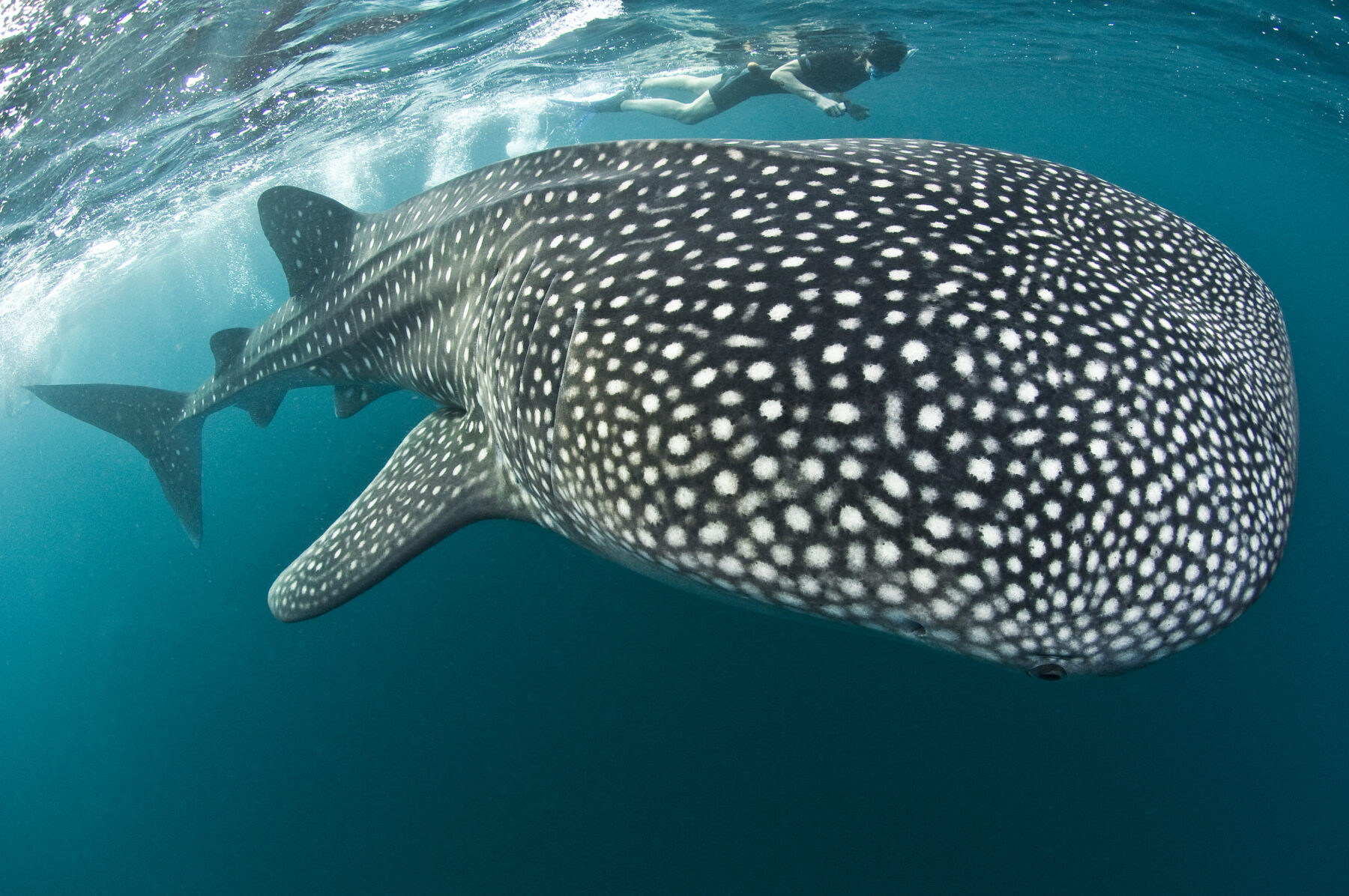
By late morning as the sun climbs higher in the sky, plankton is attracted to the surface. As the wind picks up, currents upwell creating plankton hotspots up and down the coast. Plankton is made up of small or microscopic organisms such as fish eggs, tiny fish fry, crustaceans, algae and protozoans. Whale sharks are filter feeders that swim through the water with their mouths wide open to feed. As they gulp at the incoming water they use their gill-rakers to filter out the microscopic plankton before exhausting the filtered water over their gills for oxygen transfer.
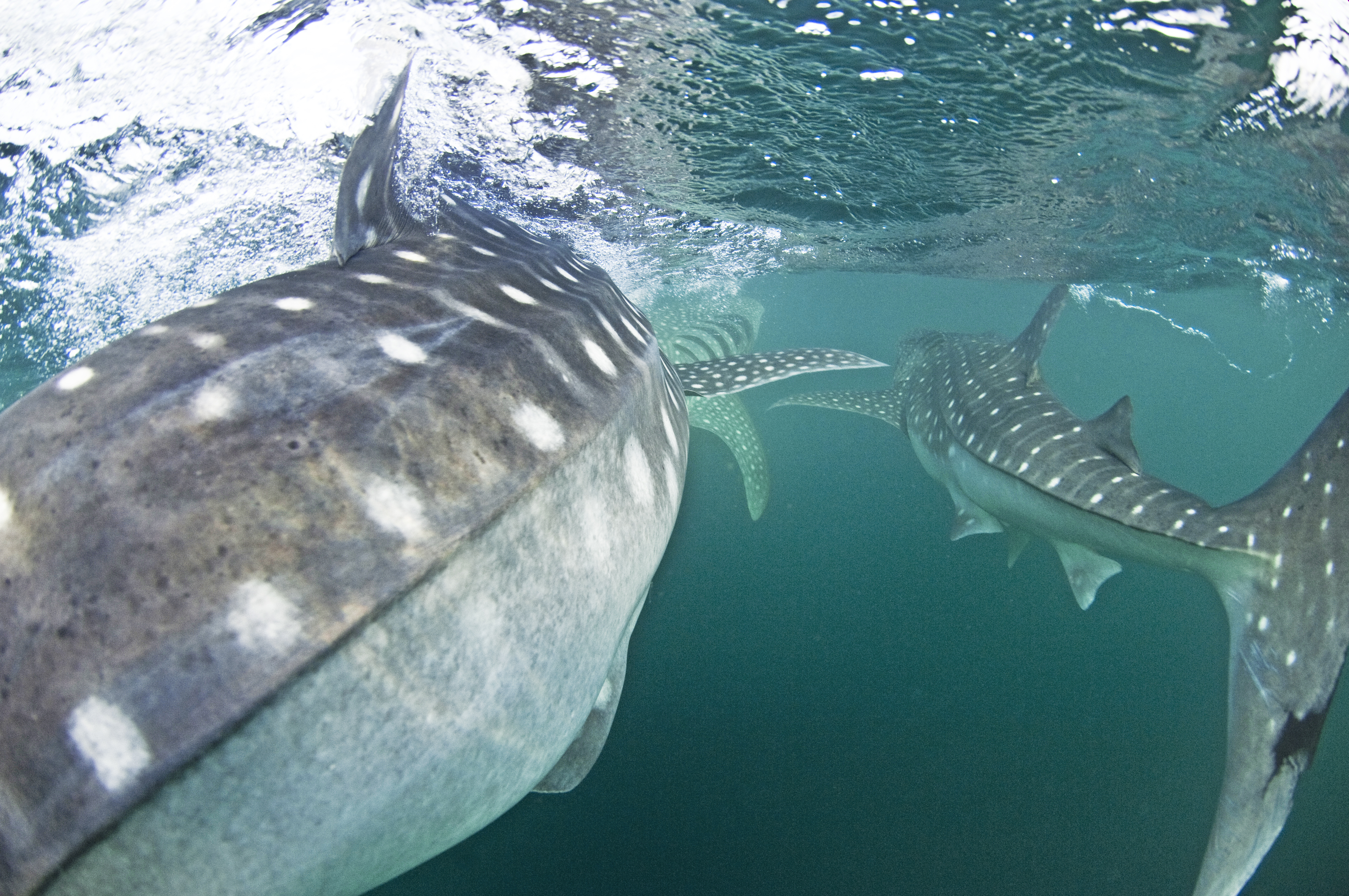
No one can yet say how many sharks are coming to Djibouti, but researchers from Megaptera and the Marine Conservation Society Seychelles are slowly piecing it together

Heads Up

Once the cruising sharks track down these blooms of plankton, their swimming patterns will change to either “ram feeding” or “vertical feeding”. Ram feeding sharks will swim very fast through the water with their mouths wide open trying to filter as much water as possible. As plankton density increases, the sharks will often start to gulp, which will invariably slow their swimming speed. Interestingly, if left undisturbed, a gulping whale shark will often stop swimming and instead rotate itself into an almost vertical position where it will continuously gulp, stationary in one area until the food source is depleted.

I find that it is far easier to find the sharks from the water, and so, as the boat comes to collect me, I instead wave them on, and ask them to come back for me in a while. Watching the boat further down the shoreline now, I keep an eye on the team jumping in on another shark 40 metres away. I know I now have a 50/50 chance of the shark coming my way. It’s not long before I spot the tip of the shark’s tail breaking through the water’s surface, sweeping quickly from side to side.

Dipping my head underwater, I come face-to-face with this majestic fish and fire off several shots. I swim alongside the giant for some time, giving me all the opportunities I need to get the photograph I want. As I follow the shark I notice that the density of the plankton cloud thickens, and as it does, the behaviour of the shark changes too.

Using “ram” and “vertical” feeding techniques, the animals move slowly from plankton cloud to plankton cloud

Slowing its pace, the whale shark opens it mouth and starts to repeatedly gulp at the cloud of plankton. In almost a trance-like state the shark stops swimming and instead manoeuvres itself so it can feed vertically in one spot. As I get perhaps too close to this feeding shark, I am reminded that this giant is fully aware of my presence. As it moves away from the cloud of food I realise that I have disturbed it.

With experience from my previous visits I have learnt not to chase the sharks and instead to stay with the food, and as I follow the cloud of plankton, it’s not long before other whale sharks join me to feed on the soup of microscopic organisms. It’s a great reminder that understanding an animal’s behaviour can pay off with fantastic encounters.

For the rest of this article (Scuba Diver 2013 Issue 3 No 74) and other stories, check out our past issues here or download a digital copy here.
Stories from the Stable

0
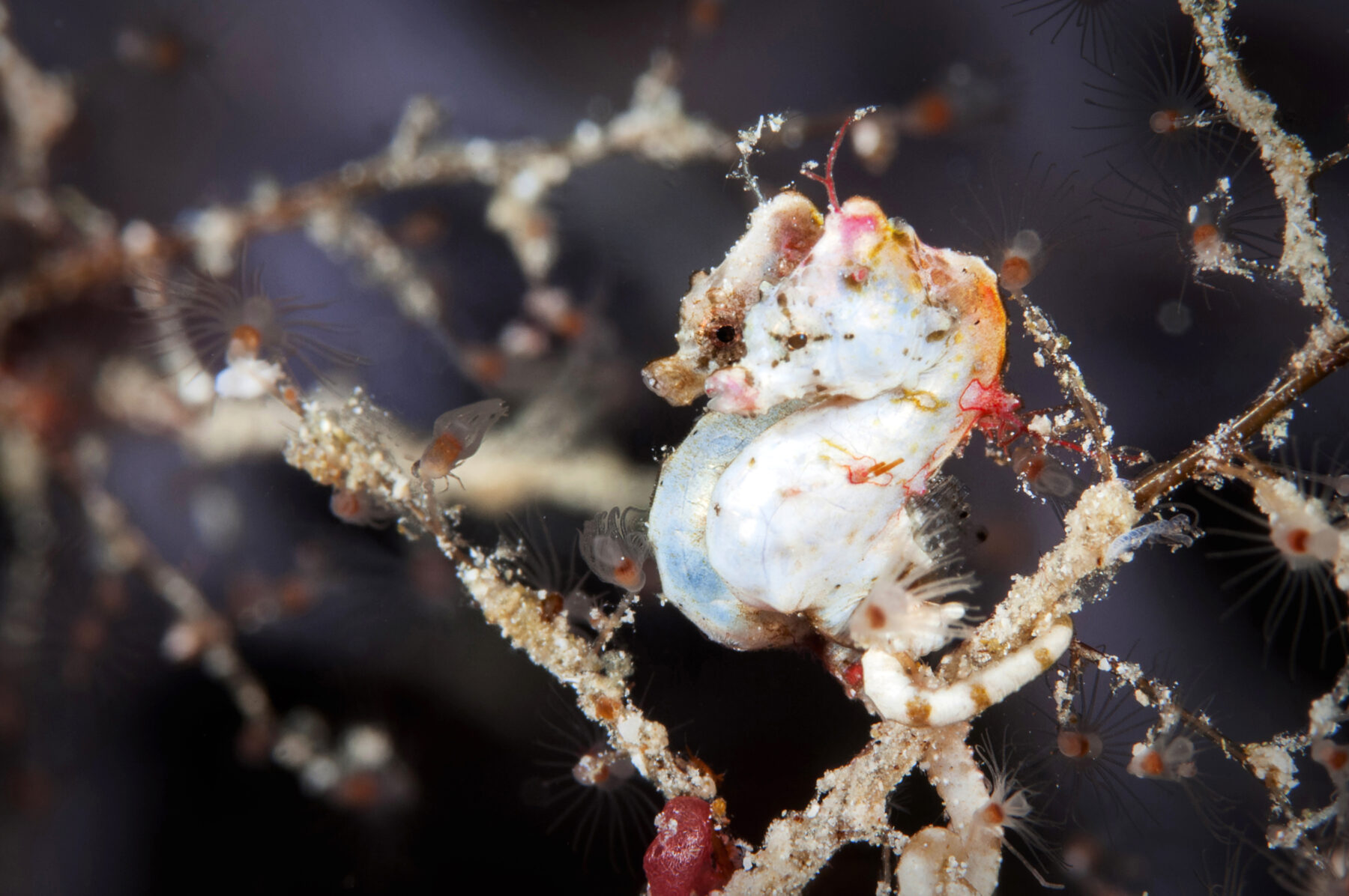
Pontoh's pygmy seahorses (Hippocampus pontohi), courting pair of seahorses, female in fore, pregnant male behind, southeast Sulawesi, Indonesia.

As enigmatic as they are charismatic; Dr Richard Smith’s research exposes the private lives of pygmy seahorses. Text & images by Dr Richard Smith 

MINIATURE MYSTERIES

I could never have foreseen what fascinating subjects these diminutive fish would make. Setting out to discover the private lives of pygmy seahorses, I embarked on my doctoral research, studying the biology and conservation of pygmy seahorses, based on what we already knew of the larger seahorses.

Male pregnancy had already been confirmed from dead specimens, but their natural behaviours on the coral reefs of Southeast Asia remained a mystery. Ultimately, my notes after a research dive read more like an E.L. James novel than scientific records, but I was able to uncover many of these mysterious animals’ darkest secrets.

You might not expect pygmy seahorses to have distinct personalities, like characters from a soap opera, but after almost 1,000 research dives watching every last detail of these fish’s lives, I can certain attest to their fascinating and sometimes quirky behaviours.

I have already written about the group of Denise’s pygmy seahorses, Tom, Dick, Harry and Josephine, who shared a gorgonian coral on Wakatobi Dive Resort’s House Reef. These four showed us how a life trapped together on a gorgonian can take unexpected turns. Josephine shared her amorous attentions with both Tom and Dick whilst poor Harry bided his time for his chance to carry little pygmies of his own. This little “ménage à quatre” sparked plenty of rivalry between the males, but ultimately Tom and Dick shared parental duties in the group.

A Denise’s pygmy on its gorgonian home. The extended tentacles indicate that it has not been disturbed

THE “ROYAL” THREESOME

In hindsight it seems most distasteful, but my research dictated that I next turn my attentions to a female-biased ménage à trois. I had already seen that under the circumstances of a male biased sex ratio, the female (in this case, Josephine) was able to produce clutches of eggs just days apart in order to impregnate two males (Tom and Dick). Subsequently, I was intrigued to find out whether a single male would accept eggs from two females. Luckily, at Wakatobi there is no shortage of pygmies and I soon found a perfect group: Charles, Diana and Camilla.

Almost immediately after delivering the young, the female, in this case “Josephine”, impregnates Tom, the male, again

I spent many hours with the trio, observing and recording their every interaction. I found that Charles and Diana shared a “core area” on one side of the gorgonian. A core area is the term I gave to the area they carried out their social bonding dances, as well as where they mated and slept. They raised several broods together, but all the while Charles was also flirting with Camilla.

Each morning, after dancing with Diana, Charles would leave their core area and swim directly to the other side of gorgonian where Camilla patiently waited in her own core area. Camilla and Charles would carry out the same social bonding dances but they never mated. In the world of pygmy seahorses, it is always best to hedge one’s bets.

A Denise’s pygmy seahorse investigates its surroundings, securely attached to its gorgonian holdfast

Unlike the pugnacious males, the two females eschewed violence and the conflict of the male-biased group wasn’t seen. Tom, Dick and Harry would regularly attempt to strangle each other with their tails, sometimes resulting in three-strong tussles. The females, on the other hand, were indifferent to each other and much more measured in their behaviours.

For the rest of this article and other stories from this issue, see Asian Diver 2016 Issue 2 No 141

Sensory Overload

0

Thailand begins with its people, who, like the food and the lifestyle, are often described as hot and spicy. Thailand’s beauty and hidden gems need no introduction, both above and underwater. But recently I was lucky enough to have been introduced to one of her most exceptional national treasures.

Entering the dining area on the MY Panunee liveaboard, I was greeted by the owner, Jakrin, the crew, and some of Thailand’s best photographers. Everybody gathered on the vessel was a Nature lover and professional shooter, with only one goal and mission: To collect data and images for the Andaman Sea, World Heritage Park Project. We set sail, overnight, embarking on a journey of adventure, to places with the kind of underwater beauty that I could never have imagined.

At the tip of Richelieu Rock you might be surprised by the vibrant green algae and shafts of sunlight penetrating the shallow water

Coffee. Checkout dive: Anita Reef. And boy, did Anita have her jewels on show from the moment we entered the shimmering, gin-clear water of the gulf.

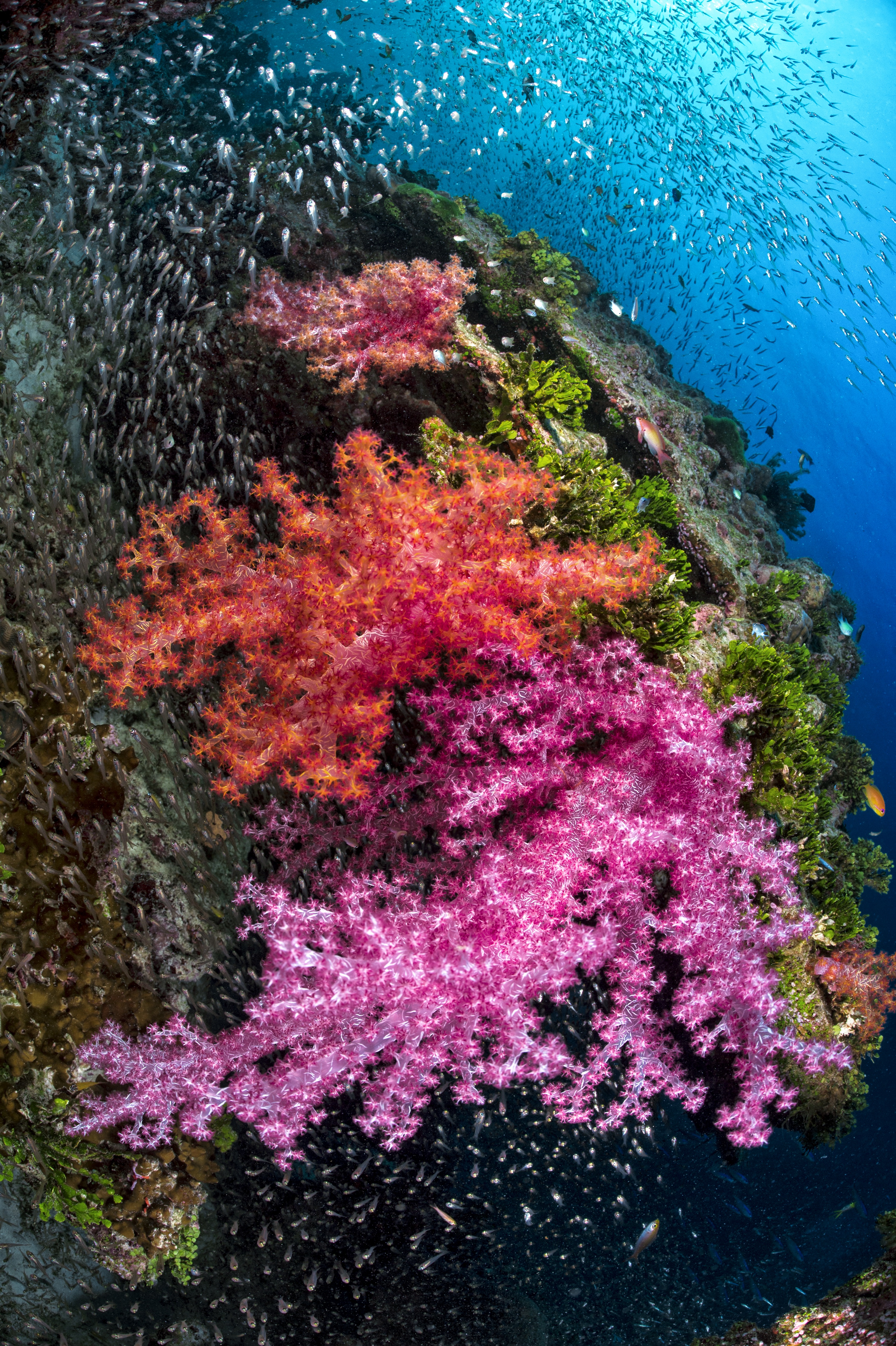
The reef is blessed, everywhere you look, with soft, colourful hanging corals. It’s like being in wonderland, only better. Sixty minutes of sensory overload ensued, with colours beyond the palette of any artist. Life was bursting on every corner, rock, boulder and reef; amazed, I just hovered in the blue, admiring her.

I’ve dived some of the best sites in the world, and was under the impression that the best soft corals were found in Indonesia or Papua. But we might have a challenger here: These are reefs on steroids.

Colours and life are everywhere. With the current running, it’s like a rave party at its peak – fully loaded. Smaller fish rage against the current while the bigger tuna, snappers and jacks patrol in slow motion. Schools of fusiliers build pulsating force fields around the huge boulders. It is definitely an out-of-this-world experience.

Bling Bling Avenue is an easy dive for all levels. Located between Similan Islands five and six, it has a sandy bottom and an extraordinary, colourful reef covered with healthy hard and soft corals

It is important to point out that, despite the sensory overload of colours and life on the reef, this ecosystem is constantly at risk. We must work together to protect it, and to educate the next generation about this fragile environment. Although this is a  protected area, we must go above and beyond, making every effort to safeguard these reefs, or we risk losing this extraordinary beauty.

For the rest of this article and other stories from this issue, see Asian Diver 2016 Issue 2 No 140

Sumptuous Seychelles

0
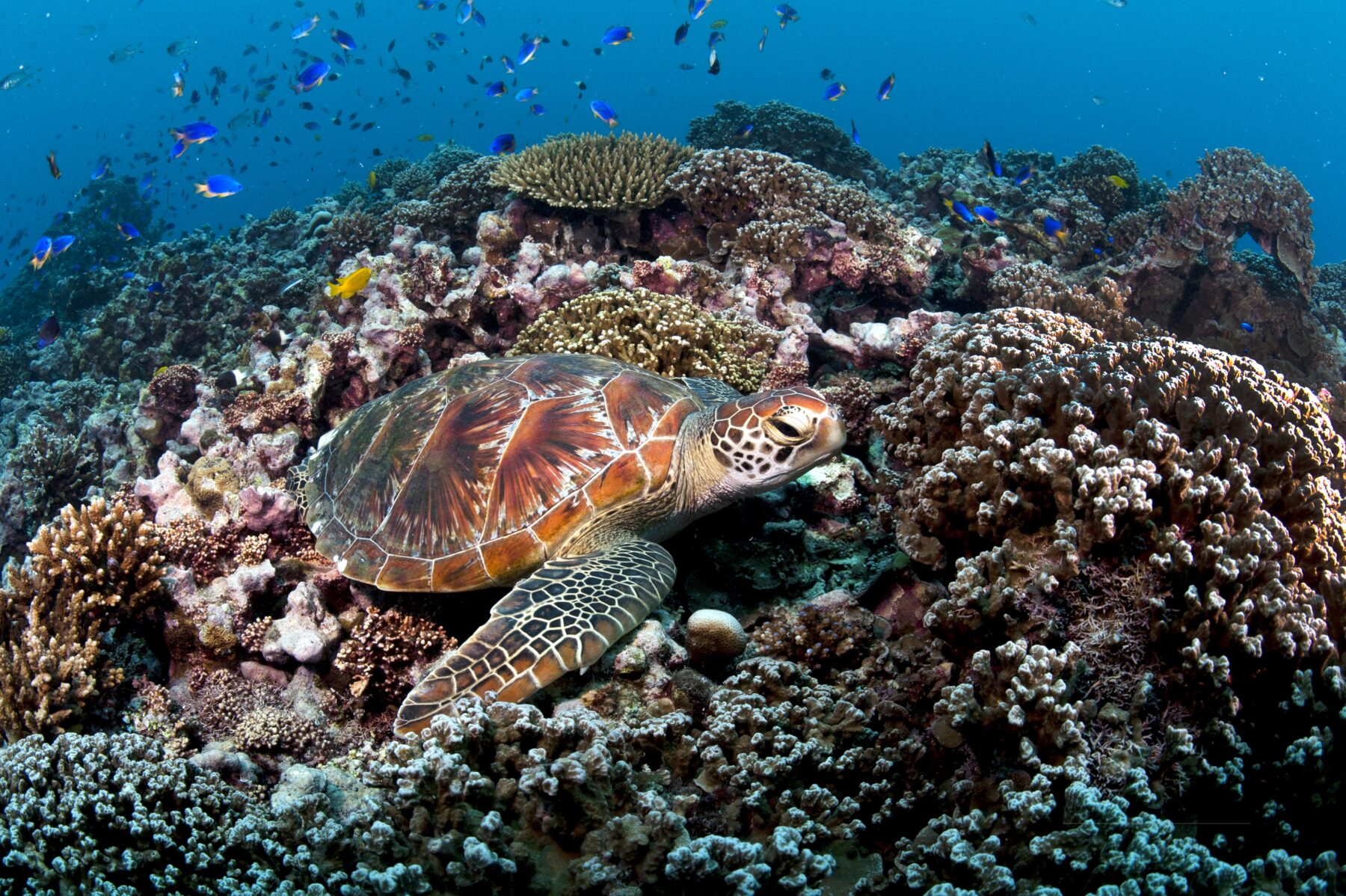
A green turtle rests amongst the healthy corals in this marine sanctuary

Exploding in a riot of life, the waters around these islands in the Indian Ocean are every diver’s wet dream. Text and Images by Imran Ahmad

Where are all the fish?” An increasingly common question asked by divers and underwater photographers. However, if you dive in the Seychelles, this would be very last question on your mind: In the Seychelles, there are almost too many fish.

Paradise underwater

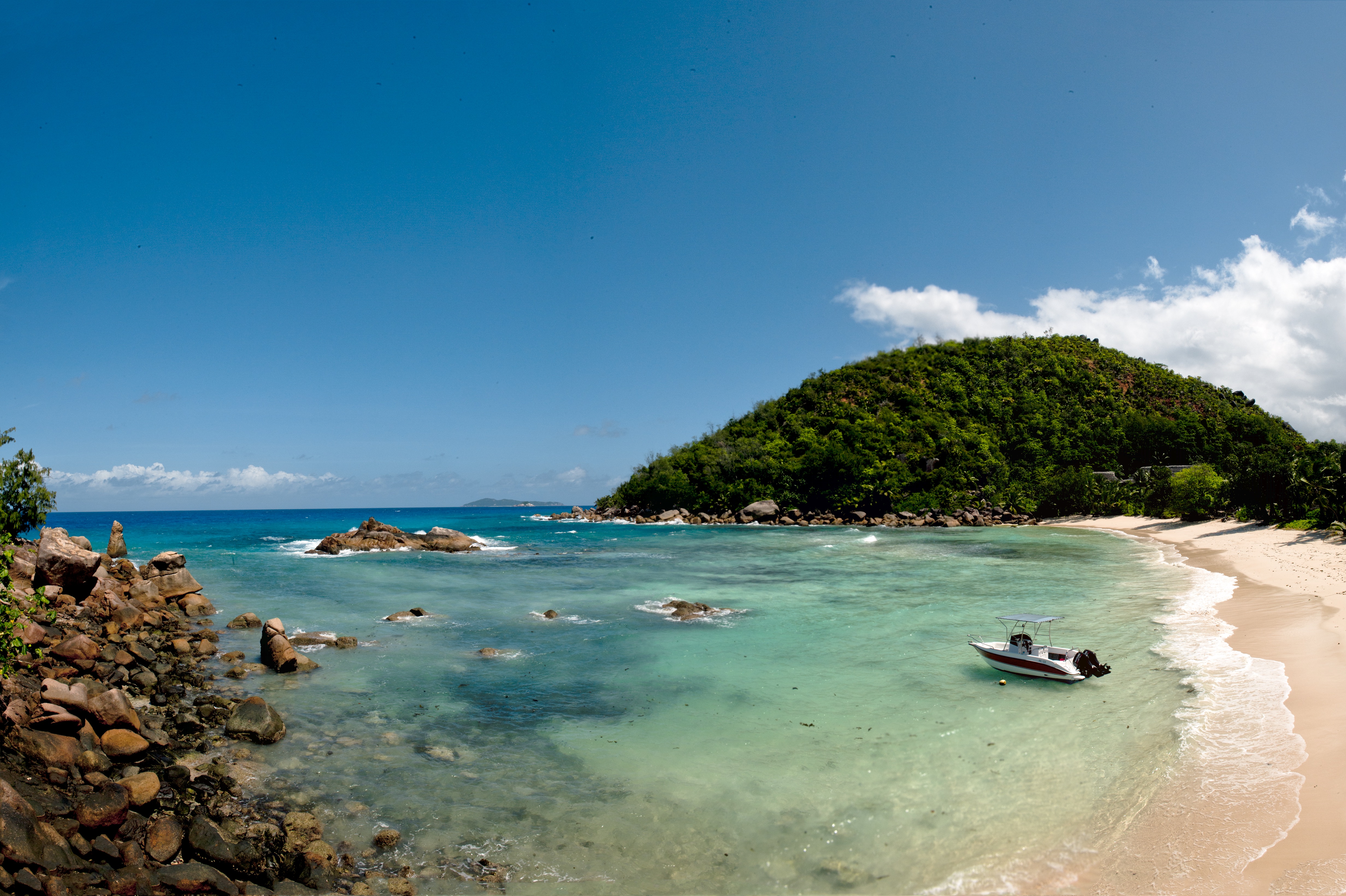
Known for its thousands of colourful marine species, rich biodiversity and clear water, the Seychelles is famous for its national marine parks and its UNESCO World Heritage Sites – Vallee de Mai Nature Reserve and the Aldabra Atoll. The Seychelles is also celebrated as the home to more than 150,000 giant tortoises, walking amongst beach-goers like relics of a prehistoric era.

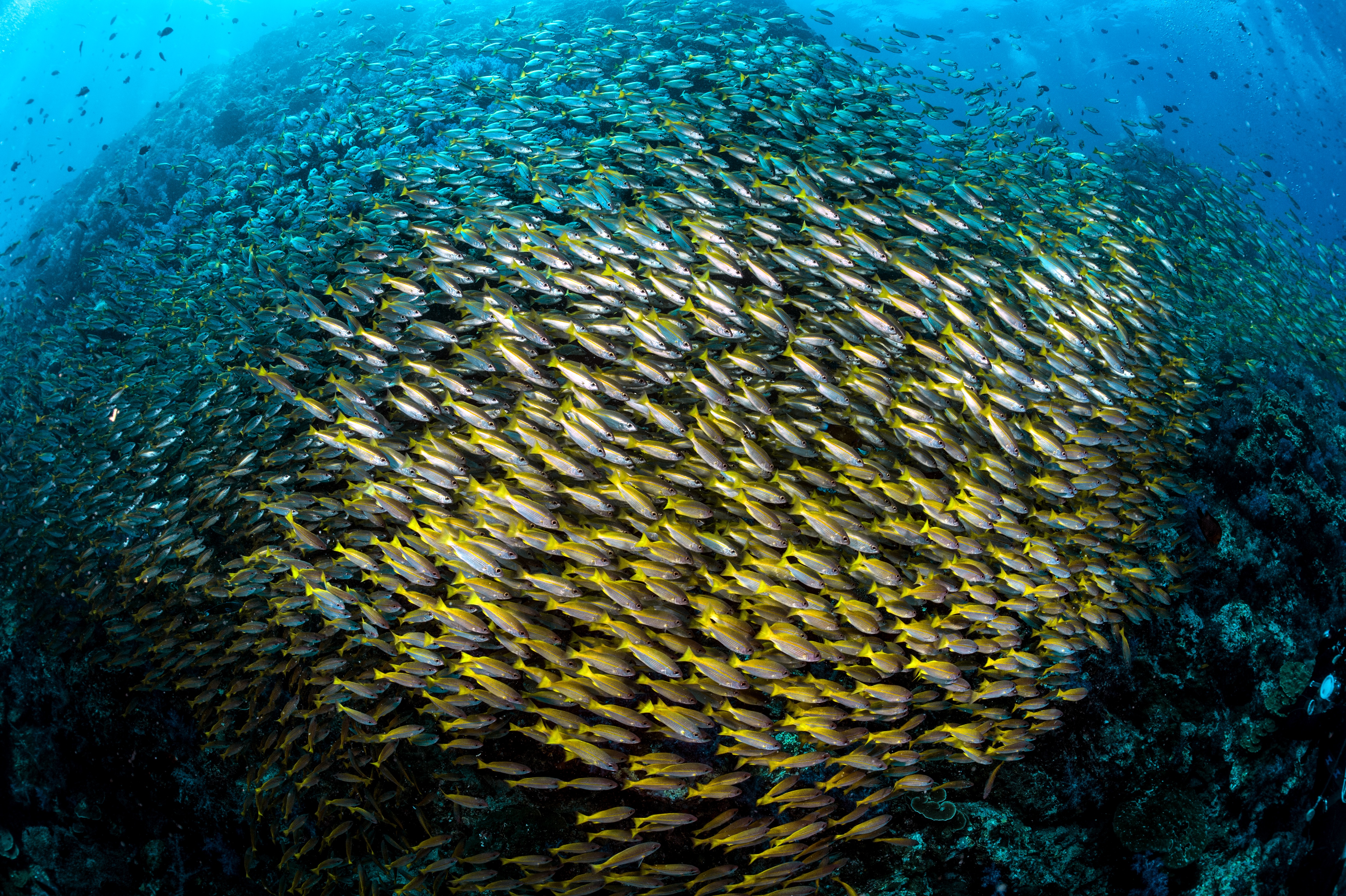
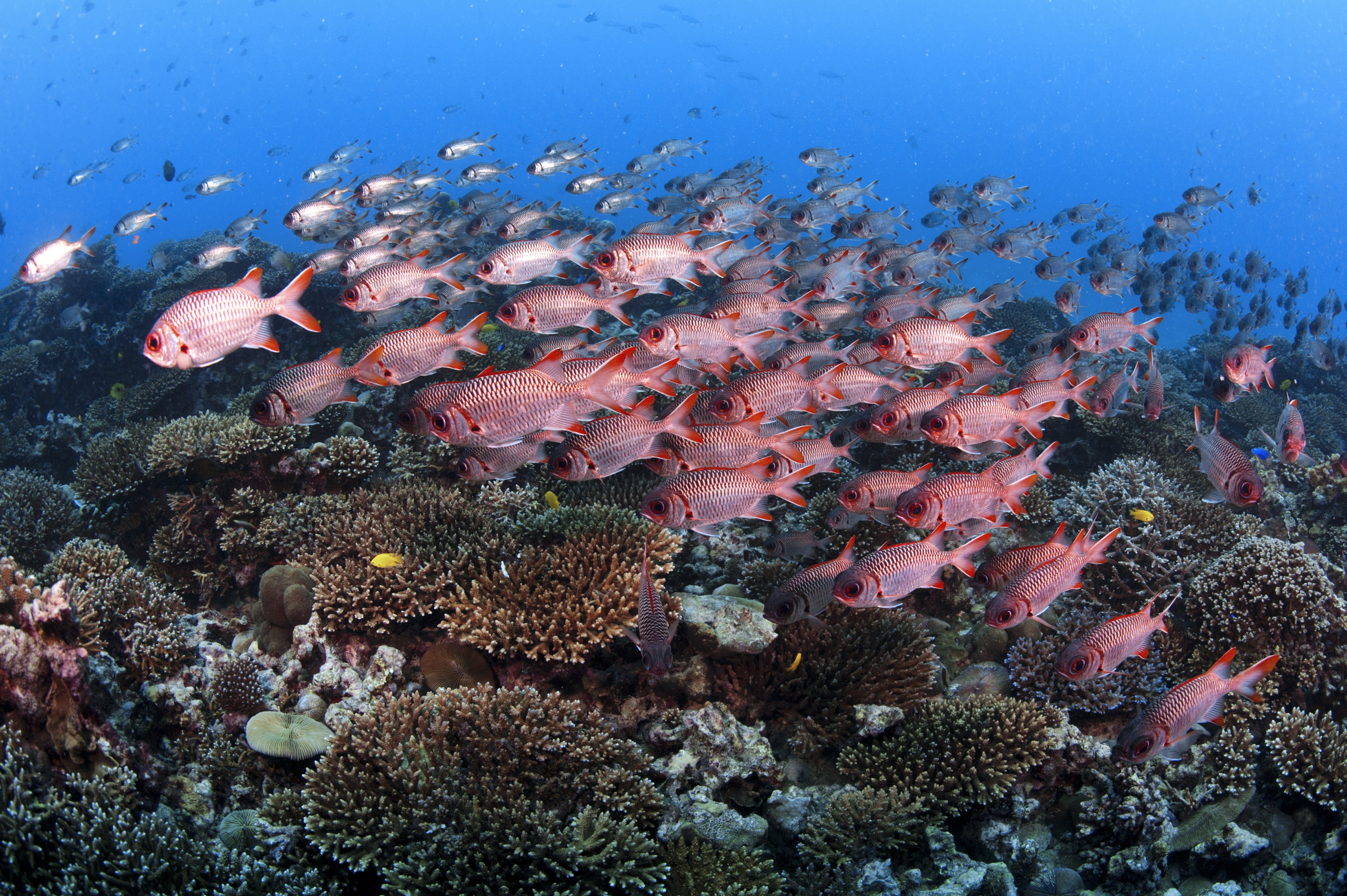
A diver’s paradise awaits in the Seychelles, where the visibility is extraordinary and the bright water is filled with massive schools of fish

These amazing, untouched islands (115 to be exact) are a paradise for any diver in search of an unforgettable diving adventure. In these warm waters, you are greeted by schools of fishes, giant trevally, barracuda, fusiliers and squadrons of eagle rays. The azure water is also home to visiting whale sharks and grey reef sharks. Unique underwater granite formations leave you breathless, while lush soft corals sway in the deeper water; all evidence of how wondrous Nature is.

A diver’s paradise awaits in the Seychelles, where the visibility is extraordinary and the bright water is filled with massive schools of fish

Setting the example

This is all thanks to marine protected areas (MPAs) that the Seychelles have in place. MPAs in the Seychelles include Ste. Anne Marine National Park, Curieuse Marine National Park, Baie Ternay Marine National Marine Park, Port Launay Marine National Park, Ile au Coco Marine National Park, Silhouette, and Aldabra Atoll.

A diver’s paradise awaits in the Seychelles, where the visibility is extraordinary and the bright water is filled with massive schools of fish

The Seychelles is recognised as the first country in the East African Region to create an MPA. Over the years, this fragile ecosystem has faced serious threats from fishing exploitation, unsustainable tourism, irresponsible boat anchoring, destruction of marine habitats, and other harmful consequences of human development. However, the Seychelles government has gone above and beyond to ensure that these threats are reduced and damage to their marine ecosystems is minimised.

For the rest of this article and other stories from this issue, see Scuba Diver 2017 Issue 2 No 108

Club 25 Profile – Scuba Schools International (SSI)

0

Founded by Robert Clark in 1970, the origin story of Scuba Schools International is an interesting tale of kismet between the National Association of Scuba Diving Stores (NASDS) and Scuba Schools International (SSI). A diver since he was seven, Clark started scuba diving in 1960 as a hobby in the days before there was any real opportunity to have formal classes. After opening his first store selling scuba diving equipment in 1965 in Sidney, Nebraska (the scuba capital of the world), a friend connected him to John Gaffney and Clark began working with Gaffney in 1966 to develop the National Association of Scuba Diving stores (NASDS). It was a parting of ways in 1970 between NASDS and Clark that prompted Clark to found SSI with several colleagues who had been working together to develop NASDS.

After assuming control and ownership of SSI in 1974, Clark was able to develop the teaching syllabus around his philosophy on scuba instruction by creating the first integrated instructional system in diving at SSI. This commitment to cutting edge instructional systems remains the touchstone of SSI’s success and is widely admired and copied by scuba agencies around the world. SSI was the first to use full motion video in a complete training programme with its diving courses.

For more than 45 years, SSI has provided training, scuba diving certification and educational resources for divers, diver instructors, dive centres and resorts around the world. SSI has more than 30 service centres and is represented in more than 110 countries around the world at over 2,800 international locations with materials available in more than 30 languages. Since June 1 2010, SSI has qualified for Global ISO Certification with seven SSI programmes (Five for divers, two for instructors). SSI scuba certifications are recognised around the world.

In 1999, SSI merged with NASDS reuniting the two organisations under the same umbrella again. SSI was acquired by MARES in 2014.

The SSI International Global Network is one of the greatest strengths of SSI as an organisation.  The SSI Headquarters at Fort Collins, Colorado, in the United States, is where the standardisation of SSI diving certification and education, training standards and the creation of skills and techniques for SSI programmes occurs. As opposed to other dive training organisations, SSI instructors can only teach at SSI Dive Centres or SSI accredited dive clubs that “adopt a franchise-like concept”.Educational materials are produced at SSI Headquarters and translated there into many languages with the help of SSI Service Centres.

SSI Service Centres oversee and service SSI Dive Centres, Dive Resorts and Dive Professionals of the assigned area. SSI Dive Centres and Dive Resorts serve as an extensive network of professional businesses which operate as scuba diving or freediving schools for diver and diver professional training. They provide a variety of diving destinations for SSI customers.

From Wreck to Reef

0
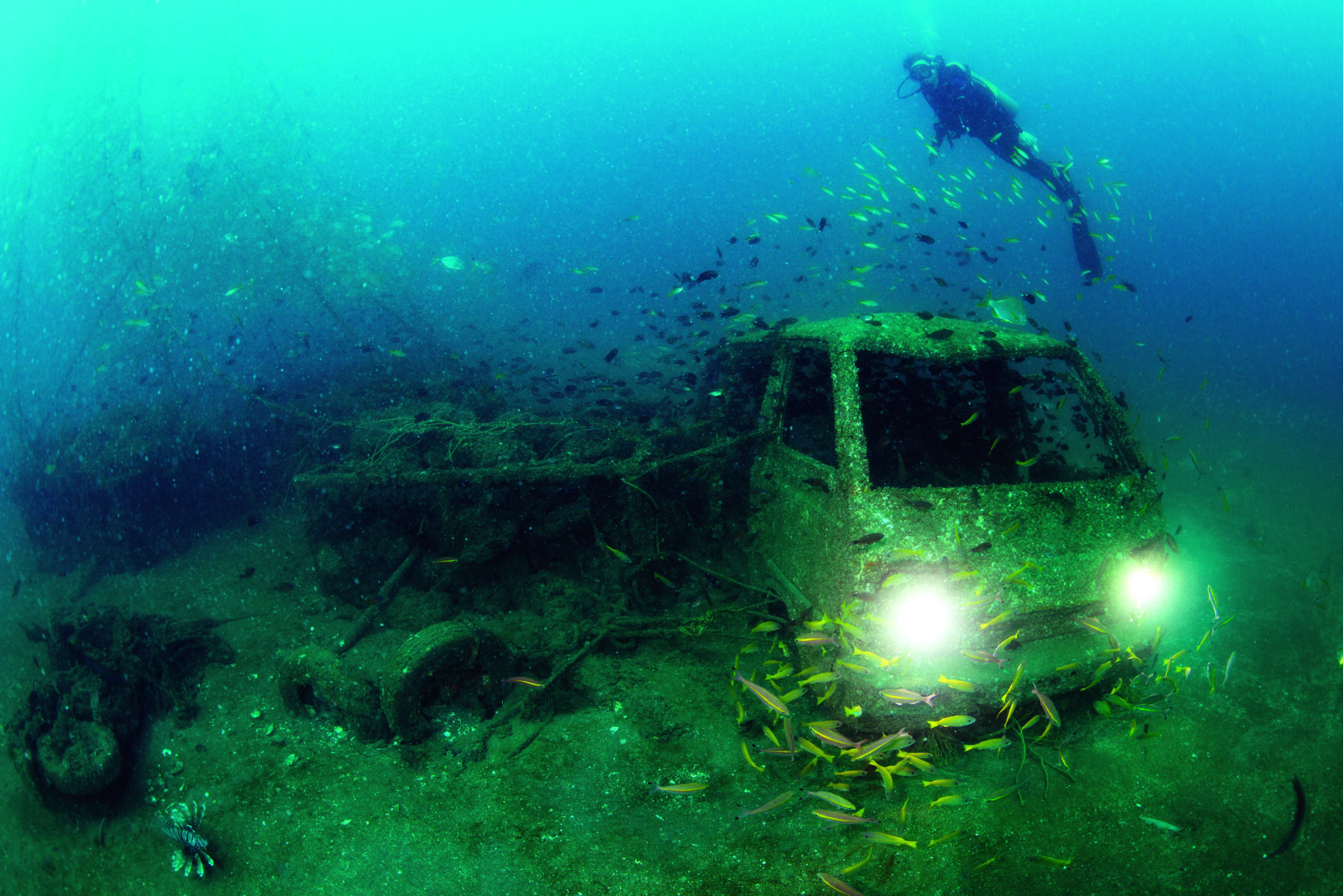
The wreckage of a van from the Temple Reef, conceptualised and crafted by Rob Partridge

For man to act upon a call to save the ocean, and for the ocean to accept man’s offering – morphing it into a habitable home for its creatures – is a beautiful act of harmony between man and sea. Text by Tasneem Khan, Image by Tasneem Khan & Umeed Mistry

The ship is undoubtedly one of mankind’s engineering marvels – it represents innovation, application of physics, complex architecture, culture, history, trade, geographies, and migration. Every ship carries stories with it, and those that sink continue to gather stories and support lives long after their years of sailing. After traversing oceans and intimately knowing their character on the surface, these ships now witness the oceans’ depth and dynamics. Like everything that enters the ocean – they become a part of it, interact and react with it.

The ever-vital ocean yields an alchemic power – it conjures habitats and niches from what it is given. For centuries, humans have been tapping on this power by using sunken ships and other objects to create and enhance fish habitats in areas of low fish abundance or high fishing pressure. Quite like a rocky reef, these objects begin to house animals that require hard surfaces to attach to – tubeworms, oysters, scallops, snails and tunicates that weren’t able to live on the muddy seafloor now have a substrate that is critical to their existence.

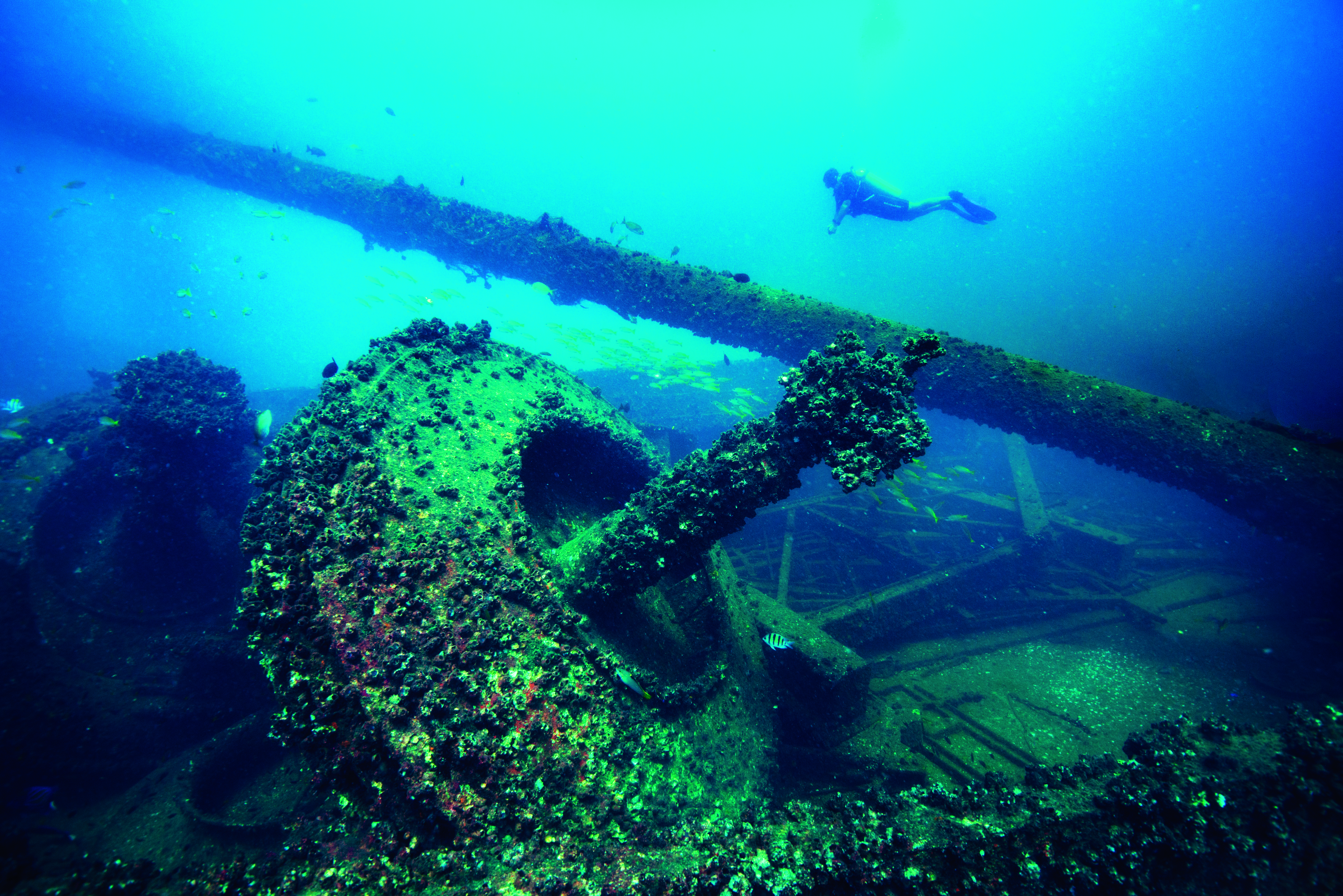
A diver swimming through the bridge of the Thermopylae Sierra, found off Mt. Lavinia in Sri lanka

Shipwrecks are essentially new habitats with distinct communities living on and within them. The first organisms to arrive are usually algae and larvae. Over time, the wreck will tend to mimic adjacent and sometimes seemingly distant natural reef systems. This reveals an incredible amount of information about the movement and connectivity of plankton and genetic populations through the ocean currents. These submerged wrecks provide a snapshot into the evolution of reef systems, the movement of planktonic matter and the possibilities of artificial reefs.

If you have the opportunity to dive a recently submerged wreck and then visit it periodically afterwards, it is an eye-opening experience – observing the rapid colonisation by marine life and questioning how it simultaneously corrodes and preserves.

There are numerous examples of how wrecks make great artificial reefs and attractive dive sites, but they are also ideal in-situ laboratory and study sites. Marine biologists use wrecks and artificial reefs to investigate the effects of substrate complexity, observe changes that occur over time, and even for controlled species or community specific experiments. This furthers our understanding of the various ecological processes that occur in the ocean and on natural reefs, providing insight into how natural reefs may be able to recover from damage by natural or anthropogenic occurrences. Clues about adaptation, resilience, migration and mutation can teach us volumes about the origin of life, the future of our oceans, biomedical possibilities and survival in general.

The broken hull and cargo of the Thermopylae Sierra, now a thriving reef

In particular, sunken wooden ships provide a whole new world of exploration on marine invertebrates. All the wood that makes its way into the world’s oceans is also home to a staggering diversity of sea creatures. Research on the subject of ocean wood shows that these communities may even vary based on the species of wood itself.  Like termites, wood-boring clams are often the first to arrive. They feed on the dead wood and digest cellulose with the help of specialised bacteria. This frees up carbon energy from the wood in the form of clam excrement that other life forms feed on. These clams, while boring through and feeding on the wood, also create a maze of tunnels and holes in which other animals take shelter.

For the rest of this article and other stories from this issue, see Asian Diver 2017 Issue 4 No 148

Club 25 Profile – Professional Association of Diving Instructors (PADI)

0

A Shared Passion and Vision Between Two Friends

Renowned as the world’s largest scuba diving training organisation, the Professional Association of Diving Instructors (PADI) was dreamt up by two friends concerned about the state of the scuba diving industry some 53 years ago in the state of Illinois, USA.

Some 13 years after the invention of the aqualung had made scuba diving a reality, the certification of scuba divers was still not top notch with many scuba certification agencies providing instructions which were not up to date. Good friends John Cronin, a scuba equipment salesman for U.S Divers and Ralph Erickson, an educator, university water polo coach, champion swimmer, lifeguard and waterman, were suitably concerned about the future of the sport as they felt that scuba diving instructors needed better support to facilitate an easier learning process for people interested in learning how to breathe underwater.

One fateful night in 1966, while chatting in Erickson’s Illinois apartment in Morton Grove over Cronin’s favourite bottle, the duo finally decided to bring their vision for scuba diving to life. They would start a scuba training association which would provide professional support services to dive instructors with professional standards and professionally certified curriculum for diving instructors. With certified, relevant and instructionally valid scuba diving training, more people will be able to get easier access to enjoy the underwater world, thereby raising the numbers of confident scuba divers who dive regularly. With John insisting on the word “professional” for their new moniker and Ralph asserting the need for an “association of diving instructors”, the Professional Association of Diving Instructors (PADI) was born.

Humble Beginnings

The first few start-up meetings for their new venture took place in “several restaurants in Morton Grove and Niles, Illinois”. Within a few months, however, the duo had established the first PADI headquarters in the basement of Cronin’s home on Main Street in Niles. They even hired Cronin’s next-door neighbour to stand in as a part-time secretary for PADI.

How PADI Got Its Diver’s Torch Logo

Inspired by The Silent World, Jacques Cousteau’s groundbreaking book on scuba diving, Erickson had come up with the idea of a diver with a torch in his hand in a globe after Cronin had mentioned that he wanted PADI’s logo to be something classy like National Geographic’s. Although they were essentially just a two-person operation, Cronin’s comments changed Erickson’s view of the company. Now, he could envision big things for PADI. After spotting a photo of French divers descending into the water with burning torches in hand, Erickson came up with the first PADI logo. This photo can still be seen hanging in the PADI Worldwide global office in California.

The Growth of PADI

The growth of PADI was organic in the early years. Instead of going with the military-structured “know it all entry level course” that most agencies were using at the time to “weed people out”, Erickson wanted PADI to have a “continuing educational course structure”. PADI introduced its first advanced diver course in 1967 along with its first specialty diver programmes. Although growth was slow, PADI had about 400 members by the late 1960s.

PADI’s first strategic move that aided its eventual success was the introduction of the “first positive identification certification card” that had the diver’s photograph on it. This idea for a photo on your certificate was suggested by Paul Tzimoulis, who eventually became editor of Skin Diver magazine, when Cronin first met him at a large National Sporting Goods Association show in New York City.

Still working at U.S. Divers, John Cronin was promoted to Sales Manager at his job and had moved with his family to Huntington Beach, California while maintaining his board position at PADI. Ralph Erickson also continued to pursue his career as a water polo coach at Loyola University in Chicago, Illinois and continued to serve as a PADI board member, consulting with PADI staff, helping to expand PADI’s “continuing education offerings” for divers. The PADI office moved to California in 1970 with key operational staff making the move as well.

An active diver and instructor, Erickson continued to help develop standards and courses at PADI by working with PADI’s early training managers. The PADI Open Water Diver certification was launched in 1972 as the preferred entry-level rating. Divers now needed to complete two times the number of open water dives as previous courses.

By the late 1970s and early 1980s, PADI had revolutionised scuba training by creating modular scuba training programmes with original integrated multimedia student and instructor educational materials. By the first half of the 1980s, PADI had successfully filled its ranks with the industry’s most experienced and professionally credentialed diving talent. Their expertise in instructional design, marketing, international business and development of educational systems, retail and resort programmes further established PADI’s leading status in the diving industry. PADI’s extensive scientific study in hyperbaric diver table research in the late 1980s led to the development of the Recreational Diver Planner.

When John Cronin retired as CEO of US. Divers/Aqualung and took the reins of PADI as CEO in 1986, PADI had become the leading scuba diving training organisation in the world. As the leading educator in underwater training, everyone at PADI felt the responsibility of educating the public on marine conservation. “We want to feel that our children, their children and generations to come will be able to enjoy the underwater world that has given us so much,” said John Cronin. “There are so many significant problems facing mankind, but as divers this is truly our cause. If scuba divers do not take an active role in preserving the aquatic realm, who will?”

With marine conservation in mind, PADI initiated Project AWARE as an environmental ethic in the late 1980s and the Project AWARE philosophy was integrated into PADI Diver training courses. [Project AWARE (Aquatic World Awareness Responsibility and Education) is a global movement for ocean protecting powered by a community of adventurers. It engages snorkelers and divers in activities such as beach clean-ups and establishing marine parks and marine protected areas]. Eventually, in 1992, the Project AWARE Foundation was established as a non-profit organisation in the United States.

PADI Today

John Cronin passed away in 2003 with his friend and PADI co-founder, Ralph Erickson, following suit three years later.

Led by Dr. Drew Richardson, President and CEO, PADI remains the world’s largest recreational diver training organization with more than 6,600 dive centers and resorts and 137,000 professional members worldwide. Issuing 1 million certifications each year, PADI continues to make underwater exploration, travel and adventure accessible to people around the world while maintaining the highest industry standards for dive training, safety and customer service.

PADI is committed to being best in and for the world, supporting social and environmental efforts through its Pillars of ChangeSM, empowering divers with information to get involved with causes they care about in a tangible way.

“PADI is committed to be a force for good,” says Richardson. “We’re privileged to have a powerful legacy to inspire us. By empowering divers and connecting them to the PADI family and global issues relevant to the dive industry, we can help make the world a better place and become an even more powerful catalyst for change. By engaging divers more effectively at the local level globally, global change is inevitable.”