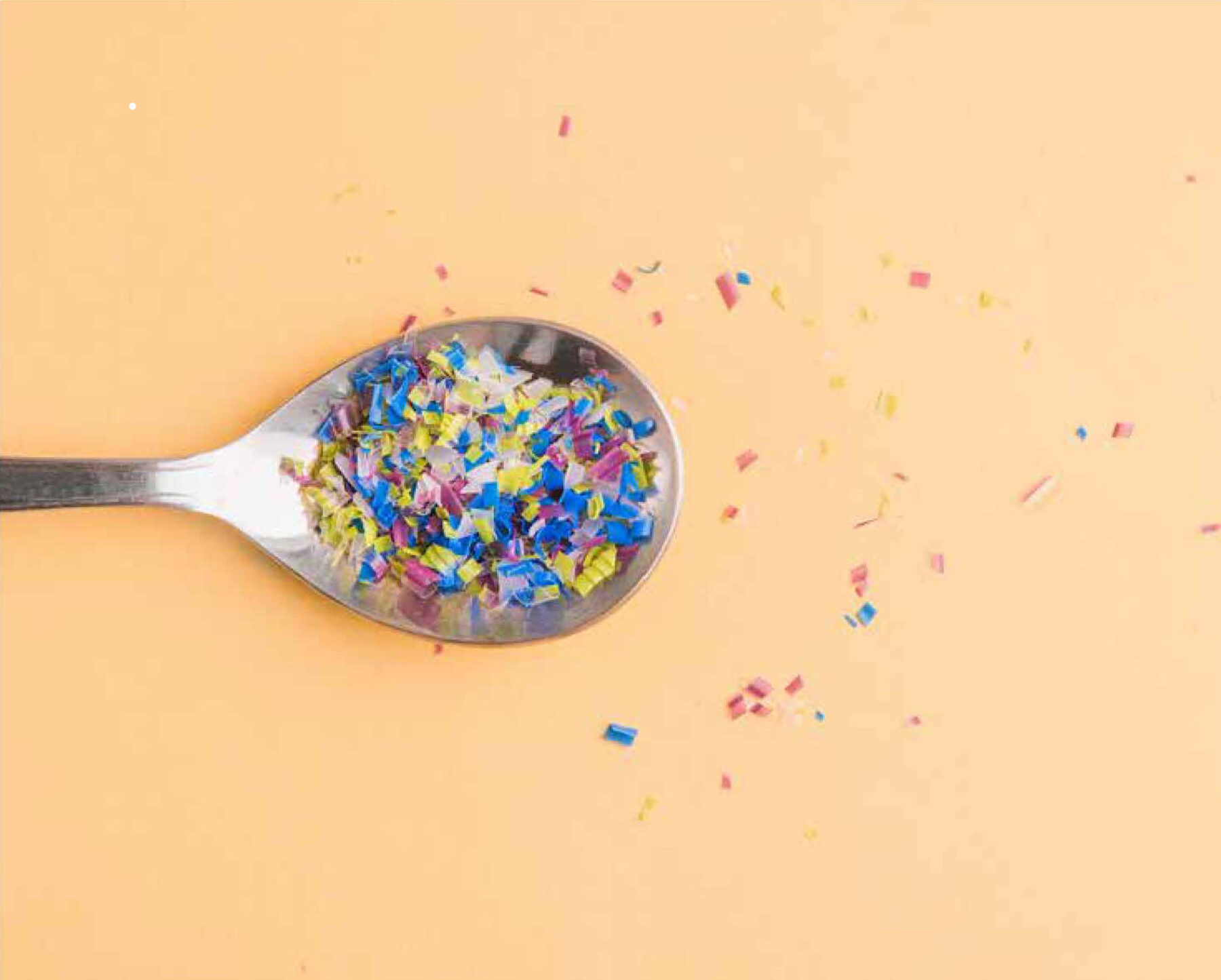
After collecting microplastic debris from Singapore’s coastline in the period from April to July 2018, marine scientists from the National University of Singapore have discovered more than 400 types of toxic bacteria on these microplastics that can cause coral bleaching and infections on wounds in humans.
The scientists from the NUS Tropical Marine Science Institute, led by lead researcher Dr Sandric Leong, and Ms Emily Curren, a PhD at the Institute, discovered the Photobacterium rosenbergii bacteria on the microplastic debris after utilising DNA sequencing to analyse the samples. This type of bacteria is known to cause coral bleaching and disease. The team also discovered Vibrio, a marine bacteria that can cause wound infections in humans, and Arcobacter, a bacteria that can cause gastroenteritis, on the microplastic debris collected.
According to Ms Curren, the fact that the microplastic debris were collected in public recreational areas that were easily accessible reinforced the added importance of identifying the “potentially pathogenic bacteria” as this could be be an important step in “preventing the spread of diseases” in Singapore.
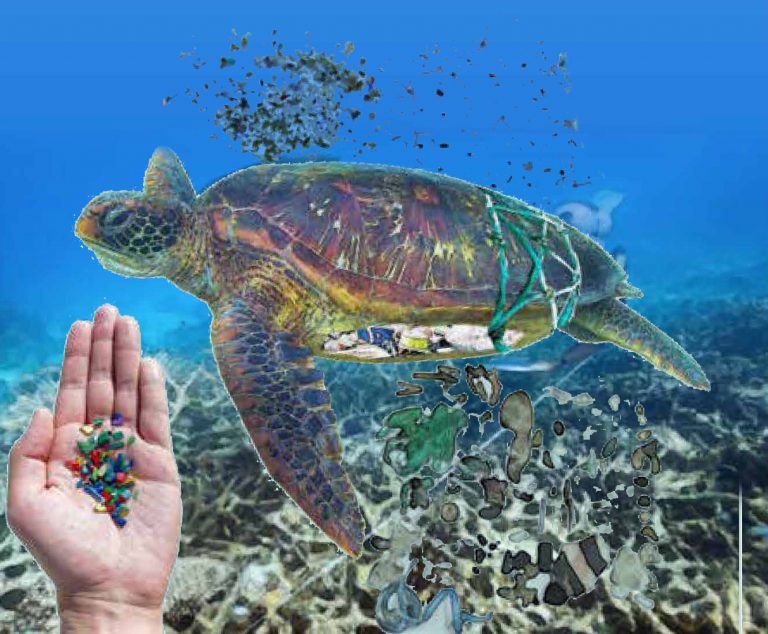
Microplastics, which are broken down from single-use plastic items such as plastic cutlery, straws and crockery disposed in the ocean, have a lifespan of hundreds of years and can be used by toxic bacteria as “safe havens” to propagate and thrive. Through time, these microplastic debris contaminated by harmful pathogens are eaten by small marine organisms like barnacles, which are in turn eaten by fishes – thus spreading harmful diseases to us by making their way up the food chain to humans.
With plastic pollution a major environmental problem and microplastics making up a large proportion of plastics in the ocean, the consumption of microplastics by marine organisms can lead to an accumulation and transference of marine pathogens up the food chain to human populations around the world.
Dr Leong cautioned that the analysis of the distribution of microplastics and the identification of the marine organisms associated with them are important steps to managing the problem of plastic pollution “on a national and global scale.
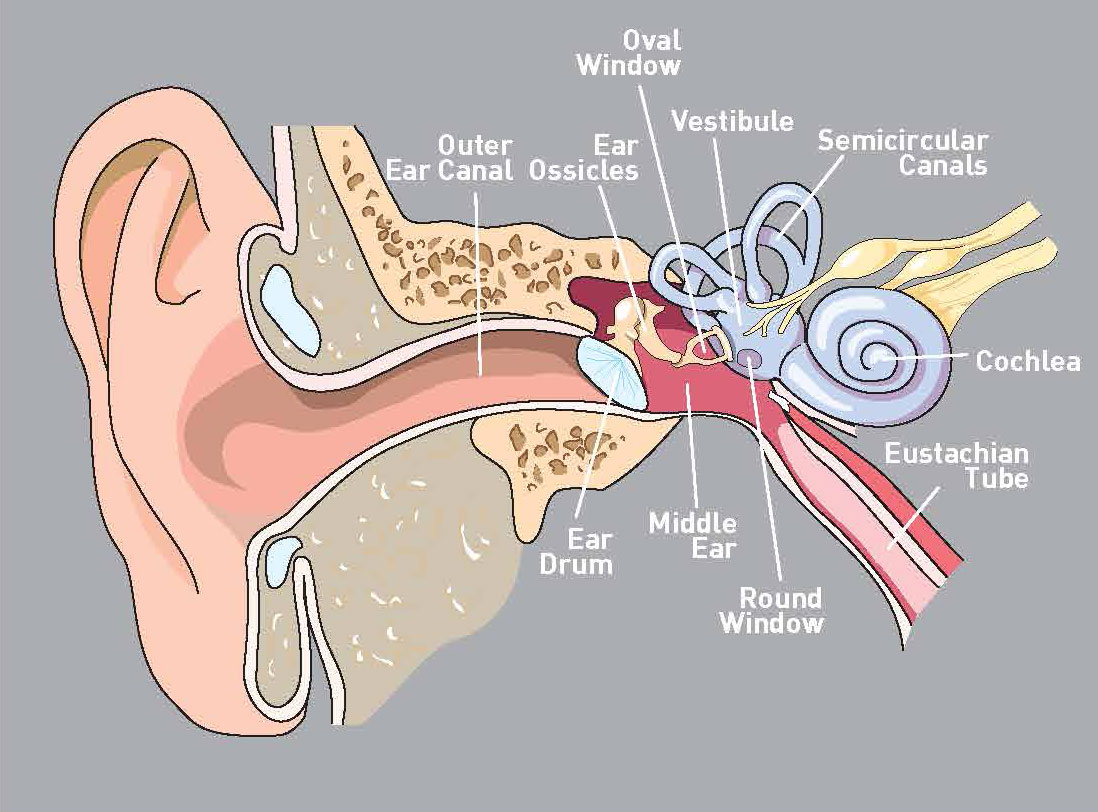
The ear is the organ of hearing and balance. Understanding its anatomy can help better illustrate why it’s essential to equalise. The ear consists of three distinct spaces filled with either air or liquid: the external, middle and inner ear.
As divers descend in the column of water, environmental pressure on the body increases in a linear fashion across the body.
To prevent pressure-related injuries such as bleeding, 0edema (swelling) of soft tissues, leakage of fluid into the air space and membrane rupture, divers must actively enable air from the throat to enter through the eustachian tubes into the middle ear by using equalisation techniques.
Why You Must Equalise
AT 1 METRE
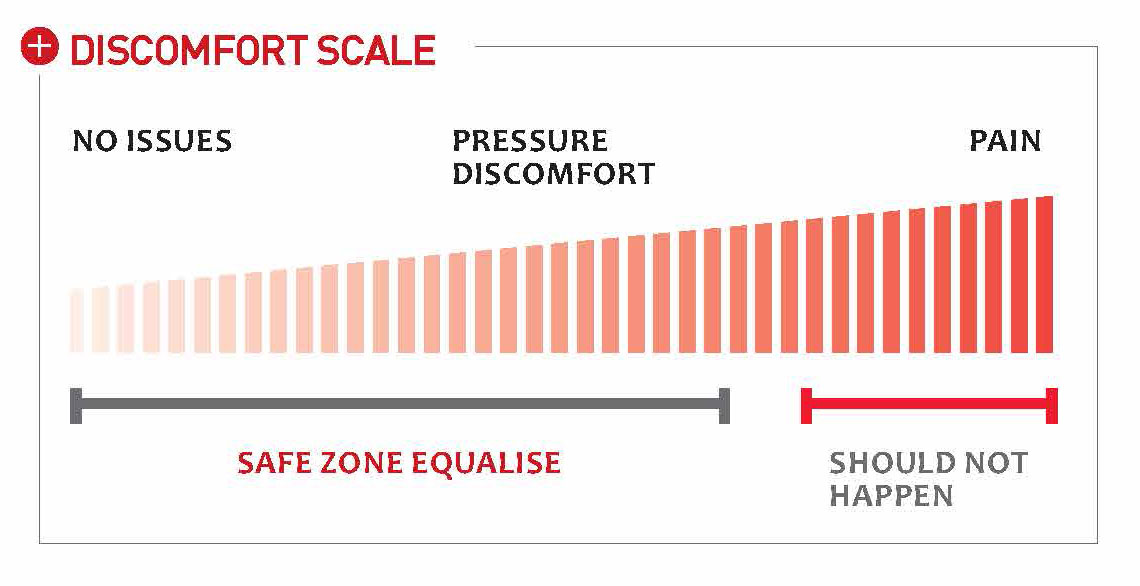
The water pressure outside of your eardrums is 10 percent greater than the pressure in your middle ears. Your eardrums flex inward to compensate – you may feel some pressure
AT 2 METRES
The pressure differential is 20 percent greater than at the surface and your eardrums bulge further. You feel definite pressure, and many begin to feel pain
BEYOND 2 METRES
Your eardrums are stretched to their limits. Unless you have equalised, you will feel significant discomfort or pain. The tissues and blood vessels in your ear may start to break, and as the pressure differential builds, your eustachian tubes will shut, making equalisation impossible
AT 3 METRES
If your eardrums haven’t broken yet, the pressure differential begins to draw blood and fluid from the surrounding tissues into your middle ears, causing middle-ear barotrauma. Pain may become a feeling of fullness which will remain for a week or more
BEYOND 3 METRES
If you haven’t equalised, your eardrum can break and cause water to flood your middle ears. The sudden exposure can cause vertigo
HOW TO EQUALISE
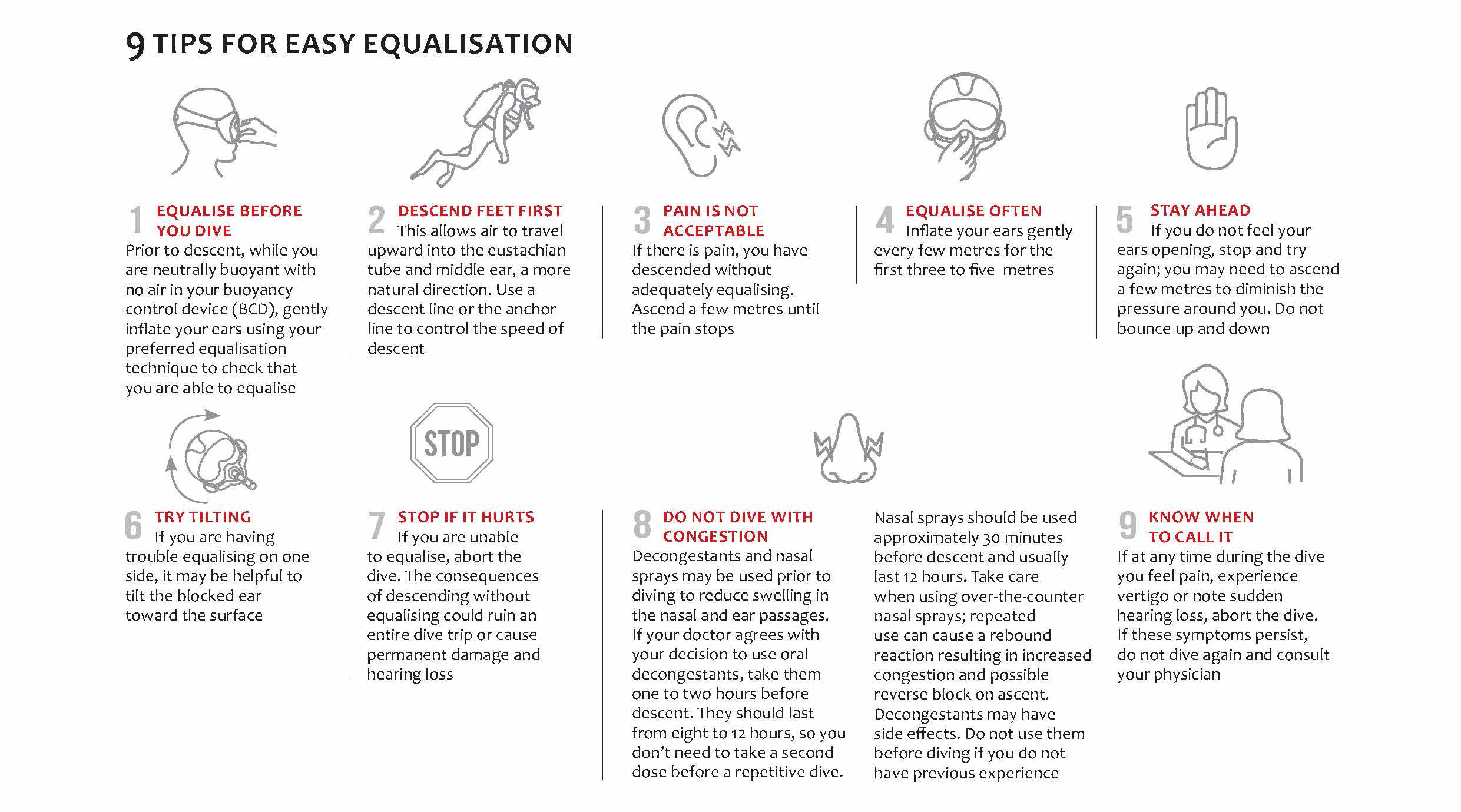
There are several techniques divers can employ to effectively equalise their ears.
PASSIVE
Requires no effort. Occurs during ascent
VOLUNTARY TUBAL OPENING
Try yawning or jaw wiggling
VALSALVA MANOEUVRE
Pinch your nostrils and gently blow through your nose
TOYNBEE MANOEUVRE
Pinch your nostrils and swallow (good technique, if equalisation is needed during ascent)
FRENZEL MANOEUVRE
Pinch your nostrils while contracting your throat muscles and make the sound of the letter “k”
LOWRY TECHNIQUE
Pinch your nostrils and gently try to blow air out of your nose while swallowing (think Valsalva manoeuvre meets the Toynbee manoeuvre)
EDMONDS TECHNIQUE
Push your jaw forward and employ the Valsalva manoeuvre or the Frenzel manoeuvre
PRACTICE MAKES PERFECT
Divers who experience difficulty equalising may find it helpful to master several techniques. Many are difficult until practised repeatedly, but this is one scuba skill you can practise anywhere – in a pool, on a plane or even at your desk. Just do it gently!
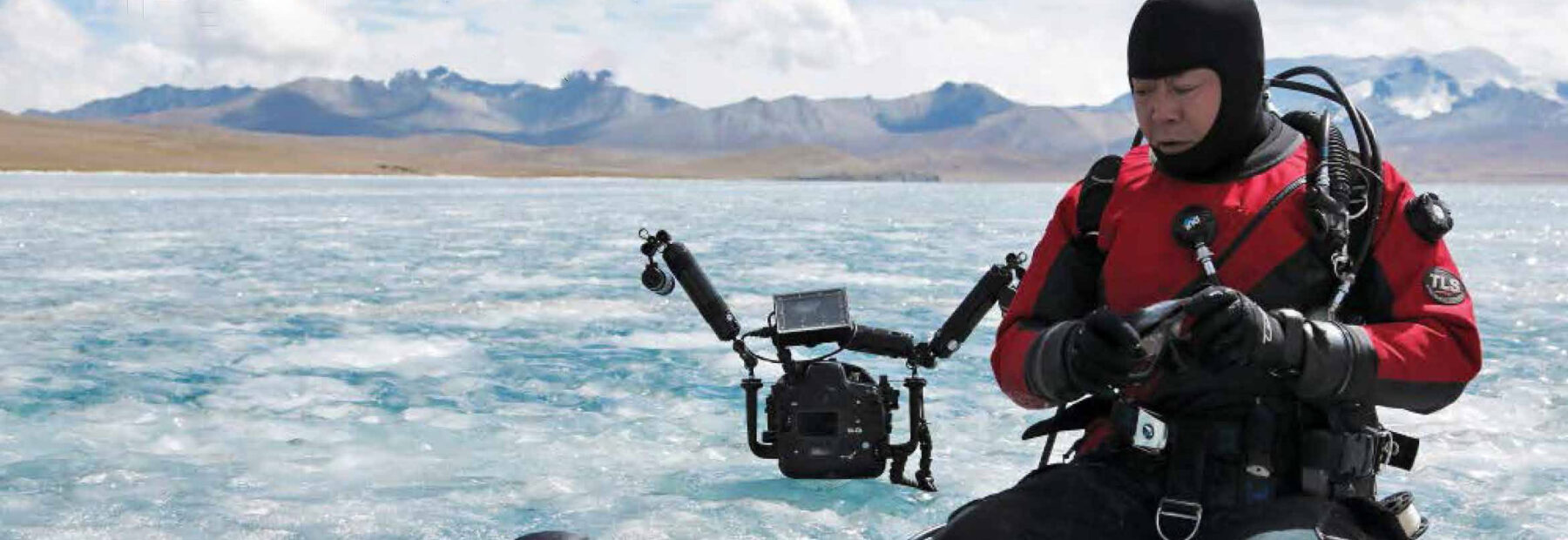
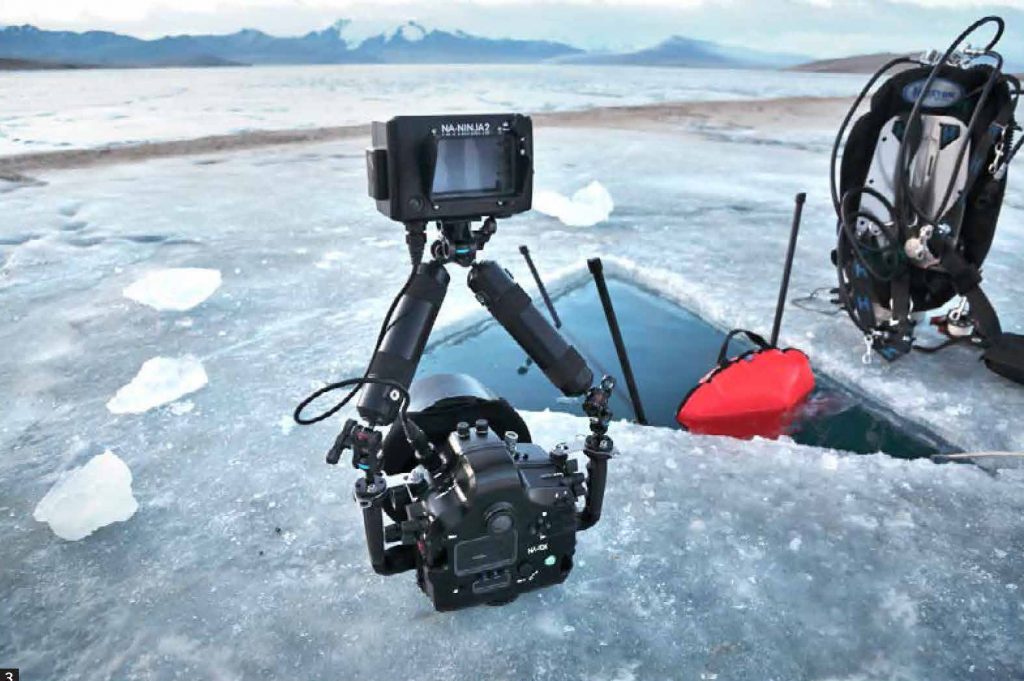
Before sunrise: The divers setting up their camera equipment prior to going underwater (Photo by Wu LIxin)
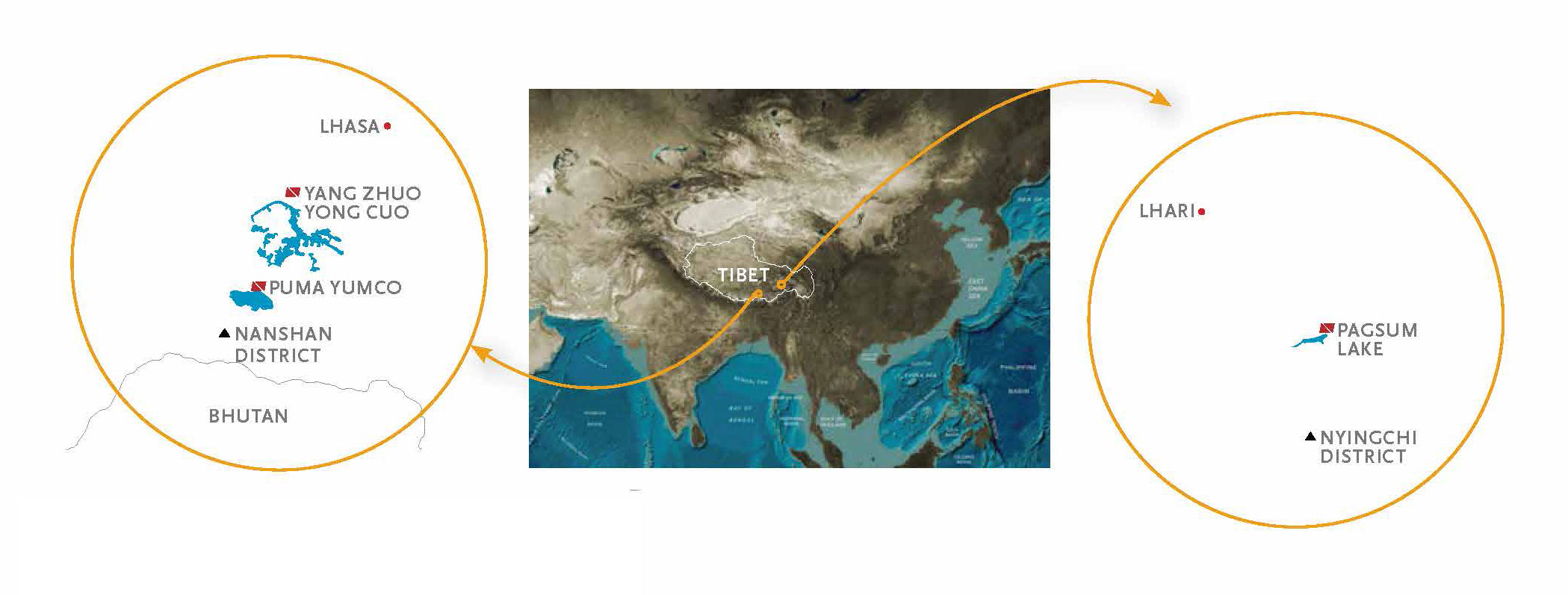
LOCATED AT a staggering altitude of 5,100 metres, Lake Puma Yumco (普莫雍错) would most certainly deter the amateur and the faint-hearted – but not a group of exploratory divers set out to conduct wildlife investigations in one of Earth’s most challenging freshwater environments.
According to the Professional Association of Diving Instructors (PADI), any time you scuba dive at an altitude higher than 300 metres above sea level, you’re altitude diving. Wu Lixin, one extraordinary tek diver and underwater photographer – together with his team – decided to take on Puma Yumco in February 2014, a wintry season when streams of water from the surrounding snow-capped mountains feed the freezing lake.
To date, there are no reference materials available for diving at an altitude beyond 3,000 metres. This historic photography project, commissioned by China Central Television (commonly known as CCTV), was targeted at documenting life beneath the surface of the Tibetan Plateau’s waters – a long-held East Asian mystery.
As they journeyed to the dive site, burdened by the weight of their equipment, Wu and his contemporaries were not spared the unforgiving effects of the extreme elevation. The lack of oxygen brought about impaired body movement and lethargy the team had never felt before while preparing to dive. In hindsight, Wu deems such debilitating environmental effects “unprecedented” – even for highly experienced dive “warriors”. At these altitudes, the actual maximum depth of 11 metres translated to a theoretical depth of 20 metres, demanding stepped-up planning, safety measures and adjustments made to their dive.
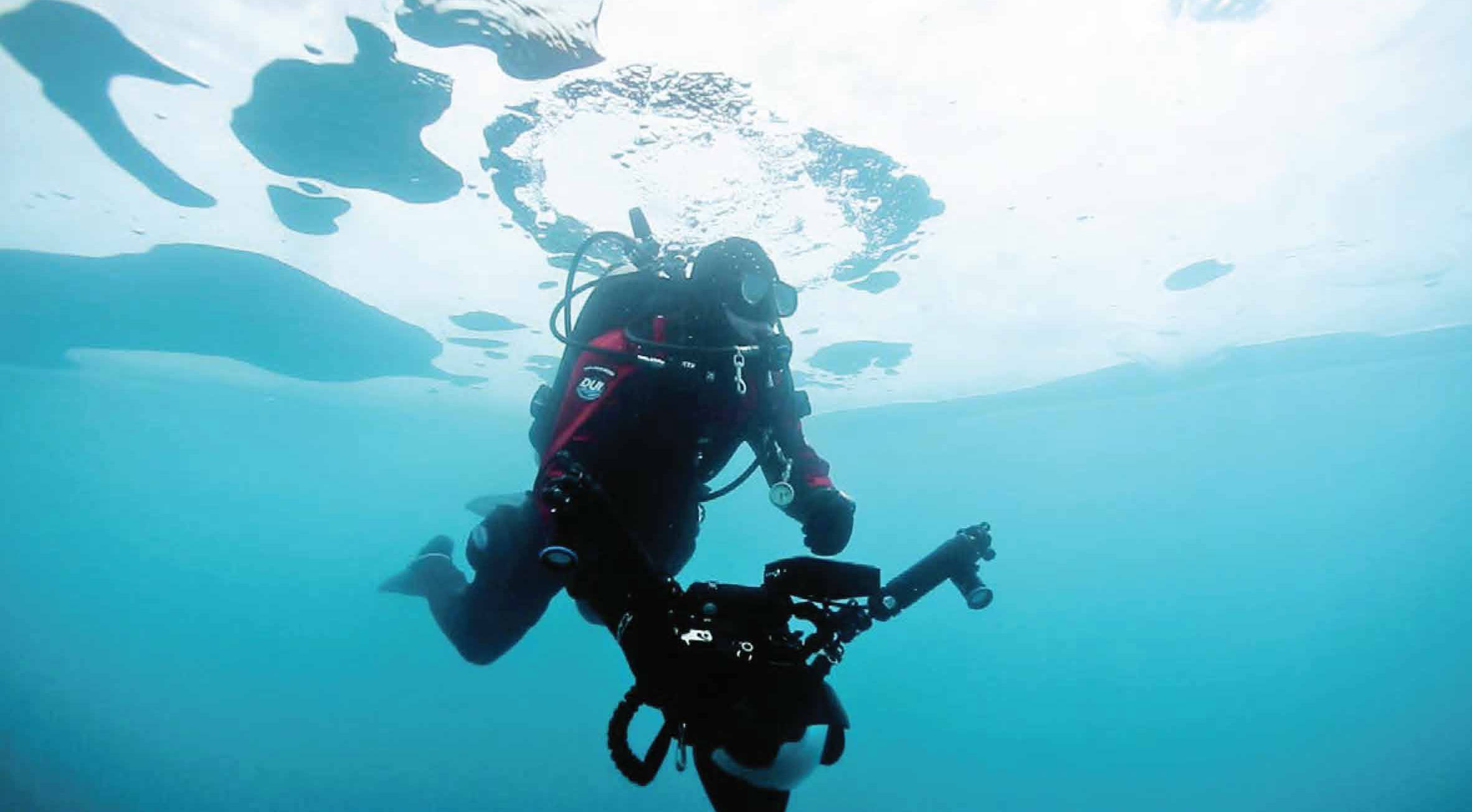
Beneath the ice: Besides the sound of himself exhaling, Wu also hears the loud groan of the ice as it breaks apart (Photo by Wu Lixin)
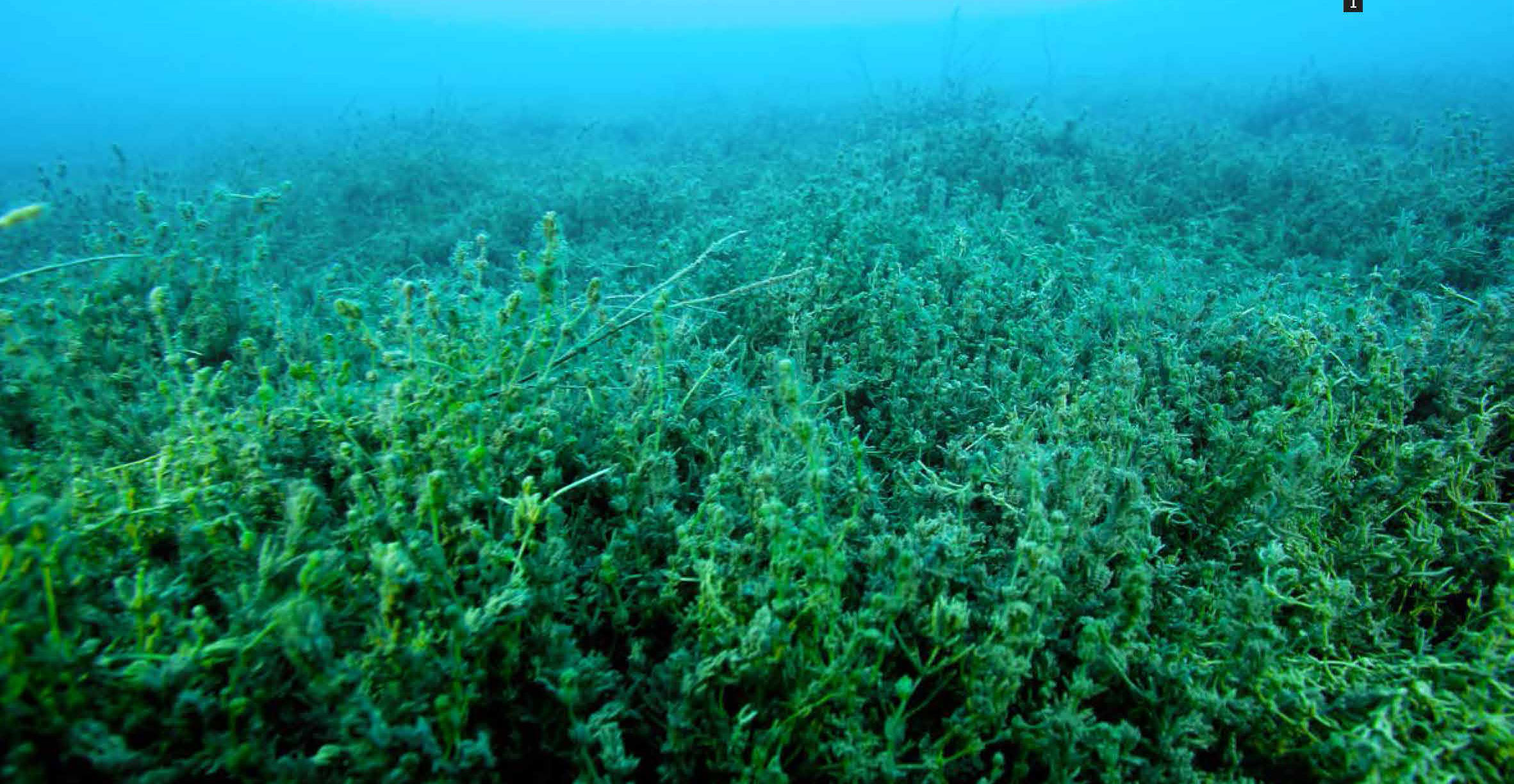
At the height of winter, the picturesque Puma Yumco, devoid of an outlet, develops intricate ice block patterns, caused by repeated cycles of freezing, fracturing and refreezing of the ice due to temperature variations as well as wind-induced ice motion. The name of this obscure geographical feature, 普莫雍错 (pronounced “pu-mo yong-cuo”), translates as “blue jewel that floats in the sky” – an apt description given that the lake inclines towards a blue to blue-green colour. This is due to the water’s ultra-oligotrophic nature – meaning that nutrient concentrations in both the water column and lake sediments are extremely low.
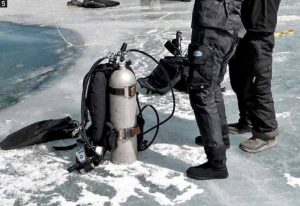
As February rolled around, the lake’s icy covering gave way to a water temperature of 2°C, guiding Wu’s choices of equipment: a DUI TLS350 drysuit, a 12-litre single cylinder tank with a Y-valve, a Halcyon Eclipse BC system (for single-tank diving) fitted with a stainless steel backplate, and two Apeks XTX200 regulators, ideal for cold-water diving (one intended as a back-up). Upon descending, the team was immediately accosted by several difficulties, the most impacting being drastic variations in buoyancy, typical at an altitude beyond 3,000 metres. This caused the divers to battle the risk of a sudden ascension due to loss of buoyancy control.
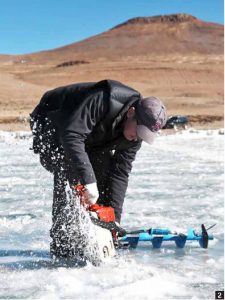
The underwater scene nearby the lake island (Photo by Wu Lixin)At an altitude of 5,000 metres, using a chain saw to create an entrance in the ice surface proves to be a highly physically demanding feat (Photo by Wu Lixin)Before sunrise: The divers set up their camera equipment prior to going underwater
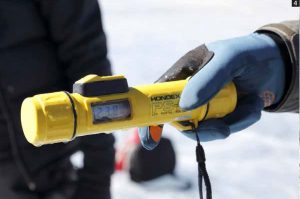
Using a mini sonar altimeter to test the water depth (Photo by Wu Lixin)Finally, the team is ready to descend (Photo by Wu Lixin)
Contrary to common expectations, the environmental limitations prevented Wu from conducting any decompression stops at all. The key procedure aimed at minimising unforeseen contingencies was simply reducing bottom time. The team also stuck to a conservative ascension rate of three metres per minute, instead of the usual nine metres per minute.
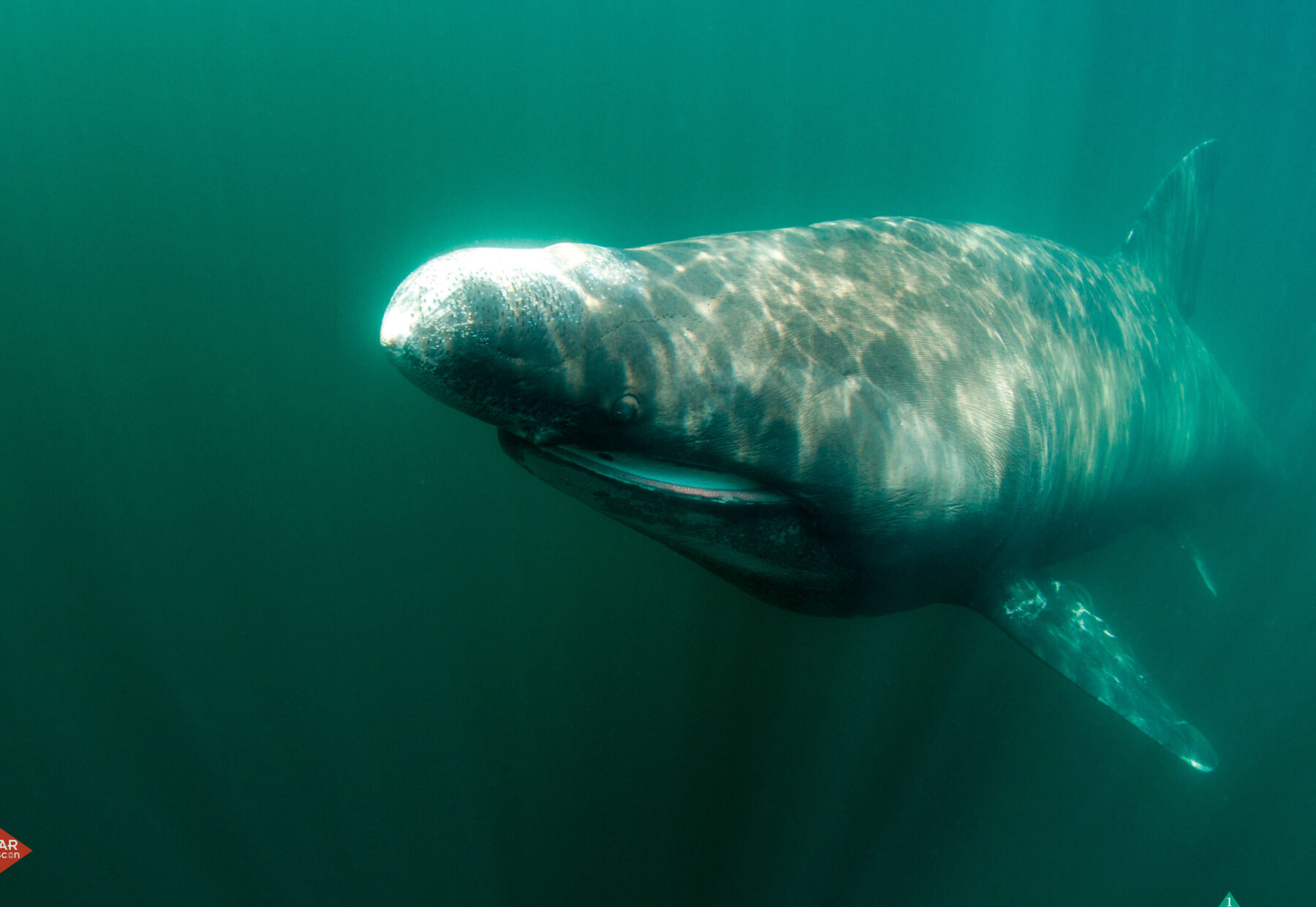
1. Found in all the world’s temperate oceans, the basking shark, Cetorhinus maximus, is the world’s largest living fish, after the whale shark
Settings: f/6.3, 1/160s, ISO 320
(Photo by Tom Burns)
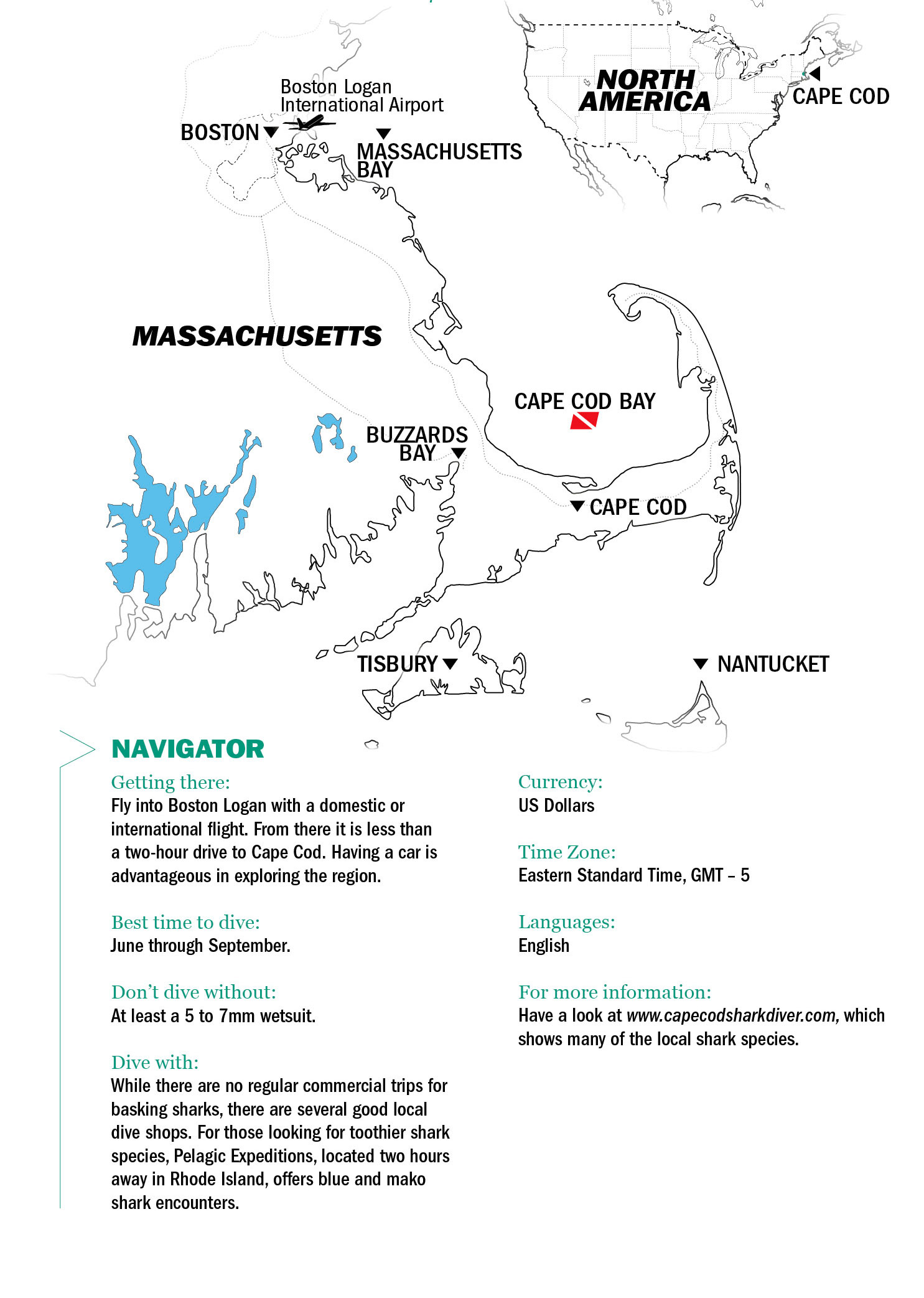
A large dark brown silhouette slowly emerges from edge of visibility in the cold water of the North Atlantic. Contrasting the cobalt green, the fuzzy bulk of brown increases to the massive form of a large shark – and it’s headed our way. We are off Chatham, Cape Cod, where only a few miles away white sharks ply the waters looking for an easy feeding opportunity.
But it is not the iconic great white shark that brings us back time again to these notorious waters. Here the cool Gulf of Maine floods to meet the Gulf Stream further south, producing a biomass of spectacular proportions. In these waters humpback whales feed by the dozens, grey seals are too numerous to count, and more than a few razor cool species of shark make this their summer home.
We are here to visit the common but seldom witnessed basking shark of the western North Atlantic. As I fin ahead the large silhouette comes into focus and begins a slow turn left. The large male basking shark quickly comes upon us. Sun dapples his rich tan back, contrasting his vanilla white mouth. With camera on subject, the 3,000-kilogram animal glides by with the ease of a warm knife through butter. As it swims by its small but curious eye gives us a second look.
Now turning back towards me, the basking shark surprisingly moves with a stature of more classic predatory sharks. Dozens of lampreys the size of cats flutter to adjust to the new course of their mother ship, adhered all over the shark’s interdorsal ridge and tail. As the large shark circles in for a closer inspection, it feels like I am witnessing a window into a world completely unchanged for millennia.
BEHEMOTH CITY
Basking sharks visit New England waters June through October. Population numbers are poorly understood but encounters with boaters off Cape Cod are common. They arrive following a biomass of krill and baitfish to the Cape for summer feeding season, as do large numbers of humpback, finback, and minke whales. The “whale show” offshore is often breathtaking, and it always seems the humpback whales steal the show, at times by hurling their 30-tonne bodies into the air.
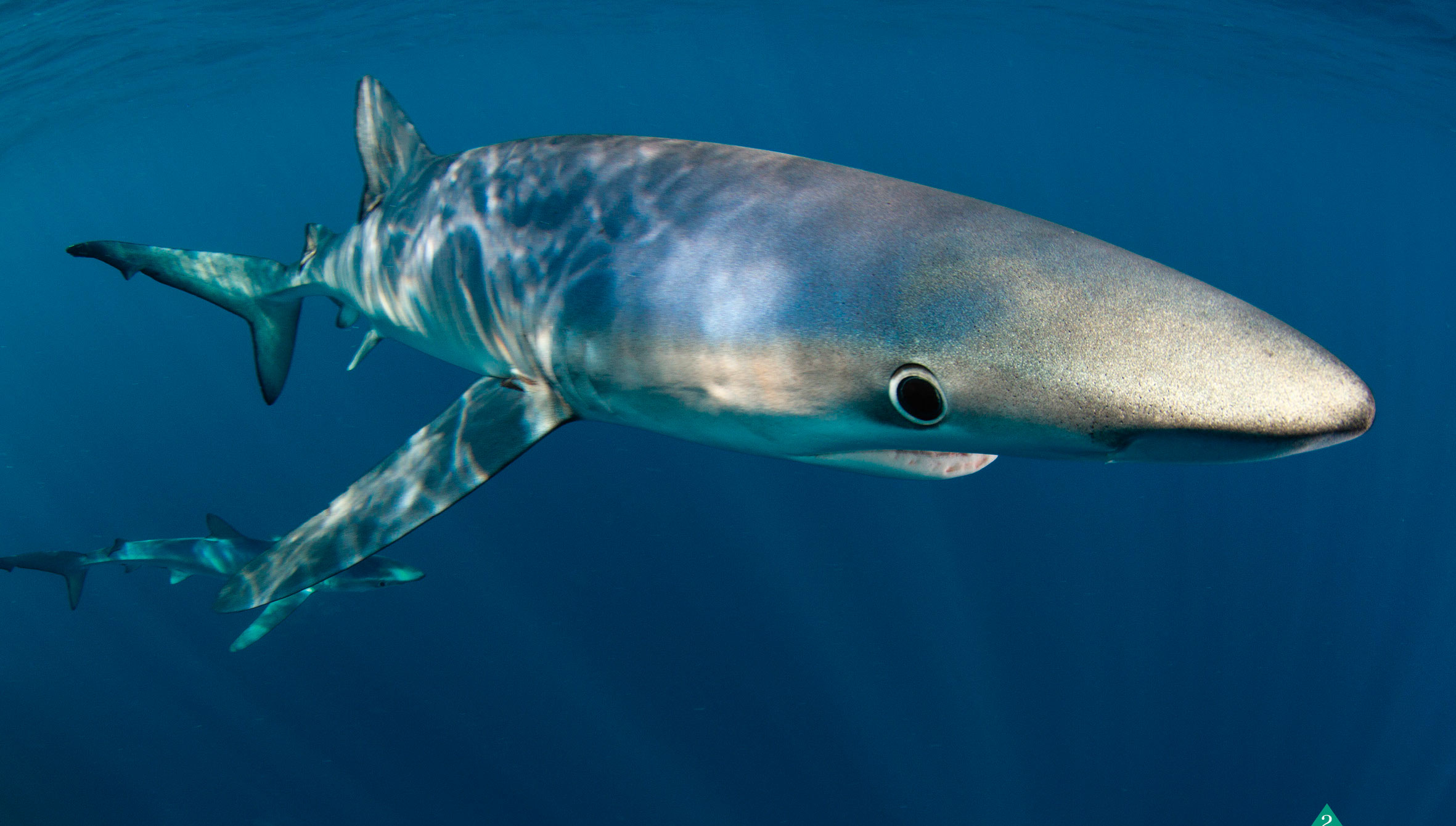
There are also chances of sighting the elegant blue shark, Prionace glauca, off Cape Cod Settings: f/6.3, 1/160s, ISO 320 (Photo by Tom Burns)
And it’s not just the whales off Cape Cod that keep the basking sharks in obscurity. From ocean sunfish, Atlantic white-sided dolphins, leatherback turtles, to cruising blue sharks offshore, there are a lot of big fish in this ocean. Thousands of grey and harbour seals hug the coastline, with sightings almost guaranteed. And the seals attract perhaps the most notorious summer visitor of all – the great white shark. Increased numbers of sharks are visiting the region in recent years, and the data suggest that trend is only increasing. But for the most part the white sharks in this region keep a very low profile, and will most commonly avoid an encounter.
The basking sharks of the western North Atlantic were until recently poorly understood. But shark biologist Dr. Greg Skomal, perhaps better known for his work with the smaller but toothier cousins hunting just to our west, has given us insight into the second-largest fish and shark in all the oceans. And to many shark diving enthusiasts, seeing the enormous gape of a feeding basking shark first-hand goes unfulfilled on their bucket list.
ANCIENT MIGRATIONS
Satellite tagging work done by Skomel and the Massachusetts Department of Marine Fisheries has uncovered the migratory habits of this species. Their surprising data revealed that basking sharks head south in the autumn months – far further than most had speculated – crossing the equator to congregate as far south as the Amazon River basin of South America. This transcontinental path has likely been used for a hundred million years, but only now do we have insight into their incredible range of travel. Each spring they likely repeat the trip north, to feed in the nutrient-rich waters of the North Atlantic.
Read the rest of this article in Issue 6/2014, OP No. 1 of Scuba Diver magazine by purchasing the issue here or check out all of our publications here.
Mediterranean
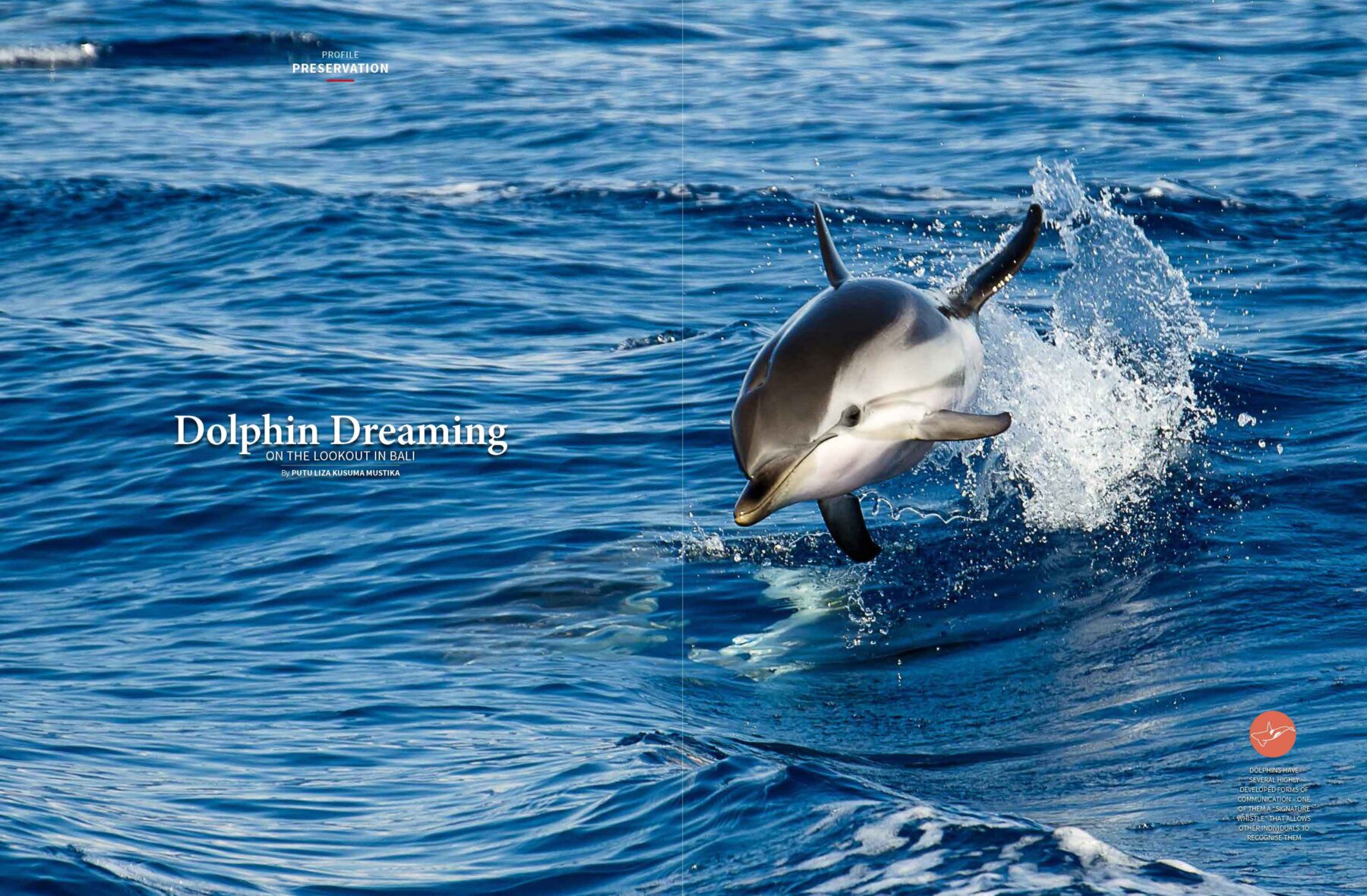
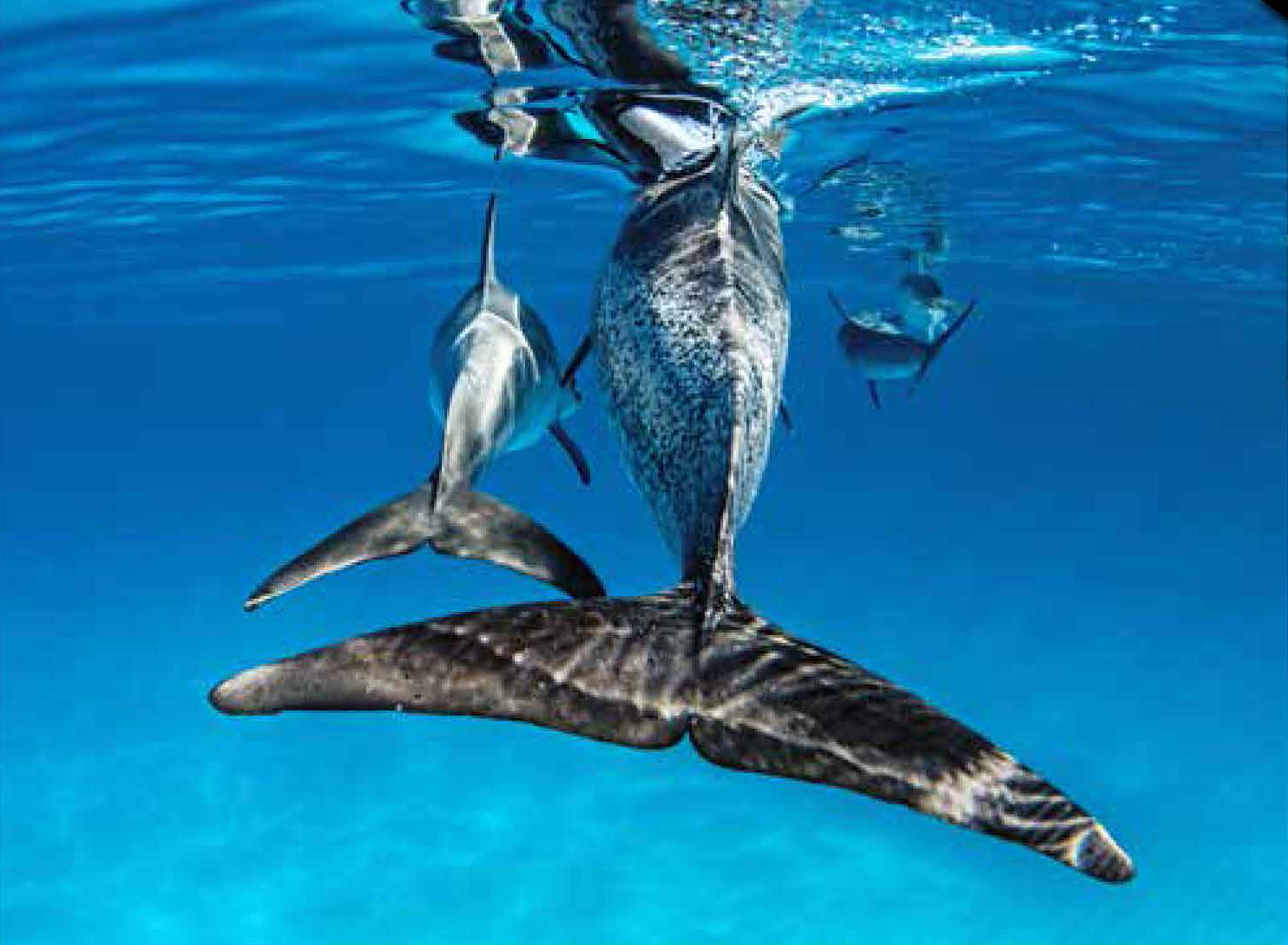
Sea, Nizza: The striped dolphin
(Stenella coeruleoalba) is an extensively studied dolphin found
in temperate and tropical waters
of all the world's oceans, fortunately
listed as “Least Concern” on the
IUCN Red List (Photo by Greg Lecoeur)
NEXT time you’re in Bali for a few days of diving, you might also want to consider adding dolphin watching to your agenda. But wait, are there dolphins in Bali?
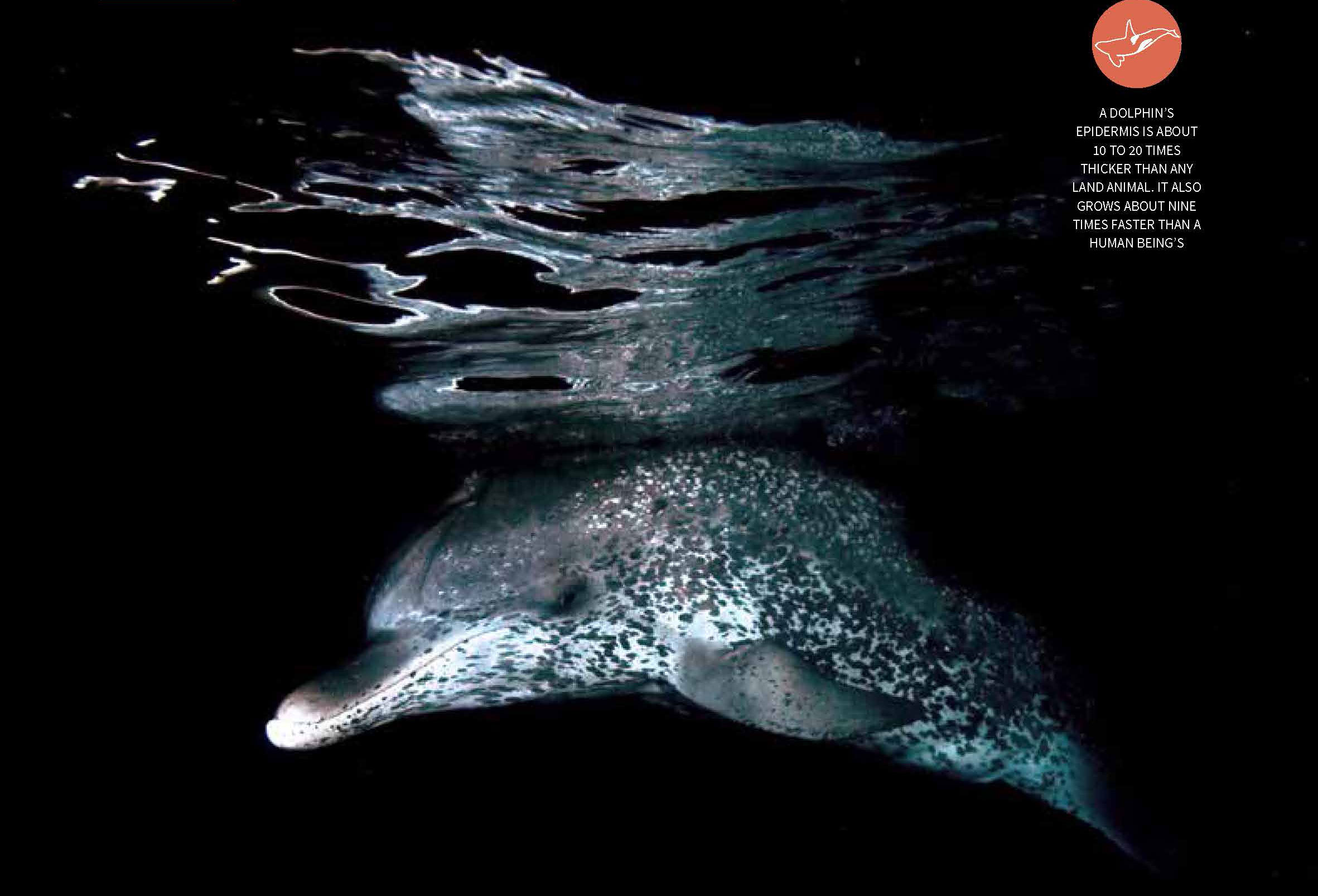
Absolutely! Bali does indeed have dolphins roaming about its waters. The island has whales as well, although the sightings are not as frequent as that of dolphins. There are at least 14 species of whales and dolphins in Bali, including spinners, spotted dolphins, bottlenose dolphins, Fraser’s dolphins, Risso’s dolphins and rough-toothed dolphins.
You’re likely to see a variety of dolphin species pretty much all year round. Dolphins are regularly sighted in the mornings off the southern peninsula, just half an hour by boat from crowded Denpasar via Benoa Harbour. Here, you typically find spinner dolphins doing somersaults, as they hunt food in the early hours of the day, although other species such as Risso’s dolphins and false killer whales may be seen as well, if you’re lucky.
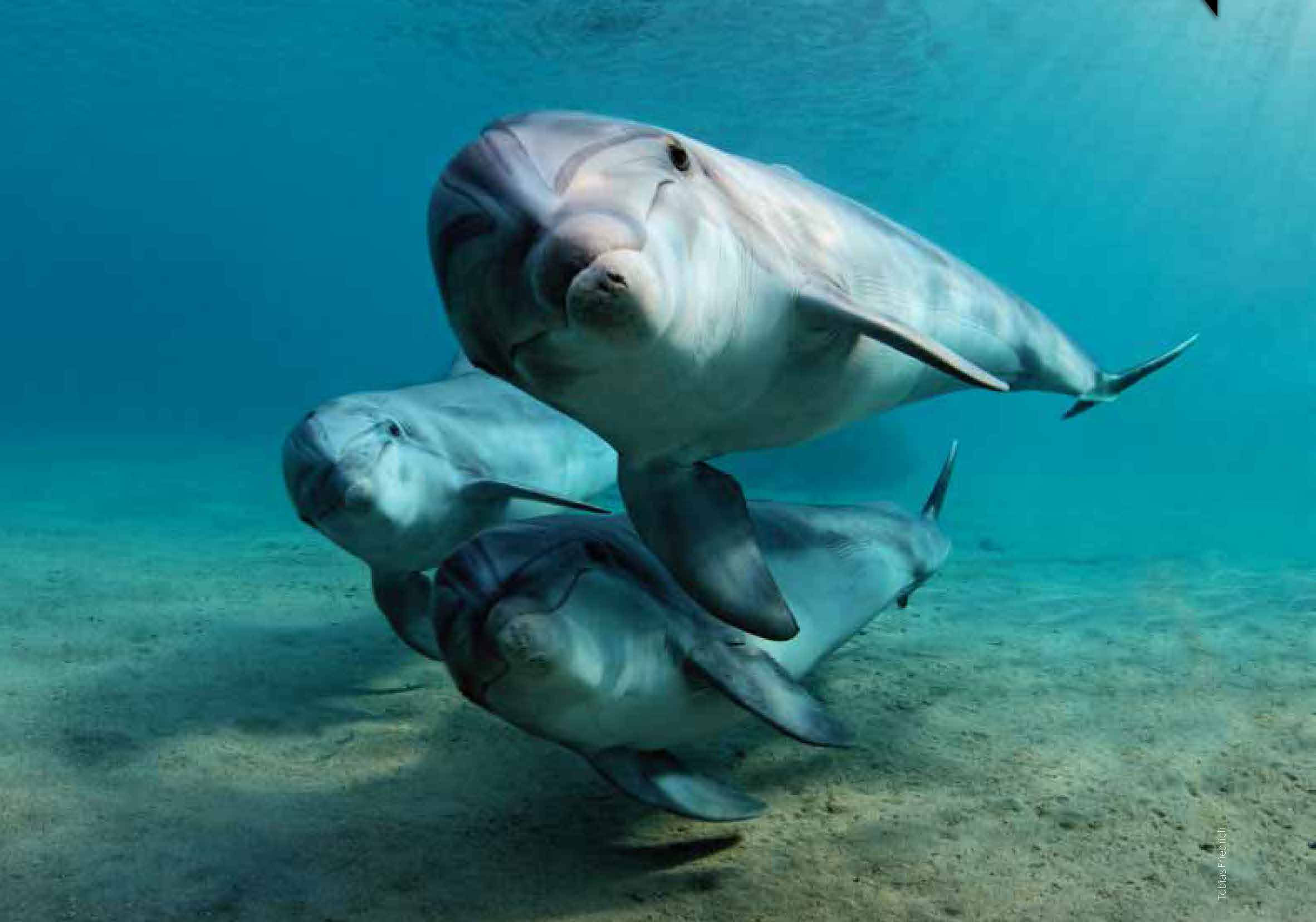
Eilat, Red Sea: Common bottlenose dolphins (Tursiops truncatus), are the most familiar dolphins due to the wide exposure they receive in captivity in marine parks and dolphinaria and in movies and television programmes. This symbolic species is of “Least Concern” on the IUCN Red List (Photo by Tobias Friedrich)
If you’re in the north of this paradise island, or planning to explore this more tranquil region of Bali, you can head to Lovina or Bondalem in Buleleng for some dolphin sightings at the break of day.
Established around 1987, the industry in Lovina has grown exponentially, and it can feel rather crowded here when you have 40 other boats around you trying to catch a glimpse of dolphins as well. Bondalem, a village 40 kilometres east of Lovina, started the industry around 2001. Not as many boats operate in Bondalem, so the experience can be much more relaxing than Lovina. Spinners and Fraser’s can be seen off both Lovina and Bondalem.
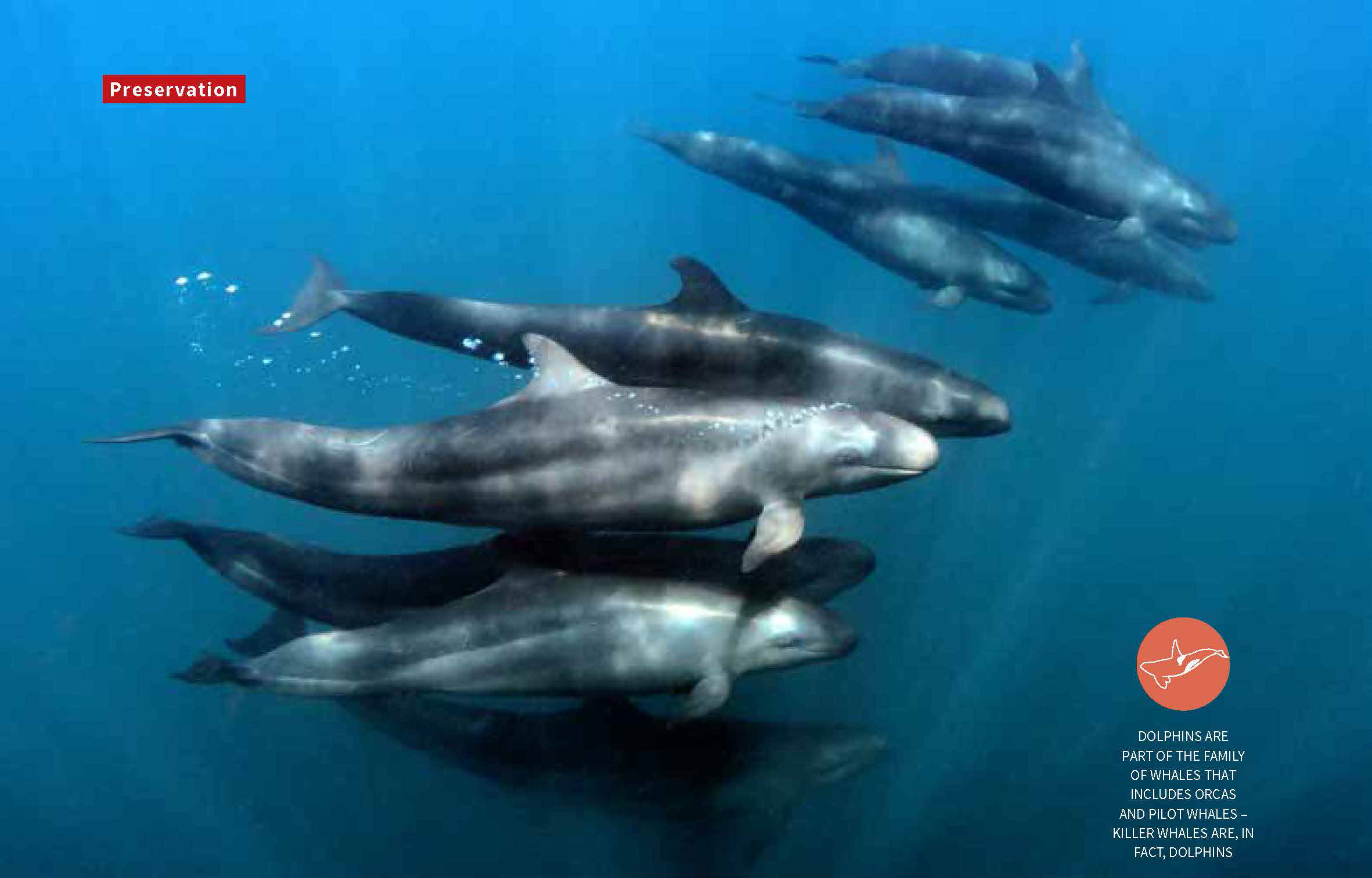
The false killer whale (Pseudorca crassidens) is the third largest member of the oceanic dolphin family (Delphinidae) and is listed as “Data Deficient” on the IUCN Red List (Photo by Amanda Cotton)
As responsible tourists, we need to ensure that there’s an adequate distance between our boats and the dolphins. Some international guidelines suggest stopping the boat 50 metres from the dolphins and from there, allow the animals to swim towards you – instead of the other way around. We also need to ensure people don’t feed the dolphins, or worse, throw garbage in the sea. It’s easy for these animals to misidentify litter as food and ingest it.
The pantropical spotted dolphin (Stenella attenuata) is a species found in all the world’s temperate and tropical oceans, under threat due to the mass killing of individuals in tuna purse seines, a method of fishing that employs a seine or dragnet (Photo by Amanda Cotton)
Dolphins and other marine life have been found dead at beaches around the world with plastic waste inside their stomachs. We can help by doing our utmost to prevent littering in the ocean. And if you do find any stranded whales or dolphins in Bali, contact the national marine mammal stranding network for help – they are trained to assist and hopefully save the lives of these hapless marine mammals.
Read the rest of this article in 2015 Issue 2 Volume 137 of Asian Diver magazine by subscribing here or check out all of our publications here.
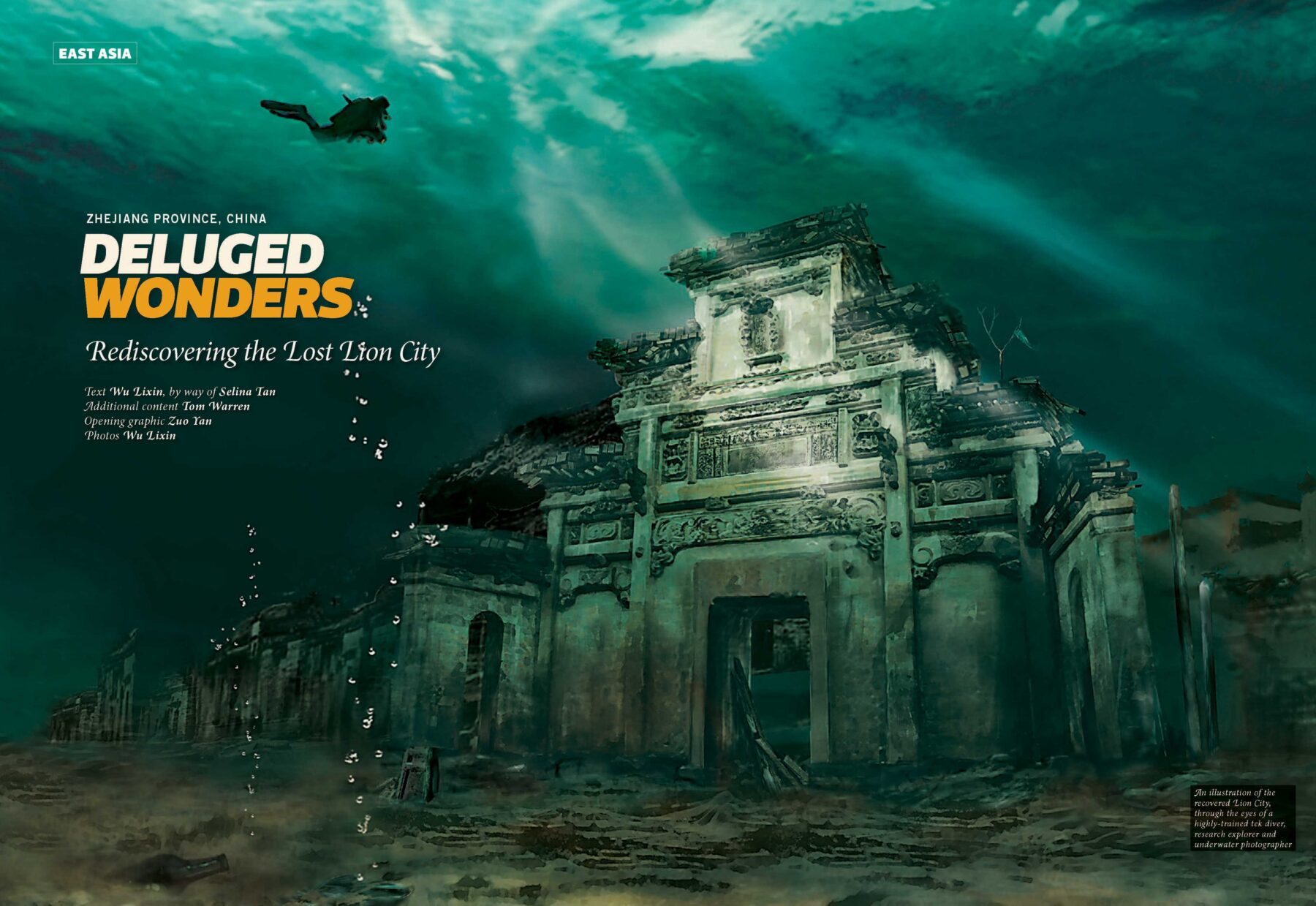
An illustration of the
recovered Lion City,
through the eyes of a
highly-trained tek diver, research explorer and underwater photographer (Illustration by Zuo Yan)
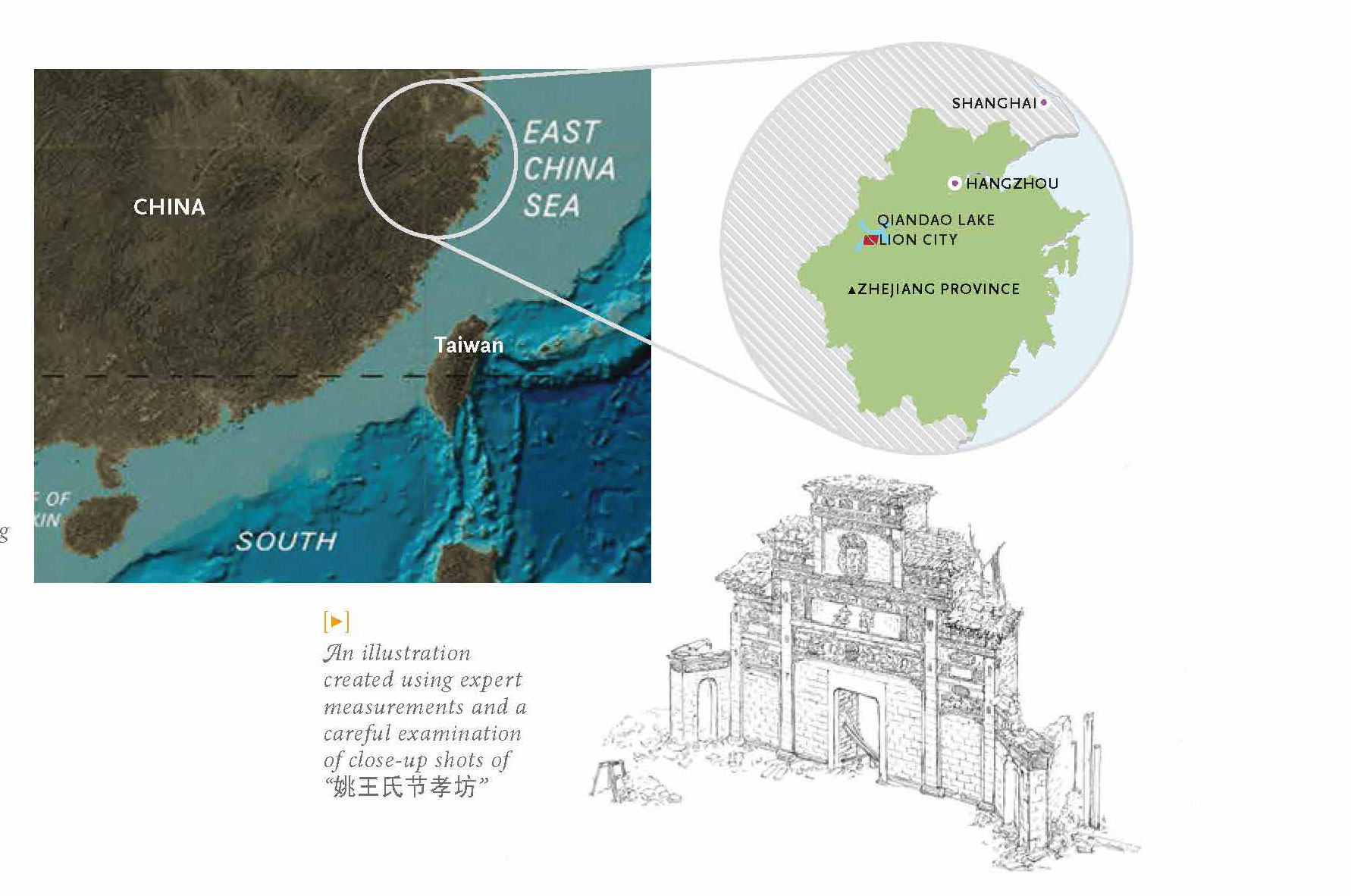
AS THE WORK WEEK ends in Shanghai, a group of divers prepares to journey 400 kilometres southwest to Qiandao Lake (千岛湖), meaning “Lake of 1,000 islands”, in Zhejiang Province, China – for an adventure like no other.
The mysterious lake was formed 60 years ago, in September 1959, when the Xin’an River was dammed to create a hydroelectric station. As a result, the Xin’an reservoir flooded a grand total of two counties, three towns, more than a thousand villages and the surrounding valley that together, played home to 300,000 people. Among the major two counties, there is one – officially named Sui An County (遂安城县) – that dates back to 1,800 years old ago. Later, it adopted the alternative name Lion City (狮城).
Fascinatingly, research divers discovered after extensive exploration (300 dives for myself) there that the submerged Lion City was constructed during the Han dynasty, way back in AD 208. It lay at the foot of Wu Shi Mountain (五狮山), but went beneath the surface with everything else positioned up to 108 metres above sea level then. So far, we have ventured down to as deep as 32 metres. While there is no current in the lake, the muddy, silty bottom means that visibility is far from ideal. At the surface and down to mid-depths of 16 to18 metres, visibility stands at 6 to 8 metres, but this quickly plummets to just 0.5 to 3 metres near the bottom.
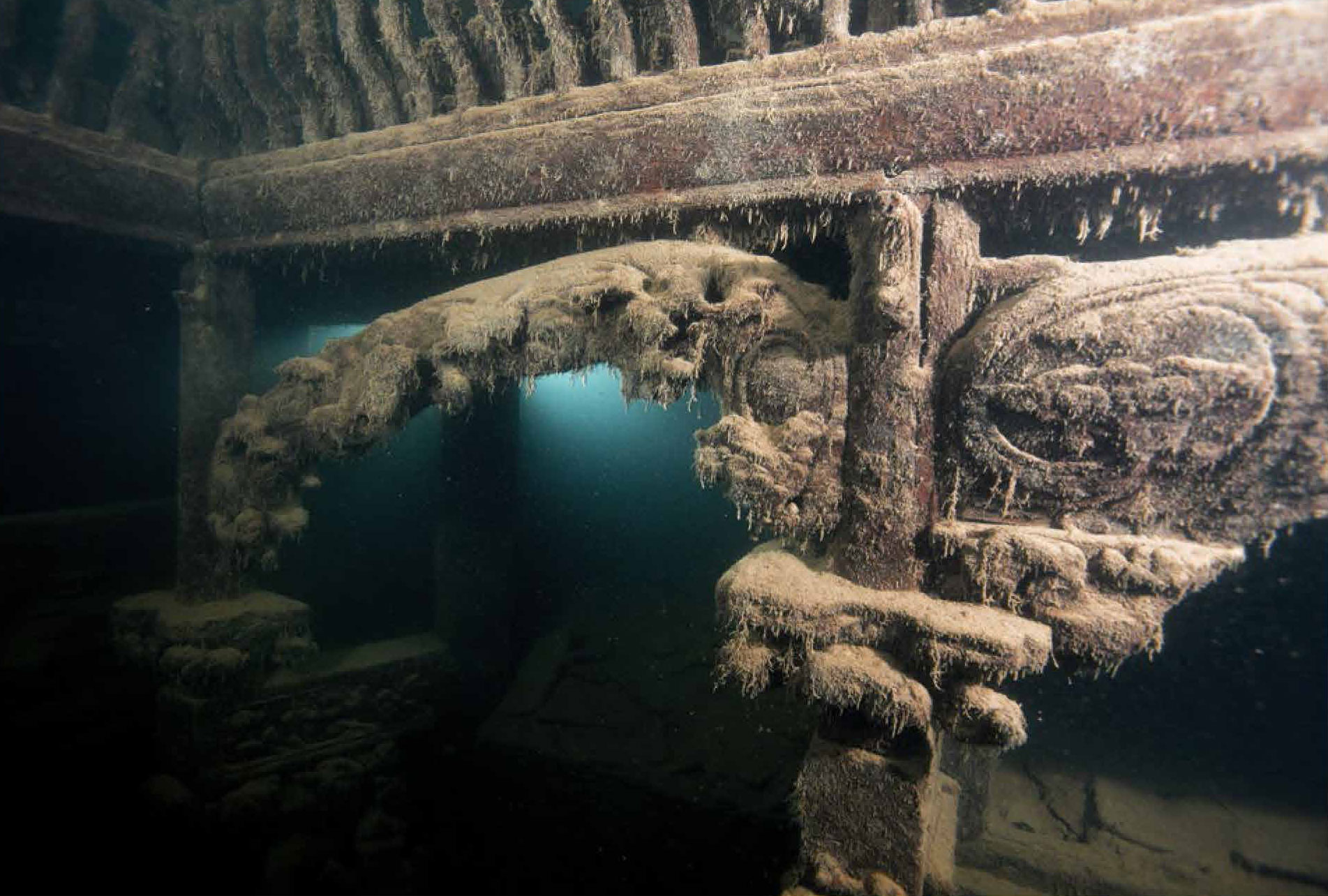
The remains of ancient dwellings: Interiors are widely embellished with decorative wooden carvings (Photo by Wu Lixin)
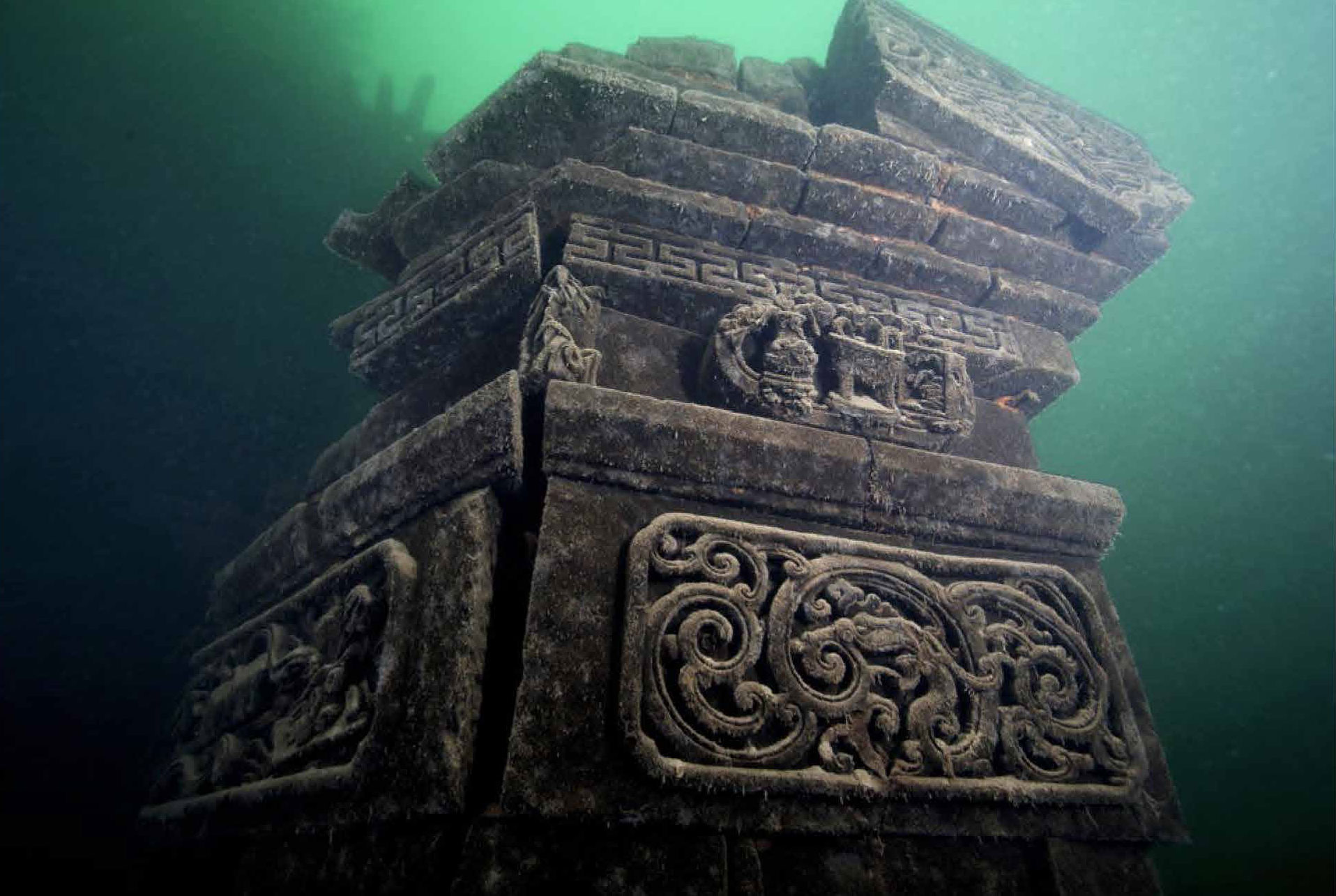
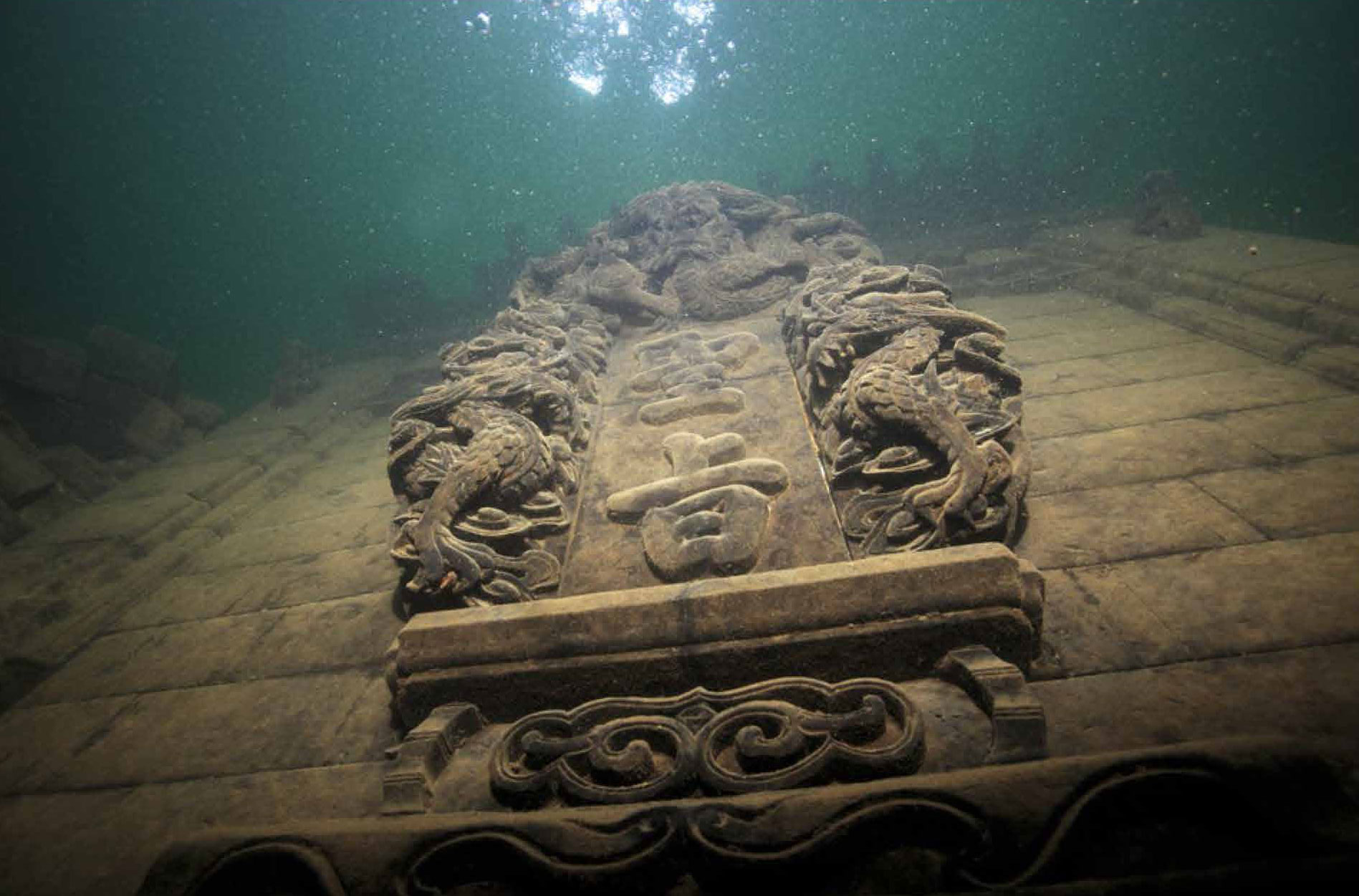
Temperatures at the greatest depths are a constant 10 to 12°C, which demands a good dry suit. In recent years, a bright red line was installed as a means to guide recreational dives over the city’s external wall, towards one of its 16 memorial arches or pai fang (known locally as 牌坊), built in olden times by the order of the royal family to recognise certain exceptional talents or commemorate traditional Chinese values. These structures of various forms date back to the Ming and Qing dynasty, with some being composed by brick and others, stone and wood.
The most popular pai fang, which is made of brick, was erected in 1777, in accordance to Emperor Qianlong’s intention of celebrating a civilian woman’s chastity and piety (节 denotes purity and 孝represents filial obedience) – hence its name 姚王氏节孝坊. With each pai fang boasting four mind-blowing, intricate carvings depicting lions, expert divers have sighted eight of such beauties within two uncovered memorial arches.
This memorial arch, which has become popular with skilled divers, was constructed in 1777. Despite being subjected to freshwater erosion for close to 60 years, it still remains in excellent condition (Photo by Wu Lixin)
On our exploratory dives around the city we have discovered many streets and buildings that warrant further investigation. There are also a number of ground wells and large administration buildings close to the riverbed running through the submerged city. The darkness and the cold are not the only factors limiting dive time; Another significant hurdle to contend with is the lake environment itself, which challenges the highly experienced diver to be ready to ascend and descend at any point.
The most well preserved pai fang, named “姚王氏节孝坊”, was constructed under the imperial instruction of Emperor Qianlong – hence, the inscriptions “圣旨”(imperial decree) are prominently displayed (Photo by Wu Lixin)
Read the rest of this article in 2014 Issue 4 Volume 133 of Asian Diver magazine by subscribing here or check out all of our publications here.
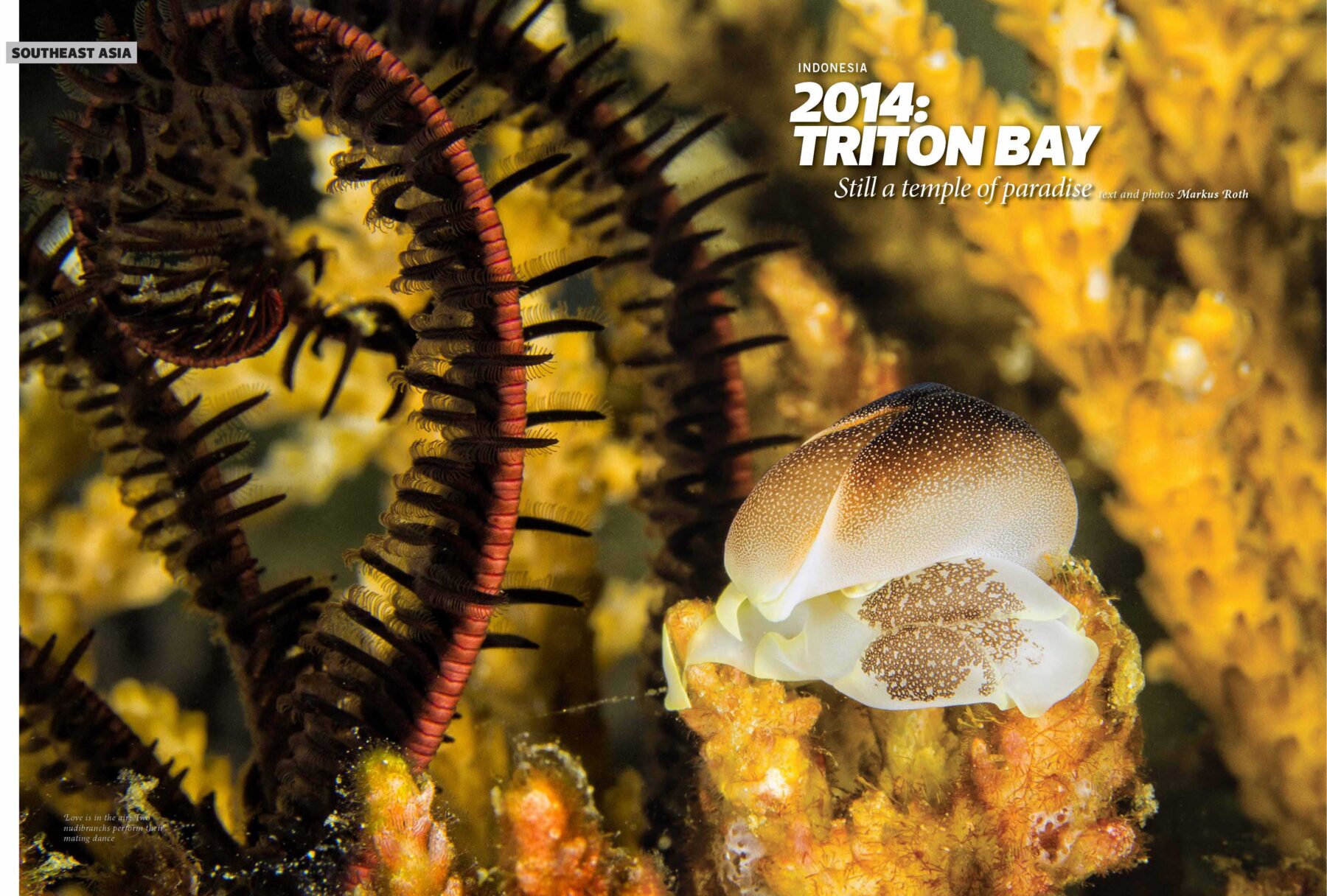
Love is in the air: Two
nudibranchs perform their mating dance (Photo by Markus Roth)
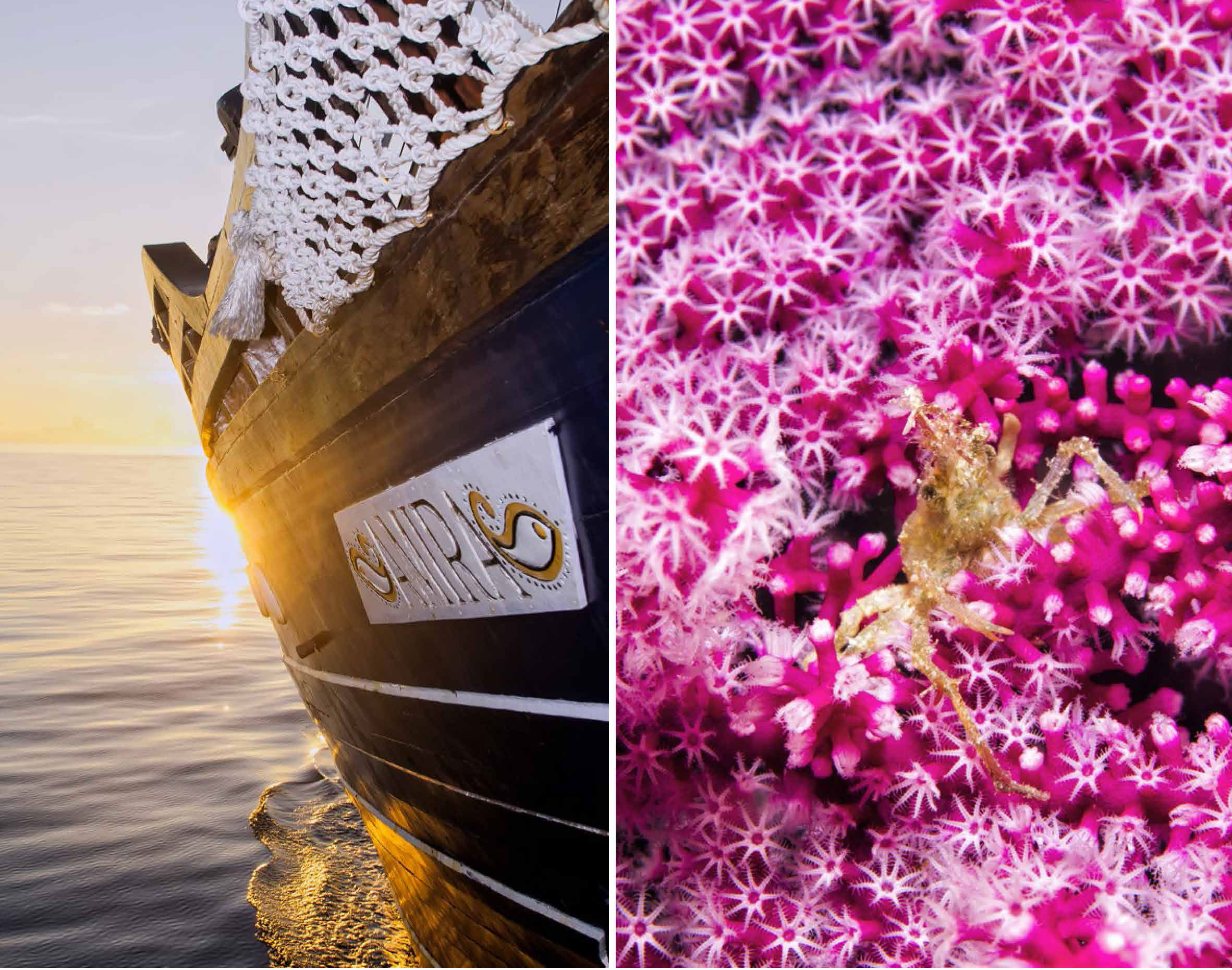
Left: Sunsets in magical places like Triton Bay are daily highlights Right: This soft coral crab is a master in playing peek-a-boo (Photo by Markus Roth)
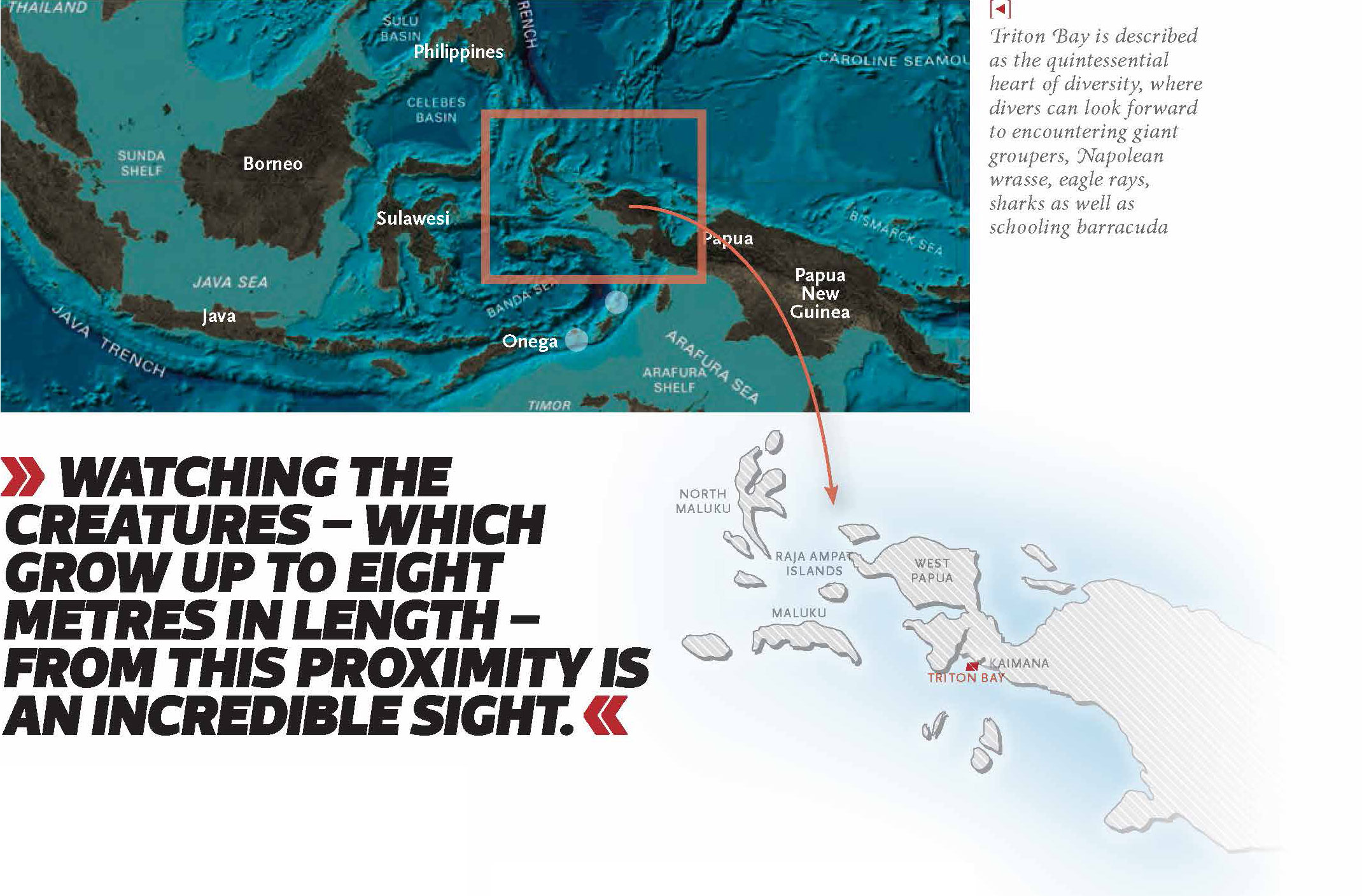
“APA KABAR, ORANG asing! How are you, stranger?” whispers Edison, a baggage handler at Kaimana Airport, as he takes a look at my luggage label. Europeans in Kaimana are indeed “strange”, as tourism here is still in its infancy. “There are just a few divers who come once or twice a year,” reports Tommy Nanggunewna, a member of staff at the tourist board.
The marine wonderland that is Triton Bay was explored for the first time in 2006 by a group of employees from Conservation International and scientists from the State University of Papua (UNIPA). It was expected to be home to even greater species diversity and number of endemic species than Raja Ampat. This was confirmed, as Dr Gerry Allen counted 330 different species on a single dive.
This place is a jewel for Bruno Hopff, cruise director and one of the owners of the liveaboard MSV Amira, which calls at Triton Bay. “I felt privileged to be able to see this bit of Earth and to be able to dive in this biodiversity hotspot,” he says, remembering his first visit to Triton Bay in 2009.
LITTLE KOMODO – A SUPERLATIVE DIVE SITE
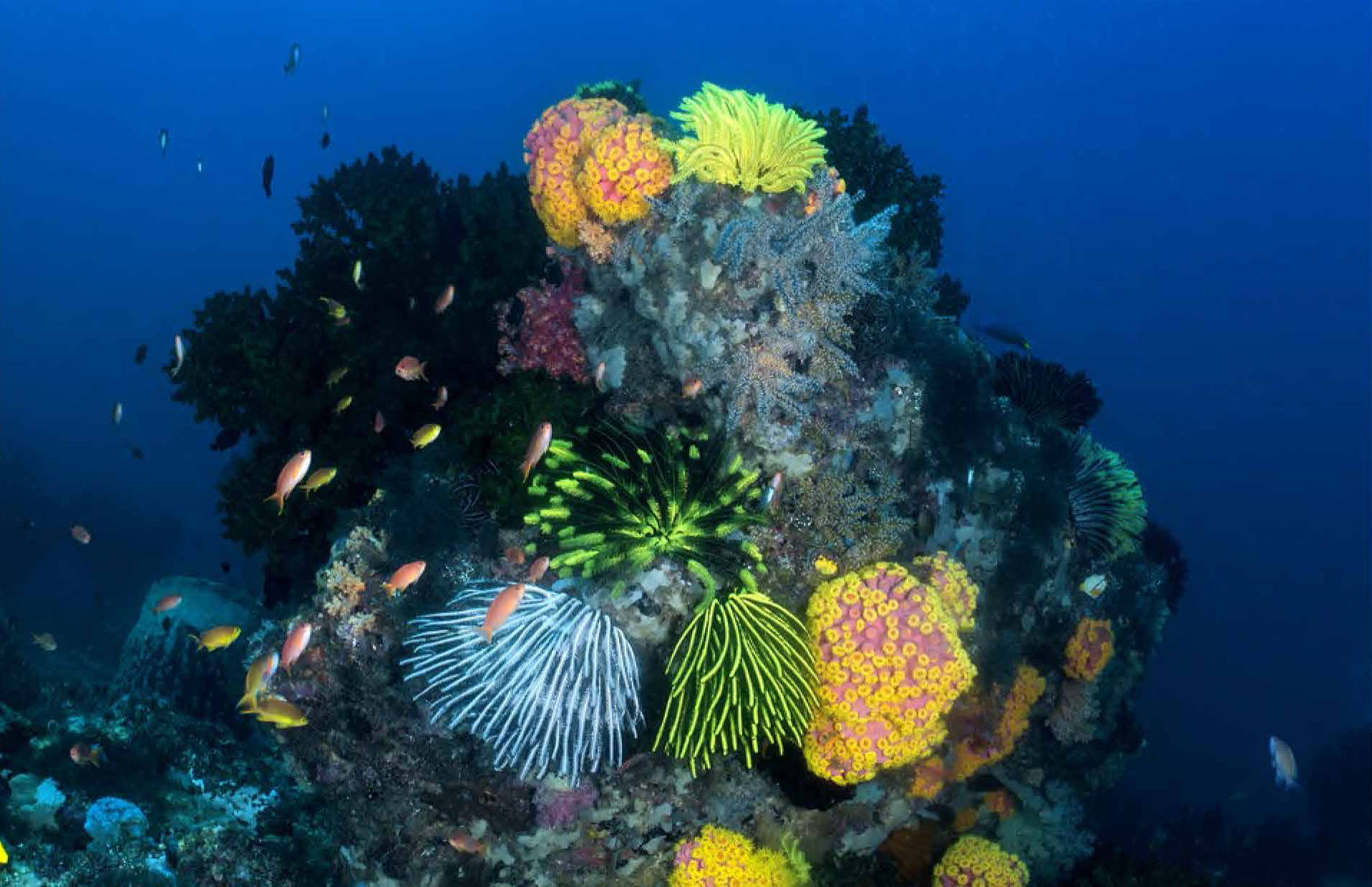
“The Little Komodo dive site quite simply left me speechless! The unbelievably healthy stock of coral and the huge quantity of fish were overwhelming,” says Hopff.
However, the price to pay for the unusually high biomass in Triton Bay is low visibility – about 15 metres – and some raging currents. When diving down, you’d probably pass through a dense shoal of rainbow runners. It requires concentration just to remember to breathe. The effort involved battling against the current is forgotten by the time you reach “the split”, an area where the current splits on the reef, and reprieve is given for a while to watch the spectacle offered by the schools of fusiliers, barracudas and mackerel.
If you leave the area protected from the current and drift into the channel, which is 30 metres wide at most, you will pass walls of Cirrhipathes spp. (white-coloured black corals), giant gorgonians and possibly Tubastrea coccinea (orange-coloured soft corals). At the end of the channel, a large group of bumphead parrotfish effortlessly drift with the current. In the afternoon, when the sun shines into the channel, another spectacle is visible, as the jungle-like karst cliffs are presented even from a depth of 10 metres. Neither the paradise above water nor that below goes unobserved.
A firework of colours is typical for bommies at dive site Little Komodo (Photo by Markus Roth)
Keeping its legend intact, such magnificent manifestation is still one only a few have witnessed. About four years ago, safari boats were warned against heading out into this remote area of Bird’s Head Peninsula, as trouble with the locals erupted time and again.
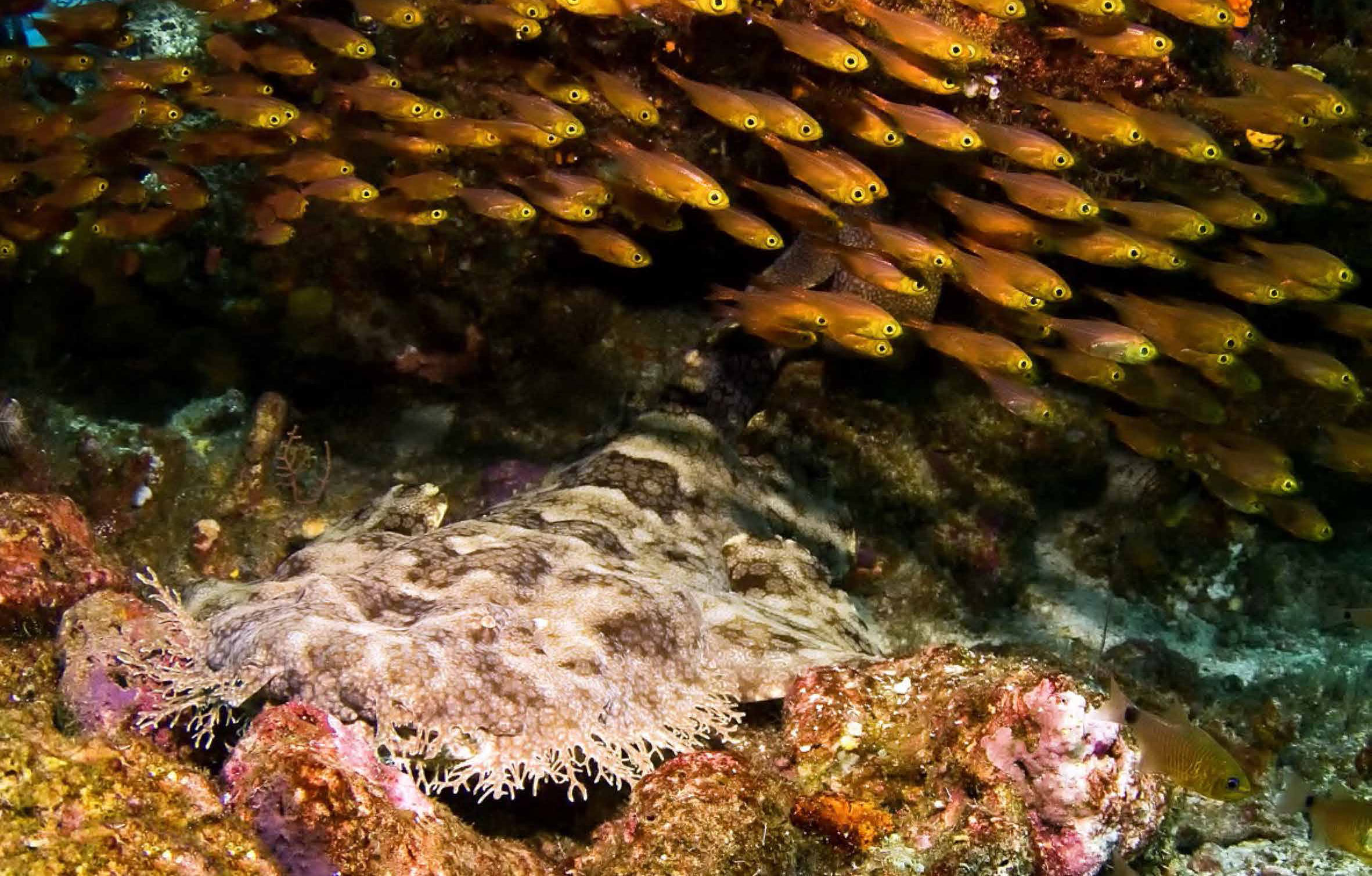
It was such an amazing experience to see this gentle giant cruising by. Wobbegong sharks typically hide in overhangs or small caves and are surrounded by glassfish. (Photo by Markus Roth)
“We were worried about our natural resources and our basic fish supply,” explains the mayor of the fishing village of Sisir, 45-year-old Mohamed Jeia. After all, shortly after news of Triton Bay being the next fishing paradise, the fishing fleets came in droves, caught all the big fish and vanished. According to Jeia, the locals were unsure whether the first liveaboards to arrive were also fishing fleets. “We feared for our existence and didn’t know any other way to help ourselves than by making threats!”
It is always nice to see moving glassfish: If you have enough patience, a predator might show up, giving you a show of the survival of the fittest in full force. (Photo by Markus Roth)
TOURISM ENSURES EDUCATION
Triton Bay is now a protected area, and locals have recognised that tourism can present an additional source of income for them. Money made from tourism has allowed the fishermen to give their children a good education. Today, 10 children from the village comprising just 70 families have made it to a university.
“We know the score when it comes to the continued existence of our most valuable asset, unspoilt Nature and culture. We have to protect and preserve them in order to grant future generations an income from tourism as well,” says Tommy Nangguewna, who is himself a passionate diver. “Just consider, for example, the wall paintings that are several thousand of years old. What Triton Bay offers is rare; almost no other area in the Indonesian Archipelago offers the exact same thing.”
These paintings can be visited on a dive-free afternoon during a trip with one of the three dinghies of the MSV Amira. The same applies to the several-hundred-year-old caves that contain human remains. These stem from the time when the people of Papua believed that they could take on the power of a dead opponent by consuming them after battle.
THE ULTIMATE IN SPECIES DIVERSITY
In a top dive site like Batu Jeruk, you’ll often find a tempting current, as well as a multitude of fish shoals and a fully intact soft-coral landscape.
“I think it’s how you’d imagine a very positive LSD trip,” jokes my diving buddy, Tom Ingpen. The Australian has already dived in some remote corners of the world, but he thinks “Triton Bay has everything in even more lavish proportions”. “Night dives here,” he reveals, “are particularly fun.”
While night diving at sites like Disney Land and Macro Rock, you can find the denise, bargibanti and pontohi species of pygmy seahorses, as well as rare creatures like solar-powered nudibranchs, decorator crabs and waspfish. Some of the dives are very demanding, but excursions, for instance to Mauwara Bay, provide an opportunity to recover.
For ship-owner Bruno Hopff , Mauwara Bay is something very special. “Th is bay had such a magical eff ect on me that it was immediately clear to me that I had to return,” says the
41-year-old Zurich native, who has already been living in Indonesia for more than 11 years. In about two hours, you’d cross an almost endless labyrinth of branches. Th e karst cliff s overgrown with jungle giants and palms combined with the song of tropical birds will take your breath away. You fi nally arrive in paradise at a small beach by the exit of the bay. It is hardly possible to think of a kitschier backdrop for a postcard from the South Seas!
WHALE SHARKS: ON THE HUNT FOR IKAN PURI
“For as long as I can remember, there have been whale sharks in our waters, but the people of Papua have great respect for these creatures and a dreadful fear of being eaten by them,” says Jeia.
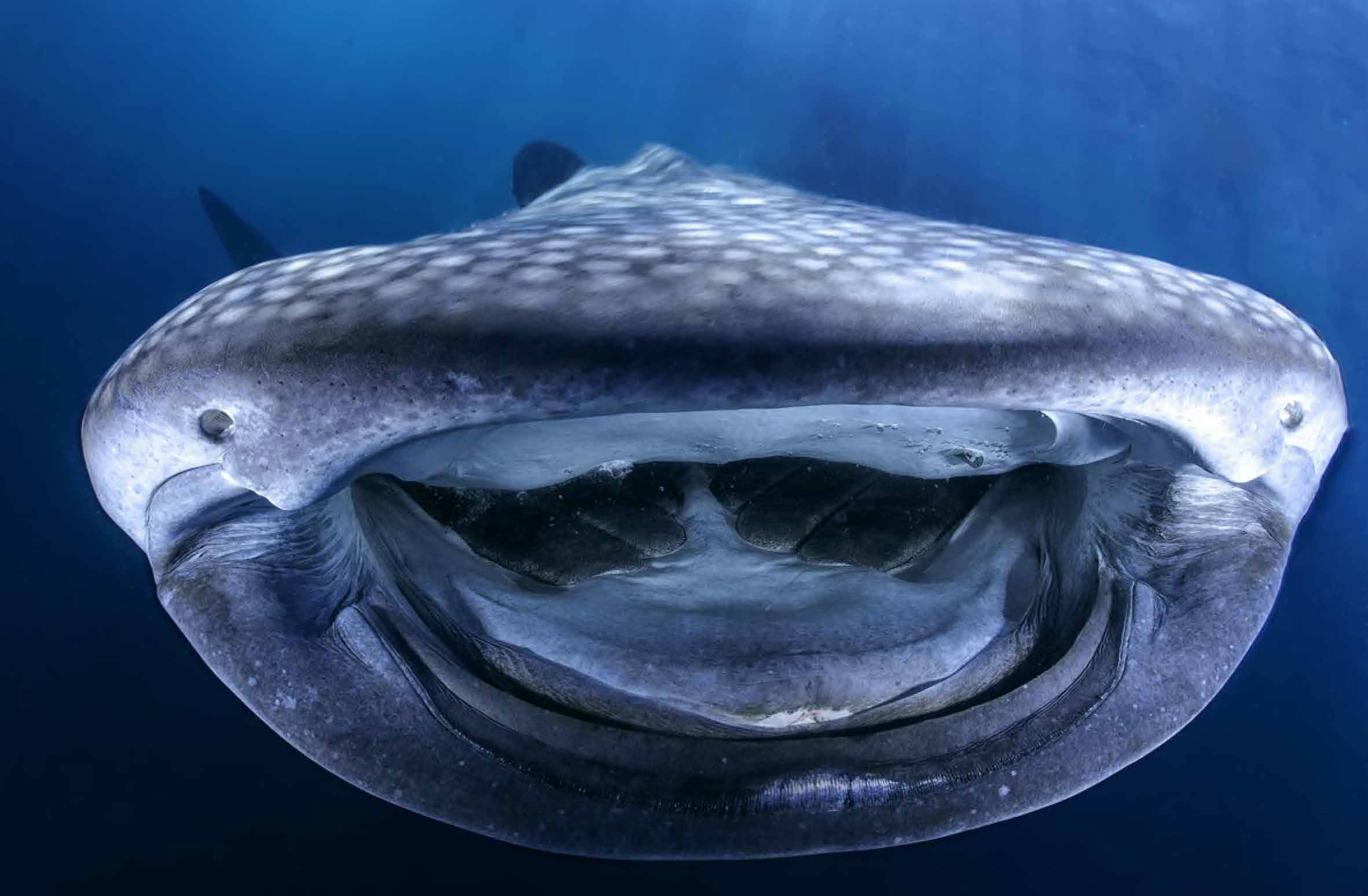
The whale sharks in Triton Bay exhibit similar behaviour to those in Cenderawasih Bay. e bagan (bait- shing platform) of the shermen from South Sulawesi, who are also called Bugis, appear to attract the creatures magically. e Bugis sh during the night for ikan puri (sardines) and sell the catch in Kaimana market. To keep the sh fresh for as long as possible, they leave them submerged in the nets.
This wealth of potential food attracts the whale sharks. They suck the nets to get their meal. Watching the creatures – which grow up to eight metres in length – from this proximity is an incredible sight. Again and again, they swim from the depths towards the surface of the water to get at the nets. On a particularly good day, you can also see dolphins and even an Indo-Pacific sail sh stop by to help itself to the easy spoils.
Read the rest of this article in 2014 Issue 4 Volume 133 of Asian Diver magazine by subscribing here or check out all of our publications here.