Home Blog Page 68

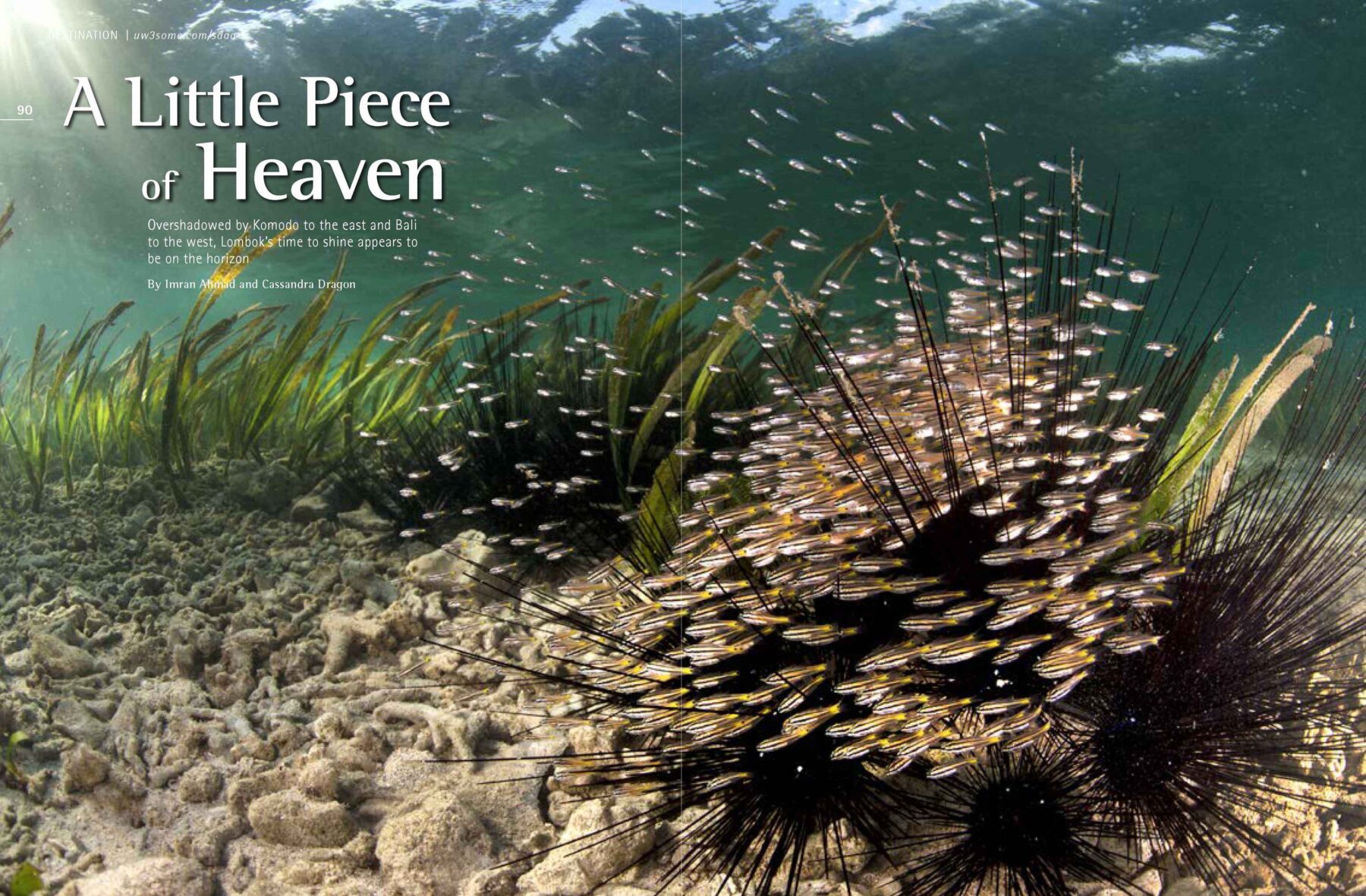
Lombok: A Little Piece of Heaven

0
(text and photo by Imran Ahmad and Cassandra Dragon)

THE ISLAND OF Lombok is located in the West Nusa Tenggara Province of Indonesia, and is Bali’s neighbour to the east. Geographically, Lombok is similar in size and density to Bali and is surrounded by 13 small, largely uninhabited islands locally called Gilis. Lombok offers the simple pleasures of sunshine and white sandy beaches in quiet settings. A unique culture and exciting eco-tours make Lombok the perfect getaway for anyone looking for a peaceful and tranquil holiday, or for the more adventurous, who want to explore the many beautiful and wild treasures this island has to offer.

From Padang Bai Harbour in Bali, one can hop on the local speedboat across to Lombok. Making two stops along the way, first in Gili Trawangan and Gili Air before reaching the large, peaceful bay of Teluk Nara just 30 minutes north of Senggigi on Lombok Island. The speedboat ride from Padang Bai takes slightly over 1.5 hours. From Teluk Nara, a 3-hour drive takes you down the southwest coast. Meandering down the wildly rugged coastline, you will be overwhelmed by a wonderful palette of colours and some of the most breathtaking views of heavenly beaches that seem to go on endlessly. The sparkling turquoise water of bays nestled amidst lush rolling hills and spectacular sea cliffs, are interspersed with picturesque farming and fishing villages. It’s as if time stands still here, where ancient ways of living appear to be untouched by tourism or development. The journey ends in the town of Sekotong, where some of the best diving in Lombok can be found.

Diving the Uncharted Unlike the more popular northern Gilis, very little is heard of the diving in the southern Gilis Islands. Here you will find a lush underwater wonderland offering an abundance of marine diversity with plenty of new dive sites to explore and discover. Diving is available for all levels of certification: from protected bays to calm sea grass fields, to the more challenging dives sites in Belongas Bay.

Reefs here are in a pristine state due to a low volume of diver traffic. It’s rare to see any other dive boats in your vicinity, or to see other divers during a dive. The diving in general offers a good cross-section of what Indonesian diving is all about, with opportunities for true exploration that would please even the most widely travelled and experienced diver. Underwater photographers will be pleasantly surprised at what’s in store here, from rainbow reefs to stunning macro subjects and uncharted coral gardens.
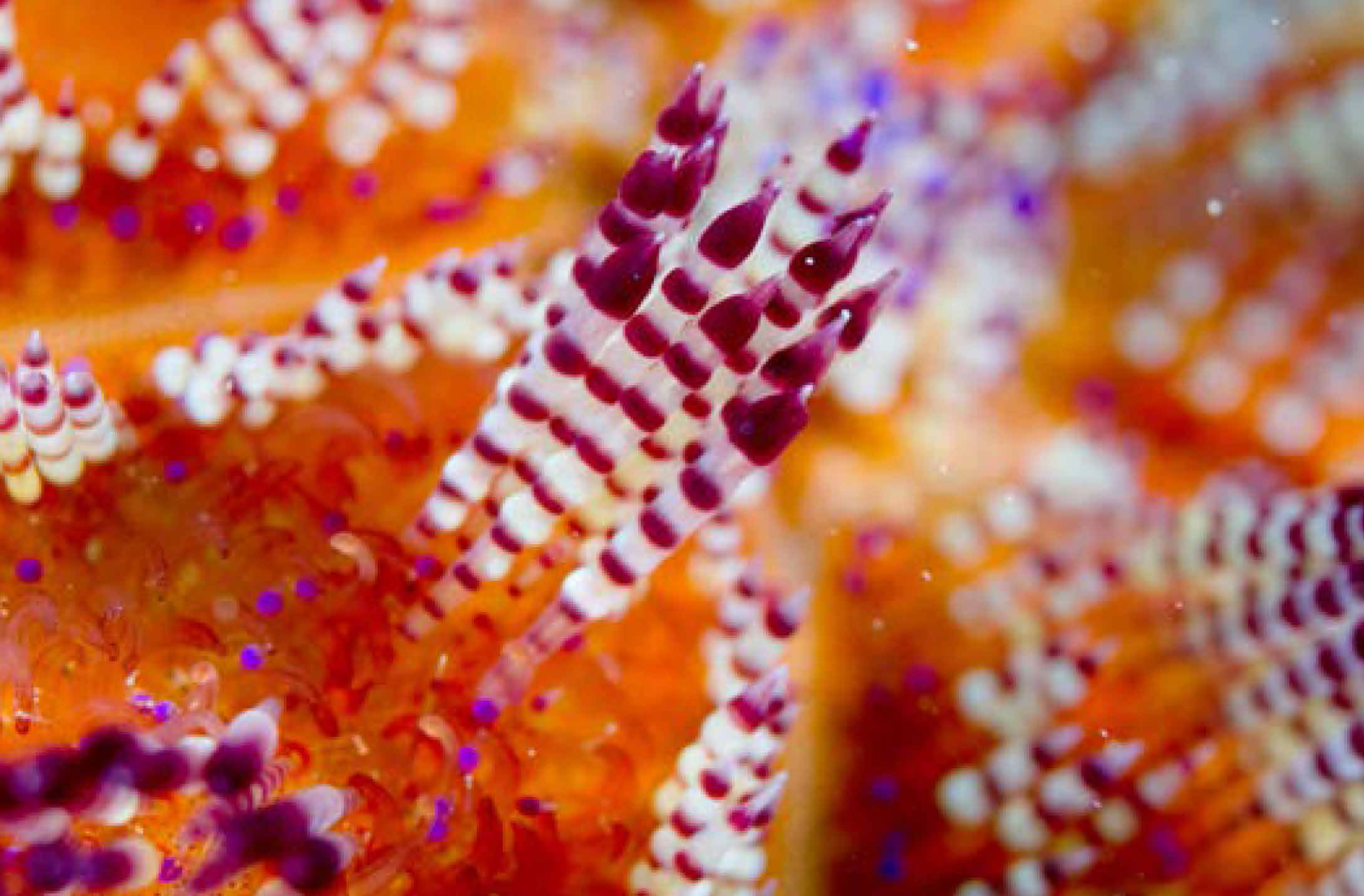
A close-up view of the spines of a fire urchin (Astropyga radiata) (text and photo by Imran Ahmad and Cassandra Dragon)

In Sekotong, dive sites such as Stairs to Medang or The Lighthouse boast hard coral reefs that are popular with trevallies, barracudas and whitetip reef sharks. Other sites, like Gili Renggit, are made up of massive soft coral growth and are a paradise for macro photographers. The great variety of dive sites becomes obvious at Batu Gendang, where you experience a labyrinth of boulders covered with massive corals. This site is tide dependent and for the more experienced divers. Watch out for sweet lips, Napoleons and rays.
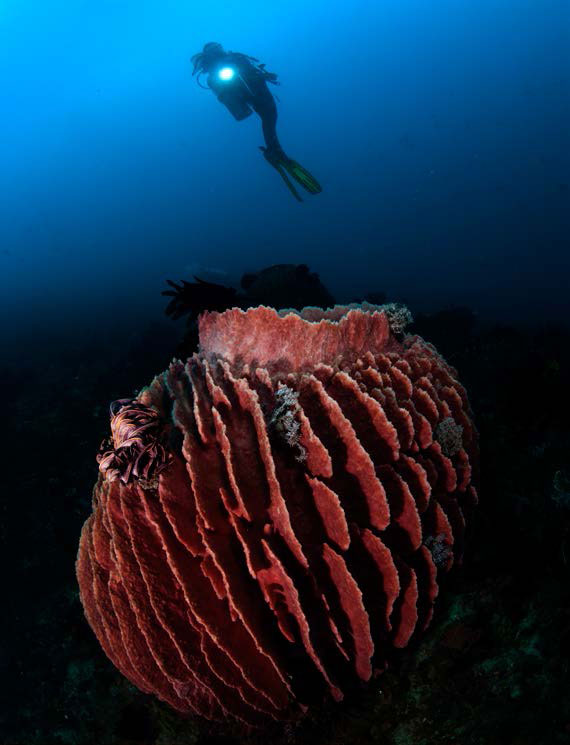
Huge barrel sponges sit on the seabed, adorned with flower-like crinoids (text and photo by Imran Ahmad and Cassandra Dragon)

Colour Buzz

Among our most favourite sites are Secret Garden and Gili Layar, with an impressive wonderland of soft corals that slopes downwards past 26 metres. The abundance of coral as well as the multitude of macro life is absolutely breath taking! After this incredible array, and a series of overhangs, most dives here end at a shallow plateau with some of the largest barrel sponges we’ve ever seen, as well as impressive hard coral formations. Another highlight here is the profusion of tiny yellow sea cucumbers (Colochirus robustus) making this dive site buzz with colour.
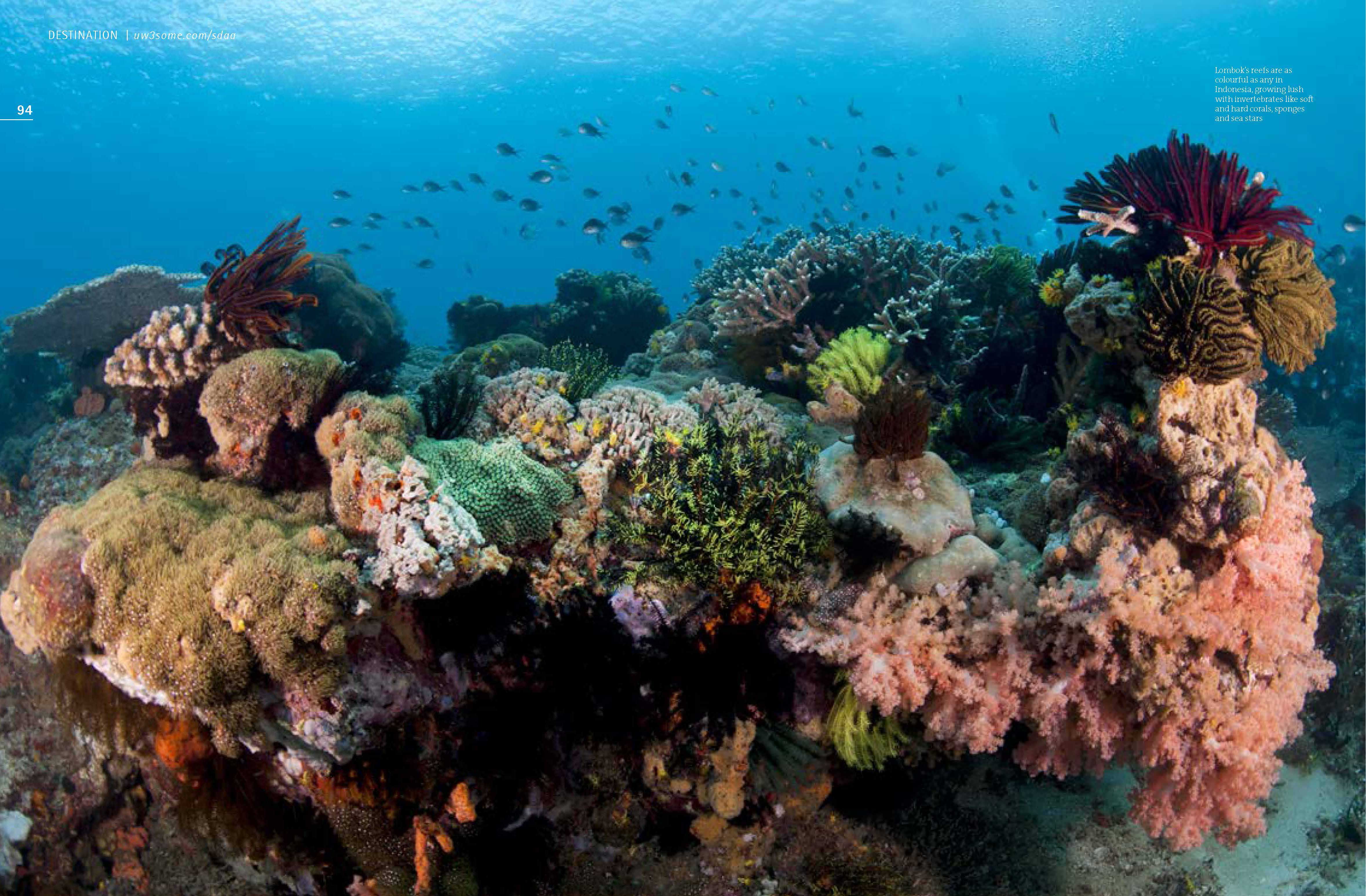
Lombok’s reefs are as colourful as any in Indonesia, growing lush with invertebrates like soft and hard corals, sponges and sea stars (text and photo by Imran Ahmad and Cassandra Dragon)

Day trips via land transfers can be made from Sekotong over to Belongas Bay. The main highlights here are dive sites like Magnet and Cathedral, where seasonal sightings of schooling barracudas, tunas, and other pelagic life is fairly regular. Apart from the schooling mobula ray season in September, hammerhead sharks like to school around Magnet from June until early November. As currents and dive conditions can at times be quite challenging at these two sites, it is recommended only for more experienced divers. Reef hooks are essential, as are dive computers and gloves, while surface marker buoys are mandatory. Unfortunately for us, we missed the season by a few months, but knowing that these kinds of animals inhabit the region helped make every dive that much more exciting.
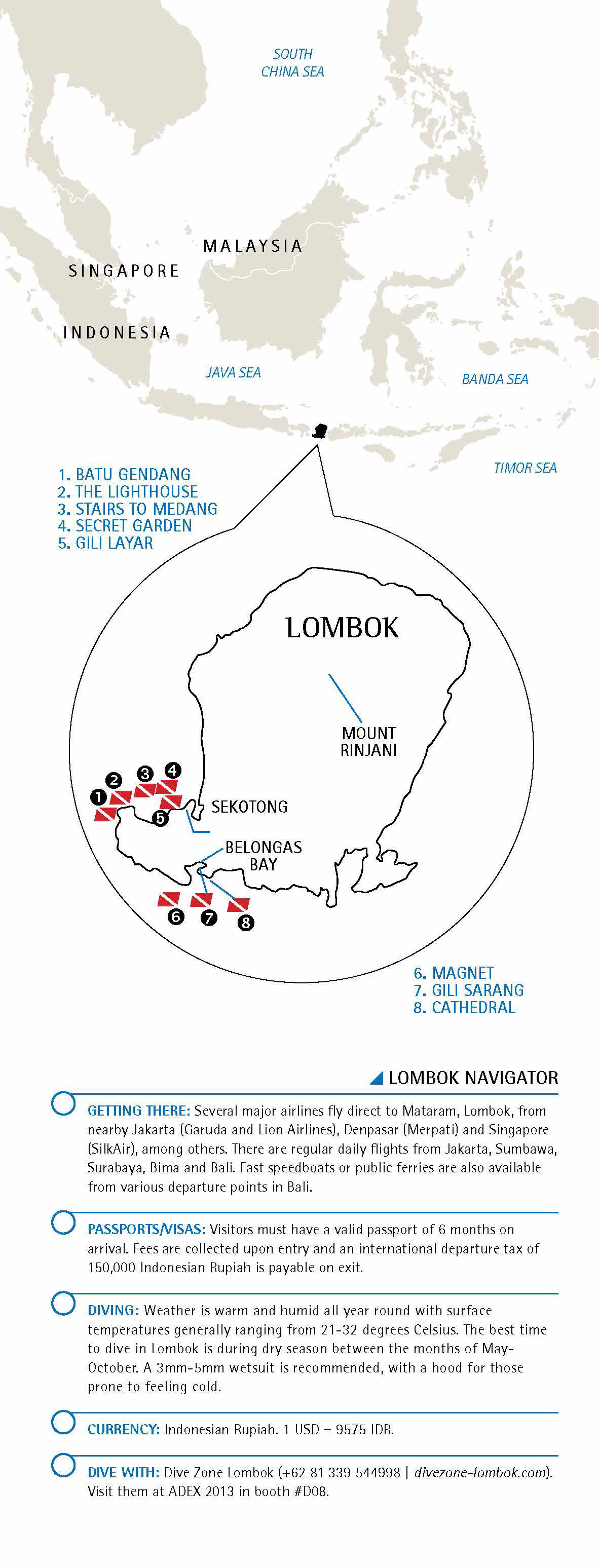
Another delight in Belongas Bay is Gili Sarang. With pinnacles and impressive boulders rising up from a depth of around 35 metres, this dive site offers impressive big fish action. Giant trevallies, mackerels, sweet lips, surgeon fish, whitetips, blacktips and grey reef sharks can all be seen here, with August and September being the best season for sightings of schooling mobula and eagle rays.

Read the rest of this article in SD Issue 1/2013, AA No. 73 of Scuba Diver Diveraholic magazine by subscribing here or check out all of our publications here.
Russia: The Pearl of Siberia

0
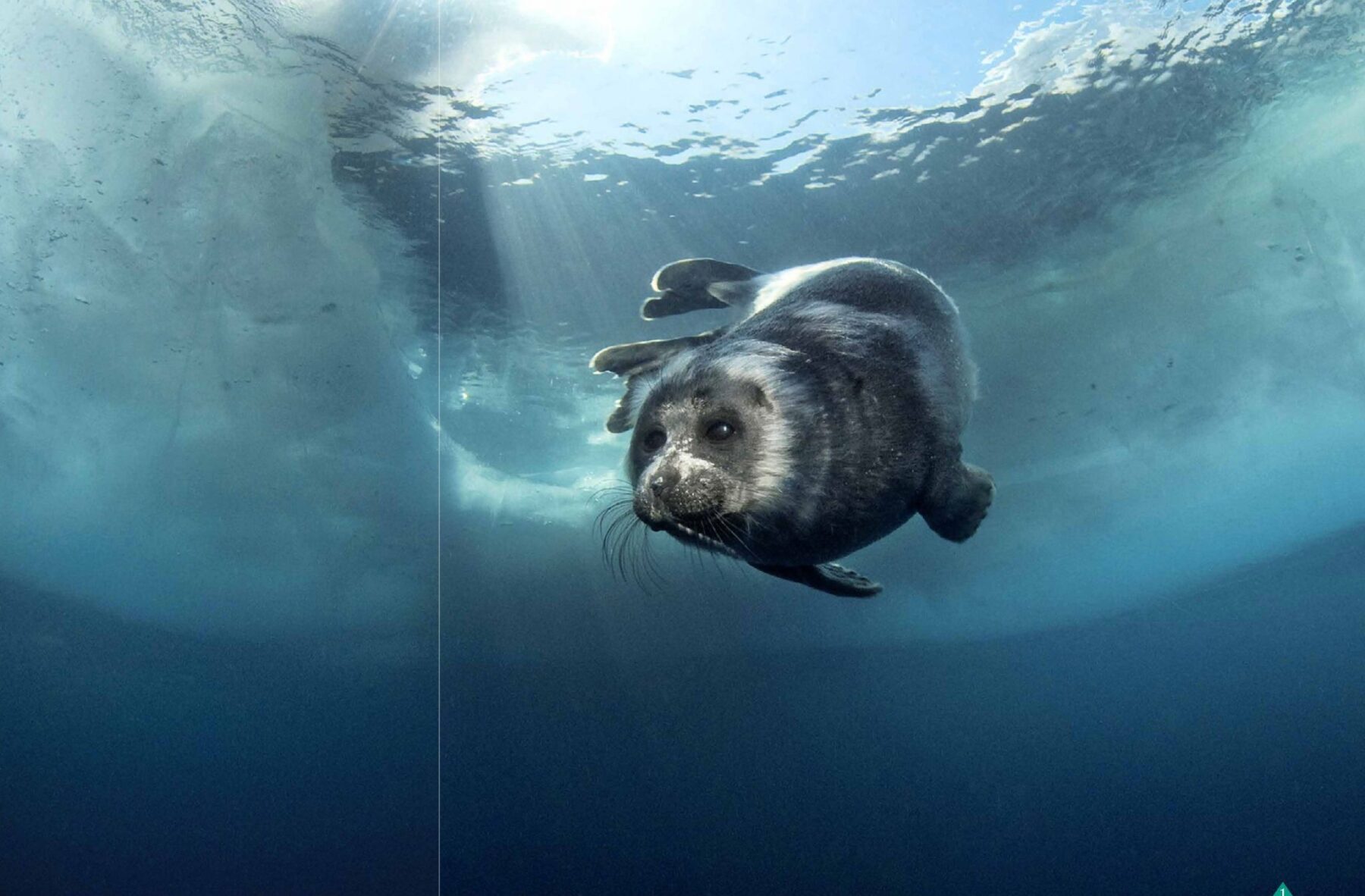
The Baikal seal, or nerpa, is the world’s only freshwater seal. Pupping takes place from February to March, in lairs that have been hollowed out on the fast ice. Settings: f/20, 1/125s, ISO 200 (Photo by René Lipmann)

CAPE KHOBOY
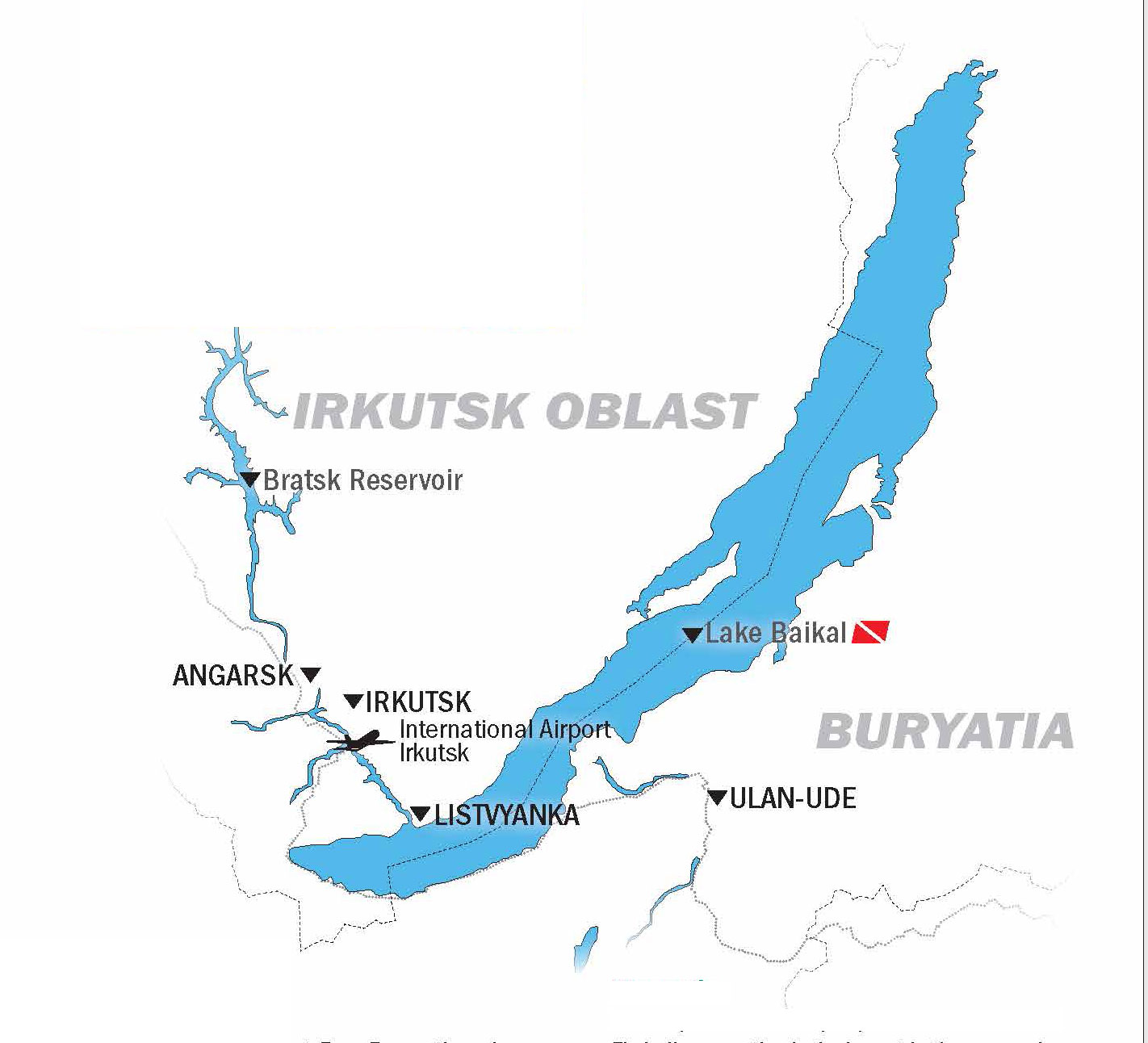
We arrive by Jeep from Irkutsk and drive over the frozen Lake Baikal. We have to be careful; gas bubbles can make the ice very thin in winter. We see locals trying to save their sunken truck. We overnight on the ice at Olkhon Island, 300 kilometres from Irkutsk.

To get under the ice we’ve used a large hole made by adult seals for hunting. Adult seals have one breathing hole, but this hole has many auxiliary openings.

Suddenly, I’m hundreds of kilometres from any ocean and diving with a seal pup! With his beautiful silvery grey coat, the freshwater pup swims in circles around my bubbles. He is very interested in the dome port on my camera – it works like a mirror. He wants to play with that other “puppy” and tries to catch it! When I look through the lens, the pup is looking straight into my eyes. OK, it’s freezing cold, but now I’m melting! I can see his mother through the crystal clear ice floor. She is waiting to feed her pup. Then an adult seal slips through the hole, and starts maintaining it, scraping at it with strong claws to keep it open. Incredible!

This is the adventure I was looking for when I took the plane to Moscow.

WATER TEMPERATURE: Between 0.5 and 1.5°C.

VISIBILITY: The best visibility is usually between January and mid March where it is often around 40 to 45 metres. Ice diving is still possible in late March although the visibility may drop to around 10 metres as the snow starts to melt.

MAX DEPTH: 10 to 15 metres

OTHER CONDITIONS: Ice, ice, ice! Air temperature is –35°C!

HIGHLIGHTS: Lake Baikal seal, or nerpa. Massive colonies of sponges, bullheads, graylings. Unusual topography,
ice formations, caves and grottoes.

CHANCE ENCOUNTERS: You might be lucky enough to observe a school of endemic fish called omul, Coregonus autimnalis.

LIFE LIKE SCIENCE FICTION
A historic locomotive provides shelter from the cold as we change into our drysuits. The 5,500-kilometre railroad that connects the lake to Moscow ends here. What was once a vibrant destination on the Trans-Siberia Express is now desolate and nostalgic.

We are in Listvyanka, a small settlement not far from Irkutsk. Today we are conducting an open-water dive, because the stream of the Angara River prevents the water from freezing.

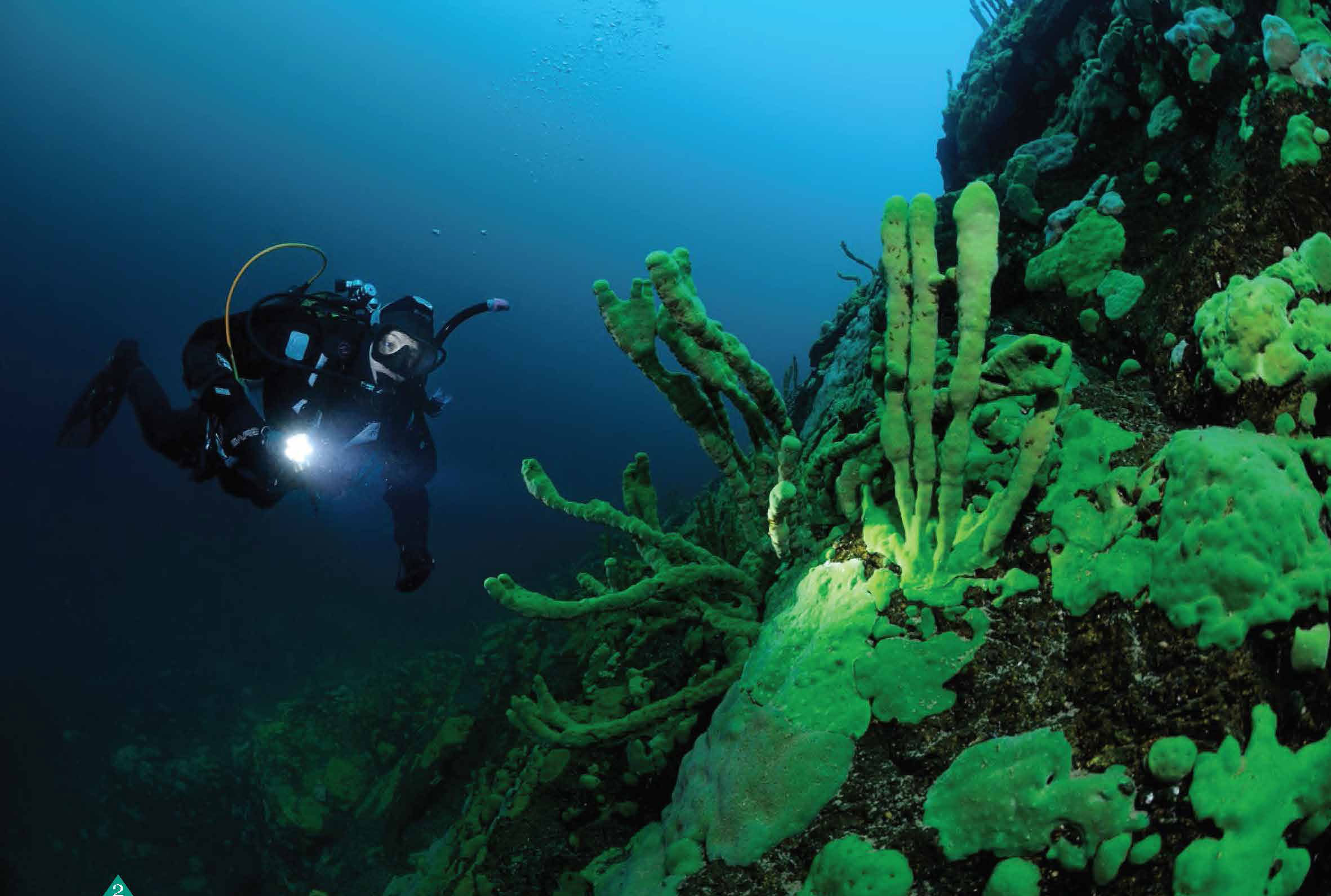
Thriving on a carpet of stone, lurid green sponges form a dense forest. All is energy and movement. Competing for any space available, these creatures are clearly alive. And so are the prehistoric arthropods, gamaruses, gastropoda, sculpin fish and much more. During the dive we even watch a comedy of ducks feeding on the underwater weeds!

Moving back to shallower waters the white, sandy bottom  looks almost tropical, overlaid by a roofless water column and blue sky. Everything breathes. Diving here, you feel spring is at the front door.

Our ice dive safari proves to be one of the best dive safaris I have ever done, and we’ve only just begun to grasp why Lake Baikal is named the Pearl of Siberia.

The Lake Baikal sponges, Lubomirskia baicalensis, get their colour from their symbiotic dinoflagellates that help them survive in the iced-over lake in winter. Settings: f/8, 1/60s, ISO 200 (Photo by René Lipmann)

HIGHLIGHTS: The acanthogammaridae – a family of amphipod crustaceans, endemic to Lake Baikal – must be one of the weirdest amphipods around:  it looks like an ancient fossil! Baikal shrimps, Acanto gammaridae. Sponges, bullheads, and schools of graylings on night dives.

CHANCE ENCOUNTERS: If you’ve got air in your tank, you can enjoy the magnificent drop-off, swathed in massive sponge colonies.

WATER TEMPERATURE: Between 0.5 and 1.5°C.

VISIBILITY: Very good, takes my breath away,
30 metres for sure.

MAX DEPTH: 30 to 35 metres.

OTHER CONDITIONS: Open water. Listvyanka is a popular tourist destination, the result of its local fish market, colourful houses and spectacular hiking routes.

LOGISTICS: Listvyanka is 70 kilometres by car away from Irkutsk, and the dive site is easily accessible.

NAVIGATOR

Getting there: Connect to Irkutsk airport: From Europe through
Moscow from Asia through Beijing, Shanghai, Ulan Bator, Bangkok or Seoul.

Best time to dive: There is ice from January to May, but the best months for ice-diving are March and April. For the Ice Diving Jeep Safari, February and March. The liveaboard Season is May to December.

Don’t dive without: Your drysuit and two ice-approved regulators.

Essential training: Advanced and Drysuit certifications. For diving under ice, specialist training is essential.

On arrival: Most foreign nationals need a visa to enter Russia, including citizens of European countries, the USA, Australia, and New Zealand. Check with your local embassy.

Dive with: Gennady Misan and Tanja Oparina own BaikalTek. Their dive operation is the largest in the area and provides ice-diving, liveaboards, seal safaris, technical and daily diving. Accommodation is primitive but comfortable. www.baikaldiving.ru

Currency: Russian Roubles

Time Zone: GMT + 9

Languages: Russian

For more information: www.visitrussia.org.uk

Read the rest of this article in SD Issue 6/2014, OP No. 1 of Scuba Diver magazine by subscribing here or check out all of our publications here.
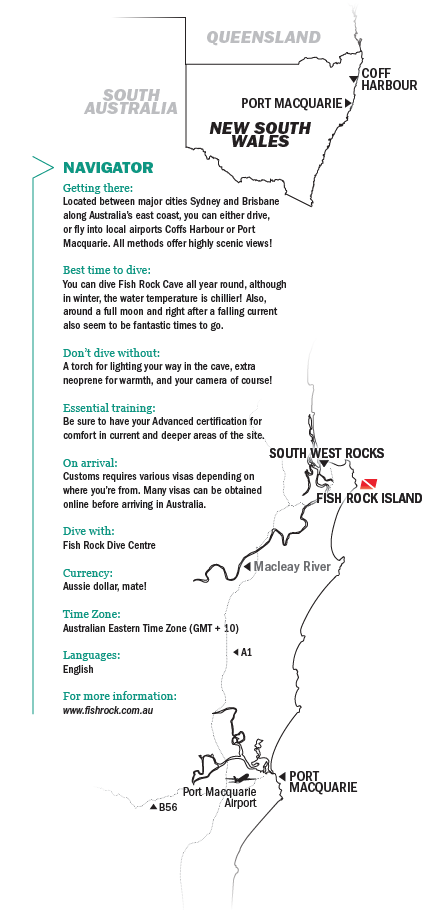
Australia: Fish Rock Frenzy

0
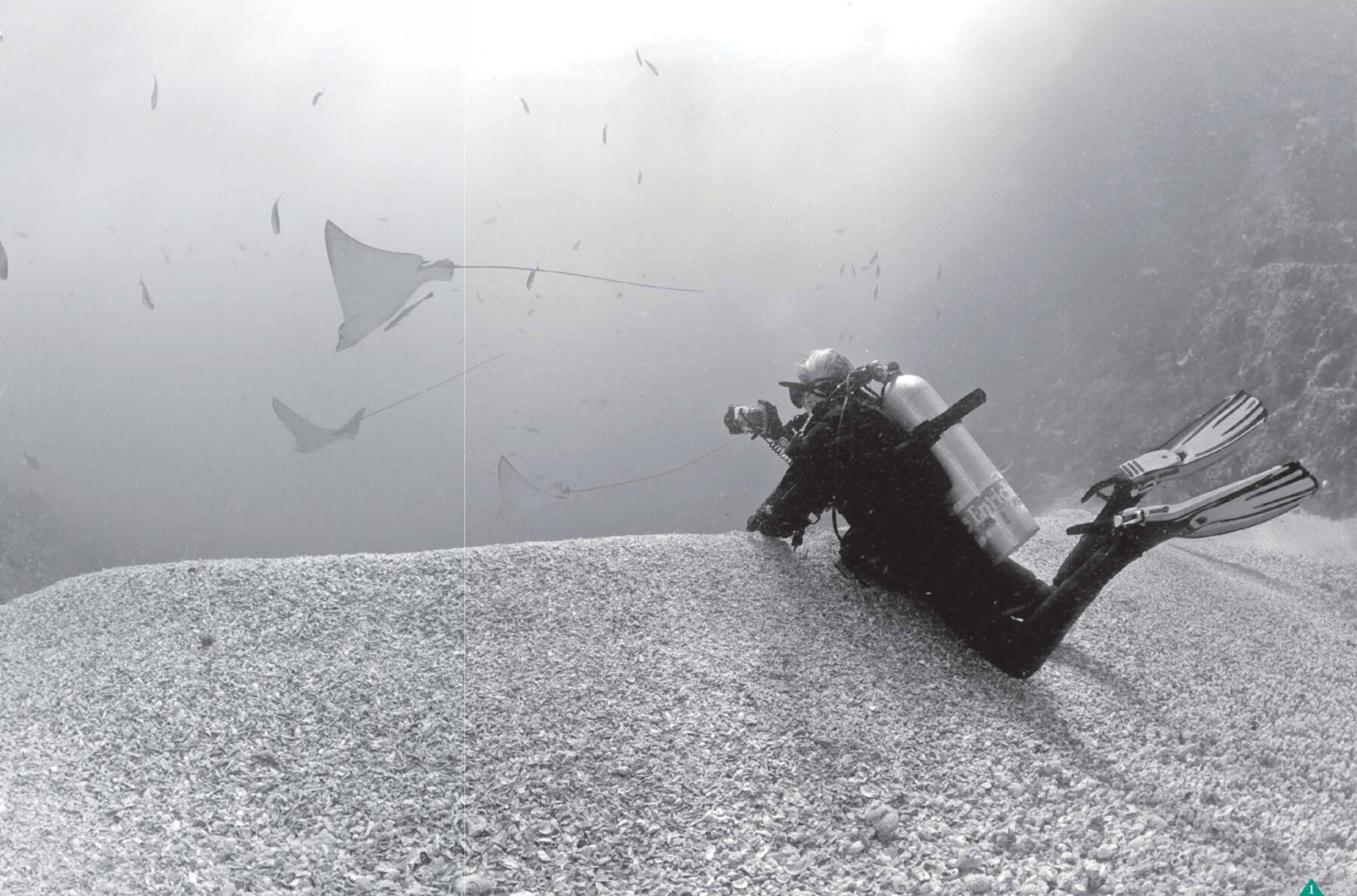
Diver Hollie Anderson captivated by a group of eagle rays, Aetobatus narinari Settings: f/14, 1/80s, ISO 320 (Photo by Lia Barrett)

Why it’s always a good idea to man up, pile on that neoprene, and get back in the water for another go, even if cold water diving is not your thing.

It’s a personal life goal of mine to sneakily try to get myself to do things I don’t want to do. Sometimes this means tricking myself by planning something well in advance to the point that by the time it comes around, I’m already thrown in the deep end. Literally. And so when I finally noticed that I was spending heaps of time in Australia, I knew it was time to bite the bullet and start doing some of the true grit Aussie diving, some of the most interesting diving in the world which, to my dismay, means piling on lots of neoprene.

Yes, folks, the secret is out: A lot of Australia’s best diving is rather chilly.

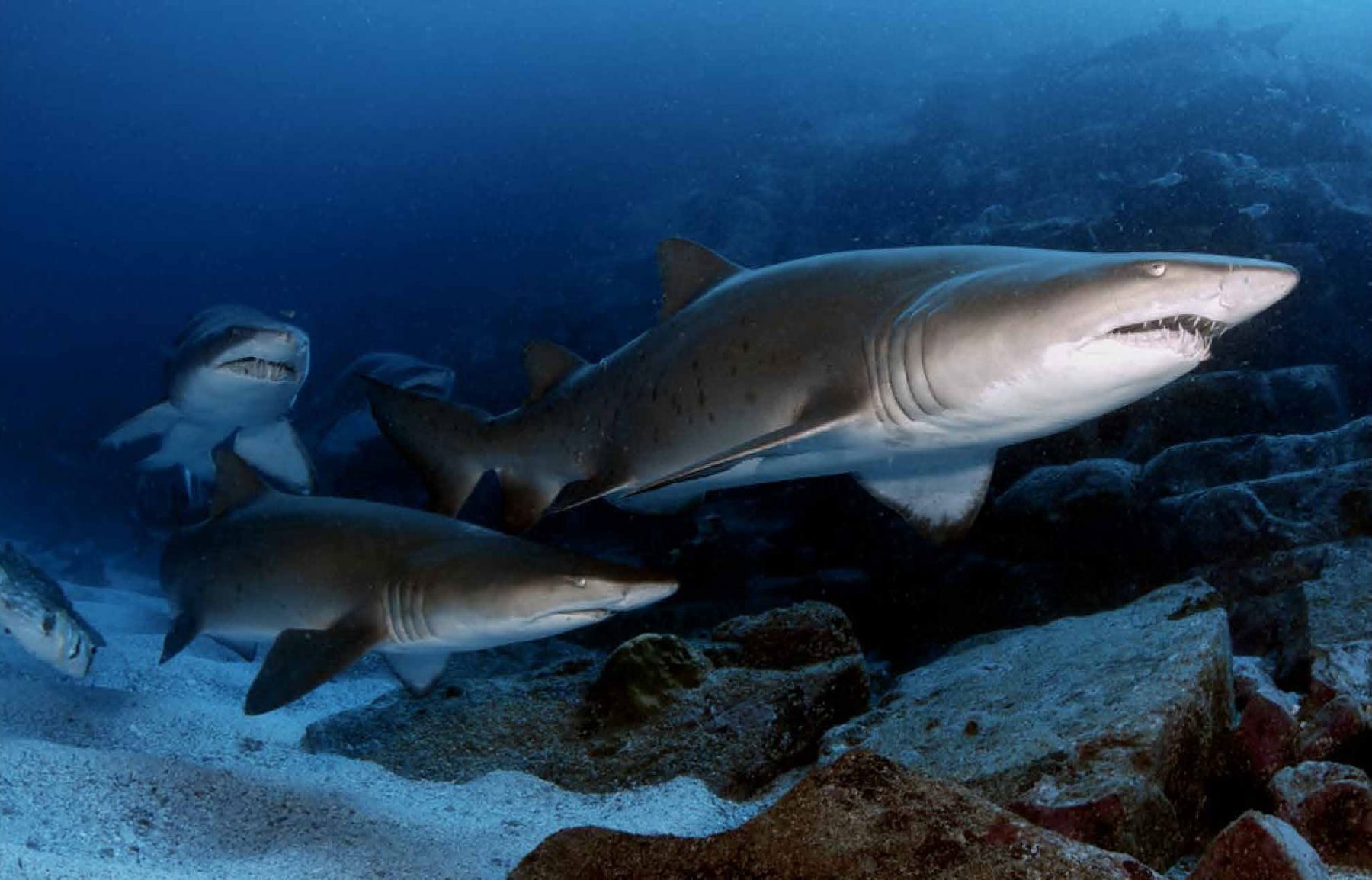
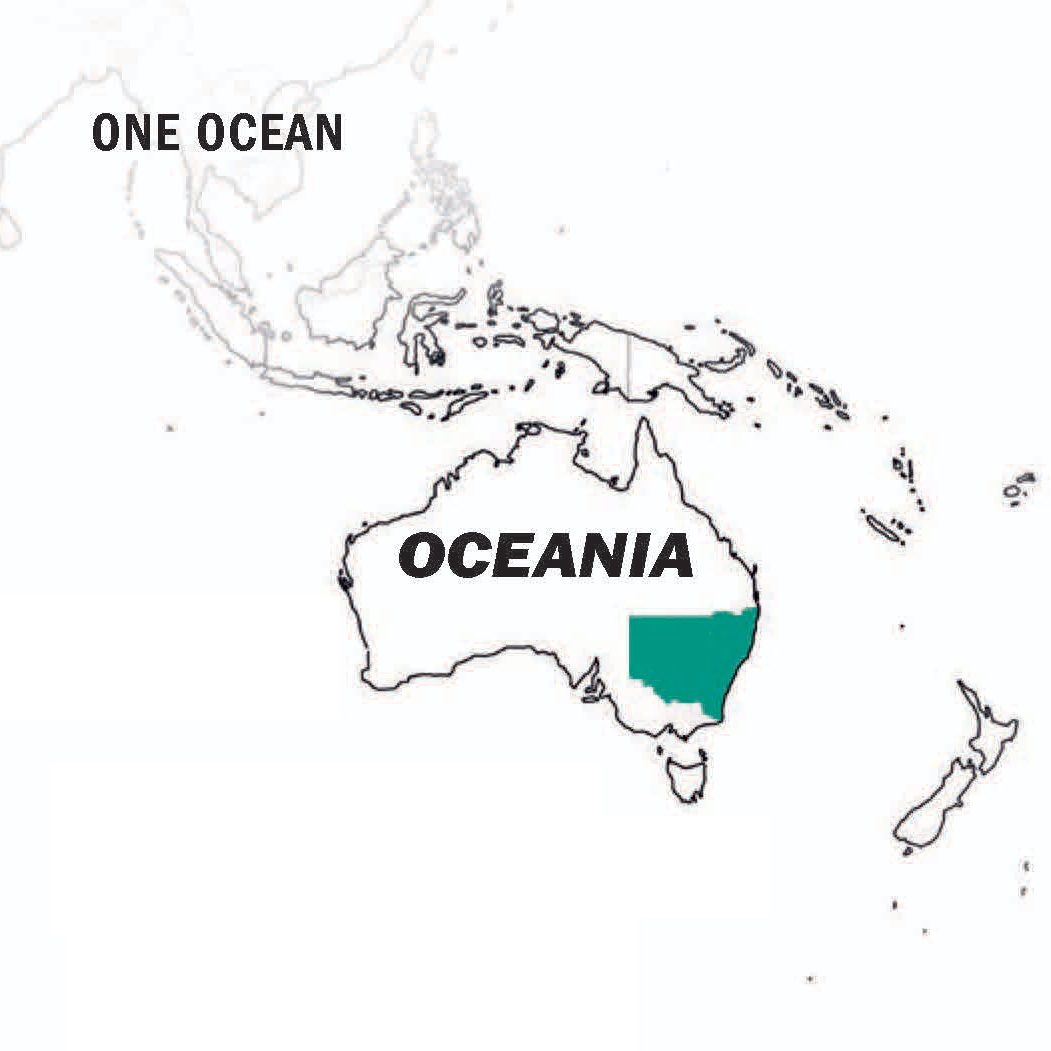
From the shores below Brisbane skirting all the way down and over to lower Western Australia, the undergarments of Aussie diving require, well, warm undergarments. And so after seeing images of Fish Rock Cave, the type that make you salivate with envy and pull your hair out in excitement, I knew that atop my Australian bucket list was this little island that attracts a most spectacular aggregation of grey nurse sharks.

DAY ONE

The first day did not fail to meet the area’s reputation, which, as we were told, is one of being a bit temperamental. We jumped into a raging current, low visibility, water cold and green as pea soup. A bit dejected, I almost called off the next day’s diving, thinking we’d head back down south in search of seals or perhaps a few consoling beers and mince pies in Sydney. But, something kicked me into touch, and I decided we’d give it one more day.

DAY TWO

Sure enough, the next day, we had crystal clear conditions, a slack current, gutters overflowing with plump, snaggletooth sharks, wobbegongs of all sizes practically lying on top of one another forming a carpet along the gutter floors, a school of cow nose rays, eagle rays, swarms of schooling fish, whales singing themselves deaf in the distance… I can genuinely say that it was one of the top dives of my life. I didn’t even notice how cold I was.

As I exited the water, I couldn’t help but feel silly at the notion that I had almost missed this most spectacular symphony of Nature. So lesson learned: Sometimes pushing oneself isn’t so convenient: However, occasionally, efforts and discomfort pay off in sweeping displays of worldly splendour.


GUARANTEED HIGHLIGHTS:

Fish Rock Cave, which pretty much never moves, offers a thrilling respite from the outside ocean traffic. Inside the cave are critters including crabs, nudibranchs, juvenile wobbegongs, and much more. Outside the cave, coral, rock, and natural “gutters” house teeming life of all sorts. As I exited the water, I couldn’t help but feel silly at the notion that I had almost missed this most spectacular symphony of Nature. So lesson learned:

CHANCE ENCOUNTERS:

Depending on the season, grey nurse sharks are usually present during their season, as are wobbegongs. Cow nose rays, eagle rays, guitar sharks, turtles, nudibranchs, and perhaps even a glimpse of one of those passing whales during whale season are all possibilities.

WATER TEMPERATURE:

Theoretically fluctuates between 18 to 26°C, although I believe it was about 16°C when I was there. Prone to strong currents, temperatures can change day to day.

VISIBILITY:

Visibility also fluctuates, as one day we had maybe six metres, and then the next day, it was crystal clear, and I felt like I could see sharks at least 20 metres away.

MAX DEPTH:

Entrance of the cave (which runs 125 metres in length) is at 12 metres at the shallow entrance, and 24 metres at the deep entrance. Gutters where sharks aggregate range from 15 to 30 metres around the island.


© Lia Barrett


Lia Barrett is an underwater, travel, and fine art photographer. Her work has appeared in numerous international scuba diving and travel magazines, newspapers and blogs. Inspired by life underwater, Lia is the creative mind behind the clothing line Prawno Apparel, a brand geared towards ocean lovers with an emphasis on conservation. Lia is also the Photo Editor of DivePhotoGuide.com www.liabarrettphotography.com


This was initially published in Scuba Diver Ocean Planet 6/2014. With stunning photos and articles covering conservation to the best diving destinations –get the latest issues by subsc

ribing here or check out all of our publications here.
Malawi: Lake of Stars

0
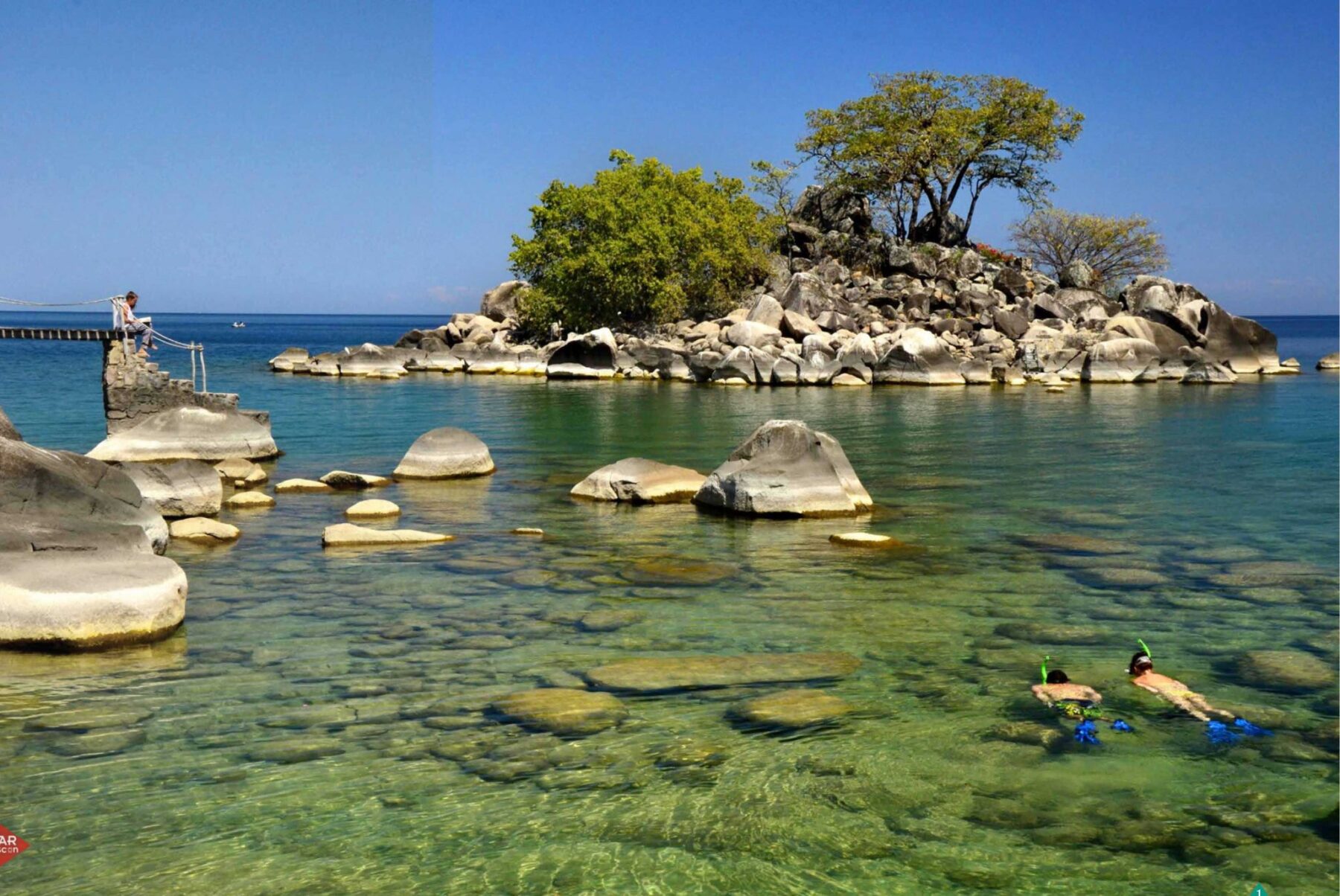
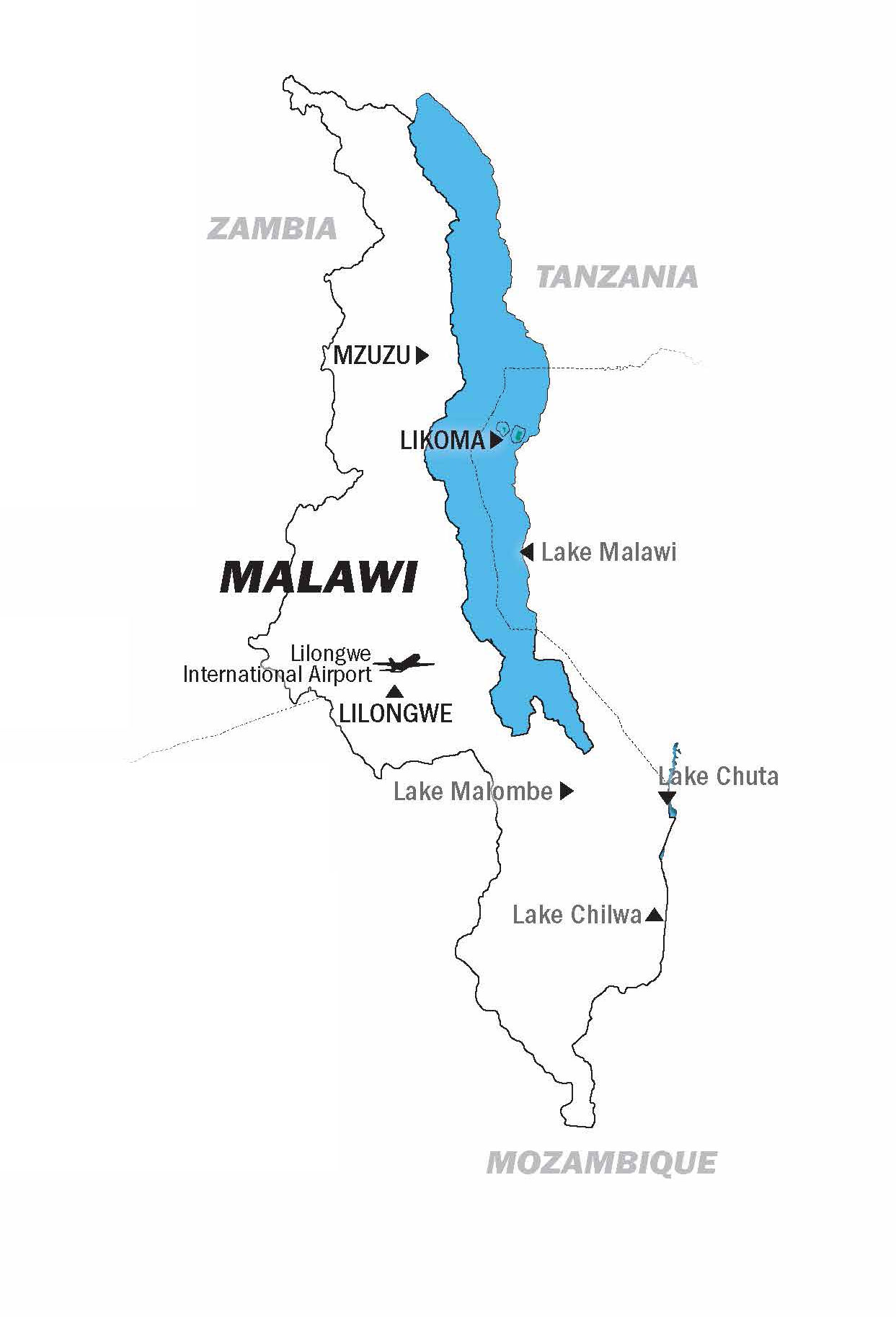
1. The moniker “Lake of Stars” was given to Lake Malawi by David Livingston, who was inspired by the fishermen’s night-time lanterns that turned the water into a replica of the night sky. Here, snorkellers at Masimbwe Island Settings: f/8, 1/100s, ISO 160 (Photo by Scott Bennett

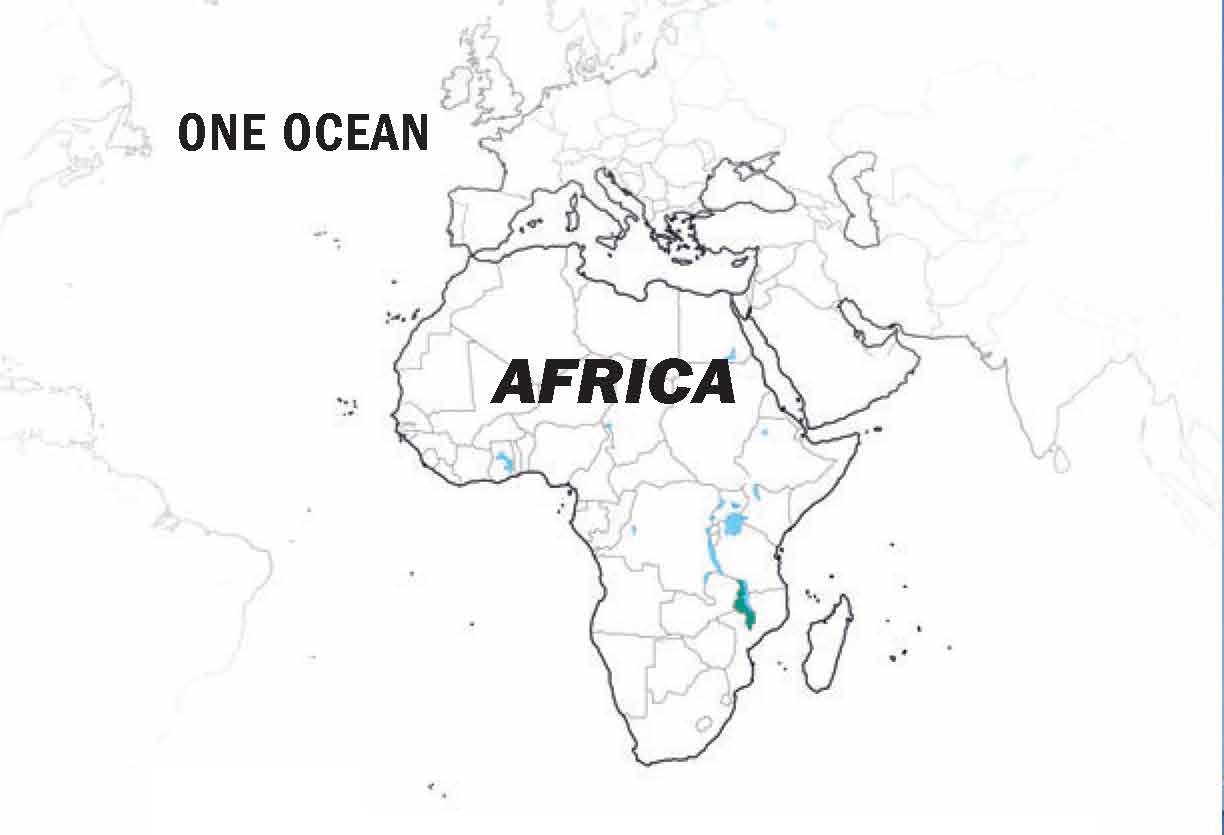
The massive Lake Malawi is no ordinary body of water. Five hundred metres above sea level and around 800 metres deep, it is home to more fish species than any other lake on the planet. (Text and photos by Scott Bennett)

Created by immense geological forces that are gradually tearing the continent apart, known as the “Lake of Stars” or “The Calendar Lake” (being 587 kilometres long and 84 kilometres wide), Lake Malawi’s voluminous depths are conspicuously lacking large underwater fauna. What it does have is cichlids. LOTS of cichlids. From a few initial colonisers, upwards of a thousand endemic species have evolved. The most colourful, locally known as “mbuna”, display remarkable degrees of evolution. Highly territorial, many reside in one compact area their entire lives, creating inbred communities that diverge into new species.

My first night on the lake would be spent in Cape Maclear. I would do a pair of dives en route to Domwe Island, for the next night. Then I would be picked up and taken to Mumbo Island for more dives before checking into the resort. I could hardly wait! Abounding with overseas backpackers and souvenir vendors, I felt like I was in Southeast Asia rather than Central Africa. With no electricity for the ensuing two nights, I embarked on a battery-charging marathon to ensure I wouldn’t be caught short.

TUMBE TO DOMWE
The morning’s first dive site was The Wreck, at Tumbe Island, a 15 metre steel-hulled vessel sunk specifically for diving. The water was 23°C; not bad for the middle of winter in Africa!

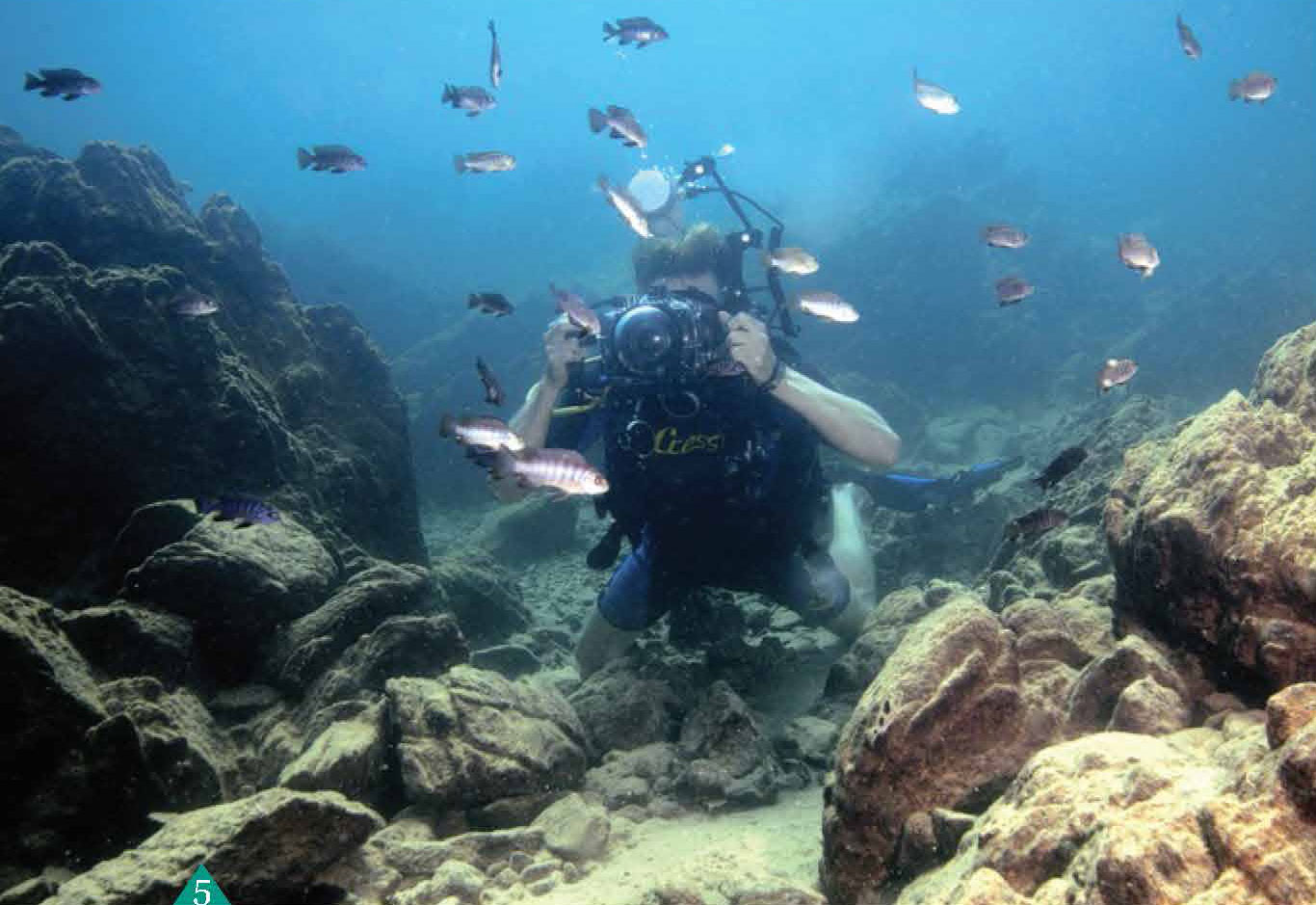
Visibility was limited to less than 10 metres, but the cichlids were everywhere in a staggering array of shapes and colours! It was hard to comprehend they had descended from a solitary species.

The terrain’s prevailing feature was granite boulders, some the size of houses. A large blue crab peered out from under a rock, scuttling to the safety of a deep recess as I approached. Vegetation was surprisingly absent, but every surface was shrouded with algae, the primary food for many cichlid species. A few however, eat, other cichlids.

Descending to the stern, we encountered a pair of two-metre kampango catfish, the lake’s biggest fish, which can grow up to two metres in length. Unfazed by our presence, they allowed a close approach for wide-angle photography.

At the next site, The Aquarium, we were instantly enveloped by cichlids of even greater numbers and varieties. A flat sandy area featured a number of curious crater-shaped formations. Remarkably, they were not natural but fish-made, courting arenas created by male cichlids to attract females.

Rising to 400 metres above lake level with a circumference of 11 kilometres, Domwe is Lake Malawi’s largest island. Granite boulders flanked the beach like giant scattered marbles while dense vegetation cloaked the rugged slopes above. The view of the lake from my tent was superb; I felt like Robinson Crusoe on my own private island!

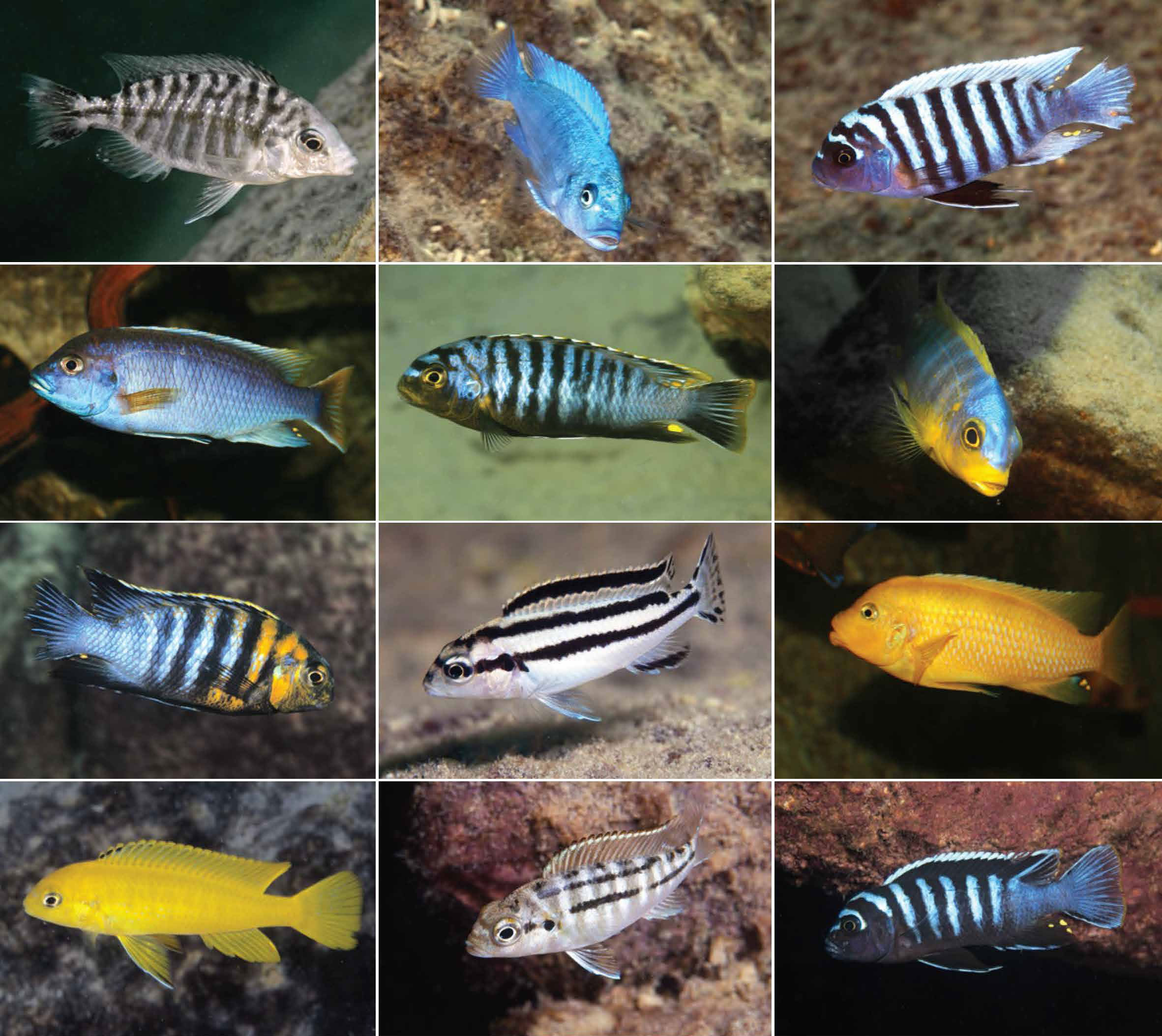
CICHLIDS GALORE: Well over 500 colourful and diverse species of cichlid have evolved in Lake Malawi from a common ancestor over the last million years. They are broadly divided into two groups – haplochromines and tilapiines. Haplichromines are all mouthbrooders, while tilapiines are substrate-spawning (Photos by Scott Bennett)

MUMBO ISLAND
The next morning, we set out for Mumbo Island. Massive boulders flanked the island’s perimeter as baobab and candelabra trees crowded each other for growing space. Underwater, the scenery was equally impressive: Pinnacles descending to 50 metres, overhangs and swim-throughs to explore; on one safety stop, the water became crystal clear, with sheer rock faces dwarfing the never-ending parade of cichlids. At Mpipi Bay rocky slopes descended gradually to a depth of 100 metres, and, in the shallows, an abundance of water plants.

Back at the resort on Mumbo, once again, I found myself grasping for superlatives. My tent’s location was even more spectacular than at Domwe. Looking out over a small bay of aquamarine water, I ensconced myself in the hammock out front, as African fish eagles wheeled overhead. Sheer bliss!

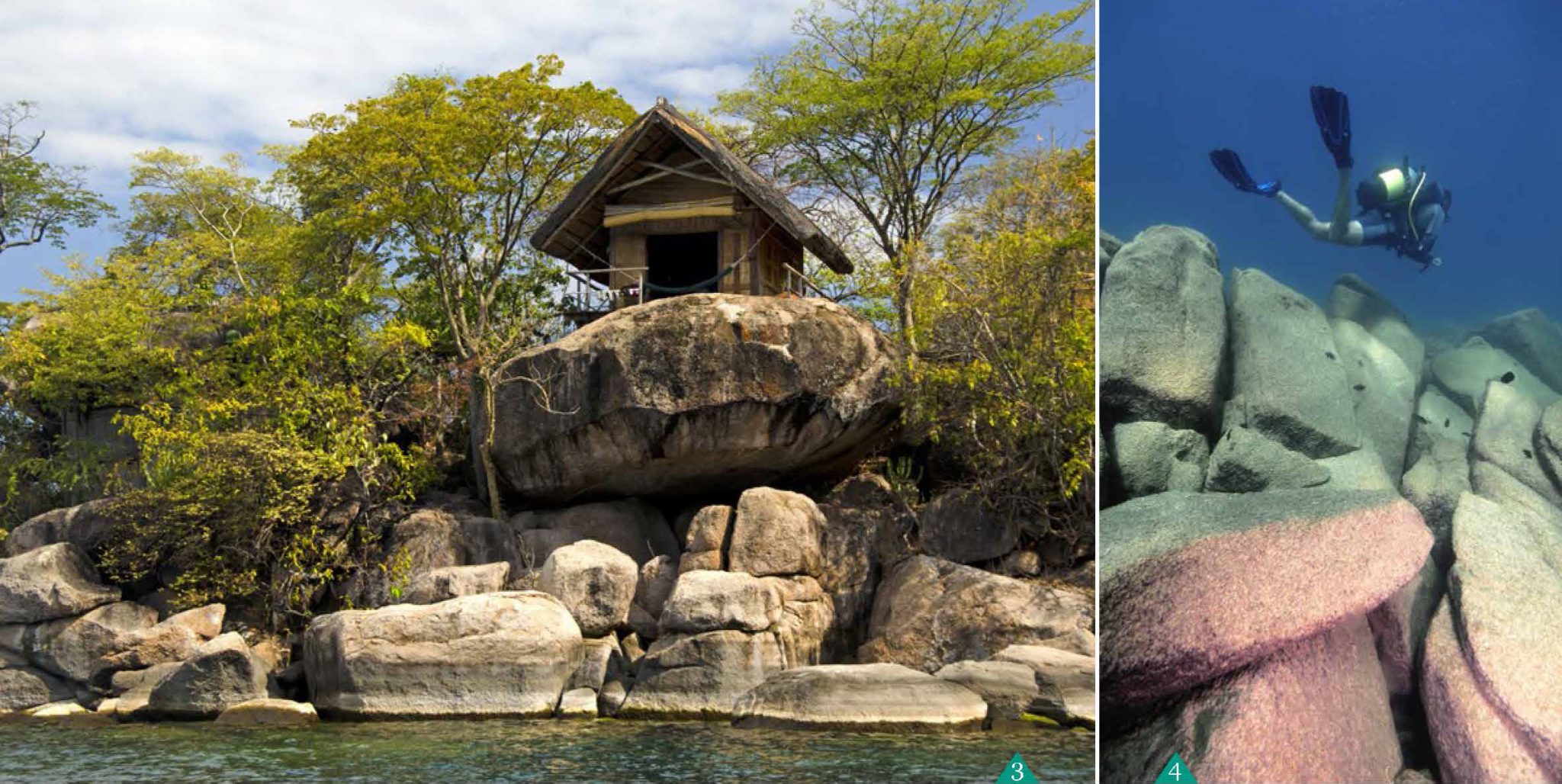
3. Dramatic scenery, wildlife and accomodation at the Mumbo Resort. Settings: f/9, 1/329s, ISO 320 4. Masimbwe Island: The water is clear and warm, perfect for divers of all levels. Settings: f/8, 1/100s, ISO 160 (Photos by Scott Bennett)

MASIMBWE AND THE MOUTH BROODERS

On the first day, with profuse fish life and magnificent underwater scenery Masimbwe Island quickly became a favourite. Immense boulders tumbled to the depths below, with fissures concealing some hefty catfish. We were shown a curious linear pattern etched in the rock which some believe to be a carving. Nearby, I observed a freshwater sponge, something I didn’t even know existed in Africa! However, there was one photo subject that remained infuriatingly elusive.

Many Malawi cichlids are mouth brooders, with the juvenile fish residing within their mother’s mouth for protection. I couldn’t help but wonder if any had ever been accidentally swallowed! Having missed them at Cape Maclear, I really wanted to see this phenomenon in action. (The mouth brooding, not the swallowing!)

Happily, our second dive at Christian’s Point proved much more successful. The key was to search for a school of juveniles, an indication that the mother must be near. Soon enough, we spotted them and before long, witnessed the mouth brooding behaviour in action. We even witnessed some juveniles forming a miniature bait ball. Getting photos proved challenging, as the action was lightening fast.

Although small compared to its larger neighbours, Malawi’s attractions are big, both above and under the water. Known as the warm heart of Africa for its friendly people, I would certainly be back. Despite lacking mega fauna and the colourful reefs of a tropical ocean, Malawi’s subtropical waters offer easy, relaxed diving with no currents, calm conditions and decent visibility. But it is Lake Malawi’s dramatic scenery and remarkable biodiversity that set it apart – the Lake of Stars is dazzling. And unlike anywhere else on Earth.

Capturing a shot the famous mouthbrooding behaviour was a challenge. Settings: f/8, 1/100s, ISO 160 (Photo by Scott Bennett)

NAVIGATOR

Getting there:

Main international gateway is Johannesburg, with connecting flights to Blantyre or the capital of Lilongwe.

Best time to dive:

Year round but best time is between Sept and early December.

Don’t dive without:

A dive computer, but be sure to adjust the settings as the lake is 500 metres above sea level.

Essential training:

Basic open water certification is adequate for many dive sites.

On arrival:

A full valid passport is required for entry into Malawi. For tourist visits, visas are not required by citizens of most Commonwealth countries, the USA, Japan and most European Union countries.

For more information:

www.malawitourism.com

Dive with:

Kayak Africa, Cape Maclear www.kayakafrica.co.za, Kaya Mawa Resort, Likoma Island www.kayamawa.com

Currency:

Unit of currency is the kwacha. 1 USD : 396 MWK

Time Zone:

Central African Time Zone, GMT + 2

Languages:

English is an official language and is widely understood. A number of indigenous languages are also spoken, the most common being Chewa.

Read the rest of this article in SD Issue 6/2014, OP No. 1 of Scuba Diver magazine by subscribing here or check out all of our publications here.
New Hope For Asia’s Coral Reefs

0
Photo by Tim Rock

ASIA HAS THE LARGEST and best coral reefs in the world, but its coral reef ecosystems are in rapid decline, an occurence which is part of a global phenomenon. More than 100 countries are seeing their marine biodiversity, fisheries, tourism and shore protection services collapse. Only the oldest divers can tell you what we have lost because all scientific surveys began long after the decline was underway.

My grandfather and father pioneered diving marine science and photography in the 1940s and I have the world’s largest collection of underwater photographs from the 1940s, 1950s and 1960s, including the first colour images of the Great Barrier Reef. You could cry to see any of these places now.

The causes of reef decline are complex, because so many different factors kill corals, but worldwide, the major factors are now global warming, new diseases and land-based sources of pollution such as sewage, fertiliser and soil erosion, although dredging, fishing with bombs and poisons and diver damage, among other causes, can all play important local roles.

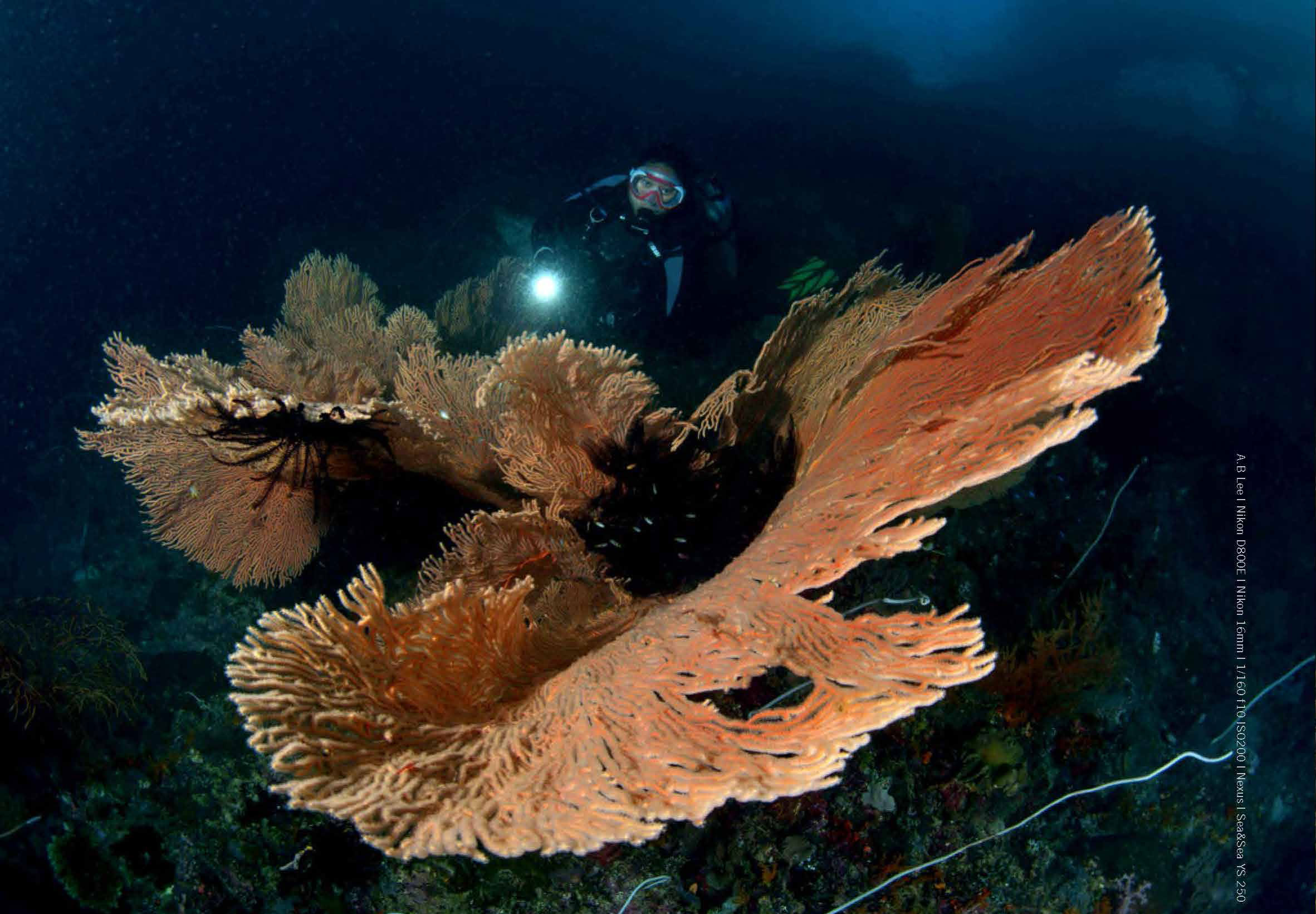
Whale Rock, Misool: Raja Ampat’s version of a sea fan (Photo by A.B. Lee)

In the old days, most stressors were local in size and short in duration, like ship groundings or typhoons, and reefs would recover in 15 to 20 years. But now, chronic and worsening stresses from high temperatures, pollution, diseases, mud and algae overgrowth, amid other factors, mean most damaged reefs simply don’t recover any more, unless they are in very remote and untouched areas. And even those are succumbing to high temperatures and diseases.

Coral reefs are the most susceptible ecosystems of all to global warming and pollution. The best hope for maintaining coral reefs, and the vital environmental services they provide, will be to remove the stressor that are killing them. This is unlikely to happen however because they are caused by energy, land use, water use and waste disposal practices all over the globe, which would need to be seriously changed to save coral reefs. But fortunately, there is an alternative that can buy valuable time for coral reefs until humanity can put our planet back on a sustainable track.

To survive the stressors that will hit coral reefs in the years to come, we need new methods to help increase coral settlement, growth, budding, branching, healing, survival and resistance to stress. This is precisely what we have done all over the world since the 1980s using the electrical Biorock method. This process, invented and developed by the late architect Wolf Hilbertz and myself, uses safe, low voltage trickle charges to grow solid limestone structures of any size or shape in the sea.

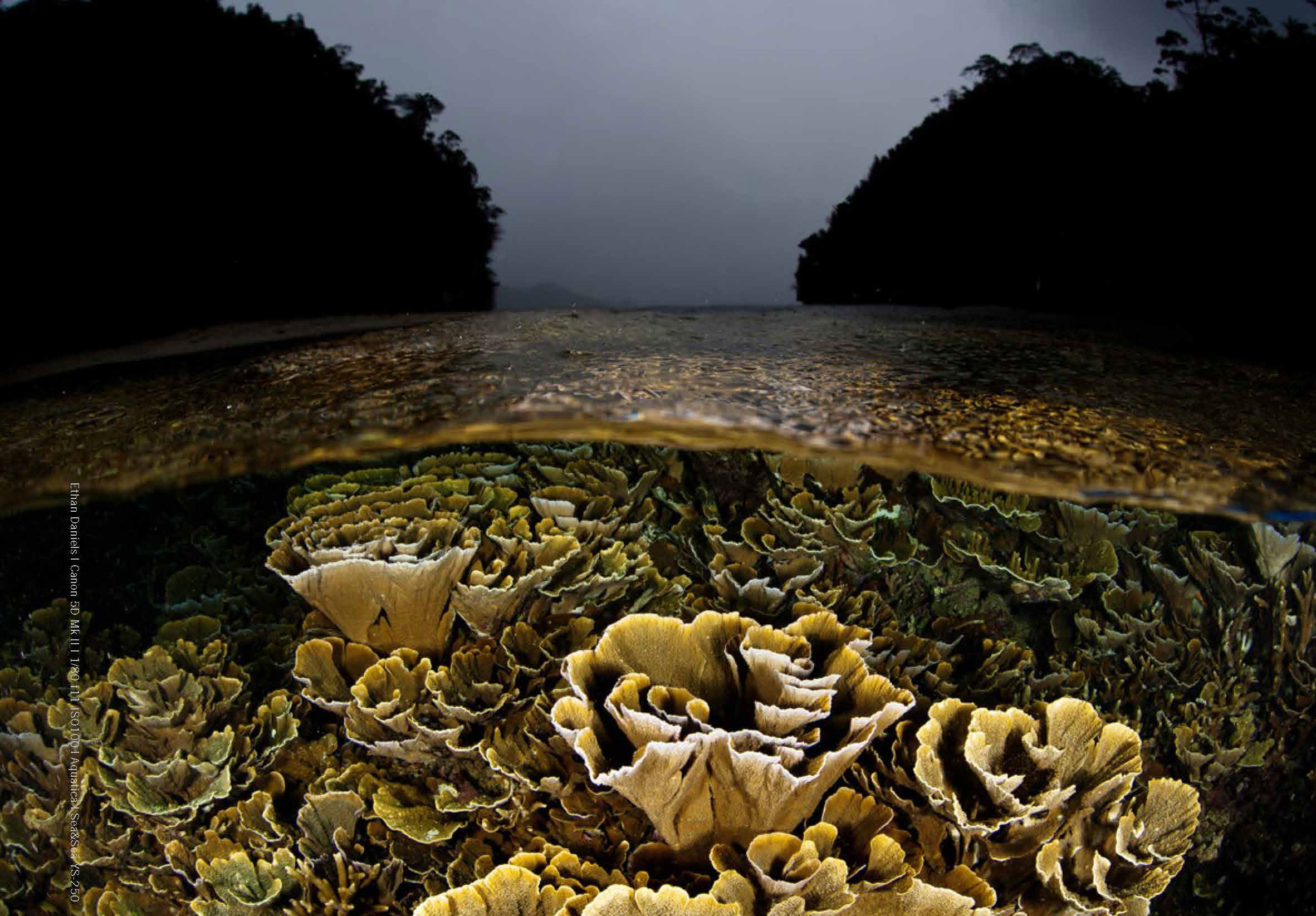
Rain clouds form over a shallow reef at Alyui Bay, Raja Ampat, Indonesia (Photo by Ethan Daniels)

Biorock provides the only marine building material that gets stronger with age and is self-repairing (damaged areas grow back first). The material we grow from the sea is the same material that makes up coral skeletons. We have grown new reefs in front of severely eroding beaches, and have cultivated new sand, repairing beaches back in two to three years. These methods are the most effective ones for restoring beaches and protecting low-lying islands and coasts from erosion and global sea level rise.

What is also astonishing is that we get coral growth rates that are 200 to 1,000 percent faster in the electrical field, and we see up to 1,600 to 5,000 percent higher coral survival after severe heat stroke. Moreover, the benefits apply not only to corals, but also to all organisms in the surrounding areas, including oysters, clams, soft corals, sponges, fishes, seagrass and salt marshes. As a result, we keep marine ecosystems alive in places where they would die, and repair new ones in a few years in places with no natural recovery.

The Global Coral Reef Alliance works closely with local coral reef management groups all around the world in our Coral Arks Program. Our goal is to maintain healthy populations of all reef-building coral species so they can survive the stress that lies ahead. In Bali alone, we are now growing around 80 percent of all the tropical coral families (“genera”) and about half of all species. But many more Biorock Coral Arks are needed all around the world, wherever there are groups committed to long-term coral reef management. Around 400 or more Biorock reef structures have been built in more than 20 countries, with the majority in Indonesia.

For transforming an area barren of corals and fishes into a pristine reef swarming with huge fish schools, the Karang Lestari Biorock Coral Reef Restoration Project in Pemuteran, Bali, Indonesia, was a recipient of the United Nations Equator Award for Community-Based Development, and awarded the Special United Nations Development Programme Award for Oceans and Coastal Management at the UN Conference on Sustainable Development in Rio de Janeiro in 2012.

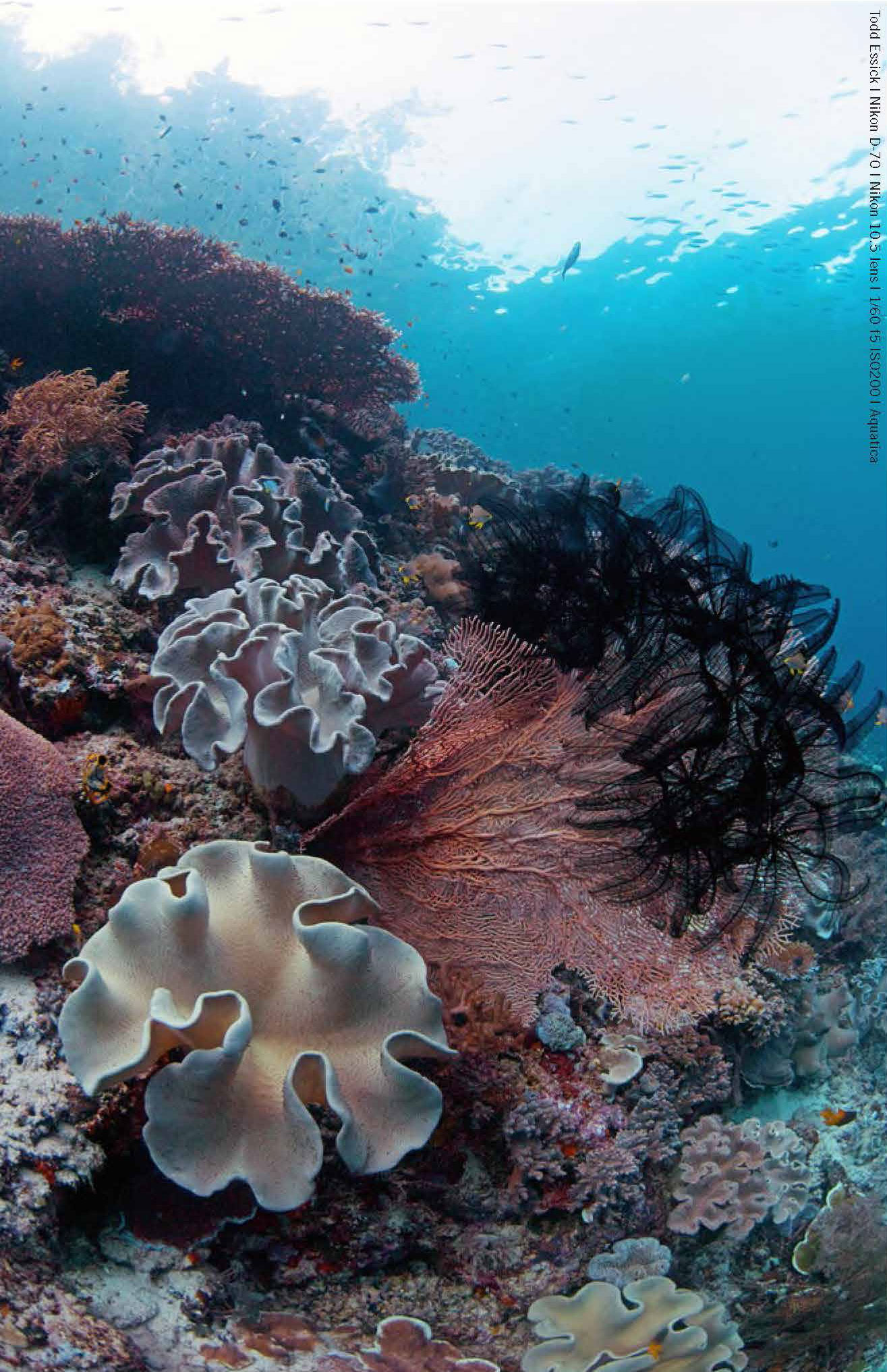
Stunning cabbage corals at Misool, Raja Ampat, Indonesia (Photo by Todd Essick)

These projects are eagerly supported by local fishermen, who watched in astonishment as a barren area was restored, and as huge schools of fish first moved in and then spread to nearby reefs, providing the fishermen with larger fish of greater abundance and diversity. Pemuteran fishermen are very proud of their results. They want all other fishing villages to follow their example!

In the Philippines, where some of the last remaining coral reefs were devastated by Typhoon Haiyan, we worked closely with the Coral Triangle Conservancy to restore coral reefs in village-managed Protected No Fishing Zones in the Calamianes Islands, where 80–95 percent of the corals were smashed to rubble by the typhoon. The goal is to bring back their fisheries, as we did in Bali. Biorock coral nurseries in the Philippines showed prolific new growth and healthy colours just four days after the typhoon struck, a ray of hope amid the devastation.

Coral reefs can be saved for future generations if we start growing Coral Arks wherever we can. The technology is now readily available to restore our damaged coral reefs, fisheries and beaches. Our efforts to use the power of the sun, wind, ocean currents and waves to grow coral reefs need to be increased a million fold if we are to continue to enjoy the bounty of the reefs.

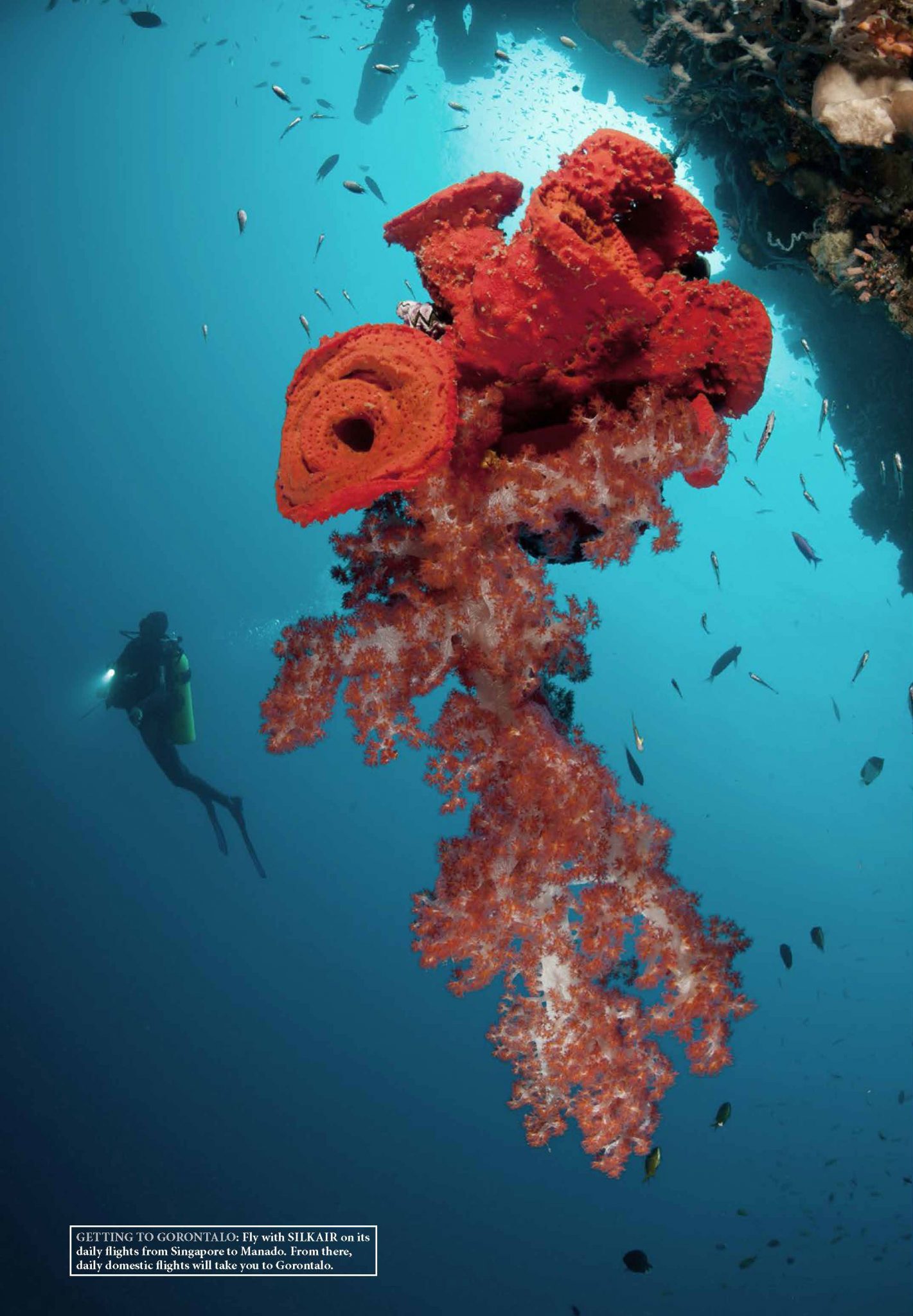
Gorontalo, Sulawesi, Indonesia: A diver looks on at a bright red soft coral Dendronephthya sp. and sponge hanging from the roof of a cave (Photo by Steve Jones)

Unfortunately, there is still little support for such efforts – no government anywhere is using the advanced technology that will be needed in the future. Governments and International Agencies claim that Marine Protected Areas can solve all coral reef and fisheries problems, even though they only work where prime habitat is being protected and fail elsewhere. They claim coral reefs are “resilient ecosystems”, so coral reefs and fisheries will bounce back from any damage. Thus, the right response is to do nothing and wait! These “conservation” efforts have largely failed to protect corals, and large-scale active restoration will be needed.

Read the rest of this article in 2014 Issue 2 Volume 131 of Asian Diver magazine by subscribing here or check out all of our publications here.
Immersion Therapy

0
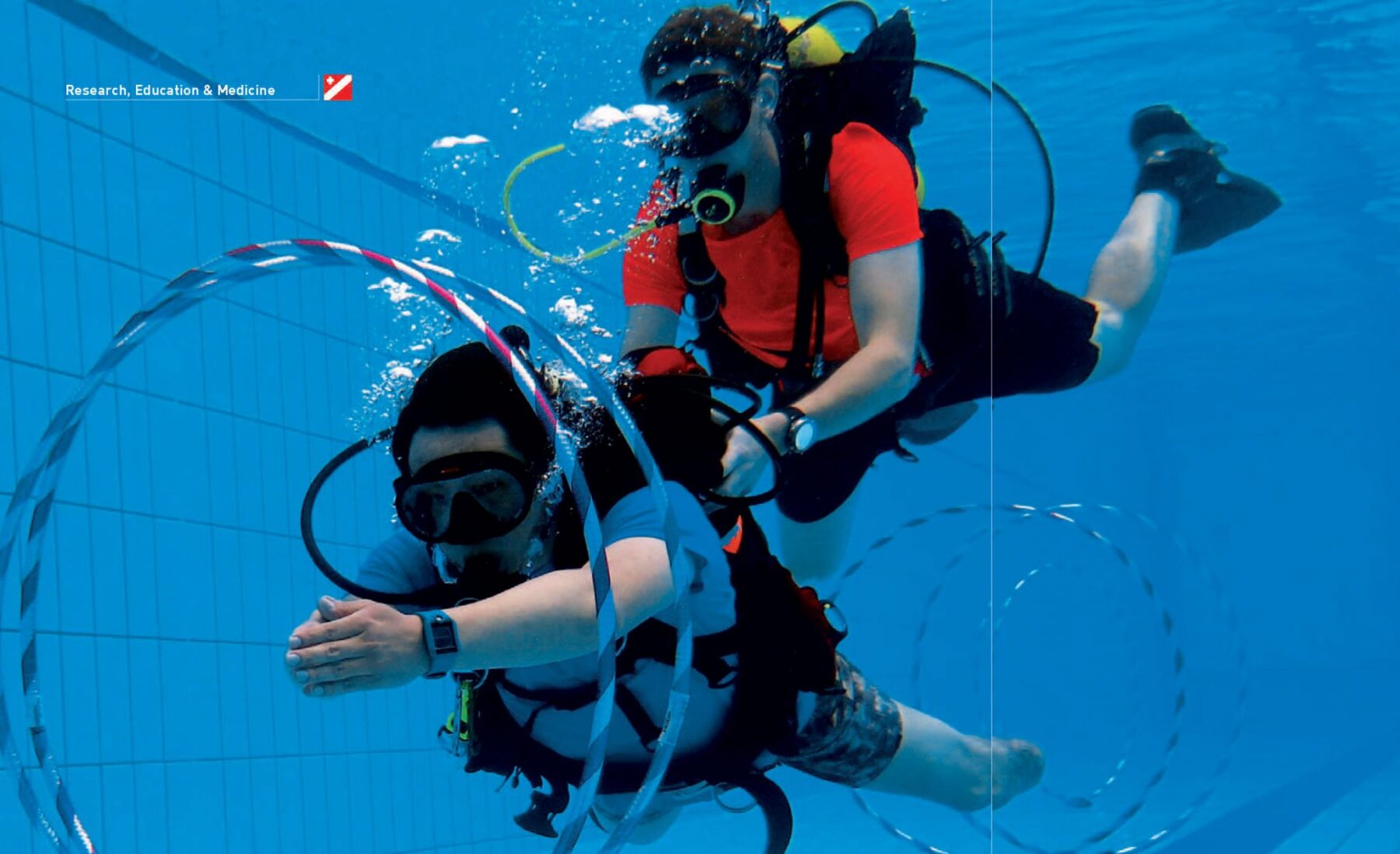
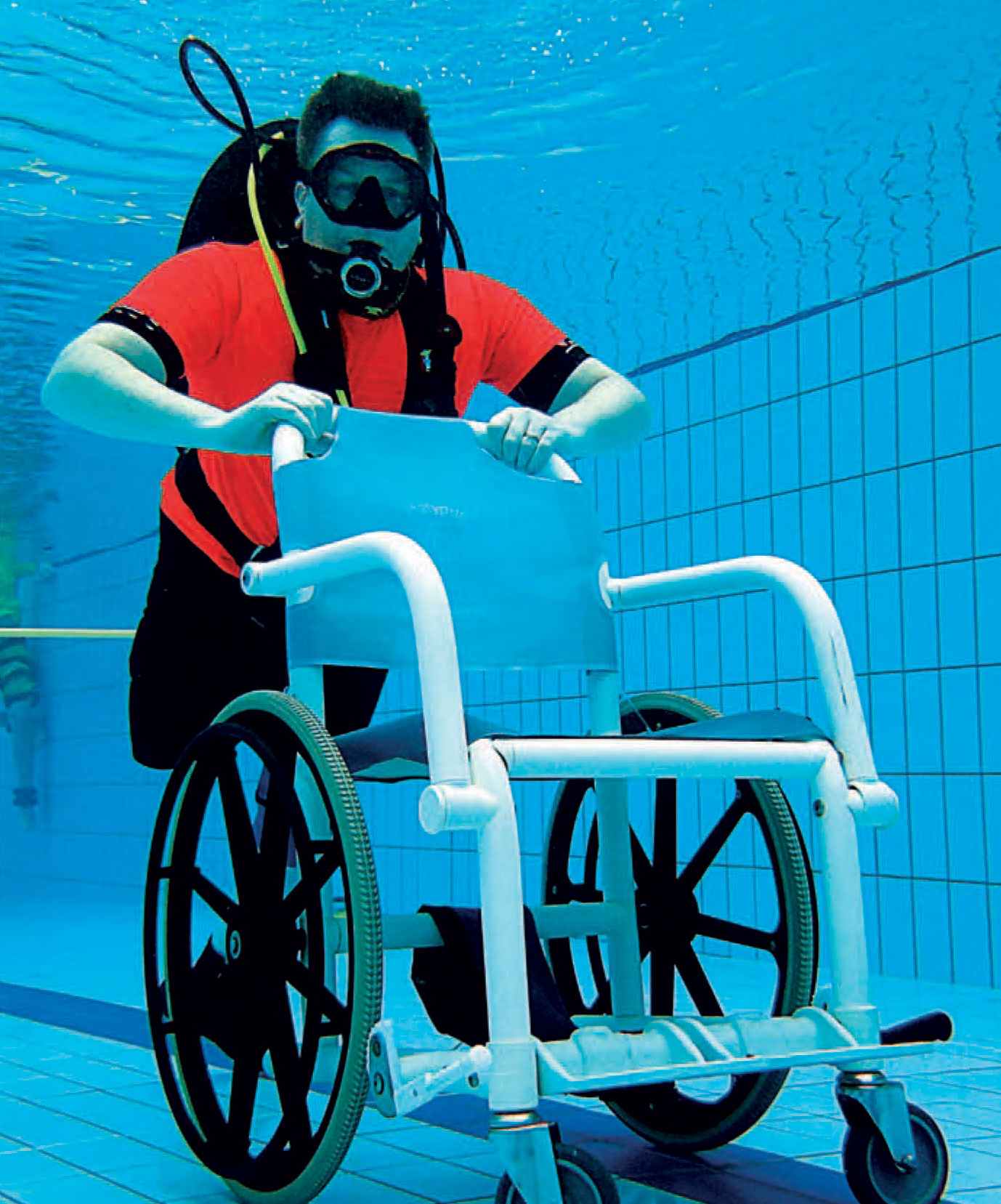
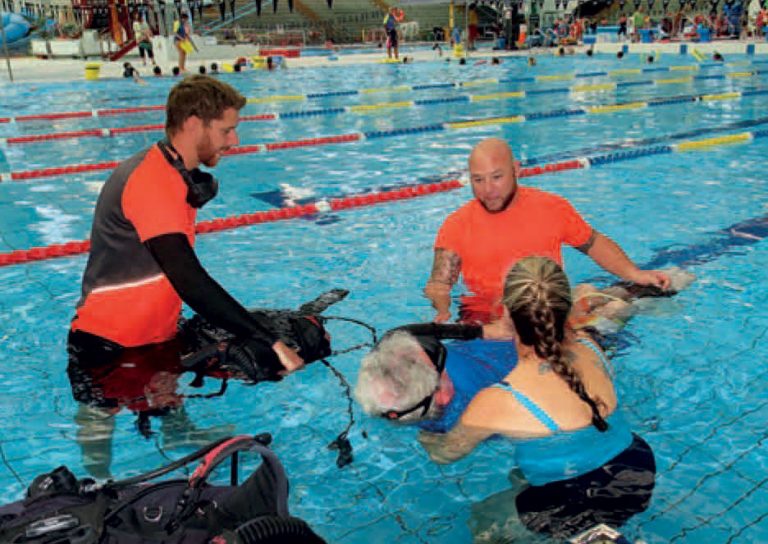
Scuba diving can open up a world of freedom of movement for people who might have physical challenges (Photo courtesy of Peter Wilson)

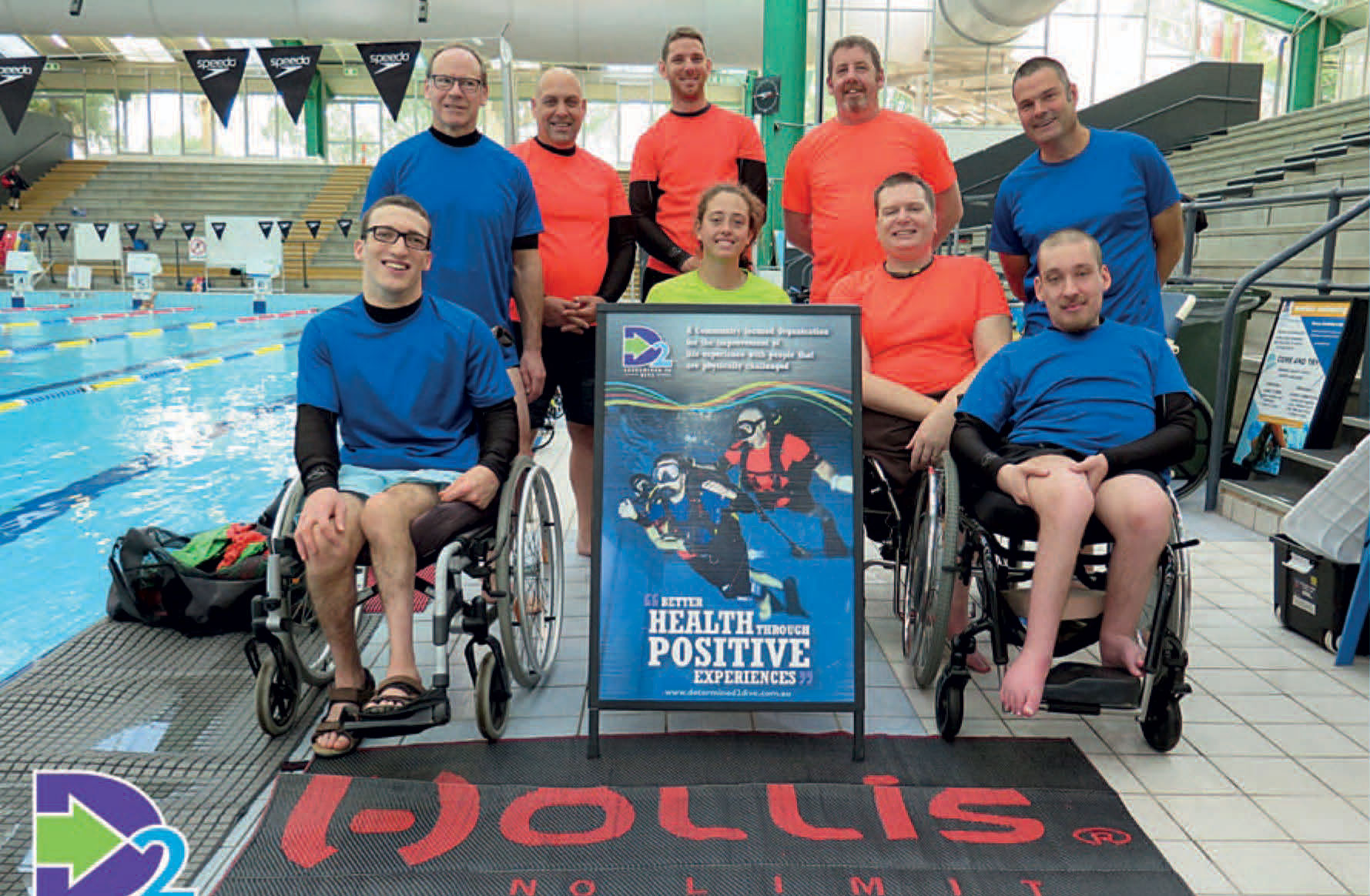
DAN AP Member Peter Wilson has endured huge challenges over the past decade, having nearly lost his life and being told by doctors he would be unlikely to walk again. Then he discovered scuba diving and felt extremely free in the water. Inspired, Peter is working to share a scuba diving experience with other people that are physically impaired.

In 2007, life as Peter Wilson knew it changed forever, when he lost control of his motorbike and was run over by a car. At aged 27, married and a father of two children, he was given a 20-percent chance of survival. Peter passed the critical survival stage and was told to prepare for the fact he may never walk again. Peter refused to believe this and within 12 months of the accident was walking again, not perfectly, but proving the doctors wrong.

Some two years later, Peter was getting on with his new life, when he came across a full set of scuba gear for sale. This triggered a memory of diving when he was much younger and how a career in scuba diving was always top of his list. So he purchased the set, and then quickly discovered he couldn’t use any of it because it was 30 years old.

After being told by the first dive operator he approached that he would be a burden to other students buddied up with him, and that he shouldn’t learn to dive because of his physical injuries, he obtained medical clearance and found a dive operator that was completely understanding of his needs and welcomed him. Peter says: “I quickly caught the diving bug and was soon an Advanced Open Water Diver and ticking off my specialties as fast as I could afford them. I currently hold six specialties and a Master Scuba Diver certification. When I first got involved in diving, I had no idea how much it would help with my long-term recovery.”

Scuba diving can open up a world of freedom of movement for people who might have physical challenges (Photo courtesy of Peter Wilson)

NEW POSSIBILITIES – CONTROLLED SCUBA EXPERIENCE WITH IMMERSION THERAPY
In 2015, having been in the same industry for 16 years, Peter resigned to explore how he could introduce other people to a controlled diving experience that was focused on the therapeutic benefits of being weightless, as opposed to open water diving: “I was also driven by the memory of how badly I was treated, and wondered how many other people with physical impairments were missing out because they were so disheartened by how they were treated. I thought it would be amazing to create a programme that could be part of a person’s therapy and rehabilitation. Diving had given me so much in so many ways; I had become strong where I was once weak; I had joy where once there was sadness; I had many friends where once I had few. I wanted to take all those benefits and bundle them up so I could share them with the world.”

ENTER DR DAVID WILKINSON
From this desire, Controlled SCUBA Experience was born. Peter approached Dr David Wilkinson, Director of Hyperbaric Medicine at the Royal Adelaide Hospital and Director of the DAN Divers Emergency Service (Ed Note: Dr Wilkinson is also a DAN AP Board Member).

“In a first meeting with Dr Wilkinson, I was joined by 21-year old Ben Everson who is a C4–C5 complete quadriplegic who wanted to use scuba. Ben was keen to learn to dive and was prepared to participate in all the trials during the programme’s development.

Immersion therapy is being recognised as a valuable rehabilitation tool (Photo courtesy of Peter Wilson)

It was during the trials that the Immersion Therapy programme was born, which utilises scuba equipment in a controlled environment to give people living with a disability or significant injury a feeling of weightlessness to increase their activity and well-being. The programme was developed to allow special consideration towards those who may not necessarily meet existing diving medical restrictions, and would be excluded from scuba diving.

“Since our first trials we have held sessions with people with a range of disabilities and Dr Wilkinson has been there to guide us throughout the journey, creating a checklist for participants to complete and has been heavily involved in the assessment of each and every person within the Immersion Therapy programme. He hopes to produce key standards specific to the Controlled SCUBA Experience, and especially the Immersion Therapy programme, allowing others to assess those who previously couldn’t be assessed. Safety is our first priority, and every precaution has been taken to understand the needs of our clients.”

The programme has received support from various government departments, even gaining recognition as a form of rehabilitation from Return to Work South Australia. The Immersion Therapy programme is now an approved and registered provider, meaning injured workers are able to use Peter’s specialised programme as part of their recovery/treatment plan (Ed Note: It’s important to mention that the service is offered at no out of pocket cost to anyone living with a disability and the programme relies on support from the community as many clients don’t have access to mainstream funding like Return to Work SA.)

Many of the participants will never be able to become fully certified divers, but many have recorded a gain in strength and an improvement in their general well-being through the social aspect of the programme.

Read the rest of this article in No. 88 Issue 7/2016 of Scuba Diver magazine by subscribing here or check out all of our publications here.
Divers Can Battle Bleaching

0
The extent of the most recent global coral bleaching event cannot be underestimated (Photo by The Reef-World Foundation)

WHATEVER KIND OF diver you are, you’ll know that your next great dive depends on healthy coral reefs. Coral reefs are the world’s bustling underwater cities. Home to at least one quarter of all marine life in the ocean they generate USD 300–400 billion each year from tourism, fisheries and coastal protection. If you’re a seasoned diver you’ll also know that coral reefs are dying faster than ever before. In the last 30 years we’ve lost half of our corals globally and, in 2016, a single bleaching event killed off 20 percent of coral on the Great Barrier Reef.

Divers have been witnessing mass bleaching events for decades across reefs in the Atlantic, the Pacific and the Indian Oceans. These events have become more frequent and more devastating in recent years as greenhouse gas emissions continue to rise. Scientists predict that the resulting sea temperature rise will soon cause severe annual bleaching events. It takes at least five years, but usually much longer, for a reef to recover from a single bleaching event. Frequent and severe bleaching will inevitably cause major changes to the reef environment we know and love. Unless we take action now, we could lose most of our reefs to the impacts of climate change by 2050.

THE WINNERS AND LOSERS OF GLOBAL CLIMATE CHANGE
But where do you start when the world is covered with over 294,000 square kilometres of coral reef? Cutting-edge research from UN Environment has recently determined that some reefs will not start experiencing severe annual bleaching events until years, or even several decades, after others. These are the winners of global climate change and are known by scientists as “climate refugia”. To predict the time when corals are most likely to be affected, scientists use Degree Heating Weeks. This is a measure of the intensity and duration of a warming sea. Widespread bleaching and coral mortality is expected to occur when the scale reaches 8 Degree Heating Weeks. This represents eight weeks of ocean warming that is at least one degree Celsius above the seasonal average.

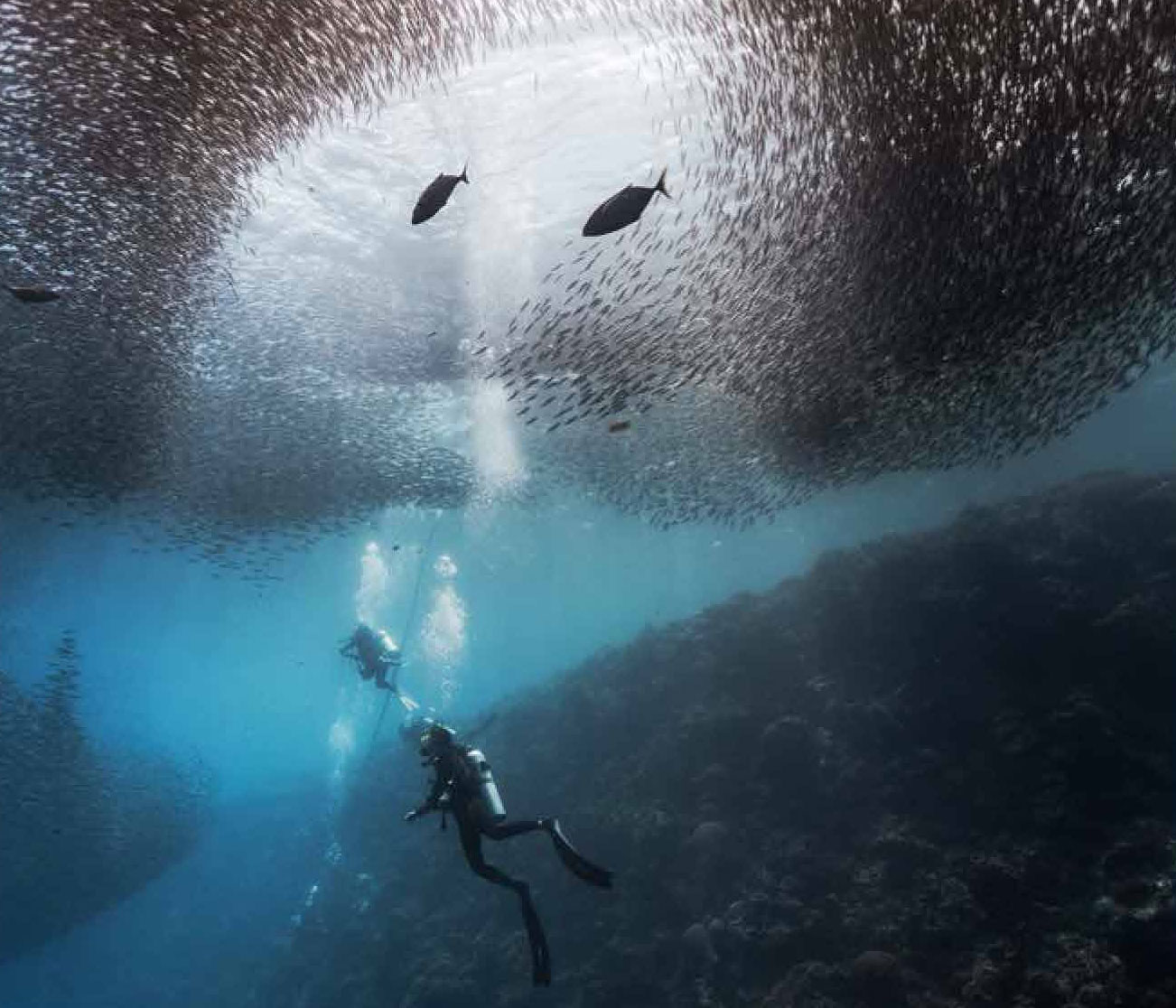
A diver dwarfed by the sardines at Pescador Island in the Philippines (Photo by The Reef-World Foundation)

Many popular diving destinations across Southeast Asia have already been divided up into climate winners and losers based on the world’s current greenhouse gas emissions. Picture the central Philippines, for example; Moalboal is famous for submerging curious divers in enormous schools of sardines around Pescador Island. Under current climate projections, Moalboal will experience mass bleaching events, at least 10 times a decade from 2033. Just under 200 kilometres north however, the thresher shark diving hotspot of Malapascua, isn’t expected to experience this until 2050.

BATTLE THE BLEACHING
In 2016, the hottest year on record for the third year in a row, the global community listened to science and decided to invest in the future. One hundred and ninety-six nations signed the Paris Agreement and pledged to pursue concrete efforts to keep the warming of the Earth’s temperature well below two degrees Celsius. Already at +0.99 degrees Celsius, however, if current trends continue and the world fails to reduce greenhouse gas emissions, then severe bleaching will occur every year on 99 percent of the world’s reefs within the century.

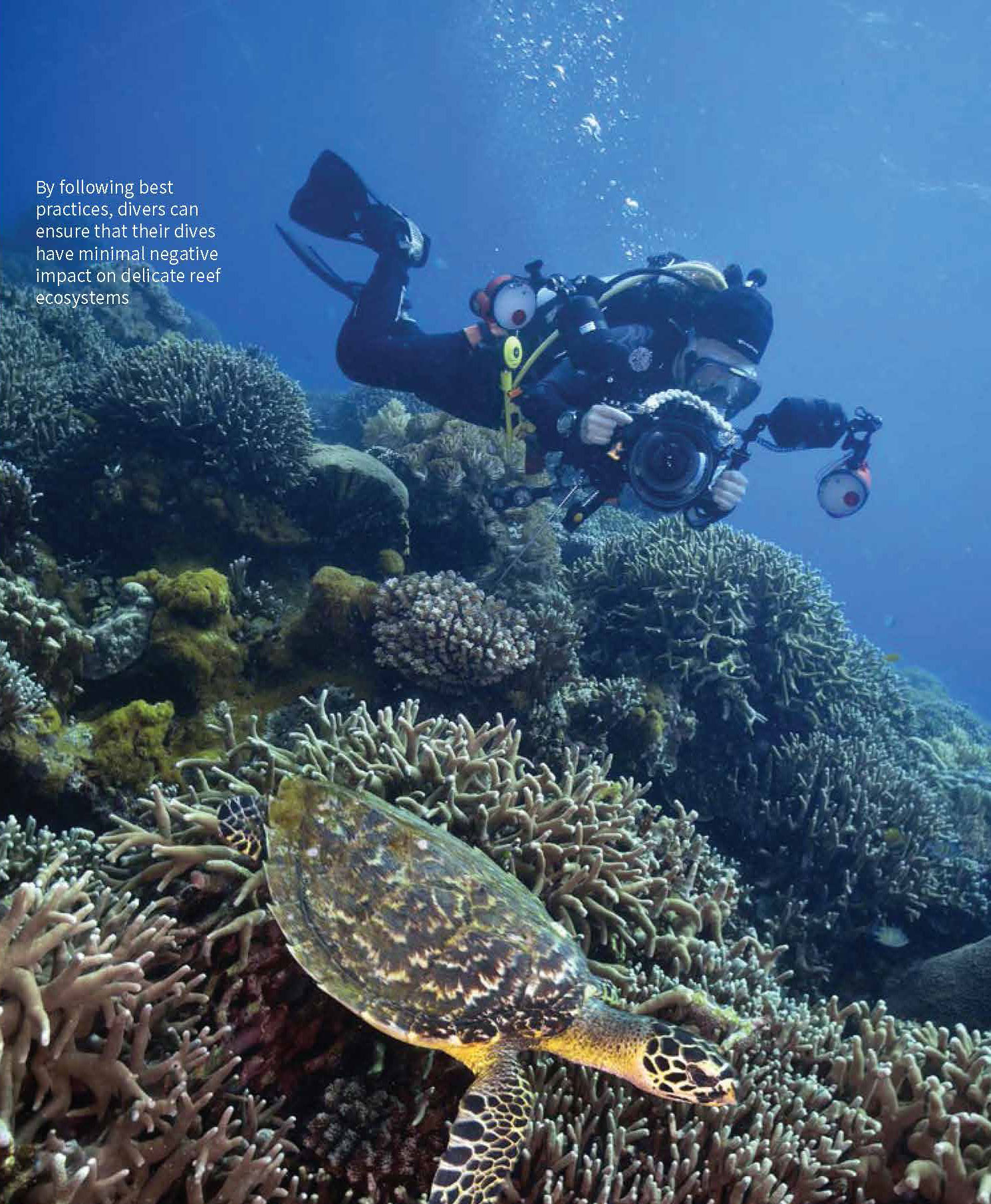
By following best practices, divers can ensure that their dives have minimal negative impact on delicate reef ecosystems (Photo by The Reef-World Foundation)

Finally, diplomats, scientists and politicians have agreed to fight global climate change. But the charge doesn’t rest solely on their shoulders. We can all do our part to protect the Earth and its precious coral reefs from rising sea temperatures and coral bleaching.

WHAT CAN DIVERS DO?
Divers have a powerful connection with the ocean and are in one of the strongest positions to combat bleaching. They are in the water every day, noticing even the subtlest of changes to a reef. The Green Fins initiative recognises that unique connection and gives divers clear ways they can channel their strength for maximum effect. Dive and snorkel centres that sign up for Green Fins membership pledge to align their business practices to a set of environmentally friendly standards, known as the Green Fins Code of Conduct. These standards range from ensuring divers do not touch or harass marine life, to responsibly disposing of used oil. Centres strive to do everything within their power to remove the added stress of marine tourism so that corals remain strong enough to fend off bleaching.

A project now underway in the Philippines aims to focus Green Fins expansion to reefs that have been identified as climate refugia, the winners of global climate change. By prioritising conservation and management efforts on these reefs, efforts are focused on areas that may still have time to adapt to our warming seas. By adopting the Green Fins ethos, the diving community can take real action to fight coral bleaching. Dive operators can use the climate change projections to understand their vulnerability to the impacts of climate change and, where necessary, plan other actions that will reduce their vulnerability, for example, explore business strategies that use, as well as ensure protection of, climate refugia.

Read the rest of this article in 2017 Issue 1 Volume 144 of Asian Diver magazine by subscribing here or check out all of our publications here.