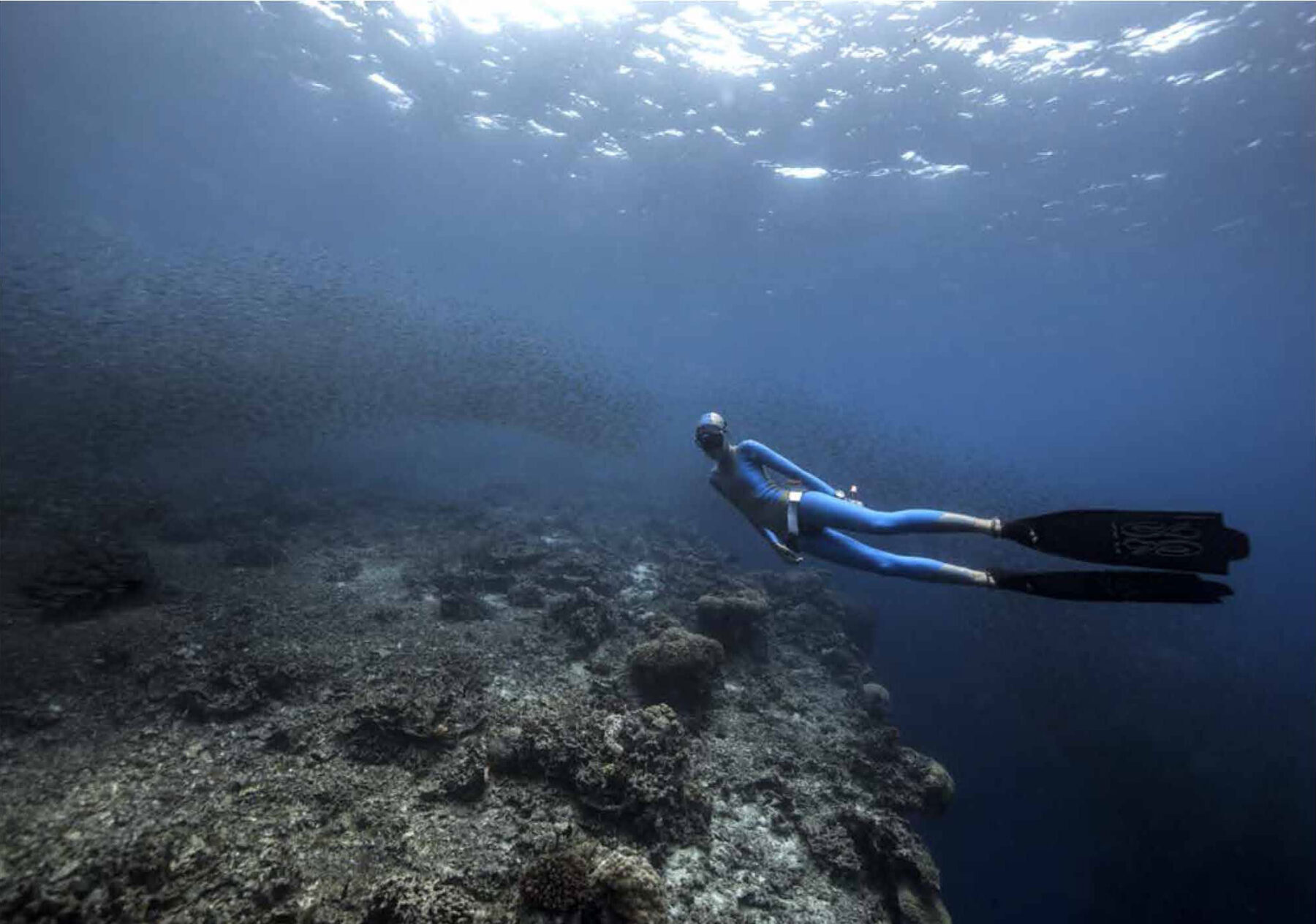
Freediver and model Flavia Eberhard in sinous symphony with the seascape (Photo by Pepe Arcos)
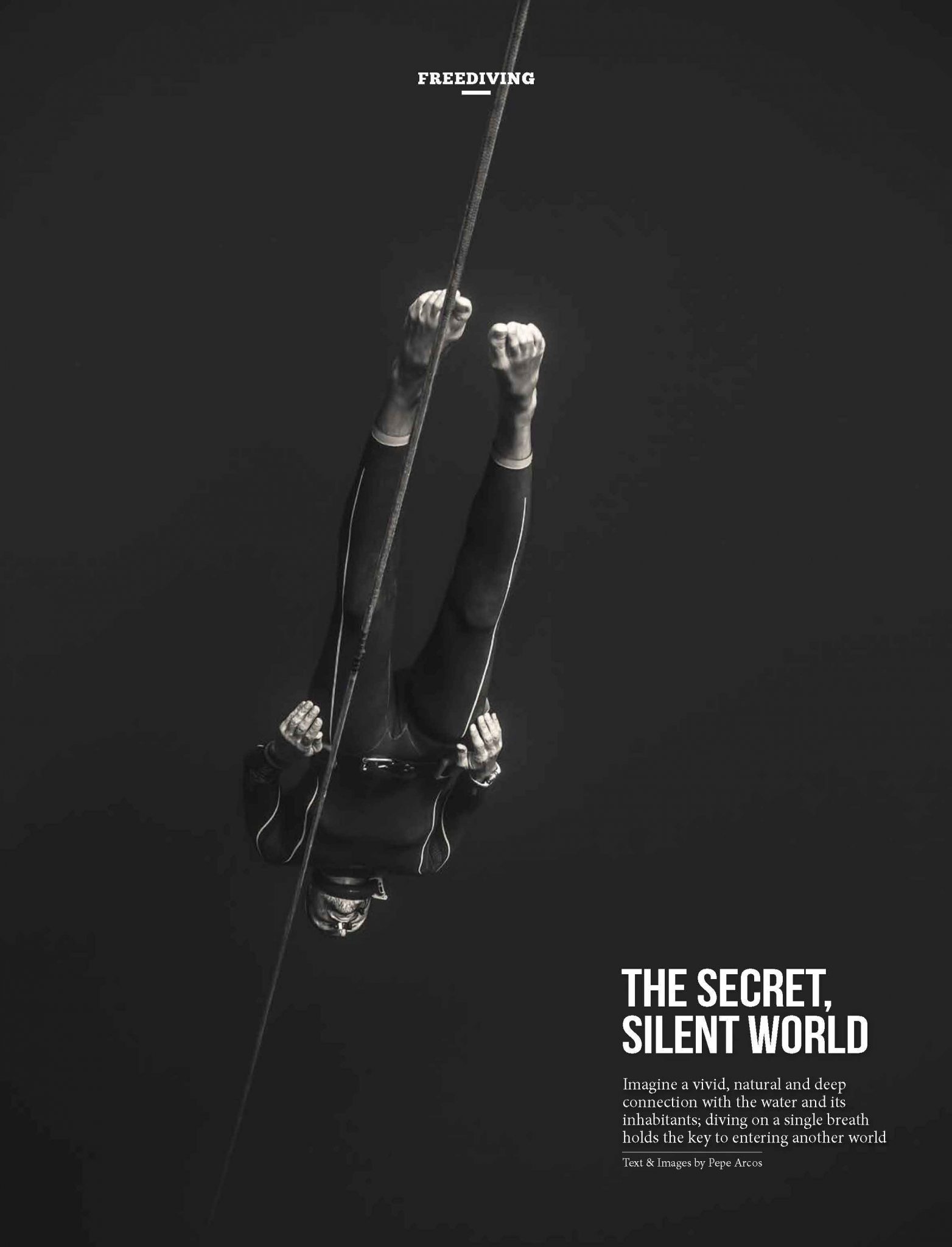
Descending into the abyss on one breath to enter a state of awareness and unity with the ocean (Photo by Pepe Arcos)
YOU MIGHT THINK that diving on a single breath sounds unnatural and weird but, in practice, the experience is actually the opposite. Freedivers will tell you that it is the most natural way to be in the ocean. Sometimes they even talk about it creating a deeper connection with the natural world, as well as with our own human nature.
It is quite often that scuba divers see freedivers as a bunch of crazies that can hold their breath forever and go deeper than you can with a tank. But freedivers know that it’s simply about physical and mental preparation, and that everybody can learn to do it without being some sort of gifted superhero.
ONE LAST BREATH, AND A SLIDE INTO THE WATER…
Freedivers tell us about freefalling, gliding, blending with the sea. Their movements follow a graceful rhythm, through which the freedom they so often describe becomes visible to the observers around them.
Before a dive on a single breath, the mind has to calm down, allowing thoughts to pass by, to focus only on the slow, deep breath up. This technique also slows down the heart rate, making you feel like you are entering a meditative state.
Movements are slow and the world around, the noises of your buddies, the sounds of the ocean, the birds, the wind, all become just echoes in your mind while all attention is focused on relaxation. At this stage, the body feels absolutely relaxed with no tension in any part of it; everything is just breathing and rhythm.
After a big final breath, the dive starts. Descending through the water column, other bodily adaptations kick in automatically to compensate for the changing pressure, and prepare the body to enter an “economical mode” in order to waste the minimum amount of energy and consume as little O2 as possible.
It is well established that the brain uses more energy than any other human organ, accounting for up to 20 percent of the body’s total usage, and this is the reason why relaxation is so important. No thoughts, just feelings, and a focus on becoming one with the ocean – that is the freediver’s mantra.
A LONG TRIP INTO THE WILD AND UNKNOWN
When freedivers aim for depth, they train extremely hard to prepare their bodies to go as deep as 128 metres; a very long trip into the wild and unknown ocean, a kingdom of darkness and extreme conditions. Only a few freedivers in the world can even think about crossing the 100-metre barrier and entering that solo journey, freefalling into the abyss. The pressure down there is enormous and equalising is complicated.
Some freedivers tell stories of dives that totally change their lives. There are almost no bigger challenges on land that expose us to such extremely radical conditions in less than a minute and a half. And then the way back from the depths is even more difficult – for it is that moment when the body seeks oxygen that defines the whole challenge.
There is always an aura of mysticism around this sport. It has been described as an addictive activity but without adrenaline, and a peaceful way to get to know ourselves and overcome our mental and physical barriers.
But the most rewarding part comes when exploration overtakes the pursuit of athletic performance. As ocean-lovers (like other water enthusiasts), freedivers talk about the incredibly exciting interactions they have with wild animals: Freediving into schools of fish with total liberation of movement, surrounded by hundreds or thousands of creatures is a once-in-a-lifetime experience.
Read the rest of this article in 2016 Issue 3 Volume 142 of Asian Diver magazine by subscribing here or check out all of our publications here.
NOWADAYS IT’S HARD to find something truly new and unexplored; it seems that every part of our planet has already had its details revealed, from the northern pole to the southern one. Yet we still seek the unknown, the remote and untouched, and experiences that push the boundaries of the norm.
Can these experiences still be had? Yes, by combining technology with a diverse and complex atoll: rebreathers and the Maldives.
A CCR CRUISE
We chose the privacy and the freedom of a liveaboard, which allowed us to go further, venturing to places not accessible to the inexperienced, and exploring less well-known sites; places where there are no boundaries between the visitor and the ocean, and the scenery stretches almost to infinity. The boat also offered expert rebreather services, including courses.
Today, diving on a closed-circuit rebreather (CCR) is still a niche market and it is rare to find “rebreather-friendly” liveaboards, especially in tropical destinations. But the market is growing because CCR units allow us to enter a realm of silent and almost endless dives, and have intimate encounters that most of us can only dream about. But here in the Maldives on CCR, this is a dream that comes true.
The Maldives is located in the open Indian Ocean, 600 kilometres from the nearest land mass, and swept by nutrient-rich currents. The archipelago is on the route of a vast variety of deep-sea creatures, and the reefs support extraordinary arrays of marine life, both large and small. Powerful currents run through the atolls, carrying waters rich in plankton and food. They are like oases in the desert ocean, attracting life, from the tiniest on the first rung of the food chain (the plankton), to the biggest predators at the top: sharks, tuna and fast pelagic animals. These currents also sustain the growth of both hard and soft corals, which in turn create habitat for reef fish – abundant prey for pelagic predators.
But most of these animals are frightened by the noise of the exhaust bubbles of a normal, open circuit scuba setup, and they will hide in crevices, or give the water column a wide berth. Imagine being a fish, going about your business, when a group of noisy scuba divers arrive. You and your compadres would hurry to hide somewhere until the group of bubble-makers has gone and you can return to your daily affairs – and then laugh about them.
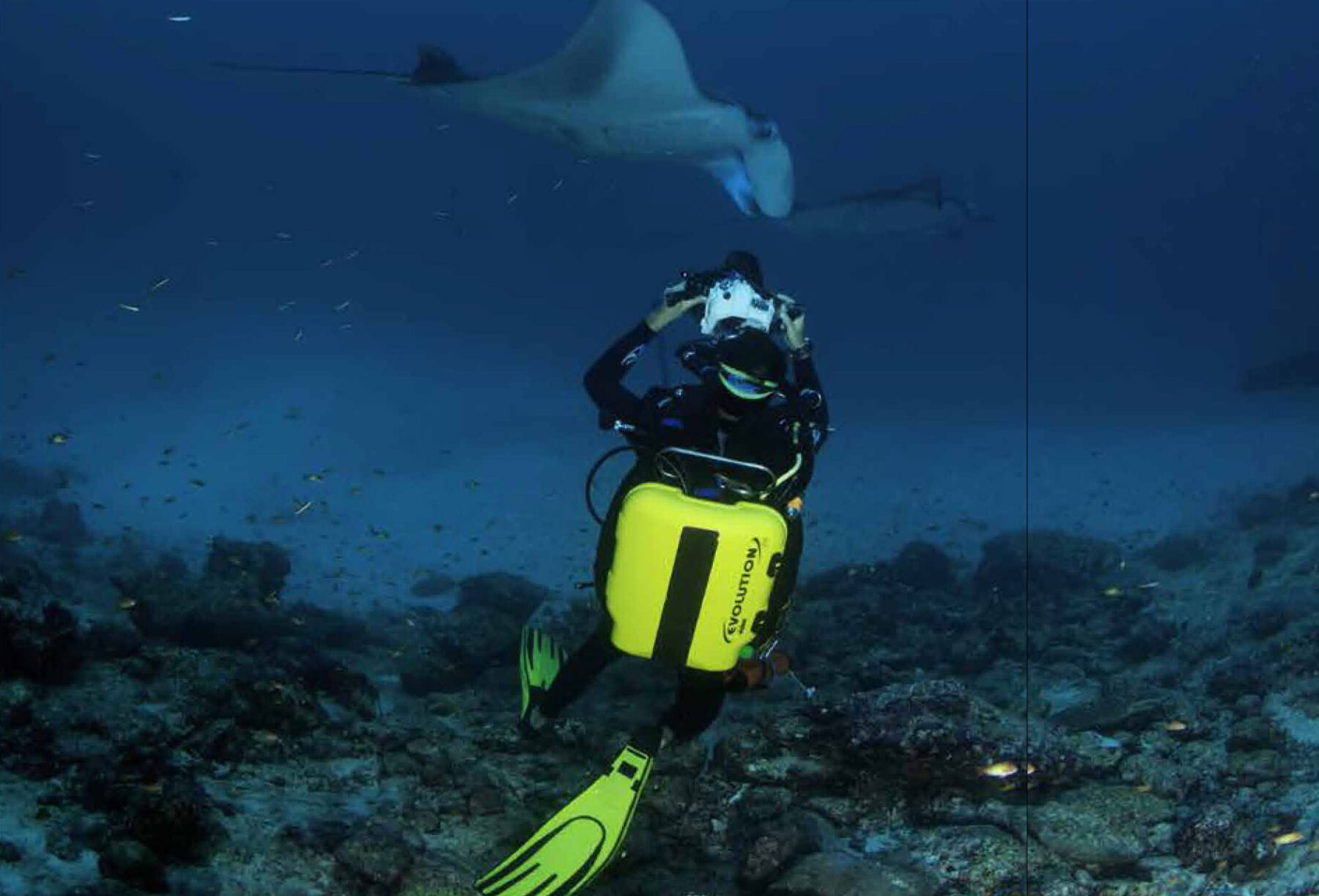
But if divers use CCR units, the behaviour of the fish changes totally: They are more relaxed, more confident, and we can approach them very closely before they move away. In fact, in the Maldives, we have never observed any fish fleeing from us or anxiously looking for a hole in which to hide.
Imagine having sharks and mantas cruising less than a metre above your head, completely immune to your presence!
A CURRENT AFFAIR
The atolls we visited – Malé Sud, Felidhoo, Meemu, Nilandhoo and Ari – are formed by coral islands separated by channels, the famous Maldivian passes. Within them are lagoons of exquisite beauty: sandy basins of calm water, where one finds numerous creatures. Few boats are rocking in the silence of the inner lagoons, grey gulls hover in the warm breeze and the light is so intense that it bleaches everything, even our thoughts.
In the placid and shallow inland sea of lagoons, equipped only with snorkel gear or our CCR units, it wasn’t uncommon to enjoy the company of whale sharks and manta rays intent on filtering plankton, or being cleaned at the cleaning stations.
Generally there are four distinctly different types of diving: the walls (inside the lagoons or outside the reefs), the thilas (pinnacles or seamounts ), the kandus (passes) and the wrecks; they are totally different and able to satisfy both beginners and skilled divers.
What they have in common is the necessity of the divemaster to be able to determine the right time and way to dive any site. Along the outer reefs, the thilas or the passes, the correct strength and direction of the current determines what we can see: Weaker water movement may mean no fish and deflated soft coral; a current that is too strong can end a dive within a few minutes, or, more dangerously, cause the group to become dispersed.
But the “right” current can make us suddenly forget all the dives that have come before, as the memories are washed away in an abundance of marine life – life that has no qualms about introducing itself to us in intimate and unexpected displays of acceptance.
Read the rest of this article in 2016 Issue 3 Volume 142 of Asian Diver magazine by subscribing here or check out all of our publications here.
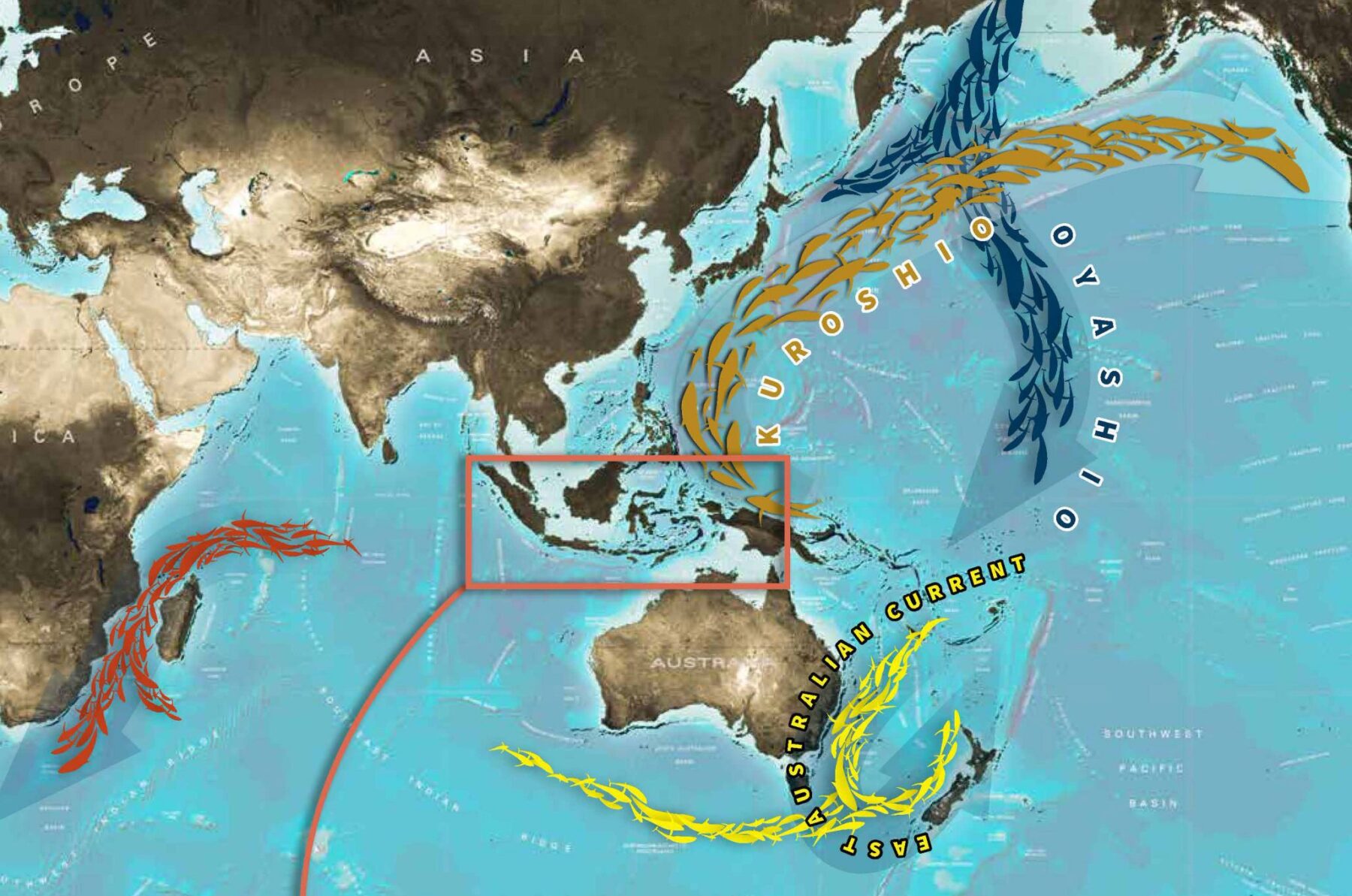
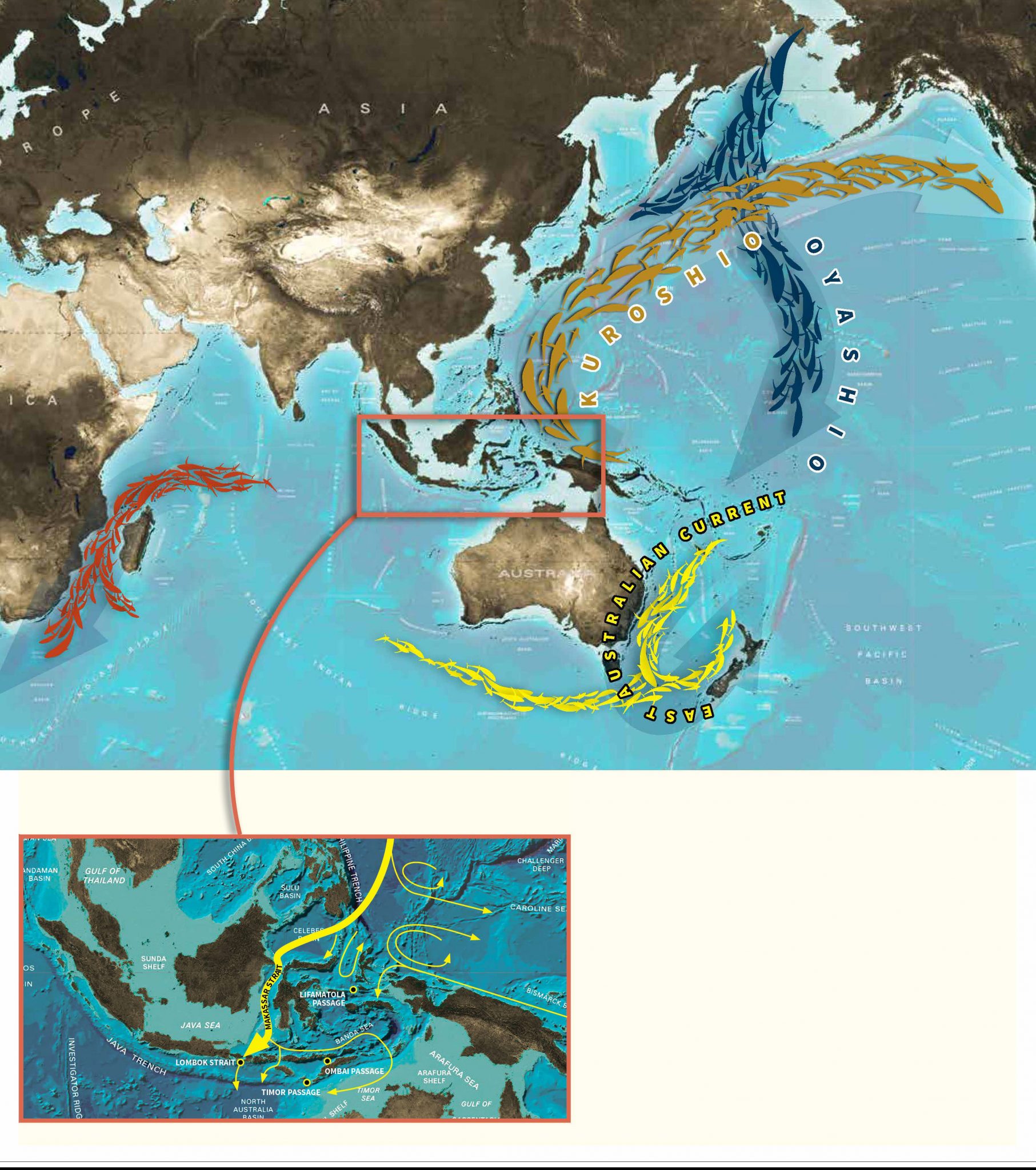
A north-flowing ocean current on the west side of the North Pacific Ocean.
Similar to the Gulf Stream in the North Atlantic and part of the North Pacific Ocean gyre.
Begins off the east coast of Luzon, Philippines, passing Taiwan and flowing northeastward past Japan, where it merges with the easterly drift of the North Pacific Current.
Its warm waters sustain the coral reefs of Japan, the world’s northernmost coral reefs.
A branch off from the Kuroshio into the Sea of Japan is called the Tsushima Current.
The Kuroshio and Tsushima are responsible for the mild weather experienced around Alaska’s southern coast and in British Columbia.
The Oyashio Current
A cold subarctic ocean current that flows south and circulates counterclockwise in the western North Pacific Ocean(also known as Oya Siwo, Okhotsk or the Kurile CURRENT)
Originates in the Arctic Ocean and flows southward via the Bering Sea, passing through the Bering Strait and transporting cold water from the Arctic Sea into the Pacific Ocean.
Collides with the Kuroshio off the eastern shore of Japan to form the North Pacific Current (or Drift).
A nutriet-rich current that is named for its metaphorical role as the parent that provides for and nurtures marine organisms.
Has an important impact on the climate of the Russian Far East, mainly in Kamchatka & Chukotka, where the northern limit of tree growth is moved south up to 10o compared with the̊ latitude it can reach in inland Siberia.
Forms probably the richest fishery in the world, owing to the extremely high-nutrient content of the cold water and the very high tides (up to 10 M) in some areas – which further enhance the availability of nutrients.
The AgulhasCurrent
the western boundary current of the southwest Indian Ocean. It flows down the east coast of Africa.
narrow, swift and strong. It is even suggested that the Agulhas is the largest western boundary current in the world ocean.
The sources of the Agulhas are the East Madagascar Current, the Mozambique Current and a recirculated part of the southwest Indian subgyre south of Madagascar.
The East Australian Current (EAC)
The southward western boundary current that is formed from the South Equatorial Current (SEC) crossing the Coral Sea and reaching the eastern coast of Australia.
The largest ocean current close to the shores of Australia.
The majority of the EAC flow that does not recirculate will move eastward into the Taman Front crossing the Tasman Sea just north of the cape of New Zealand.
The eastward movement of the EAC through the Tasman Front and reattaching to the coastline of New Zealand forms the East Auckland Current.
Also acts to transport tropical marine fauna to habitats in subtropical regions along the southeast Australian coast.
The Indonesian Throughflow (ITF)
An ocean current with importance for global climate, providing a low-latitude pathway for warm, fresh water to move from the Pacific to the Indian Ocean
Serves as the upper branch of the global heat conveyor belt
Higher ocean surface topography in the western Pacific than in the Indian Ocean drives upper thermocline water from the North Pacific through the western route of the Makassar Strait to either directly exit through the Lombok Strait or flow eastward into the Banda Sea
Weaker flow of saltier and denser South Pacific water passes over the Lifamatola Passage into the Banda Sea, where these water masses are mixed due to tidal effects, among other aspects
From the Banda Sea, the ITF exits Timor, Ombai and Lombok passages
Circulation and transport within the Indonesian Seas varies along with large-scale monsoon flow
DID YOU KNOW?
The sverdrup (Sv), named in honour of the pioneering Norwegian oceanographer Harald Sverdrup, is a unit of measure of volume transport. It is used almost exclusively in oceanography to measure the volumetric rate of transport of ocean currents.
The water transport in the Gulf Stream gradually increases from 30 Sv in the Florida Current to a maximum of 150 Sv south of Newfoundland. The heat carried within this volume equals roughly that transported through the atmosphere to make the relatively milder climate of northwestern Europe. The Antarctic Circumpolar Current, at approximately 125 Sv, is the largest ocean current.
Read the rest of this article in 2015 issue 3 Volume 138 of Asian Diver magazine by subscribing here or check out all of our publications here.
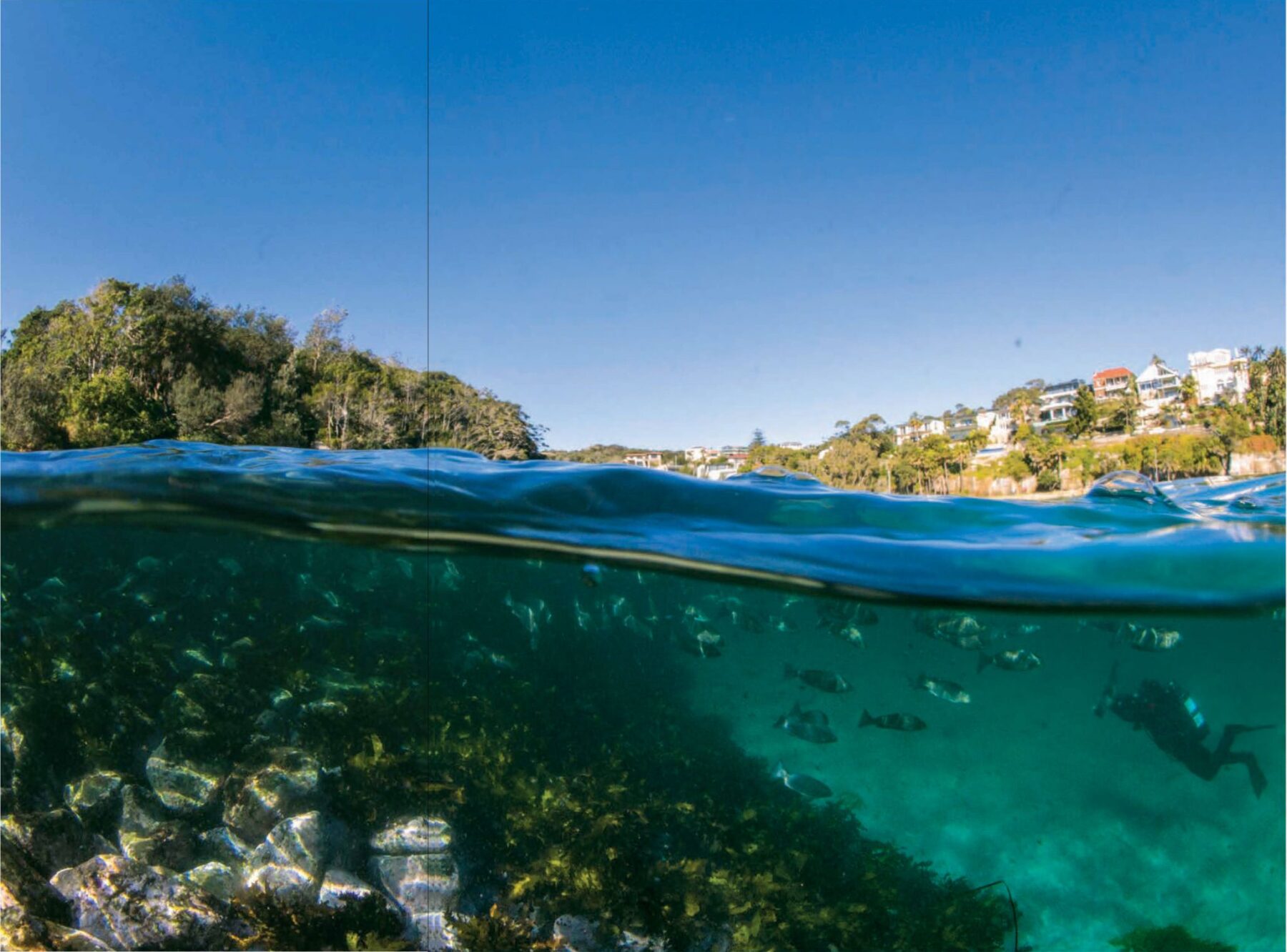
Let your imagination take you back 300 years, to a small sheltered bay on the east coast of Australia. The bay is tucked in behind a headland which protects it from the ocean swell, it is fringed by palm trees and its golden sands lead into inviting turquoise water. Beneath the surface there are luscious kelp gardens, seagrass beds and tumbling rocky reef – home to a myriad different creatures. A young Aboriginal woman is launching a canoe made from tree bark. She is equipped with fishing line which has been hand-made from natural fibres, tied to a hook carved from shell. This bay is sacred in her culture and has incredible natural beauty. There is a plentiful supply of fish here, but she harvests only what she can carry home to her family of fellow hunter-gatherers.
Now jump forward in time to the late 1980s. This bay is now known as Cabbage Tree Bay and is located only a 30-minute ferry ride from Sydney’s iconic Opera House and Harbour Bridge, in the bustling suburb of Manly. The alluring natural beauty of the bay remains, but beneath the water the scene has changed. The Aboriginal clans have been all but decimated by European colonisation, and their sustainable harvesting practices lost with them. Modern commercial fishing has come and gone, depleting the bay of the abundant marine life that attracted it there in the first place. The bay is now popular with recreational line and spear fishers due to its calm waters and easily accessible location next to the city. However, there is concern amongst locals that the fish are being taken faster than they can regenerate. To add to this concern, a sewage outfall just off the headland has caused dangerously high pollution levels. The main beach in the bay, known as Shelly Beach, has been dubbed “Smelly Beach” for this very reason, and swimmers fear for their health.
SAVING CABBAGE TREE BAY
Something had to change. Fortunately, in 1990 the New South Wales government spent AUD300 million (USD224 million) on upgrading the sewage management system, diffusing the waste over a larger area three kilometres offshore. This improved the quality of coastal waters and minimised the environmental impact of the sewage.
Around the same time, the local community voiced its concern to Manly Council that Cabbage Tree Bay was becoming stripped of marine life by heavy fishing. The beautiful bay was being “loved to death”, and a small no-take zone needed to be in place to allow marine life to recover. More fish would have a chance to grow and breed, building much-needed resilience into local fish populations. Passive activities like snorkelling and diving would be encouraged, as well as sustainable research with the purpose of better understanding the local marine ecology.
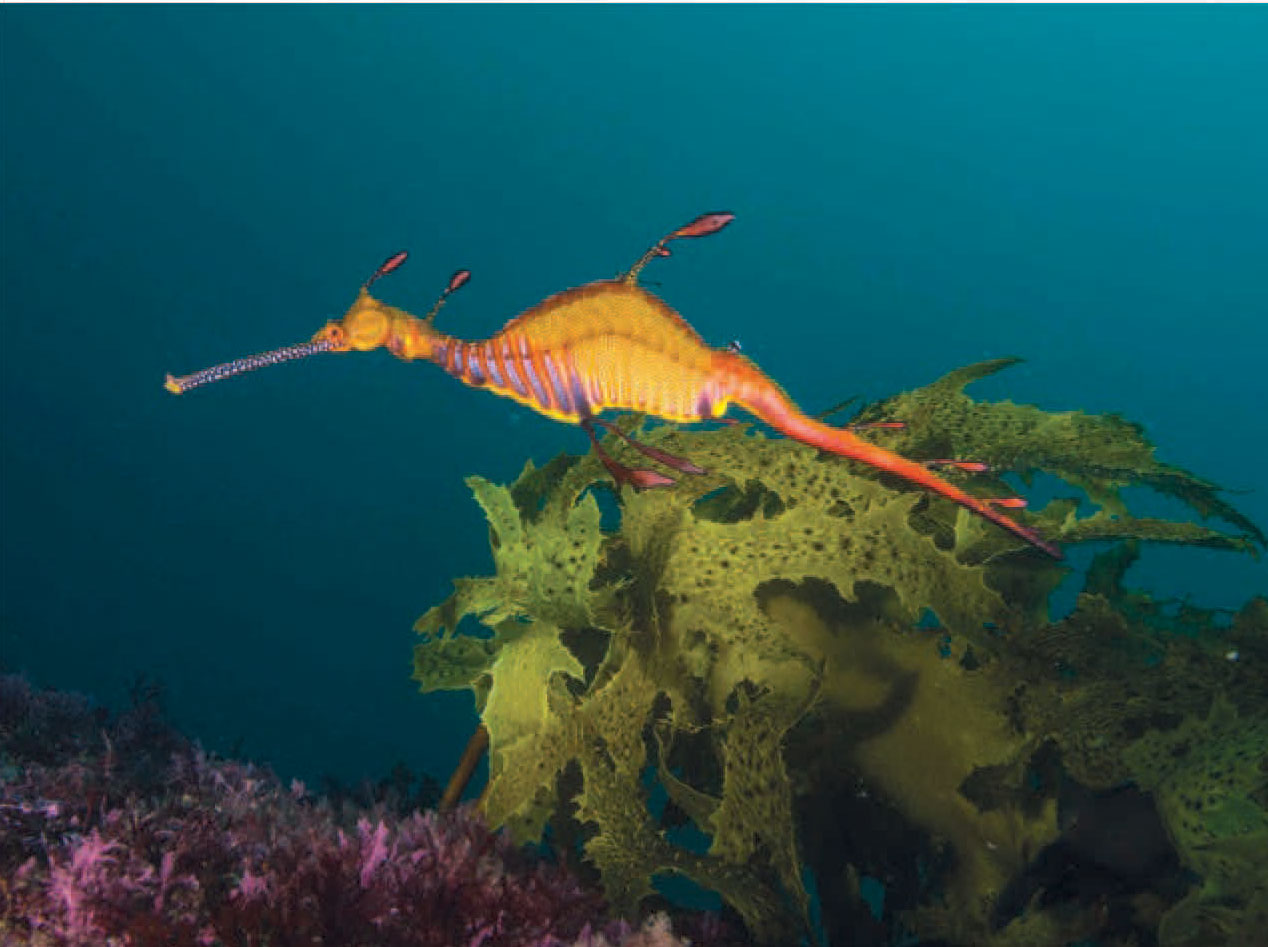
A beautiful bright yellow weedy seadragon (Photo by Rosie Leaney)
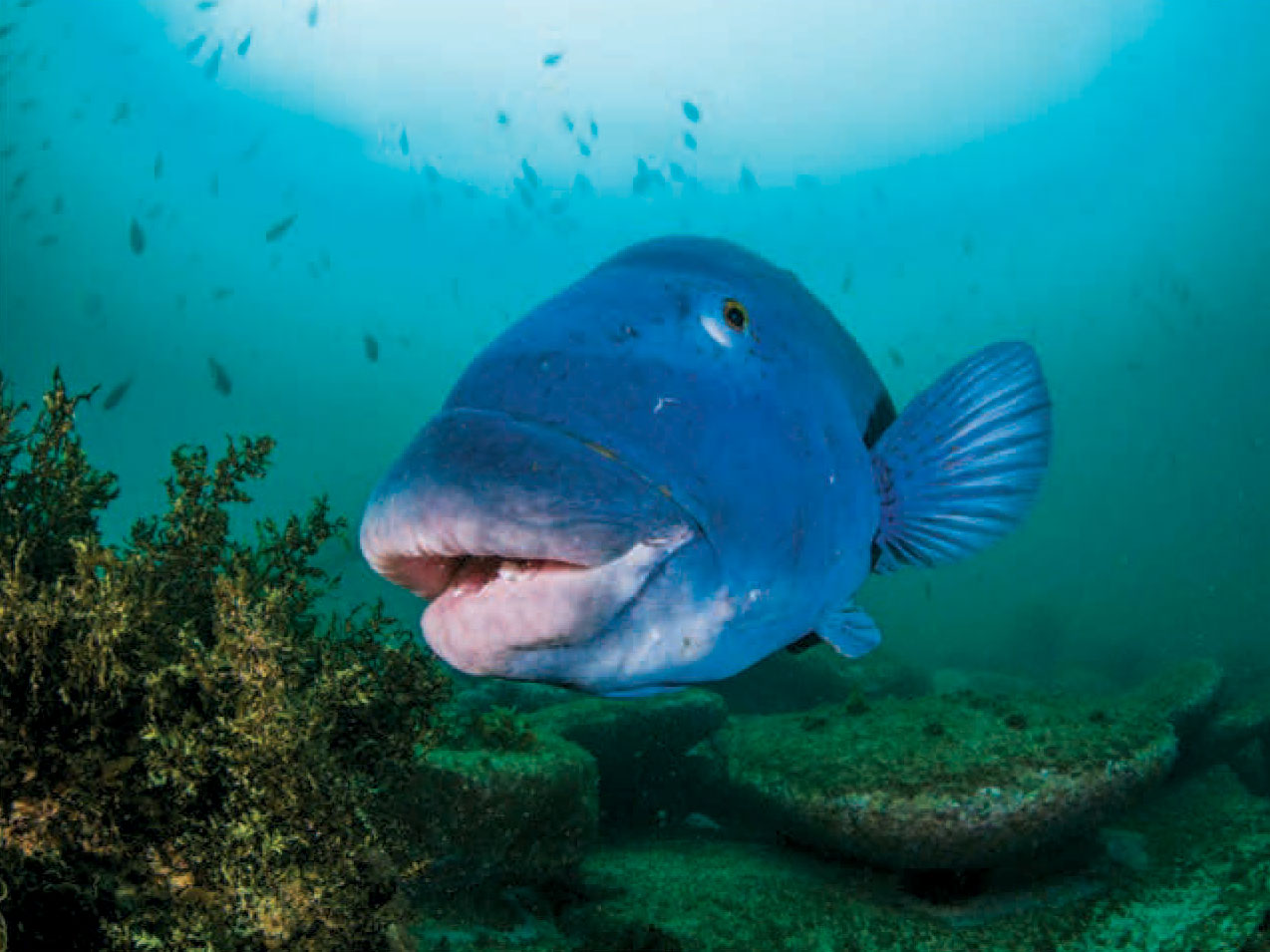
Numerous meetings began being held. The progress was slow and not without strong opposition. Proposals for the no-take zone were knocked back many times but supporters were persistent. Scientific surveys determined that the bay was becoming depleted, and also confirmed that it was still a vital habitat for threatened species including the black cod, weedy seadragon and little penguin, as well as the partially protected eastern blue groper. On this basis, and with growing evidence from other parts of the globe that no-take zones were effective at restoring biodiversity, the case for protection grew stronger.
The blue groper is the largest reef fish in Sydney (Photo by Rosie Leaney
Persistence paid off, and in March 2002, Cabbage Tree Bay was declared a no-take aquatic reserve. This meant that fishing of any kind, as well as collecting organisms, living or dead, was now banned in this small bay. A vision that many of the local community had fought for, for over a decade, had finally become a reality.
Read the rest of this article in 2018 Issue 2 Volume 150 of Asian Diver magazine by subscribing here or check out all of our publications here.
You will be spending most of your time in your swimsuit or your wetsuit. A couple of pairs of shorts, T-shirts, sarong, and something a bit warmer for the evenings is ideal. No need to rival Jackie O in the wardrobe stakes!
2 Location, Location, Location!
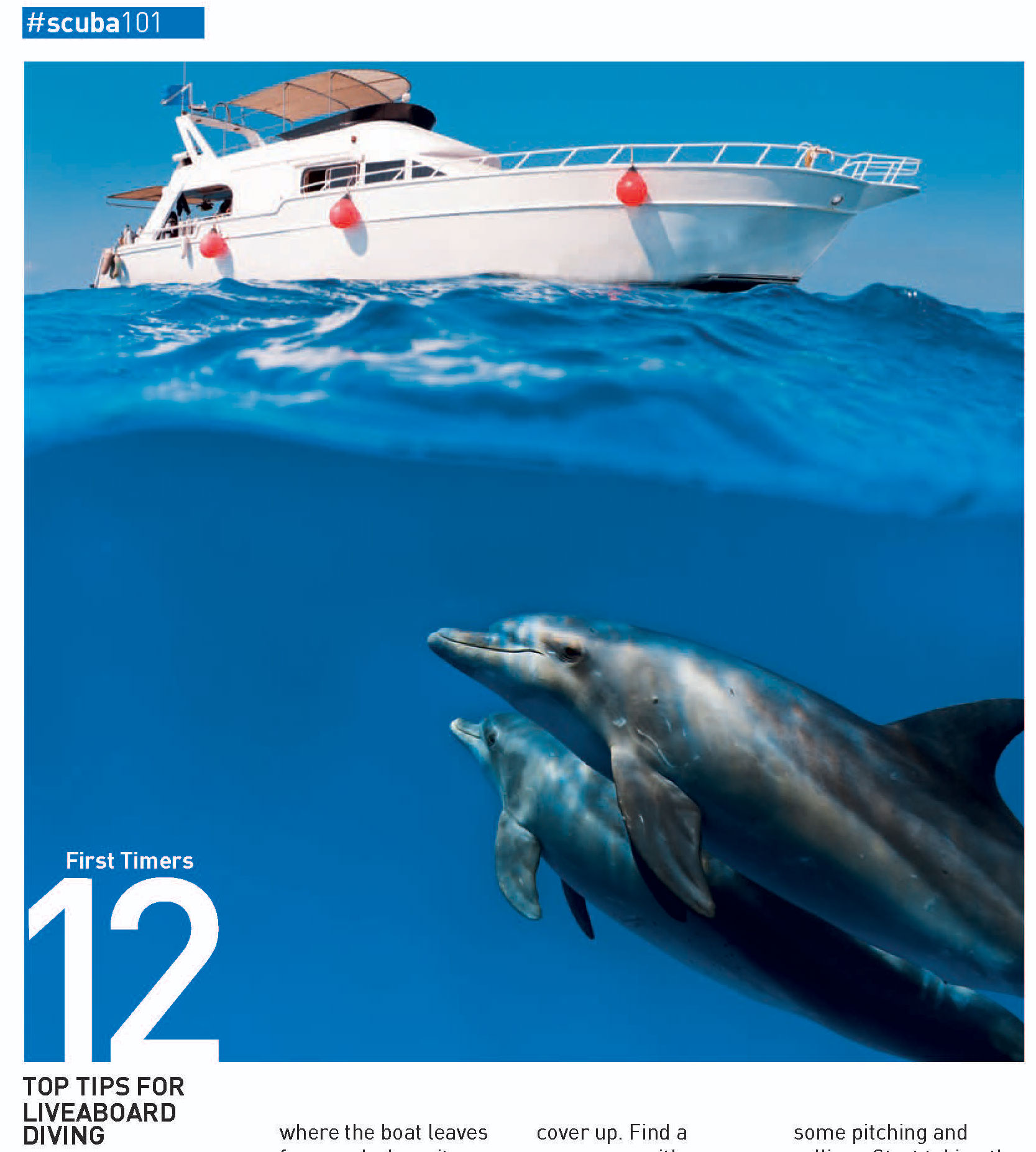
Check your arrival and departure locations. Make sure you know where the boat leaves from and where it will dock; you might not end up where you started! Also check to see if the operator provides transfers.
3 All Inclusive?
Do your research and find out what will incur additional costs. Dive gear? Drinks included? Remember to let the operator know well in advance if you have any special dietary requirements.
4 The Sun Has Got His Hat on.
Take sun protection. The best way is to cover up. Find a sunscreen with no oxybenzonate in it – this ingredient kills marine life (and ain’t all that good for you either!).
5 Flash the Cash
Whilst many liveaboards accept credit cards, tips are always paid in cash. The crew work incredibly hard, and they often don’t earn very much, so they deserve every penny.
6 Seasickness
Even the biggest and most stable boats are likely to experience some pitching and rolling. Start taking the tablets the night before3rf you embark. No-one wants to be feeding the fishes rather than diving with them!
7 Be Fussy with Your Flushing
Marine toilets clog easily. Minimise putting anything down the loo you haven’t digested. Enough said.
8 Etiquette
The dive deck is going to get pretty hectic. Keep your “station” tidy and organised. Be courteous and considerate of your travel companions to make the experience enjoyable for everyone.
9 Cabin Fever
If you get the opportunity to choose your cabin, midship cabins are the best if you want to keep the motion to a minimum. Midship will also keep you further away from any engine noise.
10 No Fly Zone
If you are flying home after your trip, remember to take account of your “no fly” requirements. Use the opportunity to check out the area for a day to two before flying home.
11 Insurance
Make sure you have specialist dive insurance. Standard travel insurance won’t cover you if you have to be airlifted to a decompression chamber. DAN Asia Pacific is the industry standard, and rightly so.
12 Wet Gear
There might not be enough time before disembarkation for your kit to dry. Pack a (reusable) waterproof bag that will hold your wet gear and keep it separate from the rest of your belongings. Wet gear also weighs more, so keep a couple of spare kilos when you do your packing!
Read the rest of this article in No.88 Issue 7/2016 of Scuba Diver magazine by subscribing here or check out all of our publications here.
With its rich, diverse culture, extraordinary natural history and exceptionally dramatic landscapes, Taiwan really is an underappreciated destination. It also happens to offer a variety of fantastic diving, all year round
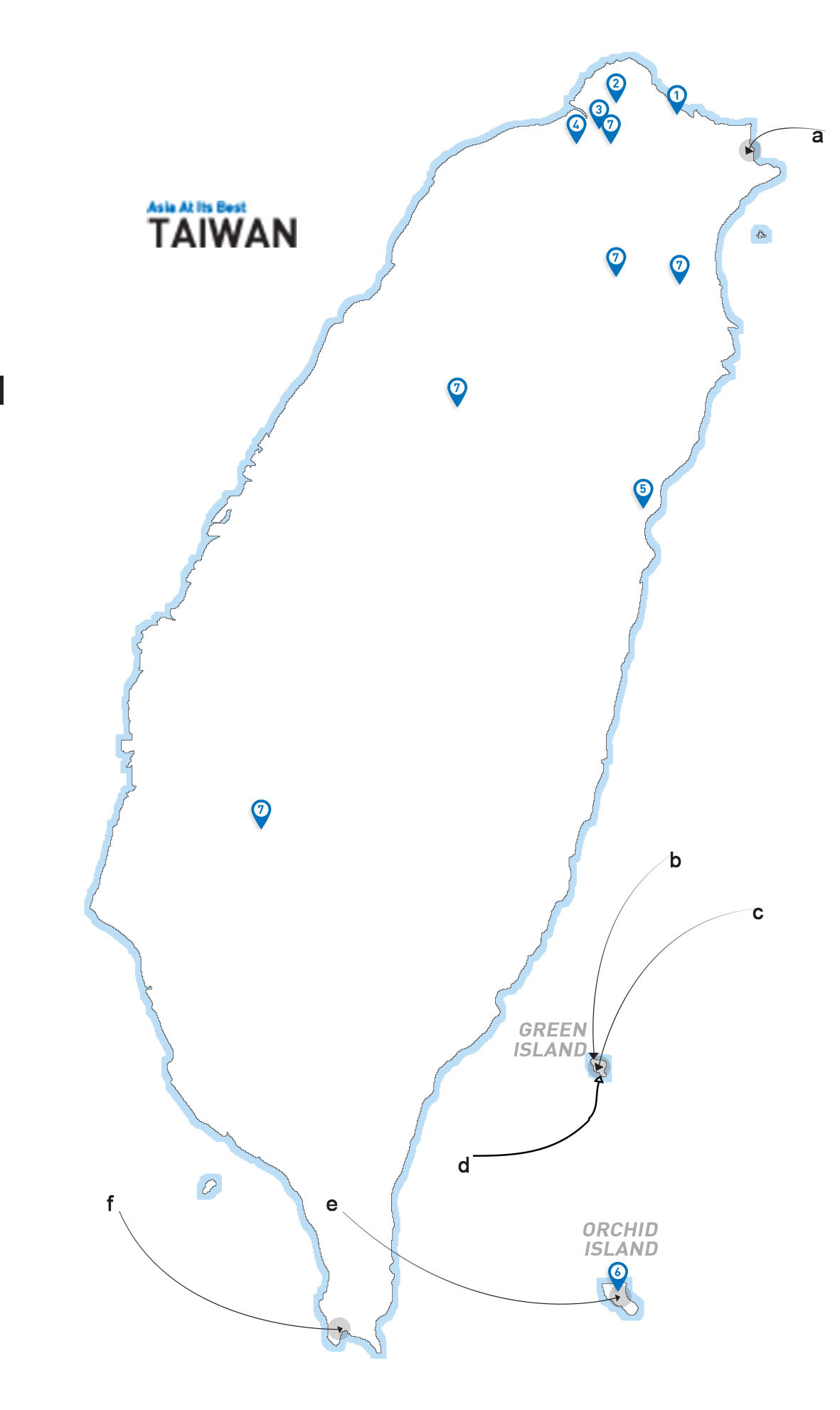
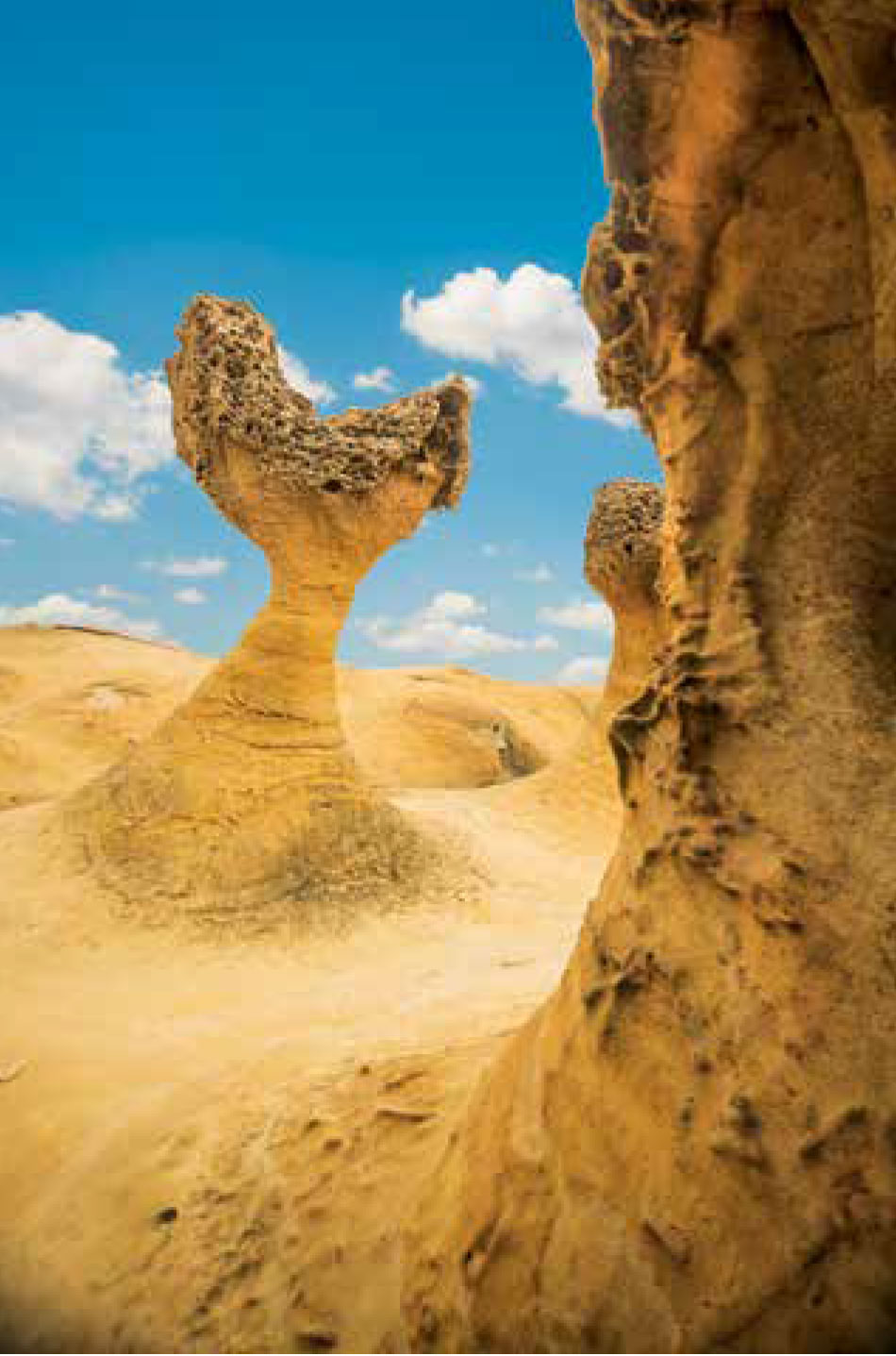
1 YEH LIU GEO PARK
An alien landscape of incredible rock formations, weathered over the years to form a veritable geological Disneyland
2 YANGMINGSHAN NATIONAL PARK
Escape to a magical, volcanic world of hot springs, butterflies and birds, just outside Taipei
3 NATIONAL PALACE MUSEUM
One of the world’s largest collections of ancient Chinese artefacts, home to over 700,000 relics of antiquity
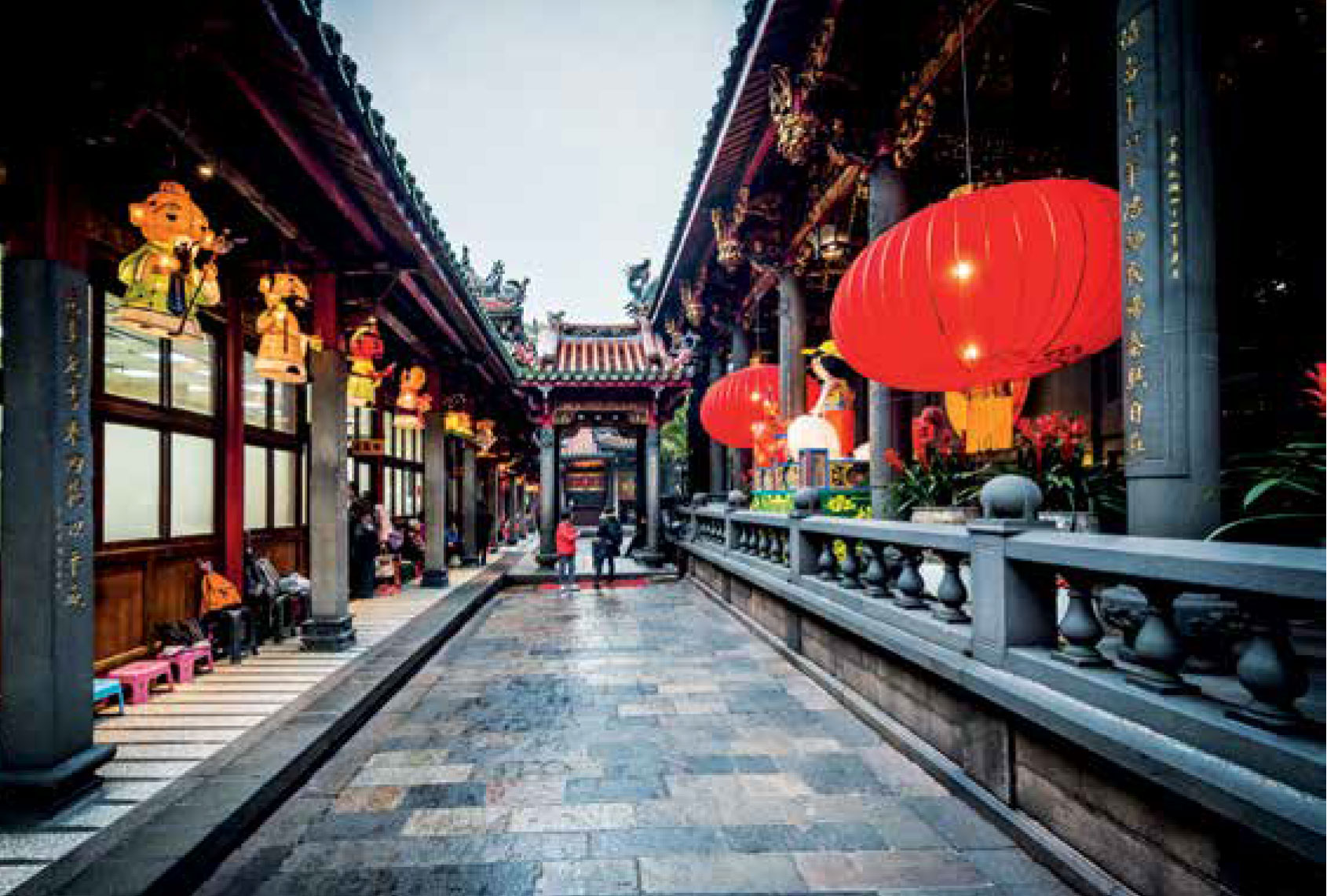
4 LONGSHAN TEMPLE
Photo by: Shutterstock
One of the largest and oldest temples in Taiwan, built in 1738. Buddhist and Taoist deities both get a look in
5 TAROKO GORGE
A breathtaking gorge whose name, Taroko, means “magnificent and splendid” in the language of Truku, the aboriginal tribe residing in the area. In one afternoon, go from coastal cliffs to subtropical forested canyons, up to subalpine forests in some of Taiwan’s tallest peaks.
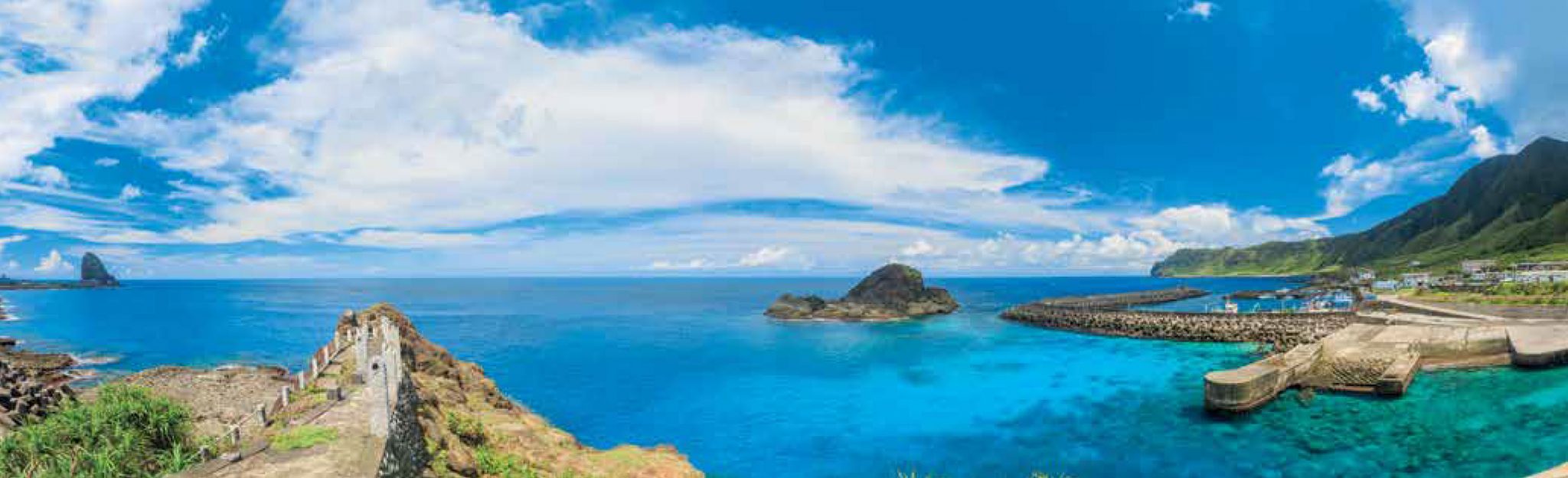
6 LANYU (ORCHID ISLAND)
It is a little known fact that Taiwan is home to a number of local, aboriginal tribes. Visit the island of Lanyu, where the matrilineal Dao people live, and experience a culture that is a world away from that of modern Taipei
Photo by: Shutterstock
7 HOT SPRINGS
An absolute must, the geothermal baths in Taiwan are some of the best in the world. All contain different combinations and concentrations of various minerals, in all sorts of settings. Check out BEITOU, WULAI, JIAOXI, TAIAN, and GUANZILING
Diving Spots
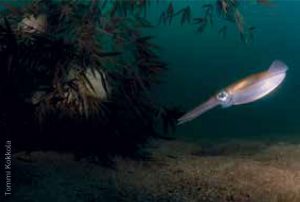
a) LONGDONG
For: Dramatic rocky topography and squid nests constructed by local dive operators
Conditions: Visibility is variable and often poor, water temperatures range from 23°C in the spring, up to about 27°C in the summer
When: May to September
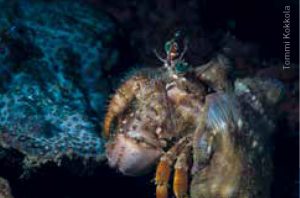
Photo by Tommi Kokkola
b) GONGUANBI
For: Critters galore: nudibranchs, crabs, shrimps and even pygmy seahorses
Conditions: Shallow, protected water
When: Year round
c) SHIHLANG
For: Critters galore: nudibranchs, crabs, shrimps and even pygmy seahorses
Conditions: Shallow, protected water
When: Year round
Photo by Tommi Kokkola
d) DABAISHA TO MATI BRIDGE
For: Shore and boat diving, dramatic scenery, canyons, caves and gorgonian fans
Conditions: Currents can be strong, visibility is good
When: Year round
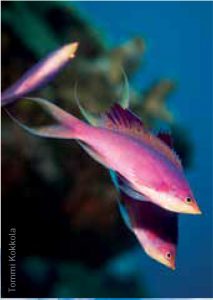
e) ORCHID ISLAND (LANYU)
For: Excellent diving: stunning corals, shallow reefs, walls and deep dives, pelagic life including sharks and tuna, sea snakes, turtles, possible sightings of manta rays, whale sharks and the occasional whale!
Conditions: Visibility can be great, water temperatures vary from 22 in winter up to about 28 in summer
When: West coast in winter, northeast coast in summer
Photo by Tommi Kokkola
f) KENTING
For: Pretty coral reefs, dramatic rock formations, swimthroughs and caves, interesting critters, lots of fish, turtles and rays
Conditions: Easy diving, good for training. Some sites can have a bit of surge. Colder in winter, water temperatures get up to about 29°C in the summer
When: Year round, warmer in the summer
Read the rest of this article in No.88 Issue 7/2016 of Scuba Diver magazine by subscribing here or check out all of our publications here.
David’s day of diving became marked by frustration after he had trouble equalising during his first dive. He was patient though, eventually reaching a maximum depth of about 27 metres (90 feet). The bottom phase of the dive continued without complications, but while ascending at a normal rate he experienced an onset of acute vertigo and disorientation. He had difficulty managing a safety stop and concluded it prematurely. Fortunately, the symptoms resolved on their own within a few minutes with no other untoward effects. The incident was unsettling; however, as he had never experienced anything like it before, it motivated him to learn more and ready himself in case it happened again.
THE PRESSURE ENVIRONMENT
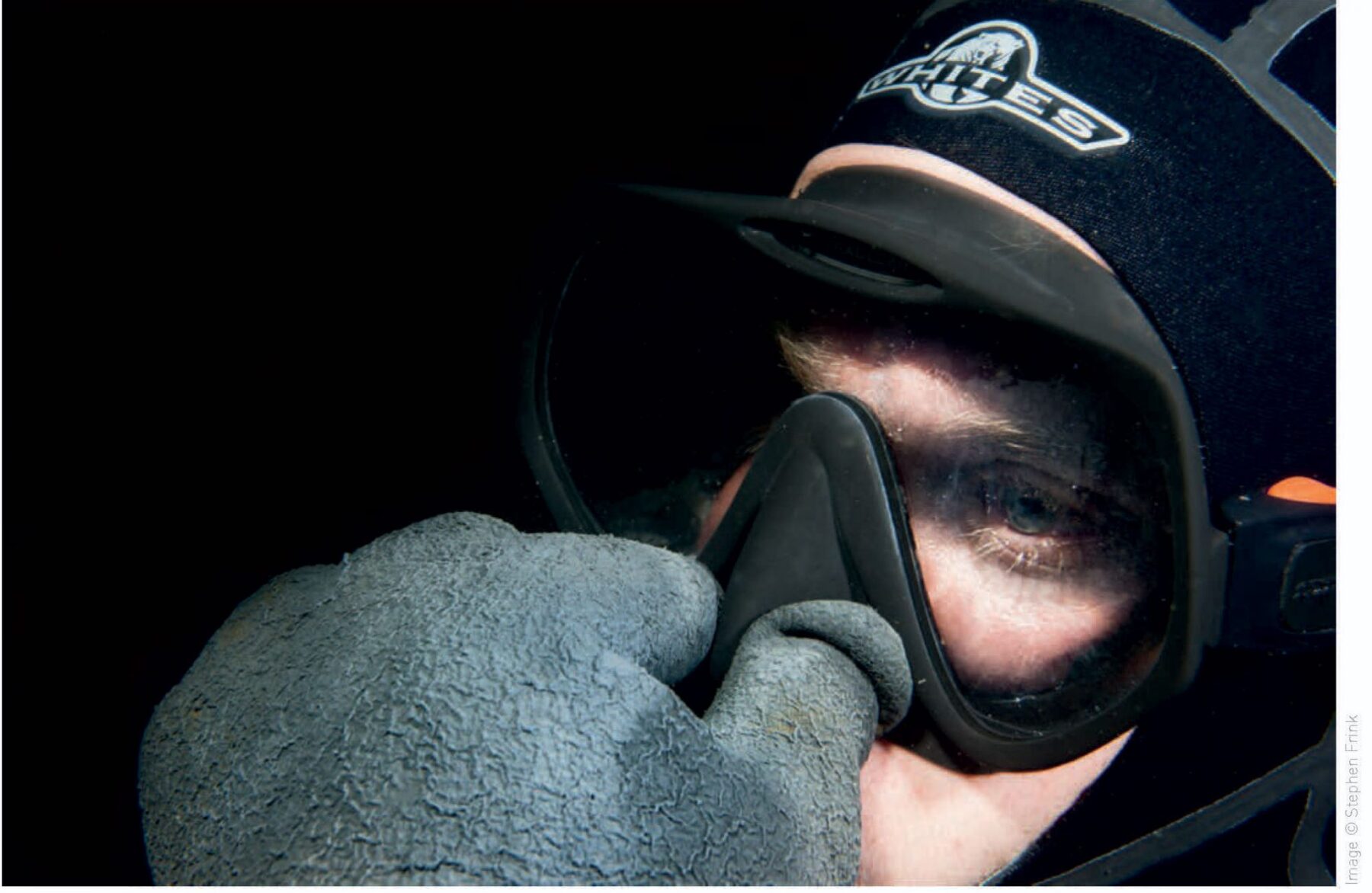
Learning how to equalise ear pressure is part of every diver’s basic open-water training. Whether one is breathing compressed gas or freediving, changing depth requires equalisation of middle-ear pressure to the ambient (surrounding) pressure. Most divers are able to equalise effectively without major difficulty, employing a variety of techniques, from jaw movement to Valsalva, usually choosing the method that minimises middle-ear stress with the least effort.
Most divers understand that a failure to equalise properly during descent or ascent can produce substantial pain and risk of injury. What many do not realise is that unequal equalisation of the two ears can produce other problems that should be appreciated. This article will focus on one in particular: alternobaric vertigo.
AIR SPACES AND THE BODY
Changes in ambient pressure affect the gas volume of the air spaces within and adjacent to the body. Internal spaces include the lungs, sinuses, middle ears, gastrointestinal tract and possibly the teeth. Adjacent spaces include the mask, drysuit and sometimes the outer ear.
Some equalisation occurs automatically for healthy divers under normal conditions: The gas volumes in the lungs and sinuses equalise during breathing, the gastrointestinal system can generally accommodate gas pressure changes, and teeth, fortunately, rarely have closed gas cavities. The gas volume in drysuits and masks is easily adjusted with auto-inflate and exhaust mechanisms and by exhaling through the nose, respectively. Gas in the ear canal under a tight hood can be eliminated by briefly pulling away the hood to allow water to displace the air.
This leaves the middle ear, which is generally actively managed to equalise the pressure on descent and passively managed to equalise the pressure on ascent. Difficulty equalising middle-ear pressure can create problems for divers.
ANATOMY AND EQUALISING EAR PRESSURE
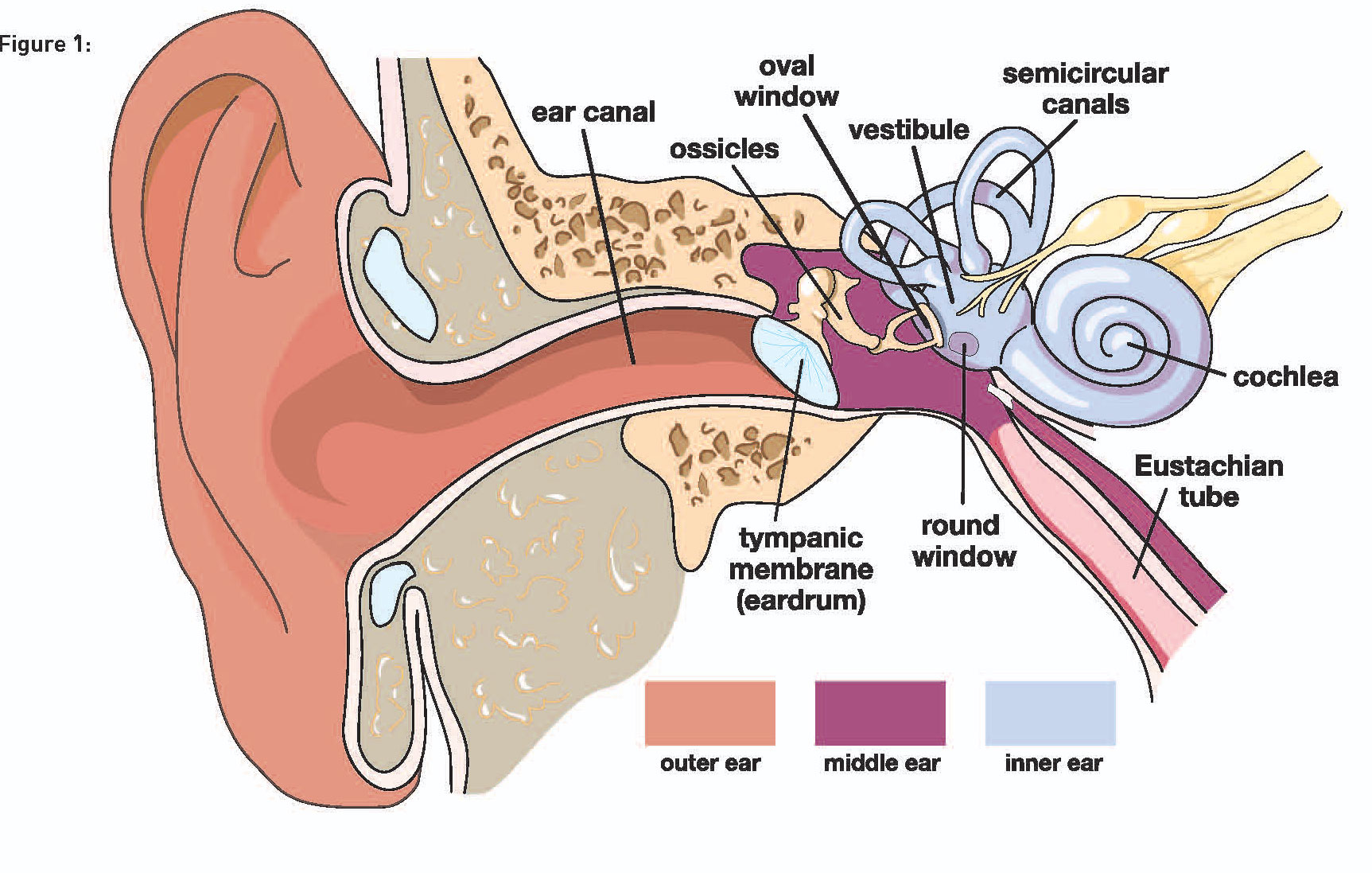
The purpose of pressure-equalising techniques is to open up the auditory tube (Eustachian tube), a duct that connects the back of the throat (nasopharynx) to the middle ear (Figure 1). The auditory tube allows gas to pass between these two spaces, balancing the pressure. On the surface, where ambient pressure changes are small, equalisation of the middle ear and the ambient pressure occurs naturally – when we yawn, swallow, laugh or chew, for example.
Image by DAN
Equalisation of middle-ear pressure is essential to avoid damage to structures involved with hearing and balance. Functionally, sound waves (pressure waves) make their way through the outer ear canal and across the tympanic membrane (eardrum). The eardrum translates the waves into vibrations, which then pass through three small bones in the middle ear (the malleus, incus and stapes) into the inner ear.
The stapes transfers the vibrations from the middle ear through the oval window into the fluid-filled spaces of the inner ear. The oval window acts as a direct line of communication to the cochlea (sensory organ for hearing), which translates pressure stimuli into sound. However, changes in pressure can also stimulate the fluid-filled semicircular canals of the vestibular system, which interprets head motion and orientation for balance. The inner ear is separated from the middle ear only by two delicate membranes: the oval and round windows.
The right and left cochlea can receive different sound stimuli, allowing for source localisation (distance and direction). Balance sensing is based on coordination of the semicircular canals between the two ears. Mismatched stimulation of the vestibular system is problematic. If the difference results from a pressure imbalance, a condition known as alternobaric vertigo can result.
WHAT IS ALTERNOBARIC VERTIGO?
Alternobaric vertigo (AV) is a highly descriptive term coined by Dr. Claes Lundgren in 1965.(3) “Alter” means “another”, “bar” means “pressure”, “ic” means “the condition of”, and vertigo is the perception that the body or its surroundings are spinning or moving. AV arises from unequal pressure between the two middle ears, usually because the pressures are changing at different rates. Failure to equalise pressure symmetrically can cause the brain to erroneously perceive the difference as movement.
Symptoms can range from mild to severe but are typically transient, subsiding within seconds or a few minutes as pressure equilibrates. Nystagmus (involuntary rhythmic movement of the eyes) can also occur, as can nausea and vomiting in severe cases. In addition to visual disturbances, AV events may be accompanied by the feeling of fullness, tinnitus (ringing in the ears) and muffled hearing in one or both ears. Some divers may notice a hissing or squeaking sound, indicating poor equalisation, prior to the onset of AV. Women appear to have a greater susceptibility to the condition than men.(1,2)
The challenge for divers experiencing symptoms for the first time is to avoid actions that may worsen the situation. Maintaining control and a stationary position will allow the symptoms of AV to resolve naturally, with minimal risk of complication. Persistent symptoms may indicate a more serious condition (see sidebar on next page). An isolated incident of AV does not necessarily indicate future risk or more acute health concerns. Divers experiencing AV repeatedly, however, should seek medical evaluation.
REDUCING THE RISK OF AV
Effective equalisation (early, often and with the most appropriate technique for the person) and not diving when congested are simple ways to reduce the likelihood of AV. The need to exert high pressures to equalise during descent can make equalisation during ascent, which is usually a passive process, more difficult. The impact can be substantial if the soft tissues have been made swollen by overly aggressive or poorly conducted equalisation manoeuvres. If properly conducted equalisation manoeuvres fail, one should abort the dive and evaluate the situation before trying to dive later.
Some divers find it easier to equalise in a head-up position. Performing gentle, active equalisation techniques early and often during descent will help to reduce stress on ear structures. Divers that encounter frequent AV should re-evaluate their equalising techniques and possibly their buoyancy control – after being cleared to dive following medical evaluation.
Any condition that can cause inflammation and congestion of the ears and sinuses could increase the likelihood of equalisation problems such as AV. Individuals choosing to dive despite symptoms of congestion or illness may be putting themselves at risk. Diving with congestion could also lead to reverse block, a condition where gas becomes trapped in the middle ear. A diver might manage reverse block by descending slightly and then reattempting a slower ascent. If this fails to work, however, the diver will have little choice but to risk more serious injury while continuing the ascent as slowly as possible for the circumstances. Ample gas supplies and conservative dive profiles will give the diver additional time to deal with any equalisation issues that might arise upon ascent.
Some divers may choose to rely on nasal decongestants as a solution for diving with congestion. Decongestants relieve symptoms temporarily, but they can mask issues. Using decongestants for four or five days may result in rebound congestion, making it more difficult to equalise.
References
1. Kitajima N, Sugita-Kitajima A, Kitajima S. Altered Eustachian tube function in scuba divers with alternobaric vertigo. Otol Neurotol. 2014; 35(5): 850–6.
2. Klingmann C, Knauth M, Praetorius M, Plinkert PK. Alternobaric vertigo – really a hazard? Otol Neurotol. 2006; 27(8): 1120–5.
3. Lundgren CE. Alternobaric vertigo – a diving hazard. Brit Med J. 1965; 2(5460): 511–3.
4. Uzun C, Yagiz R, Tas A, Adali MK, Inan N, Koten M, Karasalihoglu AR. Alternobaric vertigo in sport scuba divers and the risk factors. J Laryngol Otol. 2003; 117(11): 854–60.
Read the rest of this article in Issue 1/2016, AA No. 85 of Scuba Diver magazine by subscribing here or check out all of our publications here.