Home Blog Page 83

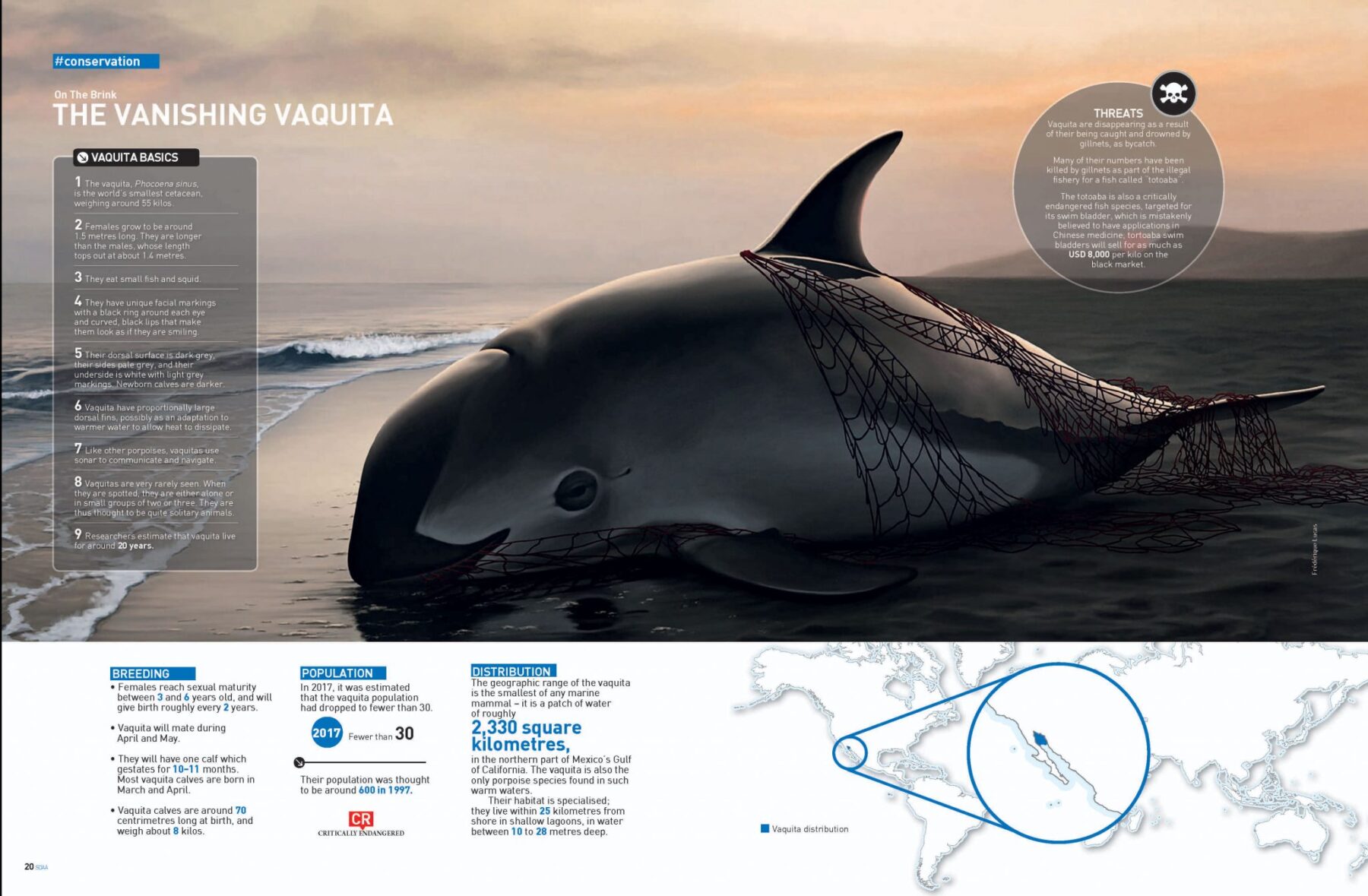
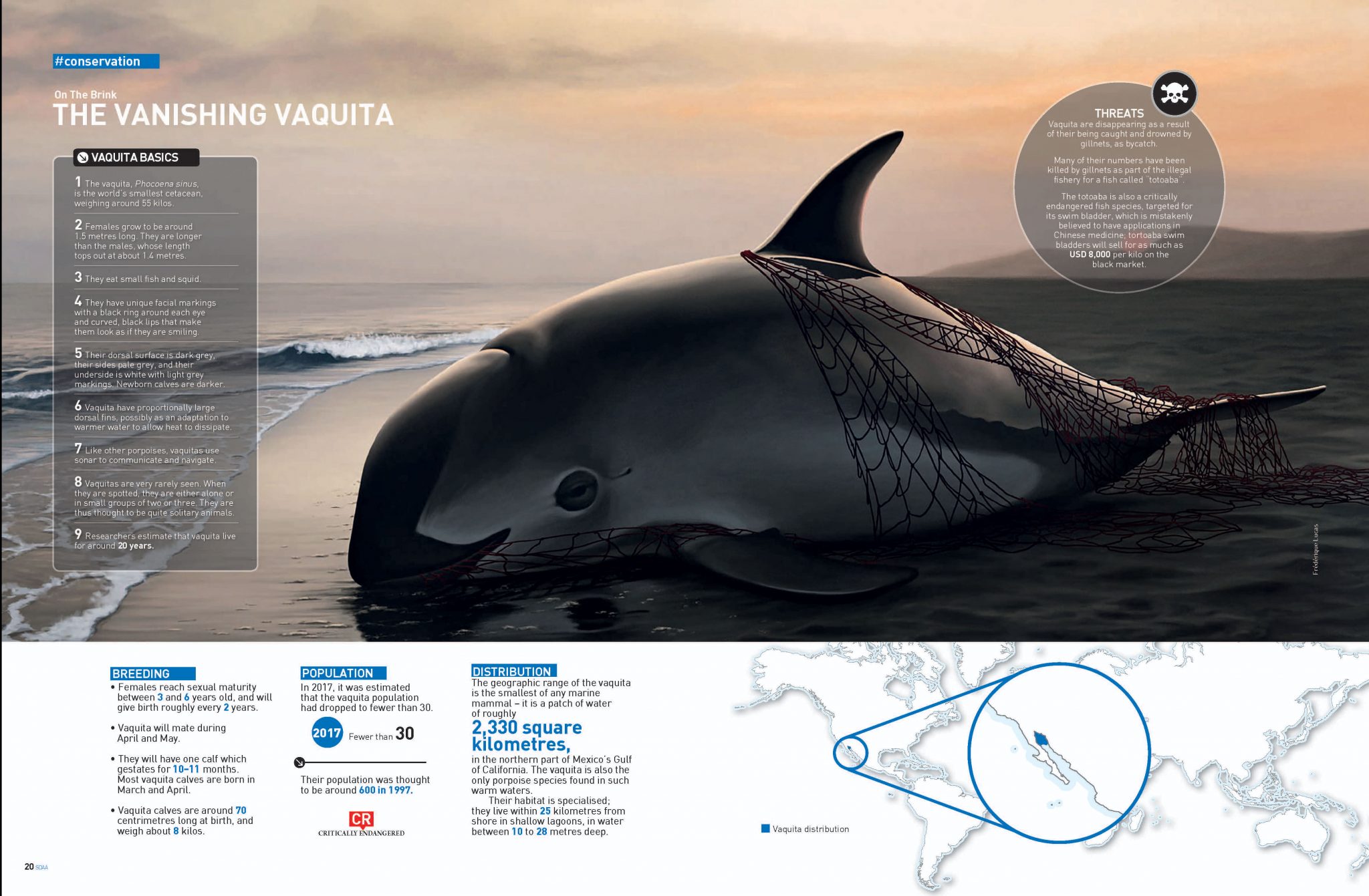
10 Facts About The Vanishing Vaquita

0

Vaquita Basics

1 The vaquita, Phocoena sinus, is the world’s smallest cetacean, weighing around 55 kilos.

2 Females grow to be around 1.5 metres long. They are longer than the males, whose length tops out at about 1.4 metres.

3 They eat small fish and squid.

4 They have unique facial markings with a black ring around each eye and curved, black lips that make them look as if they are smiling.

5 Their dorsal surface is dark grey, their sides pale grey, and their underside is white with light grey markings. Newborn calves are darker.

6 Vaquita have proportionally large dorsal fins, possibly as an adaptation to warmer water to allow heat to dissipate.

7 Like other porpoises, vaquitas use sonar to communicate and navigate.

8 Vaquitas are very rarely seen. When they are spotted, they are either alone or in small groups of two or three. They are thus thought to be quite solitary animals.

9 Researchers estimate that vaquita live for around 20 years.
Threats

Vaquita are disappearing as a result of their being caught and drowned by gillnets, as bycatch.

Many of their numbers have been killed by gillnets as part of the illegal fishery for a fish called “totoaba”. 

The totoaba is also a critically endangered fish species, targeted for its swim bladder, which is mistakenly believed to have applications in Chinese medicine; tortoaba swim bladders will sell for as much as USD 8,000 per kilo on the black market.

Breeding

• Females reach sexual maturity between 3 and 6 years old, and will give birth roughly every 2 years.

• Vaquita will mate during April and May.

• They will have one calf which gestates for 10–11 months.

Most vaquita calves are born in March and April.

• Vaquita calves are around 70 centrimetres long at birth, and weigh about 8 kilos.

Population

CRITICALLY ENDANGERED

In 2017, it was estimated that the vaquita population had dropped to fewer than 30.

Their population was thought to be around 600 in 1997.
Distribution

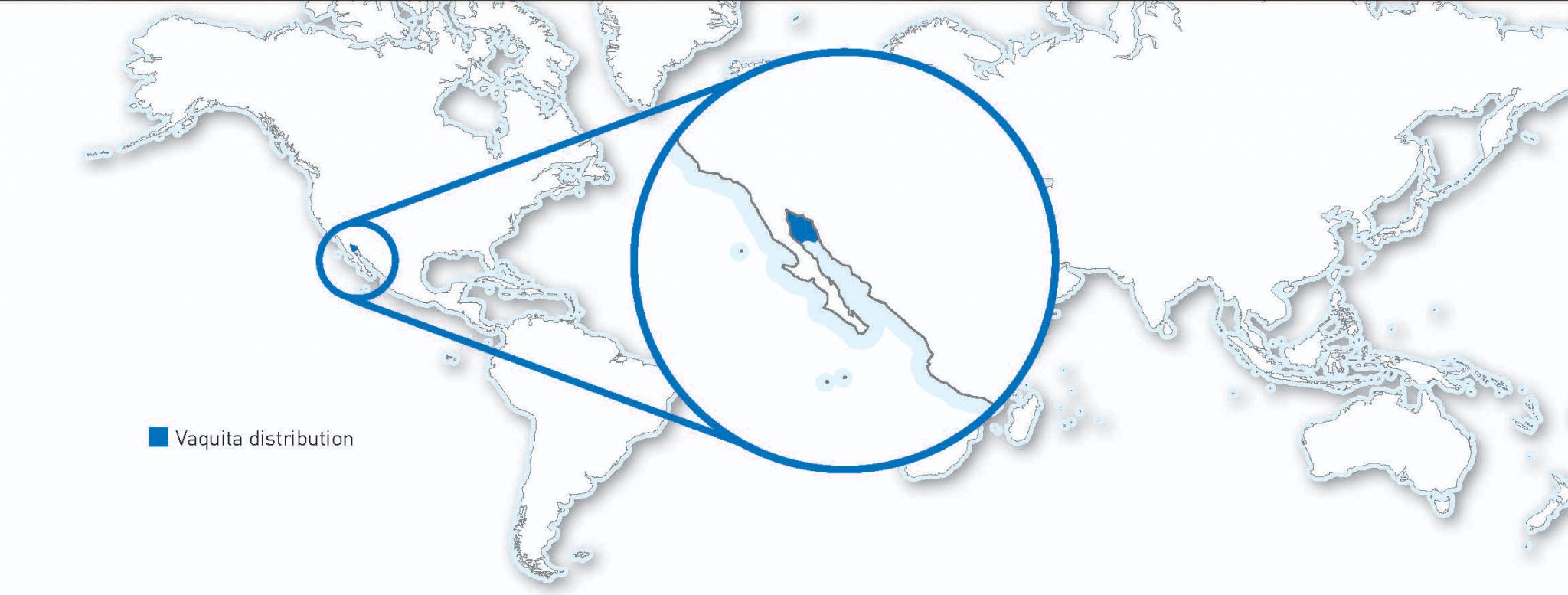
The geographic range of the vaquita is the smallest of any marine mammal – it is a patch of water of roughly 2,330 square kilometres, in the northern part of Mexico’s Gulf of California. The vaquita is also the only porpoise species found in such warm waters.

Their habitat is specialised; they live within 25 kilometres from shore in shallow lagoons, in water between 10 to 28 metres deep.


Read the rest of this article in No. 109 Issue 3/2017 of Scuba Diver magazine by subscribing here or check out all of our publications here.
Club 25: Celebrating 25 Years of Diving Excellence

0

ADEX turns 25 in 2019. To mark this momentous occasion, we are forming Club 25 – an exclusive membership of diving professionals who have been stalwarts of diving for at least 25 years.

Club 25 is our way of honouring the continuous excellence of the diving community over the last quarter of a century. To be an eligible member of our Club 25, your brand or establishment needs to have been in existence continuously for 25 years or more.

In the weeks ahead, in the run-up to the 25th edition of ADEX, we will be putting out regular web articles on UW360 profiling each member of our Club 25. Our annual Diveaholic PASSPORT ADEX Show Guide will also feature and list the logos and names of all Club 25 members.

To celebrate our 25th anniversary, we are reaching out today to all eligible members of the global diving community – from gear manufacturers, dive centres to dive experts – with an exclusive invitation to join our Club 25. If, like us, you are also celebrating 25 or more years of excellence next year, we want to hear from you! We want to know about the founder of your company, how and where you were first established, and the logo that launched your dive business.

Just get in touch with our Asian Diver and Scuba Diver editor, Terence Koh, at terence@uw360.asia with the facts, logo and pics and we’ll have your profile article up on our homepage in no time!

Hope to hear from you soon!


Warmest regards,

UW360

Women in Diving: The Hallmark of Adventure

0

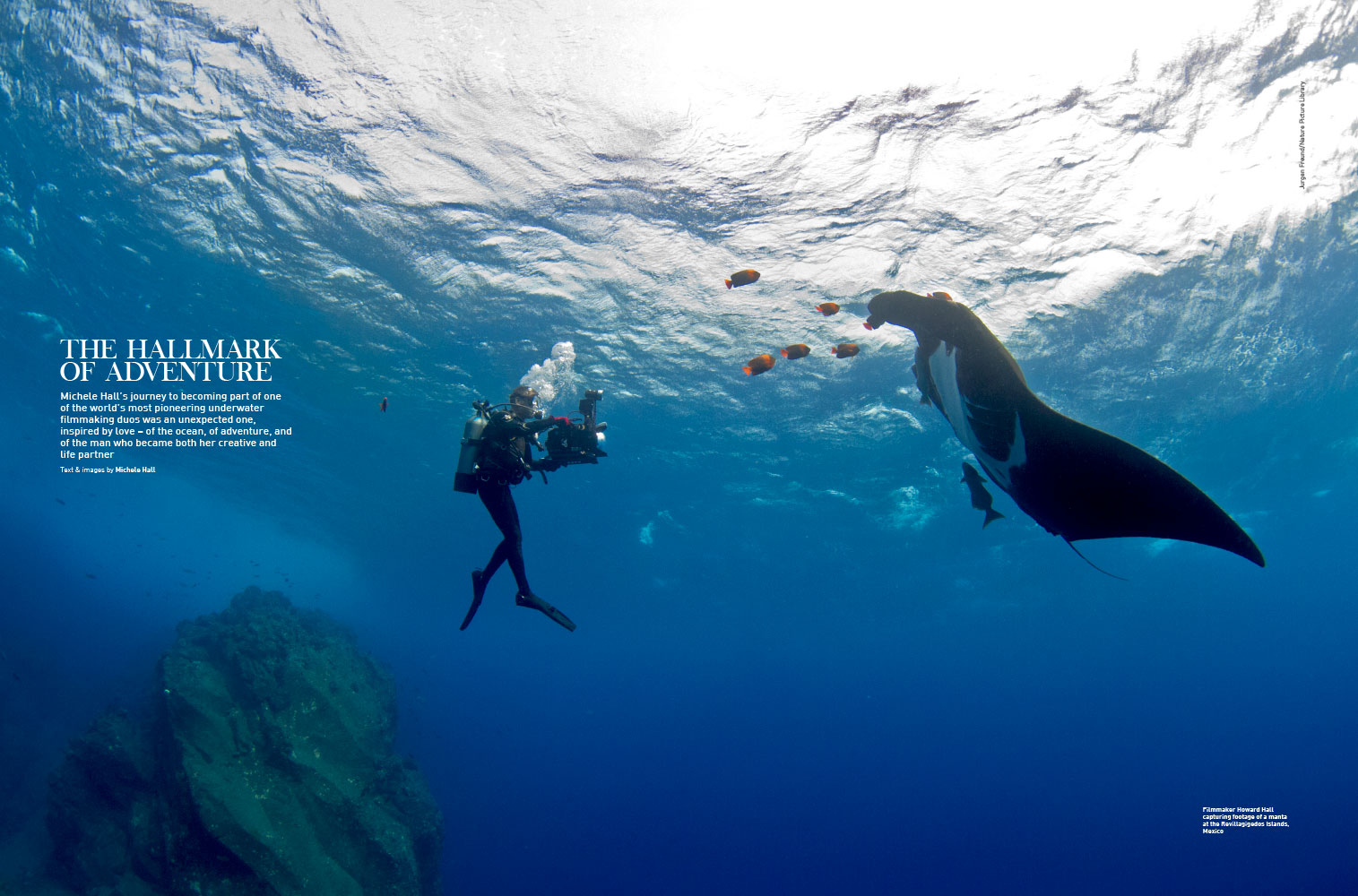
Natural history filmmaking is more than just a job. It defines your goals, characterises your ambitions, becomes your way of life. I’m often asked how I got into this business. It’s a career no one (especially me!) would have imagined, much less predicted, for my future.

I grew up a city girl, born to city folks. My idea of an outdoor adventure was a Sunday walk in a city park or sunbathing at a hotel swimming pool. As a child, we didn’t visit national parks and only once did I travel outside the continental US, on a short trip to the Bahamas.

Being a registered nurse was the only job I ever wanted. While in nursing school, I’d have laughed at the suggestion that I would have a second career 20 years later as an underwater filmmaker; I would have found the idea terrifying.

A few years after college graduation and a move from Kansas City, Missouri to San Diego, California, I began dating a doctor whose favourite pastime was scuba diving. That provided me with the motivation to take up the sport, a daring act to me at the time, and in May 1975 I became a certified diver.

A LIFE-LONG LOVE AFFAIR

I soon found myself literally immersed in the Pacific Ocean and enthralled with the new world I’d discovered in the sea. I’d fallen in love. First with the ocean and its inhabitants, and later with my instructor, Howard Hall. I’m sure my parents were horrified upon discovering my romantic attentions had drifted away from a doctor and future plastic surgeon, and toward a diving instructor! Eventually Howard became my wildlife guide.

When we first met, Howard was working full time at a dive shop and teaching diving, but he knew he wanted something more. His search for a career in diving prompted him to leave behind spearfishing and take up underwater photography. He began using his spearfishing skills to pursue fish, whales, and other sea creatures for photographic opportunities. His affinity for observing and understanding wildlife behaviour paid off as he began capturing unusual photographs. By 1976 he’d developed a reputation for photographing sharks, which led to being hired as “shark adviser” on the feature film The Deep. This assignment gave him enough financial capital to build an underwater movie camera. Soon he was making a modest living marketing his still photos. Having acquired underwater cameraman’s skills, by 1978 he progressed to doing assignment work, gave up scuba instruction, and “Have Camera, Will Travel” became his slogan.

I went on my first underwater filming expedition with Howard in August 1980. He was producing his first film about the hammerhead sharks that (used to) school in great numbers over the Marisla Seamount in the Sea of Cortez, Baja California. Underwater cameraman Stan Waterman and author Peter Benchley were along as hosts for the show. During this expedition I had an experience that changed my life forever.

RAY OF CHANGE

Returning from a dive, I saw an enormous Pacific manta ray soaring over the seamount, its wings spanning more than five metres tip to tip, with fishing net wrapped around one of its cephalic fins. I watched the manta begin to fly by, then turn in my direction and stall beneath me. I couldn’t believe it, but there was no mistaking the ray’s intent. I settled down on its back and succeeded in removing the embedded fishing net. 

Whether this behemoth thought me Androcles or what, I’ll never know. But it then took me for the “ride” of my life.


Read the rest of this article in No.89 Issue 1/2017 of Scuba Diver magazine by subscribing here or check out all of our publications here.
How Tyres Threaten Aquatic and Human Life

0
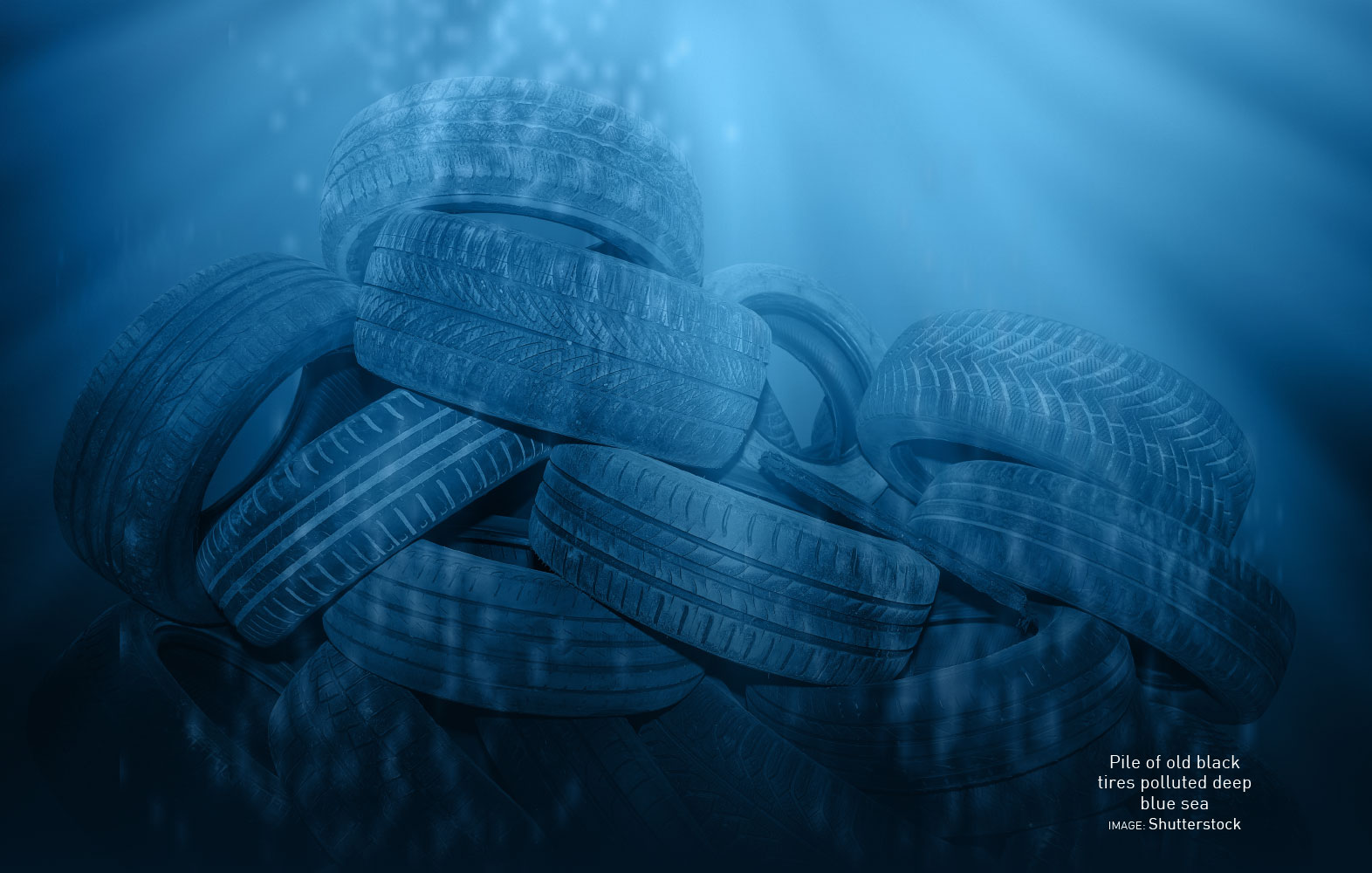
Photo from Shutterstock

In the middle of September this year, French authorities hired specially equipped boats with lifting gear to haul to the surface thousands of old tyres from artificial reefs. Researchers had discovered that the tyres were leaking toxic chemicals, including heavy metals, into the sea. This tyre reef sanctuary, located 500 metres from the Mediterranean coastline between the towns of Cannes and Antibes in the southeast corner of France, was created in the 1980s by dumping 25,000 car tyres into the sea after local fishermen and French authorities envisioned a protected area where fishing was banned and corals and marine life could populate the tyres, thereby rejuvenating the marine life in this stretch of the Mediterranean.

Photo from Shutterstock

With increasing focus on the harmful effects tyres can have on the environment and the ocean, policymakers and tyre companies are becoming concerned. In addition to the toxicity from tyres submerged in water as stabilisers in breakwaters or as structures in artificial reefs, tyre waste transmitted through the air from vehicles on roads is also one of the issues being addressed by the European Commission in a White Paper drafted in January 2018 stating their strategy in dealing with plastics in a circular economy. Besides acknowledging that more research is needed to comprehend where microplastics come from and how they affect the environment and human health, the commission is looking into ways to cut down on microplastics that come from tyres. One of the ways they intend to do this is by looking into setting an EU-wide standard for the abrasion rate of tyres through establishing a common testing method along with a requirement for producers to inform consumers.

HOW TYRES GET INTO THE SEA

A 2017 scientific study led by PieterJan Kole of the Open University of The Netherlands* estimated that about 10 percent of the microscopic pieces of plastic in the ocean are from tyres as they wear down. What most people question – or are ignorant about – is how much tyre waste is in the environment, how much of it ends up in the sea, if and how it gets into the food chain, and what danger it poses.

According to the study on the wear and tear of tyres by Kole et al., every car tyre weighs about one kilogram less when it is scrapped compared to when it was first bought. The missing kilogram of tyre material is eviscerated into the environment through wear and tear from driving and braking. According to a report by Eunomia, 500,000# tons of tyre waste from 290 millions cars in Europe escape into the environment through the air, scattered on streets and highways, or swept into rivers and the sea.

The tyre reef being dismantled in France this September was one of five experimental tyre reefs deployed in the 1980s on the French coasts of Palavas-les-Flots, Langrune-sur-Mer, Arca-chon-sur-Mer, Port-la-Novelle and Golfe-Juan, and they are still in place today. After a study done in 2005 by researchers at the University of Nice revealed that the toxic chemical leak from the tyres are a threat to marine and human life, an initial removal operation was conducted in 2015 at the Golfe-Juan site to remove 2,500 tyres as proof that the tyres could be removed safely. Divers and boat crews were scheduled to remove 10,000 tyres in October 2018, while the remaining 12,500 tyres will be removed in the second quarter of 2019. The removed tyres will be sent to recycling centres in Nice, where they will be broken up into granules and used in construction projects. The removal of the tyres is said to cost more than one million Euros and will be paid for by the French authorities as well as the manufacturer of the tyres, French tyre giant Michelin.

France, however, is by no means the only country that has created artificial reefs from tyres. Although there are an estimated 90,000 cubic metres of artificial tyre reefs in France, there are around 20 million cubic metres offshore in Japan. Scientists estimate that there are around 200 artificial tyre reefs around the world with the bulk of them in the waters off the United States, Japan, Malaysia and Israel. Around two million tyres were sunk off the coast of Florida in 1972 to create artificial reefs to promote marine life.

*Wear and Tear of Tyres: A Stealthy Source of Microplastics in the Environment by Pieter Jan Kole, Ansje J. Löhr, Frank G.A.J. Van Belleghem and Ad M.J. Ragas. Published online Oct 20, 2017

#Annex of Eunomia draft report v4 “Investigating Options for Reducing Releases in the Aquatic Environment of Microplastics” available at http://www.eunomia.co.uk/reports-tools/investigating-options-for-reducing-releases-in-the-aquatic-environment-of-microplastics-emitted-by-products/

Read the rest of this article in our November 2018 Issue 3 Volume 151 of Asian Diver magazine by subscribing here or check out all of our publications here.
Women in Science: Stemming the Tide of Gender Inequality

0

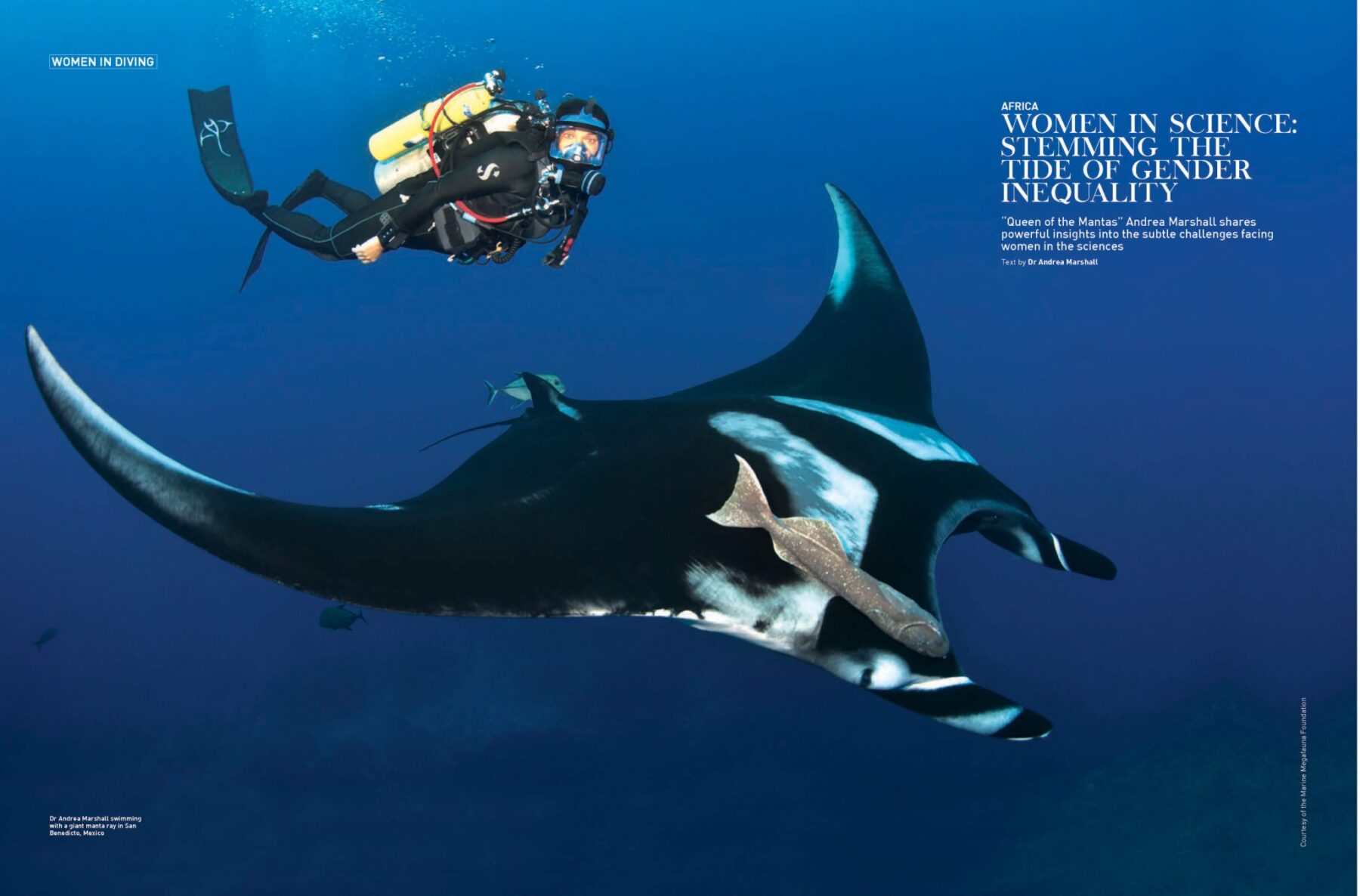
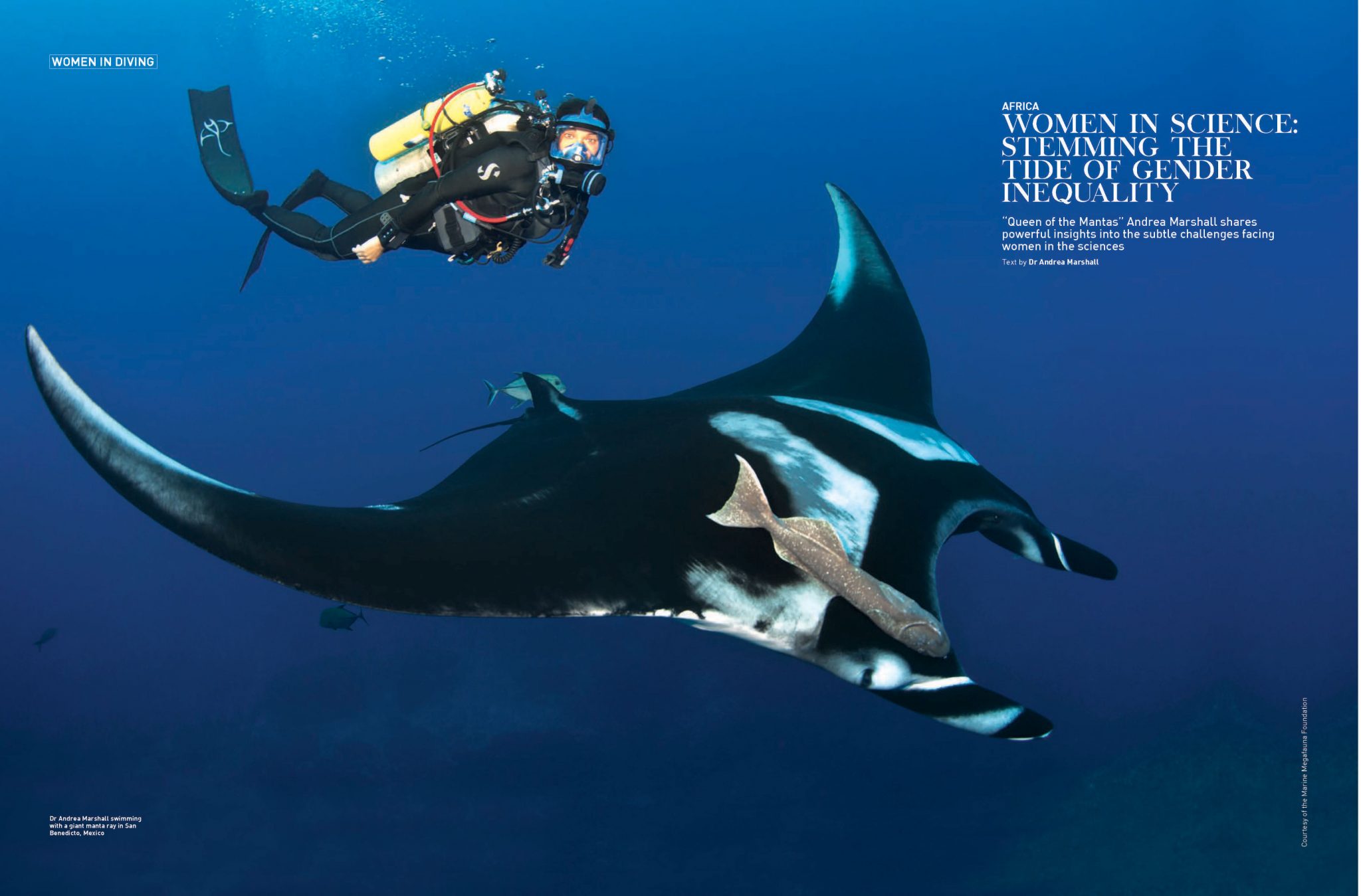
Gender-related topics almost invariably come up when I talk about my work as a scientist. Conversations that start about my work with manta rays always seem to circle around to probing questions about the challenges of being a female researcher. I find people’s interest in this subject perplexing. Sure, being a field researcher is hard… but what does being a woman have to do with that? I fight the same defensive feeling when I see eyebrows raise upon learning that I am the CEO of an international conservation organisation… like for a moment they find this fact hard to believe. Have we seriously not moved past this?

While this line of questioning can sometimes get a bit tedious, I have started to reconcile myself to the fact that this issue is indeed important and worthy of addressing. The main reason for this conclusion is the hundreds, maybe thousands, of young girls that have contacted me throughout my career looking for advice – girls who see me as a role model, that aspire to have a career like mine, or that want to work in the field like I do; young women of all ages that are looking for recommendations or for advice; ones needing to hear first-hand that they can make it. Sometimes I can tell that they are looking to reassure themselves; others are looking for ways to assuage the fears of their family or friends. Strangely, I never get these kinds of letters/e-mail/questions from boys. Is that because I am not a role model for them, despite being an authority in my field? Or is it rather because they do not have the same reservations that young girls do. Logic tells me it is the latter and I see evidence all the time that young girls are somehow less confident about career paths in science, technology, engineering, mathematics (STEM) fields than young boys.

When I was young, it never occurred to me that as a girl I would face discrimination in the workplace or that that I might be discouraged from pursuing my dream of being a scientist. I kindly blame my parents for this ignorance. I blame them because they raised me to believe that I could be anything when I grew up; that no goal, however impossible it seemed, was unattainable.

Despite being an only child, I had a wonderfully fulfilling childhood chock-full of adventure and travel. My mother was a veritable powerhouse, raising me in a loving home and achieving career success at the same time. She was always very supportive of my dreams and aspirations. I attended the best schools and she made sure that I was exposed to as many marine related extracurricular activities as possible.

ADVICE FOR A “BRIGHT YOUNG GIRL”

So, there I was, blissfully ignorant, pursuing my dream of becoming a marine biologist. However, despite being one of the top students in my class in high school, I started to feel the first inklings of gentle encouragement to go into a field that might be more appropriate for a girl. Always in very complimentary ways, I was told that I was a strong writer and that I should consider a degree in literature or creative writing. I was told that I was a great debater and that I should consider a career in law. Each time, it was also casually suggested that science was a difficult field to “break into”. Everyone seemed to want to steer me toward more practical options for careers, since “shark researcher” really did not seem like a particularly suitable career path for such a “bright young girl”.

Strangely, the advice usually came from people that seemingly cared about me, people who ostensibly knew what was best for me. I was made to feel that I might regret my choice to pursue a career in science, that I might waste valuable time only to find out at a later stage that it was not a “viable” option for me.

Up until then I had never even considered what it meant to be an intelligent young woman with options; never suspected that being a girl might complicate my choices. I admit I was perplexed by all of this unsolicited advice. I have wanted to be a marine biologist since I was five years old. In fact, many people tell me that they have never met such a focused child – I don’t think that I waivered once along the path to my chosen profession.


Read the rest of this article in No.89 Issue 1/2017 of Scuba Diver magazine by subscribing here or check out all of our publications here.
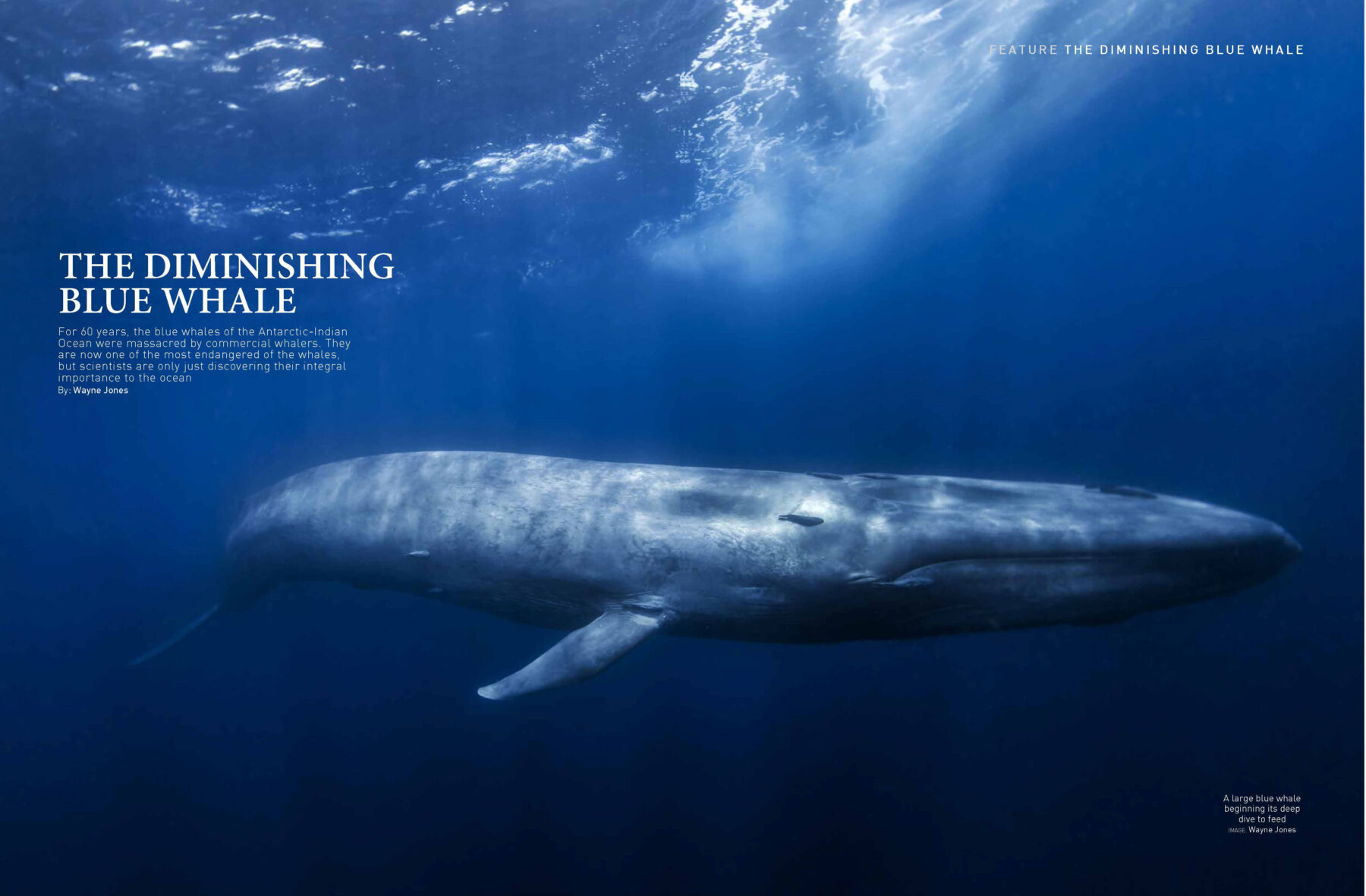
The Diminishing Blue Whales

0

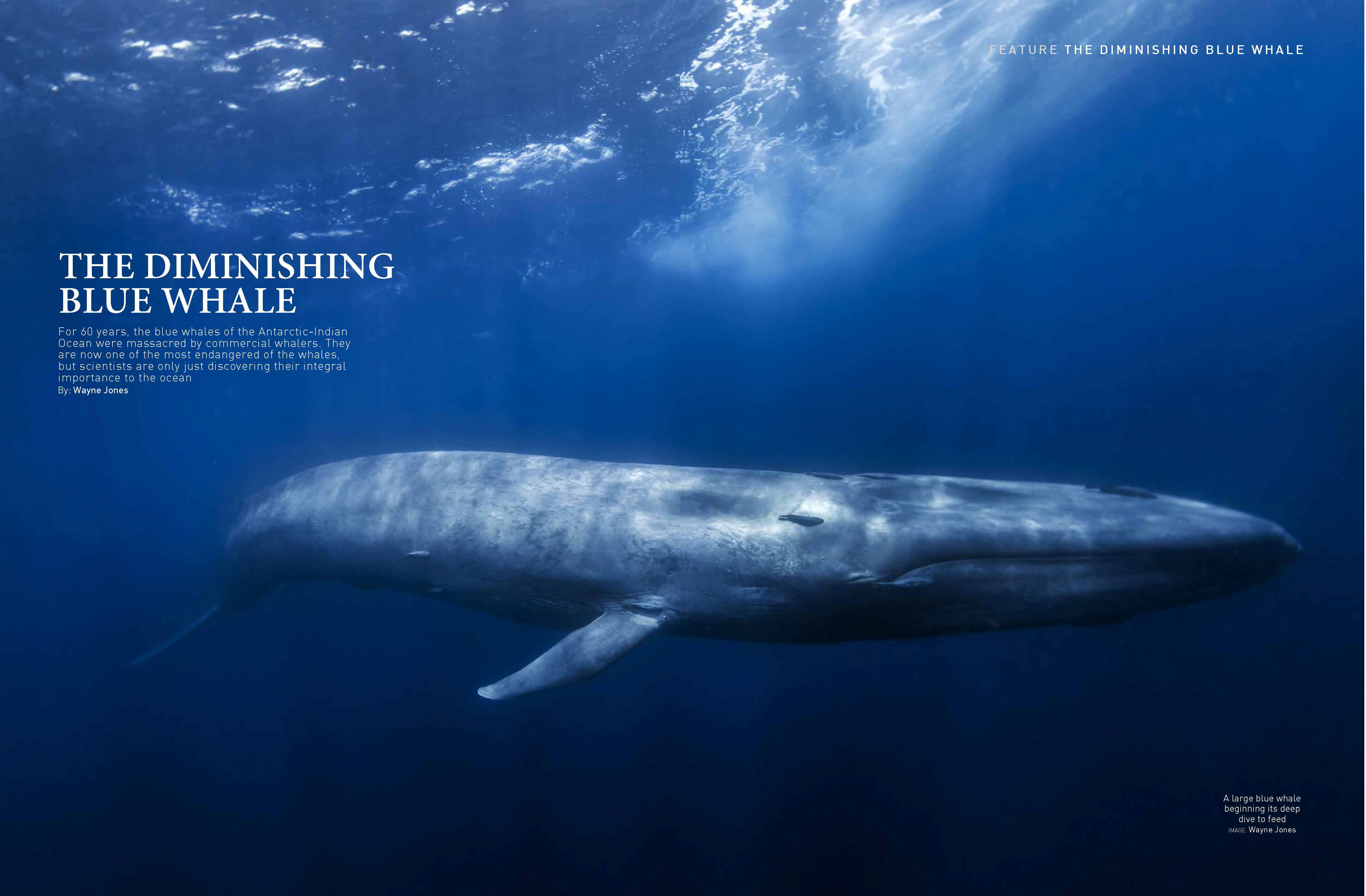
For 60 years, the blue whales of the Antarctic-Indian Ocean were massacred by commercial whalers. They are now one of the most endangered of the whales, but scientists are only just discovering their integral importance to the ocean.

In 1964, the guns fell silent. A massacre lay before them, a familiar sight from the relentless slaughter of blue whales in the last 60 years that brought a species to its biological knees and the brink of extinction.

With the advent of the industrial age, a modern way to “harvest” whales saw the evolution of a global industry that operated with increasing surgical precision. A lack of scientific reasoning meant an absence of a sustainable limit or yearly quota, and numbers rapidly declined to a point almost beyond a species’ genetic ability to continue.

Prior to industrialised whaling, the number of blue whales was estimated at around 260,000 (now thought to be an extremely conservative figure) in the Antarctic-Indian Ocean group alone, but from 1904 to1964, industrialised whaling saw this number plummet to a mere thousand or so.

Sri Lanka provides a rare opportunity to interact with and photograph the largest of beings known to have lived on this planet. For the sake of conservation, a small number of divers are given this privilege, venturing out in small boats with guides who are also collecting photographic data of flukes for identification of individuals. Just like a human fingerprint, each fluke has a unique appearance.

Now numbering an estimated 10,000 to 25,000 globally, blue whales are still considered one of the most endangered of the “great” whales. With records indicating some 26,500 blue whales slaughtered each year in the Indian Ocean, it’s a wonder how they are not already extinct. Sadly, new threats from increased ship strikes, abandoned fishing nets, ocean floating plastics and global warming pose a challenge to the genealogical recovery and stability of the species.

With the end of legal whaling, two whale sanctuaries have been established by the International Whaling Commission (IWC) in the Southern Hemisphere. One is the Southern Ocean waters surrounding Antarctica, and the other is in the Indian Ocean surrounding Sri Lanka.


Read the rest of this article in 2018 Issue 2 Volume 150 of Asian Diver magazine by subscribing here or check out all of our publications here.
Manta Vista: 14 Places To Find Manta Rays

0

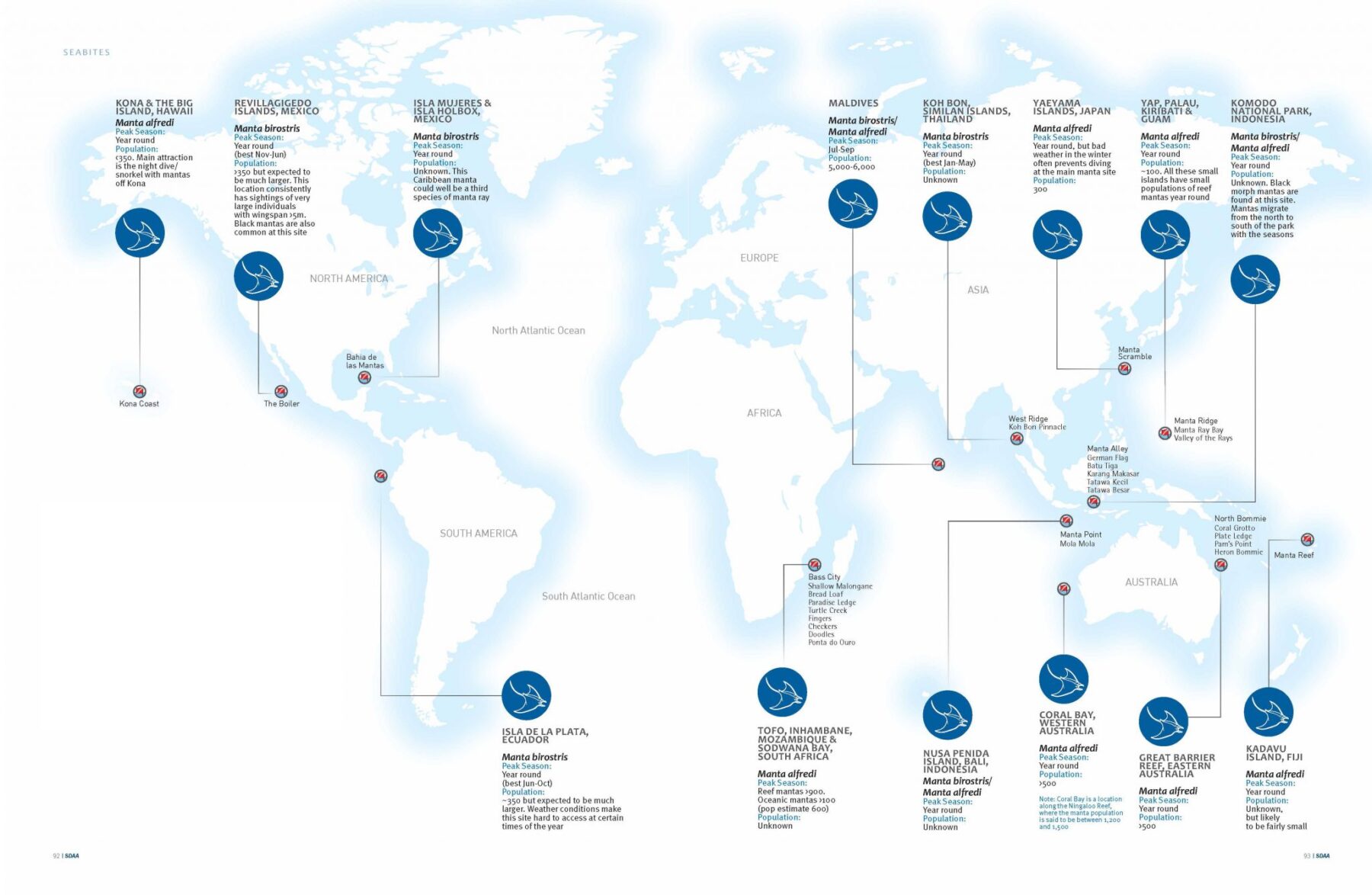
MANTA VISTA

Manta rays are the biggest rays in the ocean. Despite their size, these majestic beauties pose little threat to humans, making them very popular among divers. They are generally found in warm waters across the planet, and are declared as “vulnerable” by the Internation

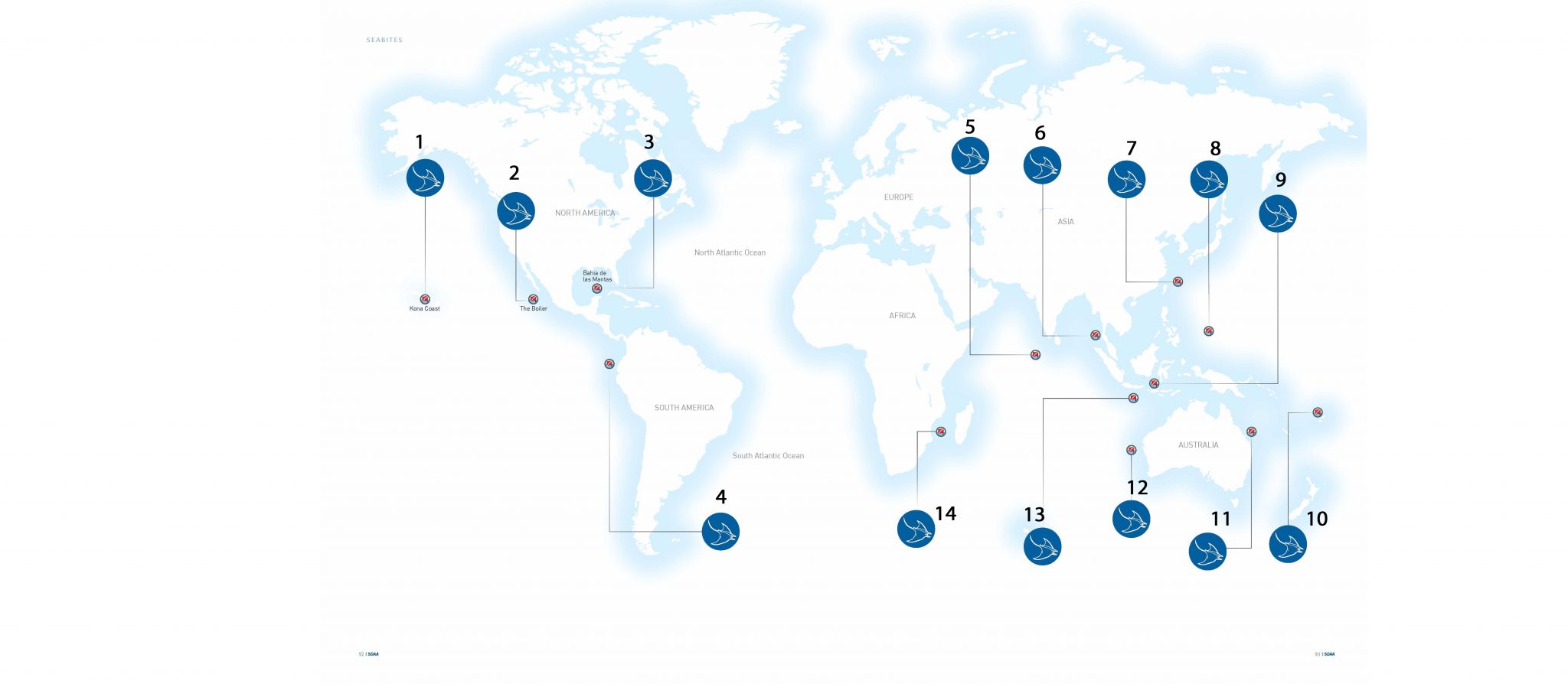
1.KONA & THE BIG ISLAND, HAWAII (Kona Coast)

Manta alfredi

Peak Season:

Year round

Population:

<350. Main attraction is the night dive/snorkel with mantas off Kona

2. REVILLAGIGEDO ISLANDS, MEXICO (The Boiler)

Manta birostris

Peak Season:

Year round

(best Nov-Jun)

Population:

>350 but expected to be much larger. This location consistently has sightings of very large individuals with wingspan >5m. Black mantas are also common at this site

3.ISLA MUJERES & ISLA HOLBOX, MEXICO (Bahia de las Mantas)

Manta birostris

Peak Season:

Year round

Population:

Unknown. This Caribbean manta could well be a third species of manta ray

4.ISLA DE LA PLATA, ECUADOR

Manta birostris

Peak Season:

Year round

(best Jun-Oct)

Population:

~350 but expected to be much larger. Weather conditions make this site hard to access at certain times of the year

5.MALDIVES

Manta birostris/Manta alfredi

Peak Season:

Jul-Sep

Population:

5,000-6,000

6. KOH BON,SIMILAN ISLANDS, THAILAND (West Ridge, Koh Bon Pinnacle)

Manta birostris

Peak Season:

Year round

(best Jan-May)

Population:

Unknown

7.YAEYAMA ISLANDS, JAPAN (Manta Scramble)

Manta alfredi

Peak Season:

Year round, but bad weather in the winter often prevents diving at the main manta site

Population:

300

8.YAP, PALAU, KIRIBATI & GUAM (Manta Ridge, Manta Ray Bay, Valley of the Rays)

Manta alfredi

Peak Season:

Year round

Population:

~100. All these small islands have small populations of reef mantas year round

9.KOMODO NATIONAL PARK, INDONESIA (Manta Alley, German Flag, Batu Tiga, Karang Makasar, Tatawa Kecil, Tatawa Besar)

Manta birostris/Manta alfredi

Peak Season:

Year round

Population:

Unknown. Black morph mantas are found at this site. Mantas migrate from the north to south of the park with the seasons

10.KADAVU ISLAND, FIJI (Manta Reef)

Manta alfredi

Peak Season:

Year round

Population:

Unknown, but likely to be fairly small

11.GREAT BARRIER REEF, EASTERN AUSTRALIA (North Bommie, Coral Grotto, Plate LEdge, Pam’s Point, Heron Bommie)

Manta alfredi

Peak Season:

Year round

Population:

>500

12.CORAL BAY, WESTERN AUSTRALIA

Manta alfredi

Peak Season:

Year round

Population:

>500

Note: Coral Bay is a location along the Ningaloo Reef, where the manta population is said to be between 1,200 and 1,500

13.NUSA PENIDA ISLAND, BALI, INDONESIA (Manta Point, Mola Mola)

Manta birostris/

Manta alfredi

Peak Season:

Year round

Population:

Unknown

14.TOFO, INHAMBANE, MOZAMBIQUE & SODWANA BAY, SOUTH AFRICA (Bass City, Shallow Malongane, Bread Loaf, Paradise Ledge, Turtle Creek, Fingers, Checkers, Doodles, Ponta do Ouro)

Manta alfredi

Peak Season:

Reef mantas >900. Oceanic mantas >100 (pop estimate 600)

Population:

Unknown


Read the rest of this article in No.113 Issue 3/2018 of Scuba Diver magazine by subscribing here or check out all of our publications here.