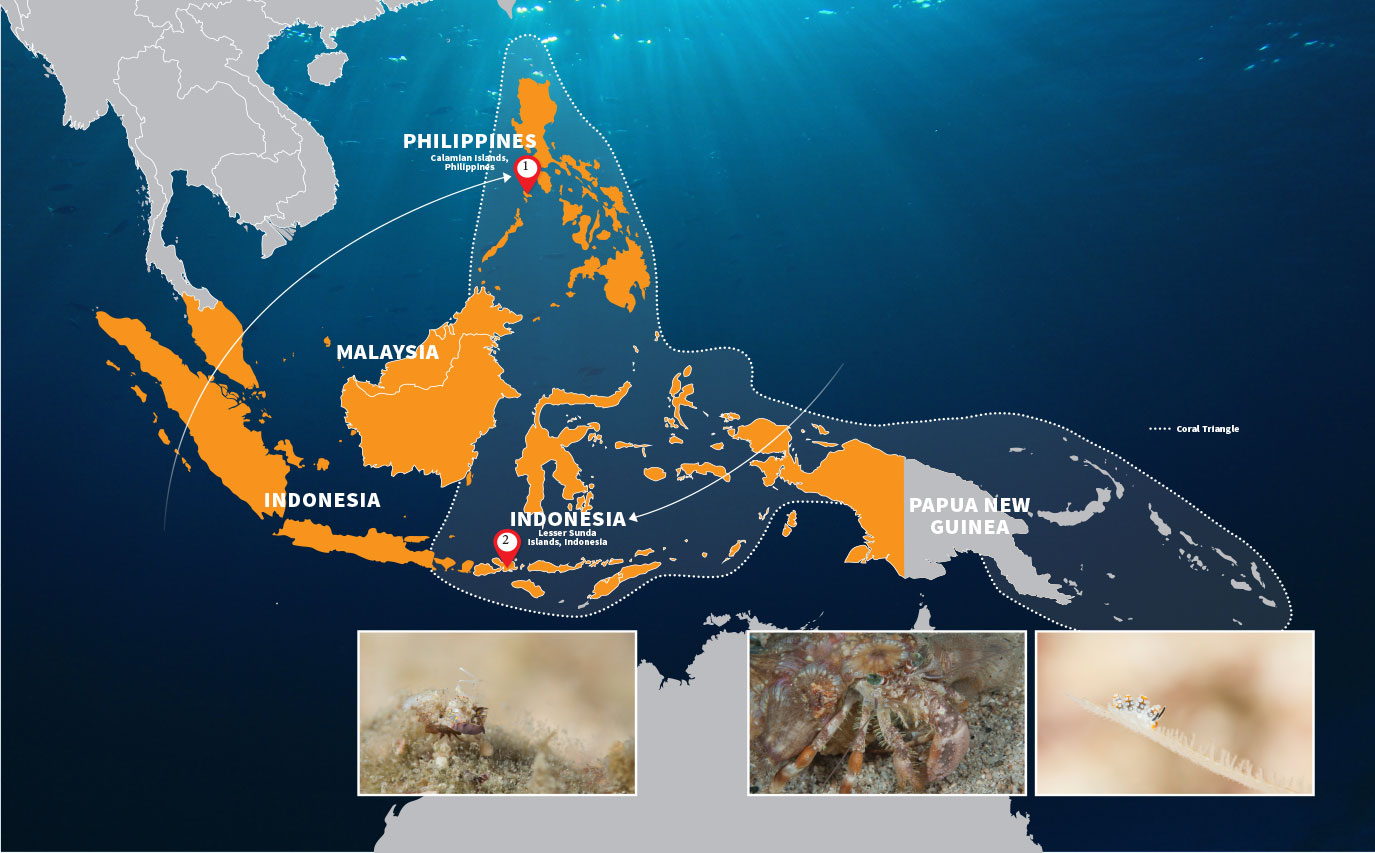
The distribution of marine species is not the same between different areas of the ocean. Richness differs dramatically between regions due to the many pressures that have moulded each community over millions of years. The world’s highest marine biodiversity is found in a relatively small area known as the “Coral Triangle”. The Coral Triangle encompasses six countries – Malaysia, Indonesia, East Timor, Philippines, Papua New Guinea and Solomon Islands, which together form a roughly triangular shape. The further you travel from the Coral Triangle in any direction, the fewer the number of marine species.So, unsurprisingly, it has been the main hub of recent marine discoveries.And is just on our doorstep…
1. Calamian Islands, Philippines
This small group of islands off the northern tip of Palawan in the Philippines has offered up a number of new discoveries over the years.It accommodates two of the three known damselfishes that lack a pelagic larval phase and another has recently been discovered from the same area and is in the process of being named. Damsels lay their eggs onto the reef and generally then guard them.Whilst the fry of the other 380 or so damselfishes then float off in ocean currents to distribute far and wide, these three subsequently guard their young, which stay in a small group around their parents.As a result they never get chance to reach another reef, and the species has become trapped only around these few islands.
2. Lesser Sunda Islands, Indonesia
The island chain that spans from Bali in the west to Timor and Tanimbar in the east has been rich in new discoveries.The islands in the chain are very close to each other, the next island in the chain is almost always visible, but deep oceanic trenches separate them.Strong currents flow through these trenches and impact heavily on the free movement of animals across the channels.As a result this has been a hotbed of diversification and many new discoveries have been made in this area.Several small bottom-dwelling sharks such as the Bali and Alor catsharks have been discovered in recent years, as well as the Indonesian wobbegong shark.Several new flasher wrasses have also be found here, including Renny and Alfian’s flashers from Komodo and Alor respectively.
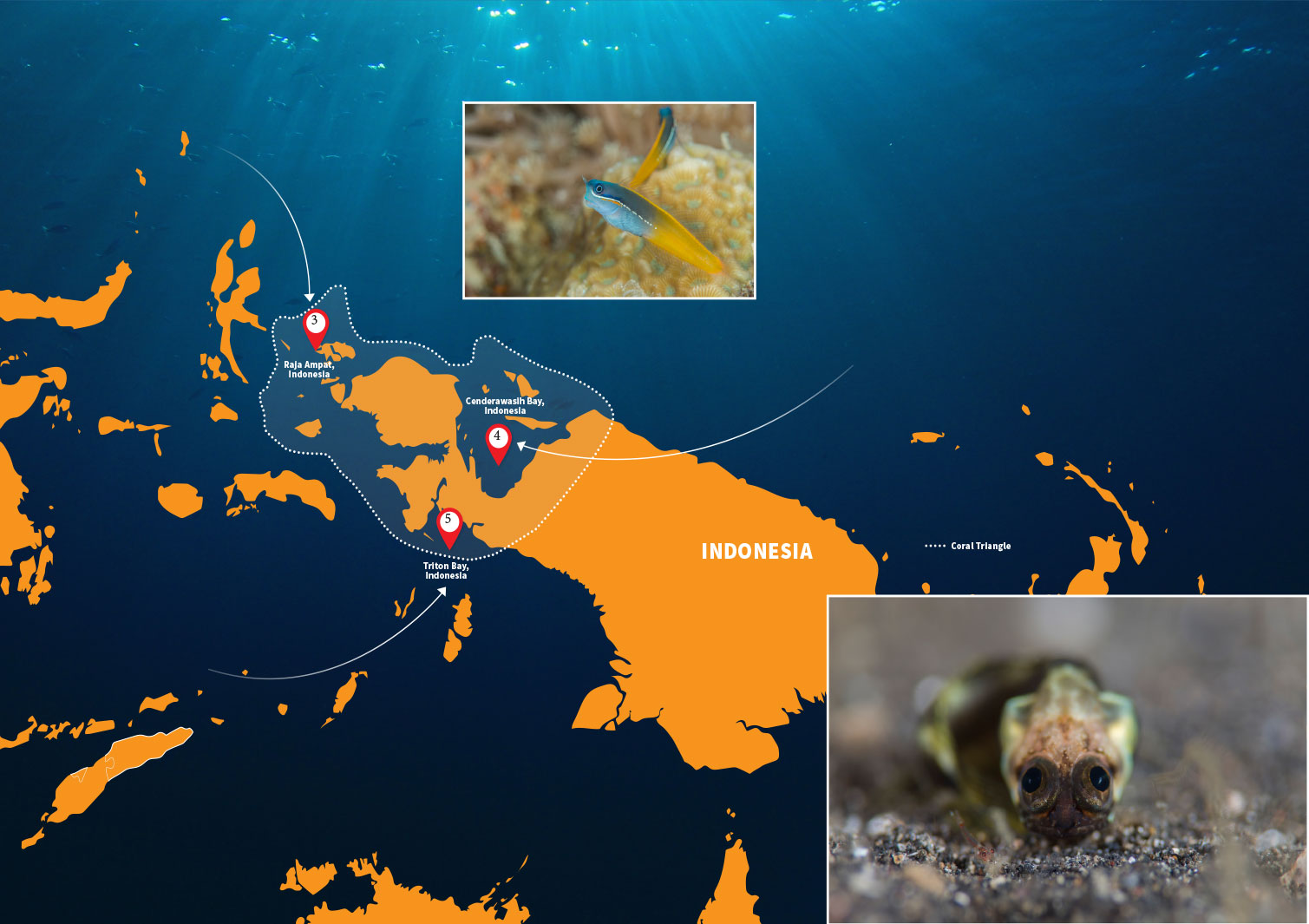
BIRD’S HEAD SEASCAPE
The high biodiversity of the Bird’s Head Seascape is well documented, but this special area has also been the location of many recent marine discoveries. Each of the three main areas of the Bird’s Head have contributed new and exciting discoveries to the catalogue of life.Notably, Cenderawasih, Raja Ampat and Triton Bay each has it’s own endemic species of walking sharks.Whilst the Raja species was discovered almost two centuries ago, the other two were only discovered and named in 2008.
3. Raja Ampat, Indonesia
Raja Ampat was the first of the Bird’s Head’s three main regions to be prospected for new species. Funnily enough, Raja Ampat was the site of many historical species discoveries. The blue-finned trevally and black-tipped reef shark, both have their type specimens recorded from Raja Ampat a couple of hundred years ago. Along with an outstanding number of known species, in fact the most of any coral reef in the world, there were many new discoveries when scientists rediscovered the area over a decade ago. The ubiquitous Ammer’s dottyback, was named in 2012 after the diving pioneer of this region, Max Ammer.
4. Cenderawasih Bay, Indonesia
In 2006 Cenderawasih was visited for the first time by ichthyologists. They were shocked by the number of new discoveries they made during the trip. The huge bay has been periodically closed off due to ice ages and tectonic plate movements. These effectively isolated the animals in the bay and over time they evolved into new species, ripe for discovery. A glut of new species were named from the bay in the past decade, including Walton’s flasher wrasse, Cenderwasih fairy wrasse, Caitlin’s dottyback and Cenderawasih butterflyfish. Just last year another endemic, Maurine’s demoiselle, was named after Maurine Jones in honour of her work conserving the Bird’s Head.
5. Triton Bay, Indonesia
Triton Bay was first explored in 2006 by scientists who had been titillated by other areas of the Bird’s Head.They found this to be another endemic-rich area, with several species found nowhere else on Earth. Jamal’s dottyback and Nursalim flasher wrasse are two of the most charismatic, discovered in 2007 and 2008 respectively. Jamal’s is a small, but locally common species that mimics the black bar chromis, whilst the Nursalim is as flashy and stunning as you’d expect for a flasher wrasse.Another dottyback that is very rarely seen, and was only named in 2008, is the zippered dottyback. They are found at the very limits of recreational diving. It has been suggested that two large river outflows on the boundaries of the bay act as freshwater barriers to the spread of these marine species.
Read the rest of this article in the 2017 Issue 2 Volume 146 of Asian Diver magazine by subscribing here.
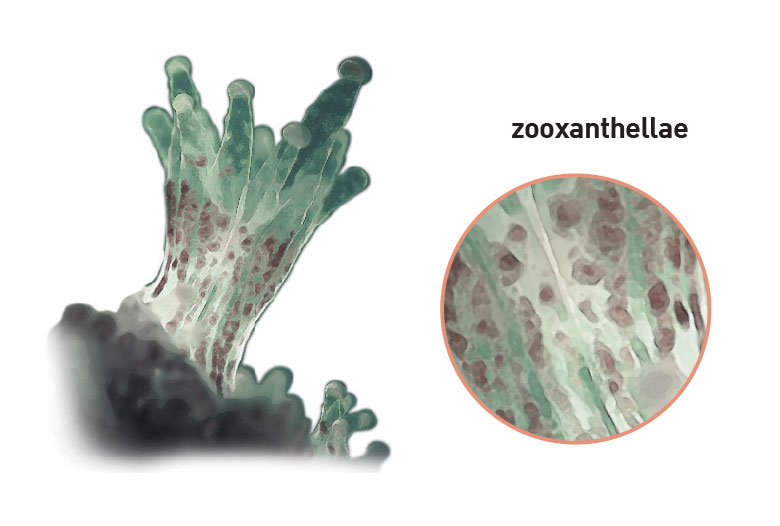
Corals get their colours in two ways. They have photosynthetic marine algae living inside their cells which convert sunlight into energy. The brownish green colour you see in corals under normal daylight is from these algae, called zooxanthellae. When corals are bleached, they turn white because they expel the zooxanthellae.
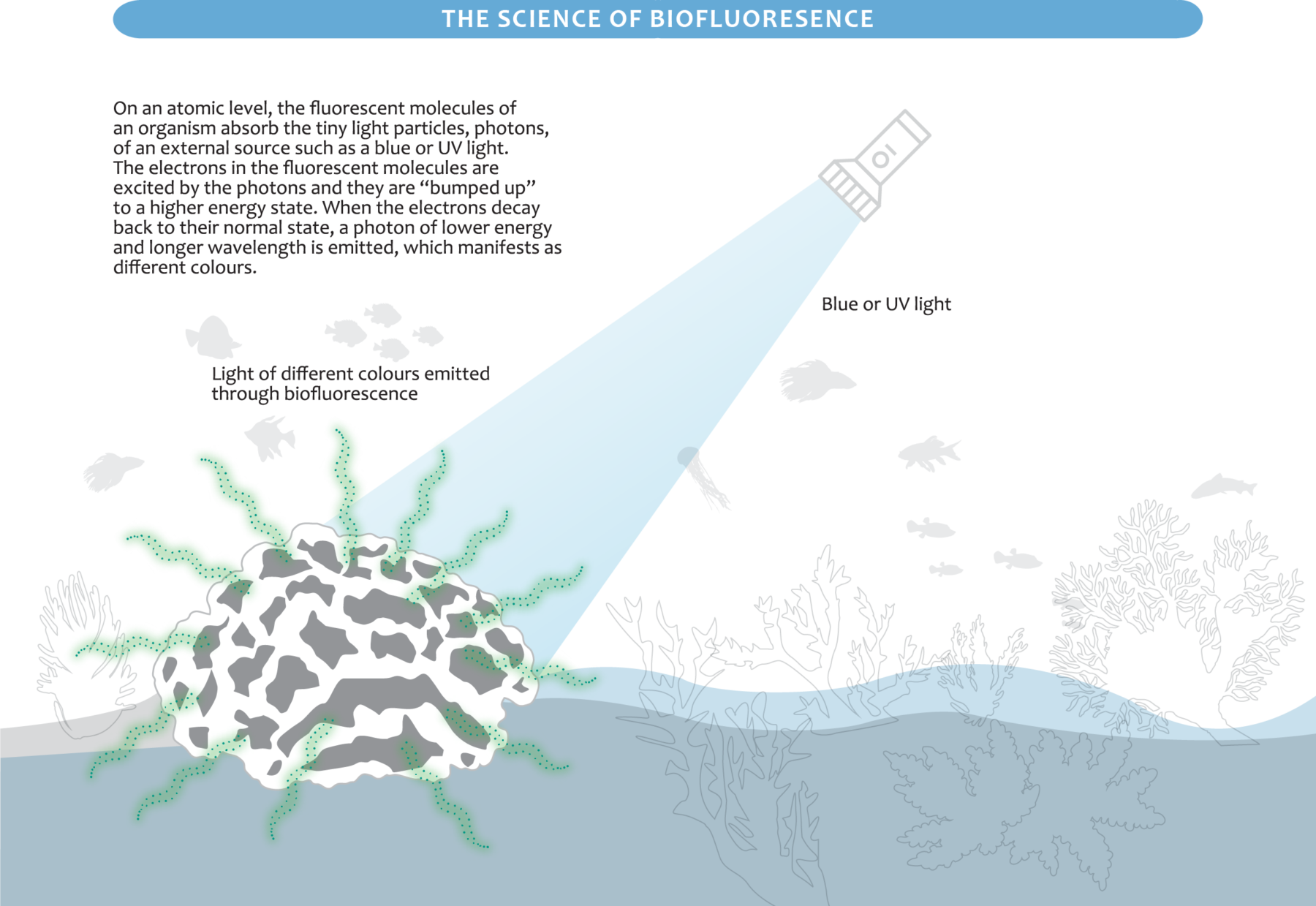
But then there are the blues, the greens, purples, and reds which come from a family of Nobel prize-winning fluorescent proteins. The short answer is there are protein pigment in the tissue of corals which absorbs light in one colour, and re-emits the light in a different colour. These pigments look different under white light, daylight, and blue light.
In 2008, the Nobel Committee awarded Osamu Shimomura, Marty Chalfie and Roger Tsien with the Chemistry Nobel Prize for the discovery and development of the green fluorescent protein (GFP). Using GFP, we can see when proteins are made, and where they can go. This is done by joining the GFP gene to the gene of the protein of interest so that when the protein is made, it will have GFP hanging off it. Since GFP fluoresces, one can shine light at the cell and wait for the distinctive green fluorescence associated with GFP to appear.
White Light
Using only a white light, brighter reds, orange and yellow can be seen. Some of the light is absorbed into the protein while the colour we see is what is being reflected or re-emitted. That is also why companies sell red filters to go over cameras to bring the red back to life.
Daylight
In regular sunlight, the deeper you dive, the bluer corals will appear. Any deeper than a few metres and longer wavelengths of light such as red, orange, and yellow are quickly absorbed in the water column. Once you reach 10 metres, everything looks blue. A flashlight or external LED or strobe light will bring these colours back into the environment.
Blue and Ultraviolet (UV) Light
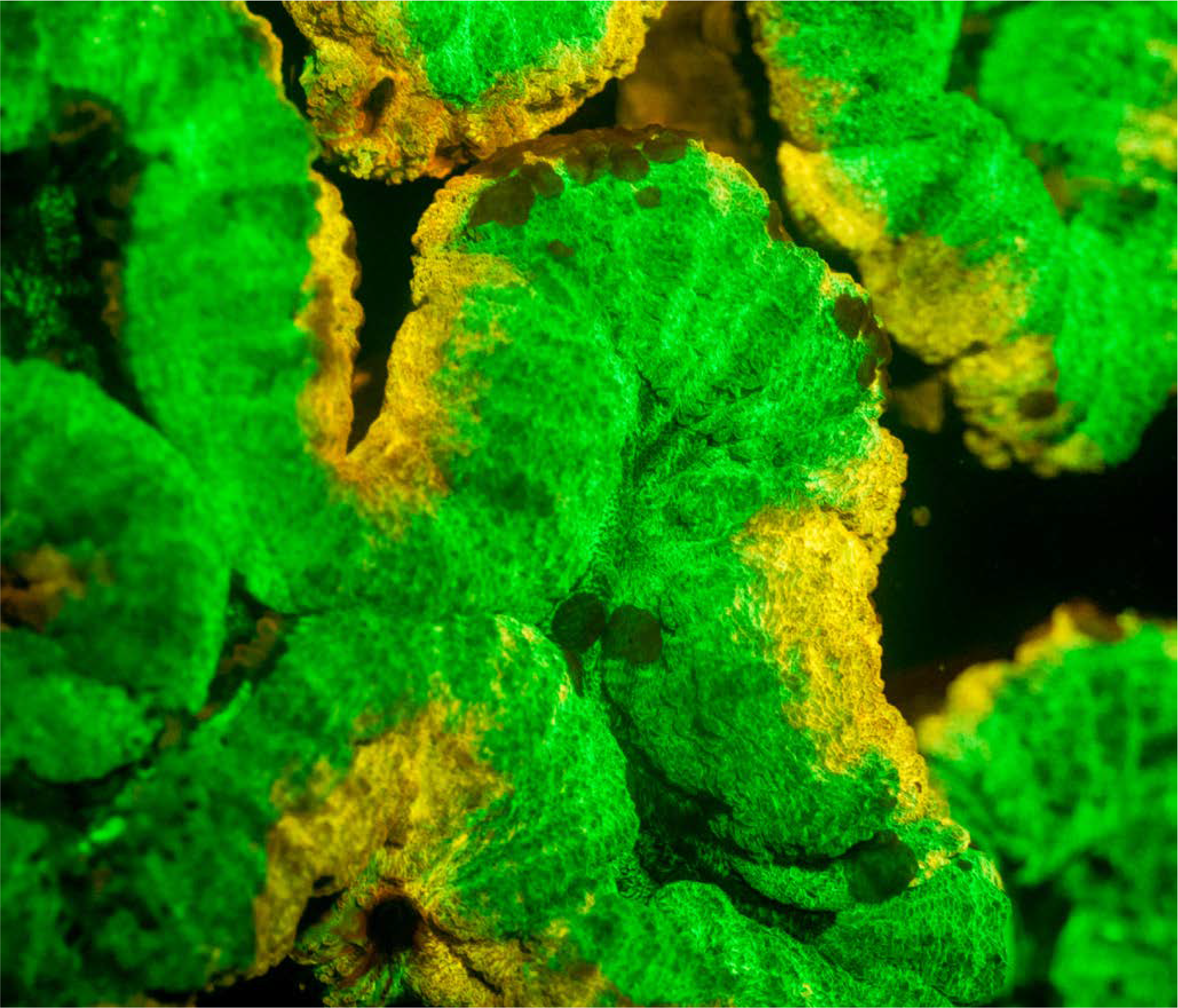
To see fluorescent colour, a long wavelength of light must be used, such as blue and UV light. When shined on certain corals, the protein re-emits a fluorescent pigment as biofluorescence, glowing a bright neon colour. This colour is invisible under normal light conditions and they can only be seen when pigments are excited.
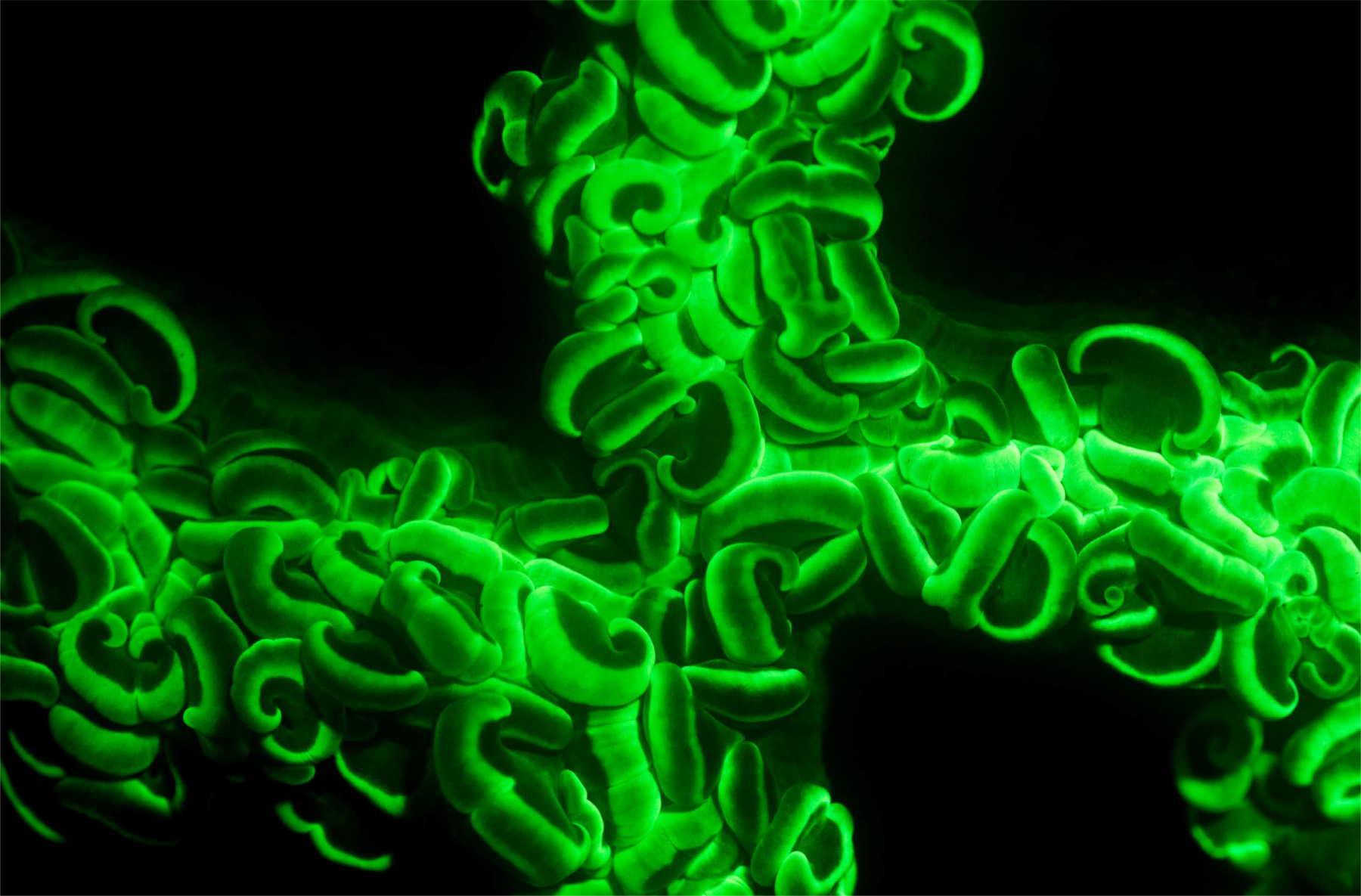
Galaxea coral showing brilliant yellow and green fluorescence
Fluoro Light
Though UV lights were often used in the early days of fluoro diving, they have been found to be less effective at making corals fluoresce and may even be harmful to the organisms. We’ve been told that staring into the sun isn’t good for our eyes due to the UV light it emits. The same concept applies to marine animals. As such, today UV light has been replaced by precision blue LEDs emitting light in the range from 450 to 470 nanometres.
To see the psychedelic colours of fluorescent light, it is highly recommended to use a blue excitation light, which are commonly called fluoro lights, or fluoro torches. It’s important to purchase a blue light made with blue LEDs for fluoro diving, and not a purple hue UV light or a white light with a blue filter.
Fluoro torches feature a dichroic, interference or excitation filter in front of the lens. The filter is there to optimise the range of fluoro light and only lets a certain wavelengths pass through, while reflecting all other colours. Any new LED light that markets itself as a fluoro light should have these features.
When using a blue fluoro light, corals will glow in psychedelic shades of blue, pink, and purple. If the thought of night diving makes you feel uncomfortable, you can still see these colours during the day, although not as bright. I personally love using blue fluoro light to search for little zoanthids in the sand. They look like colourful flowers, each around three millimetres wide. The tiny polyps close when disturbed and unfurl when at rest. A fluoro light is perfect for spotting these little treasures as they light up amongst the muck.
Read the rest of this article on the fluorescent world of corals in Scuba Diver Australasia + Ocean Planet No. 113 Issue 3/2018 by downloading a digital copy here!
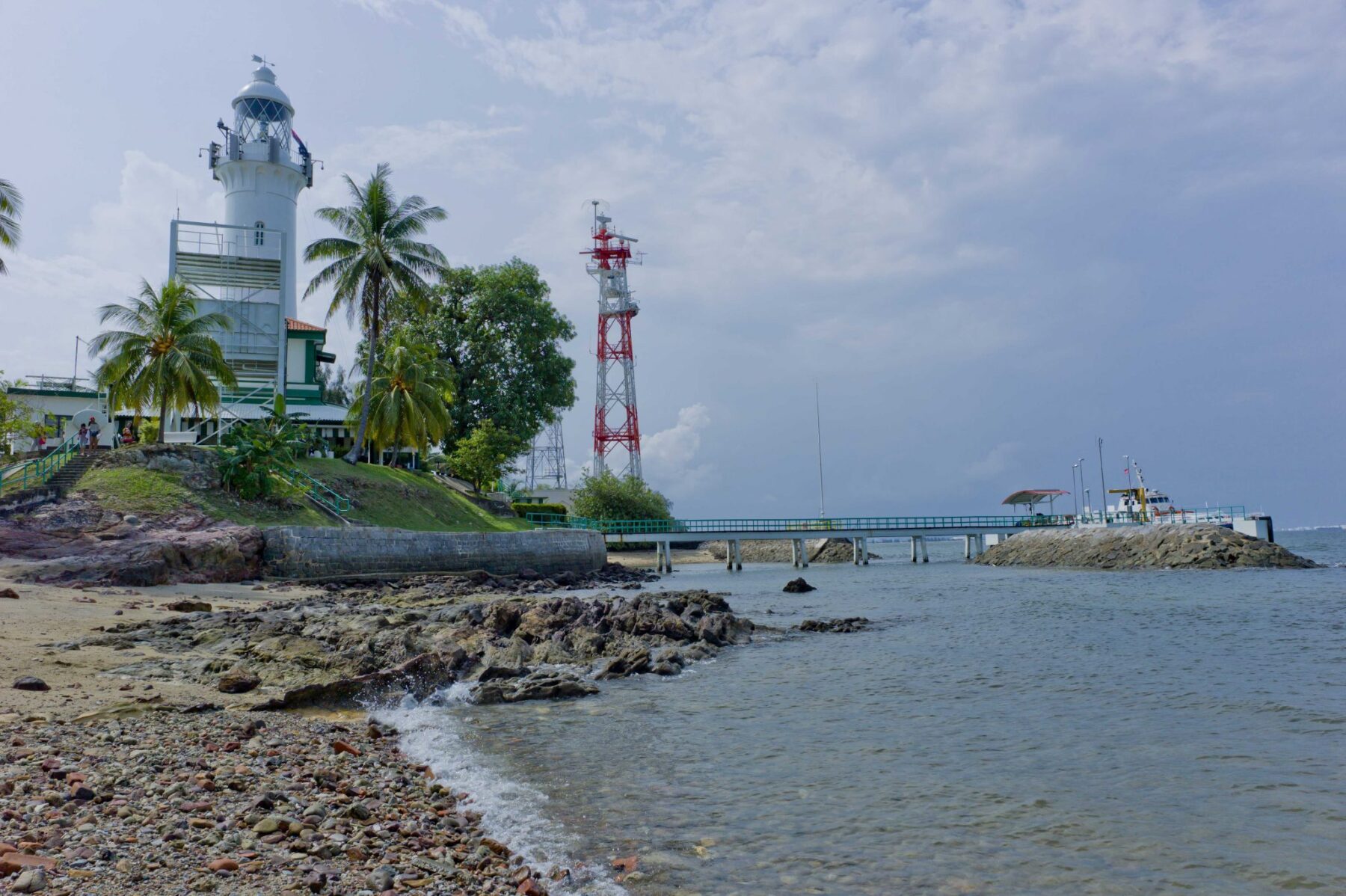
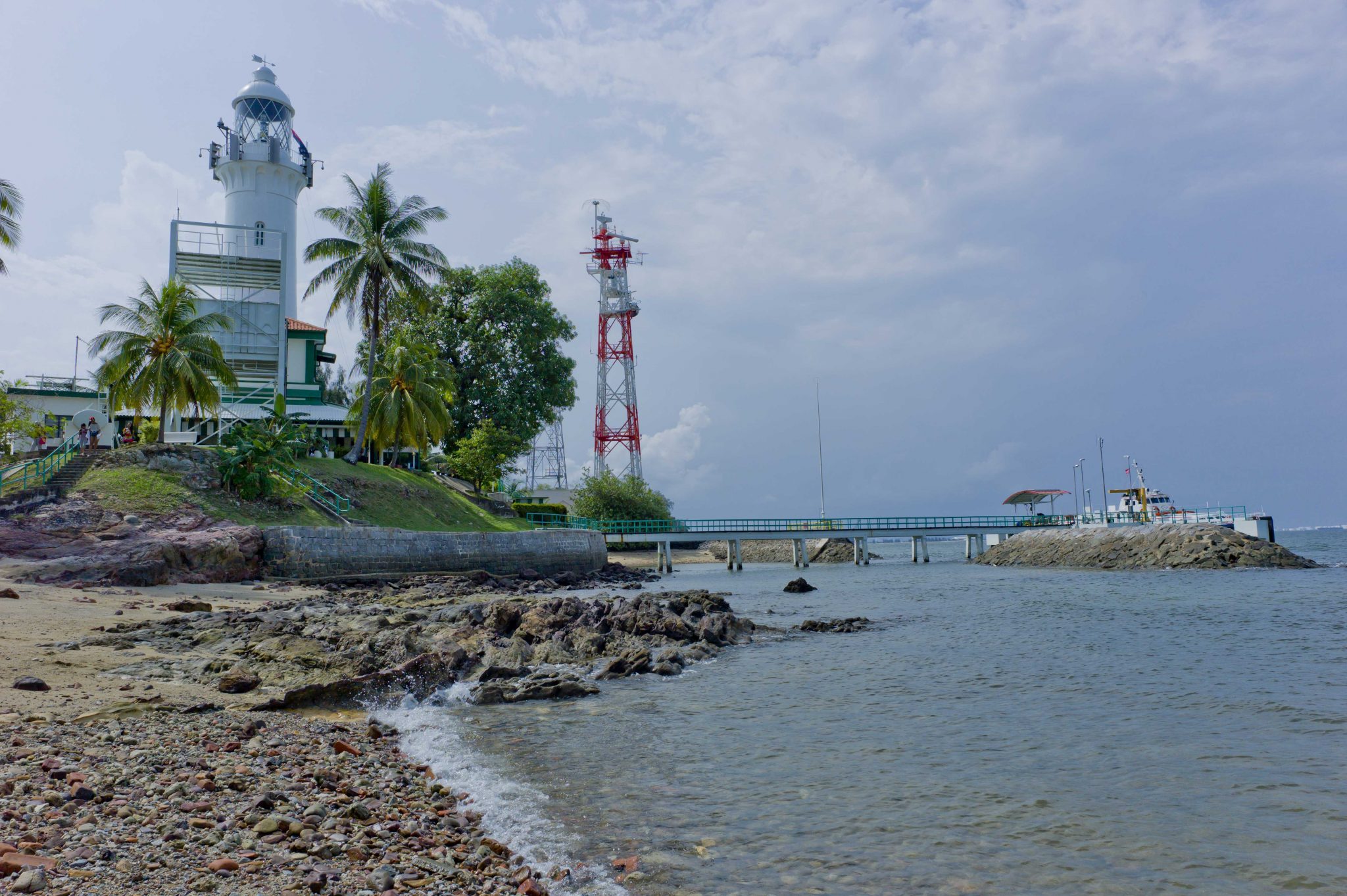
Pulau Satumu was recommended to be designated as a Marine Reserve
The third iteration of the Singapore Blue Plan was presented to Second Minister for National Development and Minister for Social and Family Development, Desmond Lee, at the National University of Singapore (NUS) on 13 October 2018.
Building on the second Singapore Blue Plan submitted in 2009 (the first Singapore Blue Plan was submitted in 2001), the Singapore Blue Plan 2018, which was drawn up by science and expert contributors as well as stakeholders, campaigns for the conservation and sustainable use of the marine ecosystems and resources in Singapore through an action plan jointly executed with government agencies and stakeholders.
The Singapore Blue Plan lists out six broad recommendations, distilled from dialogue with contributors, stakeholders and the community, for conserving coastal and marine ecosystems in an integrative and sustainable manner.
Recommendation 1: Establish formal management systems for marine environments
Marine spatial planning (MSP) is a process that brings together multiple users and stakeholders of the ocean, including energy, industry, government, conservation and recreation, to make informed and coordinated decisions on how to use marine resources sustainably. Similar to land-use planning but for marine waters, MSP usually uses maps to more comprehensively identify how and where a marine area is being used and what natural resources and habitat exists in that area.
The Singapore Blue Plan 2018 calls for a MSP regime to be formed within Singapore’s existing integrated urban coastal management framework. This is especially important for ecologically sensitive areas. This MSP regime should also have legal provisions for Strategic Environmental Assessments (SEAs), Environmental Impact Assessments (EIAs) and inputs from the public so that there is greater transparency and accountability in the way we police and protect our environment and the way we conserve and promote the sustainable use of our coastal and marine environment.
The Singapore Blue Plan 2018 also calls for an EIA law matching the scope and content of international standards to be put in place. This is to ensure there is adequate protection and study of the risks of impacts on depleted, threatened or endangered species and rare and fragile ecosystems. The plan also calls for a legal framework to be set up to monitor components of coastal and marine biodiversity. These monitoring records should also be made available to the public.
Recommendation 2: Provide sustained funds for research initiatives and long-term monitoring programmes.
After the submission of the second Singapore Blue Plan in 2009, the Comprehensive Marine Biodiversity Survey (CMBS) was organized by the National Parks Board and National University of Singapore from 2010 to 2015. More than 350 surveys were conducted in coastal and marine areas within the Johor and Singapore Strait from the depths of 0 to 200 metres. The survey, however, revealed that there is more diversity to document. A good example of this is the lack of knowledge on the diversity and distribution of several groups of marine organisms like copepods, flatworms and insects.
Sustained funding support is needed to regularly monitor and assess natural and artificial coastal habitats and to sustain long-term monitoring of environment parameters and marine organisms. There is currently little knowledge on the connectivity of organisms and habitats in Singapore. This knowledge is crucial to ascertaining local and regional source and sink areas — the source is a high quality habitat that on average allows a population to increase while the sink is a low quality habitat that, on its own, wouldn’t be able to support a population (The source-sink dynamic is a theoretical model used by ecologists to describe how a quality of a habitat can affect the population growth or decline of organisms). This long-term monitoring of environment parameters and marine organisms is integral to our ability to record how how marine ecosystems adapt and respond to impacts over longer time scales. It is also crucial to our ability to predict changes in the health of our marine ecosystems.
Marine sciences have already benefitted tremendously from National Reseach Foundation’s Marine Science Research and Development Programme (MSRDP) and Technical Committee for Coastal and Marine Ecosystems (TCCME). However, for marine science in Singapore to remain resilient and successful, there needs to be a variety of funding sources in place, including continued support from agencies.
The Singapore Blue Plan 2018 calls for Pulau Satumu to be designated as a Marine Reserve
Recommendation 3: Enhance legislation to protect marine biodiversity and environment
There needs to be updates to current legislation and administrative practices to plug gaps in regulation and detection of offences. One example is the Wild Animals and Birds Act (“WABA”) which can be amended to include aquatic and marine animals. The Fisheries Act can also be changed to include the Prevention of Pollution of the Sea Act offences on marine pollution applicable to fishing vessels. In this way, pollution offences can be brought under the jurisdiction of the Agri-food and Veterinary Authority (“AVA”). “The storage and disposal of wastes, the import of live specimens of alien species by fish farms and the indiscriminate disposal or abandonment of fish culture equipment can be regulated by the Fisheris (Fish Culture Farms) Rules and the Fisheries (Fishing Gear) Rules”.
AVA species-specific product codes should be updated to better manage the trade of endangered marine flora and fauna and regulate illegal sales. There also needs to be new legislation put in place to better regulate current and emerging threats.
Singapore should also increase our commitment to international cooperation by implementing international treaties such as the 1979 Convention on Conservation of Migratory Species of Wild Animals and its relevant Memoranda of Understanding. Other such treaties include the 2003 Protocol to the 1992 International Convention on the Establishment of an International Fund for Compensation for Oil Pollution Damage, the Protocol of 1996 to amend the 1976 Convention on Limitation of Liability for Maritime Claims and the International Convention on Liability and Compensation for Damage in Connection with the Carriage of Hazardous and Noxious Substances by Sea and its 2010 Protocol. And lastly the 1972 Convention on the Prevention of Marine Pollution by Dumping of Wastes and Other Matter and its 1996 Protocol.
Recommendation 4: Improve intra- and inter-agency coordination of public marine database
There needs to be streamlining of the processes and improvement of the coordination between the various agencies and researchers. This will greatly improve the management of marine areas and resources. There should be a lead agency or a coordinating organisation, supported by scientists and senior government managers, acting as a focal point or representative group with a broad overview of the management and use of natural marine areas and biodiversity. The organisation must include the principles of marine spatial planning, manage EIAs related to marine areas, coordinate scientific information and efforts and oversee public participation. The successful application of these ideas from the point of permit application to the completion of a research project will definitely be a big help in attaining our research goals.
Recommendation 5: Protect remaining natural marine habitats from unnecessary biodiversity loss
The protection of natural marine habitats must not be restricted to one great site but must be expanded to protect as many habitats as possible. This is because the results of the CMBS have revealed that the marine habitats found in Singapore, despite being small and fragmented, are each unique and house a lot of biodiversity. All pristine natural areas should ideally be protected from further development so that they can continue to serve as safe refuge for marine organisms. We are at present not able to quantify the intangible ecosystem goods and services that these habitats provide us with. The Singapore Blue Plan 2018 has prioritised three areas for immediate conservation — Pulau Semakau and its adjacent islands Pulau Hantu and Pulau Jong, Pulau Satumu and the adjacent Pulau Biola and Pulau Ubin and its intertidal and subtidal marine areas (including Tanjung Chek Jawa). All these areas should each be designated as a Marine Reserve.
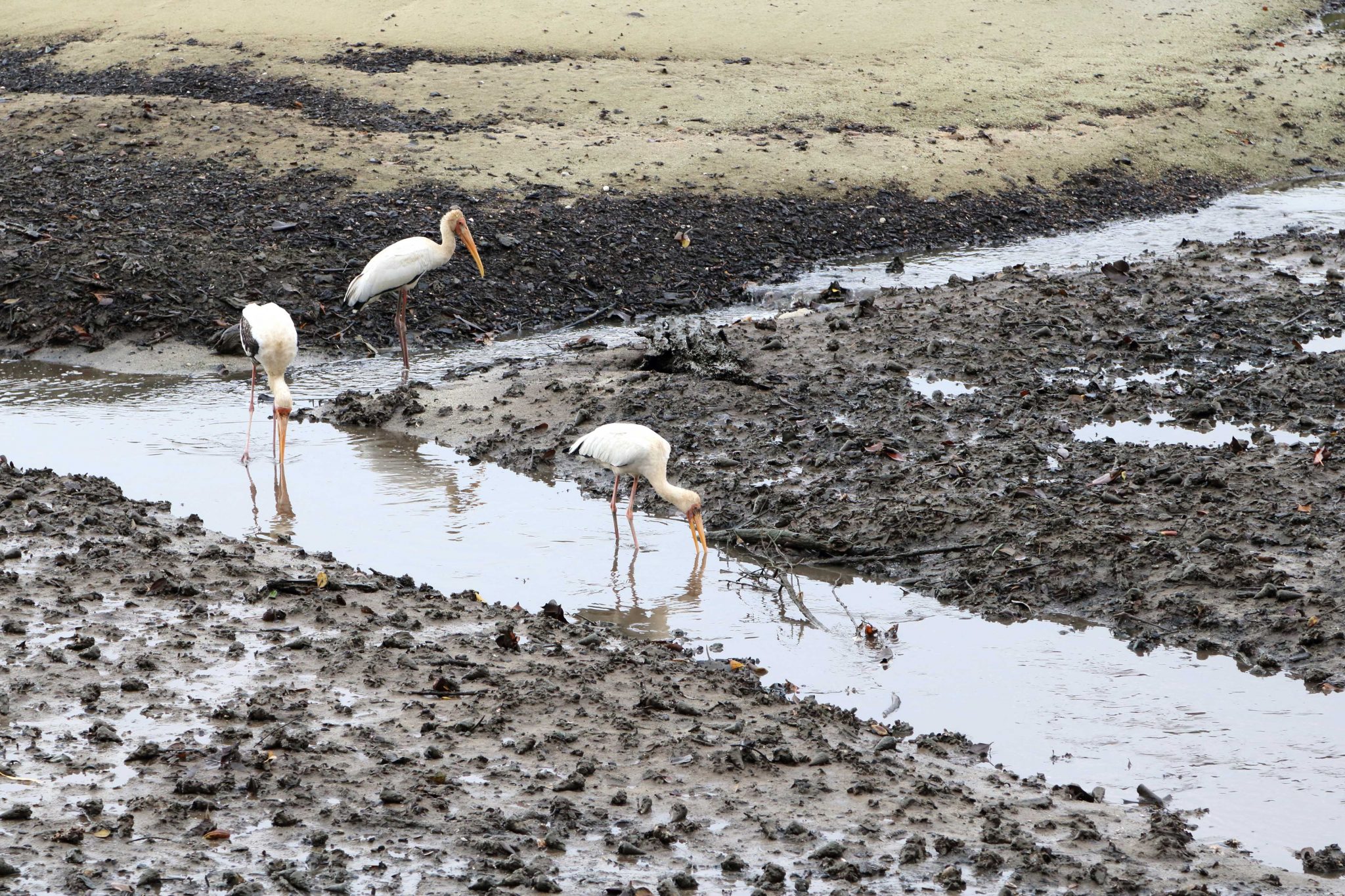
The Sungei Buloh Wetland Reserve is home to endangered milk stocks, seen here feeding at a mud flat. The Singapore Blue Plan 2018 recommended that it be listed as a No-fishing Area.
Lazarus Island, St. John’s Island, Kusu island and the Sungei Buloh Wetland Reserve should also be given elevated protection status. Lazarus Island, St. John’s Island and Kusu island are established sites for coral nurseries as their shoreline offers ideal sheltered areas for coral growth. By designating these areas as No-fishing Areas, we can bolster their rehabilitiation. and the Sungei Buloh Wetland Reserve should also be accorded elevated protection status. The Sungei Buloh Wetland Reserve should have its boundary lines expanded to include its adjacent mudflats as the health of these mudflats are interdependent on their adjacent mangrove systems.
Recommendation 6: Include topics on natural environment into school syllabus and promote science communication
Although Singaporeans are islanders who enjoy coastal parks, fishing and diving at the southern coral reefs, most of us are not aware of how much our lives are intertwined with the marine ecosystem and we are mostly ignorant about the ecosystem processes around these natural areas too. In addition to increasing science communication through various engagements with the public, we need to educate our students about the basic concepts in natural history in school. The syllabus of primary, secondary and pre-university levels should include topics on biodiversity and the natural environment which systematically approach larger environmental issues. It is only through education that our population will start supporting conservation and embark on environmentally sustainable lifestyles. Our success as a “Garden City” should be expanded to include the sea.
Singapore Government Pledges Support
Upon receiving the 220-page, Mr Lee has espoused the Government’s support for further funding on marine research as well as an expanded outreach and educational efforts to enable Singaporeans to better appreciate Singapore’s biodiversity.
Mr Lee announced that the government will approach the proposal laid out in the Singapore Blue Plan 2018 with the “same spirit of collaboration and openness” the government has shown towards the Blue Plan over the years. He also confirmed that the various agencies concerned will study the recommendations in close detail over the next few months and work together with the marine community to realise the common goals laid out.
There is no mythology or religion in the world that does not tell of how life originated on Earth. In all of them, there are references to the primordial ocean, where it is believed the first forms of life sprung from. One need only see the abundance of symbolisms that originate from the ocean’s most diverse narratives to realise its mysterious allure. It is no surprise, then, that amid the many mythological creatures of folklore and legend, the mermaid is among those that provokes the most curiosity and interest — she brings us back to our past, reminding us of our aquatic genesis before we were born into the terrestrial world.
Mermaids and Sirens
Mermaids and sirens are not the same creature, even though it has become commonplace to use both terms when referring to the same being. The etymology of the word “siren” is uncertain, but some scholars claim that it derives from the pre-Greek term seirá, which means rope, to tie, to fasten. Hence, it refers to the sense of someone who binds and captures. In the case of sirens, this takes place through their magical chanting. Other scholars believe that this name comes from the Ancient Greek word seirén, which means “enchanting”.
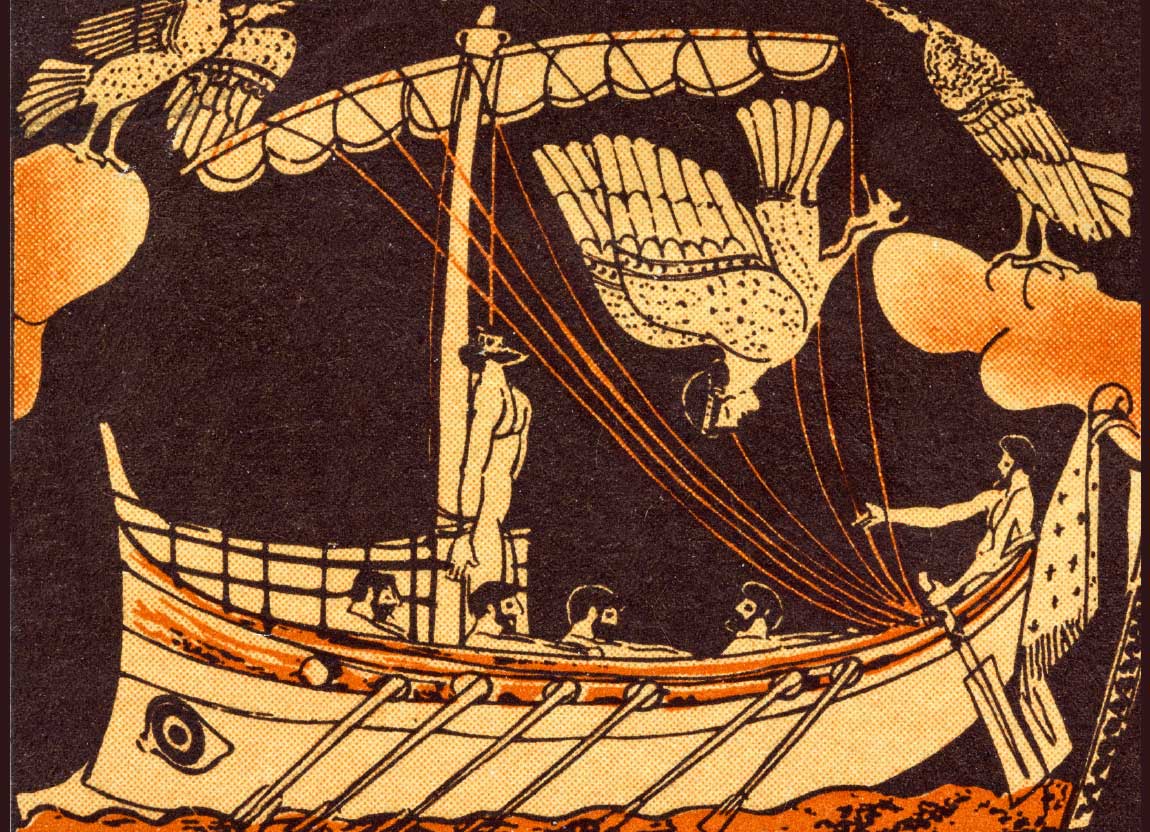
A depiction of a scene from Homer’s Odyssey, where Ulysses is tied to the ship’s mast to resist the bewitching song of the sirens. Detail from Attic black-figure vase, from 480-470 BC
In Greek mythology, the sirens were three nymphs who were servants to Persephone, the queen of the underworld. When Persephone was abducted by Hades, Demeter, Persephone’s mother and the goddess of harvest and fertility, turned the three nymphs into winged beings, half woman, and half bird, so they could locate her daughter more easily. After failing to find Persephone, Demeter punished the nymphs and did not lift the spell. They ended up on the island of Anthemoessa, luring passing sailors with their seductive chanting. Beguiled sailors ended up stranded on the island till they perished. As such, the sirens are said to be creatures that spread death and destruction.
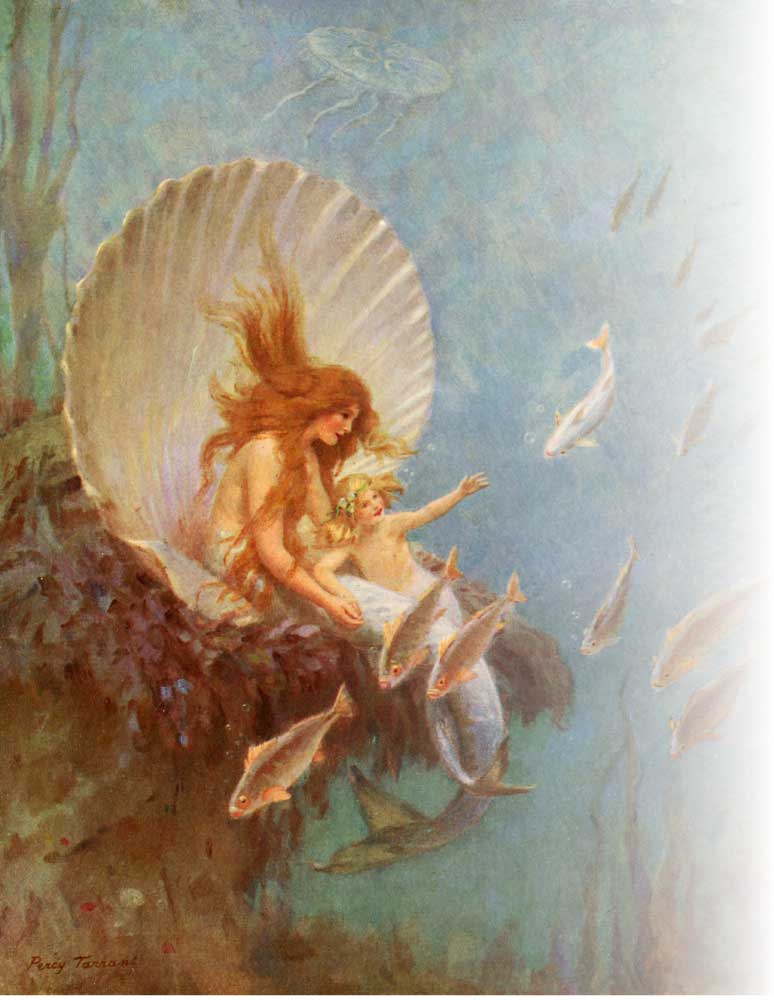
The word “mermaid” is a compound of the Old English “mere”, meaning sea, and “maid”, meaning young woman. These are legendary aquatic creatures that appear, since antiquity, in different folkloric and mythological traditions around the world, usually represented as beings that are half woman and half fish. They are often mistaken for the Nereids of Greek mythology — kind and beautiful sea nymphs and deities who are often depicted mounted on dolphins with a half-fish, half-human body. Some scholars claim that mermaids originated from these creatures.
Nowadays, when one mentions a mermaid, the first image that comes to mind is that of a very beautiful woman with long hair and an ample bosom, often displaying sensual behaviour. The fishtail — more precisely, that of a cetacean — concludes the seductive image of this creature, which invites humans to dive into the water with their sweet song.
At some point in history, these two figures merged into the same creature, now more remembered by the typical characteristics of mermaids. But while the siren is a winged creature seen as treacherous and dangerous, the mermaid is an attractive and enchanting aquatic being. It was this union that allowed their stories, with countless variations, to endure over the centuries.
From the use of the silver fern frond as the logo for its national rugby team to its agricultural based economy, New Zealand has always been a country with a keen focus on its natural environment. Now, New Zealand has targeted the use of single-use plastic bags as an unnecessary evil that it plans to eradicate throughout the country.
Announced by its Prime Minister Jacinda Ardern on Friday, 10 August 2018, New Zealand intends to phase-out single-use plastic bags over the next year with retailers given six months to stop providing lightweight plastic bags or be slapped with fines up to NZ$100,000 (SGD$89,153.53).
“Every year in New Zealand, we use hundred of millions of single-use plastic bags. A mountain of bags, many of which end up polluting our precious coastal and marine environments and cause serious harm to all kinds of marine life, Ardern said. “Just like climate change, we’re taking meaningful steps to reduce plastics pollution so we don’t pass this problem to future generations.”
Ardern cited a petition signed by 65,000 New Zealanders as one of the motivations for the ban.
“It’s the biggest single subject schoolchildren write to me about,” she added.
Two of New Zealand’s largest supermarket chains and several major retailers have confirmed their commitment to get rid of single-use bags by the end of 2018. New Zealanders are responsible for more urban waste than most of the countries in the developed workd with 750 million plastic shopping bags used every year. That’s equivalent to 154 plastic bags per person every year. More than 40 countries around the world have banned plastic bags with Bangladesh the first to do so in 2002 and South Africa following the next year.
Corals are sensitive to changes in temperature, and an increase of just two degrees Celsius over a few weeks to months can be enough to cause catastrophic coral bleaching. When corals are stressed from the warmer water, they expel their photosynthetic zooxanthellae algae which are critical to their survival. Once the zooxanthellae algae leaves, the corals turn a ghostly white colour and it is difficult for them to survive. When corals are bleached, harmful algaes start taking over the corals. And with the loss of herbivorous fish, these algae can quickly out-compete and kill the coral.
Coastal Development
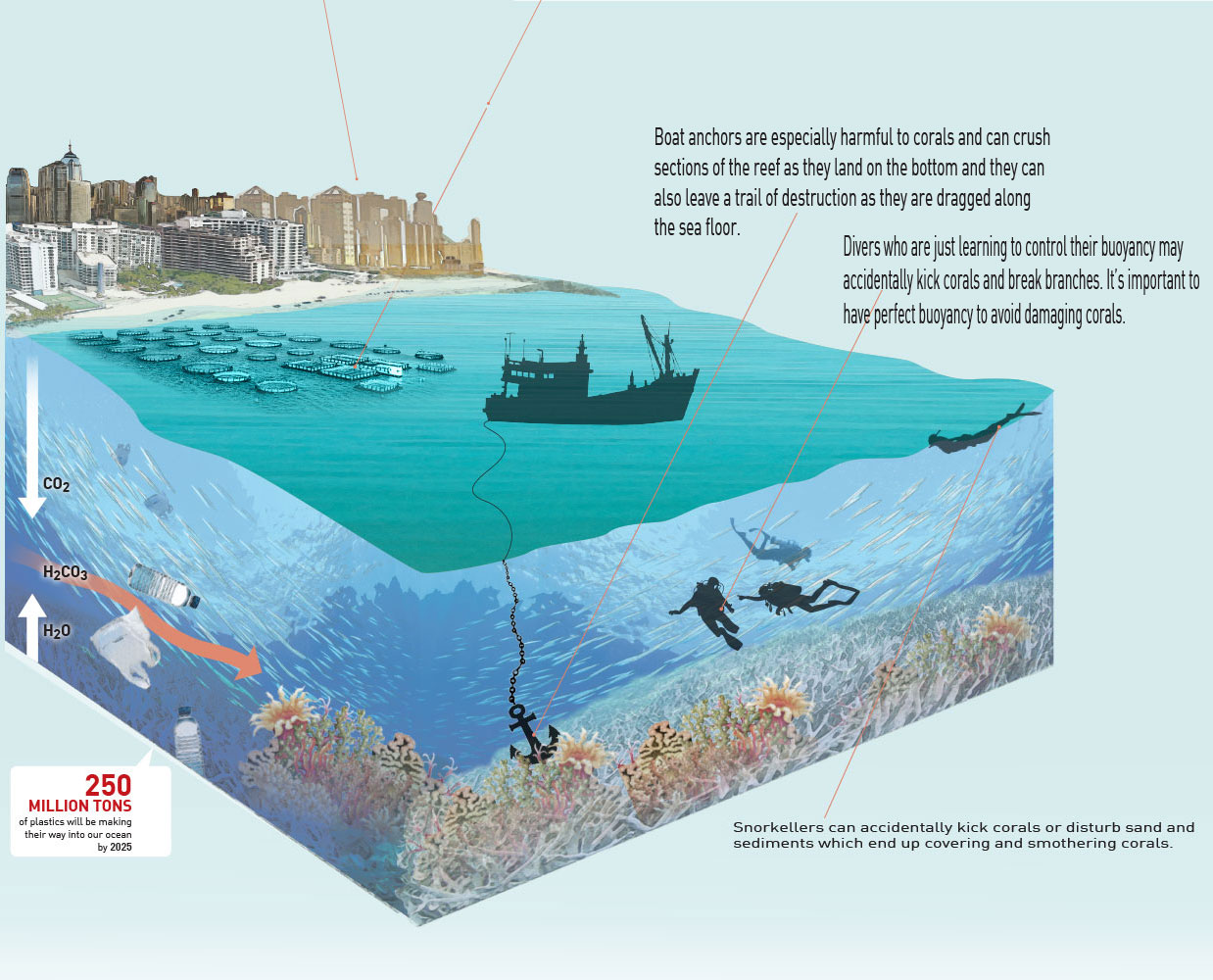
Coastal development is one of the biggest threats to coral reefs, this includes construction of hotels, resorts, and homes along the coastline, as well inland mining and logging especially on smaller islands. This development often stirs up sediments which cover and kill corals. For inland activities, once trees are removed, sediments can easily enter the ocean after rainfall. During mining activities, sediments and harmful chemicals can enter the ocean through freshwater streams or runoff.
Overfishing and Destructive Fishing
Coral reefs support artisanal, national, and international fisheries, with hundreds of millions of people worldwide relying on fisheries for food and as a primary source of income. Last year, over 80 million tonnes of fish was collected from the ocean. Overfishing, especially the loss of algae-eating fish such as parrotfish, continues to be a threat to coral reefs. Along with overfishing, destructive fishing techniques like the use of dynamite can severely damage the complexity of a coral reef. This reduces the amount of habit and space for juvenile fish to hide.
Tourism
Coral reefs and tropical fish are often the first reason people try scuba diving and snorkelling. The underwater world is full of strange and wonderful creatures which draw us closer to the action. But tourisms, including scuba diving, snorkelling, and boat activities can cause physical damage to coral reefs.
Ocean Acidification
Increased carbon dioxide (CO2) in the atmosphere eventually makes its way into the ocean. As this CO2 is absorbed, the pH of the ocean drops, resulting in a more acidic environment. Normal seawater is between 7.5 and 8.5 pH and anything below 7 is considered acidic. Corals use calcium carbonate to build their solid skeletons, but in an acidic ocean, this skeleton becomes weaker and coral have more difficulty building their skeleton. While this is not such a concern for mature colonies, ocean acidification may be affecting the growth and development rates of baby corals, causing deformities in their skeletons.
Marine Debris
Plastics and other marine debris are becoming an all too familiar sight. Plastics which enter the ocean are eaten by fish and other marine life, or worse, they break apart into millions of microscopic pieces that absorb chemicals from the water before they are eaten. Larger debris like nets, plastic bags and fabrics can also become tangled around corals causing the coral tissue to die. It is estimated that more than 250 million tons of plastics w ill be making their way into our ocean by 2025.
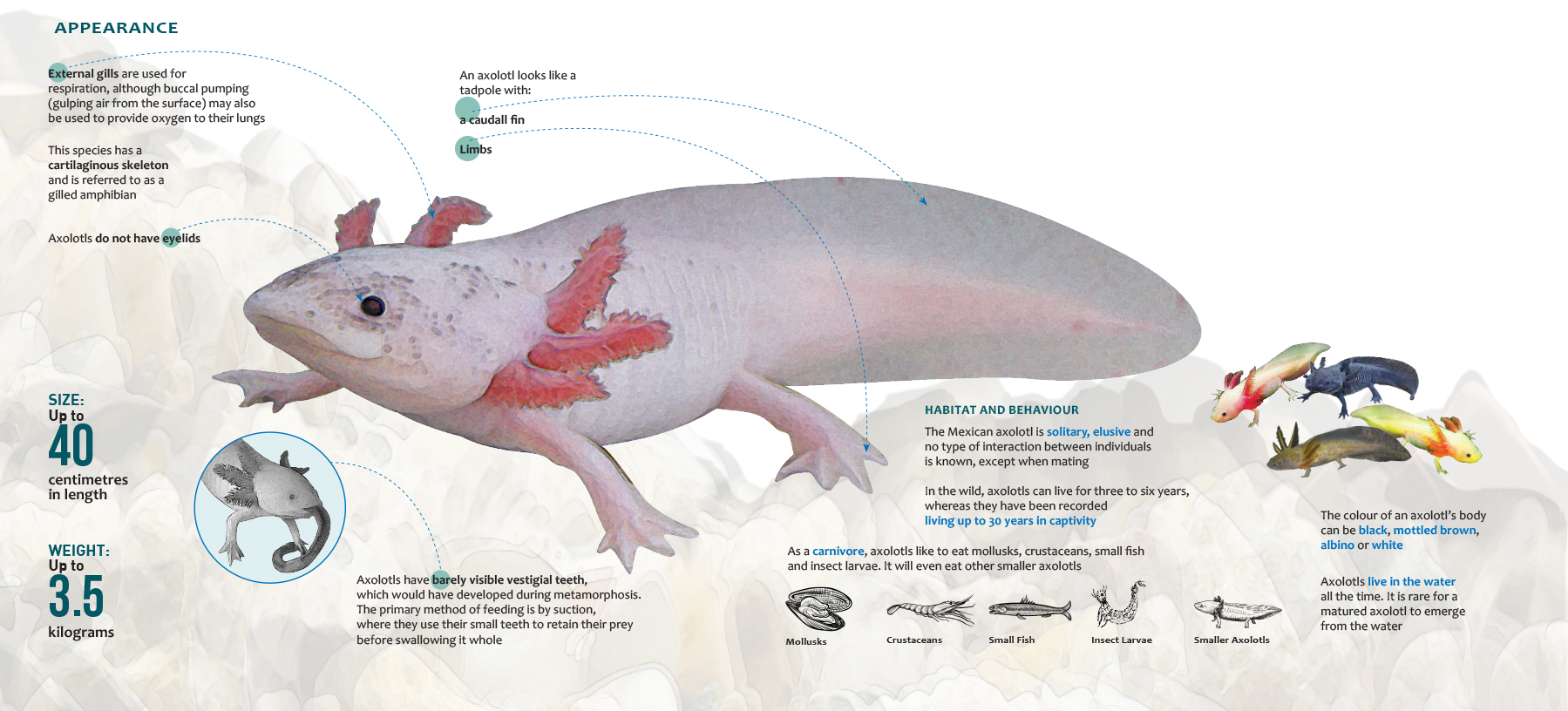
The axolotl is a unique species endemic to Mexico, capable of regenerating almost every part of its body. Thanks to this unique ability, it has become one of the most studied species in the world. The Mexican axolotl is a type of salamander that uniquely spends its whole life in larval form. It is the only species that never undergoes metamorphosis. As they age, axolotls simply get bigger and bigger, like amphibious Peter Pans.
Unfortunately, the number of axolotls in the wild has dropped dramatically through the years, and they are now considered critically endangered by the International Union for Conservation of Nature (IUCN). The main threats they face include habitat loss, water contamination by industrial practices, and the presence of invasive species in their habitat.
The long-term survival of the axolotl in the wild has now become critical, and demands urgent action to restore the animal’s numbers and habitat. There are around 30 varieties of salamanders in the world, all of them distributed in North America, southern Canada, Alaska and Mexico. Sixteen of these varieties are native to Mexico (axolotls) and and they are distributed in different areas throughout the Mexican territory. According to the IUCN Red List, nine Mexican varieties of Axolotl, which correspond to 56 percent of the total, are in a category classified as critically endangered.
Reproduction
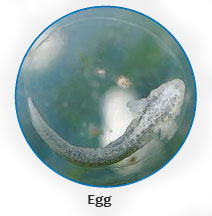
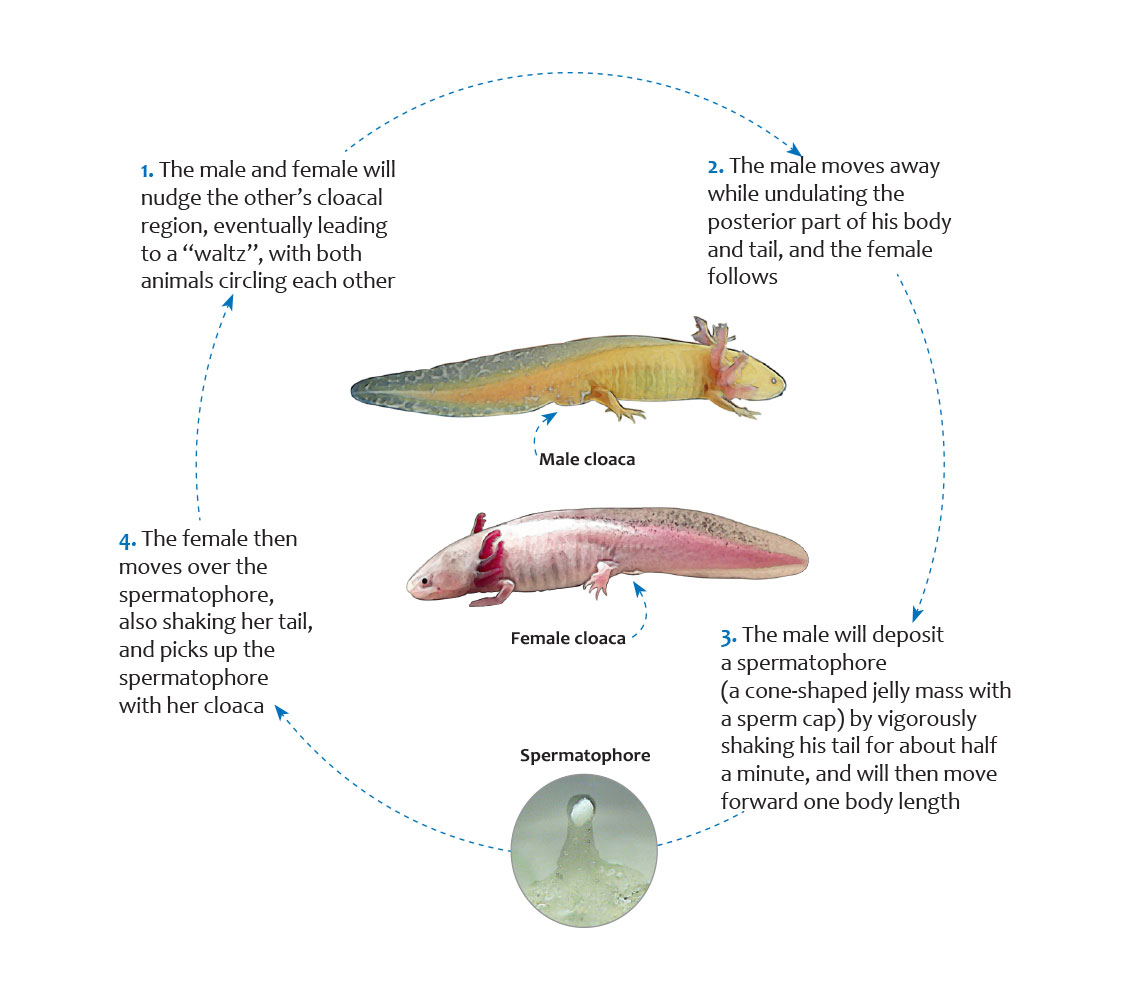
Mating season for wild axolotls is springtime, as it has the ideal length of day and water temperature. Males and females look similar, and require experts for identification. Females release 300 to 1,000 eggs each mating season. The courtship behaviour follows the general Ambystoma pattern