Home Blog Page 90

Is Shark Baiting Beneficial?

0
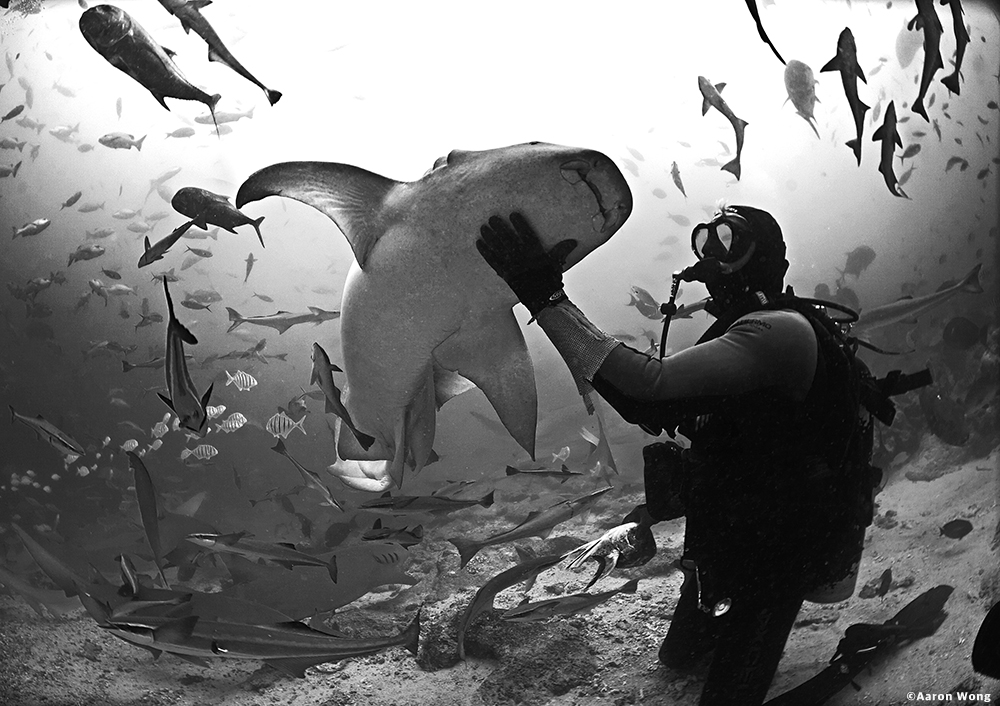
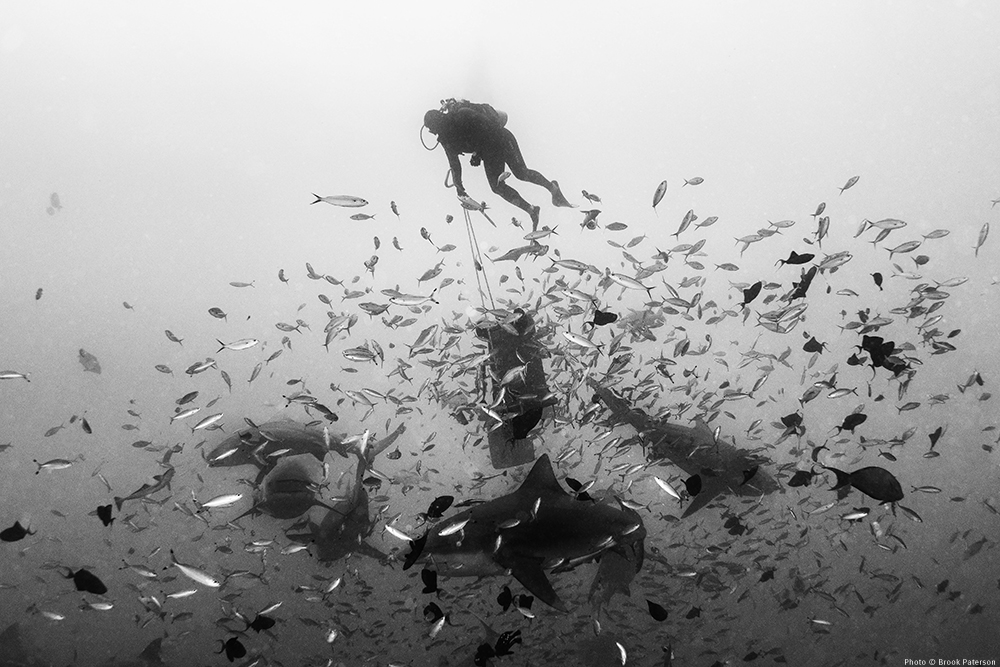
A diver holds a feeding can to attract sharks for scuba divers

In recent years, debate on the subject of baiting the water to attract sharks has been on the rise. Many people feel that this practice may be harmful for both humans and sharks while others insist that it is necessary to help preserve the shark population.

A study published in July 2013 in Marine Policy reported that approximately 100 million sharks are killed by humans each year. This number is unsustainable and the consequences of the prolonging of this practice could be substantial to our marine ecosystems. It is reasonable to assume that most of us should have a vested interest in the preservation of the ocean’s top predator, as our own ecosystems are intertwined with the health of the ocean. But how we go about bringing awareness about the need to preserve shark populations remains a matter of controversy.

Arguments against baiting the water for sharks include the belief that sharks may become accustomed to associating humans with food. This could harm innocent swimmers or divers because more sharks may be in the area where food is frequently dispensed. In fact, this belief does have some truth in it. Ralph Collier, who heads the “Global Shark Attack File”, reported that in the short term, there may be some correlation between shark feeding and shark bites. Indeed, some areas such as Hawaii, Florida, and the Cayman Islands outlaw shark feeding.

Some argue that baiting undermines shark conservation efforts because sharks that become habituated to receiving food from humans are instead caught by fishermen taking advantage of easy prey. Others claim that operations that use bait to attract sharks for their customers are exploiting the shark population for the monetary value in tourism.

Tourism, however, may just be the thing the shark population needs. Some areas that were once fishing grounds are now protected from fishing, and the local population who once sold their catches now make their living as dive operators. It is estimated that a shark’s value when sold for food is about USD150–200. That same shark has a value of nearly USD2 million over its lifetime as a tourist attraction. Considering the number of people who now have an interest in sharks because of programmes such as Discovery Channel’s Shark Week, shark tourism has become a definite benefit for sharks.

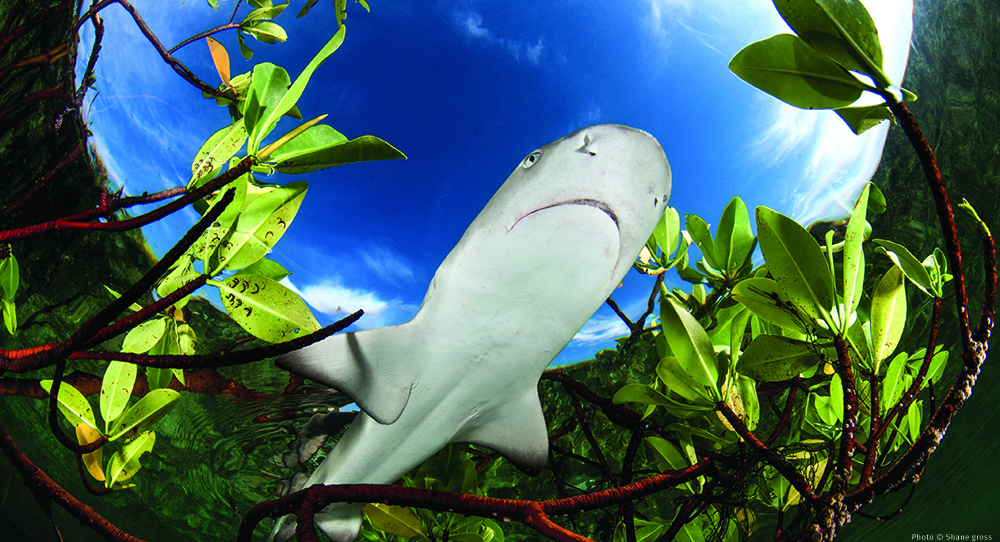
Without images of sharks in their natural environment, conservation efforts would not be as effective. Advocates argue that photographers who take compelling images of sharks to inspire change can’t get close enough to their subjects without feeding them. In addition, allowing divers to participate in baited dives helps dispel the myths that movies have perpetuated. In truth, sharks are intelligent, graceful and beautifully  powerful animals. It is much easier to stand up for a shark when it is perceived as a majestic animal.
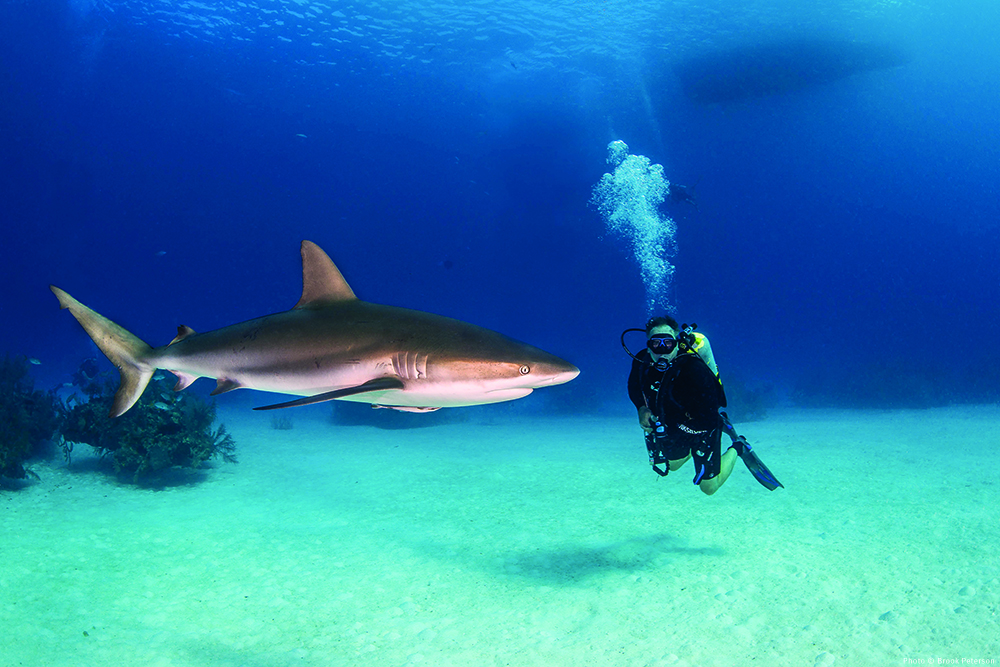
 

One of the great difficulties in studying the behaviour of sharks is determining how much of their behaviour is due to human interaction. This is complicated further when a study tries to determine how the behaviour of sharks changes due to specific activities such as scuba diving, surfing or fishing.

Researchers from the University of California Santa Barbara and Florida International University teamed up to try to understand how scuba diving activities over time influence shark behaviour. The scientists studied a remote area in the central Pacific Ocean called Palmyra. This atoll is in a marine protected area with a healthy shark population and is rarely dived. There is a scientific research station located on the island where researchers dive heavily while the rest of the island remains untouched by humans. The island was ideal for comparing whether sharks behave differently in locations where diving is common and those where it is not.

The scientists used a combination of survey techniques to determine the abundance and behaviour of reef sharks including baited remote underwater video systems and multi-year monitoring. Although evidence from other studies has shown that shark behaviour changes over the short term in areas that are heavily dived, the results of this study determined that behavioural changes may not persist over the long term. The scientists did not find differences in the abundance of sharks, their residency patterns, nor their behaviour between sites that were heavily dived and sites that were not. Moreover, no differences were observed between a year with substantial diving and a year with no diving on the island.

This is good news for shark tourism. The results of this study suggest that scuba divers can interact with sharks in their environment without a longterm impact on the shark’s behaviour. It also suggests that conservation goals will not be undermined by responsible dive operations seeking to promote ecotourism. It is a win for tourism, but ultimately it is a win for sharks.
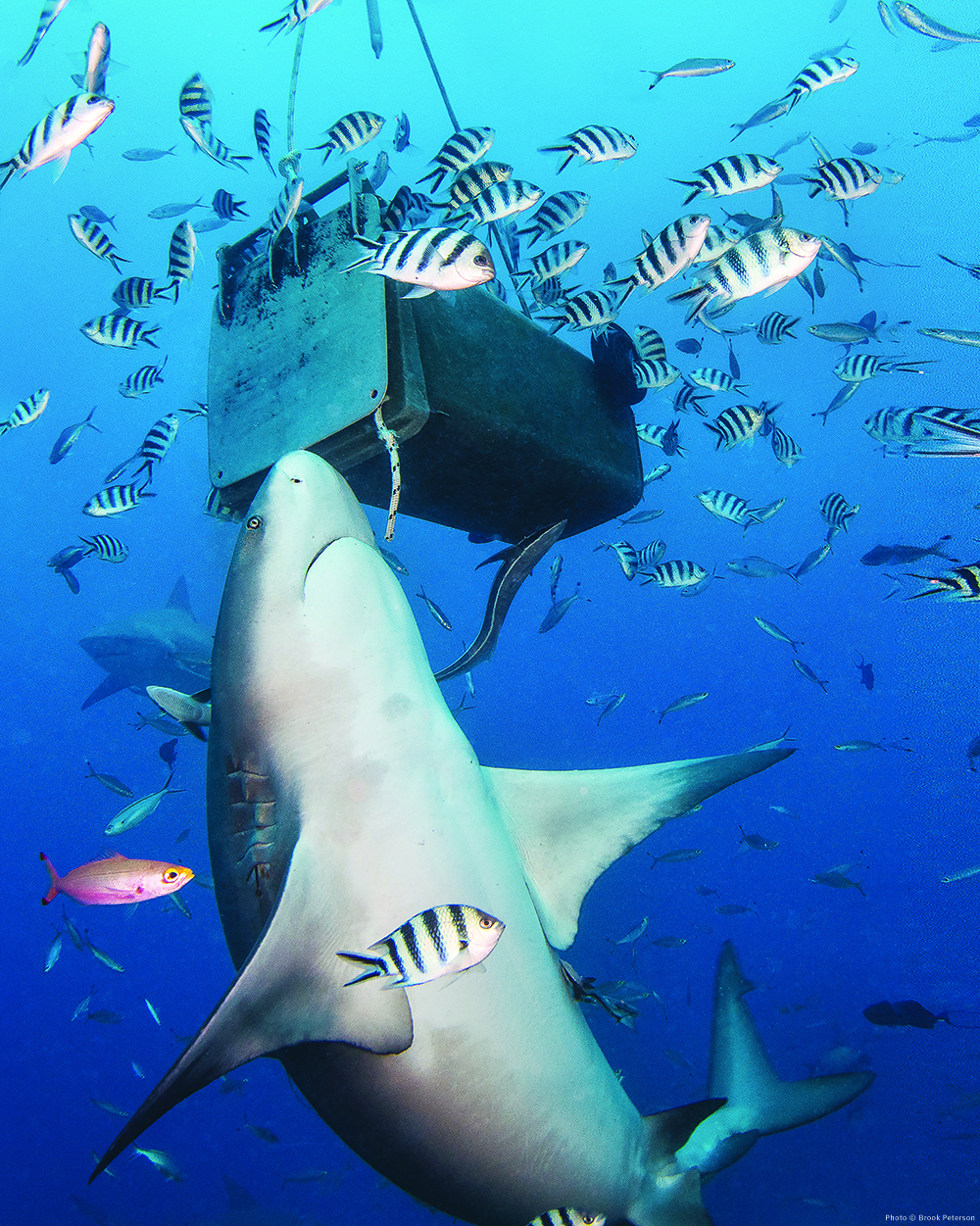
Ultimately, individuals will have to decide how they want to contribute to the preservation of the shark population. The arguments for and against feeding sharks for ecotourism are valid on both sides.

“The issue of shark diving and the use of bait to attract sharks will always be contentious,” says underwater photographer and Wetpixel editor, Adam Hanlon. “My own take is that shark ecotourism’s positives far outweigh its negatives. It provides an alternative income to fishing and finning for local people, and helps to dispel the public perception that sharks are mindless killing machines.“

Because of shark tourism, some countries have outlawed fishing and are protecting sharks. While it would be ideal to leave sharks in the hands of Nature, the time for that is past and irrelevant, as there is no time left.

Human activity has put sharks in imminent danger of extinction. Perhaps photos and videos of these magnificent animals will help to remind the public of what is being lost, and inspire change.
Taken from Asian Diver Issue 1/2018

Canon’s Latest Game Changer

0

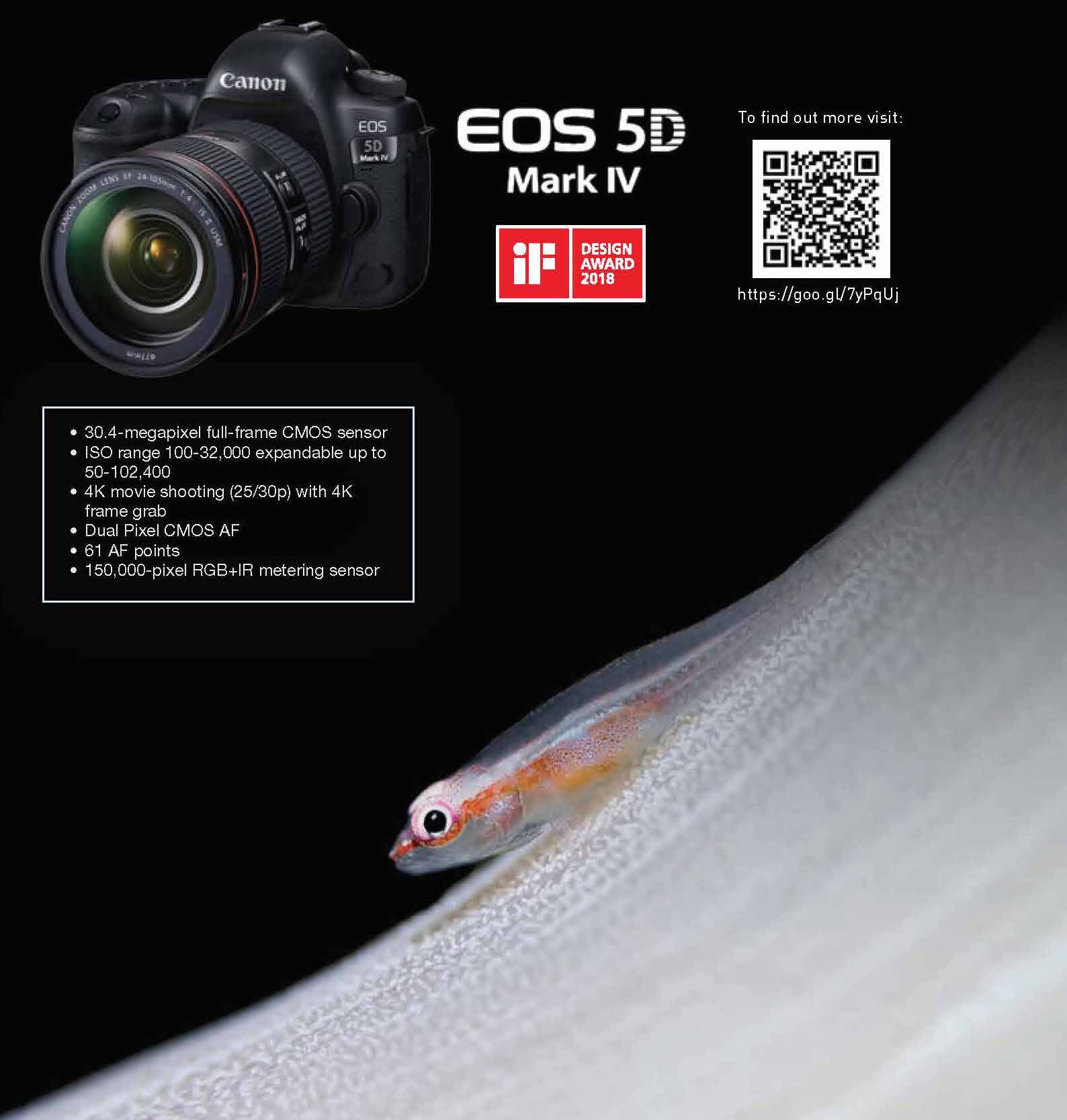
As a user of the Canon EOS 5D Mark III over the past few years, I have captured a variety of challenging subjects in the most difficult underwater conditions. The arrival of the 5D Mark IV has brought exciting advancements under the hood but only minor external changes, and underwater housings like mine are still compatible with the new model. So when I recently had the opportunity to try out the 5D Mark IV, I jumped at the chance.

My first stop was Lembeh, Indonesia’s macro mecca. I immediately noticed the 5D Mark IV’s amazing autofocus speed. The increase in sensor resolution from 22.3 to 30.4 megapixels was also hugely significant, as it gave me even greater latitude to crop images but maintain enough pixels for large prints. Moreover, shooting with the 5D Mark IV’s new Dual Pixel Raw feature, which allows you to shift focusvery slightly after taking a picture, I was able to perfect my shots of the tiniest critters.

Moving on to Manado, I was invited to photograph some freedivers, which meant using strobes was not an option. I found the increase in dynamic range of the new full-frame sensor brought out details in the images that would have been impossible without the use of strobes. Despite the big jump in sensor resolution, continuous shooting speed has been increased up to an incredible 7fps, making it even easier to keep up with the action.

The Mark IV takes video to a new level with 4K capture at up to 30p, a first for a Canon DSLR. Underwater videographers will also appreciate the camera’s ability to shoot in Full HD at 60p, giving the option of creating smooth slow-motion video in post-production.

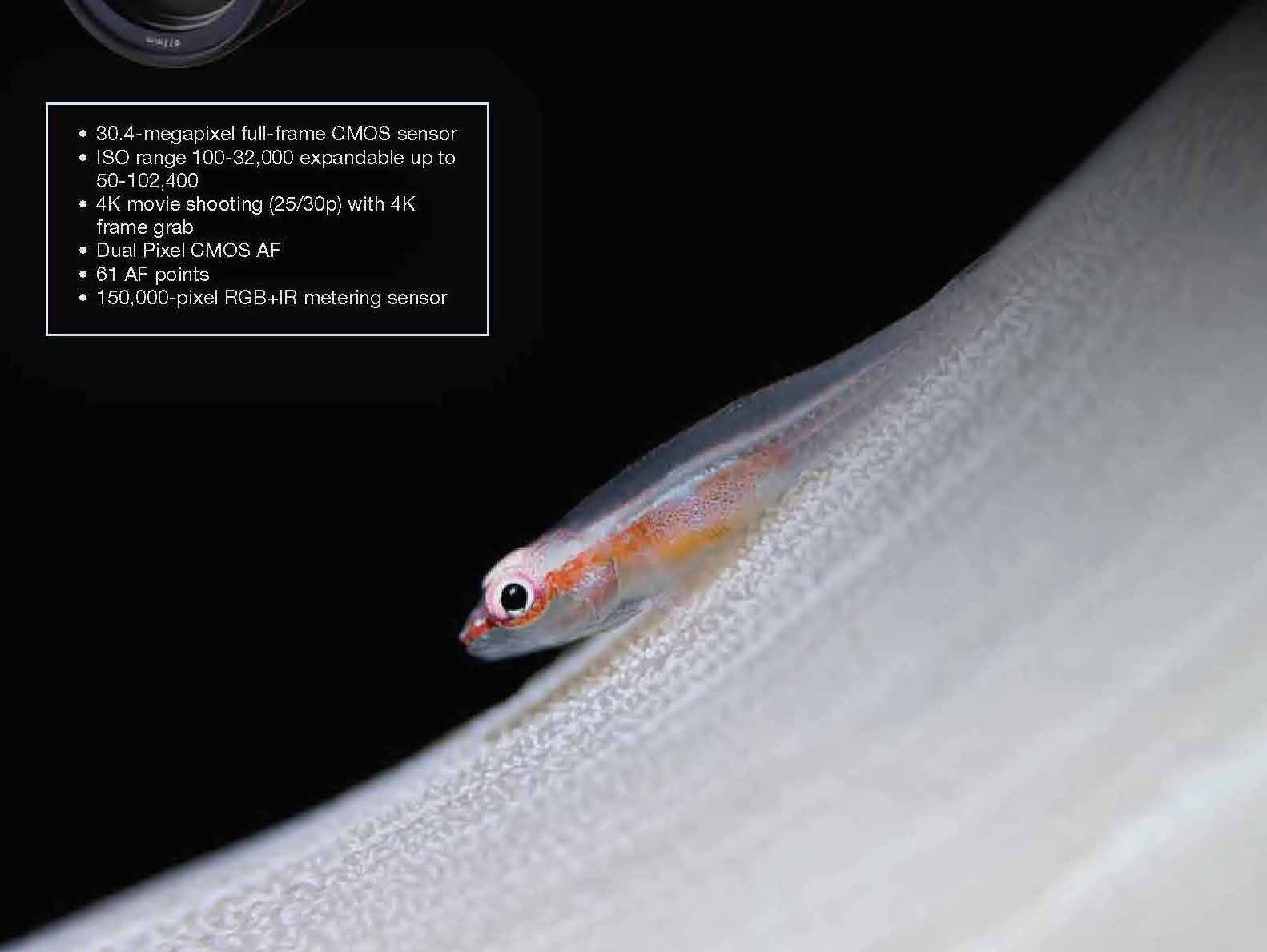
An up close picture of a fish in the muck using Canon EOS 5D Mark IV, f/3.2, 1/200s, ISO100 (Photo by Jonathan Lin)

The new model also boasts a number of smaller refinements that impressed me. The greatly improved LCD resolution, from 1.04M to 1.62M dots, as well as Dual Pixel CMOS AF providing very accurate continuous autofocus in Live View mode (another first for a Canon DLSR), make an already excellent screen even better. The new Wi-Fi and NFC features are another great touch, as I can now transfer and review files seamlessly. It is also nice to have the option of checking the GPS location if I need help recalling where shots were taken.

The 5D Mark IV’s performance and features make this a game-changing DLSR. I would recommend any serious photographer consider it for their next upgrade.

Canon Imaging Asia Facebook / Canon Asia Youtube / @canonasia Instagram / Snapshot Canon-Asia 


South and Southeast Asia Regional Headquarters: Canon Singapore Pte Ltd. 1 Fusionopolis Place #15-10 Galaxis Singapore 138522. CANON WEBSITE.  

4 Places to Visit for Shark-Friendly Dives

0

1. Beqa Lagoon Resort

Where: Beqa Island, Fiji

Diving: Beqa Lagoon is surrounded by one of the world’s biggest barrier reefs, stretching over 300 kilometres with an impressive variety of marine life and corals, including nine species of sharks. It has innumerable prime dive sites ranging from 5 to 30 metres in depth, with gentle to moderate currents. To protect the sharks, the resort works with nearby villages by giving them a share of profits to compensate for the loss of income for fishing which has been prohibited.

Classic Dives:

Cathedral – Specially designed for tiger shark dives, guests will dive down to 20 metres for 30 minutes and stay behind a coral block wall, while observing sharks interacting with a feed bin five to six metres away. Expect to see up to seven species of sharks and thousands of small, colourful fish.

Carpet Cove – A gentler dive for new divers, this site is teeming with anemones and clownfish, and features a 25-metre Chinese trawler wreck at a depth of 30 metres.

When: July to December

Requirements:

-Open Water Diver certification

-Specialised certification or minimum logged dives for certain dive sites

-Some diving experiences available for non-certified guests


2.Avalon Cuban Diving Center

Where: Jardines de la Reina Marine Park, Cuba

Diving: Known for being one of the few accessible virgin coral reefs in the world, sharks in this region depend on the reef systems for food and cleaning stations. To protect the sharks and reef, the centre only hosts up to 3,000 divers a year.

Classic Dives:

Vicente – One of the deepest dive sites, it features coral mountains up to 40 metres in depth, leading to a drop-off down to 800 metres. Rare black coral colonies line the mountains and hammerhead sharks frequent the area.

Black Coral I and II – The dive site is 24 to 30 metres deep and offers a more intimate experience with marine life. A seasoned resident population of over 30 reef sharks tends to swim close to divers. Throngs of curious parrotfish, black groupers, and schools of jacks can be found throughout the sandy channel surrounded by corals.

When: Whale sharks from July to November. Diving available year-round.

Requirements:

-Open Water Diver certification

-Advanced Open Water Diver and nitrox certification needed for deeper dives


3.Tahiti Shark Expeditions

Where: Mo’orea, Tahiti

Diving: On dives with guests, the team at Tahiti Shark Expeditions monitor the acoustic-tagged resident tiger sharks’ behaviour and shares the data with regional agencies. Guests are often impressed by the diving team’s ability to recognise individual sharks with different personalities.

Classic Dives:

Reef Shark Expedition – This half-day expedition at Vallée Blanche does not use bait. Divers drift dive while exploring the site with their guide. Expect a variety of sharks, including blacktip, lemon and nurse sharks.

Tiger Shark Expedition – This dive uses bait to attract tiger sharks, increasing sightings. The founder himself, Nicolas Buray, accompanies divers, sharing his knowledge about the individual sharks. Tours are limited to six divers for an optimal experience.

When: For sharks, year-round. Humpback whales from June to November.

Requirements:

-Open Water Diver certification

-Dive specific insurance such as DAN recommend


4.Undersea Hunter Group

Where: Cocos Island, Costa Rica

Diving: The Undersea Hunter Group’s two luxury liveaboards, Argo and Sea Hunter, offer an arsenal of amenities including a deep-diving submersible for guests. Throughout the trip, guests visit dive sites around Cocos Island that range from 6 to 40 meters in depth, with warm water and gentle to strong currents. During dives, guides do population estimates of shark species. Many organisations use this data to observe population trends. The group is assisting the University of Costa Rica’s CIMAR division using their DeepSea submersible to study the deep waters surrounding Cocos Island.

Classic Dives:

Dirty Rock – One of Cocos Island’s best dive sites, this giant rock formation hosts a very diverse range of marine life, including mobula rays, turtles and even the occasional whale shark.

Bajo Alcyone – Another top dive site, this seamount has an incredible variety of large sea life, including sharks, dolphins and sailfish.

When: Year-round sightings. Some sites subject to prevailing conditions and seasons

Requirements:

-Open Water Diver certification

-Dive-specific insurance such as DAN, Aquamed, or FFSSMM

-Nitrox certification and minimum 50 hours of diving experience recommended

Taken from Asian Diver Issue 1/2018

What is Sustainable Shark Diving?

0

The International Ecotourism Society defines ecotourism as “responsible travel to natural areas that conserves the environment and improves the well-being of local people”. This statement has particular relevance to shark tourism, and considering the current state of our oceans, and the rapid decline in shark populations, it is vital that all marine tourism operators adhere to these guidelines. Any company failing to do so puts the future of the activity at risk and cannot be considered truly sustainable.


Here are some key principles that any successful shark ecotourism company should follow:

Safety First!

Despite its reputation, shark tourism is statistically very safe and accidents are extremely rare. That being said, some species are large and potentially harmful to humans. In order to interact with these sharks in the wild, every precaution must be taken to make sure the activity is done safely.

Respect

Swimming with sharks comes with a responsibility to treat them and their environment with respect. In recent years, it has become popular to stroke, hug and even ride sharks. Simply observing sharks in their natural habitat is an amazing experience and is much safer.

Educate Guests

Many tourists are attracted to shark diving because they think it is dangerous, and as a consequence, some companies promote the activity as an extreme sport. Unfortunately, these type of interactions misrepresent sharks and do not teach the participants anything valuable about them. The best companies offer not only a safe, but also an educational experience. Providing detailed briefings before the dive is a great way to explain facts about shark biology, ecology and even shark awareness courses.

Sustainable Practices

1.Supporting scientific research:  Scientific research is fundamental to understanding shark biology and ecology, and shark tourism can help significantly by enabling scientists to collect the necessary data. Moreover, by studying their local movements and migration patterns, we can understand where sharks are going and how marine tourism may be affecting them.

2.Protecting shark habitats: If shark conservation initiatives are to be effective, it is vital that they concentrate on protecting the entire ecosystem. The best way is to legally protect their environment and set up marine protected areas or shark sanctuaries.

3.Benefit local communities: Shark conservation initiatives should be achieved in collaboration with the local community while showing respect and understanding for their culture and tradition. Possible ways include offering jobs, compensation and inviting community members to take part in the activities.


Taken from Asian Diver Issue 1/2018

The Coral Communicator

0

In 2006, I moved to the Dominican Republic and learnt to scuba dive. In front of our resort was a coral restoration project that continues to inspire me today. I knew nothing about corals, but from that moment forward, I knew I had to devote my life to the ocean and protecting coral reefs.

Corals are the foundation of the marine environment, providing critical habitat for fish, protecting coastlines from erosion, and feeding millions of people worldwide. But often I have found that diversity of coral species do not get the recognition they deserve amongst scuba divers.

Corals often get lumped together under one generic term, ‘coral reef’. But this single term is far too general to describe a vibrant, diverse community with hundreds of individual species. Once you start recognising what separates each species and learn how to identify a few, your perception of the underwater landscape will expand exponentially. 


A Blog for Scuba Divers

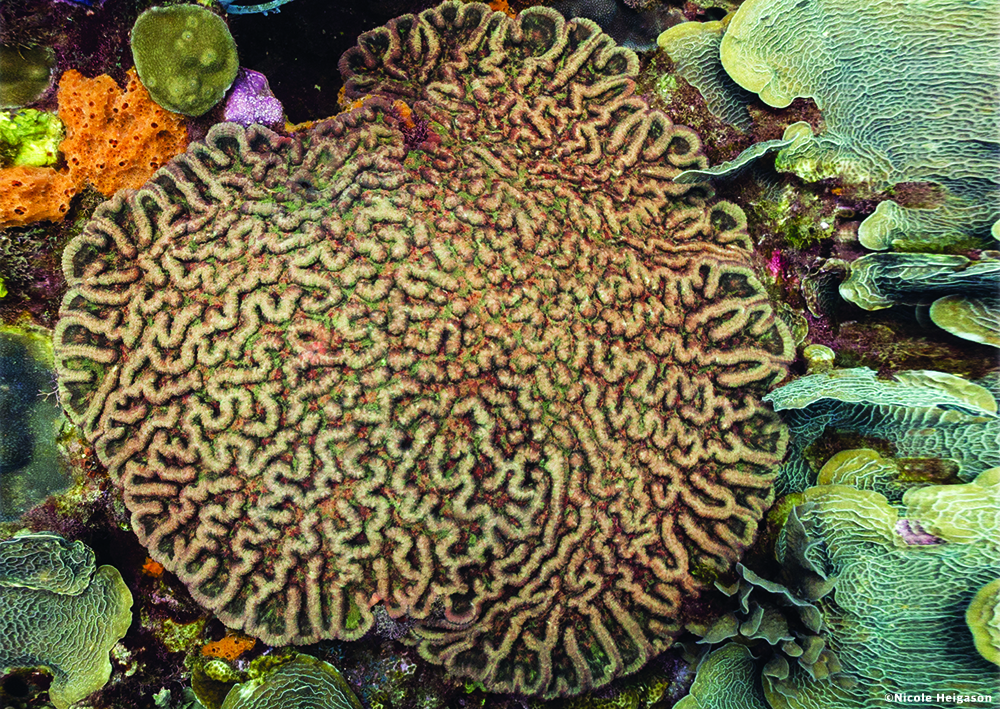
In March 2016, I started my own blog (ReefDivers.io) dedicated to sharing my underwater experience while bringing attention to scuba diving and coral reefs. The vision was to build a community of divers who deeply appreciate corals. One of the projects I am proudest of is my recently published Caribbean Coral identification Guide. At the beginning of 2017, I set out to photograph and identify all the species of Caribbean coral and besides a few cryptic coral, I managed to photograph some exceptional colonies and discovered some incredible reefs while diving in Honduras.


Tela, Honduras

When most people think of diving in Honduras, the sites that come to mind are the Bay Islands of Roatán and Útila. While I enjoyed the diving in Roatán, it wasn’t until I headed over to the mainland that I found a one-of-a-kind Caribbean reef in Tela.

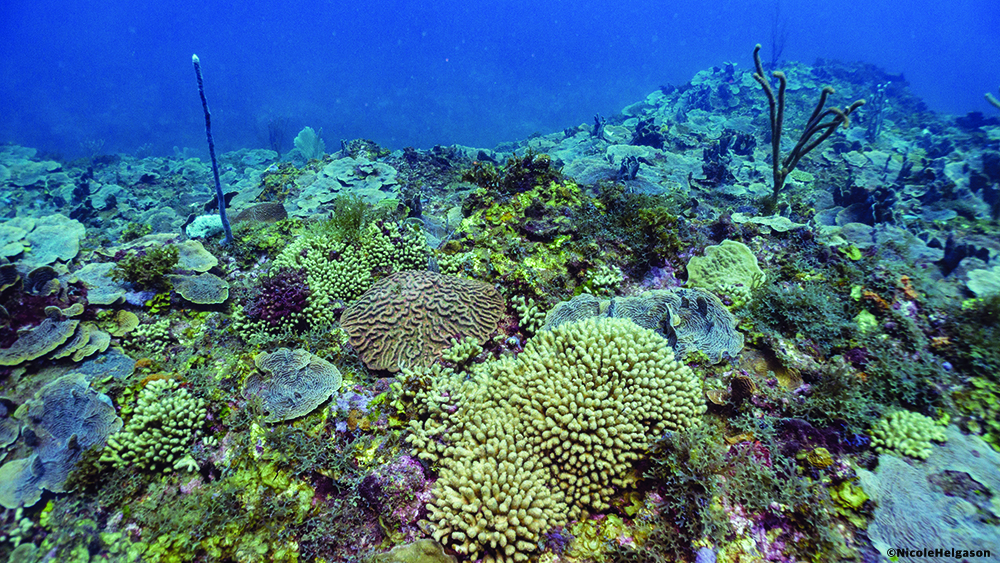
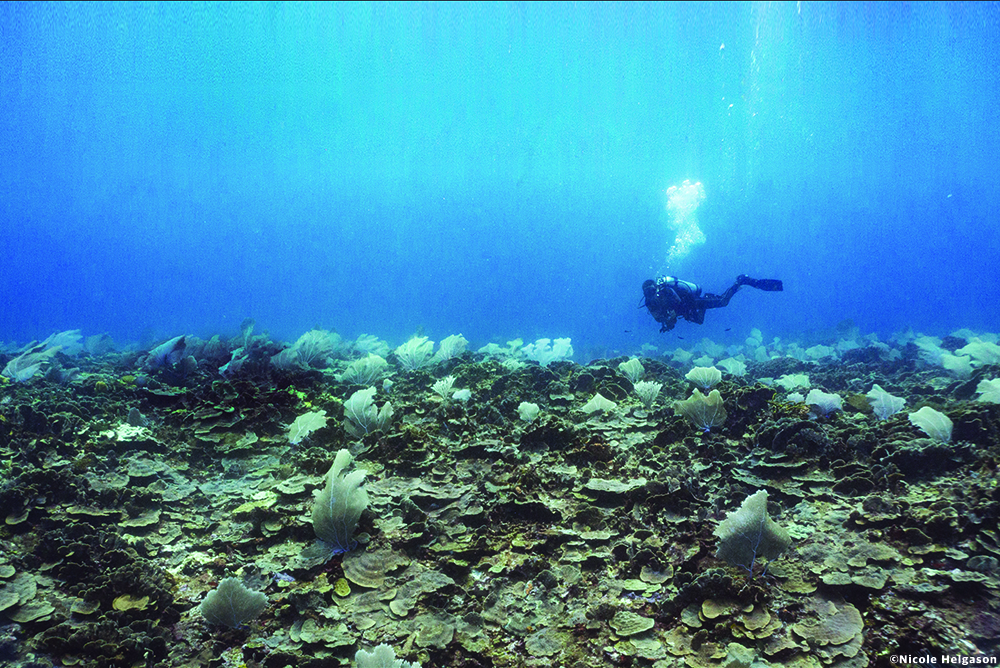
Tela breaks all the rules when it comes to Caribbean corals, but in the best way possible. While the average coral coverage in the Caribbean is around 17 percent, Tela clocks in at over 70 percent. The corals here are unreal, some colonies are estimated to be more than 500 years old, and Tela is easily one of the Caribbean’s healthiest reefs. Furthermore, it was only discovered eight years ago, and there is very little tourism or diving within the bay.

What’s exciting about Tela is the unusually high number of black long-spined sea urchins, Diadema antillarum. These spiny echinoderms are the perfect reef cleanup crew, with a voracious appetite for algae.

In 2018, I will start my journey documenting Pacific corals, hopefully the corals are around long enough for me to complete this goal! I want to make referencing corals and searching for them online and searching for them underwater an enjoyable experience. My work focuses on highlighting coral diversity through my photography. Corals are arguably the most important animal in the ocean and they deserve our attention.

Taken from Asian Diver Issue 1/2018

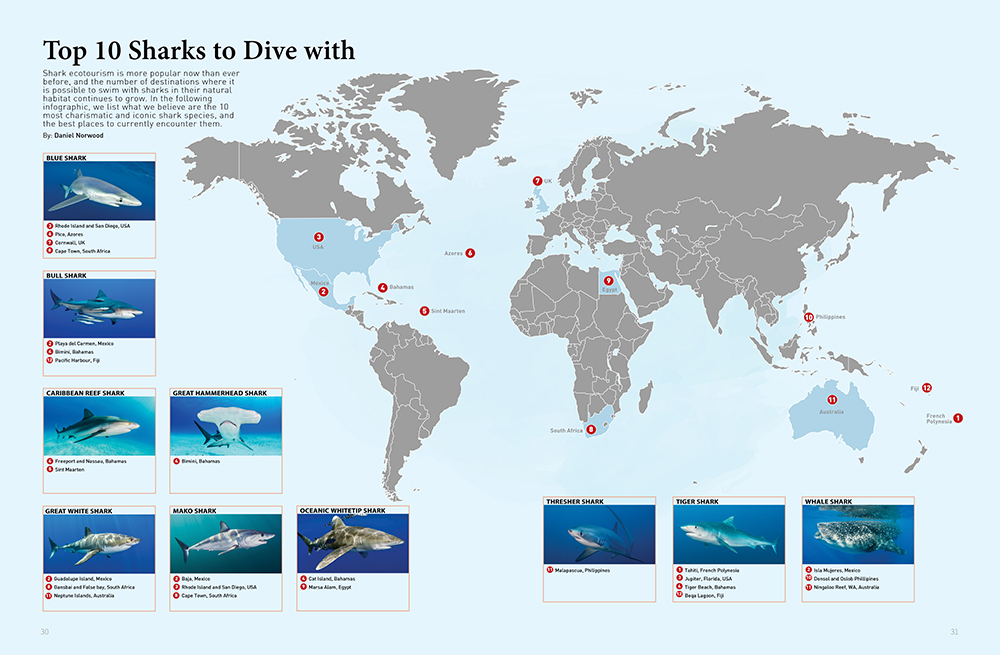
Top 10 Sharks to Dive with

0

Shark ecotourism is more popular now than ever before, and the number of destinations where it is possible to swim with sharks in their natural habitat continues to grow. Here’s a list of the 10 most charismatic and iconic shark species and the best places to currently encounter them.

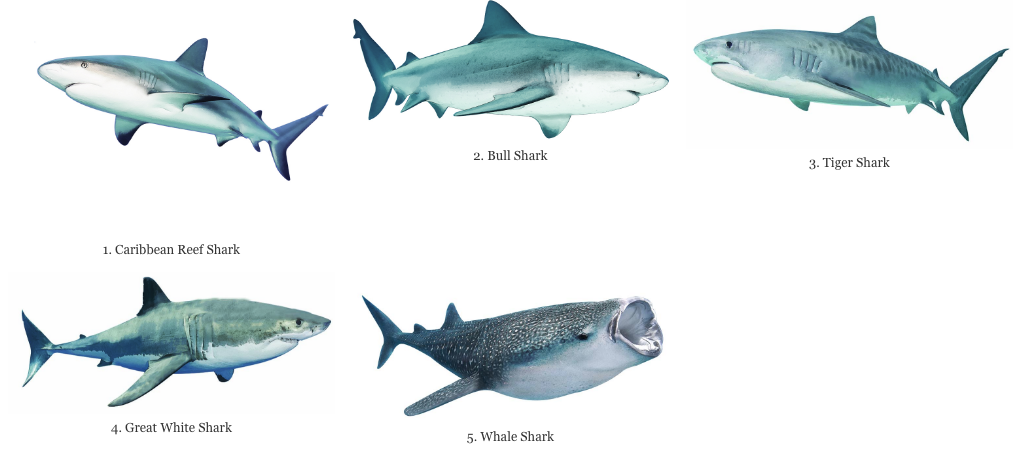
1. Caribbean Reef Shark

Geographical Distribution: Tropical western Atlantic and Caribbean, from North California to Brazil

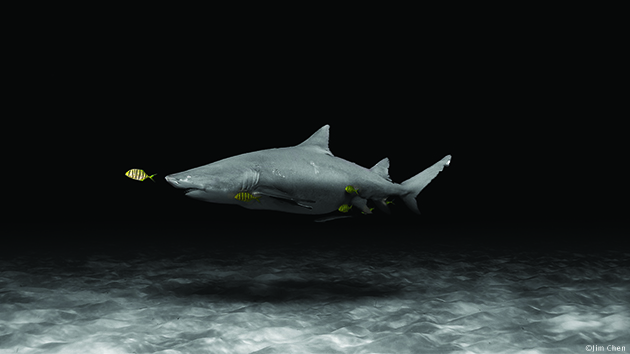
Being the most common shark on or near coral reefs in the Caribbean, this species prefers shallow areas and is often found close to drop-offs on the outer edges of coral reefs. They are also the most economically important species in the entire region, responsible for 93.7 percent of the total revenue generated in the Bahamas.

Fun fact: These sharks can use the buccal (or cheek) muscles to pump water through their mouths and over their gills. Hence, they don’t have to constantly swim to breathe.

According to IUCN Red List, the conservation status of the Caribbean Reef Shark is Near Threatened

2.Bull Shark

Geographic Distribution: Continental coasts of all tropical and subtropical seas worldwide; Western Atlantic: Massachusetts, USA to Argentina; Eastern Atlantic: Morocco, Senegal to Angola; Indo-Pacific: Kenya and South Africa to India, Vietnam to Australia; southern Baja California, Mexico to Ecuador and possibly occurring in Peru

Usually found close to shore in shallow water, it is the only wide-ranging shark that is able to survive for extended periods in both saltwater and freshwater environments. Some places to reliably encounter them include Fiji, Playa Del Carmen in Mexico and Costa Rica.

Fun fact: Bull sharks are one of the few cartilaginous fish able to swim between salt and freshwater with ease as they possess several organs with which to maintain the appropriate salt and water balance in their body.

According to IUCN Red List, the conservation status of the Bull Shark is Near Threatened

3.Tiger Shark

Geographical Distribution: Throughout the world’s temperate and tropical seas except the Mediterranean; Western Atlantic: Massachusetts, USA to Uruguay, including Gulf of Mexico and the Caribbean; Eastern Atlantic: Iceland to Angola; Indo-Pacific: Persian Gulf, Red Sea and East Africa to Hawaii and Tahiti, north to southern Japan, south to New Zealand; Eastern Pacific: Southern California, USA to Peru, including the Revillagigedo, Cocos, and Galápagos islands

This shark prefers murky waters in coastal areas and is commonly found in river estuaries and harbours. Despite being one of the most dangerous sharks, it is possible to safely dive with this species. Tiger Beach in Bahamas is well known for up close and reliable encounters with large numbers of tiger sharks.

Fun fact: They have the most diverse diet of any shark species and is known to consume a variety of different marine life ranging from bony fishes and even rays. Their willingness to eat almost anything means they often consume garbage of human origin.

According to IUCN Red List, the conservation status of the Tiger Shark is Near Threatened

4.Great White Shark

Geographical Distribution: This shark is primarily a coastal and offshore inhabitant of continental shelves in temperate waters between 12 and 24 degrees Celsius; Western Atlantic: North Carolina to Uruguay including the gulf of Mexico and Caribbean regions; Eastern Atlantic: Morocco to Senegal including the Mediterranean Sea; Indo-Pacific: Ryukyu Islands to Australia, New Caledonia, French Polynesia, and from southern Baja California to Peru; Eastern Pacific: Southern Baja to south Peru

This apex predator spends long periods in coastal areas, where it hunts fishes and marine mammals. Beware of its large size and propensity for large prey. But, it is possible to come face to face with them from the safety of a steel cage.

Fun fact: The film Jaws by Steven Spielberg depicted the great white as a ferocious man-eater that targets humans, and made millions of people scared to go in the water for fear of being attacked. Later in life, Benchley came to regret writing the book as he realised it encouraged excessive fear and exploitation of such an important ocean predator. He then became an outspoken advocate for marine conservation and sharks.

According to IUCN Red List, the conservation status of the Great White Shark is Vulnerable

5.Whale Shark

Geographical Distribution: Found in all tropical and warm temperate seas except the Mediterranean with two major subpopulations, one in the Atlantic Ocean and the other in the Indo–Pacific

Typically seen offshore, they have been found closer to land, entering lagoons and coral atolls. Though encounters are possible while scuba diving, the best way to encounter these gentle giants is to snorkel with them at the surface in Isla Mujeres, Mexico, where hundreds of individuals gather seasonally to feed on spawning bonito eggs.

Fun fact: One of only three known filter feeding species, the whale shark survives ona diet of planktonic and nektonic prey. It feeds by swimming with its huge mouth open through nutrient rich water and capturing large quantities of zoo-and phytoplankton, krill and roe.

According to IUCN Red List, the conservation status of the Great White Shark is Endangered

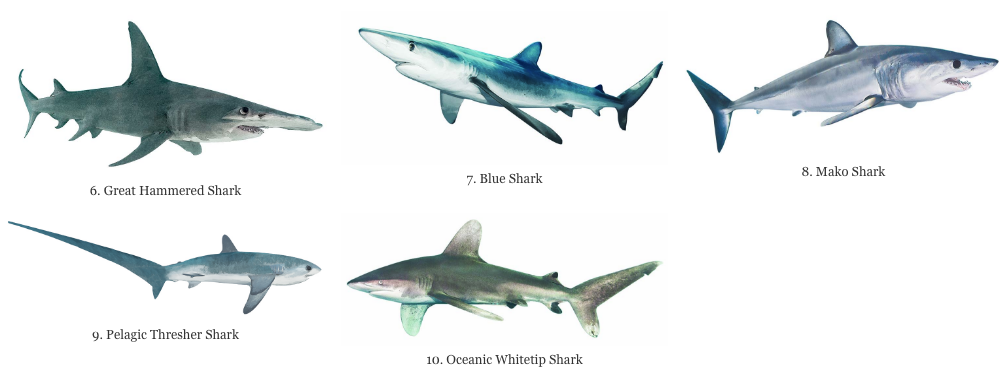
6.Giant Hammerhead Shark

Geographical Distribution: This species inhabits tropical and warm temperate waters around the world; Western Atlantic: North Carolina to Uruguay including the gulf of Mexico and Caribbean regions; Eastern Atlantic: Morocco to Senegal including the Mediterranean Sea; Indo-Pacific: Ryukyu Islands to Australia, New Caledonia, and French Polynesia, and from southern Baja California to Peru; Eastern Pacific: Southern Baja to South Peru

Hammerheads are highly migratory species that favour coral reefs but also inhabit continental shelves, lagoons and deep-water wells offshore. They normally avoid human interaction until recently when a provisioning site was established in Bimini, the Bahamas.

Fun fact: The great hammerhead has a large hammer-shaped head called a cephalofoil from which it gets its common name. The underside of the head is covered with numerous pores used to scan the seabed and detect the electrical impulses of its favourite food, stingrays. The cephalofoil also serves as a hydrofoil that allows the shark to turn quickly when hunting, and is sometimes used to hit its prey and stun it before taking the first bite

According to IUCN Red List, the conservation status of the Great Hammerhead Shark is Endangered

7.Blue Shark

Geographical Distribution:  With a worldwide distribution in both temperate and tropical waters, blue sharks roam the vast expanse of the open ocean and are highly migratory; Western Atlantic: Newfoundland, Canada to Argentina; Eastern Atlantic: Norway to South Africa including the Mediterranean; Indo-West Pacific: East Africa to Indonesia, Japan, Australia, New Caledonia, and New Zealand; Eastern Pacific: Gulf of Alaska to Chile

This oceanic shark is sometimes found close inshore when the continental shelf is narrow. Although they prefer to stay at the depth, blue sharks can be attracted to the surface with bait. It may take hours of waiting patiently before they arrive, but when they do, they will normally stay around the boat for hours and investigate divers very closely.

Fun fact: The blue shark takes its name from its distinctive indigo blue colour on the top of its body that gradually becomes lighter towards the edges and bright white on the ventral side. This contrast in colours is known as countershading, and provides camouflage for the shark in the open ocean.

According to IUCN Red List, the conservation status of the Blue Shark is Near Threatened

8.Mako Shark

Geographical Distribution: This species has a worldwide distribution in both tropical and temperate oceans; Western Atlantic: Gulf of Maine to southern Brazaik and Argentina including the Gulf of Mexico and Caribbean; Eastern Atlantic: Norway to South Africa, including the Mediterranean; Indo-Pacific: East Africa to Hawaii, north to Primorskiy Kray (Russia), south to Australia and New Zealand; Eastern Pacific: South of Aleutian Islands and from southern California, USA to Chile

A pelagic species that is normally found far offshore, it can occasionally be found closer to land around islands and inlets. The mako is a highly sought-after species, especially for underwater photographers and videographers, but encounters with this shark are rare and often short-lived.

Fun fact: The fastest of all sharks, and capable of attaining speeds of up to 32 kilometres per hour, the mako holds the speed record for long distance travel, with one species recorded travelling 2130 kilometres in just 37 days – am average distance of 58 kilometres per day! It is also capable of leaping high out of the water when attacking prey or when trying to escape the hooks of sport fishermen.

According to IUCN Red List, the conservation status of the Mako Shark is Vulnerable.

9.Pelagic Thresher Shark

Geographic Distribution: Found in warm and temperate offshore waters of the Pacific and Indian oceans, but reliable records are lacking partly due to its confusion with the other thresher shark species; Indo-Pacific: the Red Sea, Arabian Sea, Maldives, Somalia, South Africa, Western Australia. China. Taiwan, Japan, new Caledonia, Hawaiian Islands and Tahiti; Eastern Pacific: Gulf of California and the Galapagos

The pelagic thresher shark is an elusive deep water species that avoids humans and are therefore very difficult to encounter. The only place where it is common to see this species and that is in Malapascua in the Philippines. Divers need to be in the water early, as the sharks are most often seen at sunrise when they appear from the depths to visit a cleaning station known as Monad Shoal.

Fun fact: Thresher sharks have been identified as having a modified circulatory system that acts as a counter-current heat exchanger. This structure is a strip of red muscle along each of its flanks, which has a tight network of blood vessels that transfer metabolic heat inward towards the core of the shark, allowing it to maintain and regulate its body heat.

According to IUCN Red List, the conservation status of the Pelagic Thresher Shark is Vulnerable.

10.Oceanic Whitetip Shark

Geographical Distribution: This shark can be found in all tropical and warm temperate seas; Western Atlantic: Maine, USA to Argentina, Gulf of Mexico and Caribbean; Eastern Atlantic: Portugal to Gulf of Guinea; possibly occurring in the Mediterranean; Indo-Pacific: Red Sea and East Africa to the Hawaiian, Samoan, Tahiti and Tuamotu islands; Eastern Pacific: Southern California, USA to Peru, including the Galápagos

Solitary and slow moving, it is often accompanied by pilot fish, remoras and dolphinfish and is occasionally seen travelling with groups of pilot whales. With encounters with them being rare, Cat Island in the Bahamas or the southern red Sea are the best places to see this species. Participants must be comfortable diving in the open ocean, ideally having previous experience swimming with sharks.

Fun fact: They are opportunistic and competitive hunters and will often approach divers and investigate them closely. They are known to target the victims of air and sea disasters, and are suspected to be guilty of many unrecorded human fatalities. They are considered one of the most dangerous of all sharks species.

According to IUCN Red List, the conservation status of the Ocean Whitetip Shark is Vulnerable.


Taken from Asian Diver Issue 1/2018

What happened to the wreck of HMAS Perth?

0
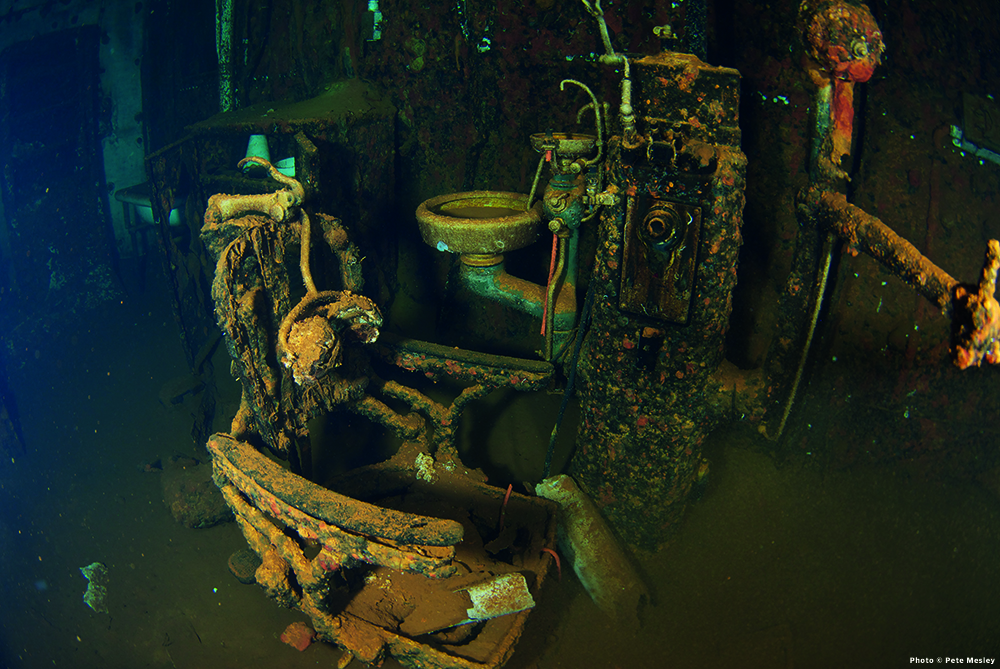
Aircraft Carrier USS Saratoga CV-3 Bikini Atoll consisting of 23 islands surrounding a deep 594 km2 central lagoon within the Marshal Island group. In July 1946 the US detonated two atomic bombs, testing the effects an atomic bomb would have on a feet of warships.

Learning to dive with the local sub-aqua club as a teenager got me up close to time capsules from the past, and I quickly developed “the lust for rust”. With such a long tradition in maritime trade and warfare, British waters are famous and popular for one particular type of diving – wreck diving.

Being based in Indonesia, I have had the opportunity to dive some of the most historic wrecks in the area. Asia-Pacific has a rich history of maritime trade and battles that have given wreck diving enthusiasts an abundant variety of diving possibilities. In some destinations such as Chuuk Lagoon, these subaquatic treasures have been protected and nurtured, paving the way for a sustainable and continuous source of income for the locals. Unfortunately, this is far from what is happening in other areas of the region.

Some years ago, I was invited to dive the World War II wrecks from the battle of the Sunda Strait, particularly the proud HMAS Perth. As a Leander-class light cruiser, she was the pride of the Australian Navy. With numerous battle honours, the Perth was returning home to Australia where she was called into action to defend Java from the Japanese advance. She sailed as part of the American, British, Dutch, Australian Command (ABDACOM) in the Battle of the Java Sea, together with the heavy cruiser USS Houston. She was the only other vessel to escape the disastrous loss of the fleet and tragic loss of life. Low on fuel and ammunitions, she sought refuge and resupply in Batavia Bay to conduct emergency repairs while waiting for other vessels stationed in the area before planning to head to Freemantle.

However, both the HMAS Perth and USS Houston were trapped in the onslaught. The vessels engaged the approaching superior force valiantly, but with more enemy vessels arriving, it was not long before they both were running out of ammunition, eventually succumbing to the overwhelming odds. The ships slipped below the waves while engulfed in flames, with crew members gallantly standing their posts or rescuing mates.

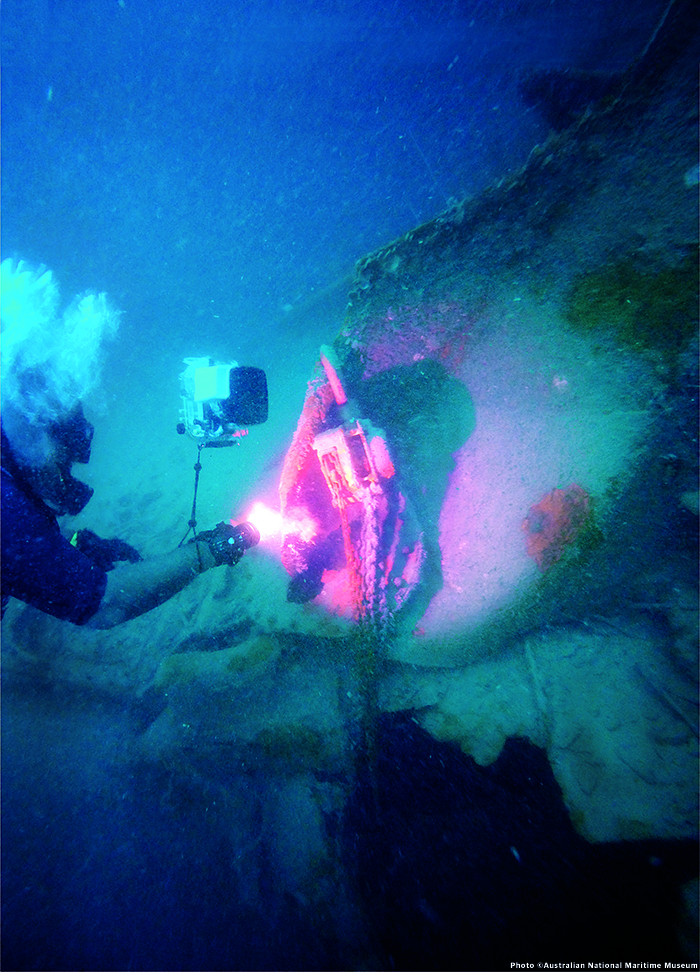
Although the wrecks are not deep, my team dived our CCRs to extend bottom time for longer exploration and survey. Arriving at a depth of 25 metres, we immediately knew something was wrong when all we could see was the twisted iron and gaping holes in the once proud ship. With two teams of three divers in the water, the team I was with would inspect Y and Z turrets and the stern of the Perth from midships. The other team would focus on the bridge, A and B turrets and the bow.

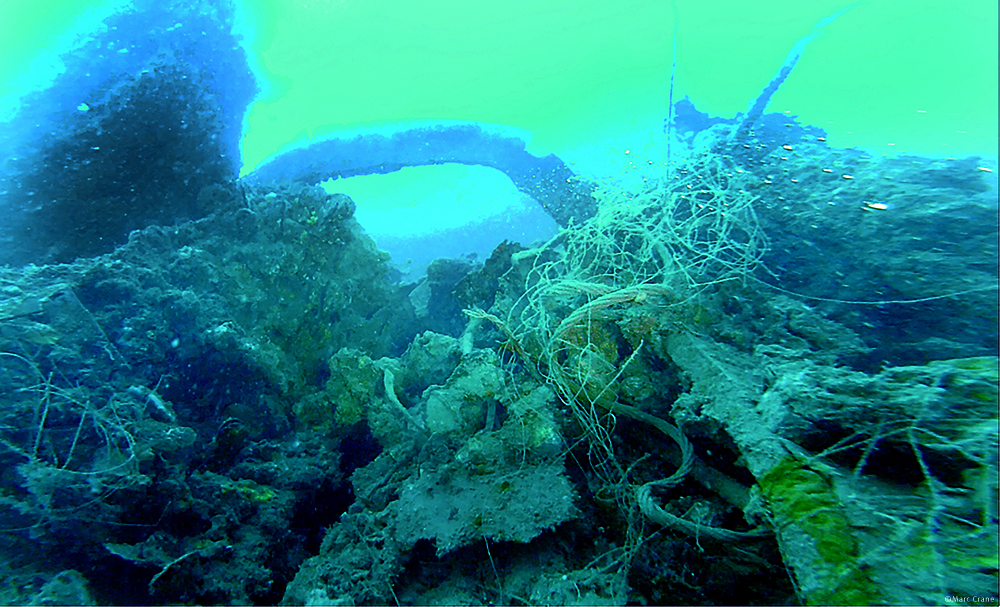
Swimming over the seabed midships, twisted girders and fallen wreckage along the bottom could be seen. I hovered over the mangled remains of a machine gun nest where a couple of steel helmets lay on the sand. Crushed shell casings littered the area as we approached Y and Z turrets; I could start to imagine how furious the fighting had been on that fateful night. Both gun turrets had their barrels at a 90 degree elevation to the deck, which meant extreme close quarter battle. The cannons cast an eerie silhouette as we stretched out to the surface with the remains of the Perth laying on her port side. Approaching the stern, I could see how the deck had been ripped open, which didn’t seem like an effect from an explosion.

Back on board the dive boat, both teams discussed their findings. Team A reported the differences since their last dives on the wreck during the end of the previous diving season: Gaping holes and collapsed structures of what used to be the bridge, the bow had all but been destroyed and removed, A and B gun turrets had completely disappeared and the bridge structure flattened and destroyed. Going through the video footage, we realised that the damage could only have been caused by a salvaging grapple trying to retrieve as much of the various metals. The liveaboard made its way closer to an island to lay up overnight and we decided to talk to local fishermen to retrieve information. To our horror, the fishermen told us that a barge with a crane sat over the wreck for a week or more, ripping up whatever was hooked on the grapple. It was only due to the monsoon change and the return of the diving season that they left.

We carried on diving the USS Houston the next day to see a similar scene, though not as dramatic as the Perth. This sad state of our maritime history being salvaged is unfortunately not an isolated incident in the area, and we have heard of similar fates happening to iconic wrecks as the HMS Prince of Wales and HMS Repulse as well as the wreck of the Seven Skies. However, the greatest loss of wreck history must have taken place at the site of the Battle of the Java Sea off the coast of East Java: Complete ships have been stripped from the seabed, leaving only imprints of their once mighty forms that are a testament to time. These ruthless acts of salvage for short-term gain have caused international outrage, and since then salvage activities have decreased, but this could also be due to the fact that there is not much left to salvage. The governments of the countries in which these wrecks laid were also slow to respond or simply had no resources or interest in stopping the salvage; some were even seen to be supporting it.

We have not only lost some fantastic wreck diving sites, but also face the loss of critical ecological habitats. Wrecks offer safe havens and breeding grounds to a variety of corals and fish species at a time where pressure on coral reefs is at an all-time high. These wreck sites maintain a balance of fish stocks which in turn serve to feed the local and visiting populations in these areas. It is not all bad news but the responsibility now falls on the dive community to protect what is left. If you haven’t dived a wreck yet, do it and prepare to be amazed.

Taken from Asian Diver Issue 4/2017