Home Blog Page 91

Shark Advocates of the Future

0

Children are the future of our oceans and we must prepare and equip them to become advocates for ocean conservation. This is exactly what Sharks4Kids was created for –  to encourage students to speak up, knowing they can make a difference. Through their programmes, Sharks4Kids brings shark education into the classroom. As the true nature of sharks is very different from how they are portrayed in mainstream media, children need to have access to the facts before they are inundated with negative stories and stigmas.

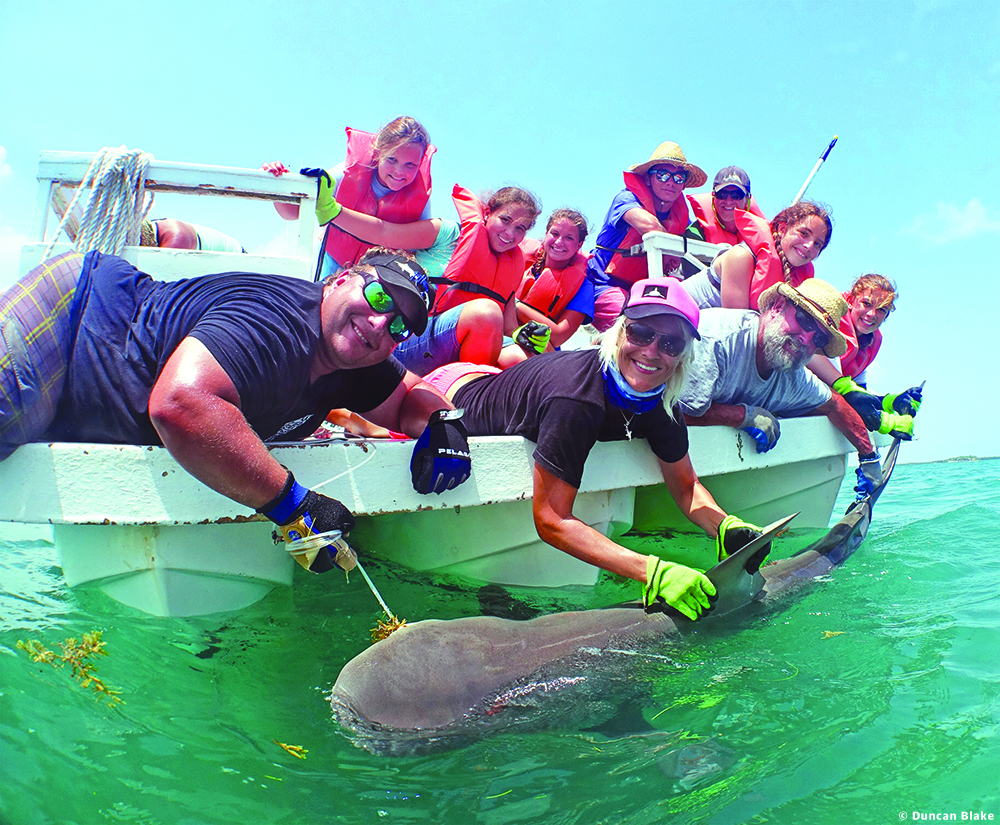
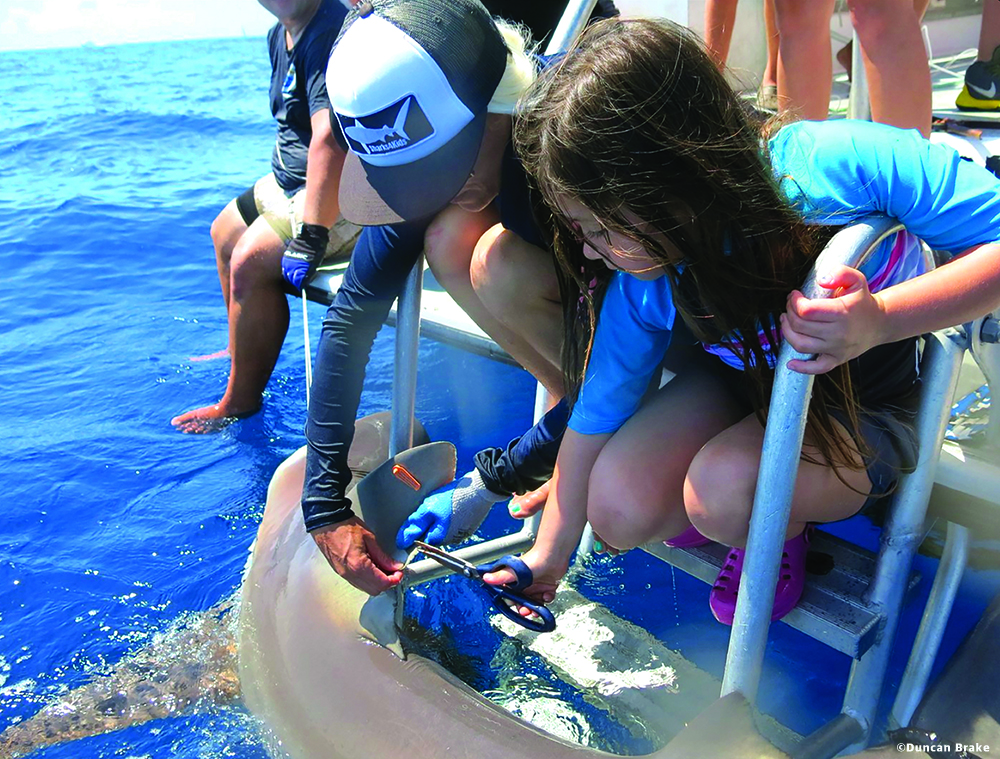
The goal of Shark4Kids is to create the next generation of shark advocates through education, outreach and adventure. This year, they are focusing on the Shark Science Education Days programme in the Bahamas shark sanctuary and the student shark tagging project. Through this project, students take measurements and tissue samples before tagging and releasing the shark. This hands-on experience helps students understand what marine biologists do. The data collected is helping researchers gain a better understanding of shark populations.

In Shark Science Education Days, the younger students participate in hands-on activities, including a “workup” on a plush shark while the older students watch a shark dissection, learning about the external and internal anatomy of the sharks. These sessions provide students with the opportunity to gain a better understanding of sharks, shark science and how science is important for conservation.


The founder of Sharks4Kids, Jillian, lives in the Bahamas, which was declared a shark sanctuary in 2011. The goal of the project in this region is to educate students about the important role sharks play in both the ecosystem and the economy. Sharks and rays generate nearly USD 114 million each year through ecotourism and much of the local population is unaware of this impact. While educating students is critical, it is essential for them to get out on the water to truly appreciate its beauty. Sharks4Kids partners with local dive operators to take students out for snorkelling trips, where they can see sharks and rays. These personal experiences enhance their connection to sharks and the ocean, hopefully inspiring and empowering them to become the future for shark conservation.

Taken from Asian Diver Issue 1/2018

Top 10 Wrecks of Asia-Pacific

0

Here’s a curated list of the top 10 most famous wrecks found in the Asia-Pacific region, listed in no particular order

1.The Hardeep

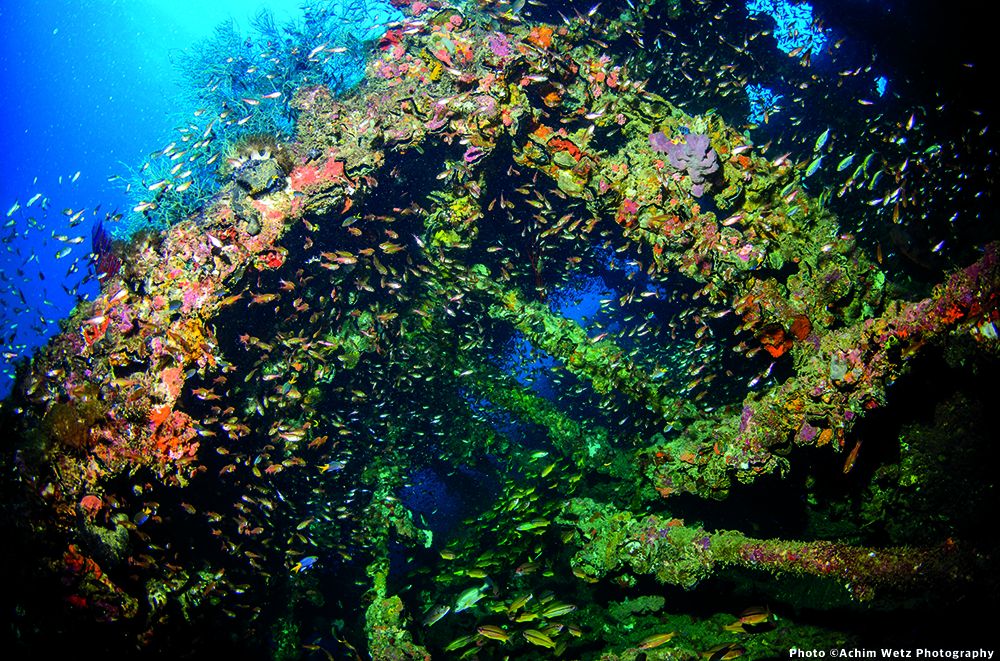
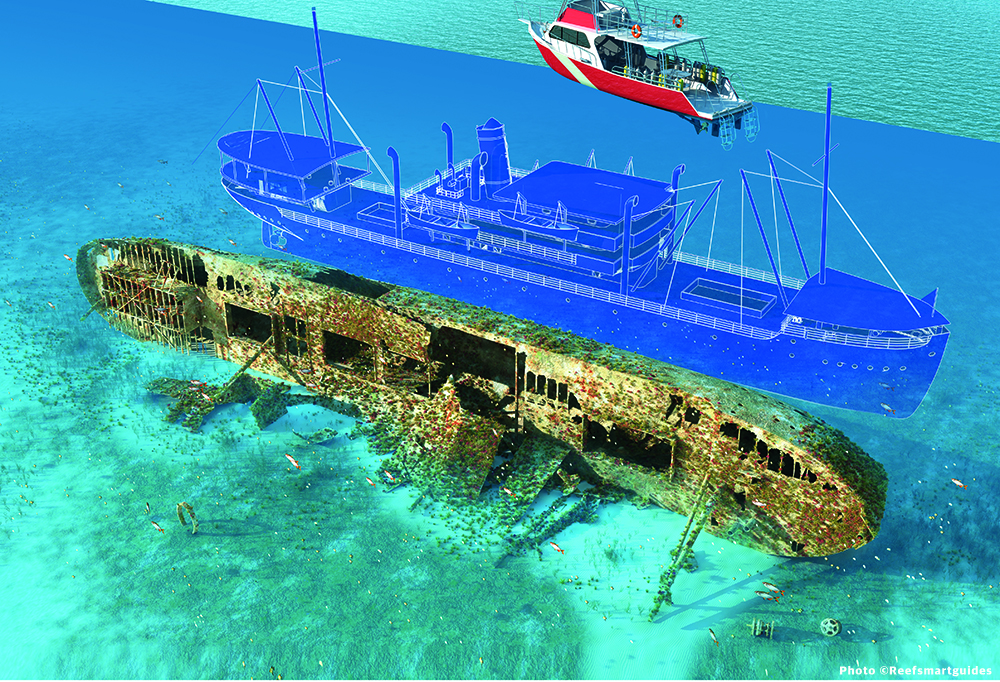
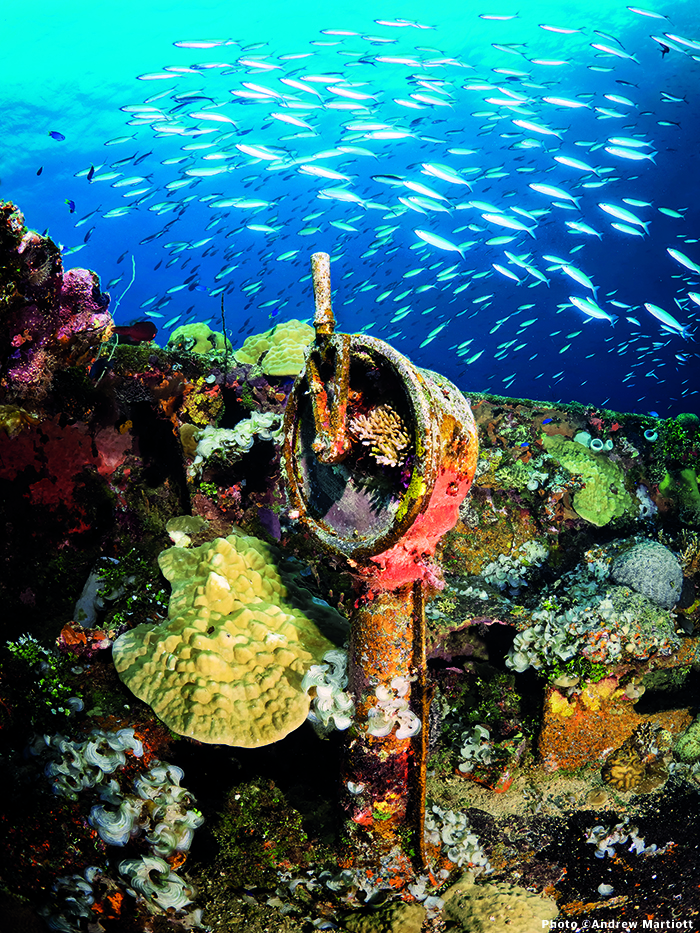
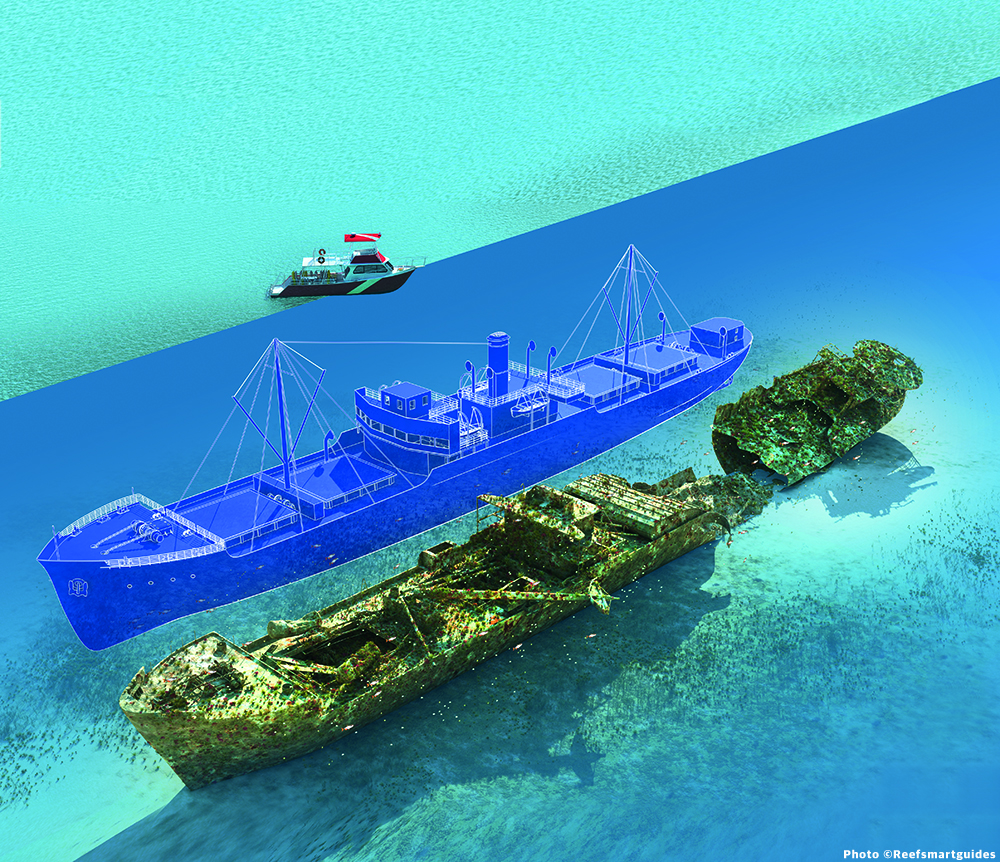
Hailed as one of the world’s most dangerous wrecks, the Hardeep was used by the Japanese in World War II to carry freight before it sank in 1941. The strong currents make it a challenging wreck to dive, but at the right time, this wreck offers one of the most exciting wreck dives in Asia. It is covered in corals and macro life with side portholes forming an overarching roof for divers to swim under while penetrating the wide open hull, letting in streams of light that evoke a mysterious atmosphere.

2. Fujikawa Maru  

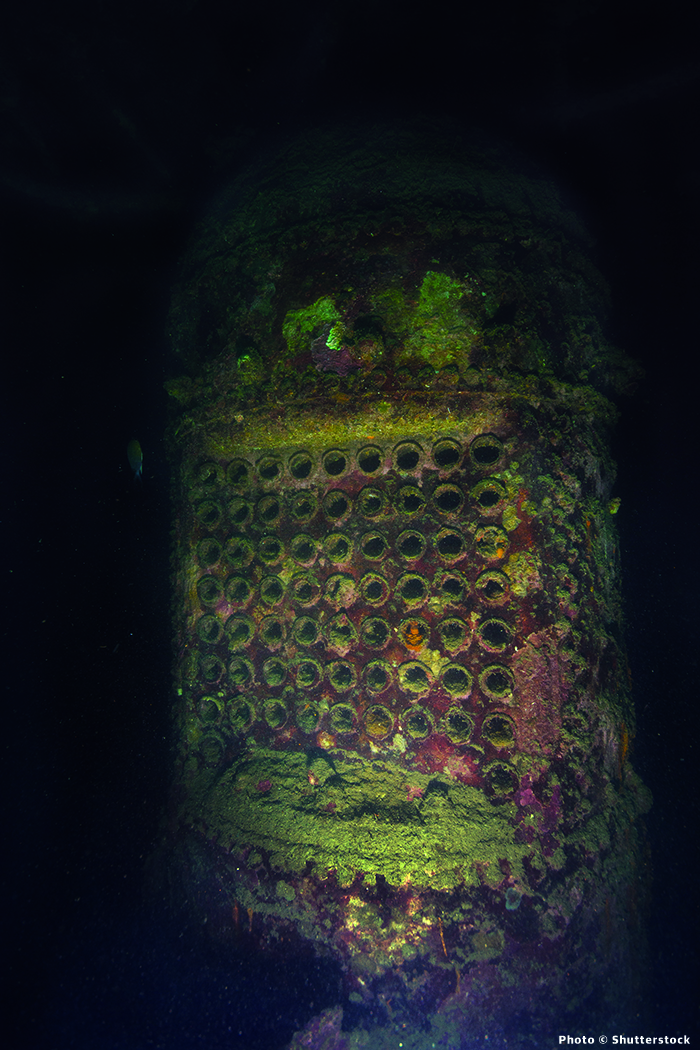
Amongst all the wrecks of Truk Lagoon, the Fujikawa Maru is known for being the most beautiful to dive. Covered with colourful soft and hard corals, she contains a large collection of war artefacts such as gas masks, Mitsubishi aircraft wings, and Zero fighter propeller blades. The engine room is one of the highlights of the wreck, though it has since partially collapsed.

3. USS New York

Arguably the most sought-after wreck in the Philippines, the USS New York is famed for her four massive turreted deck guns and enormous propeller. At 110 metres long, she is one of the largest wrecks found in Subic Bay, and can be completed in at least two dives. Only technical divers can fully penetrate the wreck, while advanced and wreck-certified divers are allowed limited penetration.

4. USAT Liberty

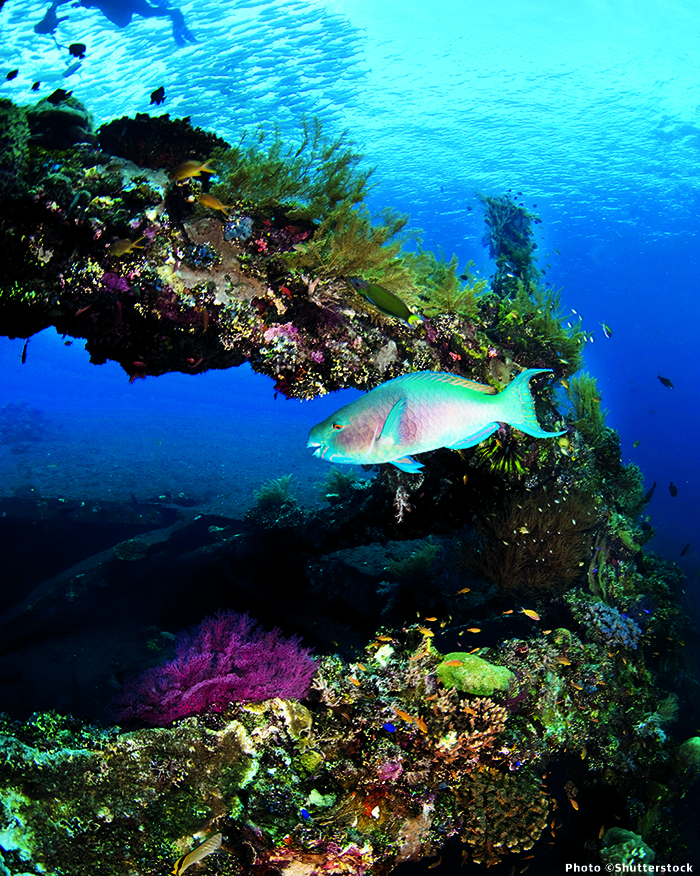
On her last voyage, the Liberty was traversing the Lombok Strait when she was hit by two torpedos from a Japanese submarine in June 1942. She rested on the beach till 1963, when an earthquake made the wreck slip into the ocean, 40 metres away from the beach. The 120-metre-long wreck now lies on her right flank, completely encrusted with coral. She brims with life, inhabited by humphead parrotfish, schools of trevally, and leaf scorpionfish.

5. Irako Maru

Sunk in September 1944, this Japanese refrigeration ship is located deeper than most of the other wrecks around Coron. The Irako Maru is almost intact with easy swim-throughs around the deck and the bow area. Penetration through the engine room is possible for trained divers. Shoals of trevally, fusiliers, and green sea turtles can be spotted at the wreck.

6. HMS Hermes

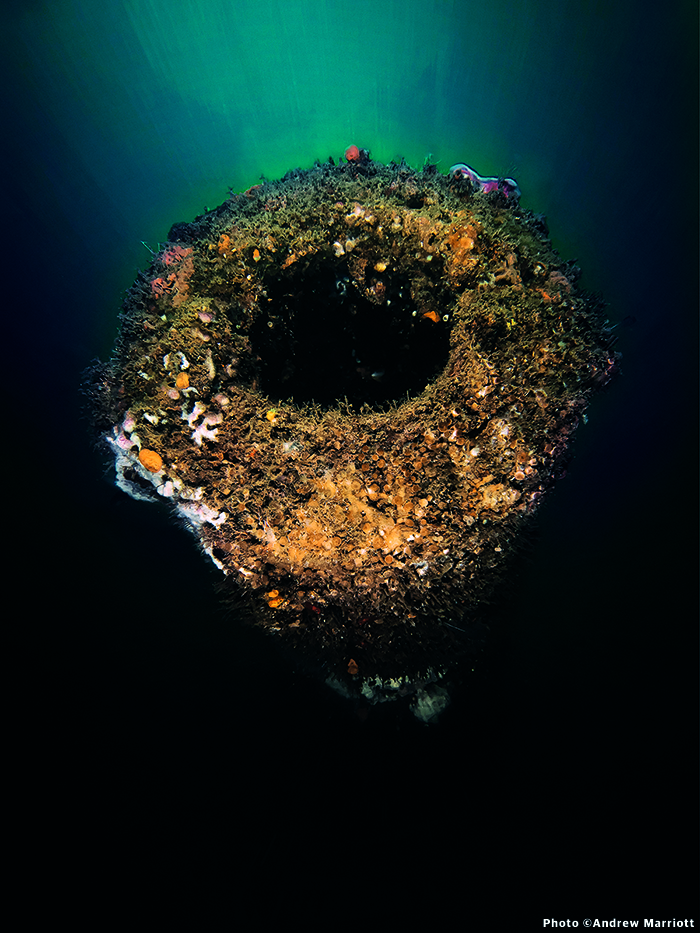
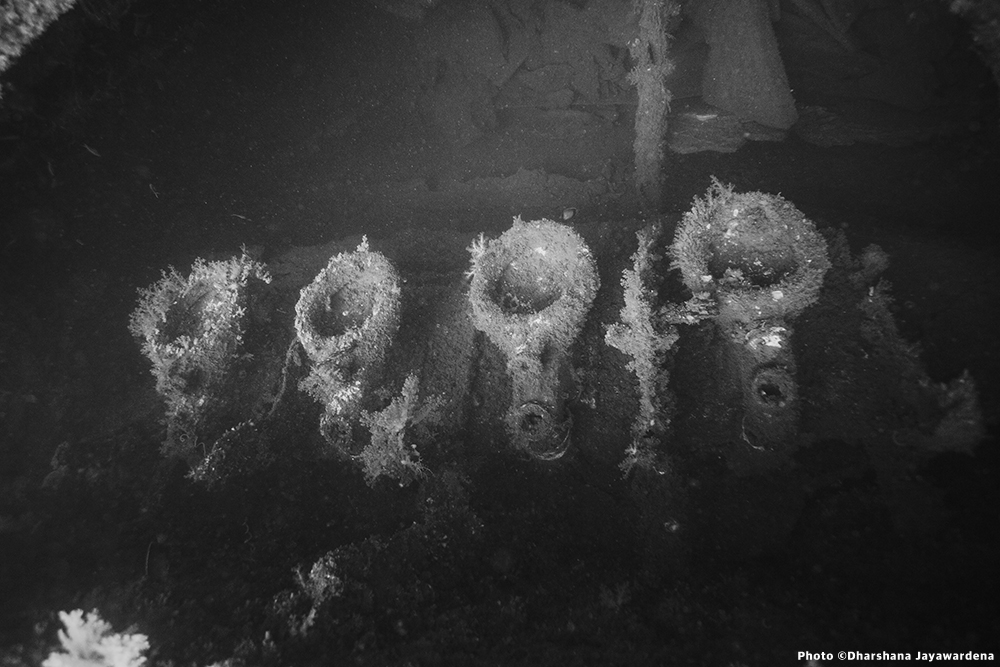
Being the world’s first purpose-built aircraft carrier, the HMS Hermes is a well-preserved wreck that offers an interesting exploration for technical divers. Due to Sri Lanka’s civil war from 1983 to 2009, the wreck has not been visited much by divers. Around amidships, one can see the collapsed superstructure, anti-aircraft guns, and even munitions. At the stern, one of the massive propellers of the Hermes towers above like a giant beast. A row of toilets can be seen through a gap in the hull.

7. SS Thistlegorm

The Thistlegorm is much more than a shipwreck – it is a war grave and a museum that serves as a reminder of the great destruction and loss from World War II. The 128-metre-long ship takes multiple dives to be fully explored. Locomotives, tanks, and jeeps can all be found in this historical treasure chest.

8. Jake Seaplane

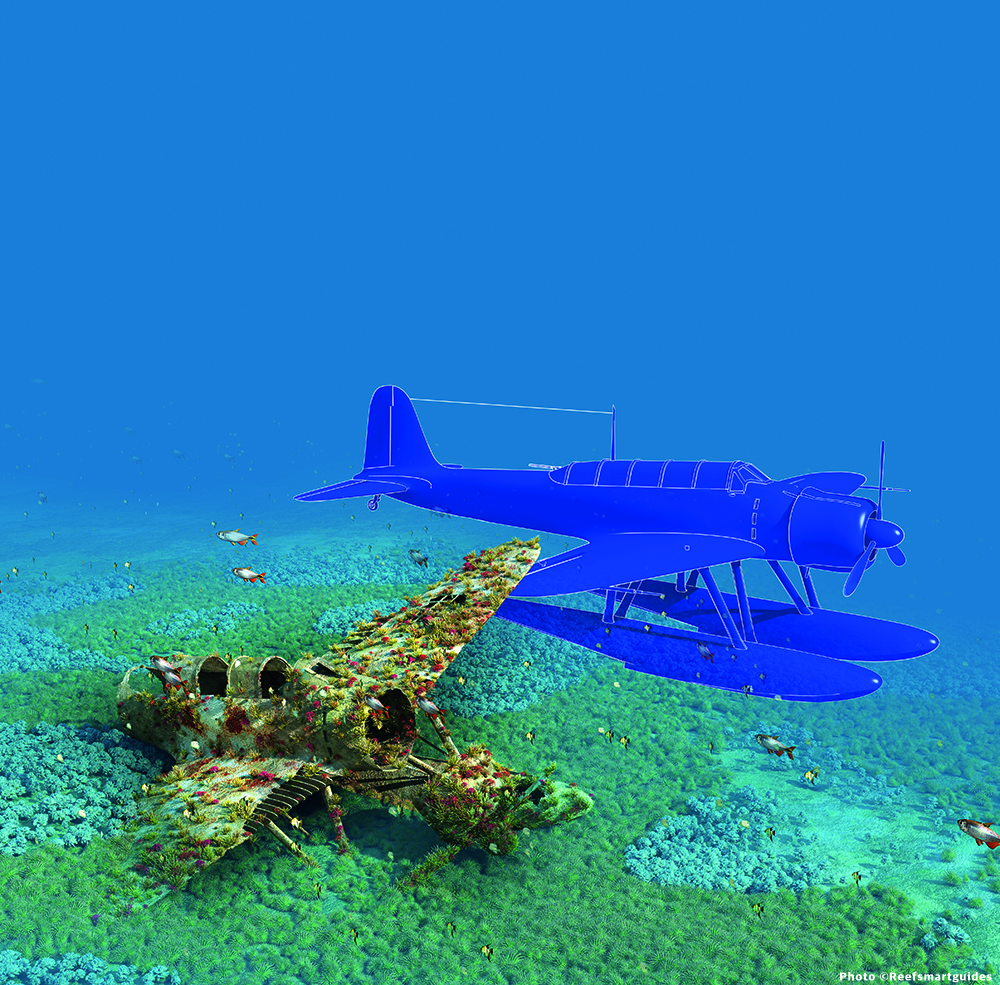
Resting in 15 metres of water, this Japanese seaplane sits upright on a large coral head. It was spotted from the surface in 1994, and now many artefacts can be found in and around the largely-intact seaplane, such as radios, ammunition and a small bomb inside the cockpit. The visibility is usually excellent, with octopus, nudibranchs and tropical reef fishes making it a photographer’s paradise.

9. SS Yongala

Often touted as Australia’s best dive site, the SS Yongala lies within the Great Barrier Reef Marine Park. She is protected under the Historic Shipwrecks Act of 1976; hence penetration is forbidden. However, she is home to a plethora of marine life: Sea turtles, sharks, and eagle rays are frequently sighted at the wreck.

10. USS Saratoga

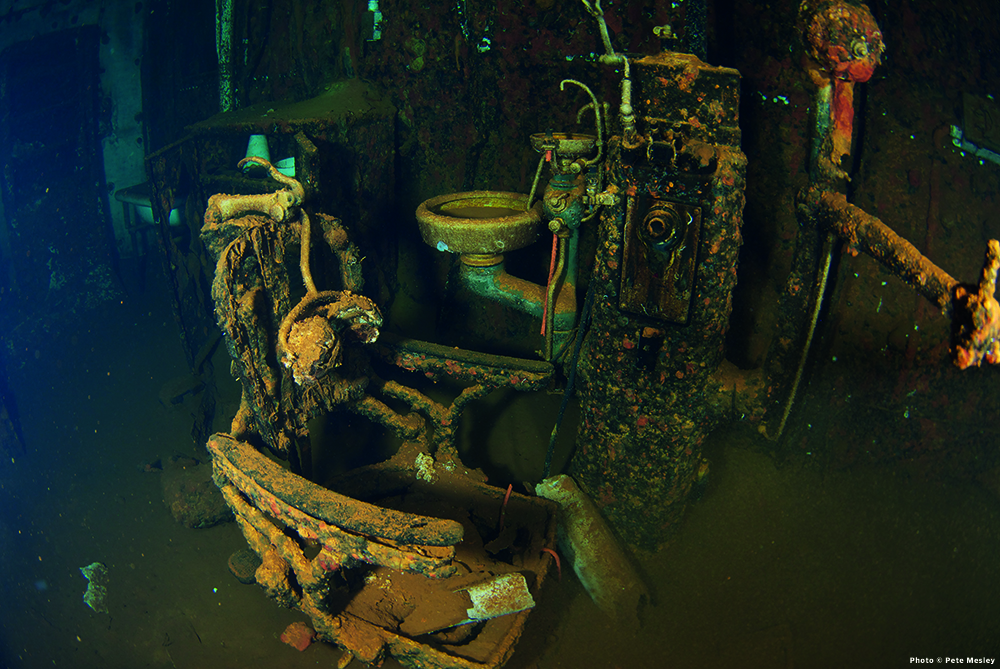
The Saratoga was a 40,000-ton, 268-metre-long aircraft carrier. Sinking as a result of nuclear testing, her interior is incredibly vast: seven decks of passageways, rooms, and galleys for divers to get lost in. The highlight of the wreck is the dentist’s office: Three perfectly preserved dentist chairs sit in the room, rinse bowls, and even headphones for the patients.

Taken from Asian Diver Issue 4/2017

Underwater Photographer Of The Week: Glenn Yong

0

Glenn Yong’s photography journey began with a career switch from an industrial designer. Starting out as a photographer for weddings and commercial jobs, he later transitioned to underwater photography in 2013. Scuba diving came to Glenn in 2010 as a desperate respite from work. The feeling of weightlessness, the lifestyle and the people he met while diving drew him deeper into the sport. Scuba diving not only changed his lifestyle, but became the reason for his decision to leave industrial design to be a photographer.


What made you want to become an underwater photographer?

I started out with a little Canon IXUS camera on my first leisure dive in Pulau Dayang. I remembered it to be housed in a Ikelite housing, and I figured that a camera that was able to capture images in RAW would be ideal for me to start out with since I was already familiar with the “magic” of Photoshop and image processing. However, all I got from my first leisure dive was blue and green-tinted photographs, even after intensive editing. The determination to produce photographs that I would be proud to share began a journey of countless cameras, housings, strobes, and trips. After years of practice around Indonesia, I finally mustard up the courage to become a full-time underwater and commercial photographer – three years after getting my first camera.


Your first underwater shot?

My first photo was taken on September 25, 2010 with my first camera, the Canon IXUS120, and an IKELITE underwater housing. I went to Pulau Dayang for a weekend leisure trip and this was the first photograph I took:


The story behind your most memorable underwater shot?

I was kind of discouraged for a couple of years after failing to encounter any mantas in the first three to four years as an underwater photographer. I headed to numerous spots that guaranteed sightings of mantas but often went home disappointed. In 2017, the dry spell finally broke while on a dive trip in the south of Komodo. I was blessed with a sighting of more than 20 mantas, not only photographing them up-close, but also witnessing their mating behavior which I managed to document on film. There were mantas approaching the cleaning station and staying there calmly for us to enjoy the amazing sight. Ever since, manta spotting has been relatively easy. Although these are not my best images, it was an extremely memorable dive trip.


Where is your favourite dive destination?

I don’t have a favourite dive destination, but I do have favourites for different types of dive sites. For reefs, walls, and swarms of fish, Komodo would be my favourite. For schools of fish, and mangroves, Raja Ampat is the best. Lembeh is my favourite for photographing macro subjects and learning about their behaviour up-close. The guides working at Lembeh and Manado have extraordinary eyes that can easily spot tiny critters.


The site you’d most like to dive, but never have?

Guadalupe and Socorro Islands for sharks, and pelagics. I’d also really like to visit Florida for the manatees, Cuba as well for more sharks, and Japan for some unique macro shots and ice diving.


The weirdest thing you’ve seen underwater?

If I had to point out the weirdest thing I’ve seen, it would be the scene of a naked diver finning around the cleaning station off Batu Bolong in Komodo, Indonesia. It was absolutely disturbing.


What camera equipment are you currently using?

I am currently using a Sea&Sea MDX-D810, with my Nikon D810. When I use the Nikon D300, I pair it with the Sea&Sea MDX-D300. For strobes I use Sea&Sea YS-250 Strobes and INON 240s. RGBlue Premium Colour lighting Systems, and a combination of Nikon & Zeiss lenses.
What is the highlight of your career?

 The highlight of my career thus far would be to be recognised as a professional photographer in the region, and to be able to share my insights and stories in schools to inspire future generations of ocean-loving people.


… And the low point?

The lowest point in my career would when I was injured or ignored medical care and rehabilitation programmes to help me recover better. There was a point where my health deteriorated so much that I could hardly move around. It was frustrating not being able to return back to the sea where I loved to be in. I learned that apart from happiness from diving, health is extremely important to all of us working out in the field.


Any advice that you’d like to give to aspiring underwater photographers?

Never give up on your dreams. It is a tough journey, and there may be days you go hungry. But you will live a fulfilling life, with job that many could only dream of. Never give up – bite the bullet and go on.


Is there any particular shot that you still want to get?

Great white sharks, more sharks, more mantas, and more sharks.

Singapore Tourism Awards 2018: Asian Geographic Magazines wins Best Exhibition Organiser

0

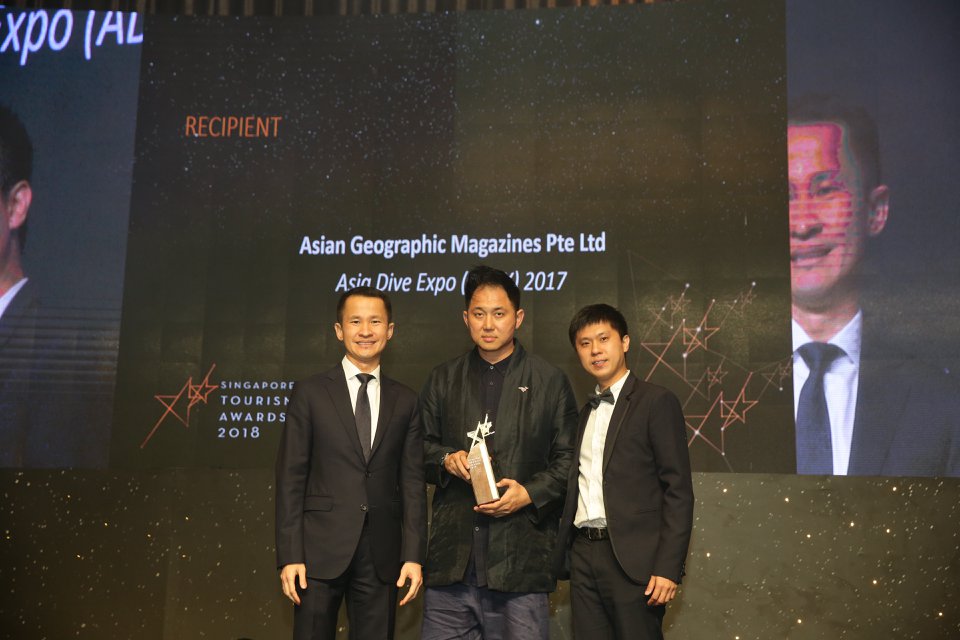
Singapore, 8 May 2018 – Asian Geographic Magazines is extremely honoured to have emerged the winner of Best Exhibition Organiser under the Experience Excellence (MICE) category at the Singapore Tourism Awards 2018 for having demonstrated excellence in organising and delivering Asia Dive Expo (ADEX) 2017.

Organised by the Singapore Tourism Board (STB), the Singapore Tourism Awards brings together Singapore’s tourism sector to celebrate individuals and organisations that best deliver exceptional experiences and achieve enterprise excellence. 29 individuals and organisations were recognised at the prestigious award ceremony held at Fairmont Singapore on May 8, 2018, which was graced by President Halimah Yacob.

We would like to thank our partners, sponsors, exhibitors, stakeholders, the Singapore Tourism Board and, of course, our visitors for supporting and believing in us through the years. We look forward to bringing you an even greater line-up for our upcoming shows. See you at ADEX 2019!

About ADEX Beijing 2018

Held from August 31 to September 3, ADEX Beijing 2018 will take place at the Poly International Exhibition Centre, organised in partnership with Shenteng (Beijing) Science and Technology Trade Co. Ltd. To celebrate Beijing Ocean Week, the show will bring a series of festivities with an educational focus on conservation and diving, supported by The China Underwater Association and Beijing Chaoyang District Commission of Commence.

www.adexchina.cn

About ADEX 2019

ADEX will be celebrating its 25th anniversary in 2019. Taking place from April 11 – 14, ADEX 2019 will be honouring businesses that are committed to eco-friendly practices, recognising scientists and activists who work tirelessly to counter the flood of plastic that threatens to engulf our oceans. At ADEX, we are determined to do our bit and spread a message of action. In keeping with that focus, we are initiating a campaign – For A Plastic-Free Future – where we will be organising beach clean-ups as well as a variety of other events throughout the whole year.

ADEX will continue to bring together the very best the diving world has to offer – from diving equipment manufacturers, retailers to training agencies, diving destinations… and more. Look forward to workshops and presentations from the world’s most renowned photographers, ocean artists, marine conservationists, scientists, technical divers, and freedivers, with hands-on educational activities for children of all ages.

As usual, ADEX 2019 will be the one-stop place for everything dive related, offering something for all divers and divers-to-be. With almost 12,100 square metres of floor space, we plan to make 2019 the biggest and most comprehensive show yet!

www.adex.asia

The Best-Selling Pocket-Sized Camera: PowerShot G7 X Mark II

0
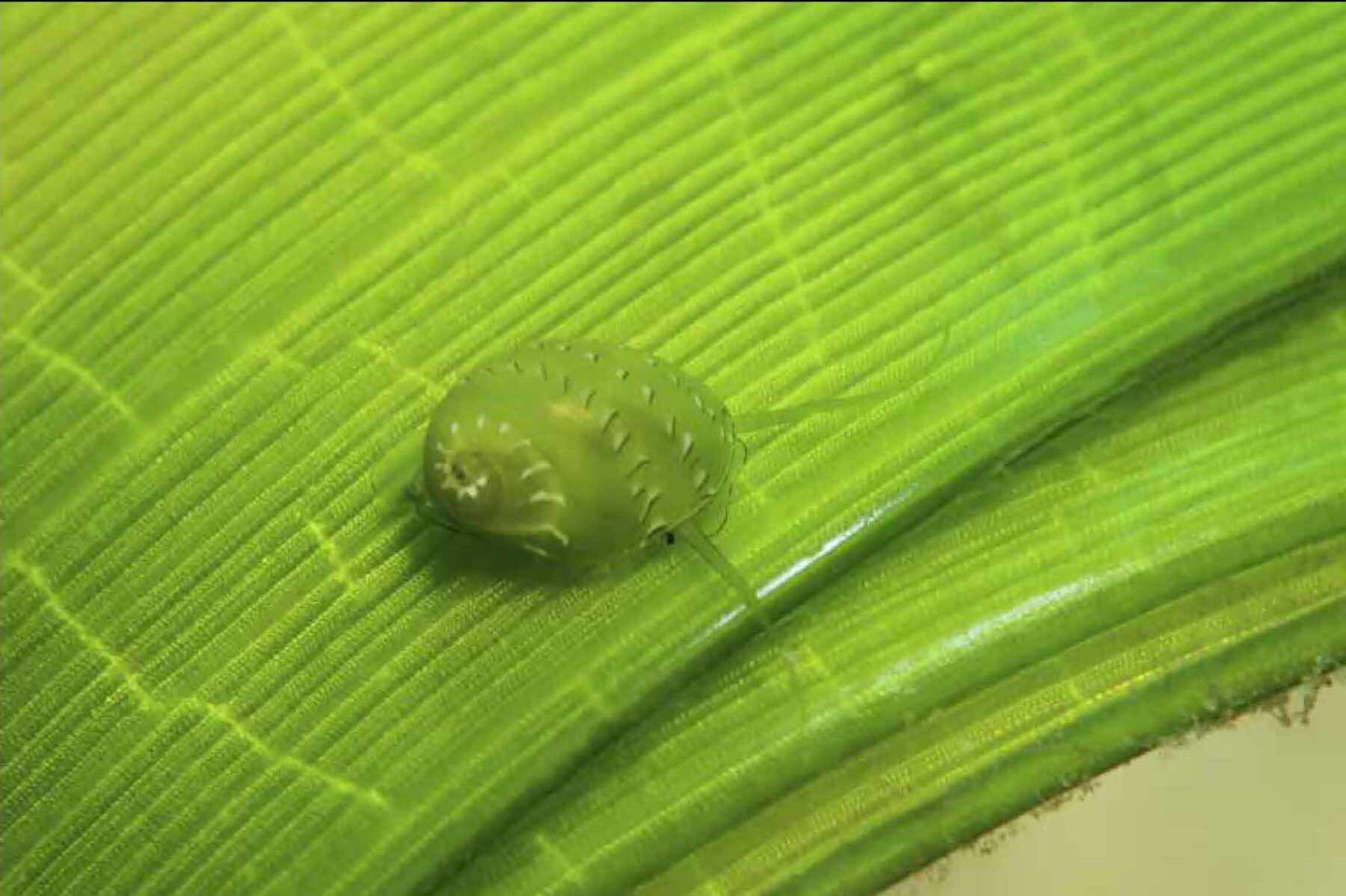
Emerald nerite (Smaragdia rangiana) on tape seagrass (Enhalus acoroides) Image taken with the Canon PowerShot G7 X Mark II in Canon Waterproof Case WP-DC55, f/11, 1/250s, ISO125 IMAGE: William Tan

On my last trip to Lombok, Indonesia, I had the privilege of testing out the Canon PowerShot G7 X Mark II on a couple of projects. This easy-to-use compact camera proved to be a worthy companion underwater, producing some fantastic shots with the help of an external strobe and a close-up lens. I particularly liked the well-thought-out placement of the controls. While the cramped ergonomics of some cameras makes it difficult to adjust settings underwater, the buttons and dials of the PowerShot G7 X Mark II are easily accessible, even when the camera is in a housing. Some photographers doubt the capabilities of a compact camera, but I found that its small size came with its own advantages, especially when photographing macro subjects. On one of our dives, we found a cowrie moving on its gorgonian host. When shooting such tiny subjects on large corals, it is always important to avoid contact with the subject and its surroundings. The pocket-sized PowerShot G7 X Mark II in its equally compact housing made it extremely easy to approach the cowrie without having to worry about the setup touching, and damaging, the gorgonian. To compensate for the yellow hue that typically occurs when compacts get up close to macro subjects, I simply adjusted the white balance towards blue. Similarly, the size of the PowerShot G7 X Mark II allowed me to get very close to a shrimp on a tube worm without creating water movements that would frighten it. I was concerned that the camera’s autofocus might lock onto the tube worm background, so I switched to the enlarged manual focus screen, which made focusing on the shrimp’s eyes a breeze. On another dive, I encountered a tiny green snail on a seagrass blade. I was surprised at how well the PowerShot G7 X Mark II coped with the low-contrast scene, easily focusing on the snail against the similarly coloured background. The camera’s continuous autofocus even accurately tracked the snail as it moved, allowing me to capture a clean shot. The resulting details in the image are no less impressive than those from a DSLR. The Canon PowerShot G7 X Mark II is ideal for divers who want a small, intuitive setup for capturing a range of marine subjects. Coupled with a high-quality close-up lens, the camera is a serious contender for macro photographers looking for an economical travel option that’s capable of producing high-quality images.

Canon Imaging Asia Facebook / Canon Asia Youtube / @canonasia Instagram / Snapshot Canon-Asia 


South and Southeast Asia Regional Headquarters: Canon Singapore Pte Ltd. 1 Fusionopolis Place #15-10 Galaxis Singapore 138522. CANON WEBSITE.  

Leatherback Turtle, The grand-dad of the big blue

0
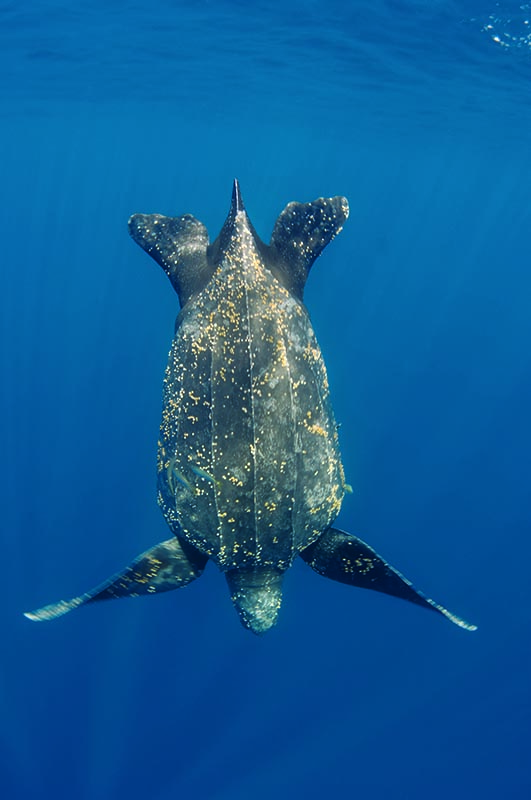
Leatherback turtle, Dermochelys coriacea, with juvenile golden trevally, Gnathanodon speciousus, Kei Kecil (Little Kai Island), part of the Maluku Islands, Indonesia.

THE ENCOUNTER

Sponsored by the Western Pacific Regional Fishery Management Council and run by the Marine Research Foundation (MRF) in Sabah, this ambitious project aimed to study and preserve one of the last breeding populations of leatherback turtle in the Pacific region. The nesting beach at Kamiali, south of Lae on the north eastern coast of PNG, is just 10 kilometres long but sees the arrival of roughly 100 female leatherbacks during the nesting season. Throughout the Pacific, leatherback numbers have crashed and it is on these nesting beaches that leatherbacks have suffered the most – nests are dug up by dogs, the eggs are collected for food and the occasional adult female is killed for its meat. However, by working with the villagers of Kamiali, the Huon Coastline project hoped to protect the leatherbacks’ nests and the future of this species.

Our first night out on the beach involved catching a boat ride from the village, soaking ourselves in a lethal cocktail of insect repellent and settling down to wait for any news of turtles. However, the incredible number of voracious mosquitoes and sand flies meant we were both soon walking the beach with the local rangers employed by the project. Their job was to patrol the 10-kilometre stretch of sand, looking for females coming up on the beach or hatching nests. If a female were spotted, they would keep their distance until she had finished digging and begun to lay. Only then would they measure and tag her. That first night, with the excitement of a new project and location, saw us up all night walking the beach and enduring the hordes of insects. But by the fourth night without a single nesting female, our enthusiasm started to flag. Lack of sleep and a head-to-toe covering of bites did not do much for morale. Even the dawn discovery of some saltwater crocodile tracks, not far from our camp, did little to cheer us up.

Our last night was February 14th – Valentine’s Day. By this stage, I was beginning to struggle with the thought of yet another night on the beach and it was Simon and Marcus Ruf, the researcher, who kept things going. Whilst we’d had some luck and had found a few hatching nests, the lack of females was beginning to take its toll and when we landed on the beach, I took shelter under a home-made bivy, sulking in a fog of mosquito spray, whilst the others headed off down the beach.

Finally, at about 3am, I was woken with the news I’d been waiting for – a female had been spotted not too far down the beach. After a mad rush down the beach, we waited patiently as she finished digging her nest before moving in and came face-to-face with one of the most incredible animals either of us had ever been lucky enough to encounter. She was not the largest of leatherbacks – her carapace was “just” 171 centimetres long – but to me she was perfect. Simon and I spent the next 45 minutes taking photographs and filming her, whilst Marcus and the rangers took their measurements. Eventually, just before the sun broke the horizon, the female covered up her eggs and headed back down the beach and to sea. A remarkable end to a Valentine’s Day I will never forget.


Photo by Matthew Oldfield


THE SCIENCE

The leatherback is the largest turtle in the world. An adult can be the same length as an adult human being. It is the only sea turtle that does not have a hard shell. Instead of hard plate-like scutes that cover the shells of most turtles, the leatherback’s shell is made from dark, leathery skin. Seven ridges run down the outside of the shell giving it a streamlined appearance. Distinctively long front flippers propel the heavy body of this animal gracefully through the water. In fact, the leatherback is very fast and amazingly manoeuvrable.

Leatherbacks can dive as deep as some whales. Dives have been recorded to depths of 990 metres. Other species of sea turtles are not believed to go nearly this deep. Why? First, while the hard shells of other turtles would crack under deep ocean pressure, the leatherback’s skin compresses without breaking. Secondly, scientists have discovered that leatherbacks maintain a constant warm body temperature in cold water, between 15 and 25°C in 5°C-water. In addition to their enormous body mass and a thick layer of fat, both of which retain heat, they can constrict their blood vessels to keep vital organs warm. On a hot beach, they can reverse the process and dump heat by pumping hot blood to the skin. As the blood reaches their skin, the skin turns pink. Finally, the leatherback’s respiratory system supports deep diving by using a complex physiological trick to prevent nitrogen narcosis.

Since they can regulate their body temperature, leatherbacks travel most of the planet. They are found in both tropical and temperate waters and occasionally stray into subarctic waters. In the Atlantic Ocean, they swim as far north as Newfoundland and Norway and as far south as Argentina. In the Pacific Ocean, they travel as far south as New Zealand and Tasmania.

Leatherbacks reach sexual maturity at around 10 years of age. As males approach maturity, they produce higher levels of testosterone. The large, hard nail on each front flipper begins to curve and grows longer. Their tails also begin to grow until they become longer than the female’s. This makes adult males easy to identify. The only change in females is the production of higher levels of estrogen and testosterone. As these levels rise, they act as a trigger sending the females to their nesting grounds. Leatherbacks mate near nesting beaches and probably during migration as well. When a female leaves her nest and returns to the water, it is not unusual for a male to try to mount her. He may bite her on the head; he will try to fend off her other suitors by biting them as well. Some females mate with one male while others mate with many males. Males mate with as many females as possible. In the Caribbean, the nesting season runs from March to June. In the Pacific, they nest from October to February.

A female lays eggs every two to seven years. When nesting, she lays an average of seven clutches of eggs about nine days apart. Each clutch contains 50 to 100 eggs, but only 50 percent of them will hatch. The cause of this low hatch rate is not clear. Interestingly, after she lays her eggs, the female tops them off with 10 to 40 false eggs. These eggs have no embryo or yolk and are unique to the leatherbacks. Their function is still a mystery.

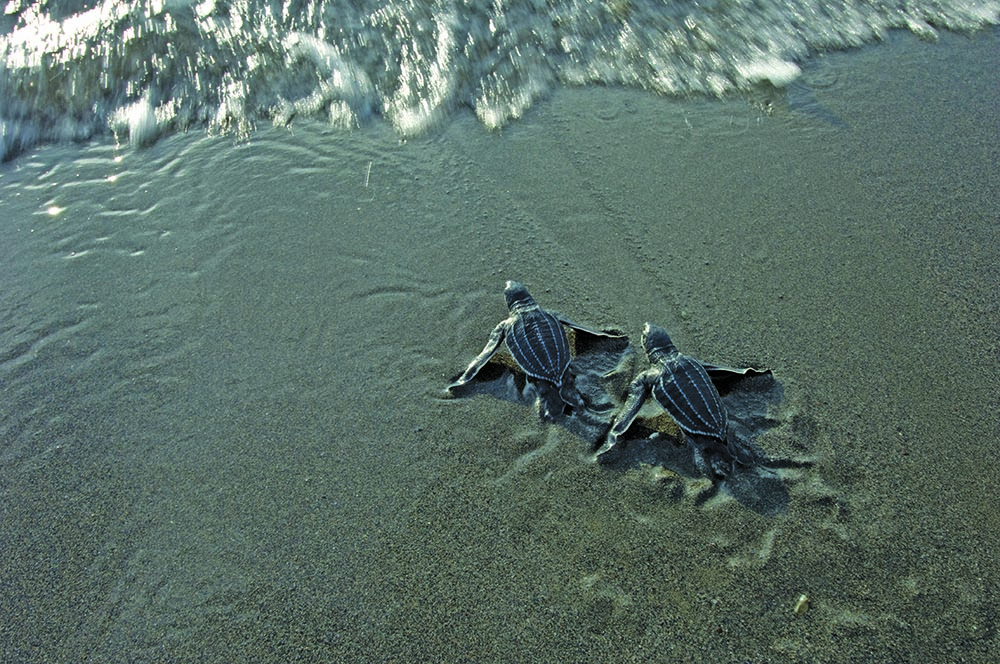
As embryonic leatherbacks develop, they are affected by the temperature of their nest. For some reason, cooler nests produce more males. The pivotal temperature of 29.5°C results in a 50-50 split between males and females. The temperature of the nest also signals to the baby turtles when it is time to emerge. To survive, they have to make their way to the ocean in the dark. Cooler nighttime temperatures trigger the exodus. If they sense that the nest is heating up – that is, the sun is rising – while trying to dig their way out, the nestlings stop digging and remain under the sand until the temperature drops.

Baby leatherbacks eat their body-weight in food daily. Jellyfish are a primary food source and provide protein, fat, iron, and certain vitamins and minerals. Leatherbacks also consume softbodied animals like hydroids, siphonophores, and tunicates, and small plants and animals.

Despite their wide-ranging distribution, the population of leatherbacks keeps spiralling downwards and the species is considered critically endangered. Harvesting of eggs for food is still prevalent in some parts of the world. Nesting grounds continue to be replaced by buildings. Death from gill nets, longlines and drift nets are other major contributing factors to the leatherbacks’ demise.


Photo by Jason Isley


THE DOs & DON’Ts

There are a number of nesting beaches found in South East Asia including the east coast of Peninsular Malaysia, Sorong in Papua and the Huon coastline in PNG. Most of these locations have NGOs working to protect the nests and it is of utmost importance that permission be sought to visit them for images and that guidelines are followed when watching nesting behaviour: flashes are usually banned when turtles are laying eggs and can only be used once the turtle has finished covering her nest and is ready to make her way back to the sea. When shooting hatchlings try to get as low as possible, make sure their route to the water is not obstructed and, if allowed, try some half-and-half shots as they enter the water.

If it’s shots of adult leatherbacks underwater that you are after, then there is one place in South East Asia that offers the opportunity to capture these images. Kei Islands, east of Ambon in Indonesia, are a small group of islands where an annual mass congregation of jellyfish occurs and the leatherbacks follow their favourite food.

There is no dive centre, no resort or even any boats resembling a dive boat. Instead, there is a small village and dugout canoes used for fishing. WWF Indonesia have a small research base from which they have been collecting data on the hunting of the leatherbacks carried out by two of the small villages. To see and photograph the leatherback turtles, you have to head out early each morning in one of the dugout canoes with a couple of guides and search for the turtles resting on the surface. Once spotted, the boat gently creeps toward it whilst you get prepared with your fins, mask and snorkel and then slowly slip into the water. The best approach is to slowly swim toward the turtle and freedive as it takes its last breath before diving. If you are lucky the turtle will not be afraid and will hang around, taking breaths of air at the surface. The turtles are hunted; as expected, I have found them to be very afraid and very shy. Only once have I had one that stayed for more than half an hour.

Freediving rather than scuba diving means you have better manoeuvrability and speed. It also makes entry and exit from the small boats much easier! The leatherbacks can move fast so having good freediving skills and using a weight belt certainly helps to get down deep fast.

I used a Nikon D2X with the Tokina 10-17mm lens and most of the shots were taken at the 17mm end of the zoom as very close encounters were far and few between. The encounters were very similar so I used manual exposure/shutter settings and Inon strobes. Ambient light may have been fine for some of the images but I always tried to get slightly below the turtles so the strobes were certainly useful in lighting the underside of the turtle. If you are extremely lucky you may encounter a leatherback completely relaxed and, therefore, have time to compose and plan your shots. However, most of my encounters have been with very skittish individuals and therefore I only had time for two or three frames. Knowing what type of shot you are after and having the correct settings ready on your camera makes all the difference. On my first trip to Kei I had one individual that actually became quite aggressive and even bumped the port of the camera; unfortunately, I was using video at the time and not my Nikon.


IN A NUTSHELL

Scientific Name: Megaptera novaeangliae

Weight: Up to 900 kg

Life Expectancy: Not yet confirmed

Conservation Status: IUCN Critically Endangered

Size: 1.32 to 1.78 m, Size differences between male and female vary depending upon development and individuals’ original geographical location

Diet: Primarily jellyfish

Habitat: Open ocean

Distribution: All oceans except Arctic and Antarctic


Taken from Asian Diver Issue 02/2010

ADEX Singapore 2018: Post-report

0

Day 1

https://www.facebook.com/AsiaDiveExpo/videos/1639178566130510/


Day 2

https://www.facebook.com/AsiaDiveExpo/videos/1640259076022459/


Day 3

https://www.facebook.com/AsiaDiveExpo/videos/1641938092521224/


ADEX 2018

Having brought divers together for 24 years, ADEX has become more than a dive show – it has become a leader in Asia’s fight against climate change

Text and photos by ADEX Team

ADEX, the Asia Dive Expo, has become a familiar name to many dive enthusiasts around the world. The expo has been run for the past 9 years by Underwater360 (UW360), breaking attendance records yet again this year with 62,079 guests. The biggest and longest-running dive expo in Asia is, unsurprisingly, a mandatory event for the most avid divers.

The dive expo serves as one of the best platforms for divers to catch up and share their latest underwater exploits, but more importantly, it allows a conducive environment for ocean lovers to learn about how they can best combat climate change and protect ocean species.

Additionally, ADEX provides a platform for businesses and organisations – dive operators, equipment manufacturers, and national tourism boards – where the message of responsible stewardship of the ocean can be spread.

SHARKS & CORAL REEF CONSERVATION & EDUCATION

Every year, the show is dedicated to an endangered iconic marine species, with activities designed to heighten conservation awareness about the creatures. This year, ADEX returns to its roots by dedicating ADEX 2018 to sharks – the very first marine creature ADEX was dedicated to back in 2010.

Presentations focusing on these magnificent animals were shared by a host of renowned speakers, educating visitors about sharks’ roles in the marine ecosystem, the value of shark tourism, and how everyone can play a part in ensuring the long-term protection of the species.

Our most powerful tool against climate change is education – teaching each successive generation of humans to love the ocean will create far-reaching waves of change greater than the sum of its parts, giving us a fighting chance at stopping, and maybe even reversing, the damage wrought on the world by humans.

Kids’ Zone

This year’s Kids’ Zone featured two stations for young visitors. Shark Guardian’s booth offered children the chance to get temporary tattoos, expand their creativity at the colouring station, and take part in educational quizzes and games – not forgetting the Shark Guardian Drone making its rounds, quickly becoming a crowd favourite with visitors of all ages. For young ones with an interest in science, Sharks4Kids allowed children to become a Junior Shark Scientist, with the chance to do their own ‘work-up’ on plush sharks. Each student earned a Junior Shark Scientist Certificate after completion.

OCEAN18 FESTIVAL

The OCEAN18 Festival is a series of activities and exhibitions that celebrates the beauty of the ocean and the enduring spirit of human exploration and documentation of its wonders. Divers, underwater photographers, and explorers shared aquatic exploits with peers through their music, films, and images.

Many of these divers were lauded for their efforts and achievements, with 18 of the top speakers receiving awards from ADEX for their contributions to diving and conservation. Many of these speakers also produced beautiful photobooks, giving visitors the chance to take a piece of ADEX home with them and support marine conservation.

OCEAN18 FILM FESTIVAL

The film festival featured films that focus on marine species and how human pollution has affected them. The films included Sharks of the Sulu Sea: Whale Sharks by LAMAVE, which documents a group of scientists studying large marine vertebrates like manta rays and whale sharks to help protect them. Films like PLASTIC OCEAN by Craig Leeson and Sea of Life by Julia Barnes examined the destruction of marine ecosystems by human activity to galvanise viewers to take personally responsibility for their lifestyle choices and protect the ocean. On a more optimistic note, Patterns of the Ocean by The Jetlagged, and Birth of a Marine Park by Victor Tang both document the successful implementation of protected marine areas to protect marine life in Indonesia and Singapore.

SCIENTISTS’ FORUM

The Scientists’ Forum took place on the last day of ADEX, with accomplished marine scientists gathered to discuss the marine and dive issues of the day. Topics ranged from the basics of climate change to the often unforeseen effects that it could have on specific marine species. The panel of scientists included Kathy Xu, Karenne Tun, Judi Lowe, Alex Rose, George Woodman, Benjamin Kahn and Hazel Oakley.
FREEDIVING/MERMAID PRESENTATION ZONE

Visitors thronged the Freediving/Mermaid Presentation Zone to sit in on presentations by expert freedivers, even striking up chats with individual speakers around the stage. The speakers spoke of their love for the sport, their achievements in the field, and many emphasized the accessibility of freediving for casual divers – all they needed to start freediving was simply basic training. Speakers also showcased the latest diving and underwater photography kit, and discussed new trends such as underwater hocky and rugby. With the theme of ADEX, many speakers also expounded the importance of environmental research and conservation.

FREEDIVING WORKSHOPS

Top freedivers, Jonathan Chong, Jean-Pol François and Suzy Lim, conducted workshops for participants wanting to experience freediving for the first time, giving visitors the chance to get up close and personal with the sport’s experts.
BOOK FESTIVAL

At the ADEX 2018 Book Festival, part of the Ocean18 Festival celebrations, visitors got their hands on the latest books from renowned writers and underwater photographers from around the world. Speakers gave in-depth insights on their books on the main stage and visitors had their books signed by their favourite authors

TEKDIVE CONFERENCE

As in previous years, the TekDive conference brought together speakers, enthusiasts, and those curious to learn more, driven by the desire to explore the confines of a cave, a wreck, or find undiscovered life forms lurking in the deeper ocean trenches. The conference has become a go-to event for those who are passionate about tek diving – a place where they can network, share their experiences and tap into knowledge from the veterans and experts. The various presentations included topics on prime underwater environments, tek diving adventures and experiences, as well as the latest technology.

PHOTO VIDEO ZONE

One of the most anticipated events in the ADEX programme, the ADEX 2018 Photo Video Zone was, once again, a back-to-back serving of famous personalities, beautiful images, and insider tips on capturing award-winning pictures like the pros.

Many presentations only had standing room, with crowds lured in by underwater photography superstars like Laurent Ballesta, Roger Munns, Marty Snyderman, Aaron Wong, Imran Ahmad, Michael Aw and Tim Ho. The talented pros wowed audiences with tales of adventure, breathtaking images, and invaluable insights. The speakers waded into the crowd and mingled after their talks to meet and greet fans, answer questions, and provide inspiration for aspiring shooters beginning their underwater photography journey.

AQUATIC ACTIVITIES

The swimming pool and try-dives drew great attention right from Day One of ADEX 2018. Children and non-divers got their first taste of diving under the constant supervision of professional diving instructors, while other dive enthusiasts took to the swimming tank to try their hand at fin swimming, and underwater hockey and rugby.

MERMAIDS

Guests at ADEX were treated to the sight of mythical sirens of the sea performing in the dive tank and swimming in the pool. There were gasps of awe all around as mermaids Hidy Yu, Dada Li, Eve Young, Syrena entertained and engaged onlookers. Adults and children alike were entranced by the beauty of the mermaids and huge crowds formed around the performance locations. Despite being from different parts of the world, the mermaids, some of whom are also accomplished scuba divers, freedivers and underwater photographers, have a mission in common – to share their passion for the ocean and educate people about marine conservation and the protection of the ocean’s inhabitants.
LIVE JUDGING OF ADEX VOICE OF THE OCEAN COMPETITION 2018

A crowd of over 200 visitors, speakers, trade visitors and exhibitors gathered in front of the main stage, patiently anticipating the start of ADEX Voice of the Ocean 2018 Competition Live Judging. The competition was a celebration of visual representations of the ocean and the creatures that inhabit it, drawing entries from all over the world. For this year’s live judging, we were honoured to have Laurent Ballesta, Ernie Brooks, Marty Synderman, Scott Tuason, Roger Munns, Michael Aw, Doug Perrine and Tobias Friedrich as our judging panel.
ADEX 2019

Preparations are underway right now for next year’s event. Get ready to have your expectations blown out of the water – it’s going to be even grander and more inclusive than ever! Think a dive show couldn’t possibly get more exciting? Think again! Watch this space for updates…