Home Blog Page 89

Spearing Whales For Survival: An Inside Look

0

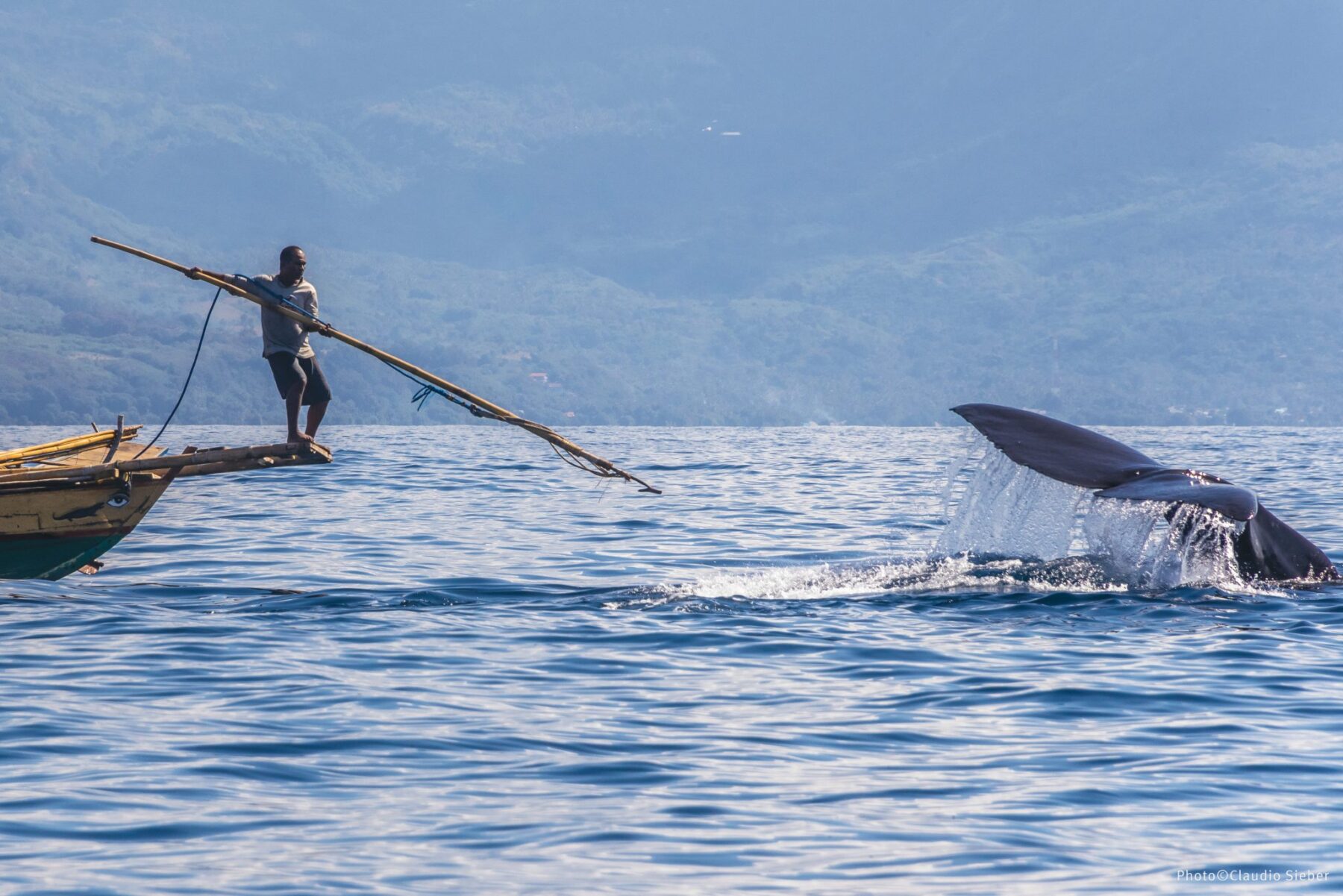
The clans inhabiting the tiny village of Lamalera, on the sunbaked Lembata island in the remote Indonesian province of Nusa Tenggara Timur, have been spearing and landing sperm whales by hand for at least six centuries. Despite the ongoing economic and religious transition, the society of this tiny village has not lost a single bit of their pride nor their identity. And because the Lamalerans have been doing this since the dawn of time, they carry on, with permission from the Indonesian government – as long as they hunt for their own consumption and not for commercial sale. This might change as conservationists such as WWF are incessantly prodding the Indonesian government, demanding stricter regulations for hunting practices within the Savu seascape and the Ombai Strait, a migratory bottleneck of regional importance. So far, the environmental activists have had limited impact, due to sluggish governmental action and the unwavering Lamaleran clans. Although many Lamalerans have been well-educated over the past decades, most families pursue subsistence lifestyles, with only minimal exchange of currency.

The International Convention for the Regulation of Whaling allows some indigenous peoples to hunt whales, though commercial whaling was banned in 1986. This is certainly what the Lamalerans are keen to highlight; nothing goes to waste – a valid point of contrast to large-scale fishing and the waste in bycatch it produces. Lamalera’s whalers use similar traditional methods to those Western mariners practised in the early 19th century – an era when the crews ventured great oceanic distances in search of whales and their blubber for oil extraction, long before certain species were hunted to near extinction.

Annually, sperm whales and other cetaceans migrate between the Indian Ocean and the Pacific. Throughout the main ocean season, also called Leva Season, from May until late October, these giant marine animals pass through the Savu Sea. They will feed on the big squids of Pulau Lembata’s southern shore where the Lamalerans are waiting. Today, the villagers are hunting sperm whales and other marine species largely as they have for centuries, but certain things have changed. Whereas until the late 1990s, the villagers had only been taking to the sea for livelihood in simple sailboats called paledang, they’re now also using engine-powered boats to pull the paledang offshore once a whale is sighted and to search for their daily prey.

Conservationists are alarmed because the villagers catch not only sperm whales, but also protected deep-sea species like manta rays, orcas, dolphins and oceanic sharks with their engine-powered boats all year round to provide food and a living for their community. In 2010, the Ministry of Tourism (East Nusa Tenggara) and WWF workers came to Lamalera to talk about conservation, suggesting the idea of whale watching to attract tourism. As they were making their speech, some Lamalerans set off and returned with their whaling knifes to chase the environmentalists out of their village, claiming they had been living a fine life without governmental institutions, so there wouldn’t be any need to talk. Ten military soldiers rolled in, standing against a hundred outraged villagers. More discussions followed, but to no avail. Since then, venturing to Lamalera with the intention of talking about conservation awareness has carried certain risks.

Yosef Bataona, the head of Lamalera village, explains, “We’re living in a machine era! Nevertheless, the number of sperm whales we catch annually has not increased despite the use of engine-boats to support the paledang crew. Last year, we hunted down 25 whales. Some years we might catch 40, but sometimes not even one. On average, we need to kill three sperm whales a year to feed all our families. Us Lamalerans believe the whales are a gift from our ancestors and god. This is about survival! We couldn’t get through if only relying on the whales. Lately, we have been getting lots of pressure from the media world, but no one seems to really understand the deeper sense of our situation. Our people here struggle for one spoon of rice or a piece of corn. There is no fertile soil and the entire topography is stony, which makes growing crops impossible, so we have no choice but to take full advantage of what the sea offers us. Thus, as long as no one can provide us the salary needed, we have to carry on.”


Saving the Sharks of the Shark Triangle

0

Few places on Earth rival the spectacular biodiversity and abundance of highly migratory marine megafauna of the Eastern Tropical Pacific. For quite a while now, it has been known that these highly migratory species are not randomly distributed throughout the ocean, but rather, form aggregations at three specific oceanic islands during their adult life stage: Cocos Island, Costa Rica; Malpelo Island, Colombia; and Galápagos Islands, Ecuador. Parades of silky sharks and Galápagos sharks, aggregations of hundreds of hammerhead sharks, whale sharks, and tiger sharks are all common inhabitants of these remote islands that form the Shark Triangle.

Unfortunately, shark aggregations are no secret to fishers who target them at these sites because of the high price their fins fetch in the international shark fin trade. Eastern Tropical Pacific shark populations have declined over 90 percent due to the overfishing for  their fins, and sharks are not alone. Other highly migratory species like sea turtles that share the same biological traits as sharks, including being long-lived, maturing later in life, and producing few offspring, are caught under the guise of by-catch and suffer the same detrimental impacts due to their vulnerability to fisheries induced mortality.

Acknowledging the importance of protecting these sites from overfishing, the governments of Costa Rica, Colombia and Ecuador declared them national parks with respective no-take fishing zones. To further support these conservation efforts on an international diplomatic scale, the United Nations Educational, Scientific and Cultural Organisation (UNESCO) declared the three islands as World Heritage Sites.

Since 2005, Migramar, a coalition of shark research institutions including non-government organisations and academia, has been generating the needed science in the Eastern Tropical Pacific to answer questions of the effectiveness of the no-take zones and propose an efficient conservation policy to decision makers. Migramar’s researchers now know that sharks only stay at aggregation sites temporarily, and that individuals move regularly from one island to another. The group also knows that larger no-take areas  are necessary to protect these highly migratory species during their stay at aggregation sites, as some species, including endangered hammerhead sharks at Cocos Island, venture considerably beyond the 20-kilometre no-take area during nocturnal feeding excursions and are thus vulnerable to fisheries. Finally, Migramar experts know that after aggregating, many of these highly migratory species follow defined routes or “swimways” to other Shark Triangle islands.

Scientific evidence also shows that larger no-take areas lead to better protection of highly migratory species and as a result increase the profitability of fisheries in surrounding waters due to the spill-over effect. This case has been proven with tuna fisheries in waters surrounding the Galápagos Islands’ no-take zone.

Thus, saving Eastern Tropical Pacific sharks is not only going to take larger no-take zones in waters surrounding the islands of the Shark Triangle, it will also take policies that limit and control fisheries along these defined swimways. Migramar scientists are currently calling for the protection of the “Cocos Galápagos Swimway”, along the 700-kilometre submerged Cocos Ridge, a highly magnetic submerged mountain range, of which Cocos Island and the Galápagos Islands constitute summits that break the surface.

Fins Attached Marine Research and Conservation has been collaborating with Migramar members since 2005, and will continue to support not only the performance and publication of high quality science that answers these and other questions, but the regional political processes that will lead to science based policy and efficient protection for the sharks of the Shark Triangle.

Taken from Asian Diver Issue 1/2018

How to Minimise Back Injuries while Diving

0

Back pain is a common occurrence these days with sedentary lifestyles, but it needn’t deter divers from enjoying their time in the water. Divers can manage chronic back pain whilst travelling and diving, plus take steps to minimise the chance of back injuries reoccurring

Before the Dive – The Right Gear 

Weights

Whilst most divers learn with a weight belt around the waist, and weights distributed around the waistline, there are other options for those prone to back pain. Weights placed in buoyancy control device (BCD) pockets and a weight strapped to the tank can help to take weight off the lower back when diving. Positioning weights on a belt at the front of the waistline, instead of towards the back, also helps to take pressure off the lower spine and can be more comfortable. It is important to have a buddy check a diver’s body position and trim when making changes to dive weight configurations, to ensure the diver is going to be able to move with minimal drag and isn’t arching their back excessively.

Suits

Being cold can easily aggravate a sore back when shivering and when muscles tense up. It is essential to choose the right wetsuit, or drysuit and thermal undersuit combination, that will maintain good body warmth even after a full day of diving. The addition of a thermal undergarment under neoprene, such as a thermal rash vest, can make a big difference to the body temperature without the need to purchase a thicker wetsuit. There are excellent thermal undersuits available for drysuit diving and even heated vest options for the cold-blooded diver. If mobility is an issue, an exposure-protection suit with a front-entry or easily-reachable zips is helpful. Consideration should be given to ease of entry and exit from the suit and, if purchasing a semidry or drysuit, whether the wrist and neck seals can be released with minimal tugging that could strain the back.

Buoyancy Control Device

The right buoyancy control device is also important and divers should try a variety of styles and brands before settling on one. Different people have different spinal lengths and shapes, plus different  upper body sizes. BCDs vary to accommodate these differences, with a range of sizes and positions available. It is a good idea to also look at the pocket positions for weights and maybe even consider a diver wing instead of the traditional BCD design.

Mask and Fins

For those who struggle to bend or turn their necks, choose carefully before purchasing a mask and fins. Open-heel fins with spring fin straps allow for easy removal with minimal bending required. A wide field-of-view mask helps reduce the need to twist or crane the neck during dives and allows the diver to fully enjoy the view.

During the Dive 

Divers shouldn’t be afraid to ask for help – that alone is important in proper back care. Divers can ask their dive buddy, or dive guide, to help carry their dive kit to the water or boat to help minimise spinal compression from the weight of dive gear. Consideration should be given to the best water entry and exit technique, preferably alternatives to giant strides and back rolls that can load and strain the back. Sitting at the edge of a boat or jetty, before putting on dive gear, can minimise back pain and load. The same can also be said for putting dive kit on once in the water. When exiting the water, dive gear should be removed and passed up to a dive buddy or guide rather than exiting the water with full kit on the diver’s back. Correct body positioning and finning are important to prevent back pain. Scissor kicks from the hips may be great for momentum but they can strain the back. A good alternative finning technique is the frog kick, which can be easily learnt and puts less strain on the spine. It also happens to be a great finning technique for minimising sand and silt disturbance at dive sites. Divers should consider a session with an instructor to learn different finning techniques whilst checking for unnatural back arching or strain.

After the Dive 

Changing into warm clothing, including a woolly hat, will reduce the likelihood of shivering after a dive. Wearing a warm hat between dives is a great way to reduce heat loss even when still wearing a wetsuit, though changing into dry clothes is  preferable. Warm drinks and high energy snacks are also helpful.

A simple kit for relieving back pain can make a big difference when on a remote diving trip and unable to access a physiotherapist. Include pain relief and anti-inflammatory medication, a tennis or cricket ball for self-massage of the back, a hot water bottle for easing muscle tension, a lumbar  support brace, and a length of physiotherapist band for stretching leg muscles without mobilising a painful spine. It is also worth finding the contact details of a local physiotherapist and massage therapist prior to any injury occurring, if possible.

Long-term care is important to minimise the impact of an existing spinal injury and to prevent future injuries from occurring. Yoga and pilates are popular and effective for preventing back injuries by improving flexibility, core strength, and posture. Back problems are sometimes due to tight muscles and the combination of stretching and core strength are helpful for spinal relaxation and protection. Swimming can be helpful for easing back pain, though it can aggravate certain back problems due to spinal arching in different swimming positions. Divers with back injuries should seek medical advice prior to undertaking new sports, or work with a sports coach, and consider seeing a physiotherapist for a personalised yoga and pilates routine. A set of stretches and core strengthening exercises can easily be done at home or whilst travelling.

Finally, back stiffness and pain can be due to poorly hydrated or injured spinal discs. Be sure to keep hydrated every day to allow spinal discs to rehydrate and support the back for years to come

Taken from Scuba Diver No. 112 Issue 2/2018

More Establishments Joining the Plastic Conversation

0

In recent months, an increasing number of well-known establishments are jumping on the bandwagon to ban single-use plastics from their premises. Such institutions include Seaworld Entertainment, Inc, which removed plastic straws and shopping bags from all 12 of its theme parks. Ikea, a Swedish furniture chain with 363 branches worldwide, announced that it plans to phase out all single-use products from its stores and restaurants by 2020. The company has invested in a plastics recycling plant to reach its aim of using only recycled materials for its plastic products.

Just this week, a collaboration between McDonalds and Closed Loops Partners was announced to develop a cup that could be mass produced from compostable and recyclable materials. This comes as the food and beverage industry finds itself under great pressure to reduce single-use plastic items and packaging.

Last month, KFC Singapore declared that it will no longer provide plastic caps and straws at its 84 outlets as part of its No Straws initiative, though it will continue to provide plastic caps for takeaway drinks. This initiative is the first among fast-food chains in Singapore. It is estimated to reduce 17.8 metric tons of single-use plastics in a year. Furthermore, there have been many local startups introducing bamboo and metal straws to help Singaporeans reduce their plastic consumption.

KFC Singapore’s initial green efforts include serving dine-in meals with reusable baskets instead of paper boxes. The company will continue to integrate more biodegradable packaging in their offerings.

Across the globe, McDonald’s will be trying out “straw alternatives” by introducing the use of paper straws to all of its UK and Ireland restaurants, starting from September.

Starbucks also announced earlier this month that it would drop plastic straws worldwide by 2020. As an alternative to plastic straws, it has developed a strawless lid, which social media users have dubbed as an “adult sippy cup”. This will become the standard for all iced coffee, tea and espresso beverages.

This straw-free movement was generally met with high accolade. However, many have come forward to express their views against the blanket plastic straw ban. One concern raised by disability rights activists is that plastic alternatives such as metal or paper straws are not suitable and may even cause injury for people with disability.

Following Starbucks, Marriott International announced that it will stop offering plastic straws and stirrers by July 2019. This move could eradicate the use of more than 1 billion straws and about 250 million stirrers annually. Other efforts to reduce its environmental footprint include replacing small bottles of shampoo and conditioner with in-shower dispensers in its hotels. Other hotel chains such as Hyatt Hotels Corporation and Hilton Hotels and Resorts have also expressed their commitment towards similar eco-friendly movements.

On a wider scale, the European Union recently revised its rules and regulations on single-use plastic to reduce marine litter. These new rules include bans on certain plastic products, consumption reduction targets and labelling requirements.

The pressure to ban plastic straws gained traction after a viral video showed rescuers removing a straw from a sea turtle’s nose. As such, these bold movements are heartening and encouraging. Hopefully, more big establishments will pitch in to propose radical plans that will drastically cut our plastic waste.

—-

Eliminating plastic straws globally does not resolve the much larger plastic problem. More has to be done in order for us to address the issue fully. Environmentalists hope that such initiatives will help cultivate a lifestyle of no single-use plastic consumption, which will help conserve our environment in the long run. 

What’s up with the Shark Fin Trade?

0

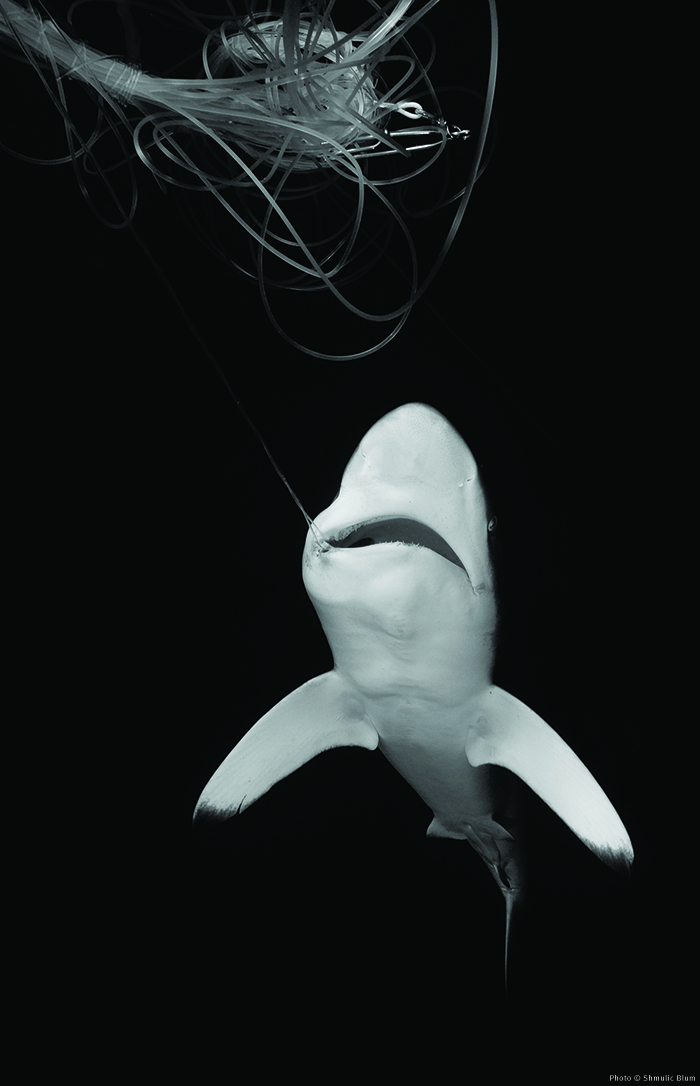
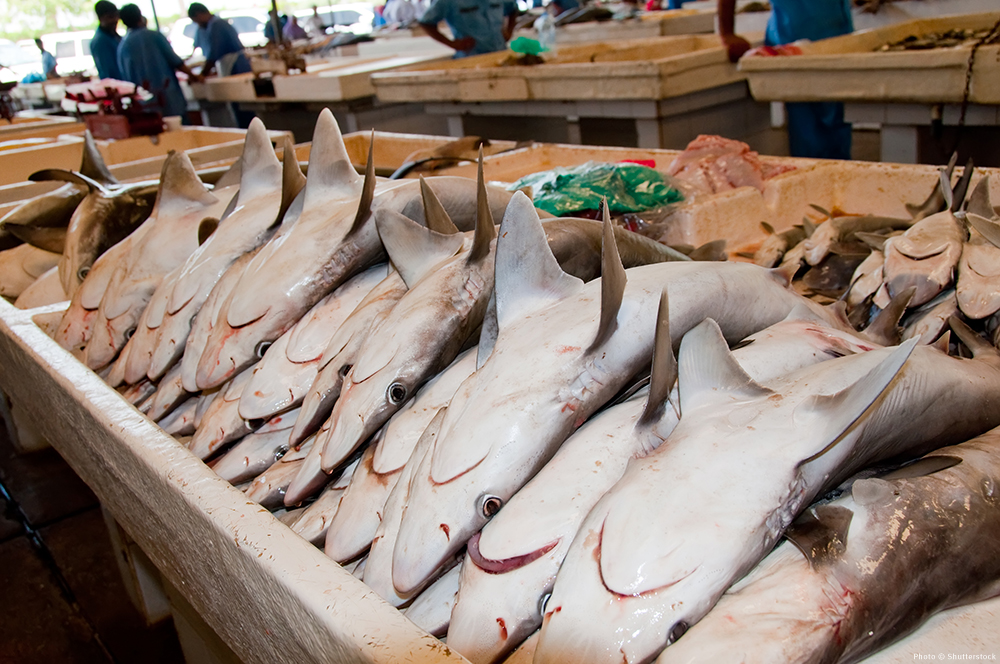
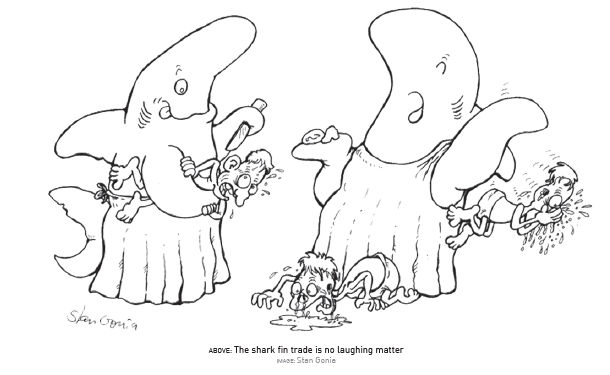
Unless you have been living under a rock, most of us would be aware of the dire situation that sharks are facing today. Stemming from a Chinese tradition of serving shark’s fin soup at prestigious banquets, the unsustainable and brutal killing of sharks to meet the demand has left sharks in a struggle for survival.

According to the United Nations Food and Agriculture Organisation (FAO) 2014 report, the global catch of sharks and rays peaked in 2003, and has since dropped by approximately 20 percent. This is good news for sharks, and for us as well, bearing in mind that sharks are a key player in the oceans’ ecosystem. As the word continues to spread, it seems that more nations are joining in the movement, including the original consumers themselves, the Chinese. In a 2014 study on the decline of shark fin demand in China, WildAid noted that shark fin consumption in China has dropped by 50–70 percent since 2011. Similarly, an analysis of worldwide customs and trade data published in  the journal Biological Conservation in 2015 by Eriksson and Clarke confirms that shark-fin trade has dropped by approximately 25 percent over the last decade.

In the same report by WildAid, a shift in trade from Hong Kong to Guangzhou, China, had been found. Hong Kong, the epicentre of the global shark fin trade between 1980 and 1990, has been facing a decline in imports since the year 2000. Now, the bulk of all shark fins enter Guangzhou directly by ship, which has since hindered the accessibility of shark fin trade data.

In an effort to gain a better understanding of the shark fin trade trend in Guangzhou, WildAid interviewed 15 shark fin vendors and traders from two key market areas in Guangzhou. They found that vendors have been experiencing an 82 percent decline in sales and a significant decrease in prices (47% retail and 57% wholesale) over the past two years.

The study also conducted a consumer survey in Beijing, Shanghai, Guangzhou and Chengdu, garnering 1,568 respondents. It found that 85% of Chinese consumers have given up shark fin soup within the past three years, and two-thirds of these respondents cited awareness campaigns as a reason for ending their shark fin consumption.

Across the South China Sea, similar sentiments have been echoed in Indonesia. The report also found that there has been an 80 percent decline in prices paid to fishermen in Tanjung Luar and Lombok since 2007, as well as a 19 percent decline since 2002 in Central Maluku, Southeastern Maluku and East Nusa Tenggara.

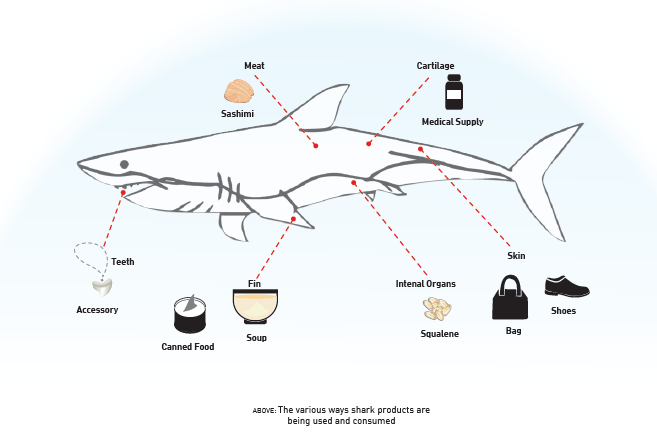
However, the demand for shark fins is not the only threat that sharks face, though it is often positioned as the main threat to sharks. According to the FAO’s 2015 report “State of the Global Market for Shark Products” by Dent and Clarke, a global, interdependent market for a range of shark products exist across a growing number of countries. The shark meat trade is following an increasing trend, with South America and Europe among the world’s top shark meat consumers.

More recently, there has been a corporate movement by hotels,  restaurants, and airlines in Asia against the support of shark products, specifically shark’s fin soup. In 2018 alone, 89 Singapore establishments from the hospitality industry pledged to take shark’s fin soup and other shark products off the menu over the course of the year. This was after the alarming report published by Traffic and the World Wide Fund of Nature (WWF) in 2017, identifying Singapore as the second largest re-exporter and importer of shark fins worldwide after Hong Kong.

With the overwhelming pessimism centred around sharks and the shark fin trade, it is promising to hear of positive progress in the recent years. If nations continue to work towards sustainable and ethical trade, then we may just start to see the horizon.

Taken from Asian Diver Issue 1/2018

Cave Diving in the City – Budapest’s Molnár János

0
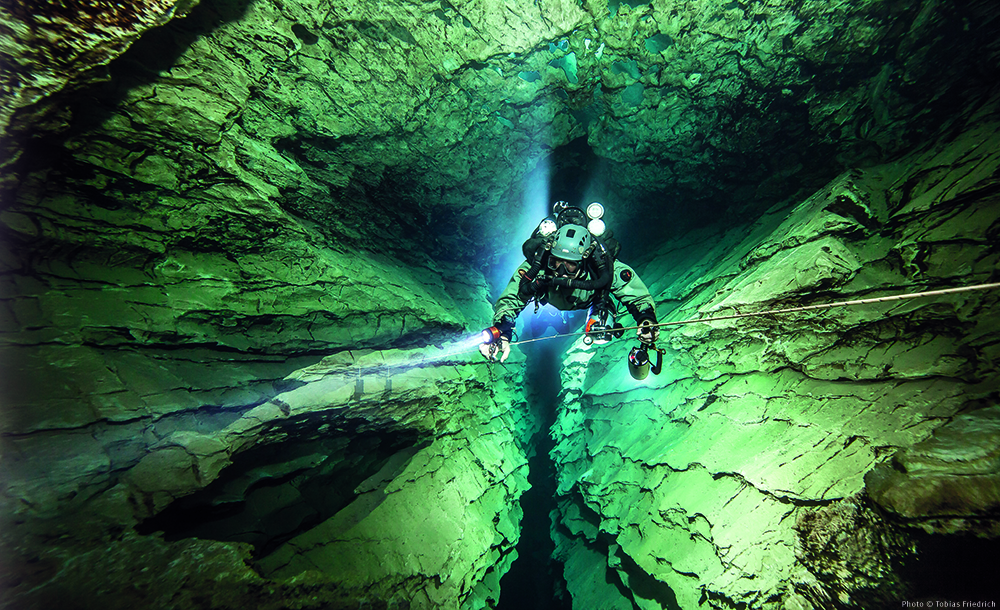
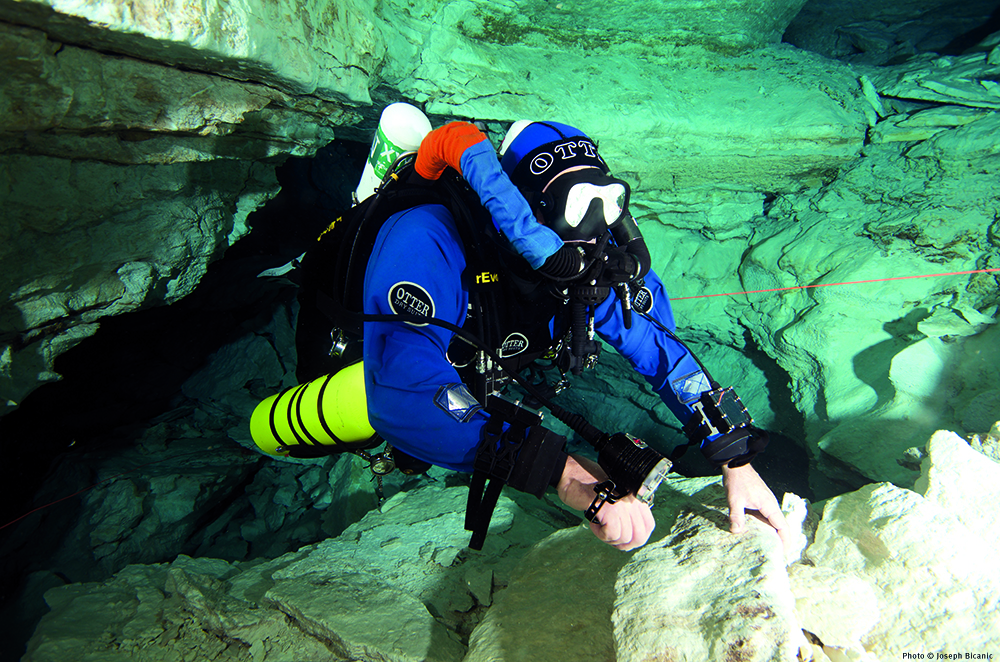
Diver with a rebreather in the Molnár János Cave, a thermokarstic water-filled cave system located in the Rózsadomb district of Budapest in Hungary, Europe. The deepest sections reach 98 metres (320 ft), while the total length of explored sections is currently 7 kilometres (4.3 miles). Cave mouth is just 200 metres (660 ft) from Danube.

We could smell the subtropical heat and humidity. Everyone who entered the Molnár János noticed that immediately. With every step deeper, the heat intensified, till I felt the sweat running down my back. This was a stark contrast to the cool outdoors of Budapest, thanks to the hot thermal springs that heat up the flooded cave to a warm 28°C. As impressive as the first steps into the cave are, the outside is unspectacular. The entrance to the cave is in the immediate vicinity of the Lukáz thermal bath. No sign, no advertising, just an old sliding gate behind a small car park. Who would guess that one of the most incredible diving sites in Europe were located here?

Stern dark brown eyes inspected every newcomer. These eyes belonged to Attila Hosszú, the only licence holder of the Molnár János in Budapest. He alone sets the rules, and for good reason. Since a diver died in the cave, the government completely prohibited diving, till they approved Hosszú’s licence. Even then, strict measures are in place to prevent further accidents; a diver must be certified with a basic cave diving qualification, have insurance that covers cave diving, and use either open-circuit double tanks or a rebreather. In addition, every dive must be accompanied by a guide.

“It is very important to follow all the rules if you want to return home safely,” Hosszú warns. Inside, the cave system snakes in many directions, up to 100 metres deep. Some corridors converge; others lead to dead ends. Hosszú and his assistants have set up seven kilometres of cave lines, though there is still much undiscovered behind them.“For the moment, we have reached the limit of four to five hours, even with the rebreathers, unfortunately,” Hosszú explains.

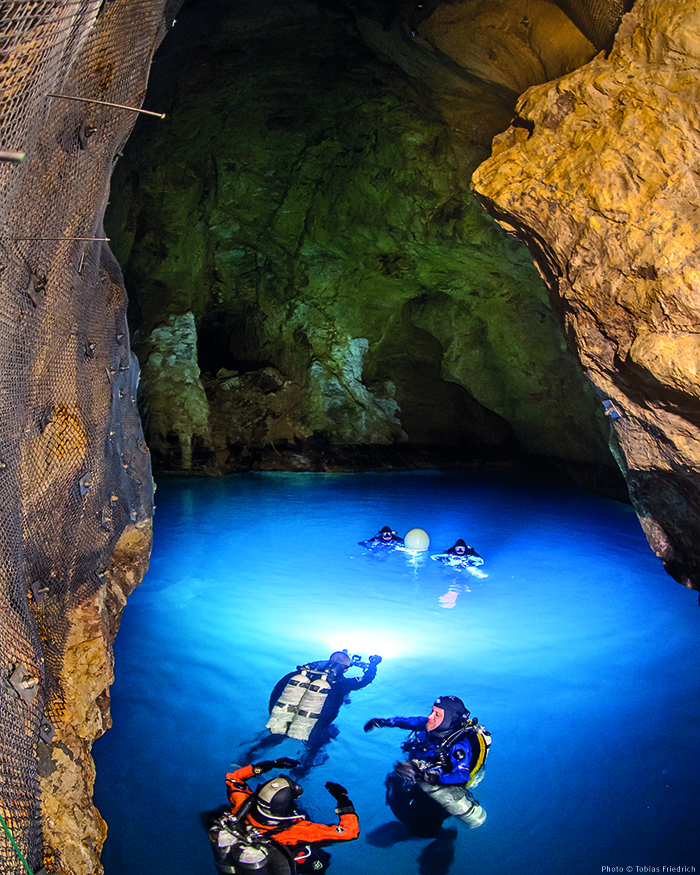
Divers ready to dive, holding underwater lamps that are illuminating the water in the Molnár János Cave. The Molnár János Cave is a thermokarstic water-filled cave system located in the Rózsadomb district of Budapest in Hungary, Europe. The deepest sections reach 98 metres (320 ft), while the total length of explored sections is currently 7 kilometres (4.3 miles). Cave mouth is just 200 metres (660 ft) from Danube.

We walked through the massive sliding door, which felt like a gateway to another world. Jumping into the warm water, all the warnings were forgotten, and excitement built as we anticipated the impending adventure. A large platform and massive ladder served as an entrance to the large pool. The high rocky walls were suspended with large steel nets to prevent any sudden rockfall from injuring a visitor.

In the light cast by the lamps, the high rocks of the entrance appeared like a synagogue of light and shade, while the pitch-black depth of Molnár János lay beneath us. As we descended into the darkness, our eyes became desperate for a reference, but only the fine sediment that covered the cave walls greeted us even after a few metres into the dark abyss. The high risk involved in this dive became apparent – one buoyancy mistake made too close to the walls would run the risk of zero visibility fast.

I followed closely behind, as after a few minutes, no direct ascent was possible; I sure did not want to get lost in this dark maze. At 10 metres, there was a thermocline layer where the water temperature dropped to 18°C, making a longer penetration without a drysuit impossible. For certain passages, the drysuit is even prescribed, mainly because of the additional buoyancy it provides.

It is a dark world in the cave. As lamps cast their light on the sharp-edged rocks, we realised the unique formations that surrounded us, formed over thousands of years. Tower-high cathedrals of rock were revealed in fractions of a second as camera flashes burst in symphony; and deep columns hinted at the long history of the cave. Who knew such an alien world existed beneath the historical city of Budapest?

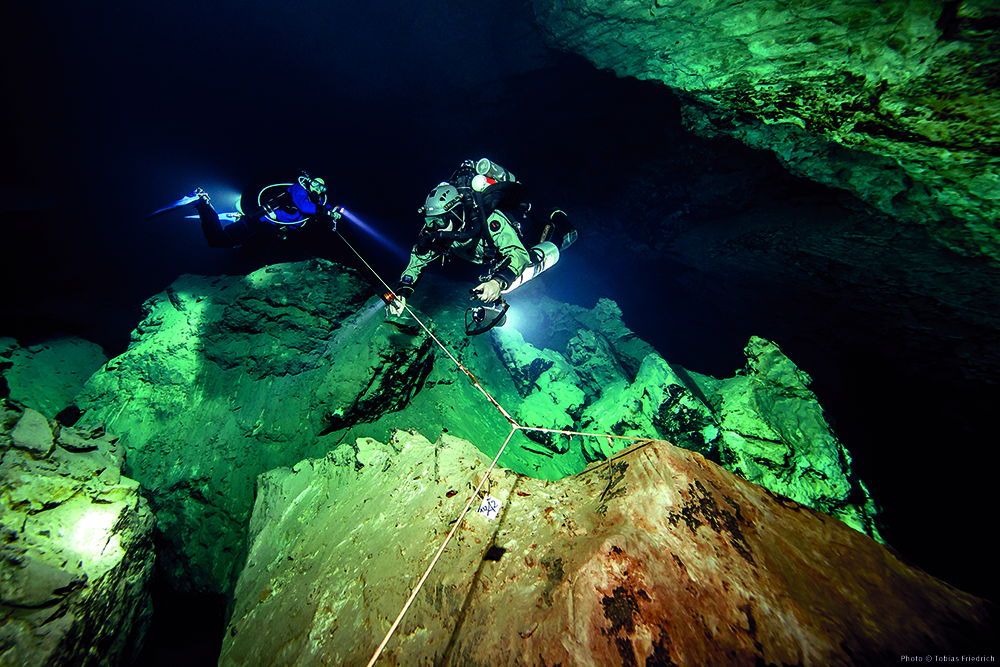
Two divers holding several dive lamps in the Molnár János Cave. The Molnár János Cave is a thermokarstic water-filled cave system located in the Rózsadomb district of Budapest in Hungary, Europe. The deepest sections reach 98 metres (320 ft), while the total length of explored sections is currently 7 kilometres (4.3 miles). Cave mouth is just 200 metres (660 ft) from Danube.

Taken from Scuba Diver No. 110 Issue 4/2017

Cave Diving in Weebubbie Cave, Australia

0

Like most avid divers, I use any excuse to be underwater. After countless reef dives, muck dives, wreck dives and the like, I became dissatisfied, looking for a different underwater adventure to fulfil the explorer in me. That’s when I was introduced to cave diving.

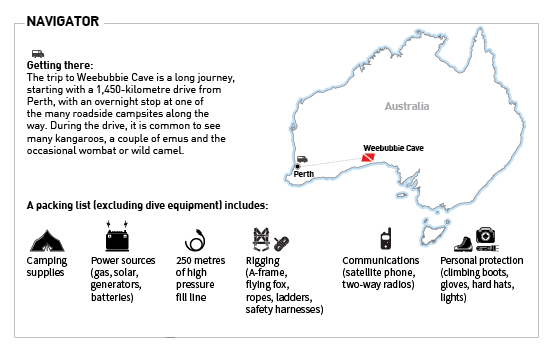
Diving the caves of Australia’s Nullarbor Plain is no diving vacation. The 10-day expedition involves significant effort to reach the waters, as well as a truckload of equipment and logistics – a stark difference compared to the easy accessibility of the caves in Mexico, Florida, and Sardinia. However, the reward of stepping into the underworld of the cave and descending into the clear waters makes all the effort worth it.

The Sinkhole

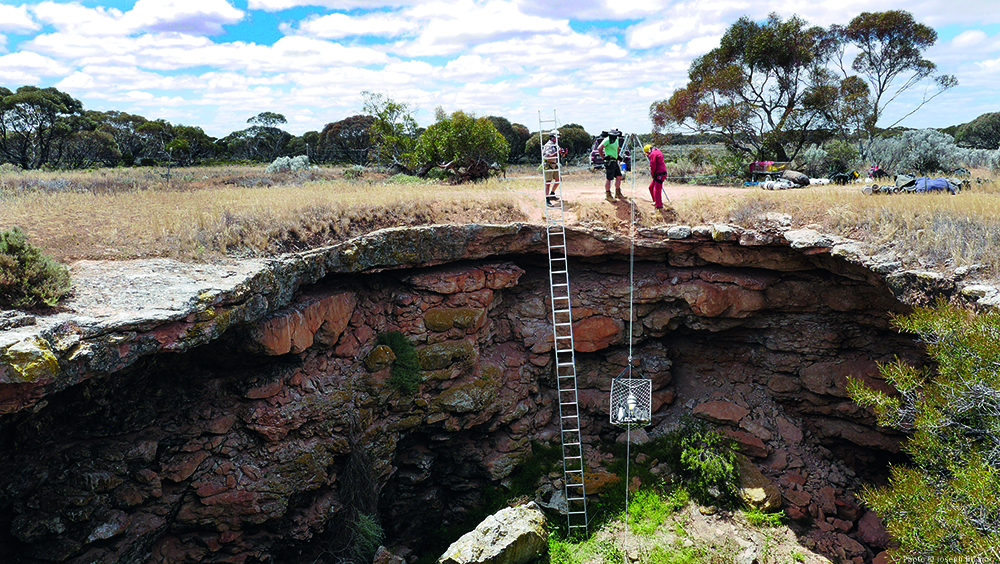
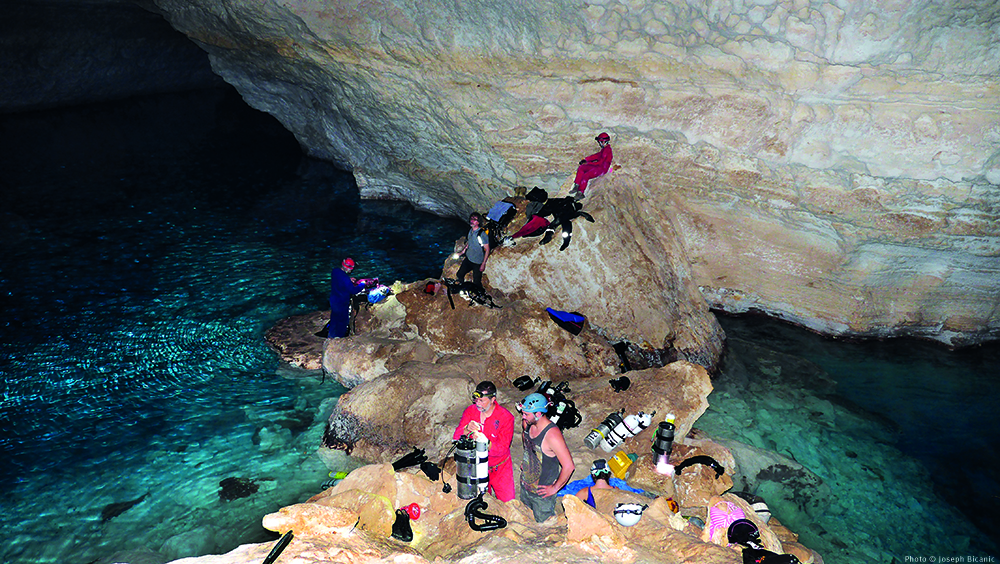
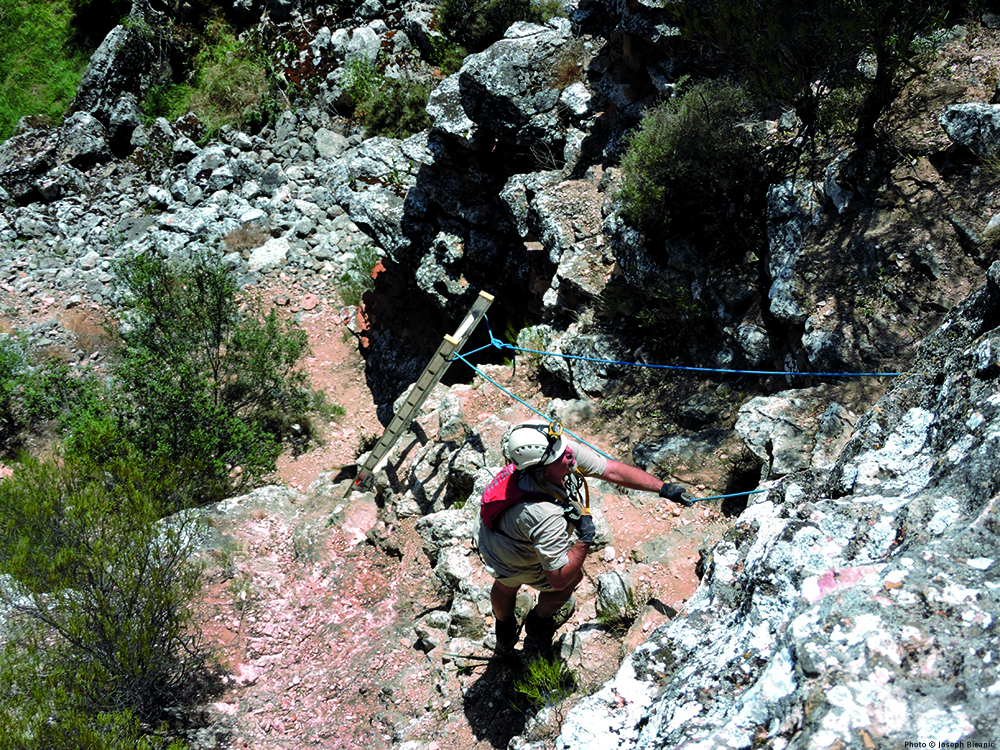
It is an interesting journey to the water. A sinkhole lying 90 metres above the water (equivalent to a 30-storey building) acts as a portal to the cave. It takes two full days for the team to setup camp, haul the equipment down the sinkhole, and carry it into the cave. We descend over the edge of the sinkhole via a six-metre ladder, shimmying down a gentle slope to a second 12-metre ladder, followed by another round of careful shimmying to the entrance of the cave, where a wooden ladder awaits. From there, it is a short walk to the entrance of the cave. Once inside, we follow the marked path to Weebubbie Lake.

Weebubbie

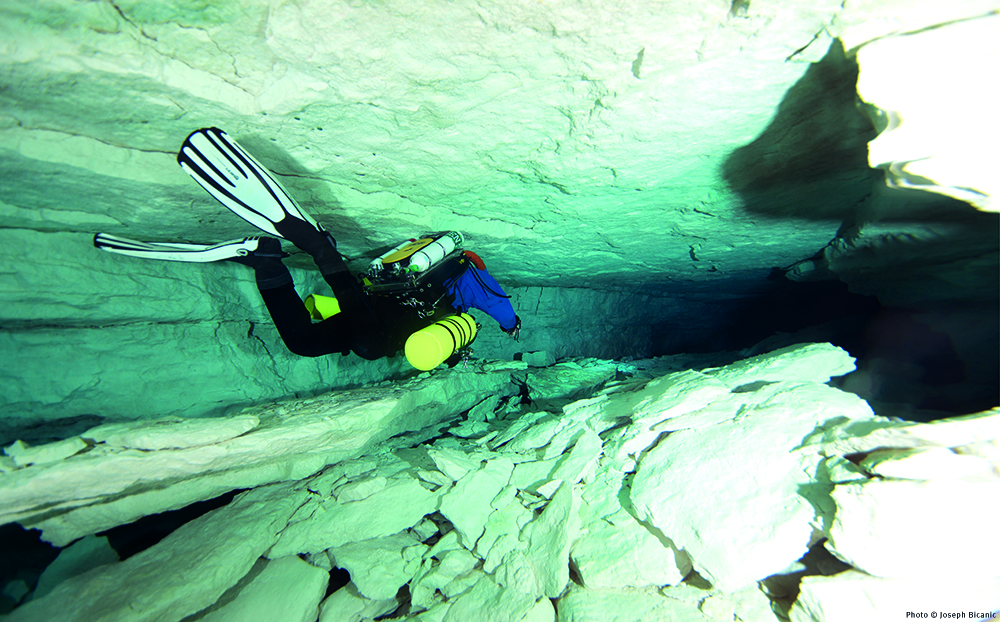
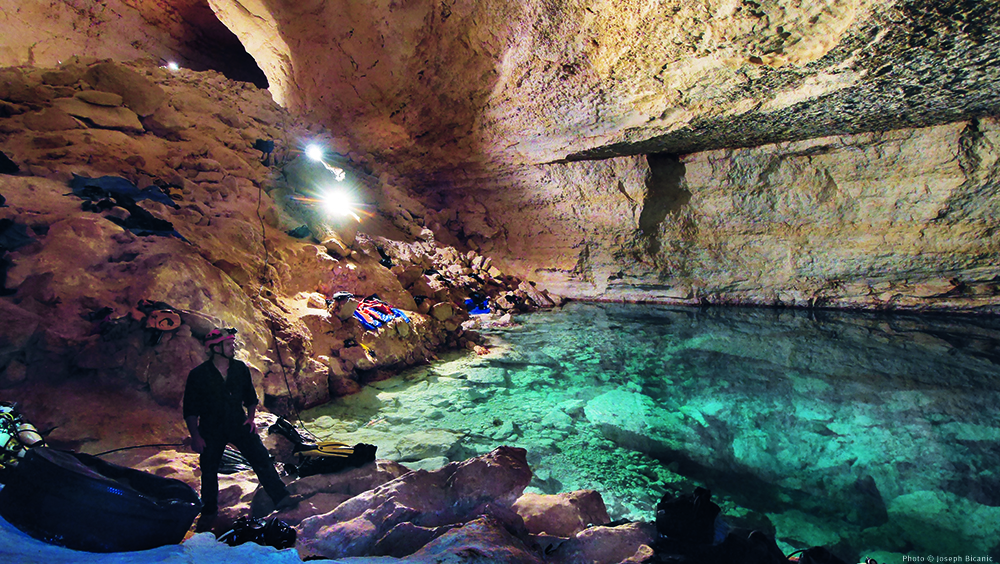
Weebubbie is an impressive limestone cave with crystal-clear water and powdery white walls, decorated with massive white slabs of rock that appear cut to shape – one would think that the passages were mined rather than being naturally occurring openings. The dive site is more like a cave system rather than a whole cave, requiring several dives to explore all the passages.

The main dive is through the Railway Tunnel – a wide channel with a high ceiling that leads to an algae-covered section known as the Snot Room. The depth here reaches 45 metres, so closed-circuit rebreather (CCR) diving is recommended to minimise deco times. To the right of the Snot Room is another passage with two tunnels narrowing to a low flattener that can only be accessed by sidemount. We had to be mindful of trim and buoyancy to avoid white-outs in the narrower passages.

The Dome Room is another tunnel off to the right of Railway Tunnel, with an extremely large, breathable chamber. Forming a perfectly circular lake, the room is impressive in itself. As we continued swimming to the back of this section, we found some good holes to explore that dropped down to about 30 metres deep.

Weebubbie Cave itself has a 26-metre sinkhole situated one metre away from Weebubbie Lake, separated by a natural limestone formation. The sinkhole makes for an easy, short no-deco dive and can be fully explored in half an hour. On the other hand, Weebubbie Lake stretches out for around 150 metres until it disappears into the cave system. The lake area is predominantly shallow, but the outer edges drop to over 30 metres in certain areas. The lake is best explored at the end of a dive, giving divers time to investigate during their decompression stop.

Taken from Scuba Diver No. 110 Issue 4/2017