Home Blog Page 12

Mermaids In Asian Folklore

0
Wat Khongkharam, Photharam, Ratchaburi -THAILAND, March. 31, 2019 : Ancient mural painting about Mermaids creatures animals in literatureon on the wall in buddhist temple wat khongkharam.

Text by Shreya Acharya


The mythical creatures which inhabit the depths of the ocean give form to water’s essential mysteries. They arouse feelings of curiosity, hope, and bottomless fear. Like water itself, these creatures can be enticing… and frighteningly familiar…

Mermaids also appear in Asian legends and mythologies, sometimes represented similarly to the Western mermaids, but at other times, as monstrous beings with physical features unlike what we’ve seen so far.

JAPAN

Japan speaks of a hybrid, half-human-half-fish called the ningyo, and the most well-known stories are those of Amabie and Yao Bikuni. These are creatures that possess aquatic and human characteristics, although they are quite different from the Western mermaids: They possess long fingers, sharp claws, shining golden scales, deformed heads, horns and salient teeth. They usually have a semi-demonic appearance – not at all seductive. Their tears turn into pearls and their flesh, when consumed, brings eternal youth to those who have done so. One feature they have in common with Western mermaids: a beautiful voice. With time, especially after the late 19th century, the word ningyo acquired connotations similar to those associated with the word “mermaid” in the West: beautiful and seductive. This was in part owed to the mermaid stories told in Japan by the Western sailors that had sailed there.

In the 19th century, thousands of people, mainly in the US and England, visited freak shows to see skeletons and mummified creatures that were believed to be the remains of actual mermaids. Some of them were known as “Japanese mermaids”, since it was said the creatures were caught in Japan by sailors who brought them to the West. After the 1837 publication of The Little Mermaid, by Hans Christian Andersen, the idea of ​​mermaid brides was particularly in vogue, and those who expected a beautiful mermaid found themselves looking at a creature with the lower body of a fish and a head and torso of a monkey. These “handmade mermaids” were so well done that it was impossible to detect where the joints were. The Japanese became famous for being master craftsmen of fake mermaids. The most famous one is known as “The Fiji Mermaid”, which was claimed to have been caught near the Fijian islands, in the South Pacific, but was probably made by Japanese fisherman around 1810.
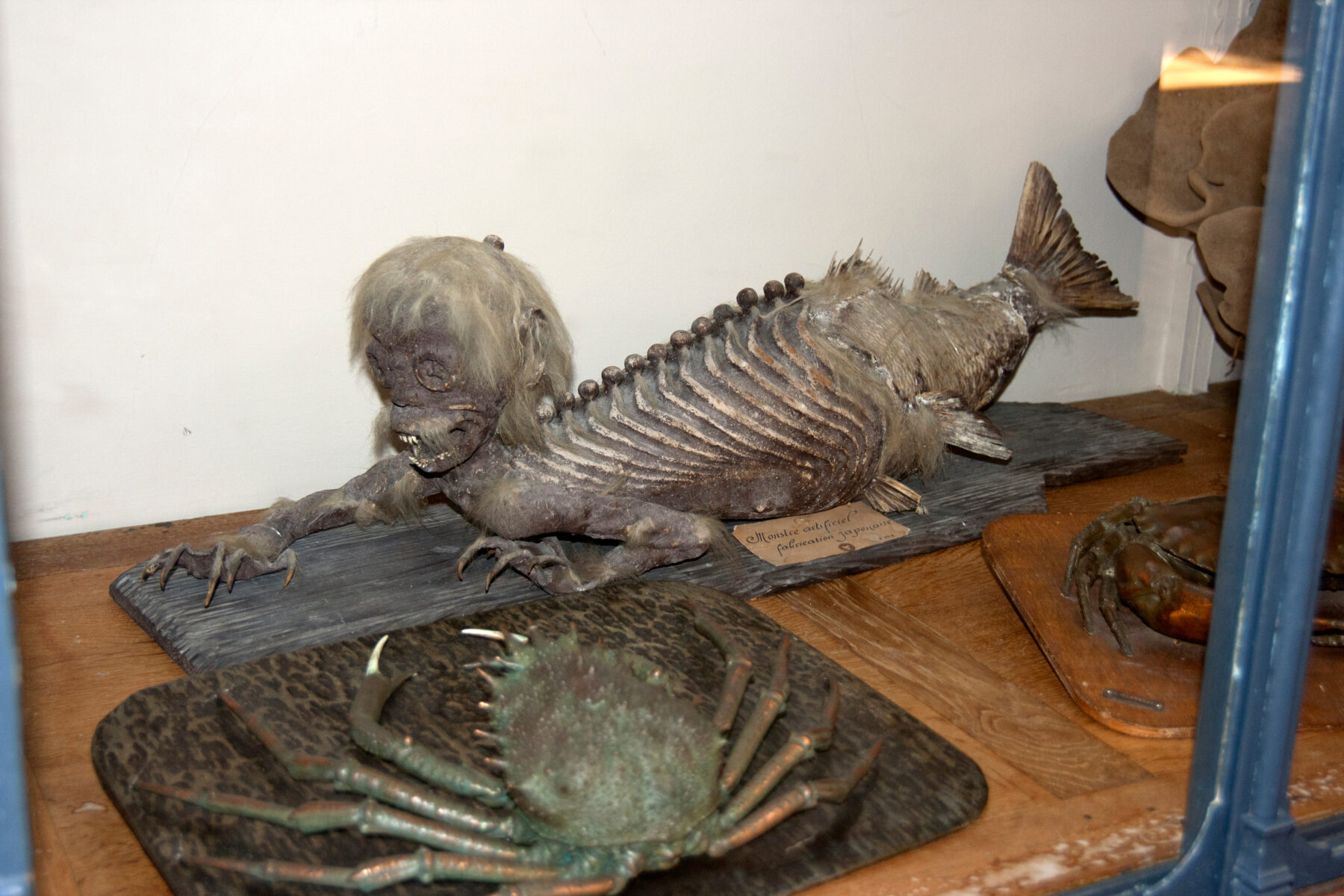
A Fiji Mermaid, Monaco Oceanographic Museum

INDIA

In Indian culture, we can find the Matsya, the fish avatar of Vishnu in Hindu mythology. Sometimes it is depicted as having the upper body of a man and the lower body of a fish. But, most of the time, we can see Vishnu emerging from the fish’s mouth. It’s not exactly an amphibian creature, as the Naga, an anthropomorphic half-man-half-serpent, is presented in Indian and other southeast Asian legends and myths as water spirits. In some cases, the serpents are replaced by dragons. The Nagas are serpents who inhabited rivers and pools and could change their form at will. Sometimes they were depicted as demons, but the female Naga, the Nagini, can be represented as a sensual woman, associated with bodies of water, fertility, and protection, playing roles similar to mermaids in Western culture.


CHINA

Mermaids are mentioned in some Chinese works, such as the Shan Hai Jing, a compilation of Chinese geography and mythology from the fourth century BC that refers to mermaids as ling yu or ren yu. The book also mentions other types of mermaid, such as chi ru, di ren and hu ren. Interestingly, some of them had four feet and could emit a sound similar to that of a crying baby; others could even resurrect after death.

A book written in the Ming Dynasty (1368-1644), Sou Shen Ji, refers to mermaids living in the South China Sea: They were called jiao ren and were excellent craftswomen who would weave cloth that could never get wet. Hermaphrodite mermaids with black skin, yellow hair, human eyes, webbed hands and feet, and red wings are mentioned in Hai Cuo Tu, a book written by the biologist Nie Huang from the Qing Dynasty (1644-1911). Similar to the Japanese ningyo, the Chinese mermaids were famous for their tears that turned into pearls. Because of this, mermaids were largely depicted in literary stories as lonely, tragic figures who sacrificed themselves for love.


THAILAND

We can find the “Golden Mermaid”, Suvannamaccha, in the Thai version of the Ramayana – a highly-revered piece of Indian literature. A mermaid princess and daughter of Tosakanth, she falls in love with Hanuman, one of the central characters in the various versions of the epic. She tries to spoil Hanuman’s plans to build a bridge from India to Sri Lanka to rescue Sita, another central figure of the story. Nevertheless, she falls in love with Hanuman. She is a very popular figure of Thai folklore, with her statue erected in many houses and shops in Thailand for good luck. Her character most likely inspired the Thai poet Sunthorn Phu, who created another “Golden Mermaid” for his book Phra Aphai Mani, which has been very popular in Thailand since the 19th century. A golden mermaid statue in Laem Samila Beach, in Thailand’s Songkhla province, is dedicated to Suvannamaccha.
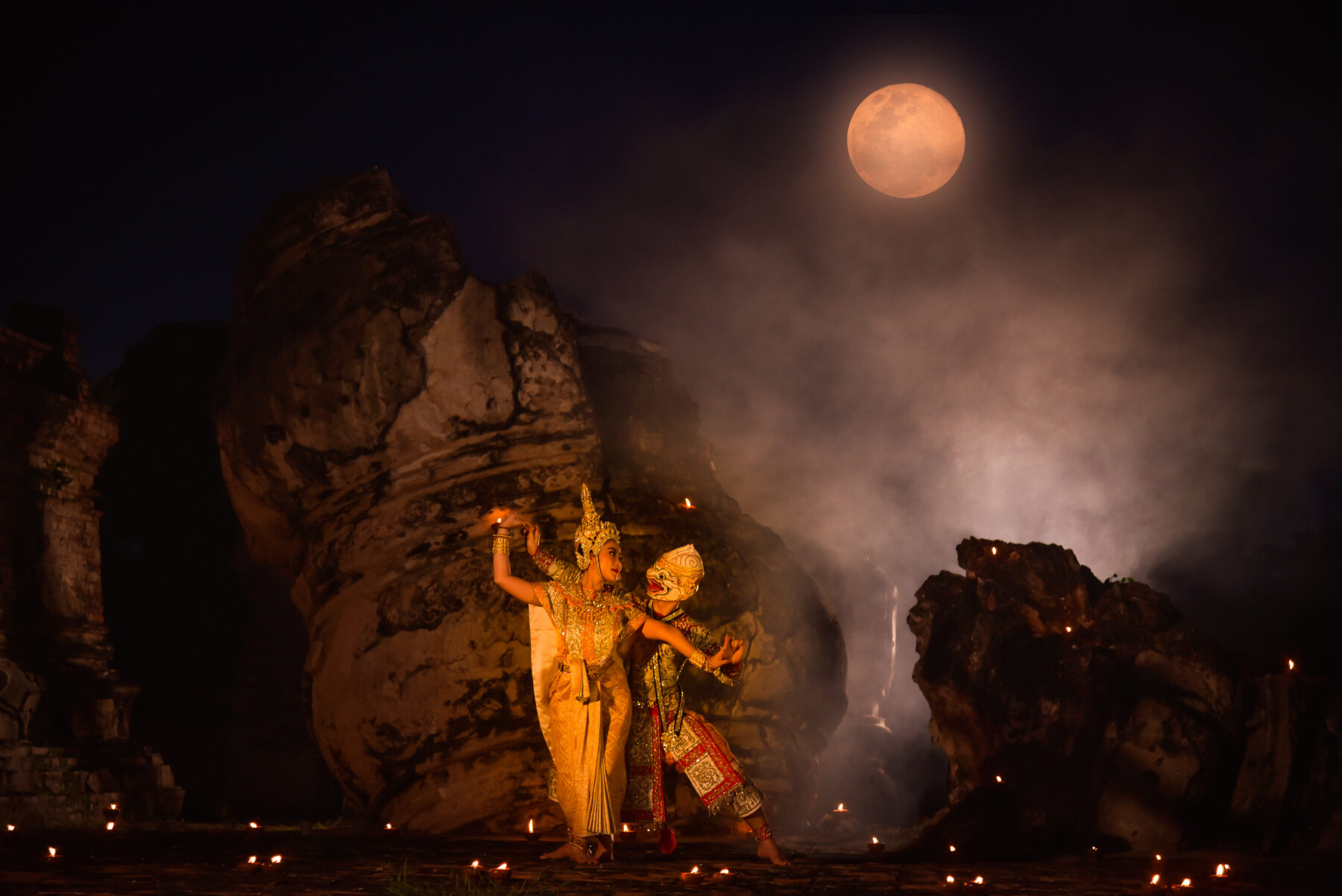
Masked Hanuman and Suvannamaccha, the two lovers as shown Ramayana literature.

MALAYSIA

In Malaysian mythology, mermaids are known as duyung, meaning “Lady of the Sea”, which is where dugongs get their name from. Dugongs are marine mammals from the Sirenia order that live in the Indo-West Pacific region. Drawings of the dugong, which are estimated to have been made between 2,000 and 5,000 years ago, are etched inside Malaysia’s Gua Tambum Cave in Ipoh. Some say they were the inspiration behind many sailors’ tales of sirens and mermaids because of their cultural importance and common physical characteristics: they share the same fluke and fusiform body, and don’t have dorsal fins. It was easy to mistake dugongs for mermaids from afar.


INDONESIA

Indonesian mermaids are called putri duyung, with putri meaning princess. Indonesians have a strong belief in the legend of the healing power of mermaid tears, and have even created a mermaid oil that is supposed to help people fall in love. Since they can’t find real mermaid tears, they collect the tears of dugongs under special and ritualistic conditions to make the famous and miraculous oil.

Both Malaysian and Indonesian mythologies claim that “their” mermaids originate from the Assyrian goddess Atargatis, who left Syria, crying, after suffering from love. Indonesians claim she swam all the way to their country, while Malaysians believe she went to theirs.
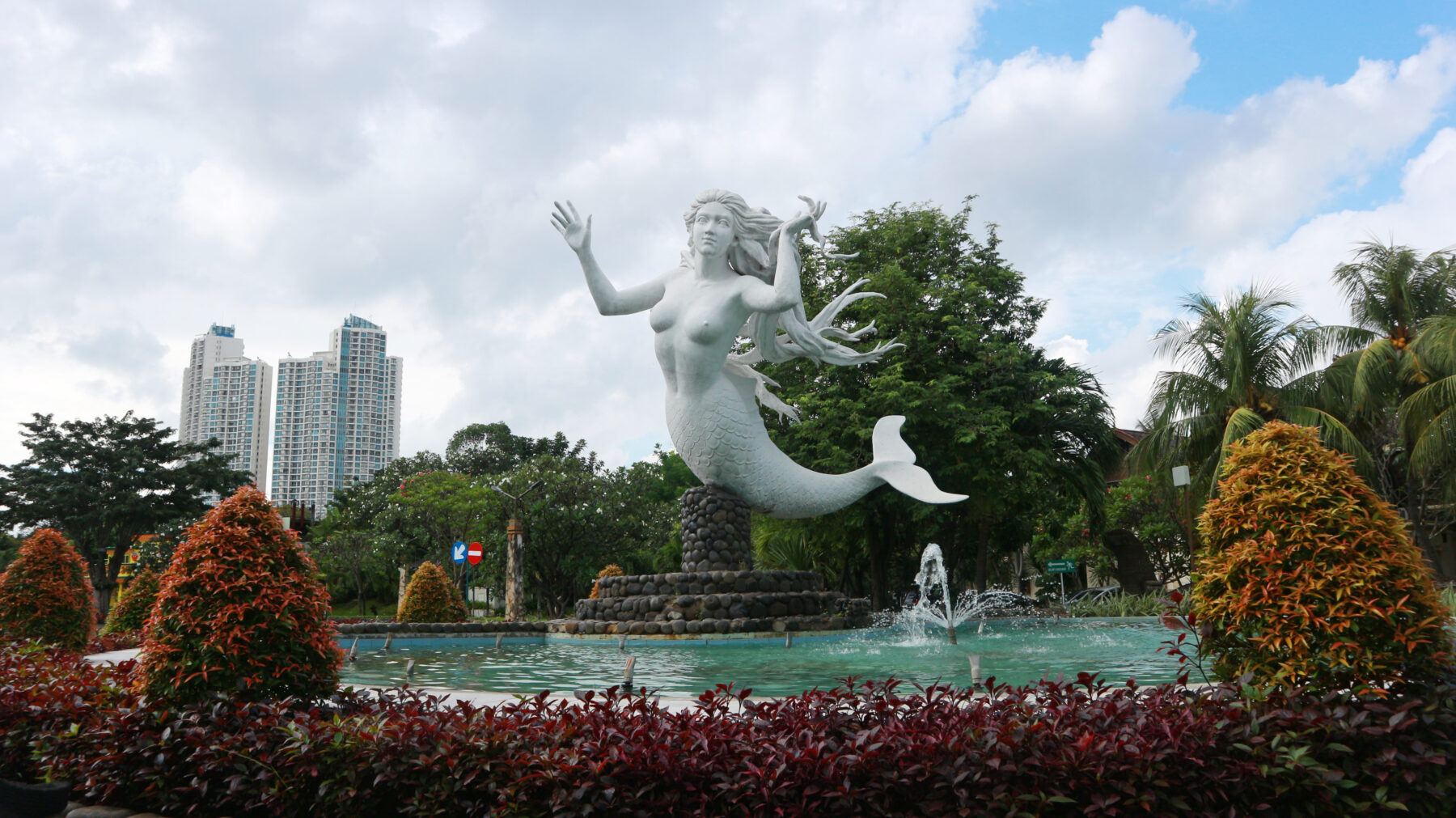
Mermaid Statue at Putri Duyung Resort in Jakarta, Indonesia

PHILIPPINES

In Phillipine mythology, mermaids are called sirena due to Spanish influence. They have nothing to do with the sirens from Greek mythology, who are portrayed as woman-bird creatures. They are seen as an engkanto – environmental spirits that can appear in human form. Engkantos are one of the Bantay Tubig, the mythical guardians of the water, and are very similar to the beautiful Western mermaids, though they are described to be vicious towards humans together with their male counterpart, siyokoy. While the sirena are beautiful, the siyokoy can appear quite frightening with their gill slits, scaly brown or green skin, and scaled legs with webbed feet, sometimes appearing as a fishtail.

Nowadays, Asia is teeming with films, pictures and books that tell stories about mermaids, more akin to the Western variety. With the growing popularity of mermaids, an influx of mermaid schools and shows have been observed all over the Asian continent.


ScubaDiver issue no. 118 dives into all the mysteries of the underwater world and covers where you can not only dive, but dig in to the tasty different cuisines across Asia’s prime dive locations.

A post-pandemic climate for diving is also explored with all our tips and tricks to navigate getting back to the water.

Pick up a copy here

Face To Face With The Endangered Blue Whale

0

Interview with Kay Burn Lim

Text by Sienna Lakin

Featured Photograph by Tom Thurman 

The blue whale is under threat.

After years of industrialised whaling, the impacts of human induced climate change and the encroaching tourism industry, this magnificent animal requires protection.

Photographer, diver and expedition leader Kay Burn Lim talks us through the experience of diving with the blue whale and how this has brought about a new appreciation for these animals as well as a concern for their well being. This is something that concerns us all. We must understand the importance of the blue whale as a player in countering climate change and as a crucial part of our underwater ecosystem and wider biosphere. If we can closely monitor their endangerment and protect the species, they can in turn help us in our battle against climate change.

“When I first started leading these expeditions to see the blue whale with my partner, Eric, we realised that the number of people that have seen a blue whale underwater was actually less than the number of people that have been in space!” says Kay Burn. “It is an incredible privilege to be in their presence. This is the largest known creature to have ever lived, far bigger than any dinosaur. I am extremely fortunate to have come lose to these giants and to have seen them underwater.”

On a recent visit to the Boola Bardip Museum in Perth, Australia, Kay Burn stood under a full- sized adult blue whale skeleton that they have on display and was awestruck. “While in the water, there is no size reference to what you are seeing,” Kay Burn points out. “It is simply blue water behind a blue whale. Standing there in the museum, however, it finally struck me just how huge these creatures are.”

The photographer shares his dismay at the shocking figures that are attached to the whaling era, with as few as 10,000 blue whales remaining from a peak of perhaps a quarter million in the early 20th century. Modern-day environmental pressures, such as ship strikes and the effects of climate change on their food source, present an ever-increasing danger to what is left of these beautiful giants. “It is my hope that by aiding others to see this almost mythical creature for themselves, they will in turn help bring awareness to their plight”, he says.

In the first six decades of the 20th century, around 360,000 blue whales were killed, slaughtered for oil lamps and to make soap and margarine. The populations around South Georgia Island in the southern Atlantic Ocean and Japan’s coastal waters were completely destroyed. Other populations were reduced by 99 percent, brought to the very brink of extinction.

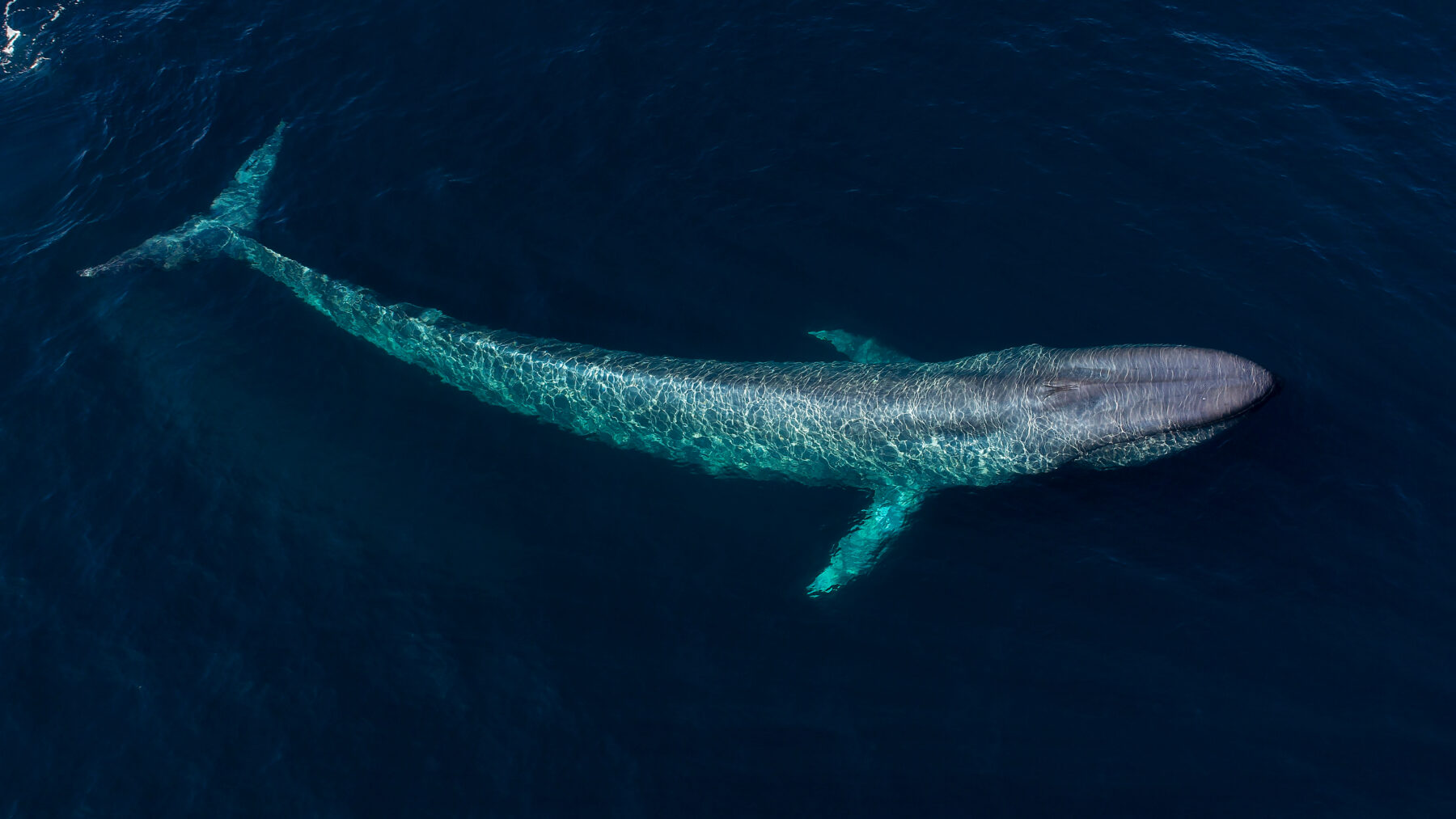
From an aerial view, a blue whale swims under the surface


Threat to Survival

It became increasingly clear that the blue whale hunt was massively unsustainable. Protections for blue whales began in parts of the Southern Hemisphere in 1939. Under the International Convention for the Regulation of Whaling, they had received complete protection in the North Atlantic by 1955. This was extended to the Antarctic in 1965 and the North Pacific in 1966 , finally giving blue whales blanket protection. At the same time, the use of whale oils declined significantly with the commercial development of the petroleum industry and vegetable oils likely saving whales from extinction.

New threats from human activity have since emerged, including marine pollution, noise from shipping, and the effects of global warming. Entanglement in discarded fishing nets, injuries from ship propellers, and the adverse effects of plastics in our oceans are all furthering this endangerment.

The impact which blue whales have on the environment is only now being fully understood. The whales’ feeding on krill and fertilisation of phytoplankton is a vital cyclical component in the balance of the Earth’s climate, since plant plankton absorb carbon dioxide at the surface and sequester it when they sink into the abyss. Thus, whales play a significant role in the maintenance of the Earth’s biosphere.

According to a study by a group of scientists from the Australian Antarctic Division and the Antarctic Climate and Ecosystems Cooperative Research Centre (ACE CRC), this nutrient cycle promoted by migration movements is a counteractive process in climate change-related greenhouse gas emissions. If pre-whaling numbers of blue whales alone were considered, the increased nitrogen concentrations would have enabled phytoplankton to sequester and absorb up to about 15 percent more carbon per year. The positive contributions to our climate, as forged over millennia, by blue whales have been undermined by recent activities. With the accelerating effects of climate change, we must act now.

One of the most pragmatic strategies to protect blue whales, indeed all large whale species, is to decrease ship speeds. If this is done in critical management areas and during seasonal periods coinciding with peak whale abundance, harmful or fatal collisions between ships and whales can be minimised.

With respect to pollution from boats, including noise pollution, human interest in the blue whale in itself poses a threat. The very nature of tourism around blue whales is further entrenching their endangerment. Sri Lanka is an Asian hotspot that provides a rare opportunity to interact with and photograph the blue whale. Kay Burn, as someone who organizes expeditions to witness the blue whale for documentary, photography, cinematography, and research-based work, is very much aware of the extent of the threats they face.

“Some years are better than others, some weeks are incredible while others may go days with no sightings,” he notes. “Such is the nature of this kind of expedition. These are endangered creatures and the ocean is vast. Having said that, El Niño does seem to have an impact on whale behaviour in general as it affects both water temperature and in turn the feeding grounds. This is true for all whale species. For something as large as an adult blue whale that has no known predators, the single greatest concern would be the sustainability of its food source.”

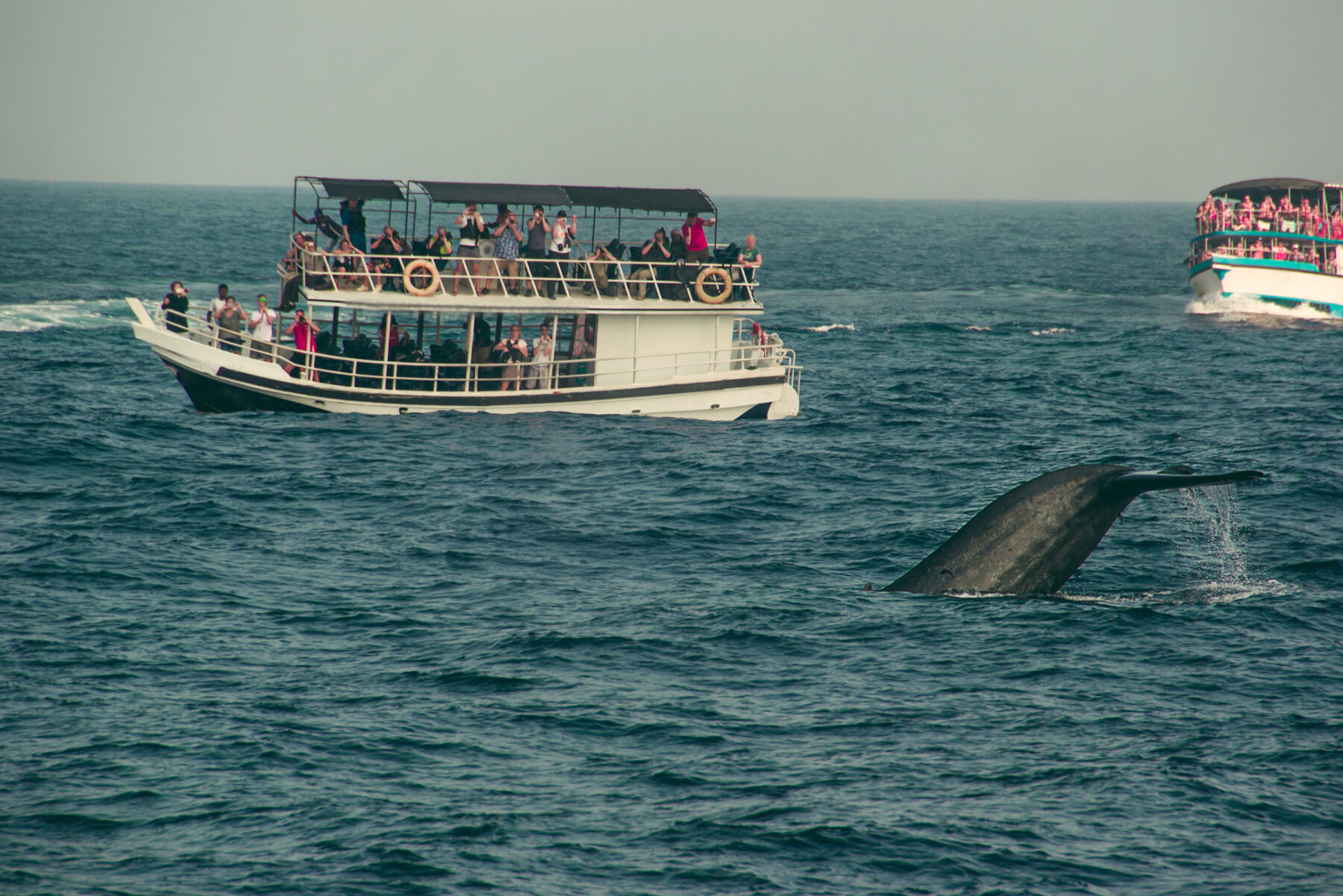
Unfortunately, an unregulated whale watching industry has developed over the past few years in Sri Lanka. Mirissa in the country’s south sees dozens of whale-watching boats chasing after a few whales, while in Trincomalee Bay in the north, unscrupulous operators run illegal ‘swim with whales’ tours. Trip leaders like Kay Burn use experienced licensed guides and obtain the proper permits from the government to get into the water with whales. Without a permit, swimming with whales is unlawful.

Wild blue whale tail diving deep, Indian ocean, Mirissa, Sri Lanka.

“Due to the huge interest in these creatures, illegal operators can crowd the whales and behave in a manner dangerous to both swimmers and the whales themselves,” says Kay Burn. “This is why licensing and enforcement need to be exercised. Sightings are usually kept secret.” Besides Sri Lanka, Kay Burn has also had the opportunity to see and swim with blue whales in Indonesia in the Banda Sea. Whales are seen there regularly as they migrate through the region. The animals have also be sighted in the waters of East Timor, a country that Kay Burn hopes to visit soon. When asked how he feels about the tourism industry regarding blue whale spotting and whether this has a role to play in their endangerment, he admits tourism in any form, whether land-based or underwater, walks a fine line when it comes to encroaching on Nature. “A healthy respect for what we are there to see is key to operating responsibly,” he says.

While Kay Burn believes other factors such as ship strikes and climate change are of much greater concern, he recognises that tourism, especially when unregulated, may cause whales annoyance when encroaching on their feeding areas and cause them to change their behaviours. “The Sri Lankan government does an outstanding job of setting out guidelines to protect its wildlife. The structures are in place,” says Kay Burn. “However, resources to police this in the open seas are limited. While the Navy does police the waters and I have experienced checks for permits, it is a vast area to cover. In the end, I believe that responsible tourists need to help by confirming that their guides are licensed operators and that the proper (limited) permits have been secured to obtain this rare privilege of seeing this massive creature.”

It is reassuring to hear that figures like Kay Burn acknowledge that a sighting blue whales, let alone diving alongside them, is a privilege and there are dangers he, amongst others in roles of responsibility, must be conscious of. As divers and underwater shooters, it is our duty to support the protection of blue whales, ensure we use responsible operators, and do what we can to spread awareness about the threats – both immediate and long term that these magnificent creatures face.

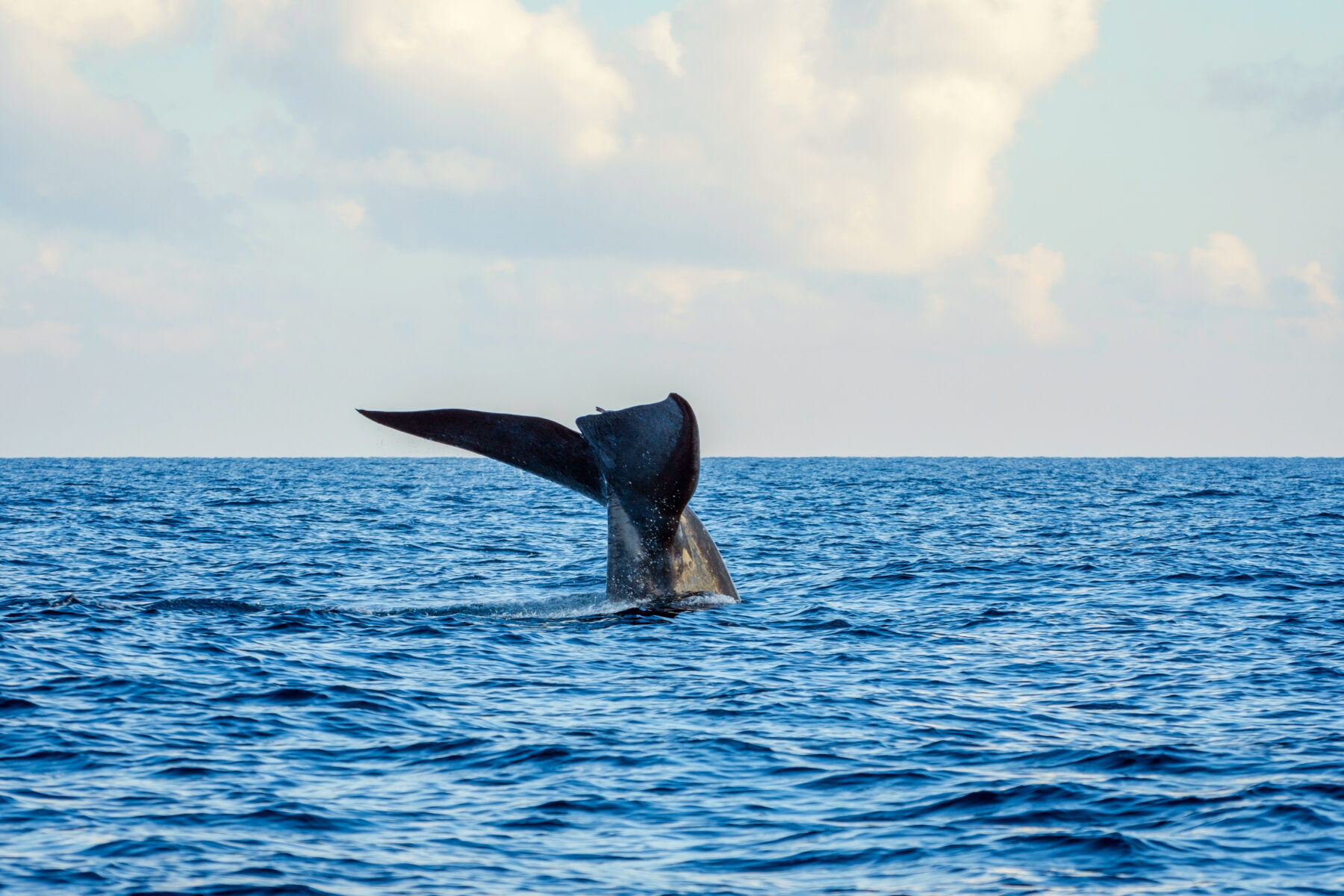
Blue whale tail in the ocean, Sri Lanka

KAY BURN LIM
Australia

Kay Burn Lim is an award-winning photographer, drone cameraman, and underwater cinematographer. He has worked on various documentary series and his photographs have been featured in magazines worldwide. When not on filming assignments, Kay organises and leads exotic dive expeditions to see big animals.


Issue no.161 of AsianDiver, The Big Blue Book, commemorates the blue whale as our featured animal for 2022.

Concerns around the endangered Blue whale are highlighted and relevant topics such as; why they are endangered, applicable science and conservation ambitions as well as where you can find them globally and, more specifically, in Asia. Ultimately, the blue whale is under threat. After years of industrialised whaling, the impacts of human induced climate change and the encroaching tourism industry, the magnificent animal requires protection. This magazine hopes to also raise awareness on this important matter.


This issue is also a dual feature issue with half of its contents containing our 30th Anniversary of AsianDiver! This issue focuses on personal experiences from 30 divers around the world across three generations and with a special feature of the 30 most exotic species as well as the 30 best dive destinations.

In conjunction with ADEX Ocean Gallery Vision 2022, celebrate exactly 30 years with Asian Diver this September 2022!

Pick up your copy here

Diving Around Phuket

0

One of the most popular tourist destinations in Thailand, Phuket is located about 800 kilometres from the Thai capital Bangkok and is not only a great destination for sunbathing, shopping and nightlife, but also home to some excellent diving sites.

Phuket, the country’s largest diving centre, is the departure point for many liveaboards to the Similan and Surin Islands and other southern locations. With over 1,000 kilometers of coastline, Phuket offers you the opportunity to explore diverse environments, from extensive fringing reefs and deep chasms to wrecks, granite walls, caves and more.

Phuket is also an extremely popular location for anyone wishing to do their PADI Open Water course or a range of other courses – and with an almost endless number of dive centres you are guaranteed to find one to suit your needs.

With over 100 dive sites scattered throughout the area, Phuket has something for everyone. The west coast is ideal for those looking for a quick dive when traveling with family, while underwater caves and wrecks can be explored.


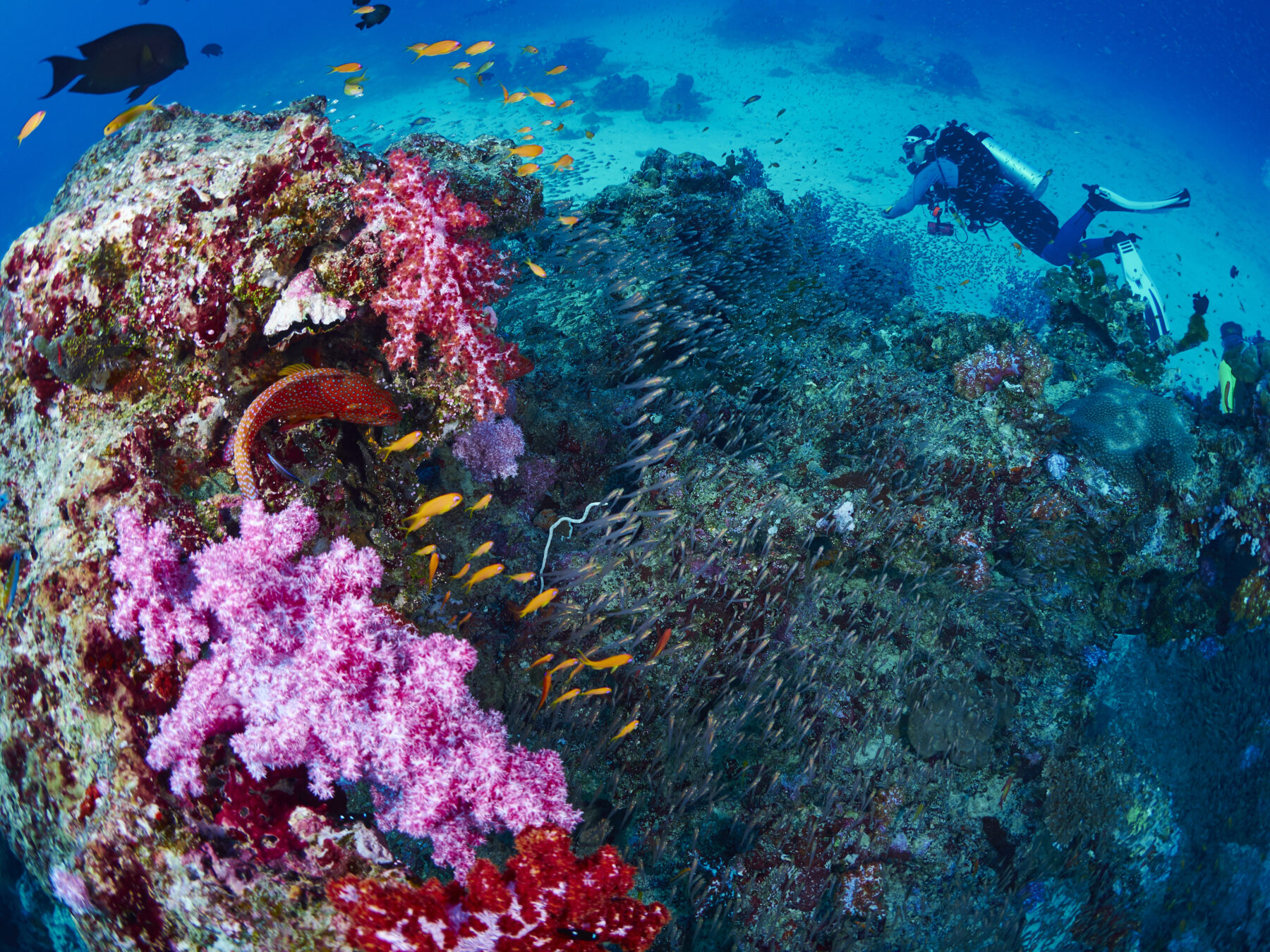
Shooting reef fish and coral grouper with diver, similan island, Thailand

Getting There

Easily accessible by air, Phuket can be reached directly from various other countries or via a transfer from other major cities in Thailand. You can also get there via the Thao Thepkrasattri Bridge, and ferries connect Phuket to places like Krabi and Phi Phi.


Beautiful Coral Reef near Phi Phi Island and Shark Point off the coast of Phuket, Krabi and Thailand

Anemone Reef

Located halfway between Phuket and Phi Phi Island, this underwater reef, as the name suggests, is famous for its sea anemones, and you can find a carpet of these beautiful sea creatures just five or six meters below the surface. The deepest point of the reef is about 25 meters.

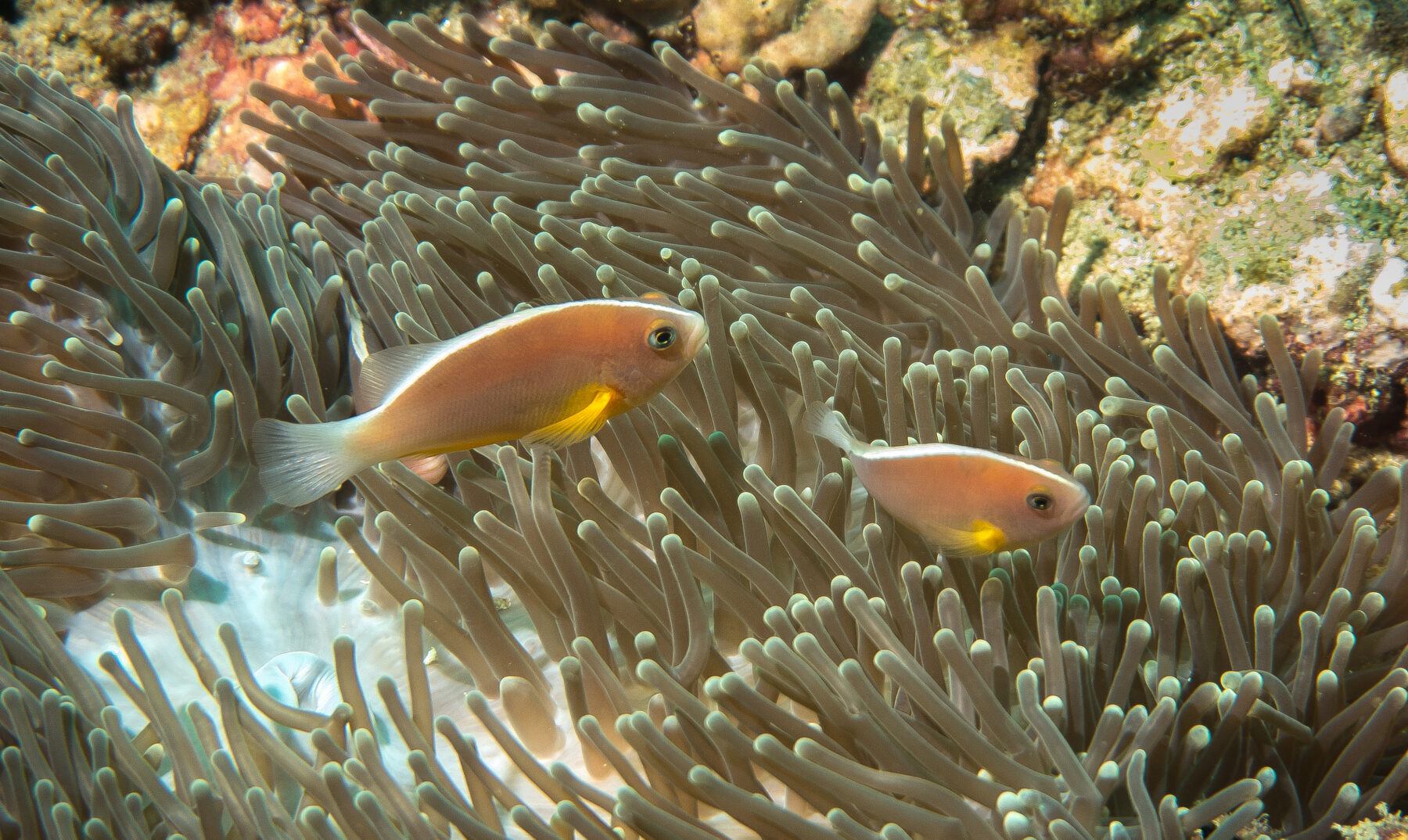
Expect marine life such as seahorses, ghost pipefish and many other small critters. Occasionally you will encounter leopard sharks, schools of snappers and small barracuda. Due to its unpredictable currents, this dive site is recommended for advanced divers and upwards.


For this issue, no.3 of 2021, diverse diving sites are covered in much detail with the pandemic’s impacts considered and advise on precautions any diver can take when travelling in a post-pandemic climate.


Pick up your copy here!

5 Dive Sites In The Philippines Packed With Marine Life

0

The Philippines is home to a handful of diverse and stunning dive sites with a vast array of marine life of all shapes, sizes and colours. Prepare to be blown away by the clear waters and vibrance of the marine life which awaits you there!


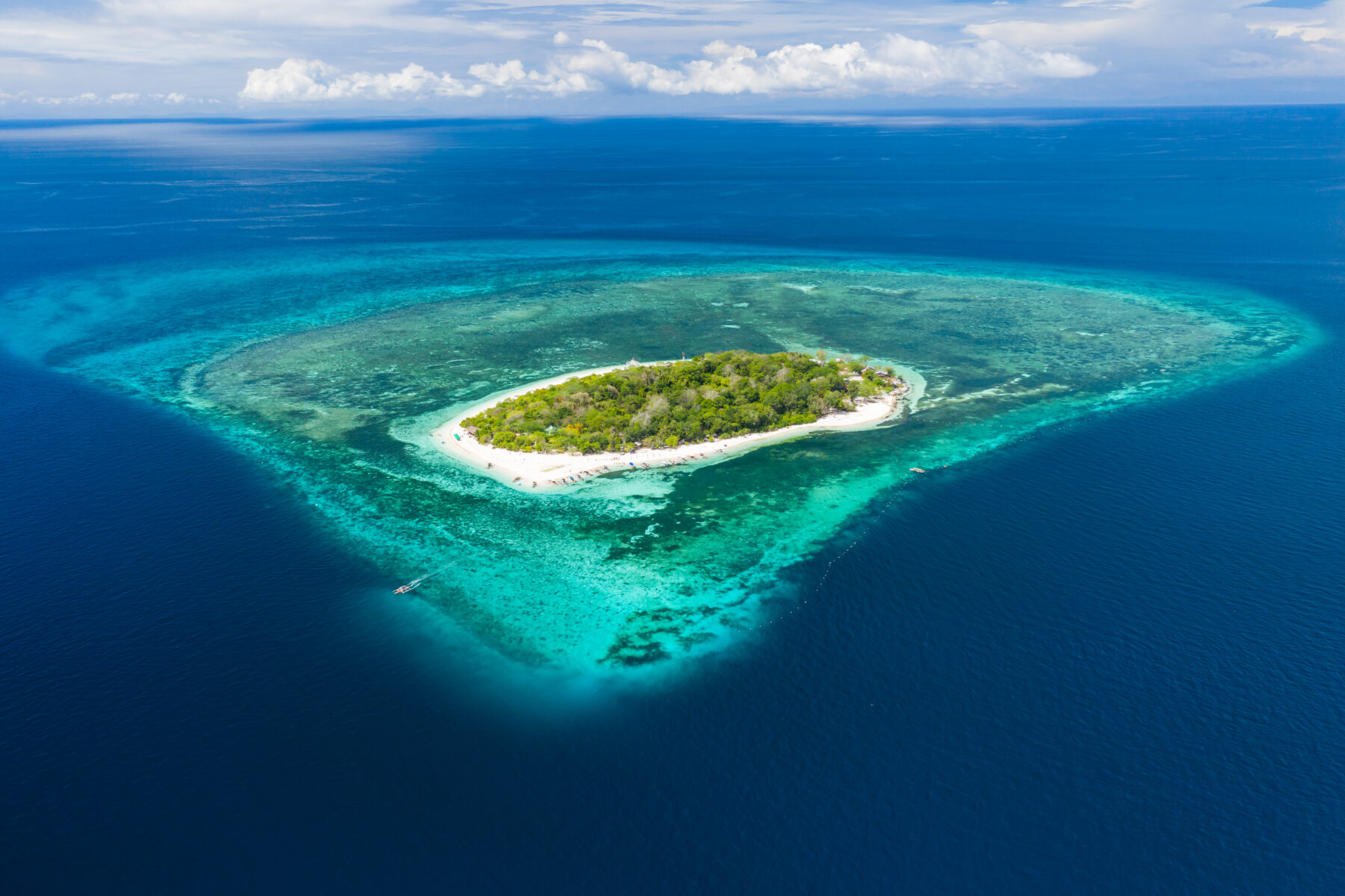
Mantigue Island

This underwater sanctuary is rich and thriving with marine life. This is the spot to find a sea turtle or two- divers are almost guaranteed to spot a sea turtle on their dive. Aside from turtles, divers can encounter ribbon eels, trumpetfish, pufferfish, boxfish, parrotfish, frogfish, barracudas, batfish, sweetlips, and even rays and blacktip sharks.

How to get there: From Mahinog, a boat ride to the island takes around 20 minutes.


An aerial view of Mantigue Island


Paliton Wall

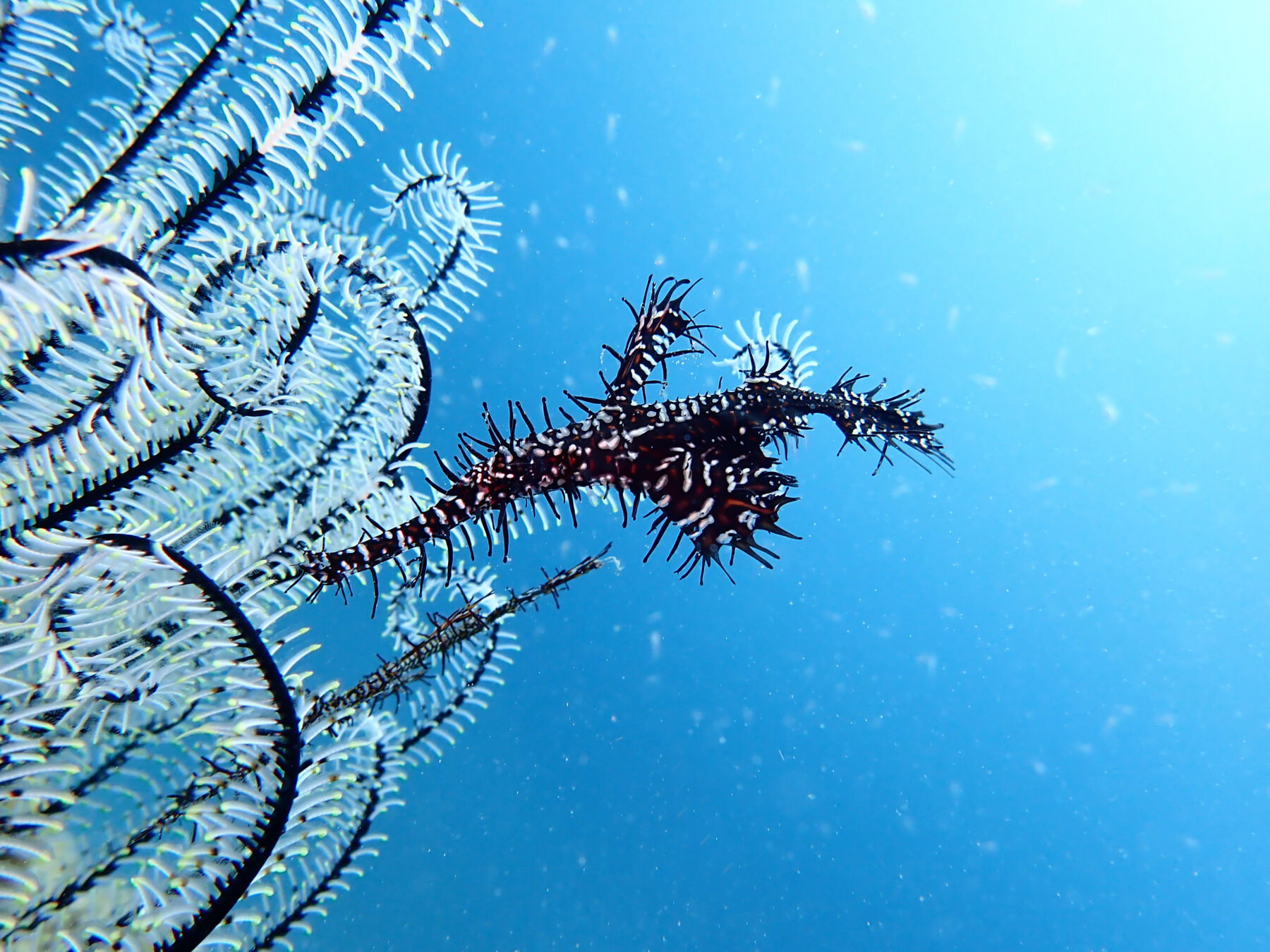
Paliton Wall drops up to 40 metres and is covered with colorful corals and fans, offering a large overhang and caves. Here, divers can spot a vast variety of marine life from giant frogfish, ornate ghost pipefish and Spanish dancers among the corals. There is certainly plenty to see here and no lack of colour.

How to get there: From Paliton Beach, Paliton Wall is just a short boat trip away.

An Ornate Ghost Pipefish, which can be seen at Paliton Wall


Secret Bay

Secret Bay is no longer a closely held secret but has become popular muck diving site. The spot is home to a considerable amount of marine life creatures such as mimic octopus, wonderpus, pipefish, seahorses, frogfish, and many others.

How to get there: Secret Bay is reachable from Anilao and you can take a jeepney to the Mabini town or Anilao pier.

A mimic Octopus, which can be seen at Secret Bay


Agojo Reef

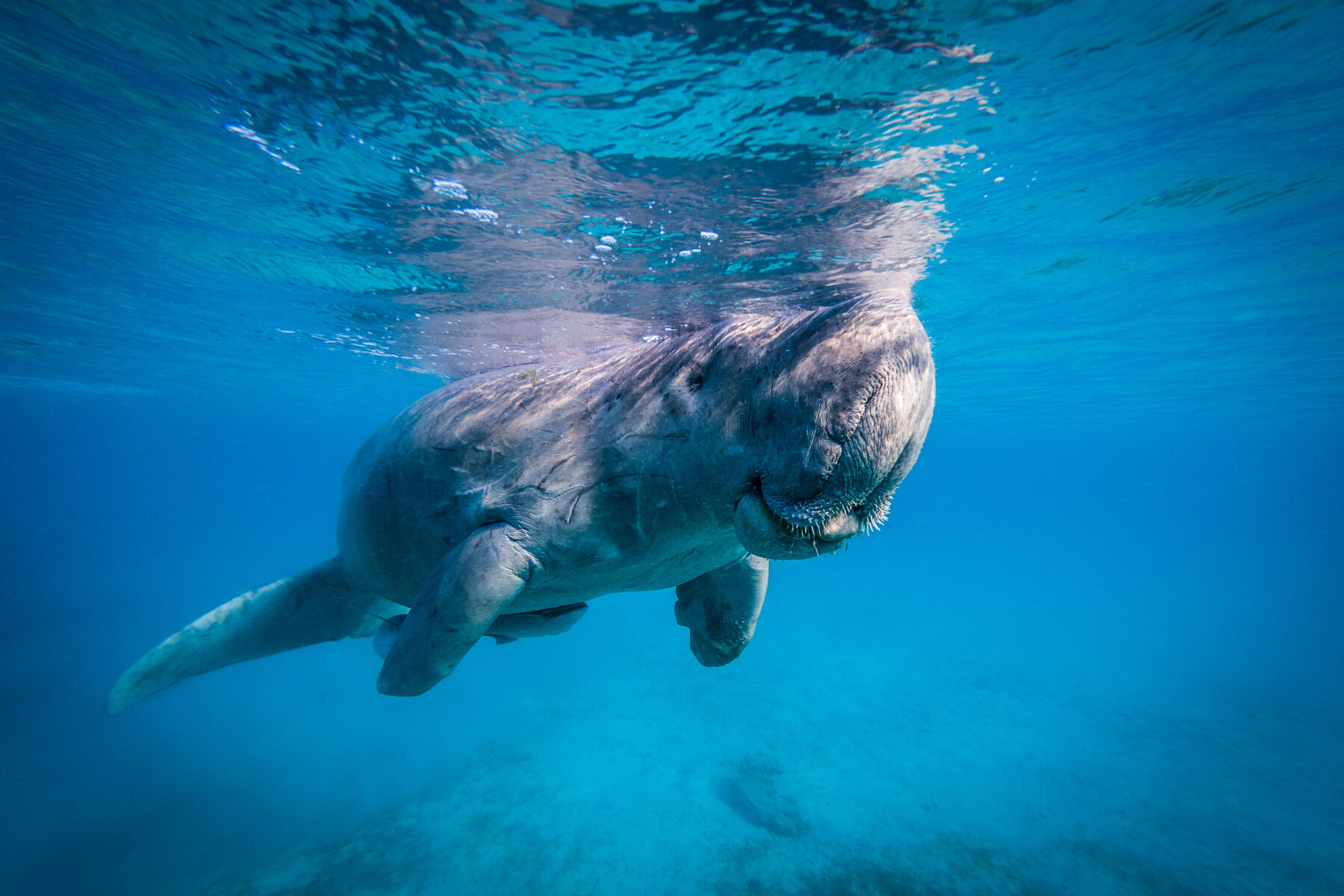
Agojo Reed is a diver’s paradise with a depth of over 46 meters and average visibility of 28 to 30 meters, Agojo Reef. There is no lack of corals in the Agojo Reef – from the shallow area to the depths of 50 meters. If a diver is keen to spot a Dugong, also known as a sea cow, they are often found feeding around the area of the reef, so this is a great place to go to to find the gentle giants.

How to get there: Agojo reef is just a short boat ride from San Andres.

A dugong which can be seen at Agogo Reef

Doña Marilyn

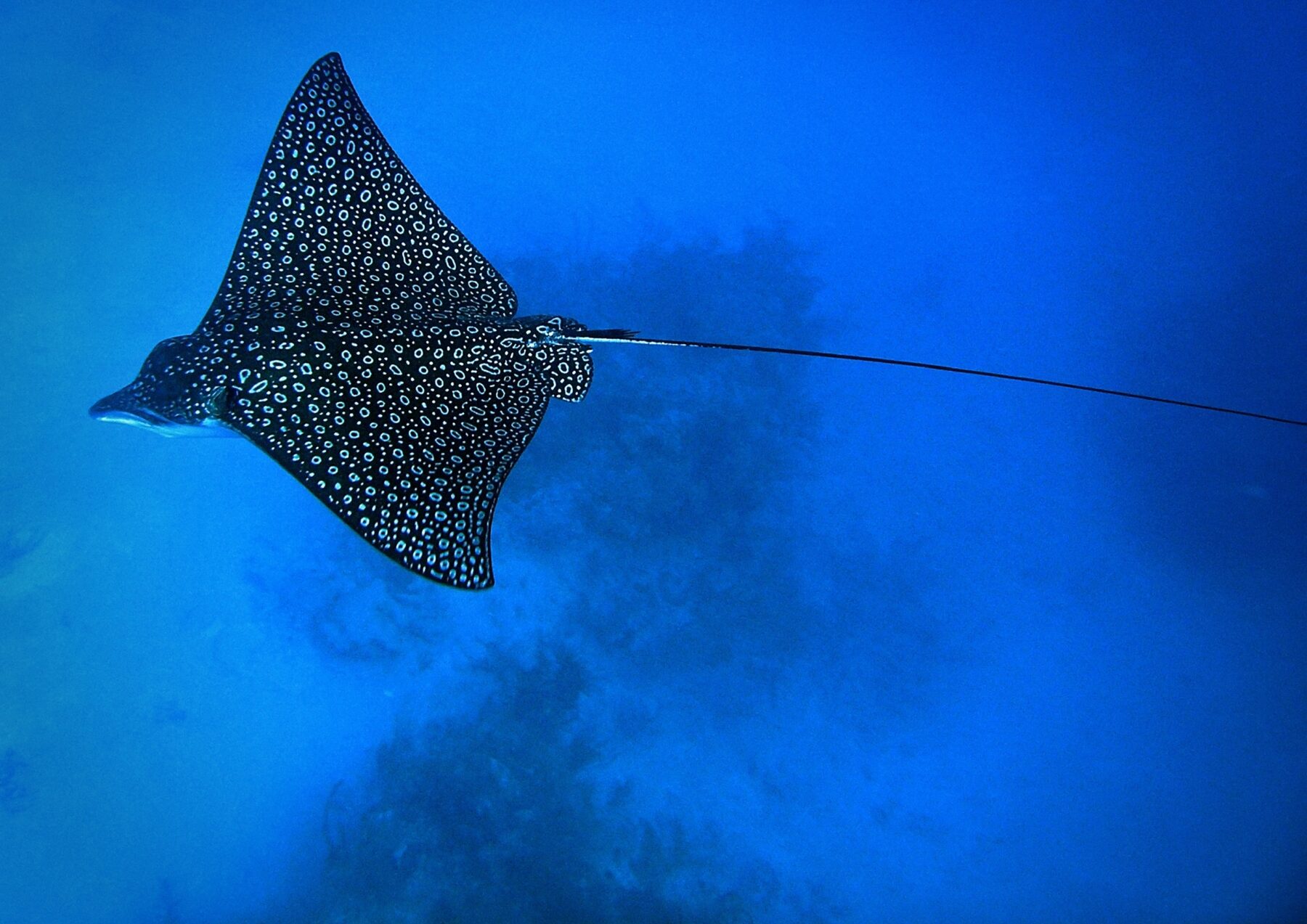
One of the most beautiful wreck dives of the Visayas, Doña Marilyn is a 98 meter long ferry that sank to depths in 1988 near Malapascua Island. Healthy corals have made the wreck their homes, attracting tiny glass fishes and colourful sweetlips, scorpion fishes, batishes and nudibranchs. The exotic marine life is topped with sightings of blue-spotted stingrays and even the beautifully spotted majestic and intricately spotted eagle ray.

How to get there: The site is not far from Malapascua Island and many dive schools and liveaboard companies take diver’s via boat from the shores of Cebu.

Eagle Ray, which can be seen at Doña Marilyn


To read more, do check out our Discover the Philippines e-Newsletter series here!

The Phillipines has plenty to offer for all divers, so do consider this prime diving location bustling with marine life as your next travel destinations to fully immerse yourselves in the tropics and experience all the diving adventures that the Philippines has to offer to you!


Everything you need to know about PHIDEX 2022 — Talks from over 35 international, local dive and marine experts!

0

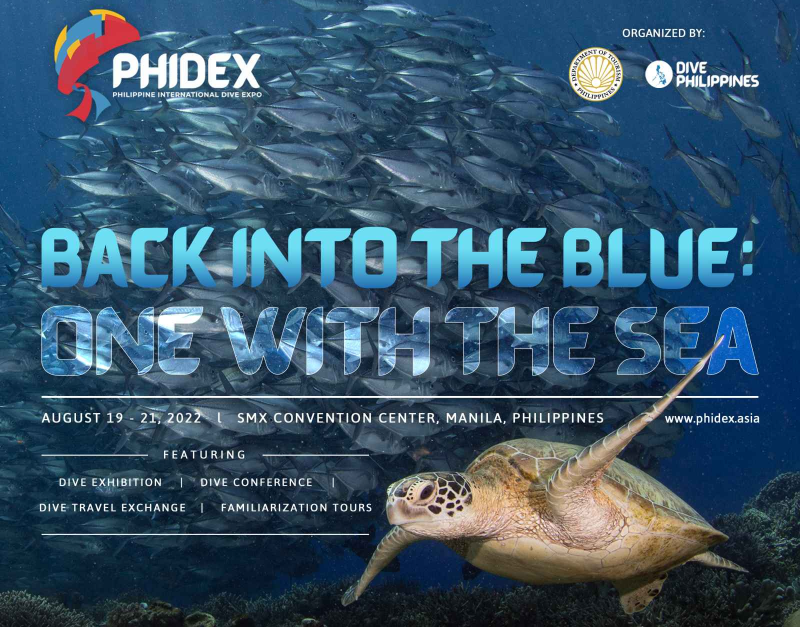
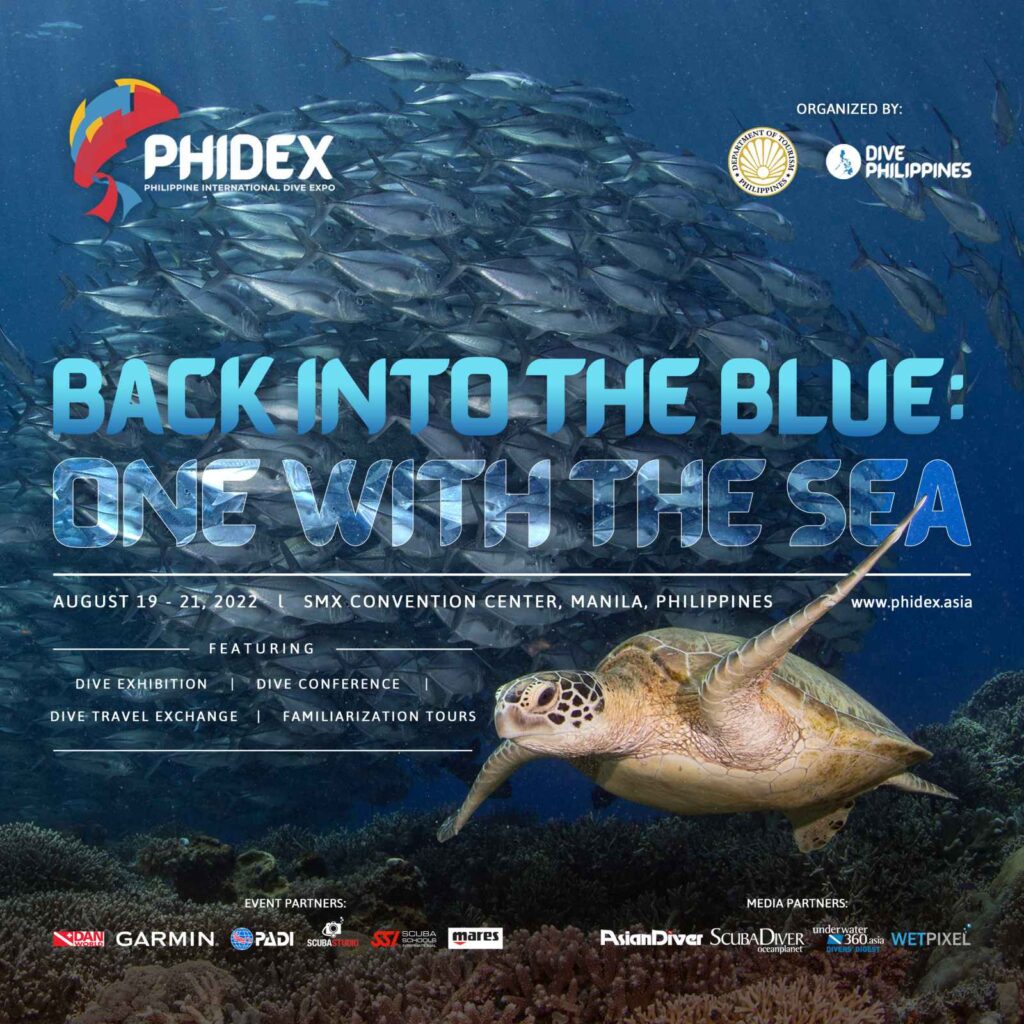
The Philippine International Dive Expo (PHIDEX) 2022, Manila’s biggest platform to highlight and promote the dive industry, will be graced by world-class underwater photographers, technical divers, and marine conservationists in a dive conference set on August 19-21, at SMX Convention Center, Pasay City.

Spearheaded by the Philippine Department of Tourism (PDOT), PHIDEX 2022 will gather dive industry leaders, stakeholders, experts, government, businesses,  and dive enthusiasts in this three-day event that aims to amplify the message that a stronger and better Philippine dive industry is back to welcome divers from all over the world. 

“For our participants, PHIDEX 2022 is the chance for divers, marine biologists, conservationists, and underwater photographers to forge partnerships and discuss trends in the diving community. For the Philippine government, PHIDEX is a green light. It’s a message to our dear foreign tourists—it’s been a long time coming. Welcome back and we hope you enjoy your stay,” enthused Tourism Secretary Christina Garcia Frasco.

Who will be speaking

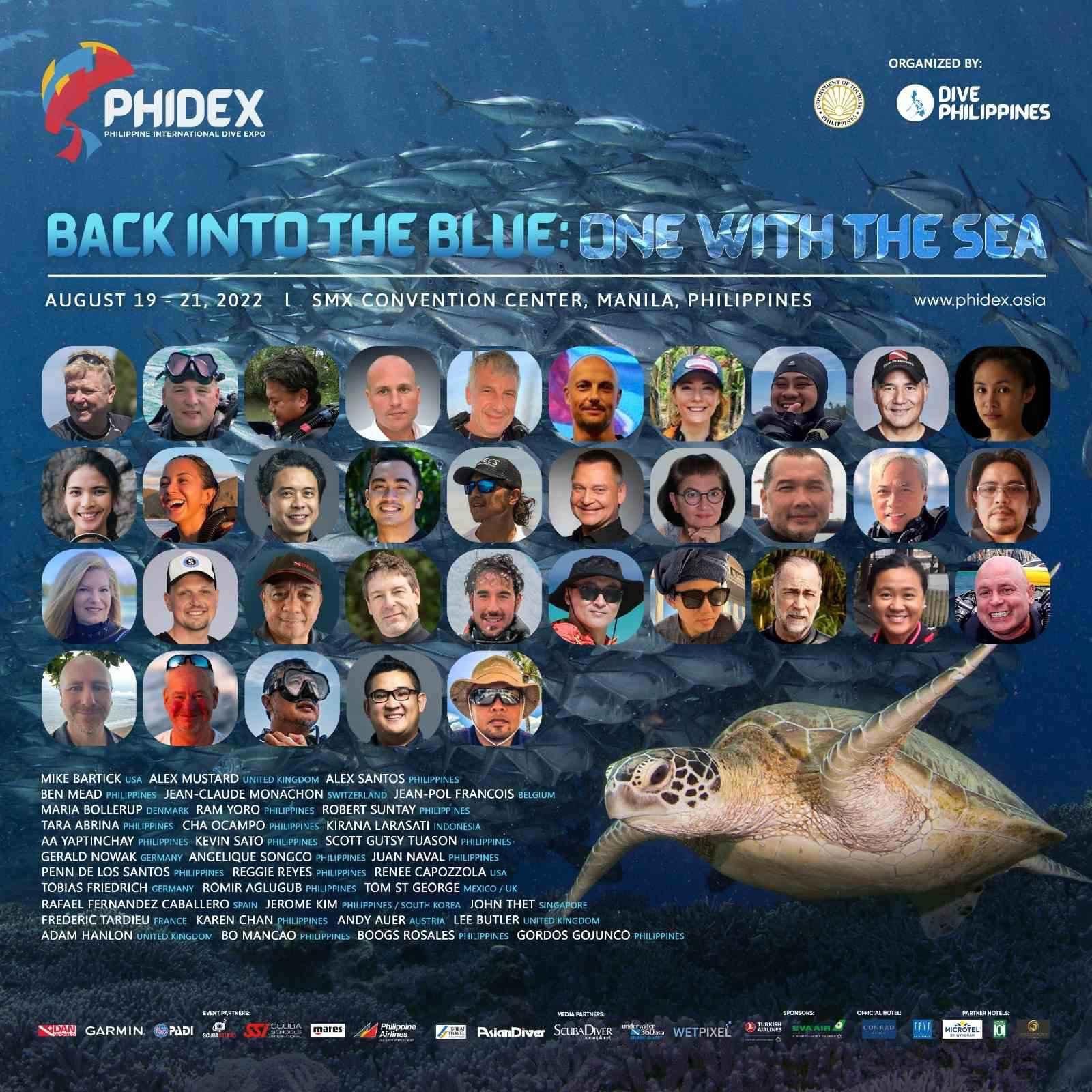
With the theme “Back into the Blue: One with the Sea,” more than 30 foreign and local experts in marine conservation, freediving, and underwater photography will take centerstage in discussion and knowledge-sharing sessions at the PHIDEX 2022 dive conference.  

To speak on marine conservation and protection are Angelique Songco, site manager of the Tubbataha Reefs Natural Park World Heritage Area and AA Yaptinchay, director and founder of the conservation NGO Marine Wildlife Watch of the Philippines. Songco will discuss about the changes our seas have gone through over the years, while Yaptinchay will talk about the conservation of sharks in the Philippines.

Discussing the ins and outs of freediving are marine economist Tara Abrina and certified diver Cha Ocampo. Abrina will talk about the coastal development lessons she learned from fishermen, while Ocampo will speak about the fragility and beauty of the underwater environment.

For photography enthusiasts, look out for talks from award-winning photographers Rafael Fernandez Caballero and Alex Mustard, who will be sharing on the magic of ocean lights for underwater photography and the joys and challenges of macrophotography respectively. 

Indonesian actress-turned-professional-diver Kirana Larasati will also grace the PHIDEX stage to talk about humanity and diving.

In addition, world-renowned dive organizations will give talks at PHIDEX, namely Divers Alert Network (DAN), and the Professional Association of Diving Instructors (PADI). DAN is a dive safety organization committed to the health and safety of divers, while PADI is the biggest ocean exploration and diver organization in the world, operating in 186 countries and territories. Romir Aglugub, business liaison for DAN World, will talk about dive safety. On the other hand, Lee Butler and Andy Auer, Regional Managers from PADI, will discuss their organization’s capabilities beyond Scuba diving.

PHIDEX Partners

PDOT has partnered with several organizations to make PHIDEX possible. These include event partners DAN World, PADI, Scuba Schools International (SSI) – Mares, Garmin, Philippine Airlines, and Scuba Studio. Also in the roster of PHIDEX collaborators are media partners Wet Pixel, Asian Diver, Scuba Diver Ocean Planet, and Underwater360. 

PHIDEX 2022 will also be highlighted by Dive TRAVEX B2B meetings and conference where about 62  International buyers, media and speakers from 19 source markets, namely, Australia, Austria, Belgium, Switzerland, Netherlands, France, Italy, Israel, Turkey, United Kingdom, USA, South Korea, Japan, Taiwan, Thailand, Indonesia, Singapore, Germany, and Denmark. The Dive TRAVEX and Dive Conference will also be accessible through a virtual platform especially for participants yet with international border restrictions due to COVID-19.

Luxury hotels around the SM Mall of Asia Complex are also some of the PHIDEX partners, namely: The Golden Phoenix Hotel, TRYP by Wyndham, Microtel by Wyndham, and Hotel 101. The Conrad Hotel also caps the list of partner accommodations as the official hotel of PHIDEX buyers, media, and VIP speakers.

“More importantly, PHIDEX 2022 comes in an opportune time for us to showcase the resilience of the Philippine tourism industry,” the tourism chief added. 

Registration as consumer and trade visitors and exhibition booth reservation will open on June 24, 2022 through register.phidex.asia/. For more information regarding the PHIDEX activities, follow Dive Philippines on Facebook (facebook.com/DOTdivephilippines) and Instagram (instagram.com/dotdivephilippines/) or email the PHIDEX Organizing Committee at phidex@tourism.gov.ph.

PHIDEX returns to Manila in August 2022 – Here are the most exciting dive destinations to check out!

0
Coron Island; Image from JEROME KIM

Calling all dive enthusiasts! The Department of Tourism (DOT) is bringing back Philippine International Dive Expo (PHIDEX), the country’s biggest platform to highlight and promote the dive industry, from August 19 to 21, 2022, at the SMX Convention Center, Pasay, Manila.

Participants will have a chance to learn about new dive destinations, product updates from key dive destinations, as well as up-to-date underwater photography gear. International dive operators will also get to inspect and assess top and emerging dive destinations such as Anilao, Bohol, Camiguin, Coron, Dumaguete, Malapascua, Moalboal, Puerto Galera, Southern Leyte, and Ticao Island through familiarization tours.

Hosted international dive tour operators will participate in familiarization trips to top and emerging dive destinations to increase destination knowledge and conduct first-hand assessment and inspection of dive destinations and properties ready for selling to clients from their respective markets. Media representatives and dive conference speakers will be provided with tailored itineraries that will allow them to generate new content on the Philippines, and sustain awareness as a leading dive destination.

Balicasag Island, Bohol; Image from RAM YORO

The Philippines is full of exciting dive sites that await your visit! Here is a short list of dive sites you can look forward to exploring:

Anilao — Check out Twin Rocks, one of the best diving sites in Anilao. With a depth of 130 feet, divers can observe a colourful diversity of marine life at all levels of depth. This site is particularly visited by underwater photographers seeking macro and wide-angle shots. Or visit Secret Bay, a popular muck diving site that is home to a considerable number of marine life creatures such as mimic octopus, wonderpus, pipefish, seahorses, frogfish, and many others.

Lacy rhinopias in Anilao; Image from MIKE BARTICK

Camiguin — Want to spot a sea turtle during your dive? Be sure to visit the Mantigue Island, a rich and thriving underwater sanctuary that also houses ribbon eels, trumpetfish, pufferfish, barracudas, and even rays and blacktip sharks. The Kibila White Beach is also home to magnificent giant clams for you to admire and photograph!

Coron — Situated on the shore of Coron Island in the Philippines, Barracuda Lake offers one of the most unique diving experiences in the world. Its crystal blue waters are framed by majestic rocky formations that would be a perfect addition to your social media feed. And of course, Twin Lagoon is that place that you would not want to miss when you visit Coron. The place leaves people wondering if this paradise is real, stunning them with its unspoiled beauty. With the limestone towers of Calis Mountain embracing the inner lagoon, fresh and saltwater meet causing a thermocline with layers of varying water temperatures.

Coron Island; Image from JEROME KIM

Dumaguete — Visit Coral Cove where you can encounter some of the most peculiar and interesting marine species at this dive site. The Pygmy Seahorses and Ornate Ghost Pipefish are two to name but if you’re lucky, you may even spot passing thresher sharks. Else, check out the Manila Channel is home to an abundance of fire urchins and hard coral scattered throughout. The dive spot also features two walls that are covered with sponges and a variety of corals including the famous ‘potato coral’, purple gorgonian sea fans and green tree corals.

What are you waiting for? Registration as consumer and trade visitors and exhibition booth reservation is now open at register.phidex.asia/. For more information regarding the PHIDEX activities, follow Dive Philippines on Facebook (facebook.com/DOTdivephilippines) and Instagram (instagram.com/dotdivephilippines/) or email the PHIDEX Organizing Committee at phidex@tourism.gov.ph.

How to: The Perfect Split Shot Photo

0
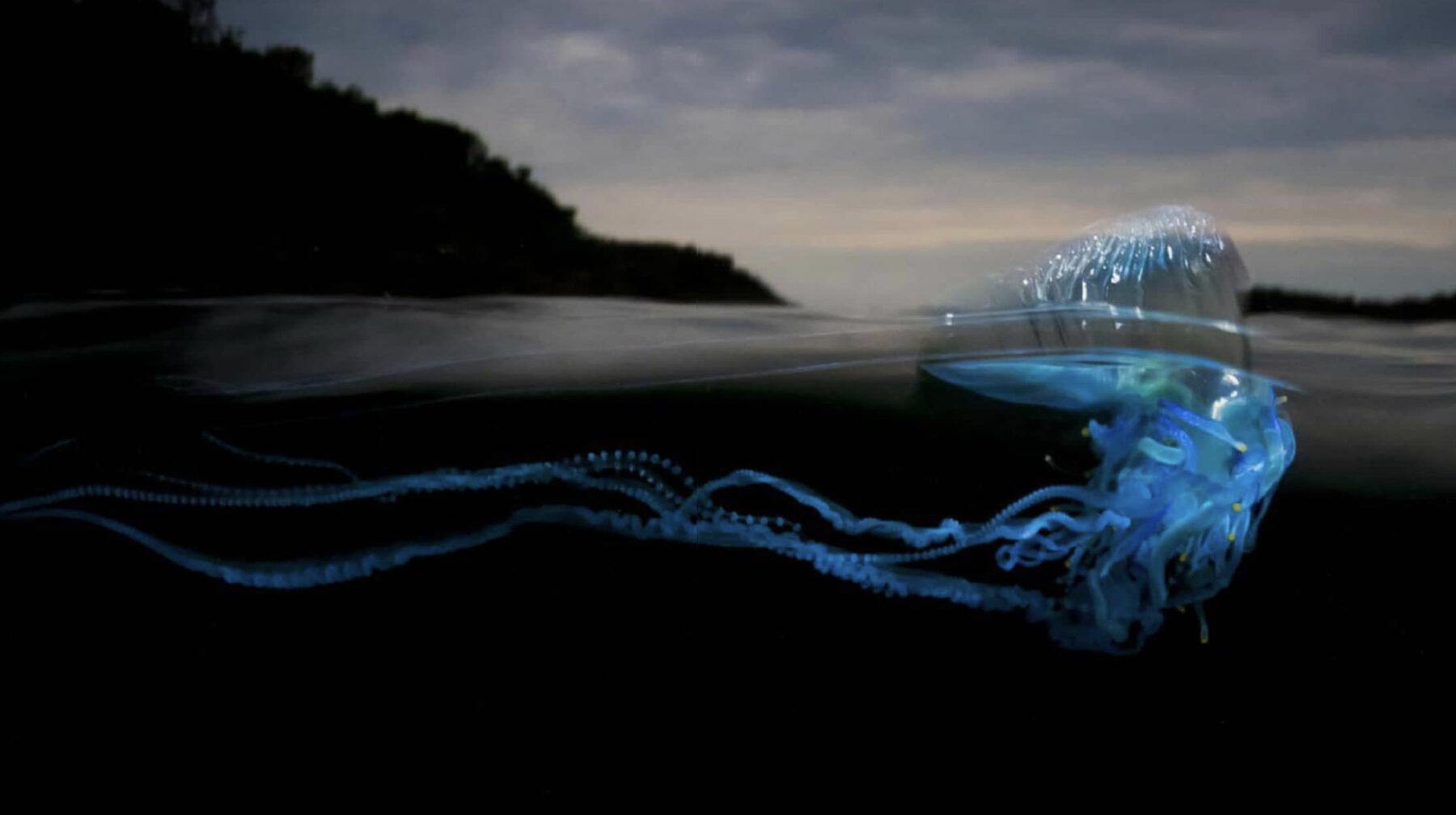
Pacific man of war WHEN October 2019 WHERE Bushrangers Bay, New South Wales, Australia HOW Nikon Z6, Aquatica housing, 8-15mm lens, (f/14, 1/13s, ISO 250)

Text by Matthew Smith
Photography by Matthew Smith


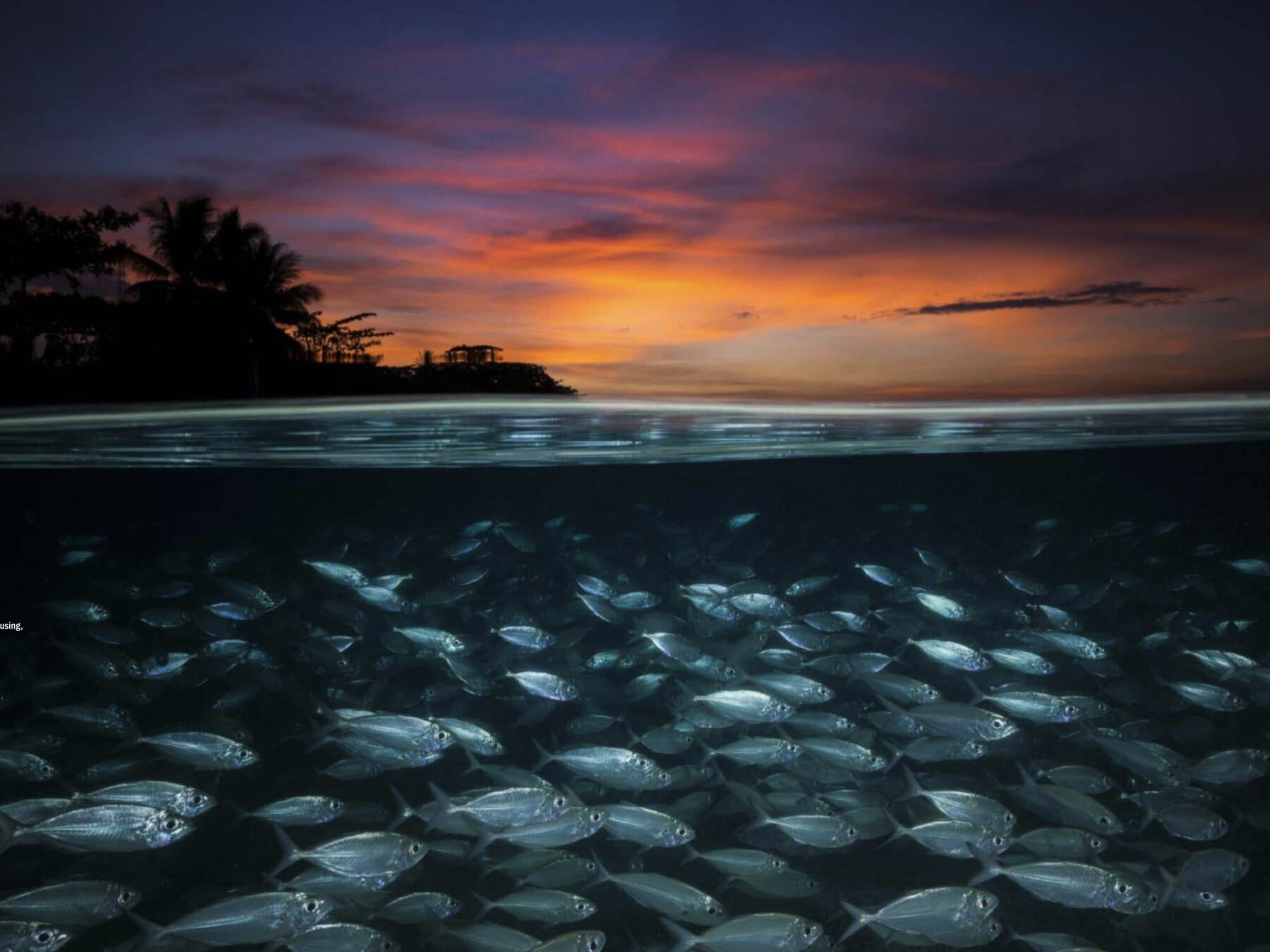
For me, one of the most wondrous parts of any dive is the moment when the water engulfs my mask as my head slips below the surface. I think it’s the suspense of not knowing what lies beneath, the transitional part of moving from one element to the next that feels so magical, and the thought of what alien creatures I might encounter. That is what draws me to taking half-and-half underwater pictures. I try to convey to the viewer that majestic feeling in a picture format. Split shots are perhaps the best way I can communicate to a non-diver what it’s all about, to marry a wet and unfamiliar world with a dry and more familiar one. A well-executed over-under shot also seems to be a great crowd pleaser as it has instant “wow factor”. I’d like to share with you some of the techniques and equipment I use for this type of photography and answer some commonly asked questions regarding equipment, focusing techniques, lighting, what time of day to shoot, and how to stop water beading.


EQUIPMENT

When shooting an over-under scene, you are usually creating a half-landscape, half-seascape scene, so common sense would suggest using a wide-angle rectilinear or fisheye lens to capture the entire vista. I generally use my 14-24mm f/2.8 or 14-30mm f/4 rectilinear lenses for big animals or humans, where I want to control distortion and create a natural perspective. I use the fisheye lens for reef scenes where the heavy distortion will go unnoticed.

You’ll need a dome port to shoot through: Your usual wide-angle dome port will suffice, something in the region of eight to nine inches is perfect. A bigger port makes the job much easier and conversely, whilst not impossible to shoot over-unders through a smaller port, it does make the job a little harder. It also creates some optical problems more on that later.

You may want to use your strobes for fill light when shooting into the sun at sunset or sunrise, or to add some colour to that reef.

If you’re shooting a scene where you can’t stand up, it’s a good idea to add a flotation device to yourself and camera. I sometimes strap a swimmer’s kick board under my water housing and use an inflated BCD as a raft to lean on. This will prevent you from sinking when you lift that heavy camera out of the water and it will help you to frame up your shot.

Note: Trying to shoot an over-under with your dive gear on your back after a dive is night on impossible!

Hidden reef
WHEN
October 2018
WHERE
Arborek Island, Indonesia
HOW
Nikon D850, Aquatica housing, 14-24mm lenses, (f/22, 1/10s, ISO 400)

FOCUS

Set your camera focus points low in the viewfinder and concentrate on getting the underwater part of the scene sharp. Then, use a narrow f-stop such as f/16 or above and the let depth of field take care of the top part. It’s a great technique to use, but why?

To create a half-and-half image you are basically creating a window into another world where light and focus behave on a totally different playing field, especially when shooting through a curved optic such as a dome-shaped port. The interaction of the curved surface of the port and the refraction of the water make what is known as a “virtual image”. The virtual image appears smaller and proportionately closer to the camera underwater. If we were able to see this phenomenon at play it would look something like Fig. 1. Here we can see the camera, the virtual image below the water and the real image above the water.

As depth of field always extends much further behind our point of focus than it does in front, we are maximising our chances of getting

Portuguese man-of-war (Physalia physalis)
WHEN
February 2014
WHERE
Bushrangers Bay, New South Wales, Australia
HOW
Nikon D810, Aquatica housing, 8-15mm lens, (f/29, 1/250s, ISO 160)

LIGHTING

As usual lighting falls into two categories, ambient (natural) light and artificial (light strobe or continuous source). When shooting large scenes where artificial light sources will have little effect, it’s generally better to shoot at the brightest times of the day when the sun is high. However, this can cause exposure balance problems as the sky is usually several stops brighter than under the water. To overcome this issue and minimise the need for post-processing, I like to use a four-stop neutral density graduated filter. This helps me to retain sky detail and prevent it from blowing out to over-exposure. It also minimises post-processing later on.

Strobes can be used to fill in detail underwater when the sun is lower in the sky and with smaller scenes. For this technique I find it’s better to expose for the sky and then adjust strobe power to fill in the darker underwater details.

WHEN TO SHOOT

If you’re planning on shooting reef or seabed then definitely wait for low tide when there is the minimum amount of water over the coral, ideally half a meter or less. The first thing I do once I’ve found a location is to check the local tide charts and see which day is best for lowest tide at the time of day I want to shoot. If you’re shooting animals in the open ocean, tide is obviously irrelevant and the best time of day depends on if the subject is too big for proper strobe coverage or not. Anything too big to light with a strobe may well be better shot around the middle of the day to maximise light penetration. But don’t fret if the midday sun isn’t out: The look of heavy cloud in split shots adds a dramatic effect to a picture that a clear blue sky cannot.

If your subject can be shot with your strobes, shoot at any time to get your desired atmosphere into the image.


MATTHEW SMITH (AUSTRALIA)

ADEX SPEAKER (2020, 2019, 2016, 2022- to be!)

Matthew is an underwater photography educator, tour leader, contributing photographer for Ocean Geographic magazine and a brand ambassador for Nikon Australia and Aquatica Digital housings.

To learn more about underwater photography, if you attend ADEX this September 16-18, Matthew will be attending and sharing more of his wisdom!


Plunging from a world of land and sky, filtered light beneath the surface is made placid in the depths. But what if you can see each layer, all put together?

This piece is a short extract from this issue of our No.117 Collectors’ Edition of Scuba Diver Ocean Planet from 2020. Chock-full of breathtaking images taken by Photography Gurus around the world this issue takes you through the beauty of split shots, encapsulated in this issue through renowned photographers who are excellent in their craft.

Pick up your copy here