Home Blog Page 122

Man Crosses The Gulf of Thailand By Kite

0


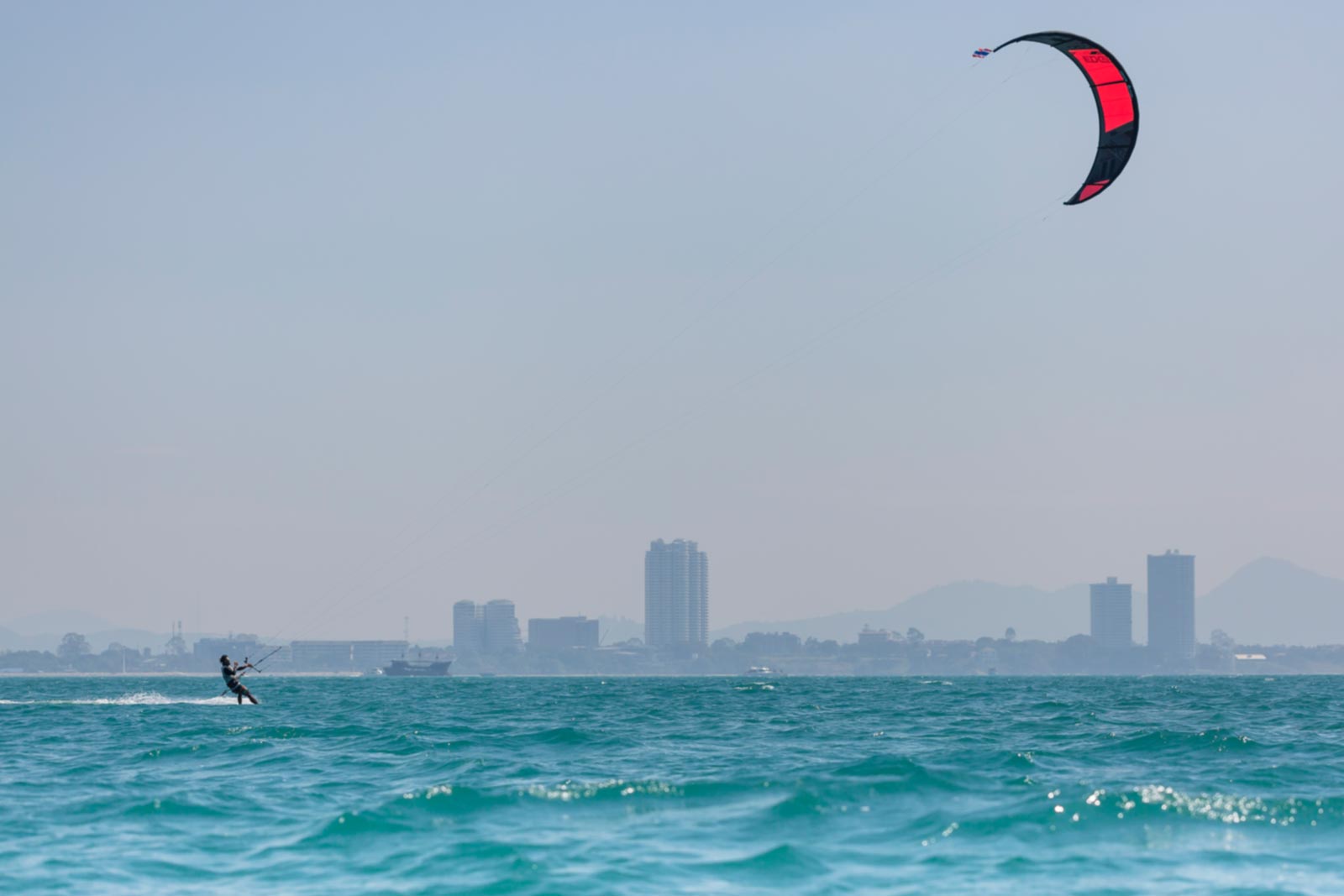
Whilst many a talented Asian rider goes largely undocumented the world over, there is one name that always seems to ricochet across the globe. ‘Yo’ Narapichit Pudla of Thailand. This five times Asian champion is a well-known character on many kiteboarding circuits; from the Thai national scene, to the KTA Asia regional competitions, IKA World championship racing and even a PKRA freestyle appearance or two. Yo has become perhaps the best known of the Asian riders and one who is fairly comfortable up on the podium in a range of disciplines. Known across Asia as an outstanding talent in both freestyle and racing, Yo has once again found a way to push his boundaries as a kiter. In a sort of evolutionary fashion he has recently undertaken a variety of long distance kite feats, but it is the latest of which that is grabbing the headlines, as Yo has become the first person to cross the Gulf of Thailand by kite – a feat he achieved on December 19th 2016.

The Gulf of Thailand (formerly the Gulf of Siam) is a shallow inlet in the western part of the South China and Eastern Archipelagic Seas, in the western Pacific Ocean. The gulf is around 800 km long and up to 560 km wide, surrounded on the north, west and southwest by Thailand with Cambodia and Vietnam on the northeast. The South China Sea is to the southeast.

Yo’s plan to make the crossing was borne from a variety of combining forces, however one of the main motivations came from the passing of the late King: His Majesty Rama IX of Thailand – King Bhumibol Adulyadej.

As of October 2016 much of Thailand has been in a state of mourning for King Bhumibol Adulyadej, who deeply influenced the core of Thai society and whose death rocked the country.


A lesser known fact about the beloved king was that he was an accomplished sailor and sailboat designer. He won a gold medal for sailing in the Fourth Southeast Asian Peninsular (SEAP) Games in 1967, together with HRH Princess Ubol Ratana, with whom he tied for points and was prolific in small boat design, producing several designs in the International Enterprise, OK, and Moth classes.

However, it was on April 19, 1966, King Bhumibol sailed the Gulf of Thailand from Hua Hin to Toey Ngam Harbour in Sattahip, covering the 110 km in a 17-hour journey single handed on the “Vega 1”, an OK Class dinghy he built himself. This was the journey that would inspire Yo and allow him to pay a special homage to the King by crossing the Gulf himself – but this time on a kite.

The straight distance for Yo’s chosen route was just over 112km across and he envisaged this would take around three to four hours with good conditions, and up to eight hours in less favourable winds. The crossing would run from Ban Nam Mao beach, Najomtien, Chonburi on the east side of the Gulf to Samroiyod beach, Prachuap Khiri Khan on the west side. Yo would be making the crossing of the Gulf on his own with just a safety boat in tow, keeping it nice and straightforward and simple. The feat took place just days after the Thai nationals, where Yo was again predictably successful, topping the podium once again.

The Gulf of Thailand Challenge began on the morning of the 19th December with the wind slowly moving onshore at the starting point on Ban Nam Mao beach, with Yo taking time to collect his thoughts and offer his respects to the King as he knelt and offered a small pray for success, in front of a banner outlining the King’s sailing success those years earlier.   

It was difficult to predict what conditions Yo would face out in the Gulf, but with a steady 13 knots he left land on his 11m Ozone EdgeV8 and took off on the blue water, made even more blue than usual thanks to the clear skies and a bright sunny day. Impressively, it wasn’t until two hours into the journey that his legs first began to feel tired, but like a true pioneer he powered through and eventually all feelings of tiredness fell away.


Yo was blasting towards the mid-Gulf point and it became clear that the “weather gods” were on his side, with the winds remaining steady and the sea state friendly. Yo even had time to relax and mess around in the boat wake for a touch of Gulf surfing action!

However, while the weather gods were giving the thumbs up other demons were to come into play and with Yo still hours away from his final destination, the safety boat ran into some serious engine difficulties and ground to a halt. It seems that fate had dealt the Challenge a crippling blow, but being now well on his way across the Gulf, Yo was determined to finish what he started and he decided he had to continue his odyssey alone. But as ‘fortune favours the brave’ luck soon stepped back in and the ‘not so’ safety boat was safely rescued and taken on tow by a passing Thai fishing boat.

The fishing boat however would not be able to keep pace with a kiteboarder, especially one towing a crippled support boat, so the final section would indeed be a true solo open water challenge.

“For three hours I didn’t see any land at all,” Yo reported. “Only me, my kite, board, sea water, sky and some fish”.

Then finally with only half an hour to go, Yo had land in his sights. The steady wind though was by now dropping, forcing him to abandon his original target landing site and kite further downwind than originally intended. In the end Yo ended up landing at Samroiyod beach at the edge of the Khao Sam Roi Yot Marine National Park a touch further south, but not too far off the intended mark.

The Gulf of Thailand Challenge had been successfully achieved in a time of four hours five minutes and 51 seconds and thanks to the wonders of modern tech, a cameraman was even able to make it in time for Yo’s triumphant landing.


We asked Yo before his crossing if he was at all nervous, but received an assured “no” and he certainly undertook the journey with an air of calm and confidence, even when his support team fell to the wayside. After all he was more prepared perhaps than anyone could be, considering another of the inspirations for this crossing was triggered by a team expedition only a few weeks before – Yo and Co’s ‘Off the Knots’ Challenge team.

‘Off the Knots’ began as a simple idea thrown about between friends over a few beers one night – as the greatest ideas often are. The concept was to complete a long distance kite journey of 1000 km from Pak Nam Pran (the well-known location for several KTA competitions) down along the coast of Thailand as far as the Golok River on the Malaysian border. After three weeks of thorough preparation the crew set off – however due to some unfavourable wind conditions off the southern coast they were unable to finish the journey. This one has still to be revisited and defeated, that’s a story for another time, but perhaps not one that is that far into the future.

With the Gulf of Thailand crossing completed, Yo is ready to get right back on track with his Off the Knots team, all of whom hope to redo the journey in its entirety in January 2017 when the Southeast Asian rain season eases off.

In terms of the future for Yo, he says the most important thing is to stay motivated. Staying on top of your game is one thing, but if you can’t evolve as a kiter you’ll stagnate – for Yo, it’s all about going the distance, and distance seems to be firmly his new motivation. 

For those of you that are interested to see how that pans out, you can follow the next adventure with Yo and the ‘Off the Knots’ team on www.offtheknots.com

*Feature image: © Huw Penson
For ADEX 2017, we introduce “ADEX + WaterPlay360”!

For the first time in dive expo history, attendees can expect a whole new experience at ADEX 2017 where you can find everything related to not only diving, but WATER SPORTS as a whole! KTA Media is a multimedia platform and production unit with the capacity to cover a wide range of sporting events. The extreme and adventurous is our speciality, but always with an eye for the traditions and culture of the places we find ourselves in.

How Scuba Diving Is Affecting Your Teeth

0

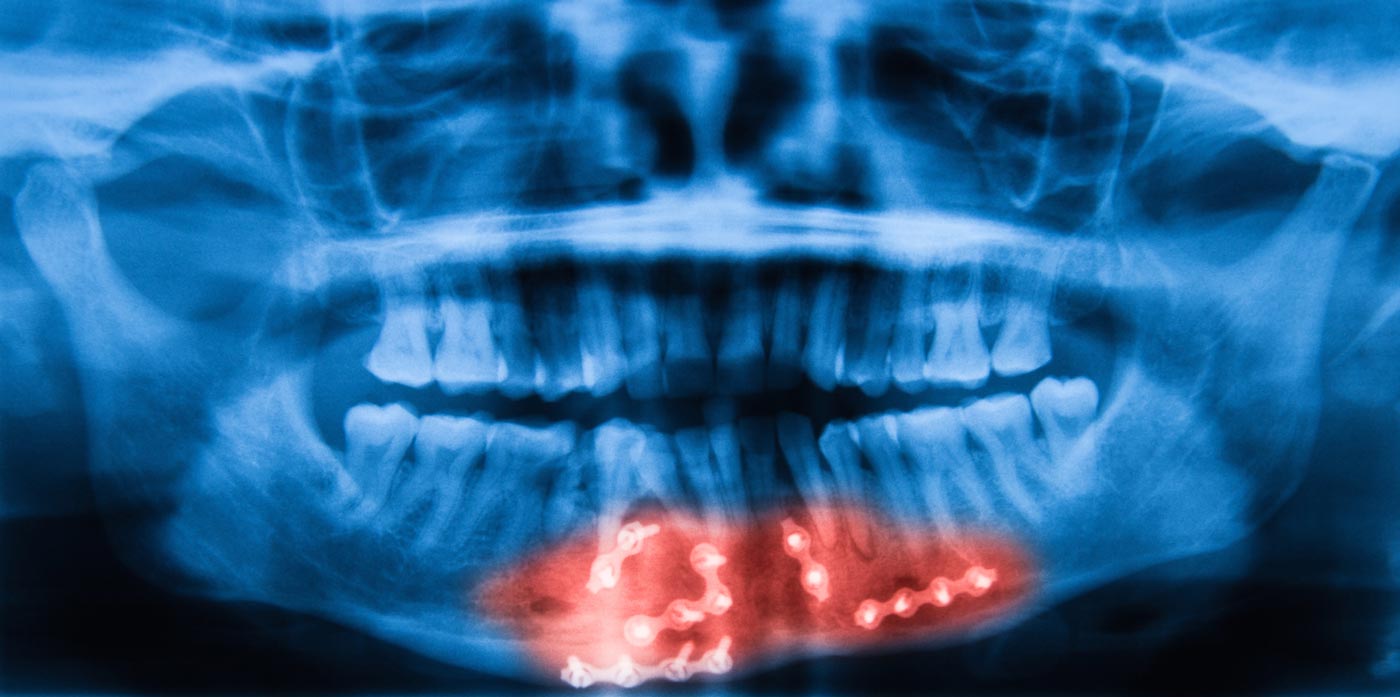
Some of the most overlooked factors of the medical standards required for divers to be deemed fit to dive are dental issues – faults with your fillings, cracks in your molars. Compared to a broken bone, or high blood pressure, a dental filling seems almost insignificant to an eager diver prepared to vault any minor medical hurdle to descend into the blue. But a new pilot study, led by dentist Dr Vinisha Ranna of the University at Buffalo in New York, finds that the matter should be taken a little more seriously.

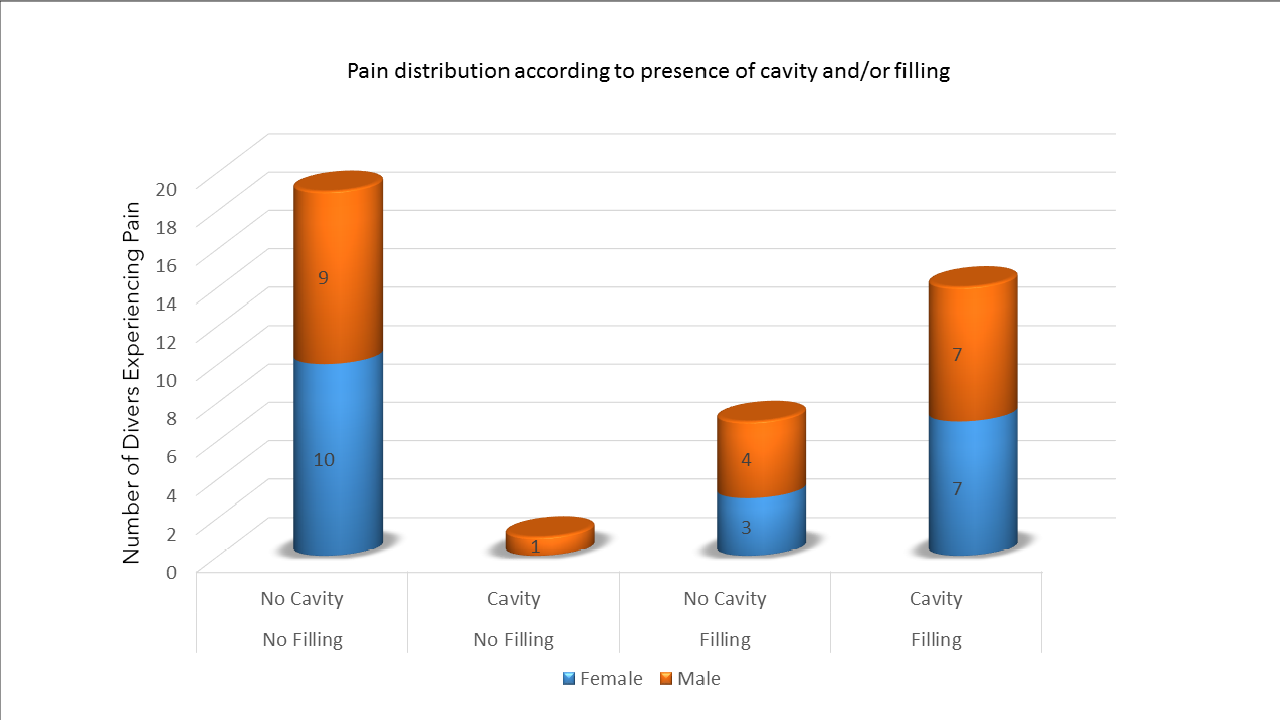
The research found that 41 percent of divers experienced dental symptoms in the water, from tooth squeeze to jaw pain – factors that could severely affect the entire diving experience, and even force some to abort the dive.

“There have been some incidents of tooth fillings fracturing during ascents,” says Ranna. “And one rather gory account of a broken tooth that was pried out with a dive knife. [Although] I have learnt to take some of the anecdotes with a pinch of (sea) salt.”

From a conversation that Ranna had with other divers after she realised that her “teeth felt funny” during her first dive, and due to the lack of research on the topic, she decided to design the study. A survey posted to online social media platforms, asking divers questions on their dental health and experiences, formed the data for the team to analyse.

“Of the divers that participated in this study, 42 percent reported tooth squeeze (barodontalgia) as the type of problem, 24 percent experienced pain from holding the regulator too tightly, 22 percent reported jaw pain, five percent noted loosening of crowns placed on teeth, five percent reported pain in the gums, and two percent reported a broken dental filling.”


Chart taken from “Prevalence of dental problems in recreational SCUBA divers: a pilot survey” research paper

For inexperienced divers, jaw pain (from gripping the regulator too tightly with their teeth) was the most frequent problem experienced – probably for fear of the device popping out of their mouth. These painful symptoms can continue: Ill-fitting regulators can be responsible for sustained temporomandibular joint (TMJ), or jaw joint, pain. “In the present report, almost [a quarter] of the divers experienced TMJ pain associated with diving.”


Chart taken from “Prevalence of dental problems in recreational SCUBA divers: a pilot survey” research paper

But it’s not always about the depth: “The maximum pressure variation during descent into a dive occurs in the first 10 metres, where pressure doubles from one bar atmosphere at the surface to two bar atmosphere at 10 metres.

“It has been shown [that] frogmen, who spent greater [time] at shallower depths had the highest deterioration of teeth over time compared to naval divers and submariners, in spite of having better dental health than at baseline. (Goethe et al.)

“It is likely that dive instructors are more prone to barometric trauma as they spend greater time at shallower depths, assisting inexperienced divers with equalisation of the ears and sinuses. Although instructors were the second largest group surveyed, they had the highest prevalence of dental symptoms associated with diving as well as persistence of these symptoms after diving.”


The findings of this study have already begged the question that dive certifying bodies need to consider, the adjustment of medical requirements to include dental issues. © Shutterstock


But there are ways to prevent dental trauma. Letting your dentist know that you’re frequently diving is a good start, so that if you require any treatment, they know which materials to use – materials that could perform better underwater.

“It might be meaningful to ensure that dental decay and damaged restorations are addressed before a dive and that the mouthpiece design be evaluated in case of complaints of TMJ discomfort during a dive.

“Considering that the air supply regulator is held in the mouth, any disorder of the oral cavity can jeopardise the divers’ safety and potentially increase the divers risk of injury.”

To combat jaw ache, Ranna goes on to suggest that a “custom fabricated mouthpiece may alleviate pain during diving”. It might also be worthwhile for divers experiencing persistent jaw pain to consult with a dentist for further evaluation and fabrication of a customised bite piece.

The findings of this study have already begged the question that dive certifying bodies need to consider, the adjustment of medical requirements to include dental issues.

“This study suggests that a high proportion of recreational divers may experience dental symptoms during a dive. A visit to the dentist may avert an underwater dental disaster.

“This being said, there are large gaps in the dental literature on specific diving-related dental symptoms experienced by divers, the possible causes and management of these symptoms. With this in mind, I have designed a more comprehensive survey attempting to answer some of these questions.

“If you are a certified diver, please fill out this survey. Until we have more data on the mechanism of diving-related dental injuries, it would be difficult to make recommendations for dental health prerequisites for divers. It does make sense to have any unhealthy teeth treated before a dive.”

Ranna then adds, “After all, 100 feet underwater is the last place anyone would want to be with a toothache.”

Reference

Goethe WH, Bater H, Laban C. Barodontalgia and barotrauma in the human teeth: Findings in navy divers, frogmen, and submariners of the Federal Republic of Germany. Mil Med 1989; 154: 491–495.


To fill out Vinisha’s survey, click here!

The study has been approved by the Research Subjects Review Board at the University of Rochester, New York, USA.

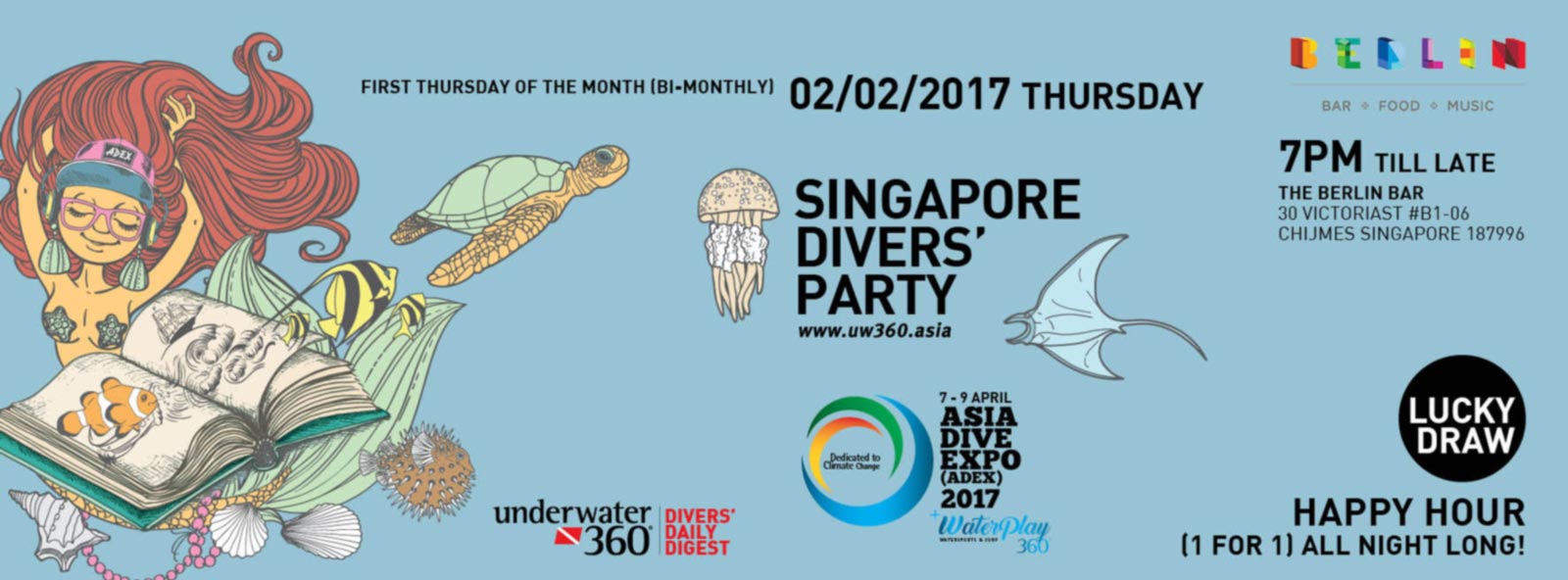
Singapore Divers’ Monthly Party (February 2, 2017)

0

Underwater360 is back with the divers party of the month. Taking place at the Berlin Bar, at CHIJMES Singapore, the party brings together anyone who has a passion for the ocean, regardless of whether they are a diver or not.

With a special line-up of speakers covering anything related to the ocean, it’s the ideal party to lead up to Asia’s largest diving event, ADEX! Speakers include: Joel Chan, President of Underwater Rugby (Singapore); Stanley Ng, Captain of the men’s national underwater rugby team (Singapore); Samuel Wong, Chief Referee of Singapore Underwater Hockey; Kelvin Pung, Founder of SG Underwater Macro Photographer; Kenneth Tan, founder of 300Bar.Asia, and Kulynn Khor, award-winning photographer for marine behaviour (Anilao Photo Competition 2016). From

Alongside the talks, there are fabulous lucky draw prizes to be won from dive trips to dive gears – it’s a party you simply cannot miss!

Lucky Draw prizes

  • 2 x Pandora Tool kits
  • 5 x Diveaholic T-shirts
  • 2 x ADEX Singapore 2017 TekDive conference tickets
  • 1 x Dive The Big Blue Book: A Historical Affair Vol 1 & 2
  • 1 x Hotel Nuve Heritage 2D1N Staycation
  • 1 x Todd Essick’s Beginnings: Goddesses, Sirens and Mermaids (Open up and signed on the spot)
  • 5 x Vintage UW3some Thermal Mugs
  • 1 x 7 Seas Dive Gili 3D2N Dive and Accommodation
  • 2 x 3D2N Full Board Package from Summerbay Resort, Terrenganu, Malaysia

First 100 visitors will get a free welcome drink, and for those who wish to drink on – it’s one for one (Happy Hour prices) until late.

To sign up for the event click HERE, or just turn up at The Berlin Bar at Chijmes and we will register you on the spot! So make a date with us!

The last divers’ party attracted a wealth of ocean enthusiasts who enjoyed talks from Syrena (Singapore’s first mermaid), Chris Kim (AIDA freediver), and Michelle Ooi (11-time Singapore national woman’s freediving record holder). Read about it HERE.

Underwater Photographer of the Month: Norbert Wu

0
© Norbert Wu

Author, photographer and filmmaker, Norbert Wu, has appeared in thousands of books, films, and magazines. With a career that has seen him winning countless awards, through his tireless contributions to scientific exploration and dedication to the documenting of marine life, Wu has created a timeless portfolio of work that few photographers truly ever manage.

Named “Outstanding Photographer of the Year” in 2004 by the North American Nature Photographers Association, Wu has also enjoyed spells at notable broadcasters such as National Geographic, Le Figaro and the BBC. UW360 caught up with the man to talk more on his magnificent career and imagery:

What made you want to become an underwater photographer?
At the age of six I wanted to become a marine biologist. As a teenager growing up in Atlanta, I spent summers snorkelling in Florida waters and became fascinated with wildlife. When the time came to choose a college, I went to California. Like all naive teenagers in Georgia, I thought that California meant beaches, sun, and warm water. I was in for quite a shock during my first encounter with the bone-chilling waters of Monterey Bay.

Once in college, deluged with the advice of dorm mates, professors, and parents, I decided on a degree in electrical engineering rather than a major in my lifelong interest of marine biology. I kept up my diving, however, and explored the waters of Monterey Bay after investing in a wetsuit and basic diving gear. The electrical engineering degree was a pragmatic choice; the job situation seemed much better, and I always figured I could go back into marine biology. The situation seemed the same after four years, and so I obtained a master’s degree in computer engineering and got my first steady job as a software engineer in Silicon Valley. The job paid well, my boss was easygoing, and the work was routine and not stressful. Of course, I was bored. My thoughts kept wandering to tropical breezes and coral reefs.

Your first underwater shot?
After nine months as a software engineer, I took a low-paid job as a research diver with the Smithsonian Tropical Research Institute on one of the San Blas Islands of Panama.

This time I had been much more careful in my choice of dive sites. The island is around nine square metres of sand, and the researchers lived in bamboo and plywood huts right above the water. Most importantly, the water is warm there, and I had all the time in the world to dive. Prior to this trip, I never had the slightest interest in photography. But before heading south, I bought as many books as I could find on the subject, as well as an underwater flash and Nikonos camera system with extension tubes and close-up attachment.

For the four months that I was out in the San Blas, I only shot about ten rolls of film. However, the photographs from those rolls have been published over and over again. Because I was diving the reefs every day, I knew their inhabitants intimately. I was able to return to photograph an octopus, a flamingo tongue (a snail with a spectacular shell), and a spotjaw blenny again and again over the course of my four-month stay. This in-depth look at marine life’s habits and behaviours has become my specialty. Being able to spend weeks working on a project rather than a few hurried weekends has made a big difference in the quality and content of my photographs. I’ve always loved diving and marine biology. I fell into underwater photography as a better alternative to marine biology research. It’s been a great way to travel and see the world. Working underwater requires a ton of gear (sometimes literally) and limited time. The amount of gear that you have to set up and maintain is daunting. It can take me weeks to prepare for 40 minutes in the water. Maintaining all the gear takes a great deal of time. I am always looking for a good machinist to do custom work for me also. Seasickness.

The story behind your most memorable underwater shot?
Emperor penguins are the champions of diving birds. They are able to hold their breath for 22 minutes and dive to depths of 1760 feet as they forage for fish and squid. The contrails seen here are streams of bubbles. The emperor penguin’s thick feathers insulate it by trapping a layer of air next to the skin, but often some of that air streams out when the bird swims.

The ice edge is the place where the open ocean meets the frozen sea ice. It is a dynamic place which can change its shape and moods in an instant. It is here that we encountered penguins, minke whales, and orcas.

At the beginning of the season, the ice edge can be over 160 kilometres away from McMurdo Station, impossible to reach or work from. In 1997, we had a relatively “normal” ice edge that was around 48 kilometres away from the base in late October and early November, when I took this photograph. In 2001, we had an exceptionally cold spring, and we were never able to get out to the ice edge, which consisted of thin ice extending over 100 kilometres from McMurdo Station.

We were only able to get into the water at the ice edge on exceptionally calm days. On one day, the wind chill was so severe that my saliva in my mask immediately turned to ice. Trying to rinse my mask out was impossible, as the sea water froze immediately both in and outside the mask. I had to put my gear on without seeing, then clear my mask in the water. If I lifted my head out of the water for more than a few seconds, the water would again freeze until I put my head back in the water. Once I got in the water, however, it was like diving in the tropics: clear water and sunshine, with a white ice beach behind me.

The ice edge can be a dangerous place, as conditions there can change instantly.  On one day, I spent three hours filming penguins underwater. I jumped in and began filming. I did not notice that the current had changed. The penguins were doing all sorts of antics for me, diving underneath the ice. Intent on filming their activities, I did not realise that I had drifted underneath the ice shelf until the water turned black around me. Upon trying to kick back, my right leg seized up in a massive cramp. The leg was useless, and I was drifting further away from the ice edge, swept deeper under the ice by the current. The story has, of course, a happy ending. I got back to the ice edge, but not without a lot of pain. Where is your favourite dive destination?
Wes C. Skiles, the renowned cave diver and photographer, had a gift for answering questions like this, in a far more poetic style: “My favourite place is always the place I am next going to.” My favourite places are the places I’ve just been to. Among them have to be deep Antarctica (McMurdo Station) and the kelp forests of southern California.

The site you’d most like to dive, but never have?
Tough question. I spent some time at Rangiroa many years ago, and would love to return to spend more time there. I’d welcome seeing more of French Polynesia – it’s always seemed like a place that is too expensive, but what I’ve seen is splendid.

I was on the Calypso (Jacques Cousteau’s boat) as their still photographer in 1985 and spent time with a “guest crewman”–a truly magnificent human–named Maupiti. He was named by the crew after the island that he came from. I’d love to journey to that island and see what has become of him. I’ve never met someone so physically gifted and in touch with nature – he’d catch fish with his hands, rescue birds that could not get off the boat, that sort of thing. I bet he’s the chief there now.

The weirdest thing you’ve seen underwater?
Everyone’s seen photos of stargazers.  They are super ugly and super cool – they have electric organs above their eyes!

One day, diving in the shallows at Ambon, Emily Seifert pointed out a stargazer to me. I can never find animals; I used to be pretty good but since I started taking photographs, I am terrible.  Emily, however, had a great teacher and was not taking photographs at the time. She was becoming an expert spotter, with an ability to find all kinds of critters, including stargazers.

I set up to shoot video on this stargazer, and to my surprise, the stargazer started wiggling its tongue, evidently fishing with its tongue as the lure. It was cool, and being anthropomorphic, it was disgusting – hilarious.

What camera equipment are you currently using?
Things have changed from the film days, when photographers would use a camera body and housing for years at a time. I used Nikon F4 and N90 bodies for ten years. Since 2010, I’ve used Canon 7D bodies in Nauticam housings, Nikon D7000 and D800 bodies and housings, and have been shooting Panasonic GH4 bodies in Nauticam housings for the past three years. I chose the Panasonic bodies for their 4K shooting capability, but I have a full set of Canon and Nikon lenses ready to go if any new bodies come out. For instance, I just bought a Nikon D500 body for a topside wildlife trip to South Africa  – a great camera.

What is the highlight of your career?
From 1997 to 2001, I undertook several projects in Antarctica. I spent three seasons working in Antarctica, out of the US base at McMurdo Station. This is deep Antarctica. There are only two species of penguins here, and only one seal that lives there year-round, the Weddell seal. I fell in love with the place. Two books (a large-format illustrated book, and a book for children) came out of this time, as well as a traveling exhibit, and a film for the Nature series, “Under Antarctic Ice” that airs on the US’ Public Broadcasting Service (PBS). The film aired on a Sunday night, and if I remember correctly, it was viewed by 14 million people. After getting those numbers, I realised that films [could] reach far more people than any book.

Clearly, if I or any image-maker wishes to bring an important message, such as marine conservation issues, to a large enough audience to make a difference, then producing a film rather than a book is the way to go. On a personal level, producing my Antarctic film was so much work that I have not had the energy to do another hour-long film.

The resulting photographs [of Antarctica] have proven to be very popular. National Geographic published my story “Under Antarctic Ice” in their February 1999 issue. My photographs and text were subsequently published in National Geographic’s international editions. GEO and Le Figaro also published the story. The story has since been published in several other magazines, including BBC Wildlife, and Terre Sauvage, as well as others.

Under Antarctic Ice was a landmark production which showcased new HDTV technology. The film was seen as a ground-breaking effort because of [both] the technology and the subject matter.

What I remember and value the most, however, is not the images. It’s the memories of the good times that I had with my team of divers out there. We all became friends while working hard in an untouched wilderness.

…And the lowpoint?

I have a couple of lowpoints. The first involves physical misery: In 1995, I was hired as an underwater cameraman by Doug Bertran, who was producing a show about sharks for Survival Anglia.  Doug chartered a 60-foot fishing boat to film the tiger sharks that gathered around French Frigate Shoals, in the Northwestern Hawaiian Islands, to feed on fledgling albatross.

The remote islands of the French Frigate Shoals, in the Hawaiian Island chain, are virtually inaccessible due to their distance from other islands and their protected status as a national wildlife refuge.

My job was to film tiger sharks as they attacked the albatross chicks. I was the only person in the water, so it was a intimidating yet thrilling experience. During the month that I spent filming these tiger sharks, my preconceived notions about these sharks changed dramatically.  I found that these sharks were keenly intelligent, fast, and selective in their feeding. They ignored monk seals and turtles in favour of the albatross fledglings that landed in the lagoon that they patrolled.

On the way back, the small boat took a huge pounding. We were followed by huge swells, and my body and head would regularly rise high out of the bunk and then slam down again. I was desperately seasick for three straight days. I could not even hold water down. It would have been dangerous if I had not been young and in relatively good shape.  There’s no way I could take such punishment today. I can close my eyes 21 years later, and still see those huge blue swells.

My lowest point in my career, and in my life, has been seeing the rapid deterioration of the marine environment, and realising that we humans are going to overrun and poison the earth. I don’t believe  humans, as a species, have the will to stop our growth until we poison the planet and kill all the large wild animals.

On a personal level, I am disappointed in myself for not being able to convince my Chinese relatives to forego shark fin soup at wedding banquets or family reunions. I am what is called an “ABC” – American-born Chinese. I’ve brought up my opposition to having shark fin soup served at wedding banquets numerous times, in fact every time a wedding or family banquet has been planned by one of my relatives. They just shake their heads and think “there goes Norbert again, complaining about his liberal American issues.”

As far as I know, the Japanese fishermen in Taiji are still killing dolphins – every year – despite 30 years of negative publicity, films, documentaries, etc.

The black and white rhinoceros in Africa are in dire straits, down to a few thousand, because of poaching. I doubt we will have any wild rhinos in 10 years.

The killing of large animals will never stop.

Have you any advice that you’d like to give aspiring underwater photographers?
Be your own best critic. Photography contests that various diving magazines and diving shows put on are a good way to learn and to have your work critiqued. There are underwater photography societies–clubs–which have speakers and peers that will also critique your work. That’s the best way. The diving magazines list diving shows all over the country as well as photo contests. “A reel is as much about developing an ability to see yourself — to see your own work from a critical point of view — as it is a representation of your work. People talk about being your own worst critic, and that’s what you have to become. But that only develops over time, as you progress as a cinematographer. You can’t give someone an aesthetic – it’s common sense, and you can’t teach that to someone who’s just starting out. he has to learn it for himself.”


Aaron Schneider, American Society of Cinematographers, December 2000 Is there any particular shot that you still want to get?
I have a huge list of photographs that I’d like to get! I would love to become a better surf photographer, but I know my limits, and I am too old and physically unfit to get really great in-water surf images.

High on my list would be photographing a huge school of eagle rays. I’ve seen a shot by Jeff Rotman from the Red Sea of such an gathering.  I’ve heard that these huge schools are sometimes seen off Rangiroa, a place I’d welcome spending more time at.

I’d love to use a drone to get more aerial images of coral reefs and shallow sandy ridges. With more than four hundred stunning colour photographs by Norbert Wu and engaging text by Ken McAlpine, Diving the World captures the wonder and diversity beneath the ocean’s surface. Norbert Wu features in the fantastic SD OCEAN PLANET Special Edition, find out more about how to get your hands on this incredible issue by clicking here.

Why Nusa Ceningan Is the Best-Kept Secret in Indonesia

0

Located a short 22 kilometres from Bali, Nusa Ceningan should have a hint of the ever-wild tourism flame that its surrounding islands have seemed to kindle over the last decade. Instead, Ceningan has managed to retain an intimate charm all its own. Guaranteed manta sightings and Mola mola encounters are just some of what this sleepy island has to offer. UW360 Editor, Oliver Jarvis, speaks to Robert Scales, one of five founding partners of Ceningan Divers, who is part of an enthusiastic team set on keeping Nusa Ceningan a sustainability-oriented location offering visitors an authentic experience.

“We wanted to create a space that reflected our combined values and goals,” Scales states, when asked why they started a dive resort on the island, “[and] Ceningan is a magical place.” Tucked away between coconut trees in a mangrove sanctuary, the resort speaks island paradise. Its “barely touched” surrounding landscape offers a taste of both Balinese and island culture. “We are off the beaten path, the way Bali was 30 years ago [but that’s] something that us and our guests cherish.” With just a few resorts and restaurants, it’s a unique environment that is slowly turning to fresh and sustainable tourism opportunities.

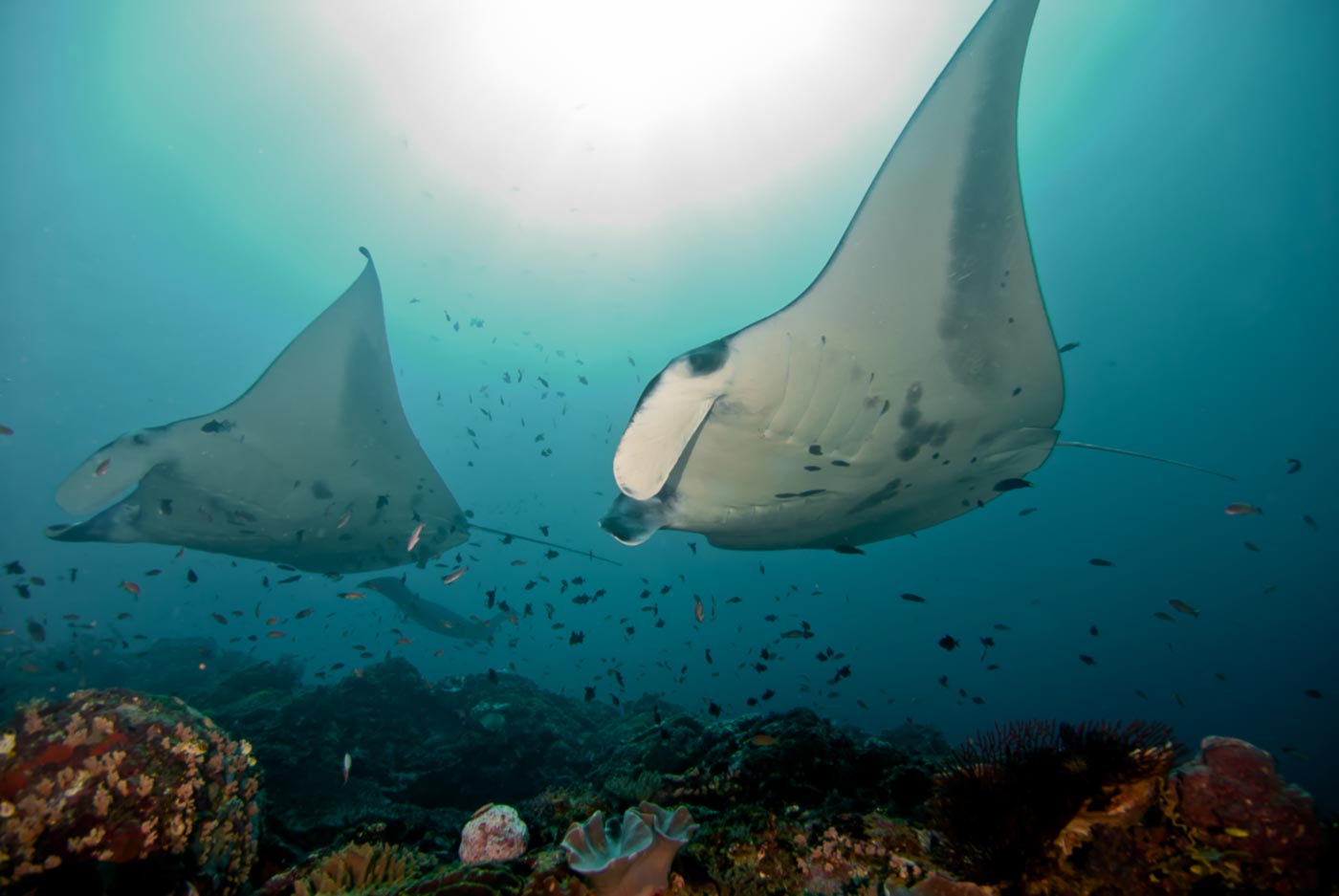
Located at the heart of the Coral Triangle, widely regarded as one of the best dive regions in the world, the Nusa Islands offer a whole raft of exciting underwater encounters, according to Scales. “Around the islands we see mantas, all year long; sunfish, between July and October; schools of tropical fish; turtles; scorpionfish; giant trevally; tuna; marble and eagle rays; occasional whale sharks; and various types of sharks, such as bamboo, reef, blacktips, whitetips, thrasher sharks and hammerheads (although we are seeing less and less).”

A quarter of that list alone would be enough to tick a few boxes on any diver’s bucket list. The underwater seascape, ranging from bays to deep walls, brings a diverse spread of marine creatures. There’s a variety of diving to be done, and with so many possibilities, it’s difficult to single out a favourite.

“[Some of us] have a thing for [the dive site] Toyopakeh,” explains Scales. “It is easy to understand why when you see the diversity of coral and marine life. Manta Point offers its rewards, with a good possibility to see manta rays at the cleaning stations on a calm day. Drifting along the north side is something magical, as you are blessed with not just a great marine ecosystem, but you can enjoy the spectacular view of Mount Agung in Bali and Mount Rinjani in Lombok.”

Aside from the diving, travellers can hike through the islands, cycle along the dirt tracks and many roads, and explore the surrounding villages by moped. Those who wish to remain closer to the ocean can hire a standup paddleboard or kayak and explore the mangrove sanctuary. Nusa Ceningan is perfectly located: Short boat rides take you to remote beaches of far-flung islands, or to the hustle and bustle of Bali beach life. There are many things that visitors to the island can get up to, both on and around Ceningan.

With delicate surrounding marine ecosystems, it is fundamental that all resorts and businesses on the island behave in a sustainable manner.

“It’s not a question of importance. It’s a necessity!” says Scales. “The main focus of our work in the past year was to convert all of our facilities to operate as an eco-friendly resort and dive centre. We are working hard to achieve this. Consulting with environmental design experts and industry leaders to finish our action plan by January 2018.” From reducing their carbon footprint by buying local produce, to using bio-septic systems for waste, Ceningan Resort has revolutionised the way they do business, and set an example for other dive resorts to follow.

“We as a business have an obligation to help ensure that everything we do at our resort and on the island is done in a sustainable way. We owe it to the local communities to ensure that our practices have the smallest impact on the island and its inhabitants,” insists Scales. “We have a duty of care to the local environment, the people and the guests we take on to provide solutions that are eco-friendly.”

For Robert, being an eco-friendly resort goes hand in hand with improving customer experience and the general atmosphere of the area. In the high season, they can have up to 20 guests staying and dozens of people diving – this generates a lot of waste, and requires energy, water and other resources. However, Ceningan Resort’s sustainable methods are mitigating the effects of tourism on the island.

To keep any tourist island sustainable there needs to be a community willing to actively conserve it, and a tourist industry willing to sustain the livelihoods of the community. “We wanted to find a place where we could help the community build new, sustainable programmes and grow our team by contributing to the local economy and the well-being of local families,” Scales says. Since their opening in 2015, they have worked hard to build lasting friendships with the island’s residents, and have employed locals to work at the resort.

That’s the beauty of an island tucked away from the major tourist destinations: Resorts can observe and learn from certain environmental challenges that the surrounding islands have encountered and establish an operation that not only benefits the visitors that come to stay, but which also benefits the community. Nusa Ceningan, beyond the wildly lit skies of Bali and through the unique underwater encounters with sharks, sunfish and rays, is tipped to be one of the hottest dive destinations in the next five years.

*Feature Image by Arkadiy Almendieiev

Sneak Peek: SD OCEAN PLANET Special Edition “Inspiring Images of Iconic Locations”

0

There’s something about a photograph of a blue whale that keeps you looking, holds your attention.

Past the stunning composition and vivid blues, perhaps what makes these images so hypnotic is the fact that it’s of a subject photographed so little, and rarely encountered. This quite brilliant creature – listed as “Endangered” on the IUCN Red List – becomes frozen in time. And for a moment, you feel something for it.

That’s the brilliance of a great photograph: its ability to hold a moment and change a mindset. It can inspire a movement, spark an emotion – shatter a stereotype. It’s the beating drum behind the inspiration for putting together this photography special edition.

As Underwater360, we’ve tried to build a platform that educates and inspires our readers to get involved with the ocean – the truth is, this ocean planet really is changing for the worst. We believe that by showcasing beautiful imagery and educating the industry on the need for sustainable practices, we can make people care. Our dive show, ADEX, has grown larger than anybody could have predicted, and this 2017 we’re launching Ocean Week Singapore, which is aimed at taking our message further. We’re fortunate to work with a body of incredibly talented people – from photographers to conservationists – who have inspired many to do more for this planet.

This photography special edition is dedicated to the iconic underwater locations that have captivated divers since we first began exploring the blue – iconic locations that will mean something different to each of you. Bound together by incredible images, taken in some of the most extreme places, the issue is a testament to those photographers who have pushed the limits to showcase the stunning blue and its inhabitants.

Page by page, take a tour of our amazing ocean planet. Live the stories behind the shots, glean new techniques from the experts, and go out and capture the underwater world in all its beautifully chaotic glory.


Greening The Dive Business: One Woman’s Quest To Take On The World (Part 2)

0

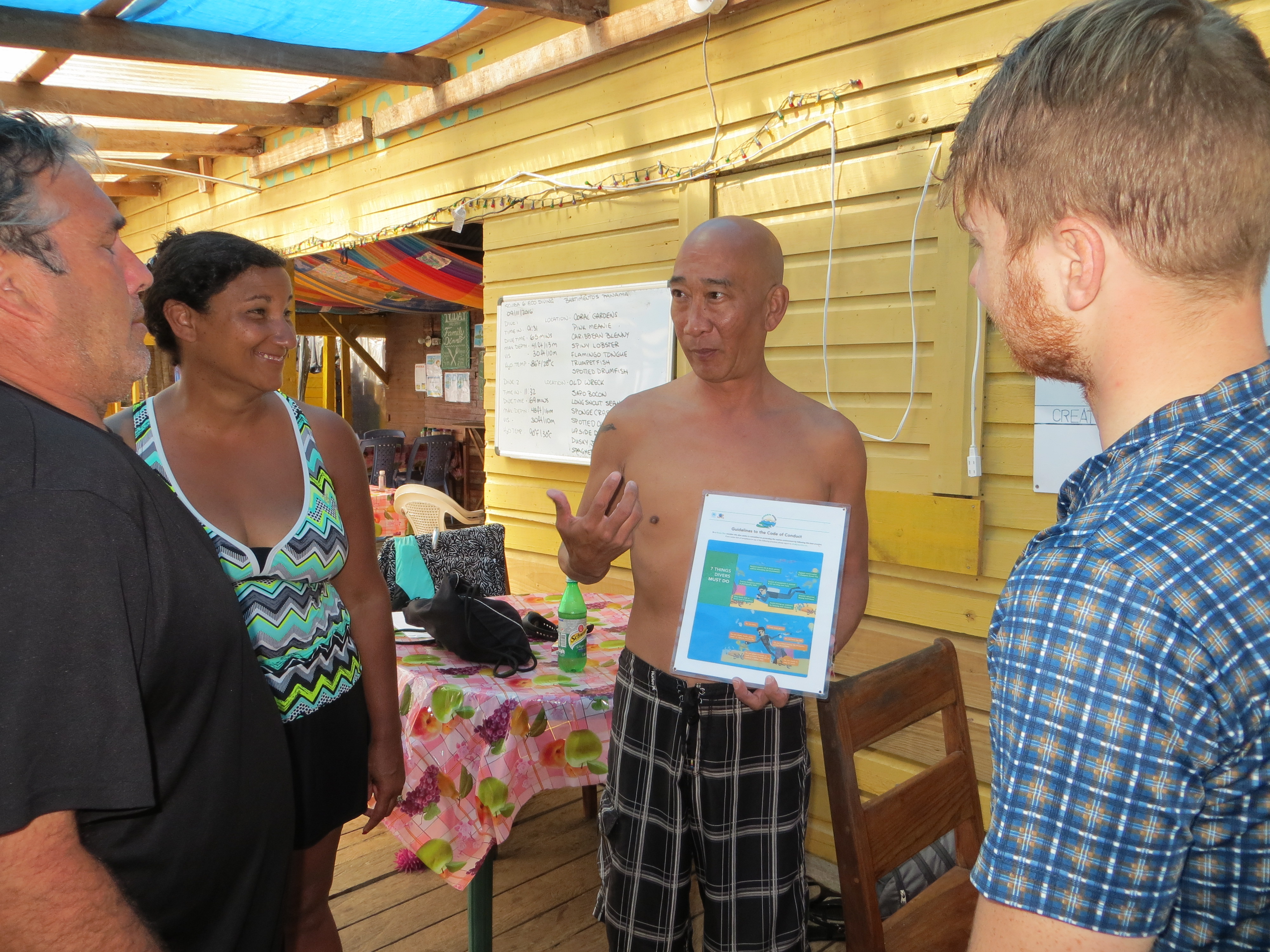
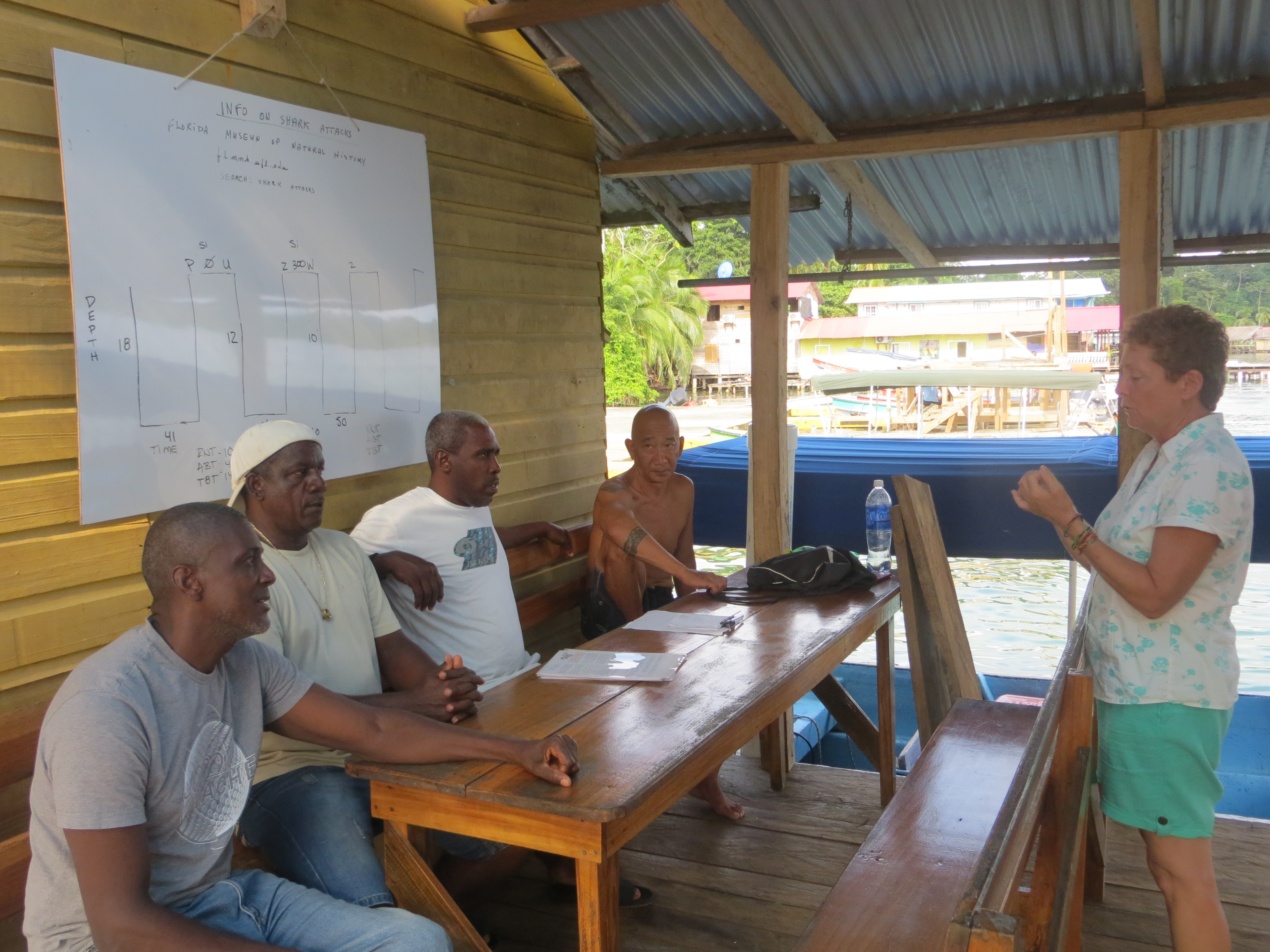
Ginette Bariteau owns Scuba 6 Eco in Panama and first stumbled across Green Fins in May this year. Since then she has downloaded the Green Fins Dive and Snorkel Centre Handbook and has been working systematically to implement the environmental code of best practice within her operations ever since.

Changing our way of life towards one focused more on sustainable living can feel a little overwhelming, how on earth do we know where to start? Using a unique assessment system based on risk to marine biodiversity, the Green Fins approach helps dive businesses to identify high risk practices. They can then prioritise action and use the comprehensive Green Fins guidance material to identify realistic and low-cost alternatives. With the support of The Reef-World Foundation, international coordinators of Green Fins, Ginette assessed the performance of her current environmental practices and identified three clear priority actions to focus on addressing in the short term.

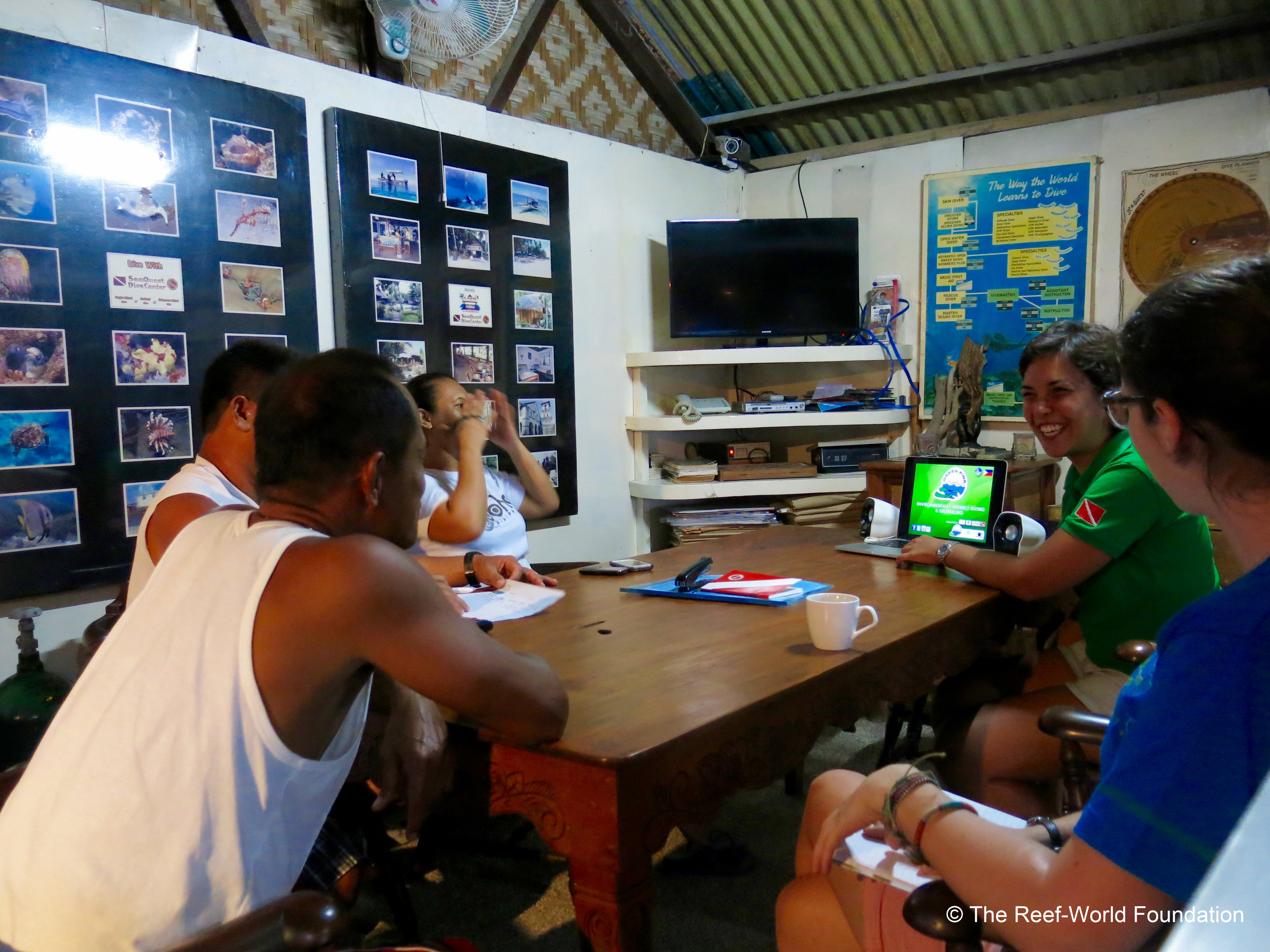
Reef-World’s Chloe Harvey has been helping dive centres in some of the most popular dive destinations in the world to follow the Green Fins code of conduct since 2008. Thus she has helped dive centre owners overcome some of the most common, and less common, challenges they face in their journey towards sustainability. With the team at Reef-World she has gathered the best examples of solutions to these challenges, which are often incredibly innovative, sometimes locally unique but more often easily replicable around the world. It is this hands-on experience that has helped to ensure Green Fins delivers the most applicable, practical and realistic guidance responding directly to the industry’s needs.


“Using a unique assessment system based on risk to marine biodiversity, the Green Fins approach helps dive businesses to identify high risk practices.”


Chloe and Ginette dived into the daily practices of Scuba 6 Eco and assessed these against the Green Fins best practice recommendation. This process would usually be conducted by a qualified assessor who would actually observe business practices in operation above and below the waves in order to assess performance. Green Fins activities are supported by public funds, grant making and fundraising, and the demand from the industry is growing fast. In order to ensure those conservation funding dollars go further, Chloe and the team at Reef-World are investigating how much support they can provide to dive centres remotely using the Green Fins Toolbox. However, they do truly believe that nothing beats a face to face encounter (think whale sharks, or blue whales) so Reef-World will be sending a staff member to visit Scuba 6 Eco in January next year to meet the team and see how effective the remote support has been.

The assessment process highlighted areas where Ginette and her team are really stepping above and beyond the norm in terms of managing their risk to the local environment. Shining out of the interviews with Ginette has been the passion of the team she leads. They are clearly a committed bunch made up of individuals who are not strangers to changing their own way of life to reduce the impact they are having on our ocean planet.

The three actions we agreed for Ginette to focus on in the immediate future included:

  • To provide environmental training for dive staff to streamline role model diver behaviour through the dive operations
  • To identify alternatives to sending used oil to landfill
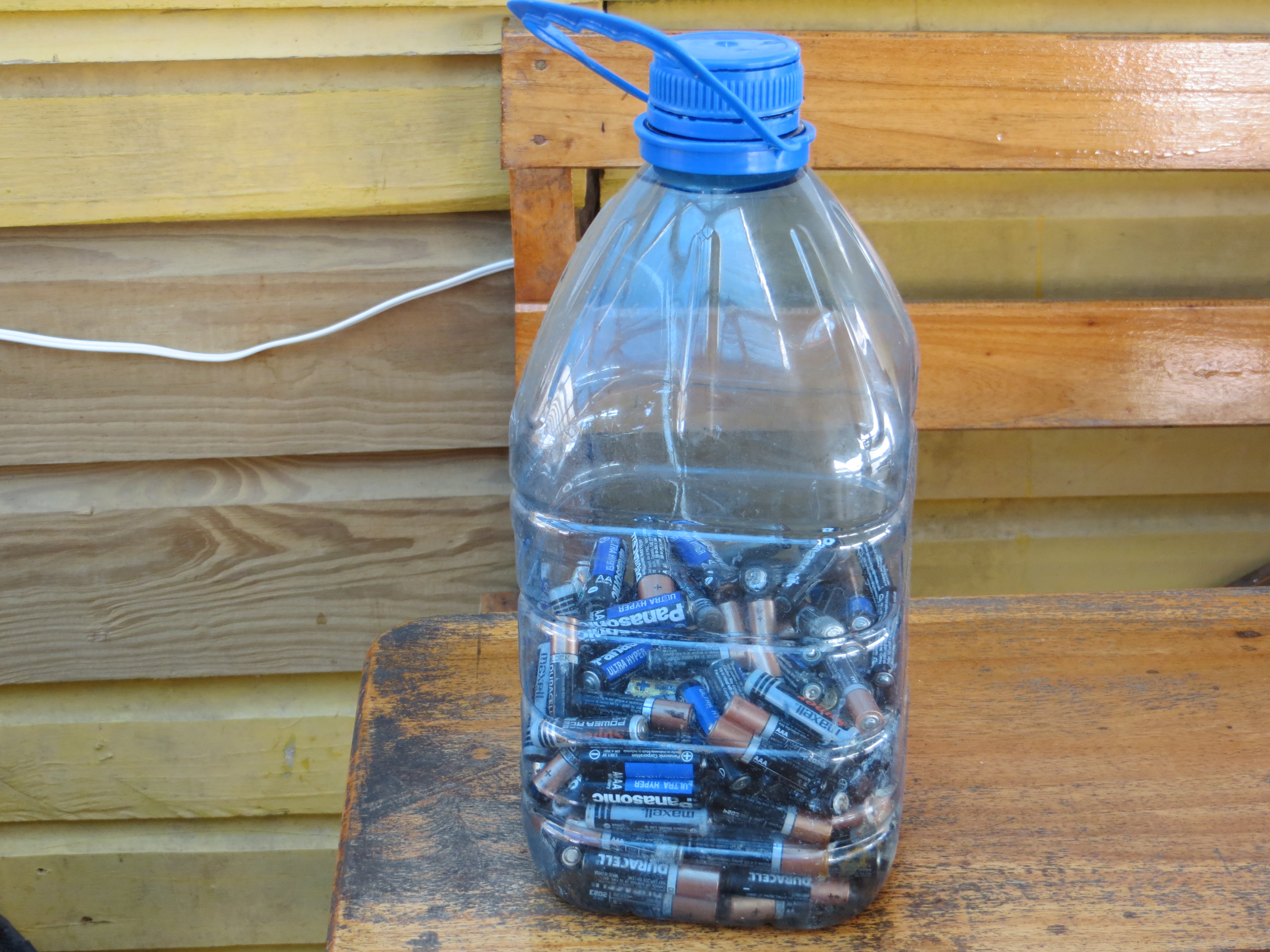
  • To find alternatives to sending used batteries to landfill

Ginette set to work immediately on these action points, spurred by the really positive feedback she had already received from her team and customers on the new Green Fins additions to the company practices.


“The assessment process highlighted areas where Ginette and her team are really stepping above and beyond the norm in terms of managing their risk to the local environment.”


Even with a passionate and receptive audience, change is often met with resistance. The idea of turning relatively simple tasks into more laborious processes amongst what seems like an endless to do list of daily dive centre operations is not an easy sell. Luckily Ginette was able to spur the team through this, helping them to see that this good environmental practice is part of their company’s DNA and is what is keeping their dive centre unusually busy even through the depths of low season. Recognising that these actions will benefit the environment as well as the profitability of the business and those working for it, is an important part of initiating change.

It’s hard to negotiate policies such as “strictly no touching marine life”, when some dive guides feel this forms an essential essence of the product they offer to their guest. Today unsustainable practices are still acceptable and in some cases met by praise by seemingly leading voices in marine conservation (for example dive centres receiving publicity by marine science institutions for hand feeding sharks in popular diving destinations on the globe). As any leaders of revolutionary change will say, being the people in the driving seat is not easy. However, strong and positive messages for sustainability being the only accepted norm within the industry are becoming more common. Divers are choosing green services and are willing to pay more and travel further to receive them. The Scuba6Eco team are seeing this first hand with their customers willing to pay extra boat ferry fees to travel to her dive centre over other more accessible ones.


“The Scuba6Eco team are seeing this first hand with their customers willing to pay extra boat ferry fees to travel to her dive centre over other more accessible ones.”


Ginette is making concrete steps towards greening her dive centre. She has talked through the essence of the Green Fins diver best practice with the whole team and introduced a suggestion board for the team to log challenges they are meeting. “I want to raise issues to the staff, but I want them to find a solution” Ginette said. This resonates closely to the Green Fins philosophy as every recommended Green Fins solution, trick, tool and practice has come from working directly with over 500 dive centres over 10 years in eight different Asian countries.

Simple solutions for the safer disposal of oil has been identified in a local vendor selling gas and oil, who collects and recycles used oil. Ginette just needs to develop the protocol within the dive centre to ensure the used oil is collected during maintenance activities, stored safely and handed over to the vendor. By putting the right management controls and protocols in place, these systems can be easily introduced and reliably maintained.

Reducing waste is far better than having to identify safe disposal systems, so Ginette is looking to switch to rechargeable batteries. This represents a significant financial investment so she will look to phase this in over time. Meanwhile she has set up a used battery collection station in the dive centre and will start to ask guests who have access to safe battery disposal systems at home, to take some back with them.


“Meanwhile she has set up a used battery collection station in the dive centre and will start to ask guests who have access to safe battery disposal systems at home, to take some back with them.”


Hopefully by mapping these steps we can show you how anyone can start changing the world. By approaching sustainability in a progressive fashion and identifying realistic steps, not expecting to see change overnight, we are all able to change our ways of life and business for a more sustainable outlook. This needn’t be in anyway a business sacrifice, but instead a unique selling point. Some steps might require small investments, but the proof of return on investment is evident. The industry is changing, jump on board and ensure you’ve got your Green Fins on!

Pick up a copy of the Green Fins Dive and Snorkel Handbook here and take your first step towards Greening your Fins, visit the website for more information or contact the brains behind Green Fins any time at info@greenfins.net


Read Part One of this incredible story

“This blue world is changing. In the last century the global sea level has risen almost 20 centimetres, we have lost half of our wildlife in the past four decades, and this year, our oceans are facing one of the worst coral bleaching events in history. Our marine ecosystem is delicately balancing on an uncertain edge, and there is no group better placed for attempting to rescue it than the dive industry. Heading this industry are the myriad dive centres that stand on the beaches of far-flung islands, and dive-tourism hotspots – these are the ones who can help kick-start change…”