Home Blog Page 121

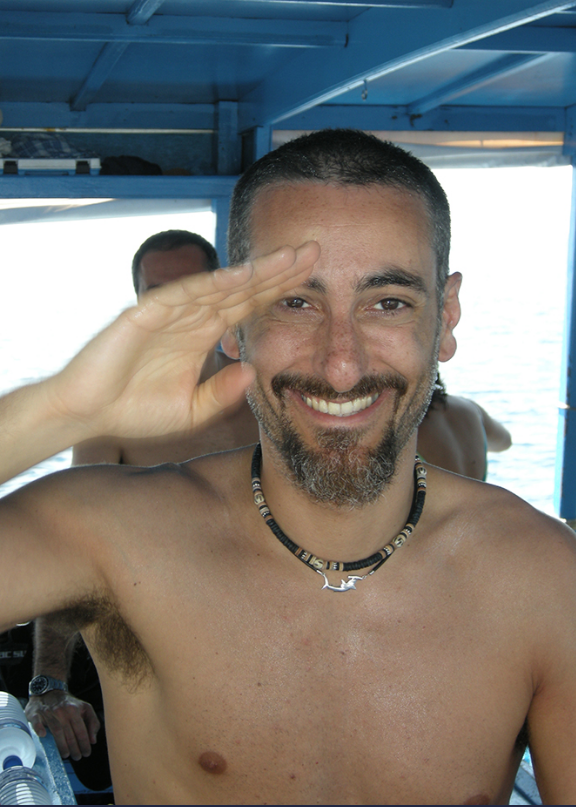
Shark Filmmaker Rob Stewart Missing During Dive (LIVE UPDATES)

0

This is a breaking news story and will be updated

Well-known Canadian underwater filmmaker and conservationist, Rob Stewart, has been declared missing from the Florida Keys since Tuesday.

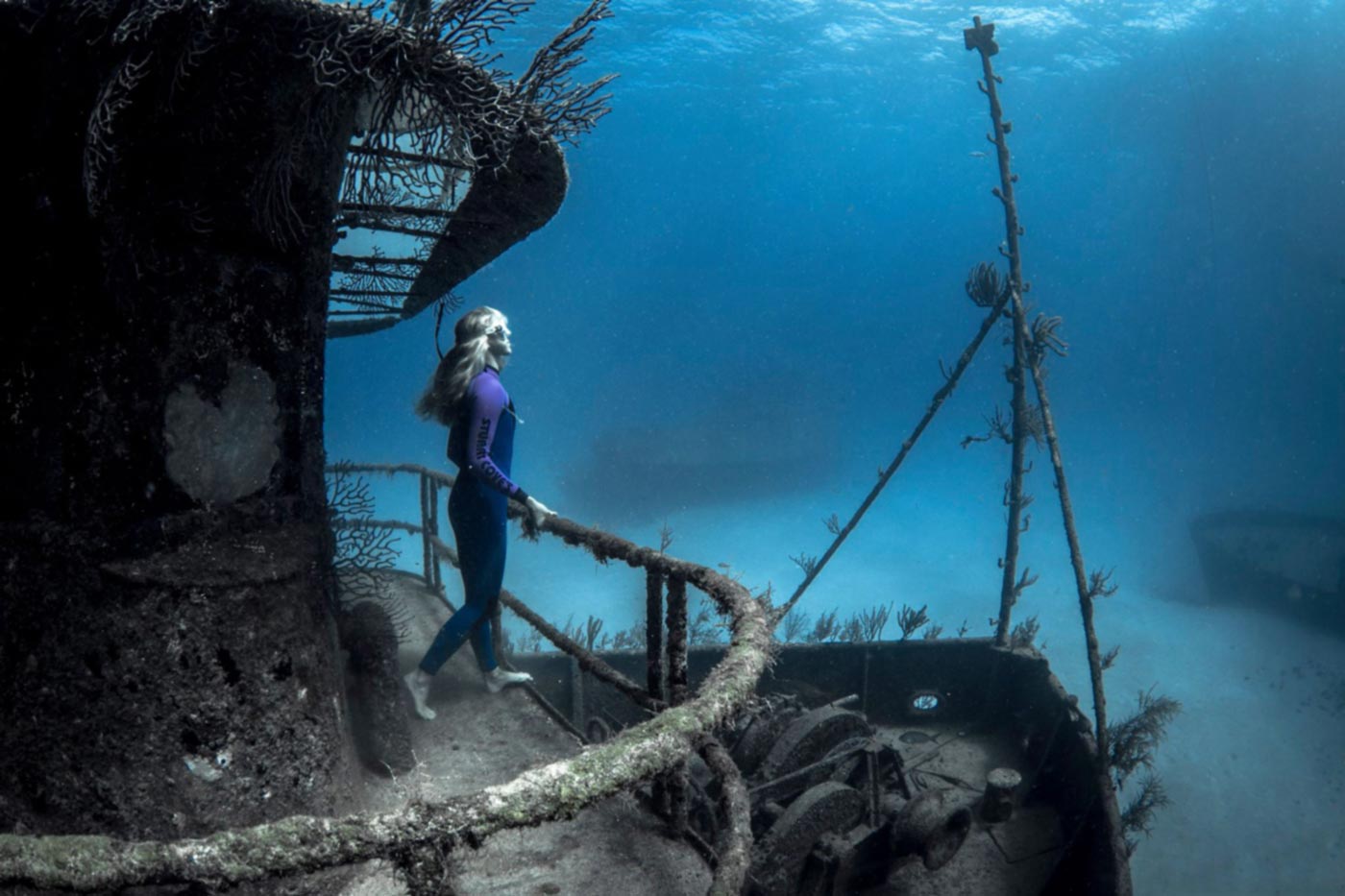
Stewart, 37, was diving with a small group on the Queen of Nassau wreck near Alligator Reef off Lower Matecumbe Key at a depth of around 70 metres. It is believed that both Stewart and his buddy resurfaced around 5pm. His buddy got onto the dive boat and passed out. When the boat crew went to retrieve Stewart, he was nowhere to be seen. According to Sea Shepherd, the crew believe Stewart may have also passed out and floated off. Both divers were using closed-circuit rebreathers, mainly to reduce bubbles when filming wildlife.

The Coast Guard reported that the U.S. Navy, the Florida Fish and Wildlife Conservation Commission, and the Monroe County Sheriff’s Office were all involved in the search. A 10-metre fast-response boat and an MH-65 Dolphin helicopter are also being used. Conditions on the water and in the air were to said to be favourable on Wednesday morning, with good visibility.

Coast Guard Senior Chief Nyx Cangemi says crews have not stopped looking since they were called out. “As long as there’s a chance of survival, we’re going to search,” Cangemi said in an interview. “We remain hopeful that we’ll be able to find him alive.”

Stewart was said to be filming an installment of his Sharkwater documentary series, a series he heads that has become well known for helping to protect sharks, change government policy, and inspire the creation of shark conservation groups. It is considered by film critics as one of conservation’s success stories, and brought to light many pressing issues regarding shark finning, overfishing, and attitudes towards sharks.

“When last seen, Rob was wearing a drysuit,” said Sea Shepherd founder, Captain Paul Watson, in a status update on Facebook. “Hopefully, the drysuit will keep him afloat, but the fear is that he sank near where he was last seen. Divers with deep water experience are participating in the search.”

In the meantime, Stewart’s colleagues and family are asking for the local diving, fishing, boating and flying communities for their help. There is also a fundraising page for Rob Stewart’s search and rescue.


Singapore Divers’ Monthly Party (Feb 2, 2017): Todd Essick Named As Special Guest Speaker

0

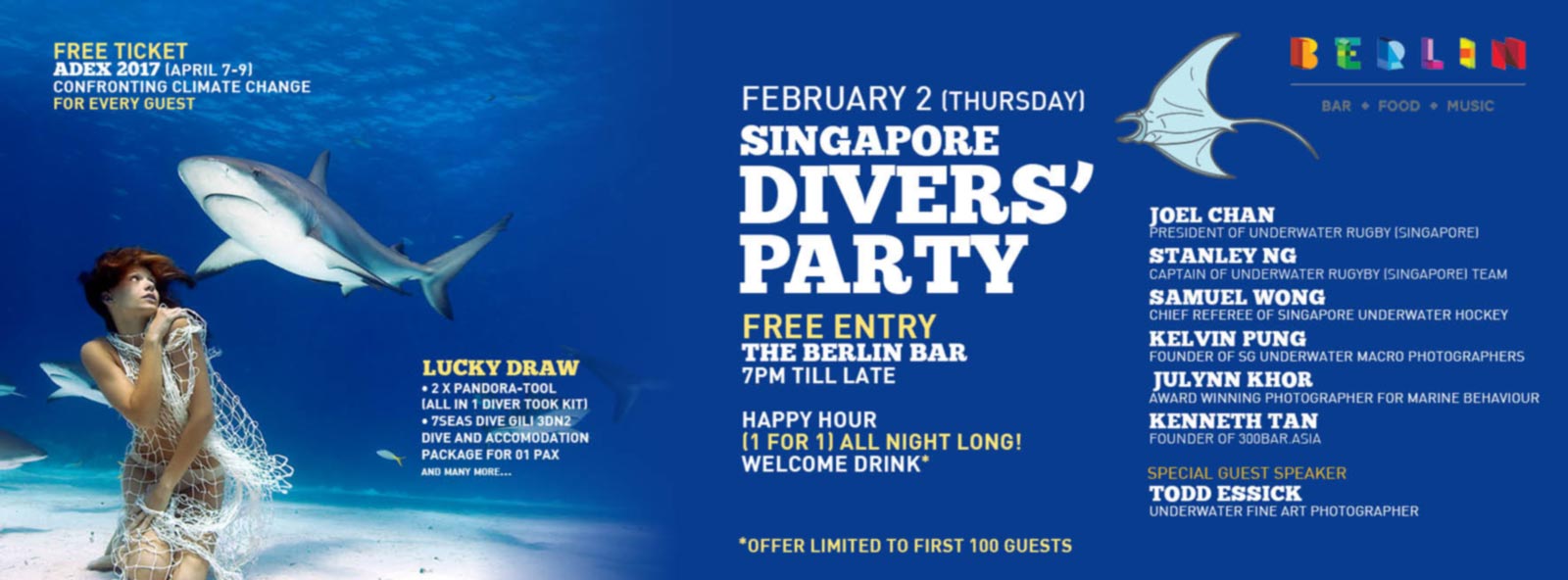
Underwater360 have announced that award-winning underwater fine art photographer and photojournalist, Todd Essick, will be Special Guest Speaker at the coming Singapore Divers’ Monthly Party taking place on February 2, 2017. A pioneer and luminary of underwater fine art photography, the Chicago raised photographer became enchanted with the sea through spending summers in Ocean City and winters in South Florida. It was an enchantment that would see him create surreal depictions of underwater life, and master smooth compositions within the marine world.

Learning the tricks of the trade through being a professional freelance photojournalist, covering daily news, sports and special interest stories (including a civil war, and riots in Miami), Essick recorded some of the era’s most significant events. In 2009, he was invited as a guest photographer for Germany’s Next Top Model with Heidi Klum.

His first ever fine art photography book, Beginnings: Goddesses, Sirens and Mermaids, drew huge interest in the photography world – it was completely sold out. Now, 13 years later, Essick returns to release the much-awaited sequel, Echoes: Goddesses, Sirens and Mermaids, which will showcase the entire scope of his work.

Presenting his images, along with unique tales of some of his most exciting encounters, Essick will offer the party audience an insight into the world of an underwater photographer.

Taking place at the Berlin Bar, at CHIJMES Singapore, the Underwater360 Divers’ Monthly Party brings together anyone who has a passion for the ocean, regardless of whether they are a diver or not.

Alongside Todd Essick, the Party boasts a special line-up of speakers covering topics related to the ocean. Speakers include: Joel Chan, President of Underwater Rugby (Singapore); Stanley Ng, Captain of the men’s national underwater rugby team (Singapore); Samuel Wong, Chief Referee of Singapore Underwater Hockey; Kelvin Pung, Founder of SG Underwater Macro Photographer; Kenneth Tan, founder of 300Bar.Asia, and Kulynn Khor, award-winning photographer for marine behaviour (Anilao Photo Competition 2016).

Aside from the talks, there are fabulous lucky draw prizes to be won from dive trips to dive gears – it’s a party you simply cannot miss!

Lucky Draw prizes

  • 2 x Pandora Tool kits
  • 5 x Diveaholic T-shirts
  • 2 x ADEX Singapore 2017 TekDive conference tickets
  • 1 x Dive The Big Blue Book: A Historical Affair Vol 1 & 2
  • 1 x Hotel Nuve Heritage 2D1N Staycation
  • 1 x Todd Essick’s Beginnings: Goddesses, Sirens and Mermaids (Open up and signed on the spot)
  • 5 x Vintage UW3some Thermal Mugs
  • 1 x 7 Seas Dive Gili 3D2N Dive and Accommodation
  • 2 x 3D2N Full Board Package from Summerbay Resort, Terrenganu, Malaysia

First 100 visitors will get a free welcome drink, and for those who wish to drink on – it’s one for one (Happy Hour prices) until late.

To sign up for the event click HERE, or just turn up at The Berlin Bar at Chijmes and we will register you on the spot! So make a date with us!

The last divers’ party attracted a wealth of ocean enthusiasts who enjoyed talks from Syrena (Singapore’s first mermaid), Chris Kim (AIDA freediver), and Michelle Ooi (11-time Singapore national woman’s freediving record holder). Read about it HERE.

Underwater Photographer of the Week: David Salvatori

0
© David Salvatori

Marking the launch of Reflections from the Past, a photographic exploration through crystal-clear waters and into the heart of the Tirino Valley, Italy, professional photographer David Salvatori has crafted unique images that are testament to the stunning and mysterious underwater landscapes he has visited.

Starting underwater photography in earnest in 2008, Salvatori was a big name just three years later, competing in some of the most important national and international photo competitions – and winning high praise, along with awards.

Through his keen eye for a great photo, he has brought to light pressing conservation issues, and in doing so has travelled to some of the most far-flung places on Earth. In 2015, he was selected as a member of the Ocean Artists Society in recognition of his awareness-raising activities on behalf of some of the world’s most endangered species.

UW360 Editor, Oliver Jarvis, spoke to the esteemed photographer about his career and images:

What made you want to become an underwater photographer?
Water symbolises my personal dividing line between my first and second life. It was the conduit for introspection that led me to renew and become aware of the true and balancing essence of my soul when, at the age of 36, the passion for diving exploded inside of me – the romantic, utopian dreamer of my youth came alive again.

Taking underwater photographs immediately revealed to me, a lover of the visual arts, a suitable way to show my new balance; photography and diving was first and foremost a catharsis and affirmation, and then became the tool to profess my infinite love for the sea and the creatures that inhabit it.

Your first underwater shot?
A picture of a couple of angelfishes, on December 31, 2007, during a New Year’s Eve cruise in the Red Sea. It was awful.

The story behind your most memorable underwater shot?
My most memorable shot is a dynamic shot of a female sperm whale, together with her calf, and my wife Cristina freediving between them. We had to train for more than six months, working on our freediving in a swimming pool, to be mentally and physically ready for this encounter.

Where is your favourite dive destination?
I have been lucky enough to visit many destinations in the world. For warm and colourful waters, I would say Raja Ampat; for cold waters, British Columbia, without any doubt.

The site you’d most like to dive, but never have?
The South Pole—it’s about the money, but not only… It’s about being mentally and physically prepared to dive cold water and rough seas.

The weirdest thing you’ve seen underwater?
Humans.

What camera equipment are you currently using?
Nikon D800E in Seacam housing.

Congratulations on the launch of Reflections from the Past. What does the book mean to you?
It means a lot to me, as this gave me the possibility to speak about my experience with water, a balance of my first 10 years of diving. Diving allowed me to achieve a positive thought, and the communion with water was the road to rescue, the map to discovery of what is true and real in life.

What do you believe sets your new book apart from similar books on underwater photography?
Because it is not simply a collection of pictures; it’s a sort of personal journey to tell a story about a life experience with water. The pictures of the places visited in the book are symbolic representations of the stages of this journey. Anybody curious about diving, or looking for a better mental approach to life, should read this.

Why Capo D’Acqua Lake as a project? What is so amazing about the area?
Capo D’Acqua and surrounding areas were perfect to tell my story with the water. This magical place, rich in history and charm, was the ideal place to begin my photographic journey. The crystal-clear waters of this lake are the perfect means to seek out and discover yourself, a place where peace and tranquility give the opportunity for the spirit to grow. The Capo D’Acqua dive site is often considered one of the top dive sites in the world.

What was the most difficult part of putting this book together?
Well, this was my first book, so I thought that taking the pictures was most of the work. Actually, I was wrong and all the work that comes after taking the shot, like post-processing, graphic design, CMYK print preparation, writing, takes a lot of time and patience.

But maybe finding the common narrative line linking together the physical journey and the spiritual one was the most challenging part.

Is there an overall message, or lesson, you wish your readers to take with them after reading this book?
Yes, definitely: Life is a journey, too short to waste. All of us need to train awareness, chase happiness, practise love.

What is the highlight of your career?
Every time I go underwater I feel so rewarded. It’s actually not a career in the strict sense of the term. I am an amateur and I am not paying my bills with photography. I’ve had many rewards and recognition, but I am always looking ahead and hope to be healthy and wealthy enough in the coming years to achieve greater results.

And the low point?
Definitely when I quit competitions in 2012, and I finally realised that I was taking underwater photography as another reason to be stressed in my life.

What advice do you have for aspiring photographers?
Respect the Nature and the sea. Be curious. A great photographer is always an expert in marine biology. Practise a lot – you cannot be Doubilet in one day! Enjoy it and don’t get too hung up on your results – maybe you won’t ever be the new Doubilet! But most of all, never give up. A failed shot is only a good excuse to get back in the water!

Is there any particular shot that you still want to get?
Many! My life won’t be long enough to get every shot I have in my mind. Anyway, humpback whales is on the wish list.


For more of David’s fantastic imagery check out his website, HERE.

Ocean Defender of the Week: James Harvey

0
© The Reef-World Foundation

The future of this ocean planet seems to hang in the balance: chemicals kill all that they touch; overfishing sweeps the seabed of life; and ocean acidification bleaches and sterilises the shallow waters. It appears that we are at the start of a colourless world, laid bare by human life. Thankfully there are people out there dead-set on reversing the catastrophic impacts of climate change on the sea, these ocean defenders are the unsung heroes of every large eco-organisation – the boots on the ground making the hands-on difference.

Our Ocean Defender of the Week, James Harvey, as a Manager at Reef-World he has led the development of the UN Environment Programme Green Fins across Asia since 2008. With over 10 years of hands-on experience as a marine biologist working in tropical marine environments, James has worked closely with national governments, industry leaders and international environmental agencies in order to develop Greens Fins into a system that is meaningful to all stakeholders. We caught up with him for a quick Q&A on his life, and career:

What got you into marine biology?
I’ve always been interested in biology – more specifically the sea – which I guess stemmed from family holidays to the beach. As I got older I became more aware of the fact that there is large portion of this planet that we know so little about and I wanted to explore and find out more about the ecology and species that have evolved to live in this vast marine environment. During my studies and further work with universities and organisations around the world, the importance of the role healthy marine and coastal ecosystems play on our lives became more apparent and being able to positively influence people’s lives through the preservation and wise use of these systems has become my current focus.

What’s the hardest thing/best thing about your job?
Generally in marine conservation, your work and ultimate goal is to try and change people’s attitudes and way of life that have evolved over many years. This is particularly hard as most people are not willing to change how they live. This involves a burden on people’s resources, be it time or financially, and puts people in often awkward and uncomfortable situations. Having to influence people to change is not easy and this represents a large portion of what I do which at times can be hard. However it is not as hard as seeing the negative impacts resulting from the effects of polluted, or over harvested, marine environments on people’s lives. Listening to fishermen or local businesses struggling to feed their families due to the lack of fish or listening to owners of businesses that are collapsing due to over-developed and poorly planned tourism initiatives is always heartbreaking.

Contrary to this, the upside is seeing the result of sometimes years of hard work pay off and getting to hear positive stories from people on the ground saying that your work has directly had a positive influence on them, their families and the surrounding community.

What’s the craziest thing you’ve ever seen/discovered while on the job?
I was diving in the Andaman Sea in Thailand when I came across a recently discarded single fishing line draped across a reef. As it was recent and not tangled into the coral reef, I decided to collect it and pick it up off the reef. Making sure my buddy and the rest of the group were aware that I would be doing this, I was forced to follow the path of the fishing line which meant I was still within sight but got slightly separated from the group. The line ended up trailing off out into the blue and away from the reef. As I swam out into the deep and dark waters the line vanished off into the blue. Reeling it in, I became aware that the line was getting taught and I was being pulled slightly with it. Still pulling it in, the line suddenly became slack and I managed to pull in many metres of line until out of nowhere a reasonably large and very agitated black tip shark swam at me and quickly around behind me with the end of the line coming out of its mouth. I pulled in as much as I could before having to cut the line with my knife and finning back to the group. I decided extracting the hook from its mouth underwater was probably not a wise decision.

What do you hope to achieve through your work?
Globally, millions of people are dependent on the health of the seas and oceans as either a source of protein or a source of income. All this relies on the sustainable use of this precious ecosystem which is determined on the attitude of a select few individuals. I am fortunate enough to be given the chance to be in a position whereby I can hopefully influence people in positions of authority or who are influential themselves to make positive choices in how these resources are used. The ultimate goal is to not have to change their attitudes and instead it becomes the norm that people do their utmost to protect and conserve not just coral reefs but all marine ecosystems in the future.

Who is your marine biology role model?
Throughout my career, I have come across many inspirational characters whose dedication to the advancing of our scientific understanding of the marine environment is incredible. To dedicate a large portion of your life to better understand how and why such species live, feed, reproduce and interact with each other for the general wellbeing of man is both honourable and inspiring. However, there are marine biologists who prioritise research and general scientific advancement and there are marine biologist who use the findings of their research for the benefit of others and it is this dedicated group who I admire the most. To be predictably boring and prevent any hard feelings, I simply cannot name individuals, there are too many!

What do you think lies ahead for marine ecosystems?
In short, some rough times. I think as a species, we have to wait until something really catastrophic happens in order to enact real and impacting change. Current predictions from climate models clearly show that unless we do something drastic about climate change and change the way we think about energy, the negative impacts on our planet from rising levels of COare certain to increase. Everything is set to increase such as the increase and severity in storms, increased acidity in the seas, rising sea levels, increased amounts of plastic, increases in the number of mass coral bleaching events and of course increasing sea surface temperatures. The only thing that will not increase is the abundance and number of species in the seas. A gloomy picture I agree, but the good news is all of these impacts are easily reversible, we only have to increase the number of people working in this critically important sector.

What can the average person do to help protect life in the oceans?
This is one of the most commonly asked questions I get asked. My simple response is everything. If we all, and I mean all 7.4 billion of us made the right decisions on a daily basis then we have the ability to make serious and fast changes. A lot of what we do on land impacts the oceans, it is just a case of how long our individual choices take to impact them. Discarding rubbish in the street will wash out into the sea in a matter of hours or days leading to marine life either ingesting it or choking to death. On the other end of the timescale, by choosing 100% green electricity to power your homes will result in less carbon being produced ultimately slowing down climate change. Choosing environmentally responsible food options also has the ability to make big differences.

10 Incredible Freshwater Dives

0

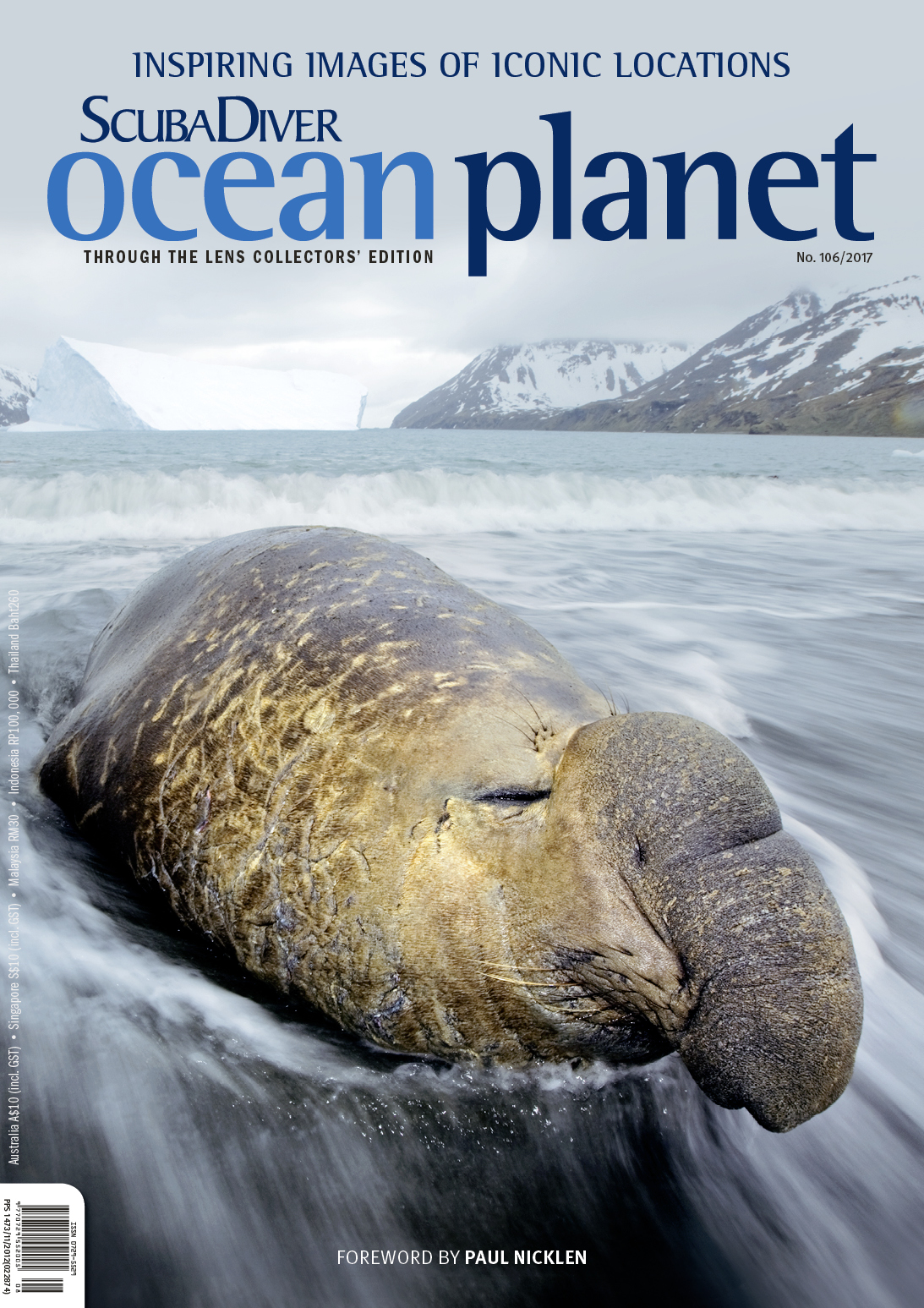
Think scuba diving is limited to salty sea and tropical archipelagos? Think again. Diving fresh comes with hidden surprises and insane encounters. In the SD OCEAN PLANET Special Edition “Inspiring Images of Iconic Locations”, we take a look at some of the greatest freshwater dives out there:

Lake Baikal, Siberia

The world’s largest freshwater lake by volume, Lake Baikal contains roughly 20 percent of the world’s unfrozen surface fresh water. At 25 million years, it is considered one of the world’s oldest lakes. Viktor Lyagushkin frequently dives the lake and in SD OCEAN PLANET, he reveals the incredible transformation the lake underwent when it was infected with alien algae.

Capo D’Acqua, Italy

Two submerged mills, remarkably intact, lie nine metres below the water’s surface in this lake near Capestrano in southern Italy, and are the perfect chance for scuba divers to descend into history. This sub-aqua ghost town is beautifully captured by professional underwater photographer David Salvatori and features in the SD OCEAN PLANET Special Edition.

Okavango Delta, Botswana

This unique wetland hosts an abundance of animals – most notably the Nile crocodiles that attract divers from far and beyond. Shallow waters made up of a mix of colours are inviting, unique, and challenging. In SD OCEAN PLANET, acclaimed shooter Daniel Botelho, who has navigated a career through photographing extreme encounters, beautifully captures the essence of the Okavango.

Silfra Fissure, Iceland

A huge rift formed in the divergent tectonic boundary between the North American and Eurasian plates, creating the Silfra Fissure. In SD OCEAN PLANET, Joanna Lentini offers a unique perspective of this underwater landmark, which attracts divers the world over who look to dive with incredible visibility.

Cenotes Dos Ojos, Mexico

The Pit, a 60-metre-deep sinkhole with crystal-clear water, is one of the most mind-blowing locations in the Dos Ojos cave system. In the summer, the sunbeams streaming through the entrance are simply breathtaking, a moment that Tom St George captures perfectly in his image from the SD OCEAN PLANET Special Edition.

Jellyfish Lake, Palau

The stingless golden jellyfish of Jellyfish Lake feature in abundance, and have evolved to be substantially different from their close relatives that inhabit the nearby lagoons. In SD OCEAN PLANET, Aaron Wong captures the dynamic beauty of the alien-like world of this unique lake.

Amazon River, Brazil

For its star-studded lineup of inhabitants – piranha, anaconda, crocodile – and extensive beauty, the world’s largest river is simply a must-dive for all those who wish to push the limits of their capacity to explore. Eye to eye with an anaconda, chased by a polar bear, and facing a group of pink dolphins – wildlife photographer Amos Nachoum has been at the forefront of many a heart-pulsing encounter. In the SD OCEAN PLANET Special Edition, Nachoum superbly captures a dolphin encounter on camera.

Crystal River, Florida, USA

With a massive manatee population swimming around in gin-clear water, Crystal River is a top spot for divers looking to have one-on-one encounters with the docile “sea cow”. Vibrantly coloured backgrounds offer underwater photographers the chance to capture stunning shots, just as pro photographer Becky Kagan Schott did with these two manatees sharing an intimate moment.

Adams River, British Columbia, Canada

This salmon safari gives underwater shooters the opportunity to capture the incredible moments these plucky fish make the long and dangerous journey to return to their place of birth. Top photographer Eiko Jones meets them eyeball to eyeball to get into the middle of the action.

Green Lake, Tragoess, Austria

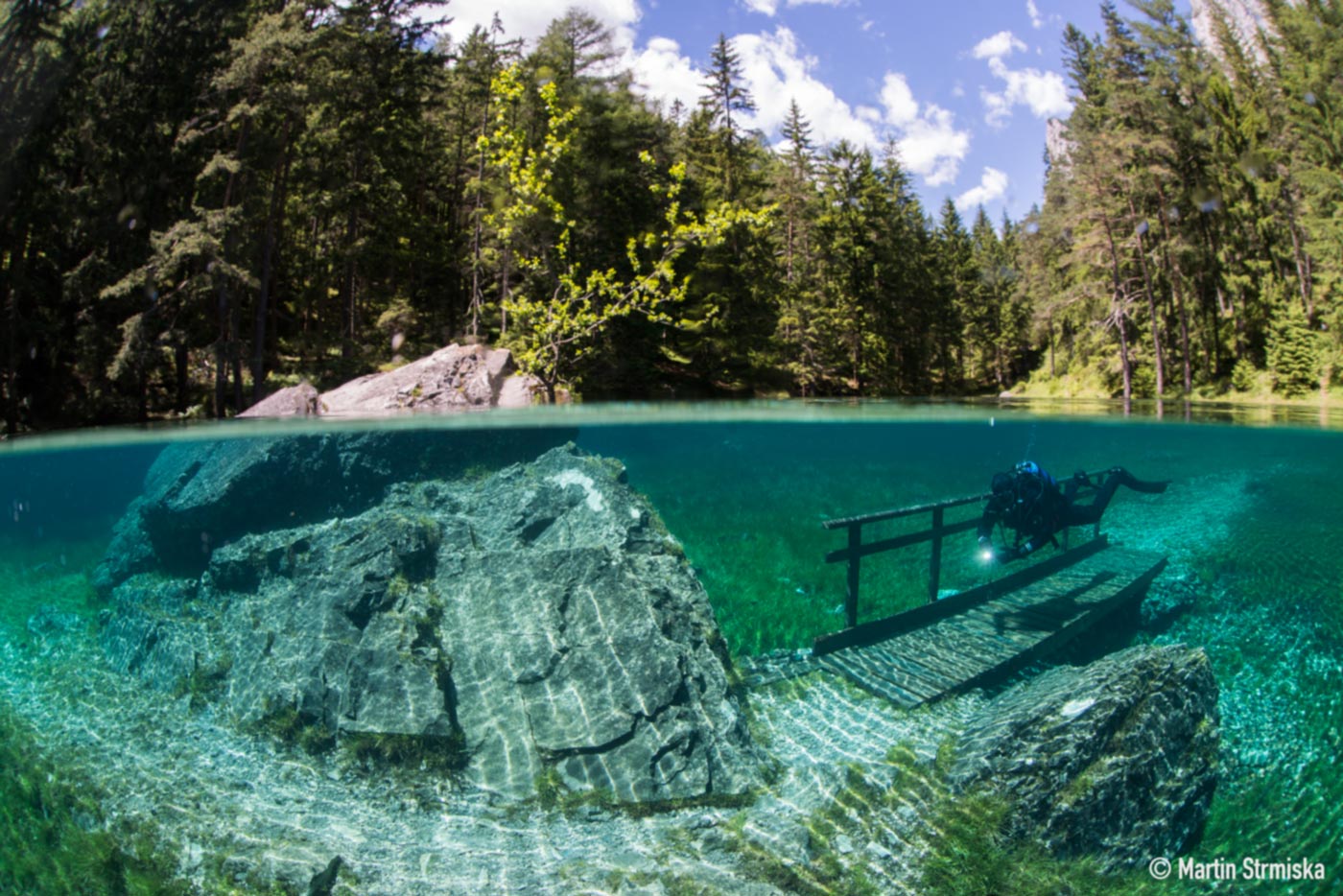
Every spring, when the temperature rises and melts the winter snow, the basin below the mountains fills with water and floods the county park. What remain are sunken benches, footpaths and a visibility of around 50 metres. Unfortunately, due to environmental concerns, authorities recently barred diving in the lake – but not before Martin Strmiska captured this surreal over-under shot.

SD OCEAN PLANET Special Edition “Inspiring Images of Iconic Locations” – January 2017

This January, we bring you the most inspiring images from some of the industry’s greatest photographers. With a foreword by Paul Nicklen, stories behind the most incredible underwater shots, and photography tips and techniques, this is one of our most exciting special editions yet!

Purchase it HERE.

Underwater Photographer of the Week: Lia Barrett

3

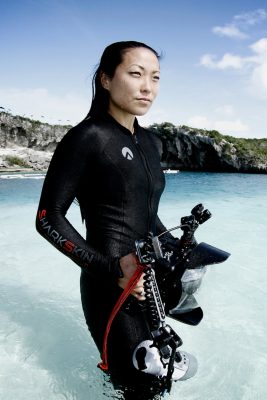
An image that can change a mindset is a good image. And Korean-born, North Carolina-raised pro photographer, Lia Barrett, has a serious knack for making onlookers look twice at her surreal compositions. Humans drifting, walking and seemingly breathing underwater – swapping terra firma for wet sand – is enough to engage an eye, and show how inextricably linked to the ocean we are. Past that, pilot whales scattering about the blue like loose marbles, deep-sea organisms hovering in what looks like deep space, and dramatic seascapes dwarfing divers, make up an impressive portfolio of images from across the globe.

UW360 Editor, Oliver Jarvis, caught up with Lia, to discuss her incredible career and images:

What made you want to become an underwater photographer?
Plagiarism really. I was into painting: In fact I was painting my bedroom walls, copying fish from one of Jacques Cousteau’s books (I didn’t even know who Jacques Cousteau was), and it was from studying these images, and subsequently those of David Doubilet and other pioneers, that led me into photography and more specifically, underwater photography.

Your first underwater shot?
My first underwater shot was in the Red Sea when I was 16 with a Nikonos V and a strobe. I think I got about five or six shots that I was pleased with from that trip and a lot of overexposed, clear images. It was a learning lesson I daresay in the need of an education.

The story behind your most memorable underwater shot?
Well… I’ll tell you about one, as there are several experiences and shots dear to me. I was photographing Alexey Molchanov, the “Deepest Man” in the world (129-metre Constant Weight freediving world record). We were in Angelita Cenote in Mexico. I had been planning this particular shot for perhaps several months, but you never sort of believe you’ll pull it off. My vision was to get a sunny day, so that the cenote opened up, for the visibility can be quite poor, and to have Alexey dive down and play in the tree that sticks out of the halocline. And after scouting the cenote and having a few dives on it that weren’t so good, it just happened that on the day that I actually had Alexey with me, the skies opened up, and the whole cavern seemed to emerge from the fog. Alexey did several dives lasting minutes on end, floating through the trees, exploring the false shore, and flying through the air. But for me, I am happy with this shot, for I really wanted to create a surreal but fully natural shot, and I feel that this image conveys those goals.

Where is your favourite dive destination?
This is tough, for I like different places for different reasons. If I have a world champ like Alexey Molchanov with me, then I’d have to say the cenotes of the Yucatán, for there are just so many possibilities. For someone like me who shoots a lot of people, the landscape seems to extend my imagination.

The site you’d most like to dive, but never have?
Well, if I weren’t pregnant at the moment, I’d be on my way to Bimini and Tiger Beach in February to hang with the hammers and tigers of the Bahamas. But life goal spots would be Antarctica, Norway, lakes in Russia, you know, all of those warm places!

What camera equipment are you currently using?
The same equipment that I’ve been using for the past several years: Canon EOS-5D Mark III in an Aquatica housing with Ikelite strobes. I’m not much of a gear junkie, and I’m a simpleton when it comes to anything fancy on my camera. It’s full manual for me.

What is the highlight of your career?
Being on the cover of the New York Times two days in a row.

What is the low point?
Being on the cover of the New York Times two days in a row. It was both a highlight and low point for the mere fact that the image was of a friend before he was about to die during a freediving competition. It was both a lifetime achievement and an utter hardship.

Have you any advice that you’d like to give aspiring underwater photographers?
The best way to learn and to get noticed is to befriend other photographers and to learn from them. I do really believe that people want to lift others up, and sharing your work and figuring out ways to improve is the best way you’re going to grow in your work.

Is there any particular shot that you still want to get?
Oh, sure! There are many. But I have to get over my fear of the cold before I can get anywhere near achieving some of the shots I have envisioned.

Lia Barrett is a Korean-born, North Carolina-raised professional underwater photographer. After completing university at Parsons School of Design in New York in 2007, Lia has been on a continual pursuit of travel and adventure. From her deep-sea work in a homemade submarine off of Roatán, Honduras, to shooting world record-holding freedivers, Lia has embraced the underwater world as her ultimate sanctuary.

Lia is the Photo Editor of DivePhotoGuide, and she is also the co-founder and Creative Director of Prawno Apparel, an ocean-minded apparel company that draws designs directly from Lia’s photographs.

For more of Lia’s incredible photography, click here!


Lia’s fantastic imagery was featured in the SD OCEAN PLANET Special Edition “Inspiring Images of Iconic Locations”.

Read more about it here!

Can Diving Make You Deaf?

0


The most common injuries divers experience are ear injuries. Not fully understanding the anatomy of the ear, or pushing your diving safety limits, can greatly enhance your risk of encountering an issue. UW360, along with the Diver’s Alert Network Asia-Pacific (DAN Asia-Pacific) Medical Team, investigate the causes and symptoms of ear injuries when diving – and how to reduce the risks.

Ear Injuries and Potential Risks

An ear injury can lead to complete or partial hearing loss, which can occur for a variety of reasons. There are several diving-related causes, including barotrauma, decompression sickness (DCS), and damage to the inner ear.

Hearing loss can be classified as conductive or sensorineural:

  • Conductive hearing loss involves the ear canal, eardrum and tiny bones of the middle-ear ossicles; these anatomical components mechanically conduct sound to the inner ear, where electrical signals are generated
  • Sensorineural hearing loss involves the brain, the eighth cranial nerve or the inner ear

Causes, Signs, and Lessons

There are many causes of ear injuries in diving, including infection, blocked ear canals, barotrauma, and drugs. One of the major causes is a difference in pressure between the external environment and the internal parts of the ear. Since fluids do not compress under pressure experienced during diving, the fluid-containing spaces of the ear do not alter their volume under this pressure change. However, the air-containing spaces of the ear do compress, resulting in damage to the ear if the alterations in ambient pressure cannot be equalised. Bottom line – make sure you equalise diligently.

It’s worth paying attention to your ears when you’re diving. If you feel pain on your descent, do not force yourself to dive deeper. Follow the simple steps of ascending to relieve pressure, and if you still can’t equalise then abort the dive. Medication before a dive should be taken with caution. The dive manual states not to take sinus medications – but many divers bypass this instruction and still do.

The more extreme diving-related ear injury, hearing loss, is mainly limited to commercial divers exposed to loud noises and to divers who have experienced barotrauma of the ear. Recreational divers who equalise appropriately and dive without any ear injuries are often not at risk of losing their hearing. The onus falls on the diver themselves: Are they fit to dive?

Fit to Dive?

Although extremely uncommon, dive-related permanent hearing loss resulting from ear barotrauma or inner-ear DCS is possible. If the injury causes permanent unilateral (one ear only) hearing loss or impairment, most physicians will advise against a return to diving. This is often recommended because if subsequent diving resulted in injury to the remaining functioning ear, the individual may experience permanent bilateral hearing loss. This recommendation applies to all monaural (one-sided hearing) individuals, regardless of the cause of unilateral hearing loss or impairment.

An additional population for whom diving is often discouraged, or extreme caution is advised, includes those who have undergone cochlear-implant surgery, ossicle surgery or tympanic-membrane repair (myringoplasty). Diving places individuals with this medical history at risk of damaging the surgical repair, resulting in hearing loss. For divers who have undergone such procedures, or suffered permanent hearing loss from ear barotrauma, extreme caution is often recommended, and close consultation with an ear, nose and throat (ENT) physician prior to diving is highly advised.