Home Blog Page 129

All You Need To Know About the World’s 5 Oceans

0

Our blue planet is incredible. Stretching far and wide, huge bodies of saline water hug land masses and dominate the surface. Together, they cover around three quarters of the entire Earth’s surface, and sink deep into a vastly unexplored abyss. Still much remains unknown, although much has been discovered, in our oceans. Through geo-mapping and political arrangement, there are officially five – each with their own biodiversity, topography and quirks. We break it all down for you:

Pacific Ocean

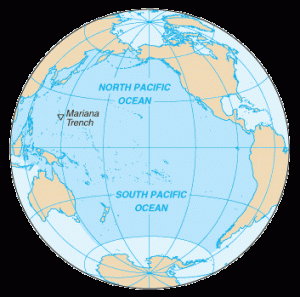
The Pacific Ocean is the largest ocean, around 15 times the size of the United States. With 25,000 islands in the region, the ocean also contains the most biodiverse waters in the world – thanks to the Coral Triangle. Even though the Pacific Ocean is best known for its incredible fauna, it also contains an incredible array of plants and coral reefs.
zn-map

Size: 165.25 million square kilometres

Average depth: 4,280 metres

Deepest Point: Mariana Trench, 10,911 metres

Surface temperature: From -1.4ºC in poleward areas to 30ºC near to the equator

Covers: 30.5% of Earth’s total surface area

Boundaries: Asia, Australia, the Americas

Notable dive locations: Great Barrier Reef, Lembeh Strait, Komodo, Sipadan, Palau, Malapascua, Tubbataha, Chuuk Lagoon, Raja Ampat

Interesting facts:

  • 60% of the world’s fish come from The Pacific Ocean
  • The Pacific Ocean shrinks in size by just over two centimetres each year
  • The Pacific Ocean Basin is home to 75% of the world’s volcanoes
  • There are more than 25,000 islands in the Pacific
  • Pacific Ocean was declared “Mar Pacifico” in 1521 which is Portuguese for “Peaceful Sea”

Atlantic Ocean

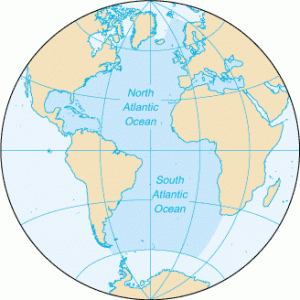
Containing most of our planet’s shallow seas – but with relatively few islands – the Atlantic Ocean is a relatively narrow body of water that snakes between nearly parallel continental masses, the Americas, Europe and Africa. Famed for offering incredible encounters with large pelagics in the Caribbean, Mediterranean, Baltic, and the Gulf of Mexico. The Mid-Atlantic Ridge, that runs roughly down the centre of the ocean, separates the Atlantic Ocean into two large basins.
zh-map

Size: 82.36 million square kilometres

Average depth: 3,339 metres

Deepest Point: Puerto Rico Trench, 8,605 metres

Surface temperature: From -2 ºC in the polar regions to over 30 ºC north of the equator

Covers: 20.8% of Earth’s total surface area

Boundaries: The Americas, Europe, Africa and Antarctica

Notable dive locations: Grand Bahama, Cozumel, Grand Cayman, British Virgin Islands, Bermuda, Bonaire, The Great Blue Hole, Honduras

Interesting facts:

  • The name Atlantic comes from the Greek word Atlantikos which was known in the English language at the time, as the Sea of Atlas
  • The Atlantic Ocean is the world’s saltiest sea with a water salinity level of between 33 – 37 parts per thousand
  • It’s the world’s youngest ocean, formed long after the Pacific, Indian and Arctic Oceans of the Triassic Period
  • Home to the earth’s largest mountain range, The Mid Atlantic Ridge, which is 40,000 kilometres long by 1,601 kilometres wide – dividing the ocean into two distinct east and west regions
  • The Atlantic is famous for being the home of the legendary area known as the Bermuda Triangle, an area renowned for the mysterious disappearance of several aircraft and ships

Indian Ocean

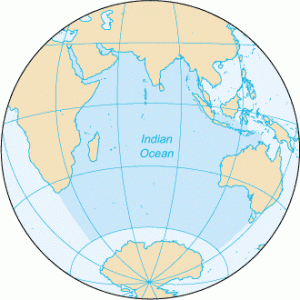
The Indian Ocean is enclosed on three sides by landmasses of Africa, Asia, and Australia. The southern border is wide open and exchanges with the much colder Southern Ocean. With relatively few islands, the continental shelf areas tend to be quite narrow and not many shallow seas exist. Some of the major rivers flowing into the Indian Ocean include the Zambezi, Indus, and the Ganges. Because much of the Indian Ocean lies within the tropics, this basin has the warmest surface ocean temperature.
xo-map

Size: 73.56 million square kilometres

Average depth: 3,960 metres

Deepest Point: Sunda Deep, 7,450 metres

Surface temperature: N/A

Covers: 14.4% of Earth’s total surface area

Boundaries: Africa, Asia, Australia/Oceania

Notable dive locations: Seychelles, Oman, Maldives, Musandam, Bali

Interesting facts:

  • The ocean is the warmest ocean in the world and offers little scope to plankton and other species for growth
  • It is estimated that approximately 40% of the world’s oil comes from the Indian Ocean
  • There was a discovery of a submerged continent in the Indian Ocean named the Kerguelen Plateau, it is believed to be of volcanic origins
  • The Ocean’s water evaporates at an abnormally high rate due to its temperature
  • Every year it is estimated that the Indian Ocean becomes approximately 20 centimetres wider

Southern Ocean

Compared to the other five oceans, the floor of the Southern Ocean is quite deep – ranging from 4,000 to 5,000 metres below sea level over most of the area that it occupies. In September of each year, a mobile icepack situated around the Antarctic reaches its greatest seasonal extent covering around 19 million square kilometres– later in March the icepack shrinks by almost 85%.
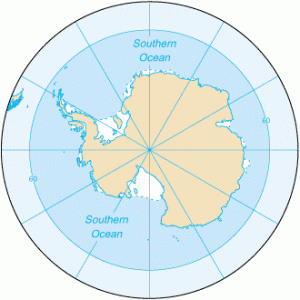
oo-map

Size: 20.3 million square kilometres

Average depth: 4,496 metres

Deepest Point: South Sandwich Trench, 7,235 metres

Surface temperature: -2 to 10 ºC

Covers: 4.0% Earth’s total surface area

Boundaries: Antarctica

Notable dive locations: Polar diving in Antarctica

Interesting facts:

  • The world’s largest penguin species, the emperor penguin, lives on the ice of the Southern Ocean and on the Antarctica continent. Along with the world’s largest animal, the blue whale, who often calls these waters home
  • Antarctica is home to 90% of the world’s ice. This continent contained within the Southern Ocean’s boundaries is the windiest, driest and coldest continent in the world
  • Having been only officially recognised in 2000, there is still some controversy as to whether it should be considered a separate ocean or merely an extension of the Atlantic, Pacific and Indian Oceans
  • The ocean is the youngest of the five oceans at only 30 million years of age and formed when the continents of South America and Antarctica completely split apart
  • Clouds are brighter in the Southern Ocean due to large plankton blooms, which release gases that allow water droplets to spread out more thus creating more reflective clouds

Arctic Ocean

The world’s smallest and shallowest (on average) ocean is also one of its most interesting. The crown of the world, both above and below the waves, enchanting creatures from narwh
als to belugas sound out in the deep depths.
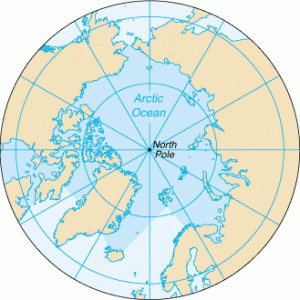
xq-map

Size: 14.05 million square kilometres

Average depth: 1,050 metres

Deepest Point: Litke Deep in the Eurasian Basin, 5,450 metres

Surface temperature: Average -1.8 ºC

Covers: 2.8% of Earth’s total surface area

Boundaries: Europe, Asia, North America

Notable dive locations: Greenland, Baffin Island

Interesting facts:

  • There are four whale species in the Arctic Ocean including the bowhead whale, grey whale, narwhal, and beluga whale
  • When the ice of the Arctic Ocean melts it releases nutrients and organisms into the water which promotes the growth of algae. The algae feed zooplankton which serves as food for the sea life
  • Because of the Arctic Ocean’s low evaporation, large freshwater inflow, and its limited connection to other oceans it has the lowest salinity of all oceans. Its salinity varies depending on the ice covers’ freezing and melting
  • Icebergs often form or break away from glaciers posing a threat to ships the most famous being the Titanic. Ships also often get trapped or crushed by the ice
  • Ice cover of the ocean is shrinking due to global warming, and it has been observed that the rate of disappearance of ice cover is 3% per decade
Fish-Farm Escapees Killing Off Wild Salmon

0
"Due to existing in abnormal salmon conditions, the escaped fish-farmed salmon have decreased genetic variability – in a survival of the fittest, low genetic variability can make a species more susceptible to disease or even extinction." © Flickr.com

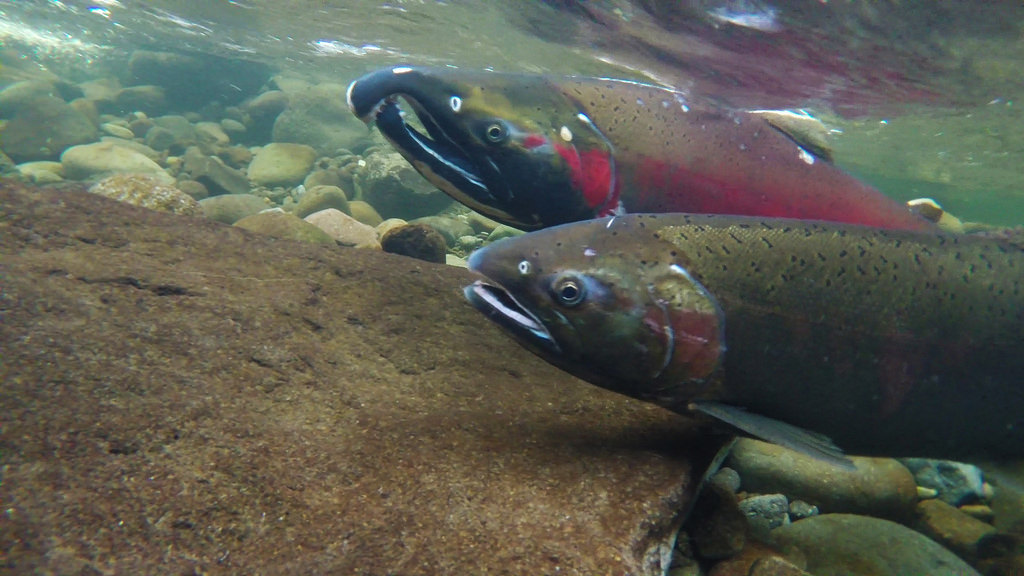
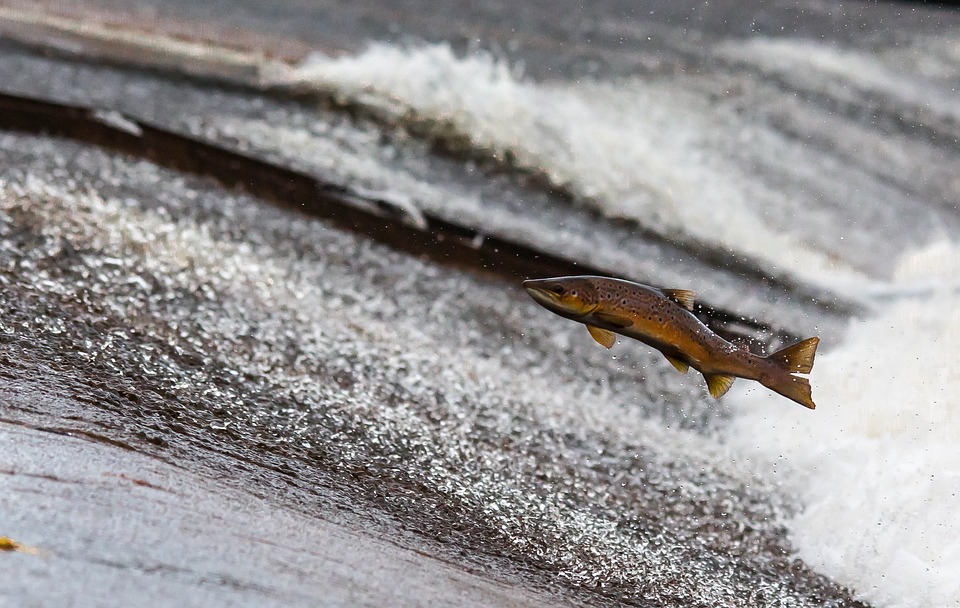
Salmon are on the run. According to a recent paper, farmed salmon escaping from Norwegian aquaculture facilities are mating with wild salmon frequently enough to dilute their genetic stock. Due to living in abnormal salmon conditions, the escaped fish-farmed salmon have decreased genetic variability – in a survival of the fittest, low genetic variability can make a species more susceptible to disease or even extinction.

In 2013, the world’s largest producer of farmed salmon, Marine Harvest, were offering a S$120 bounty for every recaptured fish after thousands of farmed-fish jailbroke from their 127,000-fish cage in Norway. With a rush to try and mitigate the consequences of the breakout, it appears that little has been done to fully resolve the issue. As wild salmon are growing scarce – one report suggests that divided among the world’s population, wild salmon could provide only a single serving for each person per year – the concern of fish-farm escapees killing off the salmon species is building, just like the number of escapees.

“The annual number of spawning salmon in Norwegian rivers is around 500,000 and a guesstimate can be that the number of escaped farmed salmon a year is approximately the same,” statistician Ola Diserud, one of the study’s first authors told UW360. For comparison, Norway’s marine farms hold close to 400 million fish. 

“The really large escape events (more than 100,000) caused by storms is luckily not that many anymore. These are usually reported. But a large proportion of the escapes are not reported, those occurring during handling or the fish finding a way out on their own (e.g. a small rift in the net) so we can only guess on the total numbers.”

"Offspring from farmed salmon in nature have lower survival chances and fitness. Ongoing escapes of farmed salmon and interbreeding with wild salmon is therefore expected to lower the survival and viability of wild salmon populations." © pixabay.com
“Offspring from farmed salmon in nature have lower survival chances and fitness. Ongoing escapes of farmed salmon and interbreeding with wild salmon is therefore expected to lower the survival and viability of wild salmon populations.” © pixabay.com

With such a large number of salmon being farmed, the odd escape is always going to be likely. But putting the finger of how exactly they escape is not so easy, in fact there are many possibilities.

“Storms are probably the major cause for escapes, if a giant offshore net-pen is breached more than 200,000 farm salmon can escape in one event. But they can also escape during handling in the pens (e.g. net torn open by a boat) or you can have continuous “trickle escapes” from when they are put out as small smolts (Smoltification: salmon transition from living in freshwater as a juvenile to migrating to sea to grow and mature).”

There are major differences between wild and fish-farmed salmon, part of the reason why this interbreeding is giving those involved such a headache. “Farmed salmon have changed genetically from selective breeding in many commercially important traits, such as growth rate and age at maturation,” Diserud states.

“These traits are not favourable in nature and offspring from farmed salmon in nature have lower survival chances and fitness. Ongoing escapes of farmed salmon and interbreeding with wild salmon is therefore expected to lower the survival and viability of wild salmon populations.

“Each river has its specific habitat (discharge, temperature, acidity etc.) so each wild population has adapted to survive in this habitat. When farmed fish interbreed the offspring will not be as fit to live in this environment.”

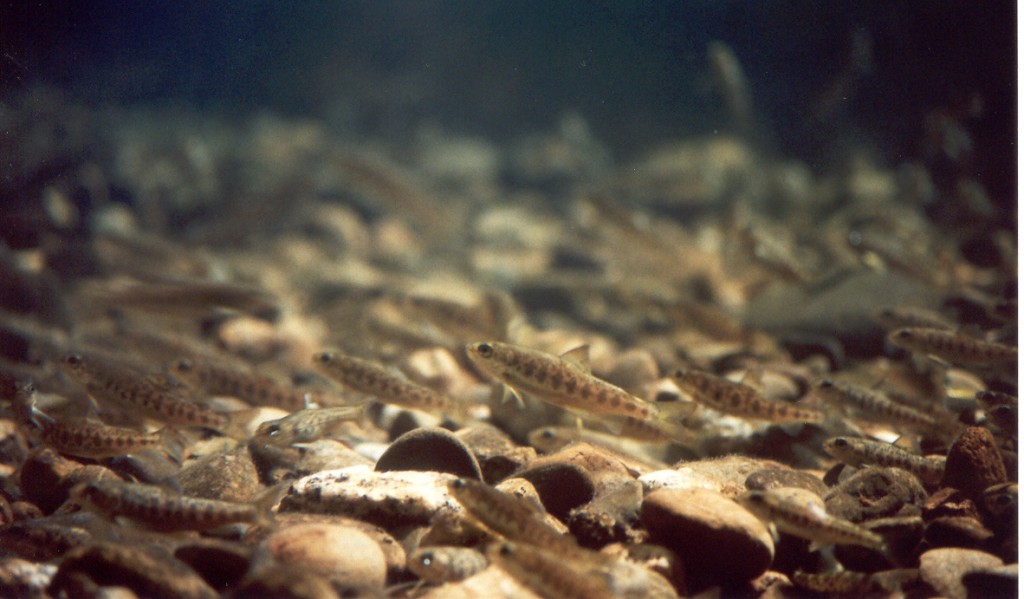
"You can have continuous “trickle escapes” from when they are put out as small smolts (Smoltification: salmon transition from living in freshwater as a juvenile to migrating to sea to grow and mature).” © Wikimedia Commons
“You can have continuous “trickle escapes” from when they are put out as small smolts (Smoltification: salmon transition from living in freshwater as a juvenile to migrating to sea to grow and mature).” © Wikimedia Commons

Escapees interbreeding with wild salmon is expected to reduce the viability and adaptability of wild salmon populations. It appears a stark reminder of the warm-water fish native to Africa, the Tilapia, which escaped from a fish farm in Lake Apoyo in Nicaragua between 1995 and 2000. Consequently, their pollution and feeding reduced the lake’s quantity of an aquatic plant called charra, which was an important source of food for the lake’s native fish populations and effectively “screwed up the entire lake.”

There are other cases, including Pacific oysters being introduced in the UK in the 1960s and in turn forcing out native oysters and altering the entire marine environment. With history supposedly repeating itself, it’s no surprise that conservationists are concerned of the effects.

“A ‘weakened salmon’ will have the largest impact in wild populations already under pressure by other factors such as overfishing, and hydropower regulated rivers,” Diserud states, but suggests that “interbreeding is probably less of an issue when the wild population is healthy and has plenty of wild fish.” 

If it’s happening to salmon, then there is a strong possibility that other farmed species that are farmed in the same area as their wild conspecifics will probably be experiencing the same problems – with farm-fish escaping and interbreeding. But the escapees can also hurt other native species by competition and predation.

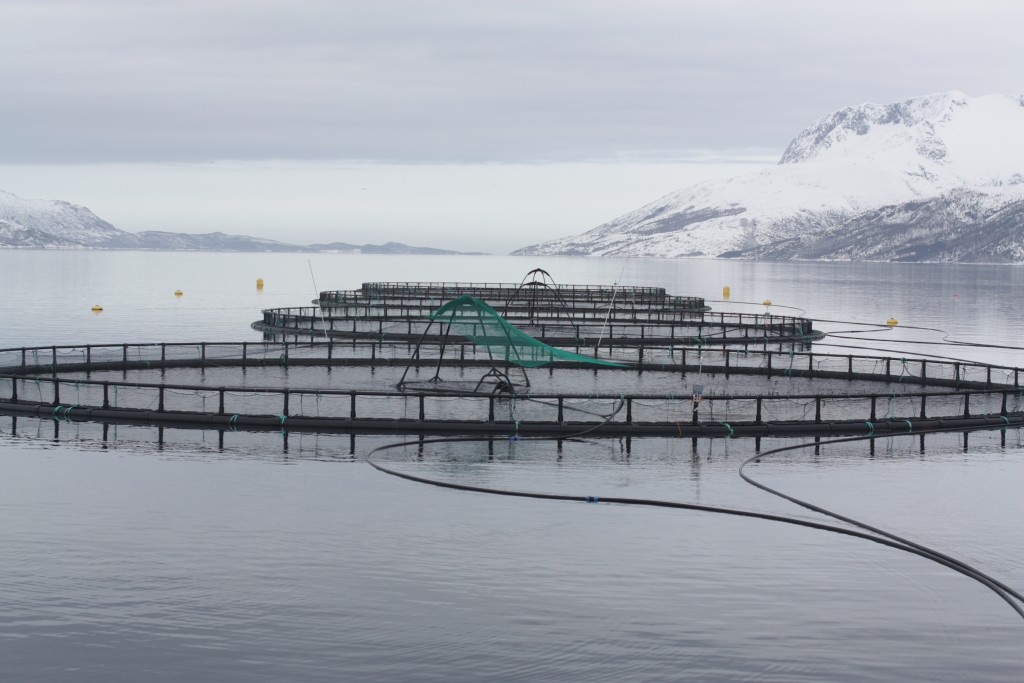
“Farmed salmon is kept at extreme densities (up to several hundred thousand in one net pen) and they are fed regularly, two conditions that are very far from their natural life,” Diserud indicates.


norway-1183114_960_720

fish_cages
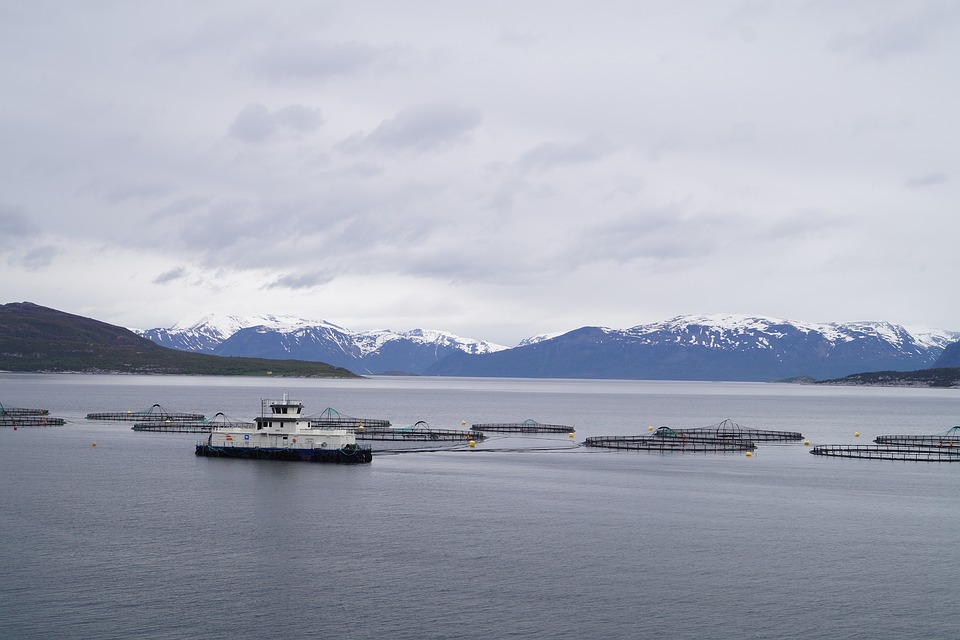
Salmon fish farms in Norway © pixabay.com

When these farmed salmon escape the critical factor in how they will effect the wild population is whether they can survive until spawning.

“The chances for a farmed salmon to survive from the escape to spawning depends on several factors, such as how old it is when escaping (time to maturation) and when in the season it escapes (conditions the fish meets in the wild).”

Much is needed to be done to mitigate the consequences of escaped farmed salmon, and more is needed to be carried out to help prevent it.

Diserud suggests new escapes can be prevented by new farm designs (e.g. land-based farms or closed-containment facilities) and farming practices.

“Another alternative under investigation is to produce sterile salmon.”

Protected: The New Little Powerhouse from Canon: The PowerShot G7 X Mark II

0
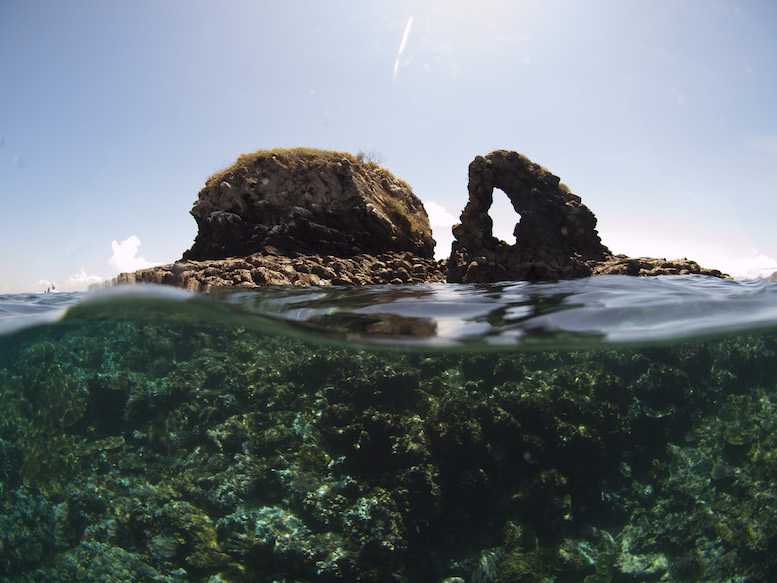
Lembeh Strait topside before descent. Settings: f/4, 1/125s, ISO 200 © Gill McDonald

This content is password-protected. To view it, please enter the password below.

UW360 Trip Report: Diving Komodo National Park

0
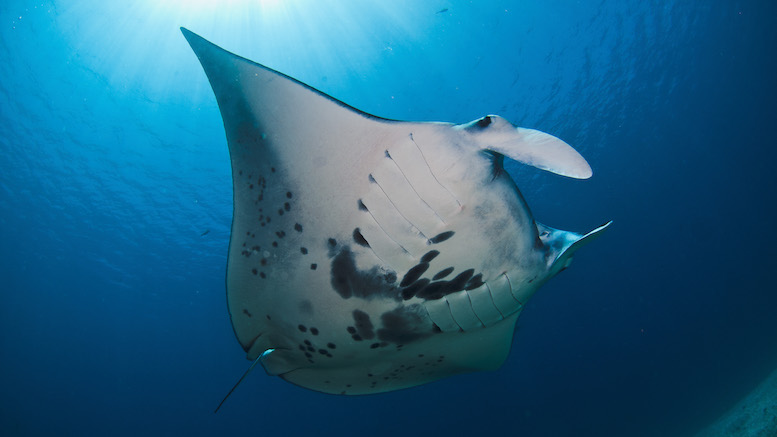
“You never truly understand what it really feels like until you’re slowly crawling in harsh currents behind a boulder to turn your eye on this hauntingly beautiful ‘thing’." © Ivan Choong @ Oceanic Focus

“Manta, Manta!” somebody shouts, and the whole boat rocks as BCDs are thrust on and weight belts collide. Those who are already ready are already in. The water is clear, but the current is strong. I rush my BCD on, go through the buddy safety checks, and try to hold myself as I realise that this is a first for me – diving with manta rays. Looking from the boat, large black silhouettes break the blue and drift below like kites. I bite the feeling, I bite the excitement and I jump. Into the blue, into Komodo, into the wild world.

Discovered by the scientific community in 1911 when a wandering explorer called J.K.H. van Steyn decided to go and check out reports of a boeaja darat – or land crocodile – on the island of Komodo, the National Park was officially established in 1980, and declared a World Heritage Site and a Man and Biosphere Reserve by UNESCO in 1991. Strict enforcement of anti-poaching and illegal fishing regulations – thanks to coordinated patrols by local park rangers, the Indonesian Navy, and the police – has made wildlife and natural resource crimes within the park much more difficult. Add to that the strong – very strong – tidal flows combining with the nutrient-rich water upwelling from the depths of the Indian Ocean, and you have an untamed, and spectacularly colourful coral reef bursting with innumerable tropical fish as well as large pelagics out in the blue. The islands themselves are inhabited by a population of around 5,700 Komodo dragons – surely the most famous species of giant lizard in the world.

Exploring Komodo National Park was always going to be something. Hosted by Wonderful Indonesia, our trip officially began from the tires of a propeller plane touching down on the coffee-coloured runway of Flores Island. It was dry season, and the many hills and peaks that surrounded the landing strip – and which our pilot had to carefully negotiate his way through to land – were dusty and empty like any Hollywood depiction of a “lost world”. It is the wild world, famously documented by Sir David Attenborough and dived by Jacques-Yves Cousteau, and as we left the small-scale port and the fish markets, and wooden houses on the hillside disappeared, we became immersed in Komodo wilderness. Brown mountain-scapes vaguely reminiscent of Bohol’s Chocolate Hills – but bigger and even more mutated – are surrounded by white sand beaches that reflect the afternoon sun and create, in every way, an aesthetic lost island paradise.

"Baku Batong, one of the most famous dive sites in Indonesia, and also one of the most dangerous, hosts perhaps the greatest collaboration of reef art and fish in the Park." © Ivan Choong @ Oceanic Focus
“Batu Bolong, one of the most famous dive sites in Indonesia, and also one of the most dangerous, hosts perhaps the greatest collaboration of reef art and fish in the Park.” © Ivan Choong @ Oceanic Focus

From dragons to dolphins

Diving in Komodo National Park

Depth: 5–40 metres

Visibility: 5–30 metres

Current: Strong

Surface conditions: Can be rough

Water temperature: 20–28ºC

Experience level: Intermediate – advanced

Number of dive sites: 35

Indonesia is famous for its diversity. After coming face to face with the Komodo dragons (from a safe place), and testing the cold with our check dive in clear waters, we were straight away descending into one of Komodo’s popular dive sites, Crystal Rock. With incredible visibility, the first thing you noticed was huge silver schools of large jacks, and you had to pass through these animal drapes to see the coral. And so it opened, like a theatre curtain, to reveal corals in hundreds of colours – a regular sight to many who dive in the Coral Triangle, but Komodo’s coral was different. It wasn’t just the colour that caught your eye, but the disorderly organisation of the reef, with thousands of tiny fish in psychedelic coloured patterns arbitrarily picking and choosing their routes. If it wasn’t so beautifully disorganised, then it would just be chaos – but Nature always has a way of working out the seemingly unorganisable.

When you rolled over, you saw the true beauty of the reef, the thousands of fish, the wide-open blue and the grey reef shark looking typically irritated every time you made eye contact with it. It was a decent dive. But it was made better with the appearance of the headline act – out of nowhere, as if teasing the crowd before appearing on stage, whistles, trills and cries came that echoed throughout the reef. Dolphins had joined the party. Diving down to the depths to nudge coral, and squeezing through the schools of fish – the moment was captured beautifully on video.

Top diver Alvin Javier captures footage of dolphins in Komodo

An ode to mantas

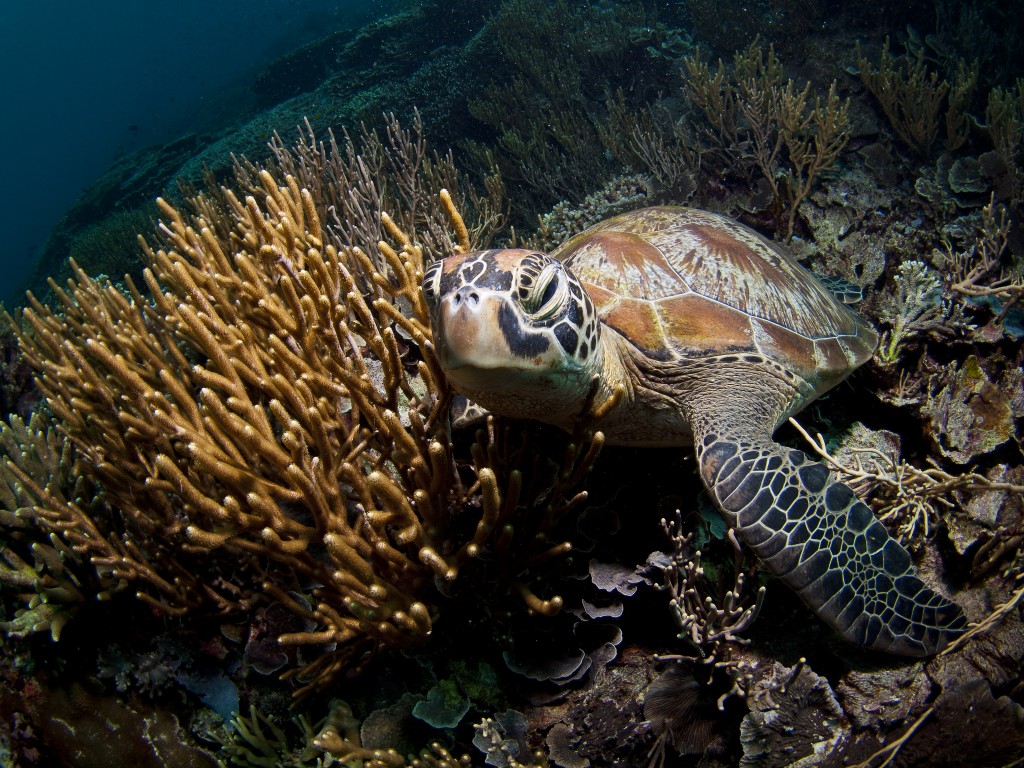
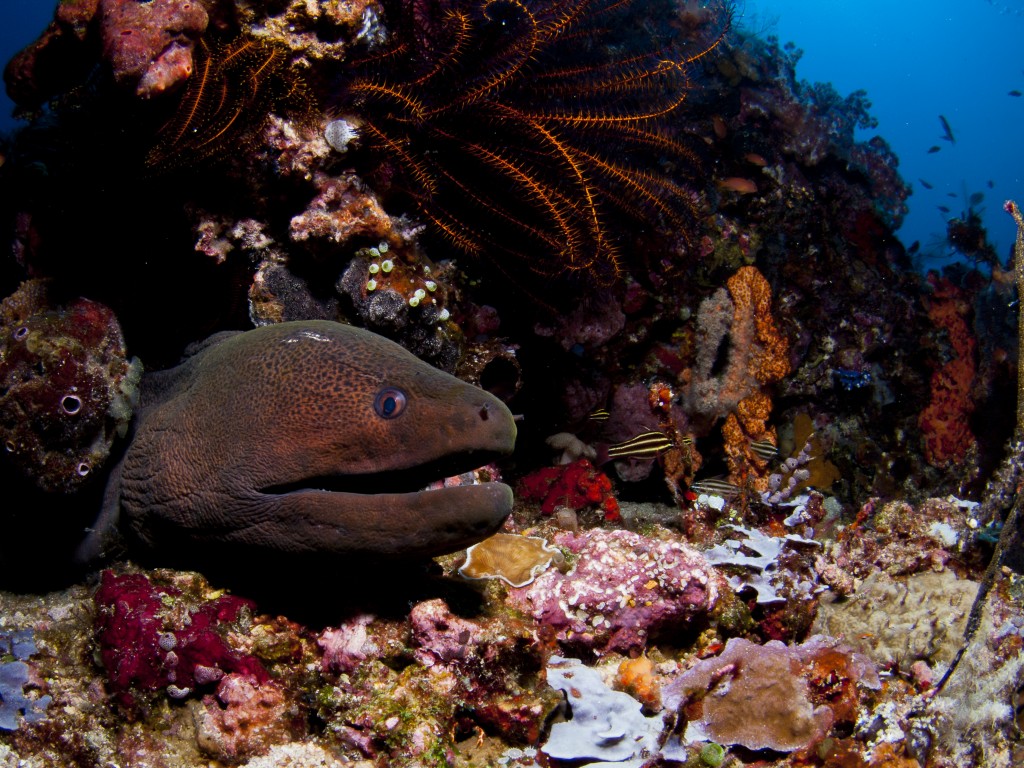
Batu Bolong, one of the most famous dive sites in Indonesia, and also one of the most dangerous, hosts perhaps the greatest collaboration of reef art and fish in the park. A pinnacle protects the sloping reef that slides down to nowhere and plays host to fish from the strong down-currents that flow either side. The reef has everything, from turtles passing overhead silhouetted by the sun, to a large inquisitive moray eel that slithers up and down the slope – to the delight of underwater photographers.  

OLYMPUS DIGITAL CAMERA

OLYMPUS DIGITAL CAMERA
“The reef has everything, from turtles passing overhead silhouetted by the sun, to a large inquisitive moray eel that slithers up and down the slope – to the delight of underwater photographers.” © Ivan Choong @ Oceanic Focus

Komodo National Park Biodiversity

  • More than 260 species of reef-building coral
  • More than 1,000 species of tropical fish, including Napoleon wrasse and groupers
  • Approximately 70 species of sponges
  • 7 species of sharks including hammerhead sharks and grey reef sharks
  • Marine mammals such as whales and dolphins
  • Rare and endangered species such as the dugong

Less colourful, but no less enchanting, was the eery and seemingly empty world of Manta Point. After rolling into the blue, we had to push through the strong currents by descending to the bottom (around 15 metres) to avoid the strength of the flow. Even at the bottom you could feel the drift. But our minds were only on one thing – crawling to those cleaning stations to see the manta rays. The seabed was mainly rounded pebbles and large boulders – with an abundance of sea urchins that we had to be careful of touching – with corals forming the cleaning stations. Fighting the current was near impossible, and so we drifted on the current en rout
e to the first cleaning station. 

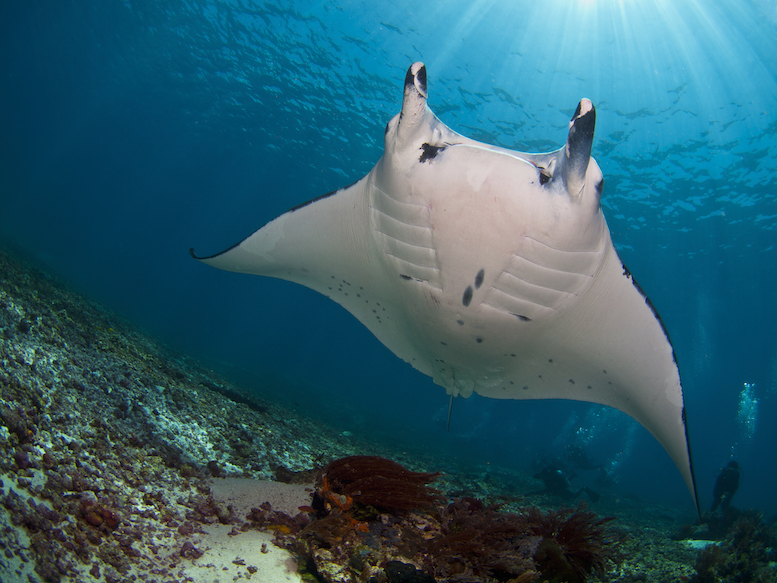
It was to be my first encounter with manta rays, and I didn’t know what to expect. You can watch as many YouTube clips of manta experiences, or read as much dive literature on how it feels to glide with one, but you never truly understand what it really feels like until you’re slowly crawling in harsh currents behind a boulder to turn your eye on this hauntingly beautiful “thing”. And so there I was, blown away by both the moment and the current. Grappling onto boulders until I could fasten my reef hook to hold onto my position. The manta, just there, hovering or gliding seemingly unphased by the Indian Ocean current hammering us landsmen. Naturally, the manta finished and took off along the coral runway to soar with the down-current out into the open blue, and all we saw was it fade away, gently beating its wings.

"Naturally, the manta finished and took off along the coral runway to soar with the down-current out into the open blue, and all we saw was it fade away, gently beating its wings." © Ivan Choong @ Oceanic Focus
“Naturally, the manta finished and took off along the coral runway to soar with the down-current out into the open blue, and all we saw was it fade away, gently beating its wings.” © Ivan Choong @ Oceanic Focus

The drift route of Manta Point has some of the best pit-stops. Throughout the dive we encountered a dozen more mantas, each with distinct characteristics and each of which allowed us a little more time or a little less, depending on their temperament. Previous to the trip, I had been on a call with Dr. Andrea Marshall, who was explaining her own experiences with manta rays and who had gone on to loosely suggest that each individual also possessed a unique personality. Remaining respectful to the creatures, the last manta encounter before we surfaced was with a full-black manta. Calm in the current, it observed us crawl a little closer to get a better look. This one seemed different. The flow picked up one of the divers and pushed them closer to the manta, and convinced that this manta was going to flee after realising it was being watched, we unhinged our hooks and got ready to do our safety stop. But amazingly, as the diver was carried ever closer, the manta refused to flee, and sort of “side-stepped” him as he drifted away with the current. Black mantas do not move for anyone.

There’s a strange feeling that I still get when I think of diving in Komodo. At times, I doubt that I ever really went there, that such a place even exists. In our soulless cities where skyscrapers loom above the traffic jams and noise of the shopping malls and crowds, it’s easy to place untamed worlds like Komodo as purely fictitious settings. And as that world was drowned out upon our final descent into the blue, and we came face to face with the quiet life that exists almost peacefully below, I knew that it would be an experience hard to comprehend. Indonesia continually surprises, continually excites, continually remains unchanged, for the better.

For more information visit Wonderful Indonesia.

Pluto May Have an Ocean

0
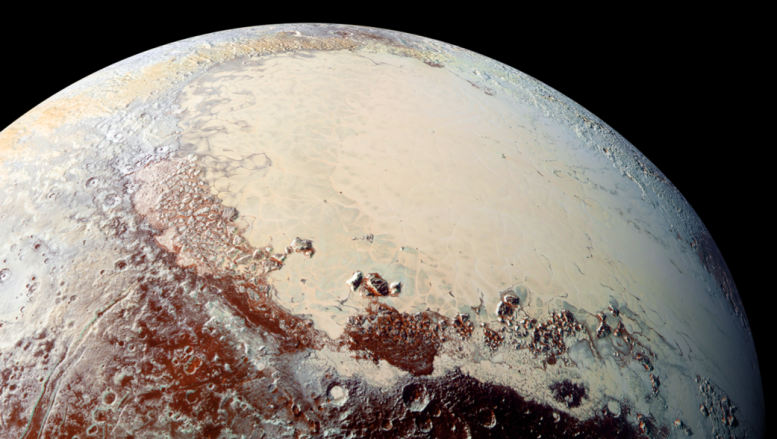
This high-resolution image captured by NASA’s New Horizons spacecraft combines blue, red and infrared images. Pluto’s surface shows a remarkable range of subtle colours. The bright expanse is the western lobe of the “heart”. The lobe, informally called Sputnik Planum, has been found to be rich in nitrogen, carbon monoxide, and methane ices. © NASA Public Domain
Previously, UW360 reported on the speculation of there being life on Jupiter’s moon Europa. Now there is growing evidence to suggest that Pluto may host an ocean.
Ever since New Horizons transferred images of Pluto from the dwarf planet’s orbit back to Earth in 2015, Pluto has grown in the imaginations of scientists and science enthusiasts around the world – and now it’s making waves in the space industry with speculation that it contains a deep ocean.
Whilst an earlier study showed that Pluto’s core was warm enough to support a liquid water ocean, a new study has gone one step further to suggest that this liquid water ocean may be at least 100 kilometres deep (almost 10 times deeper than our own). To understand the study further, UW360 speaks to Brandon Johnson, Brown University geologist and lead author of the study.
Pluto has captured science enthusiasts’ imagination. There are not many planetary scientists who expected to see such a geologically active and dynamic world when we got our first look at Pluto,” states Johnson. “The first images from New Horizons were spectacular and completely changed how we think about [the dwarf planet].”
An animation combining various observations of Pluto over the course of several decades. © NASA Public Domain

Finding an ocean

The team developed models of Pluto to estimate how thick this buried ocean could be. The models looked into impact dynamics to help estimate how much liquid may be lying beneath the surface. Cited in the study was both surface-level “tectonic evidence” as well as interior thermal models as factors in the estimates – both indicated that a liquid water ocean with high salt levels could potentially be buried within.

Exploration of Pluto Timeline

1930: Pluto Discovered by a young astronomer named Clyde W. Tombaugh in the Lowell Observatory

1978: Images released of Pluto’s moon Charon

1988: NASA confirms that Pluto has a thin nitrogen atmosphere (an atmosphere that appears to have expanded rapidly in subsequent decades)

2005: The Hubble Space Telescope distinguishes Pluto from Charon and in doing so discovers that Pluto has more that one moon – raising the number of Plutonian moons to three

2006: Discovery of new “small” planets leads scientists to define Pluto as a dwarf planet, removing it from the list of classical planets

2010: Hubble captures the best “fuzzy” images so far of Pluto

2011: Astronomers discover a fourth Pluto moon

2012: A fifth moon is discovered orbiting Pluto

2015: New Horizons photographs the “new-look” Pluto, and sparks excitement in space explorers to continue studying the dwarf planet

The hints about Pluto’s underground ocean revolve around the planet’s “heart”, which has been named Sputnik Planum. “Sputnik Planum is aligned with Pluto’s tidal axis. This tells us the crater has a positive mass anomaly. Craters are essentially holes in the ground so if there wasn’t a dense ocean to uplift, the crater would have a negative mass anomaly.”
Based solely on observation, the region is a giant impact crater and sits at the tidal axis that links the planet with its biggest moon, Charon. It’s the way that the planet and its moon are locked together that has sparked interest from researchers, who have estimated that the Sputnik Planum region has a higher level of mass than elsewhere on the planet.
But how sure can one be based on observation and estimates? “There is a growing body of evidence suggesting that Pluto has a global subsurface ocean,” Johnson says. “Detailed thermal models as well as the tectonics on Pluto also point toward a liquid ocean. It is always possible that further investigation could overturn some findings but I expect the story of Pluto‘s ocean is here to stay.”
Water on Pluto means a great deal to space exploration. “[Water on Pluto] tells us that oceans may be quite ubiquitous on icy bodies. There are a number of other dwarf planets and they may have oceans too.” Johnson also expresses an interest in exploring other dwarf planets such as Eris, or other large objects in the Kuiper Belt, to see if Pluto and its potential ocean might be completely unique.
Due to the impact basin, Sputnik Planum being formed by a large object slamming into the ground and ejecting material away, the researchers would expect a negative – rather than positive – mass anomaly. Part of the reason is nitrogen ice building up in the impact basin, but researchers aren’t convinced that there is enough ice present in great enough quantities to be the sole explanation. Because of this, there is speculation that liquid has to exist beneath the surface, a welling of water beneath the impact zone which returned the area to neutral mass.
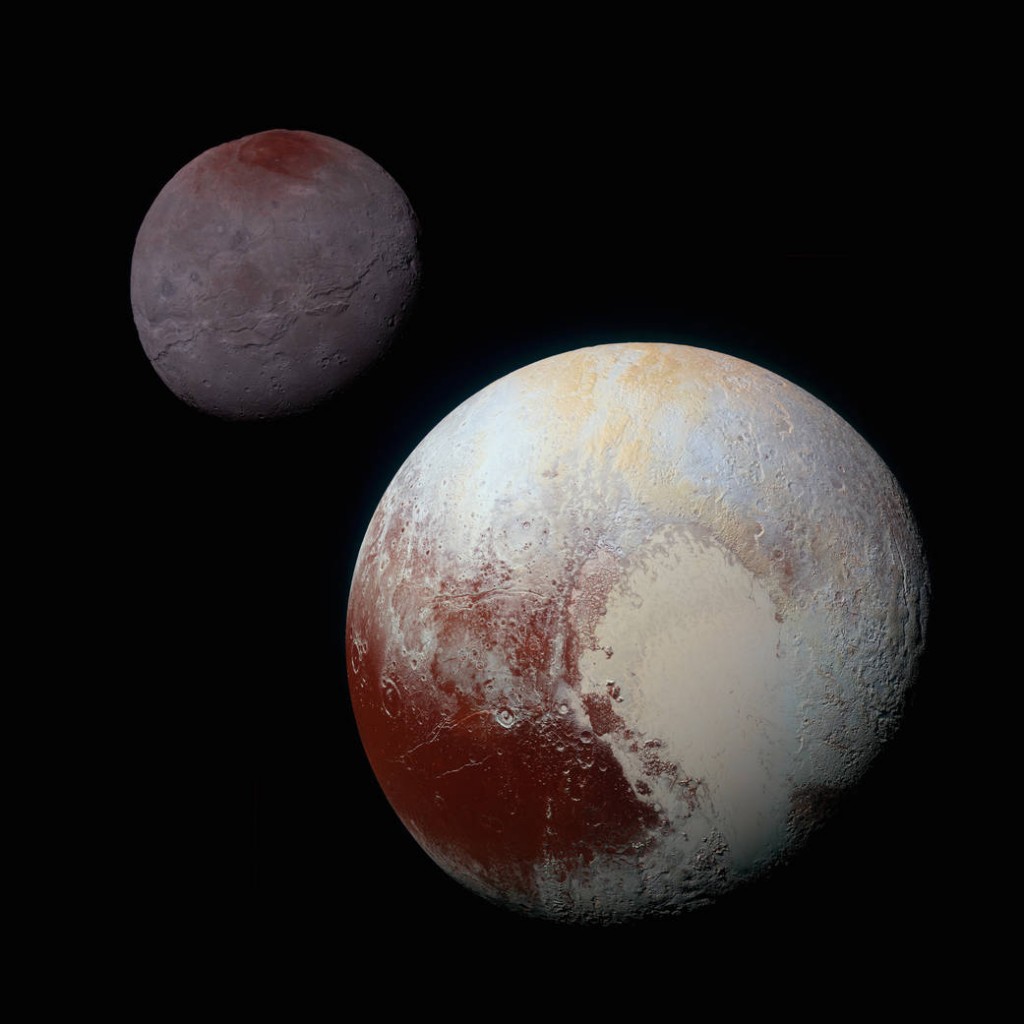
This composite of enhanced color images of Pluto (lower right) and Charon (upper left), was taken by NASA’s New Horizons spacecraft as it passed through the Pluto system on July 14, 2015. © NASA Public Domain
This composite of enhanced colour images of Pluto (lower right) and Charon (upper left), was taken by NASA’s New Horizons spacecraft as it passed through the Pluto system on July 14, 2015. © NASA Public Domain

Does water equal life?

“Astrobiologists may be thinking about [life on Pluto] but Pluto‘s ocean is a harsh environment. The ocean is probably colder than 240°K (–33°C) and kept liquid by abundant ammonia and salt. The prospects for life in Europa’s ocean are much better,” says Johnson.
Realistically, in temperatures so cold and conditions so extreme, the type of life is – if at all – likely to be simple extremophile life, similar to those basic life forms on Earth that have adapted to withstand hydrothermal vents and extreme temperatures.
High-resolution images of Pluto taken by NASA’s New Horizons spacecraft just before closest approach on July 14, 2015, are the sharpest images to date of Pluto’s varied terrain—revealing details down to scales of 270 metres. © NASA Public Domain
High-resolution images of Pluto taken by NASA’s New Horizons spacecraft just before closest approach on July 14, 2015, are the sharpest images to date of Pluto’s varied terrain – revealing details down to scales of 270 metres. © NASA Public Domain
But with no more planned missions, speculation is going to have to remain speculation for a while longer before anybody decides to revisit again.
“It took New Horizons almost a decade to make it out to Pluto,” Johnson points out, “so even if a space agency decided to send another spacecraft to Pluto or another large Kuiper Belt object, it would be at least a decade before we started getting back data. I am hopeful that New Horizons will spur greater interest in the outer Solar System, and we can send another spacecraft to the outer reaches of the Solar System soon.”

Ocean Defender of the Week: Captain Paul Watson

0
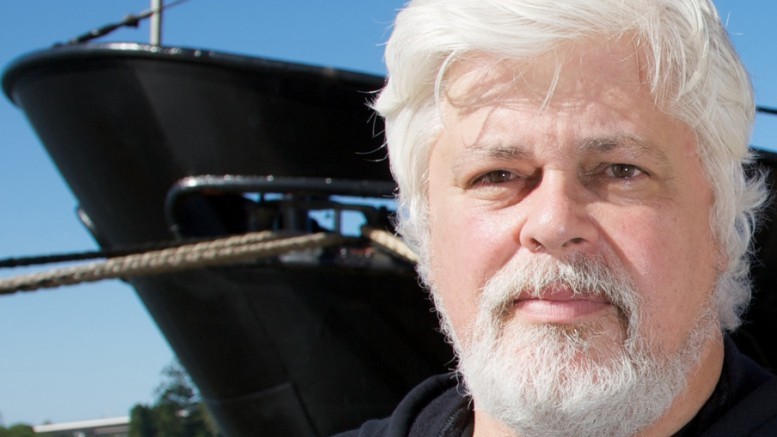
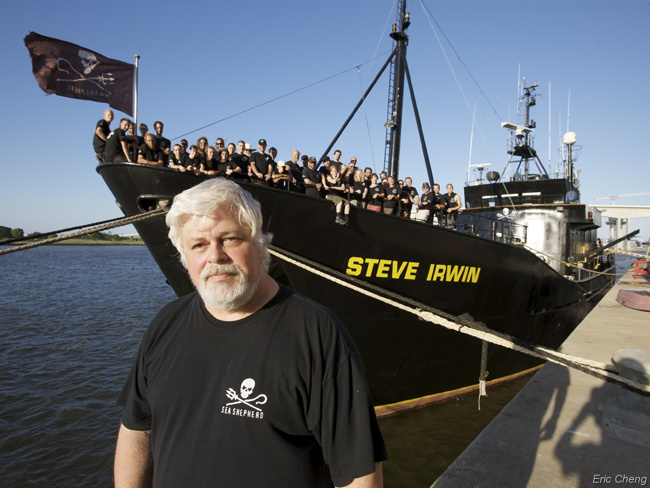
Captain Paul Watson stands in front of the M/V Steve Irwin in Brisbane before departing for Antarctica in Sea Shepherd's Operation Musashi 2008–9 campaign © Flickr.com

As this article goes online, the numerous boats that make up the Sea Shepherd fleet are active. Standing for a movement that resembles those heroic stories of the past, where brave individuals face extreme adversity for their belief in what is right, Sea Shepherd’s vessels have come face to face with countless threats – from state officials to cartel bosses – and stood their ground.

Preventing the wanton slaughter of the ocean’s most endangered marine creatures is a goal that has brought together conservationists, scientists and like-minded thinkers, to stand together under the name of Sea Shepherd to help end the destruction of our precious marine resources. As in this world, where so many lies continue to slip through the net, and the truth is slashed and frayed for myriad political and economic reasons, it remains a constant struggle for people to help find what is right. But as time passes, many are finally seeing the truth, thanks to those that courageously beat on through it all to expose eye-opening images of how under threat our oceans really are.

Underwater360’s Ocean Defender of the Week, Captain Paul Watson, has become an alternative pop legend. Controversial, of course, but Watson has managed to captain a career so brutally loyal to his cause that he’s garnered thousands of “aware” individuals to stand by him and support his global efforts. Co-founding Director of the Greenpeace Foundation, and Founder of the Sea Shepherd Conservation Society, Watson has created a global movement few could ever have predicted. Underwater360 caught up with the man to find out more about his motives and incredible career:

Captain Watson standing in front of Sea Shepherd team and the Steve Irwin vessel. © Wikimedia Commons
Captain Watson standing in front of Sea Shepherd team and the MY Steve Irwin © Wikimedia Commons

Major Events in Paul Watson’s Life

1950: Paul Watson is born in Toronto, Canada

1968: Joins the Canadian Coast Guard, on the weathership CCGS Vancouver

1969: Becomes one of the co-founders of the Greenpeace Foundation, which is initially named Don’t Make A Wave Committee

1971: Maiden voyage of the Greenpeace I and Greenpeace II

1972: Skippers a tiny Greenpeace boat Astral on a collision course with a French helicopter carrier in Vancouver Harbour to protest against French nuclear testing

1975: Serves as First Officer under Captain John Cormack on a voyage to confront a Soviet whaling fleet. During the confrontation, a harpooned and dying sperm whale looms over Watson’s small boat, but spares his life due to an understanding of Watson’s intentions. This is the moment Watson claims to have changed his life forever

1977: Leads a Greenpeace campaign to oppose the seal hunt off the coast of Canada’s Labrador Peninsula. Watson leaves Greenpeace Foundation because of disagreement on tactics and founds Sea Shepherd

1978: Purchases a North Atlantic trawler in Britain and converts its into a conservation enforcement vessel, Sea Shepherd

1979: First voyage of Sea Shepherd to Gulf of St. Lawrence to publicise the Canadian seal hunt and save seal pups

Why do you do what you do?
To defend life and diversity in the ocean. It’s also a question of survival. If the ocean dies, we all die.

Why did you found the Sea Shepherd Conservation Society?
I was a co-founder of Greenpeace and I simply grew tired of bearing witness and hanging banners, so I decided to establish an interventionist anti-poaching organisation using what I call aggressive non-violent tactics. 

What’s the hardest and best things about your work?
The hardest thing is dealing with government and corporate bureaucracy. The best thing is saving lives.

What’s the craziest thing you’ve ever discovered while on the job?
The realisation that humanity is ecologically insane and there seems to be no explanation of our destructive and self-destructive behaviour.

What do you hope to achieve through your work?
To help build a global movement to defend and protect and save biodiversity in the sea.

Who is your role model?
My primary role model is a whale that spared my life in 1975 and gave me an insight into the nature of both his kind and us. My fictional role model is Captain Nemo. My human role model was James Waddell, the captain of the Confederate raider Shenandoah. He sank 37 whaling ships without taking a single human life or causing a single injury, a record I am proud to have kept myself for the past 40 years.

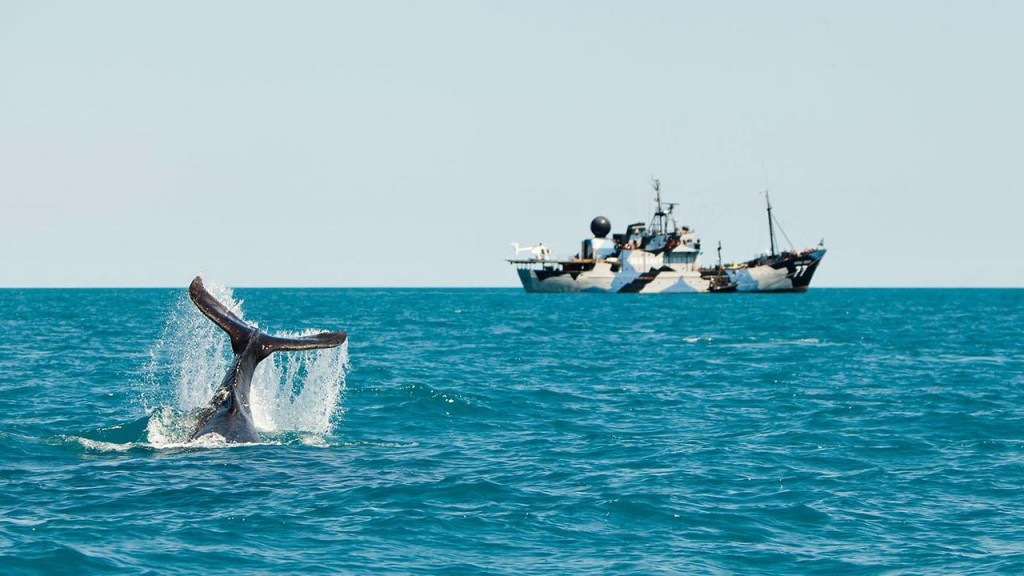
A reminder of why Sea Shepherd do what they do. An orca surfaces in front of a Sea Shepherd vessel © Vimeo.com
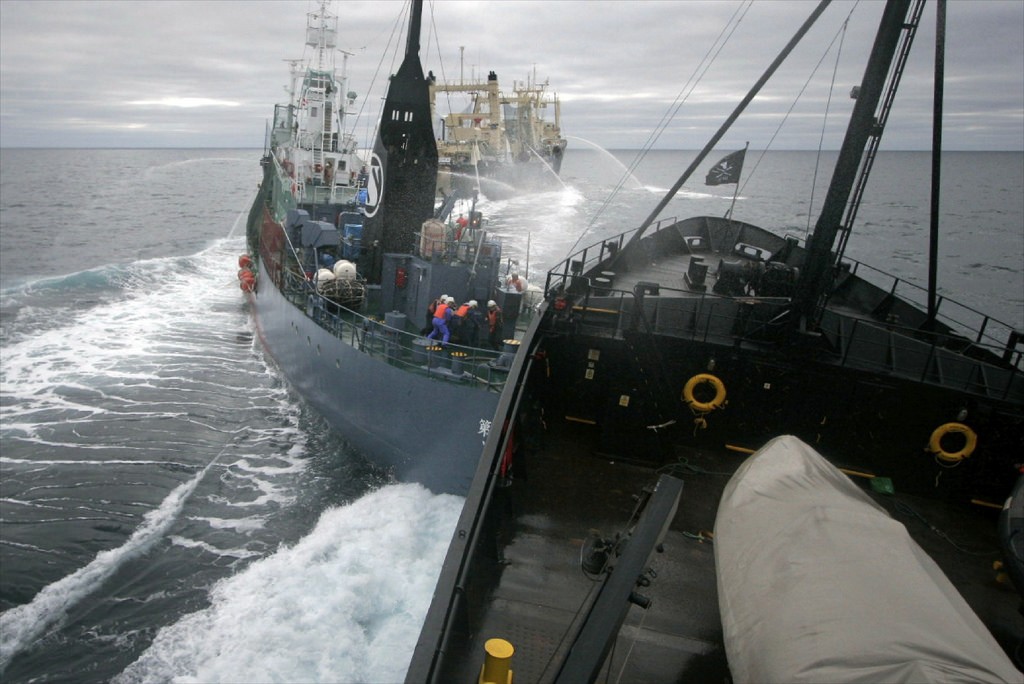
Steve Irwin collides with the Yushin Maru No. 2 as Nisshin Maru processes minke. © Adam Lau
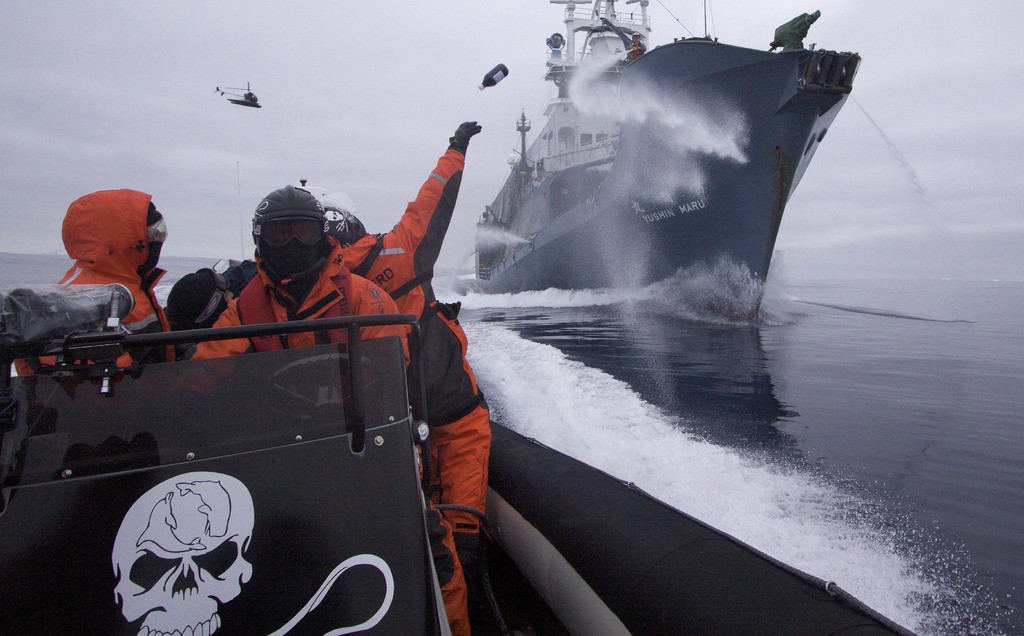
Sea Shepherd crew member Laurens De Groot hurls a bottle of butyric acid (rotten butter) at Japanese harpoon whaling ship, the Yushin Maru No. 1, as the Sea Shepherd helicopter flies overhead. The Yushin used water cannons to keep Sea Shepherd boats at bay in New Zealand territorial waters north of the Ross Sea off Antarctica in 2009. © Flickr.com
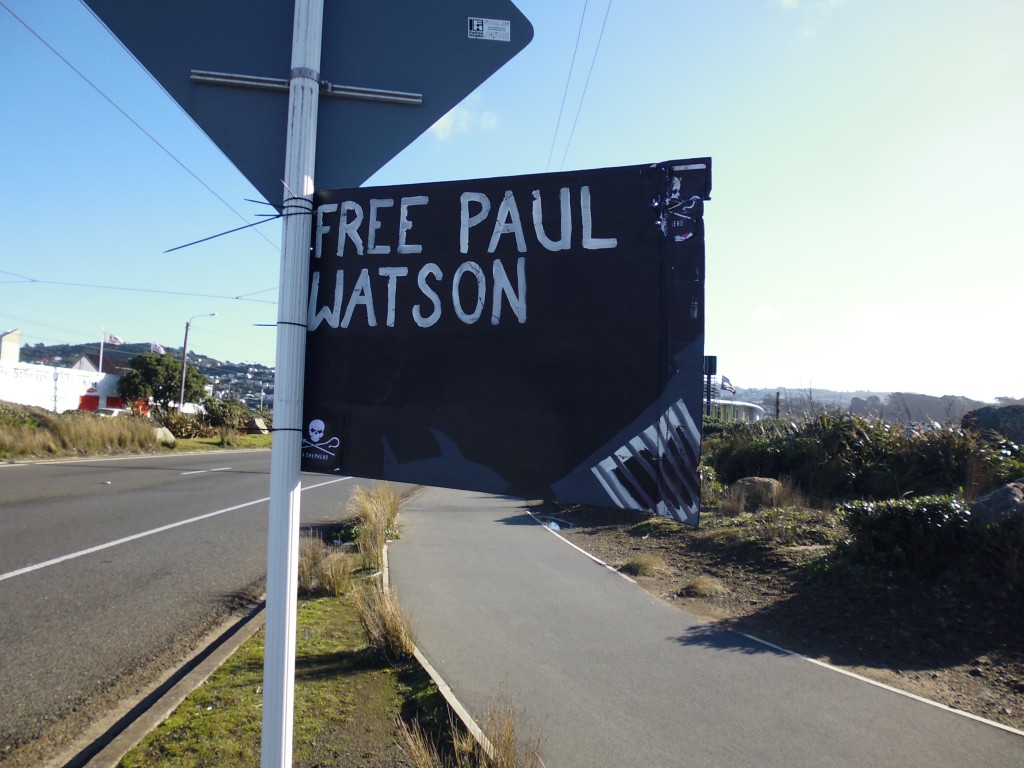
A sign calling for the dropping of charges against Watson, Wellington International Airport © William Stadtwald Demchick

Major Events in Paul Watson’s Life (cont.)

1983: Sea Shepherd II moves into the Gulf of St. Lawrence to continue work previously started by Sea Shepherd, and is ra
mmed and boarded by RCMP and Canadian Coast Guard units in a tear-gas assault

1986: Sea Shepherd II departs Malmö for the Danish Faroe Islands to document and obstruct Faeroese pilot whale sport hunts. Five crewmembers are arrested and held without charge, and Sea Shepherd II only departs when the crew is released

1991: Off of Guatemala, the Sea Shepherd II discovers the Mexican tuna seiner Tungui with her nets in the water and dolphins struggling to escape. The Sea Shepherd II rams and damages the Tungui and turns a high-pressure hose on her on-board helicopter. The dolphins are released

1993: Watson’s book Earthforce! An Earth Warrior’s Guide to Strategy is published

2000: Watson signs an agreement with the state of Rio Grande du Sol in Brazil, giving Instituto Sea Shepherd Brasil authority to conduct anti-poaching patrols along the nation’s southern coast

2008: Watson receives the Steve Irwin Wildlife Warrior of the Year Award from Terri Irwin

2010: Watson speaks at a TED conference in San Francisco, where some of the world’s leading thinkers and doers are invited to share what they are most passionate about

2012: Captain Paul Watson becomes only the second person, after Captain Jacques-Yves Cousteau, to be honored with the Jules Verne Award, dedicated to environmentalists and adventurers

For further information on the history of Captain Paul Watson and Sea Shepherd, click here.

What qualities do you live your life by?
Yes. Biocentrism, the three laws of ecology, i.e., the laws of diversity, interdependence and finite resources. [Also] compassion and veganism.

What do you think lies ahead for marine ecosystems?
Unless we see a radical shift in human priorities, the future for marine ecosystems is grim. We need to stop subsidising industrial fishing, we need to stop producing plastic, and we need aggressively enforce the laws against illegal activity on the ocean. We need to collectively understand that we cannot and will not live on a planet with a dead ocean – and the ocean is dying before our eyes. 

What can the average person do to help protect life in the oceans?
People can use their talents and skills and harness them to the horses of imagination, courage, passion and action. We need to stop eating the ocean alive. I advocate not eating fish, not dumping our garbage into the sea, not damaging coral reefs, not supporting ecologically destructive fish farms. I advocate volunteering with a group, any group working to protect our ocean. Most importantly, people need to become aware of one very important reality… if the ocean dies, we all die.

What is your next step?
What I started 40 years ago has evolved into a global movement. We have our own small Navy and we are tackling issues around the planet. My next step is to repeat every step that I have taken since 1971, over and over again to build a stronger and more effective global movement.

Underwater Photographer of the Month: Doug Perrine

0
"Don’t quit your day job. Think of the business of selling photographs as a separate enterprise from the activity of taking them." © Doug Perrine
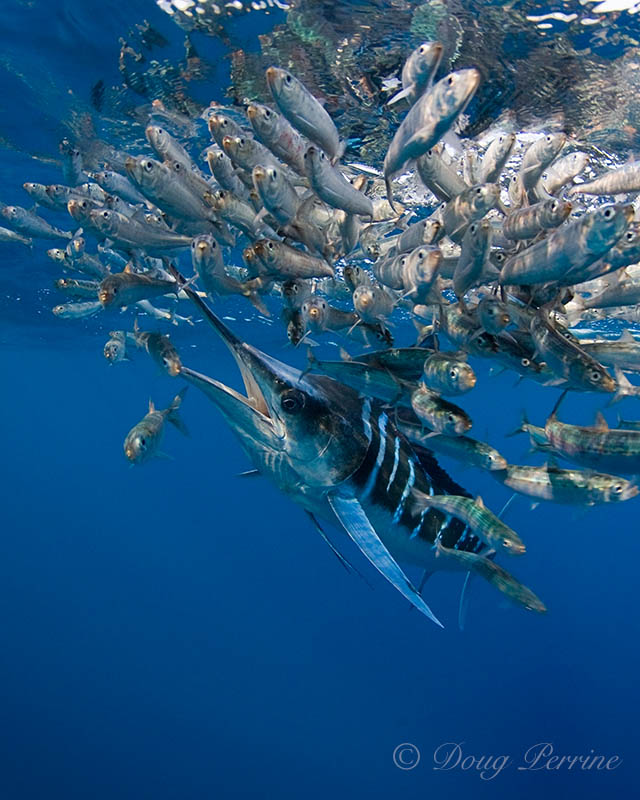
striped_marlin_magic
“Perrine’s shots of incredible animal behaviour are captured so perfectly, to a rhythm so unique. © Doug Perrine

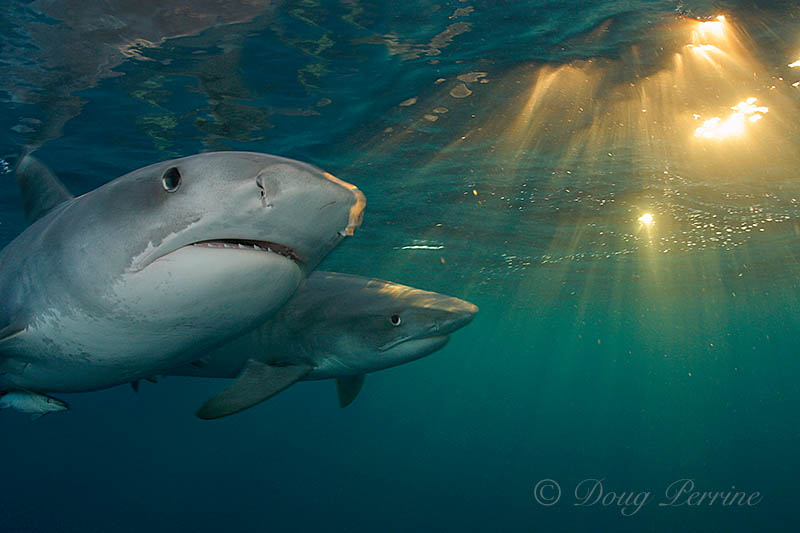
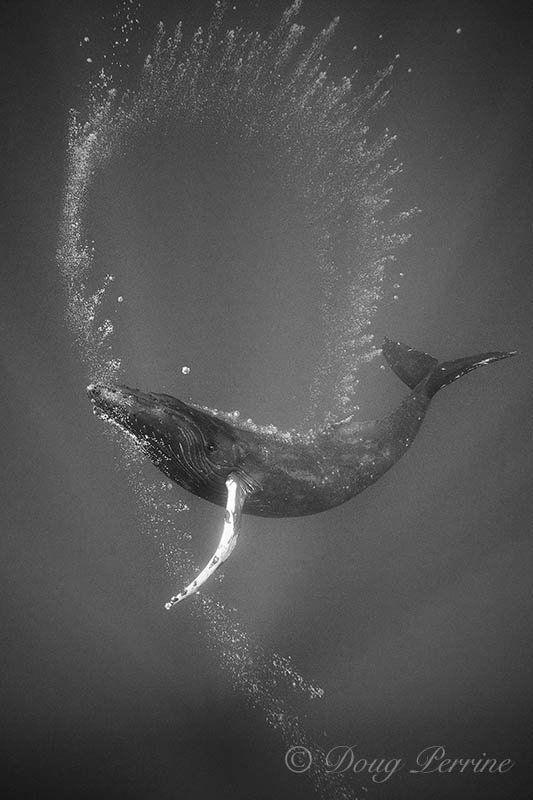
There is a raw feel to Doug Perrine’s images. Capturing moments within the ocean that few ever knew take place – his images “Humpback Bubble Art” and “Bronze Whalers” are top examples – these shots of incredible animal behaviour are captured so perfectly, to a rhythm so unique. In an age of advanced post-production in photography, Perrine reminds us that it is still all about the initial image. Just like a good song can stand alone “unplugged” without the hammering of a catchy electric riff, Perrine’s images still hold the eye without the “string bends and slides” of post-production. 

Earning a master’s degree in marine biology from the University of Miami and going on to work as a marine biologist, naturalist/educator, and scuba instructor, Perrine went through a number of ocean-related occupations before taking up Nature photography and writing as a full-time profession. Perrine is now widely regarded as one of the world’s foremost marine wildlife photographers. His photographs have been published in thousands of magazines (including National Geographic, Time, BBC Wildlife, Scuba Diver OCEAN PLANET, etc.), books, calendars and other graphic products.

Perrine is the author of seven books and numerous magazine articles on marine life. His images have been displayed at the Smithsonian Institute, the British Museum of Natural History, and many other prestigious institutions, and won a number of awards, including the grand prize in the prestigious BBC Wildlife Photographer of the Year competition in 2004. He has continued to be involved in marine science, including 20 years as a volunteer with the Hawaii Whale Research Foundation, studying humpback whales. Perrine currently lives in Kona, Hawaii. We caught up with the man for a quick Q&A about his incredible career and to take a look at his top images:

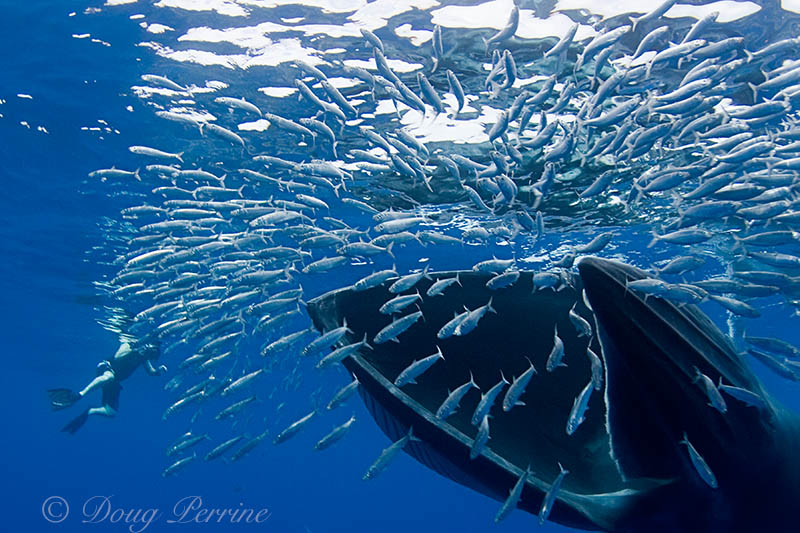
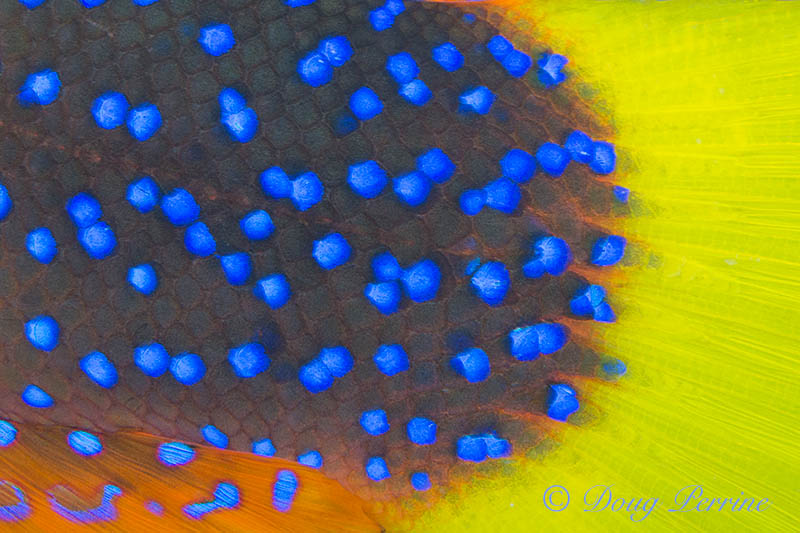
Bryde's whale

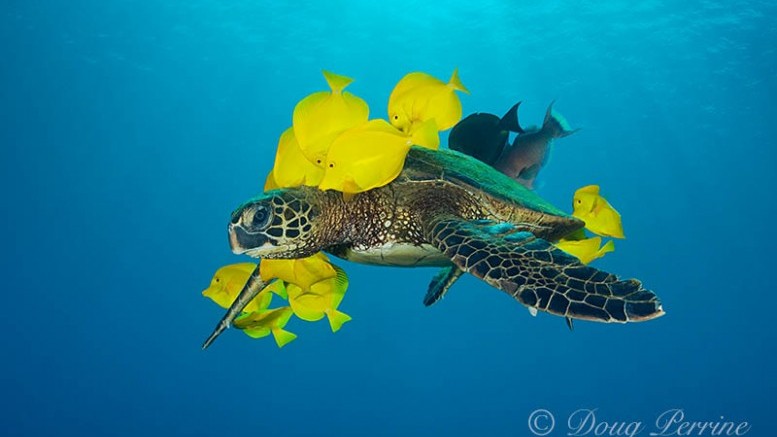
yellowtail coris
“Perrine is now widely regarded as one the world’s foremost marine wildlife photographers.” © Doug Perrine
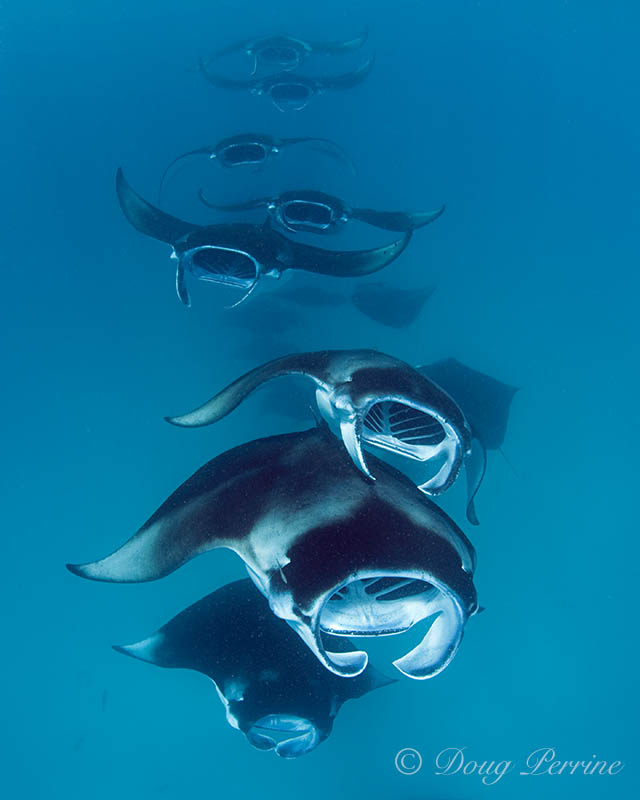
manta
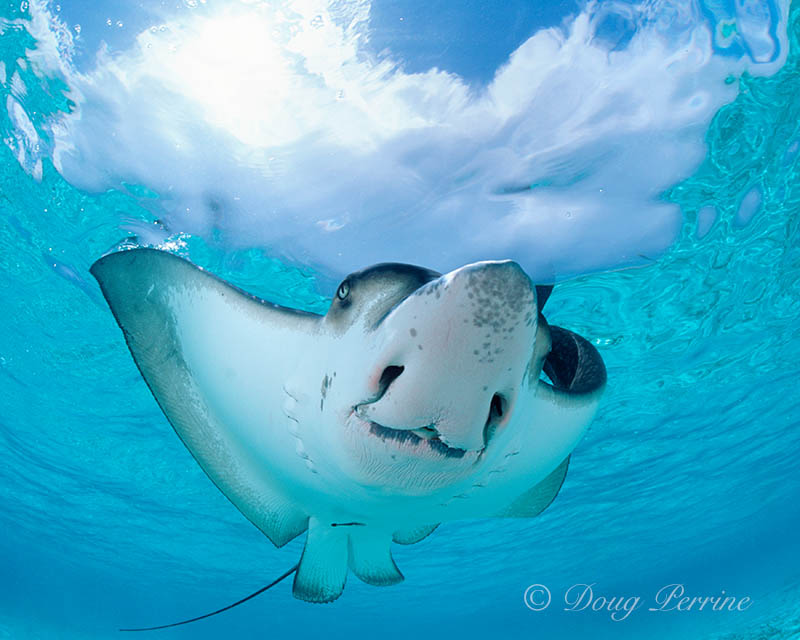
“I was working as a dive guide and wanted to be able to show the amazing things I was seeing underwater to people who weren’t able to go diving and see those things for themselves.” © Doug Perrine

What made you want to become an underwater photographer?
I was working as a dive guide and wanted to be able to show the amazing things I was seeing underwater to people who weren’t able to go diving and see those things for themselves.

Your first underwater shot?
A clownfish in an anemone.

The story behind your most memorable underwater shot?
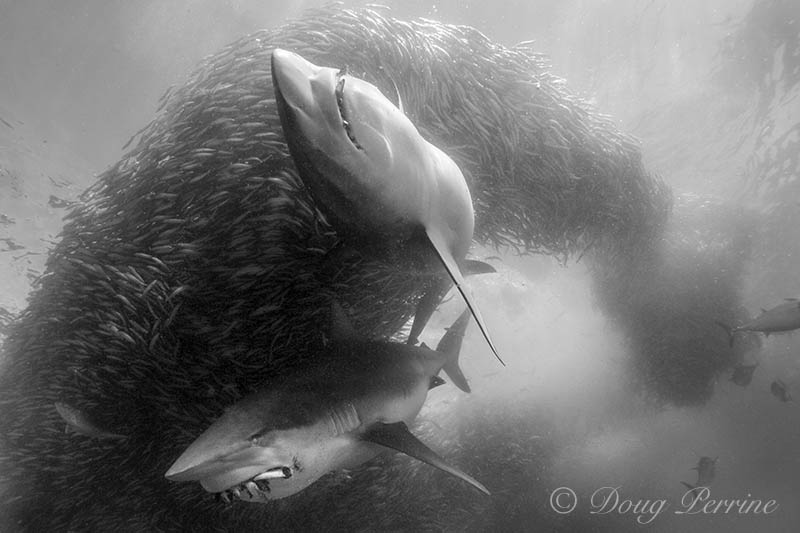
My photo of two sharks bursting through a bait ball with their mouths full of sardines was the culmination of three years of expeditions to South Africa during the Sardine Run. I was diving solo, on scuba, with about 200 sharks in my immediate field of view, while the microlite pilot said that he could see thousands streaming toward the feeding frenzy. The sardines were getting hammered by birds, tuna, sharks, and occasionally dolphins. Sometimes the water was so full of fish blood and scales that I could barely see what was happening. The large dominant sharks were blasting through the shoal of fish, opening up holes in it with each pass. However the smaller, subordinate sharks were merely circling the perimeter, and it was these sharks that were a nuisance, coming up to me from behind and bumping me as I was trying to focus on my shots.

'Bronze Whalers': "Sometimes the water was so full of fish blood and scales that I could barely see what was happening." © Doug Perrine
‘Bronze Whalers’: “Sometimes the water was so full of fish blood and scales that I could barely see what was happening.” © Doug Perrine

Where is your favourite dive destination?
Wherever I’m diving at the moment – which at this moment happens to be Kona, Hawaii, where I live.

The site you’d most like to dive, but never have?
Perhaps that little island in a remote part of Indonesia where leatherback turtles feast on jellyfish seasonally.

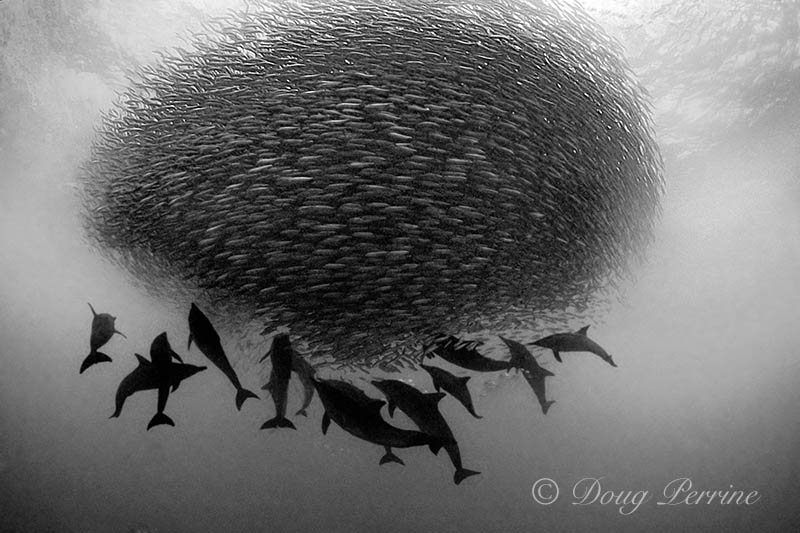
Sardine Run

tiger sharks, Galeocerdo cuvierSouth Africa (Indian Ocean)
“There are many, many economic activities that will enable you to fund your love of diving and photography at a higher level, with less effort, than trying to sell those photographs in an era when almost nobody is willing to pay for them.” © Doug Perrine
'Humpback Bubble Art': "Most of the interesting things that go on in the ocean have still yet to be photographed." © Doug Perrine
‘Humpback Bubble Art’: “Most of the interesting things that go on in the ocean have still yet to be photographed.” © Doug Perrine

The weirdest thing you’ve seen underwater?
Apart from humans? Maybe it was the orca chewing on a bigeye thresher shark.

What camera equipment are you currently using?
Underwater I use a Nikon D800E in a Nauticam housing and a Sony a7R II in a Nauticam housing.

What is the highlight of your career?
Possibly, it would be winning the overall BBC Wildlife Photographer of the Year award in 2004.

…And the low point?
Too many to name. There have been at least five occasions when I had an opportunity to photograph dramatic, never-before-seen big animal behaviours that were destroyed when another boat came in and ran over the action at high speed. And the last 15 years has been one long decline in prices and demand for professional photography.

Have you any advice that you’d like to give aspiring underwater photographers?
Don’t quit your day job. Think of the business of selling photographs as a separate enterprise from the activity of taking them. There are many, many economic activities that will enable you to fund your love of diving and photography at a higher level, with less effort, than trying to sell those photographs in an era when almost nobody is willing to pay for them.

Is there any particular shot that you still want to get?
Too many to enumerate. Most of the interesting things that
go on in the ocean have still yet to be photographed.

"There have been at least five occasions when I had an opportunity to photograph dramatic, never before seen big animal behaviours that were destroyed when another boat came in and ran over the action at high speed." © Doug Perrine
“There have been at least five occasions when I had an opportunity to photograph dramatic, never-before-seen big animal behaviours that were destroyed when another boat came in and ran over the action at high speed.” © Doug Perrine


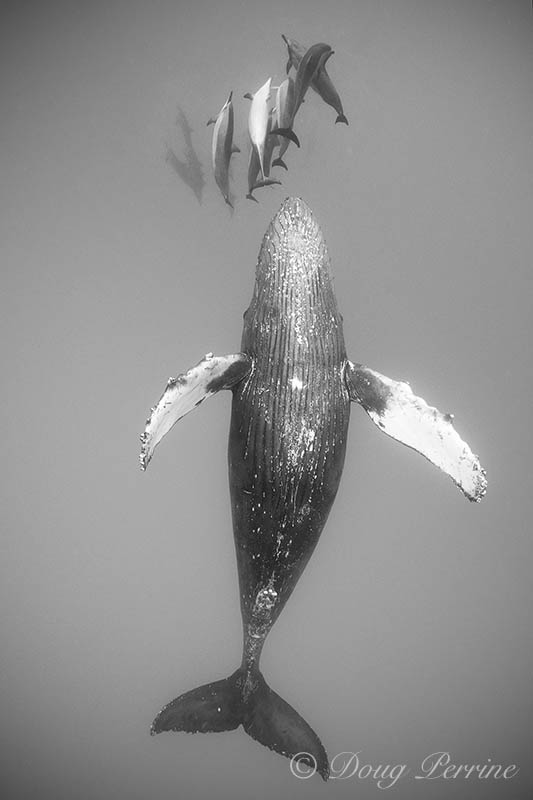
Hawaiian spinner dolphins or Gray's spinner dolphin, Stenella longirostris longirostris, bow-riding on humpback whale, Megaptera novaeangliae,  as it rises toward the surface, Kona, Hawaii, USA (Central Pacific Ocean) © Doug Perrine
Hawaiian spinner dolphins or Gray’s spinner dolphin, Stenella longirostris longirostris, bow-riding on humpback whale, Megaptera novaeangliae, as it rises toward the surface, Kona, Hawaii, USA (Central Pacific Ocean) © Doug Perrine

Want to swim with humpback whales in 2017?

Doug Perrine is leading a once-in-a-lifetime opportunity to snorkel with humpback whales and observe their unique behaviour from both above and below the surface. Taking place in Vava’u, Tonga, a destination famed for its whale encounters, the trip will allow participants to spend six full days snorkelling with the humpbacks and explore the many coral gardens just off the coast.

Trip date: September 11 – 20, 2017

Click here for further information